RezMela: a training and simulation environment offering $500 in prizes

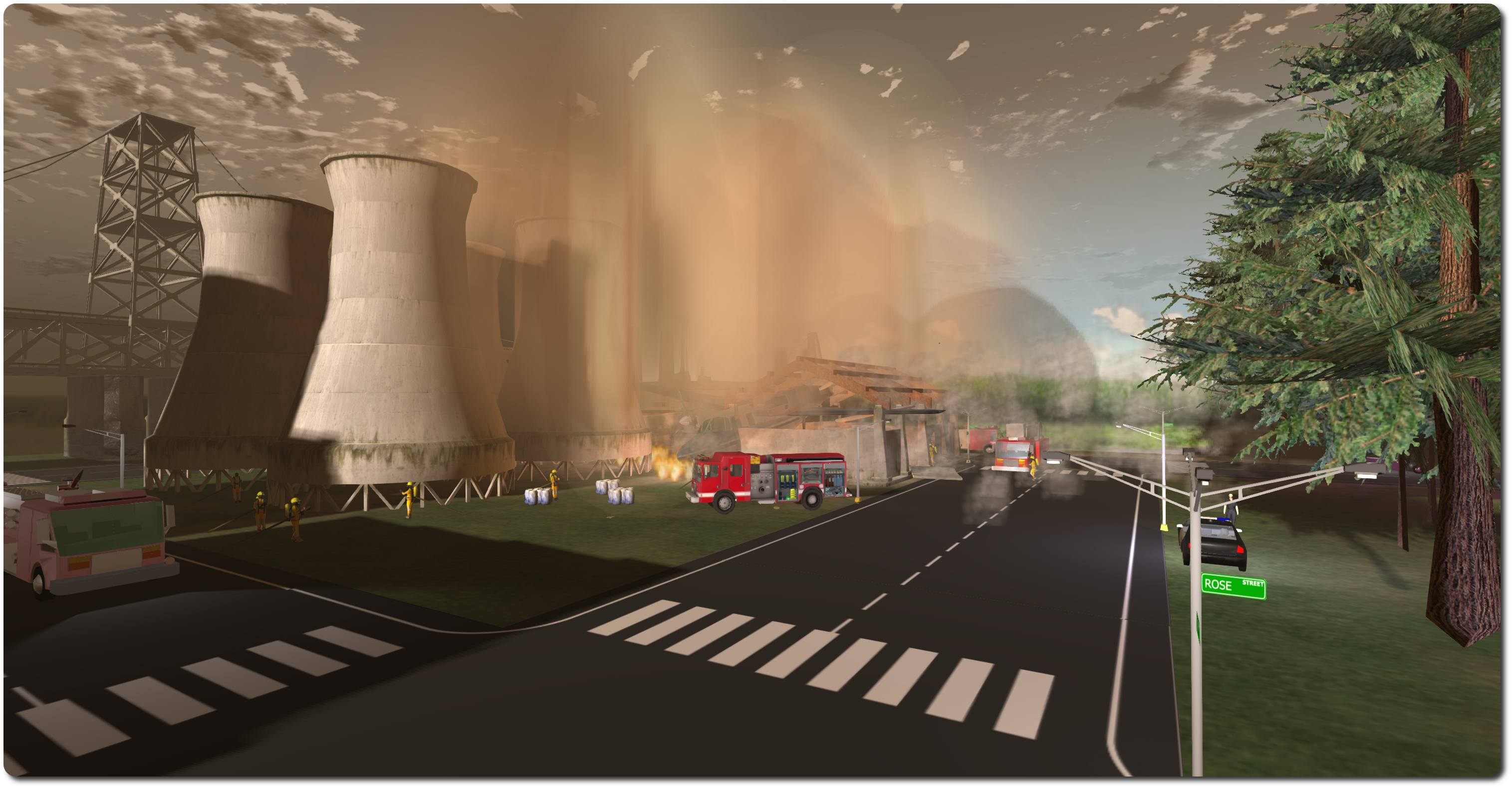
RezMela offers an interactive training and simulation environment in Kitely. Here I'm dealing with an air crash situation involving a power plant
RezMela is an interactive training and simulation environment in Kitely. Here I’m dealing with an air crash situation involving a power plant

Update, July 28th: As per the comment following this artilce, the competition deadline has been extended through until August 31st, 2014.

I recently received an e-mail concerning RezMela, a scenario-building tool intended for training and simulation hosted on Kitely, and which is currently running a competition with prizes totalling $500 USD up for grabs.

RezMela, currently in an alpha / beta mode, essentially allows subject matter experts to create and deliver interactive training within a virtual environment. It comprises a classroom-style theory space, where students can learn about and watch presentations on the subject being taught, and a practice space which is dedicated to learning-by-doing, through the use of immersive simulations.
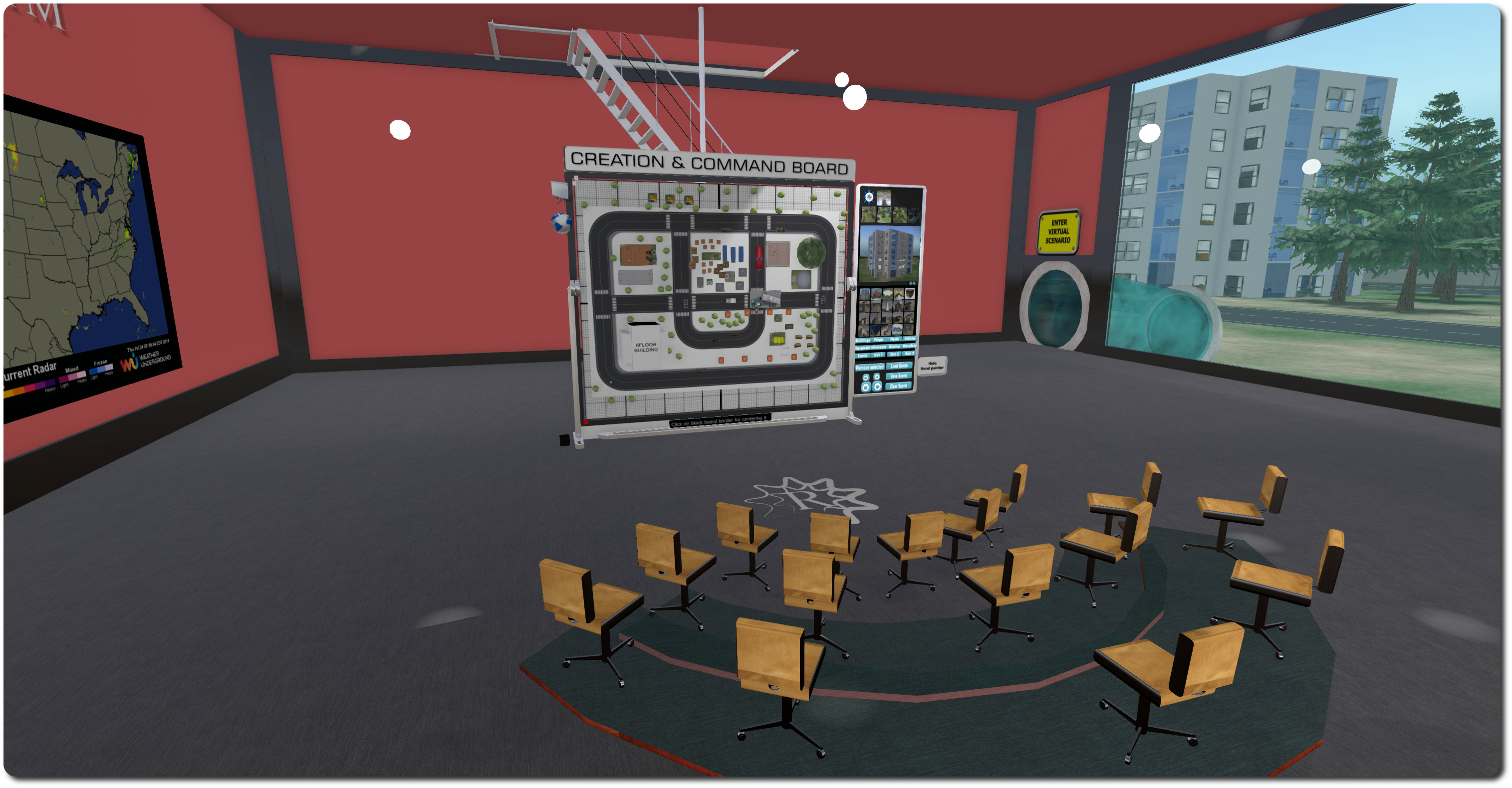
The RezMela theory area, with the Command and Control board
The RezMela theory space, with the Creation and Control board

Simulations – referred to as scenarios in the RezMela documentation – can be rapidly developed and deployed using the Creation and Control (C&C) board. The C&C board provides the subject matter expert with access to a wide range of simulation “primitives” (not to be confused with the basic building blocks of OpenSim and Second Life). These RezMela “primitives” are trees and plants, buildings and structures, vehicles, terrains and so on, and a selection of different types of non-player characters (NPCs), which can be combined to create a required training scenario.

The C&C board presents simple 2D map on which icons representing the various “primitives” can be positioned, rotated, etc. As this happens, the actual simulation objects are placed out in the practice area of the RezMela environment, thus allowing a simulation to be quickly put together. Once the scenario has been built, additional elements such a weather, fires, smoke, dust, etc., can be added, and the time of day for the scenario set. When everything is ready, the scenario can be saved to the RezMela system, allowing it to be instantly recalled and created within the practice space at the click of a button.
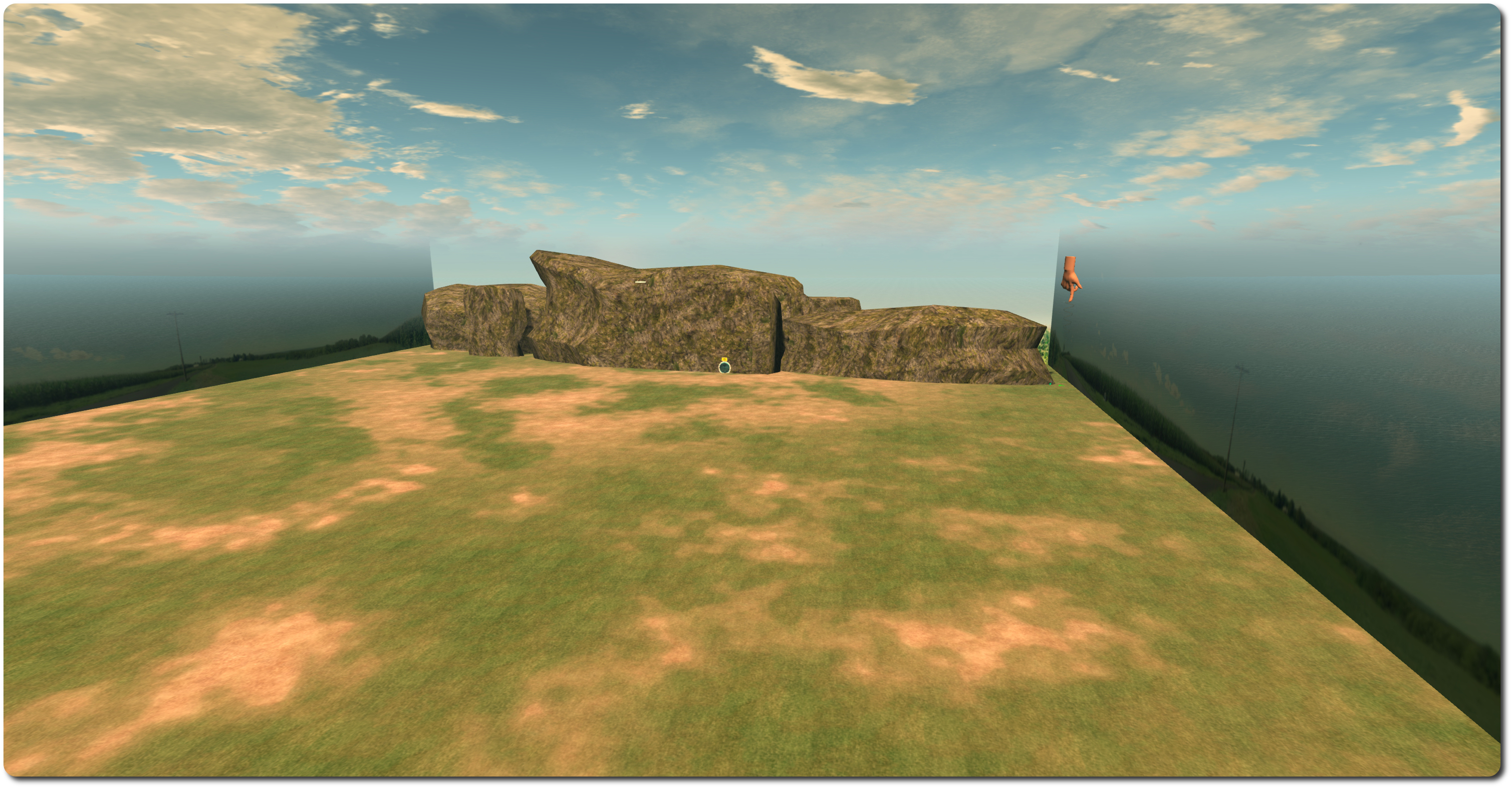
The RezMela practice space. ther rock formation in the background houses the theory space classroom
The RezMela practice space. the rock formation in the background houses the theory space classroom

NPCs and Objects within a scenario are not necessarily static or empty shells. Building and structures can have interiors, lending themselves to many different uses, and student can interact with various objects and vehicles, while NPCs will respond to stimuli around them. As well as enabling easy creation of scenarios, the C&C board can also be used to deliver classroom videos and presentations on the subject matter.

Combining the theory and practice spaces allows subject matter experts to provide information and guidance on a specific learning / training environment within the theory space via the C&C board, and then monitor students’ performance in real-time as they tackle the challenges presented in the scenario in the practice area.
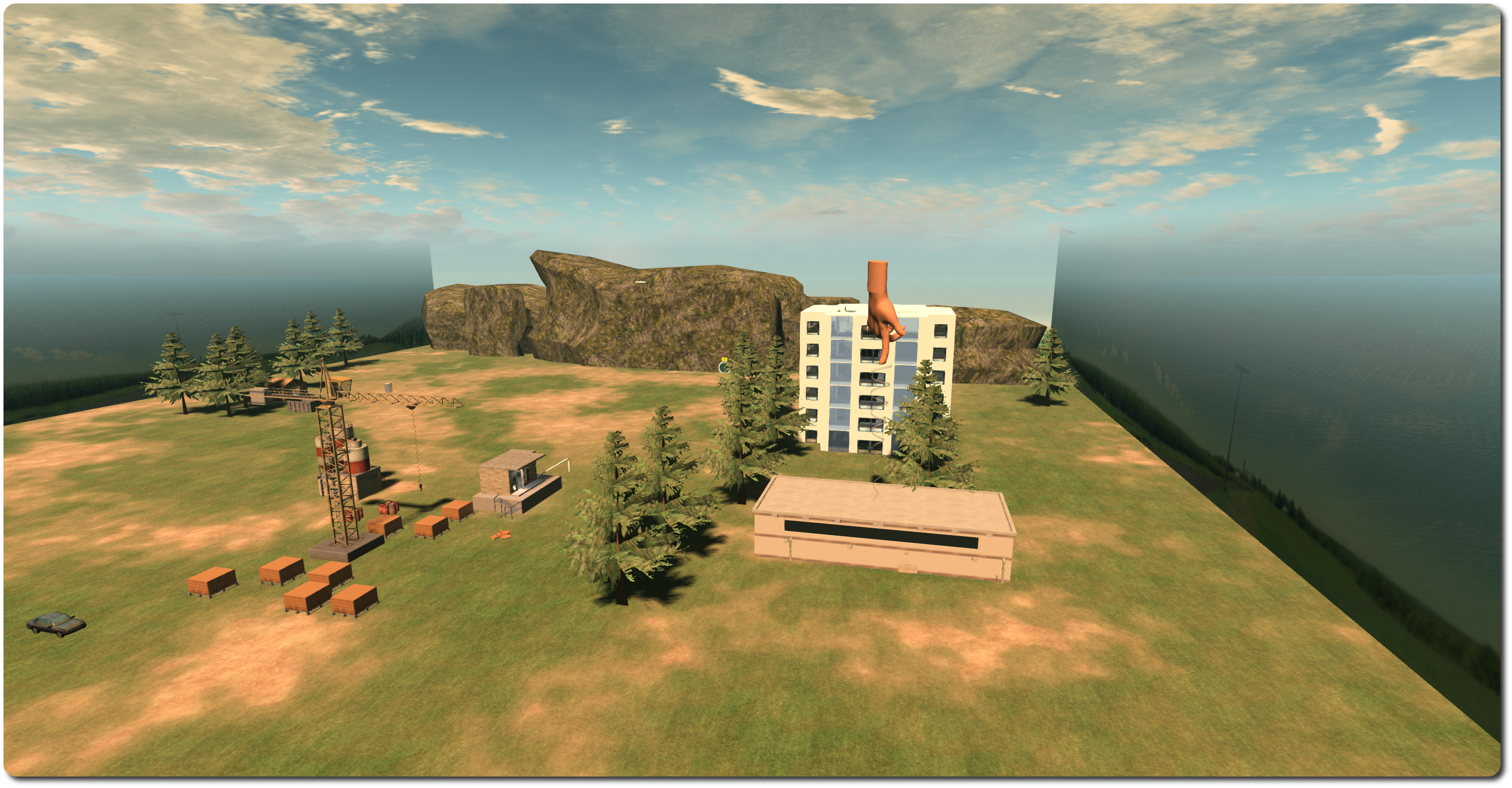
A prepared scenario being rezzed by the Creation & Control board. The pointing hand indicates the currently-selected object
A prepared scenario being rezzed by the Creation & Control board. The pointing hand indicates the currently selected object

Scenarios can be entirely created from scratch to suit a specific training / teaching requirement, or can be based on physical world situations, such as emergency or disaster management situations which have occurred, allowing students gain additional insight into such situations and events. The system can also be used for educational purposes as well, such as for teaching health and welfare or in teaching environmental matters and so on.

To help explain how the system works, DeepSemphore LLC, the company behind RezMela, have provided a range of videos and a slideshow introducing the basics of the beta system. There is also an in-world campus and workshop regions available to RezMela users where further information can be obtained.

Continue reading “RezMela: a training and simulation environment offering $500 in prizes”

The Drax Files Radio Hour: lunch and Second Life

radio-hourEpisode #28 of  The Drax Files Radio Hour was posted on Friday July 18th. After a measure of disappointment on my part that the promised interview with Jacquelyn Ford Morie didn’t appear – for fully understandable reasons – this segment makes up for it with a chat with long-term Second Life business man Lislo Mensing, or as he’s known in the physical world, Stefan Weiss.

Stefan is the driving force behind a recreation of the heart of Munich in Second Life. He’s also the owner of Teledollar, a Linden Dollar Authorised Reseller, and he has some interesting first-hand experiences of trying to marry-up the virtual and physical worlds.

This is perhaps the most informal interview Drax has conducted to date in the radio show, taking place as it does over lunch in the physical Munich, where he met Stefan while enjoying his summer vacation in Germany. As such, this is both the first in a trio of such informal “lunch with a lifer” interviews and is also something of an introduction to Bavarian cuisine!

Virtual Munich, which dates from 2007, is a recreation of the centre of Munich. It features many of the landmarks from its physical namesake, including several of the city’s churches and the old city gates. All of these, while prim builds, have been constructed using around 6,000 photos taken of the actual city of Munich, allowing as much as possible of the original’s essence to be recaptured within the virtual constraints of two regions in SL. Streets and plazas are faithfully recreated, and even a portion of the underground (subway) transit system has been reproduced (tickets L$69), which connects the heart of the city to the surrounding rural regions.

In developing the build, Stefan saw the potential for a symbiotic way of promoting the virtual in the physical and vice-versa. Approaching the Munich civic authorities, he put forward the idea that virtual Munich could be used as a means of promoting the physical Munich, offering people who might be considering a visit to the city the means to immersively learn about it and explore it prior to actually visiting. There was initially a positive response to the idea, and even talk of including the virtual version of Munich in documentation about the city’s 850th anniversary.

Unfortunately, all this came to nought when, in late 2007, German media outlets (and others around the world) followed the UK’s Sky News in running exposés on sexual ageplay rings within Second Life. Understandably, support for the project from both Munich’s civic authorities and from businesses rapidly declined in the wake of the reports; so much so that Stefan was refused permission to take photos of the non-public areas of some of the historic buildings which he had hoped to be able to share with people by recreating them in-world.

A view across the munich skyline in Second Life
A view across the Munich skyline in Second Life

While there has always been much speculation as to the impact these and other such exposés had on the wider view the public and businesses had on Second Life, Stefan’s frank description of the situation he personally faced really adds perspective to one of the factors that undoubtedly led to SL fall from grace in the media’s eyes, and which may have had a far greater impact on the media’s perception of the platform than its inability to live up to the hype created around it.

Stefan Weiss as caught at a Munich SL user’s meet-u (image by Xphile Boucher, via The Drax Files Radio Hour website)

Beyond this, the conversation touches on the relevance of virtual worlds, with Stefan pointing out that really, not much has changed over the years where the broader attitude towards VWs is concerned. This, he points out, is largely due to what I’m going to henceforth call the Pamela Effect henceforth (particularly after the re-run of Drax’s interview with her in segment #27 of the Drax Files Radio Hour): most of those in the “mainstream” market simply don’t see VWs as being in any way relevant to their physical and digital lives and activities, and so don’t see why they should bother giving VWs a go.

Not only is this attitude perhaps common among the vast majority of Internet users, but it obviously also encompasses businesses as well,  who have far more accessible means at their disposal for marketing the products and services and of reaching an audience. It is relevance – far more than issues of getting the keyboard and mouse “out of the way” – which is likely going to be the major issue for anyone trying to drive a virtual world even further into the mainstream consciousness – at least for a the foreseeable future.

I’ve mentioned three reasons why I think this is the case in a previous article (although these are the only reasons for my feeling this way).  Stefan points to a couple more; things which are regularly discussed, at least among those of us already engaged in VWs: scalability (in terms of having an environment which can actually support compelling, mass audience / mass participation activities), and accessibility. In this latter respect, Tony Parisi is more than likely correct in his view that unless a virtual world embraces the ease of access presented by the web, it’s going to have trouble making its presence felt.

Relevance is also something that came to mind when the Oculus Rift received its obligatory mention in the interview. While much has been made of the potential of VR bringing about a renaissance in interest in virtual worlds, very little has really been said about the potential for VR to do exactly the reverse, and leave virtual worlds still locked into a narrow niche within the mainstream market.

Simply put, if VR brings about the kind of situation which is discussed in the show, allowing hundreds and thousands of people world-wide to sit down and witness a World Cup final as if they were there, or a Wimbledon championship or take a ride into space or stand on the surface of Mars or explore the wreck of the Titanic or do a hundred other things that might not be otherwise possible for them, and share the experience with others –  then why should they even bother with farting around with a virtual world?

Towards the end of the piece, things get a little confusing as other virtual environments, such as Twinity and Google Lively are touched upon amidst some lunchtime chuckles. There’s also a brief overview of the Teledollar operation before times catches up with Stefan and Drax, and things are cut short by the needs of the physical world and work.

This is very much a curate’s egg of a conversation; there is a lot discussed and mentioned which offers food for thought. The over-the-lunch-table nature of the conversation lends a curious tilt to things, helping to add flavour to the proceedings, and giving it an oddly intimate feel for the listener, as if we’re sitting on a table close by and overhearing their discussion as they eat; and what interesting listening it makes!

SL projects update week 30/1: server, viewer

Server Deployments – Week 30

As always, please refer to the server deployment thread in the forums for the latest information and updates.

Main (SLS) Channel

On Tuesday July 22nd, the Main channel was updated with the infrastructure project deployed to the Magnum RC in week 29, and which adds support for the upcoming changes to the Skill Gaming policy, and includes the update to improve L$ transaction logging for payments made by scripted objects previously on LeTigre and BlueSteel- release notes.

Release Candidate Channels

On Thursday July 24th, all three RC  channel should be updated with the infrastructure support for the upcoming changes to the Skill Gaming policy, and includes the L$ transaction logging update and Temp attachment fix previously deployed to LeTigre and BlueSteel.

SL Viewer

On Tuesday July 22nd, the de facto release viewer was updated to version 3.7.12.291824, previously the Maintenance RC release candidate. This viewer includes over 40 MAINT fixes, including:

  • MAINT-3135 Cocoa Viewer: Mac: Maximizing the viewer leaves garbage on the screen
  • MAINT-3171 Alt-clicking while moving mouse can move the camera significantly
  • MAINT-2980 Reevaluate the 512 meg texture cap
  • MAINT-4216 Double clicking on anything in COF removes it from your avatar – including skin, shape, hairbase and eyes – results in bakefailed avatar
  • MAINT-4001 Received Folder is movable within Recent Tab – see my notes here on this issue
  • MAINT-3610 SL viewer partly ‘eats’ chat-message.

Tuesday July 22nd also saw two other viwer updates:

  • Tthe Group Ban RC viewer updated to version 3.7.13.292225. This allows group owners and those assigned to a specific role to ban (and eject) others from joining the group. Useful for dealing with spammers and other trouble-makers in open enrollment groups. For an overview of the group ban viewer, please refer to my preview notes
  • The Oculus Rift project viewer also updated to version 3.7.12.292141, to bring it up to parity with the release viewer 3.7.12 code base. Note at the time of writing, there were no supporting release notes for this update – please refer to the Alternate Viewers wiki page for the downloads.

Group Chat

Simon Linden is planning on a further group chat test at the Server Beta User Group meeting on Thursday July 24th. Commenting on this at the Simulator UG meeting on Tuesday July 22nd, he said, “those have been really helpful with our development.   The more people who can come, the better. The test is usually at the end, a little before 4:00 if we don’t run out of other topics.”

Oculus VR Principal Scientist to address OpenSimulator Conference

2014 banner

On Tuesday July 22nd, Chris Collins, writing on behalf of the 2nd OpenSimulator Community Conference, announced that one of the keynote speakers at the event will be Dr. Steve LaValle.

Dr. LaValle, a professor of Computer Science at the University of Illinois, is the principal scientist for Oculus VR, and he will be addressing attempts to bring the Oculus Rift headset to the mass consumer market.

Dr. Steven LaValle (image: )
Dr. Steven LaValle (image: University of Illinois)

Since Palmer Luckey’s 2012 prototype demonstrated that smartphone-based advances in display and sensing technology can enable a lightweight, high field-of-view VR experience that is affordable by the masses, widespread interest has grown across many industries, research labs, and potential end users of the VR technology. Dr. LaValle’s talk will highlight ongoing technical challenges, including game development, user interfaces, perceptual psychology, and accurate head tracking.

He is certainly well-placed to be able to do so, having been working with Oculus VR since a few days after its successful Kickstarter campaign and has led its R&D efforts up to its $2 billion acquisition by Facebook in March 2014.

Commenting on Dr. LaValle’s appearance at the conference, Cris Collins, who is serving at the conference chair, said, “With all the excitement surrounding the Oculus Rift and other virtual reality technologies, we want the virtual reality community to know that OpenSimulator is a great platform for building the open metaverse.

“OpenSimulator has hundreds of thousands of registered users and a land mass twice the size of Second Life. It’s the only open source platform with an Oculus Rift ready viewer that already has hundreds of interconnected worlds operating in an emerging metaverse and thousands of worlds run privately by corporations, schools, government agencies, nonprofits, and individuals.”

About the OpenSimulator Conference

The OpenSimulator Community Conference is an annual conference that focuses on the developer and user community creating the OpenSimulator software.  Organized as a joint production by the Overte Foundation and AvaCon, Inc., the conference features two days of presentations, workshops, keynote sessions, and social events across diverse sectors of the OpenSimulator user base.

The 2014 OpenSimulator Conference will take place on the OpenSimulator Conference Centre grid on November 8th and 9th, 2014, with registrations opening on September 15th, 2014, and interested parties can sign up to receive an email reminder to register.

The conference will include four themed tracks and a Learning Lab for hands on hackerspaces, speedbuilds, and more:

About the Organisers

The Overte Foundation is a non-profit organization that manages contribution agreements for the OpenSimulator project.  In the future, it will also act to promote and support both OpenSimulator and the wider open-source 3D virtual environment ecosystem.

AvaCon, Inc. is a 501(c)(3) non-profit organization dedicated to promoting the growth, enhancement, and development of the metaverse, virtual worlds, augmented reality, and 3D immersive and virtual spaces. We hold conventions and meetings to promote educational and scientific inquiry into these spaces, and to support organized fan activities, including performances, lectures, art, music, machinima, and much more. Our primary goal is to connect and support the diverse communities and practitioners involved in co-creating and using virtual worlds, and to educate the public and our constituents about the emerging ecosystem of technologies broadly known as the metaverse.

 Related links


Second Life helps cane growers learn about sustainable farming practices and more

There is no doubting that Second Life is an excellent platform for teaching and learning. That’s been demonstrated time and again, with many and varied educational and distance learning programmes being run through the platform, and with many schools, colleges, universities and other organisations making use of Second Life for a wealth of education and learning activities over the years.

One of the more intriguing means of using the platform educational purposes has been recently highlighted in an Australian Broadcasting Corporation website and video report, Queensland’s Cane Farmers Learn About Climate Change Via Virtual Reality World, which outlines a project initiated in 2012 by the University of Southern Queensland (USQ), Australia, and which is now being extended.

Sweet Success is a programme developed by the Australian Digital Futures Institute (ADFI) and the International Centre of Applied Climate Sciences (ICACS) at USQ. It uses machinima created in Second Life to encourage Queensland’s sugarcane farmers to consider sustainable farming practices (including their own environmental impact on the land), and to stimulate discussion about how to incorporate an understanding of climate risk into their decision-making.

Sweet Success sought to better inform sugar cane farmers on climate and environmental impact using digital techniques, including machinima filmed in Second Life

The videos are set in an environment typical of that found in Queensland’s cane growing region, and feature a number of individuals typical of the character and disposition of Queensland cane farmers. Lasting some 3-5 minutes, the films serve as both a focal point for discussion and as  a means to introduce the farmers to the climate information, interactive models, etc., which might be used to better inform their farming decisions.

The initial programme involved around 20 sugar cane farmers who were able to watch the films, study the material and discuss the issues and ideas raised. While there was some initial scepticism, the farmers admitted the videos were a positive means of passing on information on things they may not have thought about.

Dr. Helen Farley, one of the researchers involved in Sweet Success, and her SL alter-ego

Dr. Kate Farley, one of the Digital Futures faculty members involved in the project, and herself a long-term advocate for the use of virtual worlds for learning and teaching in higher education, describes the decision to use Second Life as being primarily a matter of finance and convenience: Second Life allowed the films to be put together at a far lower cost and much quicker than would have been the case with live action location shooting.

Matt Kealley, senior manager of environment and natural resources for the Canegrowers industry group sees the approach as potentially offering the means to deliver a lot of information on farming, climate, weather and so on to his members. He also believes that once the novelty of being presented with a film shot in a virtual environment had worn off, his members found the information presented to be “compelling” in content and value.

In fact, such has been the success of the pilot programme, the project has now been expanded to include some 400 Queensland sugarcane growers.

Dr. Kate Reardon-Smith of the ACSC

While the cost-effective nature of using Second Life as a film medium might have been the primary consideration in using it for the Sweet Success films, Dr. Farley, together with fellow researcher, Dr. Kate Reardon-Smith, believes that the approach has other benefits as well.

Leading a series of presentations on the work, both Dr. Farley and Dr. Reardon-Smith point to the use of Second Life as being ideal for addressing matters of climate risk assessment, sustainable farming methods and so on for a wide variety of farming locations and systems, simply through the use culturally appropriate clothing, language and design. In addition, the digital nature of the finished product makes it easy to package with the supporting material for dissemination anywhere in the world.

Nor is Sweet Success the only activity undertaken by USQ to use Second Life as a means of educating farmers. In 2010, ICACS, under its old title of the Australian Centre for Sustainable Catchments (ACSC), joined with the Asia-Pacific Network to use Second Life avatars as a means to present real world climate-based scenarios to farmers in the Andhra Pradesh region of India. The aim of the project was to challenge farmers about on-farm decisions that involve seasonal climate risk. As a distance learning project, it was delivered to Internet kiosks within the region where farmers could then discuss and debate the issues raised.

The ACSC-APN project in the Andhra Paresh region of India also used Second Life as a means to
The ACSC-APN project in the Andhra Pradesh region of India also used Second Life as a means to engage farmers on the subject of seasonal climate risk and farming decisions

All told, both of these projects present a unique and fascinating extension of the use of Second Life as an educational medium and for distance learning.

Related Links

All images via the University of Southern Queensland

Lab slips out a formal announcement of their next generation platform

LL logoWe’re all aware that the Lab is developing a “next generation” virtual worlds platform. It’s been the subject of much debate, speculation, supposition and more.

The confirmation that the Lab were working on a new platform came during a TPV Developer meeting on June 21st, when it was mentioned almost as an aside by the Lab’s CEO, Ebbe Altberg. In the period of the SL11B celebrations, mention of it also appeared in a number of on-line media publications.

However outside of these interviews and comments, there appeared to be no formal announcement about the new platform. Well, not until July 11th, anyway; that was when the Lab issued a press release about it.

Entitled straightforwardly enough, Linden Lab Is Developing The Next-Generation Virtual World, the release reads in part:

Linden Lab has confirmed that it is developing the next generation virtual world that will be in the spirit of Second Life, an open world where users have incredible power to create anything they can imagine and content creators are king. With 2015 targeted for a beta, the new virtual world will go far beyond what is possible with Second Life, and Linden Lab is actively hiring to help with this ambitious project.

“Second Life is the most successful user-created virtual world ever,” said Ebbe Altberg, Linden Lab CEO. “Eleven years after first opening, it continues to thrive with more than a petabyte of 3D content created by users, a strong economy of user-to-user transactions in which tens of millions of dollars are paid out to creators every year, and an active community that spans the globe. There is a massive opportunity ahead to carry on the spirit of Second Life while leveraging the significant technological advancements that have occurred since its creation, and no company is better positioned to create this than we are.”

It doesn’t provide any more in terms of specifics than perhaps most SL users tracking the subject are already aware. However, it does at least pull together several key statements concerning the new platform, made throughout the epic forum thread on the matter, into a single reference source:

Linden Lab’s priority in building the next-generation virtual world is to create an incredible experience and enable stunningly high-quality creativity that’s easily accessible across multiple platforms. In order to not constrain development toward those goals, complete backward compatibility with everything created over Second Life’s 11-year history has not been set as an absolute requirement from the outset. However, Linden Lab does plan to make certain essential elements transportable for existing Second Life users, including users’ Linden Dollar balances, identities, and social connections. It’s likely that more modern content from Second Life, such as meshes, will also be transferrable to the new platform, but the specific details of compatibility will be addressed as development progresses.

You can read the entire release, including comments on the future of Second Life, on the Lab’s official press page.