 Curiosity officially reached its next planned waypoint – dubbed “the Kimberley” on Wednesday April 2nd, 2014, with a final drive of some 30 metres (98 feet), after detouring from its planned drive route to reduce the amount of wear and tear being suffered by the rover’s aluminium wheels, the result of traversing some particularly rough terrain for several months.
“The Kimberley” was identified from orbit in 2013 as a possible location of interest during the rover’s drive down towards the point at which it will start its explorations of the lower slopes of “Mount Sharp”. It is an area of four distinguishable rock types exposed close together in a decipherable geological relationship to each other. As such, they should provide further clues about ancient environments that may have been favourable for life.
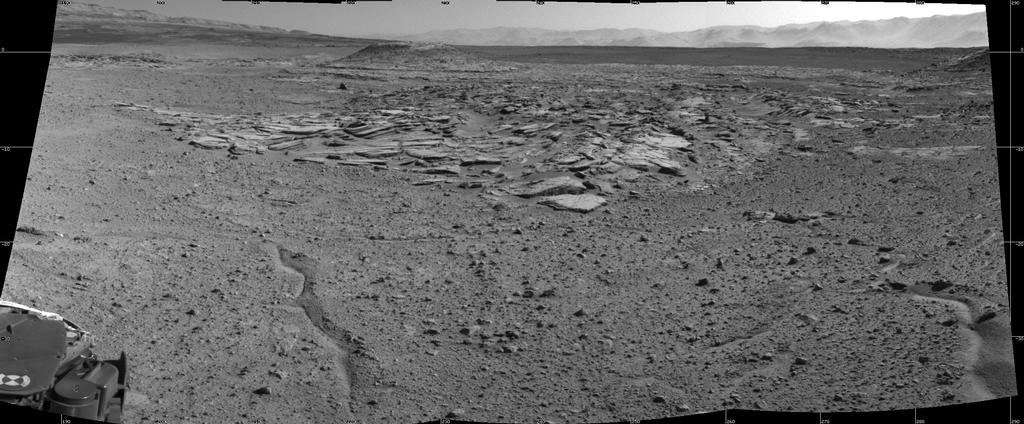
As a major waypoint, “the Kimberley” will form an extended stopover for Curiosity which, while unlikely to be as long as the 6 months the rover spent exploring and examining “Glenelg” and “Yellowknife Bay”, will still be in the order of several weeks. The first part of this work is study the area in more detail, and the location occupied by the rover and the end of its April 2nd drive – Sol 589 for the mission – is ideal for this. A slight rise compared to the surrounding terrain, it provides an excellent vantage point from which the rover can survey its surroundings, allowing mission scientists to comprehensively review the area and plan the coming science programme in finer detail than can be achieved when using orbital images alone. The science work is expected to involve observation of the surrounding region, sample-gathering from the rock formations, and onboard analysis of the samples gathered.
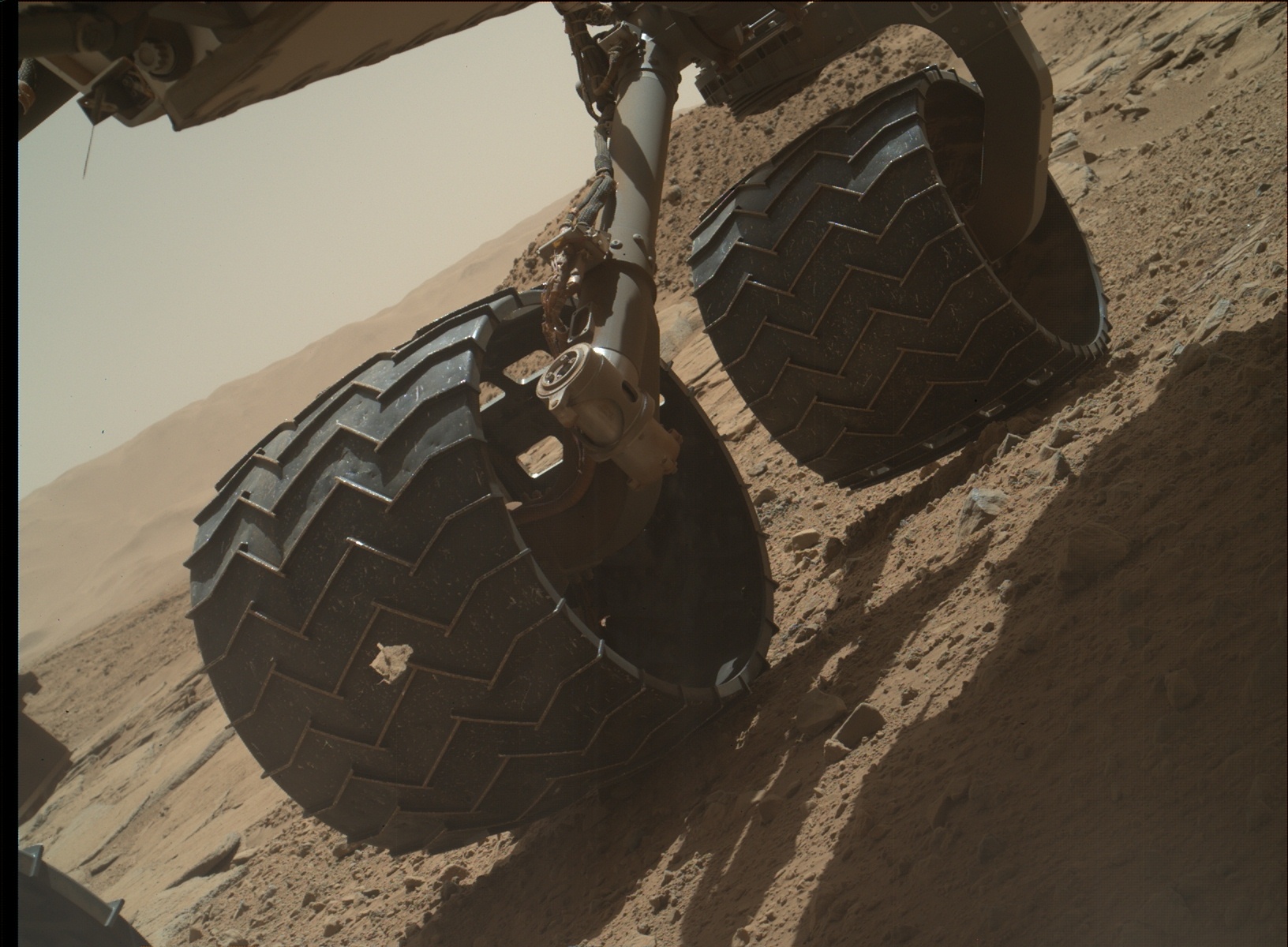
As I’ve previously reported, a cause of concern for mission personnel of late has been the amount of wear and tear the rover’s six aluminium wheels have suffered during the drive south from “Yellowknife Bay”. While the matter is far from serious in terms of impeding the rover’s manoeuvring or driving capabilities, with Curiosity’s nuclear battery offering the chance for a mission as much as 20 years in duration barring unforeseen circumstances, and what might provide to be a punishing climb up into the slopes of “Mount Sharp” still to come, the rover was directed onto less harsh terrain – comparatively speaking – in February 2014. Since then the mission team have been periodically checking on the wheels for further signs of damage and, as I noted last time around, the wear on the wheels is now around a tenth of that which had been experienced prior to the diversion. Nevertheless checks are still being carried out – including during the period in which this report was being written, as demonstrated by the raw image below, taken directly from the NASA image archive for Curiosity.
Spots Before Your Eyes
Images returned by Curiosity and released by NASA on April 6th, 2014, caused something of a stir on YouTube and elsewhere as they appeared to show beams of light shining up into the sky, or perhaps light being reflected towards the rover. While some people simply asked what the bright points of light might be, others went so far as to claim them as evidence of UFOs being present on Mars. Such was the interest level generated by the images, that NASA issued a press release on Tuesday April 8th to try to dispel the wilder speculation.
“In the thousands of images we’ve received from Curiosity, we see ones with bright spots nearly every week,” Justin Maki, leader of the team that built and operates the Navigation Camera is quoted as saying in the release. “These can be caused by cosmic-ray hits or sunlight glinting from rock surfaces, as the most likely explanations.”

That the light source is probably the result of a natural occurrence is made more likely by the fact that only the rover’s “right eye” Navcam lens records the spot seen in the April 3rd image; it is entirely absent from an identical image taken by the “left eye” lens of the stereo Nacam system less than a second later. This tends to suggest that it is the result of a cosmic ray striking the Navcam’s charge-coupled device as the right eye image was captured.
However, were the light to be the result of sunlight being reflected by a rock, mission scientists estimate that the culprit would likely be around 160 metres from Curiosity’s parked location at “the Kimberley”.
So, in lieu of Martians or other aliens motoring-up to Curiosity for a closer look – 😉 – I’ll leave you with yet another video from NASA.
Images and video courtesy of NASA JPL.

 Inara Pey: Living in a Modemworld