 Curiosity, the NASA rover carrying the Mars Science Laboratory is continuing towards its rendezvous with the foothills of “Mount Sharp” (Aeolis Mons) in Gale Crater, Mars. As such, there is little coming out of NASA in terms of updates on progress (which would likely sound the robotic equivalent of “Are we there yet?” “No!” cycles).
However, on January 9th, NASA released several images captured by the High Resolution Imaging Science Experiment (HiRISE) camera aboard the Mars Reconnaissance Orbiter (MRO). Taken in both black-and-white and colour, these show Curiosity’s long and lonely drive across the “magnificent desolation” of Gale Crater.

The images show the rover’s tracks as it manoeuvred around obstacles on its route toward the lower slopes of “Mount Sharp”, and were captured in early December 2013 as the MRO, which acts the and primary communications relay between Earth and Curiosity, passed over the rover’s location at an altitude of some 250-316 kilometres (160-196 miles).
HiRISE first imaged the Mars Science Laboratory spacecraft while it was descending on a parachute to place Curiosity on Mars 17 months ago. Since then, it has provided updated views of the rover’s traverse, as seen from orbit.

At the time the images were captured, Curiosity had clocked-up some 4.61 kilometres (2.86 miles) since its arrival in Gale Crater in August 2012. The long trek in a generally southwest direction commenced in the latter half of 2013, after the rover had spent some six months within the “Glenelg” and “Yellowknife Bay” areas of the crater studying a range of rock and surface conditions which allowed Curiosity to meet criteria relevant to its primary mission objective – to determine whether Mars may have once harboured conditions in which life might have arisen.

Ten Years
January 24th 2014 will mark a very special anniversary. It was on January 24th, 2004, that the second of NASA’s solar-powered Mars Exploration Rovers (MERs), Opportunity, arrived on Mars. Its robotic sibling, Spirit, arrived a little earlier in the month – January 3rd. Sadly, Spirit is no longer active, its official status having been declared as “ended” as of March 2010, after almost a year stuck in soft soil and operating as a stationary research station.
At the time of their arrival, both Spirit (officially designated MER-A) and Opportunity (officially MER-B) were given a primary mission time of just 90 days on the surface of Mars, engineers believing that a combination of the harsh environmental conditions and things like dust accumulation on the rovers’ solar panels would limit their ability to function / draw energy from the sun.
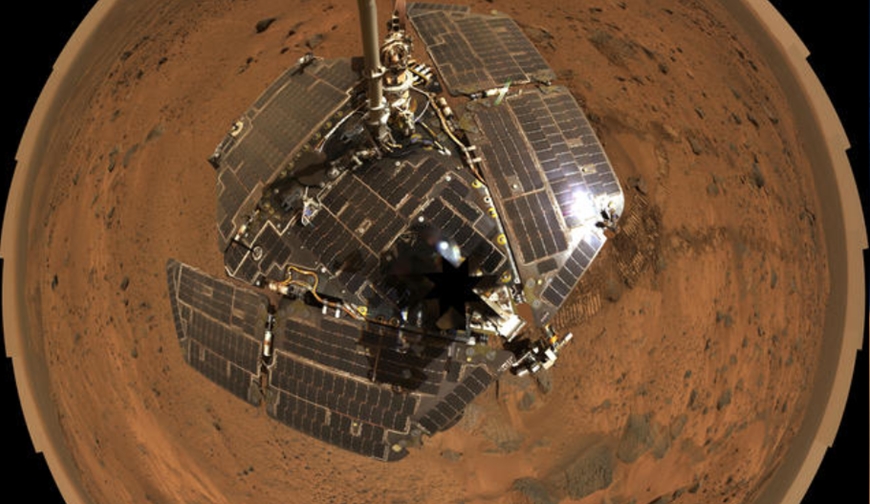
As it turned out, Spirit remained functional for some 2,269 days (2208 Sols) from arrival through to the last contact date of March 22nd, 2010, (although attempts to re-establish communications with the rover continued through until May 2011). Opportunity, still actively exploring, has now been operating for some 3,640 days (3,543 Sols).
To celebrate the achievements of both of these remarkable rovers, NASA has and is holding a series of lectures and presentation through January 2014, and has issued a number of commemorative slide shows, calendars and more through the MER-10 website, which offers a fascinating means of catching-up with this remarkable mission. There is also a large-format slide show available featuring highlights of the MER mission.
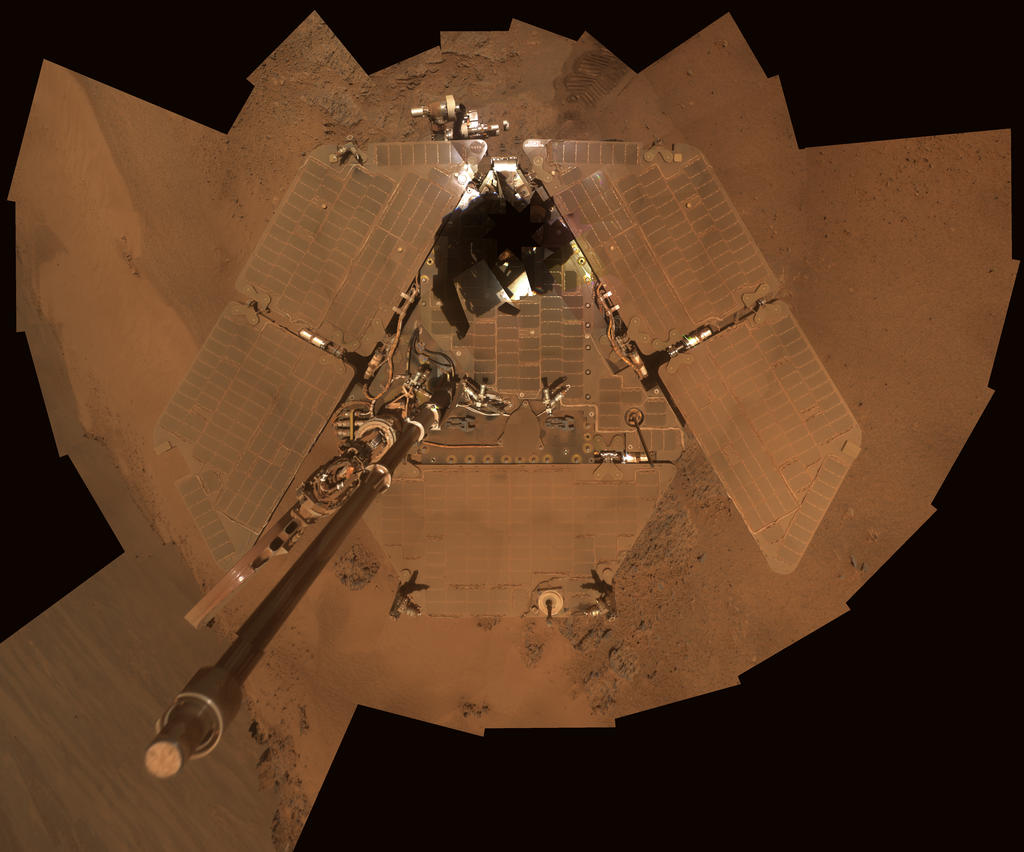
Congratulations To Steve Squyres and the entire MER science and engineering teams on reaching the mission’s 10th anniversary – and best wishes to “Oppy” as it continues to explore Mars in the shadow of it’s bigger cousin.
All images courtesy of NASA / JPL

 Inara Pey: Living in a Modemworld