Looking into 2012

Today, twelve months to the day since his appointment was announced, Rod Humble blogs on the future of Second Life and Linden Lab.

It’s an interesting read, which is bound to draw wide-ranging feedback, positive and negative. Leaving aside the look back over the Viewer, mesh (which I’ve already commented upon) and 2011 in general, here are some thoughts on Rodvik’s outline for 2012.

The tools developed in the creation of Linden Realms roll-out to the community

Linden Realms: game tools to roll-out in 2012

Undoubtedly a good move – there are a lot of content creators who have been fairly bouncing up and down at the thought of being able to use these tools, and their potential to revolutionise aspects of the SL experience in very dynamic ways is huge. Obviously, there are also certain risks that have to be managed as well – a auto-teleport feature and an auto-attaching HUD capability could easily be put to the wrong use if not properly safeguarded.

Tiggs Linden, one of the major brains behind Linden Realms was well aware of the issues even before Linden Realms was launched, and commented that he’d been working to lock-down the teleport aspect pretty tight. So Linden Lab certainly aren’t walking into this blind. Even so, its welcoming to hear Rodvik also raise this issue, as he states, “To prevent abuse of these tools, we will introduce a “creators” program in which verified members will be given access to these very powerful capabilities.” Precisely what form the program will take is unclear. Certainly, one expects it to be somewhat more robust than the mesh upload status process.

“Pathfinding” to be a major focus of 2012
“Mr Grimsdale!” – NPCs for SL

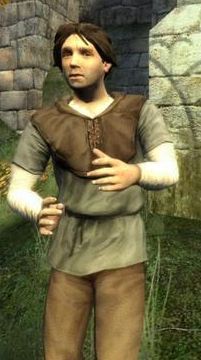
Keeping to the creativity front, Rodvik also confirmed that 2012 will se the roll-out of advanced tools that will incorporate the updated AI capabilities he spoke about earlier in the year. Again, some may see this as window-dressing, but the fact is, it is a capability that many in SL have been requesting for a very long time – so it could be said that the provision of such tools (some of which may be based on capabilities already within the SL software, as Tateru speculated a while back).

As a part of this process, Q1 has been earmarked from the roll-out of “pathfinding” tools  “That will allow objects to intelligently navigate around the world while avoiding obstacles,” as Rodvik describes them. Again, given the unfortunate situation that occurred earlier this year wherein automated vehicles started running amok across the Mainland, these capabilities are also likely to find beneficial use among creators and coders.

Server-side performance a priority

There is also the promise that server-side performance and bug-fixing will remain a high priority in Q1 of 2012. We’ve already seen massive effort to install critical OS updates across the grid, and moves to improve overall stability and performance. Some of these have, ironically, caused SL to get rather bumpity while work has been carried out, and caused angst and annoyance at times. However, if all goes according to plan, then as Rodvik says, things should be much improved as time goes on.

One hopes that the longer-term work into things like region crossings forms a part of the overall push on performance. As Ciaran Laval points out, this is a big task, but hopefully we’ll see more information appear in the blogs as progress is made.

No tier increases in 2012

Tucked away in the middle of the piece is this nugget, which is going to please many. Particularly as Rodvik outright refused to comment on tier at SLCC 2011, despite several questions on the subject being asked during his presentation, gave rise to concerns that increases may well be on the way.

The flipside to this of course is that many will argue that tier actually needs to be coming down. In the longer term, this may well prove to be the case. However, there is a fine balance to be struck, at least as far as Linden Lab is concerned simply because so much of their revenue is currently linked to tier. However, if the promised tools Rodvik mentions in passing do result in increase traffic flow to in-world stores and destinations, and landowners do in fact see an increase in their own revenues as a result, it’s entirely possible than the calls for a lowering of tier may actually be reduced.

New Premium features and content

This, like the comment on tools for landowners and store owners is a little nebulous, but it suggests that LL are possibly looking beyond the idea of periodic gifts for Premium members and towards something more substantial. Certainly the terms “features” and “content” are interesting. The provision of additional capabilities for Premium members that moves away from the concept of gifts and towards things that clearly and obviously enhance their  SL experience (and I’m not just talking sandboxes here) would be a welcome move and one that is liable to increase the overall value of Premium membership in a more positive and beneficial manner than is currently the case – and I’m speaking as a premium member. As such, I’m looking forward with interest as to what LL has planned in this area.

New products on the way

New products – mobile devices?

The final paragraph of the blog is the one that is liable to create some of the strongest reaction, good and bad.

That LL were to work on and launch new products beyond Second Life was first announced by Rodvik himself at SLCC-2011. I gave some speculation on this after the convention, which while not particularly deep, did draw comment back from Rodvik.

Details still aren’t clear on what the products will be – although there has been a lot of speculation as to what these might be, some of which met with some chortles coming out of Battery Street, as those who spend time on the SLU forums are aware!

Some are bound to see this as a good thing, others bad. Indeed, Hamlet Au has already gained a very mixed bag of feedback at the news. Like I did a few months back, Hamlet sees the development of these tools as helping offset LL’s reliance on tier for its revenue – although that’s not to say I agree with the rest of his analysis. As such, diversification could be very good for the company and for Second Life, provided things are properly ring-fenced within the company as a whole (i.e., so that SL doesn’t become a means of subsidising new revenue streams at the cost of its own growth).

Second Life isn’t a game!

Alongside the comments on new products hitting the market and users, the other aspect of Rodvik’s post that I can’t help feel will have some shivering in horror, is all the talk of gaming mechanisms, tools and even Rodvik’s comment that they, “Will make the polished creation of full MMORPG’s or people/animal simulators within Second Life easier and of high quality.”

In fact I can almost hear the oft-repeated cry of “But Second Life ISN’T a game!” from afar…

Well, true, Second life isn’t a game; it’s a platform that is capable of being put to a multitude of uses – one of which is gaming. As such, it is right and proper that LL should take the gaming environment into their consideration, particularly if it can be done in a way that a) doesn’t impact on the many other ways in which the platform is used; b) it drives more traffic into the platform, encourages growth and opens new in-world economic options. Indeed, in this respect, I find myself in agreement with much of Ciaran Laval’s thoughts on gaming opportunities.

At the end of the day, it doesn’t have to be one or the other – which is sometimes how I feel things are painted when I hear the “it isn’t a game” complaints. Second Life is a broad canvas. Linden Lab are right to use as many colours as they have on their palette with which to paint it.

All-in-all, the blog post makes interesting and overall positive reading. One would like to hear more on the practical details – but hopefully these will come in detailed blog posts as things like roll-out dates draw closer and ideas and more fully thrashed out at LL. Again, it leaves me feeling, on the whole, pretty positive towards the next twelve months. Obviously, there are still issues that go unmentioned I’d personally like to see addressed (such as more communications such as this blog post) – but for now I’ll leave it as Rodvik does, and wish him and everyone else at the Lab a very Merry Christmas and Happy New Year!

2011: a Humble year

Second Life’s New Leader: Rod Humble Becomes CEO of Linden Lab

MMO and Gaming Industry Visionary to Bring New Life to Second Life

SAN FRANCISCO — December 23, 2010Linden Lab®, creator of 3D virtual world Second Life®, today announced that Rod Humble has become the company’s Chief Executive Officer. Humble joins Linden Lab from Electronic Arts, where he was Executive Vice President for its EA Play label.

Humble’s 20-year career in the game development industry has included work on more than 200 games. In his most recent position at Electronic Arts, Humble headed the EA Play label, which includes the best-selling PC game franchise of all time, The Sims. In 2009, he was ranked #2 on the annual list of the Hot 100 Game Developers from gaming publication Edge. Prior to his work at Electronic Arts, Humble served as Vice President of Product Development at Sony Online Entertainment for the massively multiplayer online game (MMOG), EverQuest.

LL CEO Rod Humble

Thus broke the news, on December 23rd 2010, that Linden Lab had a new CEO. Now, I’ll admit, and with all due respect to Mr. Humble – Rodvik, as we all now know him – but I’m not a games player (or wasn’t, until my retired father got himself a Wii, which has become the centrepiece of get-togethers at his place…but I digress). No, I had no more familiarity with The Sims than I had with George Clooney; sure, both were / are big names in their respective worlds, but the closest I’d been to either was passing a DVD box on a store shelf…

So the name “Rod Humble”, to me, meant little when the announcement was made, and I really had no idea how to respond to the news, so decided to wait. Some were a tad impatient for him to say something (although he wasn’t actually due to officially start at LL until mid-January), and some even commented that his silence didn’t bode well. I didn’t share this view and saw a number of reasons why Rod Humble was taking the right course in keeping quiet – as did Tateru Nino, in a thought-provoking piece.

When he did finally blog (just under a week after starting), his first post was a combination of the uplifting and the cautious – which again, I personally felt was the right way to go, and boded well for the future.

Since then, we’ve seen highs and we’ve seen lows – but I’ll nail my colours to the mast and say I believe the former outweigh the latter. On the whole, a lot of confidence has been restored in the user community – one only has to look at the overall favourable reaction to Rodvik’s appointment the more people heard him talk about SL, and to the reaction of SLCC attendees and those who watched the streams from the convention. Yes, there is still a long way to go, and cock-ups do happen, as we saw both with the code breakages around the middle of the year and the Marketplace mess-ups. But – the Viewer has been improved, mesh has arrived after years of waiting and hoping for many; we have Linden staff spending time in-world, re-discovering the complexities of the platform and developing new tool sets that will be released to the community, and so on.

It would be easy to nit-pick over the issues and downsides that remain, but I’m not going to that. One year ago today, it was announced that Rod Humble was appointed as CEO on Linden Lab, and since then, it’s been an interesting ride – and was we can see from his very appropriate post today, we’re in for more interesting times in 2012, which are bound to bring their own share of rewards and grumbles.

All I am going to say at this point – while aware that he didn’t officially occupy the hot seat at Battery Street until mid-January 2011 – is this: happy anniversary, Rodvik, and here’s to the next 12 months. Looking forward to further engagement between Lab and users, and experiencing the tools and pathfinding elements on which you blog…

…Just one question for you, if you please: at SLCC 2012. You said your goal for your first year at LL as being to be able to give every family member within Linden Lab a Second Life account, for them to be able to send the account to any “intelligent or above average intelligence computer user” for them to be able to use it to get into Second Life, use it and be grateful.

How has that worked out? Goal met? Very curious to know! :).

Walking through the past

The past is really almost as much a work of the imagination as the future.

– Jessamyn West

There are times when we all mourn for the past; it’s a place, to paraphrase another saying, we cannot revisit, no matter how much we desire.

Except in Second Life.

Much has been written over the last twelve months about what has been lost in SL, regions, builds, places that stirred memories – and it is true that much has gone. But it is also true that much has been preserved and still stands today as living reminders of what Second Life was, how it began and how far it has come. Visiting them can be a magical mystery tour of delight.

The SL Historical Museum

The SL Historical Museum

Contained in a modest build, itself a reminder, perhaps of simpler times in-world, the SL Historical Museum is a goldmine of information and images that offer a unique look back to the earliest years of Second Life. Here are logs from town hall meetings (remember those?). There is also an archive of release notes from the early days which reveal a lot about Second Life’s development. Take these extracts from the release of version 0.2.0, on December 16, 2002:

For best performance, close other applications before running Second Life in order to free up your computer’s memory.  If the computer runs out of memory, Second Life has a tendency to become unresponsive and you will move through the world in 10 second halting steps.

===Improved World Performance===
* Objects come in faster when you are flying.

===Avatar Enhancements===
* Avatar make-up can be applied during customization.
* Underwear automatically removed when you swap outfits so no more unsightly incidences of cotton briefs peeking out from beneath your clothes.
.
.
.
* More reliable sitting behaviors.
* When holding Alt key and moving camera, you can more easily zoom in on objects without losing focus on the object ? it?s magic!

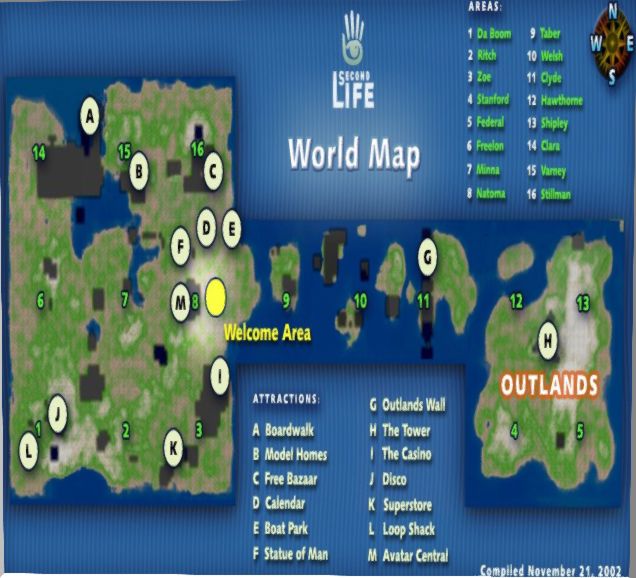
Within the museum you can also discover the meaning behind hippos! and how they became a part of the SL subculture (and still are, just try CTRL-SHIFT-ALT-H!). There is also a gallery of images from the early days – and some of them are real eye-openers. Take the World Map, for example.

Second Life circa November 2002

In the museum you can also find out what it was like to be a Primitar – there is actually a Primitar avatar, complete with HUDs, available, and learn about SL’s original taxi service and why i came into existence (and I have to admit, that’s a part of SL lore that had passed me by!).

The museum is associated with the SL Wikia (not to be confused with the “official” wiki), which provides further and deeper insight into the entire history of Second Life, including the development of avatars, the Viewer, and so on. It was actually through the Wikia that I became aware of the in-world museum.

Orientation Station

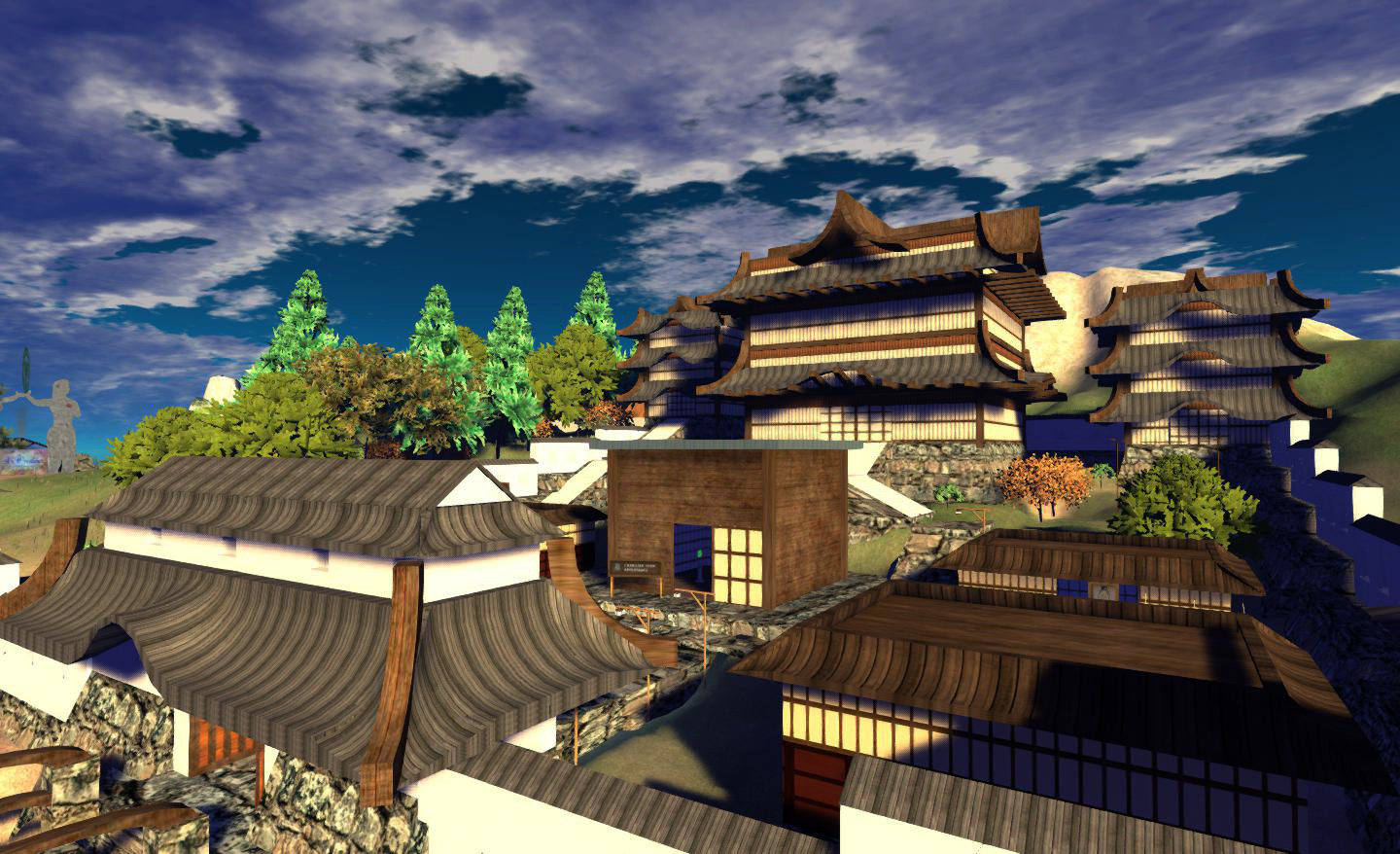
Before there was an Orientation Island or Welcome Island or parrots squawking at you, there was the Orientation Station where newcomers could discover and how and what of using Second Life. Created by Yuniq Epoch (who was also behind the original Yamato project), this Japanese castles provided information boards notecards and practices routines (such as putting a beach ball on a table) to help people get to grips with the fundamentals.

The information is now well out-of-date, but you can visit the Orientation Station at Dore – if nothing else, some of the images stand testimony as to just how far SL avatars have come, appearance-wise!

Orientation Station circa 2003

Governor Linden’s Mansion

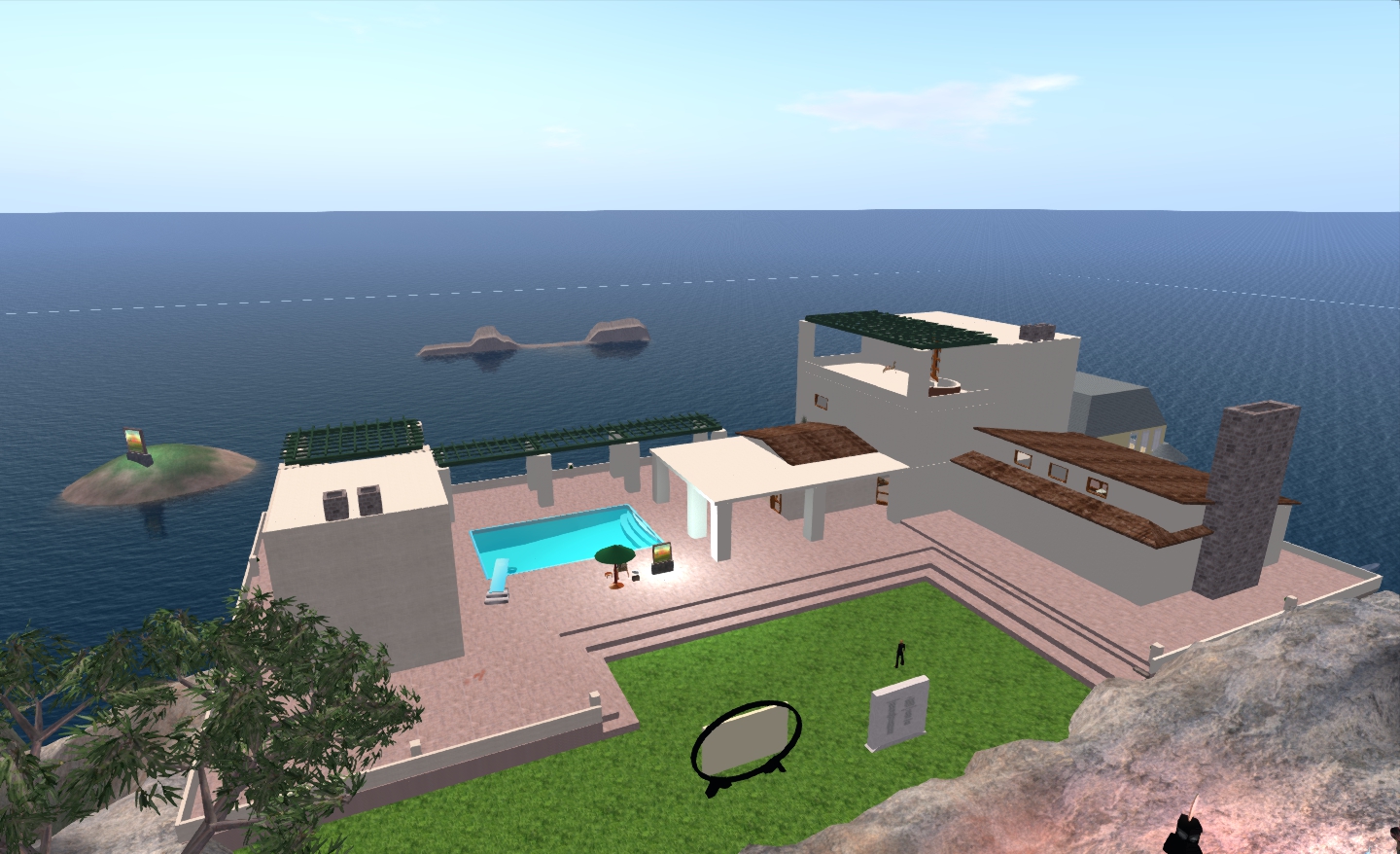
No trip into SL’s past would be complete without a visit to the home of SL’s mythical Governor. The mansion dates from 2002 and may well look utterly primitive by today’s standards, but back then it stood at the forefront of building techniques within SL.

Here there are no sculpties, no scripted doors (all doors that can be used stand conveniently ajar) and the textures are fairly basic. For those that worry about Land Impact and prim counts on houses today, the Mansion is an eye-opener, where every single step in a staircase is a prim, as is every single cross-member in a lattice roof. Windows are glass-less (although I have no idea as to whether this is because SL didn’t support transparent textures at the time, or simple to save on prims!) and the furniture simple in design.

In the basement are more pages from history – FAQ notecards from 2003, a time capsule stamped “Do not open till June 2004”. On the lawn in front of the mansion you can find a plinth naming some of the earliest Linden employees, including one “Hacker” Philip Linden, the much-missed Robin Linden and Cory Linden.

Governor Linden’s Mansion by Stellar Starshine

The Corn Field

There is a fifth dimension beyond that which is known to man. It is a dimension as vast as space and as timeless as infinity.

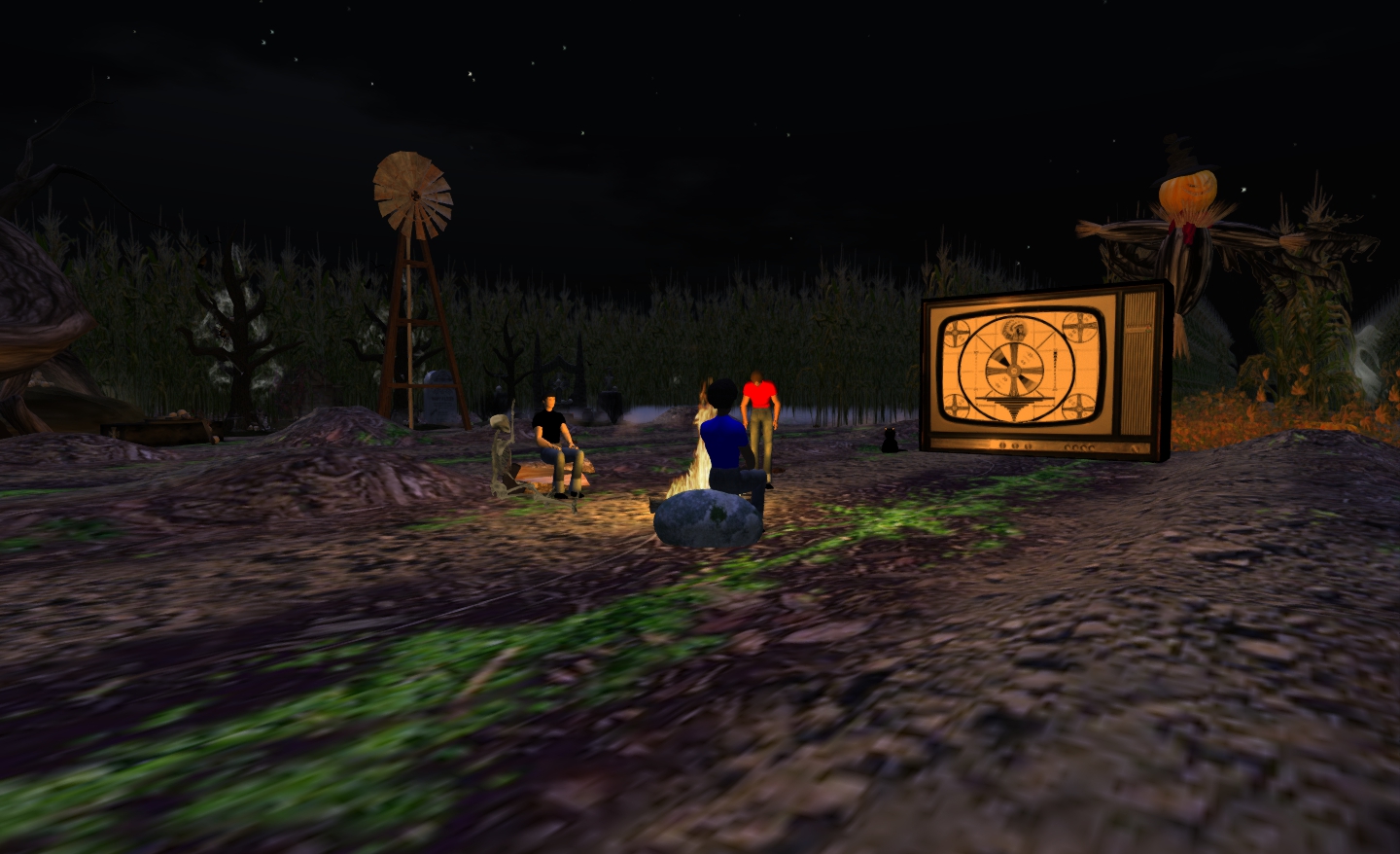
So opened the TV series The Twilight Zone – at least in part. It is from an episode of that series – It’s a Good Life – that SL’s most mythical destination was born: the Corn Field, a place where those avatars who had been bad would be banished to contemplate their wrong-doing.

The star-lit field of corn, cut-off from the rest of Second Life original existed in the Northwest corner of Orientation Island 1. Today, it has been recreated across four sims, all spookily identical, which you can wander through and meet the poor, lost souls.

The Corn Field

Mocha Cathedral

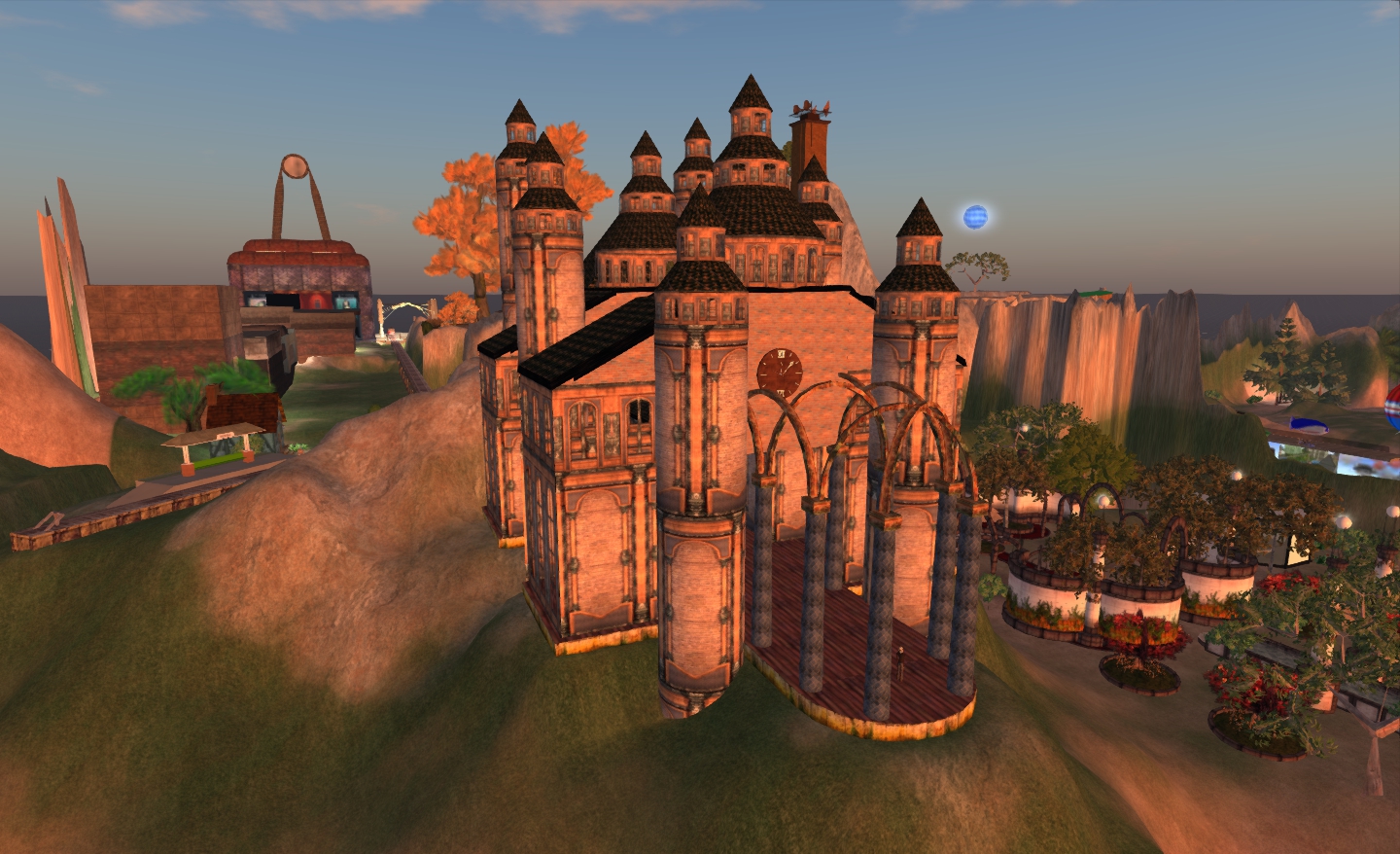
Another example of early SL architecture – this one dating from 2004 – is Nephilaine Protagonist’s Mocha Cathedral. The simple, elegantly clean lines of the cathedral were of huge influence to other builders in 2004, especially those striving for a “real” look and feel to their work. Here you can wander through the cathedral, and if you are so-minded, light a prayer candle, naming it for whatever is in your heart.

Mocha Cathedral

There are several other examples of early SL to be found around the grid – Baffin Island, the Climbable Beanstalk, the Stillman Bears. Many may seem quaint by today’s standards, but as historical pieces, they help remind us just how dynamic Second Life is. If you have some time you’d like to spend exploring, why not take a dive into SL’s origins via the Destination Guide.

Related Links

Viewer 3 release: snapshot floater in and installer fixed

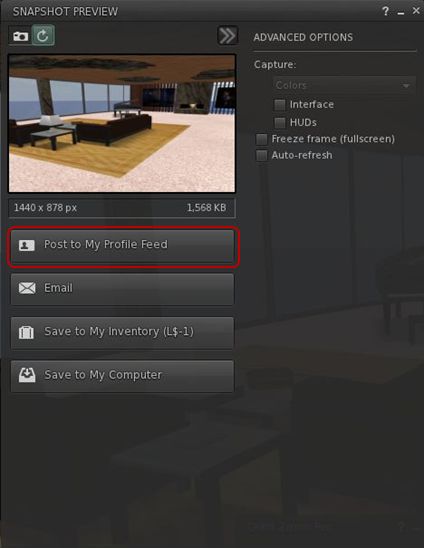
Viewer 3 has had a release slipped out. Version 3.2.4.246439, dated December 8th, brings with it the long-awaited (for those not using a recent TPV or either the Beta or Development versions) updated snapshot floater, allowing you to send snapshots directly to your web profiles feed.

I’d actually missed this release, if it did surface around the 8th, which is a little ironic, as I’ve been trying to keep a weather eye on Viewer 3 updates, but admittedly have had my attention elsewhere in the run-up to Christmas and also trying to put a few upcoming blog posts in order as well.

Installer loses Viewer number

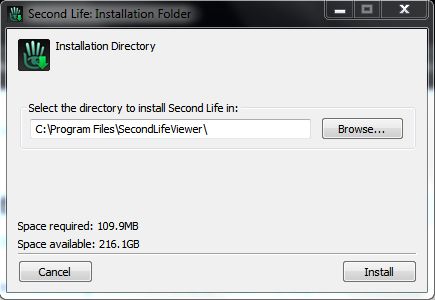
Another change that should make Tateru a little happier 🙂 – is that the installer now simply calls the Viewer the “SecondLifeViewer” (on Windows at least, I can’t speak for other O/s versions of the Viewer) and installs into a folder of that name – the version number is now gone. I can’t speak for the issues on disconnects or those of grpahics issues, but I am assuming it has the OpenGL fixes included (which would, I believe, roughly fit the release date).

Sadly, the click-to-walk still results in mouse steering being, as we say in England, arse-backwards.

I’ve not looked too deeply at the release for other updates, but those using it should have been prompted to update if running an older version; although (again with Windows release at least), because of the install location name change, you need to uninstall the prior version yourself afterwards.

Snapshot floater makes it to a release version of the Viewer, complete with profile feed option


Mesh, maths and the mainstream

Nalates Urriah carries interesting news from Charlar Linden by way of the Mesh User Group, in that:

  • Some 55% of SL users are running Viewers capable of rendering mesh
  • Some 18% of regions on the main grid now have mesh objects rezzed in them.

Nalates speculates the data may have been gathered before Phoenix gained its mesh capability. If this is right, then it would put those using mesh-capable viewers in the majority for somewhat longer than has been thought to be the case (given mesh capability has been growing across both V3 and V1 based viewers since September).

However, it is the second figure that attracted my attention. On the one hand, it suggests mesh is gaining traction, but on the other, it hasn’t been the hit Linden Lab may have been anticipating.

It is certainly true that overall take-up has been slow in terms of mesh objects becoming more and more apparent on the grid (although telling them apart from anything else without detailed inspection is admittedly becoming harder and harder with the rise of mesh-capable Viewers).

One of the reasons for this is likely to be the fact that, like it or not, there are technical issues surrounding mesh as currently implemented. Some of these are doubtless down to the complexities of having to shoehorn mesh rendering and support into SL’s existing architecture without actually breaking bits of it completely. However, the fact that there are issues has tended to lead to proclamations that mesh is “impractical” on a broad range of uses where this is actually far from the case.

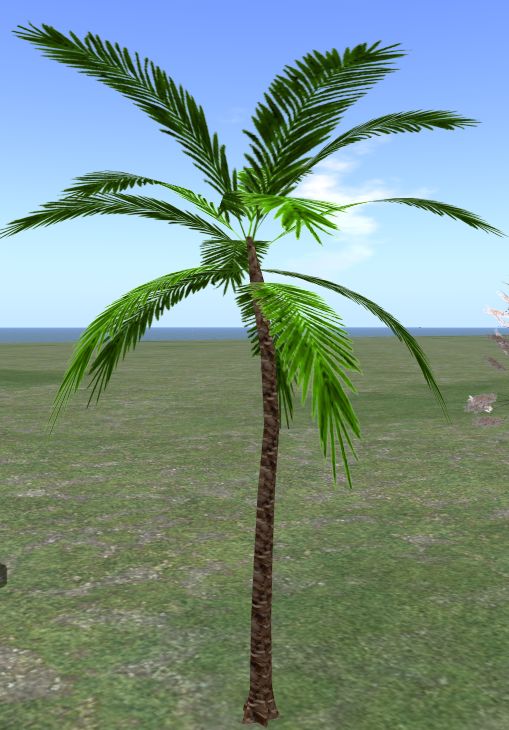
Mesh palm: 9 prims

One example of this is with trees and plants. Back when mesh was still in Beta, a content creator posted an article about being unable to create a tree in mesh without the PE (Land Impact as it is now) being in the 500-600 prim range. This was seized upon by some  – and is still cited today – as “proof” that mesh doesn’t work. The fact that there are examples of trees with a PE/LI down in single figures is simply brushed aside; I’ve actually had a post where I pointed this out dismissed as “politically motivated”!

Similarly, people insist that houses cannot be made in mesh without incurring massive Land Impact values. This again isn’t strictly accurate. Sure, there are houses that incorporate mesh  that hit a Land Impact of 350-400 – but then, there are also prim builds of equitable size, and intended for the same parcel size, that also hit the same LI values.

And, like it or not, mesh can compete with builds of more modest prim footprints. Take the example below; it has an overall land Impact of 91 fully furnished. The house structure itself, textured beautifully, has a LI of just 29.

Partial mesh house by Novocaine Islay, as seen through a mesh-capable Viewer (l) and non-mesh Viewer (r) to demonstrate it is mesh. total Land Impact: 91 prims with furnishings

Elsewhere, mesh clearly does bring with it benefits that are obvious to grasp. Furniture is one such area, where prim counts can easily equal or better than prim or prim/sculptie equivalents and give a greater level of detail, even allowing for the complexities of including scripts and animations – as the two examples below pulled from the Marketplace demonstrate.

Tiki Tattoo Rotan sofa (l): seats 5; 59 animations 7 prims with shadow effect; Rustica Gothic chair (r) 11 animations, shadow effect, 2 prims

However, the flipside of this is that, in fairness, there are areas where mesh is an unsuitable option, simply because it does incur higher “prim counts”, or can have unforeseen consequences. Ergo, its use is going to remain limited.

Take the aforementioned tree; it may well be possible to develop a beautifully detailed palm tree for just 9 prims. It’s quite a modest count – but it’s still a poor proposition when you can get three sculpted palms trees with shadows for just two prims; and people really aren’t going to be bothered about the underlying resource cost of the latter, because it’s not something that can be readily seen.

It is also somewhat impossible to stretch and resize mesh objects without ending up with some alarming results on the Land Impact scale. Again, this tends to rule out mesh for applications where resizing is required – such as the supply of in-world building component sets.

So yes, there is a case to answer for mesh at times being “impractical”. But this has perhaps been over-emphasised in some respects, and may well be a contributing factor – albeit a small one – for the slow take-up of mesh.

However, there is a much more direct reason as to why mesh would appear to be struggling to gain a more secure foothold in SL. It is this: creating mesh can be a nagging discomfort in the region of one’s posterior.

It’s Not Easy Being Mesh

For many well-versed in in-world content creation, the making mesh objects feels like something approaching alchemy. There are new tools to learn – Blender, Wings 3D, Maya or whatever you opt to go for. People who are perfectly conversant with gluing prims together can find these pretty mind-boggling to understand (as I know from experience).

Then there is the whole process of optimising a creation for in-world use and getting it uploaded. A creator-friend of mine who is working with mesh described this as akin to a visit to the dentist: it has to be done, but it’s generally far from pleasurable.

So for many, the creation of mesh objects isn’t the same as creating with prims; the fun element is removed, and the whole thing just becomes hard work to the point where it may well be felt that it simply isn’t worth the hassle.

It also can’t be denied that the tool set is lacking, and this doesn’t help. Most of us are by now familiar with the concept of a parametric deformer, which should help with the matter of mesh clothing. However, such a tool could have had far wider implications for mesh had one been implemented as a part of the overall mesh roll-out – such as overcoming resizing issues, as Drongle McMahon points out in the mesh section of the technology forum. 

Obviously, as I mentioned above, some of the issues around mesh creation are most likely imposed upon us by SL’s existing architecture. As such, it’s actually unfair to blame LL where this is the case. However, it’s probably equally fair to say that other issues, such as failing to include deformer tools, are down to management decisions which have potentially damaged the take-up of mesh and for which LL must shoulder the blame.

Perhaps the Real Question is, “What is meant by 18%?”

However, I actually have a more fundamental issue with the 18% figure. It’s simply so nebulous, it’s meaningless.

Great, so “18% of all regions have mesh objects rezzed in them”. But, um, what exactly does this mean? How is it qualified? Were I, for example, to be the first person to rez a single mesh object – say an armchair – in my home, would that tip my home sim into the “18% of all regions”? If so, then the value of this figure is drastically diluted.

Also, how does clothing and avatars meshes and avatar accessories (hair, attachments, etc) factor into this? These would appear to be by far and away the most popular mesh items available on the SL Marketplace, yet Charlar’s figure would suggest they are  excluded from any calculations, as they aren’t technically “rezzed on” a region, but rather “worn” by the avatar in question. So it is possible that in practical terms, mesh take-up may actually be greater than appears to be the case.

Thus, on these figures alone, it’s hard to define mesh as a “success” – or even, allowing for the questions around the 18% figure – “mainstream” – and please note I’m deliberately ignoring the comment on mesh sales Nalates also lists. This is again a generic statement; that “sales have doubled” is meaningless without some figures behind it.

However, it would equally be wrong to dismiss mesh as a “failure” on the basis of these figures, simply because they are so very nebulous and vague – at least where percentages of regions and doubling of sales are concerned.

All that really can be determined is that mesh continues to exist in something of a limbo, together with a speculation that it is possibly doing less well than LL had been hoping. Certainly, it’ll be interesting to see how the figures look and another two or three months’ time – and how they are presented.

Grid Status: a letter to Santa Linden

Santa Linden
North Linden Pole
Second Life
Everywhere.

Dear Santa Linden

I know that at this time of year you have much to do, but I would like to make two little requests – if not for Christmas, then for the New Year.  

Can we please have in-world notifications of grid issues, the commencement of maintenance tasks and so on returned to Second Life?

And could you please add the Grid Status list to the Viewer log-in screen, which is now being used by several popular TPVs as well as your own?

Yes, Santa, I know I’ve been going on and on about these things to Uncle Rodvik and Uncle Viale most of the year; and I also know that JIRAs on both notifications and the Grid Status have languished unloved, unwanted and unwatched for a long time, so you may not think them important.

I also understand that you and all your Linden Elves do work very hard to keep the grid running smoothly, but that sometimes there are Things You Have To Do to keep it going, and other Things That Need Attention, and these can make things go a bit bumpity.

But you see, you’ve given us the means to jump in and be a part of a rich, immersive world, so it’s not easy keeping one eye on what goes on in-world and one eye on a Grid Status webpage – even for those who are lucky enough to have two monitor screens. So wouldn’t it be so much nicer if you provided everyone with the means to see what is going on, either when they are in-world or as they are about to log-in?

So please, Santa Linden, I know it’s sometimes hard to think of the little gifts when you have so many big, bright, shiny and exciting things to bring to us all in 2012, but doing this would be so helpful with all the users in the world and perhaps even help us not to feel so Grumpy when bumpity things start to happen. So would you do it?

Pretty please?

With love and kisses,

Inara ♥