Update: 2019-XS has closed and Zee9 has relocated her Drune build – see Drune: a further visit in Second Life. SLurls have therefore been removed from this article.
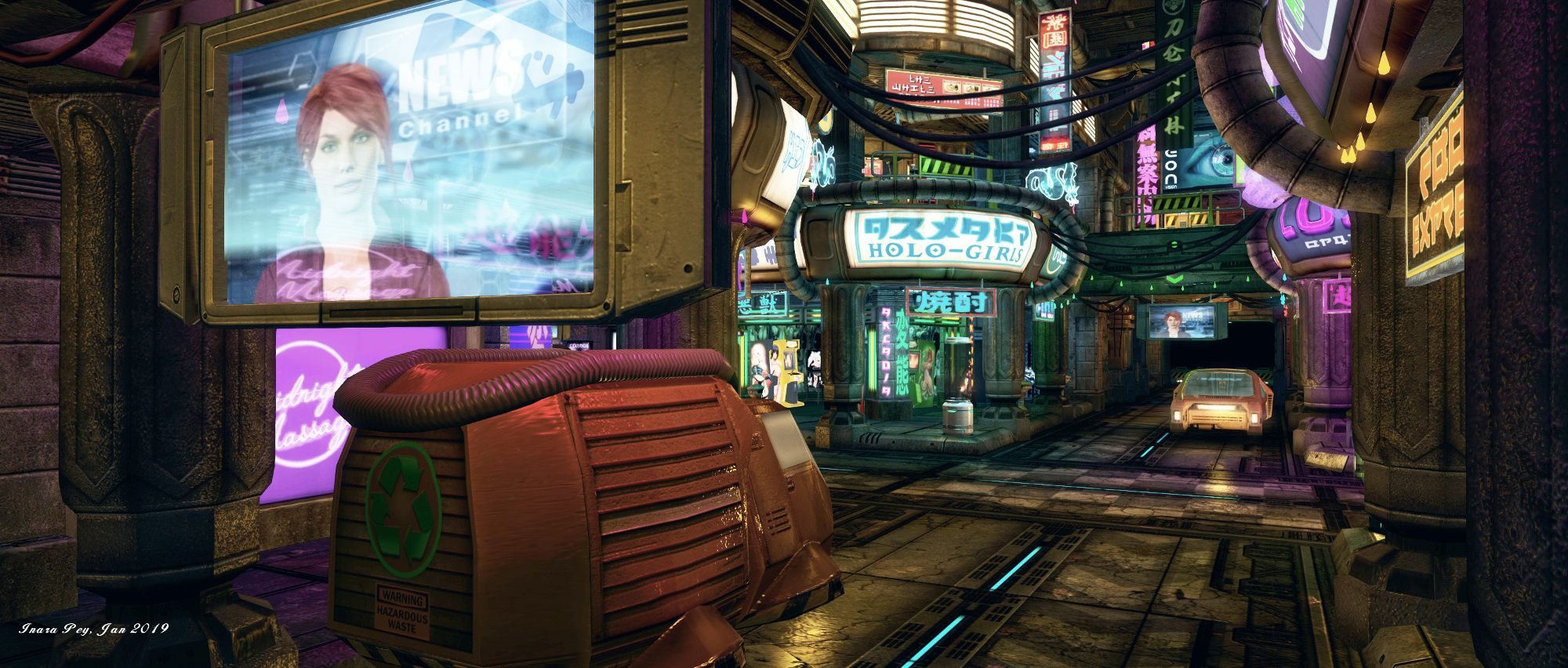
On the advice of a number of people – starting with Annie Brightstar – we recently visited 2019-XS, defined as “a sci-fi sim in Second Life with a cyberpunk feel, inspired by films like Blade Runner, The Fifth Element, and Neuromancer.”
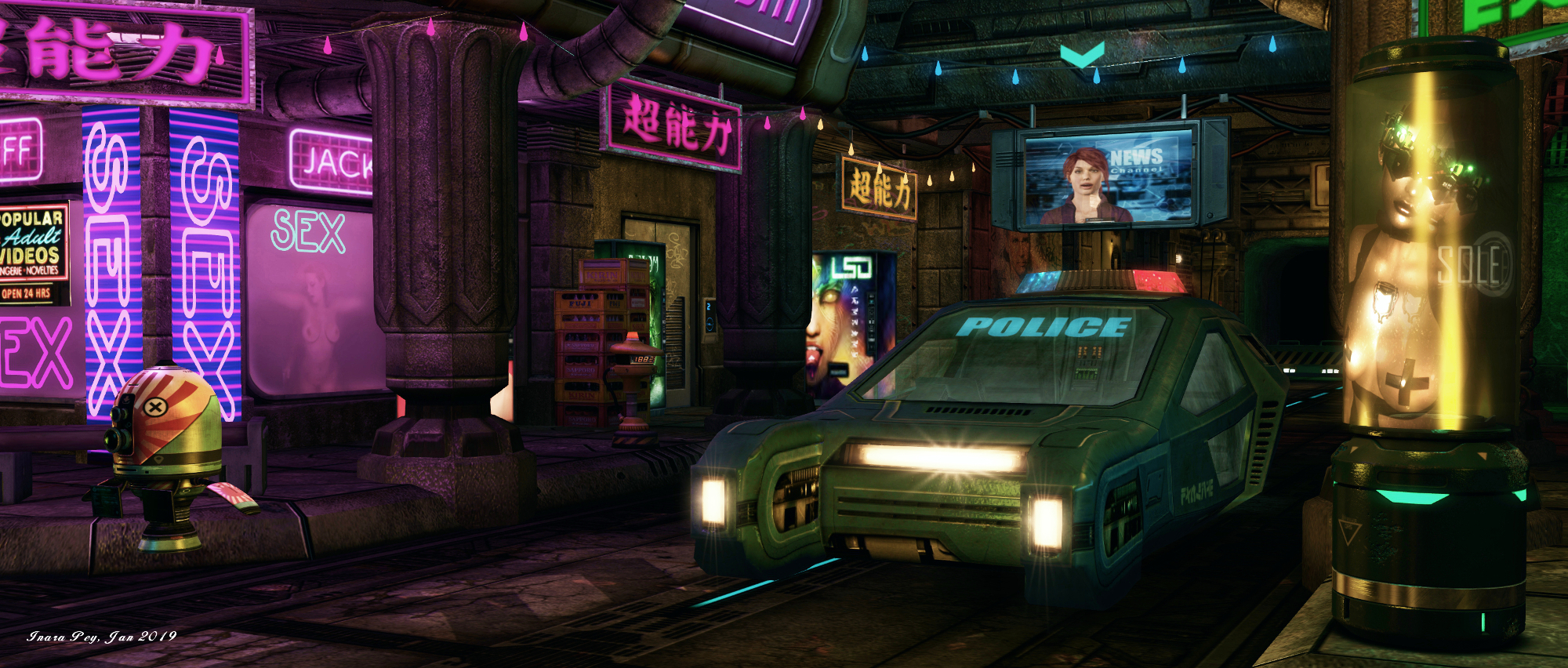
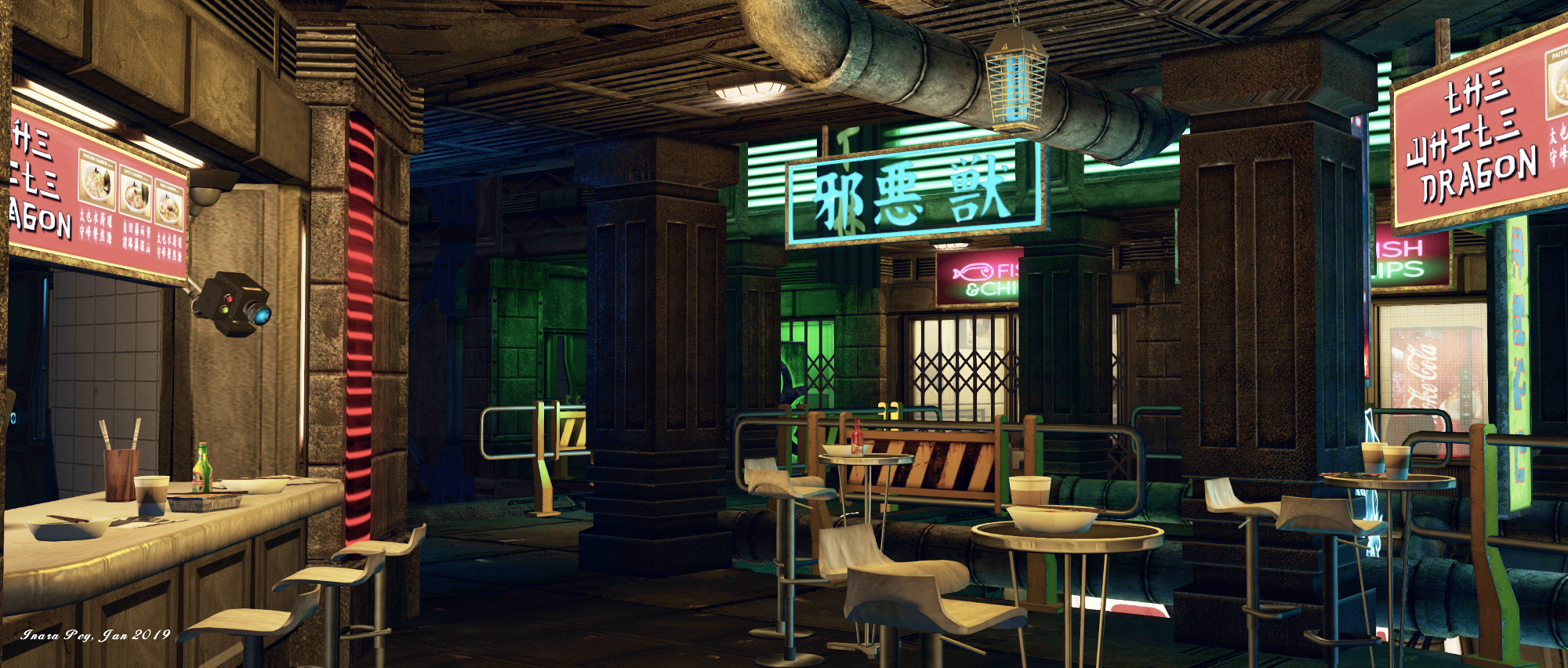
Designed by Hera (zee9), the region has an adult edge to the role-play, and is intended as an extension to her previous (and now departed) build Drune. I’ve not seen that design, but will say that while compact, 2019-XS has a certain ambience that is hard to define, but has seen me make three visits to it in order to fully appreciate the ambience and setting.
2019-XS
While the region is described as being inspired by the likes of The Fifth Element and Blade Runner, the setting feels more potentially “sci-fi / dystopian generic” than these films would suggest. This is not to demean the region in any way; rather it’s an acknowledgement that it has a broader feel to it than a narrow focus on a specific film or films.
For example, while the design has a vertical feel to it, with a street level and upper walkways, all with plenty of neon on display, the overall feel is perhaps too Asian, too industrial / metallic too clean to perhaps fit it fully into the streets of the 2019 Los Angeles witnessed in Blade Runner. Then the narrowness of the streets, the cluttering of their canyon-like forms and lack of aerial traffic doesn’t entirely sit with a Fifth Element vibe.
2019-XS
Nevertheless, there are motifs from both films. There are buildings that have an older, stone-built look that echoes places like the Bradbury building as imagined in Blade Runner, for example. There are also the spinner-like vehicles (both commissioned and decommissioned), while the elevated walkways between the buildings offer a suggestion of a crowded city, again a-la Blade Runner and the TV Series Total Recall 2070 that took many of its visual cues from the film.
That said, were I to point to a particular film influence on the setting, I would sway towards Neuromancer. Whilst never made (the film is still characterised as In Development by IMDB), the concept art from that production offers takes that do reflect the setting within 2019-XS. But even then, I’d suggest that the region be allowed to stand on its own, free from any frame of reference that could lead to specific preconceptions.
2019-XS
The main streets are laid out simply enough – but in doing so, they hide the complexity of the setting. There are back alleys to be found; stairs and elevators to the upper levels, while private clubs lie behind heavy doors or at the bottom of outdoors steps leading down to a basement level. On the upper levels can be found more eateries, small apartments and hallways.
Role-play is, I believe, of a free-form nature; but again, be aware that there is a lean towards more sexual play, so the setting might not please everyone. For photographers, there are numerous opportunities to take photos – both avatar studies or cityscapes. There is also a Flickr group where images can be displayed, and which also includes pictures from the earlier Drune.
The following notes are taken from the TPV Developer meeting held on Friday, January 18th, 2019. A video of the meeting is embedded below, my thanks as always to North for recording and providing it. Time stamps are provided to the major topics of discussion , which will open the video in a new tab for ease of reference.
The following viewers updated on Wednesday, December 16th, 2019:
The Love Me Render RC viewer updated to version 6.0.2.523177.
The EEP project viewer updated to version 6.0.2.523088.
The remainder of the official pipelines remain as:
Current Release version 6.0.1.522263, dated December 5, promoted December 13. Formerly the Spotykach Maintenance RC viewer – No Change.
Release channel cohorts:
Estate Access Management (EAM) RC viewer, version 6.1.0.522564, December 19.
BugSplat RC viewer, version 6.1.0.522614, December 18. This viewer is functionally identical to the current release viewer, but uses BugSplat for crash reporting, rather than the Lab’s own Breakpad based crash reporting tools.
Project viewers:
Bakes on Mesh project viewer, version 6.0.1.522127, December 7.
Linux Spur viewer, version 5.0.9.329906, dated November 17, 2017 and promoted to release status 29 November – offered pending a Linux version of the Alex Ivy viewer code.
Obsolete platform viewer, version 3.7.28.300847, May 8, 2015 – provided for users on Windows XP and OS X versions below 10.7.
The EEP viewer is now very close to being promoted to RC status, and if all goes to plan, the simulator EEP support should be going to RC as well very soon.
Viewer Build Process
[4:04-7:24] The Lab is starting on moving their viewer build process to Visual Studio 2017. This may lead to changes appearing in the build process as this work progresses. So far the work is proceeding smoothly, and is not anticipated as taking too long to complete. After this, the Lab plans to track their build process updates a lot more closely to Visual Studio releases (VS 2019 will be appearing this year). Mac builds are to OS 10.13, and use Xcode 10.
Linux Viewer Status
[11:40-17:42] A couple of TPV Linux developers have contacted Oz Linden concerning assistance with the Linux build of the viewer. The holiday period, plus the fact Oz was on vacation immediately following it, means he has not followed up on the offers as yet, but will be doing so. It is hoped that this means work on supporting Linux will once again resume soon.
The Lab’s plan had been to provide a basic Debian build for Linux, avoiding the need to rebuild all the libraries for different tarballs. However, but suggestions have been made to consider using snaps / flatpacks instead. Currently the Lab is open to trying to incorporate the progress other have made in supporting Linux, including setting up build environments to support them with the aim of providing a Linux flavour for the viewer once more, with the caveat that any work carried out must not break the build processes for the other platforms.
There are a couple of potential caveats with any Linux viewer build that emerges from this work:
It will not have direct Voice support because a) Vivox no longer support Linux; b) changes to the Voice API means older versions of the SLvoice.exe plug-in will not work. (although voice via Wine is possible).
It is unlikely to have Havok support. It is felt that the number of Linux user actually employing the official Linux viewer has always been so small that the effort to incorporate the Havok libraries is not seen as worthwhile. This may be revised as work progresses.
Non-HTTP Asset Fetching / UDP Path Deprecation
[7:44-10:36] All asset types are – and have been for some time – fetched via HTTP / the CDN. However, the old UDP message paths for such fetching has remained in place. This is now being deprecated from the simulator code. The patch for this is not ready to go, and should be rolling out across the simulator release channels over the next few weeks, a little later than originally planned.
This means anyone using really old viewers that do not have HTTP asset fetching (notably for the likes of system body parts, system clothing, gesture, animations, sounds, landmarks and textures) will no longer be able to obtain responses to asset requests.
[34:52-35:15] The Lab will also consider requests to move other functions away from UDP to other capabilities.
In Brief
Reports are increasing on the time it takes mesh attachments (clothing, body parts, to “snap” into place when logging-in or teleporting to a region where there is a number of other avatars.
Some Firestorm users are also reporting texture corruption issues linked to the above, which may be linked to Malwarebytes anti-virus software..
Firestorm is hoping to move the current version with Animesh support to a “full” release around the end of January, hopefully).
Catznip is planning a release without Animesh support, to be followed by a release with optional Animesh release.
The following notes were taken from the Sansar Product Meeting held on Thursday, January 17th. The meeting was chaired by Stanley, the Director of Product for Sansar at Linden Lab and who was marking his first time leading a product meeting. Also in attendance (who I noted) were Cara, Aleks, Leslie, Nix and Stretch Linden.
Stanley has been with the Lab for some six months, and has been working closely with the Product team with a focus on improving the consumer experience, particularly the integration with Steam.
Sansar Dollars To US Dollar Conversions
On Wednesday, January 16th, 2019, Linden Lab published a Sansar blog post outlining Sansar Dollar to US dollar conversions. The post follow-on from changes announced in December related to Sansar becoming available on Steam – specifically the closure of the SandeX, which has been replaced by a flat-rate exchange rate for S$<>USD transactions.
The latest blog post outlines the key points of the new exchange process. In short:
Sansar dollars can be converted to USD at the rate of S$250 to $1.00. However, anyone who created their Sansar account before December 31, 2018, can exchange at the legacy rate of S$143 to $1.00 through until December 31, 2019, after which the conversion rate for all accounts will be S$250 to $1.00.
The Process Credit page has been re-enabled for moving USD to PayPal accounts. However, to allow for processing of funds that may come via Steam, processing may take up to 30 days to complete a request.
However, there is more – and it has been somewhat negatively received.
Only “Earned Dollars” can be cashed out. That is, only S$ obtained via the sale of goods / services. S$ that are purchased or received as a gift / tip cannot later be cashed out (although all S$ held before the January 16th blog post have been converted to Earned Dollar Status).
It has been calculated that, even allowing for easements elsewhere in the system, creators are losing some 60% of potential income when cashing out.
This latter point was of particular concern at the Product Meeting, but the Lab’s hand is forced on the matter due to Sansar now also being provisioned through Steam, there is also concern as to whether the S$ > USD exchange rate might undergo further adjustments other than that planned for the end of 2019.
There are currently no plans to introduce adjustments to the cash-out exchange rate beyond those indicated in the blog post, which amount to anyone cashing-out paying around 60% in commissions. To help offset this, the Lab no longer takes a commission on any store-based transactions between users; they only take a commission on the cashing-out of S$.
Even so, and not unreasonably, creators feel that the shifting of fee payments to the cashing-out process means they are effectively subsidising the Steam integration, particularly given that – by the Lab’s own admission – the majority of users in Sansar are still coming directly into the platform, rather than via Steam, yet Steam still take a cut of the cash-out transactions.
The Lab acknowledge this is currently one-sided, but given they have no means at this point in time to accurately judge how much of an impact Steam will have on Sansar’s usage, they have erred on the side of caution. But whether in time the commission percentages could be adjusted, very much depends on how traffic flow through Steam develops over time, with changes to the cash-out process liable to be considered very carefully before being implemented.
It was asked whether Sansar could be provisioned through Steam “without the money part” in order to simplify matters. The problem seen with this approach is it would exclude Steam users from any economic engagement in the platform (as their transactions must come via the Steam wallet), reducing their interest in using the platform (no ability to buy avatar accessories, good, etc.).
The Future With Steam and Other Providers (e.g. Oculus)
Linden Lab see Steam as the “industry standard” for accessing games and for using VR with games. As such, they are unlikely to move away from the current partnership. However, if over time the relationship with Steam does not prove beneficial to Sansar in terms of growth, use, economy, etc., the platform is not in any way locked-in to Steam on a permanent basis, and so a future separation is not impossible.
The Oculus store has also been looked at as a potential channel for Sansar, and talks have been held. However, because of the relationship between Oculus and Facebook, this had proven a lot harder, but is still being worked on.
New User Experience
New User Experience Steam “versus” Sansar
There still seems to be a perception that users coming to Sansar via Steam have a different new user experience to those coming via Sansar.com. Aside for the sign-up process, this is incorrect. Sansar as provided through Steam is no different to Sansar accessed via the website / direct client download: all users go through the same on-boarding experience with their Home Space and the client tutorial, and the new Social Hub.
Enhancing the New User Experience
There are internal discussions at the Lab on further enhancements to the new user experience, such as adding some form of achievements / cosmetic awards system or similar, in order to encourage engagement (particularly among Steam users).
One of the issues Sansar faces (like Second Life) is how it should be pitched, simply because the potential use-cases are so vast and different. Creators, for example, have different reasons to try the platform to consumers; even gamers with an interest in modding view things differently to those purely interested in game play. Thus, the Lab is still juggling with approaches.
In terms of Steam, one of the most basic areas in determining how the appeal of the platform could be improved is via the constructive feedback offered through reviews, given that when provided, these most frequently involve comments on the “non-standard” approach to how control options are laid out on the hand controllers.
Gaming Templates
In keeping with previous Product Meeting summaries in these pages, the Sansar Team is working on various game-style Sansar templates (e.g. shooting games). It is hoped that when these become available, they will encourage creators / users to utilise them within their own experiences, further helping to drive engagement in Sansar.
These templates have also seen the Lab considering issues such as scoring mechanisms, persistence of scores / progress between sessions, etc.
Upcoming R29 Changes
The upcoming R29 release (the first for 2019) includes some further VR updates related to a user’s “connection” to their avatar.
One of these will be for the avatar to be more in sync with a users body movements, rather than lagging behind, as can be the case at the moment.
Another is to provide better control of arm movements (although this wasn’t clear to me, I assume this is related to keeping the arms more naturally in line with the avatar’s body when moving the hand controllers around).
R29 should also see the removal of the height calibration menu and storing a person’s height when using VR. There will still be options for setting it, if required (such as when a headset is being used by two different people); but where the headset is only used by the one individual, it shouldn’t be necessary to re-calibrate between sessions.
Mnemosyne, sister of the Titans and Mother of the Muses, was the Greek Goddess of Memory. According to Greek Mythology. Those who drank from the waters of Mnemosyne secured recollection of their memories as they passed to the next life.
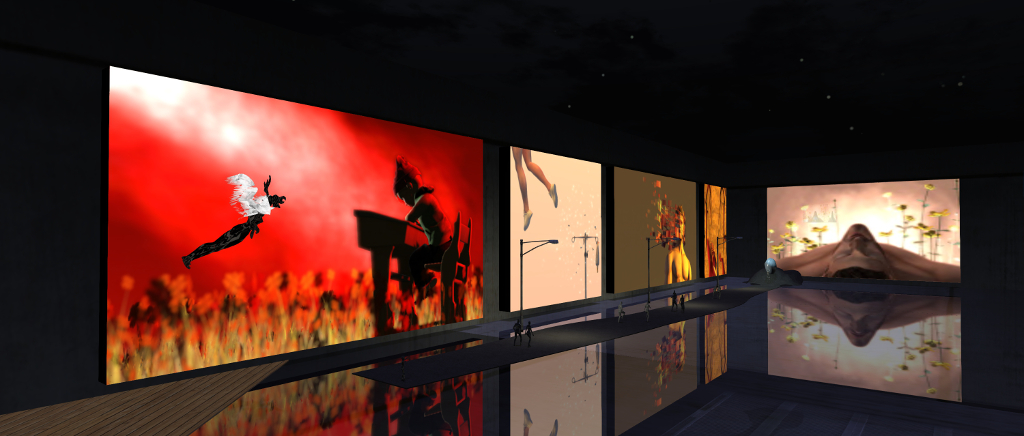
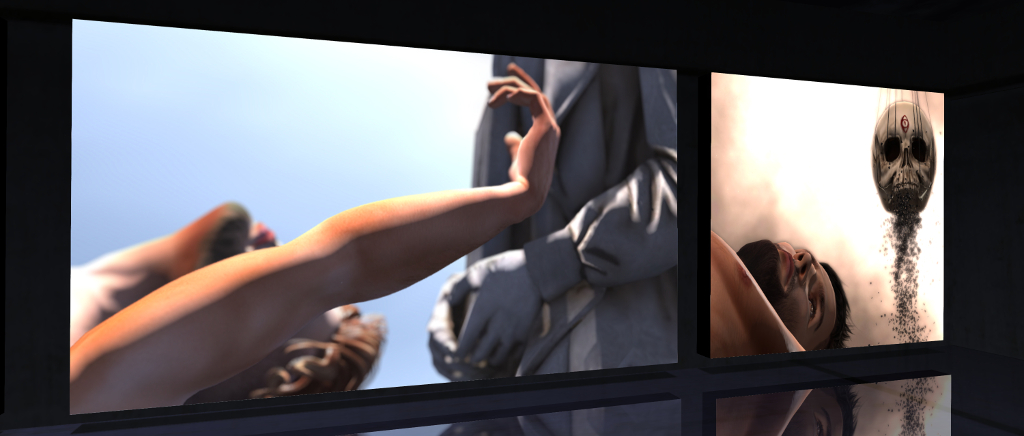
So reads the introduction to the first exhibition for 2019 at Nitroglobus Roof Gallery, curated by Dido Haas. Offering to Mnemosyne by Fenris (Fenris345) is a somewhat different exhibition to previous events at the gallery in that is offering a series of images that offer a glimpse of the artist’s own introspections on life, set within a mythological framework that has a resonance for all of us.
The daughter of Titans Uranus and Gaia, Mnemosyne occupies something of a unique place in Greek mythology. While the Titans were viewed as archaic, she nevertheless has a prominent role. With her nephew Zeus, she conceived the nine Muses. As the introduction of the exhibition notes, she presided over a pool that ensured those passing into the afterlife preserved their memories, and which stood in opposition to the river Lethe, from which those passing into Hades might drink if they wished to forget.
More particularly, her role is important to the Greeks, as memory was seen as one of the essential foundations of the oral (and later written) tradition; thus Mnemosyne herself one of the essential building blocks of civilisation in within Greek mythology – hence her elevation to that of a Titan.
And the truth is, memory is important to all of us; hence why this exhibition might be seen as an expression of introspection by the artist – a fact further expressed by the inclusion of some descriptive notes on each of the pieces in the exhibition by Fenris himself. However, I would recommend that visitors view the pieces before reading his comments; personal and introspective to the artist these images may be, but they can also serve as a springboard for our own memories. Simply allow the title of each and the image it presents to talk to you a moment; it’s surprising the memories each picture calls forward.
Evocative, personal, rich in narrative, there is a depth to this exhibition that encourages time to explore each of the images carefully; in allowing them to speak quietly to you, to tease memories to the fore. It is also the reason why a return visit is well worth the while: to appreciate each through the eyes of the artist, by viewing them in concert with his personal notes (just click the greeter board to receive them with Dido’s introduction to the exhibition.
Update: Black Veil, the location for North Providence has been repurposed, and as such this build no longer exists..
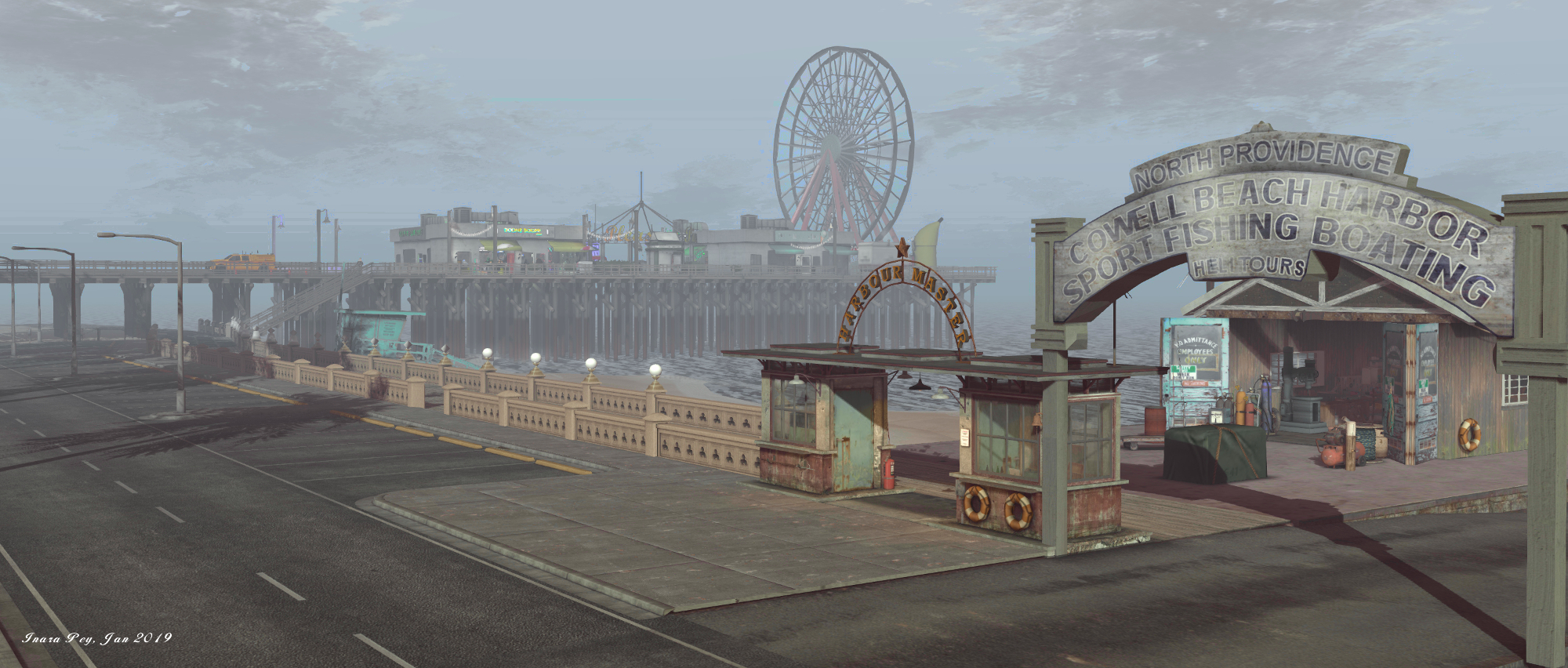
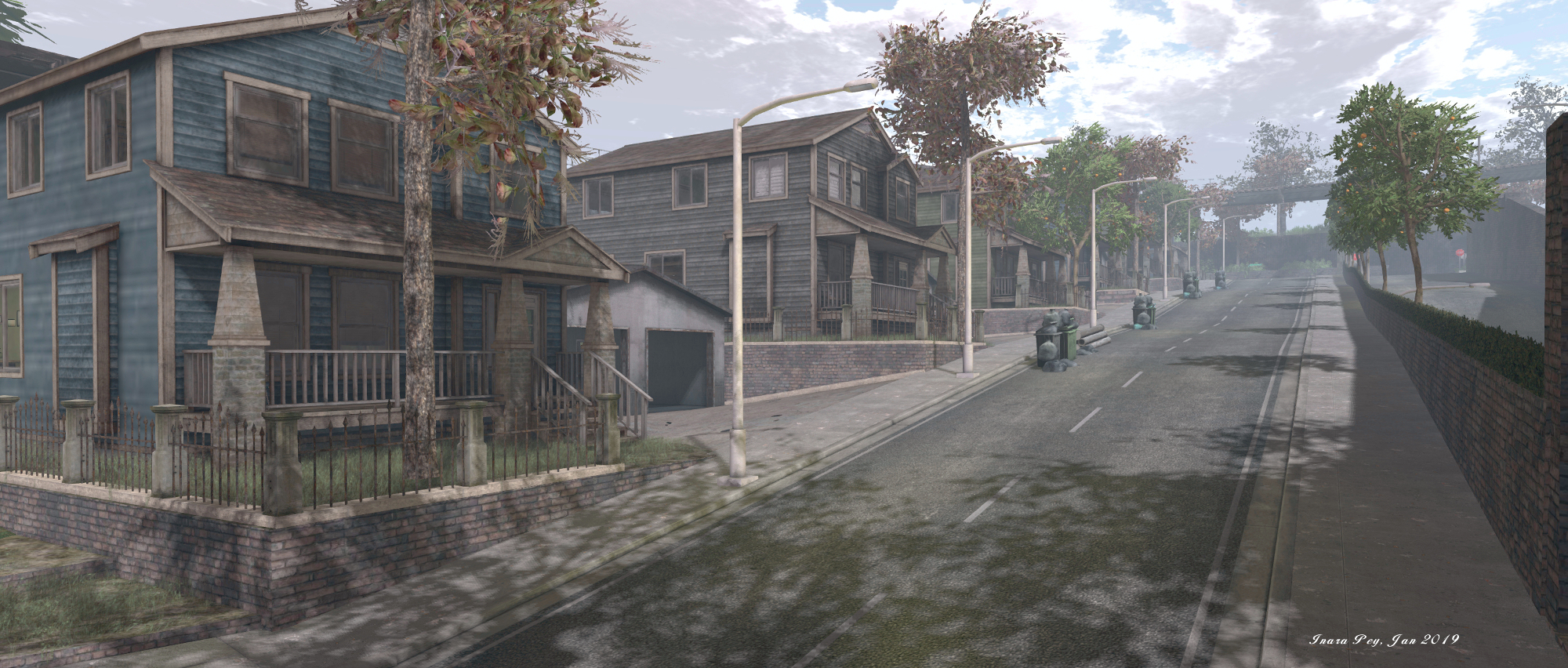
I was drawn to North Providence, a five-region role-play estate after seeing a photo by fellow SL traveller and blogger, Wurfi. Defining itself as the year’s best choice for modern role-play, the estate is both new (the regions are all less than a month old) and an ambitious environment offering something of a reproduction of New York – both the city and the State.
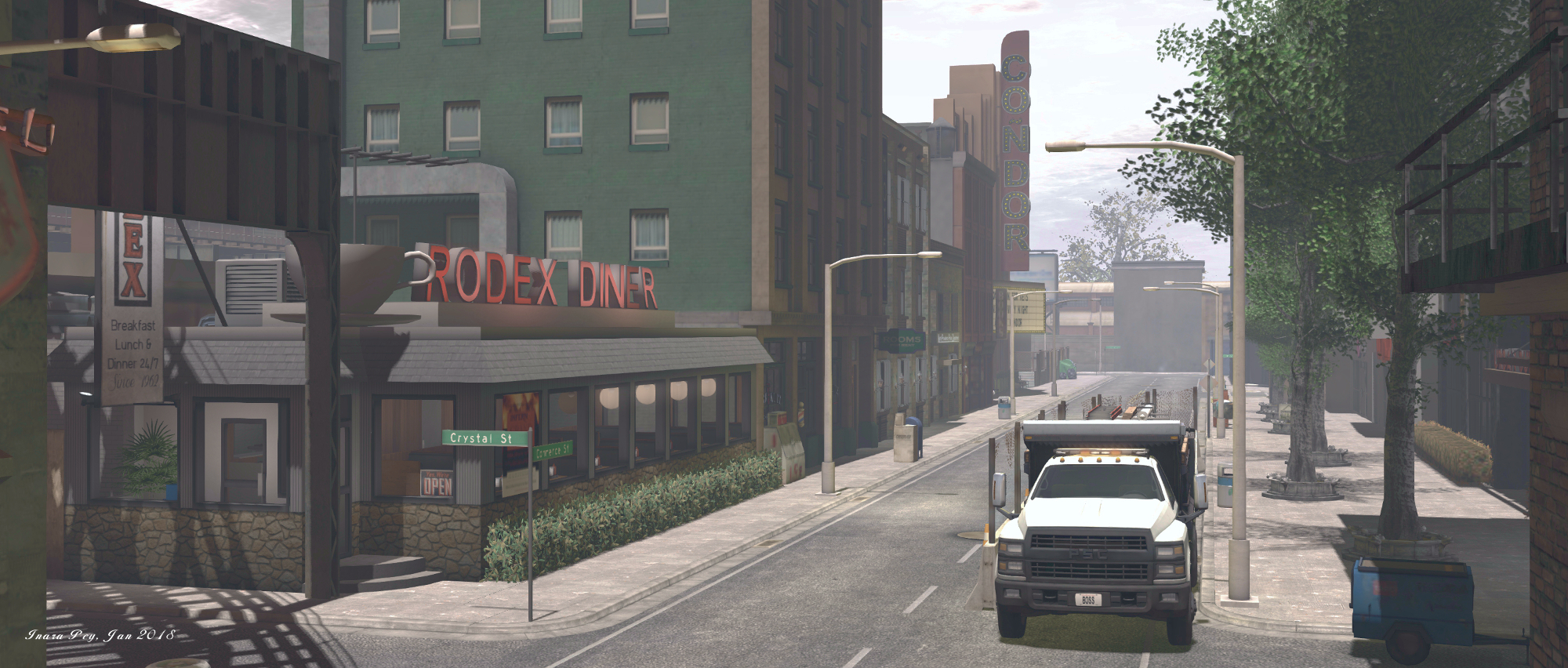
The role-play is somewhat adult-oriented (the About Land description includes urban, violence, drugs, crime, gangs, sex, with all but one of the regions Adult rated), but the environment is very well thought-out and presented, openly public, but with spaces for small businesses and those wishing to experience role-play in a modern setting.
North Providence – click any image for full size
North Providence prides itself on a one of a kind experience you cannot find at just any role-play region, from its plethora of preset locations for you to build your story in or the available rentals to explore your savvy business side, North Providence has it all, and it’s the perfect place to call home.
– From the North Providence website
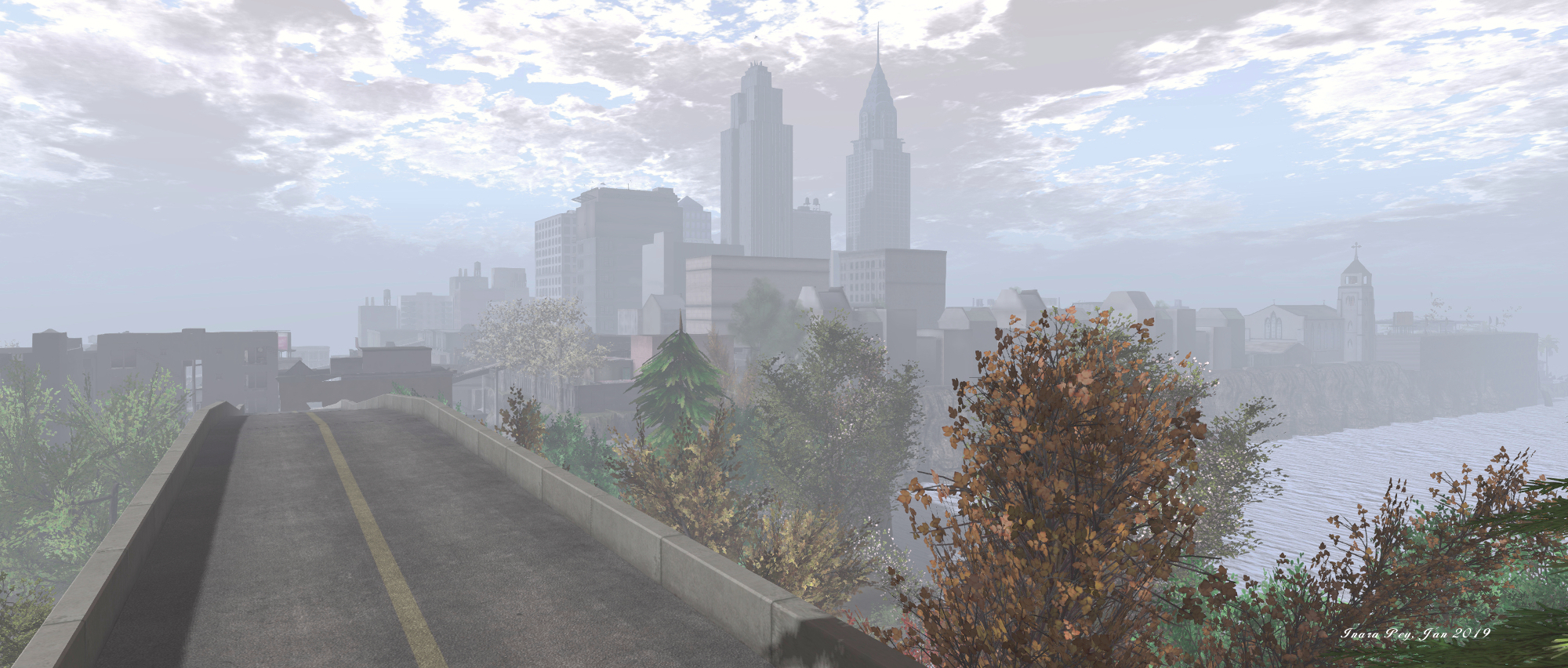
The layout is well-considered, offering as the text above suggests, a series of preset locations, all of which are carefully formed into a cohesive whole. It includes elements of Manhattan, notably in the presence of both the Empire State Building and the Chrysler Building (both with apartments inside), together with Columbus Circle. There are also suggestions of outlying area of New York City, complete with elevated sections of the subway, housing and projects, and even hints of up-state New York with open spaces, woodlands and hills.
North Providence – click any image for full size
A map of the city is provided, but this by no means reveals the full extent of the estate, particularly the up-state areas of Brooks County and the board walk seafront that could be South Beach or Atlantic Beach. So, there is a lot to explore – including underground, where a network of service tunnels can be found. These might offer the potential for the more criminal aspects of the role-play to be enhanced, although again, I didn’t fully explore them, so I’ve no idea how often they connect with the rest of the estate.
I also cannot speak to the role-play within the estate on the basis of a single visit. However, there were a fair number of people within the regions during my time there, only some of whom appeared to be casual visitors. Those wishing to keep up with news of activities and events within the estate can do so via The Hutson Street Journal, the community newspaper. There is also a calendar, but whether this is for recording local events is unclear. When examining the estate, do keep in mind this is a new community, and one that is still in the process of finding / growing its audience – something that might also be reflected in the status of the website.
North Providence – click any image for full size
North Providence is an interesting new role-play estate; I did encounter some issues with texture loading at times (so reducing draw distance in places might be needed). It will be interesting to see how the estate and the role-play within it develops.
On Wednesday, January 16th, Tyche Shepherd published her 2018 Mainland Census, examining the overall state of Second Life Mainland, and it makes for interesting reading, as it offers the first “external” look at how Mainland is faring since the pricing restructure introduced in March 2018 (see Linden Lab announces SL Mainland price restructuring).
The overall view is neatly summed-up by Tyche thus:
As we’ve seen with Private Estates 2018 looks like a small revival for Mainland . Ownership is up (though Linden Home Ownership is down) and Owners are holding more land than before (Not surprising with the changes in Tier and Free Land Allowances) Larger land holders have tended to decrease their holdings but there has been a lot more active owners at the lower end. Abandoned land has significantly decreased and there has been some increase in Protected Linden land.
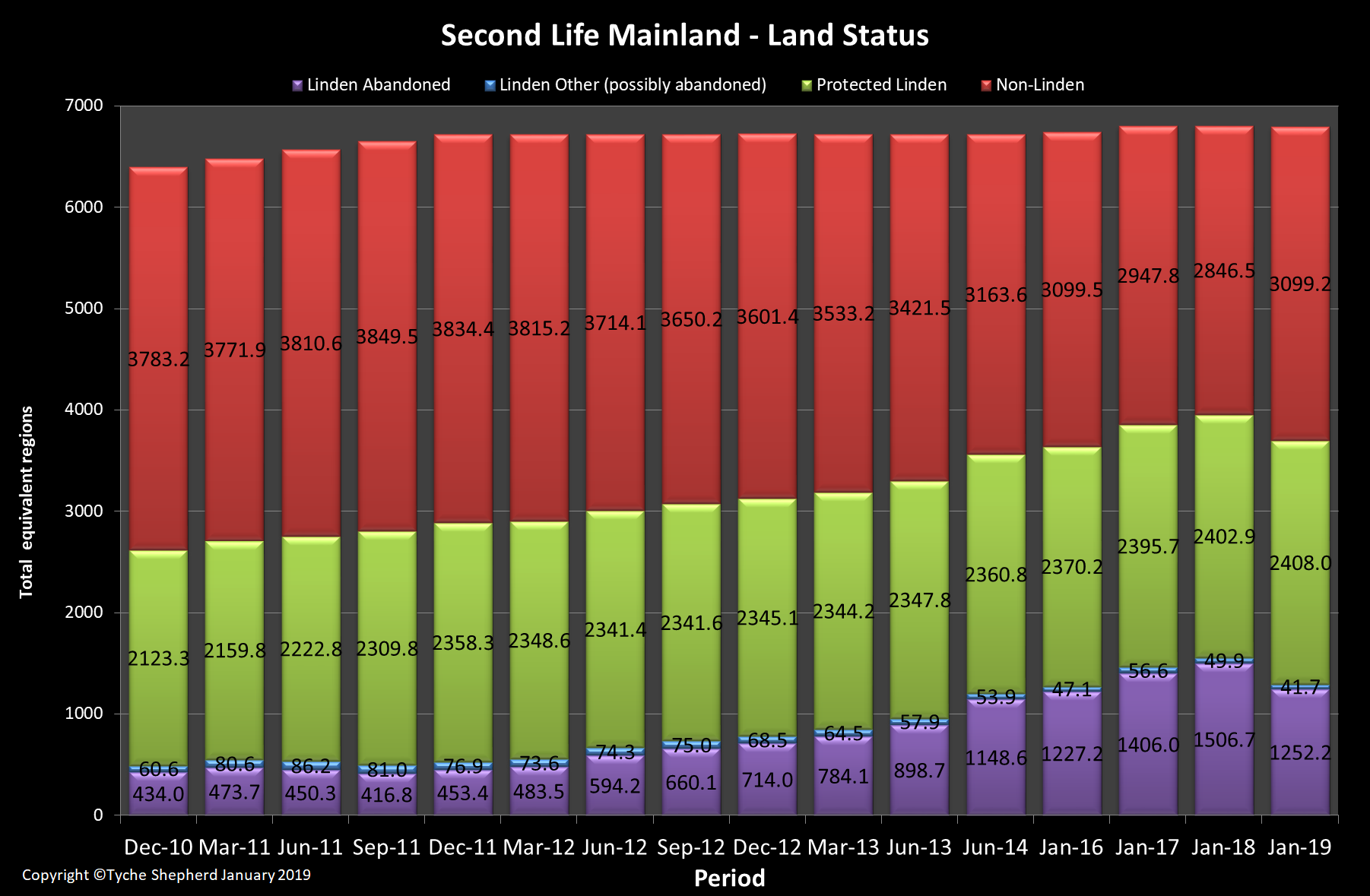
The Census covers all aspects of Mainland holdings – Linden and non-Linden. However, for this article, I’m focusing more on the Linden held elements of Mainland, specifically because of the changes made to Mainland pricing. Some of the key points of the census are:
Lab “ownership” of Mainland has decreased by 6.5% through 2018.
The total number of Mainland parcel was up on, with 132377 parcels held by 60388 unique holders (split between 49084 individual accounts and 11254 groups). This compares with 125010 parcels among 58244 holders at the end of 2017. 31056 of these parcels are directly owned by Linden Lab.
The mean size of parcels held by private land holders is 3366.5 Sq m, up by 82 sq m compared to January 2018.
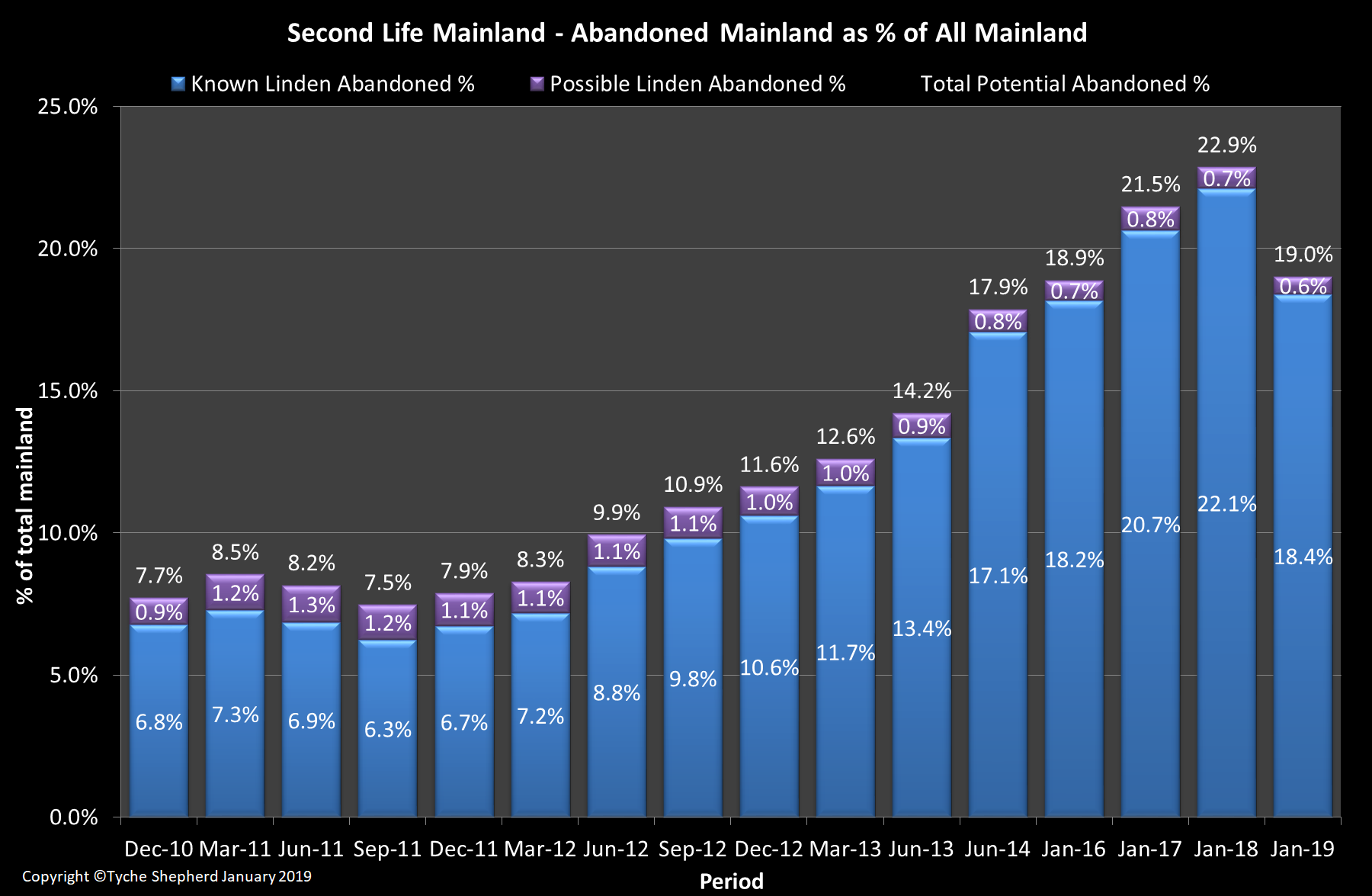
Abandoned Mainland has fallen by just under 4% as a total of the available Mainland (from 22.9% of all Mainland to 19%) – the first such drop since September 2011, bringing abandoned land down to a level last seen in at the end of 2015.The cause of this is undoubtedly the Mainland pricing restructure, which lower tier rates by around 10%, doubled the amount of “free” tier to 1024 sq m and – equally importantly – substantially relaxed the rules for obtaining free land.
The rate at which land was abandoned also decreased in 2018, most likely again a result of the pricing restructure.
Total Monthly Mainland Tier, with the new tier rates applied, is estimated at US $630,786, down by 8.9% (US $61,479) on the January 2018 rate.
Abandoned Mainland fell by 4% as a percentage of the total Mainland, the first such drop since September 2011 – Tyche Shepherd’s 2018 Mainland Census
The number of occupied Linden Homes fell slightly in 2018, by 3.1, although the total number of homes remained constant. There is no direct evidence to support this being a direct result of the Mainland price restructuring; it could be part of a general sine curve of ups and downs in the popularity of Linden Homes. Unfortunately, past census reports no longer appear to be available to examine due to the SL Universe move in 2018. However, I wouldn’t be surprised if the drop wasn’t in part fuelled by some people trading their 512 sq m Linden Homes to gain a full 1024 sq m of “free” tier.
The price restructuring does appear to have stimulated the “lower” end of the Mainland land market (i.e. among those holding smaller amounts of land), although overall holdings among larger land holders has, as Tyche notes, decreased slightly.
To be honest, given the Lab’s feedback on the popularity of the pricing restructure, I had been expecting a slightly larger reduction in the amount of abandoned land as a total of Mainland (possibly 6-8%). As it is, abandoned land still represents a significant amount of the Mainland product, which has – other than 2011 – tended to show a year-on-year growth since 2010. Ergo, any reduction is welcome.
Abandoned land as a percentage of Mainland, 2010-end of 2018 – Tyche Shepherd’s 2018 Mainland Census
In terms of looking ahead, 2019 presents an interesting year. On the one hand – and assuming no significant Mainland surprises are suddenly announced, there is no reason why the acquisition of abandoned land should not continue, even if at a slightly slower rate than may have been seen in 2018.
On the other, there are a couple of big “unknowns” that are to be unveiled in 2019: the alteration to Premium subscriptions, and the opening of the new Linden Homes continent (plus any plans to grow it). The latter in particular opens up a series of questions relating to Mainland size, abandoned land, and possible trends, as I noted in Second Life: state of the grid, 2018. Chief among these is the potential for abandoned land to increase in 2019 as a result of people both deserting their Linden homes in favour of the new offerings (which it turn raises questions as to what will be done with the existing Linden Home regions that might become sparsely populated), or even for other Mainland parcels to be abandoned in favour of the new Linden Homes.
Obviously, all of this also depends on how the new Linden Homes are offered, again as noted in Second Life: state of the grid, 2018 – and what incentives are offered through any revamped Premium subscriptions that are offered, and which might encourage more users to go Premium and possibly invest in Mainland.
For the full breakdown of the census and charts – all of which make for interesting reading, please refer to Tyche’s post.






 Inara Pey: Living in a Modemworld