January 2020 Web User Group: Events, Name Changes & Marketplace

The Web User Group meeting venue, Denby

The following notes are taken from my recording of the Web User Group (WUG) meeting, held on Wednesday, January 8th, 2020. These meetings are held monthly, with dates and details of the meetings available via the Web User Group wiki page.

When reading these notes, please keep in mind:

  • This is not intended as a chronological transcript of the meeting. Items are drawn together by topic, although they may have been discussed at different points in the meeting.
  • Similarly, and if included, any audio extracts appearing in these summaries are presented by topic heading, rather than any chronological order in which they may have been raised during the meeting (e.g. if “topic X” is mentioned early in a meeting and then again half-way through a meeting, any audio comments related to that topic that might be included in these reports will be concatenated into a single audio extract).

Recurring Events

Recurring Events launched on Monday, January 8th, allowing Premium members to set a recurring events in the Upcoming Events lists available via users dashboards at secondlife.com.

In brief:

  • Premium members will be charged L$10 for listing one-off events, or L$50 for filing an event that can recur up to 12 times (weekly or monthly).
    • Basic members are charged L$50 per event listing.
  • Recurring events are events that share the same location, time, duration, and description but occur on a weekly or monthly basis.
  • Recurring events are largely set-up exactly the same was as individual events:
    • Go to your dashboard at secondlife.com and select Events from left side menu to open the Events listing page.
    • Click on Create A New Event directly below the top left calendar on the page, then read and accept the Event Posting Rules to display the new Event Creation page.
    • Complete all the fields on the page.
The new Recurring Events drop downs (arrowed) for Premium Members only. Note that when either is set, the event fee (highlighted in red under the form) changes from L$10 (the cost for listing a non-recurring event filed by a Premium member) to L$50.
    • When selecting an event to repeat either weekly or monthly, the fee charged to your account (displayed at the bottom of the form) change from L$10 to L$50.

There are currently some minor adjustments required for monthly recurring events, as events recurring right at the end of a month may give some incorrect dates for months of different lengths. Such areas can be corrected manually, but updates to be deployed in the near future should correct the problem. In addition, LL will be monitoring the recurring events capability now it is live in order to identify and address any other issues that may arise now it is live.

Future Events Listings Work

Further improvements to events are planned (e.g. better searching for events), but these are dependent on other work being completed first.

This work may include things like being able to push events to your personal calendar (Google Calendar, Outlook, etc.).

Name Changes

  • No final confirmation on release date (although the hope has been for a mid-Q1 2020 release). The exact release time frame is dependent upon final checks on the capability being completed.
  • Even if delayed, Last Names will still be deployed before any release of the Premium Plus subscription package.
  • Over 2,000 entries have been received as a part of the (now closed) Last Names Contest, totalling some 6,000 last name suggestions in all, and LL have started going through them.
  • It is likely that when Name Changes is launched, users will be able to pick last names from a list of around 20-30.
  • One of the approaches being considered for changing the available last names is for:
    • Popular selections being removed from the list and replaced on reaching a certain number of people selecting them.
    • Having selections that appear “unpopular” (i.e. they are rarely / never selected) replaced if they fail to achieve a certain threshold of use over an (unspecified) period of time.

Marketplace

  • The new Marketplace limited quantities and demo items search filters options

    Marketplace search has been updated with options to exclude / include limited quantity items and / or demo items.

    • The check boxes for excluding (ticked) or including (unticked) such items can be found at the bottom of the Search Filters panel displayed on the left of Marketplace pages when either Search is used or See All Categories is clicked.
    • Both options can be found below the search by permissions options.
    • By default, both options are unchecked, so that searches will include either limited quantity or demo items in their results results.
  • Work is being put into performance improvements which, as Grumpity noted at the meeting, tend not to be noticed right up to the point where something goes wrong.
    • An example of this is the ability for merchants to search their invoices should be a lot faster following back-end updates.
  • There are still “quite a few” things the Lab have queued up to do in relation to Marketplace search, but no specific details are available as yet on what might surface when.

In Brief

  • This issue with Destination Guide submissions is believed to be resolved.

The Phoenix Artists Collaboration in Second Life

The Phoenix Artists Collaboration: Vroum Short

Officially opening on Wednesday, January 8th, 2020, is a new ensemble exhibition at The Phoenix Artists Collaboration (PAC), featuring individual art displays by some 42 artists – making it quite the stop for any lovers of art from both the physical world and the virtual, with the exhibition area offering additional spaces for exhibitions and events.

We share a simple dream and goal, to support and display artists work, so they may flourish and encourage others to do the same, Along this path we hope to make life long friends that form a collaboration to support each other and encourage us all to be the best we can.

– from the Phoenix Artists Collaboration group description

The Phoenix Artists Collaboration: Flamered

Those participating in the exhibition are: Dhyzel, Flamered, Giselleseeker, Lampithaler, Lyric, PatrickofIreland, Ragingbellls, ViktorSavior, Akim Alonzo, Tara Aers, Michiel Bechir, Klaus Bereznyak, Sisi Biedermann, Sheba Blitz, Zia Branner, Ilyra Chardin, Rage Darkstone, Slatan Dryke, Sophie Dunn, Elin Egoyan, Anders Franizzi, Eta Goldsmith, Pearl Grey, Layachi Ihnen, Mcpol Kamachi, Moora McMillan, Mistero Hifeng, Kayly Ilali, Moya Janus, Anibrm Jung (PAC curator), Silas Merlin, JolieElle Parfort, Melusina Parkin, Tom Prospero, Vroum Short, Ambre Singh, Sisi Singh, Tim Timaru, Maloe Vansant, Talullah Winterwolf, Cullum Writer, and yours truly.

The artists have all either been allocated space on the upper floor of the Concourse landing point, or in one of the surrounding suites. The latter are arranged in a 2-level square to provide a total of 36 gallery spaces, some of which are shared between two artists.

Phoenix Artists Collaboration: Mistero Hifeng

To facilitate easier location of individual artists, the lower floor of the Concourse building includes teleport portraits of all the artists displaying their work; just touch one to go to their gallery suite. Casual browsing of the individual suites can be achieved by stepping outside and wandering the streets (the upper and lower levels of which are connected via a spiral stairway in the south-east corner of the square) and dropping into any that catch your eye.

Given the number of artists participating in the exhibition, the breadth of art on offer is as broad as it can possibly get: Second Life landscapes, physical world art (mandalas, abstracts, digital media, paintings, drawings), themed avatar studies, Second Life vehicles, 3D pieces, reflections on SL art installations, images and words, and more.

Phoenix Artists Collaboration: Cullum Writer

Many of the pieces displayed are offered for sale, presenting an excellent opportunity for adding to collections, while (again) the number of artists exhibiting means there are opportunities to catch up with some well-known names and perhaps discover the work of some you may not have previously come across.

When visiting PAC, note that the teleport mat at the landing point provides access to further PAC spaces, not all of which may be in use at a given time (such as the events area). Chief among these is the PAC 3D Gallery, which at the time of writing featured Dressing the Decades, an “historical fashion outfits expo”, with paintings by ViktorSavior (and lists photo by Richard de Grataine Suoh and words by Alena Pit, although only Viktor’s painting were on display at the time of my visit).

Phoenix Artists Collaboration: Yours Truly

The core event at PAC officially opens between 12:00 noon and 14:00 SLT on Wednesday, January 8th, 2020.

SLurl Details

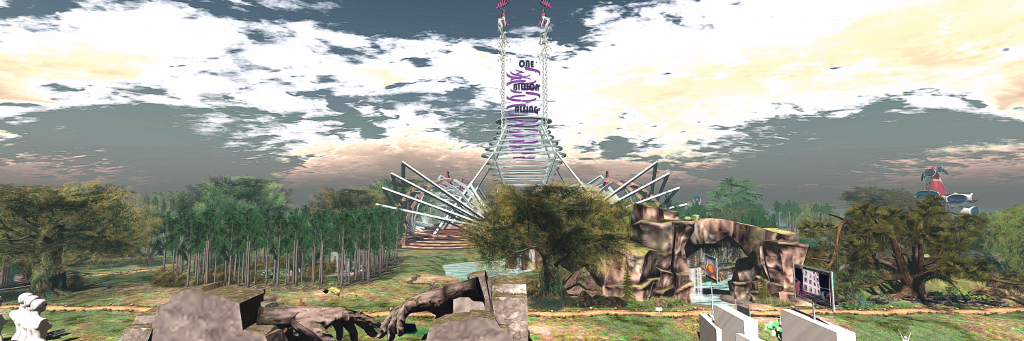
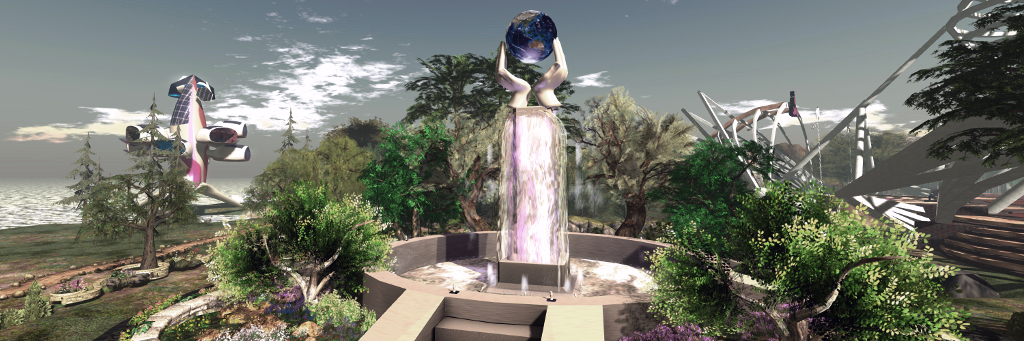
One Billion Rising in Second Life 2020

One Billion Rising 2019

One Billion Rising in Second Life will be marking its 7th anniversary on Friday, February 14th, 2020. This annual event in-world forms a part of the global One Billion Rising (OBR) event, first launched in 2012, and which is regarded as the biggest call to mass action in human history.

The aim of both OBR and OBR in SL is to raise awareness of the plight of the more than 1 billion women and girls (roughly 1 in every 3) who will face physical and psychological abuse and rape as a part of their daily lives. By bringing people together and raising greater awareness of this situation, OBR aims to bring about a fundamental change in the ways in which vulnerable and defenceless women and girls are treated.

We call on you this year to be braver, go deeper, reflect, study, listen, learn, awaken to what you don’t know, ask the difficult questions, engage, take actions, and push yourselves out of your comfort zones physically and intellectually. We call on you to commit to resistance and solidarity.

Because Rising is no longer a campaign – it is a way of life.

– from the OBR in SL 2020 announcement

One Billion Rising in Second Life 2020 will once again feature a 4-region stage where up to 200 people can come together at any one time during the 24 hours of the core event (starting at midnight (00:00) SLT on the 13th/14th February), to enjoy music from a range of DJs and live performers.

One Billion Rising 2019

Surrounding this, across the the four regions will be art installations, informational exhibits, and an arena for poetry and dramatic productions. Activities will be scheduled throughout the 24 hours to encourage attendance from as many times zones around the globe as possible, while all of the regions will be rated General to allow all residents an opportunity to participate.

The theme of this year’s event is Solidarity, and it will be especially saluting the work and courage of women around the world who have made a difference in the global attitude towards violence and harm to women – check the One Billion Rising in SL website for details as they are published.

Note: this is not a fund-raising event; the primary objective of OBR is to raise awareness and understanding of the plight of women who face personal violence as part of their daily lives. However, the information kiosks and display areas will include links to physical world organisations for those wishing to donate to their continued work.

Event Support, Artist and Press Applications

Applications are now being taken from those wishing to support OBR in SL 2020 as staff or exhibiting artists, and from bloggers wishing to attend the preview press day. Please follow the links below for details:

2020 Simulator User Group week #2 summary

Last Dove, November 2019 – blog post

Simulator Deployments

At the time of writing. the server deployment thread appears at odds with reality:

  • The thread refers to the SLS Main channel being on simulator release 533895. However:
    • Following restarts, it appears that simulators on the Main channel (and some on RC channels) have remained on 2019-12-04T20:29:26.533447, which according to previous deployment threads, was the last formal deployment to the Main channel.
    • According to the release note page, 533895 was deployed on December 19th, but has channel names are now obfuscated, it is not clear which RC received the update.
  • The thread refer to restarts on the RC channels on Wednesday, January 8th, some RC servers should be restarted, but again without any deployment – although the 533895 version number is given for some when it should perhaps be 53447.

Simulator Issues

Restart Issues

The Tuesday, January 7th restarts were repeated a number of times, for reasons Simon Linden explained:

So we haven’t had any server updates since mid-December. Today we restarted a bunch because that can help performance, and in the middle of that we uncovered a bug that’s been lurking there for months, so it got a bit exciting.

Mazidox Linden added that – as of the time of writing this update – further restarts could not be ruled out.

The bug itself was related to at least one directory required by the Mono compiler not being created correctly, preventing scripts from being saved. It is apparently a bug that has been around for some time, but only surfaced as a result of changes to the way simulator restarts are run. Ironically, the changes were intended to make simulator restarts faster and smoother

Holiday Issues

Numerous region holders reported significant performance issues over the holiday period. According to Grumpity Linden, part of the issue was a failure with an automated tool, itself something of a workaround for dealing with simulator performance issues:

Hi all! I was really hoping my first post of the new year would be more jolly, but here we are.  Happy New Year, though! 

For a couple of years now, we’ve had automated tools, aptly named “Grid Poking Bot” (GPB for short) responsible for doing region restarts, and this has been working quite well – most of the time. Very unfortunately, there was a problem with the GPB over the holidays, and due to a combination of events, it took us much too long to notice – and we finally caught it in part thanks to this very forum thread and a certain vigilant “Spray Can”.  We’re now actively pursuing the least disruptive ways to address this problem as quickly as possible.  We’ll have a more detailed post-mortem blog in a couple of days as well.  

We’re very sorry about souring your holidays.  

It’s possible there is more than one issue causing problems, and investigations are still in progress, including the distribution of poorly-performing regions (e.g. are they on their own on the grid, do they have neighbours) as well as looking at distribution by server.

SL Viewer

There have been no viewer updates to mark the start of the week, leaving the current pipelines as follows:

  • Current Release version 6.3.5.533275, formerly the Wassail RC viewer, dated December 4th, promoted December 12th – No change.
  • Release channel cohorts (please see my notes on manually installing RC viewer versions if you wish to install any release candidate(s) yourself):
    • Xanté Maintenance RC viewer, version 6.3.6.533748, December 19th.
    • Love Me Render RC viewer, version 6.3.5.533347, December 5th.
    • EEP RC viewer, version 6.4.0.532771, November 20th.
  • Project viewers:
    • Copy / Paste viewer, version 6.3.5.533365, December 9th.
    • Project Muscadine (Animesh follow-on) project viewer, version 6.4.0.532999, November 22nd.
    • Legacy Profiles viewer, version 6.3.2.530836, September 17th. Covers the re-integration of Viewer Profiles.
    • 360 Snapshot project viewer, version 6.2.4.529111, July 16th.

Destination Guide

Not strictly part of the engineering team’s remit, but it has been reported the Destination Guide is giving errors when trying to submit new destinations. This has been seen by the Web Team, and is apparently being looked at.

Time at Valium Creek in Second Life

Valium Creek, January 2020 – click any image for full size

We recently received an invitation from Vallys Lavender to visit Valium Creek, her latest region offering a mix of public spaces and rental homes, and which follows on from [Valium] (read more here). It has been designed for Vallys by Jacky Macpherson (of NorderNey fame), with assistance from Vallys and Terry Fotherington.

The public areas of the region are located to the north and east side, with the residential properties to the west and south, the latter separated from the public areas by a set of railway tracks. The landing point is to the west of the public area, close to the centre of the region, in what appears to be the remnants of a once large stone building, now reduced to flagstones spread across the grass and the stonework from the walls reused to form drystone walls.

Valium Creek, January 2020

Up a short set of steps is an open-air movie theatre complete with barbecue, and beyond that, more flagstones amidst the grass that offer access to to a shingle beach, a wooden chapel, a public seating area and the local bar. The shingle also runs around an old fishing hut and deck, both of which have both seen far better days.

It’s an eclectic mix of a setting, suggestive of a place of great age then has since been built over but even then, has seen better days. It’s a design that works exceptionally well, offering a memory of the original [Valium] – enhanced by one or two items hat featured in that build, for those who remember it (such as the old rowing boat) – whilst presenting a wholly new environment that is rich in detail.

Valium Creek, January 2020

The west side of the region comprises open woodland, rich in fir trees and cut by slow-moving rivers, the banks of which are occupied by ranch-style houses, while away from the rivers are cabins also available for rent. Most of the homes are reasonably separated from its neighbours to offer privacy. The entire layout is suggestive of a untamed setting – lived-in, yes, but still untamed: deer graze at the waterside, birds can be heard in the trees, and while there are no beavers or otter to be seen, there is a sense that if you look around quickly enough, you might just catch sight of them.

Valium Creek donates each month to The Nature Conservancy, an international organization dedicated to preserving our natural surroundings.  A portion of the Valium group join fees are donated. During 2019, Valium Creek donated the equivalent of L$80,000 and our 2020 increase to $35.00 per month will give an additional L$105,000. 

– Vallys Lavender, on continuing the charitable work
she started with [Valium]

Valium Creek, January 2020

Unlike [Valium], this new design doesn’t sit alone. To the north, and reached via a bridge, is Valium Creek Park, also held by Vallys. In some ways this continues elements found in Valium Creek – the fir trees, the railway lines – even the bridge connecting the two regions. However, Valium Creek Park is also very different.

Entirely open to the public, half the region forms an art park operated by Vallys and which will shortly be opening its first exhibition, featuring the work of Mistero Hifeng. It also encompasses a series of event spaces – a chapel set for weddings, a café, and a bar. At its western extreme, the park is dominated by a house and pond that between them mark the point of access to the rest of the region, offered through a stone arch.

Valium Creek, January 2020

The arch offers the way to two bars occupying the north side of the region. The first is Bardeco, operated by Terry Fotherington and Bridget Genna, and which has featured in the Kekeland design (see here and here for more). East of this sits Bar Relax, the work of Bridget, together with NightAttack Guardian and Lillynot Jinx.

The setting for the latter is perhaps more homely than for the former; and whilst I cannot be sure, it felt as if the land around Bardeco was perhaps still in development, denuded of trees or other flora as it was during our visit. Both of the bars share a commonality, and not just in terms of those involved in building them: they each have a local camp site, for example, while one has a small circular inlet that almost resembles a fishing hole, mirrored by the other having an actual pond.

Valium Creek, January 2020

For those seeking a new home in Second Life, Valium Creek is every bit as a attractive as [Valium] was, while the park with its arts area and three bars may offer a further attraction for those who appreciate attending events. As noted, the region on which the park sits had, at the time of our visits, something of an “unfinished” feel to it – so you might well find some additional elements when visiting. However, and make no mistake, Valium Creek is marvellously photogenic and makes for an excellent visit.

SLurl Details

A decade (+) of blogging: thoughts on Second Life

On the occasions of my 13th SL rezday, Erik Mondrian reminded me that 2019 marks my 10th year of blogging via WordPress (I’d used another platform for a couple of years prior to that). With his reminder, Erik presented me with a challenge:

A slightly belated Happy Rez Day, Inara! And, if I may, perhaps a challenge? Not that you’re short of things to write about, but if you have time: In the last 10 years, what do you feel has been one of the best changes/additions to SL? And what are your hopes for the next 5?

– Erik Mondrian, via Twitter

As I stated in my reply to that tweet, I’m note sure I could pin thoughts down to any one thing in terms of what has positively happened to Second Life; there are simply too many – and some tend to be interconnected in some ways. However, I’ve been cogitating Erik’s challenge, and here is (slightly later than planned) an abbreviated list of some of the things that I believe have either benefited SL or had a positive impact on it over the last decade or so, and which I’ve particularly appreciated during my time using the platform.

Communications with the Lab: the relationship between the Lab and SL users has tended to be a complex one. At the time I moved to blogging via WordPress, things were at a low ebb. There had been the Homestead region situation, together with the drive to make SL a more “business oriented” platform (vis: Mitch Kapor’s SL5B crossing the chasm address that appeared to suggest SL’s early adopters were interfering with trying to reach an early majority audience; suggestions that parts of the Mainland should be made “business only”; the (ill-fated) Second Life Enterprise (SLE) product development; lectures from form Lab employees on how users should dress their avatars “for business”, etc), all of which left a lot of SL users felling pretty disenfranchised.

However, starting with Rod Humble and particularly with Ebbe Altberg, the Lab has sought to strongly re-engage with its users and embrace them. Things haven’t always worked out in their entirety (communications did go a little backwards towards the end of Humble’s tenure); but there is no denying the improvements seen through activities such regular Town Hall / Lab Chat / Meet the Lindens events plus the likes of VWBPE addresses and Designing Worlds interviews, and the simple expedient of allowing LL staff to once again openly engage with users whilst using their “official” accounts.

Windlight: although it was originally introduced in 2007, Windlight had a profound effect on the appearance of Second Life that’s hard to overlook. Originally a third-party product Linden Lab acquired and which didn’t see all of its potential capabilities implemented (for whatever reason), the overall impact of Windlight shouldn’t be trivialised.  If you need an idea of how SL looked pre-Windlight  – with the exception of the old particle clouds – just disable the Basic Shaders in the viewer.

Open sourcing the viewer code: also introduced in 2007 and not without its share of hiccups / controversies (the Emerald viewer situation, for example), the open-source project has undoubtedly served SL well. It has allowed third-party viewers to thrive within a reasonable framework, and both exposing features hidden with the viewer’s debug settings and allowing developers to add their own options, allowing users a greater choice of client options. It has also provided the means for users to contribute potential improvements to the viewer back the the Lab, generating a a largely positive synergy between developers and the Lab.

Mesh model import: admittedly, the impact of mesh modelling in Second life cuts both ways: positive and negative. Leaving aside what might be regarded as its negative aspects, it has helped to improve SL’s look and feel, potentially made region design more accessible / attractive, and helped bring improvements to the avatar we might otherwise not have seen, or which may have not have been implemented until later in the platform’s life (e.g. Bento and Animesh).

Performance improvements: over the last decade, LL has worked extensively “under the hood” with Second Life to try to improve overall improvements, such as the long-term Project Shining. Running for some 2 years with the aim of improving object and avatar performance, it was followed by further projects and efforts to help improve performance in assorted areas. Some have had mixed initial impact, but all of which have, overall, helped to improve things for most users, even if only incrementally in some cases.

Materials, Bento and Animesh: all three have helped improve the look and feel of Second Life, making it more attractive to users old and new.

Looking to the next 5 years, there is much that might happen or which many would like to see happen – from technical aspects such as further improvements in simulator performance (e.g. script and physics performance, region crossing management), through to more esoteric aspects such as audience growth / user retention, fee balancing, etc. However, I’ll restrict my thoughts for the future to one topic: the transition to the cloud.

This work has already eaten into the Lab’s engineering and operating time over the two years, and will doubtless continue to be a significant focus for 2020. However, it is a leap into the unknown for Linden Lab and Second Life, both technically and in terms of operating outlay / revenue generation (e.g. capping the cost of having cloud servers running 24/7 in a manner that doesn’t require uncomfortable fee increases).

On the technical side, it’s more than likely that the focus on moving to the cloud has a higher priority that developing significant new features for SL – and perhaps even curtailed implementing updates that might be seen as having a limited lifespan, such as infrastructure changes that could be rendered obsolete following the cloud uplift, but which are nevertheless causing a lot of teeth grinding amongst users.

Even when the uplift itself is completed, it is likely that the transition will still require a significant among of settling-in and adjustments that will continue to occupy the operations and engineering teams. So there is a lot hinging on this move that will continue into the next couple of years, and that is important to the overall future of the platform.