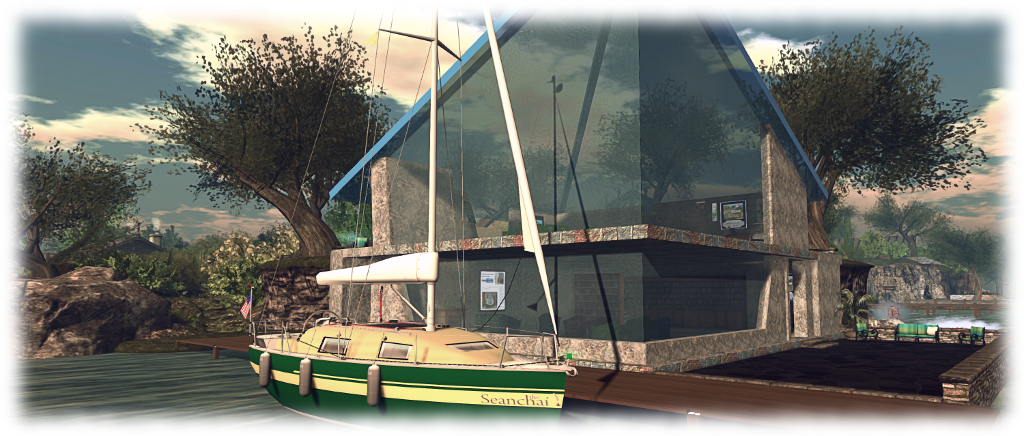
It’s time to highlight another week of storytelling in Voice by the staff and volunteers at the Seanchai Library. As always, all times SLT, and events are held at the Library’s home unless otherwise indicated. Note that the schedule below may be subject to change during the week, please refer to the Seanchai Library website for the latest information through the week.
Monday, March 30th 19:00: The Ugly Little Boy
Gyro Muggins reads a tale that started life as a short story by Isaac Asimov, and was later expanded into a full length novel by Asimov writing in collaboration with Robert Silverberg.
A 21st century time travel experiment results in a Neanderthal boy being pulled from his time. The intention is to study the boy and understand how his kind lived. However because of the potential for time paradoxes, the boy must be kept in a within a stasis module, a place physically separated from modern time; but he must still be cared for. So the company behind the experiment hires a children’s nurse, Edith Fellowes, to look after him
Initially horrified by the child, Edith comes to forms a bond with him, discovering he is intelligent and capable of both learning and love. However, to Stasis – the company behind the experiment – the boy is little more than a commodity to be observed and with a story to be sold to the media. As such, he is only of value for as long as there is public interest in his story. When that fades, the company determines the child must be returned to his own time, his place to be taken by a subject from another era. But Edith knows that, thanks to all she has taught him, his own time is no longer a place he is equipped to survive within, and determines she must take action to protect him.
Tuesday, March 31st 19:00: Dream in the Sand
With Ktadhn Vesuvino.
Wednesday, April 1st, 19:00: The Phantom Tollbooth
Finn Zeddmore reads Norton Juster’s fantasy adventure for younger readers.
For Milo, everything is a bore and all activities little more than a waste of time. Then one day he arrives home in his usual state of disinterest, only to find a package waiting for him. He has no idea where it has come from or who might have sent it, but is clearly intended for him, given the label. Opening it, he discovers a small tollbooth and a map of “the Lands Beyond,” illustrating the Kingdom of Wisdom.
Reading the limited instructions – that warn him to have a destination from the map in mind – and thinking the package to be some kind of game, he sets the tollbooth up, decides Dictionopolis should be his destination, and propels the accompanying little car through the tollbooth.
Immediately he finds himself driving an actual car through a city that is clearly not his own. Here he discovers he must remain focused, lest his thoughts wander, and his journey wanders as well; a lesson he only discovers when he does daydream and finds himself in the Doldrums.
Also as he travels and meets new friends, so he also realises something else: life is far from boring or dull; it actually offers much to be discovered.
Thursday, April 2nd: Real Challenge
Shandon Loring reads USA Today’s best-selling author Anthea Sharp‘s 2019 short story set within her science fiction / fantasy Feyland series that has been described as “Ready Player One with faeries.”
Spark Jaxley may appear to have the life of a superstar gamer, but she’s actually among an elite group of guardians who carry a secret and a burden as they engage in an unseen confrontation unseen and unknown to the world at large. The Realm of Faerie exists, and its dark magic is desperate for a foothold in our mortal realm.
In Real Challenge, first published in 2019 as a part of the the anthology of gaming stories Game On: A Gamelit Anthology, Spark has made it to the gaming world championships, ready to give her all in a competition where the stakes are high and the gaming fierce.
But sometimes the true challenge isn’t what you think; for Spark, it means her entire future is riding on the outcome – will she make the right choice?
The years 2019 through 2022 mark the 50th anniversaries of the Apollo lunar landings of the 1960s. At a time when those ambitious, pioneering mission, undertaken at what was still the early dawn of human space flight, serve as a background against the current US Artemis endeavour, it is sad to report on the passing of another of one of the 24 men who flew to the Moon as a part of those trailblazing missions has passed away.
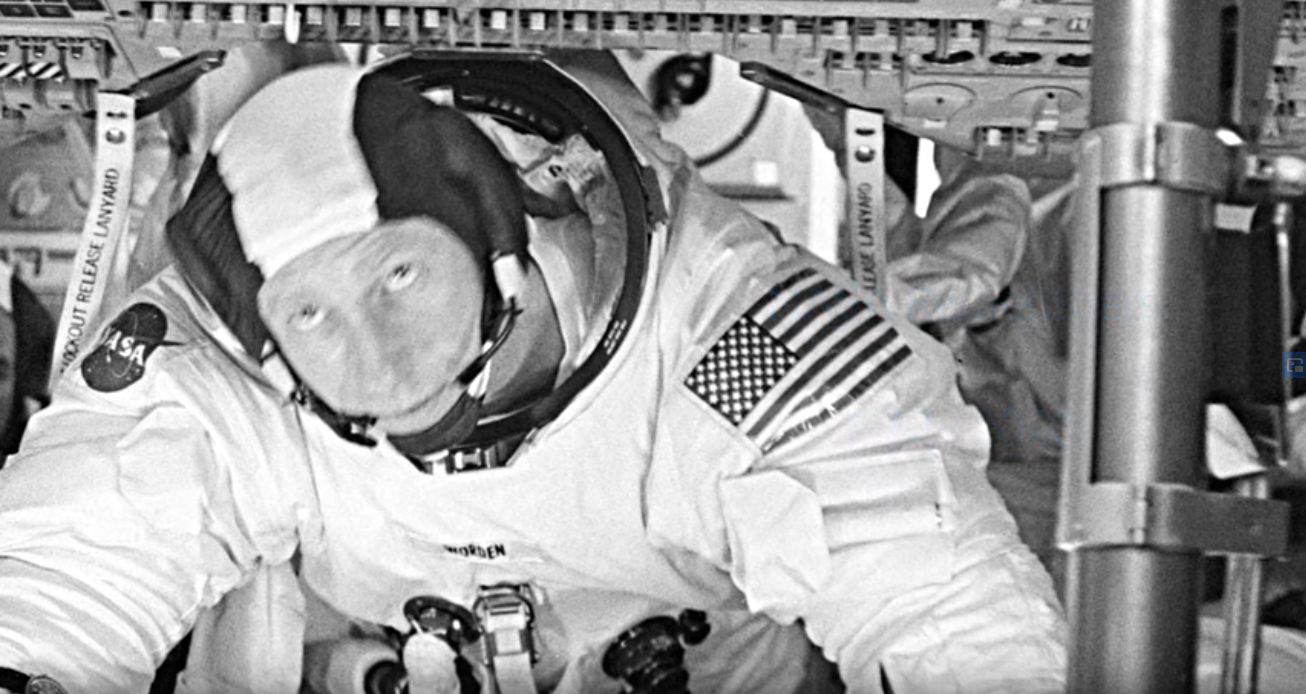
Alfred Merrill “Al” Worden was one of those Apollo pioneers who is perhaps less well-known than others, as he was one of Command Module Pilots. These were the mean who remained in lunar orbit piloting the Apollo Command and Service Module (CSM) whilst their fellow crew members made the actual descent and landing on the Moon, and so – with perhaps the exceptions of Michael Collins (Apollo 11) and John Leonard (“Jack”) Swigert Jr. (Apollo13) – did not garner the same degree of media attention during their missions and their surface exploring crew mates.
Worden’s lunar flight aboard Apollo 15 (July 26th, 1971 through August 7th, 1971) was his only flight into space, thanks to actions he and his fellow crew, David R. Scott and James Irwin, took before, during and after the mission which saw all three removed from active flight status for the remainder of their careers at NASA.
Born in 1932, in Jackson, Michigan, Worden was the second of six children and the oldest of the four boys born into a low-income farming family. A keen learner, he opted to try to continue his education beyond high school by obtaining an scholarship, initially to the University of Michigan. But unable to secure funding for more than a year, he turned his attention to the military in order to continue his learning. Applying to both United States Military Academy at West Point (US Army) and the United States Naval Academy at Annapolis, he found himself accepted by both, and after some deliberation, opted to go to West Point, enrolling there in 1951.
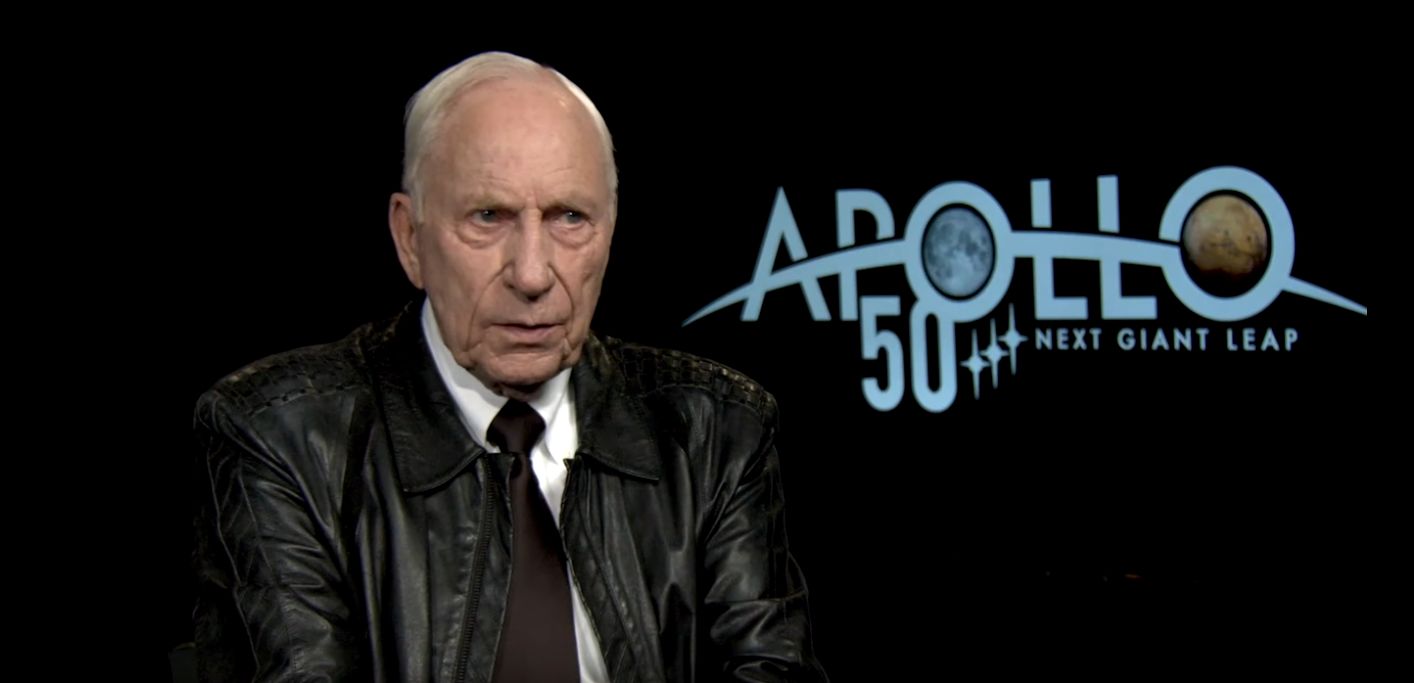
Al Worden at an Apollo 11 50th anniversary event. Credit: NASA
Whilst he enjoyed the army discipline at West Point, Worden found himself being encouraged by instructors to pursue a career in the nascent United States Air Force (formed out of the United States Army Air Force in 1947). At that time, the USAF was so young as an independent branch of the US military, it did not have its own training academy, so Worden was able to take advantage of an arrangement that allowed West Point and Annapolis graduates to transfer to the USAF for training, regardless of any possible lack of experience in flying.
As it turned out, Worden proved to be a natural flyer, moving swiftly from the propeller-driven T34 trainer to the jet-powered Lockheed T33. On completing his Air Defense Command training, he was posted to the 95th Fighter Interceptor Squadron, based at Andrews Air Force Base near Washington D.C. , where he mostly flew the USAF’s first supersonic, swept-wing fighter, the F-102 Delta Dagger. Staying with the squadron as a pilot and armaments officer through until May 1961, Worden applied for, and received, permission to study aerospace engineering at the University of Michigan, graduating in 1963 with Master of Science degrees in astronautical/aeronautical engineering and instrumentation engineering.
Returning to flight service, Worden increased his logged flying time to over 4,000 hours, 2,500 of which was flying jets. During this time he graduated from both the Instrument Pilots Instructor School in the US, and the Empire Test Pilots’ School, UK, one of the most high-regarded test pilots schools in the world. He then served as an instructor at the Aerospace Research Pilots School, then attended the USAF’s advanced flight training school for experimental aircraft, as both a pilot and as an instructor.
In 1966, he joined NASA as a part of the 19-strong Group 5 astronaut intake, alongside of his eventual crew mate, (“Jim”) Irwin. In 1968, they were selected to be the Apollo 12 back-up under the command of veteran astronaut David R. Scott, one of the most experienced Apollo astronauts, whoo had already flown on Gemini 8 and, more particularly, Apollo 9, the proving flight for all of the Apollo hardware – Saturn V rocket, Apollo Command and Service Modules, and the Lunar Module.
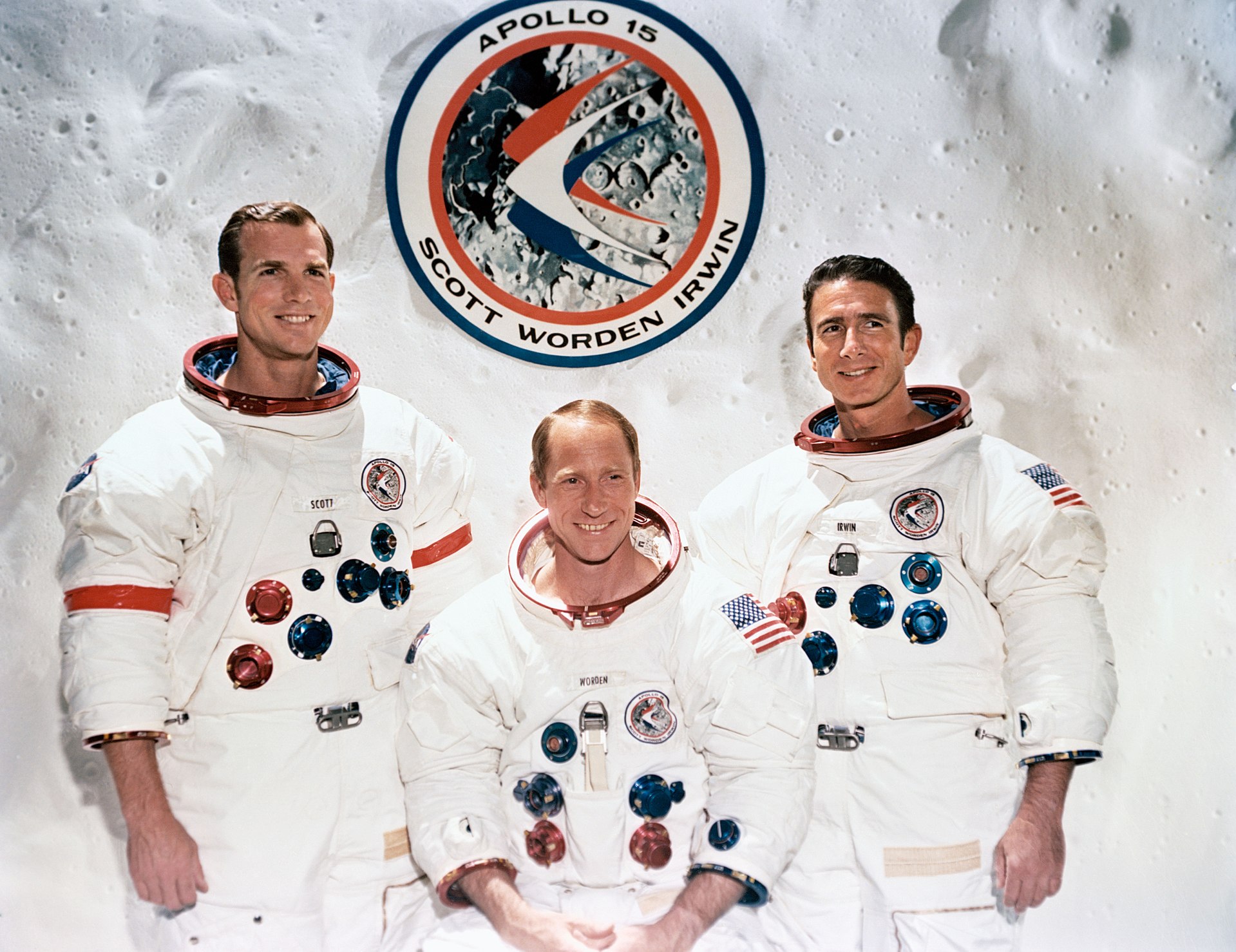
Apollo 15 crew: David Scott (l), James Irwin (r) and Al Worden (c). Credit: NASA
The crew were appointed as the prime crew for Apollo 15 at the start of 1970. From the start, Scott, as the mission commander, was determined that they would by the crew that gathered the most scientific data on and about the Moon – spurred in on part back the Apollo 15 back-up crew included Harrison Schmitt, the only actual scientist to participate in a lunar flight (Apollo 17). A first reason for wanting to be the best science crew on Apollo was that thanks to NASA cancelling two of the planned missions, Apollo 15 was raised to a “J-mission”, becoming the first such mission to feature an enhanced Lunar Module, capable of carrying more to the surface of the Moon, including the now famous lunar rover vehicle.
The J mission status of the flight also meant that Worden would have far more to do in lunar orbit than previous CM pilots, as the service module for the mission was the first to include a dedicated Scientific Instrument Module (SIM) bay. This was an equipment bay shielded by a protective panel during launch (and jettisoned once en route to the Moon), and carrying a range of science equipment – a high-resolution contained a panoramic camera, a gamma ray spectrometer, a mapping camera, a laser altimeter and mass spectrometer, all of which Worden had to manage and monitor. In addition, the bay contained a sub-satellite he was tasked with deploying before Apollo 15 left lunar orbit to return to Earth, and designed to study the plasma, particle, and magnetic field environment of the Moon and map the lunar gravity field.
A shot of the Apollo 15 Command Module Endeavour and its Service Module, as seen by from the Lunar Module Falcon, showing the exposed SIM bay and instruments, the cover having been jettisoned en route to the Moon. Credit: NASA
Worden’s sojourn about the Command Module Endeavour began after the Lunar Module carrying Scott and Irwin detached from his vehicle on July 30th, 1971 at an attitude of just 10.7 km above the lunar surface. Following separation, Worden fired the main engine on the Service Module to raise his orbit to 120.8 km x 101.5 km in order to commence his science work.
Over the next 4 days, he worked steadily on his assigned science duties, actually exceeding in some of them. Among his activities, he used the spy satellite quality camera system in the SIM bay to capture 1,529 usable high-resolution images of the lunar surface, and also carried out a regime of exercises using a bungee cord for research into muscle behaviour in micro-gravity environments. These exercises were supposed to mirror similar exercises performed by Scott and Irwin under the greater influence of lunar gravity, so that comparative data could be obtained between them. However, Worden was so enthusiastic about his work, he completed twice the amount of exercise he was required to do!
During those days on his own, Worden gained a citation from Guinness World Records as “the most isolated human being”, because as times during his flights around the Moon he would by up to 3,597 km away from the Lunar Module Falcon and Scott and Irwin – further than any human being had been from anyone else up until that point in time.
After the mission and when asked if he ever felt alone during this time, he would always reply in the negative, saying it suited his jet fighter pilot mentality, and he particularly enjoyed his times on the far side of the Moon when he’d be totally out of contact with any living soul, and would have something special to look forward to.
Every time I came around the Moon I went to a window and watched the Earth rise and that was pretty unique.
The thing that was most interesting to me was taking photographs of very faint objects with a special camera that I had on board. These objects reflect sunlight, but it’s very, very weak and you can’t see it from [Earth]. There are several places between the Earth and the moon that are stable equilibrium points. And if that’s the case, there has to be a dust cloud there. I got pictures of that.
– Al Worden discussing his time alone as the Apollo 15 Command Module Pilot
Following the rendezvous with, and recovery of, the Lunar Module ascent stage, Worden had another record-setting duty to complete: whilst en-route back to Earth, he had to perform an EVA – extra-vehiclular activity -, leaving the Apollo Command Module to make his way back to the SIM bay of the service module to collect the 25 kg cassette of images he’d captured during his time orbiting the Moon.
Worden during his historic deep space EVA, the round drum of the film cassette hanging from his harness. Credit: NASA
The space walk was completed with Jim Irwin standing in the Command Module’s hatch ready to provide assistance if needed, a camera watching over his shoulder. At the time, Apollo 15 was approximately 317,000 km from Earth, marking Worden’s space walk has the first “deep space” EVA in history. As of 2020, it remains one of only three such EVAs, all performed during the last three Apollo lunar missions.
Despite the overwhelming success of Apollo 15 and the achievements made – first J-class mission, first use of the SIM bay, first use of the lunar rover vehicle, etc., – following the astronaut’s return to Earth, the mission would become the subject of the controversy that would see Scott, Irwin and Worden grounded by NASA for the rest of their careers.
Prior to the flight – and against NASA policy – all three men entered into a financial arrangement with a West German stamp dealer to fly 400 postal covers to the surface of the Moon and back.
Postmarked on the day of the launch at the Kennedy Space Centre post office and smuggled onto the Command Module, the covers flew to the Moon and then to the lunar surface with Scott and Irwin. On their return to Earth, the three men managed to get 398 of the covers – two were accidentally destroyed – cancelled and date-stamped on the day of their splash down at the post office aboard the recovery ship, USS Okinawa. Once back in the USA, the astronauts annotated and signed them, before sending 100 to the dealer, Hermann Sieger, whilst splitting the rest between themselves. The arrangement was for Sieger to pay the three men $7,000 each (approximately US $45,196 in today’s terms), and then give them a percentage each of the 100 in his possession, which he sold to dealers at $1,500 a cover.
I’m reporting this a little late, given that both exhibitions only have a few more days to run, but currently on display in the featured artists sections of Sisi Biedermann’s Gallery are Melusina Parkin and Zia Sophia (Zia Branner), who will be at the gallery until the end of the month, so there really is only a couple of days left in which to see them!
Melusina Parkin really needs no introduction to readers of this blog; I’m an admitted admirer of her work, which I’ve featured in these pages on numerous occasions. Within her space at Sisi’s, she offers Journeys, another utterly engaging take on Second Life, the places it offers and their innate beauty.
Sisi Biedermann’s Gallery: Zia Branner
Melu’s eye for angle, depth, composition and detail always presents chances to see Second Life in a new way and / or light. Rather than focusing on the whole to tell a story, she discovers the part that perhaps utters only a single line: the curve and rise of a paved footpath as it winds between cresting undulations of flowers before it vanishes over a low rise; the silhouette of a lighthouse caught between the branches of a thicket as the Sun dips between the coastal hills beyond; a tree dipping branches into the sea as if testing the temperature of the water…
All these, and the rest of the images in Journeys form whisperings that are just enough for the imagination to create an entire world around them. At the same time, there is a rich impression of openness and space present within each piece that truly gives us room to breathe, to feel a sense freedom – something that in the current climate of having to stay at home and away from the rest of the world, can be refreshing and uplifting.
Sisi Biedermann’s Gallery: Melusina Parkin
Zia Branner is an artist in the physical world who uses paints with acrylics and use a variety of structure material – paste, gel, sand, glue, bandages and paper – together with oil crayons and acrylic ink, to accentuate elements with her pieces. Canvas is her preferred medium, although she also uses wood and paper, and while she has had formal art teaching, she is also autodidact, learning techniques and approaches whilst experimenting with art.
For her exhibition at Sisi’s, Zia offers an impressive portfolio of her art, from sweeping landscapes that encompass coastal scenes and rolling dunes to charcoal-like sketches of flowers and more abstracted pieces that use colour and line to capture the attention and hold the eye.
There is a vitality about each of these pieces, be it as a result of the sweep, turn, and mix of colour in some or the tactile sense of texturing visible in others, that truly brings them to life, perfectly echoing Zia’s view that “making art is rebellion against the finality of mankind”.
Sisi Biedermann’s Gallery: Zia Branner
As always, the floors of the gallery above the featured artists spaces are home to Sisi’s own remarkable and utterly captivating work. Having started painting in acrylics in the early 2000s, Sisi has developed her technique to encompass a range of styles and approaches, from painting to mix media and digital collages to Second Life photography, whilst encompassing a wide range of genres – fantasy, wildlife, portrait, landscape and so on. It is not hyperbole when I say her work is genuinely second-to-none for its sheer beauty and richness of expression.
Located just outside of the gallery is a broad glass-like spiral stairway leading up to the Artists United Gallery, were pieces by the likes of Rage Darkstone, TerraMerhyem, Nils Urqhart, Layachi Ihnen, Milly Sharple and more are offered in a richly eclectic and engaging exhibition that adds further depth to a visit to the gallery.
On Friday, March 27th, 2020, Linden Lab opened applications for those wishing to perform at the upcoming 17th anniversary of Second Life.
SL17B will run from Friday, June 19th through until Friday, July 10th, with the core entertainments for the celebrations taking place between June 19th and Sunday, June 28th. This year the theme is road trips and vacations.
The official blog post announcing applications from performers reads in part:
Calling all performers! Second Life is seeking talent for our upcoming 17th annual Second Life birthday celebration (SL17B), held June 19-July 10. Get ready for a fun-filled week of live music and deejay performances, shopping exclusives, and amazing community exhibits.
One of the things that makes Second Life so vibrant and exciting is the wide range of Performers who share their talent with our Residents. Are you a DJ who can spin up a great party set? Maybe you’re a Live Musician who plays an instrument or sings! You might be one of the grid’s amazing Dance companies, or perhaps you’re a Particle Performer! Whatever your medium, we would love to hear from you.
Note that this call is not related to the SL Music Fest, which will take place over the opening days of SL17B, but is for those who wish to perform as a part of the event’s full week of activities and celebrations. As such, applications are open to DJs, live performers, dance troupes, particle performers, etc.
Those interested in providing their services should complete and submit the official performer application form no later than Monday, May 18th. Successful applicants will be contacted by SL17B Event Staff Leaders in de course.
Updates on SL17B preparations will be made via official blog posts and through the Second Life Birthday in-world group, membership of which will give members early access to the celebration regions.
As the last mini-update I gave for the product was in July 2019 and there is some further news to be had, I thought it time to provide a further update on where the client stands.
First and foremost, while the client was initially defined as an iOS client, speaking during the 19th episode of Lab Gab on March 27th, 2020, Ebbe Altberg confirmed the Lab has now started on an Android version as well, which they have to have up to parity with the iOS version at some point.
In addition, he indicated that the iOS version is currently close to being at an “alpha” testing status, which may only be for internal testing.
So, lot’s of activity there. We have a person who’s worked on a mobile – what do we call it? Companion client, because I want to make it clear that people understand that the mobile client will be primarily a communication client, where you can chat with people, and stay connected, but it’s not a 3D viewer. So you will not be running around with your avatar in the mobile client for quite some time. But you can at least, when you’re on the road, stay connected with your friends and customers, etc.
The iOS client is very close to what we call an “alpha”; I don’t know exactly how the alpha will then progress to a beta to like a full release that people can try…
I’m not sure if alpha is even just for internal people; we probably want to get the whole company using it first, but we might, umm, some pre-production grid, get some external users involved in the alpha as well, I don’t know the exact details. But it’s being worked on; hopefully most of us will be able to use the iOS client to stay connected with Second Life in, I don’t know, a month or two, I’m guessing.
And we also have added more resources, so we now have people working on an Android version as well. So hopefully that will catch-up and will get neck-and-neck or almost parallel with iOS here by the time we get to full release. So, actively being worked on.
– Ebbe Altberg, Lab Gab, March 27th, 2020
(video extract)
Summary of What is Known
The following notes are an amalgam of my July 2019 mini-update, and more recent comments from Third Party Viewer Developer Meetings, Simulator User Group meetings and the aforementioned Lab Gab session.
General Capabilities
As noted, the app should initially be regarded as more of a communicator / companion app than a fully-rounded client. The intention is to provide users with a means of maintaining basic contact with other users whilst away from their main means of accessing SL.
It will support logging-in to the Second Life service and initially provide IM and group chat support.
Initially it will not:
Present you with an in-world location, nor will your avatar rez in-world.
Support local chat (as your avatar does not have a defined in-world location)
A mobile user won’t actually be in an area … they can use p2p or group chat, but not local, because we’re not rendering the world (yet) in the mobile app [and] we didn’t want things to be unbalanced: you can see me but I can’t see you, I can “go” somewhere but can’t see anything [etc.]. [But] direct IM is supported (that’s what I meant by p2p).
– Oz Linden, VP of Engineering, Simulator User Group Meeting,
March 17th, 2020
In theory, the app should work with both mobile ‘phones and tablets / iPads, although there may be some configuration differences.
Over time it will be enhanced – but additional capabilities and their order of development is still TBD.
Availability
As noted above, the iOS client will likely be available to users ahead of the Android client.
The time frame for the iOS client appearing is not confirmed, but might be in a next 2-3 months.
The Lab had started the work on getting the initial test versions through Apple’s acceptance process some time ago.
It had been previously stated that iOS users will need to have TestFlight installed on their iPhone (or iPad), as the app will be made available though Apple’s beta testing environment for apps. I assume this is still the case.
There may be further news on the mobile client in the April 3rd Lab Gab session, in which case, I will update this article.
Silent Melody, March 2020 – click any image for full size
A full region, Silent Melody is an impressive, open region designed by Celtic McDaniels (Celtic3147) that offer room to explore, take photographs, relax and, at a time when we’re all being told to stay home, simply feel the richness of nature and breathe.
Rising from east to west, this is a setting that presents what might be taken as a slice of wilderness brought into the virtual; a place where water tumbles from pool to pool or down sheer faces of high cliffs to feed fast-flowing streams that in turn tumble away to coastal bays and channels that cut the region’s eastern side into attractive, irregular lowlands and islands.
Silent Melody, March 2020
The landing point is on the largest of these islands, sitting just above its rocky coastline, a lily-filled pool fed by a fountain and guarded by a brickwork square of path, offers a place to start explorations. From here, a track winds south and down to where a wooden bridge connects to a tongue of mainland that licks its way to the open sea, passing between the jaws of the landing point island and a smaller isle that forms the south-east corner of the region.
Two further bridges connect the landing point, one to region’s inland areas and the other to another little isle to the north-east. Both of these northern and south isles offer their own attractions – a shingle beach here, a chair hanging from the boughs of a tree there, while a picnic corner sits at the tip of the tongue extending between landing point and southern island.
Silent Melody, March 2020
Between these eastern isles and the western highlands, the land is a rich mix. Tracks are to be found running through parts of the grass and flower carpeted landscape, while picnic and seating spots lay scattered under the shade of trees and shrubs, little bridges connecting tracks and greenswards by spanning stream and inlet.
In the heart of the region sits a natural bowl of rock nestled against the feet the the western cliffs. It folds its arms around the ruins of a cabin, an old piano sitting outside to presenting a romantic setting, even through keys and strings have long since between given over to moss. An usual sitting spot can be found here, perfect for cuddles or contemplation – but you might have to look up in order to find it!
Silent Melody, March 2020
Just to the south of this stone ring, a track winds to the west, ending in grassy humps that rise to a rocky out-thrust from the high cliffs, stone steps rising from grass to its flat top. Here sits a large French provincial style house – but be warned, it is a private residence, so do try to avoid trespassing too close. However, it is possible to skirt the front of the house and reach a grass-topped path that runs around the cliffs like a hat band sitting half-way up their bulk. This path offers a way out onto the east-pointing finger of rock that extends away from the cliffs and channels one of the streams running down from the cliffs, before depositing it by way of the further set of falls to the inlet that cuts deepest into the region.
A humpbacked bridge sits at the end of this rocky out-thrust, reached on one side by a track that winds inland over the lowlands to the east, whilst on its far side a set of stone steps run down to a low-laying finger of land also pointing eastwards. From here, and via a further bridge, this one of wood, it is possible to reach the region’s north side, where a slender, white-sanded beach is watched over by a cosy waterside café.
Silent Melody, March 2020
West of the café, just a short walk over flower-speckled grass, sits formal gardens and a little precinct of town-style houses, little places of business and a second café, all squared-off around a stone fountain and dominated by the imposing bulk of an Irish-themed pub. The garden paths leading visitors to this square also pass an outdoor dance area marked by a pavilion and glass-sided piano. It’s one of two of what might be called “formal” dance areas within the region, the other being a deck connecting the bulk of the landscape with the little rocky isle sitting in the south-east corner of the region.
With its sense of space, subtle sound scape, plethora of places to sit (including those that might take a little time to spot, high and low, such is the fun of exploring!), and lots of opportunities for photography, Silent Melody offers a pleasing visual medley for all who visit.
 Gyro Muggins reads a tale that started life as a short story by Isaac Asimov, and was later expanded into a full length novel by Asimov writing in collaboration with Robert Silverberg.



 Inara Pey: Living in a Modemworld