Lumiya 2.2.0: out with the old, in with the new

lumiya-logoWednesday August 8th saw the launch of Lumiya 2.2.0, followed on Saturday August 11th by 2.2.1. With them came a host of goodies, including:

  • A new user interface
  • Split-screen layouts for tablets
  • The ability to:
    • Add and remove friends
    • Set an auto-response for incoming IMs
    • Send teleport offers to others
  • Support for legacy user names (rather than only using Display Names)
  • Avination added to grid list.

As we shall see, this is really quite a modest representation of what amounts to a huge amount of work to completely overhaul what was already a very usable and increasingly intuitive application and turn it into a highly polished product.

This review was written using a Samsung Galaxy S2 smartphone running ICS 4.0.4. Note that as I do not have a tablet device, I’m unable to do any direct screen comparisons, therefore some details might differ on a larger display.

Sign-In Screen

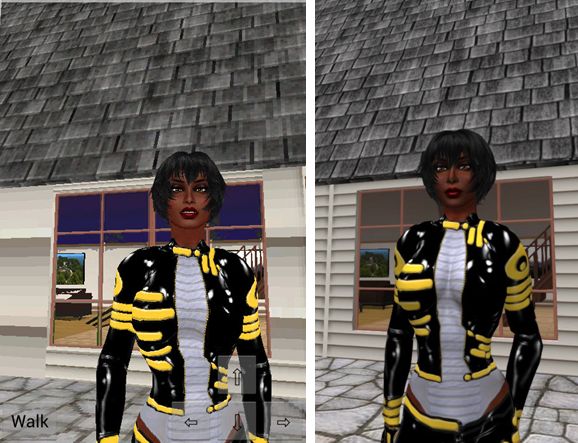
The changes are apparent from the moment you launch Lumiya, as a slick new log-in page appears, complete with new widgets.

The older (l) and newer (r) log-in screens – note the widgets, top right, in the latter

The widgets are at the top right of the screen and comprise (in left-to-right order):

  • Account Manager: easily access all of the accounts you’ve used Lumiya to log-in to SL. Tapping on this will display a list of accounts, including the name of the grid the account is used to access. Tapping an account name will return you to the sign-in screen, with the user name and password fields auto-completed with the required credentials, and the client pointing towards the required grid
  • Settings: tap on this to access and set / amend your preferred settings for Lumiya.

Settings Options

Before getting into the various changes within Lumiya itself, it is worth covering the Settings options, as these include some important updates. Chief among them is the new Light skin option. Until now, Lumiya has presented itself on a dark background. On smaller screen, than can be hard on the eyes and lead to discomfort. The Light skin option displays Lumiya’s screens on a white background which on smaller screens especially can be easier on the eye.

The two visualisation options for Lumiya

Also within Settings are the new options to: use legacy names rather than Display Names; enable the split-screen display and when it will be activated (see Screen Orientation, below); and display local chat in the 3D world view (see Conversing in the 3D World View, on the next page).

Grid Access

The grid access list can now be displayed in one of two ways:

  • By tapping the name of the currently selected grid. This will display a pop-up list of grids
  • By tapping the Menu button on your device and selecting Grids from the menu which is displayed. This will switch to a full-screen list of defined grids

Tapping on the name of a grid in either list will automatically return you to the sign-in page, with the grid selected. Both lists also include the option to add further grids, as I’ve documented in my last review of Lumiya.

Menu Options and Icons

Tapping the Menu button on your device in earlier versions of Lumiya would pop-up a set of on-screen buttons. This has now been replaced by what I’ve dubbed here the “Lumiya menu”. This is a set of context-sensitive menus which will display options in accordance with the screen you are using / function you are performing and which take into consideration screen orientation (see below). These make working with Lumiya even smoother and more intuitive.

Greater use is also made of on-screen buttons as well. These are also context-sensitive  and present a far slicker and faster means of performing activities within Lumiya than with previous versions. As the buttons rely on icons extensively when in portrait mode (at least on smaller devices), a PDF-format guide to the icons and their functions can be found here. A long touch on an icon will also show an on-screen tool tip.

Screen Orientation

Lumiya now includes much better screen orientation options when rotating between portrait and landscape modes, and adds a split-screen capability.

When rotating between portrait and landscape views the screen layout will automatically adjust itself. This will generally result in better screen utilisation in either orientation. However, when in landscape mode, it may appear as if buttons are vanishing from the screen due to the use of icons & labels – not so! Any buttons that are not displayed as icons are moved to the Lumiya menu, accessed via the Menu button on your device.

Where the icons go: rotating the Lumiya display to landscape may seem to cause buttons to vanish from the layout. Tap the Menu button on your device to display them within the Lumiya’s menu

The a split-screen option is primarily intended for tablet devices, but can still be useful when used with suitable screens on mobile phones. It is enabled via Settings (tap the Menu button on your device to display the Lumiya menu and then tap Settings), and can be set to one of the following:

  • Automatic: Tablets will automatically switch to split-screen when in landscape orientation, devices with smaller screens may not
  • Always in Landscape: the split-screen will activate whenever the device is rotated to a landscape orientation, regardless of screen size
  • Always: the split-screen mode will be active in both landscape and portrait modes, again regardless of screen size
  • Never: split-screen never activates.
Contacts screen in split-screen view

Continue reading “Lumiya 2.2.0: out with the old, in with the new”

Exodus updates: version 12.08.09.1

exodus-4It’s been a while, but the Exodus team released a new version of the viewer on Thursday August 9th. Version 12.08.09.1 is liable to be the first of two updates to Exodus this month (the second being aimed at incorporating the pathfinding tools for those keen to get to grips with pathfinding in Second Life). This release is the first to be made since Katharine Berry recently joined the Exodus team, and she’s been engaged in a number of the features presented with this release.

The 12.08.09.1 release (also referred to as Beta 8), brings with it a range of updates, including:

  • Ability to upload images from the snapshot floater to Flickr
  • New linear, Renhard and filmic tone mapping
  • New avatar troubleshooting menu
  • Ability to mute group chat
  • Inclusion of floating point “Normalized Blinn-Phong” shading LUT for deferred rendering
  • Latest RLVa support
  • Various UI updates including:
    • Vertical chat tabs (from Catznip)
    • Web browser toolbar button
    • Additional slider in the Quick Preferences floater for adjusting your own sound locally
    •  Request teleport button added to IM windows
  • Merge with the SL Viewer 3.3.3 codebase, bringing with it:
    • Merchant Outbox support
    • Local Textures (by Vaalith Jinn)
    • Graded shadow support
    • Various fixes to the mesh queue

This article has been written using the Windows release of 12.08.09.1, and is intended to be an overview of the core updates rather than an in-depth review of the Exodus viewer (see articles list at the end of this items for further information on Exodus).

Download and Install

The Windows downloader weighs-in at a modest 28.4Mb. Installation on my system was fast and smooth (as per usual, this was a clean install for me). Start-up revealed the familiar Exodus blue sky screen with core information (particularly updates from the Grid Status Page) along the bottom. No implementation of the official splash screen here. However, if you do have issues trying to run Exodus following installation – and in particular get error messages relating to .dll problems, you might try visiting the Exodus FAQ page and following the link therein.

Logging-in revealed the familiar Exodus default screen layout, with buttons to the left and button of the screen, which can still be repositioned to the left or right, top or bottom of the screen.

Avatar Troubleshooting

Avatar Troubleshooting takes a leaf from the Firestorm book and offers three options for dealing with avatar issues. These can be found in a menu under Me->Troubleshooting and comprise:

  • Reload My Avatar Data: sends a request to the SL servers to download your avatar data once more. Useful where you’re seeing outfit changes but other’s aren’t (often indicative that something is going wrong within your computer, rather than anything at the server end)
  • Rebake my avatar textures: performs a normal local rebake, with the data sent to the server for distribution
  • Reset my avatar: Ruths your avatar to default shape and clothing, allowing you to rebuild it in the event of a drastic error.

Toolbar Buttons

This release of Exodus includes two additional buttons, Web, which opens the viewer’s built-in web browser, and Panic. The latter is a hang-over from testing nightly builds and debugging. As such, it is not intended for general use and may be removed or re-purposed in the next release. It is  not recommended you employ the button, as it is intended to crash the viewer and generate a crash log.

Snapshots to Flickr

Flickr is a popular medium for SL photographers, so having an option to save pictures directly to it is likely to be a benefit to many. With this release, Firestorm obtains Katharine Berry’s code (Katharine also recently joined the Exodus team) to enable snapshots to be uploaded directly from the viewer to a Flickr account.

The option is presented as an additional button on the snapshot floater. The first time you click on this, it will cause a pop-up to be displayed:

Setting-up Flickr to accept snapshots from Exodus

Clicking on YES will take you to the Flickr authorisation page, which will outline the possible risks of connecting Exodus to Flickr (a standard alert page, common when using inter-application authorisation). Read the warning carefully, and if happy, confirm yo wish to proceed (refusing cancels the link and denies Exodus the ability to upload to Flickr).

Confirming that you’re happy to proceed will display a code number on the Flickr web-page. Type this into the authorisation pop-up displayed in Exodus. This will activate the link and allow you to take your snapshot and send it to Flickr. Again, note the authorisation process only has to be completed the first time you attempt to upload a snapshot directly to Flickr, thereafter snaps will be sent to your Flickr account without hindrance.

Continue reading “Exodus updates: version 12.08.09.1”

Viewer release summary 2012: week 31

The following is summary of changes to SL viewers / clients (official and TPV) which have taken place in the past week. It is based on my Viewer Round-up Page, which provides a list of  all Second Life viewers and clients that are in popular use (and of which I am aware) and which are recognised as being in adherence with the TPV Policy.

This summary is published every Monday, and by its nature will always be in arrears. Therefore, for the most up-to-date information on viewers and clients, please see my Viewer Round-up Page, which is updated as soon as I’m aware of any changes, and which includes comprehensive links to download pages, blog notes, release notes, etc., for Viewers and clients as well as links to any / all reviews of specific viewers / clients made within this blog.  

Updates for the week ending: 5 August, 2012

  • SL Viewer updates:
    • Beta: rolled to 3.4.0.262596, July 30 – core update: addition of viewer-side pathfinding tools (also see my notes on the tools)
    • Development: rolled to 3.4.1.262722 on Aug 2nd
    • The Pathfinding viewer has been removed from the list, as the code is now incorporated in the Beta viewer
  • Dolphin rolled to 3.3.12.24739  on August 2nd – core updates: the reset, start, stop, remove, recompile script operations now request confirmation & can be accessed from the context menu of an in-world object; temporary upload is available when doing snapshots to inventory (release notes)
  • Niran’s Viewer rolled to 1.47 on Jul 30 – core changes: updates to experimental Preferences overlay; FPS counter will be displayed as text by default; assorted fixes (release notes)
  • Cool Viewer:
    • Stable branch rolled to 1.26.4.23 on Aug 4th, and is referred to as a “catchup release with the v1.26.5 branch”
    • Experimental version (SL3.3 renderer) rolled to release 1.26.5.2 on Aug 4
    • Release notes for both
  • Group Tools rolled to installer release 2.2.8 on July 28th.

Related Links

Mountain Lion issues for SL viewer

An issue has emerged trying to use the Second Life Viewer on Mac systems running OS X 10.8 Mountain Lion.

Notification of the issue has been posted to the Grid Status Page, which reads:

Issues Opening the Second Life Viewer in MacOSX

[Posted 8:30am PDT, 1 August 2012] Some residents may be experiencing problems opening the Second Life Viewer in a MacOSX Mountain Lion environment. This is due to a security feature of this operating system which is misidentifying some programs as potential security risks. While this is not indicative of any actual issues with our software, we are working on an update to our viewer which should address this. In the meantime there are instructions on how to bypass this feature temporarily, as well as an explanation of the cause of this issue, here:

http://osxdaily.com/2012/07/27/app-cant-be-opened-because-it-is-from-an-unidentified-developer/

Please note that this is not a problem with the viewer, and that we are not responsible for the workaround above – we are merely providing a link to a possible fix posted by a third party.

If you are experiencing issues using Second Life on Mac OSX, you might try the workaround noted above – but again, please note, as the report states, it is a link from a third-party, and Linden Lab (nor I) cannot be held responsible if the workaround fails or causes other unforeseen issues with your computer.

Teapot: brewing-up a viewer

Teapot is a Kokua-inspired, SL 3.x-based, viewer for Second Life and OpenSim grids, compiled by Armin Weatherwax (on OS Grid, or ArminWeatherHax Resident in SL). It includes numerous TPV derived functions and capabilities (please refer to the About Teapot pop-up in the viewer itself for additional credits), but is not top-heavy in terms of additional functionality.

The version reviewed here is 0.2.5, released on July 20th.

Download and Installation

Teapot is available in three flavours: Linux 32 and 64-bit, and Windows. The Windows installer is 42.3Mb in size, and downloaded and installed on my PC without any issues.

On start-up, the viewer displays the familiar splash screen, but with a slightly different approach to grid support.

Grid list pull-down and New Grids button

Clicking the arrow next to the grid name field will display a default list of popular grids, as per most other viewers that support OpenSim. However, if the grid you wish to log-in to is not displayed in the list, you can click NEW GRIDS. This will display a more complete list of grids (some 168 with this release of the viewer) in a pop-up window, which also contains a warning that “some of these grids, especially smaller ones, might be not online all day, or at all”. Clicking on the name of a grid in the list will initiate an attempt to log-in to it.

If the grid you wish to access is not displayed in either list, you can type the uri for it directly into the grid name field. When you click the refresh button next to the field, the grid name (if found) will be added to the drop-down list and an attempt to log-in to the grid will be initiated.

User Interface

Once logged-in to a grid, Teapot reveals itself to be something of a hybrid. The overall layout is very much Viewer 3.x, but the menus combine elements of both viewer 3.x and viewer 1.x, including as they do File, Edit and View from the latter and combining them with World, Build and Help from the former (with Advanced and Develop also available).

The File, Edit and View menus (click to enlarge, if required)

Default buttons are all arranged at the bottom of the screen, and are displayed with icons only visible. They comprise (in left-to-right order): Chat, Speak, Voice Settings, Preferences, Snapshot, People, Build, Camera, Map, Mini-map, AO and Inventory.

The AO (Animation Overrider) is by Zi Ree, and is as found in Firestorm – including using the #Firestorm folder (so if you have run Firestorm with the AO set-up, Teapot will use the same settings).

Preferences

Teapot more-or-less uses the default SL viewer Preferences floater and tabs, with the addition of an OpenSim Grid Manager  tab, and the inclusion of options to enable the pie menu for those that prefer it over the V3.x context menus (enable / disable the pie menu in the Advanced tab of Preferences, set background colour and opacity via the Colors tab).

Other Functionality of Note

  • Teapot uses V1-style profiles by default (using older code from Firestorm) and includes Nicky Dasmijn’s open-source mesh upload floater
  • Objects can be temporarily derendered from your world view, however:
    • They will only be derendered while they remain in your world view, and will be rendered once more should you re-log or teleport away and back
    • The derender option is only available when using the pie menu – it is not displayed in the context menus
  • There is no RLVa support included in the viewer at present.

Performance and Feedback

Performance-wise, using my standard set-up with the viewer and on my home sim, Teapot produced the following frame-rates: ground level: 16-18fps; 370m: 29-32fps; 2875m: 40-43fps. With lighting and shadows enabled, these became 7-9fps, 14-16fps and  20-21fps respectively. These figures put Teapot roughly between my recent “tests” of Niran’s 1.46 and Firestorm 4.4.1.28744.

Overall, the viewer performed well during a 4-hour test run on Second Life, which was crash-free. There are some nips and tucks required in places – such as ensuring options included in the pie menu are also available in the context menus (inspection option, derenderer) – but overall, Teapot presents itself as workable and pleasant viewer. It may not be as feature-heavy as other viewers that are out there, but this shouldn’t be held against it. Indeed, if you’re an OpenSim user looking for a reliable, fast and well-presented V3.x-style viewer that offers core functionality and things like Media On A Prim, mesh uploads, etc, then Teapot might well be … just your cup of tea!

Some Things to Remember

  • Teapot should not be confused with the Teapot-Viewer, used for viewing OpenGL models
  • The viewer is very much a personal project Armin has put together, and his time / ability to provide support or add specific functionality is limited
  • Efforts have been made to ensure Teapot is compliant with the TPV Policy, but it is not currently listed in the TPV Directory
  • While inspired by Kokua, Teapot stands as an independent viewer, and should not be confused with the Kokua project.

Related Links

Viewer release summary 2012: week 30

The following is summary of changes to SL viewers / clients (official and TPV) which have taken place in the past week. It is based on my Viewer Round-up Page, which provides a list of  all Second Life viewers and clients that are in popular use (and of which I am aware) and which are recognised as being in adherence with the TPV Policy.

This summary is published every Monday, and by its nature will always be in arrears. Therefore, for the most up-to-date information on viewers and clients, please see my Viewer Round-up Page, which is updated as soon as I’m aware of any changes, and which includes comprehensive links to download pages, blog notes, release notes, etc., for Viewers and clients as well as links to any / all reviews of specific viewers / clients made within this blog.  

Updates for the week ending: 29 July, 2012

  • SL Viewer updates:
    • The release version rolled to 3.3.4.262321 on July 24 (release notes)
    • Development: rolled to 3.3.5.262596 (July 26) and then 262681 on July 27: core update: addition of viewer-side pathfinding tools (also see my notes on the tools)
    • HTTP Project Viewer 333.262585, July 27th – initial release of a unified approach to HTTP-based communications between the viewer and grid services with a goal of achieving reliability, consistency and a better overall experience on the grid.
  • Dolphin rolled to 24724 on July 27th, which apparently contained “serious flaws on windows”, prompting the release of 24731 on July 28th, with an advisory that anyone running 24724 on Windows should immediately update – release notes are as per 24724
  • Niran’s Viewer rolled to 1.46 on July 26th – core changes: experimental new Preferences overlay; removal of Darkness skin; some rendering updates
  • The Cool Viewer Experimental version (SL3.3 renderer) rolled to release 1.26.5.1 on July 29 – core changes: renderer updated to SL 3.3.4; added options for Classic Clouds and animating trees; backport of support for private memory pools from viewer 3; Advanced menu more logically arranged
  • Group Tools rolled to installer release 2.2.8 on July 28th.

Related Links