Biancajane Juliesse has been involved in art and painting since she was four years old and her mother gave her a paint by numbers oils set. From the start she fell in love with both the smell of the paint and the creative opportunities it presented.
The love affair continues to this day: known in the physical world as Mary Sparrow, Biancajane is a gifted artist whose work has shipped to over 30 countries around the world. Specialising in fine art creating commissioned heirloom portraits for over 25 years, and also works closely with interior designers to create custom artwork for residential and commercial spaces.
Sisi Biedermann Gallery: Biancajane
While she came to Second Life primarily as a means to relax, she became involved in its creative potential in a number of ways, such as her prefabs and furnishing business in-world, and through the exhibition and sale of prints of her original art.
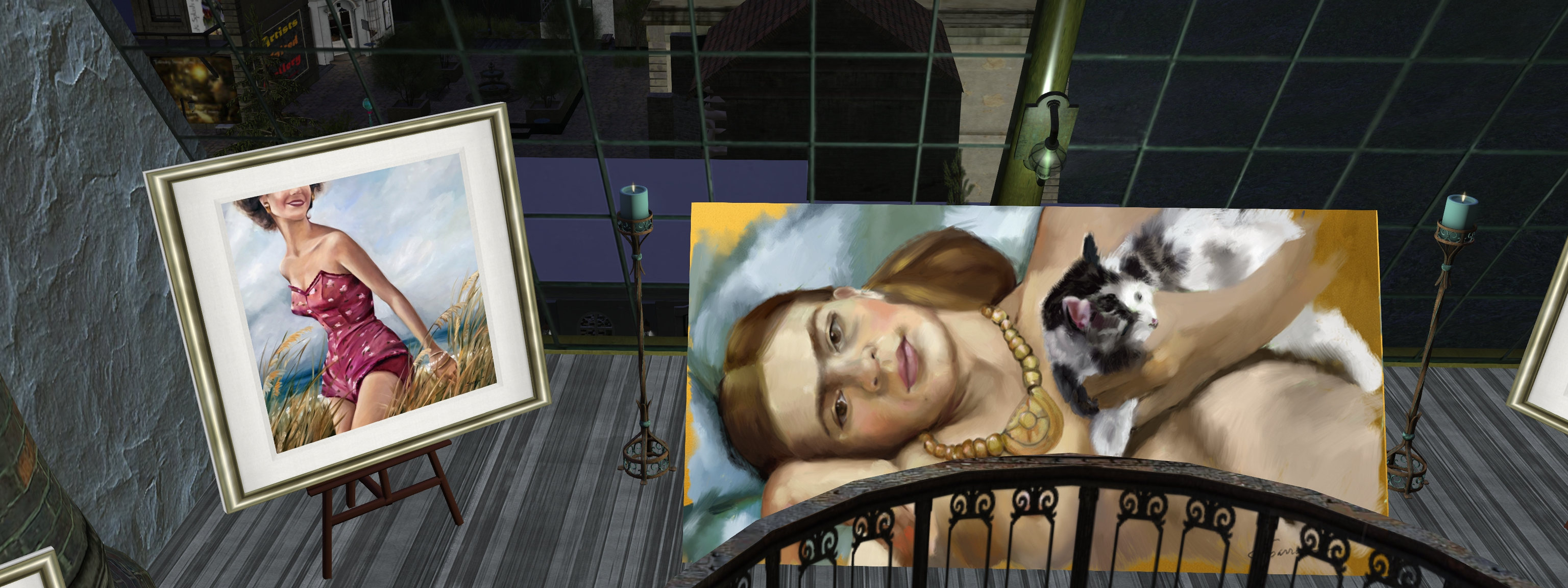
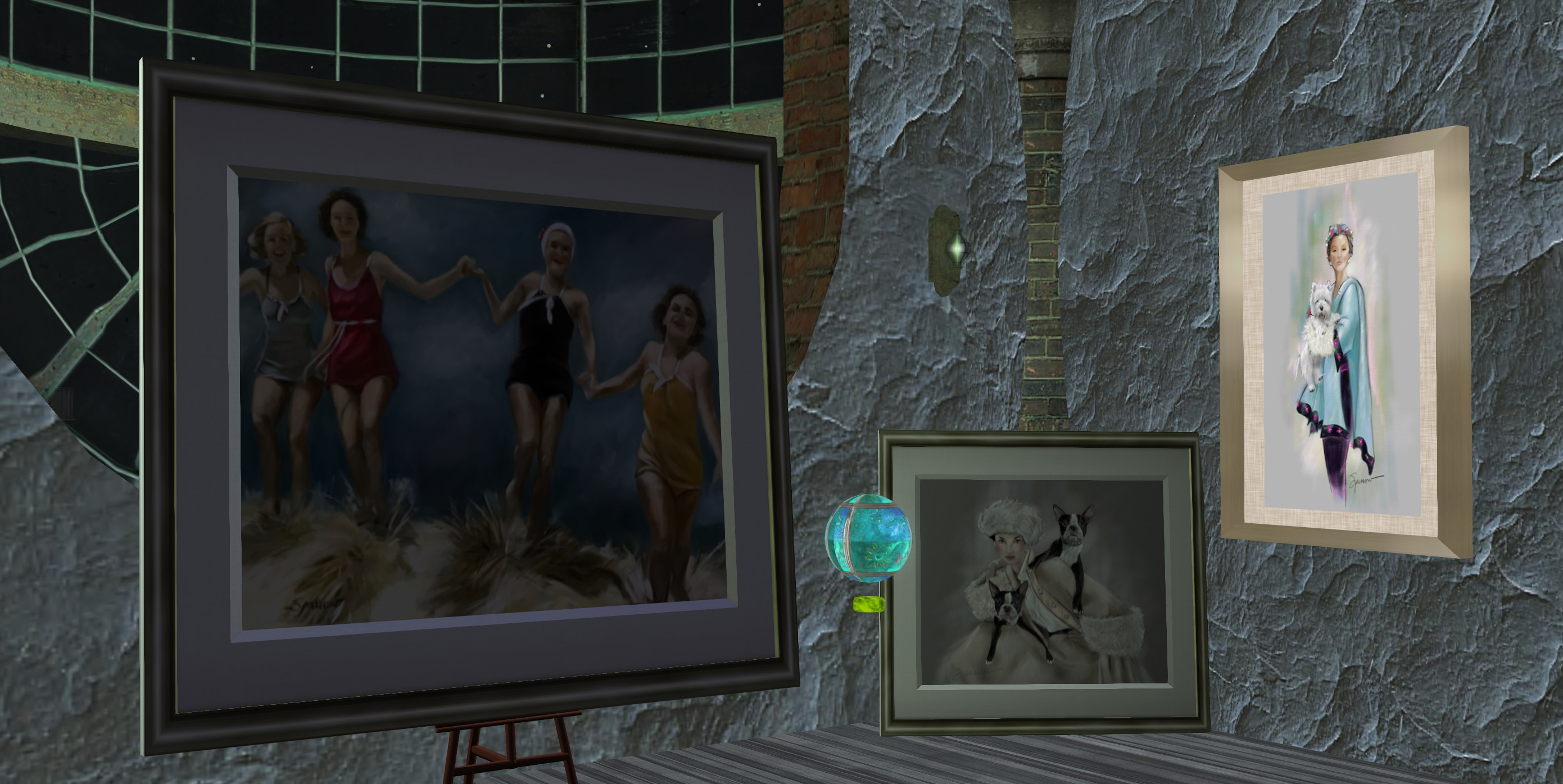
A selection of that art can now be seen at Sisi Biedermann’s Gallery at an exhibition that officially opens on September 1st, 2021 – although it is open to the public now – and runs through until November 1st. In all, some 20 pieces are presented, the majority of them portraits, although a neat little selection of famous perfume brands is also offered.
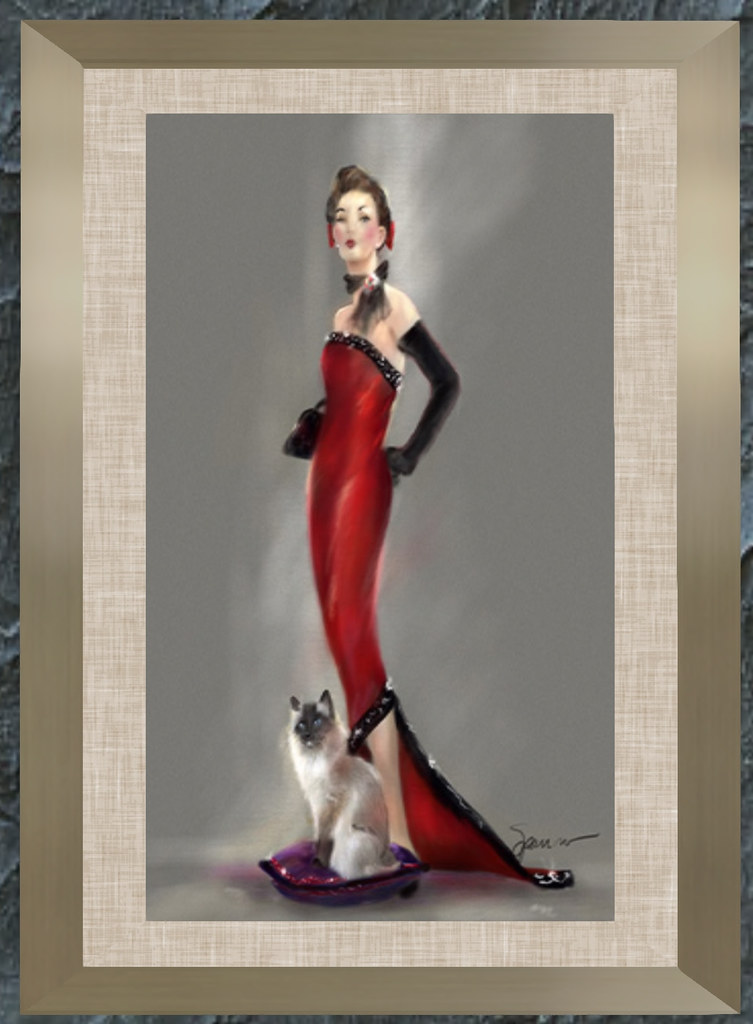
The portraits are utterly captivating in their depth and detail. Several of the pieces include the subject’s pets – notably dogs – which adds a further layer of personality to them. As a cat lover, I particularly love the image of a woman in a red evening gown with her long-haired Siamese cat seated on a cushion at her feet. While the woman may be the intended focus of the picture, Biancajane has purrfectly captured the cat’s expression and the fact it knows who the real subject of the picture actually is!
As well as pictures that appear to have been posed, the selection also includes group and individual pictures that have a marvellous sense of immediacy about them, like snapshots that unexpectedly capture a moment of sheer, unstaged joy or a moment where thought distracts the subject, again adding a sense of life and vitality to them.
Rounded out by a portrait of Frida Kahlo, famous for her own portraiture and self-portraits, this is an engaging exhibition, with individual pieces offered for sale. A couple do appear to be mis-labelled, but this is a minor distraction, and while I would have liked to see some of Biancajane’s animal and landscape paintings among the selection (yes, I know, I’m greedy!), this is nevertheless a selection of start that will engage the eye and mind of any patron of the arts in Second Life and is more than worth a visit.
ArtCare Gallery, August 2021: Anja and Therese Carfagno
August 26th, 2021 saw the opening of a joint exhibition at Carelyna’s ArtCare Gallery. featuring the work of two very different artists whose work nevertheless presents something of a whole when presented side-by-side.
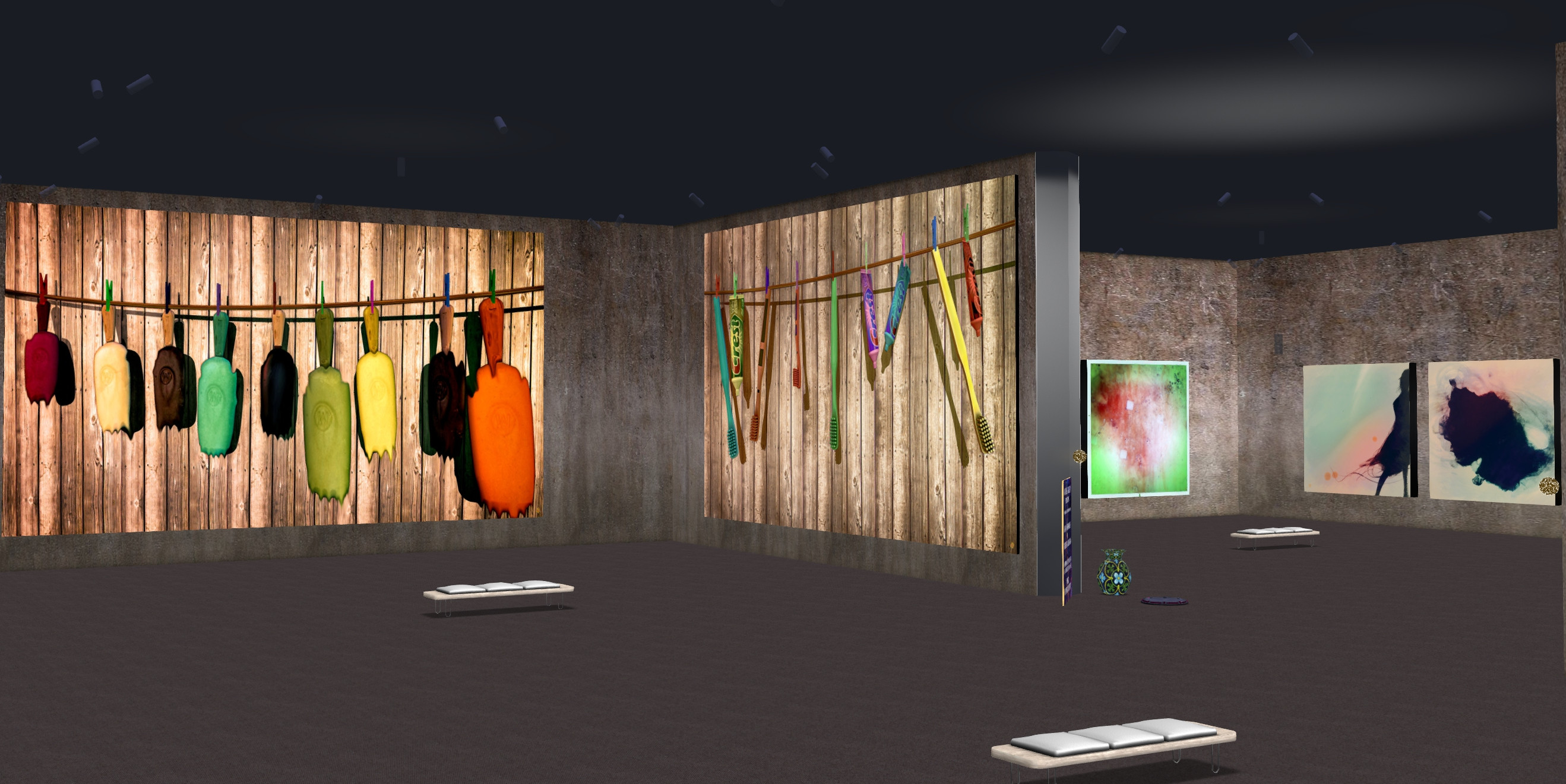
Anja (Neobookie) describes herself as a Second Life photographer who enjoys exploring Second Life and capturing the places she visits – as witnessed with her Flickr stream. However, as she has demonstrated in recent exhibitions, she has a gift for creating pieces of surrealist art that perfectly encompass the richness of that movement, and at ArtCare she presents six large-format pieces in proof of this.
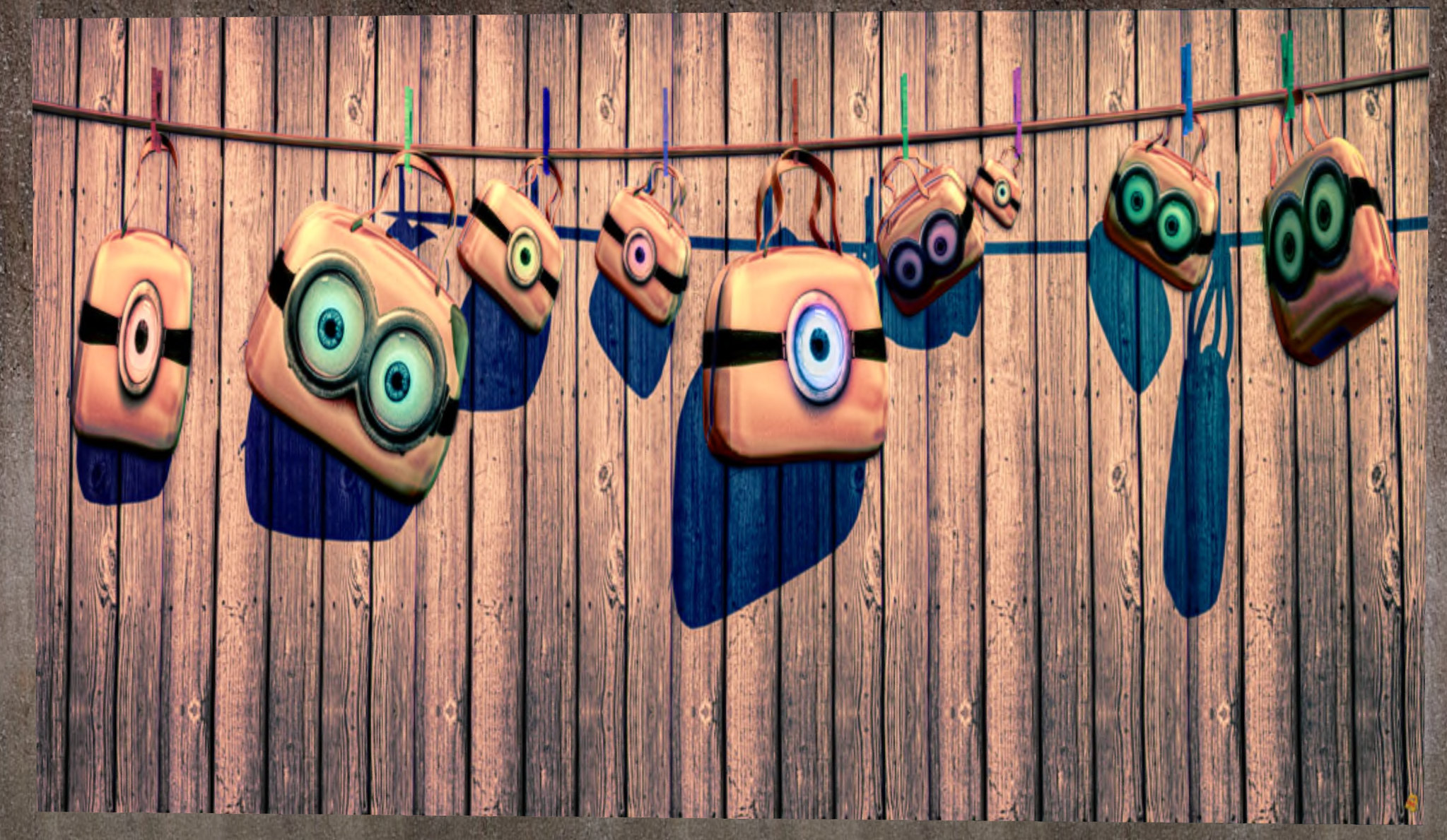
Each offers a backdrop of a wooden fence in front of which has been strung a washing line, and it is what is on the line that forms the focus of each piece. Offered in vibrant colours, these subject range from surf boards to toothbrushes and toothpaste tubes, passing by way of Minion handbags and melting ice lollies. and more.
ArtCare Gallery, August 2021: Anja
These are images that initially appear simple in their presentation, rich in colour but which – for those who look – perhaps offer a little comment on life and living (might Minion Bags, for example a commentary on the drive for us all to conform as best we can to the dictates of modern consumerism, and Ice Ice Baby a reflection on the passage of time (or the brevity of summer?). But however you take them, there is no mistaking the joy and lightness each piece offers when simply taken in its ability to bring together the ordinary and the extraordinary to create completely something truly unique and engaging.
Therese Carfagno is an artist with an intriguing range of styles and presentation that can encompass real and Second Life photography, her work touching upon abstraction, collage, impressionism, expressionism and more.
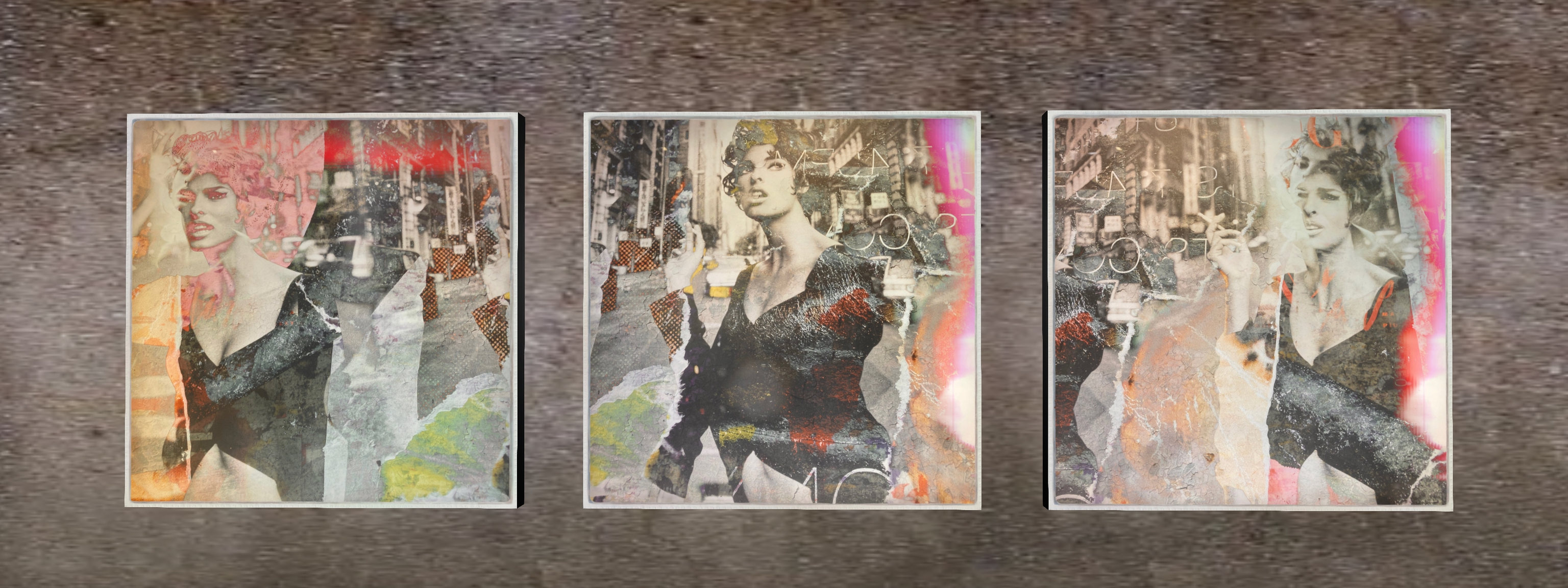
The pieces offered at ArtCare very much reflect this richness; they are also offered as “families” or “collections” of themed images, ranging from pairs of pieces through to a quartet entitled Blood. Within them we can find abstraction in the form of Wall, collage in the triple set entitled Sophia and digital overlays with the Sita pairing – and more, including a touch of sensuality a triple set of monochrome pieces. However, the most striking set is that of Blood, a quartet of portraits, again monochrome, that offer a depth of narrative that forces the attention to come back to it over and over.
ArtCare Gallery, August 2021: Therese Carfagno
The contrast between these two small exhibitions couldn’t be stronger in terms of colour: Anja’s works are all vibrantly saturated in their use of colour, their brightness infectious. With the exception of the Wall and Sophia series, Therese’s selection is generally heavier in tone – if not mood; the colours more muted, and lean more towards monochrome. Individually, they are very different selections, yet together they offer a flow of art and style from one to the other that is impressively engaging.
Needless to say, a visit to this joint exhibition is highly recommended.
Once Upon a Tide, August 2021 – click any image for full size
I first dropped into Once Upon A Tide, a build by Mïa ((zielonooka1) occupying a homestead region, just on a month ago as July was drawing to a close. If I’m honest, I cannot remember whether the landmark came from Mïa herself (my apologies to her if it did!), whether I heard about the region through other means (in which case my apologies to whoever poked me about it) and I grabbed the LM on that first visit, or the landmark came via other means. Anyway, it’s taken me a while to put fingers to keyboard and write about the setting, as I’ve (a little unfairly) allowed other things to get in the way – so again, apologies to Mïa.
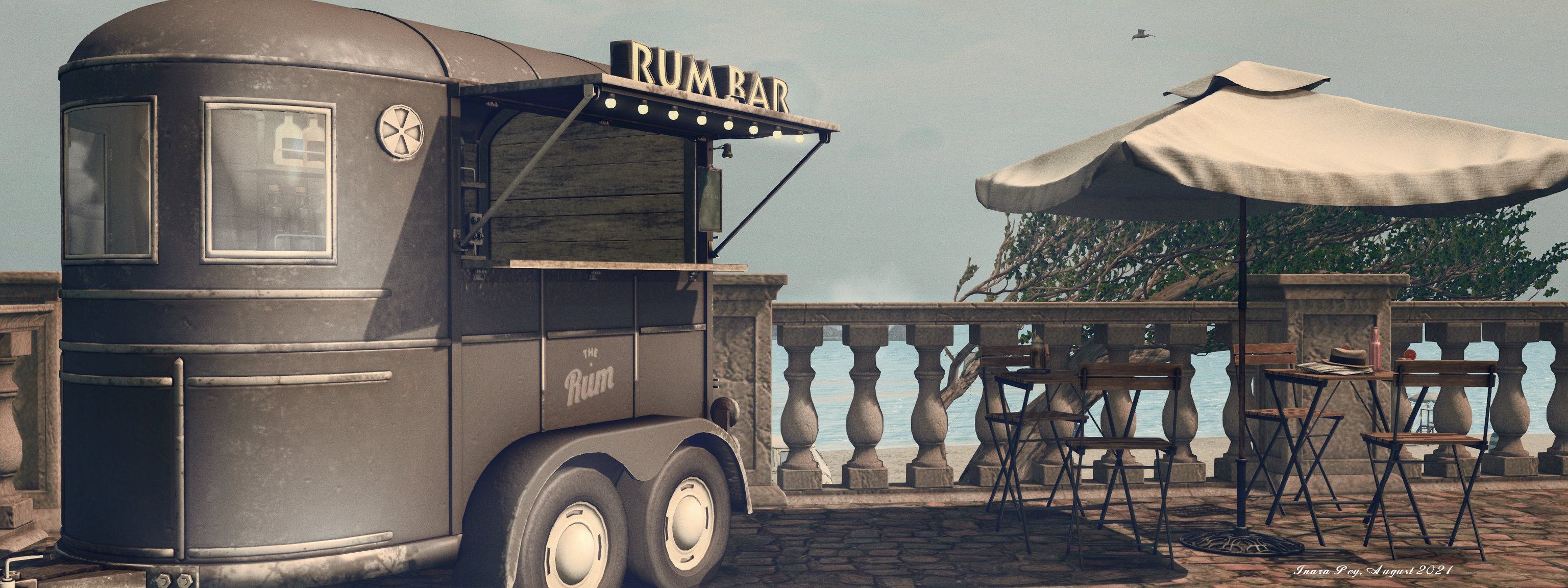
No description is provided for the region in it’s About Land floater, but that’s not a problem, as it makes for a charmingly easy visit for those who drop in, offering – in the words from Mïa’s profile – “a little bit of Ireland”. The focal point for the setting is a compact rectangle of buildings, sitting as both a waterfront promenade of businesses look down over a sea wall to the west and the fishing boats that are making their way to wooden and concrete piers and as a beachfront row of businesses as they look eastward over broad cobbles and broader sands to more waters, these broken by sandbars and rocks that are in turn watched over by the local light house.
Once Upon a Tide, August 2021
The landing point sits at the top of the wide steps that offer a way down from the rectangular street scene to the sandy beach, presenting visitors with a choice – to walk around the shops and places of business as they stand back-to-back and side-to-side as if in defensive huddle atop their sea walls, or trot down to the sands and wander over their warmth.
A walk around the former will reveal that the majority are façades, although one of the pubs and the neighbouring coffee shop each have interior décor as well as outdoor seating on the cobbles, should anyone fancy a sit down. But the fact the majority of the builds are façades doesn’t diminish them; they collectively offer numerous opportunities for photography – joining the local group will provide those who need them with rezzing rights (just – as I always tend to request – remember to pick up anything you put out when you’re done).
Once Upon a Tide, August 2021
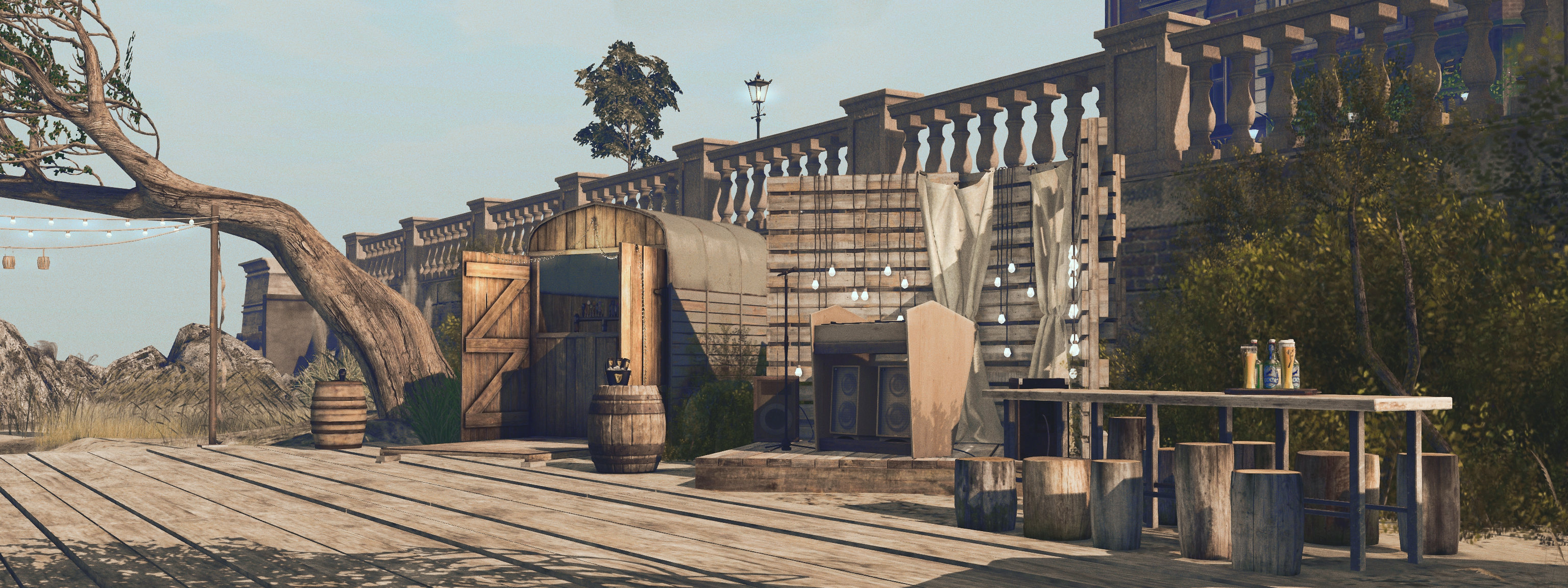
The beach, meanwhile, runs along most of the east side of the island, curving around its south side to become a narrower ribbon of sand before it encounters a rocky shoulder extending out from the town’s sea walls. Here, tucked between the wall and the tide, is a place for outdoor music, the nearby steps providing a handy route up to the pub and coffee house for those who might be in need of refreshment after dancing in the Sun. Along its eastern arm, the beach offers numerous places to sit, the opportunity to snag some fish’n’chips, and even the chance to watch some home movies (aka YouTube) whilst lying on the sand.
To the north, the land becomes a little more rugged. Low cliffs mark the northern coastline, a place where a quartet of beach houses stand over the waters below, supported on wooden piles and beams that extend outward from the edge of the cliffs. These are available for rent by those who wish to extend their visit in the region (or even make it a most home – 100 LI is included in the rental fee).
Once Upon a Tide, August 2021
Between the beach houses and the town sits what might have once been the grounds of a large building many, many decades ago. These now sit as informal gardens, just a single block of ancient stonework and arches remaining. Poles strung with lights stand close by, suggesting this might also be a place for outdoor events as well – a fact also spoken to by the plastic cups strewn under the lights, awaiting collection.
Between the northern cliffs and the sands of the east beach, the land stands as a grassy table, offered as a camp site and the preserve of a pair of trailer homes that look as if they’ve dropped in from the United States, the battered pick-up truck with its Alabama plates adding to this feeling. A meal is being prepared alongside an outdoor fire, and someone has put together a makeshift tub for bathing – although I have to admit, the campsite’s weather report system had me smiling.
Once Upon a Tide, August 2021
Easy on the eye and the viewer, offering room to relax, opportunities for photography and a setting where the various points within the region both sits as a individual settings and flow together as a whole, making Once Upon A Tide interestingly varied for explorers and photographers alike.
Elven Falls Gallery, operated and curated by Ant (AntoineMambazo) and Aires Hax, is a relatively recent venture to arrive on the Second Life art scene, offering four galleries spaces for art exhibitions, and a growing sculpture garden for 3D work. The majority of the gallery spaces each offer two floors in which artists may display their work, with all four halls currently being occupied by a quartet of artists who offer displays that are fully engaging, whether taken individually or collectively.
Sisi Biedermann is an artist I’ve often covered in these pages; so much so that it is probably well known to regular readers that I find her once of the most engaging, evocative and remarkable artists in Second Life; her work apparently knows no boundaries, and she is ever-willing to engaging in genres and and experiment with styles, approaches finishes, whilst her subjects involve everything from the natural world through in-world settings to the fantastical and even touches on the abstract and the near-surreal. Thus, her exhibitions are often a voyage of discovery even for those who are familiar with her work.
Elven Falls Gallery, August 2021: Sisi Biedermann
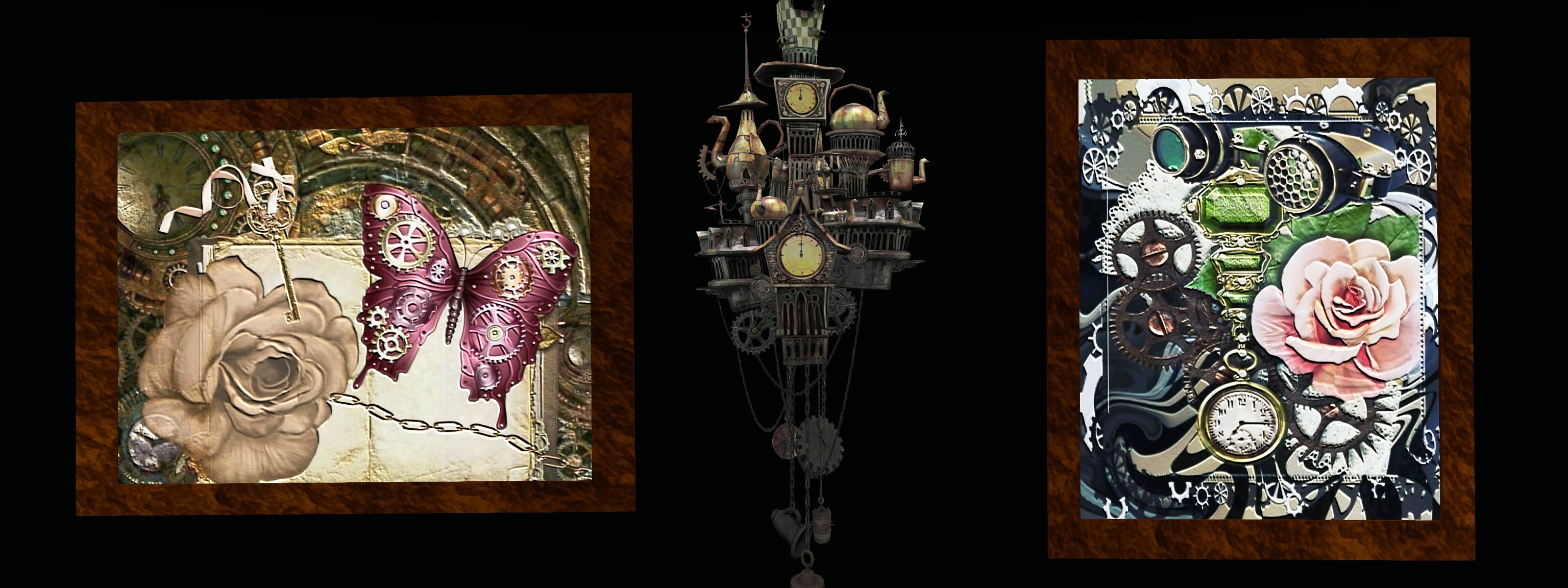
At Elven Falls, Sisi offers what I’m going to call a triptych (and admittedly using the terms a little loosely in this case) exhibition, in that it comes in three parts – two of which are very definitely connected. These are on the lower floor of the hall, where Sisi takes us on a walk through two well-tended gardens. The English garden to the left that has the inevitable neatly mown lawns and rose bushes (as well as other floors), while to the right we pass through a Chinese garden with water features.
Given Sisi is a photographic artist and a painter, I’ve no idea if these images started as the former and were then processed in to the latter, or began as acrylic-based paintings; but the truth is, this doesn’t matter: all of the pieces are given a slightly surrealist bent that makes them captivating in their beauty. Meanwhile, on the upper floor of the gallery, Sisi exchanges the peace and beauty of the garden for another world entirely, that of Steampunk in all its mechanical and Victorian glory. A stunning collection of digital images finished as etchings, these images sit as a kind of middle panel in this “triptych”, straddling the two, offering a further demonstration of Sisi’s range of artistic expression.
Elven Falls Gallery, August 2021: JudiLynn India
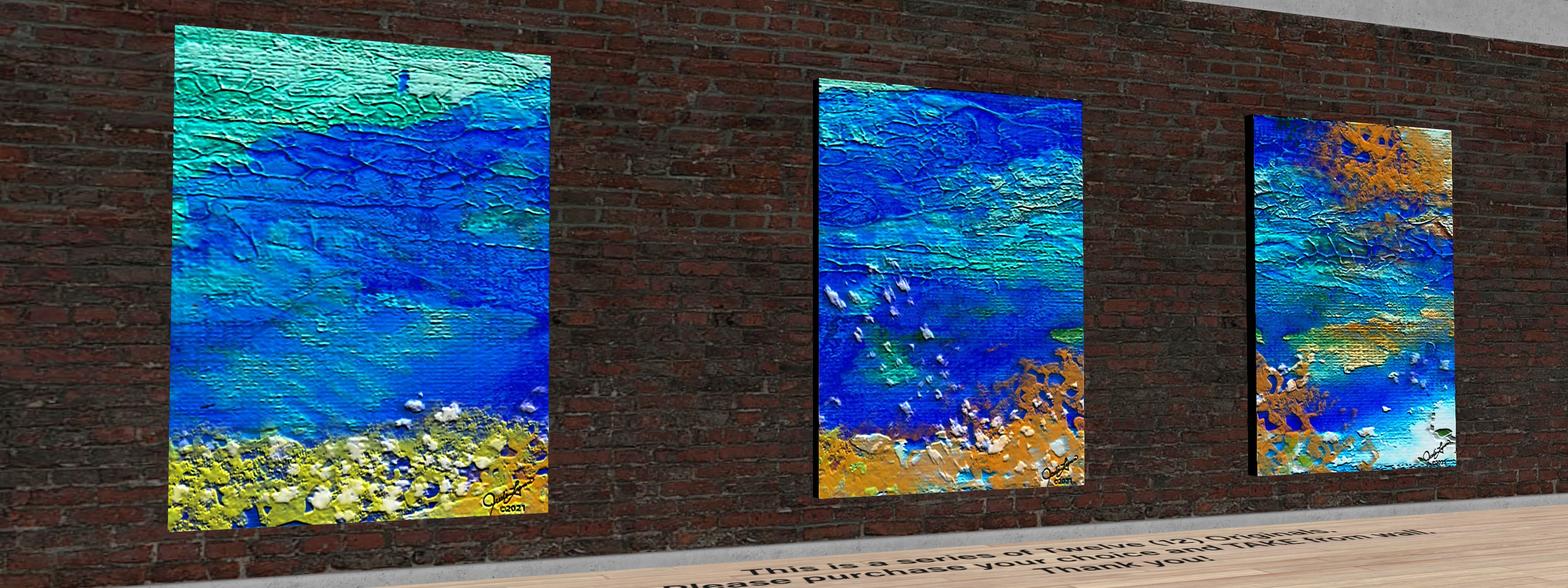
JudiLynn India also needs no introduction here, also being an artist whose work never fails to attract my attention. A painter focusing on abstract work, she has been active in Second Life as an artist since 2010, and her work never fails to catch the eye with its form and richness of colour.
At Elven Falls, Judilynn splits her display into four parts. Three (two on the lower floor of her exhibition space and one on the upper), each present sets of 12 original pieces, Defined as sets in terms of colour, they are offered for sale on the basis that when sold, the purchaser takes the original from the gallery, leaving a blank space. The rest of the space offers a more “traditional” – displays of JudiLynn’s art in which the purchaser receives a copy, and the original remains on display. Whether original or copies, all of these pieces again demonstrate the richness of JudyiLynn’s abstract work.
Elven Falls Gallery, August 2021: Kraven Klees
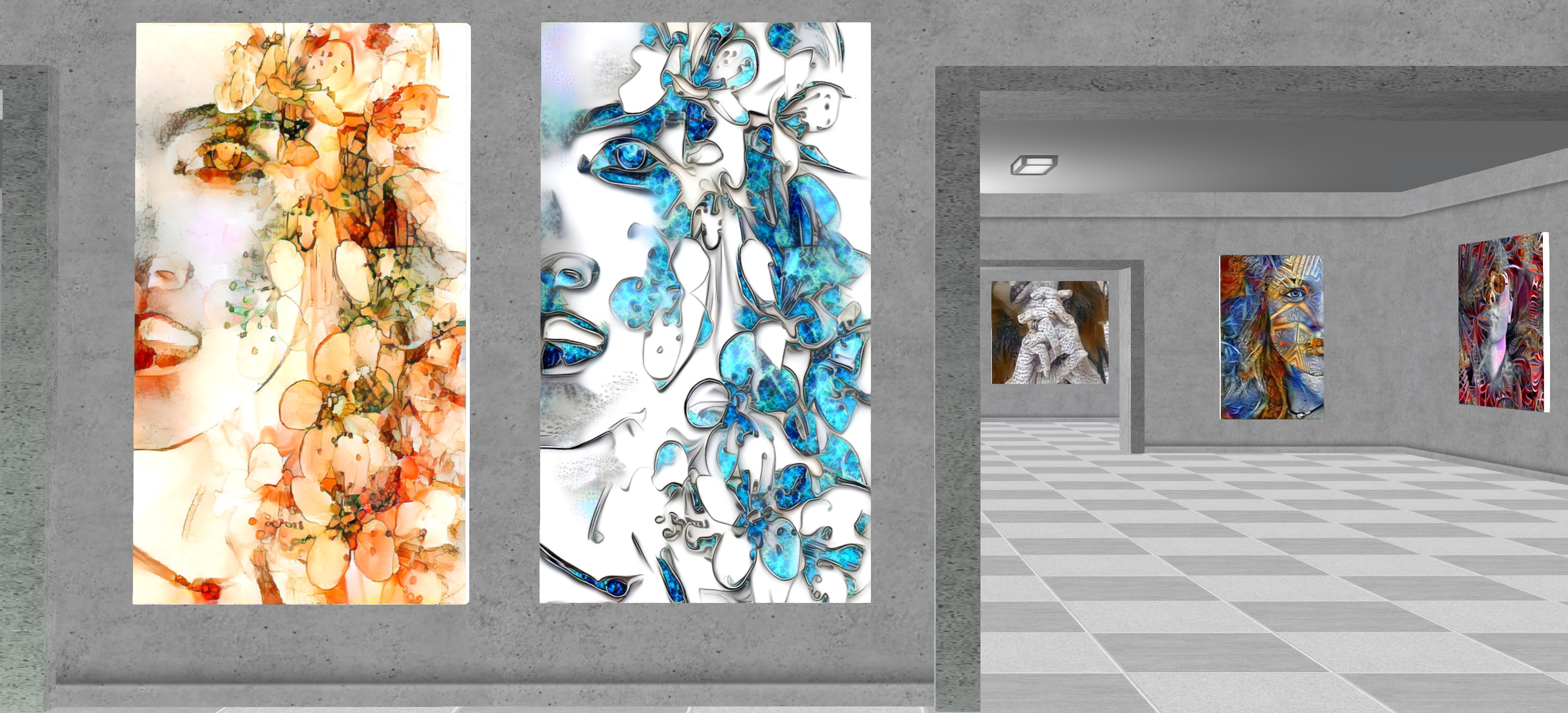
Should one call Kraven Klees an artist or an illusionist, is a question that often comes to min when viewing his work.
Working in mixed media this incorporates digital manipulation and techniques that include fractal abstraction, digital impressionism and a touch (in places) of surrealism, he more that qualifies as the former. Yet in his finished work, there is something more; these are works that speak not so much of conscious focus in their creation as they do of abstracted automonism. Such is the unconscious foundation within his work, Kraven’s pieces also call for a pareidolic or apophenic response from the observer as the eye moves from perceiving each image as a whole to focusing on its parts and back again.
Here, Kraven presents a range of his art that can be fully appreciated on both levels – use the teleport disk outside of the main gallery building and between the halls holding the exhibitions by JudiLynn and Sisi in order to reach the upper levels of the gallery.
Elven Falls Gallery, August 2021: Faith Maxwell
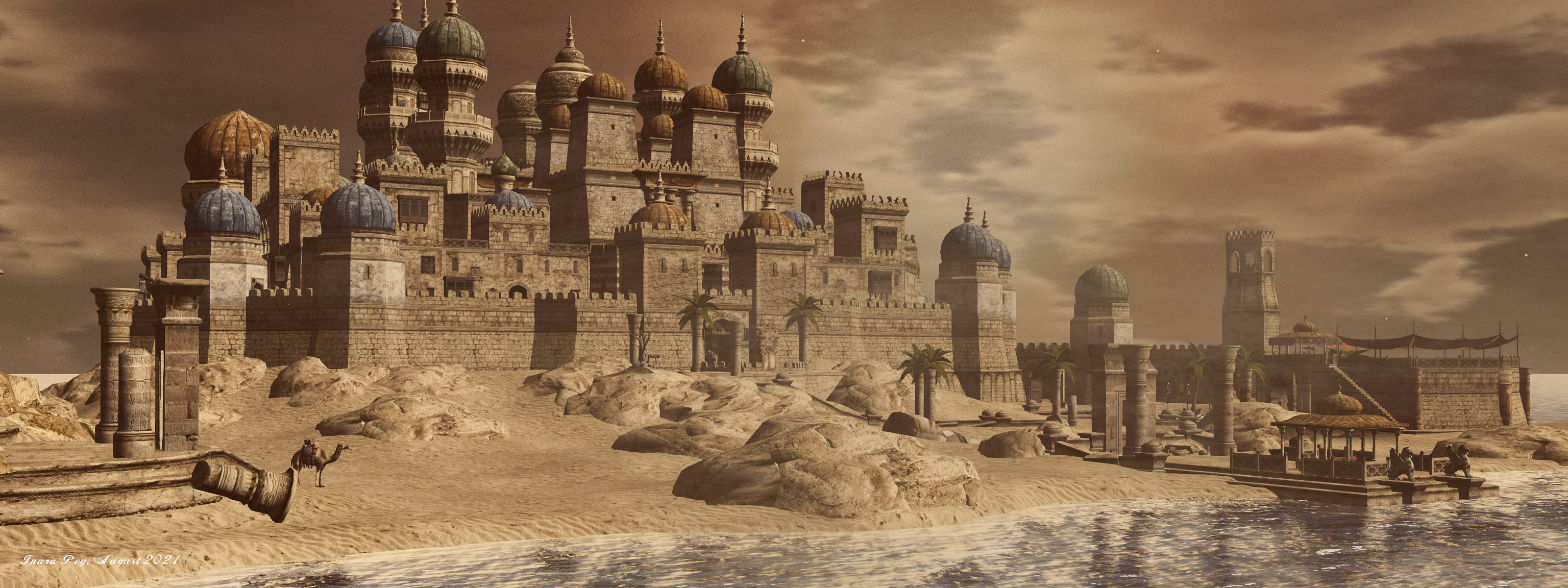
Faith Maxwell is an artist whose work is new to me, despite the fact she has exhibited widely in a Second Life. Working in both 2D and 3D formats, she produces the most engaging pieces as wall-mounted art and free standing sculpture that range from the abstract to contemporary in style, passing by way of Modern Art. These are piece that, whether animated or static, have a richness of life about them that is immediately apparent, drawing the to each in turn to appreciate its beauty and form.
Smaller than the exhibits by the other artists, occupying just a single level of gallery space, this is nevertheless as an engaging a display of work as the others, toe smaller number of pieces allowing the eye and mind to feel more settled in viewing them.
Update, September 20th: Shadezar and Venesha appear to have closed.
All of this has happened before, and it will all happen again.
No, that’s not a quote from the Ronald D. Moore re-imagining of Battlestar Galactica – although that show did famously use a variation of these words and is possibly a more popular modern frame of reference when the quote is now used. However, in this form, the words actually come from J.M. Barrie’s Peter Pan, and it is one of two quotes Hera (Zee9) uses (with very good reason) to introduce the latest iterations of her builds Shadezar and Venesha, which are once again available for people to see in-world, at least for a time.
Venesha, August 2021
When Hera contacted me to say she had decided to bring these two build back to SL, I confess I moved them to the top of my list of places to visit because, as I recently stated when writing about Shangri-La, the build she opened earlier in August 2021 (see: Losing myself in Hera’s Shangri-La in Second Life), Hera a region creator whose imagination is in many ways unparalleled in Second Life. In fact, I’ll expand on that statement here: Hera is a genuine world builder, conjuring cities, islands, kingdoms and more from the depths of her imagination and casting them into Second Life where they might be discovered and inhabited by those who find them.
In this, Hera is also a weaver of tales. Whether we are transported to a future world – be it Earth or elsewhere in the solar system / galaxy (Drune), or to the romance and danger of desert kingdoms (Shadezar) or a voyage to arrive in an alternate version of renaissance Venice (Venesha) or a medieval city cast within a Gothic garden ( Golgothica) or discovering the mysteries of an ancient tropical temple (Shangri-La) – Hera lays down the fibres of stories in such a way that we are invited to weave them together within our imaginations into stories that can take flight, be it through our photography, a changing of outfit so as to feel more fully immersed in the setting whilst exploring, or casual free-form role-play with friends.
Shadezar, August 2021
It is as a world builder / story weaver that Hera here presents the latest versions of Shadezar and Venesha. Both are offered on a Full region, with Shadezar occupying the ground level, and Venesha, in keeping with its last appearance in Second Life and these pages) occupying a sky platform. However, they are not the only builds within the region. Those visiting will automatically arrive in a third – the Attic.
Sitting within its own skybox, the Attic is more than a simple landing point; it is the place where dreamers are welcome and stories await their telling. As such, it is a place that should not be immediately hopped away from, but should be appreciated in its own right, having much to say for itself, both it terms of Hera’s builds and in reference to her approach to her creations.
Venesha, August 2021
For as long as I can remember I have wanted to do a Neverland for adults. I even came up with a name for it, Neverworld X. It has always seemed to me that the Peter pan story has a lot more going on than the Disney version. But although I tried many times to build it, I always ended up feeling that it would in the end just become a naff place used for kinky sex etc. Nothing wrong with that, but not something I wanted to pour a lot of time and effort into. And it occurred to me that, in fact, SL itself was already this Adult Neverland. So, needing an entrance hub for these sims I decided to get this whole Neverworld, Perter Pan Nursery thing finally off my chest once and for all.
– Hera, explaining The Attic landing point for entering Venesha and Shadezar
Shadezar, Venesha and Shangri-La: tales in the Attic
Thus, The Attic sits as a place where we can enter a world of dreams and tales – the three books on the trunk under the window beckoning us to open them and be transported to Hera’s lands of fable and into tales framed though her work and our imaginations. It is a place that, as a portal, reflects Hera’s thoughts on the magic and power of Second Life, thoughts she also gives voice to in introducing visitors to her creations of Shadezar Venesha and Shangri-La by way of this attic setting:
You are maybe familiar with the Neverland from your childhood. But that is just one small Island of the Neverworld created by the minds of children. Adults loose the ability to play there when they grow up. But they should not despair, it is simply time to move on and discover the far bigger land of fantastic fantasy, The Neverworld.
It was once said of the Neverland in relation to adults that “On these magic shores children at play are for ever beaching their coracles. We too have been there; we can still hear the sound of the surf, though we shall land no more.” … Listen now to its deep sea waves as they crash against dark rocks of deep forbidden desires, and again to the soft lapping rhythm of the surf as it gently rolls up upon the beach of sensual dreams. Listen as they call you away to adventures far beyond the innocence of childhood, to the mysterious islands of Neverworld X.
Shaedzar, August 2021
Here as well, to further enhance our mood for a visit to each (and preferably all) of her designs, Hera offers us a story of her own, written in the manner of J.M. Barrie, and which is deserving of being read for itself. Look for a fourth book within this attic nursery as it lies propped against the fireplace; and when you find it, give it a click.
And without wanting to over-egg things, I would suggest Hera’s use of the quote from Peter Pan also has a very literal application.
This is not the first time either Venesha or Shadezar has appeared (or reappeared) in Second Life. Both have long histories – Shadezar’s origins lie within the Hera’s Kingdom of Sand build, whilst Venesha’s history stretches back to her Venexia build. Both have appeared in Second Life more recently (August 2020). Thus they are very much an embodiment of the quote from Barrie used by Hera and seen at the top of this article.
Venesha, August 2021
However, their return is no mere repeated roll-out of builds that were here a year ago; there are departures from previous iterations awaiting discovery. This iteration of Venesha, for example, has an entirely new version of the Doge’s palace from baths up to salons. Elsewhere, links to the past remain as well. Shadezar, for example, retains its subterranean invitation for swords and sorcery role-play that carries echoes all the way back to the Kingdom of the Sand. Reached via direct teleport from the landing point outside of the city’s walls, the role-play information area also offers a map of the city for those who might need it.
Throughout both of the builds, as one would expect, there are numerous opportunities for photography – and also numerous opportunities for engagement among friends and visitor, be it through simply spending time within one or both, engaging in casual role-play or making use of the rooms and places waiting to be found as a quiet hang-out (the Doge’s palace in Venesha caries out for use!).
Shadezar, August 2021
When introducing her idea of Neverworld within The Attic, Hera also offers a variation of a quote by T.E. Lawrence from his autobiography, The Seven Pillars of Wisdom:
Those that dream by night in the dusty recesses of their minds,
wake in the day to find that it was but vanity
But the dreamers of the day are dangerous folk
for they may act upon their dreams
with open eyes and Dream True.
This is an excellent quote to repeat in closing this article, because Hera is such a dreamer – and we are fortunate to be able to share in her dreams as we walk the streets, paths, halls and rooms of Venesha, Shadezar and Shangri-La. And if you appreciate her work, please consider a donation to her teddy bear in The Attic – the funds will go towards the cost of keeping Hera’s dreams available for all of us to enjoy.
Sinful Retreat Janus III gallery Aug-Sept 2021: Fly Kugin
Second Life is awash with opportunities for people to express themselves creatively, be it through talents and skills they bring to the platform from their physical lives, or through the opportunities the platform itself offers for them to discover new avenues through which to express themselves – or indeed, a combination of the two. Through the platform we also have the opportunity to share in people’s creativity and their artistry and even to witness its growth.
Sinful Retreat Janus III gallery Aug-Sept 2021: Fly Kugin
This has certainly been the case for those familiar with Fly Kugin (FlyQueen). She first entered Second Life six years ago, and the majority of us were probably none the wiser. However, this changed in 2019 when, as a talented violinist with over 20 years of professional playing throughout her native Turkey and overseas, Fly started performing in Second Life.
In doing so, she quickly and rightly establishing herself as one a highly sought-after musician, with many of her concerts form early 2020 onwards presented through The White Mask Project, specifically established so she could channel the funds raised through such concerts into various charities close to her heart.
As well as bringing her music to Second Life, the platform has encouraged Fly to express herself through other mediums available within it, notably SL photography. She started taking landscape pictures in-world in 2020, teaching herself Photoshop to produce images that carry a the impression of having been painted. From here, either directly or indirectly, she started experimenting with art in the physical world, teaching herself techniques in line art and painting using on-line resources, and over the last several months she has exhibited her work at a number of in-world galleries.
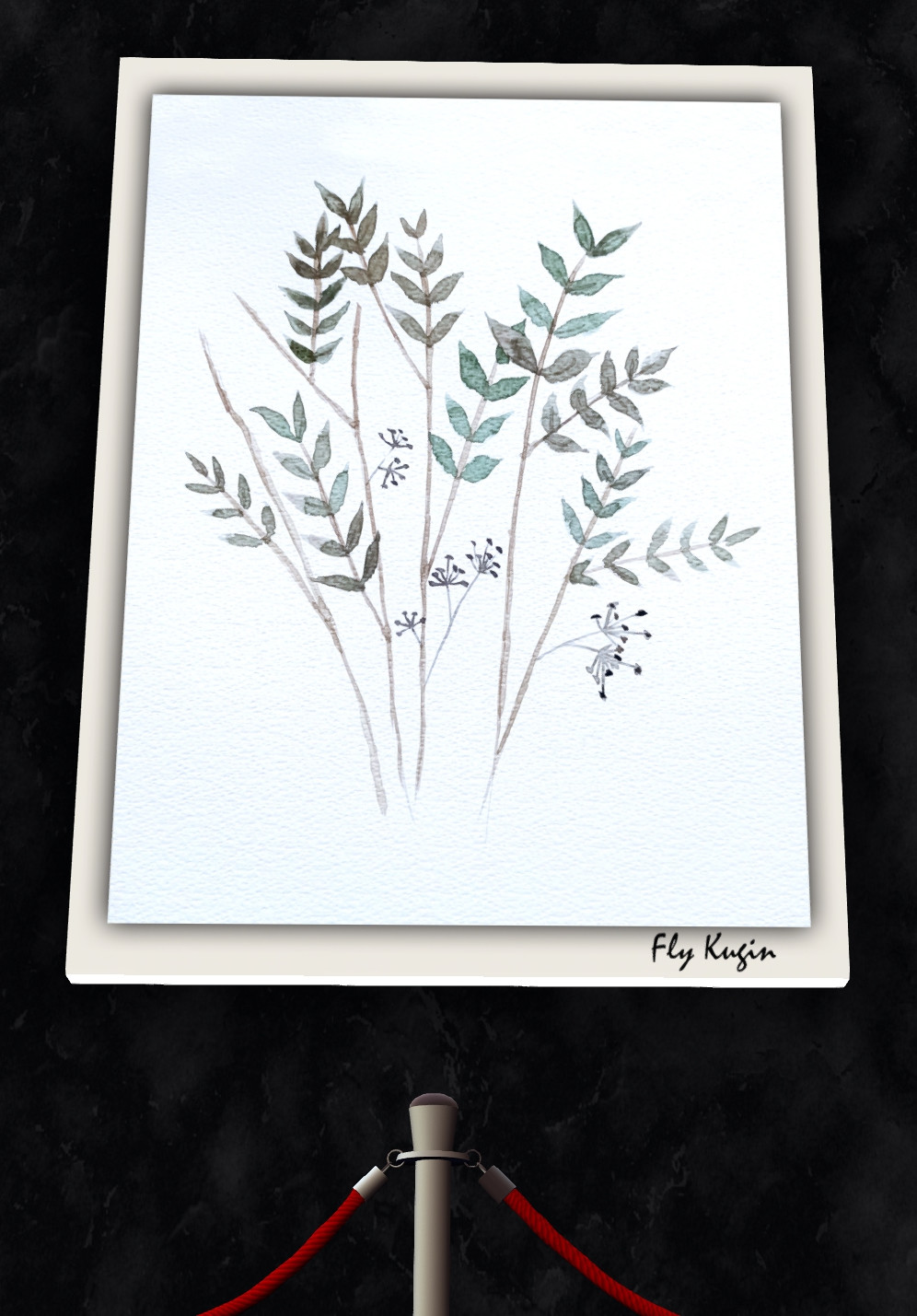
On August 22nd, Fly opened what is her latest – and possibly last, at least for an unspecified period – exhibition at Chuck Clip’s Janus Gallery III at Sinful Retreat. The Falling Leaves is a gorgeous collection of nine watercolour paintings of the leaves (and in three cases the flowers) of various trees and flora.
While the title of the exhibition might remind some of the opening line of Johnny Mercer’s English lyrics for Autumn Leaves, the pieces selected in the exhibition are offered not in memory of a lost love, but as a dedication to the plants and flowers lost during the July / August 2021 wildfires that burnt through 1,600 square kilometres of Turkey’s Mediterranean forest (although given the soulful nature of the tune by Joseph Kosma to which Mercer set his words, it can actually frame the exhibition quite well).
In presenting The Falling Leaves, Fly describes herself as a “beginner” in the subject of painting flora; I’d actually dispute that statement. There is a maturity and grace within these paintings that easily puts them on a level approaching the works by some of the great botanical artists and illustrators; being English, I was almost immediately put in mind of some of Elizabeth Blackwell’s illustrations found in her A Curious Herbal, (without the associated medical connotations, obviously), such is the detail to be found in Fly’s pieces.
The maturity of technique these painting is made all the more attractive when one considers Fly only started experimenting with watercolours in June 2021. In fact, The Falling Leaves is her first exhibition of her watercolour paintings; a fact that makes the exhibition a bittersweet experience, given it is unclear when (or even possibly if) she will be exhibiting in-world again.
Sinful Retreat Janus III gallery Aug-Sept 2021: Fly Kugin
Given that there may not be another opportunity to view exhibitions by Fly after The Falling Leaves closes on September 22nd, 2021, I urge all lovers of art in SL to hop along to Sinful Retreat and visit the Janus Gallery III between now and then and share in these pieces.