Logos representative only and should not be seen as an endorsement / preference / recommendation
Updates for the week ending Sunday, August 30th
This summary is generally published every Monday, and is a list of SL viewer / client releases (official and TPV) made during the previous week. When reading it, please note:
It is based on my Current Viewer Releases Page, a list of all Second Life viewers and clients that are in popular use (and of which I am aware), and which are recognised as adhering to the TPV Policy. This page includes comprehensive links to download pages, blog notes, release notes, etc., as well as links to any / all reviews of specific viewers / clients made within this blog.
By its nature, this summary presented here will always be in arrears, please refer to the Current Viewer Release Page for more up-to-date information.
Note that for purposes of length, TPV test viewers, preview / beta viewers / nightly builds are generally not recorded in these summaries.
Official LL Viewers
Current release viewer version 6.4.7.546539, dated August 11, promoted August 17, formerly the Arrack Maintenance RC viewer – No Change.
Release channel cohorts:
Bormotukha Maintenance RC viewer, version 6.4.8.547468, issued August 28th.
Project viewers:
Project Jelly project viewer (Jellydoll updates), version 6.4.8.547487, issued August 26th.
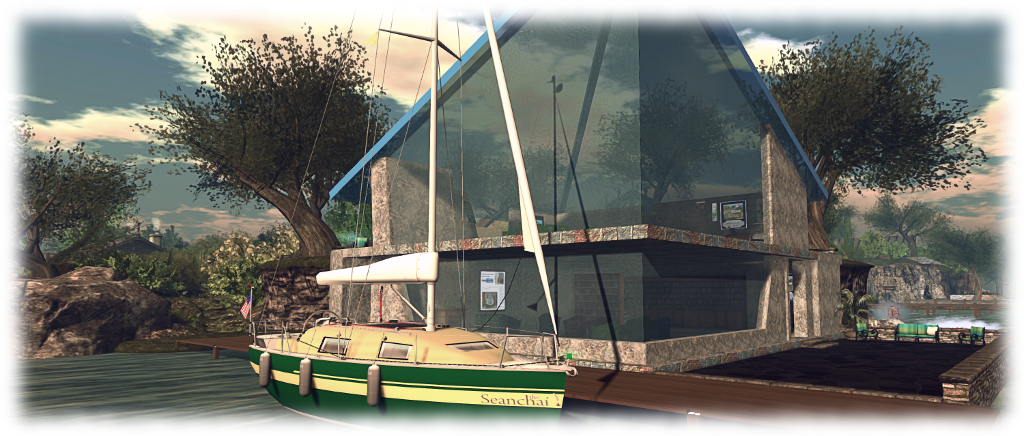
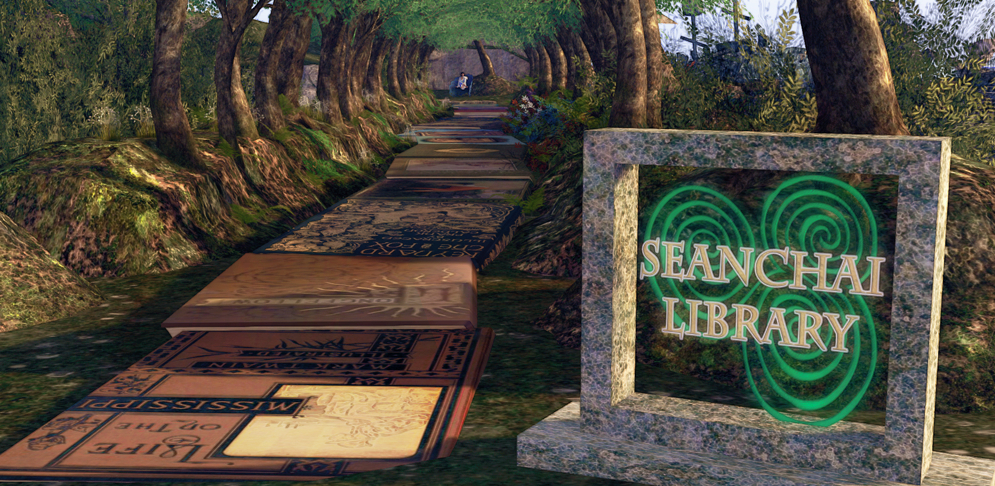
It’s time to highlight another week of storytelling in Voice by the staff and volunteers at the Seanchai Library. As always, all times SLT, and events are held at the Library’s home, unless otherwise indicated. Note that the schedule below may be subject to change during the week, please refer to the Seanchai Library website for the latest information through the week.
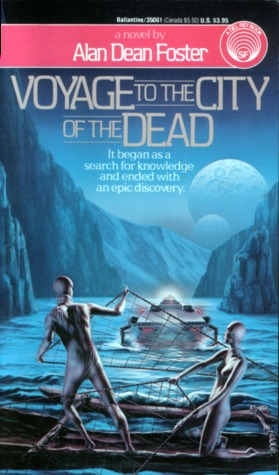
Monday, August 31st, 19:00: Voyage to the City of the Dead
Gyro Muggins reads the 11th volume in Alan Dean Foster’s Humanx Commonwealth series, first published in 1984.
The Humanx Commonwealth is an interstellar ethical/political entity spanning multiple star systems and worlds. One of the more unique of these worlds is Horseye, the home of three alien cultures and renowned throughout the Commonwealth for having the most spectacular river valley anywhere in the known galaxy.
It is both the cultures and the river that has drawn scientists Eitienne and Lyra Redowl to Horseye. Now, after months spent in quarantine, they embark on a voyage to the source of the 12,000 long River Skar, and study it and the peoples living on its banks.
Veterans of exploration and discovery, the Redowls believe they are ready to face anything. But how can you prepare for things like treachery, lies and greed? For a local legend would have it that at the source of the Skar lie a great treasure – and the locals who appear to be willing to help the Redowls in fact plan on finding it for themselves.
Assuming, that is, the treasure is in fact something at can be regarded as offering wealth or power…
Tuesday, September 1st:
12:00 Noon: Russell Eponym, Live in the Glen
Music, poetry, and stories in a popular weekly session at Ceiluradh Glen.
19:00: Cale’s Greatest Hits
Caledonia Skytower reads various short selections of popular stories that she has presented over the last 12 years, including Frank Stockton’s The Lady, or The Tiger, which formed her Seanchai audition piece.
Two identical doors. Behind one is a blushing beauty. Behind the other, a horrible beast. Which will the young man choose, the lady or the tiger?
Wednesday, September 2nd, 19:00: The Beeline
Ktadhn Vesuvino shares more of his original work – a journey for late summer.
Riding a motorcycle to connect thoughts and actions via snow and flowers.
Thursday, September 3rd: Captains Courageous, Pt 1
Shandon Loring reads Rudyard Kipling’s adventure. Also in Kitely: teleport from the main Seanchai World grid.kitely.com:8002:SEANCHAI.
Harvey Cheyne Jr. an arrogant, spoiled son of a multi-millionaire, is en route to Europe with his parents via luxury liner. As the ship enters the fishing grounds of the Grand Banks, He manages to fall overboard – the result of rushing to the deck in a heavy sea feeling sick from attempting to smoke an illicit cigar.
His fall passes unobserved aboard ship, which passes onward, leaving him to drown. Fortunately, he is rescued by Portuguese fisherman, Manuel. Unable to convince any of the fishermen of his position in life or his father’s wealth, Harvey finds himself forced to earn his passage aboard one of the larger fishing vessels.
At first indignant, Harvey quickly learns it is work – or go hungry. And so he embarks on a new life one which eventually leads him to a surprising realisation.
Seanchai Library is Moving!
After three years at Holly Kai, Seanchai Library is moving to pastures new (and larger!). The last sessions at Holly Kai Park will be on Thursday, September 3rd. I’ll have a full update on their new location on or just after that date.
The Third Eye, curated by Jaz (Jessamine2108), opened its September 2020 exhibition on the 29th August, once again offering a double header of art featuring Lynn (Titaniclynn Ayres) and pieces by Jaz herself.
Lynn is a Second Life photographer whose work tends to centre on landscape photography, but also can encompass art and avatar studies. For Photos by Lynn she offers 18 pieces in both colour and black and white that are taken from her extensive portfolio of landscape images, and which incorporate some of Second Life’s popular public destinations.
Third Eye – Lynn
The colour images, encompassing places such as Boulder, Jambo, A Taste of Africa, Cherishville, Venesha – all of which are well known to seasoned Second Life travellers – offer unique views of their subject that are rendered in rich colours. In some, this post-processing suggests a painting-like finish, in others they provide a sense of warmth and lightness. All, however, do full service to their subjects.
Similarly, Lynn’s black and white pieces encompass SL’s more popular destinations of recent times and are all equally evocative – if not more so, given the way black-and-white images tend to draw out the secrets of their subjects. In this – and while I enjoyed Lynn’s colour works immensely, I found the black-and-white pieces like Waiting.., Tralala’s Diner and Elvion, to contain a particular vitality.
Third Eye – Jaz
For her exhibition, Jaz offers Navarasa a visual journey through emotions in Indian dance. The Navarasa is a dance form that represents the nine rasas, or emotions that an individual might display according to their situation. These are: Śṛṅgāraḥ (romance, love, attractiveness) Hāsyam (laughter, mirth, comedy), Raudram (anger, fury), Kāruṇyam (compassion, mercy), Bībhatsam (disgust, aversion), Bhayānakam (horror, terror), Veeram (heroism) and Adbhutam (wonder, amazement).
Each of these emotions is portrayed in a pair of images: the uppermost a scene captured from within Second Life, the lower a photograph over which has been set the dance step representative of the rasa itself. It’s an engaging, evocative display, dance figures and background photos (including in places the use of colour wash) capture the emotional mood, whilst the accompanying image from Second Life provides an expressive narrative for the emotion.
Light of the Desert, August 2020 – click any image for full size
Back in May, I wrote about Camila Runo’s homestead region design, A Taste of Africa (see A voyage to Africa in Second Life). Since that time, Camila has redressed the region so whilst it remains rooted in Africa, its foundation lay further to the north and perhaps east than that iteration, as the new title – *NOUR* – Light of the Desert – indicates.
As with the previous iteration of the region, this is a richly evocative setting, incorporating multiple aspects of what might be called – for those of us in the west, at least – “traditional desert settings”.
Light of the Desert, August 2020
There’s a domed palace on a rocky plateau, complete with a small garden house with with the most valuable commodity to be found within desert dunes: free-flowing eater. Then there is a Bedouin camp site sitting at the edge of an oasis (or a wadi, depending on your preference). In between these sits a waterside village, crowned by a luxurious bath house, although the dhows sitting on the river suggest this is more of a working village than a resort.
From the landing point, located in the south-west corner, it is possible to visit all of these locations in turn, the region being neatly laid out in such a way so as to suggest a walk through a desert, one surrounded by high dunes (although these are admittedly off-region, so the intervening water does spoil the effect a little), passing from one oasis of life to the next. A path running down from the landing point points to the route to be taken, with the first stop that of the high palace. sitting on its plateau, commanding a view across the rest of the region.
Light of the Desert, August 2020
Topped by yellow-painted domes and reached via a stone stairway that sits just within the walls of the village and that leads the way past the lower-lying garden house, the palace has thick walls to help keep the heat out, a tall fountain splashing water within its main hall. Lavish curtains and drapes separate the side rooms from the hall, and latticed windows allow whatever breeze might pass to enter the building, while the upper level offers an ornate bath and chaise lounge on which to recline.
Down below, beyond the garden house with its fountains, water, grass and flowers, sits the village. Flat-topped houses and a souk built of mudstone surround an open market of tented stalls. It is bracketed by water to one side, where wharves for dhows sit, and a long ruler of a wall on the other, clearly designed to keep as much of the wind-blown sand out of the village as possible. Standing as a place of local commerce, the village is dominated, as noted earlier, by the squat bulk of a great bathhouse, within which sits a large square pool and plenty of opportunities to relax.
Light of the Desert
A single gateway sits within the long village wall, parallel lines of rounded stones marching out into the desert beyond. These wind around and between rippled dunes, showing the way to the oasis / wadi. Whether you follow them past the old desert fort or simply set out over the banked dunes to reach the greenery that lies beyond them is up to you, but once you’ve passed through the ring of palm trees you’ll find a spacious Bedouin camp set out around a body of water unusually – for a desert – fed by a rocky peak from which water tumbles in multiple falls.
Throughout all of this are many details that add depth to the region. There are a lot of places both within the grander buildings and in the large tents to sit, with more outside around camp fires or shaded by the likes of blankets draped over simple wooden frames. Dromedary camels add to the felling of the north African / Arbian setting, whilst a rich (if a little intrusive in places) sound scape brings life to the village with the noise of people going about their daily business filling the air. Adding their own conversation to the mix are the camels, given as they are to the occasional grunt and snort as they wander.
Light of the Desert, August 2020
Following on from A Taste of Africa, Camila’s latest build continues in the same vein of offering an immersive, engaging setting, one particularly rip for avatar photography, although the region offers more than this for those willing to dress the part and / or explore it from end to end. All-in-all, an excellent build and engaging visit.
With EEP, it is now possible to have reflective floors at the parcel level that everyone can see, and contained within the parcel
Within Second Life there have been numerous ways to produce reflective floors within buildings – the most popular being to build a near-duplicate of what is in a room / building and inverting it “below” a textured, semi-transparent floor, allowing the duplicate to act as a reflection.
It’s a clever means of achieving the idea of reflections in polished floors, and has the advantage of being relatively “efficient” performance-wise (if a little hard on land impact, depending on the degree to which a person goes with the “reflected” items under the floor), as it means re-use of loaded textures and avoids rendering avatar reflections and mirroring movement. Although that said, the fact that the technique doesn’t show avatar reflections can spoil the effect.
Nitroglobus Roof Gallery provides an excellent demonstration of using a duplicate build to create the illusion of a reflective floor (although note the lack of any avatar shadow)
As has long been known, Linden Water can also be used as a means of producing reflective floorsthat can reflect avatars as well as objects. However, under Windlight, it has tended to suffer from a couple of observable weaknesses: if applied at the region level, it meant all water viewed from the region with produce the mirror effect – which could be a problem when outdoors (e.g. a mirror-flat surrounding sea); while to use it at parcel level meant using a viewer that accepted viewer-side parcel Windlight support – so anyone not using such a viewer would see a building / room with “flooded” floors.
EPP, with its simulator support for for parcel-level environment settings, means that is now possible to use Linden Water to create reflective floor effects within ground-level building that can more easily been seen by anyone entering the building, regardless of the viewer they are using. There are some pre-requisites involved, both it terms of creating the effect and viewing it, but even so, it is relatively easy to implement for anyone who wishes to do so.
Those prerequisites are:
As the approach uses Linden Water, it can only bee used at ground level (and on ground-level rooms of such buildings).
Some skill with terraforming is required, in particular:
Lowering / levelling land – this is important as the “reflective” floors must be at water level.
Ability to sub-divide land into parcel – this is particularly important if there is Linden Water is visible from outside the building with reflective floors, as you’ll be making changes to how Linden Water appears.
For parcels, you’ll need to have permission to set the environment at parcel level – if you do not own the region, and parcel level EEP support has been disabled via the region level controls, you will have to discuss the matter with the region holder / owner.
Those visiting the building must have Preferences → Graphics → Water Reflections set to All Avatars and Objects or Everything in order to see the water reflecting everything, including avatars.
The approach works best with your own builds, but can be used with pre-fab builds if they are modifiable, and can have floors modifed / replaced.
1 Prepare Your Land and Building
The first thing you need to do, is determine the shape of the floor space you wish to has as a reflective space and prepare the part of your land where it is to go.
Make a simple prim template of the shape of the room / building.
Place the template on your land where the room is to be positioned.
Keep in mind that depending on your location, you may want to sub-divide your land (if you have the necessary permission) so you can see natural-looking Linden Water when outside your house.
Use the terrafrorming tools in the Build / Edit floater to carefully lower the land under the template to expose the Linden Water.
Note that the “reflective floor” will, when the work is finished, need to sit just below the level of Linden Water. This means you may have to set it lower than the floors in other rooms on the ground floor of the building, or have the building itself surrounded by a mesh / prim surround to blend it with the ground level.
When you’re set, position the building and if necessary sub-divide your parcel.
Edit the building and:
Sset each of the floors you wish to be reflective to around 80% transparent – note that you may have to experiment with this setting, depending on the floor texture you use.
Apply a suitable texture for the reflective floor(s) (e.g. a wood texture for a polished wooden floor, or a marble effect for a public building).
2. Set the Water Environment
As noted above, you’ll need a suitable normal map to replace the one used for Linden Water.
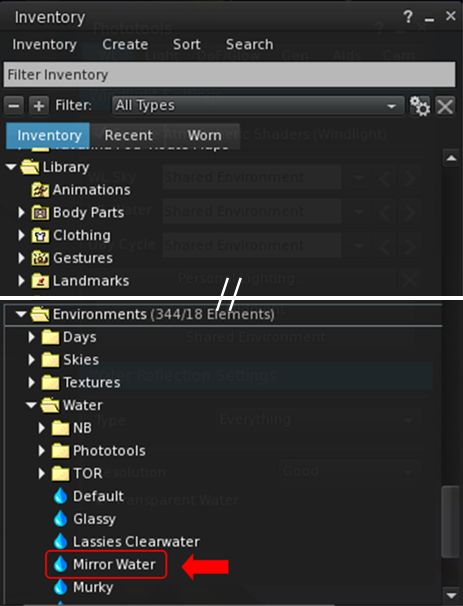
The easiest way to do this is to use the Mirror Water environment asset that is included in the viewer under Library → Environments → Water.
You will need to copy this asset from its default Library location to your inventory (e.g. to the Settings folder – or a sub-folder within Settings, if you organise your EEP assets in sub-folders).
You can use the Mirror Water environment asset to help create your reflective floor. Make sure you copy it (e.g. via drag-and-drop) to your Settings folder
With the Mirror Water environment asset copied to your inventory, double-click on it to edit it. This will open the Fixed Environment – Water panel.
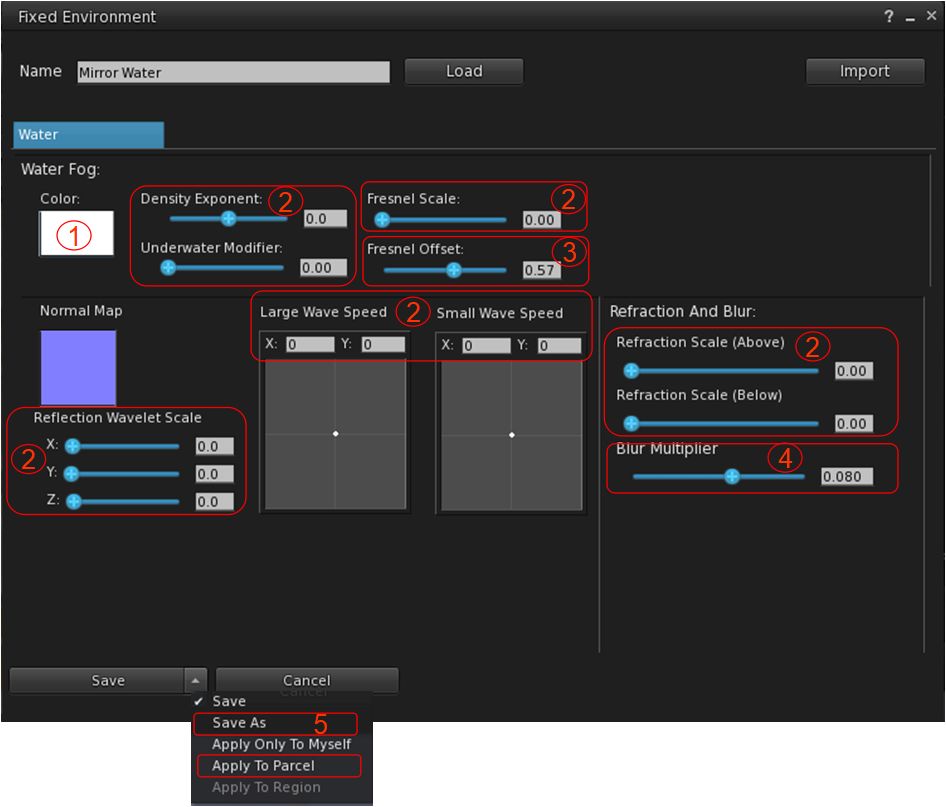
Within the panel, make the following changes (see the image below for reference):
Set the water fog colour to white (note that depending on things like ambient lighting, the floor texture you use, etc., you may need to adjust this towards a more grey colour).
Set all of the following to 0.0:
Fog Density Exponent and Underwater Multiplier.
Fresnel Scale.
X, Y, Z Reflection Wavelet Scale.
Large and Small Wave Speed.
Refraction Scale (Above) and (Below).
Set Fresnel Offset to 0.50 (note that depending on things like ambient lighting, the floor texture you use, etc., you may want to adjust this up or down).
Set Blur Multiplier to 0.80 (note that depending on things like ambient lighting, the floor texture you use, etc., you may want to adjust this up or down).
From the Save / Apply Drop-down, select Save As and save your updated environment asset under a new name (e.g. “Reflective Floor”).
Adjusting the water settings for a reflective floor effect
Once saved, Select Apply to Parcel from the Save / Apply drop down to apply the environment to the parcel.
3. See How It Looks / Fine Tuning
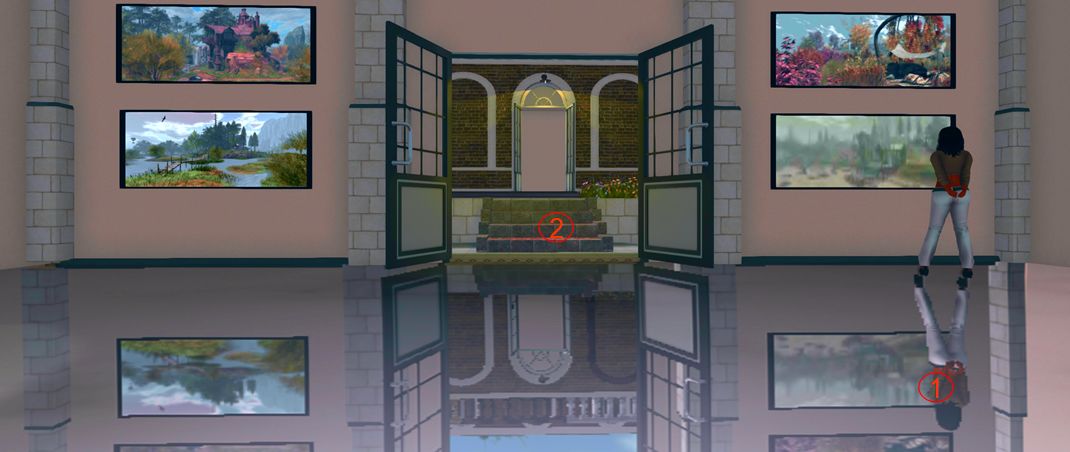
You should now have a nicely reflective floor to your building, as shown below.
The finished product again, as per the banner image, note the avatar reflection and well as the reflections of in-world objects (1), and also the use of steps to access the low-set floor of the gallery from the outside “ground level” (2)
What’s more, if the building is sitting within its own parcel, when you leave the building, any visible Linden Water should look like natural water / waves (although if you cam into the building or glimpse the “reflective floor” from outside of the parcel, it might look a trifle odd until you actually enter the parcel).
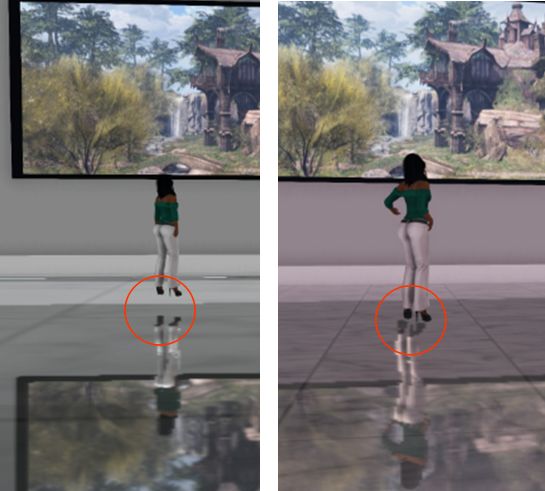
You might find that some additional “fine tuning” of the build is required to achieve a perfect result. If you’ve placed your floor a little above the level of Linden Water, for example, you may find your avatar “floats” over its reflection (below left), or if the floor is set a little too far below the level of Linden Water, the avatar and reflection may appear to “merge” at feet / ankles. But errors can be corrected with careful adjustment of your floor either down or up.
You may have to adjust the floor level relative to the Linden Water level to prevent avatar reflections giving the impression avatars are floating above the floor (l) – or standing with feet embedded in it – and actually standing on the floor (r).
Conclusion
There are still some limitations on the effectiveness of this approach: as noted above, it can only be used for ground-level interiors, and the effect does require visitors to have their graphics preferences set to reflect avatars in Linden Water. However, once set-up, it can add a certain edge to places like stores and galleries.
I’m not sure how much of a performance hit would occur in viewers trying to render a lot of avatars and their moving reflections in a ballroom or other dance venue, so these might require greater consideration. But if you do want to have a different ground-level flooring for your building, and you can meet the prerequisites noted above, it might well be worth giving it a go.
I’ve always enjoyed Luis Lockjaw’s region builds, particularly his Templemore designs from Hesperia through to Lutz City, going by way of Elysium City, so an opportunity to visit his latest Templemore design – Templemore Cove – carried with it a certain anticipation.
Past Templemore builds have had something of a fantastical feel to them, one rooted in reality, but with a twist of fantasy that has made them attractive to the eye whilst tickling the the imagination. For this iteration, things are a little more straightforward: the presentation of a shoreline town clearly in a tropical / sub-tropical location, rich in palm trees and surrounded by off-shore islands sitting is water that – going by the trawlers docked to one side of the region – rich in fish.
Templemore Cove, August 2020
The town itself could be anywhere, but has a distinctively central / southern American feel to it, so much so that by turn, the setting suggests it might be somewhere in Florida, at others perhaps somewhere like Cuba or another large Caribbean island, or perhaps somewhere like Panama or San Salvador.
Florida is particularly evoked by the luxury yachts and powerboats to the east, the pools and neon Motel signs. Cuba and South American townships are suggested by the sun-faded gay colours of buildings, be they apartment houses or places of business, together with – in places at least – the age of some of the types of vehicle to be found. Swimming pools are much in evidence, whilst the town is built along a grid pattern that is again suggestive of somewhere in the United States, as do the broad board walks. And whilst most of the buildings are shells, it doesn’t prevent visitors appreciating their attractiveness.
The Templemore builds have always had an association with music, and that is very much the case here, with stages to the south and east, whilst the north-side beach offers a chance to escape and relax.
Templemore Cove, August 2020
It is clear that throughout, considerable care has been put into this design – as is always been the case with Luis’ region builds. However, it would be remiss of me if I didn’t point out that this detail comes at a cost: this is a full region with the private region land capacity bonus – and this has been used to the maximum in terms of the amount of mesh and texturing (and if not in terms of physical capacity), all of which can place a significant load on a view that is running with shadows enabled, a higher draw distance, etc.
As an example of this, whilst taking photos with shadows set and a draw distance of 190 metres, I found my fps bouncing fairly heavily between single-digits and mid-teens with under half-a-dozen avatars in the region, some times dropping as low as 4-4.2 fps, which made moving uncomfortable. Things were marginally better with shadows off, but it’s possible those on older systems may well find Templemore Cove heavy going.
Templemore Cove, August 2020
Nevertheless, Templemore Cove has an attractiveness that is worth seeing, particularly if you do enjoy taking photos of Second Life locations.






 Inara Pey: Living in a Modemworld