August 5th marked the 2nd anniversary on Curiosity’s landing on Mars. The “landiversary”, as NASA dubbed the occasion, passed in something of a subdued manner in many respects, featuring a re-run of the August 2012 video reviewing the MSL’s arrival on Mars. Reviews of the mission from the perspective of two years on from that remarkable lading didn’t start-up until the days after the anniversary, with videos and lectures from members of the mission team.
One of the films which did appear, directly out of Caltech, rather than NASA’s Jet Propulsion Laboratory (which is located on Caltech’s Pasadena, California, campus), is Our Curiosity, a 6-minute celebration of Curiosity’s mission, and humanity’s drive to explore, to seek, to learn, and to understand, narrated by Felicia Day and the superb Neil DeGrasse Tyson.
August 5th also marked my last MSL report, when Curiosity was some 3 kilometres from the lower slopes of “Mount Sharp”, the huge mound at the centre of Gale Crater, and the rover’s primary target for exploration. At that time, the rover had started to cross a region of chaotic terrain, marked by a rocky plateau cut by a series of sandy-bottomed valleys. The plateau itself proved to be littered with sharp-edges rocks and stones which had already caused some increase in the wear and tear being suffered by the rover’s wheels – albeit not as much as mission engineers had feared – by the time Curiosity had reached the edge of the nearest of the shallow valleys, which had been dubbed “Hidden Valley”.
The plan had been to use the valleys, where the sand would be less wearing on the rover’s aluminium wheels, to reach an exposed area of bedrook designated the “Pahrump Hills”, where Curiosity would engage in further rock sampling work prior to it continuing on to the “Murray Buttes”, the entry point for its ascent up the lower slopes of “Mount Sharp”.
However, rather than drive the one-tonne rover straight through the middle of the valley, where there are numerous dunes of potentially soft, wind-blown sand which might cause some difficulty traversing, the idea had been for Curiosity to skirt along the edge of the valley, where it was hoped the sand would be firmer and make for a better driving surface. Unfortunately, this proved not to be the case; as the rover proceeded along “Hidden Valley” it exhibited far more signs of wheel slippage than had been anticipated, giving rise to fears that it might get bogged-down in the sand were it to continue.
The sands of Mars: an image from Curiosity’s black and white Navcam system captured on August 4th, showing the loose sands the rover was traversing as it continued into “Hidden Valley” (click for full size)
As a result, the rover reversed course, driving back out of the valley. In doing so, it crossed the rocky “ramp” it had used to originally enter the valley, and one of its wheels cracked the slab-like rock’s surface, revealing bright material within, possibly from mineral veins. The rock, dubbed “Bonanza King” showed similar signs of origin as “Pahrump Hills”, so a decision was made to examine it as a possible substitute drilling site.
“Geologically speaking, we can tie the Bonanza King rocks to those at “Pahrump Hills”. Studying them here will give us a head start in understanding how they fit into the bigger picture of Gale Crater and Mount Sharp,” said Curiosity Deputy Project Scientist Ashwin Vasavada, before continuing, “This rock has an appearance quite different from the sandstones we’ve been driving through for several months. The landscape is changing, and that’s worth checking out.”
August 5th 2014 marked the second anniversary of Curiosity’s remarkable arrival on Mars, in what was dubbed by members of the mission team as the “seven minutes of terror”.
It was one of the most anticipated touch-downs of a remote vehicle on another planet in history, and was followed minute-by-minute the world over via the Internet, with people watching NASA TV, following events on Twitter and even witnessing them in “real-time” through the unique focus of NASA’s Eyes on the Solar System simulator website (you can still replay the landing on the simulator).
Since then, Curiosity has done much, including meeting its primary science goal to find evidence of environments which may once have been suitable for the nurturing of microbial life (Curiosity isn’t able to detect any evidence of microbial life, past or present itself as it has no direct means to identify organic compounds or minerals, that will be the role of the next rover mission, scheduled for 2020 – see later in this article).
Most recently, the rover has been approaching its main exploratory goal, the large mound at the centre of Gale Crater which has been dubbed “Mount Sharp” by NASA, having been “on the road” for almost a year, driving steadily south, with the occasional stop-over at various scientific points of interest.
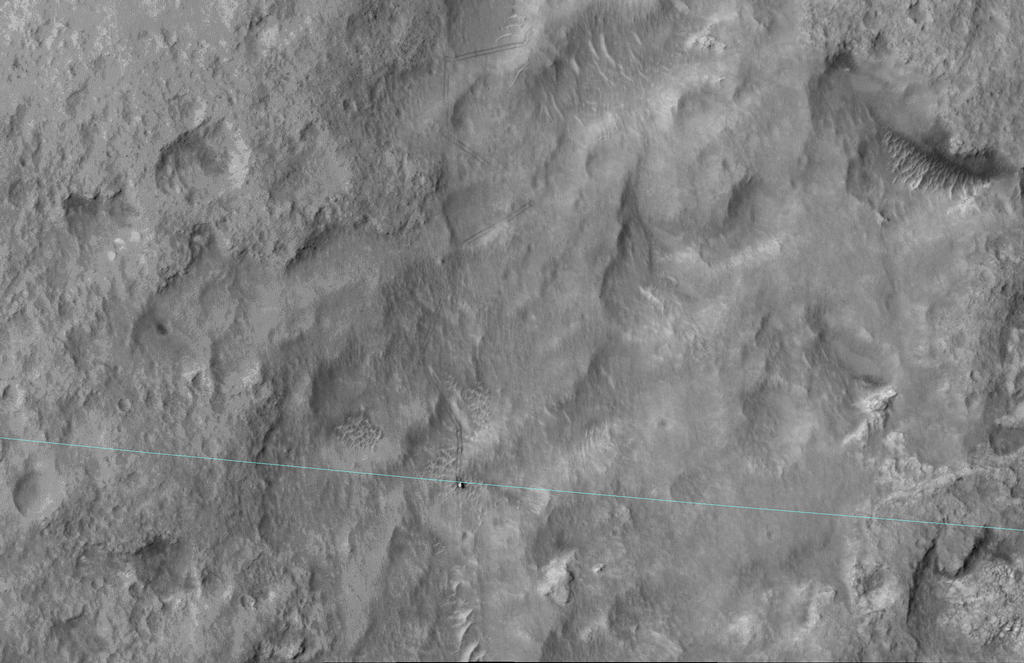
Since my last MSL update, Curiosity has achieved another mission mile stone and another mission first. On June 27th, the day of my last update, the rover trundled over the boundary line of its 3-sigma landing ellipse. Then on July 12th, it captured new images of its onboard laser firing.
As to the first of these events, I’ll let Guy Webster of NASA’s Jet Propulsion Laboratory explain.
“You must be wondering, ‘What the heck is a 3-sigma landing ellipse?’ It is a statistical prediction made prior to landing to determine how far from a targeted centre point the rover might land, given uncertainties such as the atmospheric conditions on landing day. The ‘3-sigma’ part means three standard deviations, so the rover was very, very likely (to about the 99.9-percent level) to land somewhere inside this ellipse. Such 3-sigma ellipses get a lot of scrutiny during landing-site selection because we don’t want anything dangerous for a landing – such as boulders of cliffs – inside the ellipse.”
In Curiosity’s case, the 3-sigma ellipse marked a relatively flat area on the floor of Gale Crater some 7 x 20 kilometres (4 x 12 miles) in size which was as close to the slopes of “Mount Sharp” as mission planners dare to bring the rover in for landing without risking it coming down in either chaotic terrain or on a slope where it might slide or topple over as the Skycrane set it down. The landing zone was also relatively close to the areas of geological interest which became known as “Glenelg” and “Yellowknife Bay”, and which the rover spent a good part of a year exploring – achieving its primary science goal in the process.
The Mars Reconnaissance Orbiter was overhead at the time the rover crossed this imaginary line in the sands of Mars, and captured the moment using its High Resolution Imaging Science Experiment (HiRISE) camera.
Caught in its tracks: NASA’s Mars Reconnaissance Orbiter photographs Curiosity as the rover crosses the boundary (marked by the blue line) of its original landing ellipse (click any image in this article for full size)
Sol 687 (July 12th, 2014 PDT) was the day on which the rover captured images of its laser firing on a rock dubbed “Nova”.
The laser, which is a part of the ChemCam system on mounted on the rover’s mast, is used to vaporise minute amounts of material on target rocks. Light from the resultant plasma is captured by ChemCam’s telescope for spectrographic analysis.
In all, the laser has been fired over 150,000 times in the two years since Curiosity arrived on Mars, and the results of firings have been seen in many “before and after” shots of rocks on the receiving end of a laser burst. What made this event special was that the burst firing at “Nova” was captured by the rover’s turret-mounted Mars Hand Lens Imager (MAHLI). This allowed NASA to produce a film showing the moment of impact of the laser shots.
In the first part of the film, the initial “spark” of a single laser pulse can be seen striking the surface of “Nova”. This is followed by an enhanced set of images showing the laser firing at 10 times a second, disrupting dust and minerals on the rock as the plasma cloud erupts.
Monday June 23rd was notable in two worlds as a special occasion.
For the virtual world of Second Life, it marked the 11th anniversary of opening the doors to the public. On Mars, it marked the completion of Curiosity’s first Martian year on the planet (687 days).
To mark the event, NASA released a “selfie” of the rover as it sat next to a rock called “Windjana”, which was the site of the rover’s third drilling / sample gathering operation, in the region dubbed “The Kimberley”.
The images used in the picture were captured using the Mars Hand Lens Imager (MAHLI), located on the turret mounted on the rover’s robot arm, were captured on 613th Martian day, or Sol, of Curiosity’s work on Mars (April 27th, 2014, PDT) and Sol 627 (May 12th, 2014, PDT). Combined, they show the rover in a parked configuration together with the sample gathering hole cut into “Windjana”, the drilling operation having taken place on Sol 621 (Monday May 5th, 2014, PDT).
Curiosity’s selfie: all of the rover except the robot arm is visible in this composite image made up of shots taken before and after the “Windjana” sample drilling – the hole from which is visible, lower left
Since that time, the rover has resumed the drive down towards “Murray Buttes”, the point where it is hoped Curiosity will be able to bypass a line of sand dunes and make its way onto the lower slopes of “Mount Sharp”, more properly called Aeolis Mons, the large mound occupying the central area of Gale Crater and the missions’ primary target for investigation.
Curiosity is now over half-way to “Murray Buttes”, with no further major waypoints to be examined on the route. however, due to the wear-and-tear on the rover’s wheels while traversing a part of “The Kimberley” and “Cooperstown” before it, the route southwards has been revised somewhat to offer smoother driving terrain for the rover.
The added wear-and-tear of the wheel first became something of a concern in February of this year, and later prompted a revision to in the planned route to reach the desired waypoint at “The Kimberley” and also in the rover driving team perfecting new techniques for driving the rover – such as by taking it backwards over some terrain.
The (Martian) year to date: from Bradbury Landing in august 2012, through “Glenelg” and “Yellowknife Bay” and onwards to “The Kimberley”, Curiosity’s travels in Gale Crater and, in white, the planned route to “Murray Buttes”.
Following its departure from “The Kimberley” on Sol 630 (May 15th, 2014, PDT), the rover drove almost continuously for a month, covering a further 1.2 kilometres 0.75 miles), and is still continuing onwards.
Although Curiosity’s route will carry it past the majority of the sand dunes between it and “Mount Sharp”, it will have to traverse an area of sand in order to reach its major target. To help with this, the rover’s Earthbound “stunt double”, dubbed the Scarecrow, was taken out to the Dumont Dunes in California’s Mojave Desert, near Death Valley, where it was put through a series of test drives over real and artificially constructed sand dunes and various terrains. This allowed engineers to examine the rover’s behaviour over softer terrain types, enabling them to better understand how the rover might react when encountering similar surfaces on Mars.
The first touchdown: human missions to the surface of Mars have long been dreamed about and planned for. Sometime in the next 30 years or less, they’ll become a reality. And VR, AR and virtual worlds are likely to play a role (image: SpaceX)
Sometime in the next thirty years, it is likely that humans will set foot on the surface of Mars. The mission that takes them there might be an international government-sponsored mission, or it might be the result of private endeavour. However it comes about, it will be the culmination of decades of planning, hopes and dreams stretching back beyond the birth of the space age.
There is much that a crew on such a mission will be taking with them in terms of hardware, equipment and technology. And it is very likely that when looking down the list of technologies they’ll take with them, one will be able to find virtual reality, virtual worlds and augmented reality – an in a variety of roles and uses.
Take the crew’s psychological health and well-being for example. A round-trip mission to Mars will take between two and 2.5 years to complete, depending upon the “class” of mission undertaken.
The two classes of Mars mission: opposition (l), which are launched when Earth and Mars are on the same side of the Sun, and conjunction class (r) are launched when the Earth and Mars are on opposite sides of the Sun both amount to a mission duration of 2 – 2.5 years
Throughout that entire time, they’ll be completely isolated from everything we take for granted here on Earth – the freedom to wander outdoors, the sight of a blue sky, green hills, rivers, the sea, cities, lakes, people; they’ll be confined to enclosed spaces which really don’t offer too much in the way of privacy. They’ll even be confined to meals from a menu set months in advance, with no real option to give into a whim for a particular delicacy if it isn’t on their vessel.
For the majority of the mission time, the only people they’ll be able to directly converse with are their fellow crew members – with a minimum round-trip time delay in communications between Earth and Mars of 8 minutes (and potentially as much as 40 minutes through parts of the mission), having real-time conversations with loved ones on Earth simply isn’t going to be possible; they’ll have to rely on pre-recorded messages and video and e-mail.
In these circumstances, stresses are bound to develop, both for the individual members of the crew and, potentially, between team members, no matter how carefully selected for compatibility ahead of the mission or how well-trained. One way of potentially dealing with them is through the use of VR and virtual environments, as NASA and other organisations have been investigating for much of the last decade.
It’s not hard to imagine, for example, a crew going to Mars with a library of pre-filmed environments and events which they can then explore and enjoy individually or together through the use of personal headsets – or for such a library to be updated with new items beamed via something like OPALS to their craft. Such environments and activities could provide psychological relief from the confines of the space vehicle.
In June 2014, NASA’s OPALS system beamed the high-definition, 36-second movie “Hello, World” from the International Space Station (travelling at 28,000 kilometres an hour (17,500 mph) to a receiver on Earth in just 3.5 seconds (compared to the 10-12 minutes radio communications would have required. Systems like OPAL offer the key to providing very high bandwidth communications capabilities between Earth and Mars, allowing much more data to be passed back and forth (image: NASA)
Similarly, high fidelity virtual world environments which support direct interaction, such as through haptic feedback mechanisms, might provide the means by which crew members can “remove” themselves from the confines of their vehicle and enjoy a variety of activities, including something we take for granted in VWs today – the ability to create and build.
ANSIBLE (A Network of Social Interactions for Bilateral Life Enhancement) was an initial attempt by NASA, working with SIFT and All These Worlds, to explore how virtual worlds might be leveraged to provide astronauts with environments which could be shared or used individually, and which might offer a range of AI interactions as well.
A screen capture of the main ANSIBLE environment. While OpenSim likely won’t be the VW of choice for a Mission to Mars, the ANSIBLE environment is perhaps the first step towards assessing how virtual world environments could ease the psychological pressures face by a confined crew on a long duration space mission (image: SIFT / All These Worlds)
An intriguing element with ANSIBLE was the exploration of the idea that virtual world environments could be asynchronously “shared” between crew members and their friends and family on Earth, allowing them to engage in shared content creation activities, for example, through the swapping back and forth of OAR files, the ability to engage in “shared” immersive games and so on. ANSIBLE researchers even suggested that used in this way, a personal virtual world space could enable an astronaut and their family “share” special occasions more personally than could be done via e-mail, radio or video.
Commenting on the used of immersive environments and haptic technologies in Moving to Mars: There and Back Again (Journal of Cosmology, 2010, Vol 12), Sheryl L. Bishop, Ph.D, noted, “Telepresence and full fidelity audio/video/3-D communication replay capability will provide for more effective psychological support and interaction for crew members and to families and friends back on Earth.”
In terms of crew welfare, virtual reality has another potential use: assisting in matters of fitness. Most current mission scenarios involve the crew travelling to and / or from Mars in a “weightless” environment. Such an environment can be detrimental to many aspects of human physiology – muscles, bones, heart, lungs, etc. It is therefore essential long exposure to weightlessness is countered by routine exercise of up to two hours every day.
Exercise is an essential part of life in micro-gravity, where muscles can easily atrophy, bones suffer calcium loss, the cardiovascular system weaken, etc., away from the pull of Earths gravity. VR could help make such exercise more interesting and help space crews “escape” to more Earth-like environments (image: NASA)
In the confines of a space vehicle, the opportunities for exercise tend to be limited and potentially boring. How much more pleasant it might be for an astronaut who, after lugubriously strapping themselves into a treadmill harness and making all the required tension adjustments ready for 30 or so minutes of going nowhere while staring at a bulkhead, could slip on a VR headset, and go for a run through a woodland park or along a beach, the sounds of nature or the waves in their ears?
It’s been a month since my last MSL update, so I’m lagging badly; however, mission news coming out of JPL has been a little lax, so I’m not too far behind the times.
Following my lastCuriosity report, drilling and sample-gathering in the area dubbed “The Kimberley” has been completed, and the rover is once more on the move, heading west before turning more to the south once more.
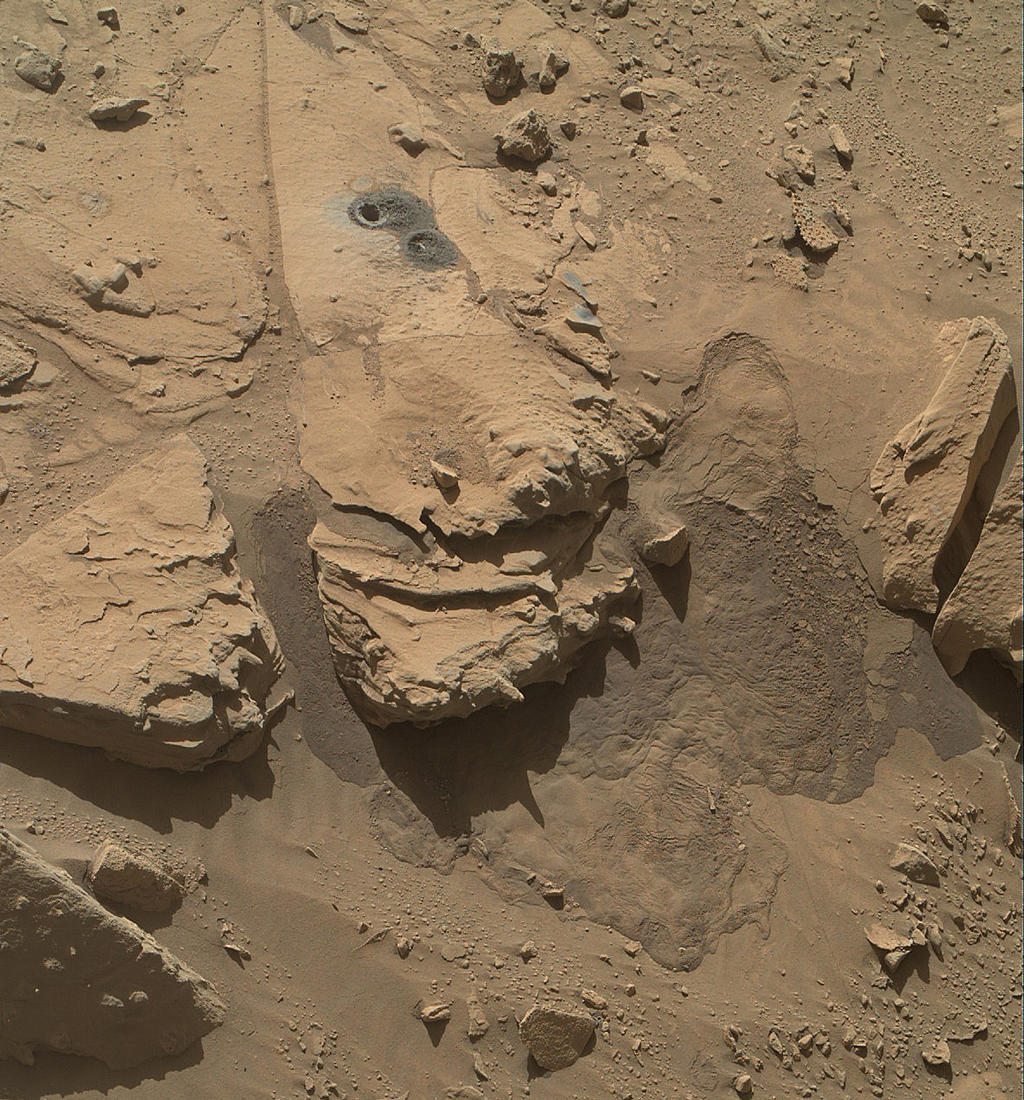
The drilling / sampling operation took place on Sol 621 (Monday May 5th, PDT, 2014), with the percussion drill mounted on the rover’s robot arm turret cutting a hole some 6.5 centimetres (2.6 inches) deep and 1.6 cem (0.63 in) across into a flat sandstone slab which had been dubbed “Windjana” shortly after Curiosity arrived in “The Kimberley” at the end of March 2014. The tailings gathered as a part of the drilling operations were delivered to the CHIMRA (Collection and Handling for In-Situ Martian Rock Analysis) system, in preparation for them to be transferred to the rover’s on-board science laboratory. Confirmation that the sample-gathering had been successful came early in the morning (PDT) on Tuesday May 6th.
Holey moley. An image captured by the Mars Hand Lens Imager (MAHLI) Curiosity’s robot arm turret on Sol 627 (May 12th PDT, 2014) showing the sample gathering hole cut into “Windjana”. Dark tailings from the operation lay around the hole and have partially filled the test drilling hole just below it. The two patches of grey visible slightly to the right and blow the drill holes mark the points where Curiosity’s ChemCam laser was used to vapourise dust covering the surface of the rock. Surface material around the rock was subjected to miniature “landslides” as a result of the percussive hammering of the drill (click to enlarge)
The drilling operation, the third time Curiosity has gathered samples from inside a Martian rock for analysis, has caused some excitement among the mission team. “The drill tailings from this rock are darker-toned and less red than we saw at the two previous drill sites,” Jim Bell, deputy principal investigator for Curiosity’s Mast Camera (Mastcam) said after the drilling operation. “This suggests that the detailed chemical and mineral analysis that will be coming from Curiosity’s other instruments could reveal different materials than we’ve seen before. We can’t wait to find out!”
Curiosity’s first two drilling operations took place over a year ago in the “Yellowknife Bay” area of Gale Crater, some four kilometres (2.5 miles) north-east of “The Kimberley”. Analysis of those samples, gathered from mudstone yielded evidence that “Yellowknife Bay” had once been a part of an ancient lakebed environment which contained key chemical elements and a chemical energy source that long ago provided conditions favourable for microbial life.
Following their transfer to CHIMRA, the tailings cut from “Windjana” were sifted and graded in readiness for delivery to the ChemMin (Chemical and Mineralogical analysis) and SAM (Sample Analysis at Mars) suites of instruments, located in the body of the rover. The initial sample transfer to both instrument suites was made on May 15th PDT, 2014. and analysis of the samples should be carried out as the rover continues its journey towards the lower slopes of “Mount Sharp”.
A composite of eight shots from MAHLI showing successive dot-like strikes from the ChemCam laser, both within the sample drilling hole at “Windjana” and where the tailings have mixed with surface dust (top right). Such strikes allow the chemical composition of the dust and rock to be analysed (click to enlarge)
Prior to departing “The Kimberley”, Curiosity carried out a final set of science operations. These involved using the turret-mounted MAHLI (Mars Hand Lens Imager) and spectrometer to examine the texture and composition of the cuttings from the sample drill hole in situ. The ChemCam laser was also used to vapourise some of the drill tailings on the surface of “Windjana” and rock from the inside of the sample hole itself, allowing the ChemCam to analyse the chemical composition of the resultant vapours.
Thursday May 28th saw SpaceX, the private sector space company founded by Elon Musk, unveil the next iteration of their Dragon space vehicle, the Dragon V2.
Dragon has been in operation in an unmanned mode since 2010, and was the first commercially built and operated spacecraft to be recovered successfully from orbit. In May 2012, it commenced uncrewed resupply flights to the International Space Station (which I covered here) as a part of NASA’s Commercial Orbital Transportation Services (COTS) development programme.
Elon Musk unveils the Dragon V2 capsule, May 29th, 2014 (image: SpaceX)
Dragon V2 (which had previously been called Dragon Rider by the company) is a natural progression of the Dragon spacecraft, and while always in Spacex’s plans, having been originally announced in 2006, it has been part-funded by two US Government contracts, the Commercial Crew Development 2 (CCDev 2) in April 2011, and the Commercial Crew integrated Capability (CCiCap) in August 2012, both of which are focused on developing crewed vehicles capable of supporting the International Space Station (ISS) and of operating in low Earth orbit (LEO).
Dragon V2 is capable of carrying up to seven crew, or a combination of crew and cargo. The vehicle is intended to be reusable, and capable of landing almost anywhere in the world using propulsive-landing via its eight SuperDraco engines (Dragon 1 is only capable of making splash downs). However, Dragon V2 will retain a parachute descent system for use as a back-up, although it can still make a safe touch-down even if two of its eight descent engines fail. Also, unlike Dragon 1, which makes a close rendezvous with the ISS before being grabbed by one of the station’s robot arms and manoeuvred into a docking position, Dragon 2 will be able to undertake fully automated dockings with the ISS.
Dragon 2 making a control landing, post-mission (image: SpaceX)
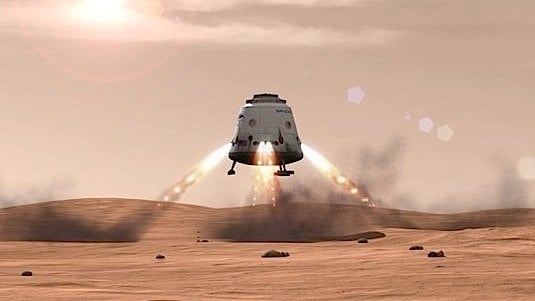
Nor does it end there. There are some ambitious plans for Dragon. The head shield, for example, is already capable of protecting the vehicle during re-entry into the Earth’s atmosphere at velocities equivalent to those of a vehicle returning from the Moon or from Mars – and SpaceX has been working with NASA Ames Centre, California, on a conceptual uncrewed Mars mission evolution called Red Dragon.
Artist’s visualisation of how Red Dragon might appear when landing on Mars were the project to go ahead (image: SpaceX)
Potentially funded under NASA’s Discovery mission programme, Red Dragon, if given the green light, would provide a cost-effective means for NASA to undertake a sample return mission to Mars, allowing up to two tonnes of samples to be returned to Earth for detailed investigation and analysis in 2022, ahead of NASA’s goal of sending humans to Mars in the 2030s.
Other have even more ambitious plans for Dragon and Mars. Dutch-based Mars One plans to kick-start a permanent, self-sufficient human colony on Mars from the mid-2020, with crews leaving Earth on a one-way trip every two years. According to the Mars One website, they hope to be able to use the Dragon vehicle and its associated Falcon 9 heavy launch vehicle also constructed by SpaceX, although there has been no public confirmation as to whether formal discussions with SpaceX have taken place.
Such plans aside, however, the first actual crewed mission for Dragon V2 is unlikely to occur prior to 2016. The next major milestone for the vehicle is a launchpad abort test, scheduled for later in 2014.
This will see the vehicle positioned at pad height and then launched to simulate an emergency in which the crew must escape their launch vehicle. After this, in 2015, there should be a high altitude abort test at Max Q, the period in the vehicle’s ascent when it is exposed to the maximum dynamic pressure. Both tests will feature the use of the vehicle’s SuperDraco engines, which form a part of the escape system as well as powering the craft during descent and landing. Capable of multiple re-starts and what is called “deep throttling”, the engines are themselves unique – the first ever fully printed rocket engines ever flown, produced by a direct metal laser sintering process.
If both of these tests are successful then it is conceivable that Dragon V2 could make an initial uncrewed orbital flight towards the end of 2015, and its first crewed flight in 2016.
 August 5th marked the 2nd anniversary on Curiosity’s landing on Mars. The “landiversary”, as NASA dubbed the occasion, passed in something of a subdued manner in many respects, featuring a re-run of the August 2012 video reviewing the MSL’s arrival on Mars. Reviews of the mission from the perspective of two years on from that remarkable lading didn’t start-up until the days after the anniversary, with videos and lectures from members of the mission team.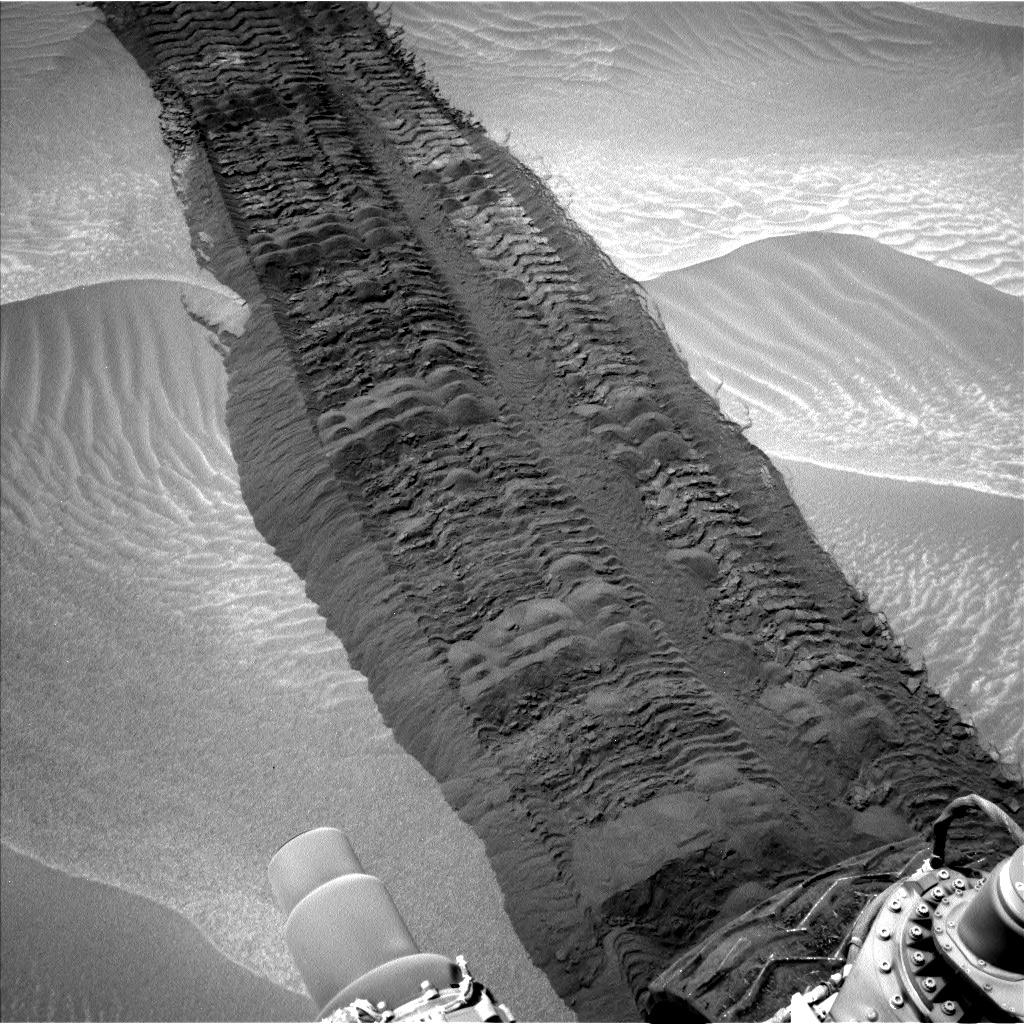






 Inara Pey: Living in a Modemworld