A time-lapse video of the SpaceX CRS-19 cargo Dragon being captured by the Canadarm-2 of the International Space Station (ISS)
The past week has seen two resupply missions launched to the International Space Station (ISS), which between them will deliver 4.6 tonnes of supplies and equipment to the station, including some special visitors.
The first mission, CRS-19, featuring a SpaceX Dragon and Falcon 9 launch vehicle, lifted-off from Cape Canaveral Air Force Station (adjacent to the Kennedy Space Centre) on Thursday, December 5th, after being delayed 25 hours due to high winds over the launch site. It rendezvoused with the ISS at 10:05 GMT on Sunday, December 8th. The second mission features a Russian Progress resupply vehicle, which lifted off from the Baikonur Cosmodrome in Kazakhstan at 09:34 GMT on Friday, December 6th, and is due to dock at the ISS on Monday, December 9th, carrying a mix of food, fuel and supplies.
However, it is the Dragon vehicle that has captured most attention, due to its cargo. As well as carrying the traditional Christmas goodies for the ISS crew, CRS-19 carried 40 passengers in the form of mice and elements of the station’s increasing use of robots.
The mice will spend a month aboard the ISS as a part of research into two of the most debilitating effects of spending extended periods in micro-gravity environments such as orbiting the Earth or something like a 6-month flight to Mars: muscle and bone mass loss.
Several of the mice have been dubbed “mighty mice” on account of their being genetically engineered by scientists at the Jackson Laboratory for Genomic Medicine (JAX-GM) in Maine, USA. Specifically, they have been engineered to inhibit myostatin, a molecule that occurs in mammals that regulates muscle growth (discovered in 1997 by Dr. Se-Jin Lee), allowing them to develop increased muscle mass compared to ordinary mice.

The idea is that by inhibiting the myostatin, the mice will be able to maintain both muscle mass and limit bone calcium loss whilst at the station, the lack of myostatin allowing them to continue to convert protein into muscle mass despite the mice being less active on the station than the would be on Earth.
They will spend their time on the ISS with a group of mice that have not had their myostatin blocked, and with two similar group sof enhanced / non-enhanced mice on Earth, to determine the overall impact of the lack of myostatin in the production / maintenance of muscle bone mass in micro-gravity compared to how myostatin might contribute to muscle / bone mass loss when allowed to function normally.
As well as helping determine what medical / genetic assistance can be given to humans on long duration, low-gravity space missions (possibly alleviating the need for up to 4 hours a day to be spent in exercise to counter muscle / bone mass loss), it is hoped that controlling / inhibiting myostatin’s function could be used to help treat patients recovering from hip fracture surgery, or those in intensive care where muscle growth could be a major factor in their recovery, and to assist elderly people suffering from muscle loss or osteoporosis.
CIMON Returns to the ISS
In addition to the mighty mice, the CRS-19 mission also delivered CIMON-2 (“Simon-2”), an updated versions of a robot assistant for ISS crews. Developed by Germany’s DLR CIMON (Crew Interactive Mobile CompaniON) is a medicine-sized robot that can float around the ISS using 14 small fans boasting a combination of IBM Watson AI, cloud connectivity, and neural network training. It was first flown aboard the ISS in 2017 / 2018, and is capable of assisting with routine tasks and research projects, displaying instructions on its forward screen, and recording images. It can also recognise, learn from, and bond with crew members through natural language; offer creative solutions to tricky challenges; and even serve as a security guard, noticing potential problems before they become dangerous.
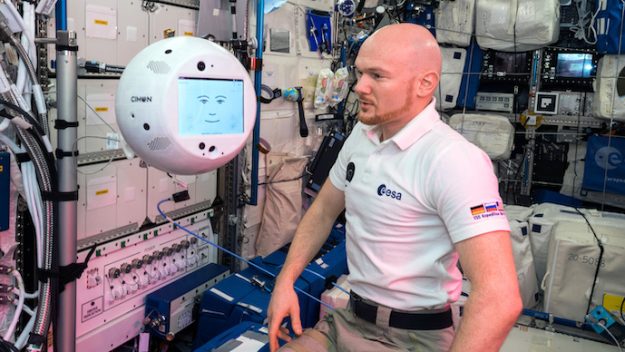
Unfortunately, the first outing for CIMON didn’t entirely go according to plan, in an outing with ESA astronaut Alexander Gerst, things started out well enough, with CIMON helping Gerst complete some test tasks, but problems arose when Gerst asked it to play his favourite music. Selecting Man Machine by Kraftwerk, CIMON continued to play the music while accepting other tasks, and when Gerst ordered, “Cancel music” the robot to replied, “I love music you can dance to! Alright, favourite hits incoming.”
While CIMON could still comprehend other commands, it appeared to become confused and not a little stroppy as Gerst communicated with those monitoring the test. “Be nice, please,” it requested at one point, followed a little later by, “Don’t you like it here with me?” and “Don’t be so mean.”
The improved CIMON-2 comes with more sensitive microphones that will hopefully allow it to hear better and not confuse commands, and a more robust AI system to allow it to better understand when it is being addressed and when an astronaut might be talking to someone else. This improved AI system includes IBM Watson Tone Analyser technology, which uses linguistic analysis to detect emotion in the tone of a conversation and respond to it – which given CIMON’s own moodiness noted above, could be interesting!
CIMON-2 is expected to spend up to three years aboard the ISS. As well as serving as a test bed for easing the stress of living and working in limited environments like the ISS and in developing greater understanding of how robots and AI can function to support crews on long duration missions, CIMON-2 is also potentially a stepping stone for developing the necessary trust human crews require to make the routine use of such systems – which can record, process and store human activities, interactions and moods, raising concerns of privacy and data security – acceptable to crew.
Dextre, RELL and and the “Robot Hotel”
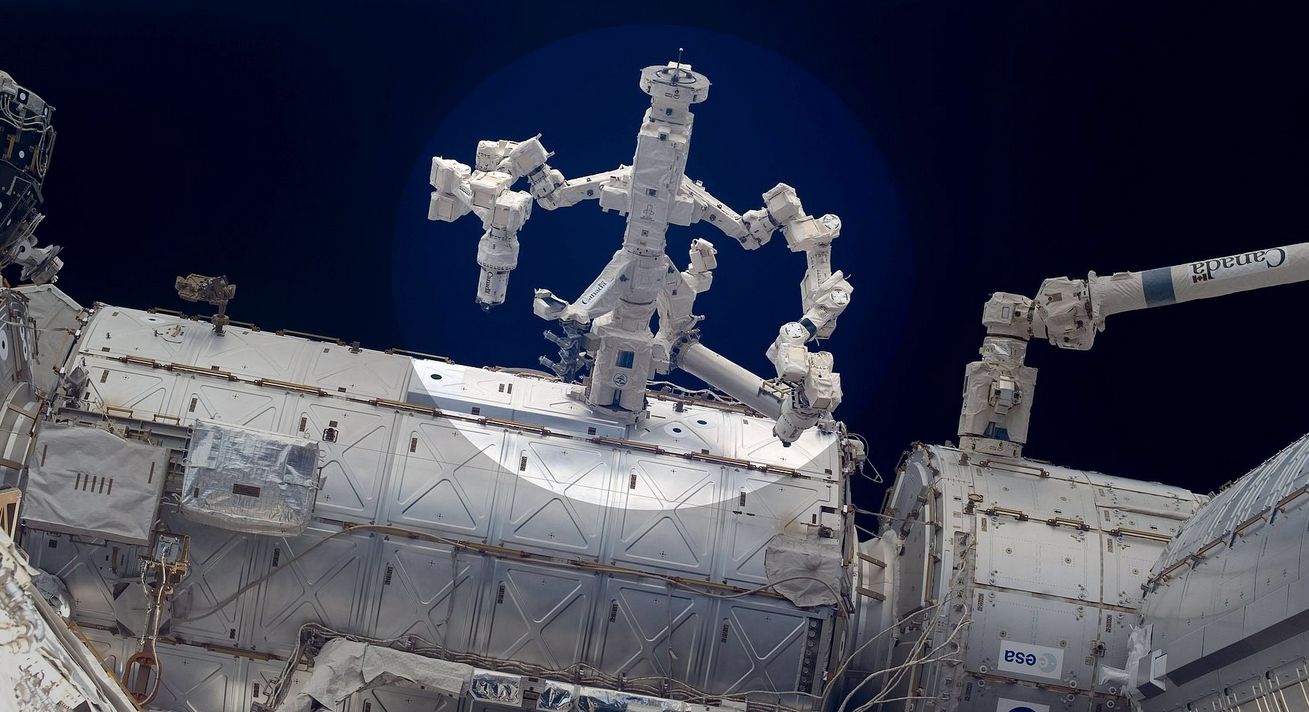
Robots are an important part of future human space activities, and over the years, a number of systems have been employed or tested aboard the ISS, for working both inside and outside the station. The most obvious of these is the Canadarm-2 remote manipulator system used outside of the ISS, while inside the ISS there have been robot system like CIMON and FYODOR (see: Space Sunday: Lunar landers, and robots in space).
Continue reading “Space Sunday: on the ISS – mighty mice and robots”









 Inara Pey: Living in a Modemworld