Sitting on the Kimberley and seeing spots

CuriosityCuriosity officially reached its next planned waypoint – dubbed “the Kimberley” on Wednesday April 2nd, 2014, with a final drive of some 30 metres (98 feet), after detouring from its planned drive route to reduce the amount of wear and tear being suffered by the rover’s aluminium wheels, the result of traversing some particularly rough terrain for several months.

“The Kimberley” was identified from orbit in 2013 as a possible location of interest during the rover’s drive down towards the point at which it will start its explorations of the lower slopes of “Mount Sharp”. It is an area of four distinguishable rock types exposed close together in a decipherable geological relationship to each other.  As such, they should provide further clues about ancient environments that may have been favourable for life.

A mosaic of “The Kimberley” created by images taken by Curiosity’s Navcam on Sol 589 (April 2nd, 2013), at the conclusion of the rover’s final drive to reach the waypoint. The outcrop at the center of the image is a category that the rover team scientists call “striated,” from its appearance in images taken from orbit before the rover reached this area. Farther in the distance, the striated type is overlain by other types. On the horizon, slopes of Mount Sharp – the mission’s long-term destination – are on the left and the rim of Gale Crater is on the right (click to enlarge)

As a major waypoint, “the Kimberley” will form an extended stopover for Curiosity which, while unlikely to be as long as the 6 months the rover spent exploring and examining “Glenelg” and “Yellowknife Bay”, will still be in the order of several weeks. The first part of this work is study the area in more detail, and the location occupied by the rover and the end of its April 2nd drive  – Sol 589 for the mission – is ideal for this. A slight rise compared to the surrounding terrain, it provides an excellent vantage point from which the rover can survey its surroundings, allowing mission scientists to comprehensively review the area and plan the coming science programme in finer detail than can be achieved when using orbital images alone. The science work is expected to involve observation of the surrounding region, sample-gathering from the rock formations, and onboard analysis of the samples gathered.

As I’ve previously reported, a cause of concern for mission personnel of late has been the amount of wear and tear the rover’s six aluminium wheels have suffered during the drive south from “Yellowknife Bay”. While the matter is far from serious in terms of impeding the rover’s manoeuvring or driving capabilities, with Curiosity’s nuclear battery offering the chance for a mission as much as 20 years in duration barring unforeseen circumstances, and what might provide to be a punishing climb up into the slopes of “Mount Sharp” still to come, the rover was directed onto less harsh terrain – comparatively speaking – in February 2014. Since then the mission team have been periodically checking on the wheels for further signs of damage and, as I noted last time around, the wear on the wheels is now around a tenth of that which had been experienced prior to the diversion. Nevertheless checks are still being carried out – including during the period in which this report was being written, as demonstrated by the raw image below, taken directly from the NASA image archive for Curiosity.

An image of one set of Curiosity’s rear wheels captured by the Mars Hand Lens Imager (MAHLI), located on the turret at the end of the rover’s robotic arm, on Sol 595 (April 9th, 2014). Note the jagged hole punched through the 40-cm (16-in) wheel (the rounded holes visible on the far side of the wheel are not signs of damage, but a part o the morse code for “JPL” deliberately cut-in to the wheels to help measure wheel rotation and slippage. This is a raw image, as posted by NASA on receipt from Curiosity, and without any white-balance post-processing (click for full size)

Continue reading “Sitting on the Kimberley and seeing spots”

Of oppositions and blood moons

Mars at opposition: The bright disc towards the centre of this image, just above the horizon is Mars, as captured by photographer Jimmy Westlake
Mars at opposition: The bright orange disk towards the centre of this image, just above the horizon is Mars, as captured by photographer Jimmy Westlake (click for full size)

Regular readers of this blog know I have something of a passing interest in space exploration and astronomy. I’ve been covering the Mars Science Laboratory mission since its arrival on Mars, and have also covered other space / astronomy related events and occurrences.

In keeping with this, I thought I’d mention two astronomical events of some interest which occur over the next two weeks. Neither of them is exactly rare, but if you’re lucky enough to be in the Americas, you’ll get to enjoy both at the same time – and a little bit more.

The first of these is the upcoming opposition with Mars, the time at which the Red Planet is at its closest to Earth. Oppositions happen around once every 26 months, and are so-called because they mark the time when the Sun and Mars are on opposite sides of the Earth to one another. During periods of opposition, Mars can appear as one of the brightest objects in the night sky and can come within 100 million kilometres of Earth.

Mars on the 15th April at approx 02:00 BST / 03:00 CET (21:00 EDT of the 14th April), and making its closest approach to Earth in six and a half years, will be clearly visible in the constellation of Virgo, along with the Moon and Spica (image: ESA) – click for full size

This year, Mars will reach opposition with the Earth on Tuesday April 8th, when it, the Earth and the Sun will be aligned in an almost straight line. However, because of the nature of the orbits of the two planets, they will not reach their point of closest approach to one another until the night of Monday April 14th / Tuesday 15th, 2014. At that time, they’ll be just 92 million kilometres (57.5 million miles) apart – the closest their respective orbits have brought them to one another at opposition for six and a half years.

During April, Mars appears as a bright red “star” in the constellation of Virgo. At the period of opposition, it will be just above and to the right of the Moon, with Spica, the brightest start in Virgo, to the lower left of the Moon.

To mark this year’s opposition, NASA has produced a nice little video explaining matters some more.

As mentioned towards the top of this article, this year’s opposition is only half the story. This is because the night of closest approach is also the night of a total lunar eclipse which should be visible from almost all of North America and significant parts of South America, with the majority of USA in particular getting a front-row seat.

Things will get underway at around 23:00 PST (02:00 EDT) on the night of the  Monday 14th / Tuesday 15th April, when the Moon enters partial eclipse. Totality will be reached just after midnight PST (03:00 EDT). At this point those under the path of the eclipse should witness a “blood moon” in all its glory, flanked on either side by Spica and Mars.

A lunar eclipse "blood moon" seen Idaho, December 2011 (image: Matt Mills / Reuters)
A lunar eclipse “blood moon” seen Idaho, December 2011 (image: Matt Mills / Reuters) – click for full size

“Blood moon” is the term sometimes applied to a total eclipse as a result of the Moon appearing to turn orange-red in colour, the hue slowly intensifying as the eclipse progresses until it reaches a bloody colour during the period of totality (about an hour and a half), before fading once more. This change in colour is the result of the Sun’s light passing through the Earth’s atmosphere as our planet moves between the Sun and the Moon, and then shining on the face of the Moon. A paler colouration of this kind can also be seen across at least a part of the Moon’s face during a partial lunar eclipse.

A total lunar eclipse and the gradual change in the Moon’s colour as seen from Earth which sees total lunar eclipses sometimes referred to as “blood moons” – the result of sunlight passing through the Earth’s atmosphere and striking the Moon’s surface (animation: Wikipedia)

The eclipse is certainly something that should generate opportunities for some stunning photographs, particularly given the positions of Mars and Spica (itself the 15th brightest star  in the night sky, and a close binary star).

And that’s not all; April 15th actually marks the first of a total of four consecutive total lunar eclipses – referred to as a tetrad,  all of which can be observed from North America, and which occur at roughly 6 month intervals to one another, the rest being October 8th, 2014, April 4th, 2015 and the last on September 28th, 2015.

NASA has also produced a video on the upcoming eclipse and the phenomena known as tetrads.

Some have pointed to this tetrad as marking the start of the end times, because the phenomena are supposedly “rare”, and this particular one commences on Passover.

However, while there can be long periods of time between occurrences of tetrads, they can also pop-up relatively frequently. For example, this century will see a total of nine tetrads occur, the first having taken place in 2003/4. Nor is the fact that the upcoming tetrad occurs on Passover particularly unusual; there have been eight tetrads so far coinciding with Passover since the first century AD.

So, if you’re in a position to be able to do so on the night of the 14th / 15th April, ignore the doom merchants and go outside and enjoy the night sky view!


Facebook acquire Oculus VR

Oculus VR: Facebook's latest acquisition
Oculus VR: Facebook’s latest acquisition

MENLO PARK, CALIF. – March 25, 2014 – Facebook today announced that it has reached a definitive agreement to acquire Oculus VR, Inc., the leader in immersive virtual reality technology, for a total of approximately $2 billion. This includes $400 million in cash and 23.1 million shares of Facebook common stock (valued at $1.6 billion based on the average closing price of the 20 trading days preceding March 21, 2014 of $69.35 per share).  The agreement also provides for an additional $300 million earn-out in cash and stock based on the achievement of certain milestones.

So opens a press release issued by Facebook on Tuesday March 25th, 2014.

This is a pretty stunning announcement, and shows that, as Mark Zuckerberg states in the release, “Mobile is the platform of today, and now we’re also getting ready for the platforms of tomorrow. Oculus has the chance to create the most social platform ever, and change the way we work, play and communicate.”

The news has sent shock waves rumbling across the social media sphere, with many reacting positively to the news, and other reacting negatively. Following the announcement, Cory Ondrejka at Facebook was unsurprisingly excited by the news.

oculus-FB-3

While Markus Persson of Minecraft fame responded to the news with as less favourable response, which was quickly picked-up by the games media.

oculus-FB-2

Others also didn’t appear to be initially impressed by the news, either, including those who funded the original kickerstarter. Meanwhile, Techcrunch reported a slide on Facebook’s share price which, while closing on the day overall, saw Facebook’s share value below its open price of $64.25, resulting in a loss of $1.5 – $1.8 billion market cap. However, as Techcrunch also notes, this isn’t the first time Facebook’s shares had dropped following the announcement  of an acquisition.

Theories as to why Facebook have made the move abound, with some pointing to the company tripping-up on the explosion of the mobile market and so are perhaps afraid they might miss-out on the growth of VR if it takes off suddenly. Others are suggesting Facebook is keen to jump on the possible marriage of the Oculus with mobile technology.

I’ve been somewhat skeptical that VR will explode in quite the immediate way many have been predicting – which is not to say I don’t think it will be big; I just think it’ll take longer to get there on all fronts (i.e. beyond gaming) than some pundits are perhaps allowing. It seems I’m not alone in thinking this. Speaking to The Verge, Oculus investor Chris Dixon believes Facebook are playing the long game – rather like Google did with their acquisition of Android in 2005.

It appears Zuckerberg agrees with him. Commenting in a teleconference held on the afternoon on March 25th to discuss the acquisition, Zuckerberg said, “There are not that many companies building technologies that could be the next computing platform, and Oculus is the clear leader.”

In this regard, Zuckerberg went on to say:

But this is just the start. After games, we’re going to make Oculus a platform for many other experiences. Imagine enjoying a court side seat at a game, studying in a classroom of students and teachers all over the world or consulting with a doctor face-to-face — just by putting on goggles in your home.

This is really a new communication platform. By feeling truly present, you can share unbounded spaces and experiences with the people in your life. Imagine sharing not just moments with your friends online, but entire experiences and adventures.

Oculus founder Palmer Luckey has a lot to smile about (image via Popular Mechanics)

Concerns have already been raised over the future of Oculus Rift as an open platform, something Oculus VR founder Palmer Luckey attempted to allay in a statement on the company’s Reddit page:

Facebook is run in an open way that’s aligned with Oculus’ culture. Over the last decade, Mark and Facebook have been champions of open software and hardware, pushing the envelope of innovation for the entire tech industry. As Facebook has grown, they’ve continued to invest in efforts like with the Open Compute Project, their initiative that aims to drive innovation and reduce the cost of computing infrastructure across the industry. This is a team that’s used to making bold bets on the future.

Whether such comments will quell concerns and upset, remains to be seen, although i’m not putting money on it doing so. Facebook undoubtedly have the financial and technical clout to boost Oculus Rift and VR into more mainstream consciousness. Whether this will come tied to a Facebook log-in requirements, again as some are already predicting, remains to be seen.

It’ll also be interesting to see how Facebook, after dabbing with virtual world environments through Cloud Party, consider virtual worlds, and the direction in which they might move. Could it be the “Facebookisation” of SL (or rather, perhaps, Linden Lab) may yet come to have a significantly new meaning? Or, less tongue-in-cheek, what about Philip Rosedale’s High Fidelity coming under the FB eye? Now there’s something to chew on (ETA: and in this regard, Palmer Luckey’s sign-off to his blog post announcing the acquisition is interesting: We’ll see you in the Metaverse!)

P.S. Techcrunch may score the biggest hit in this latter regard with their latest headline on the subject: Facebook Buys A Virtual World – that’s bound to get people rushing to their doors!

With thanks to Luke Plunkett at Kotaku.


On reaching Kimberley, managing communications and solving mysteries

CuriosityIt’s been a quiet time for the last three weeks as far as news from NASA’s Mars Science Laboratory is concerned. There have been a couple of reasons for this.

The primary reason is that the rover is on a slow but steady drive towards its next intended science waypoint while en route to the lower slopes of “Mount Sharp”. At the start of February, that waypoint had been around half a kilometre from the rover. However, concerns over the amount of wear and tear being suffered by the rover’s wheels as a result of traversing very rough terrain meant that Curiosity took a diversion.

While this put the rover on much smoother – comparatively speaking – terrain, it also meant the route to the waypoint had become more circuitous, requiring Curiosity cover around a kilometre in order to reach its intended stopover. In addition, engineers have been periodically checking the amount of damage to the wheel which may be accruing, further slowing daily progress, as well as continuing to test alternative driving methods to further ease the load on the wheels – such as letting the rover drive backwards towards its destination. However, the good news is that in the month since crossing Dingo Gap on February 18th, wear on Curiosity’s wheels has been around one-tenth what had been experienced per month during the months traversing the rougher terrain.

The long drive south. Murray Buttes mark the point at which Curiosity is expected to start the traverse onto the lower slopes of “Mount Sharp”, which forms a natural break in a line of dark sand dunes between the rover and the mound. “Kimberley” marks the next stop on the way (click for full size)

Additional tests using Curiosity’s test bed “twin” on Earth have revealed that the rover could sustain substantially more damage than incurred so far, including breaks in the wheel treads themselves, and still remain operational. However, given the potential duration of the mission – Curiosity’s nuclear “battery” could provide it with an operational life measured in a couple of decades barring other failures – means caution is key at this stage of the mission.

“The wheel damage rate appears to have levelled off, thanks to a combination of route selection and careful driving,” said JPL’s Richard Rainen, mechanical engineering team leader for Curiosity. “We’re optimistic that we’re doing OK now, though we know there will be challenging terrain to cross in the future.”

MRO Computer Glitch

The other break in news, although brief in nature, was caused by an unexpected issue with Curiosity’s primary communications relay between itself and Earth – the Mars Reconnaissance Orbiter (MRO) unexpectedly switched itself into a “safe” operating mode on Sunday March 9th. This immediately brought a cessation in the orbiter’s communications relay function for both Curiosity and Opportunity on the surface of the planet, although it did not put either rover entirely out of communications with Earth.

An artist's impression of the Mars Reconnaissance Orbiter orbiting the planet
An artist’s impression of the Mars Reconnaissance Orbiter orbiting the planet

While MRO forms the primary means of communications between the surface of Mars and mission control at NASA’s Jet Propulsion Laboratory facility at the California Institute of Technology, the rovers on Mars can also use NASA’s Mars Odyssey as a relay – and, should it be required, Europe’s Mars Express. However, Mars Odyssey, which has been operating around Mars for almost twelve and a half years, has much lower bandwidth and data transmission rates compared to MRO, which reduces the amount of information which can be relayed to Earth at any given time.

MRO’s issue first became apparent on March 9th, when the orbiter performed an unplanned swap between its duplicate computer systems. This is the prescribed response by a spacecraft when it detects conditions outside the range of normal expectations; the safe mode is initiated to reduce the risk of whatever caused the out-of-range event from being repeated by the second computer and potentially permanently harming the vehicle while matters are investigated. MRO has experienced unplanned computer swaps triggering safe-mode entry four times previously, most recently in November 2011, the root cause of which still hasn’t been clearly determined.

The March 9th safe mode entry also included a swap to a redundant radio transponder on the orbiter, marking the first time this has happened during the vehicle’s eight years in orbit around Mars. Whether or not the transponder issue triggered the computer swap-out is unclear. However, after carrying out a series of diagnostics on MRO from Earth, the mission team began bringing the orbiter back-up to full operational capabilities on March 11th, leaving it operating on the computer the swap-out switched to, together with the previously redundant radio transponder.

“The spacecraft is healthy, in communication and fully powered,” Mars Reconnaissance Orbiter Project Manager Dan Johnston said on March 11th. “We have stepped up the communication data rate, and we plan to have the spacecraft back to full operations within a few days.”

Charting a New Frost Channel

Since that event, MRO mission scientists have released a photo comparison showing the active nature of the Martian environment. The image shows two pictures of the same slope in the wall of crater Terra Sirenum, located in the southern highlands of Mars. There were captured some two and a half years apart (roughly equivalent to 1.2 Martian years), in November 2010 and May 2013 respectively.

Side-by-side: an image of Terra Sirenum crater walls taken in November 2010 compared with an image of the same region taken in May 2013, complete with freshly-carved gully and outflow fan (light areas)
Side-by-side: an image of Terra Sirenum crater walls taken in November 2010 compared with an image of the same region taken in May 2013, complete with freshly carved gully and outflow fan (light areas)

The right-hand (May 2013) clearly shows the creation of a new gully down the inner wall of the crater, created when material flowing down the older channel broke out to form a new channel and corresponding fantail deposit. While the material responsible for the new gully was liquid in nature, as the event occurred in the Martian winter period in the southern hemisphere, it is believed that carbon dioxide ice, and not water, played the major role in forming the new channel.

NASA had previously experimented with dry ice to see if it could be responsible for such gullies, with interesting results.


Continue reading “On reaching Kimberley, managing communications and solving mysteries”

Kitely launches hypergrid market and a new logo

kitely-logoIn August 2013, I covered the opening of the Kitely Marketplace, having previously reported on its development in January 2013 when it was first announce, and again in May 2013, when it opened to merchants.

In developing the Marketplace, the Kitely team of Ilan Tochner and Oren Horvitz always had the goal of making it possible for merchants to not only sell into Kitely itself, but also into other hypergrid-enabled grids, using a special Export permission flag which can be set by merchants. At the start of March 2014, they took a major step towards this with the opening of the Market Hypergrid Delivery Beta Test.

On March 21st, Kitely announced that the Kitely Market Hypergrid Delivery is now open to all.

The blog post provides guidelines and instructions on using Kitely Market to purchase  goods from the Kitely Market for delivery to hypergrid-enabled destinations, and I don’t propose to repeat things here. By default, the Market offers delivery to the top five (by use) hypergrid capable grids of Craft, GermanGrid, Littlefield, Metropolis, and OSgrid, and more are promised should they prove popular among purchasers. I also understand that delivery to other grids supporting hyerpgrid can be manually configured using the Market’s built-in Grid Manager – all that is needed is the grid’s loginURI.

Customers browsing the Kitely Market can now opt to have goods delivered to other hypergrid-enabled destinations – providing the creator has set the Export permissions flag (thus preventing goods from moving between grids against the creator’s wishes) – image courtesy of Kitely Market, click for full size

Items specifically set for delivery to other grids by their creator can be located using the Export option on the Permissions search filter (lower left corner of the each Market page).

Alongside of the hypergrid delivery capability, Kitely have enhanced their merchant tools to assist with the new capability, as the blog post explains:

We’ve made it easy for merchants to test that their products work correctly in other grids. It has always been possible to use the “Test delivery” link in the Edit Product page in order to deliver the product to the merchant’s avatar in Kitely. This feature has now been extended to deliver to other grids as well. The way this works is that you go to the Shopping Cart page, and select a grid and an avatar. You don’t actually have to buy anything; just enter that information. Then return to the Edit Product page, and click “Test delivery”. The product will be delivered to the “foreign” avatar that was selected in the Shopping Cart instead of to your Kitely avatar.

Another feature for merchants is that in the Sales History, merchants can see which grid each sale was delivered to, because foreign avatars appear along with their grid: e.g., “Jane Vespa @ OSGrid”.

Also, sales reports themselves can now be downloaded as a CSV file, providing improved historical context for merchants as they track sales long-term.

Additional hypergrid-enabled grids can be added via the Market’s Grid Manager

Implementing hypergrid delivery in the Kitely Market is innovative and interesting. Many creators in walled garden grids avoid OpenSim out of fear of content ripping – not that content ripping isn’t a problem in walled garden grids, either. Some OpenSim grids (like Kitely) proactively take steps to reduce the risk inherent in “easy” content ripping (such as by limiting OAR exports to those items created by the exporter themselves). Even so, the fear is there, so it will be interesting to see how many take advantage of the opportunity to sell into multiple environments from a single point. Certainly, the option has been seen as attractive enough to well-known SL creator Lilith Heart of Heart Botanicals fame, who has already opened a store on Kitely Market.

It will also be interesting to see how this new capability within Kitely Market affects the overall OpenSim economy. On the positive side, it means that merchants wishing to extend their reach into new markets (grids) can do so from a single, powerful point, and Kitely’s own pricing structure makes it fairly competitive for them to do so, including the use of the free access Kitely Merchant Sandbox, if required. Through it, merchants can reach multiple channels and also have a good degree of control over where and how their products are used (with some obvious caveats). For those used to only dealing with one market – such as SL – this could open the door to building channels to markets outside of the walled garden environments, such as those grids with a specific focus  / purpose, such as education or business.

The downside to this is the it might make it that much harder for smaller grids to attract content creators directly, and thus users – who tend to look for the content first. Grids may well also lose out on opportunities to lease virtual land to merchants, as they’ll potentially have little need for in-world stores. However, it’s fair to say that Kitely Market could actually help grids attract users: if it is seen that a grid actively embraces the Kitely Market and its growing numbers of merchants, then the could leverage that fact in attracting new users, as the lack of visible in-world merchants is negated by the ability for merchants to reach the grid via the Kitely Market, particularly if said grids also take steps to ring-fence what can be exported via the likes of OAR files.

New Logo and OpenSim Core Group Invitation

Oren Hurvitz

Alongside the Hypergrid Delivery launch, Kitely unveiled their new logo (seen in thumbnail at the top left of this article), and have included a few notes on making it easier for people to get started on Kitely included the blog post.

And in a modest footnote to the piece, Oren Hurvitz, Kitely’s co-founder, reveals that he has been invited to join the OpenSim Core Group of developers. The invitation is in recognition of Oren’s ongoing contributions to OpenSim on behalf of Kitely, and is very well deserved; my congratulations to him.

Lab issues call for Oculus Rift beta testers

secondlifeOn Wednesday March 12th, Linden Lab issued a call for people willing to help beta test the upcoming Oculus Rift enabled SL viewer.

The call, made via a blog post, reads in full:

The Oculus Rift offers exciting possibilities for Second Life – the stereoscopic virtual reality headset brings a new level of immersion to our 3D world, making Second Life a more compelling experience than ever before.

Though a consumer version of the headset isn’t available yet, we’ve been working with the development kit to integrate the Oculus Rift with the Second Life Viewer. We now have a Viewer ready for beta testers, and if you have an Oculus Rift headset, we’d love to get your feedback.

If you have the Oculus Rift development hardware and would like to help us with feedback on the Viewer integration, please write to sl_oculus_beta@lindenlab.com to apply for the limited beta.

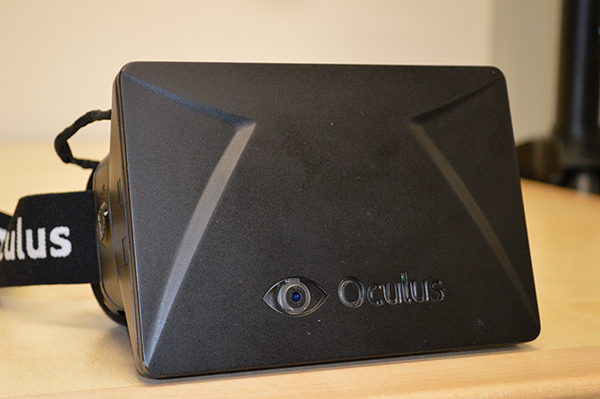
Oculus Rift: the headset-enabled viewer is now ready for beta testing

As noted in the post, the headset isn’t commercially available as yet, but the pre-release version with the Oculus Software Development Kit is currently available for $300.00 directly from Oculus VR themselves. If you have a kit already, now is the time to sign-up!

As I reported in December, VoidPointer Linden had indicated that the work on making the viewer operate with the Oculus Rift headset was “feature complete”. This fuelled an expectation that a project viewer might make an appearance either before, or soon after Christmas, 2013.

However, Oz Linden shortly afterwards indicated the “soon” might be something of a relative term. Since both of those announcements, the Rift viewer has been working its way through the Lab’s QA process, and while it didn’t appear as quickly as perhaps VoidPointer had hoped. Even so, when commenting on the status of the viewer back in December, he was able to confirm a few things about it:

  • The same viewer can be used in both a “normal mode” and a “Rift mode”
  • There will be no apparent changes to the viewer / UI when in “normal mode”
  • Frame rates when in “Rift look” will be very much down to the user’s own hardware  (unsurprisingly).

Elsewhere, it had been indicated that when in “Rift Look”, UI menus may float over the user’s head, keeping them out of the field of view until such time as needed. This was certainly the case when Simon Linden tried the viewer earlier in “013, but it is unclear if this approach has been carried forward – so that’s one for the beta testers to discover.

There is no timescale for how long the beta testing will last, but this announcement brings official support for Occulus Rift (users can also use David Rowe’s CtrlAltStudio viewer, which provides preliminary support for the headset) a step closer to reality.