Old Town Winterland, December 2020 – click any image for full size
For those wishing to partake of an extensive Second Life exploration, Old Town by .:Bekks:. (Bekks Heartsong) could be an attractive proposition.
Covering two regions, the Full region of Adagio Breeze, which has the additional 10K land capacity bonus, and the Homestead Isla Amorosa, it is an expansive setting, covering multiple levels, from ground level through several sky platforms – and also back under the sea.
Old Town Winterland, December 2020
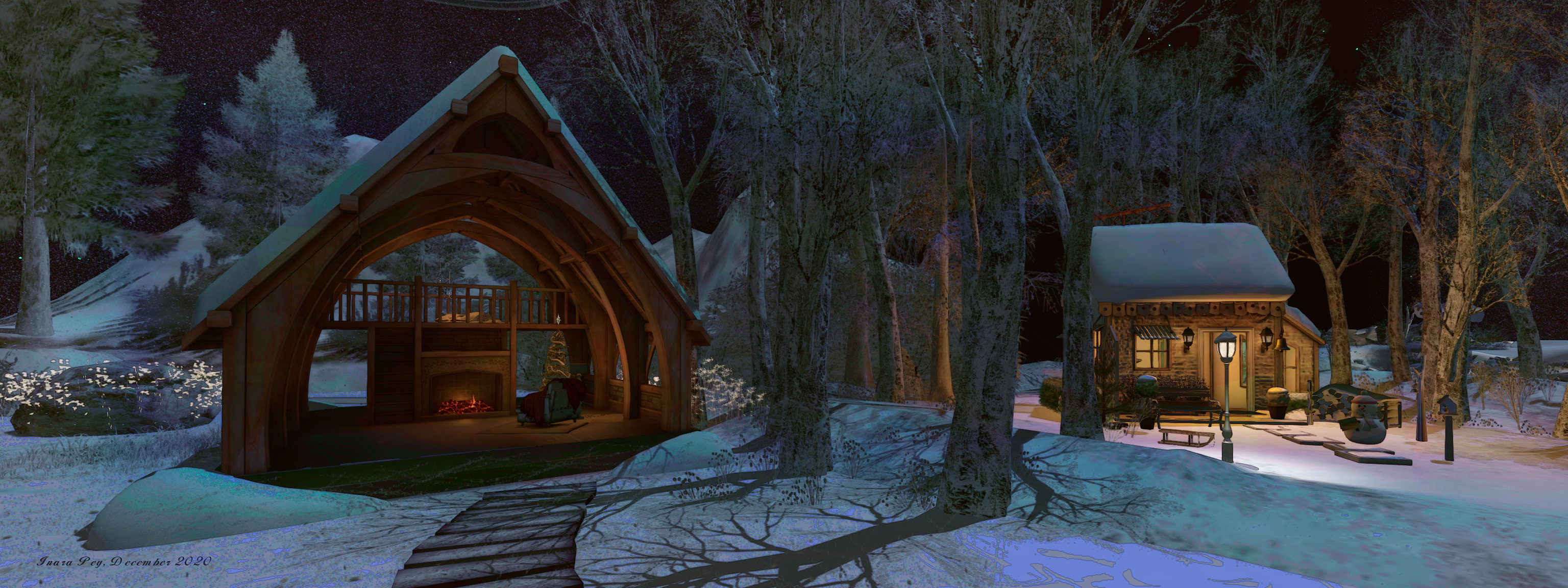
We started our visit – on the recommendation of Shawn Shakespeare – in the region’s Winterland setting, a place that spans both regions and which, as the name suggests, offers a winter setting, heavy in snow, with more falling from the night sky.
This is a level not only heavy in snow, but also in places to visit and things to do – ice skating on a rink or across a lake, take your pick – or if you prefer, along a sky track that runs around the region, dipping down to greet those wishing to try it alongside the Arctic Express,that sits close to the boundary between the two regions.
Old Town Winterland, December 2020
With the lake covering most of the Homestead region, it is the Full region that offers the majority of the snowy attractions – cabins and cottages where visitors can get toasty in front of roaring fires; carousels, coaches, balloons, sleighs and frozen ponds and little camp sites, all interlinked by winding trails and paths visible through the snow that encourage feet to wander and cameras to roam.
Those not taken by all the walking can take a horse from one of the rezzers and ride through the snow, or simply sit and watch others as they explore – or find themselves under observation by the wildlife also to be found out on the snow and amongst the frosted trees.
Old Town Winterland, December 2020
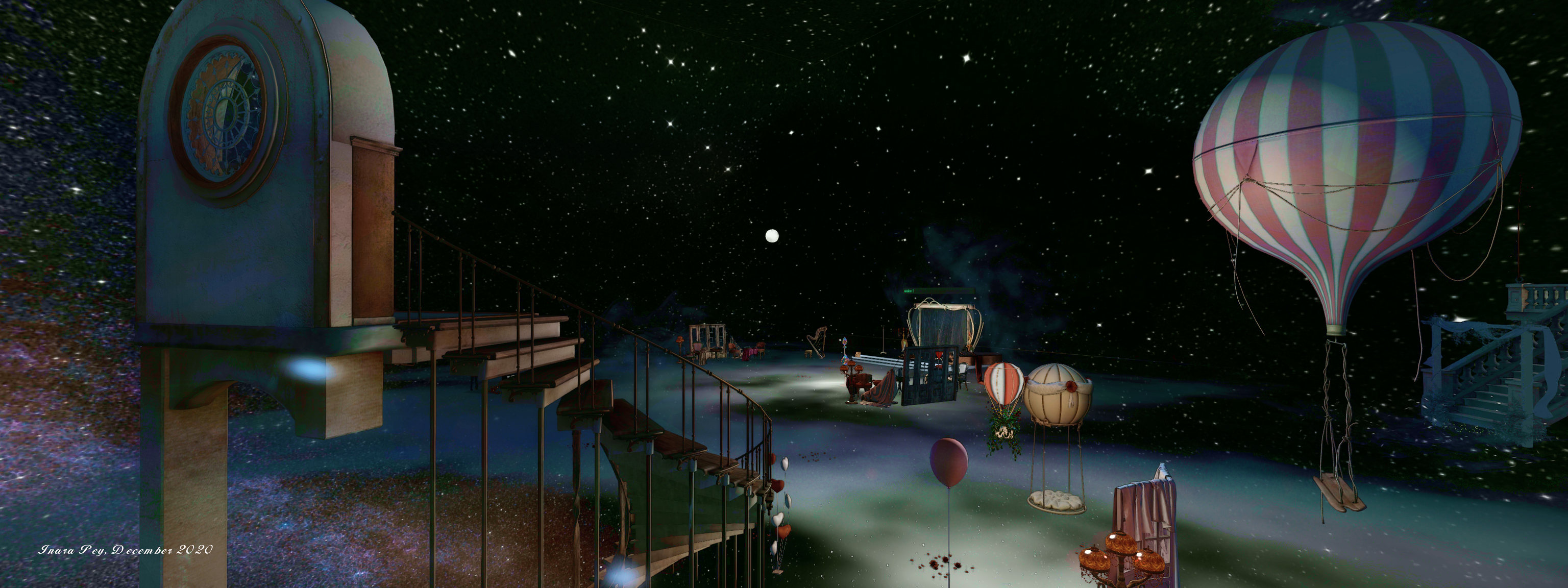
Also to be found within the setting are a number of teleport globes. These provide access to many of the features to be found within Old Town, some of which are on the Winterland level, others of which sit on other platforms or, as noted, at the ground level or under the waves. These offer more to see, and the chance to get away from winter and visit other places and realms.
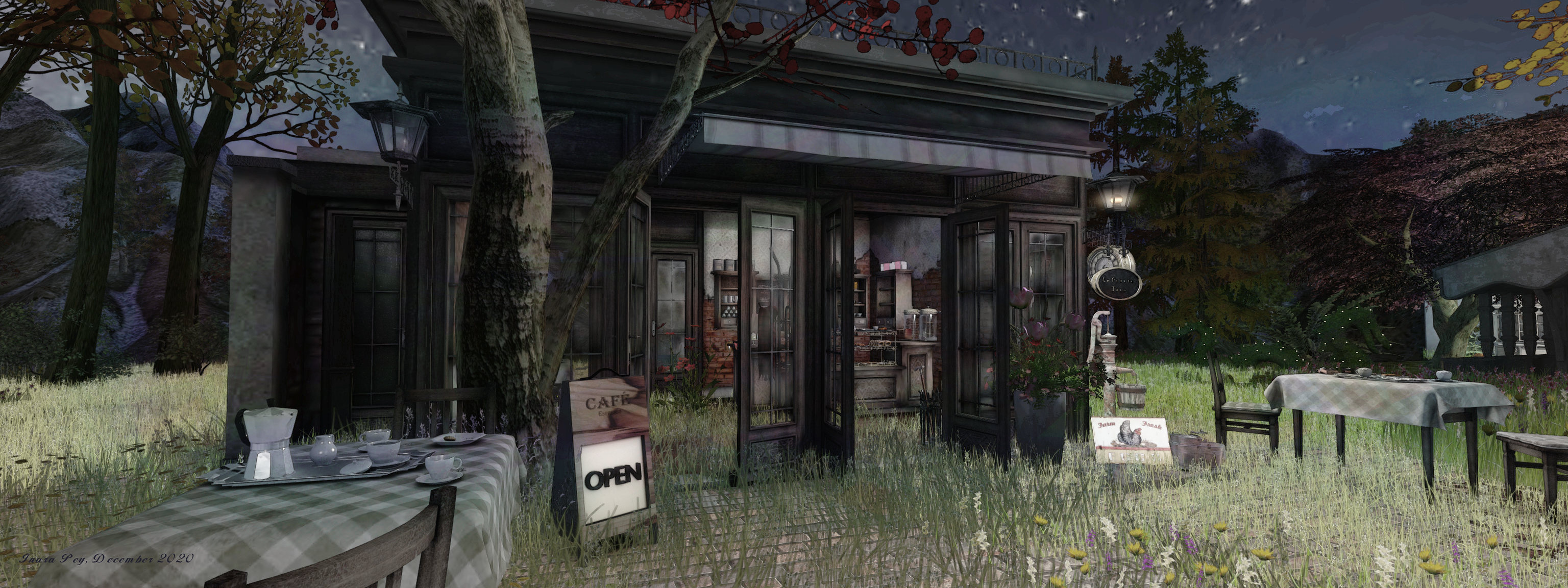
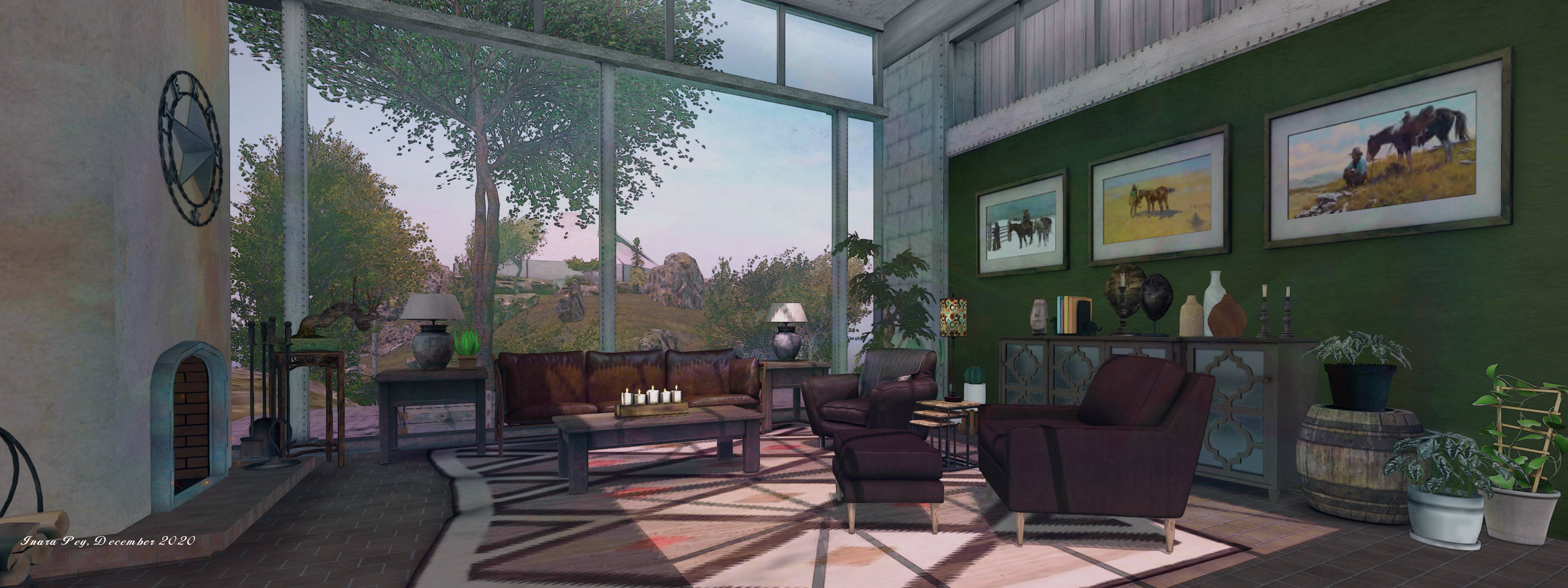
For those particularly given to horse riding, there is an Old West destination, for example, while those who missed Halloween can find spooks and ghosts within the Hauntings setting. There’s also a little town waiting to be explored, a bohemian camp (and more) at ground level, and even more to be discovered, including karaoke for those who might enjoy it, and spaces for other music and dancing.
Old Town Winterland, December 2020Obviously, given the extent of the offerings within the regions, exploration can take time – and so it’s probably best to break down a visit into several trips, rather than overwhelming yourself. However, as the region’s settings are split between different levels, rendering issues aren’t as bad as might be thought for a location that offers so much to see and do, and this further adds to the attractiveness of a visit.
All-in-all well worth taking a look and let your feet wander as they will.
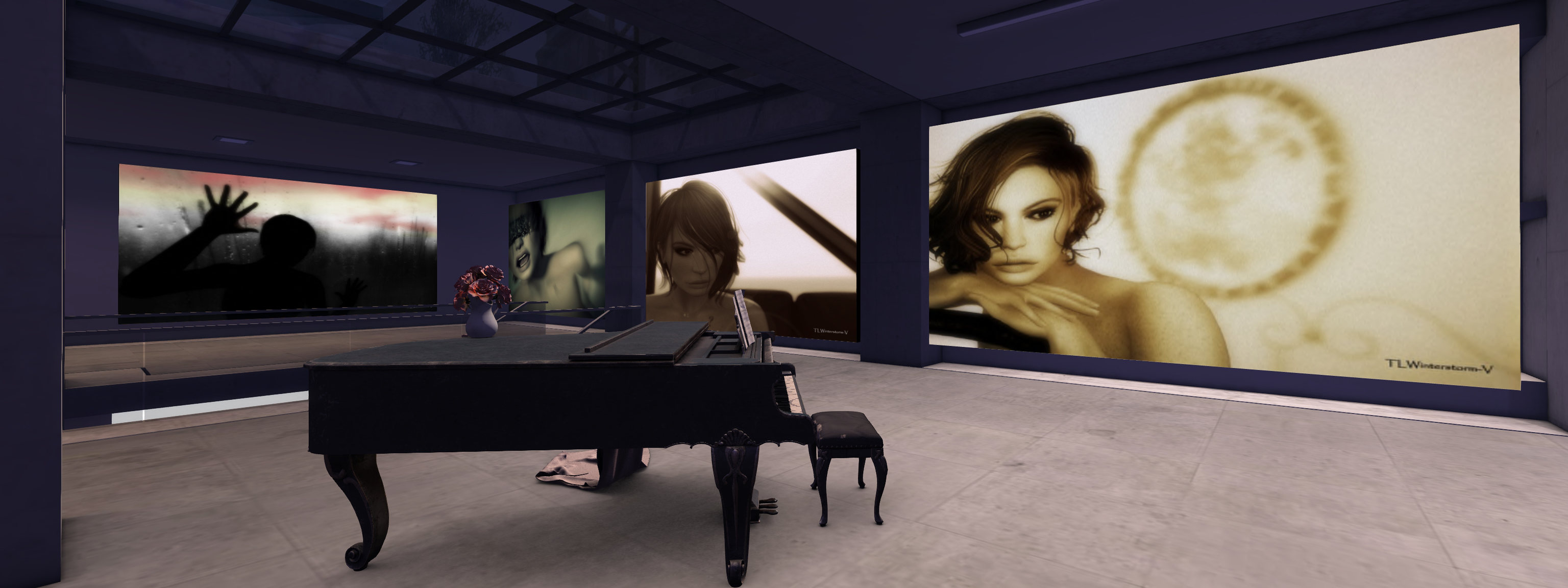
Currently available at Mareea Farrasco’s IMAGO Gallery for visitors to appreciate is an exhibition of avatar studies by Liz Winterstorm (TinLiz) that is – in four words – beautifully and emotionally expressive.
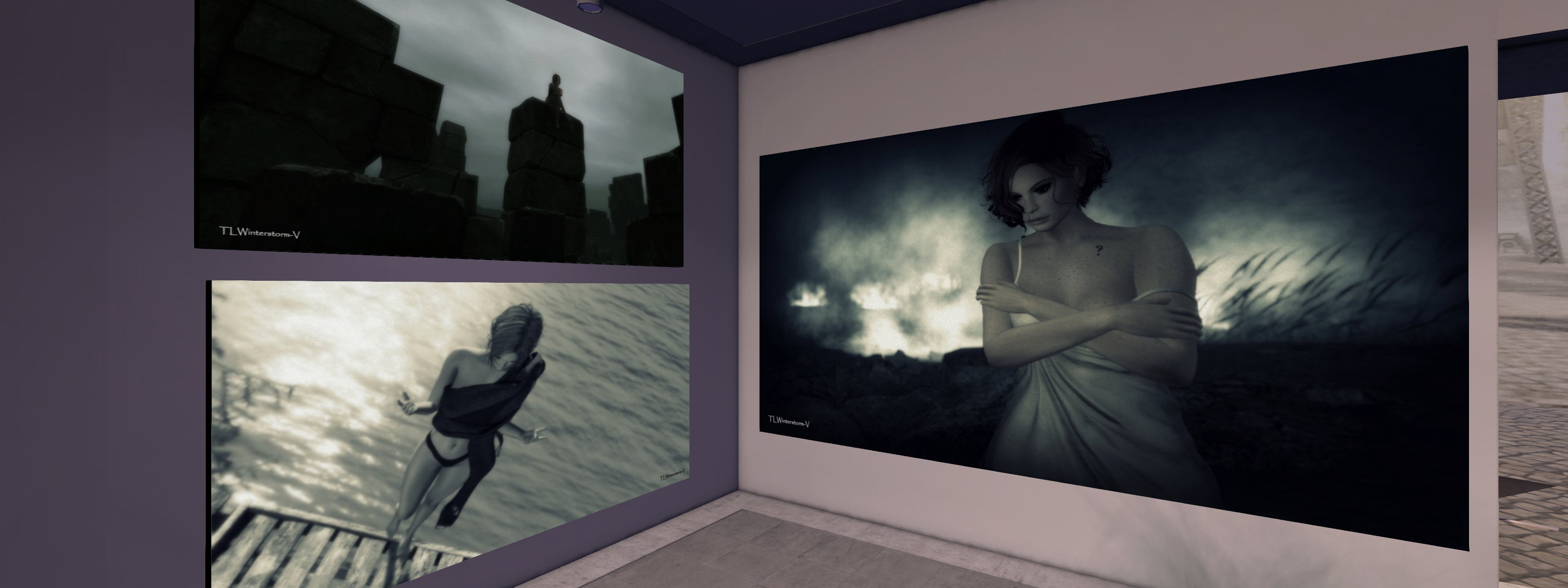
Presenting 28 avatar studies, all of which are either black-and-white or soft monochrome, every one of the presented works is powerfully evocative in its narrative and emotional content, each one perfectly framed and presented, making the entire selection an extraordinary must-see exhibition.
Taken without external post-processing enhancement – Liz notes she simply does not have the patience to learn PhotoShop, these are images show that Liz has an innate grasp of lighting, and the use of light and shadow through her selection of Windlight environments in order to express her pieces.
IMAGO Gallery: Liz Winterstorm
While the selection is untitled (other than Liz Winterstorm at IAMGO), there appears to be a twist of thematic threads running through the images. The first might be seen as purely reflective of emotional states arising from a relationship – particularly those images that involve two figures. There are emotional responses anyone has likely experienced through the ups and downs and turmoil that are a part of many (all?) relationships.
The second thread, equally as evocative, might be seen as a considered reflection of the way many of us have felt at one point or another through the past year: loneliness, emptiness, of wanting things to be over, separation, of being unable to escape (the world’s woes?), anger.
IMAGO Gallery: Liz Winterstorm
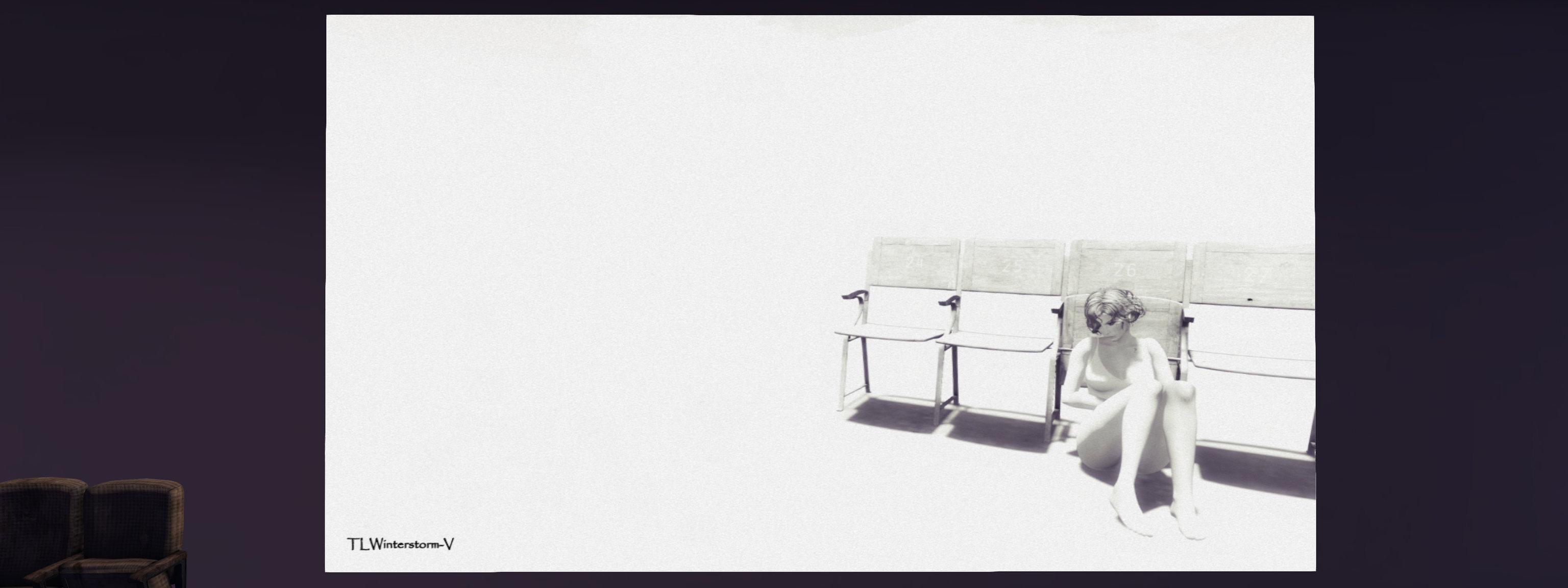
It is this layering of ideas – or at least, suggestions of ideas – that gives this exhibition its depth. But it is not the only thing; as noted Liz has a magnificent approach to using the natural environment through Windlight settings and framing to create pieces that are genuinely visually impressive. Just take a look at Shunned as an example, the use of a pure white lighting and background, coupled with the pose and row of seats gives the piece a quite remarkable depth and emotional focus that can be felt within whichever narrative thread you choose to follow.
As a second example of this narrative and visual richness, take Apocalyptica; it’s title alone is powerful and the imagery fully reflective of either theme. But there is perhaps more here; within the picture is what seems to be a direct reference to the Finnish band itself and the lyrics from their single Life Burns. And this abundance of narrative and imagery flows across all 28 pieces in the exhibition.
IMAGO Gallery: Liz Winterstorm
Very definitely not an exhibition to be missed by those who appreciate Second Life art and photography.
The following notes were taken from the Tuesday, December 15th Simulator User Group (SUG) meeting.
Server Updates
Deployments in week #50 got a little confusing, with both SLS (Main) and some RC (Magnum) RC channel servers updated to release 553685, with the remainder of the simulators being updated to the same release on Tuesday, December 15th. At the SUG, Rider linden explained the situation thus:
So let’s see. We ended up having one extra set of rolls on Friday and then again today to catch the last of the stragglers. It was basically just an internal configuration change to help support uplift. I’m confident that that was the final roll of the year.
SL Viewer
The Dawa maintenance viewer updated to version 6.4.12.553723 on December 15th. The rest of the current crop of official viewers, remain as follows:
Current release viewer version 6.4.11.551711, formerly Cachaça Maintenance RC viewer promoted on November 12 – No Change.
Release channel cohorts:.
Custom Key Mappings project viewer, version 6.4.12.552100, November 12.
Project viewers:
Project Jelly project viewer (Jellydoll updates), version 6.4.12.552224, December 4.
Simple Cache project viewer, version 6.4.11.551403, issued on November 12.
Legacy Profiles viewer, version 6.4.11.550519, October 26.
Copy / Paste viewer, version 6.3.5.533365, December 9, 2019.
Project Muscadine (Animesh follow-on) project viewer, version 6.4.0.532999, November 22, 2019.
360 Snapshot project viewer, version 6.2.4.529111, July 16, 2019.
In Brief
Map tiles are still not being regularity updated, however the Lab both identified the cause of the issue and a possible fix, however, it now seems probable this will not be deployed until after the holiday break.
The updates to Group chat made over the last day or so should not be seen as a “complete fix” for issues. Rather, it is intended to hopefully improve things for at least some who have experienced problems,with further work to come, with Oz Linden noting:
There is no doubt that group chat needs additional work. We have recently resolved some problems that we were able to diagnose, but more work will be needed as soon as we can devote some time to it.
It is possible that post-Uplift, EEP might see some further work, including an adjustment to the default Mainland ambient lighting.
Grauland, December 2020 – click any image for full size
To take a break from scenes of snow and winter, we decided to head over to Grauland and see what region holder JimGarand had put together for December – and as always, we weren’t disappointed with what we found.
Over the years, Jim has never ceased to attract us – and many other visitors – with a series of unique region designs that never fail to offer something new and different, whilst also offering touches that persist between designs to present a sense of continuation from one design to the next.
Grauland, December 2020
With this iteration of the region, that continuance can be found through the maze of rooms and half-rooms last seen in the region’s summer looks, and the ranks of concrete blocks that have appeared in a number of the region’s designs.
The maze of rooms is the first element of the design to be encountered from the landing point, which sits on a pier head that thrusts out into the waters on the west side of the region, a crossed archway forming the walk from the pier head and the maze.
Grauland, December 2020
Beyond the rooms a series of broken walls form a zig-zag walk for those who fancy it – or visitors can go around this to the north, where they’ll encounter a pattern of “portal blocks” – hollow concrete blocks with circular holes in their six sides, inviting people to walk through them, or head southwards where, a little further inland, stands the rows of concrete blocks, standing close to where steps have been cut into the bare rock of an upland table of rock.
These steps lead up to a most unusual tower that rises from a rough table of rock. apparently made of concrete it raises a single square finger into the air which splits at its top into four arms, each forming an individual room leading off of the central stairwell. As a home, it offers a most unique residence – allowing for its outwardly industrial look. However, here the structure is used as something of an artistic statement – art also being a common theme running through Grauland designs. Each room presents an individual décor from rings of multiple televisions through if not Santa’s grotto, then certain his hi-rise retreat, to a balloon-lovers paradise and a lounge where talking about the elephant in the room is unavoidable.
Grauland, December 2020
The tower is not the only structure on the island. Diagonally opposite it to the north-east and also sitting atop a large plateau, is another concrete building. Octagonal in shape, it appears to have a steeply-sloping, sectionalised roof. It is only on reaching it and taking the tunnel and stairs up into it, can it be seen that the building is actually open to the sky above – although what purpose it might be put to – gallery, event centre or even landing pad for some form of space vehicle – is entirely up to the imagination.
Directly south of of this, and also facing the tower is a large studio house with sunken gardens and swimming pool. The courtyard around the pool offers both places to sit and sculptures to be appreciated. A small club house is to one side of the courtyard, a hot tub alongside it, while a A single passage runs directly east to the water’s edge, flanked by further sci-fi elements in the form of strange pods that offer little studio rooms where visitors can relax.
Grauland, December 2020
Finished in concrete and stone blocks. and with its outside metal stairways, the studio house continues the industrial theme of the setting, but offers comfortable furnishings within, its southern aspect overlooking a small wild flower garden sitting of a shelf of rock between house and sea.
With boats at the landing point, a little an aged and damaged garden shed sitting to the north-west offering a further unusual hideaway, and seating offered throughout, Grauland invites explorers to wander inland and around its rough coastline (rocky outcrops and cliffs allowing, while its low-laying inland mix of blocks, walls (straight and sinuous) offers an artistic statement in its own right.
Grauland, December 2020
Thus, this iteration of Grauland continues the region’s reputation for being an engaging, curious and photogenic visit for all who appreciate exploring Second Life.
Logos representative only and should not be seen as an endorsement / preference / recommendation
Updates for the week ending Sunday, December 13th
This summary is generally published every Monday, and is a list of SL viewer / client releases (official and TPV) made during the previous week. When reading it, please note:
It is based on my Current Viewer Releases Page, a list of all Second Life viewers and clients that are in popular use (and of which I am aware), and which are recognised as adhering to the TPV Policy. This page includes comprehensive links to download pages, blog notes, release notes, etc., as well as links to any / all reviews of specific viewers / clients made within this blog.
By its nature, this summary presented here will always be in arrears, please refer to the Current Viewer Release Page for more up-to-date information.
Note that for purposes of length, TPV test viewers, preview / beta viewers / nightly builds are generally not recorded in these summaries.
Official LL Viewers
Current release viewer version 6.4.11.551711, formerly Cachaça Maintenance RC viewer promoted on November 12th – No Change.
Starship prototype SN8 drops horizontally towards the ground after a flight to 12.5 km altitude, its stability maintained by the fore-and-aft wing flaps. Credit: SpaceX
On Wednesday, December 9th, SpaceX Starship prototype SN8 finally took to the skies in what was to be a very mixed ascent to around 12.5 km altitude and return to Earth.
The much anticipated flight of the prototype vehicle, weighing approximately 672 tonnes with its partial fuel load, was far more successful than SpaceX had anticipated, even if the vehicle was lost in what SpaceX euphemistically calls a “rapid unplanned disassembly” or RUD.
The first attempt at a launch of the 50m tall vehicle was made on Tuesday, December 8th; but this was scrubbed after a pre-flight engine issue caused an automatic shut-down on all three Raptor motors. The second launch attempt, in the morning of Wednesday, December 9th, was aborted just 2 minutes and 6 seconds before engine ignition when a light aircraft strayed into the no-fly zone around the SpaceX facilities in Boca Chica, Texas.
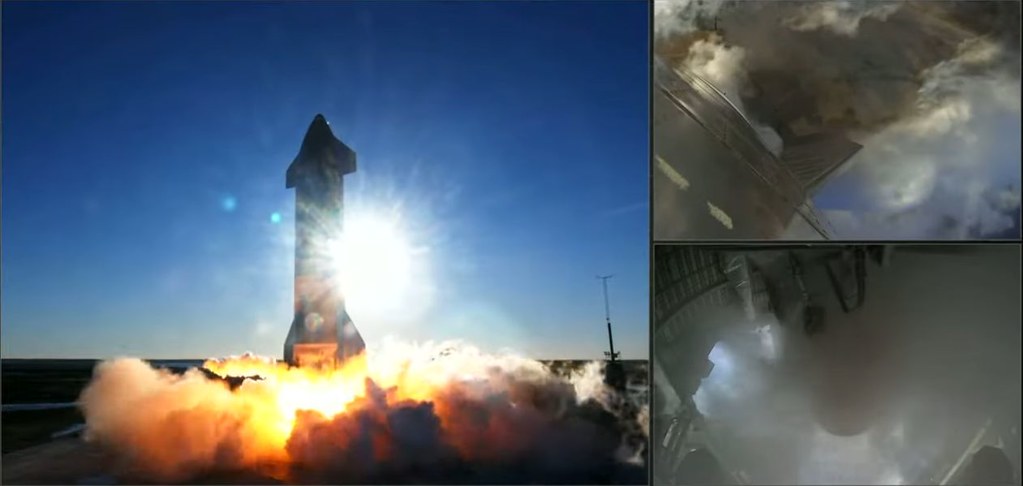
The moment of ignition caught by ground cameras (l) and camera on the hull of the vehicle (top r), and in the engine bay (bottom r). Credit: SpaceX
However, at 16:00 CST (22:00 GMT) that day, the countdown resumed, and at 16:45:26 p.m. CST (22:45:56 GMT), the three Raptor engines on the vehicle ignited and ran up to around 80% thrust, lifting prototype SN8 into the air.
The entire flight was live streamed by SpaceX, with the initial ascent proceeding as anticipated. At 1 minute and 40 seconds into the flight, one of the Raptor engines shut down and gimballed itself away from the remaining two operating motors. 94 second later, a second of the Raptors did the same. At the time, some pundits commenting on the flight speculated the shut-down indicated something was amiss.
The first of the Raptor engines shuts down – a planned part of the flight – as SN8 burns through its partial fuel load, so as to reduce its thrust-to-weight ratio. SpaceX
In actual fact, both engine shut-downs were planned. As the vehicle was flying with around 1/2 its normal fuel load, and getting lighter at the rate of 2.2 tonnes every second, the engines were shut down to reduce SN8’s thrust-to-weight ratio, naturally reducing its rate of ascent.
Even so, SN8 continued upwards under the thrust of the one remaining Raptor – Number 42, the latest and most modern Raptor engine evolution, with the vehicle’s reaction control system (RCS) firing thrusters around its hull in order to stay upright, until it reached a point where it was effectively hovering.
The moment of tip-over: SN8’s Raptor 42, assisted by the vehicle’s RCS thrusters, starts to tip the vehicle over into an horizontal orientation. Credit: SpaceX
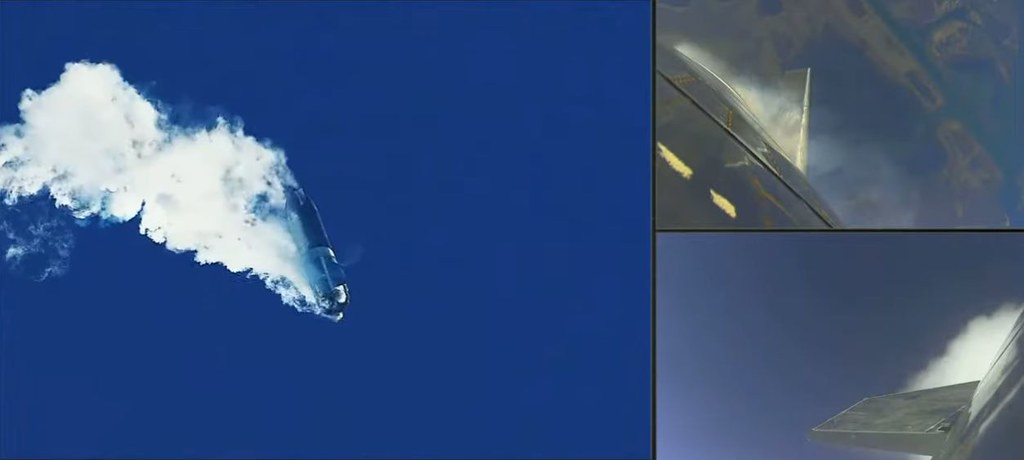
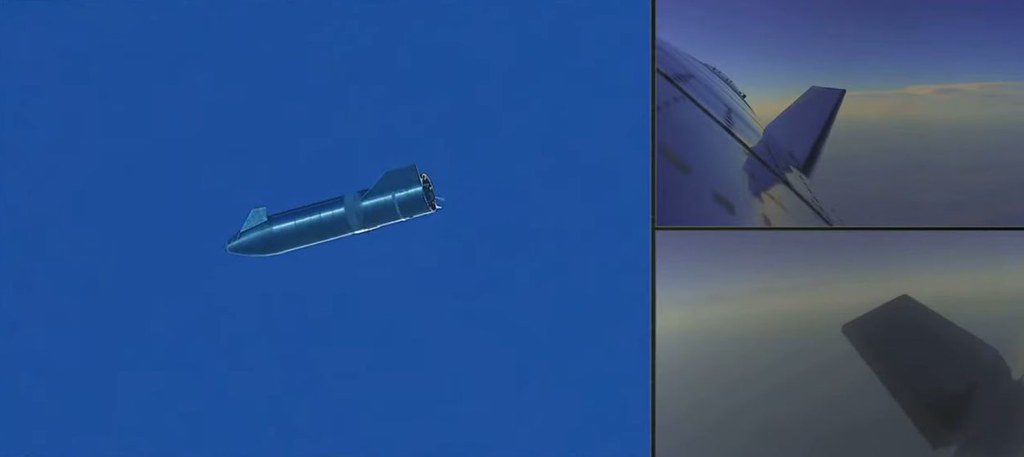
What happened next was one of the two most incredible sights witnessed in the testing of a space vehicle: as SN8 started to drop vertically backwards, Raptor 42 gimballed to direct its thrust at an angle, working with the RCS system to tip the entire vehicle over until it was falling more-or-less horizontally. At this point, the fore and aft flaps came into their own, working in tandem to hold the vehicle steady, much like a skydiver uses their arms and legs to maintain stability.
This skydive / bellyflop (as some unkindly refer to it) is how a Starship will make a return from orbit. Dropping into the atmosphere with the fore and aft flaps folded back against the hull to minimise their exposure to the fictional heat of atmospheric entry, an operational starship will be protected by heat shield tiles along its underside, after which the flaps fold out, acting as air brakes to slow the vehicle’s velocity as well as keeping it stable.
SN8 in its skydive mode (l) with exterior cameras (r) showing the forward (top) and aft (bottom) flaps in action. Credit: SpaceX
Dropping back through the atmosphere for almost two minutes, SN8 then completed the second most incredible sight seen in the testing of a spacecraft when, six minutes after launch, two of the Raptor motors re-ignited, using fuel from two small “header” tanks. These, coupled with the vehicle’s RCS tipped SN8 back to an upright position just 200 metres above ground.
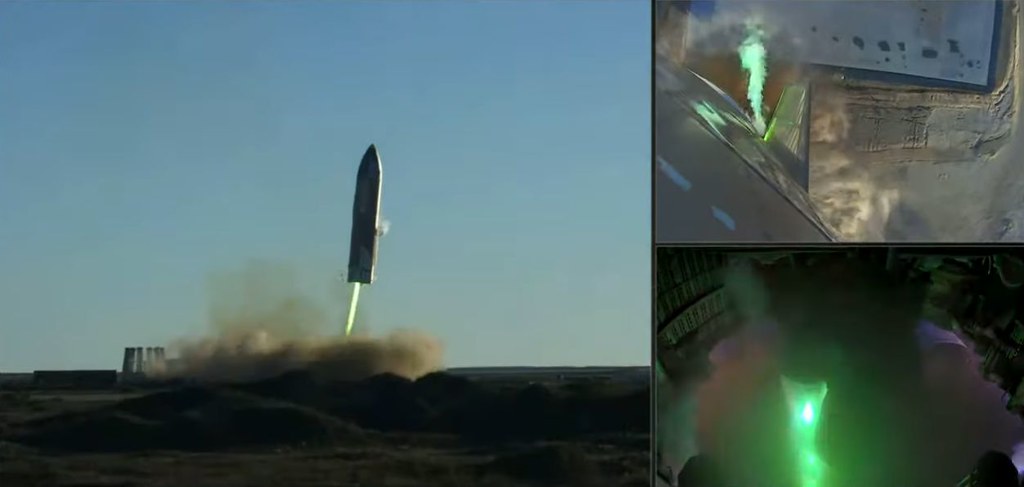
The idea had been for the vehicle to then descend tail-first over the landing pad, deploy its landing feet and touch-down. However, it was at this point things went wrong. With just tens of metres to go, one of the two operating engines shut down. For several seconds, the remaining engine fought to maintain vehicle stability, its exhaust plume turning bright green. Seconds later, its landing legs having failed to deploy, SN8 slammed into the landing pad and exploded in the RUD SpaceX thought might occur at some point in the flight.
The unusual green exhaust plume of the single remaining Raptor motor is clearly visible as SN8 almost overshoots the landing pad, and the failed deployment of the landing legs is visible in the image of vehicle. Three second later, the vehicle hit the landing pad and exploded. Credit: SpaceX
Initial analysis of data from the flight suggests that the header tanks suffered a pressurisation issue that prevented them pushing sufficient fuel into the two Raptor engines, causing one to shut down completely. The green plume from the second motor is thought to be one of two things: either that a) as the motor was so starved of fuel, it started consuming itself, material inside its turbopumps turning the exhaust green; or that b) as one engine shut-down unexpectedly, the second started gimballing wildly to try an maintain the vehicle’s orientation, and in doing so, smashed its engine bell into the other motor, exposing its copper cooling circuits, which caught fire and turned the exhaust plume green.










 Inara Pey: Living in a Modemworld