The following notes were taken from the Tuesday, November 15th, 2022 Simulator User Group (SUG) meeting. They form a summary of the items discussed and is not intended to be a full transcript. A video of the entire meeting is embedded at the end of the article for those wishing to review the meeting in full – my thanks to Pantera for recording it.
Server Deployments
At the time of writing, a server deployment thread had yet to be published.
On Tuesday, November 15th, the Main SLS and Events channels were updated with simulator version 576376, making the new Linkset Data capability grid-wide.
On Wednesday, November 16th, the simhosts on the RC channels should receive a new simulator update, this one containing a single fix designed to keep regions from running out of voice connections (BUG-229984 “Voice chat is not working” and BUG-7371 “Voice cannot connect”).
Linkset Data (LSD) – Brief Notes
Linkset Data is a new collection of script functions and one optional event that reads and writes key-value-pairs to a small 64kb table of data that is part of a root object.
It works similarly to Experience Key-Value store, but:
It does not require an underpinning experience – the data lives with the object that sends and receives the data.
Only scripts in the same linkset will be able to read the data written with this feature.
The run of simulator updates through to the new year will likely comprise:
Link sounds will most likely the last roll of the year (this should behave exactly as though you had a script in the linked prim and called llPlaySound from that prim).
llGetSimStats updates are liable to be the first update of 2023.
llHTTPRequest updates (see below) will likely follow later in January 2023.
LSDFindKeys sorting updates will most likely be fixed in the first simulator maintenance release for next year.
Available Official Viewers
The Maintenance P (Preferences, Position and Paste) RC viewer updated to version 6.6.8.576431 on Monday, November 14th.
All other official viewer remain as follows:
Release viewer: version 6.6.7.576223 – MFA and TOS hotfix viewer – November 1.
Release channel cohorts:
VS 2022 RC viewer, version 6.6.8.576310, issued November 4 – utilises Visual Studio 2022 in the Windows build tool chain.
Project viewers:
PBR Materials project viewer, version 7.0.0.576331, issued on November 3.
This viewer will only function on the following Aditi (beta grid) regions: Materials1; Materials Adult and Rumpus Room 1 through 4.
There are unconfirmed reports that GPUs are running noticeably hotter with this viewer than other viewer.
Puppetry project viewer, version 6.6.3.575529, issued on October 12.
Performance Floater / Auto-FPS project viewer, version 6.6.5.575378, October 4.
Love Me Render (LMR) 6 graphics improvements project viewer 6.6.2.573263, July 21.
llHTTPRequest Updates
Rider Linden is proposing changing the way we do accounting for CUSTOM_HEADERS.
Currently, headers of no longer than 253 bytes each are allowed.
Rider plans on changing this so that as many headers, each as long as is required, can be stored, to a maximum of 4096 bytes.
This is in recognition that there are a number of applications that require security headers which can blow through that 256 byte limit.
In Brief
BUG-232037 “Avatar Online / Offline Status Not Correctly Updating” – this is unlikely to be addressed until 2023, as the remaining simulator update slots for 2022 now have updates assigned to them.
BUG-232918 “Adding Friend will make all other friends appear offline” – this is newly reported bug, and should be kept in mind if experiencing issues with your Friends list.
BUG-227303 “collisions makes a script stop running and revert its mono status” opened in 2019, was raised, but has yet to be deeply investigated by LL.
The meeting included a further discussion on LSDListKeys and LSDFindKeys (e.g. negative index support). Please refer to the video below for this and the rest of the meeting.
LeLoo’s World, November 2022 – click any image for full size
LeLoo (LeLooUlf) has redressed her LeLoo’s World for the northern hemisphere’s winter season with an mix of settings, one of which appears to be open to the public and the second, smaller section still under construction.
Welcome to The Northern Trek! Grab our free snowshoes for your trek across this frozen landscape. Enjoy the animal viewing spots. Have fun getting in the winter mood! This is a PG event, all are welcome.
– LeLoo’s World, About Land description
LeLoo’s World, November 2022
The major portion of the setting is home to this opportunity for trekking a snowy landscape and seeing the mix of animals, mammals and waterfowl from both the Arctic and Antarctic it offers. The snowshoes mentioned in the About Land introduction can be found in the sack sitting a short distance from the landing point and at the top of the slopes leading down from the broad ledge on which it sits. This landing point is located mid-way half-way up the cliffs running as a curtain running half-way along the southern edge of the parcel to divide it from the rest of the region, before falling away to a narrow finger of water.
One of these slopes, running down and westwards, leads to an ice-covered water channel spanned by a wooden bridge. Beyond this channel the cliffs rise once more to continue their westward march, the gap between them suggesting the curtains have been improperly closed.
LeLoo’s World, November 2022
These cliffs are themselves are a curious mix of peaks, tables and ledges. The most extensive of the latter has at one end two of the rocky tables, swept by wind and snow, and at its far end is overshadowed by another of these semi-round tables. Not all of these tables are easily accessible as they jut from the various cliffs, nevertheless they have become the homes for caravans and other structures, offering their own most unusual elements to the setting. Others are more easily reached via slopes and steps – although getting down from them to the southern lowlands can be a challenge as well – although the snowshoes should help get down snowy hummocks.
It is across the north-facing lowlands and the semi-ice covered bay which forms a good part of the setting in which the majority – but not all – of the wildlife are to be found. These include caribou/reindeer; elk/wapiti; polar bears from the Arctic; penguins from the Antarctic, and fur seals. They share the lowlands with huskies and the waters with orca. Caribou might also be found on the uplands, together with Arctic foxes, rabbit, owls – and a further family of polar bears.
LeLoo’s World, November 2022
The southern cliffs are not the only uplands in the parcel: the western end is dominated by a tall, snowy mesa of rock, flat-topped and with a further finger of water partially separating it from the rest of the highlands. It is at the head of this channel that explorers can find the path rising to the top of the mesa and the old, broken rotunda and snow-crowned folly occupying it as they overlook the storm-torn wooden windmill at its base.
The base of this path runs around the foot of the mesa to pass between it and the open waters beyond and under fir trees to reach the mesa’s northern side and the ruined windmill; although if explorers prefer, they can follow the rougher ground alongside the narrow finger of water between mesa and cliffs to reach the windmill and the emergency shelter close-by – one of several places in the setting where visitors can sit. The largest of these sits towards the east side of parcel and takes the form of a working bunker partially covered by snow to provide a degree of insulation. It is not the cosiest of places, but it does provide shelter.
LeLoo’s World, November 2022
The remaining portion of the parcel – its western extent – is also separated from the rest by another curtain of cliffs pointing north that were, at the time of my visit impassable. Beyond them, the setting – as noted above – appears to be under construction and offers the look of a developing winter market built around a frozen pond. As this did not appear open to the public, I did not pry further – but I look forward to seeing what emerges when ready.
In the meantime, the setting is – as always with LeLoo’s work, highly photogenic – although dressing to suit the environment is recommended!
It’s time to highlight another week of storytelling in Voice by the staff and volunteers at the Seanchai Library – and this week previews the launch of a very special event.
As always, all times SLT, and events are held at the Library’s home in Nowhereville, unless otherwise indicated. Note that the schedule below may be subject to change during the week, please refer to the Seanchai Library website for the latest information through the week.
Monday, November 14th, 19:00: Reality Check
The the “age of the ‘metaverse'” (whatever “metaverse” is supposed to be, commercially), and the idea that the physical and the virtual can – “will” – be merged (at least in the eyes of some), Gyro Muggins offers a timely pause for through through a short story by scientist and author, David Brin which, in the words of the publisher:
Contemplates the eventual difficulty of discerning reality as a simulation versus reality as natural phenomena that is so well understood that it could just as well be a simulation. Publication in a serious scientific journal, notwithstanding, the prose is thought provoking.
The Dickens Project has officially announced an opening date of December 8th, 2022 and will run through until January 3rd, 2023. Old favourite guests and features will return along with an exciting new land configuration and new collaborators. Details to be published in due course!
Logos representative only and should not be seen as an endorsement / preference / recommendation
Updates from the week through to Sunday, November 13th, 2022
This summary is generally published every Monday, and is a list of SL viewer / client releases (official and TPV) made during the previous week. When reading it, please note:
It is based on my Current Viewer Releases Page, a list of all Second Life viewers and clients that are in popular use (and of which I am aware), and which are recognised as adhering to the TPV Policy. This page includes comprehensive links to download pages, blog notes, release notes, etc., as well as links to any / all reviews of specific viewers / clients made within this blog.
By its nature, this summary presented here will always be in arrears, please refer to the Current Viewer Release Page for more up-to-date information.
Note that for purposes of length, TPV test viewers, preview / beta viewers / nightly builds are generally not recorded in these summaries.
Official LL Viewers
Release viewer: version 6.6.7.576223 – MFA and TOS hotfix viewer – November 1 – No change.
Currently open at Selen’s Gallery operated by Selen Love (Selen Minotaur) is an immersive multimedia installation by 9Volt Borkotron (with additional lighting support by Adwehe) entitled Sphereeletrik. It is actually one of three installations within the gallery’s spaces which between them feature the work of four artists (the other artists being Moya Patrick (Moya Janus), Livio Korobase and Bohemio Love (Bohemi0) – the latter two sharing the same exhibition space), and all of which opened on November 3rd, 2022. All of these exhibitions are worth of a visit, and can be reached via the main intra-exhibit teleport at the gallery’s main landing point, but here I want to focus solely on Sphereeletrik.
However, before I get down to discussing it in detail, there are a trio of points that need to be noted by those intending to drop into it if it is to be fully experienced:
Advanced Lighting Model should be enabled (Preferences → Graphics → make sure Advanced lighting Model is checked).
You should set your local environment to Midnight (to avoid media appearing washed-out).
You must enable MEDIA playback in the viewer (chick the movie camera icon in the top right of your viewer (v6) or in the media settings (v1.x) and accept the media stream. Failing to do so means you will not see the greater part of the installation.
Selen’s Gallery: 9Volt Borkotron – Sphereeletrik
The short form description of this installation is that it offers an enclosed space in which a variety of objects sit, hang or float. These range of sculptures to floating cubes and spheres to seating areas to exotic-looking plants. Some of these objects are static others are animated and may, like the walls, feature animated textures (in lieu of the media playback). Ramps slope and spiral into the upper reaches where – if you do not enable media – white prim faces appear to hang.
With media enabled, however, these faces, together with the walls and several other elements within the installation are transformed, becoming media surfaces on which patterns, images and colours are displayed and flow and dance – and not just randomly, as 9Volt explained to me:
It’s music I am streaming that generates the visuals. I created a server which uses a Fourier transform and other mathematical algorithms to measure the stream at 256 frequencies. The results are then displayed in real-time with the music in various ways, with the music offset just enough so it’s displaying exactly as the visuals appear for people in world. The data rate is about 320kbps – about the same as streaming an MP3 into SL, so it shouldn’t cause delay in viewer playback.
– 9Volt Borkotron
Selen’s Gallery: 9Volt Borkotron – Sphereeletrik
In addition to the external server handling the transforms and other calculations, the installation features an in-world script utilising sine wave controllers to count the prims and change some of their traits in iterative stages. This results in media played across some elements being staggered; for example, a pattern plating on one prim reaches a certain point in media playback, so it starts on the next, and on that playback reaching the same point, so the next starts, like a singing canon-in-the-round.
When taken as a whole, the results are – as noted – entrancing, and while walking around the installation is possible, I suggest sitting in one of the cushions and trying the installation in Mouselook and simply looking around at the different elements to see the play for media and patterns, images and colour and the way they chance over time in response to the music.
It’s likely that some of the latter may not be to everyone’s liking, as varied as it is (I’m admittedly not a great fan of EDM, which showed up on a couple of the tracks while I was visiting). However, there is a purpose to the mix of music within the installation (which incorporates instrumentals, pop songs, etc., as well), as 9Volt again noted to me during my visit:
My Gran, who was a music lover her whole life, was going deaf, so I thought that using images and light would allow her to appreciate her music using tunes she knows well, and letting her “see” the notes she could not hear, playing them back through SL and onto her TV screen. My hope is that this installation will give those in SL with hearing impairments a visual expression of music when otherwise they might only hear the bass parts of the music.
– 9Volt Borkotron
Selen’s Gallery: 9Volt Borkotron – Sphereeletrik
As a part of this, 9Volt is interested in gaining feedback from SL users with hearing impairments about this aspect of the installation, and in possibly working with them to further refine the technique to help those with hearing difficulties further enjoy music in alternate ways.
Intriguing as a concept, engaging as a visually immersive installation, and richly varied as a multimedia arts piece, Sphereeletrik makes for an engaging visit.
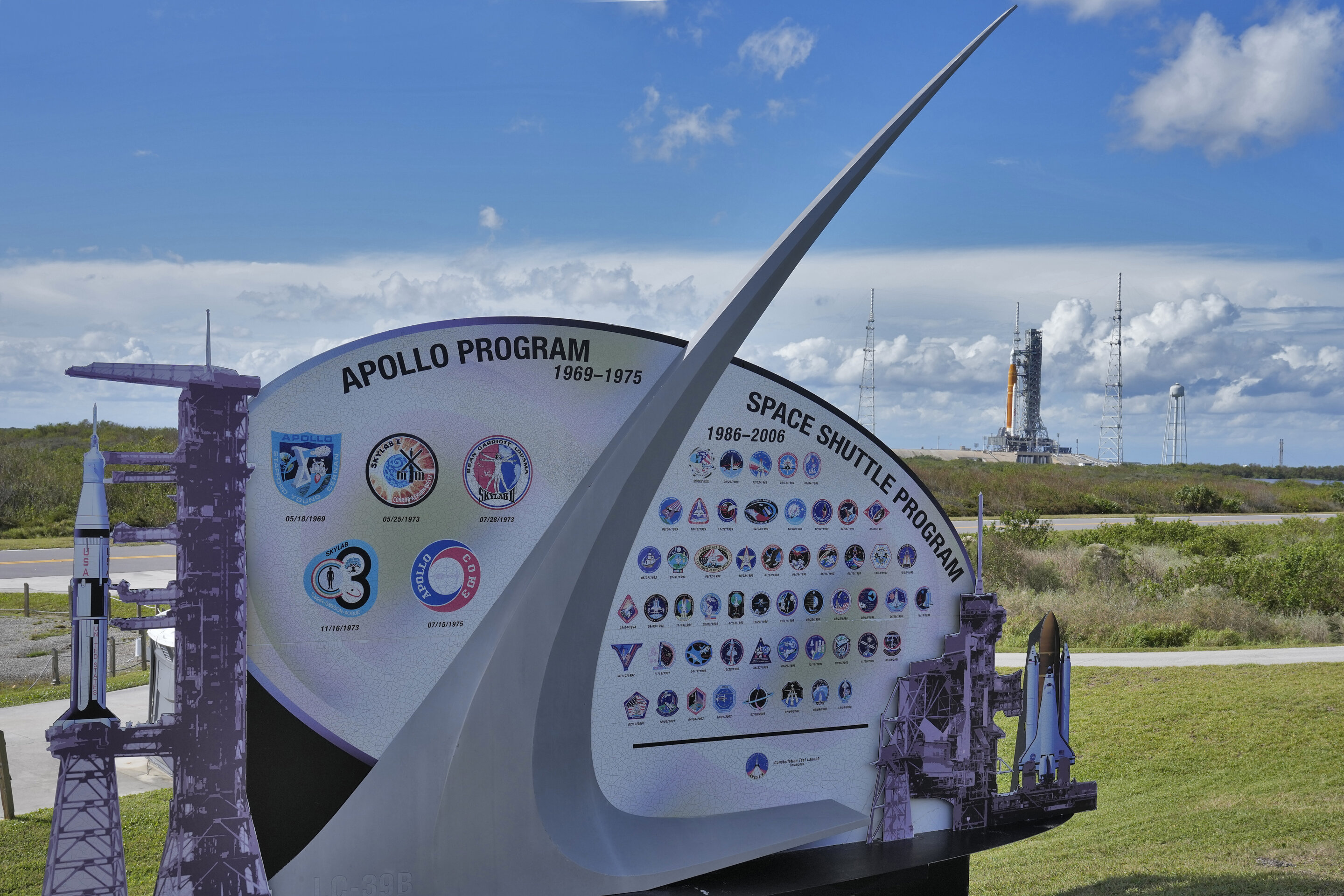
A shot from the viewing stand at Kennedy Space Centre showing Artemis 1 on Pad 39B, and in the foreground is a sign marking the 5 Apollo launches, 53 space shuttle launches and single Constellation launch undertaken from the complex. Credit: AP Photo/Chris O’Meara
NASA has confirmed that the first launch of its Space Launch system rocket will still go ahead on November 16th, 2022.
Concerns about the launch had been raised after the US space agency decided to leave the vehicle on the pad in the face of category 1 tropical storm Nicole, which made a Florida landfall south of Kennedy Space Centre on November 10th, with high winds and rain lashing the launch centre. However, in a statement made on November 1tth after the storm had passed, NASA stated the vehicle had suffered only minor damage – all of which will be rectified in time for the launch attempt to go ahead.
NASA was aware of the approaching storm ahead of returning the vehicle to Pad 39B on November 4th, but at the time, Nicole was an unnamed mild tropical storm with wind speeds measured at between 65-74 km/h, well below the threat level for the rocket and its launch systems. However, following roll-out to the pad, the storm rapidly strengthened, and the decision was taken to leave the rocket bolted to the launch pad rather than being caught on the move on the back of the crawler-transporter.
Overall, winds at the pad during the worst of the storm reached 132 km/h at 18 metres above the ground – just 5 km/h below the stress limit for the vehicle at that height. At the top of the tower, the wind was recorded at 160 km/h against an October 2021 stated maximum for rocket and launch tower of 172 km/h. These resulted in some damage being done to covers that would be detached during launch.
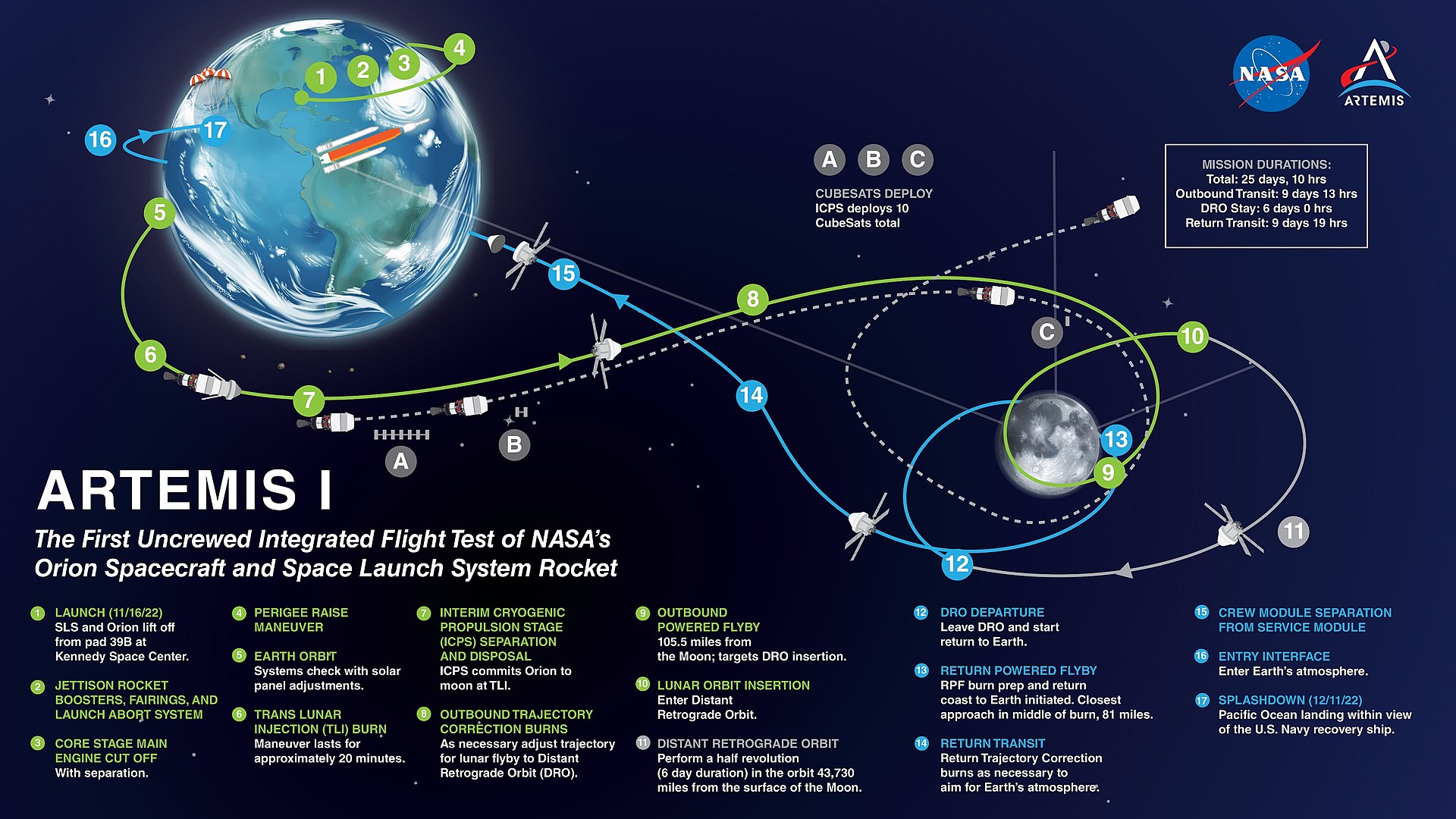
An updated infographic for the Artemis 1 flight. Credit: NASA
The November 16th launched of Artemis 1 is – as I’ve noted before – designed to send an uncrewed Orion vehicle on an extended flight to cislunar space utilising a distant retrograde orbit (DRO) around the Moon. It will last some 39 days and is designed to be the final uncrewed test flight of Orion (and the first Orion flight to use the European-built Service Module to supply the capsule with power and propulsion) as well as the first test flight of SLS itself.
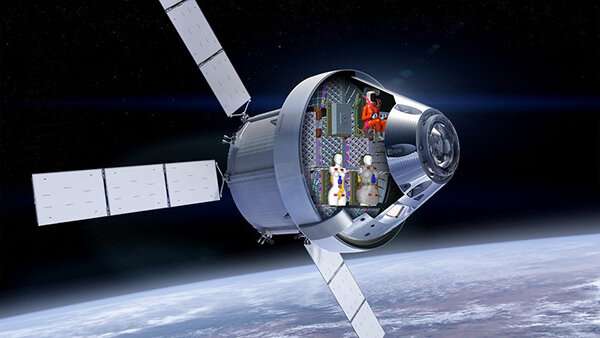
As well as testing the various vehicles and their systems for operation on missions to the Moon – and in preparation for sending humans onwards to Mars in the future – the Orion vehicle will also be carrying a set of sensor-laden mannequins dubbed “Moonikins”. As I’ve previously noted, two of these are part of research to better understand the radiation environment of space beyond the Earth’s protective magnetic field.
Despite the cavalier attitude shown towards it by the likes of SpaceX’s Elon Musk (radiation is “not that big a problem”), there is much we do not know about the impact of cosmic radiation on the human body – although there is growing evidence that long-terms exposure to GCRs and solar energetic particles (SEPs) can be extensively damaging – 60% of astronauts who have spent extended time on the ISS have developed herpes through the re-activation of naturally-occurring viruses in the human body such as the Epstein–Barr virus (EBV) as a likely result GCR / SEP exposure¹. These viruses can also give rise to serious medical conditions and (as well as the radiation itself) can also be responsible for various cancers².
This being the case, the “Moonikins” are constructed from materials that mimic human bone and tissue, as well as organs unique to adult females, such as breast tissue and ovaries, which are particularly susceptible to radiation damage. Equipped with over 6,000 sensors, the “Moonkins” are linked to a series of Earth-based computational 3D models which include cardiac and respiratory motions and can simulate any number of diseases. Overall, the aim is to gain a clearer understanding of the potential impact of high-energy radiation on human tissue, bone and organs that can hopefully help determine better means of mitigation – be it through recommendations on general exposure during things like space walks / lunar surface operations, or providing better primary and secondary radiation protection through the materials used in space vehicles and space suits.
An Artist’s rendering of the Artemis 1 Orion vehicle showing “Commander Moonikin Campos”, a full-body “Moonikin” designed to test the Orion Crew Survival System Suit (OCSSS), designed to be worn for up to 6 days and preserve the wearer’s life in the event of an issue with the vehicle’s primary life support systems, together with the two radiation research torsos “Helga” and “Zohar”. Credit: NASA / Lockheed Martin
In the meantime. those wishing to watch the launch of Artemis 1 can do so via NASA TV. The launch window opens at 06:04 UTC on Wednesday, November 2022 and lasts for 2 hours – although NASA is aiming to launch as close to the opening of the window as possible, with coverage of the launch preparations commencing some 24 hours in advance of the launch window opening.
Should the mission miss the November 16th launch window, there will be two further opportunities during the month. The first will open at 06:45 UTC on Saturday, November 19th, and the second on Friday, November 25th. Both will be “short form” missions of 25 days and between 26 and 28 days respectively. Should the mission miss those dates, there is an extended launch opportunity running from December 9th through 23rd (excluding December 10th, 14th, 18th and 23rd as currently stated by NASA), with windows then resuming in January 2023.
X-37B Returns Home
The US Space Force has ended the 6th flight of its orbital space plane, bringing the vehicle through re-entry and a rolling landing at NASA’s Kennedy Space Centre, Florida on Saturday November 12th, 2022. The landing brought to an end a mission of 908 days in space, the vehicle having launched on May 17th, 2020.
Officially called the Orbital Test Vehicle (OTV), the X-37B comprises two uncrewed vehicles of the same design, which together have completed six orbital missions for a combined time in space of 3,774.4 days (10.34 years). It was the first of these vehicles – OTV-1 – that completed this latest mission, itself slightly confusingly referred to as OTV-6, the first of these missions to be flown completely under the auspices of the United States Space Force, even if the vehicle carries the markings of the US Air Force.
The X-37B Orbital Test Vehicle 1 (OTV-1) sits on the runway at NASA’s Kennedy Space Centre following its landing on November. 12, 2022 to conclude the 908-day OTV-6 mission. Credit: U.S. Space Force
The exact function of the 8.92 metre long vehicle is rated as classified, leading it being labelled as a weapons platform. However, its primary cargoes thus far have been purely scientific in nature, with payloads being both military and civil in nature.
With this most recent flight, OTV-1 carried NASA’s Materials Exposure and Technology Innovation in Space, designed to further understand the effects of the space environment on different types of materials. It also carried an experiment to investigate the effects of long-duration space exposure on seeds. Past flights have carried both classified and unclassified tests of high-frequency communications and experimental propulsion systems, and one from the US Navy to convert sunlight directly into electrical energy.
A further first for this mission was the use of an expendable service module designed to both further extend the vehicle’s operational duration – the X-37B was originally designed to spend a maximum of 270 days at a time in space – and host additional experiments. This module was jettisoned from the vehicle prior to its return to Earth.
This mission highlights the Space Force’s focus on collaboration in space exploration and expanding low-cost access to space for our partners, within and outside of the Department of the Space Force.
– General Chance Saltzman, chief of space operations, USSF.
SpaceX Moving Towards Booster 7 Static Fire Tests
SpaceX has taken a further step towards a full static fire test of its Super Heavy booster as it continues to move towards the first orbital flight attempt of the Super Heavy / Starship combination.
As reported in my previous Space Sunday update, the company has been carrying out a series of cryogenic and pressurisation tests of both Booster 7 and Ship 24 – the pairing of booster and orbital vehicle to make this first attempt to reach orbit. These tests ended on Tuesday, November 8th, when Ship 24 was “unstacked” from the booster and moved to a sub-orbital test stand after its sibling, Ship 25, which had been undergoing its own propellant tanks cryogenic and pressurisations tests, being returned to the production facilities at Starbase Boca Chica, Texas, most likely to have its Raptor motors installed.
The “Mechazilla” arms on the SpaceX orbital launch tower start to lift Ship 24 clear of Booster 7 on Tuesday, November 8th, 2022. Credit: NasaSpaceFlight.com (not a NASA affiliate)
The removal of Ship 24 from Booster 7 leaves the way clear for the latter to undergo a further static fire engine test – part of the pre-requisites for any flight test. One such test has already been carried out with seven of the Booster’s 33 motors, and it is widely speculated that any forthcoming static fire test will involve around 14-15 of the booster’s motors, and could occur in the next week. A successful test should pave the way for a static fire of all of the vehicle’s motors, possibly before the end of November.
China Launches Tianzhou 5; Seeks to Launch More Long March 5 Vehicles
Following the successful rendezvous and docking of the Mengtian science module to their Tiangong space station, China has now furthered the operational campaign of the space station with the launch and rendezvous of the automated Tianzhou 5 re-supply vehicle.
The 10.6-metre long, 13.5-tonne (including 6.7 tonnes of cargo) vehicle departed the Wenchang Satellite Launch Centre, Hainan Province in on November 12th, lifted aloft by a Long March 7 booster. It was placed on a “fast rendezvous” track to the space station, reaching it just over 2 hours after launch. On arrival, it moved to dock with the rear axial docking port of the Tianhe-1 core module. That port had been occupied by the Tianzhou 4 re-supply vehicle since May 10th, 2022. However, that vehicle was detached from the station on November 9th under autonomous control and placed into an orbit in preparation for it to be safely de-orbited.
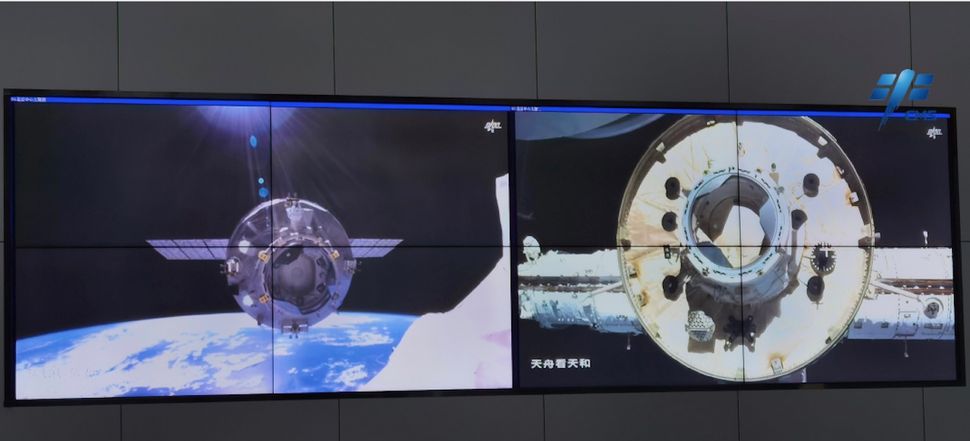
Images from China’s mission control showing pictures returned from Tiangong space station showing the Tianzhou 5 re-supply vehicle about to dock with the Tianhe-1 core module. Credit: CMSA
Tianzhou 5’s arrival at the station signals a further shift in Tiangong’s status as being “under construction” to being “operational”; it brings with it supplies for the upcoming Shenzhou 15 crew, who will flying to the station in December, and additional propellants for the station’s manoeuvring systems.
As I’ve recently covered, China has not made itself popular within the international community thanks to its unwillingness to manage the re-entries of the 21-tonne core stages of its Long March 5B booster. Most recently, the uncontrolled re-entry of such a core stage – the one used in the recent launch of the Mengtian space station module – saw cities and airspace across southern Europe and the Middle East on alert. This being the case, the news that China plans to step up the cadence of Long March 5B launches has raised some concerns.
In a statement made on November 11th, 2022, Liu Bing, director of the general design department at the China Academy of Launch Vehicle Technology (CALT), indicated that the Long March 5 booster will be transferred to “high density” launches. This means offering the vehicle to China’s emerging “private sector” space industry as a launch platform, and using it in high-volume “constellation” type launches of multiple satellites in one pass (as SpaceX does with its Starlink network).
To achieve this, the Long March 5B booster will likely be paired with the Yuanzheng-2 (YZ-2) upper stage. This may overcome the need for the core stage to achieve its own orbital velocity in lifting payloads, leaving it on a sub-orbital track to fall back into the ocean downrange from the launch site – although China has not, as yet, committed to this, and the YZ-2 tends to operate with varying levels of efficiency depending on the payload.
In the meantime, the next Long March 5B launch is due in late 2023, when the vehicle will be used to launch the free-flying Xuntian, the Chinese Survey Space Telescope (CSST), designed to operate alongside the Tiangong space station.


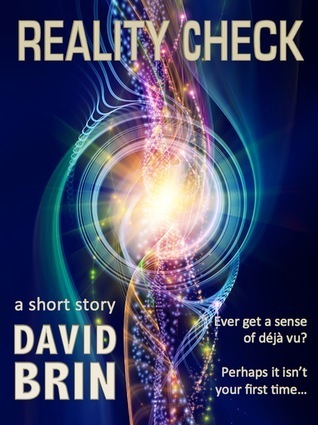 The the “age of the ‘metaverse'” (whatever “metaverse” is supposed to be, commercially), and the idea that the physical and the virtual can – “will” – be merged (at least in the eyes of some), Gyro Muggins offers a timely pause for through through a short story by scientist and author, David Brin which, in the words of the publisher:




 Inara Pey: Living in a Modemworld