Beneath a sky created by Whirly Fizzle, people gather to say farewell to Oz Linden ahead of his retirement (see below)
The following notes were taken from the Tuesday, February 16th, 2021 Simulator User Group (SUG) meeting.
Server Deployments
please refer to the server deployment thread for the latest news and updates.
Tuesday, February 23rd: no deployment to the SLS Main channel.
Wednesday, February 24th: all RC channels should receive server release 556138 (or a variant thereof). This release was originally deployed to the Apples test RC channel, and contains performance optimisations and internal fixes.
An Omnibus of Oz’s: to mark Oz Linden’s coming departure, several people – including Whirly Fizzle (l) and Alexa Linden (r) and Kyle Linden (pictured) – attended his farewell party as lookalikes. That’s the real Oz in the middle, seated on the Iron Throne.
SL Viewer
On Monday, February 22nd, the Simple Cache viewer updated to version 6.4.14.556088 (dated February 19th).
On Tuesday, February 23rd, the Love Me Render (LMR) 5 viewer updated to version 6.4.14.556118, February.
The rest of the current pipelines remain as:
Current release viewer: Project Jelly viewer (Jellydoll updates), version 6.4.13.555567 and dated February 5th, 2021, promoted February 17th.
Release channel cohorts:
Custom Key Mappings project viewer, version 6.4.12.553437, January 7th.
Project viewers:
Legacy Profiles viewer, version 6.4.11.550519, October 26th.
Copy / Paste viewer, version 6.3.5.533365, December 9th, 2019.
Project Muscadine (Animesh follow-on) project viewer, version 6.4.0.532999, November 22nd, 2019.
360 Snapshot project viewer, version 6.2.4.529111, July 16th, 2019.
At its peak, the farewell party for Oz Linden saw around 60 people in attendance.
In Brief
There wasn’t really a meeting, and for a special reason: as he announced earlier in February, Oz Linden, the Lab’s Vice President of Engineering, is retiring at the end of the month with Friday, February 26th marking his last day with Linden Lab.
As such, the meeting was given over to a farewell party, with around 60 people in attendance. I managed to get a few shots of the event, as shown here. For those interested, I wrote something of a look back at Oz’s time at the Lab in Oz Linden announces his forthcoming departure from Linden Lab.
Currently on show at Raging Bellls’ Raging Graphix Gallery is a joint exhibition by Second Life partners, John (Johannes Huntsman) and Tempest Rosca-Huntsman (Tempest Rosca) entitled Yin and Yang.
It’s a title that reflects both the art on display and the artists themselves on a number of levels. At its most literal, the title reflects the fact that whilst opposites on several levels (e.g. male and female, the fact that they originate on opposite sides of the Atlantic, etc.), Tempest and John naturally combine to form a whole. There’s also the fact that all healthy relationships contain within them the ability to grow and change, for both sides to contribute to the whole – and through their art and other endeavours in Second Life this is very true of John and Tempest.
Raging Graphix Gallery: Yin and Yang – Tempest Rosca
The title might also apply to their respective art: Tempest’s work is primarily Second Life focused, with a strong – if far from exclusive – lean towards avatar photography; John’s palette tends now to be a strong mix of art produced in the physical world that is then brought into SL. Thus, like yin and yang, there is a strong mix of what may appear to be different or even contrary forces (physical vs. virtual), which ultimately comes to form a whole.
This is certainly the case within this exhibition. With images presented exclusively in monochrome – again, something that might be a reflection of the black / white symbol of yin / yang – the pieces displayed here form a contrast that comes together towards the centre, allowing both halves of the exhibition to be seen as individual displays by individual artists, and also as a unified whole presented by a couple.
Raging Graphix Gallery: Yin and Yang – Tempest Rosca
For her part and along the outer walls of the gallery, Tempest presents a series of images that have been taken in-world. Whilst they can be considered portraits, in difference to my statement above concerning her work, they are not of avatars but of objects – cars, a lifebuoy, a tram and a Hawker Hurricane.
Inanimate they might be, but thanks to their black-and-white nature, lines stand out clearly, giving each of her subjects a depth of life much as the lines and creases found on a face speak to the life within it and experienced by it.
Raging Graphix Gallery: Yin and Yang – Johannes Huntsman
Across the hall, John offers a collection of quite marvellous abstract and abstracted pieces, some of which appear drawn / painted and others produced with digital tools. All are striking in their form, with a sense of the dynamic presented through line and shape, and that sharply contrast with the more familiar subjects found within Tempest’s images.
Also to be found within several of these pieces is an organic element:, form the flow of a liquid substance complete with spheroid droplet, through the creation of a human face within the sweep of line and the patchwork of light and dark, to suggestions of crops and a desert seen from above, the former being brushed by the wind, the latter left as ripples formed by the winds of the past. Thus, these pieces also give a sense of life within them, and in doing so, they create a natural flow before the two halves of the exhibition, unifying them.
Raging Graphix Gallery: Yin and Yang – Johannes Huntsman
Having opened on February 6th, I believe Yin and Yang has a further week or so to run, and recommend a visit.
I’ll start out by saying I’m getting to Curiosity Lake, the homestead region designed by SadyCat Littlepaws somewhat late in the day – or rather days, given it will closing on February 28th. I’m not sure how it slipped through my net of landmarks of places to explore, but it did. So to fix matters, I suggested to Caitlyn we hop over and take a look this past weekend.
It is a place clearly put together with both a love of, and attention to, detail – which might actually be something of a mixed blessing. On the one hand, it means there is a lot to see and appreciate and photograph; on the other, it also means that in some places there is a lot of mesh and texture data the viewer has to grapple with, and this can be reflected in some hiccuping of performance.
Curiosity Lake, February 2021
This is a setting evocative of the changing of the seasons. The two islands that make up the region are cast with autumnal colours, with trees heavy in browns and golds and fading greens, while the hills and peaks of the off-sim surround have their peaks crowded with fir trees frosted white with snow that also lies in drifts and patches on the slopes running down to the water’s edge. It’s a combination that suggests that while the island has yet to feel the first bite of winter, it is eyeing them from across the water, just waiting for the opportunity to throw a white blanket over them.
The islands are fairly low-lying and rugged in places. Three houses sit upon them, two on the larger, which includes the landing point, and a cosy lodge on the smaller. All three homes are fully furnished, and it is clear considerable time and effort has gone into their décor to make each one photogenic and home to a wealth of ideas visitors might find useful when decorating their own places.
Curiosity Lake, February 2021
Both of the houses on the larger island sit reasonably equidistant from the landing point with its gazebo warmed by a wood fire – one of several outdoor sitting points waiting to be found. which house you visit first is up to you, although I’d be tempted to suggest heading north to the imposing bulk of the large stone-built house with its tall chimneys.
As well as allowing you to take in the house, this route will take you past a couple more places open for visitors to sit outdoors in the form of a blanket-strewn rowing boat and a wooden pergola, it will deliver you to stone steps that will take you up to the islands “highlands”.
Curiosity Lake, February 2021
Forming a flat-topped low hill, there are home to a trio of further outdoor spots that are all attractive in their own right, two of them fashioned as little camps set around a couple of old vehicles and the third a tree fort platform. These are all close enough to be within easy walking distance of one another but far enough apart to be nicely separated as individual spots to share times with someone close.
Southwards from the landing point, steps also lead up to a low thrust of land and a wood-and-stone cottage where the garage has imaginatively re-purposed into a lounge, giving far more space for an expansive kitchen in the house proper, and comfortable bedroom at the back, exiting onto the rear deck.
Curiosity Lake, February 2021
More steps run down from the eastward brow on which the house sits and point the way to the footbridge that connects to the circular dome of the smaller island and its chalet-style lodge, the verandah of which is set out ready to entertain with a filling meal warmed by the outdoor fireplace.
It is around the houses that we found performance issues came to the fore – as noted, there is a lot of mesh and texture use around them, and this did make itself known during initial loading. However, it’s worth bearing with such niggles if encountered as the region is extraordinarily photogenic and naturally invite exploration.
Curiosity Lake, February 2021
However, if you’re going to do pay a visit, make sure it is in the next few days, because the region is due to close on February 28th, again as noted earlier.
A CGI model of the Mars 2020 rover Perseverance on the surface of Mars. Credit; NASA/JPL
On Thursday, February 18th, NASA’s Mars 2020 mission delivered the rover Perseverance, carrying the helicopter drone Ingenuity, safely to the surface of Jezero Crater, Mars (see: Space Sunday: ‘Perseverance will get you anywhere’). Sine then, the rover has been going through its initial checks, and on Monday, February 22nd, members of the mission team gave the latest update on the rover’s status, which included a unique video and an audio recording.
The video was made up of images recorded by a suite of cameras specifically mounted on the rover and its landing systems specifically with the aim of recording the landing event in as much detail as possible. These cameras comprised:
A pair of camera on the top of the aeroshell that protected the rover and its “skycrane” descent stage through entry into, and initially deceleration and flight through, the upper atmosphere of Mars. These were intended to capture video of the supersonic parachute deployment.
A single camera attached to the skycrane that looked down on to the stowed rover, designed to record the process of winching it down in its harness and then delivering it to the ground.
A camera up the upper deck of the rover looking up at the skycrane to record the same, and the skycrane’s departure from the landing site.
A camera on the side of the rover and looking down, intended to record the vehicle’s descent via parachute and its approach for landing.
The Mars 2020 EDL cameras. Credit: NASA/JPL
With the exception of one of the aeroshell cameras, which appears to have failed when the explosive “mortar” fired the parachute package clear of the aeroshell, all of these camera captured some incredible footage of the landing sequence.
Once retuned to Earth, the footage was poured over by the mission’s imaging team at the Jet Propulsion Laboratory (JPL), with elements combined with audio recorded at JPL’s mission control during the landing, to produce an incredible short film, that puts the audience right there with the rover as it landed on Mars, as you can see below.
The first part of the film showed the deployment of the parachute system. This comprised firing the 67 Kg parachute pack out of the top of the aeroshell at 150 km/h, detaching a protective cover from the aeroshell (parts of which broke off) in the process.
The aeroshell cameras capture the deployment and unfurling of Mar 2020’s supersonic parachute. Credit; NASA/JPL
The package pulled the parachute harness out behind it until it reached its full extent (about 46 metres), which caused the 21.5m diameter parachute to deploy at a time when the vehicle was still travelling at around Mach 1.75. In all, this process took around 1.5 seconds to complete.
At this point the the rover down-look camera started recording, capturing the jettisoning of the heat shield that formed the lower part of the aeroshell. This demonstrated its aerodynamic nature by falling away without tumbling, leaving the rover’s look-down camera to film the inflow delta to one side of the crater – and the intended landing point – as the rover and aeroshell swayed under the parachute.
The heat shield is jettisoned and falls away with great stability. Credit: NASA/JPLNot long after this, the rover and its skycrane descent stage dropped clear of the aeroshell, the view of the ground shifting dramatically as the descent stage used its motors to propel itself away from the areoshell to avoid any risk of collision before gently veering back to centre itself over the landing zone.
This footage – still via the rover’s down-look camera – then captures the thrust from the rocket motors as the skycrane comes to a hover some 20 metres above the ground, then there is a sharp jerk as the rover is released to be lowered to the ground by the skycrane and its harness.
As the rover is released by the descent stage, so the remaining camera systems come into play, one looking down from the skycrane as the rovers is lowered, and the other on the rover looking up as it leaves the skycrane as it hovers steadily over the landing zone.
The skycrane and the rover capture the latter’s deployment just before touch-down from opposite ends of the harness. Credit: NASA/JPL
It was also this up-look camera that caught the last images of the skycrane as, with the rover on the ground, the harness cables and data umbilical detached, it re-oriented itself to fly away to crash some 700m from the rover.
As well as cameras to record the images of the landing, it had been hoped that one of the rover’s two microphones would record the sounds of the descent and landing. Unfortunately, it failed to do so, but over the weekend, it did capture the sigh of a gust of wind passing over the rover at about 5 metres/second, giving us our first direct recording of the Martian wind.
Since landing, various checks have been performed on the vehicle, and instrument packs deployed. The most important of these has been the RSM – the Remote Sensing Mast. This houses a range of instruments, including the SuperCam, the Mastcam-Z high-resolution camera and the rover’s main navigation cameras (NavCams). The latter are, like their cousins on Curiosity’s RSM, designed to assist with rover driving and navigation. However, they are far more capable and much higher resolution, each one capable of take up to a 20 megapixel image.
For their initial testing, there were operated at one-quarter of this capacity, taking a series of images around the rover, which were shown at the February 22nd press conference without any colour processing or white-balancing, so they showed Mars exactly as it were appear to a human standing there.
Two relatively low resolution images taken by the NavCams on Perseverance during initial check out. They show the rover and its surroundings in natural colour and lighting. Credit: NASA/JPL
Over the next few days, the remaining systems on the RSM will be tested, and the rover will also go into a data download mode.
Since launch, the on-board computers have been configured with software required to keep the rover safe during Mars transit and to allow it to play its part in the EDL phase of the mission. As this programming is no longer required, mission control will transmit the initial data sets required for the rover and its systems to go through their commissioning procedures – which are liable to take a few weeks – and prepared it for its initial science mission software. During this week, further tests will also be carried out, including allowing the rover to complete a short drive.
I’ll have more on all of these actives in future Space Sunday updates, but for now, why not scroll back up and what that video again?
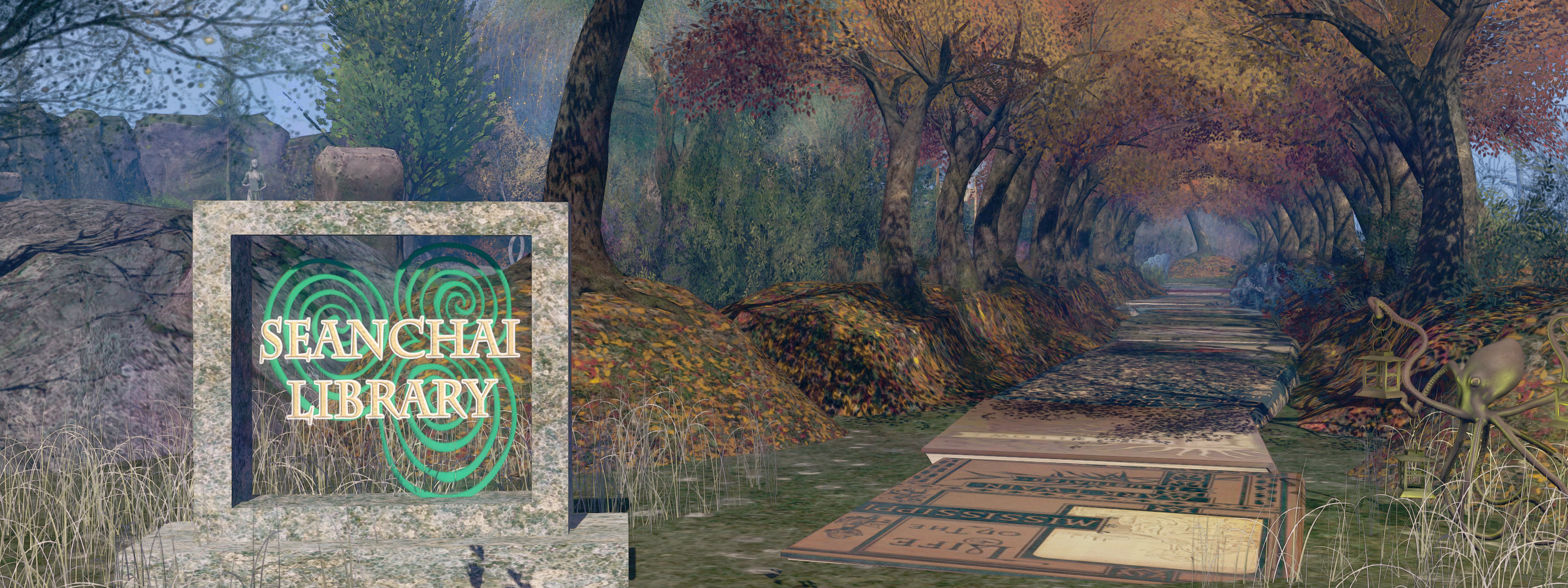
It’s time to highlight another week of storytelling in Voice by the staff and volunteers at the Seanchai Library. As always, all times SLT, and events are held at the Library’s home in Nowhereville, unless otherwise indicated. Note that the schedule below may be subject to change during the week, please refer to the Seanchai Library website for the latest information through the week.
Monday, February 22nd, 19:00: Into the Green
The harp was a gift from Jacky Lanter’s fey kin, as was the music Angharad pulled from its strings. She used it in her journeys through the kingdoms of Green Isles, to wake the magic of the Summerblood where it lay sleeping in folk who had never known they had it.
Harping, she knew, was on third of a bard’s spells. Harping, and poetry, and the road that led – to….?
Charles de Lint takes us into lands infused and transformed by magic. Magic that grows in the roots of old oaks and dances by moonlight among standing stones. Magic that sleeps in an old soldier’s eyes and glows in the gaze of a phantom stag. Magic that pumps through the heart and the veins of those born to the Summerblood-to be stolen at knife point, burned, destroyed, in danger of fading back into the green and disappearing forever from the world.
Scattered among poor, desolate farms, the clans of the Uplands possess gifts. Wondrous gifts: the ability—with a glance, a gesture, a word—to summon animals, bring forth fire, move the land. Fearsome gifts: They can twist a limb, chain a mind, inflict a wasting illness.
The Uplanders live in constant fear that one family might unleash its gift against another. Two young people, friends since childhood, decide not to use their gifts. One, a girl, refuses to bring animals to their death in the hunt. The other, a boy, wears a blindfold lest his eyes and his anger kill.
In this beautifully crafted story, Ursula K. Le Guin writes of the proud cruelty of power, of how hard it is to grow up, and of how much harder still it is to find, in the world’s darkness, gifts of light.
With Willow Moonfire.
Wednesday, February 24th, 19:00: The Guns of Avalon
Across the worlds of Shadow, Corwin, prince of blood royal, heir to the throne of Amber, gathers his forces for an assault that will yield up to him the crown that is rightfully his. But, a growing darkness of his own doing threatens his plans, an evil that stretches to the heart of the perfect kingdom itself where the demonic forces of Chaos mass to annihilate Amber and all who would rule there.
One of the most revered names in sf and fantasy, the incomparable Roger Zelazny was honoured with numerous prizes—including six Hugo and three Nebula Awards—over the course of his legendary career. Among his more than fifty books, arguably Zelazny’s most popular literary creations were his extraordinary Amber novels. The Guns of Avalon is the second book of The Chronicles of Amber.
With Corwyn Allen.
Thursday, February 25th:
19:00: Star Wars a New Hope
The story that started a saga with the immortal words:
A long time ago, in a galaxy far, far, away…
Join Sandon Loring and Caledonia Skytower as they bring us the story of Luke, Leia, Han, Chewbacca and two certain ‘droids as they fight for the Rebellion against the tyranny of the Galactic Empire. Also in Kitely! Find teleport from the main Seanchai World grid.kitely.com:8002:SEANCHAI.
21:00: Seanchai Late Night
Finn Zeddmore presents contemporary sci-fi and Fantasy from such on-line sources as Light Speed, Escape Pod, Clarkesworld Magazine, and more.
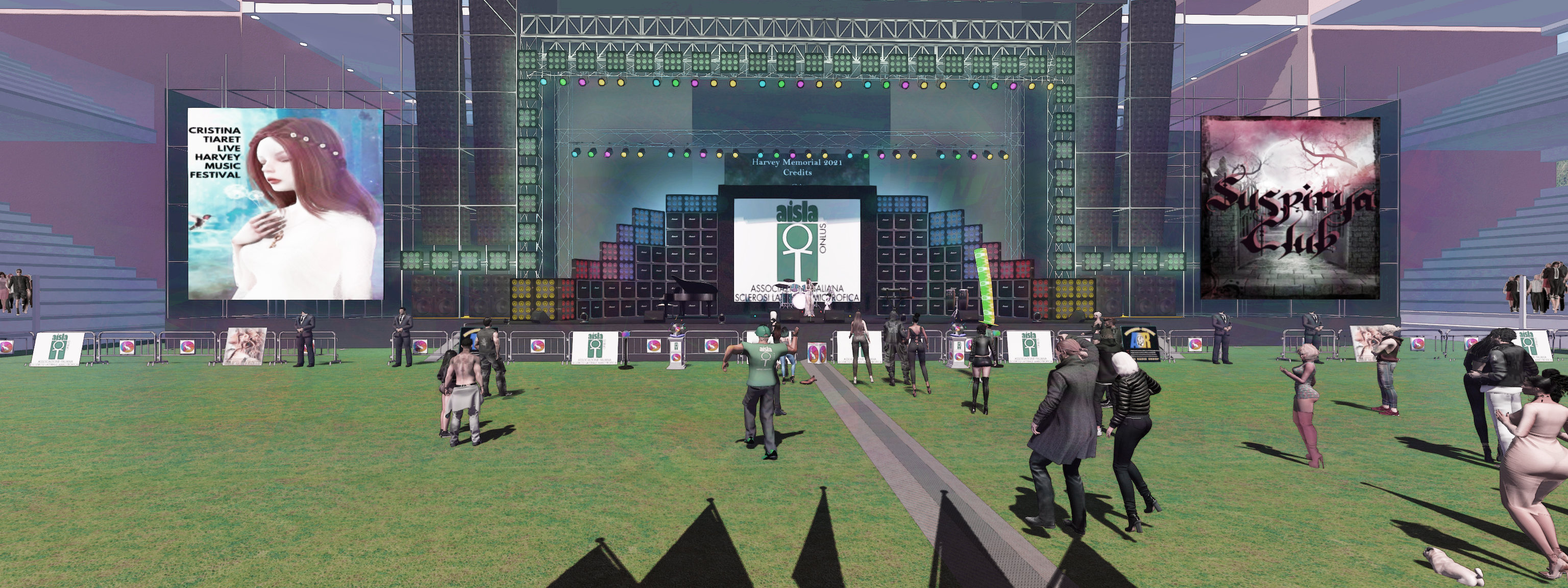
Organised by members of Supporto Italiano, the Harvey Memorial week is dedicated to the memory of ALS victim and Second Life resident Harvey22 Albatros, and focuses on music, fun and raising funds, with all donations during the week going to AISLA, the Associazone Italiana Sclerosi Laterale Amiotrofica for research into, and treatment of, Amyotrophic lateral sclerosis (ALS).
Sometimes also referred to as motor neurone disease (MND) or by the synonyms Lou Gehrig’s disease and Charcot disease, ALS is a specific disorder that involves the death of neurons that control voluntary muscles. For about 90-95% of all diagnosed cases, the precise cause of the disease is unknown; for the remaining 5-10% of diagnosed cases, it is inherited from the sufferer’s parents. There is no known cure, and symptoms generally first become apparent around the age of 60 (or 50 in inherited cases). The average survival from onset to death is three to four years. In Europe and the United States, the disease affects about 2 people per 100,000 per year.
Harvey Memorial ALS Awareness Week, 2021
The Harvey Memorial Ensemble in Second Life features a daily schedule of music running from 07:00 SLT through to 18:00 SLT through the week up until Saturday, February 27th.
On Sunday, February 28th, the schedule of music runs from 07:00 SLT through to 17:00 SLT, after which there will be an After the Memorial event that will go on as long as people want. All of the music events are a mix of live performers and DJs, and a schedule board (seen above) is available at the event location.
Donations to AISLA can be made in three ways when at the event:
By clicking the donations kiosks in front of the event stage.
By purchasing one or more items of clothing from the vendors located to one side of the dance area.
By clicking on the boards at the AISLA information tents in the event space -these will take you directly to AISLA’s donations web page where you can use credit / debit cards or a PayPal account to make a direct donation.
100% of L$ donations made to the in-world kiosks and vendors will be forwarded to AISLA a the conclusion of the event.






 Inara Pey: Living in a Modemworld