Logos representative only and should not be seen as an endorsement / preference / recommendation
Note: literally 2 minutes after this summary was published, the LMR #4 RC was promoted to release status, leading to a rapid update of this article!
Updates for the week ending Sunday, September 27th
This summary is generally published every Monday, and is a list of SL viewer / client releases (official and TPV) made during the previous week. When reading it, please note:
It is based on my Current Viewer Releases Page, a list of all Second Life viewers and clients that are in popular use (and of which I am aware), and which are recognised as adhering to the TPV Policy. This page includes comprehensive links to download pages, blog notes, release notes, etc., as well as links to any / all reviews of specific viewers / clients made within this blog.
By its nature, this summary presented here will always be in arrears, please refer to the Current Viewer Release Page for more up-to-date information.
Note that for purposes of length, TPV test viewers, preview / beta viewers / nightly builds are generally not recorded in these summaries.
Official LL Viewers
Current release viewer Love Me Render #4 RC viewer, version 6.4.9.549455, containing just the fixes for EEP, released on September 24th, promoted, September 28th – NEW.
Release channel cohorts:
Love Me Render #3 RC viewer, version 4.8.547427 apparently withdrawn to make way for LMR #4 (above).
The 2020 SL Renaissance Festival is currently open to visitors through until the end of Sunday, October 4th, 2020, with the aim of raising funds for Making Strides Against Breast Cancer (MSABC). A signature event coordinated by the American Cancer Society, MSABC is aimed at raising awareness of the risks of breast cancer and raising funds to support research into, and treatment of, the disease.
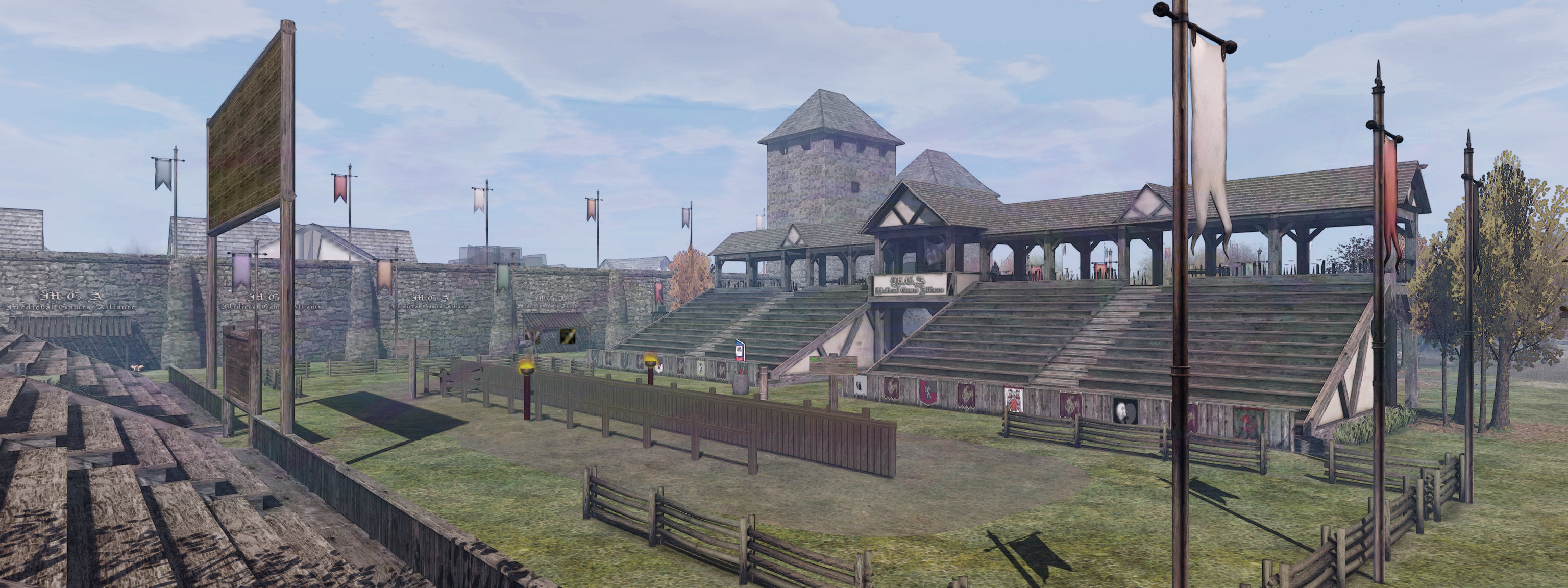
A new event for Second Life, the SL Renaissance Festival is a switch away from past MSABC events in-world. It is taking place across six regions linked to the American Cancer Society island, all of them decorated in a medieval / renaissance theme and presenting a range of merchants, activities and entertainment for visitors to peruse, participate in and enjoy.
SL Renaissance Festival: jousting arena
Please refer to the official SL Renaissance Festival web site for:
The schedule of all role-play, tournaments, and general information on events and classes (via the menu at the top of the website).
The event tournaments include daily rounds of jousting (including jousting with the Lindens on October 1st, 2020), archery, mounted archery, and mêlée, all of which are open to anyone who like to try their hand at any of them – check the official website for more details via the menu at the top of the site.
For those interested in role-play, the Kings Court Academy features a range of period role-play classes, and offers practice grounds for those wanting to try their hand at the various tournament activities, either on their own or via a scheduled class. It is also the starting point for the Conquer Trail, a path people can take on foot or horseback, running or walking, and use slingshots or rotten tomatoes to try to strike targets; when they do so, information about Making Strides Against Breast Cancer and the services it provides is displayed.
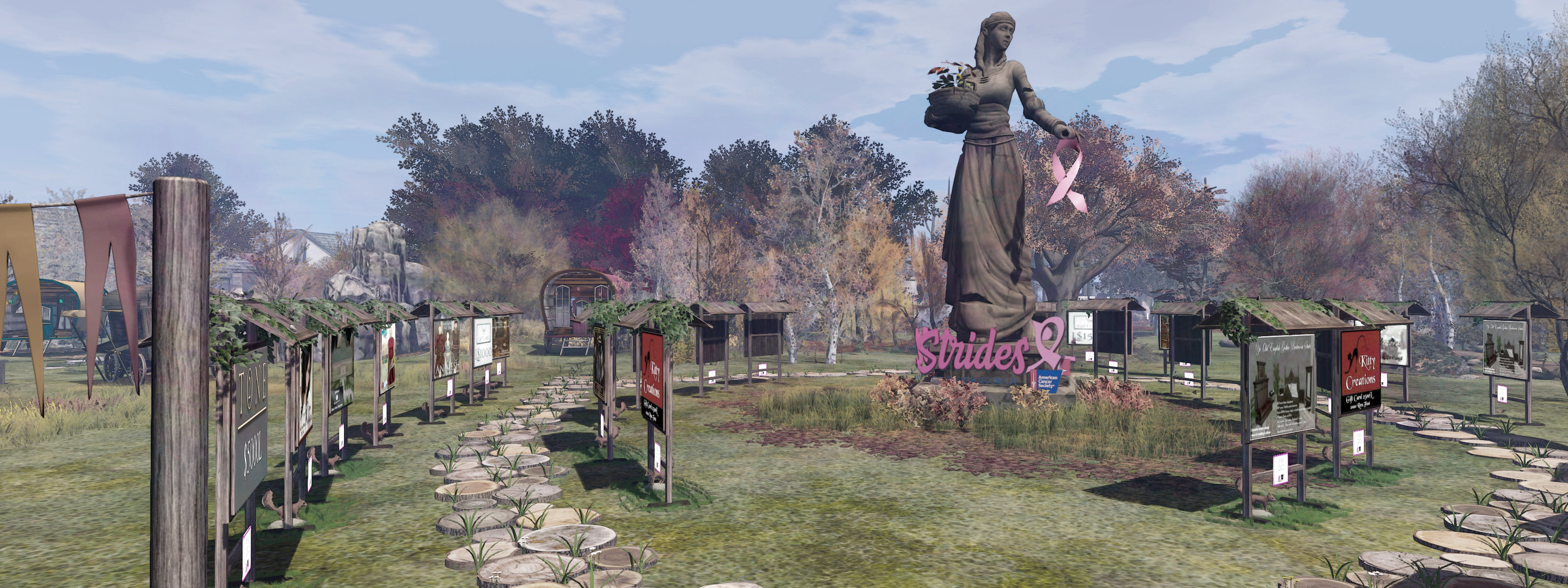
SL Renaissance Festival: silent auction area
In addition, the event features:
Auctions: the festival features both a One Of A Kind and a Silent Auction, both of which are running through until Sunday, October 4th. You can view the auction items via the catalogues on the SL Renaissance Festival website, and bid on them at the festival’s auction locations:
The Trail of Heroes – breast cancer survivors and caregivers from around Second Life reveal how Making Strides Against Breast Cancer and The American Cancer Society have benefited them in their journey with the disease.
The Best in Helm Contest – vote for your favoured swordsman, jouster, or archer in this contest by leaving a token of your esteem (donations to Making Strides). The helmed lord or lady by receiving the most donations will win the favour of the festival lands.
The Stag Hunt – find the stag statue in participating shops and claim the goodies inside for only L$25 (all payments go directly to Making Strides). Note that some stores may have more than one stag statue, and statues may also be found in the role play areas of the Ren Fest I region.
Lindens At the Pillory – on Friday, October 3rd, a number of Lindens who misbehaved during their voyage to the festival will be pilloried between 13:00-15:00 SLT, or until their fines are paid. So come tease them or, if you prefer, pity them and pay for their release (all payments go to Making Strides).
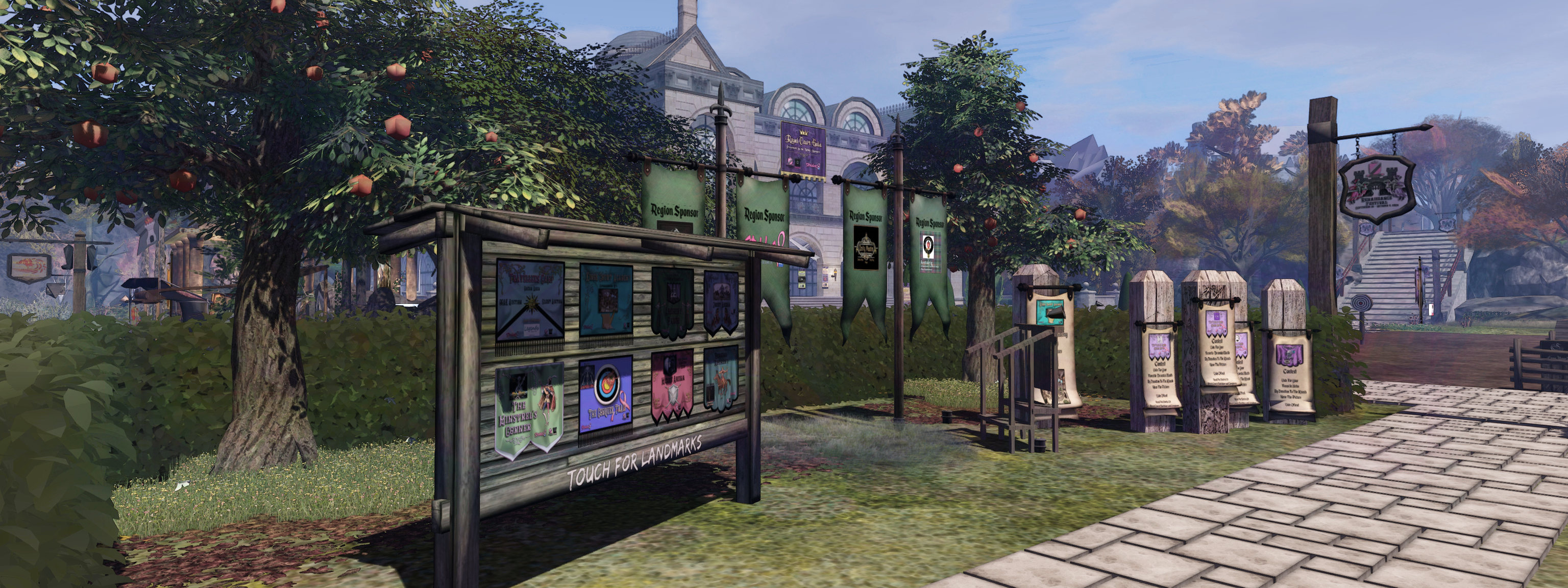
SL Renaissance Festival: information area (Ren Fest I)
All of which adds up to a lot to see and do! To help visitors get in the mood of the event, the landing points in the main merchant areas include a range of period costumes and accessories on sale for between L$1 and L$175 – all funds raised again going directly to Making Strides.
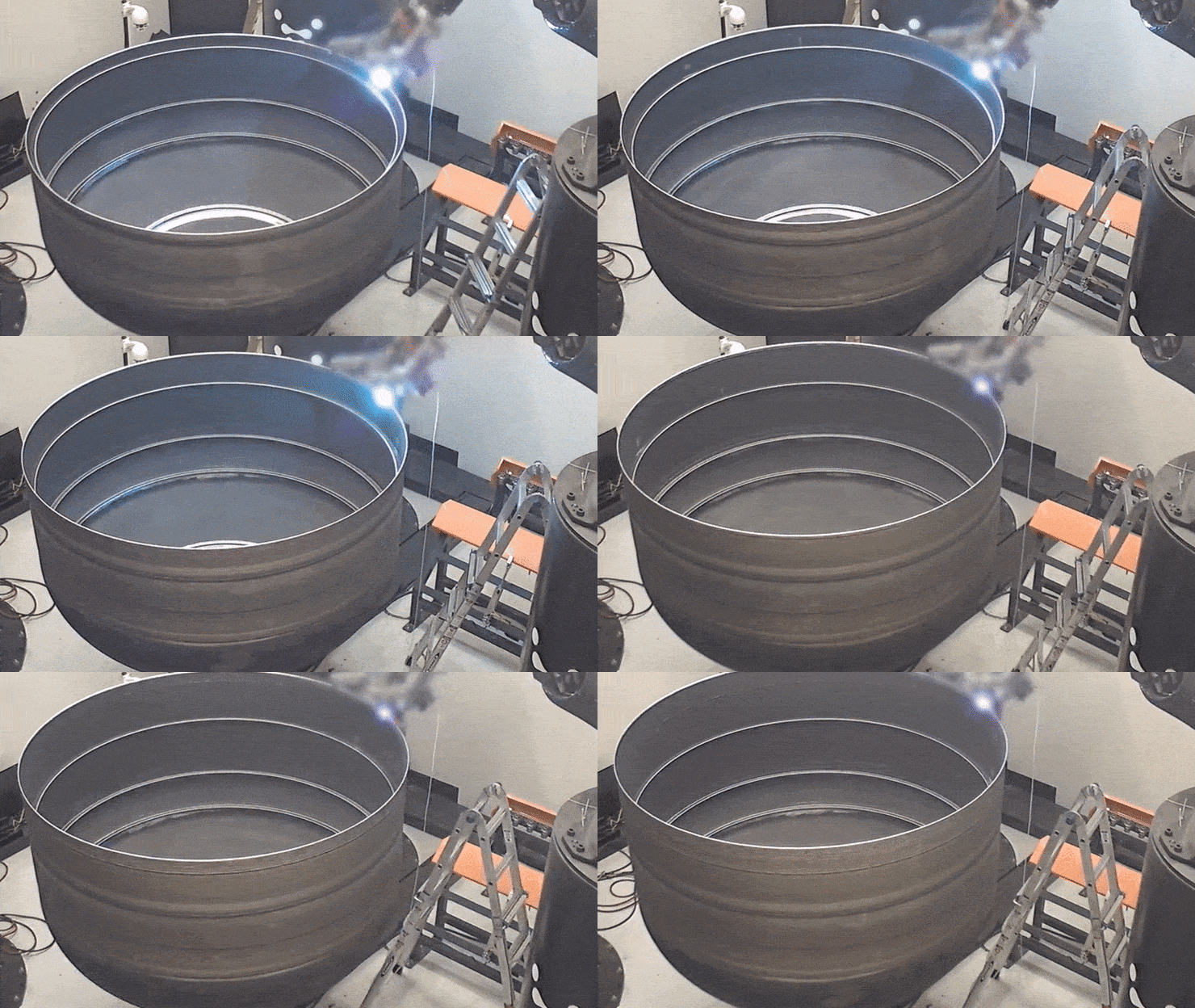
A time-lapse image of a fuel tank for the Relativity Terran-1 rocket being constructed using 3D printing techniques. Credit: @thesheetztweetz
Not too many years ago, the only organisations that were seen as being able to operate space launch systems were governments, notably the United States, Russia, Japan, China and India, although France has a long track record of launch vehicle development, while nations like the UK have also dipped a toe or two into the waters.
However, over the last 20 years, we’ve seen a major paradigm shift with launcher development that has seen much of it move away from government-sponsored development and purely into private hands (although actual launch contracts awarded by governments can oft help grease the wheels of commerce for these companies).
The most obvious commercial launch vehicle developers have frequently been mentioned in these pages: SpaceX, Blue Origin, United Launch Alliance, Northrop Grumman, and so on (note I’m deliberately avoiding certain names such as Arianespace, because while they are the oldest commercial launch provider in the world, they don’t actually develop the rockets they launch; and the big boys of Boeing and Lockheed Martin, as outside of their involvement in ULA, they are focused on government-funded launch vehicle development).
However, there are many, smaller commercial companies that are involved in launch vehicle development and operation. Two of the more interesting of these are Rocket Lab, which I have mentioned in these pages in the past, and Relativity Space.
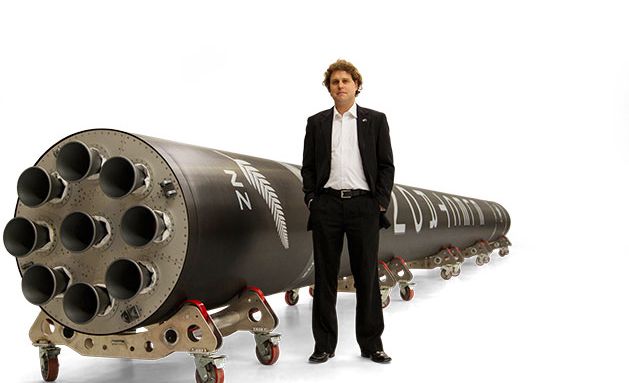
Founded in 2006, Rocket Lab is the mini-me SpaceX of small payload launchers. Established by its current CEO, New Zealander Peter Beck, the company originally operated in Auckland, New Zealand, but now is primarily headquartered in the United States as a US company (the New Zealand arm being a wholly owned subsidiary).
The Electron rocket with Rocket Labs’ CEO, New Zealander Peter Beck
Rocket Lab operates the Electron Rocket, flying commercial payloads of up to 300 kg to low Earth orbit (LEO) or up to 200 kg to a sun synchronous orbit (SSO). A two-stage vehicle, Electron uses the electric pump-fed Rutherford rocket motor in both stages, making it the first launch system to use an electric pump system to deliver fuel to the engines.
Currently an expendable launch system, Rocket Lab plan to follow in the footsteps of SpaceX and make the first stage of Electron reusable, although they will not be using a propulsive landing system like SpaceX, but will use parachutes / a parafoil. In addition, the company plans to start providing customers with an optional third stage for the vehicle that can provide a “kick” to motor payloads can use to circularise their orbits.
Up until the time of writing, the company has only launched out of a purpose-built facility on the Mahia Peninsula on New Zealand’s North Island, where it has a 30-year licence to launch rockets every 72 hours. To help with this, the facility offers two launch pad complexes; however, the real ability to meet such a high rate of launches (assuming Rocket Lab grows the customer list it needs to warrant such a fast launch rate) is in the rocket fabrication and assembly process.
The extensive use of composites in the fabrication of both the Electron rocket and its motors means that Rocket Lab can fabricate and assemble a launch vehicle every seven days. Credit: Rocket Lab
Thanks to the high use of composite throughout the Electron and its motors which accounts for around 95% of parts in both, Rocket Lab has been able to develop a fully automated and very flexible fabrication facility that can produce all the composite parts for the single launch vehicle in just 12 hours. This in turn allows the company to assemble and test a new rocket every seven days.
Starting in 2020 – and potentially in the next couple of weeks – Rocket Lab will commence launch operations from the Mid-Atlantic Regional Spaceport, Wallops Island, Virginia, USA (located at the southern end of NASA’s Wallops Flight Facility). Should it go ahead, the UK’s proposed Sutherland Spaceport, Scotland, may also become a base of operations for Rocket Lab, offering launches alongside the UK’s Orbex, a company a small-scale, reusable launcher capable of delivering up to 150 kg to a 500 km SSO.
Through the long grass – an Electron Rocket undergoing static tests at Rocket Lab’s new launch facilities at the Mid-Atlantic Regional Spaceport, Wallops Island, Virginia, USA. Credit: Rocket Lab
As well as the commercial launch capabilities, Rocket Lab has also been developing its own satellite system – Photon – which the company has indicated could also be used as a carrier vehicle for small interplanetary science missions.
In this, CEO Peter Beck has long been a proponent of exploring Venus, and has been contemplating sending a small mission that planet for the last two years – something he believes Rocket Lab could achieve for as little as US $30 million, utilising Electron as the launcher and Photon as the ferry vehicle, delivering a small science probe massing around 37 kg to Venus. With the discovery of phosphine in the planet’s atmosphere (see Space Sunday: phosphine on Venus, test flights and Jupiter), Beck has indicated Rocket Lab may well accelerate these plans.
Rocket Lab has also developed is own satellite – Photon – which it is considering as the carrier for a small science mission to Venus in the wake of the discovery of phosphine in the planet’s atmosphere. Credit: Rocket Lab
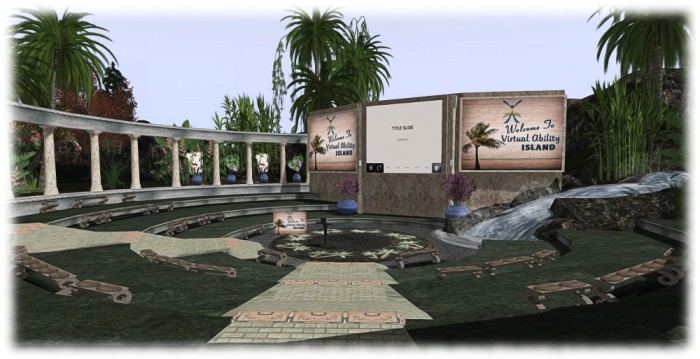
As 2020 marks the 30th anniversary of the Americans with Disability Act, this year’s conference will have a particular focus on Disability Right, both in the United States and globally, under the theme Where have we been? Where are we headed? How should we get there?
The conference will again feature an international line-up of guest speakers, and for those who cannot make the in-world venue, it will be live streamed via the Virtual Ability You Tube channel. Individual sessions will last between 30 and 90 minutes, and may include opportunities for Q&A.
The following is a summary of the conference and speakers / subjects. For more detailed information, including biographies on the participating speakers, please visit Virtual Ability’s IDRAC 2020 conference page, which will also include any updates to the schedule that may occur between now and the conference.
Note all times below are SLT and apply to Saturday, October 10th, 2020.
07:00
Manohar Swaminathan (Microsoft Research India) – Ludic Design for Accessibility
08:30
Amelia Fiske (Technical University of Munich) – Exploring Ethical and Social Implications of Embodied AI
09:15
Margaret Nosek (Baylor College of Medicine) – Memories of 1996, the White House signing of the Americans with Disability Act
10:00
Barry Whaley (Southeast ADA Center) – Who are the Heroes? A History of the Disability Rights Movement
11:30
David Larson (Hamline School of Law, Dispute Resolution Institute) – TBA
13:00
Krista Watson (Equal Employment Opportunity Commission) – Employment and the ADA
14:30
Rhoda Olkin (Alliant International University) – Women with Disabilities: Experiences of Microaggressions
Where Our Journey Begins, September 2020 – click any image for full-size
Open for the Autumn period (or spring, for those living in southern latitudes) is Where Our Journey Begins (I’m assuming the “begings” apparent in the name at the time of our visit is a typo), a Homestead region designed by Vivian Ewing and Dream Shadowcry.
Offered as a place to relax and take photographs (which can be shared through the region’s Flickr group), it’s a setting that appears to be caught in a forever sunset, quite the romantic time of day (although admittedly, I opted to run my own daylight settings while visiting), and which is visually impressive both in its layout and for one or two ideas it might give to those who like to fiddle with their own homes.
Where Our Journey Begins, September 2020
Where Our Journey Begins sits with a north-south orientation as a horseshoe shaped island, the open end of which looks westward towards the lowering Sun. Cupped within the arms of this horseshoe is a deep inlet, no doubt cut by the waters falling from the high curtain of rock that forms a major part of the island’s eastern aspect, the falls within it sitting as a series of high steps down which the waters tumble to reach the curved bay.
The open end of this bay is spanned by a broad stone bridge that connects the north and south aspects of the island and provides visitors with a landing point. Whatever traffic this bridge once witnessed has now largely passed: its stone surface is now the home of long grass and even young trees have gained a foothold at either end of it’s span. As well as being the landing point, this bridge offers a place to sit and the first opportunities to take photographs within the region as it is subject to the periodic sweeping gaze of the off-shore (but still within the boundary of the region) lighthouse.
Where Our Journey Begins, September 2020
The northern and southern arms of the island offer places to visit and appreciate. To the north, the bridge leads visitors to where a flat-topped table of rock thrusts out from the much higher curtain of waterfalls. A path curls up the side of this table, the easiest way to reach the top. As it does so, it passes the flat toes of the cliffs, a place of long grass shaded by autumn-shaded willows and green fir trees and is the home of a old carousel and its ticket booth and pipe organ.
The top of the table presents a summer house set within its own grounds (but open to the public) and with plenty of detail within and without – I admit to particularly liking the manner in which a glass-walled pavilion has been converted into a cosy outdoor bathroom warmed by its own wood-burning stove.
Where Our Journey Begins, September 2020
Stone steps guarded by old concrete gate posts point the way down from the terrace behind the summer house to a broad lip of rock that offers a secluded hideaway and place to sit. A second path just to the right of the one that rises up the the plateau, slopes gently down to where a small meadow sits under the arms of two huge oak trees and sheltered by a rich growth of the bushes, the home to a wooden gazebo warmed by a stone-built fireplace.
The southern end of the island presents a further table of grass-topped rock, this one lower than the one to the north. It is home to what may have once been farm outbuildings – a windmill and a couple of barns. However, while one of the barns still provides shelter for sheep, this area now looks to be more of a garden space; the second barn has been converted into another little summer house / music room, three of its walls now fitted with windows, the space between it and the other barn fenced as a little wild garden.
Where Our Journey Begins, September 2020
From this southern spur, it is possible to walk down to the island’s shoreline and the shingle beaches that border three sides of it. Two of these beaches offer further places to sit – an open deck to the south, and a little beach house with canvas sides and roof and extended deck to the west. Looking towards the lighthouse, this beach house is fronted by an old pier, matched by one at the foot of the lighthouse, both of them suggest a route between island and lighthouse, although sadly, there is no rowing bone to traverse it. However, you can cam-sit yourself onto the boat tied-up at the lighthouse pier – a method that also lets you avoid the disapproval of the seagulls who have laid claim to both of the old piers!
I’m not sure how long Where Our Journey Begins will remain open to the public. As noted, it’s About Land details indicate it is available for public visits for the “Fall season”, so I presume that as it has apparently only opened recently, it’ll remain available to the public until at least mid-to-late October – but don’t quote me on that!
Where Our Journey Begins, September 2020
Overall, the region makes for a photogenic and engaging visit, although some adjustment to viewer settings might be required to get the best FPS when wandering (I had to switch to a lower draw distance to keep my FPS at least in the teens). It’s a setting that is well put together and offers a lot to discover and appreciate.
Bamboo Barnes at Ribong Artspace Gallery, September 2020
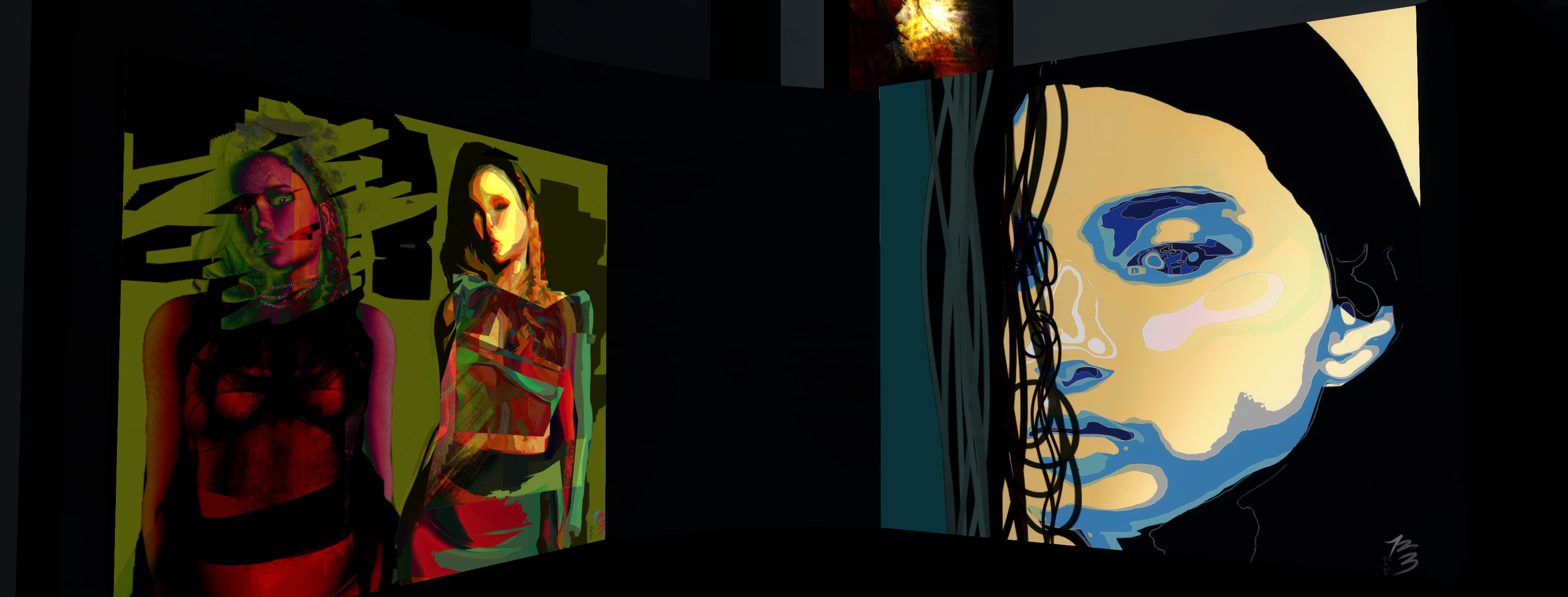
Bamboo Barnes is one of the most vibrant, evocative, provocative, and emotive artists displaying her work in Second Life. Hailing from Japan, Bamboo works with digital tools to produce pieces that are strongly assertive, both in terms their narrative depth and their ability to dominate the space they occupy, rich pieces that speak to the eye and mind.
All of this can be witnessed first-hand at her current exhibition, Receding Reality, which opened at Ribong Gallery’s Artspace 2243, and which opened on September 12th, 2020.
Bamboo Barnes at Ribong Artspace Gallery, September 2020
What is born out of me transforms like water: here is an uncertain ego and an inexhaustible feeling for those who have left.
– Bamboo Barnes
This is an extensive exhibition of work that presents pieces in a range of styles that have, per Bamboo’s description, something of a introspective nature about them. The styles themselves offer hints of Dali, Picasso, Warhol, encompassing abstract, pop-art, neo-impressionism, expressionism and neo-expressionism.
Bamboo Barnes at Ribong Artspace Gallery, September 2020
The elements of introspection comes from the faces apparent within many of the painting on offer; faces that oft carry thoughtful expressions or distant looks, suggestive of caught in memory, or are incomplete or distorted, as if being pulled from half-remembered memories. Those that feature figures rather than facial features equally suggest distant thoughts.
As I’ve noted in the past when writing about Bamboo’s art, the emotions she experiences whilst producing a piece are a central aspect in how it eventually emerges. These emotions may be the result of her own feelings or perhaps those evoked by the music she is listening to, and her own response to the emerging piece. This tends to give her art an added depth, those emotions remaining with it and transferring to the observer the longer one regards it. There is also something almost visceral in her work through her use of colour; this in turn gives her work an attraction that pulls at the attention.
Bamboo Barnes at Ribong Artspace Gallery, September 2020










 Inara Pey: Living in a Modemworld