2020 Simulator User Group week #33 summary

PhotoStudio Purple Cows, June 2020 – blog post

The following notes were taken during the Simulator User Group meeting of Tuesday, July 28th, 2020.

Simulator Deployments

Please refer to the server deployment thread for news and updates:

  • On Tuesday, August 11th, the majority of servers were updated to server maintenance update 545966, comprising updates to assist with the cloud uplift work and includes the updated region crossing code that came about as a result of testing carried out on Aditi in relation to running simulators via AWS services (see my previous SUG summary).
  • On Wednesday, August 12th, There should be at least one deployment, which should also include the adjustments made to the region crossing code, so these will be grid-wide.

SL Viewer

  • The Tools Update 2 viewer, version 6.4.6.545962, dated Monday, August 10th, was released and promoted at the de facto release viewer on Monday, August 10th.
  • The Arrack Maintenance RC viewer updated to version 6.4.7.546539 on Tuesday, August 11th.

All other official viewer remain unchanged at the start of the week:

  • Release channel cohorts:
  • Project viewers:
    • Custom Key Mappings project viewer, version 6.4.5.544079, June 30.
    • Copy / Paste viewer, version 6.3.5.533365, December 9, 2019.
    • Project Muscadine (Animesh follow-on) project viewer, version 6.4.0.532999, November 22, 2019.
    • Legacy Profiles viewer, version 6.3.2.530836, September 17, 2019. Covers the re-integration of Viewer Profiles.
    • 360 Snapshot project viewer, version 6.2.4.529111, July 16, 2019.

In Brief

  • At least one large in-world group (60K+ members) is reporting group chat issues, vis: people engaged in group chat suddenly not seeing their own text when entered while other receive it; people typing into group chat and seeing their chat appear on entering, but some others saying they didn’t see it and others confirming they can see it, etc. This issue has thus far only bee reported via support ticket and a Jira has been requested.
  • There is a general request that those using the Blake Sea + Morris and Ahern regions on Aditi (all running via AWS) who notice unusual, reproducible issues, to please raise a Jira.
City legends, hidden stars and a cat with a tale

Seanchai Library

It’s time to highlight another week of storytelling in Voice by the staff and volunteers at the Seanchai Library. As always, all times SLT, and events are held at the Library’s home, unless otherwise indicated. Note that the schedule below may be subject to change during the week, please refer to the Seanchai Library website for the latest information through the week.

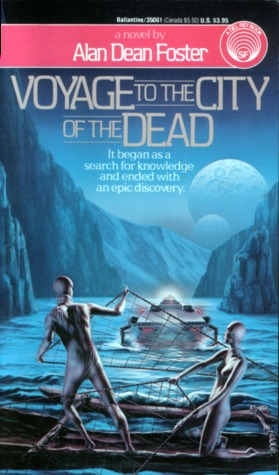
Monday, August 10th, 19:00: Voyage to the City of the Dead

Gyro Muggins reads the 11th volume in Alan Dean Foster’s Humanx Commonwealth series, first published in 1984.

The Humanx Commonwealth is an interstellar ethical/political entity spanning multiple star systems and worlds. One of the more unique of these worlds is Horseye, the home of three alien cultures and renowned throughout the Commonwealth for having the most spectacular river valley anywhere in the known galaxy.

It is both the cultures and the river that has drawn scientists Eitienne and Lyra Redowl to Horseye. Now, after months spent in quarantine, they embark on a voyage to the source of the 12,000 long River Skar, and study it and the peoples living on its banks.

Veterans of exploration and discovery, the Redowls believe they are ready to face anything. But how can you prepare for things like treachery, lies and greed? For a local legend would have it that at the source of the Skar lie a great treasure – and the locals who appear to be willing to help the Redowls in fact plan on finding it for themselves.

Assuming, that is, the treasure is in fact something at can be regarded as offering wealth or power…

Tuesday, August 11th:

12:00 Noon: Russell Eponym, Live in the Glen

Music, poetry, and stories in a popular weekly session at Ceiluradh Glen.

19:00: The Stars Below

Willow Moonfire reads Ursula K. Le Guin’s short story the initially came to prominence when reprinted in the anthology volume The Wind’s Twelve Quarters alongside of The Word of Unbinding and The Rule of Names, two of the founding short stories of what would become her Earthsea novels.

THE WOODEN HOUSE AND OUTBUILDINGS CAUGHT FIRE FAST, BLAZED UP, BURNED DOWN, BUT THE DOME, BUILT OF LATHE AND PLASTER ABOVE A DRUM OF BRICK, WOULD NOT BURN. WHAT THEY DID LAST WAS HEAP UP THE WRECKAGE OF THE TELESCOPES, THE INSTRUMENTS, THE BOOKS AND CHARTS AND DRAWINGS, IN THE MIDDLE OF THE FLOOR UNDER THE DOME, POUR OIL ON THE HEAP AND SET FIRE TO THAT.

The opening of The Stars Below

Fearing the zealots who razed his observatory burn him at the stake for heresy, an astronomer is forced underground into the cold tunnels of ancient mine workings that sit upon deeper, more extensive tunnels and caverns hewn by nature. Here he is discovered by a group of old miners who still try to eke out a living chipping silver out of the hard rock. Rather than turn him in, they adopt him, and slowly he learns some of their ways and helps them with their work, but never venturing back to the surface, afraid for what might happen if the authorities come upon him.

But his learning of the stars of heaven will not leave him, nor will the skills he learned in making his own telescopes and fine lenses – one of which he rescued from the pyre of his observatory. And so the miners see him less and less as he explore the great caves and caverns, until one evening he comes to them to tell them he has once again found the stars – and they are below the mine.

Wednesday, August 12th, 19:00: Whittington

Caledonia Skytower reads Alan Armstrong’s 2006  Newbery-Honor winning tale.

Whittington is a roughneck tom cat who arrives one day at a barn full of rescued animals and asks for a place there. Present at the barn is a menagerie of animals and young Ben and Abby, whose grandfather owns the barn and does the rescuing.

To earn his place, Whittington tells the tale of his famous ancestor, the nameless cat who brought Dick Whittington to the heights of wealth and power in 16th-century England. In telling his story of how his ancestors saved and elevated Whittington, this tom-with-a-chip, elevates another little boy above his fear of learning to read.

Thursday, August 13th

1900: TBA

Please check the Seanchai Library blog.

21:00: Seanchai Late Night

Contemporary sci-fi and fantasy from such on-line sources as Light Speed, Escape Pod, Clarkesworld, and more. With Finn Zeddmore.

2020 viewer release summaries week #32

Logos representative only and should not be seen as an endorsement / preference / recommendation

Updates for the week ending Sunday, August 9th

This summary is generally published every Monday, and is a list of SL viewer / client releases (official and TPV) made during the previous week. When reading it, please note:

  • It is based on my Current Viewer Releases Page, a list of all Second Life viewers and clients that are in popular use (and of which I am aware), and which are recognised as adhering to the TPV Policy. This page includes comprehensive links to download pages, blog notes, release notes, etc., as well as links to any / all reviews of specific viewers / clients made within this blog.
  • By its nature, this summary presented here will always be in arrears, please refer to the Current Viewer Release Page for more up-to-date information.
  • Note that for purposes of length, TPV test viewers, preview / beta viewers / nightly builds are generally not recorded in these summaries.

Official LL Viewers

  • Current release viewer version 6.4.4.543157, dated June 11th, promoted June 23rd, formerly the CEF RC viewer – ROLL BACK..
    • Uses new viewer build tool chain, but does not include any user-facing updates outside of bug fixes.
  • Release channel cohorts:
    • Tools Update 2 RC viewer updated to, version 6.4.6.545962 on August 4th.
  • Project viewers:
    • No updates.

LL Viewer Resources

Third-party Viewers

V6-style

  • No Updates.

V1-style

Mobile / Other Clients

  • No updates.

Additional TPV Resources

Related Links

Space Sunday: Hops, glows, plans and Perseids

SpaceX SN5 rises from its launch stand at the SpaceX Boca Chica, Texas, centre. Credit: SpaceX

SpaceX once again heads this week’s column after the Starship SN5 prototype became the first of the units to successfully make a “hop” into the air and back again, travelling some 150 metres up and several tens of metres sideways to navigate its way from launch platform to landing pad.

The flight of the “flying spray can” – the nickname derived from the vehicle’s cylindrical form topped by the nozzle-like 23 tonne ballast mass – only lasted around a minute once the Raptor engine fired, but the hop represented a huge leap forward for SpaceX in their development of the Starship vehicle.

As I noted in July, SN5’s unusual shape is due to it only comprising the section of the vehicle containing its fuel tanks, single raptor engine and landing legs. It lacks any upper sections (replacing by the ballast block) and the aerodynamic surfaces that will give Starship a lifting body capability during atmospheric operations. These will all be present in future prototypes, But for SN5, they are not currently required, as its initial flight(s) are purely about testing Starship’s ability to make a vertical descent and landing.

A starship cutaway showing the fuel tanks and engine bay (outlined in red) that form the prototype vehicle SN5, and the upper cargo / habitation space and aerodynamic surfaces that are not included on the current prototype. Credit: WAI (with additional annotation)

The successful test flight took place on Tuesday, August 4th – an attempt on Sunday, August 2nd was cancelled  due to unfavourable weather in the Boca Chica, Texas, area. Engine ignition came at 23:57 UTC (18:57 local time), the prototype rising vertically, but canted at a slight angle. This  was due to the initial prototypes being designed to operate with three Raptor motors, by SN5 is currently only fitting with one, offset from the vehicle’s vertical centreline, so the vehicle is canted (with the ad of the top ballast block) to compensate for the offset thrust from the motor, with small reaction control system (RCS) jets near the base and top of the vehicle occasionally firing to help maintain a stable flight angle.

As the craft rose, the Raptor motor was also gimballed (moved around like you move a joystick on a game controller, a common practice for rocket motors to allow them to use directed thrust to adjust a flight trajectory), vectoring its thrust so it could translate across to the landing pad for a successful landing.

Prototype nose cones being fabricated at Boca Chica. Credit: NASASpaceflight.com / BocaChicaGal

SpaceX released a video afterwards the flight showing the highlights. In it, SN5 can be seen lifting off, trailing a plume of vented cooling gas, the RCS jets visible as they fire to help maintain stability. The footage also clearly shows the Raptor’s offset exhaust plume moving as the motor in vectored, as well as the craft maintaining a brief hover at the apex of its flight before descending sideways and down towards the landing pad.

Cameras at the base of the vehicle show the landing legs being deployed, as well as a small, non-hazardous fire on the Raptor motor, likely the result of dust blown into the engine space at lift-off that subsequently ignited. This “inside” camera and one on the SN5 hull then captured the moment of landing and engine shut down.

Prototypes SN6, 7, and 8 are in development, and some of these will fly with the aforementioned forward / upper sections and flight surfaces in loftier (literally) and more complex flight tests. Currently, it not clear how many more flights SN5 will make. However, Musk has already indicated he would like to have Starship use a more “Falcon Like” set of landing legs to provide broader support when landing on uneven planetary surfaces, so SN5 might by used to test new landing leg configurations alongside testing of other prototypes.

Continue reading “Space Sunday: Hops, glows, plans and Perseids”

ARNICAR’S Chapel Imagination in Second Life

Chapel Imagination, August 2020

ARNICAR India has opened another region design for people to enjoy in the form of Chapel Imagination. It’s a stunning design that brings together art, architecture, water and one or two fantastical touches to present a region rich in detail, yet subtle on the eye; a place where one can wander and dream, ponder and relax – and simply be.

Simplicity of design appears to have been the watchword here, with the region sitting as a trio of islands tucked within a bay surrounded by high peaks. All three of the islands are relatively minimal in size, with the largest running east-to-west, a low finger of land marked by a shingle path looping around it to enclose the ruins of what was once a substantial structure – the chapel of the region’s title, perhaps.

Chapel Imagination, August 2020

This structure comprises the Looking Glass Chapel Ruins, created by Marcus Inkpen, and The Looking Glass Enchanted Ballroom Walls by Sharnee Azalee, facing each other along the island’s length, with a Gothic archway walk by Abel Dreamscape stretching part-way between them. This mix of designs works exceptionally well to present a place of ancient splendour and mystical calling, shaded by the broadly spread arms of three monkeypod trees, while the older boughs of Alex Bader’s Skye Twisted Tree intertwine with the archways of the Gothic walk.

The two smaller islands sit to the south and north of this main island – which also forms the landing point – and are reached via short causeways. One of these again uses wall sections from The Looking Glass Chapel Ruins to form  largely enclosed space marked by more of Alex Bader’s Twisted Tree, while the other again uses Abel Dreamscape’s Gothic archway, this time interspersed with Sourwood trees before giving way to more elements of TLG’s Chapel Ruins, together with some Lost Garden Columns.

Chapel Imagination, August 2020

It is this minimalist approach to choice of elements – The Looking Glass and Dreamscape – that gives Chapel Imagination part of its charm and appeal, offering as it does the sense of being within what was once an extensive building, which in turn gives the setting a wonderful sense of continuity as you explore.

But it is the details waiting to be found throughout that gives Chapel Imagination its unmistakable depth. Red-crowned cranes are waiting to greet arrivals at the landing point, the chapel behind them offering a fantasy garden / dressing room, a wedding dress waiting to be worn. Down through the Gothic arches are more suggestions of a wedding-in-waiting, whilst the circle at the end offers an entirely different surprise. Beyond it, a little pier extends over water rich with whimsy and fantasy as Bryn Oh’s Social Distancing canoe sits on the gentle waves.

Chapel Imagination, August 2020

To the north, the second chapel stands as a kind of music room, a grand piano sitting within it, together with pieces of art and more. All of this is watched over by a photographer who has found a most unusual perch – so much so, that he might easily be missed, thus adding a little twist of humour.

Despite the use of chapel parts throughout, it’s only the the south island that carries any real hints of religion within it, where pews, and a votive stand can be found, together with a curious gathering of nuns watched from a distance by a lone monk.

Chapel Imagination, August 2020

I’m being deliberately vague about all of this because Chapel Imagination deserves to be seen, not described – and seen directly rather than through the lens of a camera. A considerable amount of work has gone into presenting it as a place of retreat and peace, complete with a considered sound scape and a delightful sense of whimsy.

One of the most engaging region designs I’ve visited in a while, and a tour de force lesson that you don’t need to stuff a region full of bits in order to make it photogenic or worthy of people’s interest.

Chapel Imagination, August 2020

With thanks to Shawn Shakespeare.

SLurl Details

2020 SL project updates week #32: TPVD summary

Jambo! A Voyage to Africa, May 2020 – blog post

The following notes are taken from the TPV Developer meeting held on Friday, August 7th, 2020. These meetings are generally held every other week, unless otherwise noted in any given summary. The embedded video is provided to Pantera – my thanks to her for recording and providing it. Time stamps are included with the notes will open the video at the point(s) where a specific topic is discussed.

SL Viewer News

[0:08-5:00]

The Tools Update 2 viewer updated to version 6.4.6.545962 on August 4th.

The rest of the official viewer pipelines remain as follows:

  • Current release viewer version 6.4.4.543157, dated June 11th, promoted June 23rd, formerly the CEF RC viewer – ROLL BACK.
  • Release channel cohorts (please see my notes on manually installing RC viewer versions if you wish to install any release candidate(s) yourself):
  • Project viewers:
    • Custom Key Mappings project viewer, version 6.4.5.544079, June 30.
    • Copy / Paste viewer, version 6.3.5.533365, December 9, 2019.
    • Project Muscadine (Animesh follow-on) project viewer, version 6.4.0.532999, November 22, 2019.
    • Legacy Profiles viewer, version 6.3.2.530836, September 17, 2019. Covers the re-integration of Viewer Profiles.
    • 360 Snapshot project viewer, version 6.2.4.529111, July 16, 2019.

General Viewer Notes

  • A further version of the Tools Update 2 viewer is anticipated for week #33 (commencing Monday, August 10th). This may appear as the de facto release viewer version.
  • Currently, the next viewer in line for promotion after the Tools Update 2 viewer is likely to be the current Arrack Maintenance viewer.
    • A further RC update to Arrack may be issued early in week #33; however, if the Tools Update 2 viewer is promoted to release status, this viewer may be held over pending a merge with the Tools Update 2 viewer code base.
  • Love Me Render (LMR) continue to be held as the graphics team work on various rendering issues.
    • There are apparently around 4 remaining open issues, with two more currently being worked on.
    • Of the open issues, all are performance related. Some of these may need further triage.
    • The issue of Linden Water continuing to give particularly degraded performance on EEP viewer is still being investigated by both LL and TPVs developers, but no potential fix identified as yet. There appears to be some combination of factors causing this (e.g. vertex buffer object (VBO) memory thrashing potentially being one).

In Brief

  • [10:50-13:46] During a text-based call for volumetric clouds from a developer, Ptolemy Linden pointed out an early feature for EEP was to have been atmospheric scattering that got dropped at the time and some of this work might potentially be “simpler” to implement than volumetric clouds – not that his comment means either will be forthcoming.
    • Crepuscular rays (“god rays”) were one aspect of this work, but had to be dropped as they  proved too performance intensive at the time. Two common means for generating “god rays” are via adding geometry to a scene, another is via ray casting and shadow map sampling – both of these can be computationally intensive.
  • The latter half of the meeting is dominated by a user-led discussion on relative performance, what constitutes as a viable demonstration of average performance (e.g. a lone avatar frolicking in a region with all the viewer’s upper-end graphics capabilities enabled, vs trying to do the same with even a moderate number of avatars also in the region, etc). As this was conducted in chat, you can catch it in the video, below.
