Katie Dey (l) released Dancing, a track from her new album myData on June 24th, 2020, which uses a machinima recorded in Second Life, filmed by Devi McCallion (r)
An album-length exploration of a long-distance relationship that unravels into an epic about love, connection, and all the strange, unruly factors that surround those things, from capitalism to sex to internet servers.
However, what is particularly interesting about the album is that the first track to be released from it on June 24th, 2020, and entitled Dancing, features a music video shot entirely in Second Life.
The video has been written and directed by another indie pop singer, songwriter and producer, Devi McCallion – perhaps most famous for her association with Black Dresses – with the assistance of Sofa (yogurt 200). Both the song – seen as something of a “striking new sound” for Dey – and the the video, are already garnering a positive response.
I’ve no idea if Katie Dey is a regular Second Life user, but she certainly appears familiar with some of the technical challenges in producing a video of this kind, commenting to D’Souza that:
This video was made entirely in Second Life, and I hope when people watch it they think about just how much work it would take to do that. If you’ve ever played that game you know how difficult it is to even control the camera, let alone create a whole world, with such incredible characters, such breathtaking cinematography.
Created remotely, across countries, in a pandemic, on a dying laptop, their lives in utter chaos, the world in chaos… I hope people cry about these beautiful characters, and then cry about the beautiful humans that put so much love and care into creating them. Anyway, the song is about dancing. Like, metaphysical dancing, I guess.
Video maker Devi McCallion, however, does appear to be something of a Second Life user. In May 2020 she hosted her own first-ever DJ set in-world, which can be seen on her You Tube channel, and some of her other videos contain elements that may have been filmed in-world as well.
I reached out to Brett Linden to enquire if Linden Lab were in any way involved in the video’s development – but it was apparently produced entirely independently.
I would love to say that we were involved, but we weren’t! It was completely organic and a pleasant surprise to us.
New Kadath Lighthouse Art Gallery: Second Life Maps
When listening to the SL17B Meet the Lindens Session with Patch Linden, I was given cause to recall Juliana Lethdetter’s outstanding Maps of Second Life, on display at her New Kadath Lighthouse Art Gallery.
It’s a place I last wrote about long ago in the dim and misty days of 2012 (see: Charting the growth of Second Life), and so has been long overdue for further coverage in these pages.
New Kadath Lighthouse Art Gallery: Second Life Maps
For those unfamiliar with this particular gallery, it is a labour of love that brings together just about every style of map of Second Life that has ever been produced – and provides a wealth of information besides.
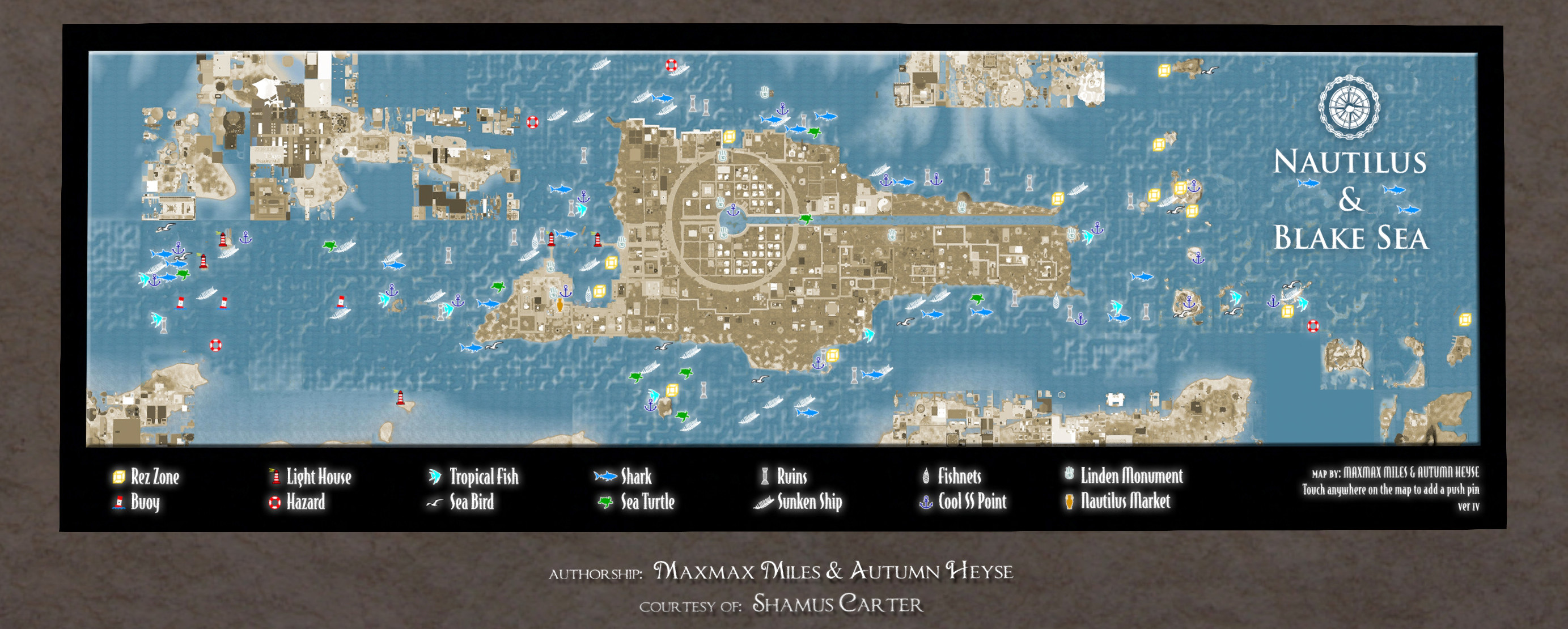
The maps start from the earliest days of Second Life – 2002 – and run through to almost the present. It encompasses “official” maps, those produced by SL cartographers depicting the Second Life Mainland continents, and specialist maps charting air routes, airports, the SL railways, specific estates. Not only are they informative, some stand as works of art in their own right, as with the map of Nautilus, below.
New Kadath Lighthouse Art Gallery: Second Life Maps
Alongside of the maps is a veritable treasure trove of information that any Second Life historian is liable to fine mouth-watering, as well as a certain amount of practical information poking at the technical intricacies of the platform. You can, for example, look back to 2007 and see why Anshe Chung became the first “SLebrity”, appearing on the cover of CNN’s Business week as her Dreamland “empire” as it stood at the time shown in all its glory. Or you can take a peek at Second Life as it stood in March of that year – a time when it had in total roughly the same number of private and Mainland regions as Mainland has on its own today.
Elsewhere, you can look back on Second life Birthday celebrations of the past, the gallery featuring SL12B, one of the celebratory events organised entirely by residents and referred to as the Second life Birthday Community Events (2012 through 2018), when Linden Lab completely stepped back from direct involvement in the event’s annual planning and execution. Or you can catch up on the very latest acquisitions for the gallery, such as Rydia Lacombe’s map of SL railways I recently wrote about (see: Mapping Second Life’s mainland railways).
New Kadath Lighthouse Art Gallery: Second Life Maps
The latter underscores the point that this is a living museum / exhibition. Since my original article on the gallery, Juliana has continued to curate and grow the exhibits on display, growing to incorporate further items of interest new locations in Second Life, as well as retaining those special items of SL history like the guide to the legend of Magellan Linden.
Thus, as well as the railway map noted above some of the elements that have been added since my last piece include a display of other map resources in Second Life, which includes information on David Rumsey’s excellent collection to physical world maps (see: If maps are your thing, Rumsey’s the king!), while maps and images of Bellisseria ensure the gallery is right up-to-date with the growth of Second Life continents.
New Kadath Lighthouse Art Gallery: Second Life Maps
What makes this exhibition especially worthwhile is the sheer depth of information presented. Individual maps / displays are presented around the walls of the gallery with large information panels alongside or under them, complete with citations, while gear icons provide further access to information – note cards, landmarks, links to external web pages, and so on. All of which makes this a first-class practical resource.
If you’ve never visited the New Kadath Lighthouse Art Gallery, then regardless of your level of interest in Second Life history or maps in general, I really cannot recommend it enough. It is guaranteed to captivate, and is a genuinely educational visit. And while there, please do use the books on the landing point to visit other points of interest in the region.
New Kadath Lighthouse Art Gallery: Second Life Maps
On Tuesday, June 23rd, 2020 at the SL17B celebrations, the second of five Meet the Lindens sessions was held, featuring Patch Linden, the Lab’s Vice President of Product Operations.
The following is a summary of the session covering the core topics raised, with selected audio extracts. The notes provided have been taken directly from the official video of the session, which is embedded at the end of this article. Time stamps to the video are also provided for ease of reference.
Note that this is a summary, not a full transcript, and items have been grouped by topic, so may not be presented chronologically when compared to the video.
Audio extracts, where included, have been cleaned-up and balanced to remove pauses, repetitions, etc.
What is the Difference Between a “Sim” and a “Region”?
Will We See Virtual Landmarks in SL?
Is It Still possible to get OpenSpace (Void) Regions?
In places, information that is supplementary to Patch’s comments is provided in square braces (.i.e. [ and ]) are used in the body text below to indicate where this is the case.
A Note about the New Linden Homes Theme Announcement
The session included discussion (notably in the last 15 minutes) on the new Linden Homes theme unveiled at SL17B immediately after Patch’s Meet the Linden Session. These elements of the session are not reported here simply because people can now see the theme for themselves. Instead, I refer readers to Second Life: looking at the new Linden Homes Stilt theme in this blog.
Originally a Second Life resident and business owner who joined the platform in 2004, and became a Linden in 2007.
Initially worked as a support agent and then as a support liaison. From there he moved to the Concierge team, eventually becoming that team’s manager.
Shifted focus to the role of Operations Support Manager for a year, then moved to the Product group, the team responsible for defining the features, etc., found within Second Life.
At Product he developed the Land Operations team, which includes the Linden Department of Public Works (LDPW).
In 2018, he established the company’s support office in Atlanta, Georgia.
In 2020 he oversaw the move to larger office space in Atlanta, although the SARS-CoV-2 pandemic means the new premises have yet to be used.
His teams have not really been impacted by the pandemic. LL is a remote-friendly company.
As a result the company has always thought outside of the box in leveraging their own product as a work tool – running team meetings in-world, etc., – as well as running more “traditional” tools like Slack, Discord, etc.
Patch himself started at the Lab as a remote employee, and worked as such for around a decade prior to developing the Atlanta office.
Changes in avatar appearance – particularly when looking back at old snapshots.
The arrival of different types of new content.
Adding Voice to Second life [2007], which was probably one of the “bigger ground-breaking changes for Second Life as a virtual world”.
Admits to have probably having forgotten more than he can remember, and even today is still learning – such as only recently discovering the ability to completely disable the viewer’s UI in world view [CTRL-SHIFT-U (or ALT-SHIFT-U for Firestorm) – also toggles the UI back on].
As a resident, used to run a fashion business for male avatars.
Still has the inventory, but has not updated the clothing styles in years.
Has “tinkered” with Bakes on Mesh to see if it works with his system clothing designs, but does not intend to convert them for use with Bakes on Mesh and flood the market, as styles now too old.
Has found the “playing” with Bakes on Mesh to see what does / doesn’t work with older system clothing to be interesting.
Probably the Victorian theme, although the Log and Houseboat themes run it a close second.
It’s hard to separate into “most popular” as the demand for all of the themes has been equal. For example, even through the Traditional theme are currently fully occupied [and presumably no plans for further deployments at this time] – there is still demand for them.
The 4,400 introductory release of Log Homes was filled quickly. Since then, the Monday / Wednesday / Friday region releases have been taken up almost as soon as they are made available.
Plans to Link Continents / Retire Old Linden Homes
[Note: Bellisseria already now links Sansara and Joegeot.]
As the Linden Home continent(s) continue(s) to be built out and possibly be split up for diversity), then it / they may well continue to connect continents.
However, as this is done, LL wants to ensure that continents are connected where it makes sense to do so.
Overall plan is that as the new continent(s) gain occupancy, to eventually start shutting down the old Linden Home mini continents or at least compressing them, to free-up resources.
This point hasn’t quite been reached, as there is still occupancy across the mini continents either because people are waiting to try to obtain a new home of their choice, or because they may not actually be aware of the new home, depending on their log-in frequency.
However, even with the old style Linden Homes being retired in time, their themes may not necessarily be forgotten.
Knew they were going to be “super popular”, so tried to put out as much as possible without overly delaying the project as a whole.
Striking the balance is hard: on the one hand, foreknowledge of popularity dictates making a bigger initial offering – but how big? On the other, delaying the deployment means sitting on something that people could otherwise be enjoying.
As it was, in April 2019, he felt there was sufficient quality and options in home to launch the product. This has allowed LL / LDPW to continue to improve the overall process of provisioning and deploying Linden Homes.
This is reflected in the major release cadence from 700-1,000 in initial releases to 2,800 and then 4,400. When it comes, the Stilt Homes initial release will likely be 4,000-5,000 units.
The new linden Stilt Homes (r-l) Tortuga, Havana and 2-storey Lauderdale
On Tuesday, June 23rd, while speaking at the SL17B Meet the Lindens event, Patch Linden announced the next theme of Linden Home that is being lined up for release: Stilt Homes, designed to be placed in coastal setting, their stilts allowing them to sit on land, over water or between the two.
Once available – the new houses are currently only available for preview at SL17B – will again come in four styles, and will occupy 1024 sq m parcels. When they are released, they will become the sixth type of new Linden Homes to be made available over the last 18 months, with two further themes already in preparation.
The new theme is … stilt homes. They take their inspiration from south-eastern US geographical areas that basically are Floridian shore-side stilt home communities that tend to pop-in in low-lying and potentially even hurricane prone areas. Generally, they’re fairly brightly coloured; they have fairly good-sized open concept floor designs, and we’re going to offer them in three different variants. There will be an over water variant of the home, a partial version of the home that could rest over land and water. and there will be an inland version of the home, all on stilts no matter what because – you know – when the hurricane comes though you certainly don’t want to be on the ground when the flooding happens!
– Patch Linden, SL17B, describing the new Linden Home theme
This slideshow requires JavaScript.
The new theme comprises the following styles of home:
The Lauderdale: a two-floor unit with two large down stairs rooms, open with front door opening to a full length front porch with roof over, and sliding doors to the rear opening to a rear deck-come-dock. Central stairs lead up to an enclosed landing area with bedrooms either side, one with views to the front and rear, and the other with views to the front and side and sliding doors to a large verandah with roof over at the rear of the house.
The Havana: is single-storey 3-roomed, cross-shaped house with central front-to-back room providing access to front covered porch and rear covered deck. One side room also offers access to the deck-come-dock, and with windows to front and side aspect. Remaining room has windows to front, rear and side aspects.
The Santiago: a two-storey house with ½-porch with verandah over to the front, and an open-plan ground floor presenting space for two rooms, the larger of which has a bay window to the front and sliding doors to the rear opening onto full length deck, sans dock. A dog-leg staircase leads up to a central landing with sliding doors to the front verandah, and two bedrooms. The first bedroom is a full front-to back room with windows to the front and rear. The second bedroom has windows to the front bay and side aspect, and sliding doors serving a rear private verandah.
The Tortuga: a single-storey house with offset main room to one side with front door to a small covered front porch and sliding doors to the rear deck-come-dock. A second room, also with access to the deck / dock opens off of this, together with windows to the rear / side aspect. A small room sits to the front of the house with windows to the front aspect.
This slideshow requires JavaScript.
The theme itself has been a lot of fun to design and develop. We took a lot of plant life from that area and created it to be true to that geographical zone of the United States as well as varying out transportation capabilities between road and dock as well as waterway and such. And the thing I’m particularly excited about is that the home that are over water will marry up to and against regions that are also specific to houseboats. So this is going to give us a new ability to segue from area to area between the stilt homes portions of the continents to also adding on more houseboat regions out and around these continent sections that we’re planning on putting out.
– Patch Linden, SL17B
A view of an “inland” group of Stilt Homes – Santiago to the left, Lauderdale centre
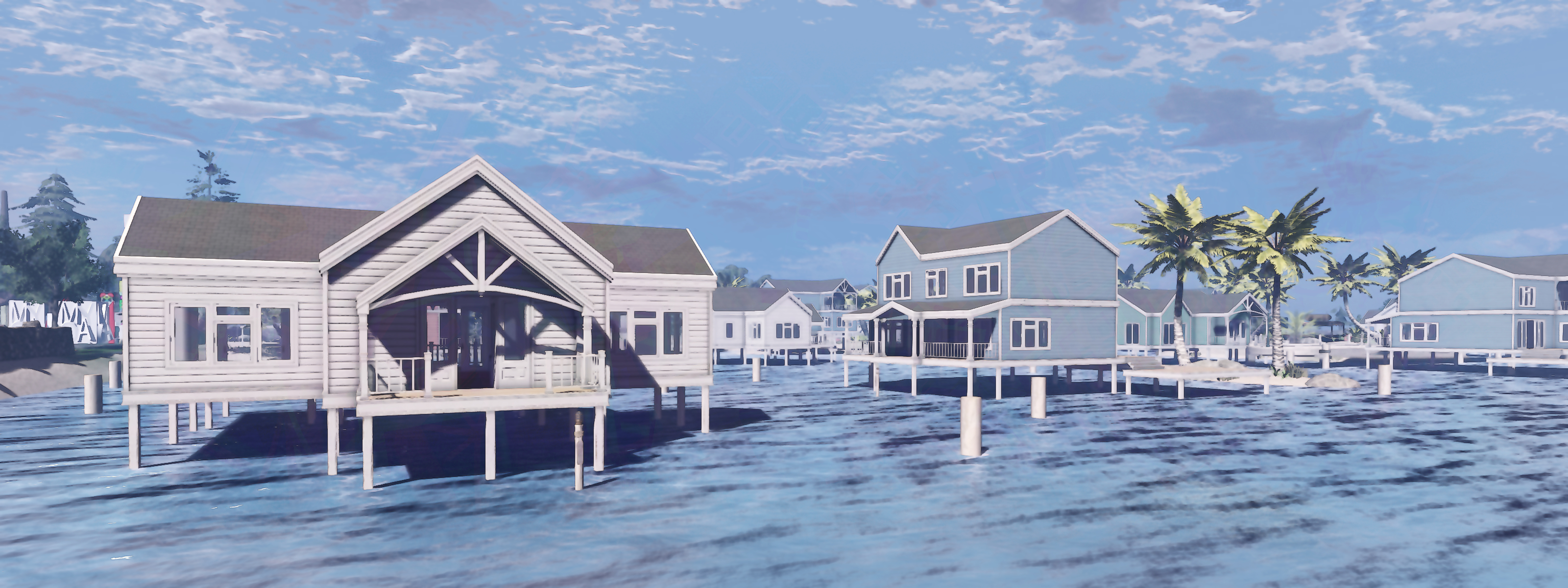
All four styles of home look like they can be used over land or water; those over land appear to have steps down to the ground from the front porch, with perhaps room to squeeze a car under them. As Patch notes the landscaping is tropical coastal and modelled on that of Florida. The houses with water parcels are either connected by sun washed board walks back to dry land and which can also provide social spaces, or – at least in the demo region – sit entirely surrounded by water, which is an interesting approach.
There is something of the Traditional Homes look to these stilt homes, so much so, that with a casual initial glance, you might be forgiven for thinking that they are “traditional homes on legs”. However, once examined, it becomes clear this similarity is more passing than anything else; something that gives these houses something of a hook into past Linden Homes designs whilst also – thanks to the large deck spaces and mix of land / water locations – being something completely unique.
The “offshore” Stilt Homes at the SL17B preview region – Havana in the foreground, and Lauderdale towards the centre
Given there desk and docks, the theme also appears to have the largest general footprint of the Linden Home released to date, which might cause problems for those wishing to moor a large type of boat alongside one. Even so, I have to admit that this is the first theme that – once available – might tempt me into giving up my houseboat and trying to snag one that sits in its own “offshore” parcel. Although that said, it would be nice to see a theme that isn’t another aspect of Americana – the rest of the world has house styles to offer, after all!
On Tuesday, June 23rd, the min channel was updated to server release 543526, comprising further infrastructure updates to support Group chat improvements / support of the cloud uplift work.
There is no planned RC deployment or restart planned for Wednesday, June 24th, also leaving regions running on release 543526.
SL Viewer
There have been no updates to the official viewers to mark the start of the week, leaving the current viewers as follows:
Current Release viewer version 6.4.3.542964, dated May 29th, promoted June 2nd, formerly the FMOD Studio RC viewer – No Change.
Tools Update RC viewer, version 6.4.4.543148, June 5 – this viewer is built using VS 2017 / a recent version of Xcode, and Boost.Fiber. It contains no user-facing changes.
Love Me Render RC viewer, version 6.4.4.543142, June 3.
Project viewers:
Mesh uploader project viewer, version 6.4.4.543141, June 11.
Copy / Paste viewer, version 6.3.5.533365, December 9, 2019.
Project Muscadine (Animesh follow-on) project viewer, version 6.4.0.532999, November 22, 2019.
Legacy Profiles viewer, version 6.3.2.530836, September 17, 2019. Covers the re-integration of Viewer Profiles.
360 Snapshot project viewer, version 6.2.4.529111, July 16, 2019.
On Monday, June 22nd, 2020 at the SL17B celebrations, the first of five Meet the Lindens sessions was held, featuring the Lab’s CEO, Ebbe Altberg, aka Ebbe Linden.
The following is a summary of the session covering the core topics raised, with audio extracts where relevant. The notes provided have been taken directly from the official video of the session, which is embedded at the end of the article. Time stamps to the video are also provided for ease of reference. In addition, audio extracts are provided in places that may be of particular interest to readers.
Discussion points have been grouped by topic, and not necessarily in the order raised during the session.
I have focused on those topics liable to be of the most interest to readers / generated the most informative answers, so this is not a summary of all comments, feedback, etc.
Topics are given as bullet-point highlights for ease of reference.
In places, information that is supplementary to Ebbe’s comments is provided, and square braces (.i.e. [ and ]) are used in the body text below to indicate where this is the case.
Audio extracts have been cleaned-up to remove repetition or pauses, etc.
Note: the following is taken from both Ebbe’s comments and my own research into his background, carried out when he joined Linden Lab in 2014, and which also included input from Ebbe.
Swedish by birth and still by nationality – he is still working in the US on a green card.
Graduated fromTärnabySkidhem in 1983. He had hoped to be a ski racer – with eyes on the Swedish national team and the world cup – but was prevented from pursuing this career due to a back injury.
Instead went to the USA to study at Middlebury College, Vermont, USA, where he spent a lot of time in the art studio and the computer lab in an extreme left brain / right brain type of education”, before graduating with a degree in Fine Arts and a concentration in Computer Applications.
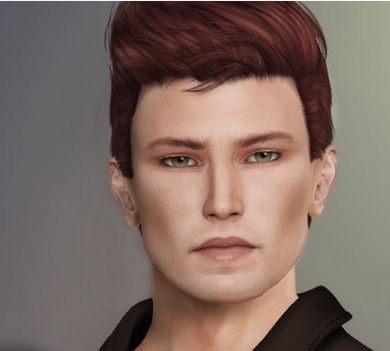
Ebbe Linden, aka Ebbe Altberg. Credit: Strawberry Linden
He “slipped into Microsoft on a random banana peel”, where he spent twelve years. He was particularly involved with the Office products (Word, Mac Office, etc.), and although he wasn’t directly responsible for Clippy! – he did oversee it being ported to Mac Office 98.
In 2000, he joined Ingenio, a company that created marketplaces for people to buy and sell information over the phone. As well as managing the engineering, program management, operations, and quality teams, he also served as both the company’s interim CEO its Chief Product Officer. He also “racked up quite a few patents there.”
Joined Yahoo! in 2008, filling out a number of senior roles, working in both Europe and the US.As the Senior Vice President for Media Engineering based in the USA, but with global responsibly for Media Engineering, managing an organisation of more than 600 engineers, architects, program managers and quality engineering staff, and with dotted-line oversight of some 150 product managers and designers.
Linden Lab’s chairman of the Board, Jed Smith, is a long-time friend of Ebbe Altberg, and had previously tried to get Ebbe to join the company prior to his appointment as CEO in 2014. (image: Owl Ventures)
Moved from Yahoo! to San Francisco based BranchOut, a small company that had, prior to his joining built a 25 million user base for its professional networking app before seeing that number shrink to just 3 million. He was specifically responsible for pivoting the company to a new workplace messaging application called Talk.co, launched in October 2013.
Has had a long exposure with SL indirectly through his son Aleks, who initially joined the Teen Grid before moving to establish his own in-world business.
Has also been long-term friends with LL board Chair, Jed Smith, through whom he met Philip Rosedale. Smith had asked Ebbe to consider the LL CEO position previously to 2013/14, but “things “didn’t line up” .
Is immensely proud of the all that the company has achieved and continues to be drawn by both the rewards and challenges involved in running a platform that is so technically and socially diverse.
Loves the technical / product aspects of the platform and the diversity of potential use cases it can meet. Also loves the rich diversity of ways users make use of SL creatively, socially, etc., that mean the platform constantly offers unique opportunities and challenges.
Enjoys the fact that SL makes it possible to meet people from around the world and from all walks of life who find value in the platform for so many different reasons.
These aspects also, for him, present the challenges of working with SL: putting all the different technologies that make SL work together such that they can form a virtual world where people can create, socialise, earn income, etc.
There’s also the challenge of talking to a customer base that is not of a single mind in using the platform, but rather is a range of user communities, each of which has nuanced needs and requirements that need to be met.
Also likes the challenge of trying to extend and build a product set that no-one else has managed to develop to the same degree – such as with SL’s economic model and the development of Tilia Pay.
The strength with SL that he loves is the sheer diversity within the technology required or SL and the people that use is – which is also the platform’s most engaging challenge.
Is appreciative of the power that SL has in bringing people together during the SARS-CoV-2 pandemic and providing a safe space for continued interaction, and that it can continue to help furnish those using it to generate an income to continue to do so.
From a business perspective, SL has seen significant increases in demand. However, this has been somewhat impacted by the “land shortage” [see The Cloud Uplift, below for more on this].
This increase is not just from “social” users; here has been “a lot” of demand from businesses wanting to host meetings through the platform, education institutions wanting to hold lessons, etc.
Company has been very fortunate in its operations because, while it does have offices in San Francisco, Seattle, Boston and Atlanta, many of the staff have always worked from home, so there has always been the assumption of remote working [even the Operations Team works remotely from LL’s co-location data centre in Arizona]. So, moving to that model of operations was less stressful than it might have been.
The real hamper in the move has been more the “knock-on” effect caused by the isolation – having children at home whilst trying to work, seeing to their needs, etc.
Overall is very pleased with how the company has been able to continue to manage SL and move ahead in plans and development.
Pandemic has also caused the media to re-examine SL, and Marketing has been via busy dealing the increased interest in how the platform and how it can be of use to people / organisations during the pandemic.
What has been particularly pleasing is the more positive view the media has of the platform, and the recognition of its maturity as a platform.
Like to point out to reporters that Second Life isn’t “old”, it is “mature”, which is not necessary a bad thing when talking about a platform.
[Note: Cloud uplift is the term used for the project to transition all of the Second Life services from hosting in a single co-location data centre used by Linden Lab and using their own hardware, to provision it all via Amazon AWS cloud services.]
Likely to be around 3-4 months before new regions are once again available, although it is understandably hard to put a definite date on things.
The shortfall is due to LL wanting to cease any expenditure in hardware and supporting infrastructure for SL during the cloud transition, believing they had sufficient reserves to offer during the uplift period – but the SARS-CoV-2 pandemic resulted in an unexpected burn through of that reserve.
Provisioning and testing new hardware and infrastructure is being avoided, as this would effectively be “lost” capital expenditure.
The uplift work is the primary focus of the product, engineering and operations teams at the Lab, with many services have actually already been transitioned to AWS.
Details of which systems these might be are not generally given out by LL due to the fact users often make false assumptions on things like issues when aware of such information.
Region servers [aka simhosts] make up the majority of the Lab’s hardware, and the Lab now has a test region server successfully running within AWS, but there is still “quiet a bit more work to do” in terms of security and other elements before the Lab will be in a position to offer a region product running in AWS.








 Inara Pey: Living in a Modemworld