The Vordun: new home, new exhibits and some favourites

The Vordun Gallery and Museum

The Vordun Gallery and Museum, curated and operated by Jake Vordun, has relocated to its own full region, and as a result has undergone something of an expansion.

Connected to its former home on the region Jake has his Fancy Decor business, the new Vordun Gallery and Museum now boasts two floors, offering highly flexible display space with – at present – nine gallery halls (although some look like they could either be expanded or split, depending on the needs of individual displays).

The Vordun Gallery and Museum: Pictures of the Floating World

As I discussed exactly two years ago just after The Vordun originally opened (see: The Vordun: a new art experience in Second Life), one of the attractions with this gallery is the care with which Jake and his team have striven to make a visit to The Vordun something of a an experience that mirrors a visit to a physical world gallery or museum – and this is certainly continues with the gallery’s new location.

I wanted to expand the non gallery areas. The lobby in the old build was a small cube. I think the newer big lobby with café, bathrooms, elevator, coat check etc, gives it a more real-life feel. Plus adding the second floor adds a ton of new space for more exhibits!

– Jake Vordun on expanding the Vordun Gallery and Museum

The Vordun Gallery and Museum: Claude Monet

The realism element was particularly reflected in the initial exhibit at the Gallery, European Masters, 300 Years of Painting, offering as it did a scripted audio tour of the pieces on display. In the intervening years, European Masters has become something of a permanent fixture at the gallery, and I’m pleased to say this is still the case following the move as it continues to occupy the main ground floor hall.

The ground floor also sees three other exhibitions that were open at the time of the move also continue. Two of these, Pictures of the Floating World and Proverbs of the Low Countries, I wrote about in June 2017 (see: Floating worlds and Dutch proverbs in Second Life). Both of these are again exhibitions designed to not only reveal the art to visitors, but actively engage the visitor with the art. Sincerely Yours / Postcrossing, meanwhile, brings to life the fascinating world of postcrossing.com, which invites people to sign-up and send a postcard to a total stranger in another part of the world, thus joining a chain of sharing that has seen some 40 million postcards exchanged at the rate of 187 being sent per hour!

The Vordun Gallery and Museum: Claude Monet

The rear hall on the ground floor is home to one of the new exhibitions at the gallery: Claude: Monet Impressions, a celebration of one of the founders – and possibly the greatest exponent  – of French impressionism Claude Monet. With something of a focus on some of Monet’s more famous paintings – notably those of his gardens at Giverny – this is at the same time a varied exhibition, featuring some of his portrait work and touching on the man and his life as well. All of which makes for an excellent introduction to Monet for those unfamiliar with his work.

The upper floor of the gallery holds the promise of the return of A Night to Remember, commemorating the loss of the RMS Titanic. This interactive installation had its début in Second Life at the Vordun as a part of the gallery’s original opening. It then travelled to the LEA where it was expanded somewhat (see: A Night to Remember in Second Life). Thus, the forthcoming its re-opening at The Vordun will be something of a coming home.

The Vordun Gallery and Museum: Rembrandt

Also on the upper floor The Vordun offers visitors the chance to immerse themselves into the life and work of the great Dutch master, Rembrandt Harmenszoon van Rijn – but form an unusual angle. Best remembered as painter, Rembrandt was also a master draughtsman and printmaker, being a pioneer in the world of etching. It is this aspect of his art – for which he was perhaps most famous during his lifetime – that is celebrated here. Be sure to touch the images to gain deeper insight into each of them.

Alongside Rembrandt is another interactive, experience-driven exhibition, Musica Antiqua, a most engaging journey into music from the middle-ages to the Baroque period (the era of Bach, Vivaldi, Albinoni, Handel, Percell, Pachelbel and more). It features models of various instruments paints and  – most immersely – the music of the instruments themselves through audio and video.
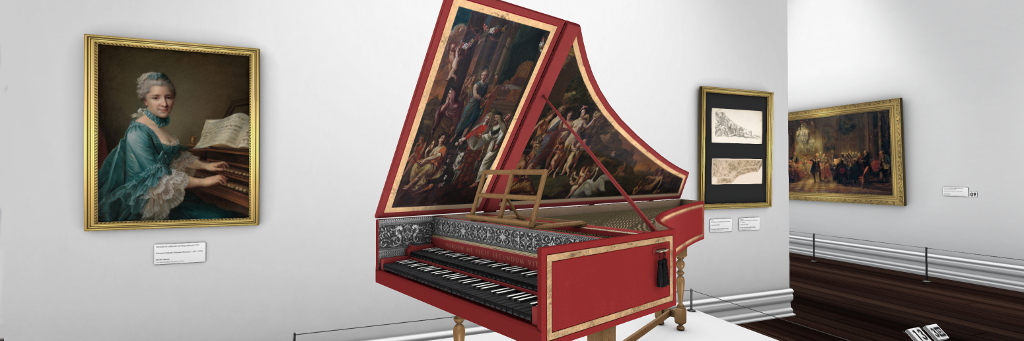
The Vordun Gallery and Museum: Musica Antiqua

As with some of the other exhibitions at The Vordun, this is a HUD-driven exhibition (the HUD should auto-attach on entering the exhibition space, providing you have accepted the gallery’s experience. If you haven’t, you’ll again be asked to do so). Audio can be heard by pressing the number on the HUD corresponding to the instrument  / painting you are viewing. Three additional button (indicated by the number with the video icons alongside them) will open a playback panel in your viewer, but note that a) you may have to click the panel to engage video playback; and b) playback is dependent upon HTML / Flash support in your viewer – an nearby chat link will help for those experiencing issues, and depending on their view of the security of Flash.

Across the hall from Musica Antiqua and Rembrandt is another unusual exhibition of physical world art – one perhaps at times overlooked outside of stately homes in Europe: that of tapestry. Threads of Gold celebrates this art through both wall hangings (perhaps how we most often think of tapestry) and upholstery embroidery – the latter again through the use of models.
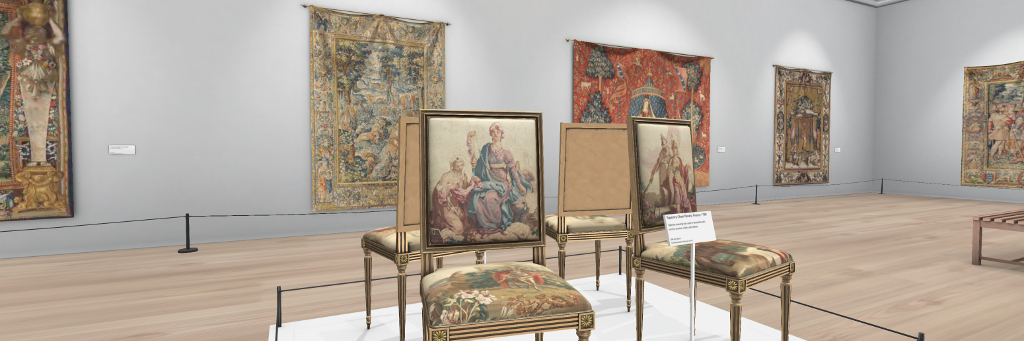
The Vordun Gallery and Museum: Threads of Gold

The Vordun has cut a path of its own in terms of Second Life galleries, focusing as it does on physical world art. I personally find this one of the great attractions with the gallery; by doing so, it can bring the world’s art and artists to an audience who might otherwise never have the chance to experience the personal delight of what is to all intents and purposes a “first-hand” view of the art that the printed page can never really match.

That said, and allowing for the lean towards making The Vordun as close as possible to the feeling of visiting a “real” gallery, I did again find myself wishing in places that displays that do not provide auto-zooming used larger versions of the images they present (overall quality of the original image allowing, of course). This would potentially make them easier to appreciate by those less skilled in camera manipulation or who – more particularly – might suffer from poor vision.

The Vordun Gallery and Museum: The Great European Masters

Emphasising physical world art is something Jake would like to increase, as he informed me during a visit. “I’d love to have some Second Life artists showcase their physical world art.” There is nothing planned for this as yet, Jake has been focused on getting the gallery moved and the new exhibitions opened. However, we did discuss a few names, and SL artists who are not averse to displaying their art in-world might want to contact Jake directly to discuss their work and possible opportunities.

In the meantime, congratulations to Jake and his team for the gallery’s expansion and four new and very engaging exhibitions.

SLurl Details

2019 SL User Groups 29/1: Simulator User Group

Cherishville; Inara Pey, June 2019, on FlickrCherishville, June 2019 – blog post

Server Deployments

As always, check with the deployment thread for the latest news.

  • There are no deployment to the SLS (Main) channel on Tuesday, July 16th, on server maintenance package 19#19.06.14.528215, comprising internal changes.
  • On Wednesday, July 17th:
    • The Magnum RC should be updated to a new simulator package, 19#19.07.10.529179, this apparently contains internal fixes, described by Simon Linden as, “a tiny performance boost … one crash fix, an esoteric TP failure fix, update a system library … general fix-it stuff that isn’t likely to be visible.”
    • BlueSteel and LeTigre will remain on 19#19.06.14.528215.

SL Viewer

On Monday, July 15th:

  • The EEP RC viewer updated to version 6.4.0.529247 (dated Friday, July 12th).
  • The Love Me Render RC viewer updated to version 6.2.4.529302.

On Tuesday, July 16th, the 360 Snapshot project viewer was re-issued as version 6.2.4.529111. This brings the viewer up to parity with the current release viewer.

At the time of publishing this update, the remaining LL viewer pipelines were as follows:

  • Current Release version 6.2.3.527758, formerly the Rainbow RC viewer dated June 5, promoted June 18 – No Change.
  • Release channel cohorts:
  • Project viewers:
    • Legacy Profiles viewer, version 6.2.3.527749, released on June 5. Covers the re-integration of Viewer Profiles.
  • Linux Spur viewer, version 5.0.9.329906, dated November 17, 2017 and promoted to release status 29 November 2017 – offered pending a Linux version of the Alex Ivy viewer code.
  • Obsolete platform viewer, version 3.7.28.300847, May 8, 2015 – provided for users on Windows XP and OS X versions below 10.7.

In Brief

  • Some are experiencing issues logging-in to Aditi (the beta grid), and fingers have been pointed at Firestorm, however, others aren’t encountering the same issues (myself included).
  • UDP and appearance issues: people on older viewers are continuing to report issues with their appearance (and in the case of Lumiya). This is most likely due to all UDP asset messages (including those related to appearance) have been deprecated on the simulators in favour of HTTP, but these older viewers / clients lack the necessary updates.
  • With the release of Firestorm 6.2.47588 there are reports that RegionCrossingInterpolationTime is acting more like a stop at region crossing within that viewer, sometimes with odd behaviour. One suggestion has been to set the debug to 2.00 seconds to stop the odd behaviour. I must admit that I’ve not been boating or flying with FS 6.2.4.57588 so hadn’t noticed any issues.
  • Summer vacations: the summer season means that vacations are rolling around at the Lab. Rider Linden, who had been digging into the script processing issues is currently out; Simon Linden is due on vacation (although SUG meetings should continue in his absence). And there is the SL “summit” among the developers, etc., so some development work is liable to slow down a little.

Celebrating Apollo 11 in Second Life and Sansar

Recalling Apollo 11 in Sansar and Second Life – the Apollo Museum in Sansar

July 16th 2019 marks the 50th anniversary of the launch of Apollo 11 on its historic voyage to the Moon which saw Neil Alden Armstrong and Edwin Eugene “Buzz” Aldrin Jr. set foot on the lunar surface on July 20th, while Michael Collins orbited some 11 km (69 mi) overhead.

I’m re-tracing the flight of Apollo 11 in my Space Sunday articles – part 1, published to coincide with the launch of Apollo 11 is available now, and part 2, covering the Moon landing and the return to Earth will follow on the weekend of the landing. But you can also celebrate the audacious achievement of Apollo 11 in-world in both Second Life and Sansar (and, I’m sure, in other virtual worlds as well – but I am focusing on SL and Sansar here, as it is in these worlds that I spend my time nowadays).

Second Life

Note: there are likely to be more Apollo 11 celebrations than recorded here. These are simply two I’ve enjoyed visiting.

International Spaceflight Museum

Where better to immerse yourself in all things space than the International Spaceflight Museum? Covering two regions, and with the likes of NASA’s (slightly ageing) Jet Propulsion Laboratory region adjoining or close by, the ISM allows you to take a walk through the history of international space-faring achievements, see the massive launch vehicles, re-visit missions both crewed and automated, travel the solar system, and take a glimpse of things to come.

ISM features several elements related to the Project Apollo and its precursor Project Gemini programme; for example, in the shadow of the Rocket Ring sit models of an Apollo Lunar Module (also known as the Lunar Excursion Module or LEM) and the combined Command and Service Modules (the former the capsule in which most of the Apollo crews flew to the Moon and in which all returned to Earth, the latter the power and propulsion system for the Command Module). These include cutaway schematics and other information.

Commemorating Apollo 11 at the ISM

However, located on the ISM’s Spaceport Bravo region, and in the lee of the mighty Saturn V lunch vehicle that carried every crewed Apollo lunar mission on its way to the Moon, is a display dedicated to Apollo 11 (as also seen at the SL16B celebrations in June 2019). It features a combined model of the Command and Service Module and a model of the Command Module itself that allows visitors a peek inside.

Close the this display is a model of the LRV – the Lunar Roving Vehicle, or “Moon buggy”. While this did not fly to the Moon until the Apollo J-class missions (15 through 17), it still stands as a reminder of the technical abilities of the Apollo programme.

While it didn’t fly to the Moon until Apollo 15, the Lunar Roving Vehicle played an important role in humanity’s first foray to the Moon

And if you want to get a feel for how truly massive the Saturn V rocket really was, then hop up onto the Mobile Launcher behind the Apollo 11 display.

Sitting atop a crawler / transporter the Mobile Launcher comprises the massive slate-grey launch platform base and the massive Launch Umbilical Tower (LUT) that included all of the service arms required to support the rocket (nine in all) with fuel, power, and direct access. The most famous of these arms lay close to the top of the tower as it stood in attendance beside a Saturn V. This arm held the White Room – the room where the astronauts, assisted by pad technicians, boarded their Apollo Command Module. Sadly, the White Room doesn’t form a part of the ISM’s Saturn V Launcher model – but you can climb the stairs all the way up to the swing arm on which it sat, and in doing so gain an appreciation for the size of the rocket next to it.

Headline Apollo Exhibit

Headline Apollo  is a pop-up exhibition by Diamond Marchant taking place at the Beckridge Gallery curated by Emerald Marchant in Bellisseria. It takes as its theme a look at Apollo 11 from the perspective of a north Texas newspaper, the Fort Worth Star Telegram. In doing so, it offers a unique perspective on the mission – which was as we know, managed out of the Manned Spacecraft Centre (later renamed the Johnson Space Centre), located further south, near the Texas state capital, Houston.

Beckridge Gallery: Headline Apollo

Given the size of the Bellisseria Homes, they make for a cosy gallery space, but this actually makes Headline Apollo more of an intimate visit. A guide note card is available both at the entrance to the galley and in the foyer (and which includes copies of some of the images seen in the exhibition). The exhibition itself is broadly split in two: to the left of the entrance foyer the launch and the flight to the Moon, to the right, the surface mission and return to Earth.

What makes this exhibition engaging is that Apollo 11 and the Apollo lunar missions as a whole, tend to be remembered in a way that frame them on their own. There might be some ruminations on major events of the time – such as the Vietnam War -, but by-and-large they are presented in something of a bubble. Headline Apollo, however, with its reproductions of front pages and columns from the Fort Worth Star Telegram frames the story of the mission alongside that of daily life in Forth Worth and America as a whole.

For example, sitting alongside the reports of Apollo 11 are those of a more infamous event that took place in 1969, one that would become known as the Chappaquiddick incident, which involved the death of a young woman in a car driven by Edward Kennedy, the youngest brother of John F. Kennedy, who had started America on its journey to the Moon in 1961.

Beckridge Gallery: Headline Apollo

This story, and the more local ones appearing on the reproduced pages of the newspaper put the Apollo 11 mission is something of a different perspective. We’re reminded that for all its faults and weaknesses, humankind can raise itself up, seek to achieve something better, and the bravery of just three men in a tin can can unite us all in a hope for a better tomorrow.

Complete with archival NASA photos an cover pieces from the likes of Time and Life magazines, Headline Apollo offers a departure from the more usual Apollo retrospectives and will be open to visitors through until July 28th, 2019.

Sansar

Sansar may be anathema to some Second Life users, but if you have the hardware to enjoy it – and remember you can with a suitable PC and without the need for a VR headset – then frankly, there is no better way within a publicly accessible virtual world to celebrate Apollo 11 and the entire Apollo lunar endeavour than by visiting the Apollo Museum ant Tranquillity Base.

The Apollo Museum

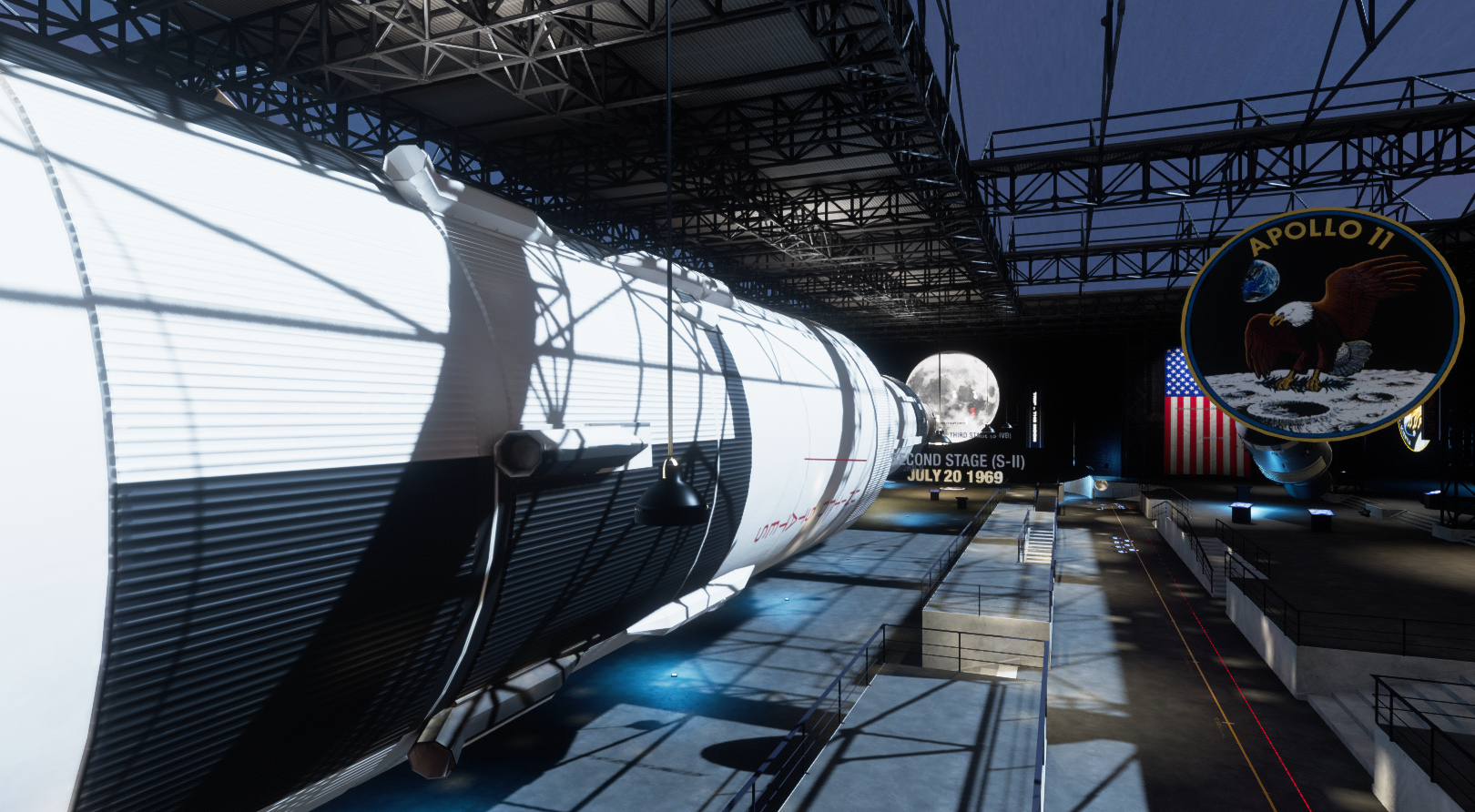
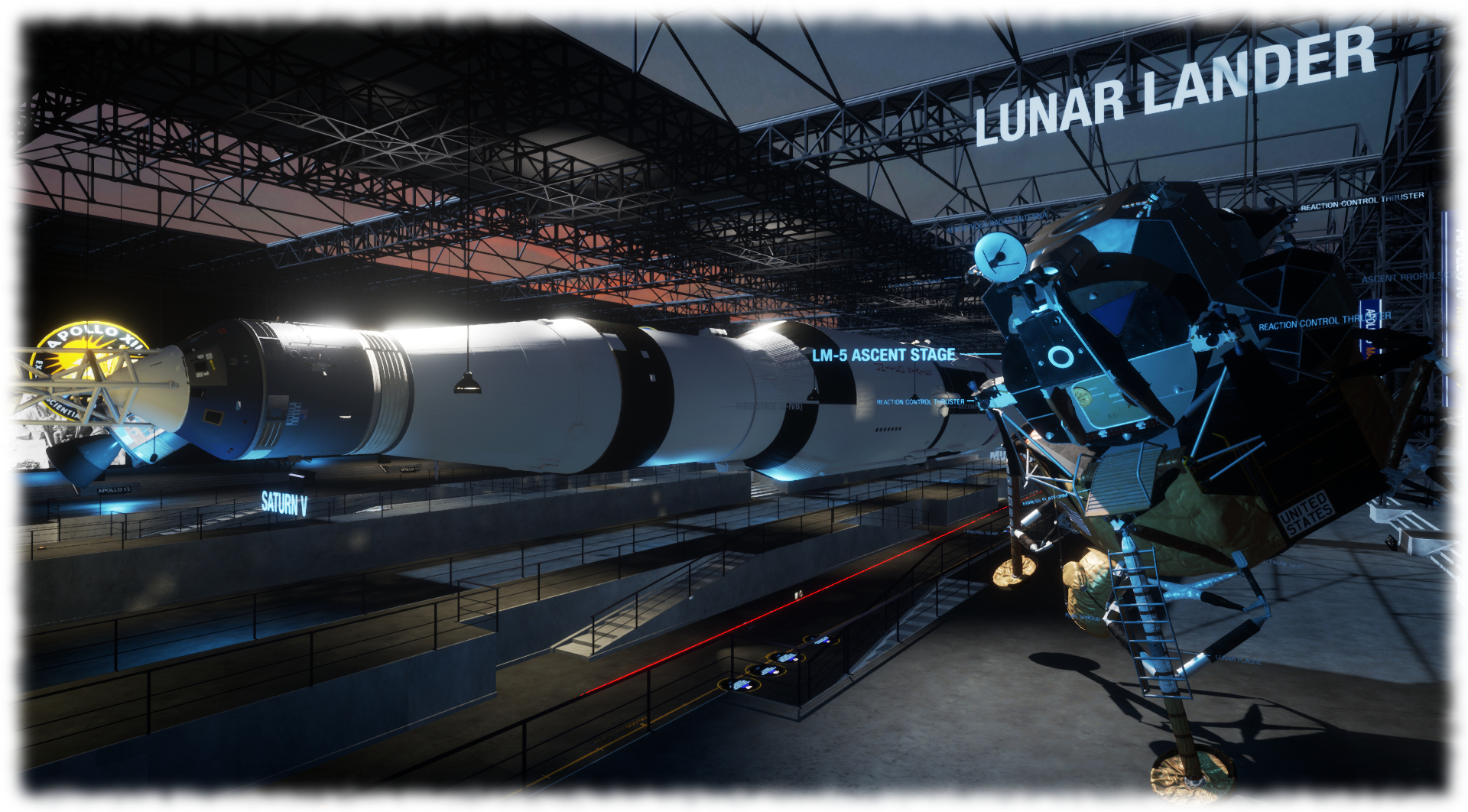
The Apollo Museum remains one of the highlights of Sansar (if first wrote about it back in 2017). Developed by Sansar Studios, Loot Interactive and NASA, it reproduces the main hall of the Apollo/Saturn V Centre at the Kennedy Space Centre, Florida, to offer visitors a fully interactive guide to the Apollo programme.

The Apollo Museum: Apollo Lunar Module (r) and Saturn V

Here you can walk the length of a Apollo Saturn V launch vehicle, from the exhaust bells of its five mighty F-1 engines to the tip of the Launch Abort System tower. Along the way, and set out on  time-line, you can re-trace the journey of Aldrin, Armstrong and Collins from the launch of Apollo 11 through to its splashdown 8 days later.

This is done by walking up the left side of the Saturn V, where exquisite models (the Earth and Moon not being to scale admittedly) and photos mark the significant stages of the the mission as they unfolded, culminating in Apollo 11’s arrival at the Moon and Armstrong and Aldrin’s descent to the Moon’s surface. The story then resumes on the other side of the Saturn V’s nose, with the two men ascending back to orbit to link-up with Collins in the Command and Service Module, before charting the trio’s return to Earth and splashdown.

The Apollo Museum: the little models re-creating the flight of Apollo 11, these showing the TDE phase of the mission, when Michael Collins manually flew the Command and Service Module to dock with and extract the Lunar Module from the S-IVB upper stage of the Saturn V

With interactive disks available that play audio relevant audio recordings from the mission, it’s a marvellous way to understand the mission, even if I do have a small quibble with the Lunar Module’s legs being shown unfolded during the flight to the Moon (this was actually only the case with Apollo 13, when the LM was being used as a lifeboat).

Beyond this, on the upper sections of the gallery, are sections devoted to all of the Apollo crewed flights, from the tragedy of Apollo 1 through the triumph of Apollo 11 to the near-disaster of Apollo 13, and thence to the the sounding bell of Apollo 17. These also include interactive panels that will play audio when an avatar stands on them, and are bracketed by a complete model of an Apollo Lunar Module (also referred to as the Lunar Excursion Module, or LEM) and a model of the Apollo 13 Command and Service Module showing the damaged and exposed part of the latter after it had been crippled by an explosion within a liquid oxygen tank.

The Apollo Museum

From a large disk under the Saturn V’s Launch Abort System tower, visitors can jump to Tranquillity Base, the landing area for Apollo 11.

Tranquillity Base

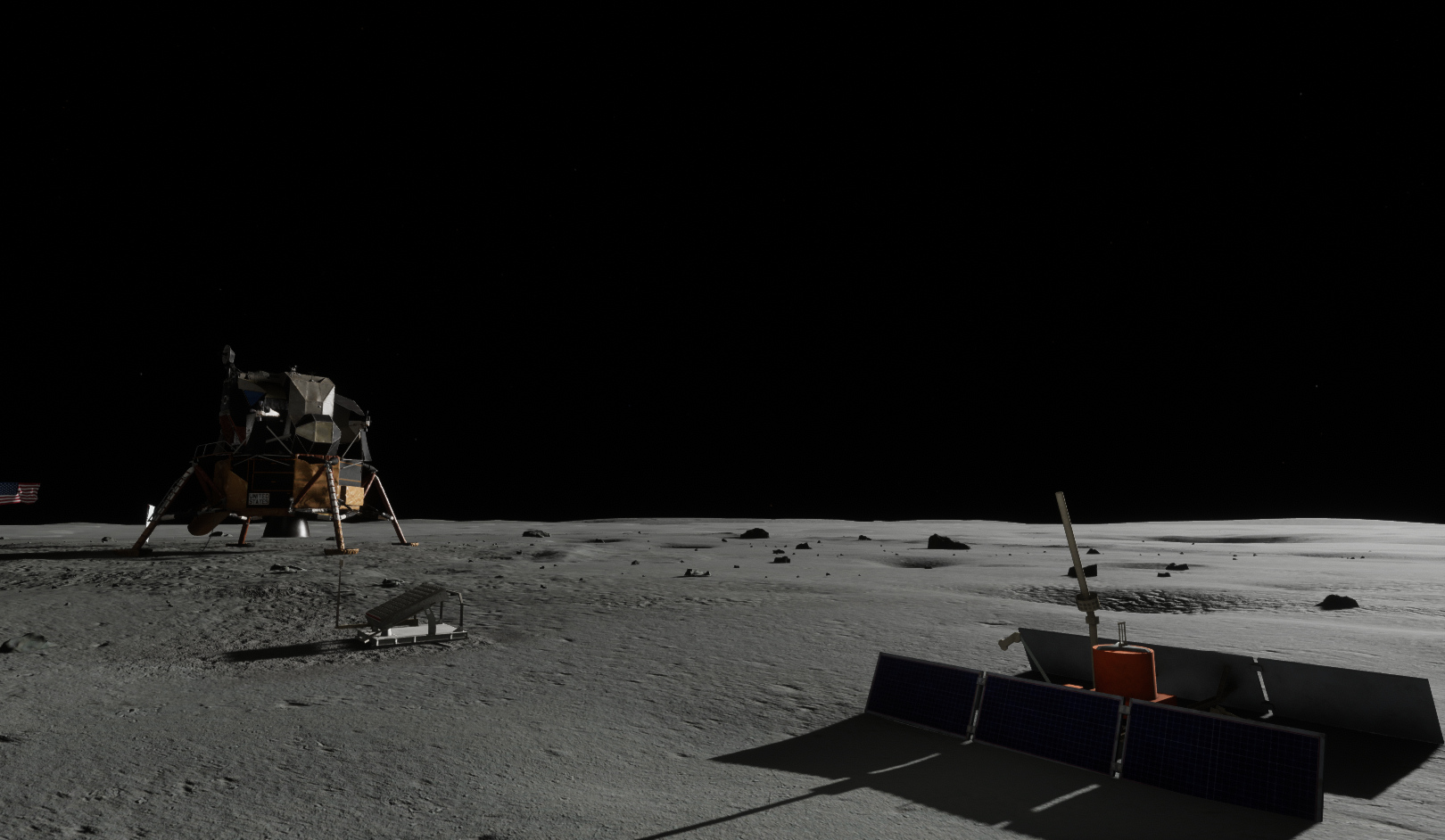
Also by Sansar Studios / Loot Interactive and NASA, Tranquillity Base reproduces the Apollo 11 Lunar Module as it sat on the Moon whilst Armstrong and Aldrin were on the lunar surface. This is a more static display when compared to the Apollo Museum, dominated by the Lunar Module and an overhead display which, when correctly aligned, provides insight into the surface equipment placed out on the lunar surface around the LM.

Visiting the individual elements will trigger playback of audio elements relevant to the science packages, whilst closer to the LM Armstrong’s famous statement on setting foot on the Moon’s surface can be heard.

Tranquillity Base: showing the Apollo 11 lunar Module Eagle in the background. In the middle of the picture is the Laser Ranging Retroreflector (LRRR), designed to gain accurate measurements of the Earth-Moon distance by reflecting lasers shot at it from Earth, and on the right, Passive Seismic Experiment Package designed to record “moonquakes”

And if you want to know how small the Earth looks from the surface of the Moon, be sure to tilt your camera up and around.

In Conclusion

As noted above, there are doubtless numerous other Apollo 11 celebrations – be they exhibits, parties or something else – across SL and other virtual worlds. But these are the ones I wanted to start here during this historic week. I hope you’ll take the time to drop-in and visits them.

SLurl Details

Firestorm 6.2.4: EAM and paving the way

On Monday, July 15th, 2019, Firestorm released version 6.2.4.57588 of their viewer.

However please note that this release is for Second Life only.

Essentially a  maintenance update, Firestorm 6.2.4.57588 brings the viewer up to parity with the official viewer, adding a range of fixes, improvements and updates from both Linden Lab and via the Firestorm team. The major new feature for this update is the Estate Access Management options.

As such, this release paves the way for Firestorm to be able to adopt the Lab’s Bakes On Mesh and Environment Enhancement Project, once these have in turn been released by Linden Lab.

Table of Contents

As per usual, this article provides an overview of the more visible updates in the release. Please refer to the release notes for a full list of updates and all associated credits. Also, note that this update means that version 5.0.11.53634 will be blocked from logging in to the Second Life grid in about three weeks.

A small personal note: my apologies to Firestorm users who may have been directed to this post by the Firestorm team’s release announcement or the Firestorm 6.2.457588 release notes and were unable to find it. My ISP suffered a major (8+ hour) outage some 90 minutes before the release was made, preventing me from uploading and posting this overview. 

Why A Second Life Only Release?

As noted above, Firestorm 6.2.4.57588 is for Second Life only. This is because Firestorm are changing how they support Second Life and OpenSim grids. You can read the full details in the official Firestorm blog post Second Life and OpenSim are No Longer Joined  at the  Hip, but in short, and in the future:

  • The Firestorm code is forked into two repositories: Second Life and OpenSim.
  • The Second Life dedicated viewer’s grid manager will only offer Agni and Aditi (SL main and beta grids).
  • The OpenSim dedicated viewer’s grid manager will NOT offer Second Life grids.
  • If you wish to access both OpenSim and Second Life, you will have to install both versions of Firestorm
  • the two versions will install entirely independently to one another and will not share settings or cache, so they will not conflict with each other.

To assist is identifying the two differernt grid versions, the Firestorm downalod pages has been changes to clearly differentiate between Second Life and OpenSim.

The revised Firestorm grid download selections

Note that at the time of writing, the OpenSim download page points to Firestorm 6.0.2.56680, which still works on both SL and OpenSim, and will use the same settings folders as 6.2.4. This will change with the next Firestorm update.

The Usual Before We Begin

As per my usual preamble:

  • There is no need to perform a clean install with this release if you do not wish to.
  • Do, however, make sure you back-up all your settings safely so you can restore them after installing 6.2.4.
  • Please refer to the official release notes for a full breakdown and changes, updates and credits associated with this release.

Lab Derived Updates

Firestorm 6.2.4.57588 brings the Firestorm viewer up to the current (at the time of writing) Linden Lab release viewer, version 6.2.3.527758, formerly the Rainbow RC viewer promoted on June 18th, 2019.In addition, this release includes some upstream fixes from current LL RC viewers, such as the HiDPI retina display support on Mac systems (Love Me Render RC).

Please refer to the Firestorm 6.2.4 release notes for details of specific Lab-derived fixes for this release.

Estate Access Management (EAM)

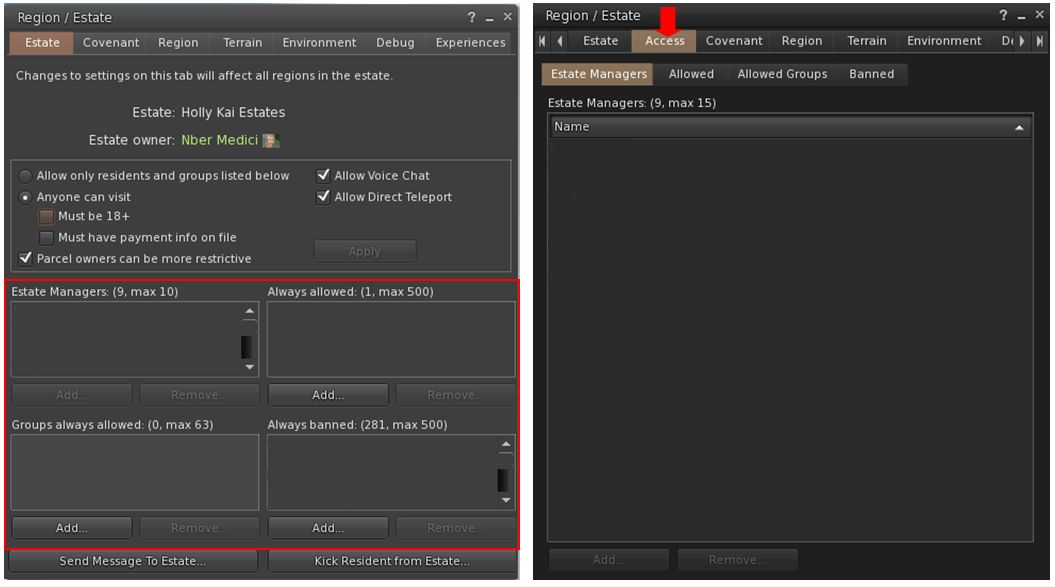
It has long been the case that the lists for managing access to a region / estate have been crammed into the General tab of the Region / Estate floater (World > Region / Estate or ALT-R). This has made the management of these lists – particularly the Banned list – difficult when reaching large numbers.

The Estate Access Management (EAM) project was introduced by Linden Lab to address the various shortfalls with the presentation of these list, through both back-end changes and a refactoring of the Region / Estate floater. Firestorm release 6.2.4.57588 includes the updated viewer UI, allowing estate owners and officers to make use of the improved tools.

In particular, the EAM moves the access control elements of the Region  / Estate viewer away from the General tab and into their own dedicated tab (show below).

Estate Access Management: as they have previously appeared (left) and as they are under EAM (right) – note: user names have been redacted from this lists shown

In terms of adding or removing names and groups, the new Access sub-tabs work in much the same way as the list boxes in previous releases. However, with the new design, additional functionality is added to some of the lists:

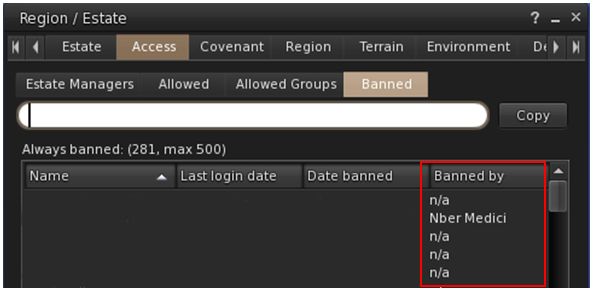
  • The Banned list additionally records:
    • The last date on which a banned individual logged-in to Second Life (to assist with housekeeping the list – if an account hasn’t been used in X months or years, why keep it on the list?).
    • The date on which an individual was banned.
    • The name of the estate officer / region holder who implemented the ban.
  • The Banned tab can be sorted into ascending / descending order by banned name, date last logged in, date banned, or by person banning them. Click on the column title to sort.
The Banned list provides more functionality: search, re-ordering, date banned, who did the banning (only applicable for banned implemented after the EAM back-end was deployed by Linden Lab earlier in 2019, pre-existing bans will have “n/a” in the new columns, as indicated by the Banned By column in this image. Note that names have been redacted from this list
  • The Estate Managers, Allowed and Allowed Groups tabs can be sorted into ascending / descending order by name. Click on the column title to sort.
  • The Allowed Groups, Allowed and Banned tabs all include a search option.
  • The number of allowed Estate Managers is increased from 10 EMs to 15 EMs – again in response to many requests from region holders.

Continue reading “Firestorm 6.2.4: EAM and paving the way”

A new (fae forest) in Second Life

(fae forest); Inara Pey, July 2019, on Flickr
(fae forest), July 2019 – click and image for full size

Update: (fae forest) has closed and the host region now home to Adult-rated activities. SLurls have therefore been removed from this article.

Miro Collas recently pointed out the Zuma Jupiter has relocated (and rebuilt) her (fae forest) region theme, prompting us to hop over and take a look at the new design in its new home.

I’ve previously written about (fae forest) in these pages in April 2019 (see Re-visiting Elvenshire in Second Life) and March 2017 (see A Mystical Fae Forest in Second Life). We enjoyed both visits due to the fairy-tale like look and feel to the designs, so I was looking forward to seeing what the relocation had led Zuma to create.

(fae forest); Inara Pey, July 2019, on Flickr
(fae forest), July 2019

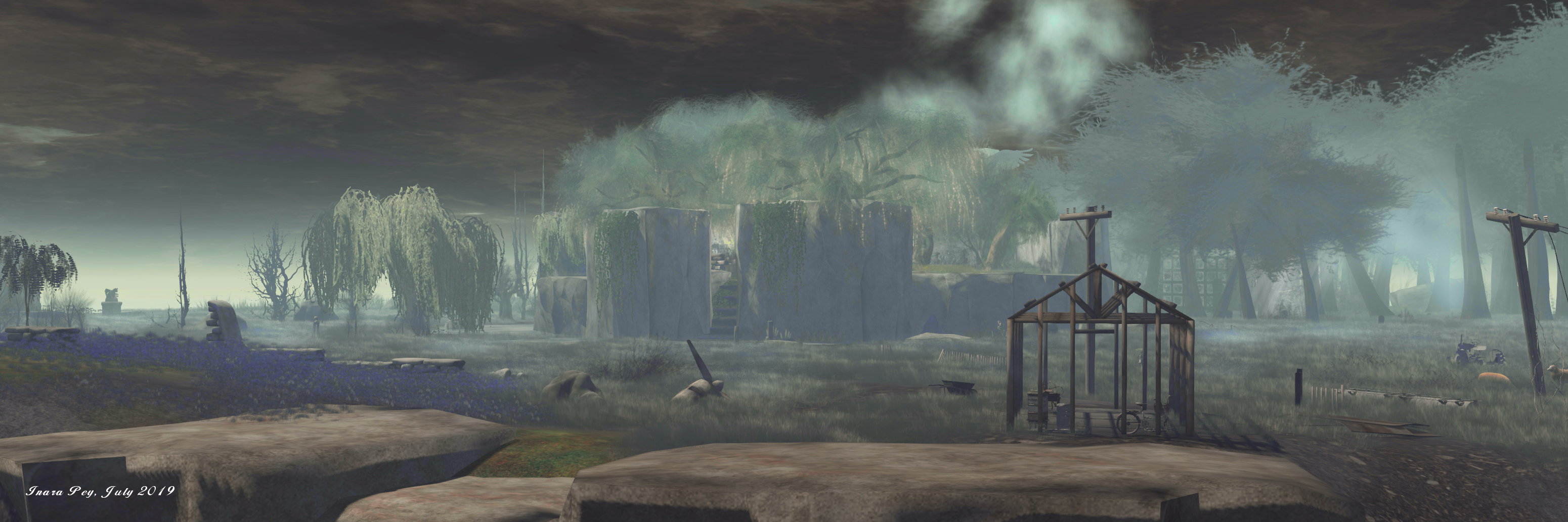
In keeping Zuma’s previous designs I’ve written about, this (fae forest) maintains the fantasy element with its touch of whimsy, but it also has something of a darker tone as well. This latter aspect is somewhat apparent on arrival: the default windlight casts a hazy blanket across the region, causing distant trees to look a little ghost-like, an effect enhanced by the stardust that in places drifts on the wind.

Sitting as a humped island rising from the sea, the region has a distinct north-west to south-east orientation. Towards its centre there rises a vertically-walled table of rock, its broad plateau, complete with taller pillars and curtains of rock that in places rise above it, resembles a great, natural fortress; its castle-like look further enhanced by the ring of water that surrounds it like a natural moat.

(fae forest), July 2019

The land spreading to the west and east around this great plateau undulates gently and carries with it a feeling of being windswept and exposed. It is largely home to scrub grass, some of if providing grazing for sheep, while a few trees sit further around its eastward arc, the horizon of which is broken by the blocky form of a stone-built chapel. The grassland also sweeps around to the west and south, where it washes against the dark shadow of woodland – but more of that anon.

The great plateau is accessed through a set of stone-cut steps that face the landing point across the grasslands. Like the plateau, the steps are on a massive scale – each of them practically needs a staircase of its own to climb it. They provide the single point of entry to the table-top of rock from the lands below, as if again suggesting this is a place of natural fortification.

(fae forest), July 2019

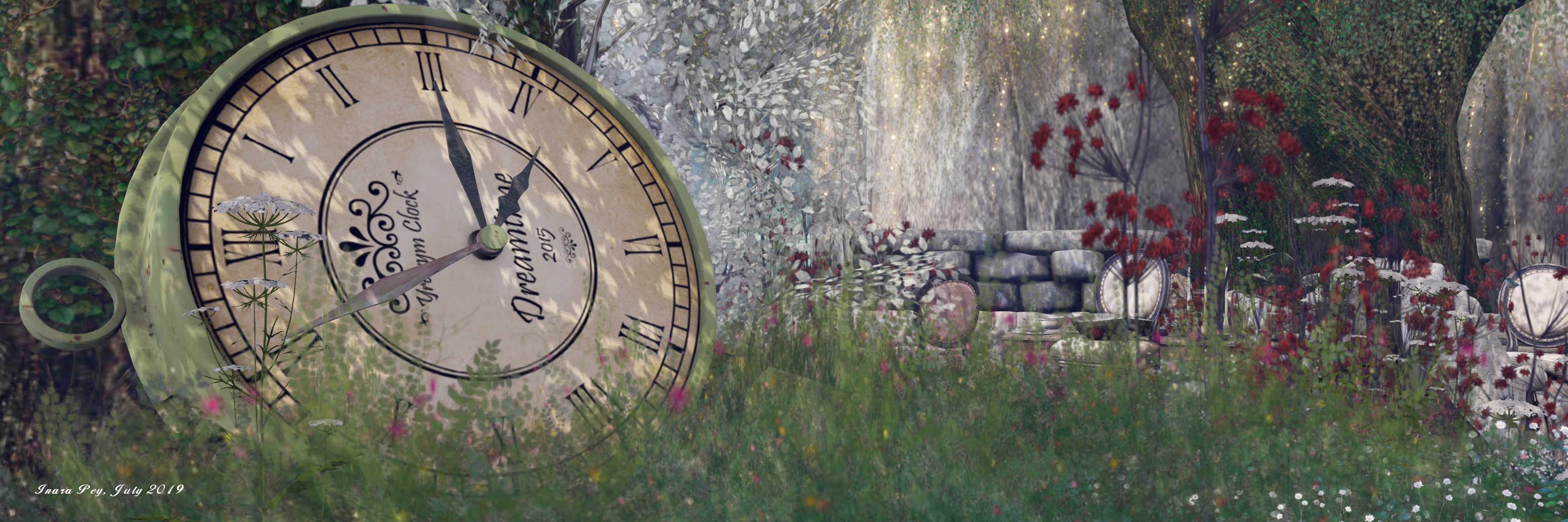
However, the top of the plateau is not in any way given over to ideas of war or defence. Instead, it offers the clearest reflection of previous iterations of (fae forest). Richly wooded, it offers a lot to discover in what is a glorious garden sitting beneath boughs draped in lights and between which shafts of sunlight fall around a central giant gazebo. Nevertheless, the echoes of castles persist: on the south side of the gazebo more huge steps cut their way up through another great up-thrust of rock that rises like a giant natural motte to the lower plateau’s bailey, albeit one lacking defensive walls around its top.

Beyond the plateau’s bulk the landscape takes a different turn. Great columns of rock cover the south-eastern side of the region, looking for all the world like some giant’s hammer has been used to randomly pound each of them into the ground. Just to west the of these great stone blocks stands the dark woodland mentioned above, a place where rain falls and mist creeps between shadowy tree trunks.

(fae forest), July 2019

Here the region takes on something of a darker tone, not only because of the mist and rain and dark hue to the trees, but because of what lies amidst the tall trees. A ramshackle cabin raised on stout wooden legs and  looking for all the world like it should be sitting within some dank, dark corner of a bayou crouches on one side of the path. Beneath it, and somewhat ominously, baby dolls have been strung up, while facing it from the other side of the path is a strange oversized display cabinet in which hang more dolls, these ones perhaps best described as Chucky’s distance cousins, watched over by a distinctly nervous-looking cat (one of Cica Ghost’s creations).

The wood with its strange tableaux can come as an odd turn for the region to take, standing as it does in opposition to the more fairy-tale heights of the plateau above and behind it. However, it also adds to the overall atmosphere of the setting, adding to its uniqueness.

(fae forest), July 2019

This uniqueness is further increased by the oddities scattered across the region: an aero engine here, offshore ring of standing stones there, sculptures rising in unexpected places, high and low, and more – there’s even a troll hiding within the arms of denuded trees.

Atmospheric, slightly haunting, but definitely photogenic, this version of (fae forest) perhaps offers a slightly different face to the world than previous builds, but it remains evocative and utterly worthwhile in visiting.

Kultivate 4th Anniversary art show

Kultivate 4th Anniversary Art Show

Sunday, July 14th marked the opening of the Kultivate Magazine 4th anniversary art show in Second Life.

Since its inception, the brand has grown to encompass the website, the side-by-side Kultivate AIR and the Windlight galleries, The Edge gallery, specialising in black and white images, and the arts community as a whole through the provisioning of personal art spaces on the Kultiate home region of Water Haven. In addition, Kultivate has provided fund-raising support for Team Diabetes of SL, Rock Your Rack (supporting the National Breast Cancer Foundation – NBCF), and Feed a Smile.

Kultivate 4th Anniversary Art Show: Vee Tamas

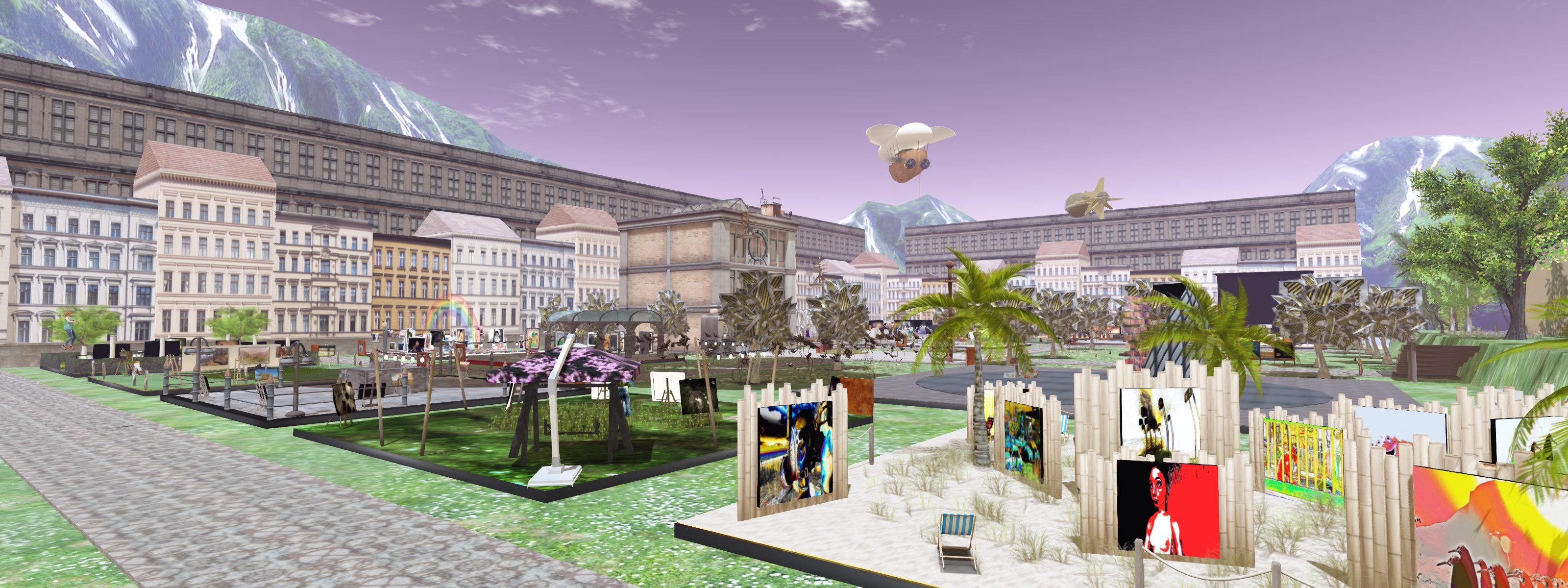
For their fourth anniversary, Kultivate presents a 2D and 3D art exhibition in a steampunk-themed setting. Some 27 artists are participating in the event, which also features a week of entertainment as well.

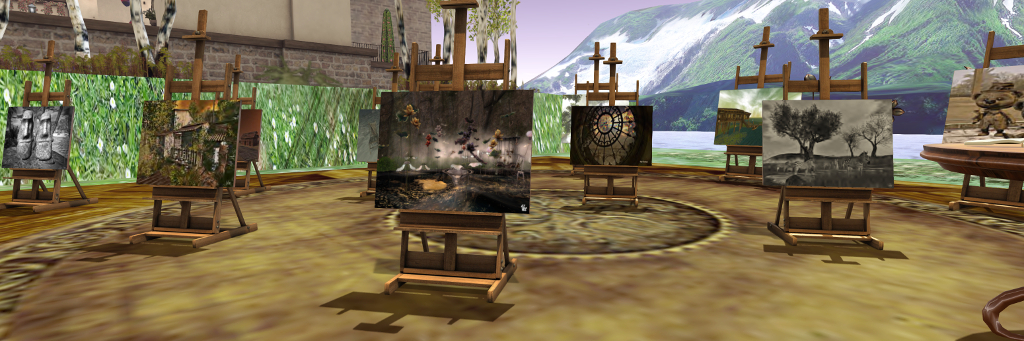
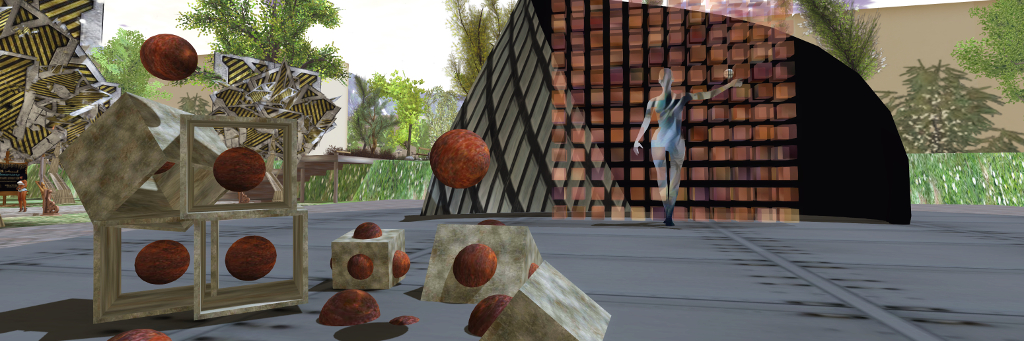
Obviously, with so many artists participating, the range of art on display is broad, with avatar studies, landscapes, colour images, monochrome, physical world paintings, mixed media, and more. All of the art is displayed in the open air, with the region’s default windlight providing a strong neutral background light to fully appreciate the pieces on display.

Kultivate 4th Anniversary Art Show: VictorSavior

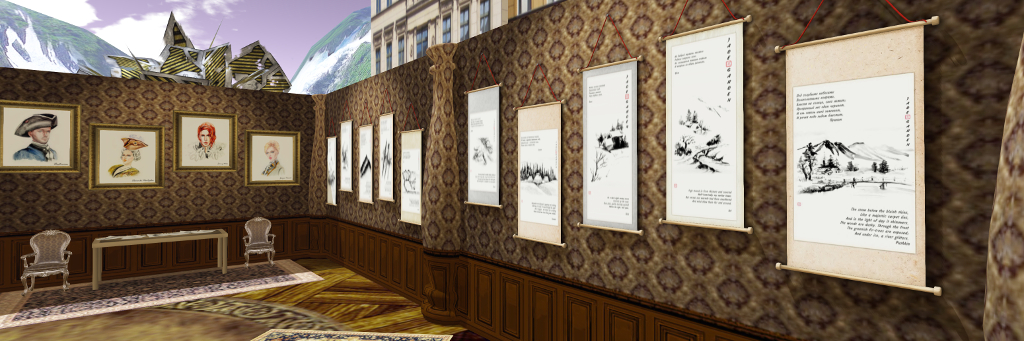
I admit to inevitably being drawn to some of my favourite artists – Cybele Moon with her fabulous fable-like images; VictorSavior, who again offers a wonderful mix of art: hand-drawn avatar studies, paintings of historical figures, landscape paintings and the most engaging series of oriental-style wall hanging featuring ink-drawn images and words; Jamee Sandalwood’s wonderful landscape and region studies; and so on. However, all of the art makes this a more than engaging visit.

Entertainment for the week through to July 20th comprises (all times SLT):

  • Monday, July 15, 2019 16:00-17:00: Dimivan Ludwig.
  • Tuesday, July 16, 2019 16:00-17:00: Mavenn.
  • Wednesday, July 17, 2019 16:00-17:00: Wolfie Starfire.
  • Thursday, July 18, 2019 16:00-17:00: TBD.
  • Friday, July 19, 2019 16:00-17:00: Erika Ordinary.
  • Saturday, July 20, 2019 13:00-14:00: Closing parting.
Kultivate 4th Anniversary Art Show: Elle Thorkveld

There are also special raffle giveaways for those attending the entertainment events with prizes including two LumiPro lighting systems, a Serenade Photo Studio Pro, Tillie’s Pose Stand, Fotoscope FotoFrame Publisher, the Beachyhead House from DAD Designs and the Camden Photo Studio from Maven Homes.

SLurl Details