2019 SL User Groups 1/2: TPV Developer Meeting

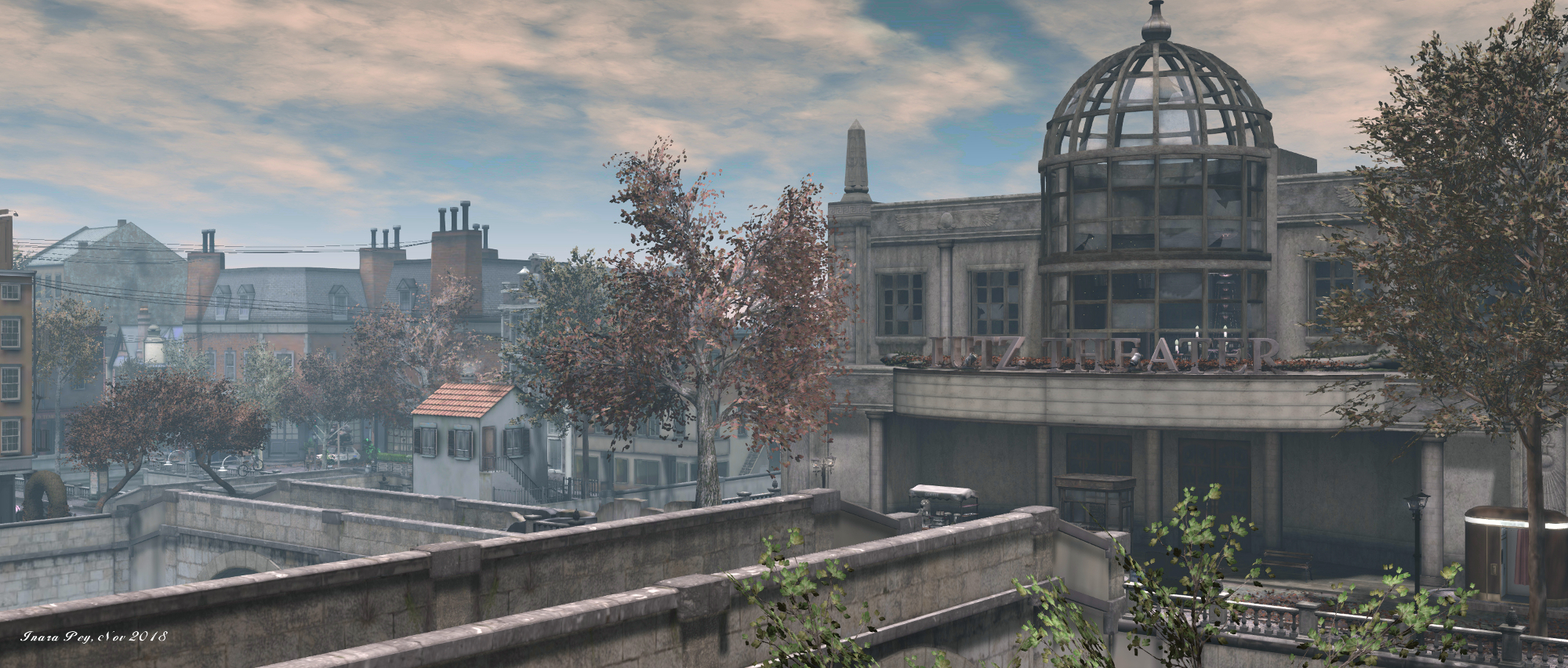
Lutz City; Inara Pey, November 2018, on FlickrLutz City, November 2018; blog post

The following notes are taken from the TPV Developer meeting held on Friday, January 4th, 2019. A video of the meeting is embedded below, my thanks as always to North for recording and providing it. Note that was a brief meeting, with extended silences while things were discussed in chat.

This was a shot meeting, given not a lot has changed since the December 21st, 2018 meeting, and a no change window has been in effect at the Lab. Note that in the recording, there are some significant pauses in voice, and the time stamps below reflect this.

SL Viewer

[1:04-3:00]

Still no viewer updates since 2018, week #51, leaving the official viewer pipelines as follows:

  • Current Release version 6.0.1.522263, dated December 5, promoted December 13. Formerly the Spotykach Maintenance RC viewer.
  • Release channel cohorts:
    • Estate Access Management (EAM) RC viewer, version 6.1.0.522564, December 19.
    • BugSplat RC viewer, version 6.1.0.522614, December 18. This viewer is functionally identical to the current release viewer, but uses BugSplat for crash reporting, rather than the Lab’s own Breakpad based crash reporting tools.
    • Love Me Render RC viewer, version 6.0.2.522531, December 18.
  • Project viewers:
  • Linux Spur viewer, version 5.0.9.329906, dated November 17, 2017 and promoted to release status 29 November – offered pending a Linux version of the Alex Ivy viewer code.
  • Obsolete platform viewer, version 3.7.28.300847, May 8, 2015 – provided for users on Windows XP and OS X versions below 10.7. This viewer will remain available for as long as reasonable, but will not be updated with new features or bug fixes.

RC Viewers

Both the EAM and Bugsplat RC viewers are close to being at a point where either could be promoted to de facto release status. The current Love Me Render (rendering improvements) RC is liable to receive at least one more update before it will be ready to be considered for promotion. However, none of the viewers are ready for promotion in the immediate future.

Project Viewers

The Bakes on Mesh project viewer is still awaiting bug fixes, and the EEP viewer is awaiting UI updates and more atmospheric shader work, all of which is covered in my previous Content Creator UG summary. Both are expected to go to release candidate status “very soon”.

Texture Fetching and Caching

[12:58-19:39] Linden Lab is working on both overhauling how textures are fetched and how they are cached by the viewer. This work involves pretty much rebuilding the entire texture fetching pipeline(possibly using HTTP 2), and changing the state the data is cached in by the viewer (uncompressed, rather than using JPEG 2K, removing the need for the local computer to decode / decompress the texture for JPEG 2K when loading it from cache into memory).  This should itself improve texture loading, as well as all of the changes hopefully bringing improvements to texture handling as a whole, as well as hopefully getting to a point where cache clearing has even less significance than it does at present (and hopefully remove more of the myths about cache clearing).

This work has been on the back burner for a while, but a resource has once again been assigned to it, with a focus on fixing the bugs in the fetching changes. If all goes well, these updates – which also change how texture memory is used – should be appearing in a release candidate viewer some time “in the next several weeks”.

This topic kicked off a text chat technical discussion on texture handling among TPV developers, that continued through to almost the end of the meeting. Please refer to the video for details.

General Notes

  • [5:14-5:32] TPVs should hopefully get the most recent crash stats in the next couple of weeks.
  • [6:09-6:32] Again, as per my CCUG summary, the Lab has received contributions from Beq Janus (mesh uploader improvements) and Nicky Dasmijn (improved search capabilities on preferences and settings). These should be appearing an a maintenance RC once implemented by the Lab.
  • [7:38-9:20] The Lab has ceased doing debug builds with viewer. This speeds the build process as enough data is gathered via deb info to remove a dedicated debug build. However, it does mean viewers using the debug build path many well fail during the build process, and one TPV is reporting issues with deb info – although this may be due to their build process being at a variance to the Lab’s.
  • [10:50-11:12] The Lab’s development viewer builds for Mac now use macOS Sierra (10.12). It’s not certain if this is the case for the production builds as yet.
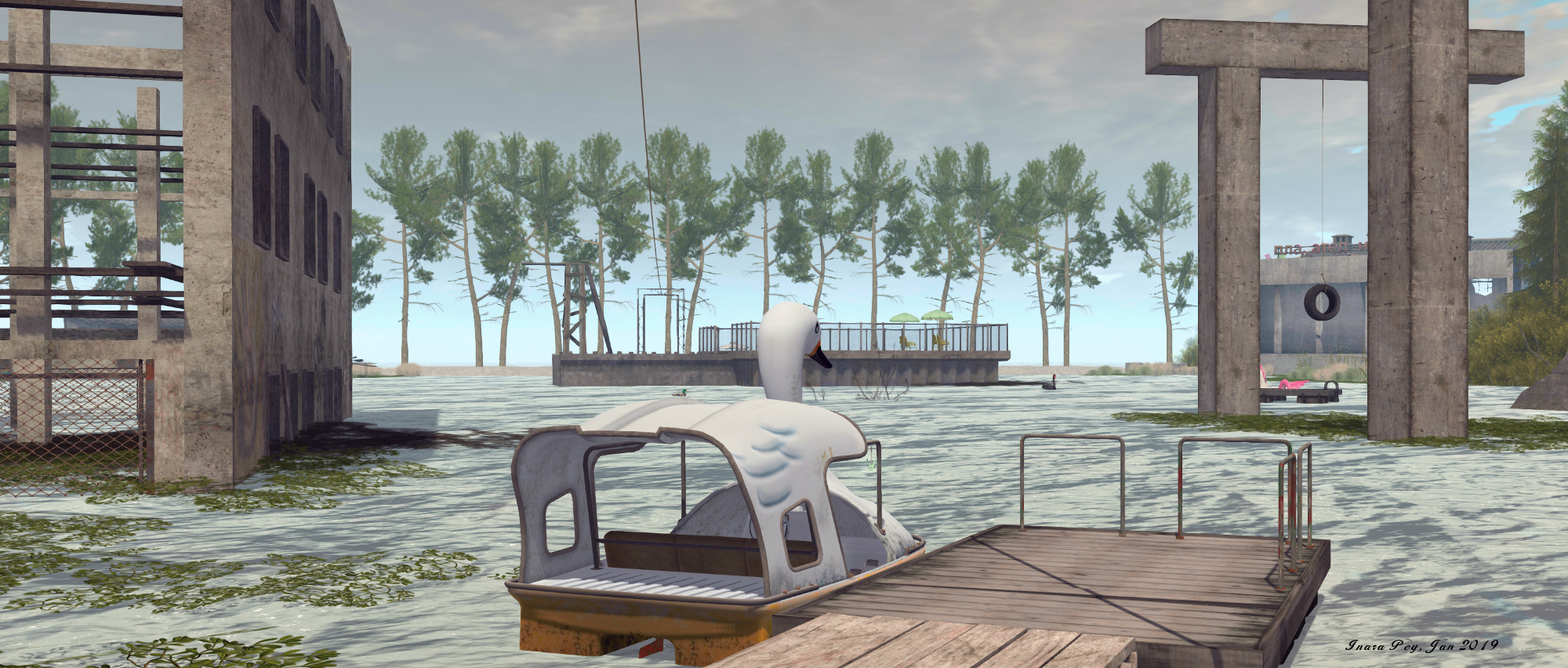
The haunting beauty of Rummu in Second Life

Rummu; Inara Pey, December 2018, on Flickr
Rummu – click any image for full size

Update: in keeping with Serene and Jade’s usual approach of maintaining a region design for approximately a month after opening, Rummu has closed. SLurls have therefore be removed from this article.

The start of a new year brings with it the opening of a new region design by Serene Footman and Jade Koltai, and once again they present a vision of a place few of us may ever get to see in the physical world. Rightly renowned for their work in reproducing Furillen (read here), Khodovarikha (read here), La Digue du Braek (read here), Isle of May (read here) and Black Bayou Lake (read here), they now present a setting with deep historical and cultural meaning, harkening back to the era of the Soviet Union: the Rummu quarry, located in Estonia.

Called simply Rummu in Second Life, the region completely captures the heart and soul of Rummu quarry and some of its surroundings. beautifully encapsulating them within the confines of a 256 square metre setting.

It was the location of a quarry from the 1930s until the early 1990s. More notoriously, Rummu was the site of a Soviet prison, whose inmates formed the majority of the quarry’s workforce … Rummu quarry was essentially a labour camp in which prisoners were forced to work and to endure brutal treatment from guards who barely spoke their language.
After Rummu prison was closed, the quarry ceased operating. The site was flooded and another remarkable story began. The prison itself now lay hidden beneath a lake that slowly became a well-known Estonian beauty spot, drawing many visitors who wanted to swim and dive in its crystal clear waters. In summer, this place resembles a city beach, packed with bathers.

– Serene Footman, discussing Rummu

Rummu; Inara Pey, December 2018, on Flickr
Rummu

It is as this modern beauty spot (still used today, despite bathing and swimming in the quarry having been banned) that Jade and Serene have recreated Rummu, and they’ve done so with remarkable detail.

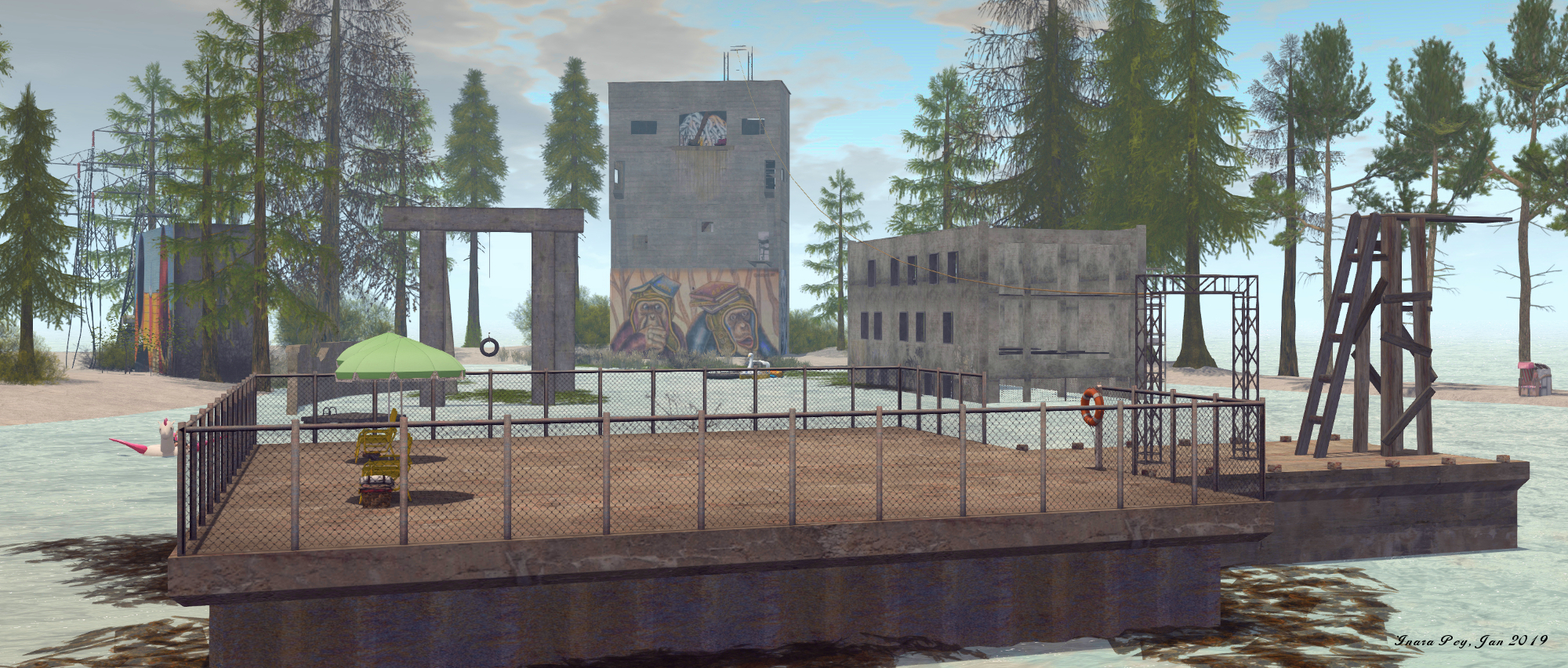
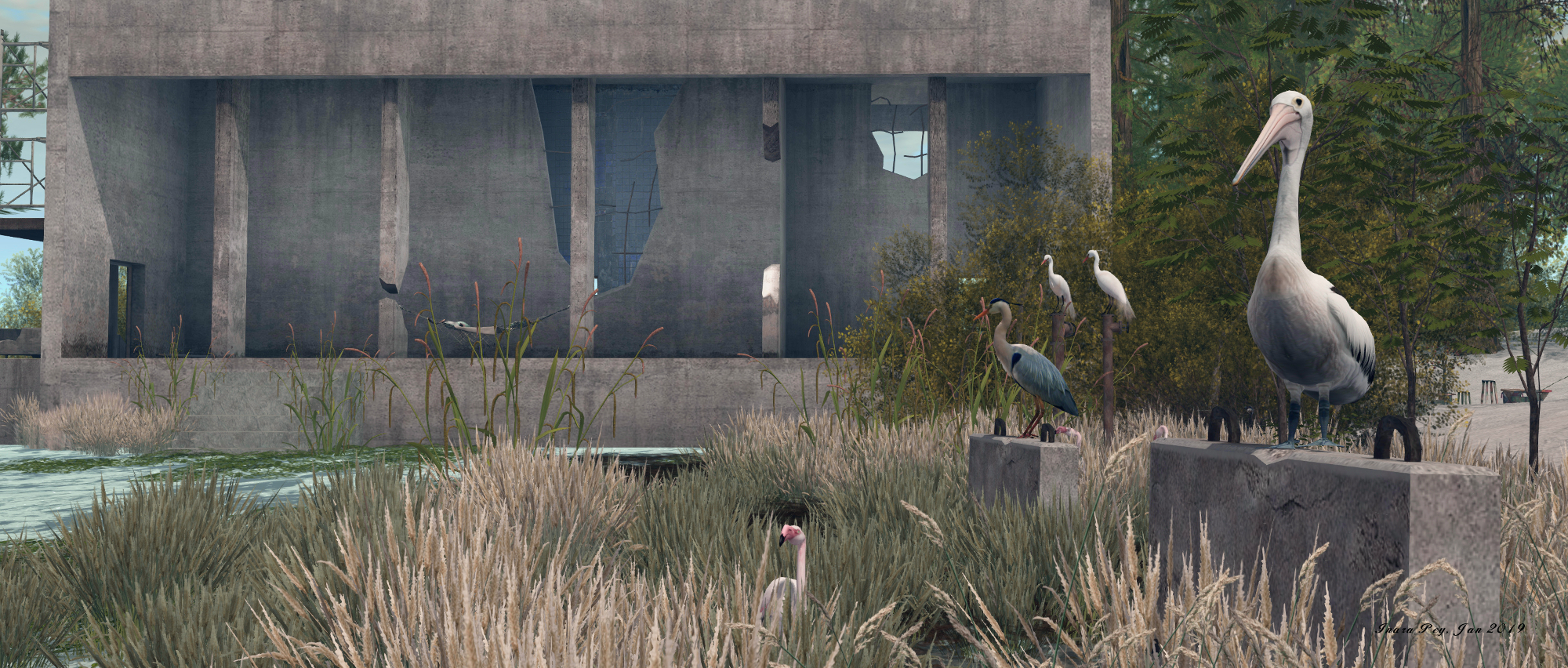
In the physical world, the quarry sits within a heavily wood region and is immediately identified by a massive spoil tip from the quarry excavations, which forms a man-made table mountain rising above what is now the meandering lake. Sitting close to the spoil tip are a number of building shells, some rising directly out of the flood waters filling the quarry, others sitting on the shoreline, all now battered and broken since the quarry’s closure in the 1990s, and the natural flooding of the quarry pit that followed (the prisons themselves – Rummu and Murru prison, which Serene references in his own write-up about the location, – actually continued to operate through until 2012, after being merged into one in 2001, and then with the nearby Harku women’s prison in 2004).

Rummu; Inara Pey, December 2018, on Flickr
Rummu

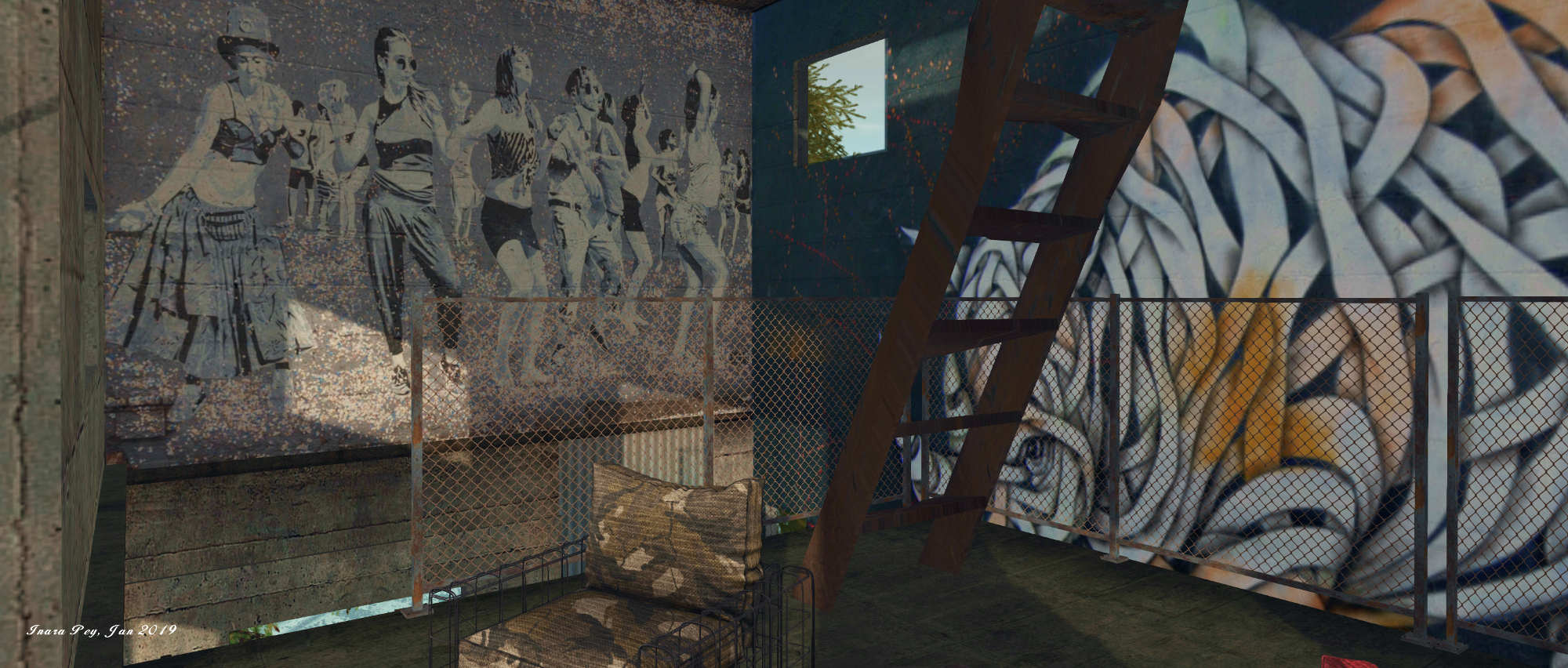
All of this is wonderfully recreated within the Rummu build, right down to the rills and channels created by water that flows down the flanks of the spoil tip as a result of regional rainfall, and the low, sandy-like spaces where Estonians come to enjoy the summer Sun between dips in the deep waters. Also captured within the build is the fact that rather than merely standing as derelict shells or as diving platforms for daring leaps into the waters below, the buildings also became the home of an impromptu outdoor art gallery, their walls home to large fresco-like paintings and graffiti.

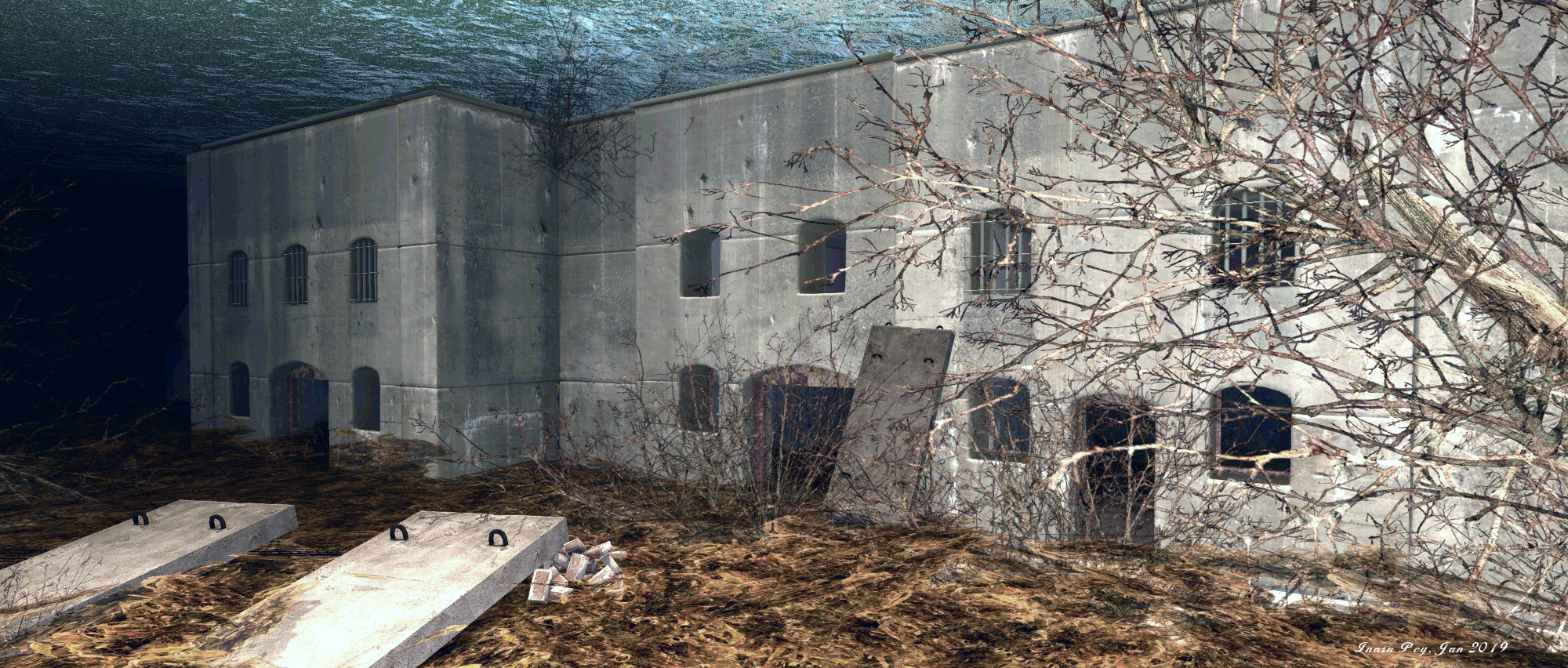
Nor is the build restricted to reproducing what lies above the waters; when the quarry naturally flooded after work within it ceased (the quarry had to be continuously pumped during its operational life in order to prevent it filling up with water), many of the buildings it contained, together with equipment, ended up underwater.

Rummu; Inara Pey, December 2018, on Flickr
Rummu

These drowned remains give the physical world Rummu prison something of an eerie, ethereal feel, as they can often be seen from above the surface. And it is these submerged buildings and other reminders of the quarry’s past that have also in part been reproduced within Serene’s and Jade’s build. Somewhat hidden from any overhead view when using the default windlight, they lie within a haze that gives a great sense of the real quarry’s depth, looming into view much as they would to divers braving the waters of Estonia’s Rummu.

As Serene notes, almost all the LI for the region is used up; ergo there is no public rezzing available – but there are a lot of places to sit and enjoy the surroundings – including a dive platform that appears to have been drawn from this video of the quarry, and which again adds to the overall setting. There are also a number of interactive elements to be found as well, including two places where you can dive, a zip line slide and a pedal boat rezzer.

Rummu; Inara Pey, December 2018, on Flickr
Rummu

But why pick on a place that once harbours such human misery? I think Serene explains it perfectly:

We were drawn to the place by its contrasts: between past and present, between what lies above and below the water, between freedom and captivity, between beauty and brutality. We also liked Rummu’s bohemian vibe: there is something carefree and illicit in the way that visitors use it, painting murals on the walls of the buildings one can see, and staging impromptu parties and music events.

– Serene Footman, discussing Rummu

To give you a flavour of Rummu as it appears today, and just how carefully Serene and Jade have recreated it, I’ll leave you with a short video of the quarry. Do remember that the setting will not in in-world forever, so a visit is strongly recommended, and photos can be shared on the Rummu Flickr group.

Links

2019 SL User Groups 1/1: Content Creation

Snow Falls; Inara Pey, November 2018, on FlickrSnow Falls, November 2018 – blog post

The majority of the following notes are taken from the Content Creation User Group (CCUG) meeting, held on Thursday, January 3rd, 2019 at 13:00 SLT. These meetings are chaired by Vir Linden, and agenda notes, meeting SLurl, etc, are usually available on the Content Creation User Group wiki page.

SL Viewer

Due to the end-of-year / new year break, at the time of writing, the official viewer pipelines remain unchanged from 2018 week #51:

  • Current Release version 6.0.1.522263, dated December 5, promoted December 13. Formerly the Spotykach Maintenance RC viewer.
  • Release channel cohorts:
    • Estate Access Management (EAM) RC viewer, version 6.1.0.522564, December 19.
    • BugSplat RC viewer, version 6.1.0.522614, December 18. This viewer is functionally identical to the current release viewer, but uses BugSplat for crash reporting, rather than the Lab’s own Breakpad based crash reporting tools.
    • Love Me Render RC viewer, version 6.0.2.522531, December 18.
  • Project viewers:
  • Linux Spur viewer, version 5.0.9.329906, dated November 17, 2017 and promoted to release status 29 November – offered pending a Linux version of the Alex Ivy viewer code.
  • Obsolete platform viewer, version 3.7.28.300847, May 8, 2015 – provided for users on Windows XP and OS X versions below 10.7.

Voice Update

There was a back-end update to SL voice on Wednesday, December 26th, 2018.

Hover Height / Vertical Positioning Issue

Ever since server release 18#18.10.25.521081 was deployed at the end of October / beginning of November 2018, there have been reports of a hover height / positioning issue for full mesh avatars of less than “normal” height. This can leave such avatars floating 0.2 to 0.3 metres off the ground if non-height related changes are made after hover height has been set (BUG-225893).

Current Status

Anchor Linden has been investigating this, and the current thinking is that it is related to a change made to the Appearance / Bake Service, rather than to a simulator update. However, it is still proving difficult to reproduce 100% of the time, so investigations are still in progress.

Animesh

  • The number of Animesh items on the Marketplace is increasing, and “Animesh” is now sufficiently recognised as a search term that using it will turn up relevant results, as well as using the Animated Objects category as a means of filtering.
  • The SL feature roadmap for 2019 is still being discussed, but Vir hopes to be able to put more work into Animesh in order to make Animesh characters easier to customise (e.g. applying a body shape). However, this work will not be appearing on the immediate horizon.

Environment Enhancement Project

Project Summary

A set of environmental enhancements allowing the environment (sky, sun, moon, clouds, water settings) to be set region or parcel level, with support for up to 7 days per cycle and sky environments set by altitude. It uses a new set of inventory assets (Sky, Water, Day),  and which include the ability to use custom Sun, Moon and cloud textures. These can be stored in inventory and traded through the Marketplace / exchanged with others, and can additionally be used in experiences.

The project also includes a new set of render shaders to support atmospheric effects such as rainbows, crepuscular rays (“God rays”), better horizon haze and fogging (but will not include rain / snow).

Resources

Current Status

  • Rider Linden is working on updates to the EEP settings tabs for both the Region / Estate floater and the About Land floater (parcel-level controls). These should be appearing in an EEP viewer update “soon”TM.
  • The viewer will hopefully be moving to RC status in the near future. In the meantime, it is hoped that the back-end will be expanded to a to least one further RC soonTM as well.
  • By the time the back-end role-out occurs, support for crepuscular rays should also be available through the viewer.

ARCTan

ARCTan is the code-name for the project to re-evaluate object and avatar rendering costs to make them more reflective of the actual impact of rendering both, which it is hoped will also help correct some inherent negative incentives for creating optimised content (e.g. with regards to generating LOD models with mesh). This project has been on a slow burn through 2018, but is due to resume in 2019 – although when is still to be determined.

Bakes On Mesh

Project Summary

Extending the current avatar baking service to allow wearable textures (skins, tattoos, clothing) to be applied directly to mesh bodies as well as system avatars. This involves viewer and server-side changes, including updating the baking service to support 1024×1024 textures, and may in time lead to a reduction in the complexity of mesh avatar bodies and heads.

This work does not include normal or specular map support, as these are not part of the existing Bake Service, nor are they recognised as system wearables. Adding materials support may be considered in the future.

Resources

Current Status

  • As Anchor Linden is still involved in determining and trying to fix the hover height / vertical positioning issue for smaller avatars, BoM is still pretty much on hold.

In Brief

  • Viewer contributions: The Lab have received contributions from the Firestorm Team:
    • Beq Janus has contributed her improvements to the mesh uploader (see my Firestorm 6.0.1 review).
    • Nicky Dasmijn has contributed improvements to the viewer’s search capabilities on preferences and settings.
    • Hopefully, these updates will be appearing in a Maintenance RC viewer at some point in the future.
  • SL 2019 Roadmap: It’s been acknowledged that 2019 is going to be something of a balancing act for Second Life between new features implementation and also all the infrastructure work involved in the transition to the cloud.
  • Baked Mesh “seams” issue: there have been reports of issues with “seam” appearing on meshes using baked textures. This appears to go back to a normal maps related issue (BUG-5975). Within the Lab, it had been thought the problem was the result of the used normal maps being discontinuous, rather than a shader issue. Further investigation will require further examples with “non-broken” normals in order to determine if it is a shader bug.

ViktorSavior at Lin C in Second Life

Lin C Art Gallery: Viktor Savior

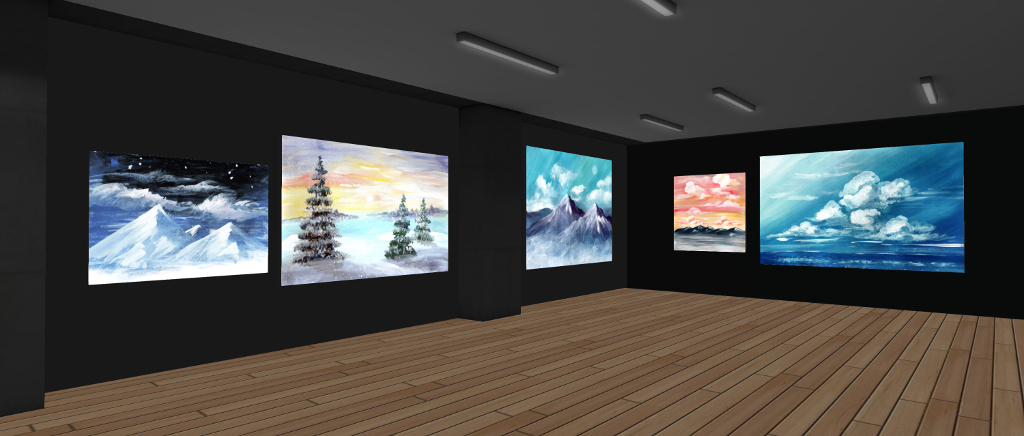
Now open at the Lin C Art Gallery, curated by Lin Carlucci, is an exhibition by ViktorSavior, presenting a three-part mix of his art, and which makes for an interesting visit.

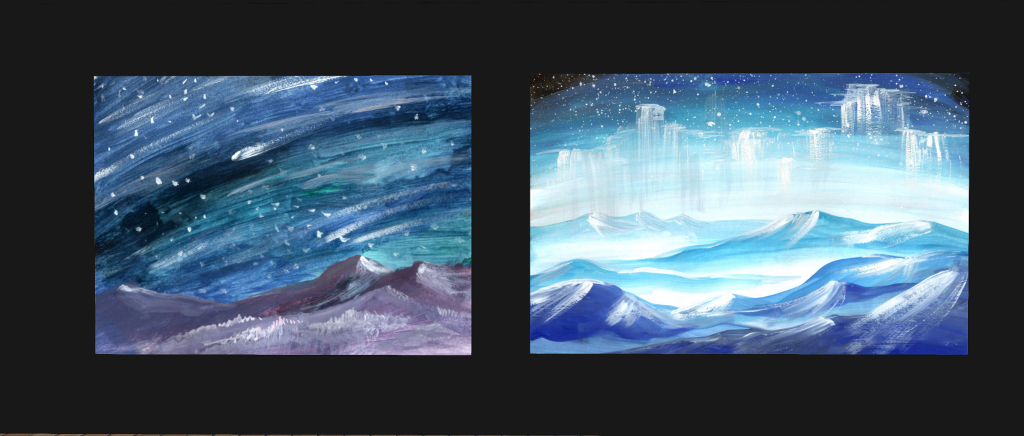
On the ground floor, and directly inside the main doors, Viktor offers 21 of his physical world paintings of the natural world. I’m not sure of the medium used, although they appear to perhaps be watercolours, they offer wide open views of land, sea and the night sky, with a particular emphasis on mountains, and with a lean towards the use of blue.

Each of the paintings might have been inspired by a physical world location, either personally seen or viewed through image or photograph, or which might be entirely drawn from the imagination. Which they are hardly matters, as each piece has its own story to tell. Expressive of a love of the night, the dawn, mountains (something to which I can very much relate, as I have a love of mountains myself and they are one of the few things I can actually draw in a meaningful way!), and nature as a whole.

Lin C Art Gallery: Viktor Savior

These are paintings that, if you give them a chance, will   draw you into them, placing you on a windswept coast where the wind and unseen rocks pull the sea into rearing, frothing beasts; where a river winding down through woodland draws you to wonder what lies beyond the mountains from which it has come, or where the night sky beckons from the mountain tops, or the Sun warms a winter’s blanket, and clouds tower into the sky in reflection of the majesty of the mountains below.

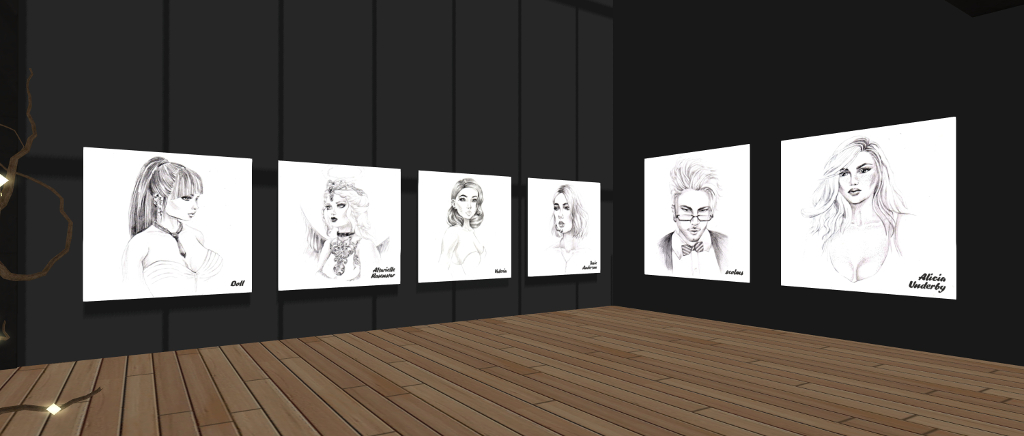
Also on the ground floor of the gallery is a series of 18 avatar portraits offered in monochrome and apparently drawn by hand, rather than rendered from photographs. All but four are of female avatars, and all beautifully and simply capture their subjects in a manner not far short of perfect. There is a level of life and emotion within each study that offers a glimpse of possible thoughts and feelings behind the eyes. In a word, they are vibrant in a way perhaps more normally seen in colour images.

Lin C Art Gallery: Viktor Savior

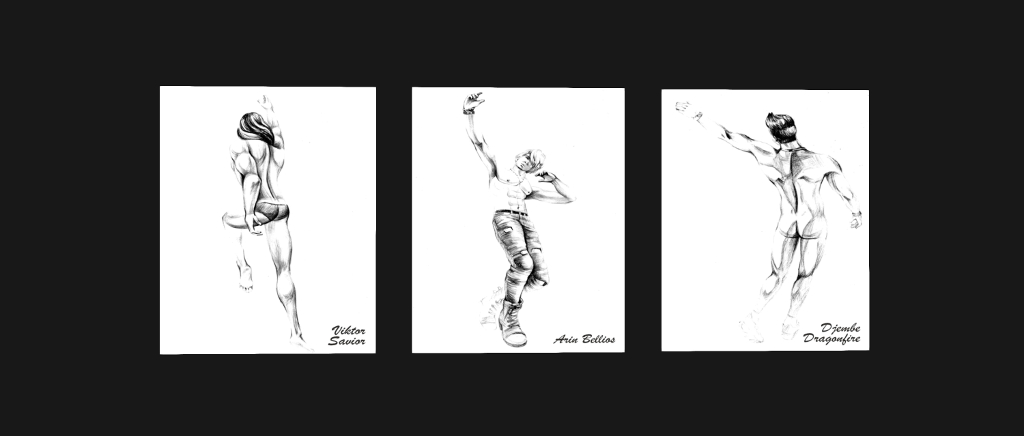
This vibrancy continues on the gallery’s mezzanine level, where a further 18 monochrome images are presented, these all full-body images of the male body in motion, most likely dancing at the time the image from which the drawing originated was captured. There is a wonderful sense of dynamic fluidity in each, a grace that speaks of human, not avatar, movement and actions.

The three aspects of this exhibition offer a mix that is rich in its diversity, giving insight into Viktor’s art as eloquent as any biography. There is much to be admired throughout the exhibition, and the paintings are all available for sale. However, were I to be asked, I would have to admit I found myself particularly drawn to the portrait studies, as I found them to be marvellously alive.

Lin C Art Gallery: Viktor Savior

The exhibition will remain open through until the start of February 2019.

SLurl Details

Second Life: state of the grid, 2018

Black Bayou Lake; Inara Pey, October 2018, on FlickrBlack Bayou Lake  blog post

On December 30th, 2018, Tyche Shepherd tweeted a brief summary on the general size and state of the Second Life main grid.

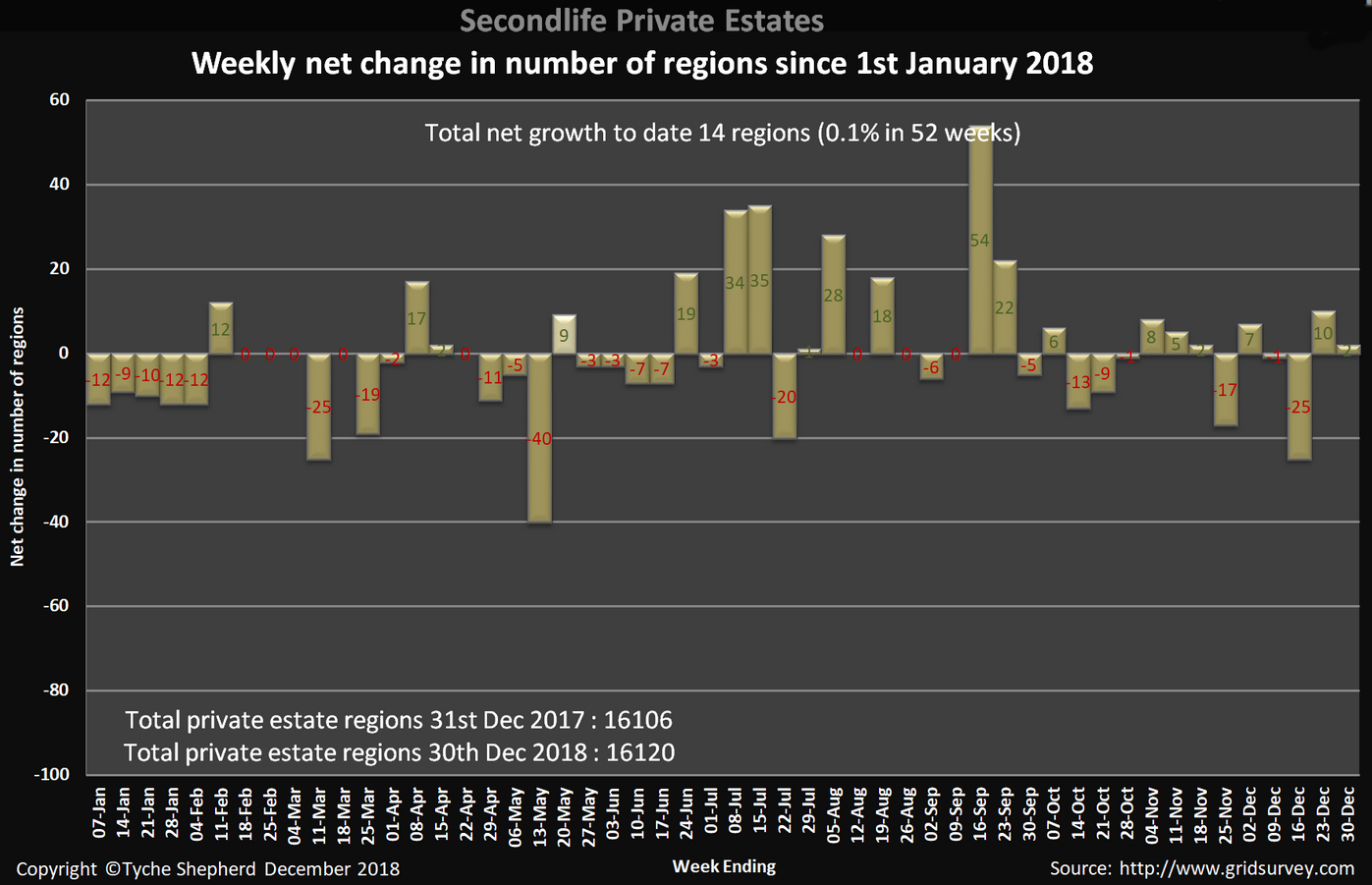
The surface level reading in the summary is good: overall, the grid increased in size by 2.1% – the first such increase since 2011, leaving the grid at a total of 23,811 regions at the end of December 2018, compared to 23,337 at the end of 2017. However, where private regions are concerned – still the major revenue earner for the Lab – things were far more modest: just 14 regions up on the year, from 16,106 to 16,120 – a 0.1% growth. The rest came from Mainland, up 460 regions to 7691, thanks largely to the arrival of the SSP continent.

Taking the year-on-year figures for private regions from 2010 onwards (that being the previous year in which the grid exhibited a growth in the number of private regions), we get the following breakdown:

2010 2011 2012 2013 2014
24,483 23,857 20,994 19,273 18,600
Increase
%age
Loss %age
Loss
%age
Loss
%age
Loss
%age
810 3% 626 2.56% 2863 12% 1719 8.2% 673 3.5%
 2015 2016 2017 2018
17,775 16,783 16,106 16,120
Loss   %age  Loss  %age Loss
%age
Increase %age
 
825 4.4% 992 5.6% 677 4.0% 14 0.1%

Working on the basis of Tyche’s Full Private Region surveys I have to hand, a breakdown of approximate recent monthly revenues from private regions over the most recent five-year period might be given as:

  • November 2013: US $3,857,000 (+/- US $52,000)
  • March 2016: down to US $3,385,000 ( +/- US $43,000)
  • December 2016: down to US $3,162,000 (+/- US $39,000)
  • December 2017: down to US$ 2,970,000 (+/- US $36,500)
  • December 2018: approximately US$ 2,970,000 (+/- US $36,500)

Note the December 2018 monthly tier level reflects a growth of just 14 regions (most likely mixed between Full and Homestead), having minimal overall impact based on the margin of error.

The increase in private region is likely – as Tyche points out – due to the Lab’s downward adjustment in private region fees, announced in June 2018, and which came into effect as from the start of July 2018. Certainly, this was followed by an upswing in demand totalling 69 private regions over two weeks, although it might be argued that overall, the fee changes can’t yet be judged to have moved the grid into a sustained level of growth.

Private estate numbers downs and ups in 2018 – click for full size

In fairness, the reduction in costs for private regions wasn’t going to result in a massive upswing in demand. For one thing, the 15% reduction in monthly tier for a Full region  – as I noted at the time – wouldn’t see people stampeding to get a region of their own. Thus, outside of events, etc., demand for land still largely lays with those in the land rental business, particularly given Homestead availability remains tied to having at least one Full region, and how well they are perceived as passing on the lower fees through reduced rental charges to customers, which itself could be complicated. Although all that said, it might have been hoped things came out a little stronger by year-end than has been the case.

So, what might we see in 2019 in terms of land?

Well, it’s unlikely Linden Lab will move towards another reduction so soon after that of July 2018, simply because more time will be required to analyse the overall outcome in terms of overall outcome. However, there are other things that will be forthcoming in 2019.

As noted, the largest growth in regions is the SSP continent (384 + a testing region). It’s no secret this is likely the new Linden Homes continent, due to come on stream in 2019. What is still to be seen is how they will be offered, how they might help generate revenue, and what effect they might have on the grid. For example, will they replace the existing Linden Homes entirely and be offered within the current Premium subscription package and ultimately intended to replace the existing Linden Homes continents? Will they form part of a new Premium subscription offering, sitting alongside the existing Linden Homes continents? If they are to completely replace the existing Linden Homes over time, what might be the logistics for doing so and for “retiring” the existing LH continents? Might we see more than one new Linden Homes continent deployed in the coming year?

2019 may well also see a large part of the Lab’s work in transitioning Second Life to the cloud. Even if this is completed by the end of the year (which is probably optimistic given the massive complexity of SL, but we’ll see), it’s also unlikely to lead directly to any adjustments to land fees or the release of new products, simply because, again as the Lab has indicated, they’ll need time to bed things in and ensure everything is running as anticipated and – equally importantly – experiment to see what  (if any) kind of product options might be available and how they might be priced.

For my part, I suspect the sine wave we’ve seen in the second half of 2018 will likely continue, undulating between losses and gains, with a possible bias towards the positive side of the line. But that said, I didn’t foresee a fee cut for private regions coming in 2019, and actually expected numbers for the year to decline (albeit far more slowly than previous years); so what do I know?  🙂 .

Related Links

A Nordic Maison de L’amitie in Second Life

Maison de L'amitie; Inara Pey, December 2018, on Flickr
Maison de L’amitie – click any image for full size

Update September 2019: Maison de L’amitie has relocated.

It’s been more than eight months since our last visit to Corina Wonder’s Homestead region, Maison de L’amitie. At that time, the region presented an eye-catching reproduction of Bolivia’s Salar de Uyuni (about which you can read more here). Since then, things have returned to Corina’s more “usual” landscape designs, and for winter 2018 / 2019, it currently offers a suitable setting with which to launch this year’s Exploring Second Life series.

The great joy with Corina’s landscapes is that they present setting that was wonderfully natural and which encourage exploration without making demands on visitors; rather they encourage a gentle stroll, generally with opportunities for sitting and chatting / cuddling. Such is the case with this winter look, which comes with something of a Nordic feel.

Maison de L'amitie; Inara Pey, December 2018, on Flickr
Maison de L’amitie

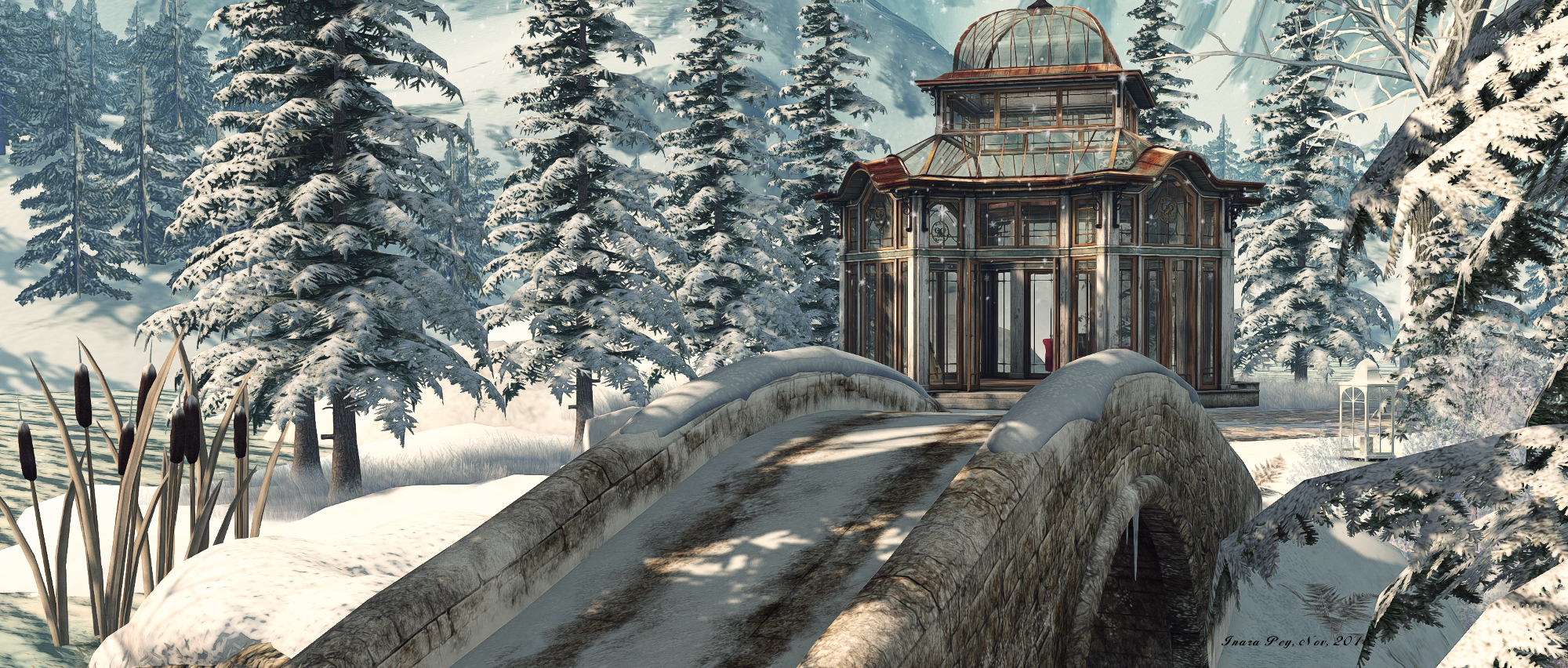
Set between two parallel lines of off-sim snowy mountains, both of which encroach well into the region’s west and east sides, visitors are presented with a rocky splinter of land facing a narrow channel of icy-looking water to the west and open sea to the south. Sitting at the feet of tall rocky fingers that form a jumbled parade of cliffs, a snow-covered road runs south from the landing point and its little frozen pond and nearby open-air seating area, past a cosy-looking stone cabin sheltering under the high cliffs, before vanishing around a distant curve.

Wooden fencing separates the path from the cold waters, and lanterns hang from silver birch that march down the road, lighting the way as reindeer passively watch all the comings and goings.  The cabin offers a warm welcome for those feeling the chill, with Wellington boots arranged on the porch and, more particularly, a fire burning in the outside hearth, wooden chairs ranged before it. A bicycle lies in the snow, partially buried, suggesting recent fall, while inside signs of homeliness can be found with food being prepared and paintings mounted on easels.

Maison de L'amitie; Inara Pey, December 2018, on Flickr
Maison de L’amitie

Follow the road south, however, and it will lead you to a view of the local lighthouse. Past a squeeze between the roadside fence and a truck loaded with fir trees, you’ll find why I refer to the region having a Nordic feel. As the path curls around the southern headland, so it leads to a fjord-like channel, sitting between two further walls of cliffs separated by a finger of icy water.

Here the path runs directly over the water, raised above it on concrete bricks, to arrive at a welcoming brick-built house. This is, like the stone cabin, backed against the high cliffs and affords a view of the waterfall feeding the fjord from its closed end. Despite the freezing look of the water, otters are at play, swimming and curiously examining the kayaks moored not far from the foot of the falls.

Maison de L'amitie; Inara Pey, December 2018, on Flickr
Maison de L’amitie

Nor is this all. Atop the canyon rocks are places to sit and cuddle – although I confess, we didn’t actually find a physical way up to them. As a landing point is set, an attempt to double-click teleport won’t work, and the only alternative appears to be to select one of the sit points; but we might have missed something.

A simple, wild setting, I’d perhaps have liked to see the east side rocks more naturally blend with the mountains behind them, if only to present a more natural look, but that is just me. For those who wish to rez props for use with photos, a land group is available to join – simply touch the board at the landing point for a link to the group. Photos of the region are welcome at the region’s Flickr group, should you opt to share them.

Maison de L'amitie; Inara Pey, December 2018, on Flickr
Maison de L’amitie

SLurl Details