On Tuesday, November 7th, Linden Lab announced their new Premium membership benefit, previously hinted at in recent blog posts.
In short, and with immediate effect, Premium members will have access to 90 days of L$ transaction history – almost 3 times as long as Basic members, who will retain access to 32 days transaction history.
The blog post also reveals and interesting statistic – quote:
Every day, the Marketplace alone sees more than 20,000 unique buyers purchasing more than L$16,000,000 worth of goods from more than 15,000 unique sellers.
Allowing for the caveat of “more than”, with a 5% commission on all Marketplace sales, this would indicate that the Lab is generating some L$800,000 in revenue from Marketplace sales, or very approximately some US $1,123,077 per year. While approximate, this gives some idea of the contribution the Marketplace makes to the Lab’s revenue stream.
Having an extended transaction history kept on file is something a lot of merchants will likely find useful, particularly when dealing the customer enquiries or issues. As such it will be interesting to see the feedback on this benefit.
Certainly, a benefit like this, together with those such as the extended access to concierge support, the increase in the number of off-line IMs Premium members can access on next logging-in, and the increase in group slots from 42 to 60 for Premium members, is likely to be a lot more welcome among a broader cross-section of Premium members than the “gift” type of benefit might reach, and liable to be far more practically used.
Update, Wednesday, November 8th: the planned upgrade has been further delayed, until 15:00 SLT om Monday, November 13th. See here for more.
Update, Tuesday, November 7th: the planned upgrade has been postponed until Wednesday, November 8th, starting at 15:00 SLT. See here for more.
This is a reminder that the SL support site will be undergoing an upgrade commencing at 15:00 SLT on Tuesday, November 7th, 2017, and likely extending through until Wednesday, November 8th, 2017, in which the support offering will be migrated to Freshdesk.
News of the update was first announced by the Lab on Tuesday, October 31st, and I’m blogging on it now to hopefully help keep the news fresh in people’s minds.
The overall migration will be handled in two parts, the first being a migration of all open support tickets, and all those raised since the start of 2017, as the official blog post notes:
What this means for Residents is that after 3pm (PT) on 11/07 you will be unable to submit, edit, or view your current support tickets. The downtime will be used to complete a migration of all the current support tickets to our new Customer Relationship Management tool.
We currently plan to have the support system back up and running by 9am PT on 11/08 …
The initial migration will include all open support tickets and any which have been opened since the beginning of 2017.
Once this phase of the migration is completed, the support site will be re-opened for the submission of new tickets / review of open tickets, etc., all of which will be managed using Freshdesk.
Following this, work will commence in migrating the remainder of the support site data. However, this will take time, as the Lab notes there are around 1.2 million historical support tickets to migrate, together with some 200,000 Live Chat records.
Should you have any closed ticket from 2016 or earlier which you think you may need to access, you have until 15:00 on Tuesday, November 7th to collect that information.
Further information on the migration will be posted by the Lab as the work progresses.
Borneo is a homestead region designed by Neva Crystall (NevaCrystall) on behalf of region holder Gac Akina, and which has just opened. Being a fan of Neva’s work, I was keen to hop over and take a look after hearing about it via Shakespeare and Max after they spent time there at the weekend.
“Neva is magical!” Gac told me as we chatted about the region. “It was supposed to be friends only location; we all needed a place to chill and hang together, but then I just couldn’t lock this up for only a few. I’m very happy we are getting visitors and can’t wait to start seeing some pictures pop up 🙂 .”
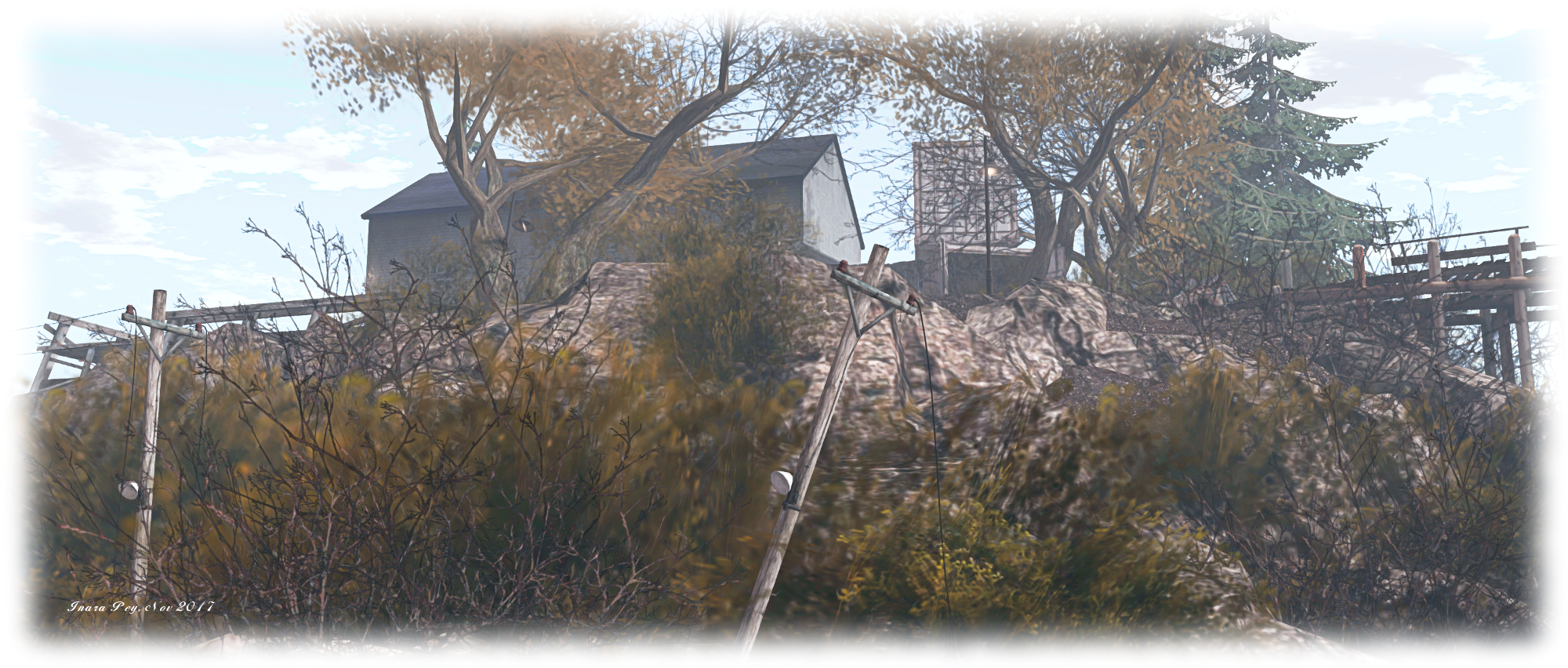
The setting has the look and feel far removed from the one you might imagine from the region’s name. Instead of a tropical jungle-like environment, Borneo presents a location strongly suggestive of a northern temperate area, perhaps in the Pacific north-west of North America, or maybe coastal Sweden. It’s somewhat industrial in tone, and set beneath a hazy, cold-looking sky suggestive of the onset of winter. The region is split into two islands, the larger of which forms a curve running from the north down to the east, while the smaller sits towards the south-west, as if protected by the larger’s curve.
Both are rugged in nature, rising from the surrounding waters on rocky shoulders. The landing point sits to the north side of the larger island, on hard-packed earth. An old warehouse sits to one side of the landing point, with a smaller barn-like storage area on the other. Both clearly haven’t been used for their intended use for some time; the smaller is overgrown and full of ageing bric-a-brac, the larger looks like it has in part been turned into a makeshift den, although one room has long since been claimed by nature.
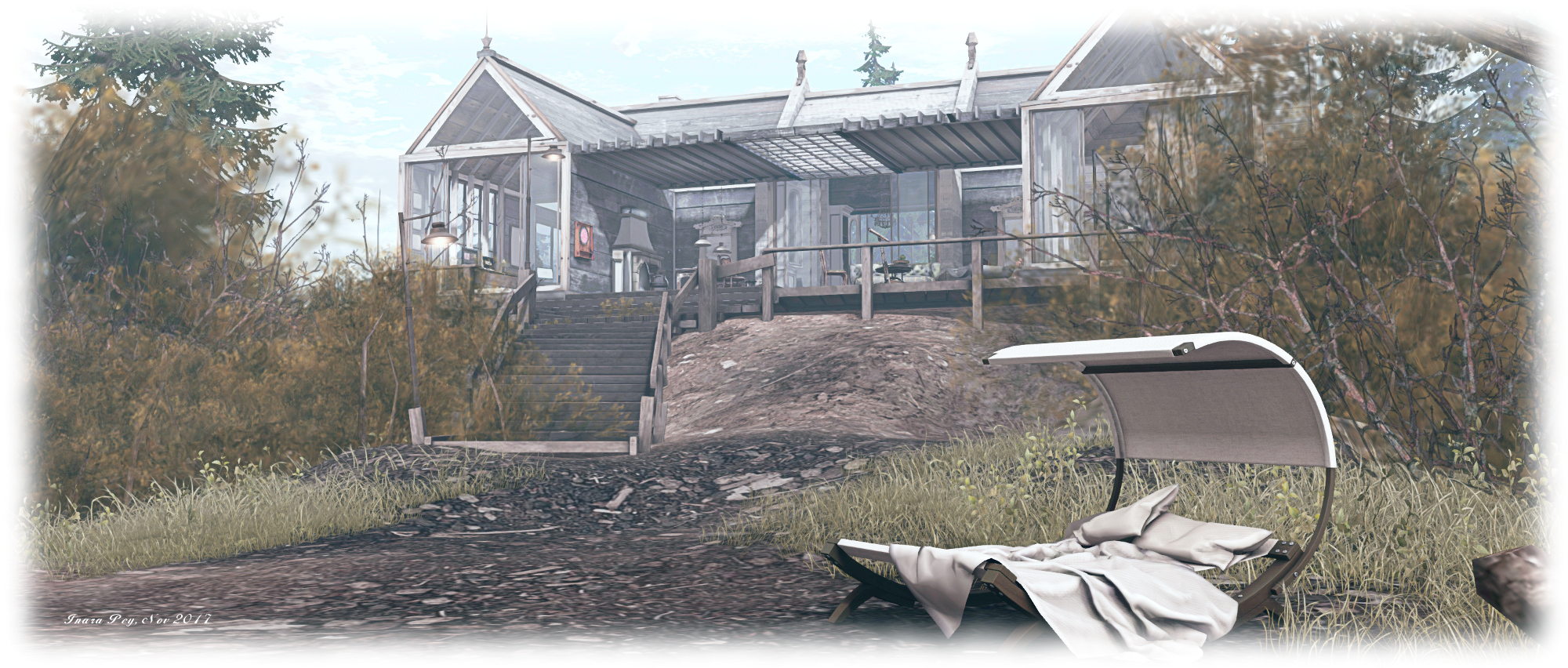
The flattened ground running between these two structures suggest an old road, or perhaps the remnants of a railway spur, arcing as it does along the spine of the island. Follow it around to the east and south of the island, and it will bring you by way of a gabled gate to a house on the southern headland – but do note this is not open to the public, so don’t be surprised by the ban lines crossing the path before it.
Take the track around to the west, however, and no such barriers block the way. Instead, the path will lead you by way of an old wooden bridge spanning the narrow channel between the two islands, to a third warehouse, this one converted into a bar, the Borneo Pub. “I can’t wait to open the pub,” Gac told me. “We’re waiting on the logo. We’ll have music and parties there. Nothing really scheduled, just for fun and for people to enjoy. I’m hoping we’ll start in the next week or two.” The bar sits within its own parcel, complete with a dedicated in-world group for those wishing to be kept informed of events there.
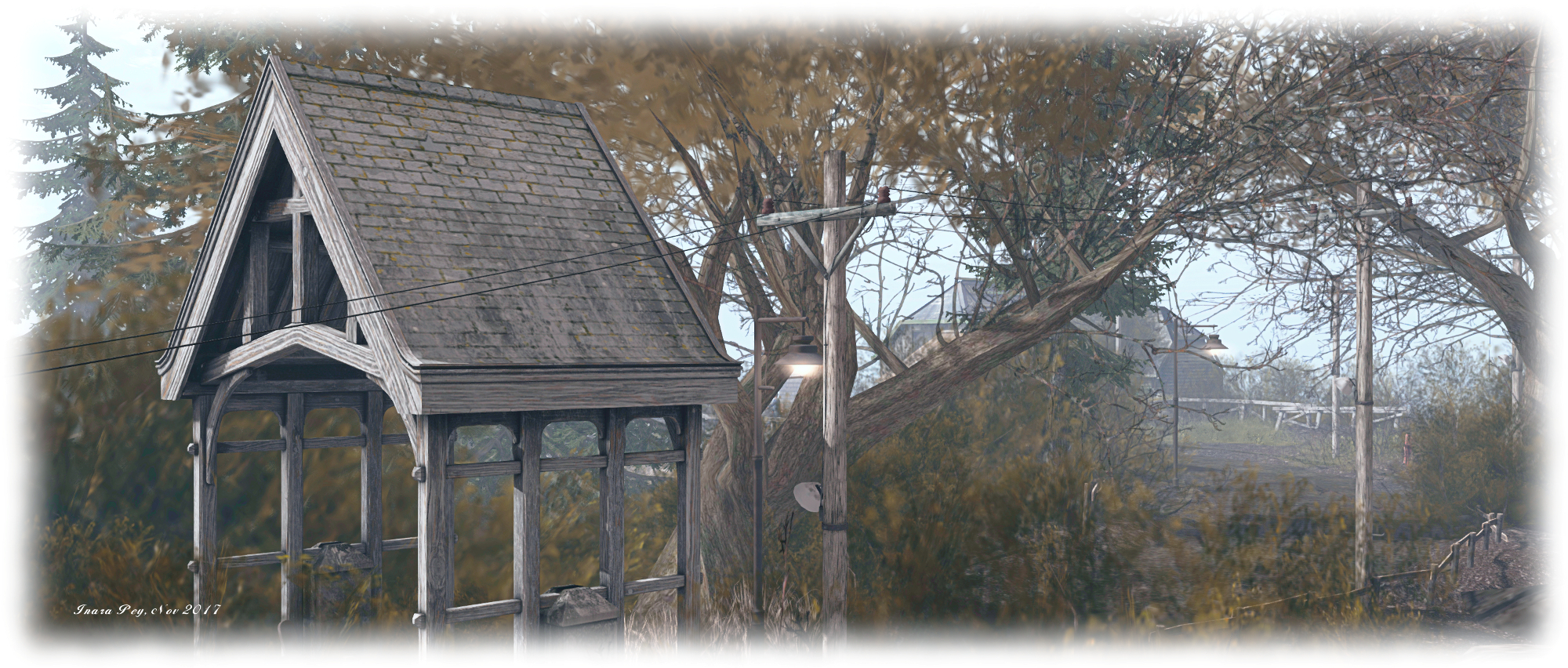
Sitting within the curve of the main island is a small, stark bay. This can be reached by a mix of wooden steps and board walks leading down from a another gabled gate, this one close to the landing point. It’s not the cosiest of spots in terms of looks when compared to the usual (and oft-expected) beach, but it does have a certain character and warmth – there is a little snug along one of the board walks, while down by the foot of the steps is a little ramshackle trailer serving hot drinks which the local cat clearly recommends!
Balancing the route down to the bay, and on the north side of the island, is a path that snakes its way down to an old quay. An old fishing boat is drawn up alongside, sitting close to its wrecked twin. Both vessels in the shadow of a brick-built lighthouse that raises a slender finger to the sky, tall enough to look down on the landing point and its buildings.
There is a wonderful feeling of wild desolation about Borneo. cold it may look, but it is rich in character and marvellously presented to both explorer and photographer alike. The attention to detail is superb, the detritus of work and life, giving a real sense that this is a place long-established and with its own history, all of which makes for a rewarding visit.
Update, November 14th:when I originally posted this article, I passed a comment about it perhaps benefiting from in introduction. A few days after I posted this article, Zafia IM’d me in Second Life to offer her thanks for the piece (thank you, Zafia! Feedback like that is always appreciated!), in which she indicated she would be adding such an introduction, which she has now done (thank you, Ryan for nudging me on this!). It adds further depth to what was already a superb exhibit, being personal in nature, and I was particularly delighted to learn how Wim Mertens and Michael Nyman influence Zafia with this experience, both (Nyman particularly – hence mentioning him in the article below) having been a part of my own exposure to minimal music. As a result of the new introduction, I’ve revised the last paragraph of this article.
Minimalism is a form of expression using pared-down design elements. It can be found in the arts, design, architecture and the use of space.
Within the arts, minimalism encompasses to 2D and 3D art, music and even performance arts. It began in post-World War II Western art, most strongly with American visual arts in the 1960s and early 1970s, where it was also known as “literalist art” and “abc art”. It can encompass works in both colour and monochrome.
Musically, the term “minimal music” was coined in the 1960s by Michael Nyman when describing a ten-minute piano composition by the Danish composer Henning Christiansen, although the first piece of minimalist music is generally regarded as the Monotone Symphony (1949), by Yves Klein. With architecture and space, minimalism is founded on the principle that “less is more” (Ludwig Mies van der Rohe) and focuses on the elegant use of lighting, the connection between two perfect planes and the space left by the removal of three-dimensional shapes.
I mention all of this as a means of introducing Zafia Vesta’s Minimalisms, her Sansar experience which brings together all of these elements in an immersive celebration of minimalism. The space itself utilises lighting and a contrast between light and dark to great effect, while incorporating the connection between planes of colour along the single, fully definable hallway in the space, which also offers a void in keeping with minimalism, with the gap in the “roof”.
Within this pace is a series of elemental sculptures and geometric shapes – the very definition of minimalism – some of which are animated through spinning (which itself could be said to be a minimalist form of animation). These are spotlighted across the display space, inviting exploration and study. Surrounding all of this is a piece of minimal music, The Grid by Philip Glass and taking from the visual tone poem, Koyaanisqatsi, to complete the experience.
Minimalisms is an imaginative, expressive means of exploring an art form from within. As such, I hope Zafia will continue to curate the experience and add features and capabilities to it as Sansar grows.
Logos representative only and should not be seen as an endorsement / preference / recommendation
Updates for the week ending Sunday, November 5th
This summary is published every Monday, and is a list of SL viewer / client releases (official and TPV) made during the previous week. When reading it, please note:
It is based on my Current Viewer Releases Page, a list of all Second Life viewers and clients that are in popular use (and of which I am aware), and which are recognised as adhering to the TPV Policy. This page includes comprehensive links to download pages, blog notes, release notes, etc., as well as links to any / all reviews of specific viewers / clients made within this blog
By its nature, this summary presented here will always be in arrears, please refer to the Current Viewer Release Page for more up-to-date information.
Official LL Viewers
Current Release version 5.0.8.329115, dated September 22nd, promoted October 13th – formerly the “Moonshine” Maintenance RC – no change.
Looking across Gale Crater as it might appear from NASA’s Mars Science Laboratory rover Curiosity. Render created by Kevin M Gill.
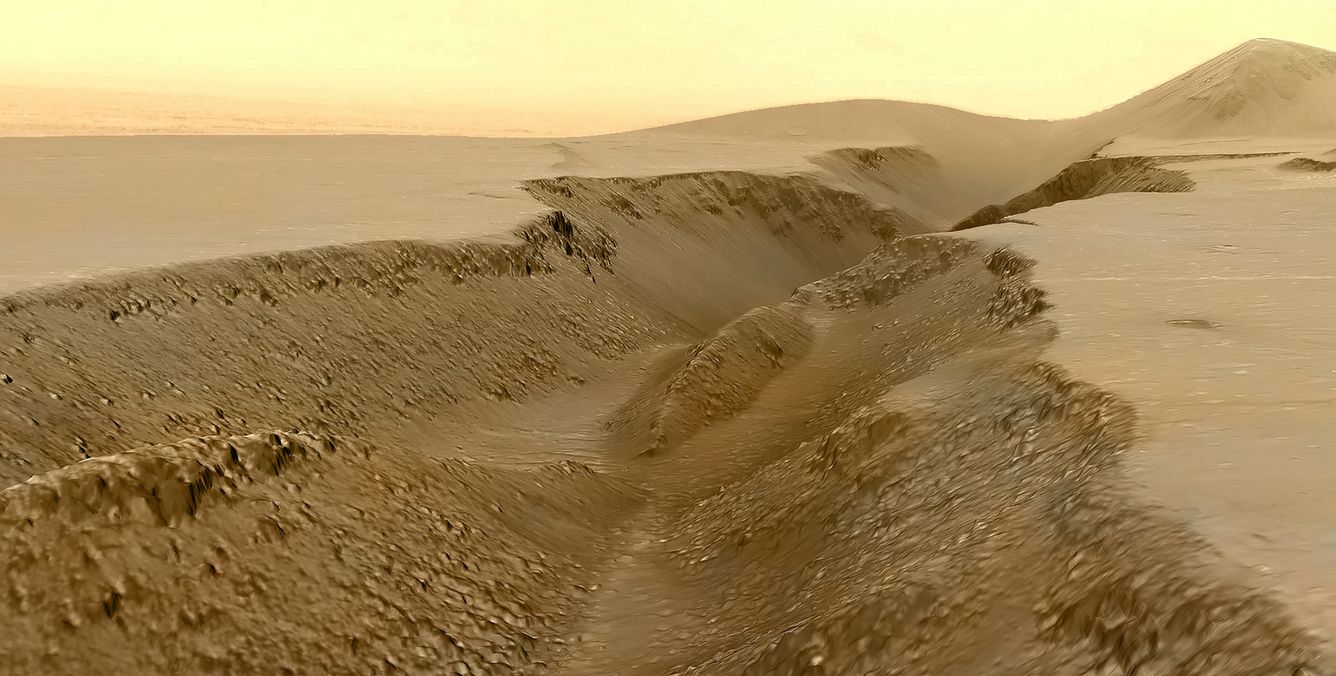
Kevin M. Gill is a software engineer, planetary and climate data wrangler at NASA’s Jet Propulsion Laboratory. He’s been working with digital terrain models and ortho images from the HiRISE imaging system aboard NASA’s Mars Reconnaissance Orbiter (MRO) to create some stunning computer models and images of Endeavour and Gale craters, where the Opportunity and Curiosity rovers are exploring, as well as other regions of Mars. These have caused a stir on social media this week, and rightly so.
Kevin provides a detailed description of how he produces the images, which involves a range of software tools including ImageMagick, Maya and Photoshop. For those interested in creating computer renderings, his post makes a fascinating read; for those who love images of Mars, his images offer a stunning new perspective on the planet. The images utilise a slight vertical height exaggeration and false colour / lighting adjusted to Earth daylight standards, but the results are undeniably stunning.
A view along a volcanic fissure in the Cerberus Palas region of Mars. Rendering by Kevin M. Gill
Some of the images offer a unique perspective on surface features, such as the one above, showing a volcanic fissure in Cerberus Palas in the north-eastern Elysium quadrangle of Mars.
For those interested in producing vistas of Mars in a platform such as Linden Lab’s Sansar, Kevin’s work and notes could offer a starting point. In turn, Sansar could offer the perfect VR visualisation platform for allowing people to “visit” and learn about Mars.
“Mount Sharp” (Aeolis Mons), the mound of material deposited against the central impact peak of Gale Crater. Render by Kevin M Gill.
Meanwhile, the MSL team are moving closer to resuming drilling operations with the Curiosity rover.
These were suspended in December 2016. Prior to that, Curiosity had used the drill system mounted on its robot arm a total of 15 times between 2013 and 2016. On each of those occasions, two contact post, one either side of the bit, were placed on the target rock before the bit was extended by the drill feed mechanism, helping to gauge and support the drill. It was reliability issues with the feed mechanism which led to the suspension of all drilling operations.
Engineers have been investigating ways to use the drill without any reliance on the feed mechanism. This requires the drill to remain extended, the rover’s arm bringing it directly in contact with the rock to be drilled, without any support from the stabilising arms. In order for this to work, it is essential the drill bit – which not only cuts into rocks, but gathers samples from within them – can be placed with minimal downward or side-to-side pressure or motion on it, to ensure it is not damaged or becomes stuck.
The issue here is that when supported by the stabilisers, the drill had only one axis of movement, without them, it could be subject to fix degree freedom of movement as vibrations from the drilling process feed back into the rover’s arm. To minimise this risk, tests are being carried out to determine if sensors in the robot arm are sensitive enough to detect potentially damaging motions in the drill when in use, and shut down the drilling operation.
On October 17th, 2017, NASA conducted the first test with Curiosity’s robot arm aimed at resuming the rover’s ability to gather rock samples with the drill mounted on the arm. Credit: NASA/JPL
To this end, on October 17th, 2017, Curiosity was commanded to place the drill bit in contact with a rock for the first time in ten months and without the use of the stabilisers. The bit was then gently pressed downward and moved slightly from side-to-side to see how well the sensors responded, the idea being that when the drill resumes operations, the sensors can be used to automatically detect potentially harmful movements in the drill head which could result in the bit being damage or becoming stuck.
It’s still likely to be several months before Curiosity resumes drilling operations, with further tests in the planning. However, mission managers are optimistic the rover will at some point be able to resume use the drill to gather samples from within rocks for analysis.
Deep Space Gateway Gains Momentum
On November 1st, 2017, NASA awarded contracts to five companies to examine how they can develop a power and propulsion module as the initial element of the agency’s proposed Deep Space Gateway.
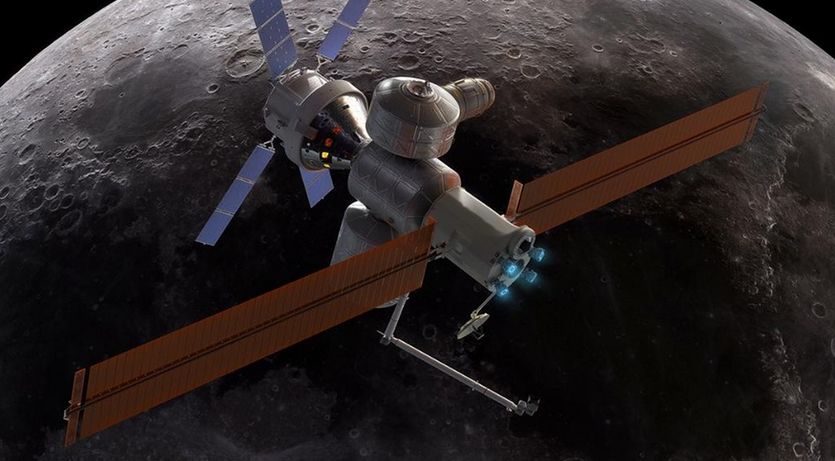
As currently envisioned, the power and propulsion module will generate electrical power for the gateway, provide a communications relay and use a solar electric engine for manoeuvring the station in cislunar space. NASA had been examining their own ideas for the module, but it is hoped that the contracts will allow industry the chance to present their own ideas and technologies in support of the module’s development.
Part of the NASA studies involve the use of a 50-kilowatt solar electric propulsion (SEP) motor for the module, the idea being that if successful, the system could be scaled-up for use on missions to Mars. While SEP systems can’t generate much thrust, they can run for long periods and are far more efficient than chemical systems.
Artist’s concept of the Deep Space Gateway passing close to the Moon. Credit: NASA
NASA had planned to test the SEP concept on the robotic portion of the now-cancelled Asteroid Redirect Mission (ARM), in which a robotic spacecraft would obtain a boulder-sized sample of a near Earth asteroid and return it to cislunar space for examination by astronauts. With the cancellation of that mission, the SEP programme has been in limbo; so issuing the contracts might both help revive the SEP project and allow commercial organisations weigh-in on the work.
These contracts are separate from those issued in 2016 to examine development of habitat modules for the gateway. However, all five of the companies that received contracts for Power and Propulsion Element studies also either have a habitat award or are partnered with a company that does.
How NASA plans to proceed with development of the station, including how it procures it from industry, will depend on the outcome of the studies as well as NASA’s overall exploration planning. At this point in time – and despite the October 5th, 2017 directive from the inaugural meeting of the re-invoked US National Space Council (NSC) concerning an American return to the Moon – the Deep Space Gateway remains a concept, not a formal NASA programme.
Also interested in participating in the programme is the European Space Agency. They are hoping to have a dedicated module forming part of the station, and are offering to develop a resupply system potentially capable of delivering up to nine tonnes of supplies to the Gateway.
The resupply vehicle would likely use the Ariane 6 launcher and solar electric propulsion system, rated around 60 kilowatts. ESA representatives believe the system could be ready for operation in 2025 or 2026, which fits with the time frame for the station’s development – which could see the power and propulsion module launched in 2022, as part of NASA’s Exploration Mission 2 mission for the Orion / Space Launch System. In the meantime, the first launch of the Ariane 6 booster is currently scheduled for 2020.
 On Tuesday, November 7th, Linden Lab announced their new Premium membership benefit, previously hinted at in recent blog posts.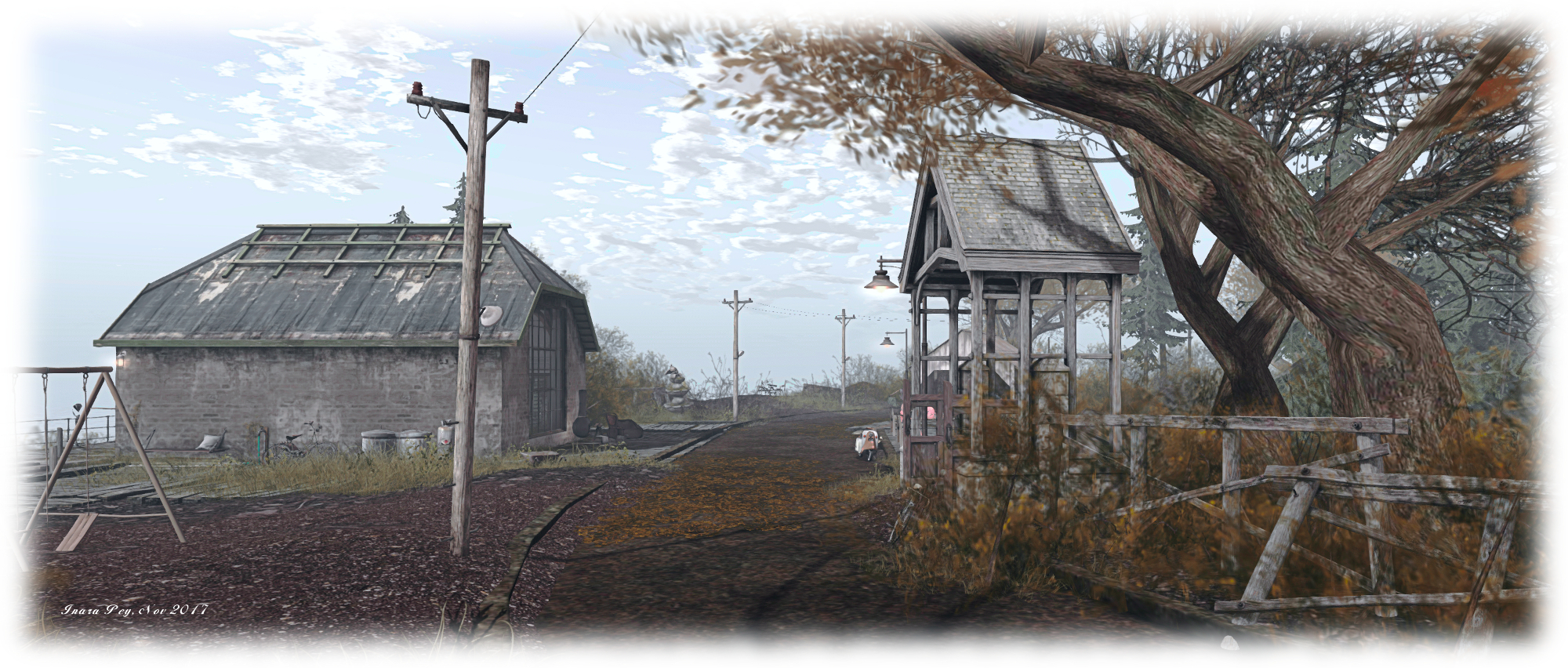







 Inara Pey: Living in a Modemworld