La Vie has reopened! Please come pay a visit! And don’t forget to put your pics in the Flickr group. I can’t wait to see you and all of your art!
Thus read the invitation Krys Vita sent out to members her group a few days ago, inviting folk to drop into her homestead region of La Vie and enjoy its new look, and with an additional prod from Max and Shakespeare, Caitlyn and I hopped across to see how things had changed. The last time we were in the region, it was a tropical paradise designed by Krys and TreMeldazis; for this iteration, Krys has once again collaborated with Arol Lightfoot.
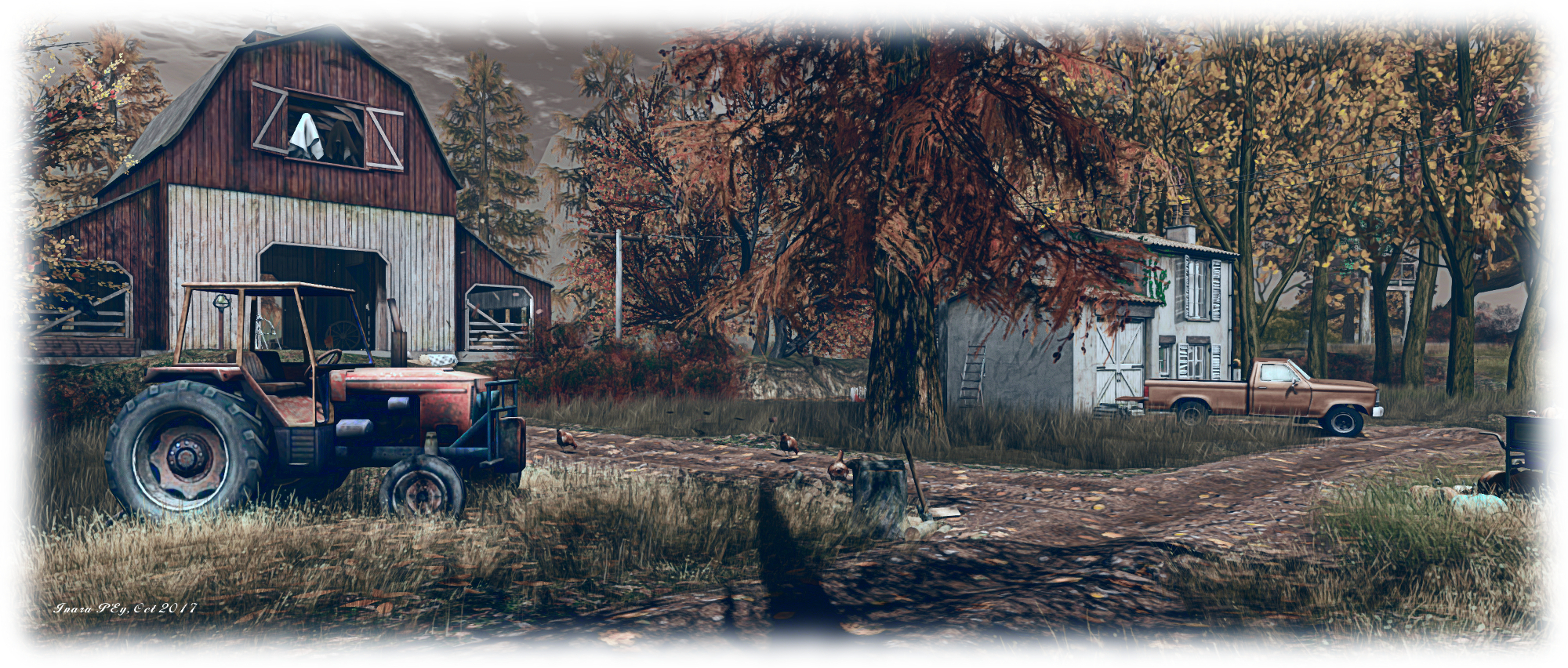
“It was time for a change I think,” Krys said as we arrived. “La Vie has been around a long time!” Seasonal changes are not uncommon within Second life regions, and with this rebuild, Krys and Arol have embraced the look and feel of autumn – with just a hint here and there of Halloween, some obvious (such as the pumpkins dotted around), others perhaps not so (such as the ghost-like blankets hanging in the windows of a barn!).
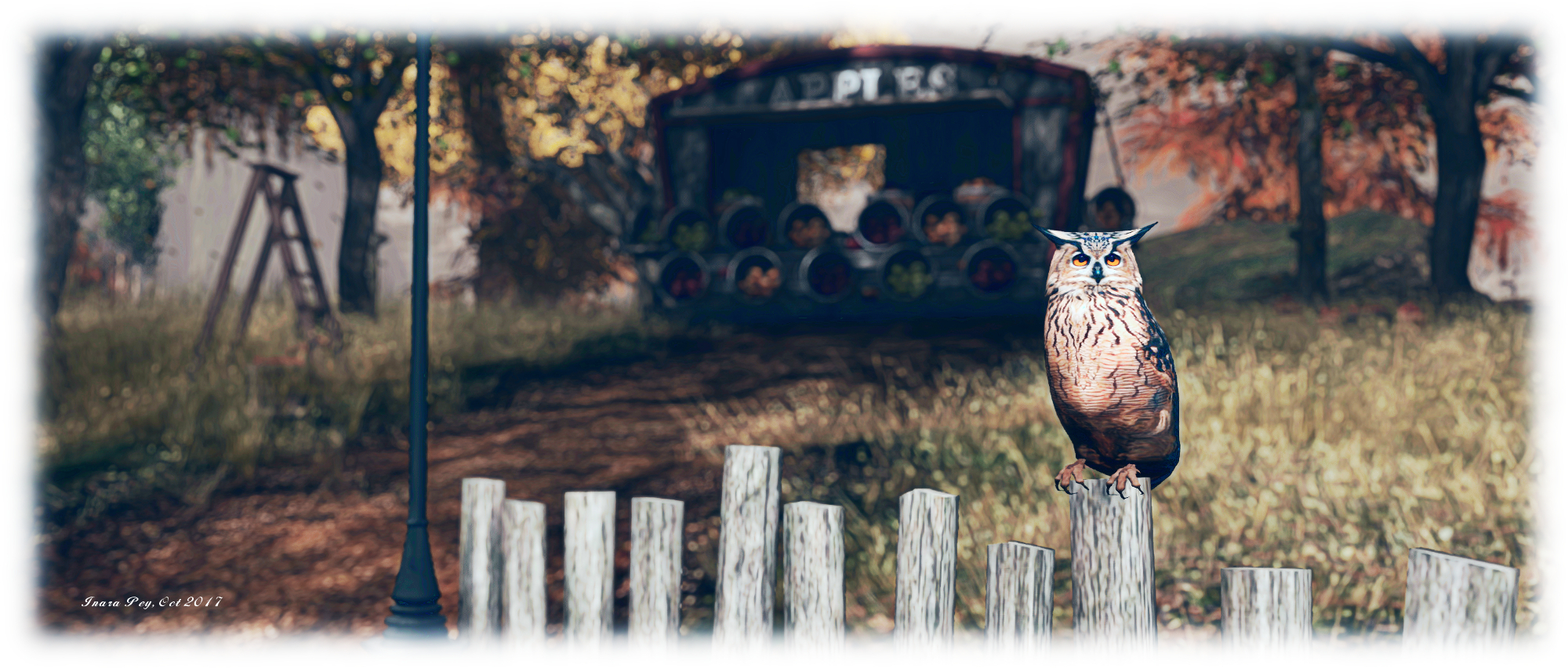
On arriving, visitors find themselves close to a farm-house and the aforementioned barn. A pick-up truck and tractor are parked close by, just off the track running by the farm. This offers explorers a choice of directions in which to most obviously head: east or west. Follow it east, and it quickly curls to the north, taking you by grassy banks, a little stall perched atop of them selling apples, to a box bridge crossing the narrow vee of a sluggish stream.
Another pick-up truck is sitting on the rack beyond the bridge, a trailer hitched to its tow bar, the track itself coming to an end a short distance beyond it. Across a short expanse of long grass and under the lee of gnarled trees, the old stone walls of a graveyard beckon – perhaps another nod towards Halloween, with the mist gathering about the aged tombstones and a raven keeping a cocked eye on those who visit.
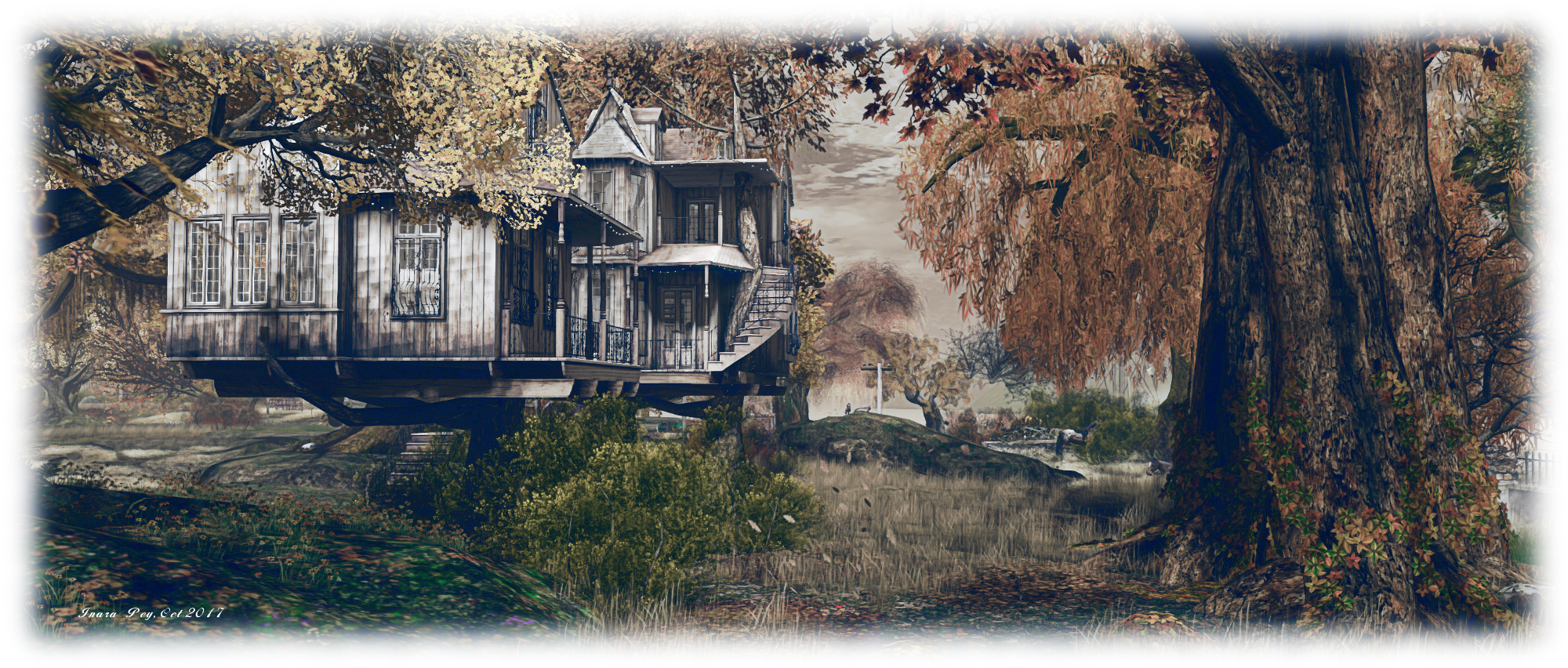
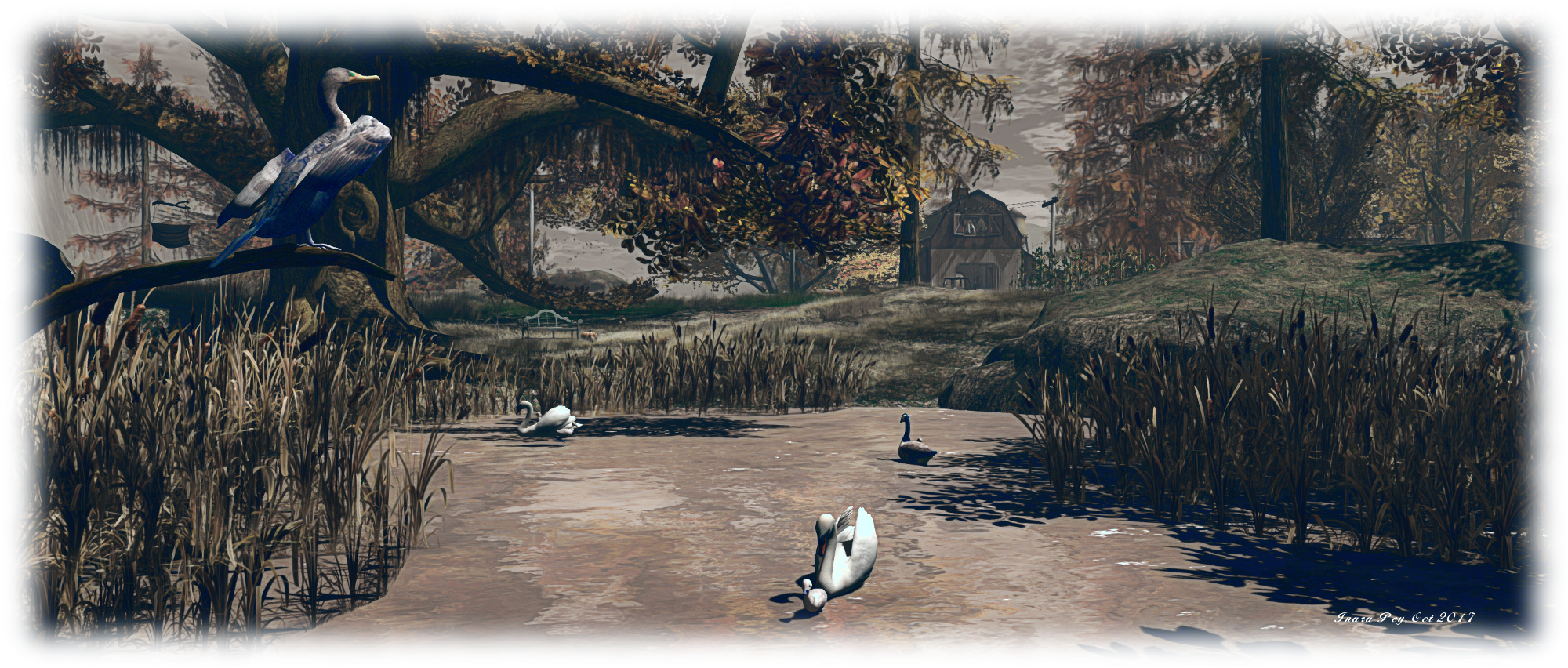
The graveyard is overlooked by the back of a tree house with adjoining artist’s studio, both of which sit just above the ground on the splayed fingers of strong branches. Connected to one another by a quaint little wood and rope bridge, they look northwards across a quiet pond where swans and geese share the water with cormorant and heron. More rugged and wooded land lies westward of these tree houses, deer roaming beneath boughs still heavy with yellowing leaves, before the landscape opens a little, offering a quarter corner for a single trailer camp site, before the track resumes its meander back to the farm.
This is a place of muted colour, where gulls wheel, fishing boats and nets lie offshore, and farm animals wander and graze. Away from the main track, explorers may find little nooks and places to sit – a little camp fire here, and old picnic bench there, or cosy tree hut hidden among branches and leaves, a swing slung beneath…
Saddled horses also roam the land, or sit and lie in the shade of trees. Touching any of them will allow you to haul yourself up into the saddle and then take a ride around the land; when you dismount, the horse will be content to wander or lie down once more.
Finished with another fitting sound scape, Lie Vie in autumn is the latest in a series of wonderful designs by Krys and Arol, and a setting that shouldn’t be missed.
Fractal 397 (Wrecks, 2016) by Gem Preiz, on Flickr
I’ve been an admirer of Gem Preiz’s fractal art ever since I first encountered it several years ago on my travels as a reviewer of art in Second Life.
This year, 2017, marks the fifth anniversary of Gem’s first exhibitions in Second Life, and he has been marking the with two retrospectives. The first, A Retrospective, was held at the start of the year, and you can read about it here. The second, appropriately called Five Years of Fractals, opened in September 2017, and you can read about it here.
To help celebrate this anniversary – and the fact that Gem himself is fast approaching his 10th anniversary in SL -, I had the opportunity to sit down with him in late September 2017 and discuss his work with him on behalf of Kultivate Magazine. It was a fascinating opportunity to learn about his arrival in Second Life, his art, his interests and inspirations. If I say so myself, the interview is well worth taking the time to read simply because Gem does have so much to say that is worth reading; this being the case, I thought I’d help whet appetites by offering a few excerpts from our chat.
No Frontiers 10 by Gem Preiz (2017)
On Second Life and The Potential for Artistic Expression
I actually discovered Second Life in 2007 while on a trip to America. I was actually there to study new technologies for use in business, but discovered a world with wonderful personal opportunities in this social and playful virtual world.
My awareness of the potential for sharing creations coincided with a growing interest in digital imagery. In particular, I discovered two artists – Fiona Leitner and Milly Sharple … Seeing Milly’s work helped me see the possibilities for displaying my own art within Second Life, and in reaching an audience from around the world while also having the freedom to create exhibition spaces which would be impossible in the physical world.
On His Passion for Fractals
I have a science and maths-focused education and have always worked with technology. Because of this, the computer naturally became my paint brush.
Some of my passions include ecology, Earth sciences, and humanity’s relationship and place in Nature. Astronomy and cosmology particularly bring together my fascination with science with my own imagination and fascination for the human capacity to imagine, discover, explore and learn. All of these play a role in my creative expression and imaginings.
… Fractals allow me to create – to paint, if you will … with such a diversity of results … In addition, the underlying mathematical aspect make them welcome to my rational, scientific side.
Fractal 296 (Polychronies, 2014) by Gem Preiz, on Flickr
On Science and Science Fiction
We are the ultimate product of life on this planet. We have been granted a brain which allows us to understand and influence our environment. At the same time, we question what is our purpose as a species …
Science, in its broadest sense, is the means by which we do so, through exploration, analysis, deduction, questioning and reason … We have it in us to resolve all of society’s issues – health, wealth, the environment – if only we are willing … I have a passion for science and a concern for the environment. We need both to secure our future – if we are to have a future.
Thus, Fractals and digital art are a means for Gem to express all of this to an audience, while at the same time giving flight to his creative narrative through both his visual art and the written word – as narrative forms a strong element in his pieces. Sometimes this may be obvious, such as a story running within one of his exhibitions, as with Heritage: Wrecks reviewed here) or it may be subtle: a story suggested by and introduction to his images, but which is left to the visitor’s imagination to flesh out.
Through the interview, we were able to explore these ideas at some length, delving into just how some of his more recent exhibits came into being. We also explored his unique approach to reproducing his work in Second Life, as well as his ruminations on the platform as someone who has been a part of it now for almost a decade.
Gem is a genuinely warm, caring individual, and it was both a privilege and pleasure to chat to him for Kultivate. You can read the full interview in the October edition of the magazine, beautifully illustrated by images from Gem’s work selected directly from his library, which he kindly opened up to us to peruse in preparing the piece.
Click the magazine cover on the right to open it for reading in a new browser tab. You can also catch up on all of my reviews of his work in these pages through a dedicated blog tag.
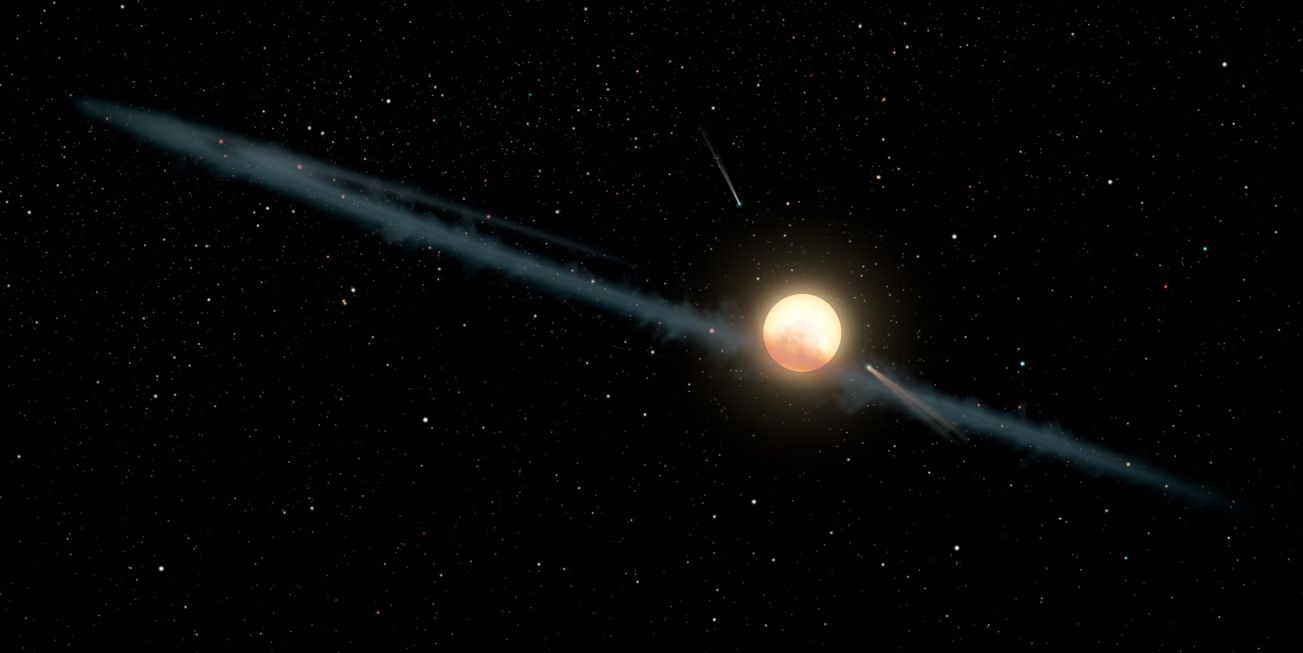
Is a circumstellar dust ring responsible for the irregular dimming of Tabby’s Star? Credit: NASA/JPL
Yet another study has appeared in an attempt to shed light (pun intended) on the mysterious behaviour of Tabby’s Star.
Regular readers of my Space Sunday columns will recognise this name as belonging to the more formally titled KIC 8462852, an F-type main-sequence star located in the constellation Cygnus approximately 1,480 light years from Earth (and which is also called Boyajian’s Star). This star experiences odd periods of dramatic dimming in its light output every so often (with the Kepler Space Observatory recording a loss of up to 22%), with the fluctuations lasting several solar days before it suddenly resumes its normal luminosity as observed from our solar system.
In the most recent study, Extinction and the Dimming of KIC 8462852, a US / Belgian team of scientists suggest that “none of the above” might actually be the correct answer on why the star goes through its irregular dimming cycle. Instead, they argue it is the result of a huge but thin and uneven dust ring rotating slowly around the star. What makes this theory particularly compelling is that it draws on three independently gathered sets of data in order to form the hypothesis.
The first of these data sources is NASA’s Spitzer Space Telescope, used to gather data on Tabby’s Star in the infra-red wave band during December 2016. The second is the Swift Gamma-Ray Burst mission, which gathered data on the star in the ultraviolet band during the same period of observation; also at the same time, the Belgian AstroLAB IRIS Observatory’s 68-cm (27-in) reflecting telescope gathered data in the visible light spectrum.
Artist’s concept of KIC 8462852, which has experienced unusual changes in luminosity over the past few years. Credit: NASA/JPL
What the team found, essentially, was that Tabby’s Star experienced less dimming in the infra-red band than in the ultraviolet – a strong indication that there was a mass of materials, each particle just a few micrometres in diameter, passing between the star and the observatories. While it had been previously suggested the dimming could be the result of an interstellar dust cloud lying somewhere in space between Earth and Tabby’s star, the team discounted this as a possible culprit.
Instead the team took their findings and charted known periods of dimming witnessed with Tabby’s Star and determined a circumstellar dust ring surrounding the star, and rotating around it one every 700 days would actually account for the majority of dimming periods observed from Earth. However, two types of even still do now fit the model.
The first of these is some very short-term “spurts” of dimming which have been noted during 2017. The second is the really large dips in luminosity seen by the Kepler Space Observatory. One potential explanation for the “spurts” of dimming, confirmed through multiple independent observations, is that they might be the result of a cometary cloud orbiting the star and coming between it and Earth. This was actually one of the earliest theories put forward to account for all of Tabby’s Star’s odd behaviour, but it fits the “spurts” of dimming a lot better.
The really big dimming periods, when the star appeared to lose up to 22% of its brightness pose their own problem. They were only observed by Kepler, and have yet to be seen to the same magnitude during any other period of observation, making quantifying them hard. Kepler itself is now studying stars in another portion of the galaxy, so cannot be used to further observe Tabby’s Star to see if such huge dips can again be seen.
Thus, there may yet be another mystery to Tabby’s Star waiting to be solved – or other theories on the fluctuating brightness which may yet be put forward. But for now, the circumstellar dust ring seems to be the most fitting explanation for much of the star’s odd behaviour.
The Moon’s Ancient Atmosphere
That’s the startling conclusion of a new study, supported by NASA’s Solar System Exploration Research Virtual Institute, and recently published in Earth and Planetary Science Letters.
Map of basaltic lavas that emitted gases on the lunar near side. Credit: Debra Needham
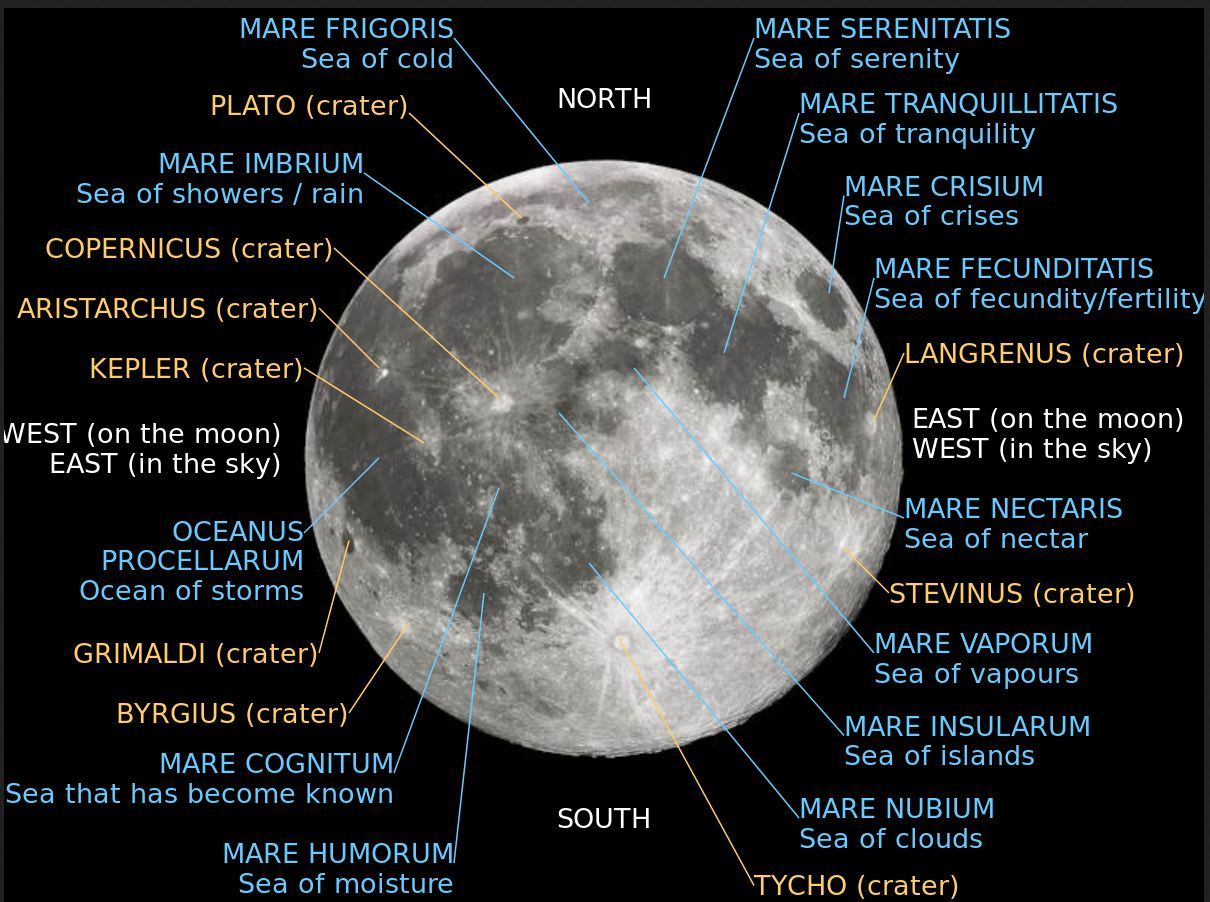
That the Moon was subject to intense volcanic activity in its early history is evidenced by the massive volcanic basalt maria (“seas”) on its surface. From Earth, these form the dark patches and patterns we can see with the naked eye. They were created three to four billion years ago, when the interior of the Moon was still hot and generating magmatic plumes. In places, these broke through the lunar crust, flowing outwards for hundreds of kilometres. Analysis of rock sample returned to Earth by the Apollo astronauts has long revealed these lava flows carried with them gases like carbon monoxide and the ingredients for water, sulphur, and other volatile elements.
In the study, work, Dr. Debra H. Needham, Research Scientist of NASA Marshall Space Flight Centre, and Dr. David A. Kring, Senior Staff Scientist, at the Lunar and Planetary Institute (LPI), used the amounts of trace gases and volatiles in the Apollo samples as a baseline for calculating the probable amount of gases released during those ancient lunar eruptions. Their findings suggest that the gases were released is sufficient quantities over a long enough period of time, reaching its peak around 3.5 billion years ago, to form a transient lunar atmosphere. It then persisted for about 70 million years after the volcanic activity ended, before the bulk of the gases were lost to space.
Distribution of the volcanic “seas” of the Moon (in blue) – sites of ancient eruptions. Credit: Nasa
The two largest pulses of gases were produced when lava seas filled the Serenitatis and Imbrium basins about 3.8 and 3.5 billion years ago, respectively. The margins of those lava seas were explored by astronauts of the Apollo 15 and 17 missions, who collected the samples that provided the ages of the eruptions.
This new picture of the Moon has important implications for future exploration. The analysis of Needham and Kring quantifies a source of volatiles that may have been trapped from the atmosphere in the cold, permanently shadowed regions near the lunar poles and may well provide a source of ice suitable for a sustained lunar exploration programme. Volatiles trapped in these icy deposits might be used provide air and fuel for astronauts conducting lunar surface operations.
“We Chose To Go to the Moon, Because That’s What We Were Doing Anyway”
The re-invoked US National Space Council (NSC) held its inaugural meeting n Thursday, October 5th, 2017 at the Smithsonian National Air and Space Museum’s (NASM) Steven F. Udvar-Hazy Centre.
Chaired by the Vice President, the Council was originally established in 1989 by then-President George H.W. Bush to serve the same purpose as the National Aeronautics and Space Council, which oversaw US space policy between 1958 and 1973. That NSC was disbanded in 1993 by the Clinton administration.
In this first meeting, the NSC sought to overturn NASA’s “Journey to Mars” endeavour in favour of a more focused plan to return to the Moon – or did they?
The inaugural meeting of the re-formed NSC, October 5th, 2017. Credit: NASA / Joel Kowsky
But how new and bold is this directive?
The reality is, what Pence announced on behalf of the NSC on October 5th and despite all the hurrahs, is pretty much what NASA was already doing anyway, and had been doing since President Obama signed the NASA Authorisation Act of 2010. That is: build the Orion Multi-Purpose Crew Vehicle and the Space Launch System, establish the Deep Space Gateway in cis-lunar space as an “enabler” for lunar missions and missions to Mars, and develop a presence on the Moon while deferring Mars to some nebulous 2030s time frame. The only significant difference is the instruction for NASA to actually flesh-out the lunar outpost element.
On the one hand, this is good, as it means no mass overturning of the apple cart (a favourite past time of incoming administrations) and a scramble to sort the apples out again. On the other, it still leaves NASA pursuing goals of questionable need – such as the Deep Space Gateway itself. Which, despite all the hype surrounding it, isn’t actually required for either for getting to the Moon or Mars. Rather, it is an objective that’s become fixed in the NASA mindset, and is now being rationalised on the basis that it is part of the mindset, rather than it offering a means to achieve things that cannot be better (and more cost-effectively) achieved through other methods.
What’s in a Name?
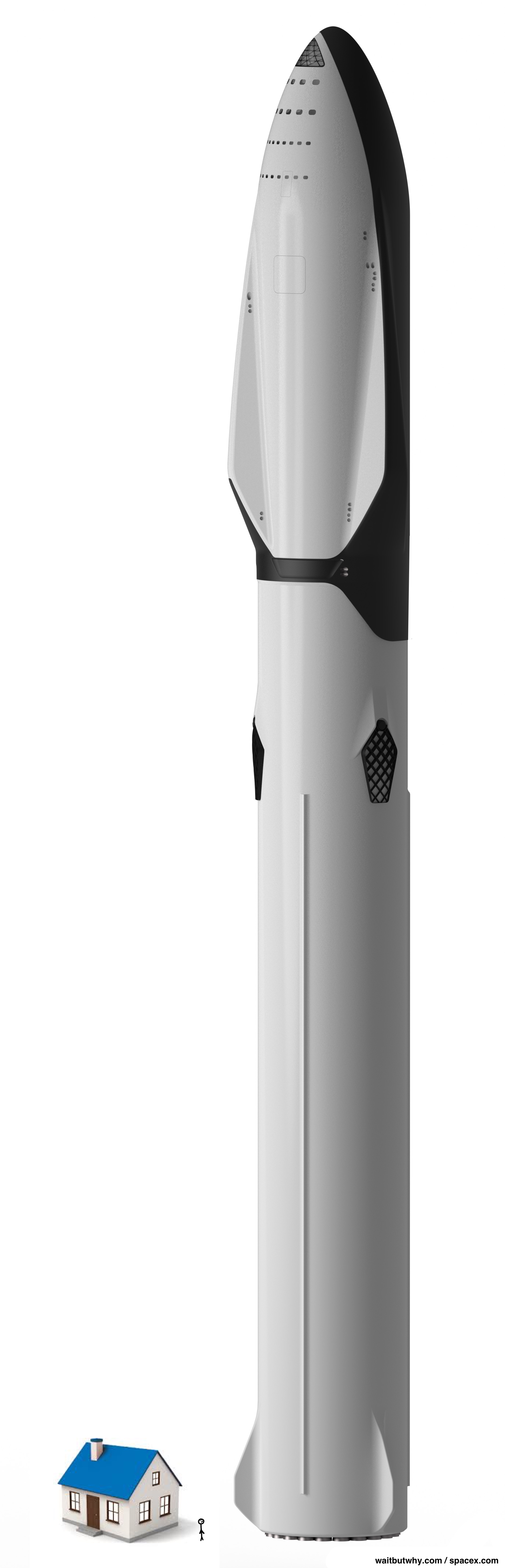
Making it safe to reference the “BFR” – the Big “Falcon” Rocket! Credit: SpaceX
The linchpin of his aspirations is the massive Interstellar Transport System (ITS) rocket SpaceX is developing. This has caused not a few parents some headaches when explaining things to their children, or created a dilemma when explaining the concept in polite company.
It’s not that explaining the ITS concept in complicated. Far from it. Rather, it’s the fact that Musk has chosen to present the ITS launch system using the acronym he originally defined for it: BFR. This, as just about everyone interested in space exploration knows, stands for “big f***ing rocket”. Descriptive yes, given the size of the beast (see right). But suitable for sensitive or young ears? Er, no, possibly not.
So, how does one deal with explaining what “BFR” means to said sensitive / young ears? SpaceX President Gwynne Shotwell recently offered a solution.
While addressing the National Space Council on October 5th, Shotwell – quite probably with a twinkle of humour in his eye – played on the company’s use of “Falcon” in naming their rockets (the Falcon 9 and Falcon Heavy) to get around the BFR acronym.
“Last week,” he said. “Elon announced — or, basically, gave an update on,” he then paused a bit, before continuing, “the Big Falcon Rocket programme. The Big Falcon Rocket and Big Falcon Spaceship.”
So there you have it, a non-offensive and semi-accurate way to explain “BFR” to the kids!
The following notes are taken from the Sansar Product Meetings held on Friday, October 6th. These meetings are held every Friday at 9:30am PDT and 4:00pm PDT, and are open to all. There is no set agenda (currently), and the meetings are a mix of voice and text. The official meeting notes are published in the week following each pair of meetings, while venues change on a weekly basis, and are announced in the Meet-up Announcements.
The October 6th meetings took place at Spinnervale, a creepy experience for Halloween by Debi Baskerville (and which I’ve reviewed here). Attending the meetings were Bjørn Laurin, the Lab’s VP of Product, and Cara and Boden from the Product team.
Discovery Release Update
The Discovery release was deployed on Wednesday, October 4th – see my overview on the release for core details. However, there were some post-deployment issues which required hot fixes and updates to be deployed as well. These have thus far comprised:
Update 1 – October 5, 2017 – mainly addressing a major crashing issue that would trigger when an avatar enters an experience while other avatars are walking around.
Update 2 – October 6, 2017 – allowing people to add scripts and other components to objects bought from the Sansar Store following issues in the wake of the initial Discovery deployment. However, as a side-effect of the fix, items that were edited between the initial deployment and the update may revert back to their default settings, with items properties that were edited in the time between the Discovery release deployment and the update were lost. This was originally reported as a “known issue” in the October 5th update.
There may be further updates to follow, addressing some remaining issues.
Supply Chain Release Error
The second of the two issues noted above was the result of the premature deployment of code for Sansar’s supply chain economy and permissions system within the Discovery release.
As Bjørn explained at the meeting, the supply chain economy will allow everyone to get properly recompensed for their creations howsoever they are used. However, the first element of the code to support this – designed to protect original content – was deployed with the Discovery release without some key supporting elements, resulting in the issues fixed by the October 6th update.
Deployment of the supply chain capabilities may be around the end of the first quarter / start of the second quarter of 2018.
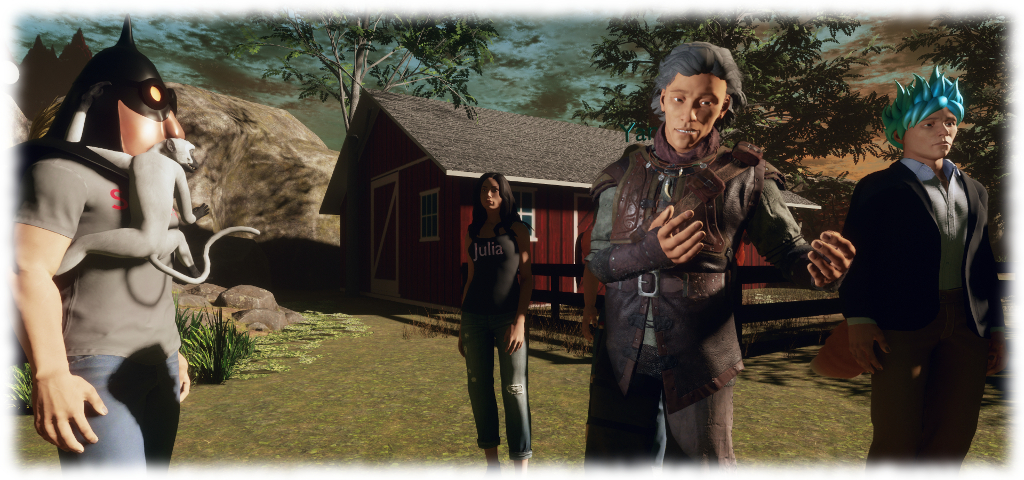
People gather for the 9:30am PDT Product Meeting at Spinnervale. Jenn is wearing the bat wings in the foreground
Other Noted Issues
Adding a metalness map to an object can cause it to dramatically change colour. This appears to be the unintended consequence of a fix for another issue.
Some people are seeing old messages and notifications re-received, generally during logging-in; friend requests me be repeated multiple times; accepting a friend request can request in the system add you as your own friend – and you can message yourself (!).
Some are seeing massively inflated audio emitters when working in Edit mode.
There are reports that items taken in Desktop mode can be “grabbed” away, either by other avatars – or even other things in a scene.
Some in Desktop mode have also reported that pressing and holding the mouse button to throw things doesn’t always result in a stronger throw; conversely, some in VR now have “superhuman” strength when throwing items.
Camera:
There is a report that going to free camera movement (aka flycam) by pressing F4 when in first-person view can allow the camera to pan when it is moved forwards / backwards. Although like a bug, a request was made for the feature to be retained.
llcameraforward camera vector behaviour is still no longer consistently tracking camera movements in third-person view (although it is still working as expected in first-person). This has been reported previously, but has not been addressed, and appears worse following the Discovery release. This is also affecting projectile behaviours as well.
The issue with objects appearing correctly positioned and aligned when editing a scene, and then appearing misaligned / out-of-place in the run-time experience (see here)may be related to a scaling issue, still to be fully investigated. One suggestion is that scaling using the Gizmo rather than the properties sliders can cause differences between the collision mesh and object mesh, which can cause the latter to be repositioned.
There is an issue with the client Atlas search – it only seems to search based on the first 3 or 4 characters in the search string.
There were some intentional changes with the Discovery release which weren’t as well represented in the release notes as they might have been. Future release notes will drill down more deeply into changes and updates to hopefully avoid this happening again.
Boden Linden (centre right and using a VR headset) talking at the 4:00pm PDT Product Meeting
Rough Time Frame for the Next Releases
The Friends release, focusing on social capabilities for Sansar will form the release following the Discovery release, and will likely be at the end of October / start of November.
According to Bjørn at the morning Product Meeting, the release after that will be the Store release, and Boden indicated that this will likely be in mid-December, as the Lab tends to close for an end-of-year break over Christmas / the New Year period. Subject to confirmation, this release might be the first release of the clothing / fashion updates.
Sansar Camera
Third-person camera orientation doesn’t necessarily match that of the avatar, causing confusion for some. For example, I arrived in this experience with my avatar facing to the right relative to my camera. Pressing “forward” to walk didn’t turn my avatar in the direction my camera was facing (as might be expected), but rather had my avatar walking off the the right, the camera slewing around to take up position behind me
Feedback on the Sansar camera (when in third-person view) has identified points of annoyance, particularly for those used to dealing with Second Life. A couple of these can be summarised:
Lack of orientation relative to the avatar: when a user arrives at a spawn point in an experience, their avatar may be oriented to face a specific direction – but their camera may not be (it can be off to one side, for example. This can cause confusion with the direction the user should be facing, and disorientation when the user walks “forward”, and their avatar move from (say) left-to-right across their screen (the camera eventually swings around behind the avatar), rather than the avatar turning to walk in the direction the camera is facing as some users might expect.
When behind the avatar, the default third-person camera position suffers the Second Life error of being set too high above the avatar, which could potentially lead to issues of scale – again as is the case with Second Life.
Jenn and Bjørn have agreed to get someone who is working on the camera system to come along to a focus group meeting to talk through these kinds of concerns with people and determine what might be done to address them.
I was drawn to suggest Tavana Island as a place Caitlyn and I should explore on the basis it is designed by Brayan Friller (Brayan26 Friller) and Elyjia (Elyjia Baxton). They were the couple behind the gorgeous Au Petit Jour (see here for more) and The Heart of the Sea (see here for more), so I was keen to see what they had cooked up with their latest design. As it turned out, we weren’t the only ones: digging into my inventory I found Shakespeare and Max had also sent me a landmark for the region!
If there is a word to sum-up Tavana Island, it has to be “exquisite”. This is a place we and I arrived in with the intention of having a leisurely exploratory wander – and ended up spending the better part of our evening within. It’s also a place with strong echoes of Heart of the Sea – so much so, that it was easy to imagine we’d just sailed from there aboard the schooner anchored offshore, popping over the horizon to arrive at Tavana Island and then row ourselves to shore via one of the rowing bows moored down by the beach.
Visitors arrive on the largest – by far – of five rugged islands. It sits towards the north-east of the region, four of the remaining islands sweeping in an arc from west to south around it. The landing point is set close to the southern cliffs of the island, near a set of iron gates. These point the way to a set of wooden steps leading down to the beach, which looks out towards the southern isles in the group, while a gravel path runs from the leading point in the other direction, offering a route around the major sites of interest on the island.
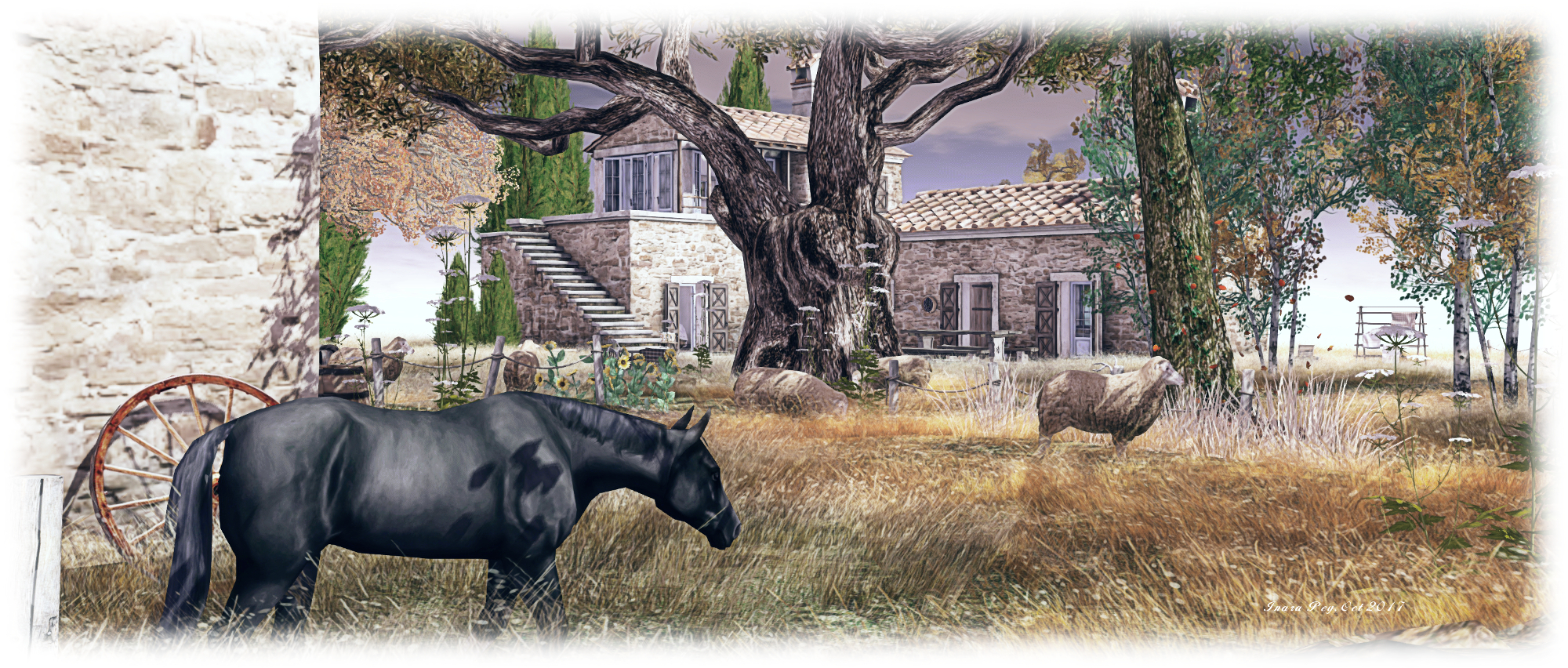
The most obvious of these is the Tuscan villa a short distance from the landing point. This might be a holiday home or farm-house (there is a barn nearby and both horses and sheep grazing on the island). It looks out over the waters to the north, where two outcrops of rock rise from the sea, like sentinels standing guard.
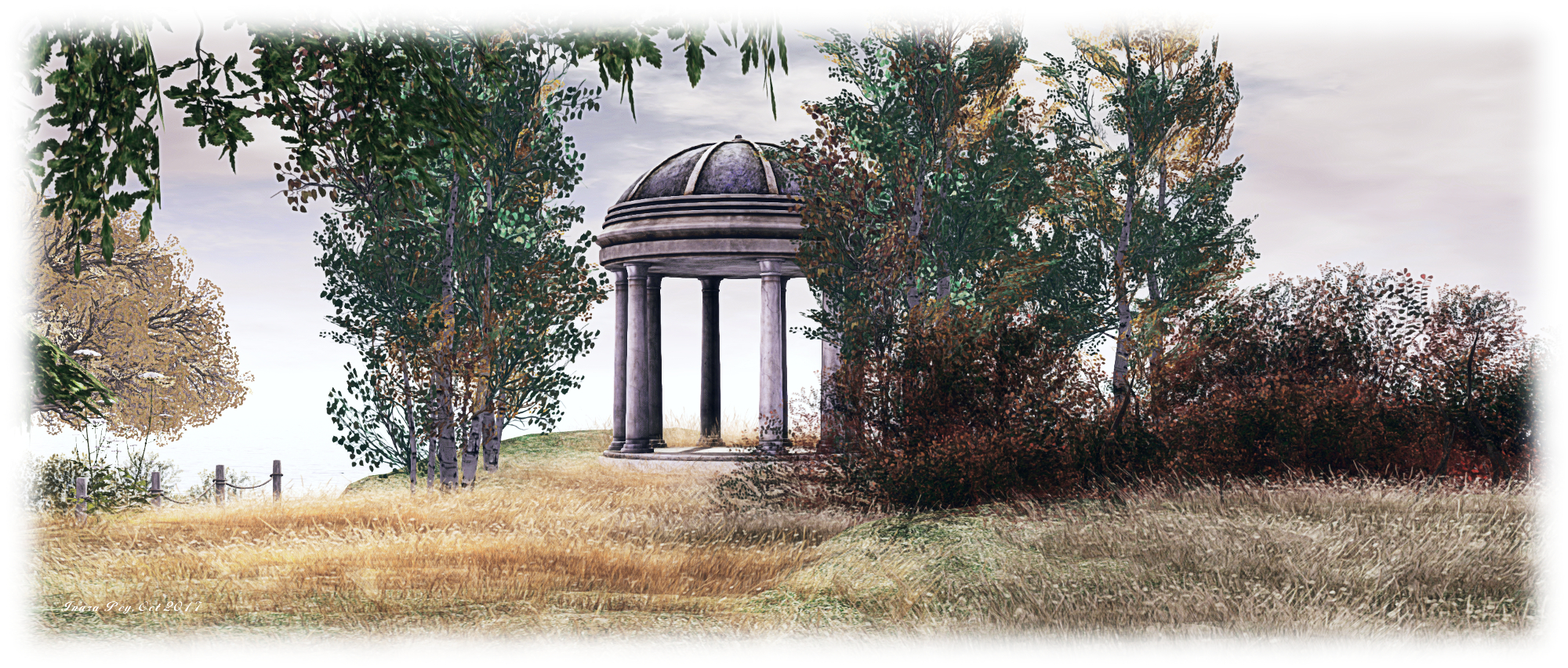
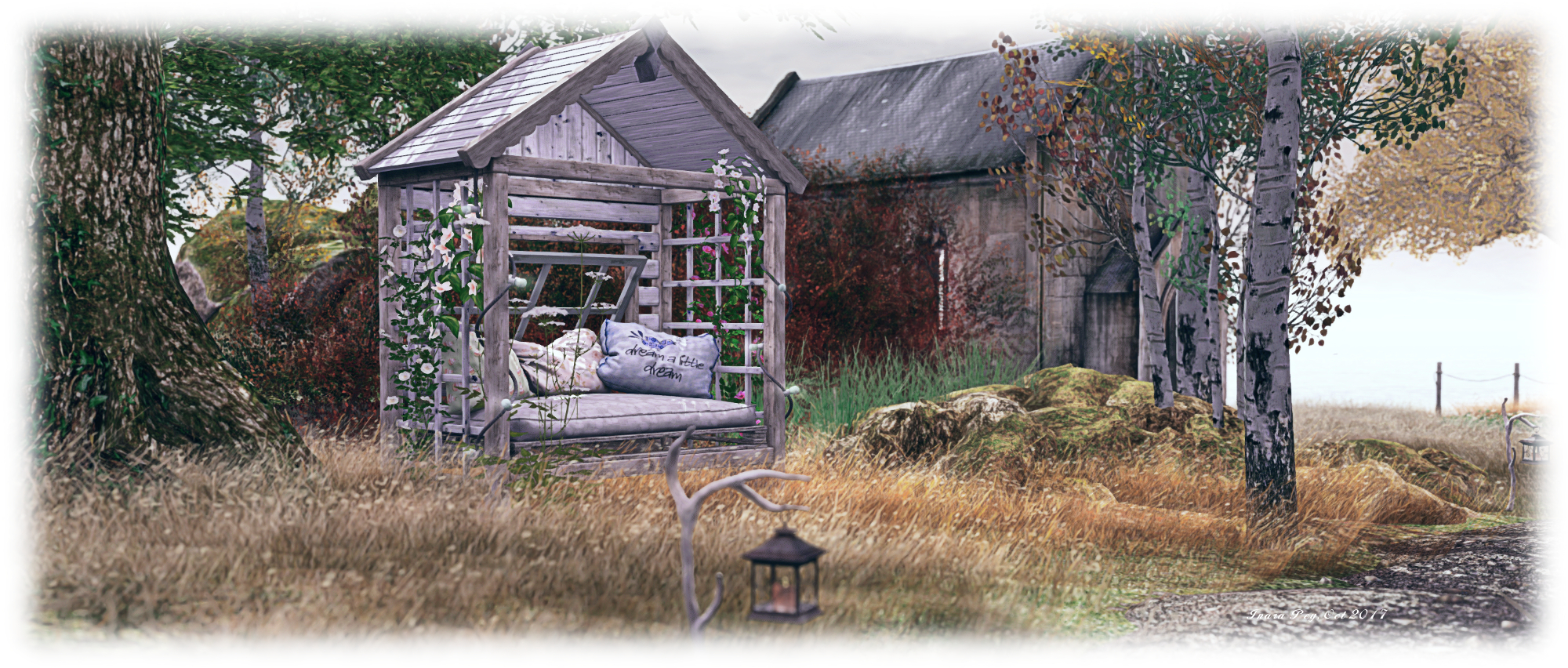
A short distance way along the path from the house is a little cuddle spot and an old chapel, while those following the path from the landing point to the villa might be tempted to turn aside and take the little junction leading the way up to a grassy plateau on the south side of the island. There is a gazebo here, complete with a dance machine (with another machine out on the grass) – and the audio stream featuring music from films makes for a perfect time dancing.
I’m not certain if either of the two islands to the south which show signs of habitation are open to the public – there is no direct way to reach them. With Au Petit Jour, Elyjia and Brayan did set a small island off to one side for private use, so this might be the case here. I haven’t been able to check with them if this is the case here, so it might be better to view them from afar rather than risk unintended intrusion. There’s certainly opportunities to this, either from the sun loungers on the sand or from the rowing boats moored by the little pier at the beach, or from the grassy plateau mentioned above.
There is a natural beauty to Tavana Island which makes it an absolute delight not just to visit, but to spend time enjoying, be it sitting (on land or in a rowing boat), dancing, or simply wandering and looking. There’s a subtle sound scape perfectly matching the seasonal look for the islands, so keep local sounds enabled.
All told, another superb design by Brayan and Elyjia, one more than worth time to visit. Should you do so, and enjoy your time as much as we did, please consider a donation towards the upkeep of the region for others to enjoy as well.
It’s time to kick-off another week of storytelling in Voice by the staff and volunteers at the Seanchai Library. As always, all times SLT, and events are held at the Library’s home at Holly Kai Park, unless otherwise indicated.
Sunday, October 8th 13:30: Tea Time at Baker Street
The pages of The Casebook of Sherlock Holmes, the final set of twelve Sherlock Holmes short stories first published in the Strand Magazine between October 1921 and April 1927, are once again opened for another tale from the diaries of Dr. John Watson…
This week: The Adventure of the Veiled Lodger
“You will understand, Mrs. Merrilow, that if I come to Mrs. Ronder I should prefer to have a witness. You will make her understand that before we arrive.”
“Lord bless you, Mr. Holmes,” said our visitor, “she is that anxious to see you that you might bring the whole parish at your heels!”
“Then we shall come early in the afternoon. Let us see that we have our facts correct before we start. If we go over them it will help Dr. Watson to understand the situation. You say that Mrs. Ronder has been your lodger for seven years and that you have only once seen her face.”
“And I wish to God I had not!” said Mrs. Merrilow.
With these words, John Watson once again finds himself plunged into a new mystery at the side of his long-time friend, Sherlock Holmes. The year is 1896, and Holmes has asked Watson to attend 221B Baker Street to listen to the story Mrs. Merrilow has to tell of her lodger, Mrs. Ronder. Horribly disfigured, Mrs. Rounder is the surviving victim of a terrible accident after a circus lion somehow got loose and savaged her and her husband – killing him.
While the case had piqued Holmes’ curiosity on account of a number of inconsistencies, he had not been called upon to investigate matters. Now, every night, Mrs. Ronder is beside herself with fear, shouting and screaming of murder and beasts. Her health has also deteriorated, and she has refused all assistance, asking only that her landlady, Mrs. Merrilow, seek out Holmes and ask for his aid – and to repeat two works to him: Abbas Parva …
To find out more, be sure to turn up on time for a spot of afternoon tea at Baker Street!
Plus: The Case of Lady Sannox by Sir Arthur Conan Doyle: No, not a mystery for The Great Detective to solve, but a sinister short story from 1893 of how revenge is sought as a result of a notorious affair between a famed surgeon and the Lady of the story’s title.
Monday, October 9th 19:00: Reckoning Infinity
Gyro Muggins reads John E. Stith’s alien first contact story, once described as “Rendezvous with Rama meets James and the Giant Peach“!
Lieutenant Commander Alis Mary Nussem, her body partially bionic, isn’t to happy about finding herself aboard the same space vessel as the man she deems responsible for the accident which robbed her of a part of her natural body. However, she must put aside her differences with scientist Karl Stanton when a massive object enters the solar system, apparently on course to be swallowed by the Sun – but not before it will collide with a space station in Earth orbit.
Ordered to investigate the object, which is as large as a moon and quickly given the name “Cantaloupe,” Nussem, Stanton and the crew of their ship rendezvous with it, only to find they are not the first: the wreck of another vessel lies on the surface, a hole drilled into the object close by. The only means of entry to the Cantaloupe, Nussem and Stanton lead a team down through it – to make a stunning discovery.
Like Nussem, Cantaloupe is an bio-mechanical entity. It is alive, but it’s interior also have pipes, elevators chambers and more within. But it is also a place of danger – as Nussem and her also companions quickly discover – some to their cost. It’s also a place of unexpected surprises, as the crew’s biggest discovery proves…
Tuesday, October 10th 19:00: The Legend of Sleepy Hollow
As All Hallows creeps ever closer, how better than to get in the mood than with some classic tales of horror and spookiness from literature?
Perhaps one of the most well-known (and well-loved) stories of dark hauntings is Washington Irving’s The Legend of Sleepy Hollow, which is also one of the earliest examples of American literature of enduring popularity.
While setting his tale in post-revolutionary America in the year 1790, Irving in fact wrote the sorry tale of school teacher Ichabod Crane and his ill-fated encounter with the Headless Horseman in 1819 while visiting England, where his also penned Rip Van Winkle.
Both The Legend of Sleepy Hollow and Rip Van Winkle first appeared in print in his serial The Sketch Book of Geoffrey Crayon, Gent, which also marked Irving’s first use of that pen name. As with Rip Van Winkle, Irving claims he first heard about The Legend of Sleepy Hollow from “Diedrich Knickerbocker”, a fictional “Dutch Historian”.
With Caledonia Skytower (also presented in Kitely hop://grid.kitely.com:8002/Seanchai/108/609/1528).
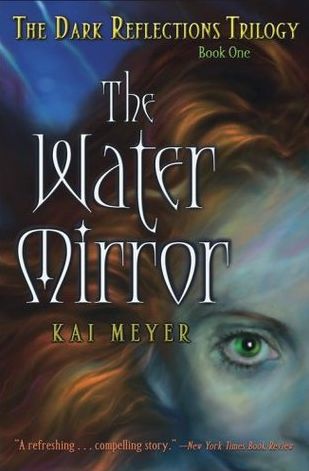
Wednesday, October 11th, 19:00 The Water Mirror
Faerie Maven-Pralou reads Kei Meyer’s tale of magic.
Merle is apprenticed to a maker of magic mirrors. She even has one of her own, with a surface of water into which she can reach without ever getting wet – magic being a relatively common thing in Venice. Meanwhile, her friend Serafin, once a master thief, now works for a weaver of magic cloth.
Both Merle and Serafin accept the wonders of the city, from the mermaids in the canal to the stone lions on which the city guards ride on their patrols. But all is not well; beyond the walls of the city, the Egyptian Empire is laying siege, an army of mummy warriors and flying sunbarks held at bay by the power of the Flowing Queen, which runs through the city’s canals and hold the enemy forces at bay.
Then Merle and Serafin overhear a plot to capture the Flowing Queen and render the city defenceless. And while no-one actually knows what the Queen looks like, they set out to protect and / or rescue her. In doing so, they must ally themselves with the Ancient Traitor and journey into the realm of Dark Reflections…
Thursday, October 12th 19:00 Zombies!
With Shandon Loring (also presented in Kitely hop://grid.kitely.com:8002/Seanchai/108/609/1528).
Advanced Notice!
Sunday October 22nd 13:00-15:00: Ghostly Tales
Seanchai Library and friends gather at Kultivate Magazine’s Scare Me Silly fund-raiser on behalf of Team Diabetes SL, for spooky, chilling tales of the season.
Sunday, October 29th 13:00-15:00 The 2nd Annual Holly Kai GREAT BOO!
Scary storiesfollowed by music and dancing. Possibly more! Stay Tuned!
Please check with the Seanchai Library’s blog for updates and for additions or changes to the week’s schedule.
The featured charity for August and September is Little Kids Rock, transforming lives by restoring, expanding, and innovating music education in schools.
 La Vie – click any image for full size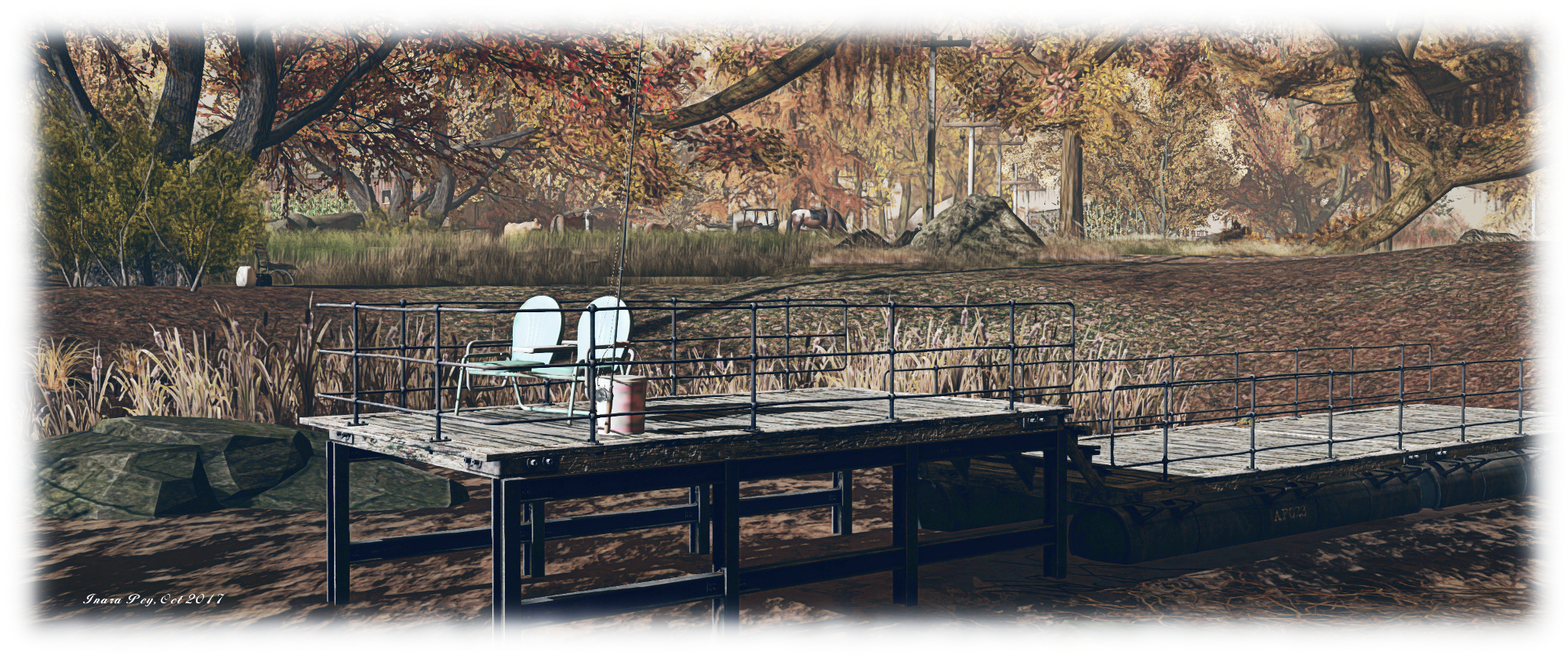












 Inara Pey: Living in a Modemworld