Visiting Hobbiton in Second Life

Hobbiton, Dragon Island; Inara Pey, February 2017, on FlickrHobbiton – click any image for full size

“Mae govannen! So good to have you here with us!” Zephira (Gidgette Adagio) greeted as Caitlyn and I explored her homestead region, Hobbiton. “I must confess, I am still working on texture terrain in Region details. I am a noob to this, but have wanted to do this for a long time and finally got the courage to try!”

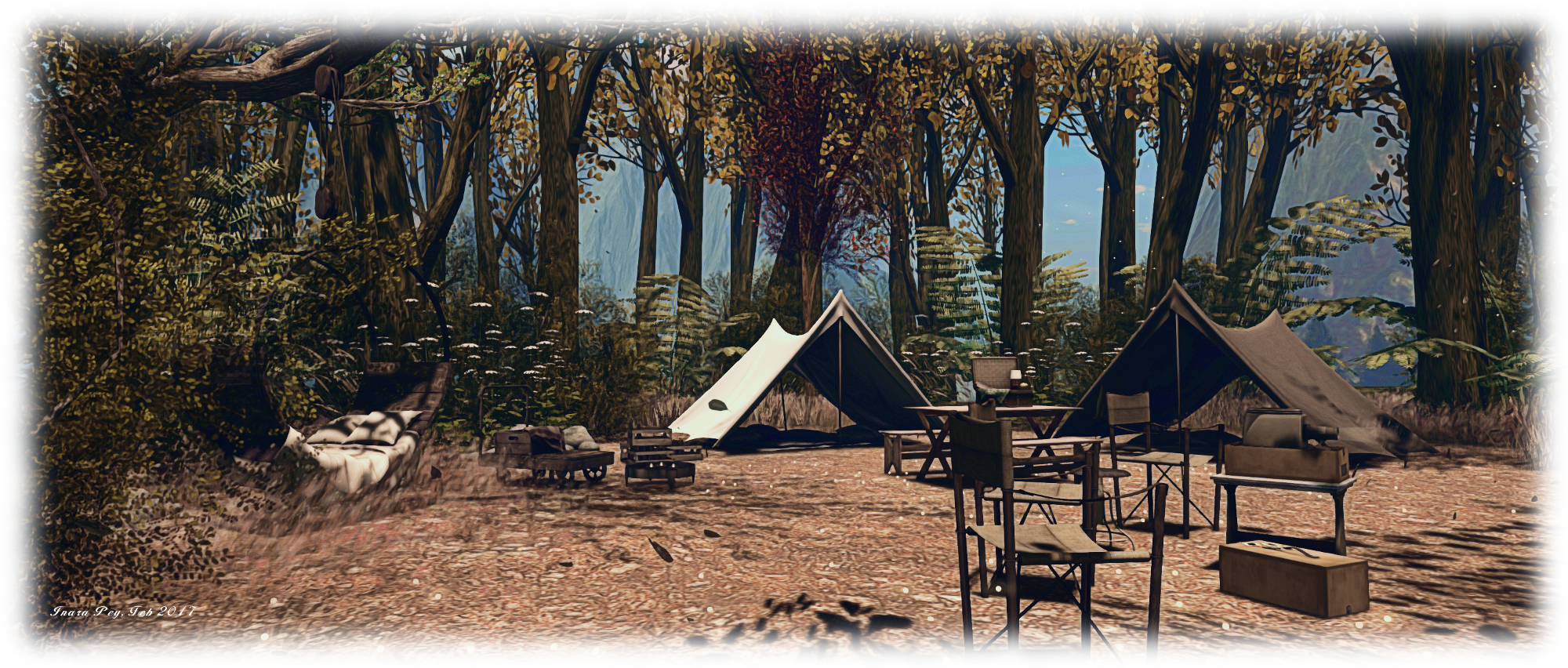
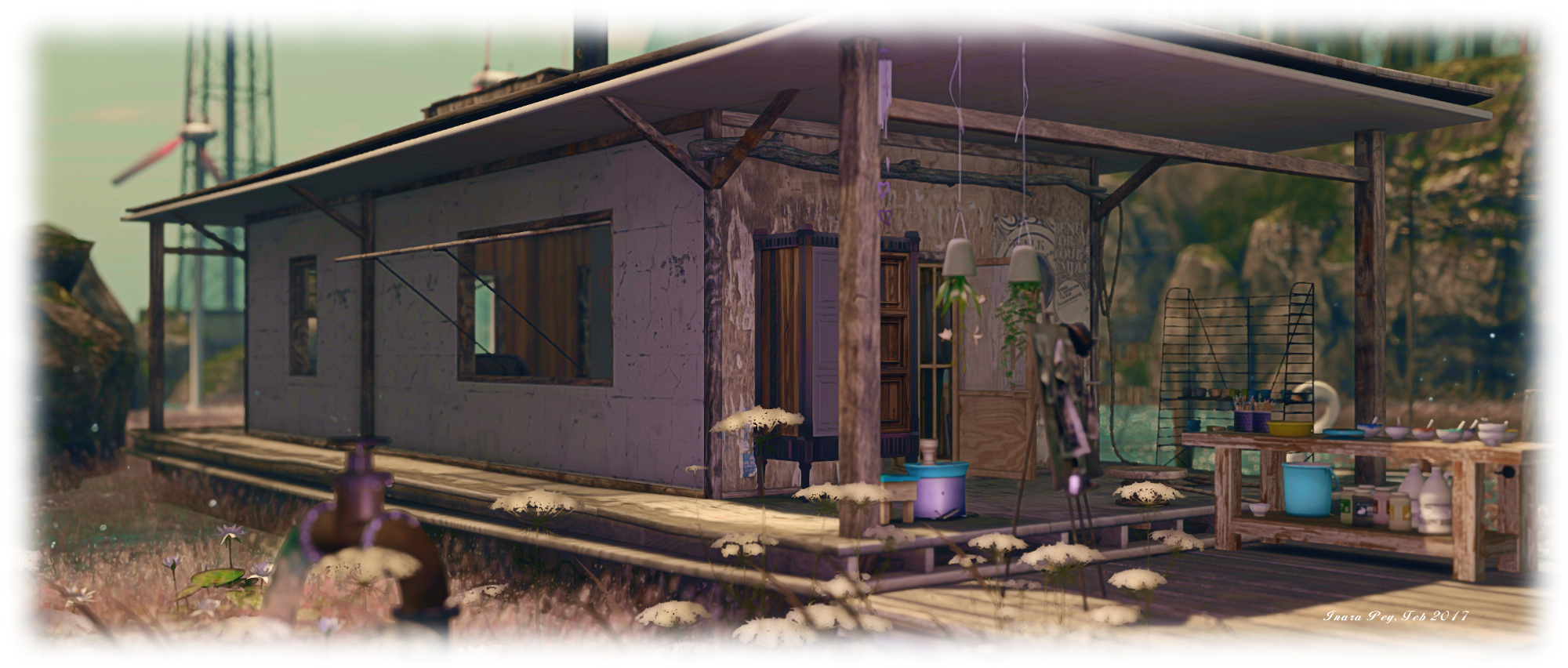
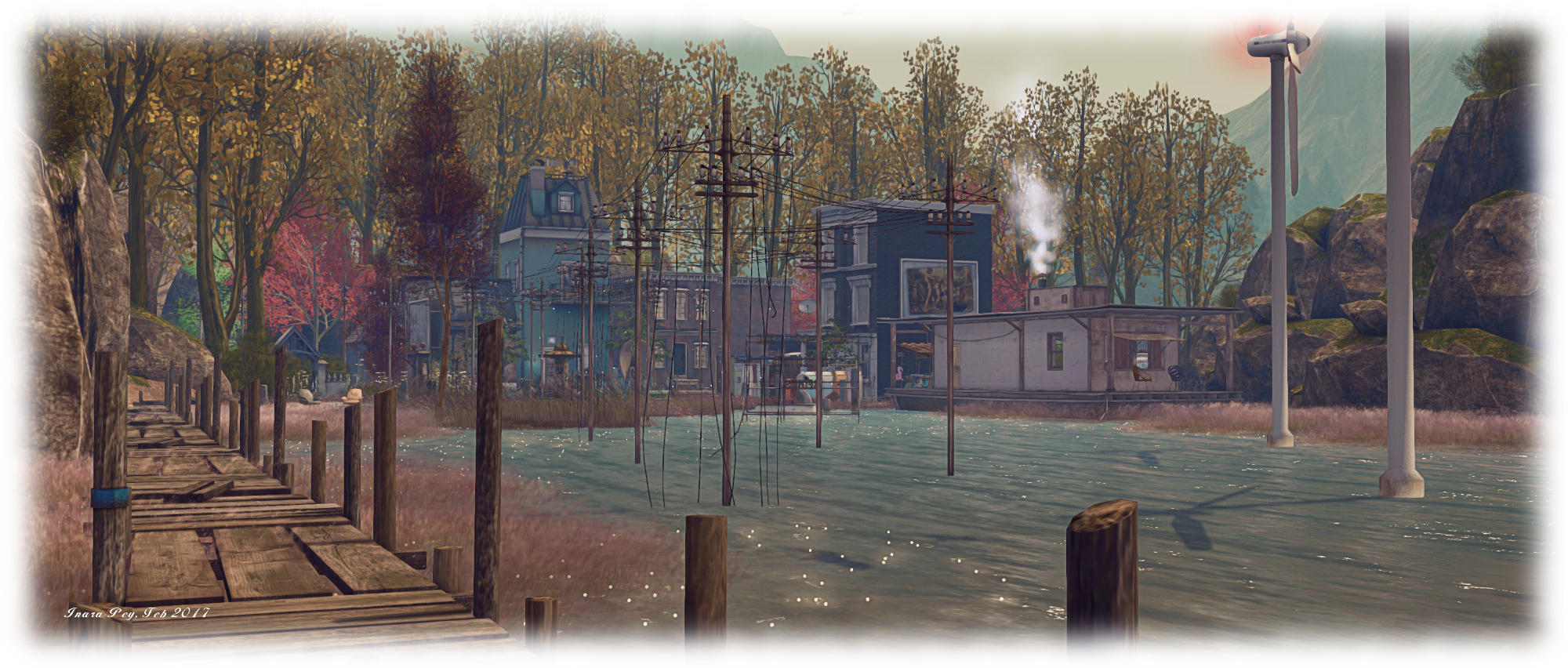
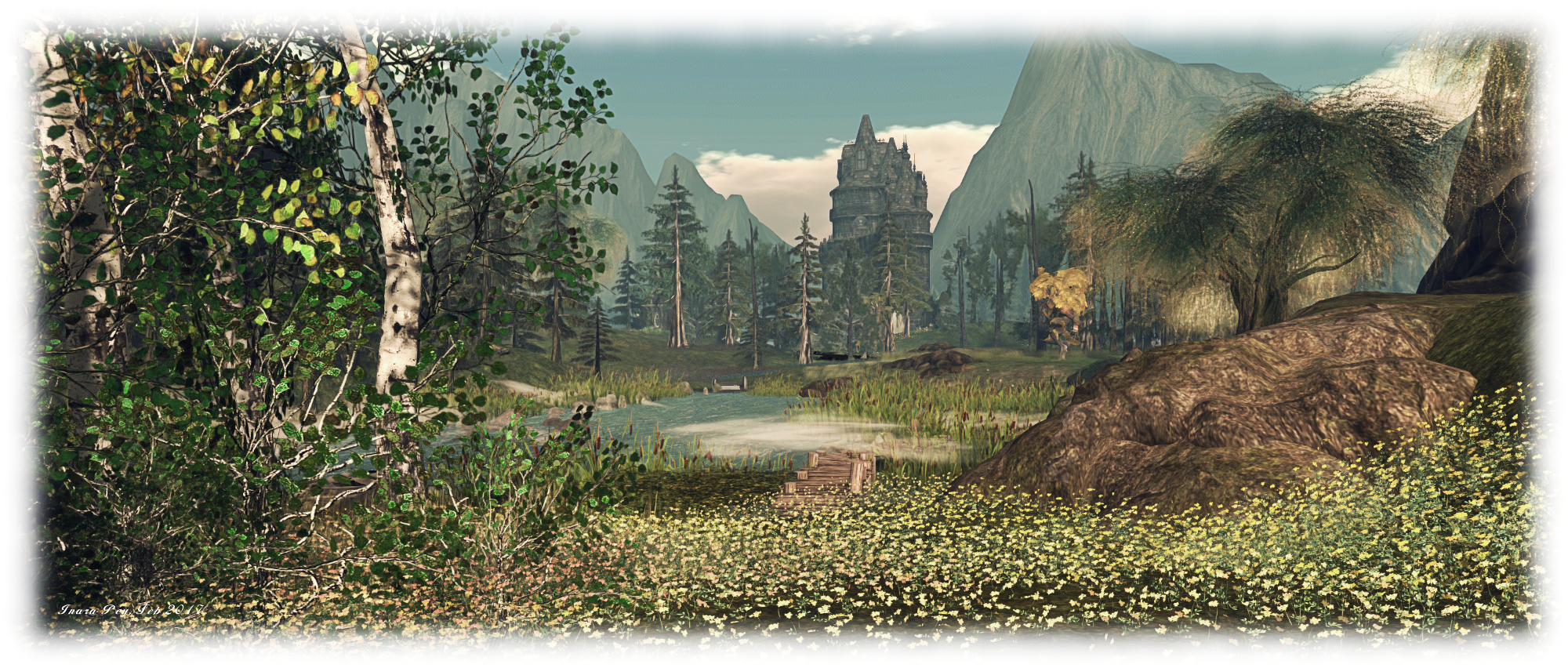
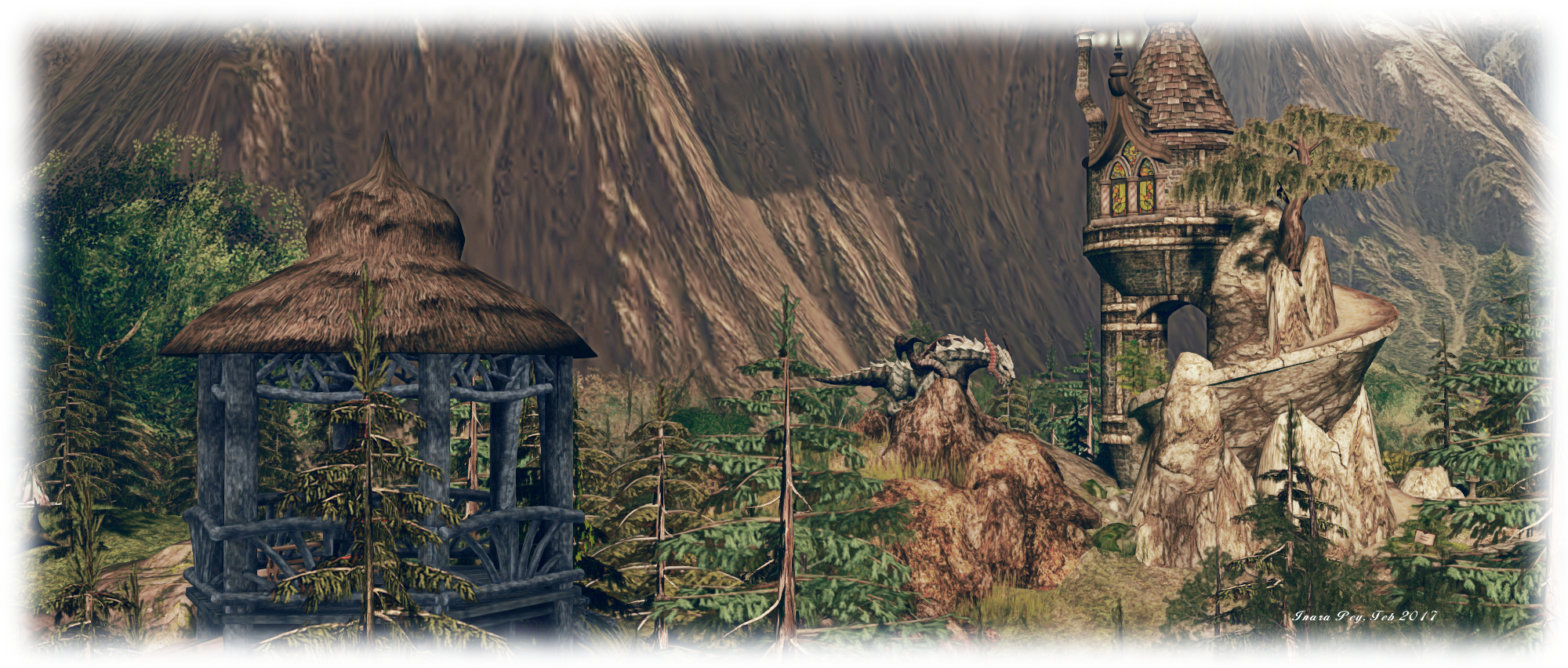
Truth be told, Zephira undersells herself. Hobbiton is a picturesque region beautifully brought together and welcoming to visitors. Inspired by Tolkien’s Middle Earth, it contains many touches and nods towards his tales without actually being specifically placed with a single realm of Middle Earth. So it is that Hobbit holes sit alongside (and beneath!) wizard’s towers while the houses of Big Folk can be found amidst the green, rolling landscape I have little doubt Tolkien would regard as being a slice of Middle Earth were he able to see it.

Hobbiton, Dragon Island; Inara Pey, February 2017, on FlickrHobbiton

This is a place of delight and natural beauty, full of little touches which make careful exploration a must. Light role-play is allowed (but not required) and the region is home to one or two people – so don’t be surprised if you bump into locals who are in character. As well as Zephira, we had the pleasure of bumping into Robin Brandybuck, a second cousin (once removed) to the famous Meriadoc Brandybuck!

Visitors are advised to use the region’s default windlight when exploring, and this casts the landscape into the shadows of evening, giving it an added air of mystery. However, such is Zephira’s design, it is well suited to a range of windlight settings, and for the purposes of the images here, I used one of my preferred pre-sets.
Hobbiton, Dragon Island; Inara Pey, February 2017, on FlickrHobbiton

There is no set path for exploration – simply follow wherever your feet take you. As the region is home to some, there are one or two places that are off-limits to visitors, but the majority of the land is open to wandering, whilst there are also several places where visitors can simple sit and observe the comings and goings of others.

Some of the highlights of the region are easy to find: the wizard’s towers, the Hobbit holes, the follies, and so on. However, when wandering, keep an eye out for all the little touches which both bring the landscape to life and reflect the tales which inspired it.
Hobbiton, Dragon Island; Inara Pey, February 2017, on FlickrHobbiton

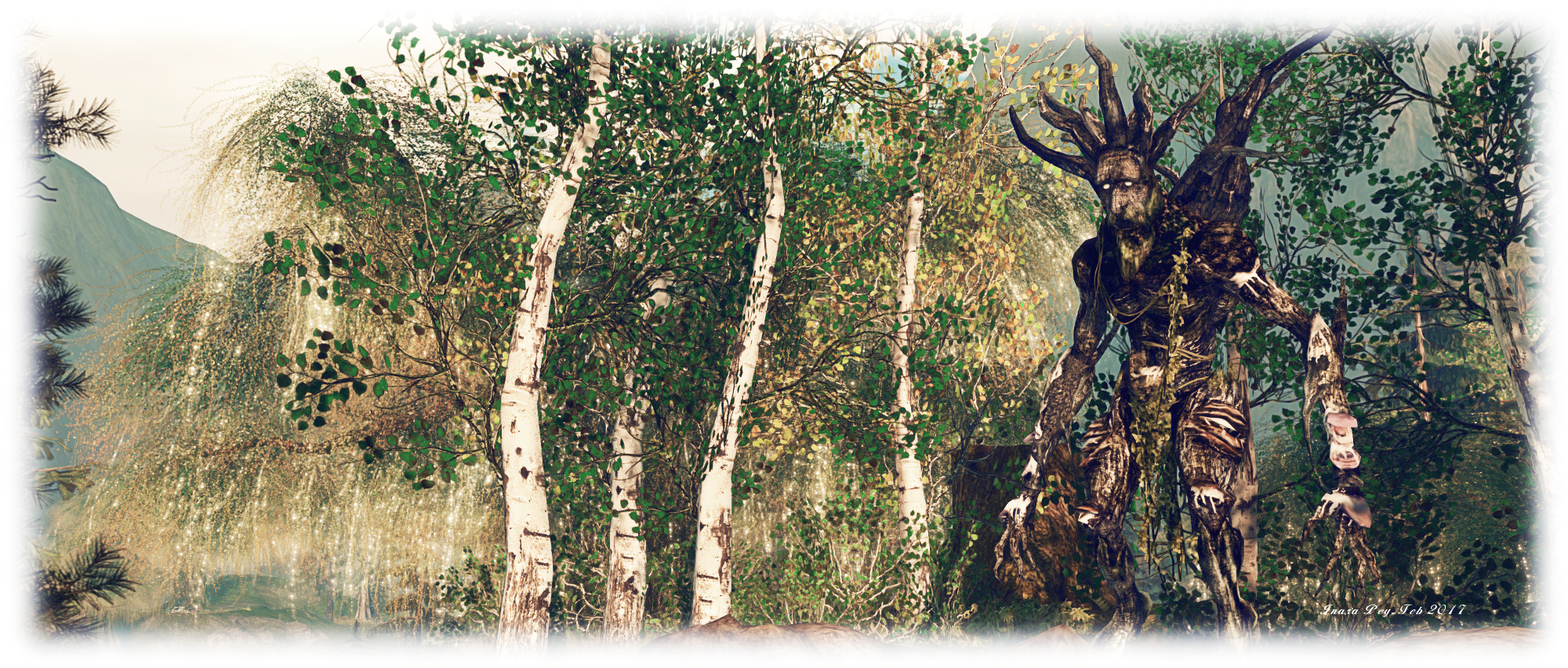
For example, Smeagol can be found in one direction, hunched on a rock and wearing his Gollum face. Elsewhere a walk through the more wooded parts of the region might lead to an encounter with an Ent or two – although at least one (Treebeard himself?)  – can easily be missed if you hurry by too quickly. Elsewhere, a little mine reminds us that Middle Earth is the home to Dwarves as well, while a dragon stands watch on a rocky peak, and – across the waters – a single Eye stares out from the high tower of Barad-dûr.

Hobbiton makes for a delightful visit. My thanks to my region spotter, Shakespeare, for passing on word about it, and thanks from both Caitlyn and I to Zaphira for both sharing her vision with Second Life explorers, and for the warm greeting and time spent with us during our visit.

SLurl Details

Hobbiton (Thunder Dragon Island, rated: Moderate)

2017 Viewer release summaries week 6

Updates for the week ending Sunday, February 12th

This summary is published every Monday, and is a list of SL viewer / client releases (official and TPV) made during the previous week. When reading it, please note:

  • It is based on my Current Viewer Releases Page, a list of all Second Life viewers and clients that are in popular use (and of which I am aware), and which are recognised as adhering to the TPV Policy. This page includes comprehensive links to download pages, blog notes, release notes, etc., as well as links to any / all reviews of specific viewers / clients made within this blog
  • By its nature, this summary presented here will always be in arrears, please refer to the Current Viewer Release Page for more up-to-date information.

Official LL Viewers

  • Current Release version: 5.0.1.323027, dated January 25th, promoted February 3rd – formerly the Maintenance RC viewer download page, release notes – no change
  • Release channel cohorts (please see my notes on manually installing RC viewer versions if you wish to install any release candidate(s) yourself):
  • Project viewers:
    • No updates

LL Viewer Resources

Third-party Viewers

V5-style

V1-style

Mobile / Other Clients

  • No updates.

Additional TPV Resources

Related Links

CioTToLiNa’s rooftop exhibition in Second Life

Art on Roofs: Ciottolina Xue
Art on Roofs: CioTToLiNa Xue

It’s been a while since Caitlyn and I last visited Art on Roofs at Solodonna Land, so it was with some delight I received an invitation to pay a visit to explore a new exhibition by an artist I admire: CioTToLiNa Xue.

I first encountered CioTToLiNa’s work whilst visiting an exhibition on Mistero Hifeng’s work at the same exhibition space (which you can read about here). Since then I’ve been captivated, and always enjoy seeing her pieces on display.

Art on Roofs: Ciottolina Xue
Art on Roofs: CioTToLiNa Xue

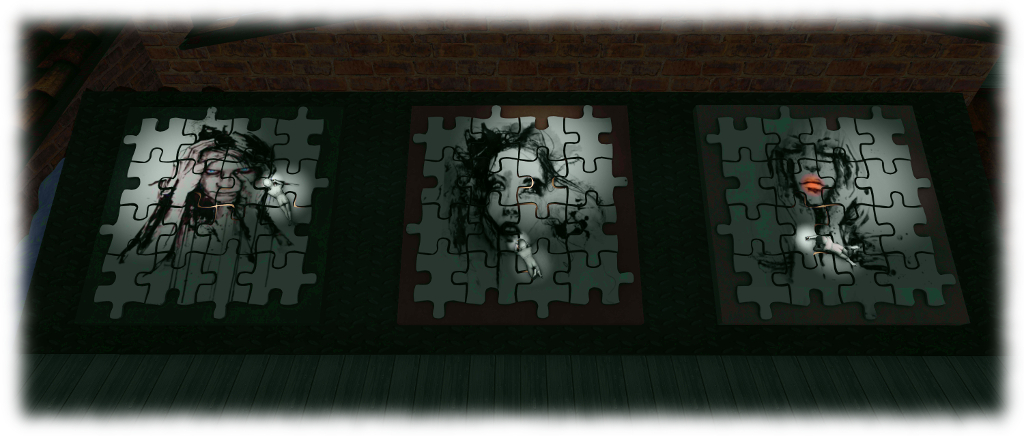
Some 20 pieces are presented across the rooftops of Solodonna’s Art on Roofs exhibition area. All are quite exquisite and carry a narrative of their own. Some embody the intimacy of love, others reflect CioTToLiNa‘s cultural / political / ecological interests, others marry 3D work with 2D art – notably the three Moods pieces – as seen in the image above.

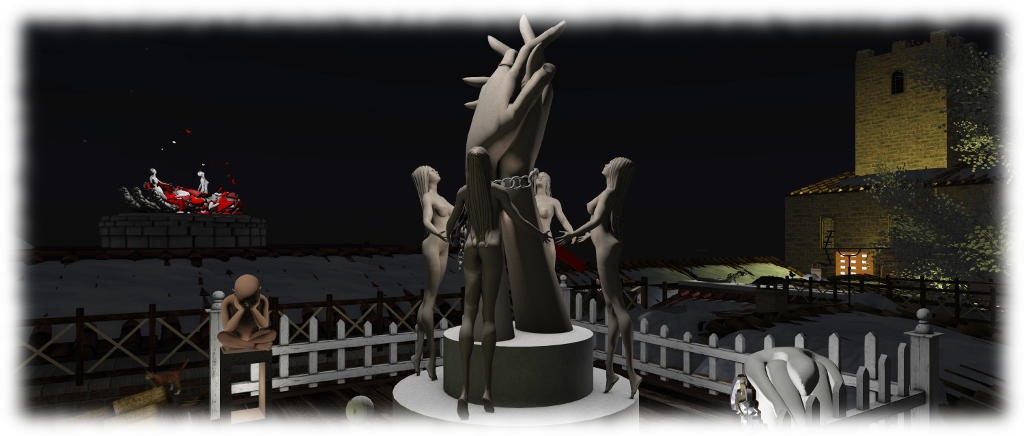
Several of the pieces a quite large, such as Lesbian World (below) and pista puzzle chiuso, which are something of a departure from CioTToLiNa‘s earlier work, which has tended towards a smaller scale, as evidenced by most of the pieces on display. I see this as perhaps a sign she is growing in confidence in her technique and ability – and applaud her in more freely expressing herself with these larger pieces.

Art on Roofs: Ciottolina Xue
Art on Roofs: CioTToLiNa Xue

One of the things that particularly attracts me to her work is that the emotional power contained within a piece is so often felt, rather than seen. The eyes may well appreciate the beauty of a piece, but it is within the heart that it resonates, causing to pause or return to it and ponder it again – and even desire it.

The exhibition will remain open through until the end of February, and is very genuinely one that should not be missed by anyone who appreciates art and 3D sculpture in Second Life. Should you be taken by that desire to purchase one or more pieces, they and other items from CioTToLiNa’s collection can be found at her in-world store. This is on three levels, so be sure to see it all.

Art on Roofs: Ciottolina Xue
Art on Roofs: CioTToLiNa Xue

SLurl Details

Space Sunday: Martian quandaries, universal epochs and Jovian journeys

"Yellowknife Bay" a region examined by the Curiosity Rover in 2012/13 indicated that a lake was once present in Gale Crater. However, the same rock has revealed that potentially, there was not sufficient carbon dioxide present in the atmosphere to help keep the water unfrozen
“Yellowknife Bay” a region examined by the Curiosity Rover in 2013 indicated that a lake was once present in Gale Crater. However, the same rock has revealed that potentially, there was not sufficient carbon dioxide present in the atmosphere to help keep the water unfrozen. Credit: NASA

Mars scientists are wrestling with a problem. Ample evidence says ancient Mars was sometimes wet, with water flowing and pooling on the planet’s surface. Yet, the ancient sun was about one-third less warm and climate modellers struggle to produce scenarios that get the surface of Mars warm enough for keeping water unfrozen.

A leading theory is that ancient Mars had a thicker carbon-dioxide atmosphere forming a greenhouse-gas blanket, helping to warm the surface. However an analysis of data from NASA’s Mars rover Curiosity, suggests that even 3.5 billion years ago there was too little carbon dioxide present in the Martian atmosphere to provide enough greenhouse-effect warming to prevent water freezing.

The source of these findings is the very same bedrock in which the rover found sediments from an ancient lake in which microbes might have thrived. When analysing the bedrock, Curiosity detected no carbonate minerals, leading to the conclusion that Mars’ atmosphere was almost devoid of carbon dioxide when the lake existed 3.5 billion years ago. And that’s a quandary for scientists.

Curiosity took this selfie while at "Yellowknife Bay" in 2013 whilst gathering rock samples for analysis. Note that while the shadow of the rover's robot arm can be assn, the arm itself is blanked from the images purely as a result of the angles used in individual shots and the way the images have been stitched together to provide a view of the rover
Curiosity took this selfie while at “Yellowknife Bay” in 2013 whilst gathering rock samples for analysis. Note that while the shadow of the rover’s robot arm can be seen, the arm itself is blanked from the images purely as a result of the angles used in individual shots and the way the images have been stitched together to provide a view of the rover. Credit: NASA

“We’ve been particularly struck with the absence of carbonate minerals in sedimentary rock the rover has examined,” Thomas Bristow, the principal investigator for Curiosity’s Chemistry and Mineralogy (CheMin) instrument,  the primary source of the analysis work. “It would be really hard to get liquid water even if there were a hundred times more carbon dioxide in the atmosphere than what the mineral evidence in the rock tells us.”

In water, carbon dioxide combines with positively charged ions such as magnesium and ferrous iron to form carbonate minerals, and CheMin can identify carbonate if it makes up just a few percent of the rock. Yet Curiosity has made no definitive detection of carbonates in any lakebed rocks sampled since it landed in Gale Crater in 2012. However, other minerals – magnetite and clay minerals – not only indicated in the same rocks indicate the ions needed to form carbonates were readily available, they also provide evidence that subsequent conditions never became so acidic that carbonates would have dissolved away over time.

The dilemma between a warm, wet Mars and the lack of carbonates has actually been growing for years. For two decades researchers have been using spectrometers on Mars orbiters to search for carbonate that could have resulted from an early era of more abundant carbon dioxide in the atmosphere, only to find far less than anticipated. Yet clues such as isotope ratios in today’s Martian atmosphere continue to indicate the planet once held a much denser atmosphere than it does now, which has largely been seen as being rich in carbon dioxide. Thus, a paradox has arisen.

Curiosity uses a spectrometer on its robot arm to check a rock dubbed "John Klein" in "Yellowknife Bay" for its suitability as a drilling target, January 25th, 2013. The drill itself can be seen on the robot arm's "hand", pointing up and to the right
Curiosity uses a spectrometer on its robot arm to check a rock dubbed “John Klein” in “Yellowknife Bay” for its suitability as a drilling target, January 25th, 2013. The drill itself can be seen on the robot arm’s rotating “hand”, pointing up and to the right. Credit: NASA

It had been thought that the lack of evidence for carbonates when seen from orbit could simply be the result of  dust covering them, or the carbonates having moved underground. Finding them would thus resolve the paradox and reveal what had happened. However, the Curiosity results tend to overturn this idea. Simply put, the rover has failed to detect carbonate minerals precisely where they should be located, within rocks formed from sediments deposited under water.

“This analysis fits with many theoretical studies that the surface of Mars, even that long ago, was not warm enough for water to be liquid,” said Robert Haberle, a Mars-climate scientist at NASA Ames. “It’s really a puzzle to me.”

One idea put forward is that perhaps the lake was never a body of open water, but was covered in ice. The problem with this idea is none of the expected evidence for an ice-covered lake, such as large and deep cracks called ice wedges, or “dropstones,” which become embedded in soft lakebed sediments when they penetrate thinning ice, have been found. Thus, scientists have a lot of head scratching and theorising to do in order to make sense of the dilemma.

Traversing Mars with Curiosity

A simulated Curiosity rolls over the "Naukluft Plateau" in this still from Seán Doran's video simulation of the rover's traverse
A simulated Curiosity rolls over the “Naukluft Plateau” in this still from Seán Doran’s video simulation of the rover’s traverse. Credit: Seán Doran

Ever wondered what it would be like to witness Curiosity trundling across the surface of Mars? Seán Doran has. What’s more, he’s been putting together animated films using Digital Terrain Model (DTM) data from the HiRISE imaging system on NASA’s Mars Reconnaissance Orbiter together with photomosaics of images from the rover, and combining them with a drivable correctly scaled model of the rover to provide movies of Curiosity as it rolls across Mars.

Continue reading “Space Sunday: Martian quandaries, universal epochs and Jovian journeys”

A NonStop visit in Second Life


NonStop, NonStop; Inara Pey, February 2017, on FlickrNonStop – click any image for full size

Update: NonStop as described here no longer exists. See Exploring Puddlechurch in Second Life for details of a more recent region design by Cherish and Marty.

NonStop, a homestead region by Cherish Demonge and Matry Trellis, is presented as “Second Life’s ultimate forest”.  I’d personally regard the setting as more coastal / rural than “forest” – while there are trees aplenty, they mostly look and feel more like woodland, occupying the more rugged parts of the region and offering pleasant glades and walks between them, while leaving the low-lying parts of the region open for habitation.

Be this as it may, there is no denying the region is beautifully put together with an eye for detail, presenting visitors with plenty to see and enjoy.

NonStop, NonStop; Inara Pey, February 2017, on FlickrNonStop

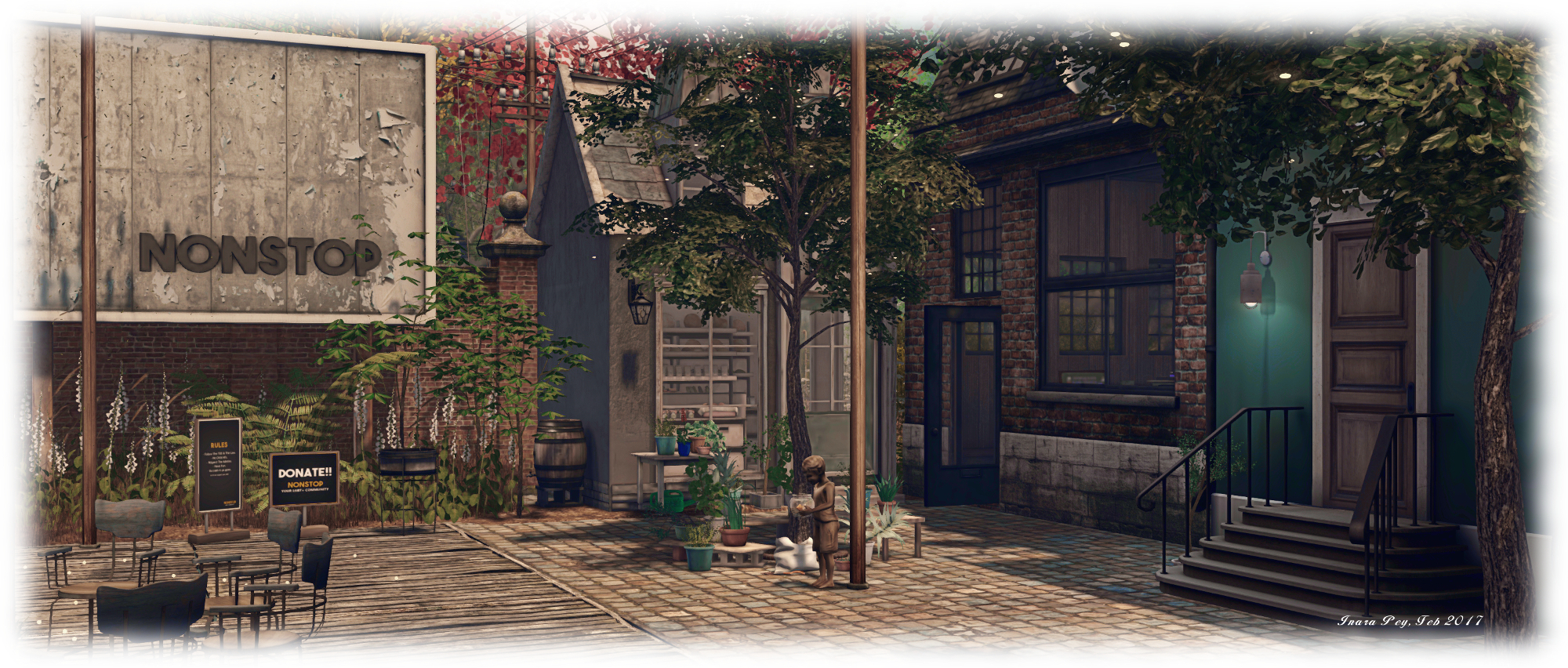
A visit begins in a little hamlet surrounded on three sides by rocky plateaus, and on the forth by an inlet with a narrow channel beyond, leading between distant peaks to the open sea. Wooden decking has been built out over the water from the narrow footpaths in front of the hamlet’s buildings, offering a makeshift town square  – a meeting point for new arrivals.

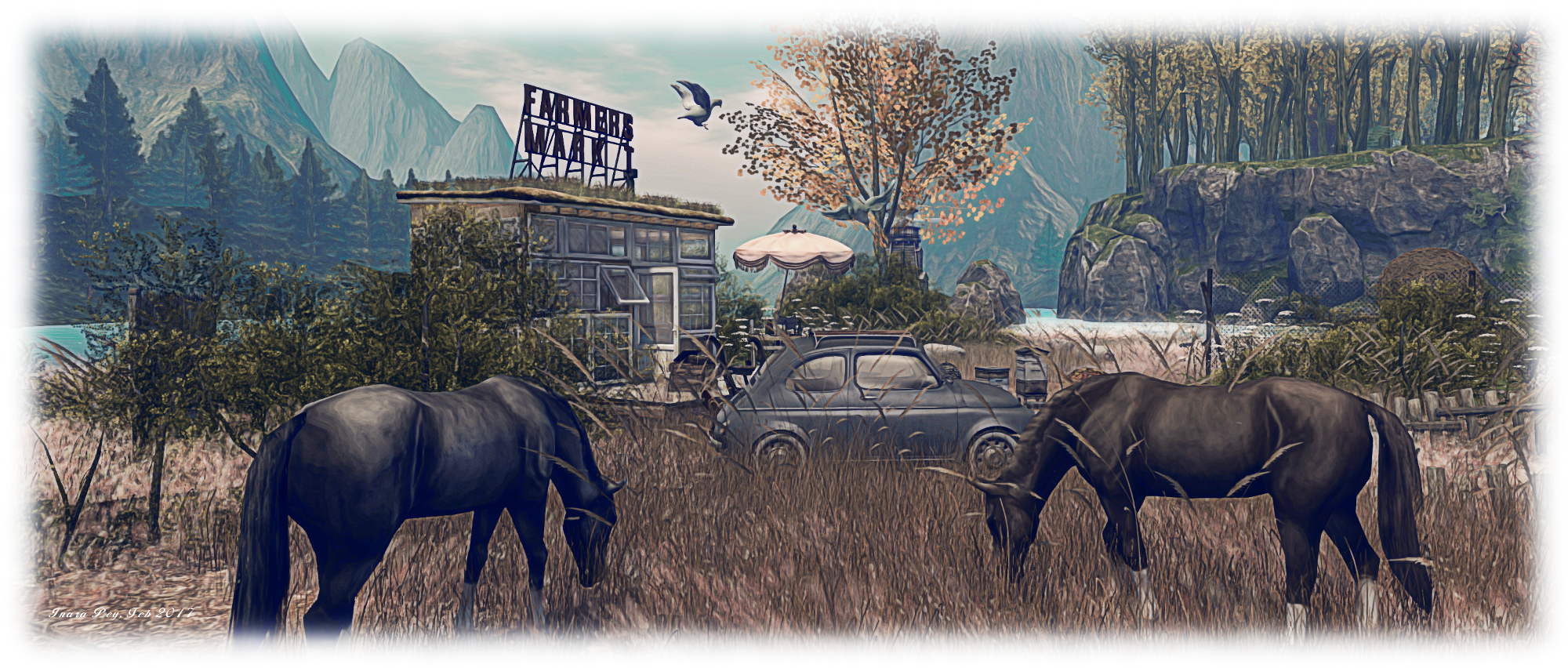
This would seem to be an eco-conscious community: rising from the waters of the inlet are the slender fingers of wind turbines, their blades quietly turning.  North-east of the hamlet lies a small farm, sheep grazing on tall grass, hay neatly baled, and a little market shack sitting at the end of the unpaved road leading out to it. Three more wind turbines sit out in the waters to the north, indifferent to the wreck of a fishing boat beneath them, or the second boat lying at anchor.

NonStop, NonStop; Inara Pey, February 2017, on FlickrNonStop

Facing the farm across another inlet, this one watched over by a squat lighthouse, sits a camp site amidst the trees at the top of one of the plateaus. Reached via a set of stone steps set into the blunt shoulders of the rocks, it offers a setting which feels genuinely isolated and forest-like.

To the west, and reach via a set of wrought iron gates, a cobbled path leads the way to a little trailer park. Or, if you prefer, a board walk hugs the foot of another plateau, pointing the way south to where a long-abandoned chapel sits on a tiny breach of land rising from the water, its only company an ancient tree and tall wild flowers.

NonStop, NonStop; Inara Pey, February 2017, on FlickrNonStop

Northwards, beyond the rocks safeguarding the trailer park, the woodland marches up the slope of a hill denuded of grass, sandy earth laid bare, reflecting the autumnal hue of the leaves on the trees. A similar stretch of sandy earth lies to the west as well, more golden-leaved trees marching across it and over the flat top of the rocky uplands it abuts.

Caught in a late summer or early autumn frame, complete with matching windlight, NonStop really is picturesque and decidedly eye-catching. There are numerous places throughout where people can sit and chat or play games, as couples or in groups. There are also indoor spaces to explore – such as the houseboat alongside of the hamlet, although there are one or two little oddities to be found as well, adding a touch of cursory intrigue to the little town.

NonStop, NonStop; Inara Pey, February 2017, on FlickrNonStop

Adult rated, NonStop can be the home of some colourful language among the locals, but is nevertheless welcoming and more than worth the time needed to explore. My thanks, as ever, to Shakespeare for the pointer!

SLurl Details

Of Mystery, Time, Wodehouse and Shadows

It’s time to kick-off another week of storytelling in Voice by the staff and volunteers at the Seanchai Library. As always, all times SLT, and events are held at the Library’s Second Life home at Bradley University, unless otherwise indicated.

Sunday,February 12th

13:30: Tea Time Mysteries!

Seanchai Library launches a Tea Time series, featuring everything non-Holmesian from Christie to Hamett, classic sleuthing to hard-boiled detectives of the noir-ish hue.

This week: Raymond Chandler’s I’ll Be Waiting and the first part of Red Wind.

Written in 1939, I’ll Be Waiting is the shortest of Chandler’s stories, and one of his most unusual. The setting is the Windermere Hotel, and focuses on Carl, the night porter, the hotel’s house detective, Tony Reseck, a woman called Eve Cressy and a hood called Johnny Ralls, newly released from prison and not too happy with Eve Cressy.

red-windThere was a desert wind blowing that night. It was one of those hot dry Santa Anas that come down through the mountain passes and curl your hair and make your nerves jump and your skin itch. On nights like that every boozy party ends in the fight. Meek little wives feel the edge of the carving knife and study their husband’s necks.

So opens Chandlers 1946 Red Wind. Regarded as one of the classic openings for a noir story, it follows Philip Marlowe who, initially a bystander in a bar, witnesses an odd exchange between a man and a bartender concerning a woman, whom the man describes in great detail. The conversation ends when another man in the bar kills the questioner, and Marlowe decides to delve into matters himself…

18:00: Magicland Storytime

How to Cheat a Dragon’s Curse continues with Caledonia Skytower at the Golden Horseshoe In Magicland.

Monday, February 13th 19:00: The Crucible of Time

crucibleGyro Muggins takes his audience back into the fix-up by John Brunner. First published as two-part story which appeared in Isaac Asimov’s Science Fiction Magazine, it’s an ambitious tale of alien intelligence which grew to a series of six linked tales pushed as a single novel in 1983.

Far off in space is an alien race which is so much like us, yet so un-alike. From the birth of their earliest civilisation through to their attainment of star flight as their star system passes through the galaxy, we follow their development through the ages.

Aquatic by nature, this race presents some significant challenges well outside the realms of anything encountered by humanity. But they are also driven by all too familiar hopes, fears, desires, needs, wants, prejudices, impact of religious ideologies, and the quest for knowledge we have experienced in the growth of our own civilisation.

Charting six periods of time, each a thousand years after the previous, the six stories focus on the efforts of a group of individuals in each era as they face one or more challenges, their success in overcoming these challenges inevitably leading them towards a greater understanding of their planet’s plight, and ultimately, the ability to deal with that plight and the survival of their civilisation.

Tuesday, February 14th 19:00: A Monstrous Regiment of Women

Continues with Caledonia Skytower.

Wednesday, February 15th 19:00: The Winter of Our Wodehouse

Trolley Trollop reads selections from P.G. Wodehouse.

Thursday, February 16th 19:00: From the Shadows

Ghostly tales of love and revenge with Shandon Loring.


Please check with the Seanchai Library’s blog for updates and for additions or changes to the week’s schedule.

The featured charity for January / February is Heifer International, working with communities to end world hunger and poverty and to care for the Earth.