Project Bento User Group update 25 with audio

Bento: extending the avatar skeleton

The following notes and audio were taken from the weekly Bento User Group meeting, held on Thursday, September 8th at 13:00 SLT at the the Hippotropolis Campfire Circle. For details on the meeting agenda, please refer to the Bento User Group wiki page.

Note that this update is not intended to offer a full transcript of the meeting, nor does it present the discussion points in chronological order. Rather, it represents the core points of discussion, grouped together by subject matter were relevant / possible, whilst maintaining the overall context of the meeting.

RC Viewer Release

It is still hoped the Bento viewer will move to RC status soon. The main reluctance with pushing it further is to give people enough time for final testing with the majority of Avastar issues now hopefully resolved (see below). There are currently no major changes to the viewer being planned by the Lab, with the possible exception of the proof-of-concept idea for locking a mesh against slider changes.

Proof of Concept: Locking a Mesh Against Slider Changes

There have been discussions about possibly adding the ability to override the scale as well as position for joints in uploaded mesh models. A joint with both position and scale overrides would be effectively “slider-proof” – no sliders that affect the joint would have any effect on the model. This may be useful for content creators who want to control their avatar mesh shape exactly, without being affected by the standard customization options.

The Lab has now issued a proof-of-concept version of the Bento viewer for testing.  Depending on feedback it may or may not make it into the final version of the viewer. In releasing the proof-of-concept. there are also some notes on the forum from Vir on using this version of the viewer.

Note that this option doesn’t include the ability to enable / disable things on a per joint basis, which is unlikely to happen within the remaining Bento time frame. The idea is to try to provide something that s useful, but doesn’t involve a lot of changes to the UI. The Lab is interested in any feedback on this approach (via the Bento forum thread).

Collision Volumes

Vir presented a forum post on collision volumes and the operations supported for them (contrary to the name, collision volumes are not related to the physics of avatars – all such calculations are carried out on the back-end using a simplified representation of the avatar and do not include the avatar skeleton). Vir indicates that support for animating collision volumes is available on all versions of the viewer, including Bento, but whether or not it is a good idea to do so depends on what is trying to be achieved, noting the following use-cases:

  • Raycasting: collision volumes are used to detect an avatar under the mouse pointer. You can see this in drag-and-drop – try dragging a folder of clothing onto yourself. The drag will succeed if the spot you drag to is occupied by a collision volume
  • Animations with constraints: animations can include constraint information that causes the animation to respond to the location of body parts (hands on hips, resting hand on legs when sitting, etc). The collision volumes are used to determine these constraint locations.
  • Fitted mesh: suitably rigged meshes can use the collision volumes to scale with the avatar shape.

He also offered some guidelines for using collision volumes both in the post and during the meeting, including using them in the creating animations with constraints. Matrice requested anyone doing the latter if they could pass information to him on how they are doing this, as documentation is lacking.

Avastar 2 Updates

Avastar 2 Alpha 7 is available, which should resolve major issues with joint positions. The core updates in this version are:

  • All the related Appearance sliders, for human characters as well as for non human characters. Avastar now behaves just like any Second Life viewer, giving true “what you see is what you get character editing in Blender
  • Mesh eyes now behave exactly in the same way as the system eyes, including scaling with the eye size slider.

Medhue Simoni has produced an instructional video on updating from the “old” Bento rig version to the new rig version in Avastar.

Matrice Laville offered some feedback on the video, concerning some upcoming changes to Avastar.

Matrice also noted that there are a couple of issues which either have a fix awaiting release, or being investigated, which are related to jaw issues and scaling (below).

Jaw Issues And Scaling

Teager reports continued problems with her horse avatar, specifically with the teeth showing as a result of the lower lip not aligning correctly with the upper lip. Testing had led her to believe the problem might be related to scale on one of the bones. Matrice confirmed that there is a scaling issue, together with a peculiarity  in the way Blender works and applying scale within Avastar and issues of parenting / unparenting meshes which can lead to problems. He therefore recommends the best option at present is to ensuring the scaling on a bone in a mesh is always 1 while the problem is investigated.

In addition, Matrice indicated that he has added an option to Avastar to allow the export of all parent bones of each weighted bone, rather than just relying on the Avastar optimising which exported only weighted bones and ignoring any intervening bones. This option will be appearing in the next release of Avastar 2.

Continue reading “Project Bento User Group update 25 with audio”

Second Life says, “Happy Birthday Star Trek!” in Trek for a Cure

The iconic starship - and you can celebrate Star Trek's 50th anniversary at Trek for a Cure through to September 11th, 2016
The iconic starship – and you can celebrate Star Trek’s 50th anniversary at Trek For a Cure through to September 11th, 2016

Fifty years ago on September 8th, 1966, a new science-fiction show started airing on American television. Called simply Star Trek, it started as a humble weekly series which had already been through a difficult gestation period (1964-1966) and eventually lasted just three seasons – but went on to become a world-wide phenomenon, almost instantly recognisable in most countries and spawned a host of follow-on films and series, up to and including the re-imagining of the original under the guidance of J.J. Abrams and Justin Lin.

I’m an unbashed Star Trek fan. I wasn’t around when the Original Series first aired, but I did discover it in my teens, and was instantly attracted to the multi-cultural message aboard the Starship Enterprise and to Kirk’s buffness, Spock’s sexy-cool logic, and McCoy’s irascible nature and deeply human caring for others.

Trek For a Cure - celebrating 50 years of Star Trek
Trek For a Cure – celebrating 50 years of Star Trek

More than just science-fictiony drama (which at the time was pretty much summed up by The Monster Of The Week), Trek dared to challenged people to think. It offered commentary on events of the time – discrimination on the basis of race and / or colour, the dangers of military intervention, and so on. At the same time it offered a vision of the future where humanity really is a multi-cultural society driven by the ideals of tolerance, discovery and hope. Messages and ideals which are still very much relevant today as we see a world around us increasingly fragmented and divided.

Such is the show’s influence over the decades, that it is fitting to mark its anniversary – and for those of us who enjoy Trek and science fiction in-world – that the Second Life Sci-Fi Alliance is hosting a special Star Trek centric event for Relay for Life of Second Life. Trek For a Cure is taking place across three regions, each named for a famous planet from Trek lore: Vulcan, Qonos, and Risa, with the latter reflecting its role as a shore leave environment in The Next Generation by being the hub of Trek For a Cure’s entertainment.

A Galaxy class starship cruises by Trek For a Cure

Running through until Sunday, September 11th, the event is home to over 80 booths set up by residents to promote their Trek and sci-fi groups, content made in world  and services, with the added bonus of visitors being able to support RFL of Second Life.

The event schedule can be found at the SL Sci-Fi Alliance website, and the main teleport hub can be found at the centre of Risa – most of the facilities are on the ground, but the ballroom and the starships battle area are up in the sky.

So – if you’re a Trek fan, a sci-fi fan or simply want to support RFL of SL, why not head over the Trek For a Cure and celebrate Star Trek’s 50th anniversary?

SLurl Details

All regions rated moderate.

Yasminia: pastoral peace in Second Life

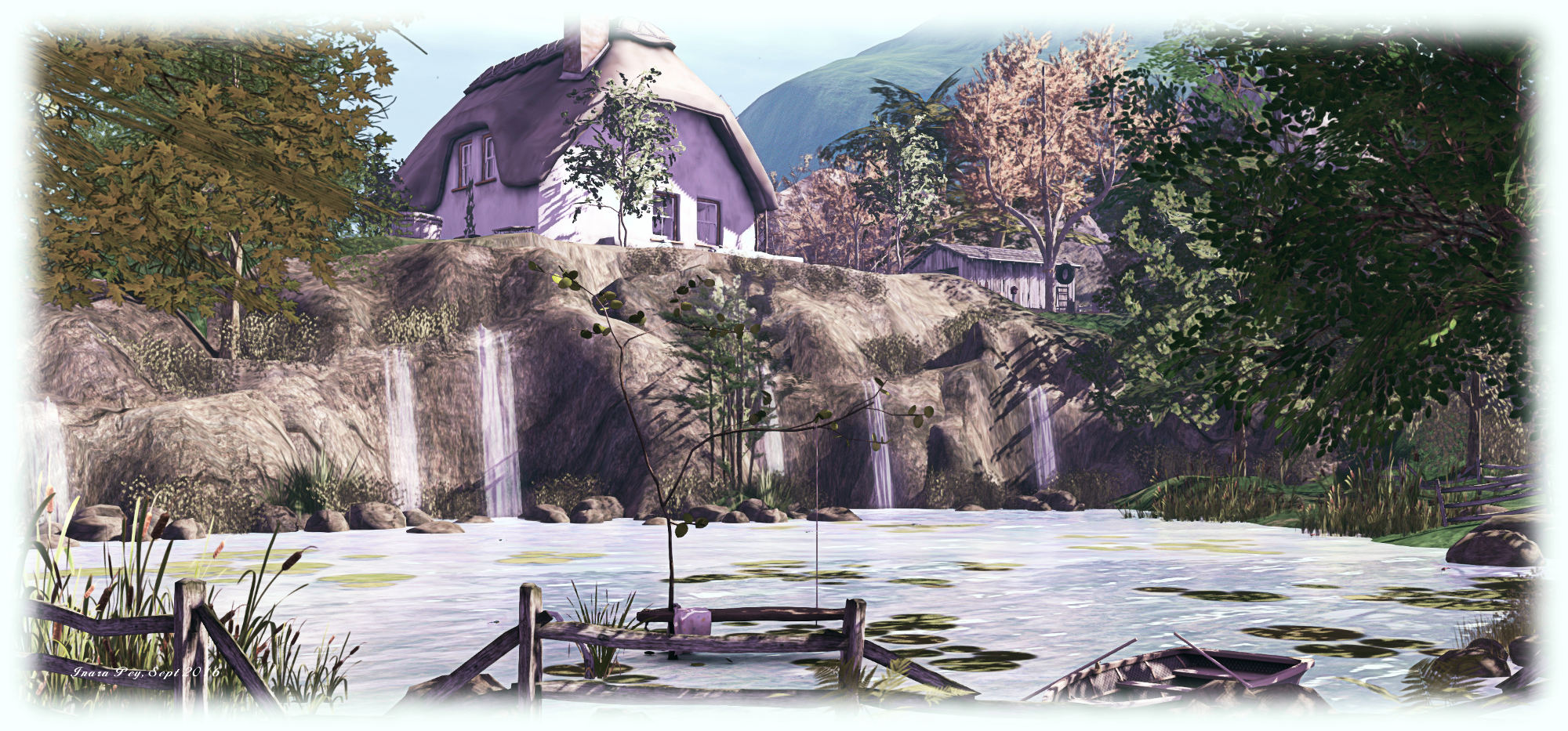
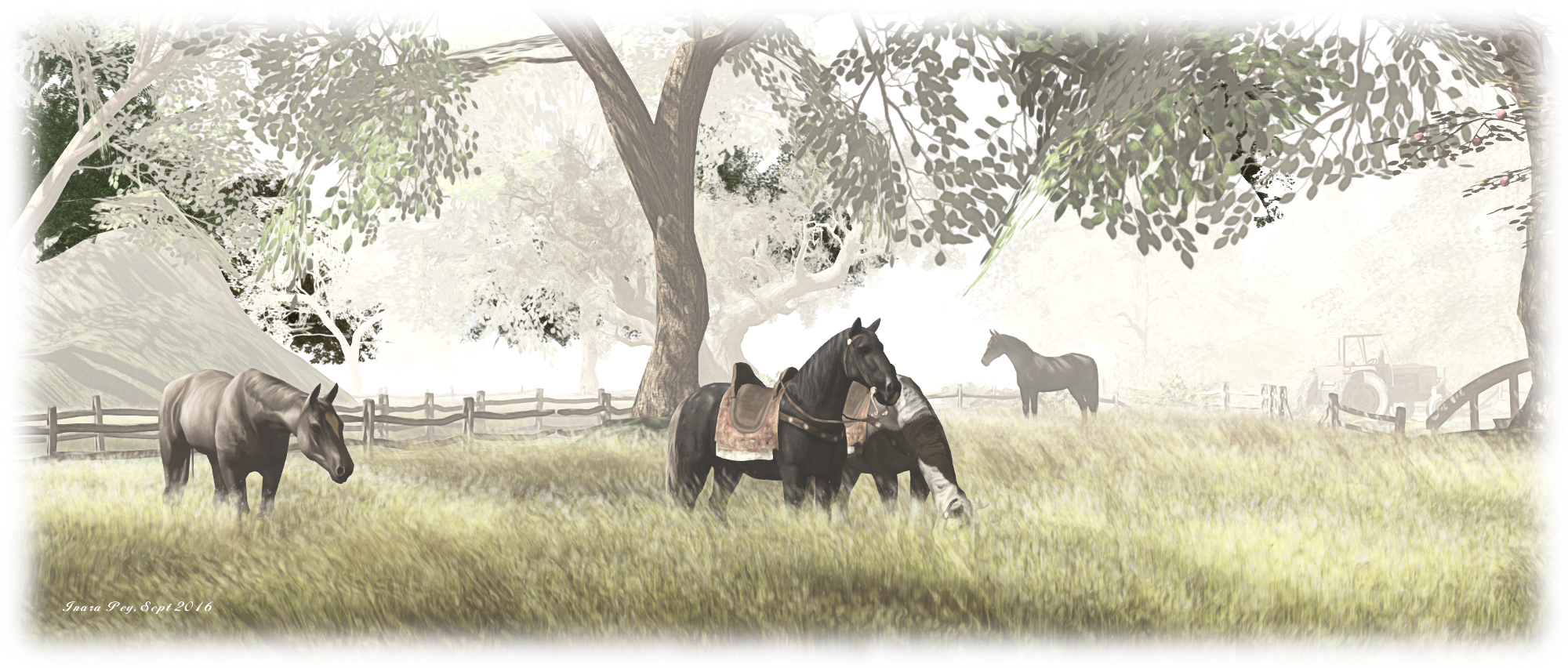
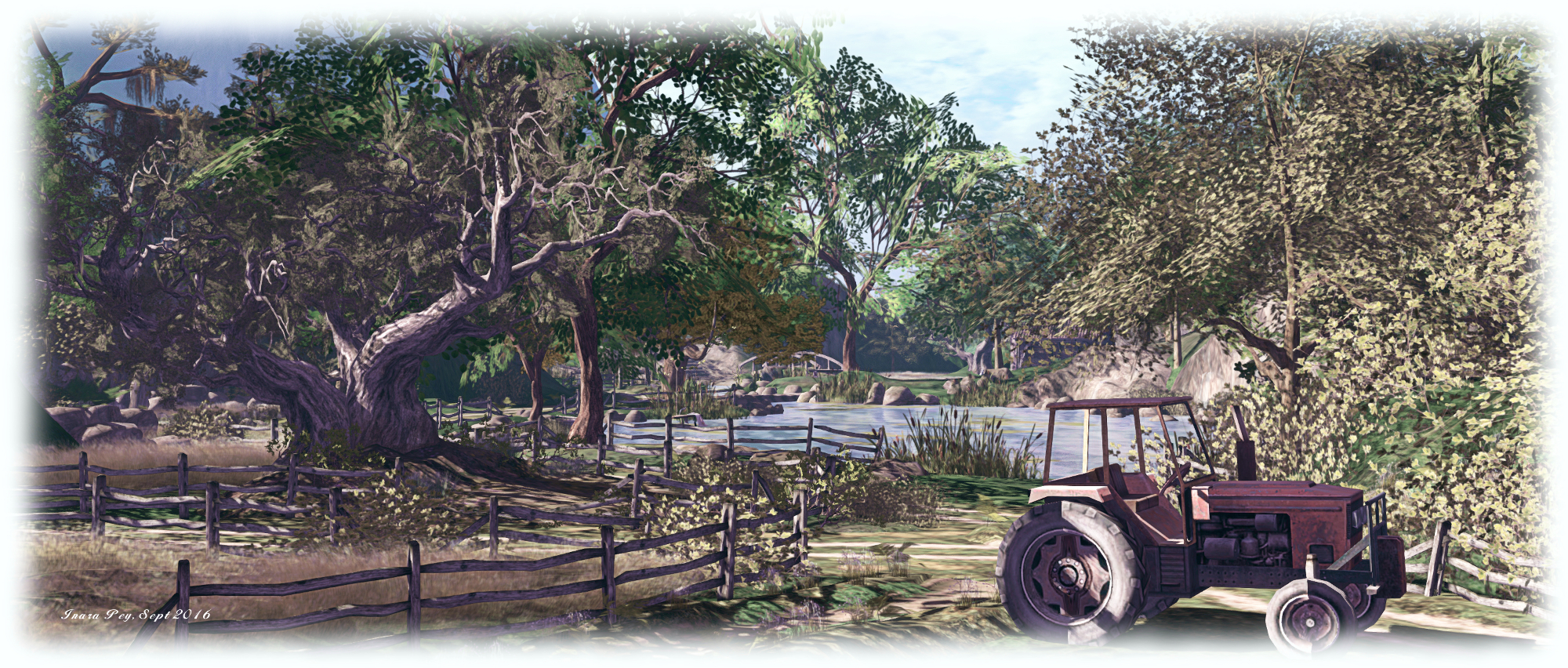
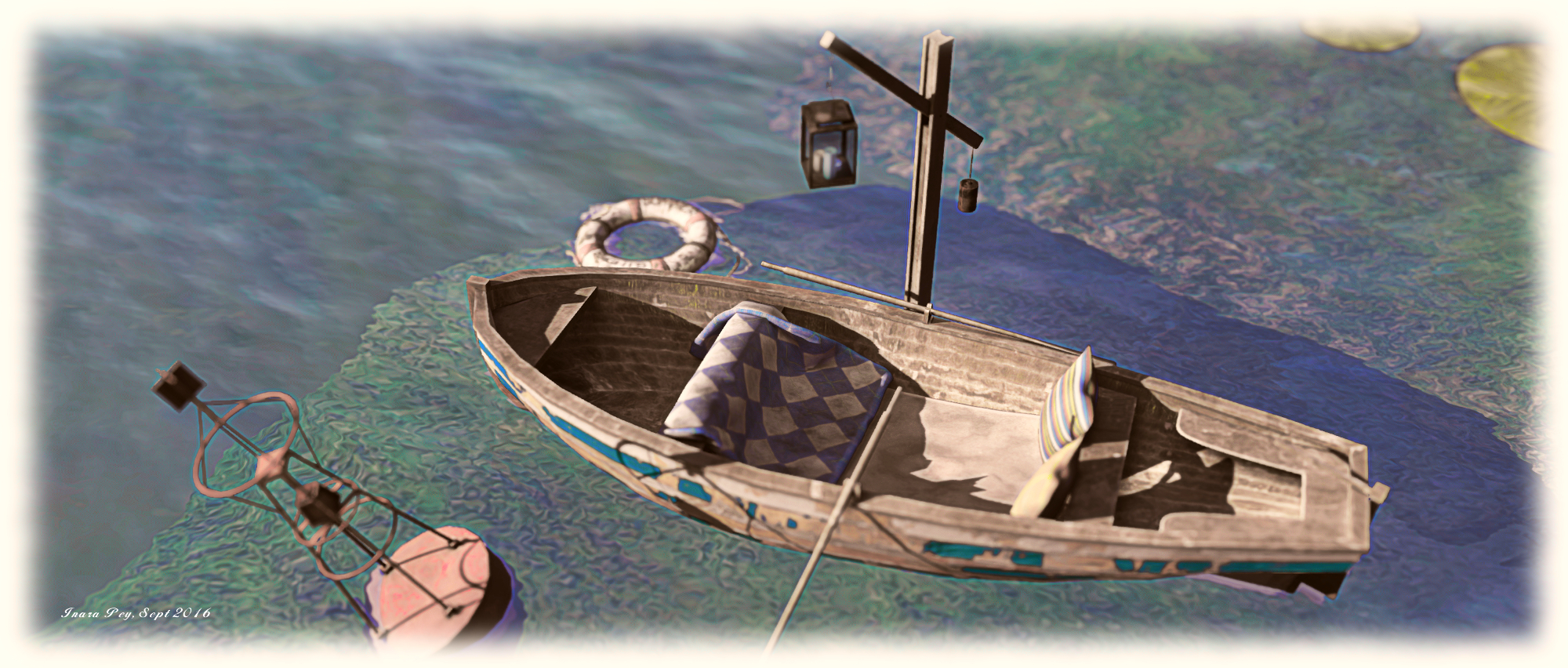
Yasminia; Inara Pey, September 2016, on Flickr Yasminia – click any image for full size

“The plan was to close it, but I don’t mind people coming to see it really,” Busta (BadboyHi) says of Yasminia, his homestead region. He’d originally opened it to public access for a limited time, the original intention being to close at the end of August. However, When I dropped in recently, it was still accesible and Busta indicated there was no immediate plan to close. “So yes, you are welcome to come see :)”, he told me.

I’d actually come across Yasimina via Loverdag’s fabulous photos of the region back in August, and dropped in shortly before the end of the month to have a look around for myself. I didn’t blog then because of the word it would be closing. However, Following Busta’s confirmation, I jumped back for another explore and a round of picture-taking.

Yasminia; Inara Pey, September 2016, on Flickr Yasminia

This is a simple pastoral region, offering a landscape idea for wandering and escaping the world and which rolls from rocky hills to low-lying pastures cut by waterlogged land and channels spanned by wooden bridges; a place where trees offer shade from the sun and rutted tracks lead the visitor onwards and the air is vibrant with nature’s many sounds.

A farmhouse sits on a ledge of rocky land on the east side of the region, where the sails of a windmill turn in a gentle breeze, and ducks, geese and chickens wander the grassy yard. Down a path and a track from here – visitors have a choice of routes – fields sit alongside the calm waters, horses grazing contentedly. A tractor is parked to one side of the tracks, speaking to this being very much a working farm.

Yasminia; Inara Pey, September 2016, on Flickr Yasminia

A footpath to one side of the tractor offers the way down between fences and onward over a small bridge to where apples are being plucked from their trees. A second bridge – this one of stone – then provides the means to reach a little gathering of chairs and sofas at the water’s edge – a place, perhaps, where those from the farm come to sit at the end of a long day’s work. It is one of several little posts visitors might find in their wanderings where they might sit and rest, and if so minded, enjoy a little cuddle.

The beauty of Yasminia is in its simplicity; beyond the farm, the region lies uncluttered with signs of living, yet has enough to offer the curious or those seeking a place to relax with a friend. The trees grow tall, the cuddle spots are widely separated to ensure some privacy, and the footpaths and tracks make for an amiable walk, accompanied by the region’s soft, natural sound scape as the surrounding hills beyond the region give it a feeling of intimacy.

Yasminia; Inara Pey, September 2016, on Flickr Yasminia

The region has a neutral windlight, but the design is such that it offers itself to most settings with equal beauty, making it an ideal location for photography, as I hope my efforts here show, all of which were intentionally taken using a different preset, suitably adjusted.

Many thanks to Busta for offering his creation for us all to enjoy – and a belated happy rezday as well!

SLurl Details

2016 SL project updates 36 (1): server, viewer

Little Yoshiwara
Little Yoshiwarablog post

Server Deployments

There was no main (SLS) channel deployment on Tuesday, September 6th.  On Wednesday, September 7th, all three RCs received the same new server maintenance package, defined as containing “minor internal logging changes”.

Commenting on the update at the Simulator User Group meeting on Tuesday, September 6th, Simon Linden indicated the updates might help with some of the problems occasionally seen with estate bans; at a minimum the Lab will be able to gather more information on them.

SL Viewer

There have been no significant changes to the SL viewer channels since the end of week #35. A further RC update to the VLC viewer had been expected following comments at the August 27th TPV Developer meeting, but has yet to materialise. As such, this leasing the viewer channels as follows:

  • Current Release version: 4.0.7.318301 (dated August 8), promoted August 11 – formerly the Maintenance RC viewer download page, release notes
  • Release channel cohorts (please see my notes on manually installing RC viewer versions if you wish to install any release candidate(s) yourself):
    • Visual Outfit Browser viewer,  version 4.0.8.319143, dated August 30 – ability to preview images of outfits in the Appearance floater
    • VLC Media Plugin Viewer RC, version 4.1.1.318504, dated August 15 – replaces the QuickTime media plugin for the Windows viewer with one based on LibVLC
  • Project viewers:
    • Project Bento (avatar skeleton extensions), version 5.0.0.318969, dated August 25 – avatar vertical position update; SLM files are by default not created or used; show bones display uses colours differently; animation of collision volumes fixed
  • Obsolete platform viewer version 3.7.28.300847 dated May 8, 2015 – provided for users on Windows XP and OS X versions below 10.7.

Other Items

Windows 10 Performance Issues Due to KB3176938

As noted in BUG-37795 and my related article, some windows 10 users are experiencing issues after installing the Microsoft Windows 10 Cumulative Update KB3176938, with reduced FPS after tabbing between other applications they may be running and a Second Life viewer. The issue appears to be related to how Windows 10 handles OpenGL. Linden Lab are apparently going to (/already have) contact(ed) Microsoft on the problem, which also affects a number of PC games. Please refer to the JIRA for further information.

SL Wiki

The SL wiki remains closed for user editing.

“If you just build it, They won’t come: promoting events in Second Life” (Final)

blog-post-6-image-1
Tying all the knots together. Credit: public domain

by Caledonia Skytower

Part 6.  Tying it all together (Final)

This series has covered a lot of territory this year, and I am changing the ending of it somewhat, as it feels like we are reaching a point where everything is impacted by the answer to this basic question: what do you want?

This answer is key to how you interpret many of the points made in this series. What you want out of your event promotion is defined by what your long range goals are for your event.   There is no wrong answer to the question. Not all viable paths are exactly the same.

If what you want is a nice, cosy intimate gathering of friends every once in a while, then a lot of the ideas that I have shared are irrelevant and unimportant.  If you want to create a closed community of like-minded, like-interested individuals, similarly some of these practices will be helpful, and some are not for you.  If you want to grow your events or your venue into something more than either of those, then roll up your sleeves and be prepared to get messy and stay messy for a while.  Growth requires consistency, connections, and constant vigilance! (invoking Madeye Moody). I am going to tie a number of these concepts together in this final post.

Are you on the grid, but not on-line?   “On-line” off-world can manifest itself in a number of ways.  Do you have a website or blog presence? Do you post your events in social media – either Facebook or Google+ at the very least?  These are all pathways to furthering your reach and promotional impact.

Social media - an invaluable tool
Social media – an invaluable tool

A website or blog presence.  The more complex your schedule, the more you need something like this to answer the question “who are you, and what do you do?”  Beyond the simplest of operations, it gives you somewhere to send people when they ask for more information.  Remember from the very first post, The Basics – Who? What? Where? When? How?  – always leave people knowing where to find more.  That can be as simple as an event calendar, or a single blog page.  Blogger (by Google) and WordPress make it incredibly easy for the non-html-savvy person to create and maintain a simple blog for free.  Google even offers a domain service for US $12 a year, which is very reasonable.  But don’t take my word for it, look around and see what tools fit best for you.  There are lots of accessible options.

You can’t be in your venue 24/7, or available to answer questions from interested residents all the time.  So make it easier for them to answer basic questions on their own.  Things that you can include on you site/blog could include:

  • Calendar
  • Your grid location  – “SLurl”
  • Additional details on upcoming events or programs
  • Who to contact in-world
  • Links to the web presence of others that you are affiliated with
  • Links to other on-line presences: Facebook, Google+, Flickr, Twitter, Instagram etc.
Blog
A blog can help you gain an audience. Credit: public domain

Social media.  It is important to emphasize that social media is not a guaranteed direct promotional source.  It is true that some people have great success with social media event postings, but their common usage is far from wide-spread.  I suspect that some people have gathered around them groups of people who use the same tools, and that is why it works better for some people than for general public recruitment. Both Facebook and Google+ have event functions, and they also both have Groups or Communities for different virtual world enterprises.  Use their search functions to find groups that you can join where it would be appropriate for you to post your information.  Be sure to read group/community guidelines and rules carefully.  More posts are not better if your “singing to the wrong audience.”

This is important: copious posting in social media will not guarantee you a full venue or an SRO event. Why?  Because most standard postings only reach 5% of their potential audience.  Unless you do nothing else but watch social media  and post repeatedly (which I do not recommend), things will get missed.  Do not post about a single event more than once in 24 hours. The 5% who do see your posts will start to ignore you.

On average, social media is not a means of direct promotion (i.e. “butts in seats”), but a way of raising consciousness.  You may get the odd person wander in because they saw you in a Google+ community.  It is more likely that they will have seen your social media posts and then run into some mention of you while logged in and think, “oh yeah, I have heard of them.”  That kind of casual exposure is as crucial as direct promotion.  You need them both.

Get your audience working for you, by regularly encouraging them to use whatever means exists in that social media tool to “like”, “plus”, “share”, “re-tweet” or whatever.  By doing so they assist you in extending the life of the post and keep it higher up on the feed to the greater potential audience.  If it helps, think of these functions like touches.  Plenty of people see your post.  But a post that is seen but not touched sinks to the bottom quickly.  The more your post is touched, the higher it floats.  Likewise, if you want to be helpful for an endeavour you like or support, touch their posts in whatever way the media provides.

blog-post-6-image-4A Basic rubric for social media promotional posting:

  • Text Only Posts (lowest number of views)
  • Post with a link to a site/blog (higher)
  • Post of an image or picture with details (even higher)
  • Post of a video clip (highest number of views)
  • Posts with cute puppies and kittens . . . okay, not even going THERE!

Constant Vigilance!  So you’ve done it all.  You have:

  • Answered (or are answering) the basic questions – Who? What? Where? When? How?
  • You have crafted your message in words, and shared those words with people who can spread your story around.
  • You have created consistent, strong visual images that easily identify your venue and events – created a “brand.”
  • You have built a network of synchronistic enterprises and individuals who share information for mutual benefit.
  • You have established and maintained an on-line presence that informs people of who you are, what you have done, and are doing.

What now?  Sit back and watch all the good people flow in?  No, my friends.  Once you build a promotional machine you not only have to feed and water it, but you have to make sure all the parts are still working to their optimal capacity.  Regularly (minimum every six months) evaluate where you are spending your resources, and how effective the results are.  Give things time to work and develop, but don’t be afraid to stop promoting where there are no measurable results.

Who posts your press releases?  What exposure are you getting outside of your own venue or endeavour? What does your traffic look like in-grid, and on-line? Know how your current audience found you – ask them!  That’s most likely where you’ll find new audiences. What is your ratio of new to returning audience/participants? Empower your existing audience to be “roaring lions” on your behalf. Be creative.  Make it fun!

Be prepared to adjust things, try new things, and always be evaluating.  What worked dependably for years may not work as well any more.  Be prepared to refresh everything at all levels.  Be aware of what others, engaged in similar enterprises, are doing: where are they posting, promoting.  Don’t miss an opportunity to turn the competition into a colleague – developing mutually beneficial relationships where everyone wins.

When things seem to be going nowhere, or you find yourself frustrated, go back to the basics: Who? What? Where? When? How?  And most importantly for you personally, always be able to answer the question “Why?”

***

My profound thanks to Inara for her support and patience with this series, and to everyone who has enjoyed it, and left such great comments.  I look forward to seeing you all around the grid.

~ Slainté!

***

Read the Entire Series

If You Just Build It… has been a multi-part guest series this year. To read posts you might have missed, follow the links below.

  1. Blasting the Myths
  2. The Basics: Who? What? Where? When? How?
  3. Words matter. So does how you use and share them
  4. Creating Visual Collateral
  5. Building a network

All Is Quiet Now, in Second Life

All is Quiet Now – Dathúil Gallery

Go placidly amid the noise and haste, and remember what peace there may be in silence.

These opening words from Desiderata by Max Ehrmann, a prose poem possessed of a mythical history of its own, are the thematic foundation upon which Joslyn Benson  (Jolivea Tyran) for her exhibition at Dathúil Gallery, which is open now, and runs through until the end of September 2016.

All is Quiet Now – Dathúil Gallery

All Is Quiet Now presents eighteen avatar studies, all but one of which are monochrome in nature. Many of these are nude, so may not be suitable for viewing at work. All are finely nuanced pieces, subtle in form and tone, powerful in emotional expression.

“Silence: the absence of sound; silence: the placidity of mind; silence: the sense of being,” Joslyn says of the collection, “Moments of stillness where all that’s left is our own thoughts … and to find comfort in unspoken words.”  it’s a beautiful summation of a series of pieces which perfectly frame the power of silence and expression to convey so much, whether we are with a loved one or friend, or caught in a moment of personal reflection or thought.

All is Quiet Now – Dathúil Gallery

I frequently refer to narratives and stories when reviewing art; it is something I tend to seek, as it often has as much influence on my response it a piece as either my admiration of the artist’s skill (which, particularly in reference to the artists invited to display at Dathúil, tends to be considerable), or the initial emotional response I feel towards it. With All Is Now Quiet, I found this idea of narrative given additional depth in some of the studies offered.

On the one hand, there is the story we immediately perceive in looking on them for the first time. But on returning to these particular images, a second narrative is so often suggested. Take Once Was, for example, or The Way We Were. Each is suggestive, by title and pose, of regret or sadness; the apparent loss of something between two people. But look away, spend time with the other studies and then return. You many find each of these pieces now  suggests something else: rather than regret or sadness, they represent a moment of pause as those depicted within them reflect on their love for one another and what the other person means to them.

All is Quiet Now – Dathúil Gallery

Suddenly, we are witnessing not the recognition of something lost, but of something which still very much alive between the subjects of these pieces; with comes the suggestion that. shortly after the image was captured it is acknowledged as figures come together once more in a kiss or a warm embrace. With other images, the shift in narrative comes when we alter our own perspective from that of observer of an image in a gallery, to that of participant in the scene depicted. All of which make these studies, as noted, marvellously nuanced in tone and subject.

Once again, Lucy and Max have brought another extraordinary talent to Dathúil. All Is Quiet Now is an exquisite collection of images, which are individually compelling as well as perfectly evoking the emotional power of silence.  Stunning.

SLurl Details