There was no deployment to the Main (SLS) channel on Tuesday, July 12th.
Wednesday July 13th saw a new server maintenance package deployed to all three RC channels comprising “minor internal changes”. One of these sees worn scripts capped at a count of 2500. Attempts to add attachments which take an avatar over this limit should result in the attachments failing to wear.
SL Viewer
The Maintenance RC viewer updated to version 4.0.7.317394 on Friday July 8th, following a merge with the current release viewer code.
The Oculus Rift project viewer was withdrawn on July 6th, and development work with the headset has been suspended for Second Life – see my update from last week for more.
This leaves the rest of the current official viewer as follows:
Current Release version: 4.0.6.315555 (dated May 23), promoted July 5 – formerly the Inventory Message RC viewer download page, release notes
Project viewers:
Visual Outfit Browser viewer, version 4.0.6.316422, dated July 1st – ability to preview images of outfits in the Appearance floater
Project Bento (avatar skeleton extensions), version 5.0.0.317134, dated June 30th
Project VLC Media Plugin Viewer, version 4.0.6.316258, dated June 15th – replaces the QuickTime media plugin for the Windows viewer with one based on LibVLC
Obsolete platform viewer, version 3.7.28.300847 dated May 8th, 2015 – provided for users on Windows XP and OS X versions below 10.7.
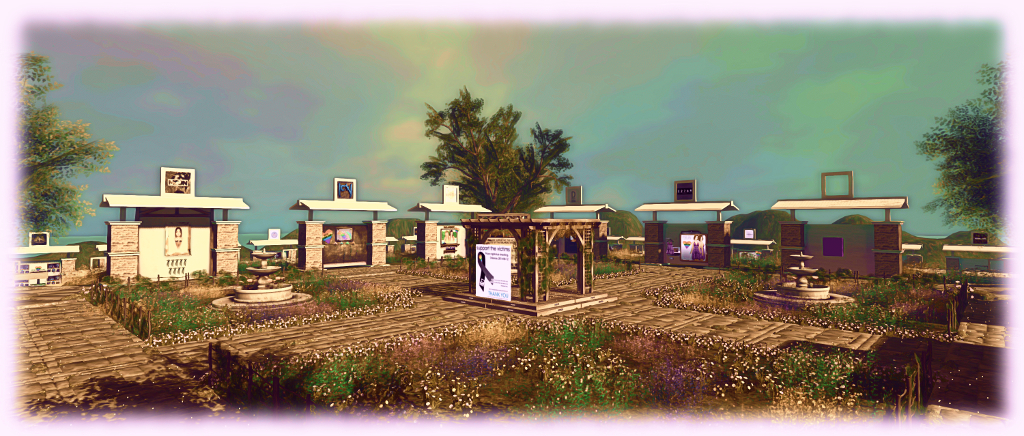
I’ve just caught Strawberry Singh’s Google+ note that the Second Life fund-raiser for the victims of the horrific shooting at Orlando’s Pulse Nightclub in June has now closed.
The in-world event, organised by Casper Warden of Caspervend, Skye Everidge, and CerberusXing, closed its doors on July 12th having raised L$5.5 million since June 28th. That’s around US $21,400 raised for the Pulse Victims GoFundMe Page established by Equality Florida, the state’s bisexual, and transgender (LGBT) civil rights organisation, with the aim of providing financial support for the victims of the shooting and their families.
The fund-raiser was organised by Casper Warden, Skye Everidge, and CerberusXing
“I’m absolutely dumbfounded and warmed by the way that the Second Life community has come together for this cause,” Casper told me when I contacted him after reading Berry’s note. “It shows the compassion and generosity of our community has no limits. It’s incredibly touching.”
The funds will be donated to the Pulse Victims GoFundMe Page following withdrawal from Second Life, with Casper also stating, “I’d also like to mention that I will be lodging the donation on behalf of ‘The Second Life Community’. I won’t be giving my own name or CasperTech’s.
While the in-world event has ended and the donation kiosks are now closed, anyone still wishing to donate to Equality Florida’s fund-raising drive can still do so via the GoFundMe page which, at the time of writing, sat at just over US $7 million of the target $10 million.
In addition, Hands, a musical tribute to the 49 victims of the shooting has been produced. Patience Carter, Tiara Parker, and Angel Anthony Santiago, survivors of the shooting at Pulse Nightclub, appear in the lyric video of the song, together with members of the Trans Chorus of Los Angeles and digital creators from all walks of life.
The song is available through iTunes, and proceeds from sales in the United States will benefit Equality Florida Pulse Victims Fund, the GLBT Community Centre of Central Florida, and GLAAD. You can find out more on the Equity Florida Facebook page, and on the song’s YouTube page.
Alex Bader is perhaps my favourite landscaping content creator in Second Life. His kits cover everything from creating a sandy beach right the way through to building cliffs and peaks, with trails, woodlands, hills, rivers, woodlands and more featuring in the mix. His kits and other items form one of the largest sections of my inventory devoted to building and landscaping, and for the last year, his forest cabin and his beach house have been our preferred choices for our in-world house designs – and I can’t actually see us swapping away from them.
In mid-June, Alex generously sent me his latest creation, the Skye Tiered Garden Wall Building Set, although it took me until the last week and a bit to actually have the time to really start playing with it. Even so, I can say up front that if you’re looking for the means to create a garden which features eye-catching and beautifully organic walls with sweeping curves, unique shapes, tiered or otherwise, this is simply a must-have set.
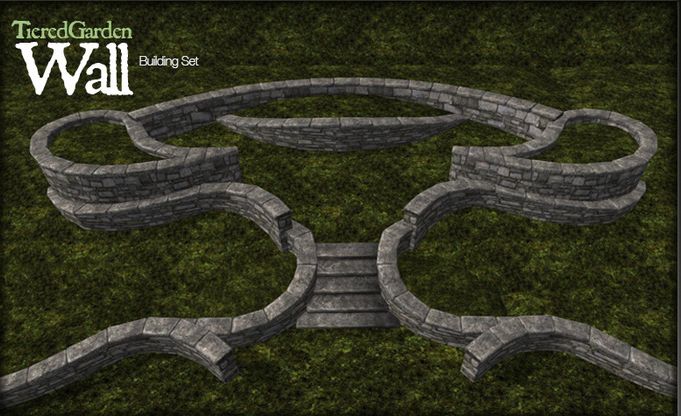
The kit comprises 17 primary parts – straight walls, curved walls, S-shaped walls, sloping walls, butas, “eyes” steps, etc., most of which are mirrored or offered in “tall” or “short” versions, some of which include attached grass slopes, to present a complete set of 28 wall sections and steps. Add to this three matching terrain elements (flat, sloped and irregular), and you have a very comprehensive set with which to create walled elements in a garden or against a hill. Alex even includes three unlinked samples to get you started!
The pieces range between 1 LI (basic steps) through to 4 LI in their default sizes. They are supplied as copy / mod, so resizing is possible – although care is needed, as doing so can significantly increase the other LI on items when enlarged. The wall segments are scripted to provide 4 stone styles: granite, light stone, dark stone, and grey stone, each of which can include a moss effect as well, giving a total of eight different finishes.
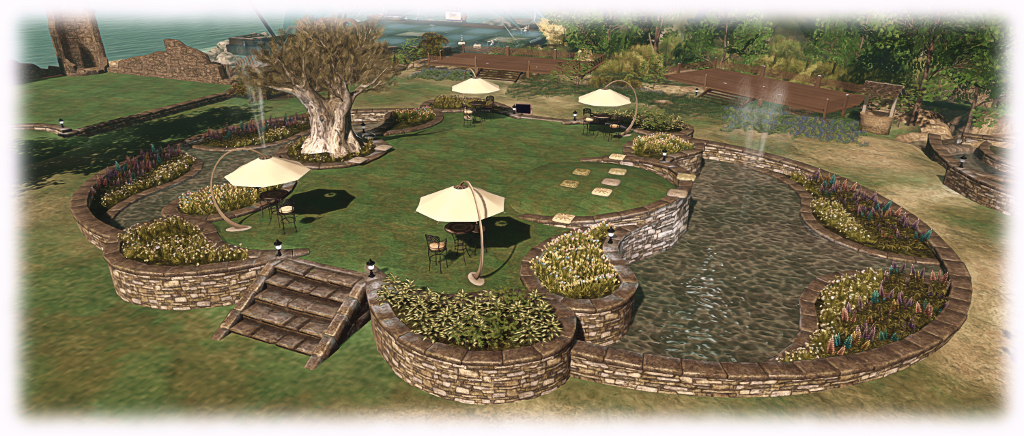
Skye Tiered Garden Wall Building Set in use at Holly Kai park, together with the Skye Water System and steps from the Stone Stairs kit (plants and seating, etc., not a part of the wall kit)
The various shapes fit together extremely well for the most part, although there are some slight differences in width in the capstones on various segments. However, it is in the gentle slopes and sweeping curves in several of the pieces which make this set a treat to use; as I mentioned at the top of this piece, they allow the creation of very organic walls and tiers.
How artistic you might get with the set is down to you and the lie of your land; the two designs I’ve created so far are relatively simple, but the end results are still – if I say so myself – eye-catching. It also works exceptionally well with other kit Alex has produced, particularly those which are materials enabled, such as his Skye Stone Stairs and the Skye Water System.
The kit provides three sample builds (17, 24 and 29 LI respectively) to help with ideas for what might be achieved
I’ve already seen this kit in use at a couple of events, and I’ve little doubt it is destined to become a staple and distinctive part of many regions across SL. It can be purchased in-world via Alex’s store (which is well worth exploring in its own right) or via the Studio Skye marketplace store. The price, at the time of writing, is L$699.
“This was special to me to feel the bravery of woman soldiers,” Storie’S Helendale (GlitterPrincess Destiny) states in the introductory notes to I Was Born in Kurdistan, her latest immersive piece. “(They don’t cook in the kitchen). (Instead they fight Isis).”
This is a difficult piece to quantify, presenting a war-torn environment as a backdrop for images depicting women caught within various combat situations, clearly drawn from the unfolding situation in Iraq. It is undoubtedly an atmospheric build – a chart at the landing point provides advice on the best viewer graphics / windlight settings for viewing it as intended.
Central to it stands the concrete skeleton of a war-torn building. Fires burn in old oil drums, the ground is rough and pitted and burned-out cars and other detritus resulting from the passage of combat are scattered around. Around the walls of this environment, and mounted in the skeletal remains of the building are images by Storie’S depicting woman in combat. Some are in traditional-look middle-eastern dress, others is more “homespun uniforms”, others in combat fatigues.
The mix of images presents both colour and monochrome pieces, with the content ranging from actually scenes of combat, through scenes from the aftermath of fighting to very personal scenes of comrades supporting one another or combat veterans simply trying to get some respite and rest.
Since is the approach taken to the piece, that interpreting it is a very subjective affair. There is no doubting that many of them do echo the privations and sadness of war; there is a subtle condemnation of the suffering it brings present in many of the images. But this seems to be somewhat offset by an uncomfortable sense that women in combat is being celebrated to a degree.
While there are – sadly – time in this world when the only recourse is for people to take up arms and stand against the forces which would otherwise overwhelm them and their way of life. To be clear, I Was Born in Kurdistan is more a reflection of this than anything else; but the “celebratory” aspect of some of the images might give rise to a negative reaction among some visitors.
However, it is these juxtapositions of viewpoints and emotions which makes I Was Born in Kurdistan an installation which needs to be seen directly, rather than simply related through a blog post like this. There is currently no closing date stated for the exhibition, which opened on July 9th; I would anticipate it remaining open for at least a month.
I was reminded recently of the importance, value, and challenges of building a network when trying to conduct any endeavour successfully. I could drag out the platitudes, “no man is an island” and all that. The reality is that no one achieves success on solely their own efforts and merits. No one. You need connections: internally to support and keep you honest to your intent; externally to extend your reach and maintain a beneficial presence. Through the relationships you build, your endear establishes its reputation and gains strength. It becomes a part of the greater community it inhabits, not just a landmark feature of it.
I use the term “build” deliberately. I know that the term “grow” is more in vogue, and it works to illustrate more organic developments. Relationships, however, are hard work – constant work – “one bolt at a time” work. Each one of them is different, and must be handled based on its individual merits. Some are consumers, some are collegial, some are resources. The list of possibilities continues.
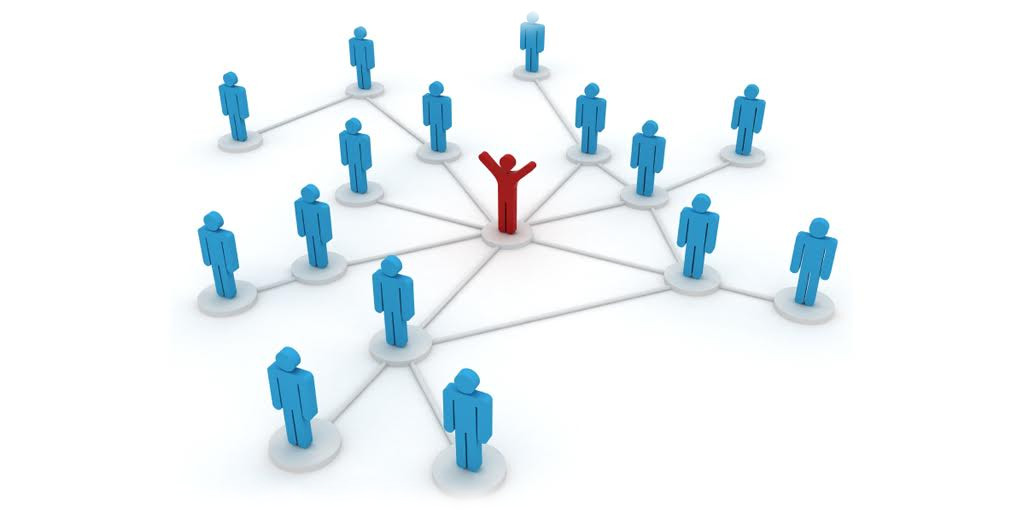
Human Networks – public domain
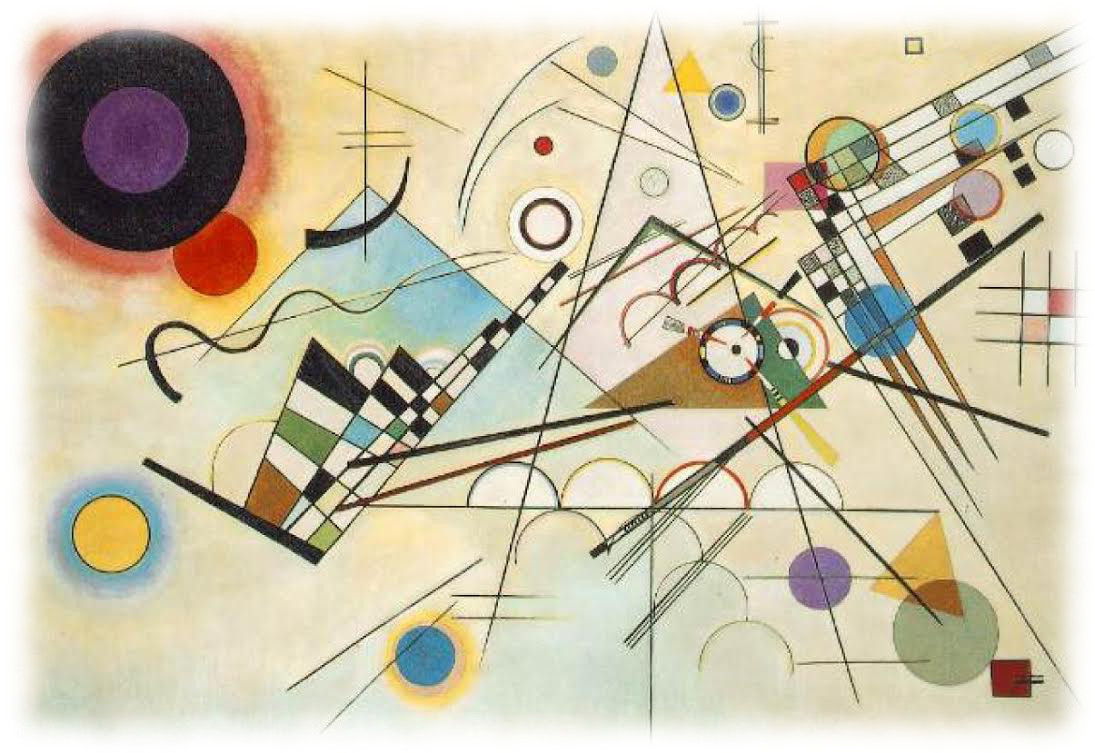
Social media and networking gurus like to use neat images of connected concentric circles, or human-like figurines in one-size-fits-all uniformity with orderly straight lines to illustrate networks. I believe that human networks look less like a circuitry plot, and more like the work of Russian painter and art theorist Wassily Kandinsky.
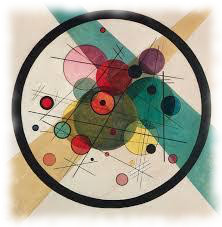
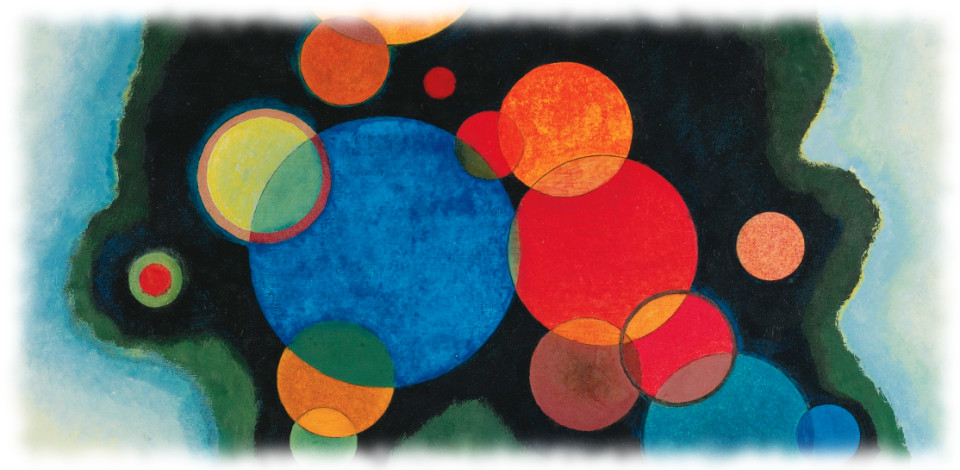
In Kandinsky’s abstract work, slashes, circles and other geometric shapes overlay and intersect in what seems like a chaotic clamour. What really exists is a delicate balance of colour and geometry – the like with the unlike – the complementary with the contrasting. Each intersection is totally unique. I think that’s what a network of relationships really looks like.
A successful network is a wild mixture of all the connections you need to thrive viably, and/or sustainably – whichever you desire. You need:
Black – relationships that are solid and the foundation of your work within, and your presence without. These are the true believers who “get” what you do, and support you absolutely.
Blue – relationships that connect you with valuable resources and people of influence in your area of endeavour. These are people you can learn from, and go to when you need insight and advice.
Yellow – relationships with people who you just like. They do great things, and you can’t help but want to be around them, or associated with them because you admire their spirit, creativity, energy, whatever. They make you feel good.
Red – relationships that challenge you. These can be some of the hardest relationships to make and maintain. None of us does our best unless we are stretched a little. Establishing a good, respectful working relationships with people whose ideas push us to be more than we might be otherwise are invaluable.
These relationships all look different. Some will be inscribed boldly, and others will be faint washes across your canvas. All of these have value, and play a different role in the overall composition of your network.
Wassilly Kandinsky – Circles in a Circle, 1923
To move from the esoteric to the concrete we need an example, so I’ll use Seanchai Library. When the library was just a kernel of an idea, nine years ago, founder Derry McMahon did not just jump into terraforming a parcel and designing a logo (which we all tend to do when we get excited about an idea – guilty!). She took time to visit different libraries around the grid, and get to know the people involved with them. Her connections in her professional life helped this – the person who introduced her to virtual worlds was a friend and colleague.
She also took the time to observe. She asked herself key questions about what she observed. She specifically asked herself what would serve residents in a manner that was not already being provided for. A library of the spoken word was a gamble, and some days it still is. It involved all sorts of different relationships inside the library community, and outside of it.
Today, Shandon Loring and I maintain relationships for Seanchai with a wide variety of people and organizations. Some are ongoing relationships that are engaged all the time, and some come and go as opportunity and mutual needs dictate. They vary widely from connections in the literary community, the arts, bloggers and media, land developers, educators. We need each and every one of them to stay dynamic and viable.
These key questions will help you assess a potential relationship:
What do you have in common?
What do you have to offer?
What would benefit you?
What is the risk, if any?
One absolute requirement of these connections, or any relationship for that matter, is that they be 100% genuine and based on mutual respect and benefit. You must have something to offer each other – something to exchange as equals. Anything less and the connection is one-sided, and ultimately will collapse.
I’ve been following – albeit from a distance – the creative talent of young film-maker and machinima maker Radheya Jegatheva. The son of Second Life colleague and friend, Jayjay Zinfanwe (of University of Western Australia fame), Radheya has shown an extraordinary gift for story telling through video and animation.
In May I wrote about Radheya’s success – helped in part by Second Life residents – in the #MyFreoStory video competition. Now the 17-year-old’s latest work has taken no fewer that three national and international prizes.
Entitled The Tyger and created using iClone 3D animation software, is a visual / aural telling of William Blake’s classic 1794 poem, The Tyger. At the end of June it received the Best Film award at the Asiagraph Reallusion 3D International Film Competition in Taiwan. Just 24 hours later it received the Best Junior Short Film award at the Warburton Film Festival, based in Victoria, in his home country of Australia, before also gaining the Best Australian Cinema Now award at the Sydney World Film Festival.
Radheya Jegatheva: young filmmaker and machinima maker
The Tyger is very much a family affair. Radheya used iClone to create the visuals seen in the film, including the stunning tiger, seen in the still in the banner to this piece. He then enlisted the help of his father to narrate the poem over the images.
Radheya selected the poem as being symbolic of a piece of very personal family history.
“The poem is a favourite of mine,” Jayjay explained as we discussed his son’s successes. “My mum would recite it to me when I was young. Then Radheya learned from his grand-aunt that the poem was the reason my mum and dad met.”
Jayjay continued, “My mum won an oratorical competition reciting The Tyger. Her prize was the opportunity to act in a major stage drama – and my dad was acting in that same drama. So they met purely because of The Tyger.”
Nor do things end there. “We’ve been informed that Tyger, Tyger has been selected for showing at two further international film festivals,” Jayjay told me.
In August, the film will be shown at the International Festival of Animated Film for Children and Youth, which will be held in Nis, Serbia – and Rayheya’s work is the only non-European selection made by the festival organisers in the 13-17 year-old category. Then in November, it will be shown at the 6th Festival Internacional Pequeno Cineasta, Rio de Janeiro, Brazil.
The film has had an impact in other ways as well. Tim Heath, Chair of the Blake Society in London, contacted Radheya to say the Society would be covering the film is their newsletter. Radheya and his family have also been contacted by universities and schools from across Europe, North America, Asia, Africa and Australia, stating they would like to use the film as a teaching tool in classes on literature, poetry and romanticism, as it presents a new means by which poetry can be interpreted.
This is another remarkable set of achievements for Radheya, and I’d like to take this opportunity to pass on my congratulations to him on all of his recent success, and to wish him all the best for the upcoming festivals in Serbia and Brazil.







 Inara Pey: Living in a Modemworld