Christmas is almost upon us, and so it’s a short week at Seanchai Library in the run-up to the holidays – but there is still time for some fabulous story-telling in voice, brought to our virtual lives by the staff and volunteers at the Seanchai Library. As always, all times SLT, and events are held at the Library’s Second Life home at Bradley University, unless otherwise indicated.
Monday December 21st, 19:00: Escape Clause
You’re about to meet a hypochondriac. Witness Mr. Walter Bedeker age forty-four. Afraid of the following: death, disease, other people, germs, draft, and everything else. He has one interest in life and that’s Walter Bedeker. One preoccupation, the life and well-being of Walter Bedeker. One abiding concern about society, that if Walter Bedeker should die how will it survive without him?
So opens the 6th show in the very first series of Rod Sterling’s The Twilight Zone, one of the original three episode ideas used by Sterling to pitch the series concept in 1959.
Already labelled a hypochondriac in that opening narration, we follow the mean-spirited Walter Bedeker as he seeks to make a water-proof contract with the devil himself (appearing in human form under the disarming name of “Ted Cadwallader”) which will allow him to sell his soul in return for health and immortality. With every “t” crossed and “i” dotted, the contract seems perfect for Bedeker, wary of any conniving tricks on the part of Old Nick.
So why is the Devil so accommodating to Bedker’s demands, and why does he, in what appears to be a turn of altruism, offer Bedeker an escape clause, allowing him to choose the time of his death if he tires of being immortal?
Join Gyro Muggins as he once again takes into a journey into The Twilight Zone.
Tuesday December 22nd 19:00: A Child’s Christmas in Wales and Other Stories
Aoife Lorefield reads Dylan Thomas’ timeless classic poem, and other tales of Christmas.
Wednesday, December 23rd 19:00 The Night Before the Night Before Christmas
A Seanchai Holiday Tradition of stories and poems (some original works) with the Seanchai Staff.
Personal Note
I’d like to wish the staff and volunteers at Seanchai Library every best wish for the season and for a successful 2016. Thank you for your continued work in bringing stories and the spoken word into Second Life in the tradition of the seanchai, and raising awareness of literature as an art in-world. Looking forward to working with you throughout 2016, and to establishing Storytime at the Park with you as well!
—–
Please check with the Seanchai Library SL’s blog for updates and for additions or changes to the week’s schedule.
The featured charity for October – December is Reach Out and Read, one of the most highly rated literacy charities in the USA which reaches 4.4 million children annually and distributes 1.6 million books.
This summary is published every Monday, and is a list of SL viewer / client releases (official and TPV) made during the previous week. When reading it, please note:
It is based on my Current Viewer Releases Page, a list of all Second Life viewers and clients that are in popular use (and of which I am aware), and which are recognised as adhering to the TPV Policy. This page includes comprehensive links to download pages, blog notes, release notes, etc., as well as links to any / all reviews of specific viewers / clients made within this blog
By its nature, this summary presented here will always be in arrears, please refer to the Current Viewer Release Page for more up-to-date information.
Official LL Viewers
Current Release version: 4.0.0.309247, December 17th – formerly the Chromium Embedded Framework RC viewer download page, release notes
Project Bento viewer version 5.0.0.309171 released on December 17 – introduces extensions to the standard SL Avatar Skeleton with support for dozens of new bones for both rigging and animation, and accompanying new attachment points (download and release notes).
New Horizons is still less than half way through transmitting the data gathered during its fly-past of the Pluto-Charon system in July 2015, but the wealth of information received thus far has already revealed much about Pluto and its “twin”.
Geological evidence has been found for widespread past and present glacial activity, including the formation of networks of eroded valleys, some of which are “hanging valleys,” much like those in Yellowstone National Park, Wyoming. A major part of this activity is occurring in and around “Sputnik Planum”, the left half of Pluto’s “heart”, a 1,000 km (620 mile) wide basin, which is seen as key to understanding much of the current geological activity on Pluto.
Images and data gathered for this region has given rise to new numerical models of thermal convection with “Sputnik Planum”, which is formed by a deep layer of solid nitrogen and other volatile ices. These not only explain the numerous polygonal ice features seen on Sputnik Planum’s surface, but suggest the layer is likely to be a few kilometres in depth.
Evaporation of this nitrogen, together with condensation on higher surrounding terrain is believed causing a glacial flow from the higher lands back down into the basin, where the ice already there is pushed, reshaping the landscape over time.
A true colour image of Pluto’s surface, captures just before the point of closest approach, and created by combining black-and-while images from from the LORRI camera with data gathered by the Ralph instrument suite. The picture show the highlands to one side of “Sputnik Planum” with the pockmarked ices of the basin. A combination of evaporation and condensation between the two is giving rise to sustained glaciation on Pluto, showing it to be an active world (image: NASA, JHU/APL SwRI)
More data and images have also been received regarding Pluto’s atmosphere, allowing scientists start to probe precisely what processes are at work in generating and renewing the atmosphere, the upper limits of which are subject to erosion by the solar wind, which strike Pluto at some 1.4 million kilometres per hour (900,000 mph).
As well as understanding the processes which are at work renewing the atmosphere, and thus preventing it from being completely blasted away by the solar wind, science teams are hoping to better further why the haze of Pluto’s atmosphere forms a complicated set of layers – some of which are the result of the formation and descent of tholins through the atmosphere – and why it varies spatially around the planet.
The Mars Silica Mystery
In July I covered some of the work going into investigating the mystery of silica on Mars. This is a mineral of particular interest to scientists because high levels of it within rocks could indicate conditions on Mars which may have been conducive to life, or which might preserve any ancient organic material which might be present. In addition.
As I reported back in July, scientists have been particularly interested in the fact that as Curiosity has ascended “Mount Sharp”, so have the amounts of silica present in rocks increased: in some rocks it accounts for nine-tenths of their composition. Trying to work out why this should be, and identifying the nature of some of the silica deposits has given rise to a new set of mysteries.
The first mystery is trying to understand how the silica was deposited – something which could be crucial in understanding how conducive the environment on “Mount Sharp” might have been for life. Water tends to contribute to silica being deposited in rocks in one of two ways. If it is acidic in nature, it tends to leach away other minerals, leaving the silica behind. If it is more neutral or alkaline in nature, then it tends to deposit silica as it filters through rooks.
This mosaic of images captures by Curiosity’s Mastcam on May 22nd 2015 (Sol 992), shows the “Marias Pass” region where mudstone (the pale rock in the centre of the image) of the kind the rover had been studying, overlaid by a geological unit of sandstone. rocks in this area should very high concentrations of silica in them, much higher than previously encountered, which the rocks above the area show strong evidence of silica deposition as a result of water action. This image has been white balanced to show the rock under Earth equivalent natural lighting conditions (image: NASA / JPL)
If the water which once flowed down / through “Mount Sharp” was acidic in nature, it would likely mean that the wet environments found on the flanks of the mound were hostile to life having ever arisen there or may have removed any evidence for life having once been present. If evidence that the water was acidic in nature, then it would also possibly point to conditions on “Mount Sharp” may have been somewhat different to those found on the crater floor, where evidence of environments formed with more alkaline water and with all the right building blocks for life to have started, have already been discovered.
The second mystery with the silica is the kind of silica which has been discovered in at least one rock. Tridymite is a polymorph of silica which on Earth is associated with high temperatures in igneous or metamorphic rocks and volcanic activity. Until Curiosity discovered significantly high concentrations of silica in the “Marias Pass area of “Mount Sharp” some seven months ago – something which led to a four month investigation of the area – tridymite had never been found on Mars.
The region just above “Marias Pass” contained an area referred to as the “Stimson Unit” which showed fracturing rich in silica when compared to the surrounding rocks, suggesting deposition of silica / leaching of other minerals as a result of water action (images: NASA / JPL)
“Marias Pass” and the region directly above it, called the “Stimson Unit” show some of the strongest examples of silica deposition on “Mount Sharp”, and it was in one of the first rocks, dubbed “Buckskin”, exhibiting evidence of silica deposits in which the tridymite was found.
The question now is: how did it get there? All the evidence for the formation of “Mount Sharp” points to it being sedimentary in nature, rather than volcanic. While Mars was very volcanic early on in its history, the presence of the tridymite on “Mount Sharp” might point to volcanic / magmatic evolution on Mars continuing for longer than might have been thought, with the mineral being deposited on the slopes of the mound as a result of wind action. Or alternatively, it might point to something else occurring on Mars.
Vir Linden (foreground) and Matrice Laville, Rider Linden and Flea Bussy (right) at a Bento project meeting
On Wednesday, December 16th, the Lab issues the Project Bento viewer, version 5.0.0.309171. This viewer introduces extensions to the standard Second Life avatar skeleton providing dozens of new bones to support both rigging and animation, and accompanying new attachment points. It is fully backwards-compatible with existing avatars, rigging and animation. The skeleton extensions include:
11 extra limb bones for wings, which could also be used for additional arms, or extra legs.
6 tail bones
30 bones in the hands
30 bones for facial expressions
2 other new bones in the head for animating ears or antennae
13 new attachment points associated with the new bones
Read the official announcement for more (my report is here). I’ll be providing more updates and background notes to the project in due course.
There has already been some detailed discussion on the Bento forum, including some concerns raised about the nature of the initial work being a “closed beta”. This is something of a misconception, as the project has been an iterative and shared process between the Lab and the content creators invited to participate in defining how the avatar skeleton could best be improved, what needed to be considered for backwards compatibility, etc., As such, it is only now that any beta can be considered to have been initiated – as Oz Linden explains in the forum, with Vir Linden also noting:
Nothing is final until we go to the main grid. The purpose of the testing period on Aditi is to identify and if possible fix any issues with the proposed skeleton. It’s possible we will add, remove or change bones as a result of feedback from the project viewer – so bone suggestions or bug reports are both very much fair game.
Project Bento also came in for significant discussion at the TPV Developer meeting on Thursday, December 18th, as noted below (see also the meeting video).
Potential Non-Bento Viewer Crashes
Concerns have been raised over avatars using Bento updates potentially crashing viewers which do not yet have the updates. however, the Lab has indicated that uploads using the new Bento skeleton will remain blocked on the main grid until the viewer code reaches RC status (see below), which should limit the risk of issues.
In addition, the Lab indicates it has pro-actively incorporated a range of bug fixes into recent versions of their viewer, up to and including the 4.0.0 CEF release, which are intended to handle a number of situations where a crash might result from a viewer without the Bento updates encountering an avatar using the Bento skeleton. It is hoped that by the time the Bento viewer does reach RC status, these fixes will have propagated out to TPVs, and will help prevent any potential clashes between viewers lacking the Bento updates and avatars using the new skeleton until such time as all viewers and release versions with the Bento code.
An avatar using the Bento skeleton, as modelled by Matrice Laville
Bone Translation as Well as Rotation
One concern / suggestion already raised is on the matter of providing bone translation rather than just rotation in order to better handle facial expressions (see BUG-1090, “[Bento] A formal method of bone-translating animations is vital for the creation of proper facial expressions”). This bug was raised at the TPV Developer meeting, with Vir Linden commenting:
This is obviously a very complicated and controversial topic; there’s been a lot of feedback about it in the forums. Where we are right now is, animating positions is not something we ever supported on purpose, which means that our code for it … it doesn’t work particularly well in the viewer. And our hope is, with adding the new joints, that workaround would no longer be needed to do interesting, alternate avatar shapes.
So the plan, and the way I believe it is currently configured is that on Aditi, uploads of animations that alter positions shouldn’t be allowed. And the intent there is to make sure we’re exercising the alternative pathway and making sure we actually can create the kinds of avatar people want to create using the new Bento skeleton without positions.
That’s where we are right now, but obviously, we’re in the very early stages of testing Bento, and we don’t really know for sure yet whether there are cases where this is required or not until people have actually exercised it. So that’s the kind of feedback we’re hoping to get: people trying different things and letting us know what can and can’t be done in this alternate paradigm which we think is a bit better supported.
As to the specific proposal to have translations for facial expressions, I’m really curious to how that would work. We talked about it when we were putting together the skeleton, and it seemed like it would be kind-of incompatible with the notion of any kind of avatar scaling. If you make the head bigger, or the whole avatar bigger, your translation-based facial animation, it seems like, is not going to scale up with the size of the head. So I’m not sure how well that would work. In any case, I’ll take a look at the report in more detail, and may want to respond to specifics in there, but that’s where we are overall with position animations right now.
It is just disabled on Aditi … for testing Bento, and nothing is final until we go to the main grid. But our hope is that this is just a temporary work-around that you’re not going to have to have, since it doesn’t work particularly well currently.
To this, Oz Linden added:
I think it will help inform that, and any other discussion of how the new skeleton extensions and restrictions work, [is] to try to make everything very concrete. That is, the assertion that “A” cannot be done, or that given the current restrictions, “A” cannot be done well, I think would be well-informed by having people share, publish what exactly they tried to do and exactly what the results are, and share the animation files and the meshes and the rigging and all that; so that everyone can see very, very specifically, what’s going on.
And it may be that there are different ways to do what people are trying to do, and that they can accomplish a satisfactory result in a different way, and we can all learn what that is, or collectively discover that they can’t, and we need to make some adjustments.
But the assertion that XYZ can never be done, in general and with no specific example, doesn’t really help us to make good decisions.
Potential Timeline for Bento
Uploading of content designed to use the Bento skeleton to Agni (the main gird) will remain blocked until such time as the Bento viewer reaches release candidate status.
This is unlikely to be much before the end of February 2016, partially because of the Christmas / New Year break, but also to give plenty of time for testing on Aditi and to provide feedback which may help the Lab in making further changes if needed, as per the comments above. It is also hoped the long lead-in time will give everyone the confidence that Bento is going to be something content creators are able to effectively use.
The following notes are primarily taken from the Server Beta User Group meeting of Thursday, December 17th and the TPV Developer (TPVD) meeting held on Friday, December 18th 2015. A video of the meeting is included at the end of this report, my thanks as always to North for the video recording and providing it for embedding.
Server Deployments – Recap
On Tuesday, December 15th, the Main (SLS) channel received the server maintenance package previously deployed to all three RC channels, comprising simulator crash fixes, and implementing feature request BUG-10192.
On Wednesday, December 16th the three RC channels all received the same new server maintenance package, comprising crash and internal simulator fixes, LSL HTTP requests accessing data sources that require non-text Accept headers (such as the Destination Guide), updates to group member counts to help deal with recent group database issues.
There will be a further main (SLS) deployment on Tuesday, December 22nd, which will mark the final scheduled deployment for 2015.
SL Viewer Updates
Release Viewer
On Thursday, December 17th, the Chromium Embedded Framework viewer was promoted to the de facto release viewer, version 4.0.0.309247. This viewer replaces the ageing LLQTWebKit system used in the Web media plugin with a new one based on the Chromium Embedded Framework (CEF) that supports modern web technologies.
RC Viewers
The Vivox and HTTP RC viewers, currently version 3.8.7.307744 and 3.8.7.308134 respectively, are being merged into a single release candidate. This RC will also include the CEF updates, and the remaining Maintenance (currently version ) and Quick Graphics (currently version 3.8.7.308556) RCs will also be updated to include the CEF changes.
However, again due to the annual Christmas / New Year no change window, no further viewer releases are anticipated before the week commencing Monday, January 4th, 2016.
TLS 1.2 Implementation
As well as supporting the Chromium Embedded Framework capabilities for media, the latest release viewer (4.0.0.309247, as noted above) also sees the LL viewer fully support TLS 1.2, which is an important point for TPVs to note, as Oz explained at the TPV Developer meeting:
That is going to be critical by next spring. Anything that does not support TLS 1.2, will not be able to do any interactions with cashier or anything that involves money. This isn’t optional on our part or just an arbitrary choice on our part, this is a compliance requirement. so, be looking for that in your own stuff; if you don’t support TLS 1.2, your users won’t be able to do anything that involves money, because we will have switched off everything earlier than that server-side.
When this change comes into effect, it will mean those users accustomed to using very old versions of viewers are going to have to move to currently supported versions of those viewer if they wish to do anything involving money.
Project Bento
On Wednesday, December 16th, the Lab issues the Project Bento viewer, version 5.0.0.309171, offering an enhanced Second life avatar skeleton. This viewer and the associated support for it, is currently in open beta, and can be tested using the Aditi (beta grid). You can read the Lab’s announcement, and my own initial coverage as background.
The project did come up for discussion at the Third Party Developer meeting on Thursday, December 18th, and I’ve provided a separate report on the matters discussed.
Aditi Inventory Syncing
Recently, people have been experiencing assorted issues when attempting to log-in to Aditi, the beta grid (see here for an example). As a result of these various issues, the Lab has made changes to the Aditi log-in process, and one of these changes will affect how inventory is synced between the two grids.
Up until now, inventory syncing between the two grids (so that your inventory on Aditi matches your inventory on Agni) has been a manual process: change your Second Life log-in password and this triggers an update to your Aditi inventory (which could take 24-48 hours to apply).
With the new update, which will be coming into effect in the near future, changing your password no longer triggers an Aditi inventory update. Instead, a new methodology is employed, as Coyot Linden explained at the Server Beta meeting on Thursday, December 17th:
The current method of syncing accounts from Agni to Aditi has … issues, even when you wanted it to happen, it sometimes wouldn’t and when it did it overwrote inventory. Now, there are two major differences: 1. It MERGES AGNI inventory into ADITI inventory instead of overwriting; 2. It is based on whoever has logged into ADITI in the last 24 hours when it runs in the middle of the night SLT. No changing passwords any more.
The merging means that items unique to people’s inventories on Aditi (items they have created there but not replicated on Agni) will no longer be overwritten. However, duplicates of items will not result from the merge, as Oz Linden explained:
If an item is only on Aditi, it will still only be on Aditi; if it was only on Agni, it will be added to Aditi, if it was on both you will have just one copy on each grid … When you “modify” an object, you’re really making a new object, so yes, it knows that it has been modified… they are no longer the same object.
The upshot of this is that as this update comes into effect, changing your SL password will no longer trigger your Aditi inventory being overwritten by your Agni inventory; instead, a nightly process will run automatically, and anyone who has logged into Aditi since the last time the process ran will have their Agni inventory merged into their Aditi inventory. If you are logged-in when the process runs, a re-log will be necessary to see the updated inventory.
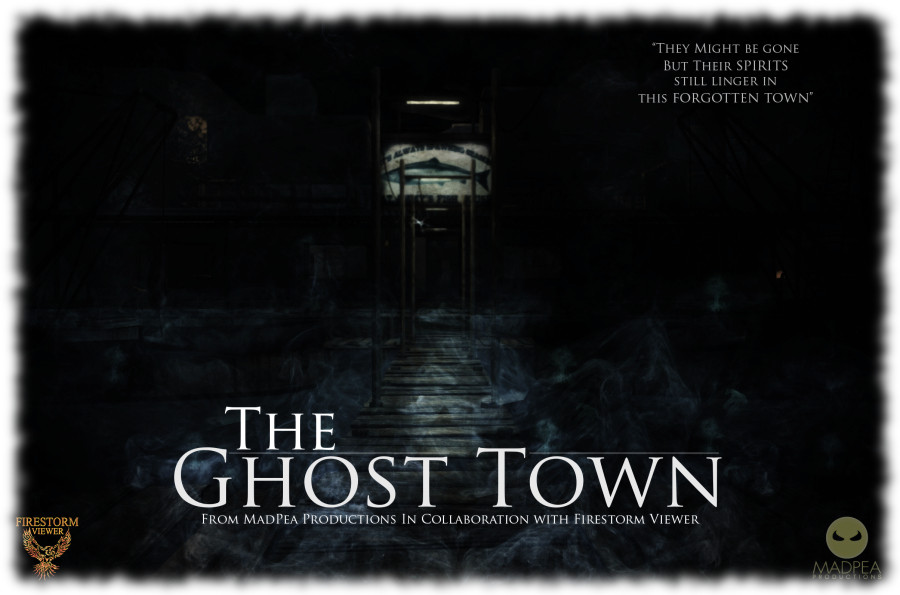
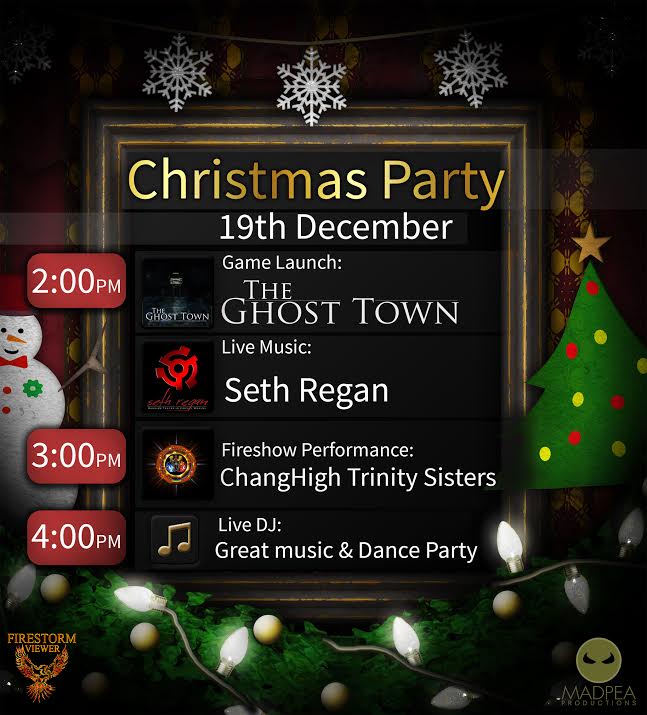
Saturday, December 19th, 2015 marks Firestorm viewer’s official 2015 Christmas Party, and with it comes the opening of The Ghost Town, the first in a series of free-to-play games developed by MadPea Games. These games are intened to give new residents coming through the Firestorm Gateway a means to become more familiar with Second Life through active game play.
The Christmas party will kick-off at 14:00 SLT, which will also see The Ghost Town open its gates to players, features entertainment from Mankind Tracer, Changhigh Trinity Sisters Fireshow and DJs. The entertainments area has been arranged so that around 200 people should hopefully be able to access the party, with three points of entry provided: Region 1, Region 2, and Region 3.
The Ghost Town sees players tasked with investigating the recent disappearance of local fisherman Big Jimmy. Guided by his journal and equipped with a special camera, players follow the clues left by a mind gone mad and discover the terrible truth behind Big Jimmy’s recent activities.
“New residents who stay and play in our virtual world are essential to the continued success of our grid,” MadPea say of The Ghost Town. “Whilst Linden Lab continue to work to attract new residents once they join and enter the world, we will be doing our part to ensure that they realise the rich, user-created content that is on offer. We hope that by playing our games new residents will learn skills that will help them over the steep SL learning curve while having some fun and collecting some prizes.”
What is the dark secret behind “Big Jimmy’s” disappearance – and where will his journal lead new users in Second Life?
As with all MadPea games, The Ghost Town is HUD-driven, and as with their most recent games, utilises experience keys to make game play easier. Gameplay takes place within the Firestorm Gateway regions, where they have to collect the images of 20 “ghosts” using the camera (HUD). Once all 20 have been imaged, players are eligible to claim their prizes.
The prizes on offer have been selected on the basis of being of value to new users and helping them enhance their Second Life experience. They have been provided by creators representing the rich choice of content available in Second Life: abranimations®, Apple Fall,, Black Pearls, Bryn Oh, Cheeky Pea, Deadwool, Elikatira, junk. Lapointe and Bastchild, Lilith’s Den, Plastik, Pose O’Clock, Sn@tch, Snowpaws, The Little Bat, TrAsHeD, United Color, WarBug and zombie suicide. The MadPea and Firestorm teams both extend their thanks to all of those who came forward with the offer of prizes.
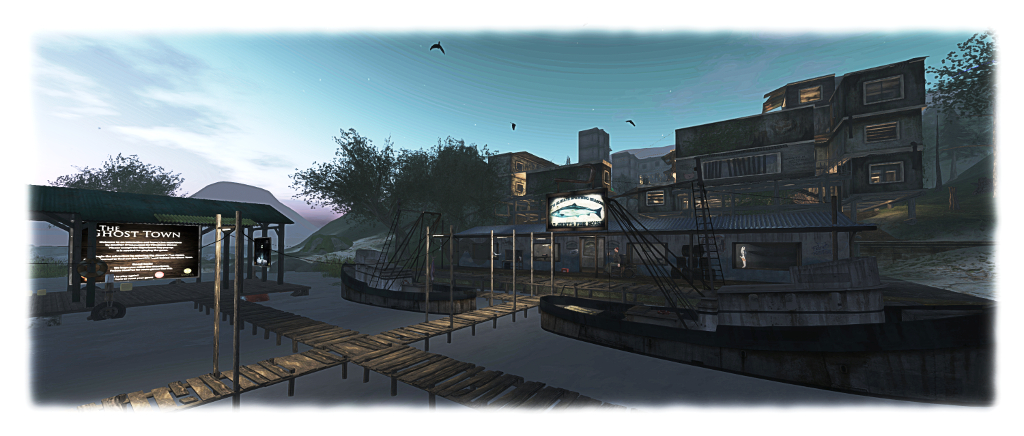
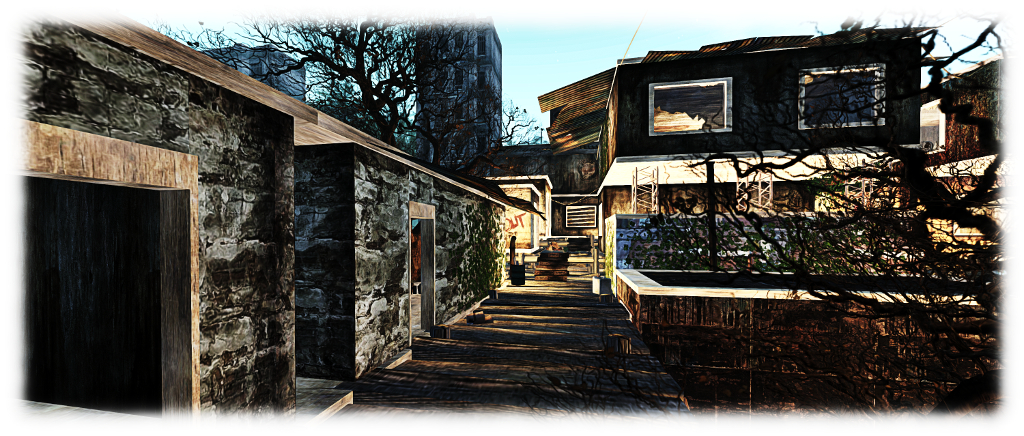
The Ghost Town awaits players new and old
New players will be drawn into the Firestorm gateway through a series of dedicated web landing pages that are in developments (Linden Lab, and quite separately to the gateway trial programme, also use targeted landing pages to attract new users from specific audiences, so it is an approach which seems to yield results). Obviously, existing users are also able to play the game – hence the launch alongside the Firestorm Christmas party.
So, if you’re in the mood for a party, and fancy a spooky new game – hop over to the Firestorm Gateway regions using the region links towards the top of this piece.
 You’re about to meet a hypochondriac. Witness Mr. Walter Bedeker age forty-four. Afraid of the following: death, disease, other people, germs, draft, and everything else. He has one interest in life and that’s Walter Bedeker. One preoccupation, the life and well-being of Walter Bedeker. One abiding concern about society, that if Walter Bedeker should die how will it survive without him?



 Inara Pey: Living in a Modemworld