MadPea announce new strategy in Second Life

MadPea: shifting the emphasis towards games like Blood Letters, The Collection and Buried

There come certain points in life when we have to do a little re-evaluation of who we are and where we are going. After some discussions within the team, we came to the conclusion that we are stopping the UNIA development on THIS platform.

These are the opening words from a heartfelt post from Kiana Writer, founder and Queen Pea of the prolific MadPea Productions.

Entitled MadPea Changes its Strategy, the post, which appears on the MadPea Productions website, rather than their wordPress blog, announces a change in direction for the team in light of the sheer hard work, blood, sweat and tears they collectively invested in UNIA, as they continue to develop immersive games for Second Life.
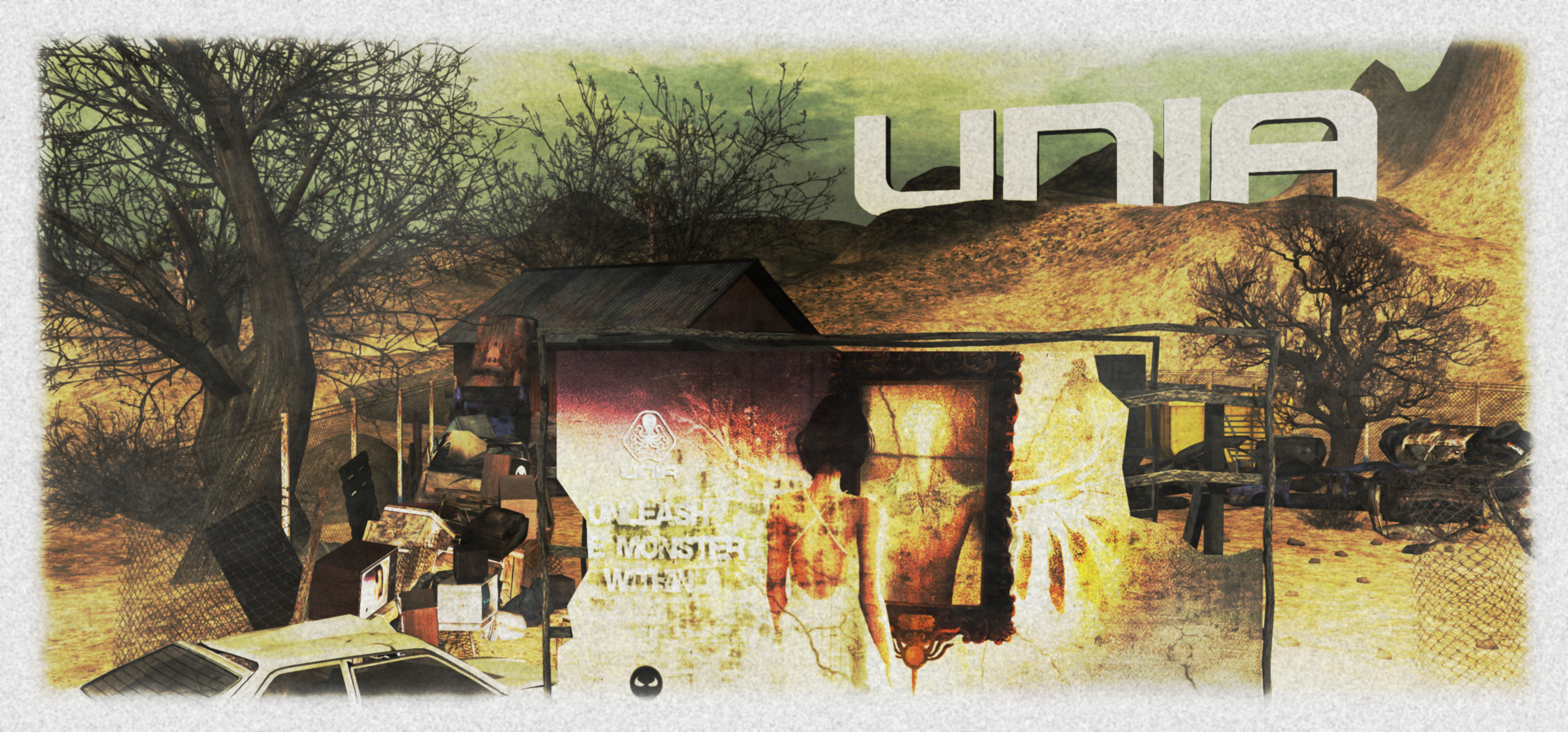
UNIA lis an incredible achievement, and will remain active in SL: but it is unlikely to see further significant development as the MadPea team refocus

As Kiana notes, UNIA was a massive undertaking for all concerned, which came a no small cost, some US $12,000 to put together and over two years to develop. Plus, as Kiana states:

During the development for UNIA we lost our sponsor and exactly 19 people from the huge team, including our lead developer for MadPea of several years,” Kiana explains. “Still we struggled with a smaller team and big expenses to bring it out because our vision had not changed: We needed to show what was possible to do on this platform.

Given this, and while UNIA continues to gain new players on a weekly basis and continues to excite and enthral, it’s really hard to justify such an enormous effort on an ongoing basis, and Kiana goes on to indicate in her post:

With our current resources we could do either one of the two things: Continue developing the UNIA saga or put our focus on smaller adventures such as BURIED and The Collection. Making smaller adventures takes us around 2 months while UNIA 2 would be at least 6 more months of waiting.

So it is that going forward, MadPea will be focused on “smaller” games (I use the quotes as such is the all-encompassing, grid-wide nature of many of their games, nothing MadPea does is ever really “small”), which can be developed over shorter times scales. In particular, such games will allow MadPea to better collaborate with and help promote businesses and content creators in Second Life, just as The Collection is right now, and both BURIED and Blood Letters.

In 2014, Blood Letters allowed us all to don fedoras and rain coats and adopt the roles of PIs on the trail of a murderer
In 2014, Blood Letters allowed us all to don fedoras and rain coats and adopt the roles of a PI (or is that PEA-I?) on the trail of a murderer

In this regard, Kiana indicates that the rest of 2015 is already mapped out by the team.  The Collection (which I recently looked at here), will run through until the end of September, prior to making way for a new game starting in October and in time for Halloween (dare I mention…. Peatonville?).

To me, the decision from the team makes absolute sense. While UNIA was and is undoubtedly a magnificent achievement, Second life at times doesn’t really lend itself to projects of that scale or depth. However, games like The Collection, BURIED and Blood Letters not only allow MadPea to achieve their goal of collaborating with others more readily, they also enable the team to experience a greater degree of satisfaction in seeing their creations come to life and be enjoyed by others.

The Collection is available now for all those wishing to solve a mystery with a decidedly musical bent

My only question to Kiana is, why the emphasis on UNIA’s development ceasing on “THIS platform” (i.e. Second Life)?  Is there yet more news to be a-coming? :D.
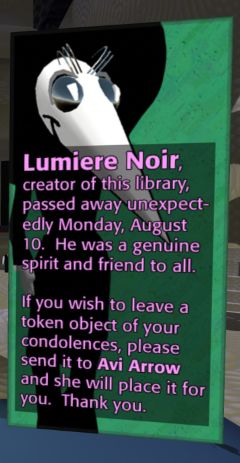
The passing of Lumiere Noir

lumiere-1_001News is spreading of the sudden passing of Lumiere Noir, the man behind the Ivory Tower of Primitives, who died suddenly on Monday, August 10th, 2015.

Famous for his “Black Spy” avatar, Lumiere joined Second Life at the end of 2003, and originally built the Ivory Tower of Primitives on Noya. Later during 2004, a branch of the Tower was established on Natoma, functioning alongside the original until that was demolished in 2006.

A self-guided, self-paced tutorial and library to in-world building in Second Life, the Ivory Tower has been – and remains – an essential reference centre to all who treasure the art of in-world content creation.

By founding it, Lumiere extended his physical world abilities as a teacher into virtual spaces to great effect and the benefit of others. In Second life he was known as an open friend, excellent mentor, and for his sense of fun the good-natured mischievous twinkle in his eye.

As per the notices placed out around the Tower, objects of condolence from those who knew him should be passed to Avi Arrow, who will place them out.

To Tosha Tyan, his partner in Second Life, and to his family and friends in the physical world I offer my condolences at this time.  Lumiere’s presence and influence will be sadly missed right across Second life by all who knew him, or came into contact with him.

Lumiere's legacy to all in Second Life: The Ivory Tower of Primitives
Lumiere’s legacy to all in Second Life: The Ivory Tower of Primitives

Do you enjoy stories in voice in Second Life and beyond?

Caledonia Skytower, Shandon Loring (centre) and Kayden Oconnell in an evocative shot of the virtual / live performance by Bear Silvershade
Caledonia Skytower, Shandon Loring (centre) and Kayden Oconnell of Seanchai library perform A Christmas Carol as a part of the Library’s The Dickens Project, presented to both virtual and  physical world audiences, in this evocative shot by Bear Silvershade

As regular readers here know, I keenly support the work of Seanchai Library through these pages, with regular updates on their weekly activities, coverage of their feature events and so on. Sadly, the UK / USA time difference means I’m rarely in a position to attend Seanchai readings, or schedule clashes keep me away, but those I have attended (The Dickens Project, War of the Worlds, Boofest, Bard on the Beach, etc.), have always been thoroughly enjoyable, and I recommend them to anyone who enjoys a well-told story.

Seanchai Library is one of the oldest spoken word venues in Second Life, as noted above, they run a wide range of events, some of which – such as their fabulous Explore the Great Gatsby have allowed them to spread their wings into other grids with great effect; it has also – as with The Dickens Project – offered them rich opportunities for physical and virtual world cross-overs.

a part of Seanchai Library's immersive sets for Explore the Great Gatsby, in Kitely during early 2015
a part of Seanchai Library’s immersive sets for Explore the Great Gatsby, in Kitely during early 2015

Now active on Second Life, Kitely and InWorldz, the Seanchai Library team are constantly looking for ways and means to improve upon its service to the metaverse.  As such, they are seeking feedback on their programmes, and how people stay abreast of all that is happening with Seanchai, together with their interest in spoken word events in general.

So, if you do support Seanchai Library, be it in Second Life, Kitely or InWorldz, please do help them out and pay a visit to their on-line survey. It only takes a few minutes to complete,  and your feedback would be greatly appreciated.

Dare you try to complete The Collection in Second Life?

Strange things can happen in pawn shops - as you'll find out, should you opt to complete The Collection
Strange things can happen in pawn shops – as you’ll find out, should you opt to complete The Collection

MadPea recently launched their latest interactive, grid-wide game in Second Life. I actually had the opportunity to preview it ahead of the launch, but things in the physical world were a little higgledy-piggledy, and I had to bail-out after just 15 or so minutes – once again, apologies to Kess and Kiana. So here, somewhat belatedly, is a look at the game and a peek at one of the prizes.

The Collection, which runs through until September 30th, 2015, continues MadPea’s tradition of interactive point-and-click adventures (note this isn’t a hunt in the usual sense), and, as ever, there are some fabulous prizes on offer for those who follow the clues and uncover the mystery.

To describe the game, I’ll simply borrow from MadPea’s own press on The Collection:

Just as you were about to start your well deserved summer vacation, you receive a Notification of Death letter. Your distant grandfather has sadly passed away and he made YOU as his sole heir. As you arrive to the town of Parkchester to collect your inheritance, you realise that your grandfather was a man of many secrets.

All of grandfather’s belongings will be yours, he only has one wish:  you need to finish his Collection.

Suddenly you find yourself in the middle of an unsolved old Victorian mystery. Following the footsteps of a Polish maid you embark on a journey, completing grandfather’s Collection, that piece by piece brings you closer to finding out the horrific truth.

As is usual for MadPea, the game is HUD-based, and there are comprehensive instructions on how to play available on the MadPea blog, complete with rules and other notes – so please be sure to read-up there before joining the game.

Like UNIA, MadPea’s richly immersive game (see my review here), those joining The Collection have the choice of purchasing one of three passes to enter the game. All three – Bronze (L$100), Silver (L$300) and gold (L$800) offer the same standard HUD and game play, but the Silver pass offers 12 additional prizes not available to Bronze pass members, while the Gold pass offers a special game play outfit, an alternative ending to the story, the Silver prizes and 14 phenomenal Gold prizes, including the MadPea Bandit designed by Analyse Dean (shown under full sail below). You can also see more prizes listed on the MadPea blog.

The MadPea Bandit (shown here with a weathered look), designed and built by Analyse Dean, is one of the special Gold prizes on offer in The Collection (image by: Analyse Dean; edited by: Inara Pey)
The MadPea Bandit (shown here with a weathered look), designed and built by Analyse Dean, is one of the special Gold prizes on offer in The Collection (image by: Analyse Dean; post-processed by: Inara Pey)

The Collection is Experience Key driven, so once you have purchased and attached a HUD, it is essential you grant it the permissions it requests to offer you a seamless game-play, and in order for you to actually participate in the game. Removing the HUD will store your progress and revoke all permissions granted.

Unfortunately, some locations you’ll visit as a part of your adventure have not allowed the Experience to run on their lands. In these instances, you’ll be asked to allow attachments via the usual dialogue box(es) – do make sure you accept.

While things start off innocently enough – a visit to your late Grandfather’s flat – the adventure starts to take a turn once you’ve reached his pawn shop. It is here that you find out more about the mysterious collection, which has a decidedly musical flavour, and also experience the first indications that everything isn’t quite as it might seem.

Parkchester: home to your late grandfather and his pawn shop - and the start of your adventure as you strive to complete The Collection
Parkchester: home to your late grandfather and his pawn shop – and the start of your adventure as you strive to complete The Collection

I’m not about to discuss where you go from here, partly because it would spoil the fun, but mostly because I, um, haven’t actually had time to play The Collection myself! However, it is important to remember that this is a point-and-click adventure. Clues will direct you to places, but it’s up to you to investigate, locate, and use / collect whatever you’re being directed towards. Also keep an eye on local chat – there may well be clues appearing there from time-to-time.

Be aware that The Collection is in keeping with many of MadPea’s games, and features activities and situations which some may find disturbing; so again, do please read the information on MadPea’s blog ahead of joining. And if you do encounter particular issues with game play, help can be sought through the MadPea group chat – just please don’t give out answers to clues or SLurls, etc!

Down in the basement of grandfather's shop. What clues await ...?
Down in the basement of grandfather’s shop. What clues await …?

Don’t forget, as well, that pictures you take as a part of your involvement in The Collection can be uploaded to the MadPea Flickr pool, where they might win you a L$500 MadPea gift card  if one is selected at the MadPea picture of the week.

So if it’s not too late, and you’re already half-way through The Collection, happy clue-solving!

Related Links

OpenSimulator: Justin Clark-Casey steps back

Maria Korolov on Hypergrid Business covers the news that Justin Clark-Casey is significantly scaling-back his involvement in OpenSimulator development.

Justin Clark-Casey
Justin Clark-Casey

For those deeply entrenched in Second Life, his name may well pass unnoticed. However, since 2007, Justin has been deeply involved in OpenSimulator, as both a core developers and as a founding member and first president of the Overte Foundation, a non-profit organisation that manages contribution agreements for the OpenSimulator project.

Just how big a role he has played can in part be seen through the 11,631 code commits he has personally made to the project over eight years  – that averages out to just under four commits every single day.

Justin announced his decision to step back from what has been a central role within the OpenSimulator in a blog post, where he emphasised that he’s doing so in part because he’s shifting career, although he makes it clear he is not leaving OpenSimulator entirely; it just won’t be a primary focus in his life in the foreseeable future:

OpenSimulator (and the Metaverse in general) has been an amazing journey but, as they say, we have grown apart. For whatever reason the area doesn’t fascinate me as it did. For better or for worse, that’s crucial for me to feel happy in my work.

I’m not disappearing completely but very likely for the immediate future my involvement will be at a low ebb (mainly answering mailing list questions and the occasional bug fix). My new field is quite a bit different (data warehousing for genetics and synthetic biology) but I will always have a soft spot for virtual worlds and the idea of the Metaverse.

Justin Clark-Casey's code commits to OpenSimulator amount to 11,631 over eight years, work that has involved him in laying many of the foundations for the project and in re-factoring much of the code-base in 2011/12 (source: Black Duck’s Open Hub open source project tracker, via Hypergrid Business)
Justin Clark-Casey’s code commits to OpenSimulator amount to 11,631 over eight years, work that has involved him in laying many of the foundations for the project and in re-factoring much of the code-base in 2011/12 (source: Black Duck Open Hub open source project tracker, via Hypergrid Business)

As well as his own code contributions, Clark-Casey has been noted for carrying out a significant portion of the work required integrate patches submitted by others, and has also taken on many of the organisational duties and activities which have perhaps been seen as somewhat onerous by other developers.

His popularity and import to the OpenSimulator community can be measures by the outpouring of personal thanks and testimonials which followed his own blog post and featured in Maria’s Hypergrid Business article.

According to Maria, Justin’s announcement has led to some concerns as to the future of the project. While there has never been a single de facto leader for the platform and its very diverse and global community, Clark-Casey has very much been the public face of the platform, hence some of the concerns raised.

However, as others central to the platform’s development have been quick to point out, this is not the first time a key figure has opted to set back from the platform. As it is, the team of core developers has changed over the years and remains strong. Similarly, OpenSimulator itself enjoys broad-based support and engagement from individuals, groups, education and academia and business. As such, there is little need to doubt its foreseeable future.

“Open source development has a high churn of people, for many reasons, and many times people who have been there for a long time simply decide to leave and do something else,” Crista Lopes, creator of the Hypergrid, told is quoted as saying in Hypergrid Business. “The good thing about open source projects is that, if people find them useful or interesting, the projects survive any one particular developer’s absence. That will happen with OpenSim too.”

I only had cause to talk to Justin twice over the years, and was certainly not in any way acquainted with him. However, as a very occasional OpenSimulator visitor (notably via Kitely, OSGid and InWorldz), I offer my own thanks to him for all of his contributions to the OpenSim community, and best wishes as he enters a new stage in his career.

Related Links


The Drax Files 31: digitising ethnography in Second Life

Tom Boellstorff: digital ethnographer extraordinaire - and the focus of World Makers #31
Tom Boellstorff: digital ethnographer extraordinaire – and the focus of World Makers #31

It is directly because of Tom Boellstorff‘s influence that I have tended to cease referring to what goes on the physical world as “real life” and use the term “physical world” instead – as regular readers here may have noticed. As Tom once pointed out to me, such are the complexities of our digital activities and interactions, they are in fact no less “real” than almost everything we do in the “real” world.

I mention this because Tom is the subject of episode #31 of the Drax Files World Makers, and within it, he excellently expands upon this idea. Around half-way through the segment, he focuses down onto the issue of the artificial divide that is consciously established in the mind when one employs the term “real world” to differentiate between physical world interaction and digital interactions. As he points out, given the nature of both, is one any the more “real” than the other? Not really; both have multiple levels of activity and interaction which freely encompass both.

Really, the only thing the use of the term “real” does is perhaps instil a subconscious or active bias against anything related to immersive digital space interactions. As evidence of this, we need only look back as far as  Pamela in the 8th segment of The Drax Files Radio Hour. She is openly dismissive of Second Life for a number of reasons, not the least of which is that it is “not real”.

Tom openly challenges the the use of the world "real" to differentiate between our physical world and digital world activities and interactions
Tom openly challenges the use of the world “real” to differentiate between our physical world and digital world activities and interactions

As an ethnographer and professor at the Department of Anthropology at the University of California, Irvine, Tom has devoted a solid portion of his time to digital ethnography within Second Life. He signed-up to the platform in 2004 – when, as he notes, there were only around 2,500 total users, with an average concurrency of a couple of hundred, and you could fly over every region across the grid and witness what was going on in each of them in a the space of a week.

Since then, he has studied social interactions through Second Life at length, and has written two books on the subject as a result: Coming of Age in Second Life: An Anthropologist Explores the Virtually Human, (Princeton University Press, 2008), and Ethnography and Virtual Worlds: A Handbook of Method (Princeton University Press, 2012, co-authored with Bonnie Nardi, Celia Pearce & T. L. Taylor).  So when it comes to matter of social interaction, interpersonal relationships, the exploration of self and issues of identity, Tom has a lot to say that is directly relevant to today’s world – and not just in terms of virtual spaces like Second Life.

Digital environments like Second Life are unique in the added depth of interaction, self-identity and self-awareness and presentation they offer us

Ethnography, be it studied in either the physical or the digital, is a huge topic to try to encapsulate in just five minutes – and it is to Tom’s credit and Draxtor’s post-production skills that so much is encompassed within the time frame, given this is a very different – and potentially (with no disrespect to the content creators generally features in the series) a lot deeper subject into which to plunge.

Thus it is that as well as an intriguing exploration as to the validity of the word “real” when applied to the digital, we get a measured look at the virtual and all it can encompass to empower us in many ways. Tom encourages us to consider the social and personal interactions we have, which can be as rich and engaging as anything we might experience elsewhere; he highlights the emotional depth offered through even the most simple of digital interactions such as texting one another; and he opens the door to much broader aspects of self and identity, such as in matters of gender. This latter aspect is beautifully underlined with a fine reference to Cecilia D’Anastasio’s Motherboard piece from April 2015, Avatar IRL (which I reviewed here).

a powerful aspect of virtual spaces like Second Life is the power they give individuals to explore matters of their own identity, including issues of gender - as explored with Veronica in Avatar IRL, touched upon visually in World Makers #31
a powerful aspect of virtual spaces like Second Life is the power they give individuals to explore matters of their own identity, including issues of gender – as explored with Veronica in Avatar IRL, touched upon visually in World Makers #31

In discussion matters of identity, there’s also a reflection on the likes of Google, Facebook and other companies who wish monetise everything they can possibly learn about us. The activities of these companies do highlight the importance of identity, and of the need for us to have a freedom to choose how we represent ourselves to the digital world.

Certainly, Second Life stands to give the lie to the idea that anonymity is “about” deception and questionable activities, as some have in the recent past have tried to project. If anything, as a Tom points out, the anonymity embodied in Second Life in terms of user-to-user interactions is a major contributor to people’s willingness to be creatively expressive, and  their ability to establish their own digital business and revenue streams.

Tom participates in, and observes, a group of us engaged in a Digital Cultures Chat

This is another outstanding segment in a series which has never faltered through the 31 episodes to date deliver a relevant commentary on our digital lives and activities. It is also one that perhaps has a somewhat different audience among those outside of Second Life from past segments, highlighting as it does the extreme relevance of the platform to the likes of researchers, academics, etc. It might also, for those willing to listen, offer food for thought to businesses on the benefits of allowing us greater freedom in how we represent ourselves to one another through their platforms and services – and in allowing use to have more say in how the personal information we provide to them directly might be used.

I could prattle on, but really, Tom says everything so clearly and succinctly, that any further observations or interjections I might have are superfluous. Better to watch the segment yourself!

P.S. Tom, if you get to read this – you still owe me a round of golf! 🙂