Transcending Borders: final weeks

Transcending Borders, the UWA’s combined Art and Machinima Challenge which offers a combined prize pool of over L$1,000,000 to entrants, plus L$240,000 in audience participation prizes, is reaching the final couple of weeks before the deadline for submissions is reached on October 31st.

The challenge presented by Transcending Borders is for entrants to interpret the title of the competition in any fashion they deem applicable, and produce an artwork or film based on their interpretation. For example, it might refer to transcending borders between space and time, or the past and present or the present and future; or it might refer to the divisions between dimensions, real and virtual; or it might be used to explore the borders separating nations or cultures or languages; or it might involve any or all of these ideas, and more – such as the many borders we encounter as we navigate our physical and virtual lives.

Jipe Loon's Baculum Murder, a piece the artist suggests has many interpretations: physcial transcendence; spiritual transcendence; genetic transcendence, and more - you determine what it may mean to you
Jipe Loon’s Baculum Murder, a piece the artist suggests has many interpretations: physcial transcendence; spiritual transcendence; genetic transcendence, and more – you determine what it may mean to you (click for full size)

Art pieces submitted to the competition should not exceed 150 Land Impact, and should preferably by submitted with COPY permissions, and art entries are limited to one per entrant, while machinima entries should preferably be no more than 4 minutes and 30 seconds in length, although this is not a “hard” rule, and there is no limit to the number of items an entrant can submit.

The first prize in each category is L$100,000, with a number of runner-up and prize category prizes as well, as detailed in the original UWA blog post on the challenge. Winners will be determined by an invited jury of academics, SL business people, journalists, bloggers, artists and writers.

Tutsy Navarathna’s “MetaPhore – Transcending Borders” – one of the machinima entries in this year’s Transcending Borders UWA Art and Machinima challenge

And if that is not enough, there are also audience participation prizes available as a well (a total of L$135,000 for participating in the art section and a total of L$105,000 in the machinima section).  All you have to do is list your personal Top Ten entries in either the art or the machinima sections of the challenge (or both!). Prizes will be awarded to audience members whose top 10 lists most closely align to the final juried top 10. Keep your eyes on the UWA blog for details on how to enter.
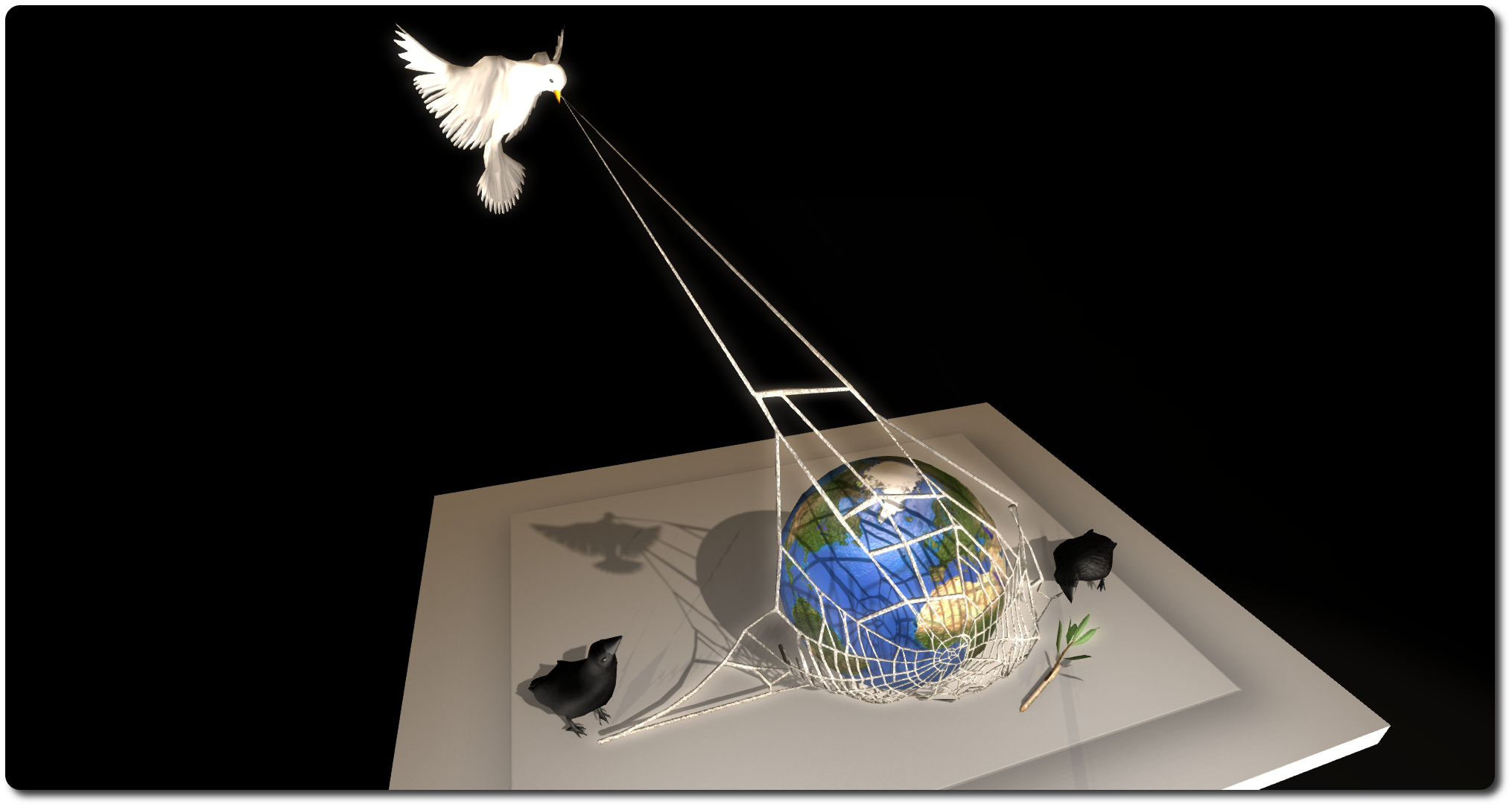
Ama Avro's "Utopia" focuses on communications
Ama Avro’s “Utopia” focuses on communications (click for full size)

Art entries can be viewed now at the UWA’s gallery space, while machinima entries can be viewed on the Transcending Borders page at SL Artist.com. Please remember that submissions will continue to be added to both locations through until the closing date for entries on October 31st, 2014.

(Spiral Silverstar’s “Transcending (Surreal) Borders” – one of the machinima entries in this year’s Transcending Borders UWA Art and Machinima challenge

Related Links

Note: the images and machinima included in this item should not be taken as any indication of my personal preferences as a member of the  Transcending Borders jury. They are included purely for the purposes of illustrating this article.
SL project updates week 42/3: server, HTTP, CDN, issues

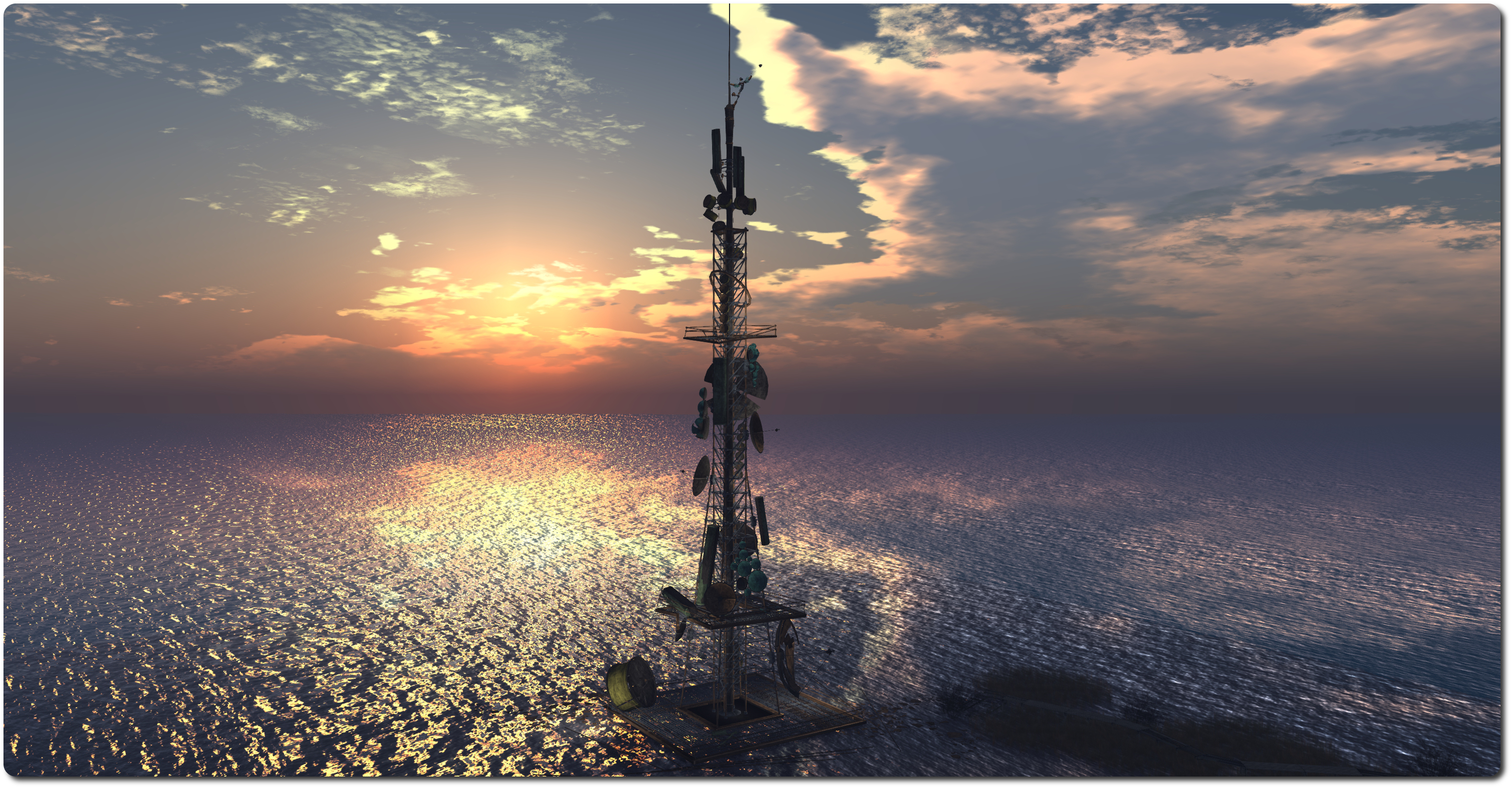
No Signal, MIC Imagin@rium, May 2014 - blog post
No Signal, MIC Imagin@rium, May 2014 – blog post

Unless indicated otherwise, the notes below are taken from the Server Beta meeting held on Thursday October 16th, 2014. The transcript is available here, and the support agenda notes here.

Server Deployments Week 42 – Recap

As always, please refer to the server deployment thread for updates and the latest information.

  • There was no code promotion to the Main (SLS) channel on Tuesday, October 14th – this follows from there having been no deployments to the primary RC channels in week 41
  • On Wednesday, October 15th, the primary RC channels were updated as follows:
    • Bluesteel received the CDN texture & mesh fetching capabilities – release notes
    •   LeTigre and Magnum both received a new server maintenance package,  which includes a crash fix and improves the delivery pipeline for abuse reports.

SL Viewer

HTTP Pipelining RC

On Wednesday October 15th, the Lab released the HTTP Pipelining RC viewer. Version 3.7.18.295372 brings with it:

  • Pipelined HTTP Operations for Mesh and Texture Fetches: this feature allows the viewer to issue multiple asset fetches on a connection without waiting for responses to earlier requests. This reduces the impact of a user’s physical location on scene loading and generally improves the experience for everyone
  • Inventory Fetch Improvements: Inventory folder and item fetches are getting some of the same treatment that textures and meshes did in previous releases. Initial inventory load should be quicker and more robust for all users.

A blog post from Monty Linden accompanies the release, which provides further information on the HTTP project alongside of the viewer release notes.

A blog post from monty Linden arrived with the Pipelining RC viewer, and explain how the viewer (and CDN) should generate further improvements in texture and mesh fetching operations
A blog post from Monty Linden arrived with the Pipelining RC viewer, and explain how the viewer (and CDN) should generate further improvements in texture and mesh fetching operations

Maintenance RC Viewer Removal

The latest Maintenance RC viewer,  version 3.7.17.294943,  has been withdrawn from the release channel due to significant issues and a range of attachment bugs which affect it (see my week 41 update from the TPV developer meeting, under “AIS v3 Issues”).

CDN

As noted above, use of the CDN service for texture and mesh data was extended to the BlueSteel RC in week 42, and there is some anticipation within LL that it could be deployed to all three of the primary RCs sooner rather than later.

An issue has been noted on some regions running on the Snack RC where people are seeing very slow parcel information updates (e.g. the name of the parcel taking up to a full minute to appear in the status bar, for music stream changes to occur, etc.).

The thinking from the Lab is that these problems are a result of the Snack sim hosts receiving a top-heavy load of regions with high traffic counts, resulting in possible resource contentions with certain data lookups as a result – contentions which may have actually brought the regions down had it not been for the CDN, as Maestro Linden commented:

In the cases I’ve seen so far, the slowness was due to a rapid rate of requests from all the users logged into the regions.  If the sim were serving all the texture and mesh requests as it traditionally would, the regions would have ‘fallen over’ before becoming that populated.

So this would seem to be an unintentional cloud with its own silver(ish) lining (at least the regions didn’t fall over). Nevertheless, the issue isn’t welcome. Given that BlueSteel has a more even distribution of regions across sim hosts (e.g. the servers are not all packed to the gills with high volume traffic regions),  It is hoped that the issue will not exhibit itself there. Checks (either by the Lab or residents or both) are likely to be carried out on busy regions on the RC to see if the problem does raise its head, which might indicate some further investigations might be required.

Assuming all goes well with the BlueSteel deployment, it is thought that CDN support will likely extended to the remaining RCs sooner rather than later. In the meantime, for those interested in seeing how use of the CDN works for them, a list of regions by RC can be obtained via Tyche Shepherd’s Grid Survey website, allowing BlueSteel regions to be easily located. Just click the RC Server Regions button (note the list will require a little cleaning-up, post download).

Continue reading “SL project updates week 42/3: server, HTTP, CDN, issues”

“I believe I can fly”: the empowering freedom of virtual worlds

The single image Jay Jay
The single image Jay Jay Jegathesan used in his 3-minute presentation on his PhD research on community and collaboration through virtual worlds

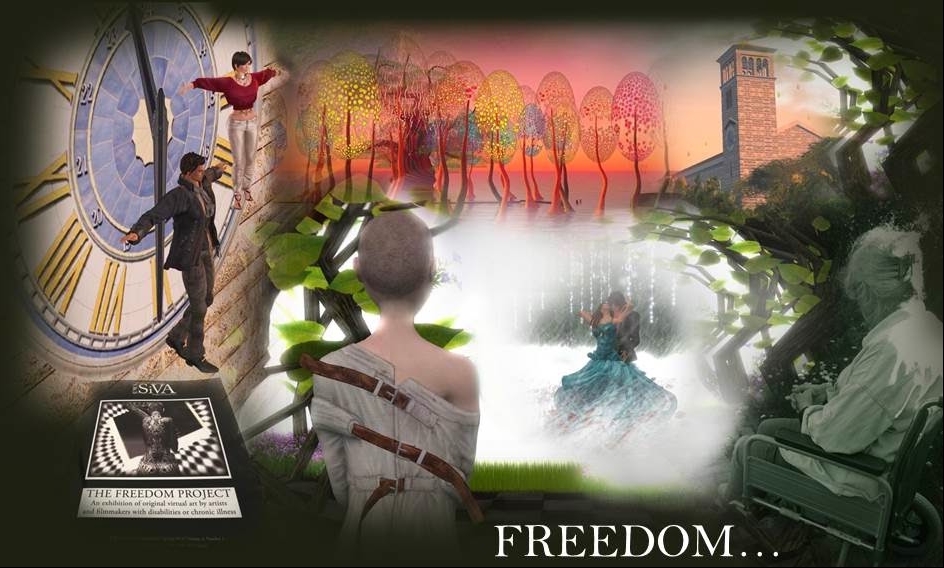
I’ve frequently blogged about the work of the University of Western Australia in Second Life; with an active presence in SL since 2009, the University has gained a first-class reputation for sponsoring and promoting art in virtual worlds through initiatives such as the MachinimUWA competitions, and activities such as their current Transcending Borders challenge, the Freedom Project, and Project Homeless, as well as supporting the LEA’s Full Sim Art series, all of which I’ve had the privilege of covering in this pages.

The Freedom Project, one of many community-focused activities undertaken by the UWA within Second Life

The UWA’s involvement in Second Life came about as a result of PhD student Jay Jay Jegathesan (), who founded the University’s virtual campus in Second Life, which has grown to include academic teaching activities across Business, Law (including the use of SL machinima in a post-graduate degree course), the Arts, Anatomy, Physiology & Human Biology, and Education (including providing resources essential it helping educators and new users get started with SL).

In particular, as a result of Jay Jay’s work the University has become recognised as a world leader in global community development through virtual worlds technology. This in turn has encouraged Jay Jay to make the topic of global community development and collaboration through virtual worlds, particularly in reference to people with disabilities, the focus of his PhD thesis.

Currently, Jay Jay is participating in the UWA’s 2014 3-Minute Thesis competition, in which students were asked to speak for 3 minutes on their PhD research using no technology or props aside from a single image. His presentation, directly referencing the power of virtual worlds to help those with disabilities – indeed, all of us -, is both beautiful and direct; so why not take a moment to listen to his impassioned explanation of the empowering freedom virtual worlds offer?

I’d also like to take this opportunity of thanking Jay Jay for his generosity and kindness in sending me a copy of the Freedom Project book, which is a fabulous publication, lavishly illustrated with pictures of the works submitted to the project, biographies of the artists, and much more besides. It is very much a must-have for anyone with and appreciation of virtual world art. Copies can be obtained for L$5000 (around $20.00 US), shipped anywhere in the world. Those wishing to purchase a copy should contact Jayjay Zifanwe in-world for ordering information.

BOOStock and BOOFest: music and tales to chill the heart and Feed a Smile

Saturday October 18th and Sunday October 19th mark two special Halloween-themed events, both of which aim to help raise funds for Feed A Smile, the a programme run by Live and Learn in Kenya (LLK) to provide nutritious warm lunches for over 400 children in Kenya every day, paid for entirely from donations to the project.

BOOStock!

boostockFirst up, on Saturday October 18th is BOOStock! – Branwen Arts’ special mix of seasonal music and more to be held in a suitable venue floating above the estate.

Commencing at 14:00 SLT, the event will include:

  • 14:00 – Mavenn singing her Halloween set
  • 15:00 – The Frankentinies (aka Pitter Patter Dance company) doing a truly scary horror show
  • 16:00 – Songbird Sorbet, the tiny opera singer.

Admission is free, and all are welcome!

BOOFest!

Then, on Sunday October 19th, it’s time to enjoy the 4th successive year of BOOFest, a celebration of spooky stories told around a blazing autumnal fire.

BOOFest14Featuring a gathering of virtual story presenters at their spooky and scary best, this year’s BOOFest is being held at Lavender Fields, the home of Feed A Smile in Second Life, with all tips going directly to the work of LLK in Kenya.

Story sessions will include everything from classic authors of the ghostly to the macabre, from Bram Stoker and H.P. Lovecraft; through to contemporary writers such as Neil Gaiman. In addition, original works by SL authors Freda Frostbite, Dubhna Rhiadra, Caledonia Skytower, and Moon Aerandir will also be included.

Events such as this occasionally mean that the schedule may be subject to a few last-minute changes, but at the time of writing, the programme looked like this (all times SLT):

  • 10:00 – Dubhna Rhiadra
  • 10:30 – Shandon Loring
  • 11:00 – Bhelanna Blaze
  • 11:30 – BigRed Coyote
  • Noon – Dubhna & Caledonia reading works by Moon Aerandir
    12:30 – Gyro Muggins
  • 13:00 – Aoife
  • 13:30 – Corwyn Allen
  • 14:00 – Freda Frostbite
  • 14:30 – Crap Mariner
  • 15:00 – Caledona Skytower

Details of any changes to the programme can be found on the StoryFests SL website. Again, admission is free, and all are welcome!

About Feed A Smile

Feed A Smile is a programme run by LLK to provide nutritious warm lunches for over 400 children every day, paid for entirely from donations to the project. Over a third of the money directed at the programme comes from donations received through Feed a Smile in Second Life – and that’s a remarkable figure.

The money is raised through live music played at the Lavender Fields club, which stages around 5 or 6 events weekly and to which musicians donate their tips and visitors are asked to donate just L$100 ($0.30), which is enough to purchase a filling meal for a child in Kenya, a fact that within itself is quite mind-boggling.

About the Organisers

Seanchai Library (Shanna-key, which means “Storyteller” in Irish.) was born in March of 2008 as the West of Ireland Library and Cultural Center.  Nearly seven years and thousands of story session later, Seanchai Library remains dedicated to promoting the power of stories to transform and inspire through live voice presentations in Second Life and on the Hypergrid, as well as promoting the work of a variety of charitable organizations every year. “We bring stories of all kinds to life, in virtual worlds.” Contact Caledonia Skytower.

Branwen Arts Cooperative is a group of artists who work singly or together with other artists.  Their home base on Bran in provides a stage for performance and a gallery for exhibitions.  Branwen Arts is always looking for artists, visual and performing, who want their work to be seen and appreciated: writers, storytellers, dramatists, visual artists, dancers, musiciansContact Dubhna Rhiadra, Fae Varriale or Safi Farspire.

SL project updates week 42/2: Monty’s HTTP update and the HTTP pipelining viewer

On Wednesday October 15th, Monty Linden blogged about his HTTP work and the CDN, using the rather unusual title, The Sky Over Berlin (and Elsewhere). It’s a great piece of reading, although I can’t help thinking that Monty’s sign-off at this end of it would have perhaps suited the subject matter far better: nous sommes embarqués – “adventure is ours for the taking”!

The first part of the post recaps on Monty’s initial work in improving Second Life via the HTTP project. This started as far back as mid-2012, with the first pass focused on improving the   mechanism by which textures could be obtained for rendering via HTTP, which entered widespread use around  November 2012, with the release of the 3.4.3267135 viewer.

This work was followed by Monty labouring to improve mesh fetching as well, and to improve the overall reliability of HTTP, which I blogged about in March 2013.

At the start of 2014, Monty blogged on his work up to that point, and looked ahead to future activities. As a part of the post, he included a graph showing how the work carried out up to that point improved texture and mesh request handling.

The HTTP project has improved "under the hood" performance in SL in a number of areas, starting with texture fetching, anf through greater robustness of connections through the use of "keepalives"
In January 2014, Monty blogged about his HTTP work, and indicated how the work had raised the request rate ceiling within the viewer for texture and mesh data from A up to the blue line of C

In his latest post, Monty picks-up where his January post left off, demonstrating how more recent improvements are starting to improve things further – notably through the use of HTTP pipelining (the release candidate viewer for which has now been issued – see below), and the ongoing deployment of the Content Delivery Network service for texture and mesh data delivery.

In his latest blog post, Monty indicates how both HTTP pipelining and the use of the Highwinds CDN service should further help improve data transmissions and  performance
In his latest blog post, Monty indicates how both HTTP pipelining (the “post 3.7.16” markers, denoting the introduction of the pipelining viewer) and the use of the Highwinds CDN service (denoted by the DRTSIM-258 markers) should further help improve data transmissions and performance

All told, Monty’s work has been a remarkable undertaking which benefits Second Life enormously, and helps to set the path towards possible further improvements in the future. As such, he really is one of the heroes of Second Life and the Lab.

HTTP Pipelining RC Viewer

The HTTP Pipelining viewer was issued as a release candidate viewer shortly after Monty’s post went to press.

Version 3.7.18.295372 enables the viewer to issue multiple asset fetches on a connection without waiting for responses to earlier requests. This should help inprove things like initial scene loading quite aside from any additional benefits gained through the CDN deployment work. In addition, the viewer includes improvements to inventory fetching, as Monty noted in his blog post:

The HTTP Project has focused on textures and meshes. But the inventory system, which maintains item ownership, is often described as… sluggish. So as an exercise in expanding the use of the new HTTP library, the pipelining viewer was modified to use it for inventory fetches. As with textures and meshes before, inventory is now fetching in the ‘C’ region of its specific performance graph. The difference can be surprising.

Having had the opportunity to test the pipelining viewer somewhat prior to its appearance as an RC, I can attest to this. While I keep my “active” inventory to a modest size (around 10,000 items unpacked, the rest boxed until needed), I found that an inventory download with a cleared inventory cache (nothing saved on my computer) averaged 9-10 seconds using the pipelining viewer, compared with an average of 2 minutes 50 seconds to 3 minutes with the current release viewer (3.7.17.294959). Whirly Fizzle, using a 105K inventory had even more impressive results: with a cleared cache, her inventory loaded in under 3 minutes on the pipelining viewer, compared to 16-18 minutes on the release viewer.

The release notes for the viewer contain additional information about the updates, again written by Monty, and these make worthwhile reading alongside of his blog post.

Related Links

The Haunted Halloween Tour

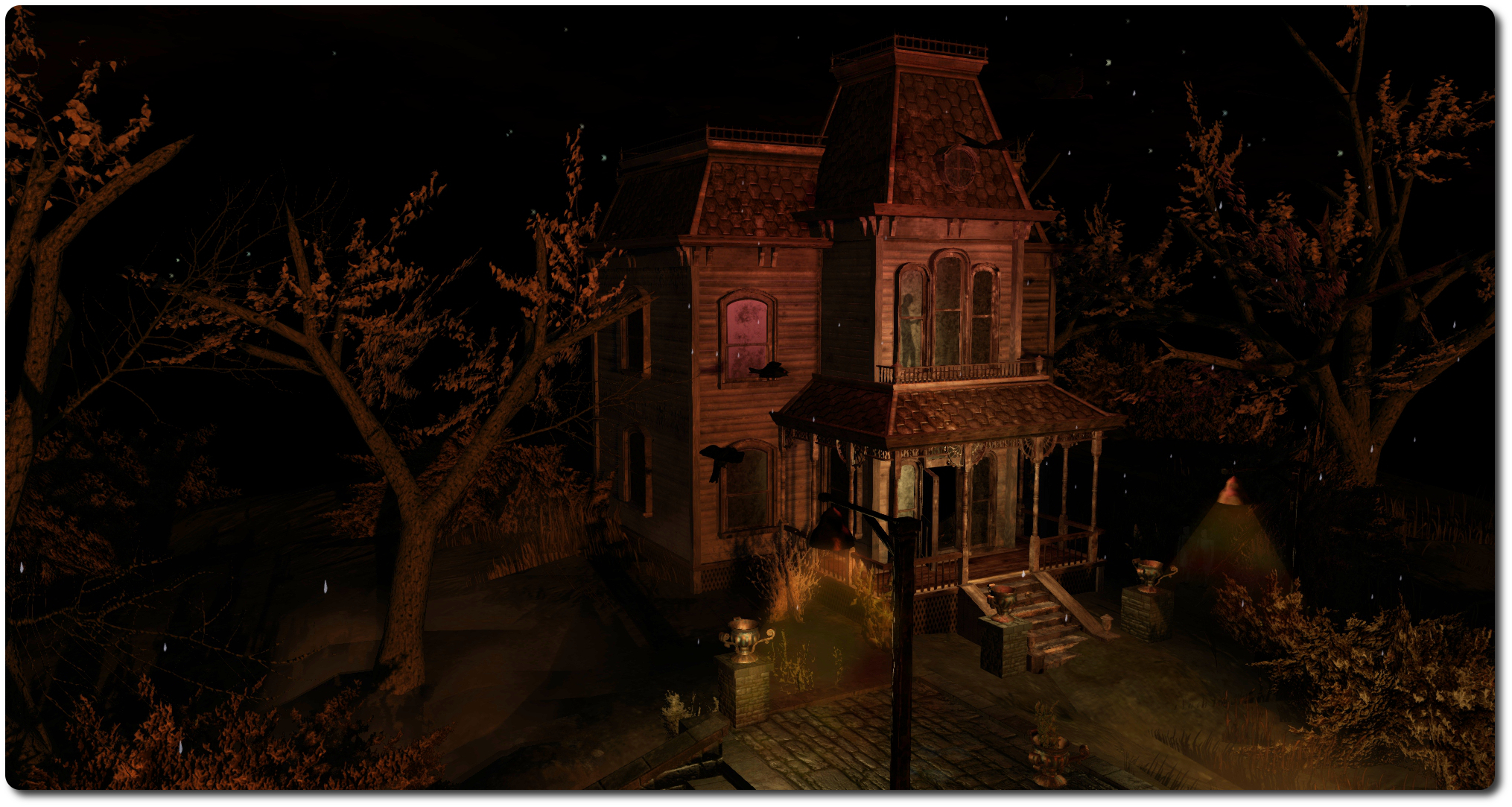
The Haunted Halloween Tour, launched with the October Premium Membership offer
The Haunted Halloween Tour, launched with the October Premium Membership offer (click images for full size)

Launched alongside the October 2014 Premium Membership offer, but available to all SL users, is the Haunted Halloween Tour, the latest offering from the Lab to feature Experience Keys, and one that appears to be specifically geared towards the Oculus Rift.

The tour can be accessed via the Lab’s Portal Park – simply go through the gate marked “Halloween” following your arrival. The path will lead you to the access point, with gateways available for those with and those without an Oculus headset (the latter obviously requiring the Oculus Rift project viewer).

Whichever one you take (the actual tours are more-or-less the same), the first time you do so, you’ll be required to grant the experience the right to carry out certain actions on your avatar (perhaps most noticeably in this case, control your camera). Once you have done so, you’ll be transported to the experience area, where you’ll be invited to take a tour of a veritable house of horror.

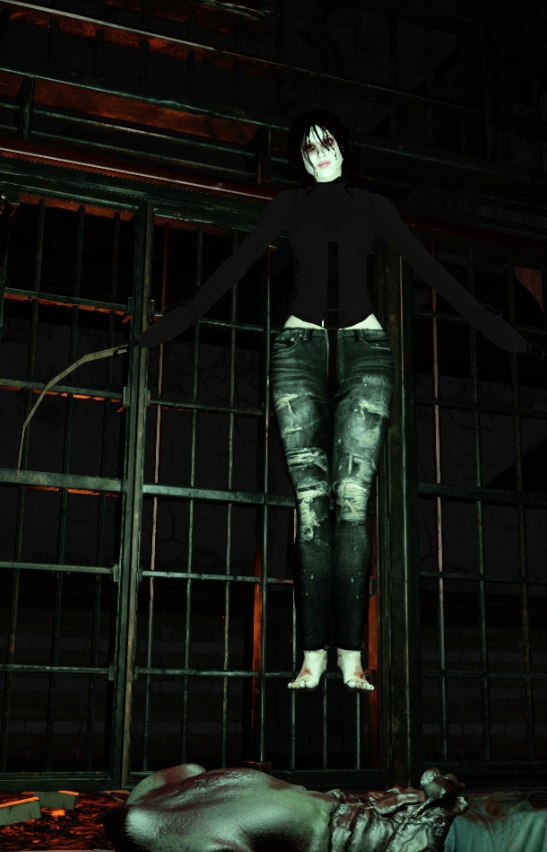
Shaman Linden was one of those I found hanging around when taking the tour...
Shaman Linden was one of those I found hanging around when taking the tour…

This is achieved by seating yourself in your very own coffin, which will take control of your camera and shift your view to something of a “first person” perspective. After a brief pause, you’ll then ascend a hillside stairway through thunder and rain to the house itself before (literally) plunging inside.

I shan’t reveal much of what lies inside the house, other than given the theme, expect the usual mix of screams, bumps, ghouls, body parts and so on – and if you’re very lucky the odd Linden and / or Mole or two, some of whom might be there to menace, while others might be simply …. hanging around.

This is very much an Experience geared towards the Oculus Rift, with the coffin allowing the awkwardness of trying to navigate oneself through the house while wearing one eliminated (and which also ensures you keep to the designated path). As such, the ride does feature a lot of things rushing at you (heads, knife-welding asylum patients and so on), and well as sudden panning, zooming and tipping to add to the experience.

For those with an Oculus, I expect this does work rather well; I’m just not sure the approach works when taking the “non-Oculus” version of the ride. This isn’t to critique the Lab for providing an Oculus focused experience; they’ve put time and effort into getting the viewer to work with the headset and so a demonstrator is only right and proper. It’s just that it leaves the tour somewhat dry if you don’t have a headset. Or at least it did for me – I confess found myself admiring the use of materials and projectors far more than anything else as I was carried around the place!

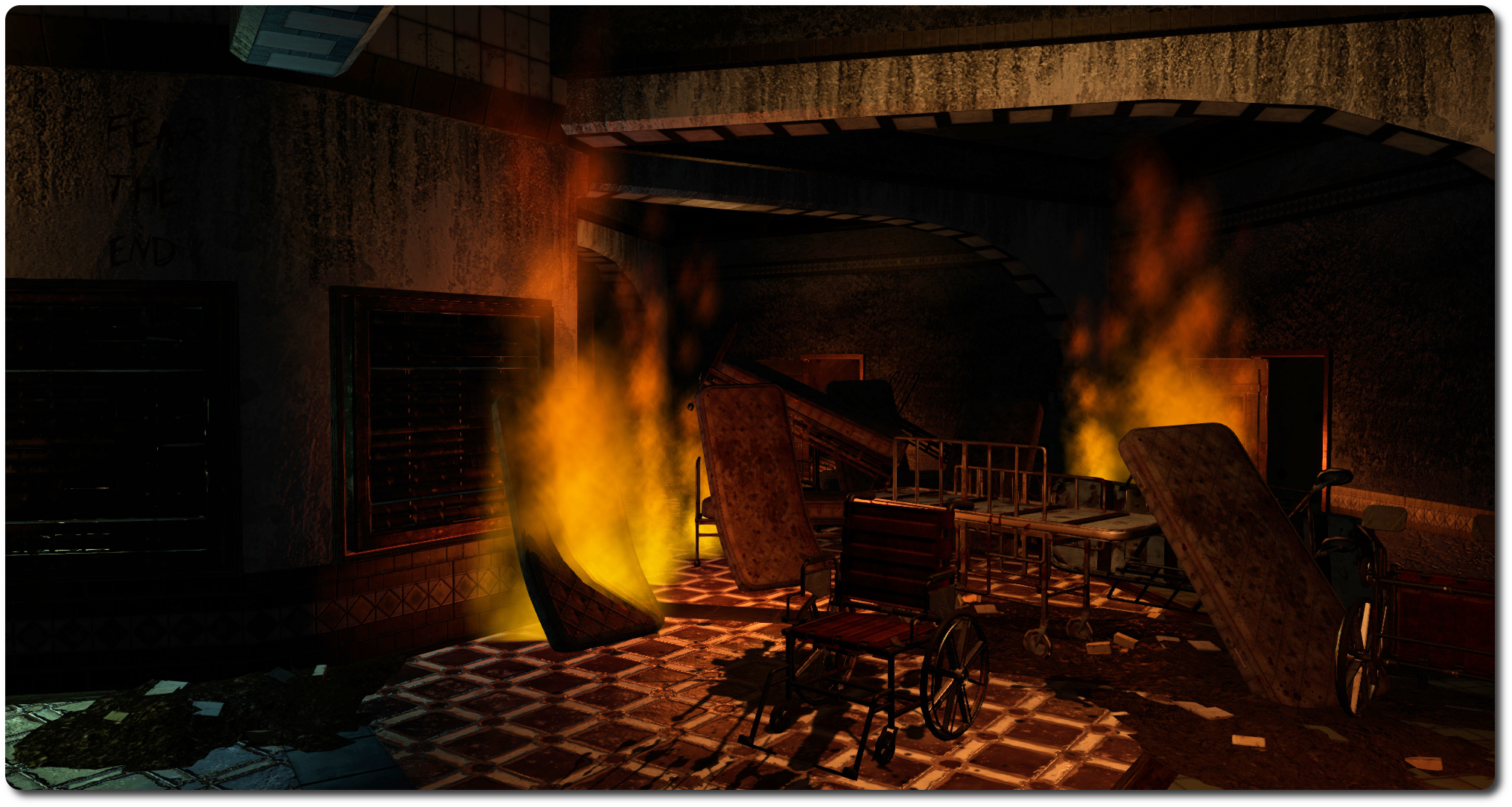
Inside the happy house ...
Inside the happy house …

Oh, and a word of warning to those on the non-Oculus ride: it might be an idea not to try to cam around too much in order to take snaps – on two occasions when I did, I found myself chucked out of my coffin and returned to the arrival / start point below the house …

Overall, the ride lasts for around 8 minutes, and at the end of it, on stepping out of your coffin, you’ll be returned to the Portal Park (as you will be if you stand up at any point during the ride).

Related Links