The main reason for the warning is as a result of the recent Adobe security breach which resulted in the details of some 152 million Adobe users accounts – almost four times the amount admitted to by Adobe for incidents in October.
The blog post from the Lab carries the title Keep Your Account Secure – Never Reuse Passwords, and reads:
A recent security breach at Adobe gave hackers access to private information for users of Adobe sites and services. This included Adobe passwords, email addresses, and password hints. Second Life has not been compromised, but, this is a good reminder that it’s important to never use the same password for Second Life that you use elsewhere.
If you have reused your Second Life password on other services, particularly if you used it for an Adobe service, you should change it immediately.
After every large breach, fraudsters search for users who reuse their passwords on other sites, so if you use the same password for Second Life and other services, your Second Life account could be at risk if one of those other services suffers a security breach.
Anyone who has used their Second Life password with other on-line services may wish to consider taking the advice and changing their passwords as a precaution and for peace of mind.
Without me actually realising it at the time, this blog passed the 2,000 published articles mark. I’m a bit boggled by that figure.
It was in August 2012 that I reached the 1,000 published posts mark – and that took some three years to achieve. So doubling it in just over a year tends to tell me two things: 1) the volume of my blogging has dramatically increased; 2) I really need to spend more time away from the computer screen! :D.
I’m actually not a great one for blog numbers; however, when I passed through the 1,000 published posts mark, I noted that this blog had some 250,000 hits in the 12-months between August 2011 and July 2012, so I thought it would be interesting to run a comparison for the same period in 2012/2013. I was not a little stunned to see that figure had increased by over 100,000. That so many so read and continue to find this blog interesting and look to it for information really does amaze and humble me.
It is the level of feedback that is given which encourages me to keep on writing and to make sure I make time on a daily basis to do so.
Another distinct pleasure I’ve had from all of this is being able to get out into SL and wander “the highlands and islands”, discovering some remarkable places and builds and meeting a huge number of creative and fun people. This in turn has helped put SL into a better perspective for me and remind me that, warts and all, it’s still an amazing place in which to spend time, and I’m again flattered that people do find my wibblings about places to visit worthy of note, and who show their appreciation for my photographic efforts via my Flickr stream and profile feed as well, all of which are very much appreciated.
It’s been quite the odyssey so far, one I currently don’t plan on stopping. To all of you who have encouraged me by reading, commenting, poking and suggesting, I again offer my sincere thanks.
It’s been several months since the release of the last Dolphin viewer update (March 2013). This means the viewer is lagging behind many of the 2013 updates from the Lab, including things like Server-side Appearance, materials, etc.
Lance Corrimal, the man behind Dolphin is not unaware that this is the situation. His real life this year has been such that it has required almost all of his attention (including starting a new job which sees him travelling and away from home a lot of the time), all of which has limited the time he can devote to the viewer, as much as he’d like to be able to do so.
In July and August he gave a couple of short updates on his situation, which I also passed on through these pages, and on November 22nd, he posted a further update on the Dolphin website, which reads in part:
I am not exactly happy about what I have to announce here, but this is how it is going to be:
The next Dolphin Viewer is not going to be around any time soon.
I have looked at the mess that my current state of the sources would produce, and I have (finally but far too late) come to this decision:
I will start from scratch.
Right now, taking the current Dolphin Viewer source and just “shoe-horning” in everything new from the official sources produces a terrible mess that does not compile cleanly, let alone works. Besides, the last Dolphin Viewer has a quite large number of features that don’t work any more, due to changes that the Lab has made in the meantime, temp uploads being one of them.
So, I’ll basically have to reinvent everything. That will of course take some time. I’m guessing “several months” right now, not the least due to the fact that with my new job that I have been doing since April, I’m travelling a lot, so I’m not even home all that much. I’ll see how much I can do on my company laptop.
I will go back to my usual “release early, release often” policy, as soon as I have something that is properly branded as Dolphin Viewer and has more to offer than just the name. I will plan to release at least a public beta as soon as I have something.
This would suggest that an updated Dolphin viewer is unlikely to emerge before the end of the year, and that we may be a few months into 2014 before one does. However, the upside of this is that Lance is not abandoning the viewer, which has enjoyed a loyal following. Patience remains the order of the day as he tries to balance the demands of real life and Second Life on his time.
One additional consequence of everything going-on for Lance right now is that he plans to eventually stop building / providing openSUSE rpm packages for some of the other third-party viewers; as he notes himself, he just can’t seem to pack more than 24 hours into a day.
Further news / updates from Lance will be reported as they become available.
This summary is published every Monday and is a list of SL viewer / client releases (official and TPV) made during the previous week. When reading it, please note:
It is based on my Current Viewer Releases page, a list of all Second Life viewers and clients that are in popular use which are recognised as adhering to the TPV Policy (and of which I am aware), including
By its nature, this summary will always be a week in arrears
The Current Viewer Releases page is updated as soon as I’m aware of any releases / changes to viewers & clients, and should be referred to for more up-to-date information
The Current Viewer Releases page also includes comprehensive links to download pages, blog notes, release notes, etc., as well as links to any / all reviews of specific viewers / clients made within this blog.
Updates for the week ending: November 24th, 2013
Official LL Viewers
Current Release version updated on November 21st to version 3.6.11.283787 (dated November 15th) – formerly the GPU table updates RC (download page, release notes)
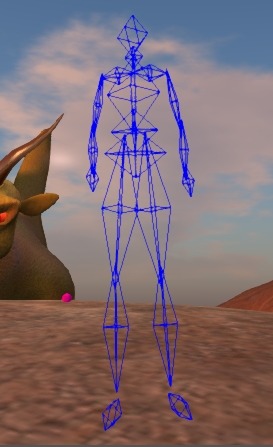
Fitted Mesh viewer 3.6.11.283899 released on November 20th – This viewer adds new “collision bones” to the standard avatar skeleton. Properly rigging mesh objects to those bones will cause the garment to adapt to changes in the avatar shape made using the avatar editor sliders and avatar physics (download and release notes)
Black Dragon updated on November 18th to version 2.3.8 (Maintenance #3) – core updates: UI updates; RLVa update; rendering fixes (release notes)
CtrlAltStudio Experimental version updated on November 18th to version 1.1.0.34376 – core updates: variable-speed walk / fly; Kinect gesture support for avatar movement (release notes)
Kokua updated on November 18th to version 3.6.10.30662 – core updates: parity with SL 3.6.9 / 3.6.10 code base; significant rewrite to area search with context menu active; link to grid support groups (if available in settings file) added to Help > About Kokua (release notes)
V1-style
Cool VL Experimental version updated November 23rd to version 1.26.11.0 and again on November 25th to version 1.26.11.1 – core updates: 1.26.11.0 implemented “project interesting” updates; 1.26.11.1 fixed 2 bugs within the 1.26.11.0 release that prevented cache files to be written to the disk (losing the benefit of caching on return to visited regions) and which prevented object flags (touch, pay, modify, etc) to be propagated from the cache to the rezzed objects on cache updates (making it impossible to touch, pay, edit, etc random objects in the avatar’s field of view) – release notes
Text Clients
Group Tools updated on November 23rd to version 2.2.24.0.
It’s time to kick-off another week of fabulous story-telling in Voice, brought to Second Life by the staff and volunteers at the Seanchai Library SL.
As always, all times SLT, and unless otherwise stated, events will be held on the Seanchai Library’s home on Imagination Island.
Monday November 25th, 19:00: Science Fiction: The Planets Series
With Gyro Muggins.
Tuesday November 26th, 19:00: Food! Glorious Food!
With Derry McMahon.
Wednesday November 27th, 19:00: Treasure it the Heart of the Tanglewood
Faerie Maven-Pralou continues her reading of Meredith Ann Pierce’s 2001 novel for young adults.
Hannah lives by the fearsome Tanglewood with a few talkative companion animals. She doesn’t age, and she has no memory of anything but this life of isolation. Once a month she plucks the flowers that grow from her head, a painful process in which “each yank made her whole scalp ache”, and brews them into a tea for the wizard who lives deep in the woods.
When Hannah falls in love with one of the many knights who seek the treasure of the book’s title, she starts to question the wizard’s motives, finding he has turned the knight into a fox.
Escaping the wizard’s manipulative grasp, Hannah sets out to find a cure for the knight, an adventure in which she discovers her own identity and the repercussions of some of her actions while under the control of the wizard.
Thursday November 28th, 11:00: Alice’s Restaurant Massacree
Image via wiki commons
You can get anything that you want
At Alice’s restaurant. You can get anything that you want
At Alice’s restaurant.
Walk right in, it’s around the back,
Just a half-a-mile from the railroad tracks, And you can get anything that you want
At Alice’s restaurant.
As Thanksgiving arrives in the United States, Shandon Loring presents singer-songwriter Arlo Guthrie’s famous 1967 musical monologue, Alice’s Restaurant Massacree (also popularly known as Alice’s Restaurant, and the inspiration of the 1969 Arthur Penn film of that name, starring Guthrie himself).
Aside from the opening and closing chorus, the song is delivered as the spoken word accompanied by a ragtime guitar. The story is based on a true incident in Guthrie’s life when, in 1965, he (then 18) and a friend were arrested for illegally dumping garbage from Alice’s restaurant after discovering that the town dump was closed for the Thanksgiving holiday.
What follows is a complicated, ironic and amusing story told in a deadpan, satirical tone, which encompasses fines, blind judges, guide dogs, 27 8×10 copiously annotated glossy photos related to the littering, frustrated police officers, the Vietnam War draft and, ultimately, the inexplicable ways in which bureaucracy moves to foil itself, just when you’ve given up hope of foiling it yourself.
The major topic of conversation during the course of the week has been the Lab’s announcement that they have released a new project viewer which can be used to make suitably rigged mesh garments deform to match an avatars shape as it is adjusted using the viewer Edit Shape sliders. It does so by using a modified version of the avatar skeleton and collision bones, as I was able to preview just before the project viewer was launched.
Rigged mesh deforming to changes to the pectoral sliders in the Fitted Mesh project viewer
Since the Lab’s announcement, the response from various sections of the community have been mixed. Some have welcomed the new with open arms; some have questioned the overall flexibility of the solution compared to others, some have regretted the “loss” of the deformer and some have reacted in outright hostility towards the Lab.
In terms of the technical aspects of the solution, Karl Stiefvater (Qarl Fizz), who coded the mesh deformer, took time out to leave a comment on STORM-1716, the JIRA for that project, which reads:
Several people have asked me – this seems like the best place to answer.
LL’s assessment here is mostly good. In almost all situations, the simplest solution is the best one – and collision bones are indeed MUCH simpler than the mesh deformer. As I see it, collision bones have two downsides: 1) they are substantially harder to use for the person creating the garment and 2) probably don’t track as well to the avatar shape.
In the end, the evaluation must be made by the content creators who use the tool.
I will reiterate that the two-year delay and refusal to communicate are unacceptable.
Avatar collision bones (image courtesy of Gaia Clary)
This would seem to be a reasonable assessment. The use of collision bones is technically easier and, as noted elsewhere, is less reliant upon a large amount of code being added to the viewer which then needs to be managed and maintained as the viewer evolves, but it does have some drawbacks.
Commenting further on the subject in the Metareality podcast on Friday November 22nd, Karl added:
It [the avatar skeleton] already had a bunch of these bones in it for collisions. I have never, ever notices that someone shoots a bullet at me, and my avatar is fat, it actually hits me as if I were fat … It’s incredible that they put that kind of detail into it ten years ago. But, OK, they did. So my feeling – just to head-off any drama – is that it’s a nice solution. It is definitely a simpler solution, which is preferred in all software engineering, and probably all of life.
He went on to reiterate the fact that a downside of the approach is that it can making creating and rigging mesh garments harder, although as William Reed Seal-Foss observed:
Well, speaking from an artistic standpoint … and knowing how to rig, that’s already not fun, and it’ll make it more not fun, but it’s not going to be like you have to learn to do something new.
Pressed on the matter, Karl reconfirmed that while the Fitted Mesh approach may have weaknesses, he does feel that it is a good solution, noting, “Obviously, I’m invested with the one that we did, but this is good. This is good,” before also noting that as a technically simpler approach, Fitted Mesh is likely to hold-up better over time when compared to the deformer.
This still leaves the question as to whether personality may have played a part in the Lab’s decision. In the podcast, Kimberley asks Karl outright if he believes this to be the case, and he indicates that he believes so, stating, “I heard back from two different people inside the lab that told me that Linden Lab would never accept my code.” One would very much hope that matters weren’t influenced on the basis of personality; but the fact that the Lab previously rejected code from Karl for reasons which appeared tenuous at the time, would seem to be point to there being an issue of some description.
The debate over the pros and cons of each system will doubtless carry on in some quarters, as will the theories as to why one was selected over the other. In the meantime, feedback on the Fitted Mesh viewer is being generated and the Lab is working on updates. In terms of the technical aspects / limitations of the system, it remains to be seen how they may impact things. As it is, the approach has arguably been used to good effect by the likes of Redgrave and other designers and has proven popular among consumers. Hopefully the same will prove to be the case as this solution proceeds through to a release status and as it is adopted by third-party viewers.
 Following-on from their reminder / warning about purchasing L$, the Lab has issued a warning about keeping SL passwords secure.


 Inara Pey: Living in a Modemworld