Bitten by the (War)bug

So, it’s no secret to regulars to these pages that I’ve become somewhat hooked on SL sailing and flying. I still only have the one premium gift sail boat in my inventory – it is more than enough to keep me happy and has room enough for friends – but my collection of SL aircraft is slowly growing, with the latest addition being a Warbug.

For those unfamiliar with them, Warbugs are little egg-shaped aeroplanes with air-to-air combat capabilities which are, in a word, fun!

I first came across them by chance browsing the SL Marketplace, but it was Lindal Kidd who piqued my curiosity when she mentioned she had a Warbug airfield on her land (along with a skydiving jump zone). Created by Arduenn Schwartzman, Warbugs can be flown for fun, pleasure or air-to-air fighting, and are possibly unique in SL as they allow “full size” avatars to take to wing within a single region without risking running out of airspace – which is not to say they are unable to handle region boundaries.

The aircraft come in a variety of forms which cover everything from World War I through to spaceships (including a set of Star Wars items which could draw a frown or two from Disney…). They can be bought on the Marketplace or via the Warbugs HQ, which also offers free-to-fly variants of some of the models available via a rezzing system (the rezzing systems themselves also being available to buy).
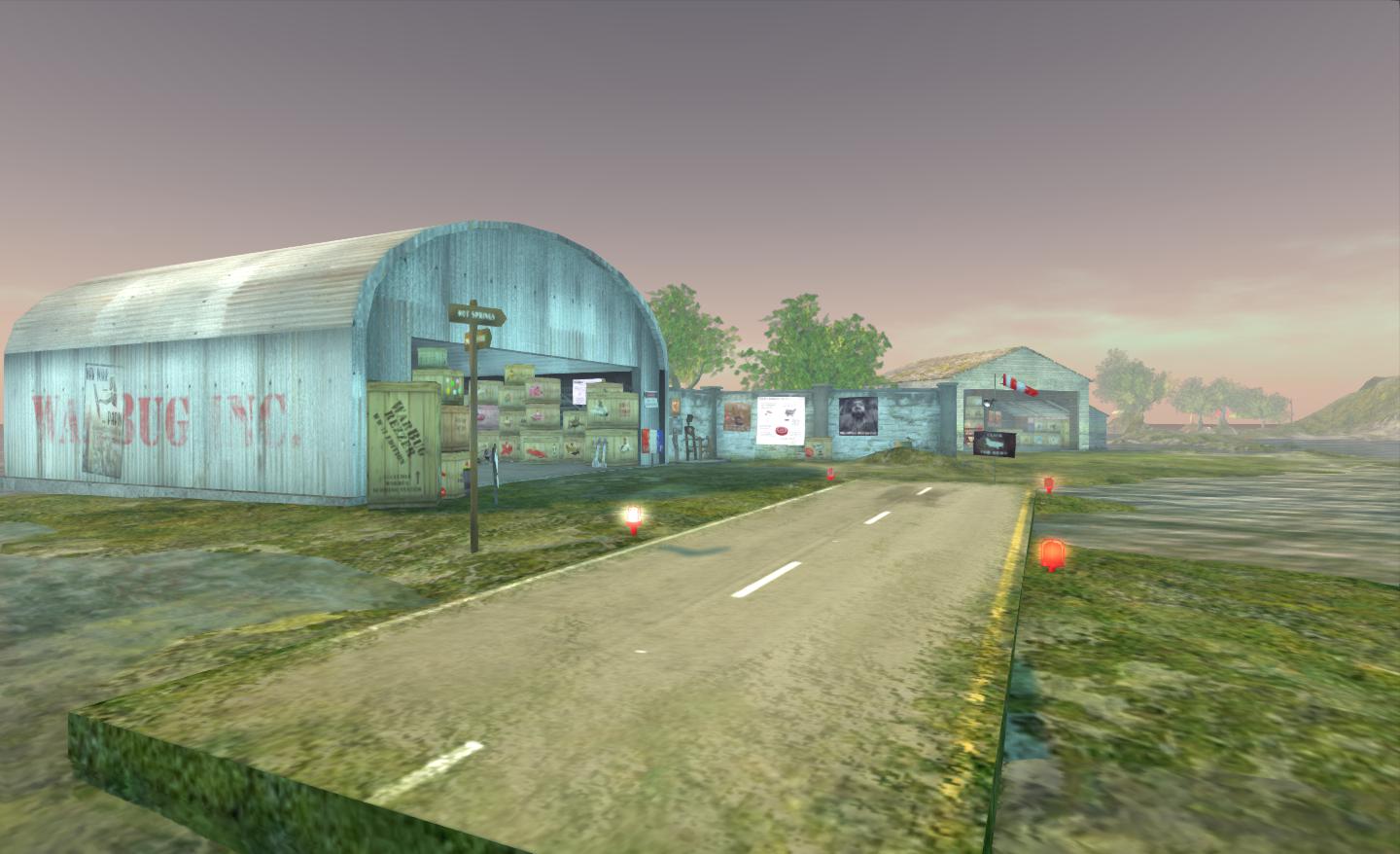
Warbugs HQ

It was through the rezzing system that I had my first exposure to flying a Warbug – and quickly got addicted. The aerial combat aspect requires flying around using the standard controls (arrow keys for up/down, left/right) PAGE UP and PAGE DOWN for the throttle) and trying to line-up your guns on the “opposition” (the left mouse button fires your guns). Aircraft which are purchased come with a gun sight HUD, which makes the latter a little easier, but given the manoeuvrability of these little planes, not by much.
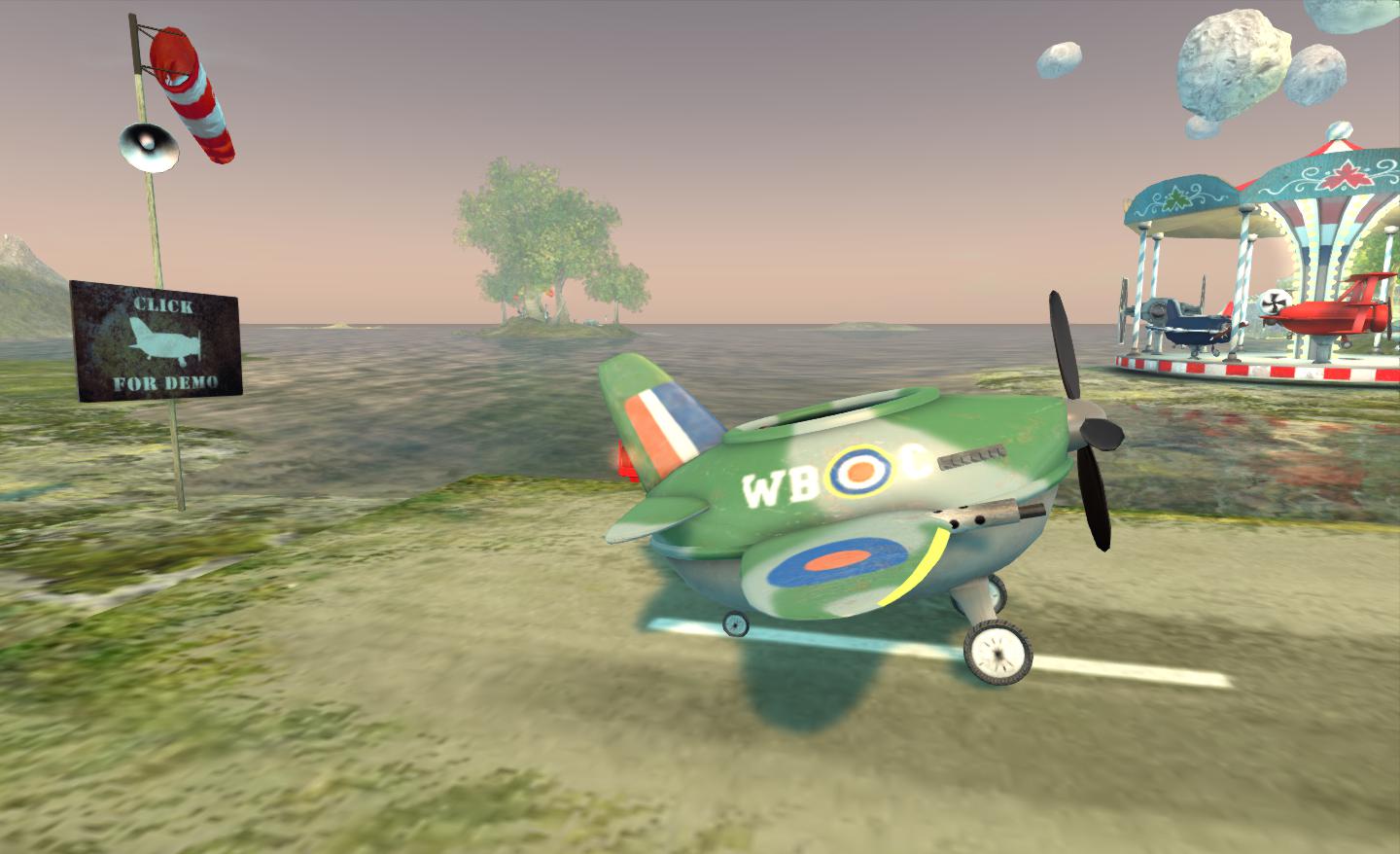
My Spitfire awaits…

The cockpit is a little cramped, but it’s cute watching your avatar fold herself / himself into it. once in, the engine starts, with suitable sounds, and then it’s open the throttle and – away you go!

Air combat can be frenetic – these little planes are highly responsive to the controls, and only have a screen in front of you, tracking the opposition can get hard – even with aids such as the Mini-map and radar tracking (cheats! :)).
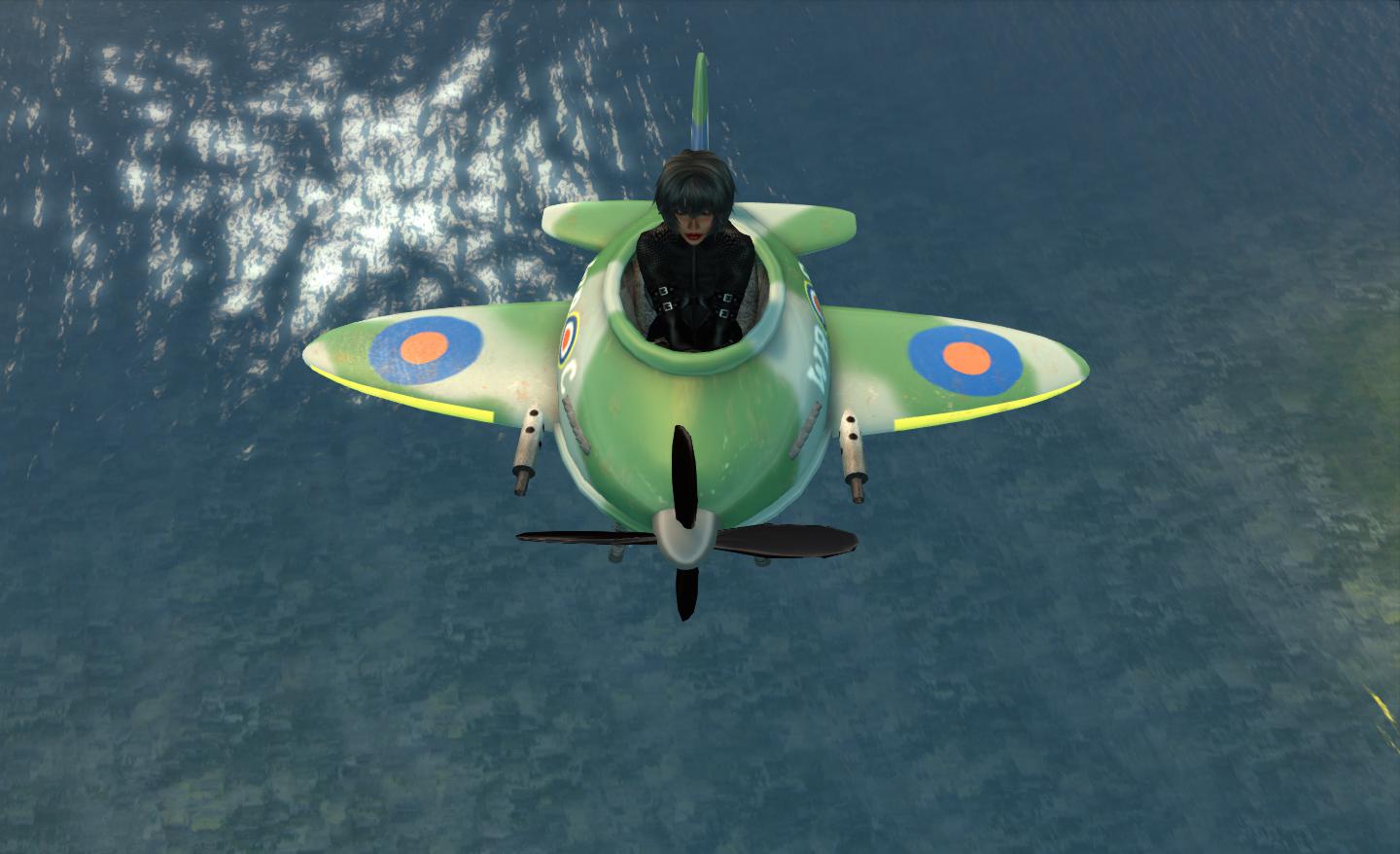
Airborne!

Given that the Warbugs on offer represent various “sides” – RAF and USAAF  … Luftwaffe … Rebels … Empire… it is possible to use them for “group” combat as well as having a “free for all” (although the latter does seem to predominate around the Warbugs HQ), which can add an additional element to the flying. And you certainly know it when you’re hit! Not only are you told in chat, the Warbug spews forth black smoke as you spin towards the ground, being ejected shortly before impact, leaving you either to pick up your bruised ego and battered ‘plane and try again or  – when using a rezzer – trudging back to call-up a replacement…
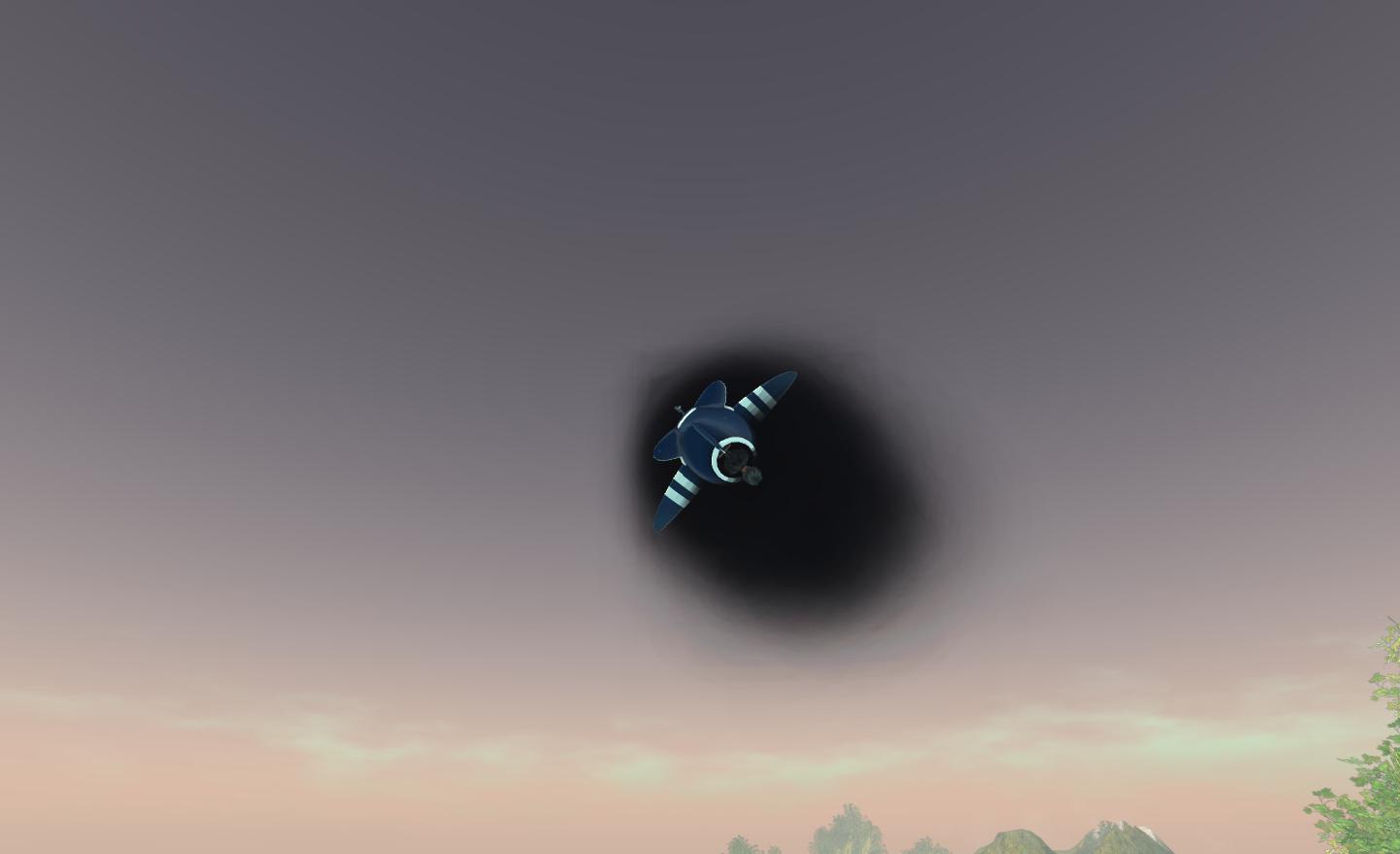
I’m Hit! Mayday! Mayday!

There are various additions for the enthusiast as well – missiles can be added to some aircraft and a conversion kit means that you can try target bombing rather than blowing one another out of the sky. There are also a range of texture and conversion packs, and even a script pack which can be added to your own custom Warbug builds. Other accessories into an asteroid base for the spaceship units, planets (which can be blown up and leave disturbances in the Force), a complete WW I range of accessories, and so on.
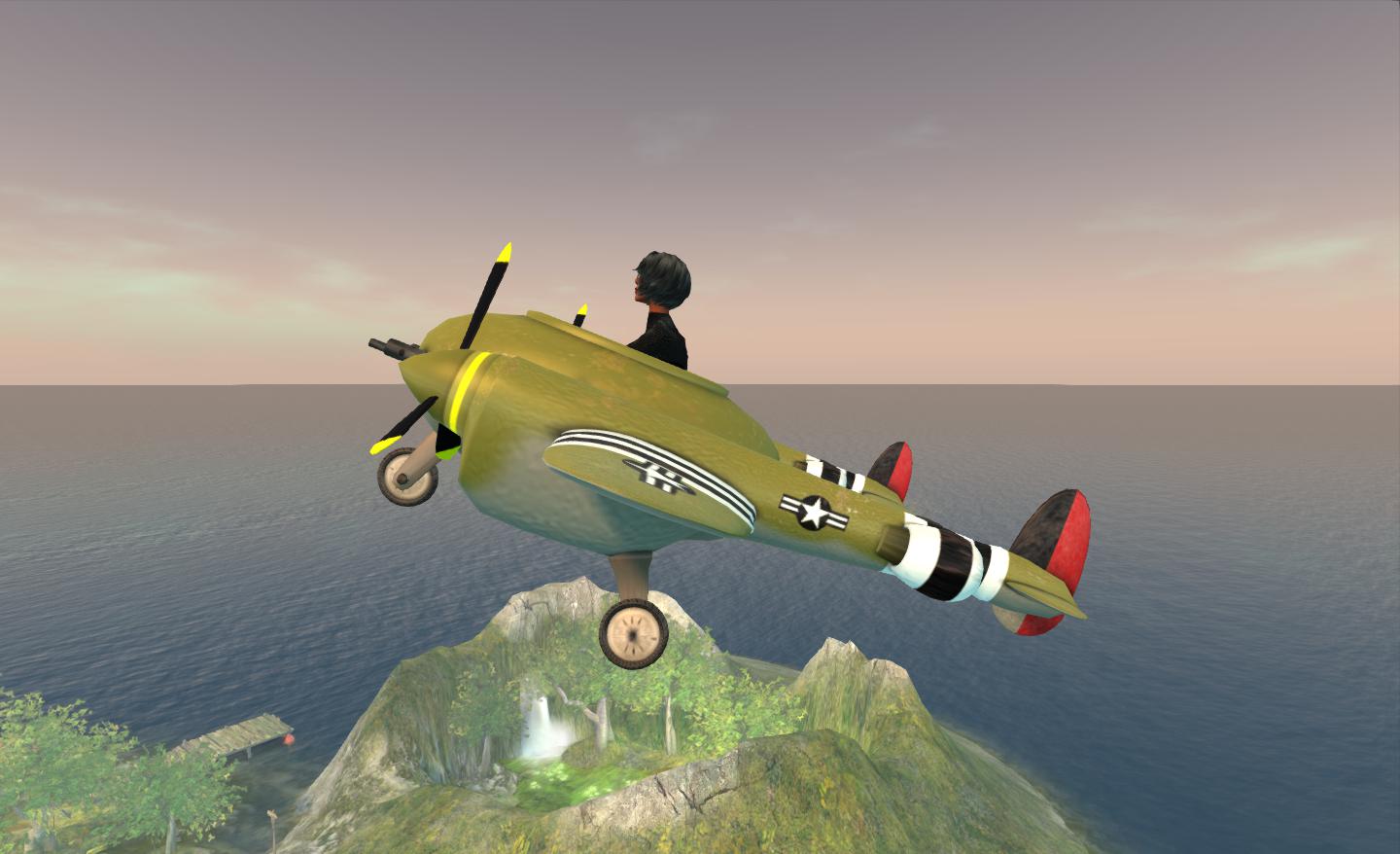
Taking to the air in a P-38 to try my hand at target bombing

There is a website dedicated to Warbug flyers across the grid, which also tracks “aces” and scores. This also adds to the nature of the competition, as “aces” are not only tracked in terms of their point, but also their “value”. The first time you shoot down an “ace” you are awarded whatever value has been assigned to them, rather than just the 10 points usually awarded for shooting someone down. This tends to make “aces” a hunted breed for those after points…
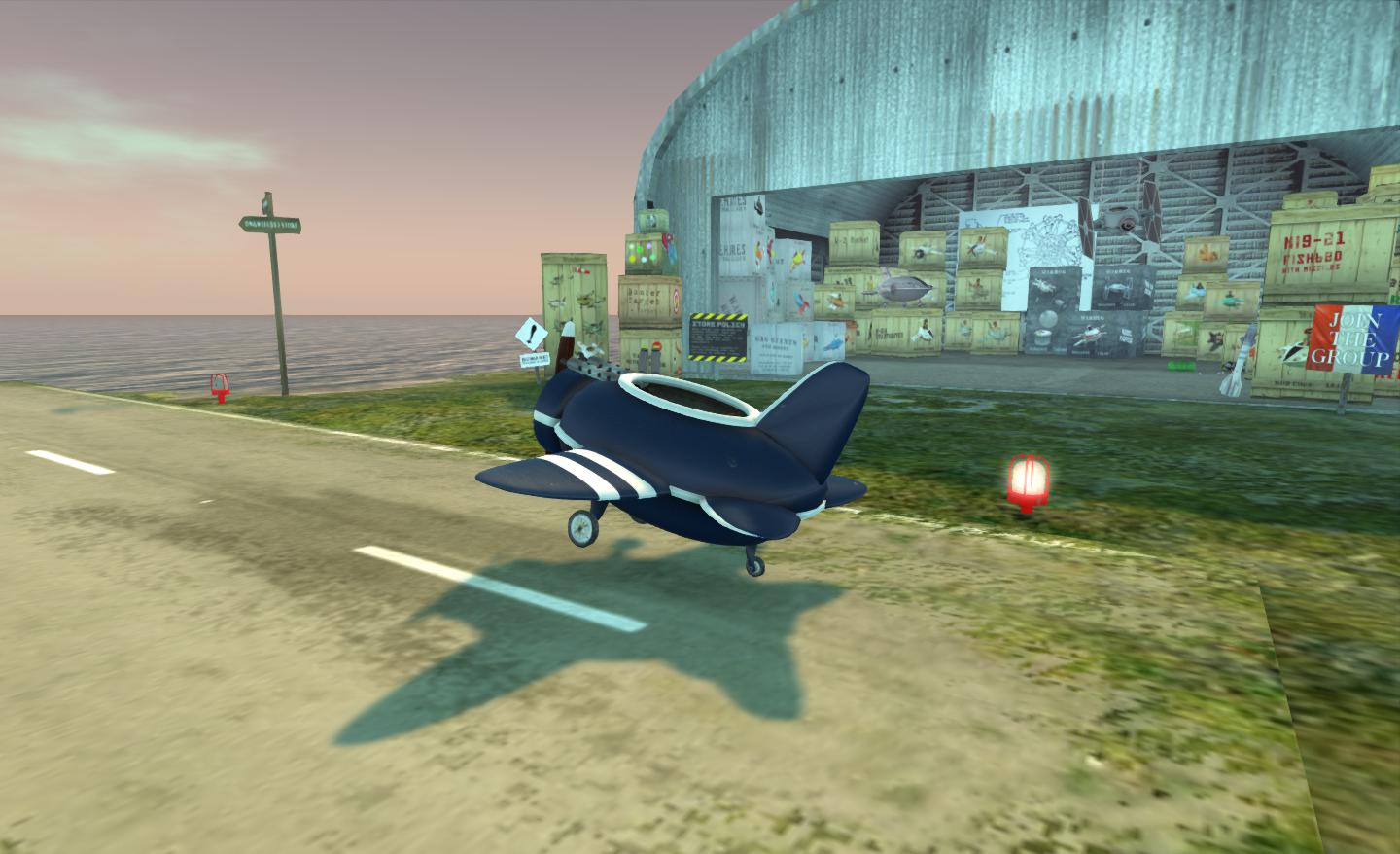
My first Warbug

In the latter regard, I was rather surprised to find myself sitting at #17 in the “aces” list after just a couple of turns in actual combat. Scores are recorded locally by any active rezzer / windsock in operation in a region as well.

Flying with Lindal from her home region proved a lot of fun as well – and how well the Warbugs handle region crossings. Even the skyhomes and sky boxes scattered around made things a lot of fun and provided a means for nipping around obstacles and trying to get a “jump” on one another.

If you’re into flying and haven’t tried out Warbugs, I’d really encourage you to try them out. If you’re into competitive games with a difference (and some of the Warbug people are very competitive!), again, there’s a lot of fun to be had with these little ‘planes. I’ve been bapping about in them for the last few days (and am currently considering adding a Sopwith Camel and / or the Spitfire to my growing collection of aircraft).

Great fun!

Related Links

Viewer release summary 2012: week 46

This summary is published every Monday and is a list of SL viewer / client releases (official and TPV) made during the previous week. When reading it, please note:

  • It is based on my Viewer Round-up Page, a list of  all Second Life viewers and clients that are in popular use (and of which I am aware) and which are recognised as adhering to the TPV Policy
  • By its nature, this summary will always be in arrears
  • The Viewer Round-up Page is updated as soon as I’m aware of any releases / changes to viewers & clients, and should be referred to for more up-to-date information as the week progresses
  • The Viewer Round-up Page also includes comprehensive links to download pages, blog notes, release notes, etc., as well as links to any / all reviews of specific viewers / clients made within this blog.  

Updates for the week ending: 18 November, 2012

  • SL Viewer updates:
      • Beta version rolled to 3.4.2.266561 on November 14 and then to 3.4.2.266995 on November 18 (release notes)
      • Development version rolled to 3.4.3.267061 on November 15
  • Dolphin rolled to 3.4.3.26620 on November 18 – core updates: Group Services code updates for editing / managing large SL groups; items from multiple creators now show “multiple” rather than “unknown” when viewed in inventory (properties); new in-world maturity functionality (dialogue warning on trying to enter a region with a higher rating than your current setting &uption for setting to be updated); code base now up to LL’s latest viewer-dev and Marine Kelley’s RLV (2.08.03.04);  – release notes
  • Firestorm released 4.3.0.30936 Beta on November 15 specifically aimed at Firestorm users who need to edit and manage large SL groups – release notes
  • Niran’s viewer rolled to version 2.0.3.2262 on November 12 – core updates: Group Services code updates for editing / managing large SL groups; UI fixes and tweaks – release notes
  • Cool VL updates:
    • Stable branch rolled to 1.26.4.39 on November 17 – core updates: bug fixes, backport (and update to) V3 font rendering; improved the logic for the font size and the anisotropic settings; minor speed optimization to the world map backported from Singularity
    • Experimental branch rolled to 1.26.5.19 also on November 17 – core updates as per main release, plus:improved logic for the font size and the anisotropic settings has also been extended to the anti-aliasing setting; bugfix to the render pipeline backported from viewer-development v3.4
    • Release notes
  • The Group Tools Installer moved to version 2.2.15.0 on November 18 – no release notes available
  • Libretto – removed from round-up page due to website being unavailable for a month and no response from creator on status (also removed from the SL Third-party Viewer Directory)

Related Links

Getting RADical about REMs while Odyssey flips

The recent focus on the NASA / JPL Mars Science Laboratory mission has been on Curiosity’s soil sampling activities in the region of Gale Crater scientists have called “Rocknest”.  However, this is not all that the rover has been up to. Through the sample gathering operations, two other instruments have been hard at work, measuring and monitoring the environmental conditions around the rover. These are the The Radiation Assessment Detector (RAD) and the Rover Environmental Monitoring Systems (REMS) – each of which has been working away day and night since Curiosity first arrived on Mars.

RAD is particularly focused on the amount of radiation, both from the sun (solar radiation) and in the form of cosmic rays, reaching the surface of Mars. While Mars has an atmosphere, it is extremely thin and tenuous in comparison to that of Earth – at ground level it is about as dense as Earth’s atmosphere at an altitude of several miles. The Martian atmosphere is primarily carbon dioxide and it does not have any ozone layer. This, coupled with the lack of a strong magnetic field means that the surface of Mars is subjected to far higher levels of both solar and cosmic radiation than are experienced on Earth.

However, even though the atmosphere around Mars is tenuous, it is still enough to have an effect on incoming radiation, and RAD is designed to measure the levels of radiation common to the surface of Mars and, working with REMS, help give further insight into the processes which go into altering that radiation as it passes through the atmosphere. Both of these studies will in turn help scientists understand the impact incoming radiation is having on the local environment and increase out understanding of surface conditions on Mars in preparation for human missions there in the future.

Curiosity: increasing our understanding of the Martian surface environment for future human missions

REMS is the rover’s meteorological station, comprising instruments mounted both on the body of the rover and on the forward mast. It is responsible for monitoring wind, pressure, humidity and temperature, and is being used to establish a track record of atmospheric conditions and changes experienced by Curiosity. Despite the wind measurement instrument on the rover’s mast being damaged during the landing phase of the mission – mostly likely due to a stone being thrown up by the Descent Stage engines and striking the instrument – REMS has been returning huge amounts of data about the Martian atmosphere, helping scientists develop a clearer understanding of the complex mechanics at work in the Martian atmosphere.

As mentioned about, the Martian atmosphere is largely carbon dioxide and very tenuous. Both of these points factor into large seasonal variances in the Martian atmosphere. Due to the tenuous nature of the atmosphere, temperatures are extremely low. During the colder winter months, these low temperatures cause a significant amount of the atmosphere to “freeze out” into the polar ice caps (most notably the southern polar cap, which is predominantly carbon dioxide ice).  In the southern hemisphere, the warmer temperatures, while still low by Earth terms, are enough for much of this carbon dioxide to sublimate into the atmosphere with the result that season changes can cause the Martian atmosphere to shrink / grow by some 30% through the course of a year.

These thermal processes also operate on a day/night cycle, and also affect the radiation signature being recorded by Curiosity’s RAD instrument. Essentially, what is happening is this: during daylight hours, the atmosphere heats up rapidly and expands, causing the atmosphere to “bulge out”. Convection currents cause the atmosphere to flow outwards from this bulge to equalise the pressure either side of it. This leaves the atmosphere below the bulge at a lower pressure than the air on the night side of the planet. As the day passes and the sun sets, the atmosphere cools and the bulge contracts increasing the surface air pressure beneath it.

The daily thermal cycle on Mars: by day, as the planet rotates, the atmosphere warms and expands. Air flows out from the heated “bulge” in order to equalise the pressure with the atmosphere around it, with the result that while the bulge causes a “thicker” atmosphere, it is one that is less dense and at a lower pressure than the air on the “night side” of the planet

Overall, this daily fluctuation can amount to a 10% variation in air pressure over the day / night cycle as measured by REMS. Taken alongside the RAD measurements, this has revealed an interesting correlation with the amount of radiation being measured around the rover. As the air temperature increases through the day and the atmosphere expands to lower the local air pressure, so to does the amount of radiation being measured by RAD increase. Then, as the temperature drops during the evening into night, so to does the atmospheric density and pressure increase – and surface level radiation doses fall, with between a 3% and 5% variation in radiation levels being recorded by REMS during a single day / night period.

A 5-Sol chart showing the relationship between radiation and air pressure during the day / night cycle. As the air is warmed during each day, so the air pressure drops (blue) and the amount of radiation being recorded (red) increases. As night draws is, so the blue line increases, indicating an increase in atmospheric pressure – and radiation levels drop

Please use the page numbers below to continue reading this article

Of Sound Mind

Of Sound Mind is a collaborative piece lead by Lorin Tone which explores the nature of sound and the ways in which it can be employed to add depth to a virtual environment such as Second Life. It opened on Saturday 17th November as a part of the Linden Endowment for the Arts Full Sim Art, and features Lorin’s work along with that of other SL artists and builders such as Madcow Cosmos (who with Lorin, brought the delightful Through the Lens of Dreams to Art Screamer last year), Glyph Graves, P4ndor4 Quintessa, Meriadne Merlin, Inventor Alchemi, Marcus Parrott, Mia Anais, Judi Newall, and will feature seminars and demonstrations from these and other SL artists.

Of Sound Mind

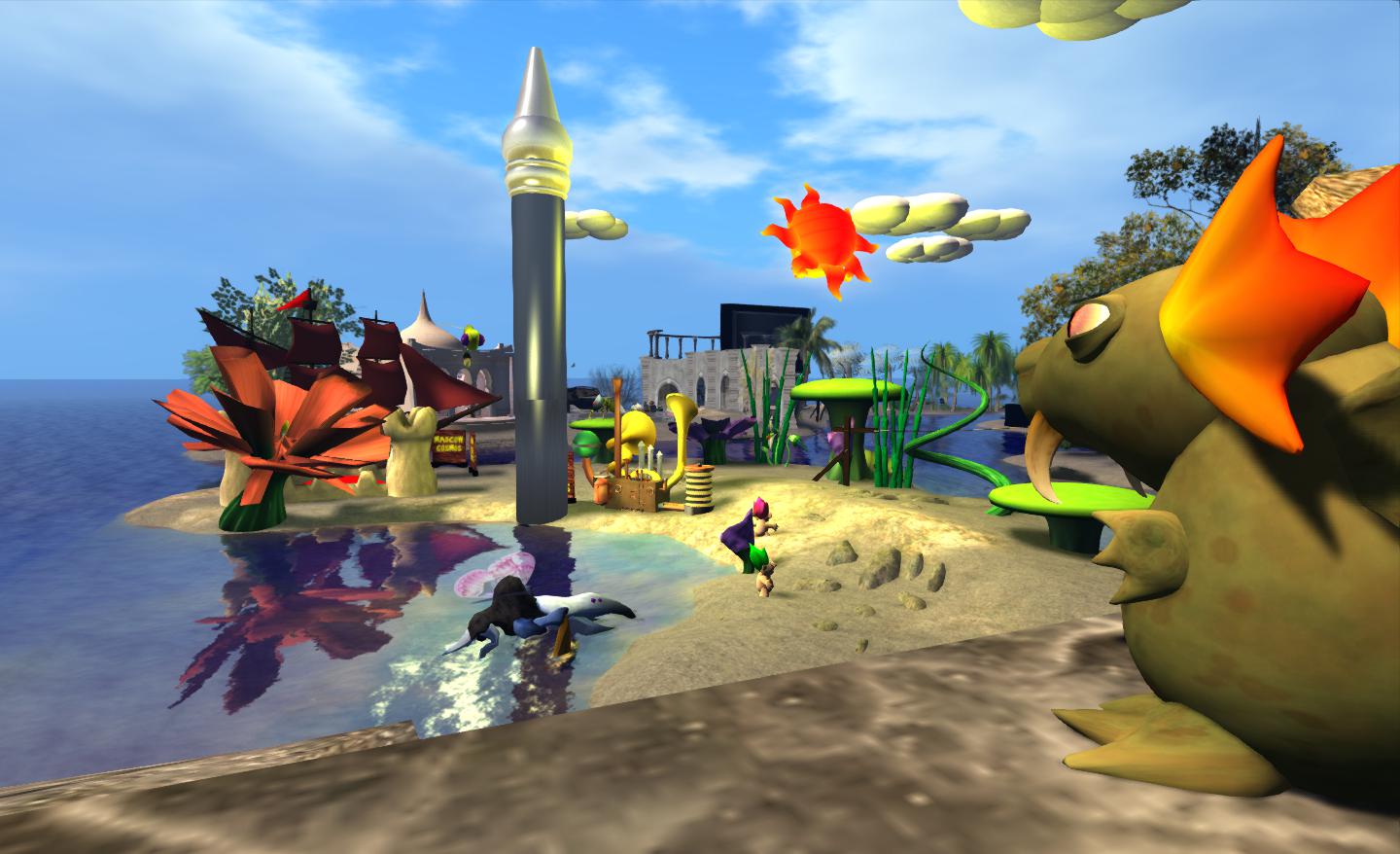
The installation comprises a landscape  – sometimes whimsical in nature, sometimes more natural, sometimes with the obligatory spookiness (you’ll understand why I say that when you visit), and always inviting further exploration. Here one can experience and learn about the many and varied ways in which in-world sounds can by used in a virtual environment. As an aural, as well as visual experience, one obviously needs to have their sound on when exploring the region – although there is no requirement for either streaming or Voice to be enabled.

Of Sound Mind

The arrival point features a number of introductory notice boards which will deliver various notecards to you explaining some elements of the installation and introducing you to some of the artists. Similar notice boards are scattered across the region, introducing the various elements and other artists involved in the collaboration. However, the secret here is to simply explore, experience and touch.

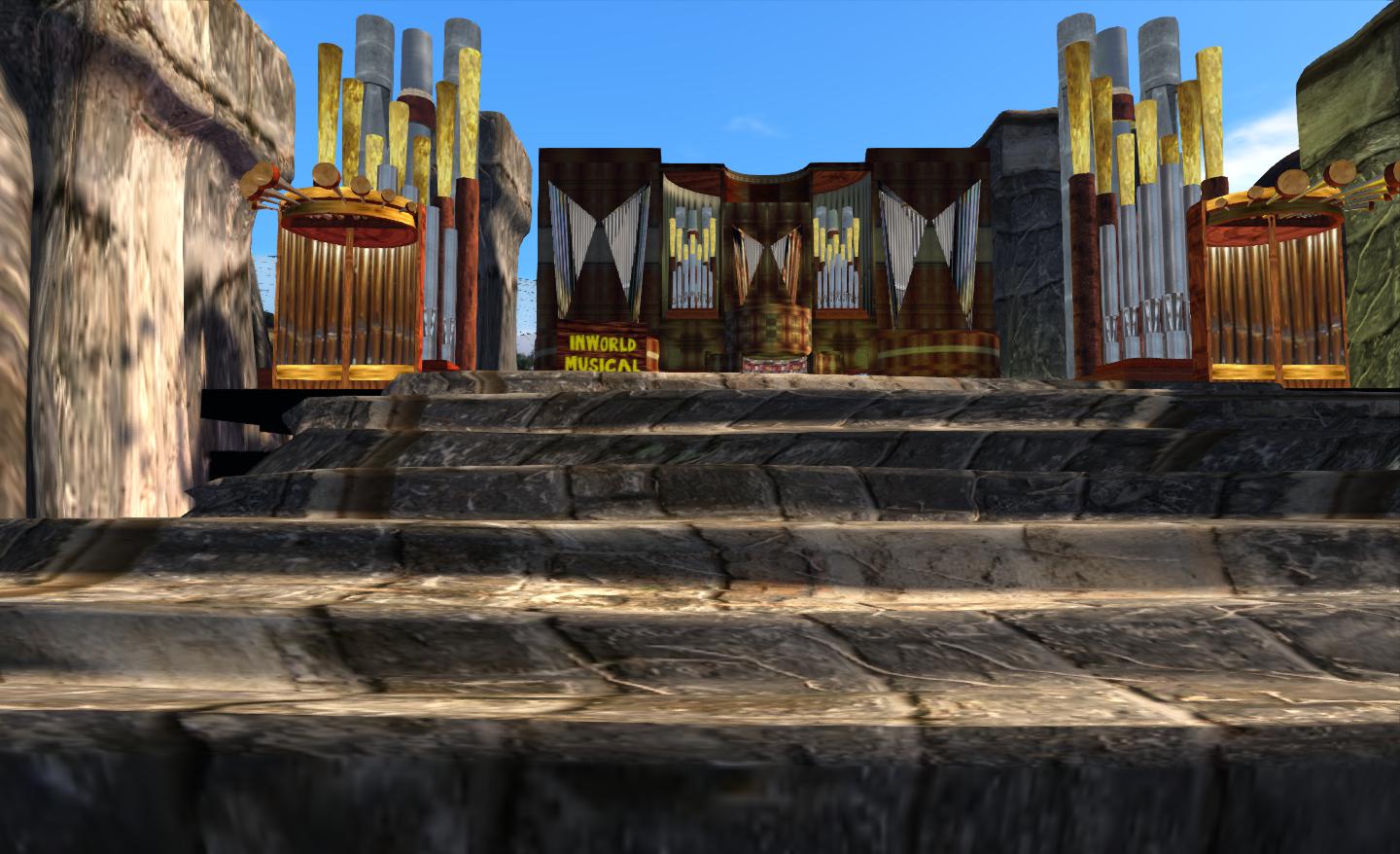
Of Sound Mind: the mighty SLurlitzer organ

And there is a lot to explore. Each area of the installation features demonstrations of how sound can be used (musically, to emphasise visual events, to create additional ambience, and so on) and the ways in which it can be triggered (by touching, by animating an avatar, though avatar/object collision, through object/object collision, and so on). Each area is visually and imaginative presented, with Madcow Comos’ visual genius very evident throughout, as well as elements created by the other participating artists. You can walk overground and underground, dive underwater, meet a certain homicidal computer with a door problem and pick up various scripts and other items along the way – and do much more.

Of Sound Mind

There is much to see overhead as well – bumper cars (in the form of chess pieces) demonstrate the use of vehicle sounds (as well as providing further comical boings and squeaks during collisions), there is also a stunning live performance stage area. Both of these can be reached via teleporter.

Also in the sky is Lorin and Madcow’s wonderful Castle of Airs, which can be reached via tour discs, available from the ground-level welcome area. Both the sound stage and the Castle of Airs have featured in the Machinima The Joy of Music by Chantal Harvey and featuring the work of several of the artists participating in Of Sound Mind.

Of Sound Mind

The live performance area was the venue for DRUM (Divine Rhythms of Universal Music), who featured during the opening of the installation on November 17th. DRUM describe their aim being, “To bring the world to you via the power of drumming. Our aim is to have fun and to create incredible, beautiful rhythms – live.” They are possibly unique in that their performances are not pre-recorded or simply streamed: they are created directly within SL, captured and then streamed to the listening audience. Definitely worth witnessing in-world.

Of Sound Mind

Seminars and presentations on the use of sound is SL will also be a feature at Of Sound Mind – although currently, only one is currently scheduled – Lorin Tone will be discussing environmental sound effects in SL on Monday, November 19th at 12:00 noon SLT. Expect notices of additional events to appear in the Upcoming Events noticeboard at the arrivals area.

Of Sound Mind is both visually and aurally immersive and a fun. Well worth a visit.

Of Sound Mind

Of Sound Mind (LEA19) (Rated General)

Food, Friends, Family, Lovers – and a Little Chocolate Now and Then

The Seanchai Library will be presenting another round of stories and readings in Voice this week, which will see the continuation of two of their serialisations, together with a lot of other goodies.

As always, all times SLT, and unless otherwise stated, events will be held on the Seanchai Library’s home on Imagination Island.

Sunday 18th November, 10:00 – To  the Moon!

Join Seanchai Library’s founder, Derry McMahon and her partner, Bear Silvershade at the Fruit Islands Plantetarium for tales of space and time to spark the imagination.

Monday 19th November, 19:00 – Kite Fighters

Gina Pralou-Maven presents a riveting narrative set in the fifteenth-century.

Seoul, Korea, 1473. Lee Young-sup and his elder brother, Kee-sup share a bond through their love of kites, Young-sup flying them and Kee-sup in making them. However, their father, a rice merchant, has designs on the family’s fortunes by having Kee-sup become a court official, forcing him to study for the position when Kee-sup would rather be making kites for his brother…

Linda Sue Parks’ The Kite Fighters is a touching and suspenseful story, filled with the authentic detail and flavor of traditional Korean kite fighting mixed with the pressures of upholding family traditions, brings a remarkable setting vividly to life.

Tuesday 20th November, 19:00 – Food, Friends, Family, Lovers – and a Little Chocolate Now and Then

Stories with a flavour with Derry McMahon and her partner, Bear Silvershade.

Wednesday 21st November, 19:00 – Peter Pan

Illustration from “Peter and Wendy” by James Matthew Barrie, Published 1911 by C. Scribner’s Sons, New York

Caledonia Skytower presents the fourth (of 6) readings of novelist and playwright J. M. Barrie’s most famous work.

While Peter Pan first appeared in another of Barrie’s works, The Little White Bird, written for adults in 1902, it was in the 1904 stage play, Peter Pan, or The Boy Who Wouldn’t Grow Up in which he first came to widespread public attention. The play was later expanded upon by Barrie to form the 1911 novel, Peter and Wendy, which later became Peter Pan and Wendy and, eventually, simply Peter Pan.

Both the stage play and the novel tell the story of Peter Pan, a mischievous little boy who can fly, and his adventures on the island of Neverland with Wendy Darling and her brothers, the fairy Tinker Bell, the Lost Boys, the Indian princess Tiger Lily, and the pirate Captain Hook.

Sunday, November 25th

16:00 – Community Virtual Library Fundraiser

Seanchai Library hosts a special fundraiser for the CVL, featuring jazz and blues singer Gina Gracemount performing her popular burlesque show

18:00 – Peter Pan, Part 5

Caledonia Skytower continues the story of Peter’s adventures with Wendy and The Lost Boys as she returns to the Seanchai Library to read part three of this six-part retelling of J.M. Barrie’s classic, this time reading at Magicland.

Please note that as this is Thanksgiving week in the US, there are no Seanchai Library events scheduled for Thursday, November 22nd

SL project news week 46/2: Code freezes, avatar baking, interest list wierdness and more

Server Deployments

Wednesday November 14th saw the same code deployed to all three RC regions in preparation for the US Thanksgiving week code freeze (see below). This primarily brought all three RCs to the same code level, release-wise and fixed a bug discovered in week 45.

There will be no rolling restarts in week 47 (week commencing Monday 19th November) due to the code freeze.

SL Viewer Update

The beta viewer rolled to the last of the 3.4.2 releases on Thursday November 15th, with the release of 3.4.2266995. Providing the crash statistics remain good (they were very positive for the first 24 hours), it will be going to the production (release) viewer QA in week 47 and should result in the release of a new version of the viewer shortly after the Thanksgiving weekend.

This beta contains a lot of updates and improvements, as well as a wide range of fixes for issues encountered with earlier releases up to and including the previous beta release, 3.4.2.266708, issued on November 8th. For a comprehensive list of changes, please refer to the release notes.

At the same time, the development viewer rolled to 3.4.3.267061, marking a further update of the development viewer to the 3.4.3 code, which should be appearing in the next release of the beta viewer. This include the new viewer-side code for the HTTP texture fetch project developed by Monty Linden as a part of the Shining Project improvements.

The code for faster texture fetching / rezzing has moved from a project viewer into the viewer-development stream and is present in the 3.4.3267061 Ddevelopment viewer release and should appear in the beta viewer after the US Thanksgiving weekend

As the holiday period is approaching, viewer releases will be slowing down, but the aim remains to try to clear the backlog of waiting merges and updates by the New Year with a view to resuming their more usual cycle of releasing a development / beta update around every three weeks. Once things are back on track, LL will be looking more closely once again at the question of disabling tcmalloc completely within the viewer.

Code Change Freezes

The official dates for code change freezes during the upcoming holiday periods currently stand at:

  • Week 47 – Monday 19th November through to Sunday 25th November
  • Week 51 – Monday 17th December through Sunday 23rd December
  • Week 52 – Monday 24th December through Sunday 30th December.

No status has yet been given for the New Year week (Monday 31st December through Sunday 6th January 2013.

Avatar Baking

Bake fail: work on new service progressing

On Friday 16th November, Nyx Linden provided a brief update on the Avatar Baking project, which again forms a part of the Shining project improvements to Second Life. In short:

  • The viewer code is starting to look stable. However, merging the new code into the existing viewer code is liable to be somewhat more “painful” (Nyx’s term) than had been hoped
  • Work is progressing on the server-side elements (the composite baking server), with the code reaching a point where avatar texture can be generated server-side
  • Currently, the plan is to continue working on both sides of the equation, with the aim of ensuring the new code is successfully merged into the viewer development branch, and then offering it in a “very alpha” form to TPVs so that they can start merging it into their code and assist with testing. As this happens, one or two regions on the beta (Aditi) grid will be set-up to allow testing on the new service.

There is still no time frame for the appearance of the viewer code in the development branch or any test regions on Aditi, but in Nyx’s view, both are liable to be on the horizon “pretty soon”. Overall, the plan still remains to have at least a two month period from when the code is made available for testing purposes through to the official implementation of the new service.

Interest List Demonstration and Weirdness

The focus of this project is to optimise the data being sent to the viewer, information already cached on the viewer and the manner in which that data is used in order to ensure it is used more efficiently so that things rez both faster and in a more orderly manner than is currently the case.

This work is being undertaken by Andrew Linden in a number of stages, the first being to clean-up the code related to information sent to the viewer from the simulator relating to objects in the camera’s viewing range such that only objects actually in the camera frame are updated (if updates are required) and that objects outside of the current camera frame are not updated, thus reducing the amount of data both the server and the viewer need to process, which should lead to performance improvements.

It is possible to visualise the update process using a viewer debug setting (Develop > Show Info > Show Updates to objects or Ctrl+Alt+Shift+U) to show object updates being received by the viewer. This shows updates in three colours: red, which indicates the viewer is receiving a “full” update on the object (generally because it is being “seen” / is within draw distance) for the first time; blue, which indicates the viewer already has data on the object and is receiving “terse” updates relating to changes in the object’s appearance / position relative to the viewer’s camera position; and green, which indicates the object has been deleted / remove from the camera view, and updates are about to cease.

On the 15th November, Andrew used this debug setting, together with a set of scripted “bouncing” cubes to demonstrate his improvements to this update process. Observers were asked to focus their camera on the cubes, which were initially static and had no coloured data stream associated with them.  The cubes were then set bouncing, which generated a stream of blue “terse” updates, indicating the motion of the cubes in the viewer was being updated. However, when observers angled their camera to view the space above the cubes (so the cubes were not directly in their world view), the update stream ceased – indicating the viewer was no longer receiving update data for the cubes.

This may seem a small change, but it does dramatically decrease the amount of information the viewer has to process relating to in-world objects, and should result in performance improvements within the viewer. In the future, further work will be undertaken to enhance the interest list code even further – such as prioritising the order in which objects in the world view are actually rezzed, so that items closest to the camera view are rezzed first, etc.

HUD Issues

Following the demonstration, however, some people started noticing an odd issue: they could right-click on the centre of their screen and reveal a prim attachment belonging to someone else’s HUD. Chieron Tenk was the first to raise the issue, although Ana Stubbs also quickly reported the same problem.

Chieron Tenk posted an image of the problem: a prim appears in the centre of his viewer which, on inspection, appears to be linked to a HUD worn by Rex Cronin

After initial confusion, investigation revealed it was possible for anyone to find they had random prims from other people’s HUDs appearing on their screen, simply by attaching a HUD or a prim to their own screen. Concerns were further raised when it appeared that events might be able to be triggered if the prim was touchable.

I find I have a prim belonging to Ana Stubb’s Mystitool appearing on my screen

The issue appears to be tied to changes made to the interest list code on the test region, and is obviously going to be the subject of further investigation on the Lab’s part prior to the interest list project being carried forward.

Related Links