
For the first time in the history of the International Space Station (ISS), NASA is curtailing an entire crew rotation in order to bring an astronaut with an undisclosed medical condition back to Earth in order for them to receive full and proper treatment.
Exactly what the medical issue is has not been disclosed, although NASA has confirmed it is not injury related and the move is being made out of an abundance of care rather then the crew member suffering any immediate threat to their life. Nor has the name of the affected astronaut been made public as yet. What is known is the affected individual is one of the four people making up the Crew 11 (NASA ISS Expedition 73/74) mission, who arrived aboard the ISS in August 2025, and who were due to return to Earth later in February 2026 following a hand-over to the upcoming Crew 12 mission.
Crew 11 comprises veteran NASA astronaut Michael “Mike” Fincke, who took over the role of ISS commander after arriving there in August 2025, NASA astronaut Zena Maria Cardman, making her first trip into space and who is serving as the station’s Flight Engineer, together with Kimiya Yui of the Japan Aerospace Exploration Agency (JAXA) on his second mission to the ISS, and Russian cosmonaut Oleg Platonov, on his first flight to orbit.

For Cardman this is the second time in succession her debut space flight his been the focus of changes; originally, she was to have flown as part of the Crew 9 mission in 2024, but was removed from that flight alongside astronaut Stephanie Wilson so their positions could be used to return Barry Wilmore and Sunita Wilson to Earth, following the issues with their Boeing Starliner which caused NASA to elect not to use that vehicle to bring them back to Earth.
News of the medical issue first broke on January 7th, when NASA announced the first EVA “spacewalk” of 2026 had been cancelled. This was to have been the first of 4 EVAs carried out by Crew 11 and the upcoming Crew 12 missions to install the last pair of iROSA solar arrays on the ISS as part of a years-long operation to boost the station’s power generation capabilities.
When originally launched, the ISS was furnished with eight pairs of massive 1-tonne solar arrays, each measuring 35 metres in length and 12 metres in width and originally capable of generating some 31 kW of electricity per pair. Called Solar Array Wings (SAWs) by NASA, these massive arrays have slowly become less and less efficient in generating electricity for the station, both as a result of their increasing age and because they are fairly fragile, and some have suffered certain amounts of damage over the decades.

Initially developed for NASA deep space missions, ROSA – Roll-Out Solar Arrays – are much more compact, much lighter and more robust than the SWs, as well as being far more efficient. The version used on the ISS – iROSA – for example, masses just 325 kg per array, with each array being half the size of the SAW units and able to generate up to 2/3rd the original SAW output. Since 2022, pairs of these iROSA units have been added to the ISS to supplement the SAW units, both stabilising and boosting the station’s power generation capabilities significantly.
As the medical issue was first announced at the time the EVA crew – Fincke and Cardman – would have been going through personal and equipment check-outs in advance of the actual EVA preparation and execution period planned for January 8th, initial speculation was that one of them had suffered some form of medical issue severe enough to curtail the planned activity. However, speculation as to who the affected crew member might be shifted to JAXA astronaut Kimiya Yui after a press briefing on January 8th revealed that he had requested a private consultation with medical experts on Earth around the same time as the EVA pre-prep work.
Whoever the individual affected is, the result is the same: as they require evacuation to Earth as a matter of safety and well-being, then all four members of Crew 11 must return early from the ISS, so that no-one ends up (dare I use the term beloved of the media?) “stranded” on the ISS “without a ride home”.

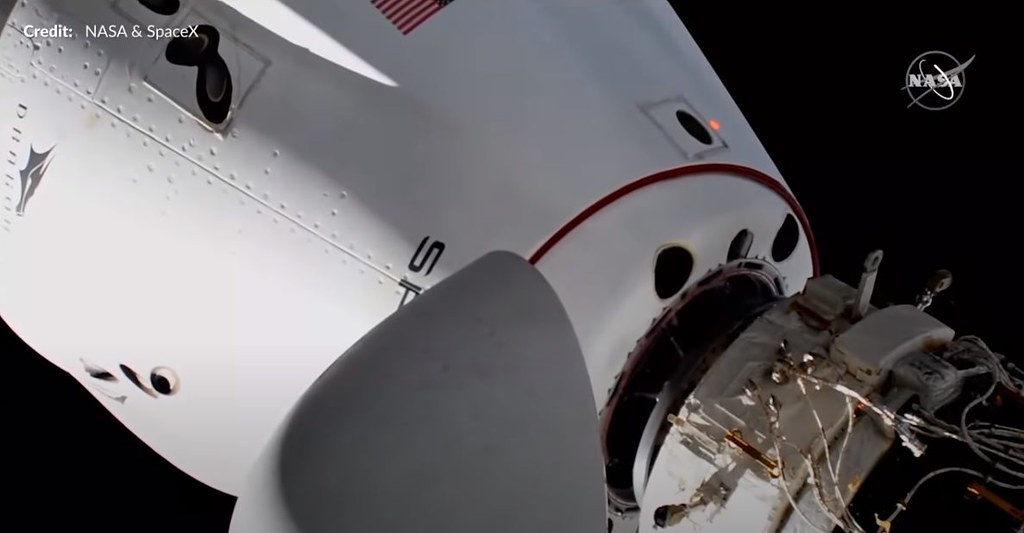
Currently, the plan is to return Crew 11 to Earth on the 14th / 15th January, with Crew dragon Endeavour departing the ISS at around 22:00 UTC on the 14th, with splashdown off the coast of California planned for around 08:40 UTC on the 15th. Following recovery, the entire crew will likely be flown to shore-based medical facilities.
As a result of this, the ISS is likely to undergo a period when it is under-staffed, with just three people aboard to run things: US astronaut Christopher Williams, on his first rotation at the ISS, together with cosmonauts Sergey Kud-Sverchkov, who is on his second stint on the ISS and will take over as station commander as from January 12th, and Sergey Mikayev, another ISS rookie. Whilst this is not the first time a reduced crew has operated the station (the last was during the COVID pandemic), the early return of Crew 11 does raise some complications for the immediate future of ISS operations.
The first of these is that without the Crew 11 personnel, the first two EVAs required to prepare the external power systems etc, for the installation of the new iROSA units (which would have been carried out by Crew 12 following their arrival on the ISS in February). Nor can the members of Crew 12 or the other personnel on the ISS simply “slot into” the work Cardman and Fincke were to have performed: each EVA requires specialised training and techniques – and none of Crew 12 nor those remaining on the station have received said training. Thus, the iROSA deploy is liable to be subjected to some delay.
Nor is it clear as to when Crew 12 will be in a position to launch to the ISS and take some of the pressure off of Williams, Kud-Sverchkov and Mikayev. Usually, NASA prefers to launch an outgoing crew several days ahead of a departing crew, so as to allow a formal hand-over one to the next. With Crew 11 now set to return early,it is unlikely such a hand-over will be possible, and as a result, additional time will be required by Crew 12 to get fully up-to-speed with the overall status of the ISS and the revised work schedule for their rotation.
A major determining favour in this could be that of Artemis 2. Under the current launch schedule, the SLS rocket for that mission is set to roll-out to Launch Complex 39B at Kennedy Space Centre on January 17th. Once there, the vehicle will undergo the last remaining tests required to clear it for a planned February 6th, mission lift-off.

Given this, and while ISS and Artemis missions are essentially separate entities with no real cross-over, NASA is likely to be very cautious about having any parallel launch preparations going on at the “neighbouring” Launch Complex 39A, where SpaceX operate all of their crewed launches, simply because both facilities have a degree of overlap in the use of launch support services – notably radar and tracking capabilities which could bring preparations for both launches into a degree of conflict, particularly if one or the other experiences delays whilst on the pad.
So unless SpaceX is able to demonstrate it is able to accelerate Crew 12 launch preparations to a point where an attempt can be made before the Artemis 2 roll-out and launch and without interfering with the final ground tests Artemis 2 must complete to meet its planned launch date, it is entirely possible Crew 12 will have to wait until around its originally target launch date of February 15th in order to get off the ground. And that’s assuming issues with Artemis 2 don’t push its launch back during a time when Crew 12 could otherwise have been on its pad and otherwise ready to go. As a result, the entire situation remains in something of a state of flux, and this story will continue to develop over the coming week.
Astronaut Health and Welfare
All of the above has forced a degree of focus on the questions of astronaut health and welfare, both on the ISS and in terms of missions to the Moon and Mars. The ISS has the overall advantage in this regard, as it is obviously the closest to Earth, and is the best equipped off-Earth facility when it comes to astronaut health – albeit one that is necessarily limited when it comes to more serious conditions or significant injuries. In particular, the ISS has extensive first-aid and medical facilities, including the likes of an ultrasound scanner, defibrillators and other specialised equipment, with many crew members receiving paramedic levels of medical training, backed by the ability to be able to call on Earthside expertise rapidly and with minimal delay in real-time communications and, in a worse-case scenario, have stricken crew returned to Earth in relatively short order.
While much of this can be replicated in missions to the Moon and Mars, there limitations. Getting back from the Moon is not exactly “immediate”, particularly with regards to the way Artemis using cislunar space rather than a direct Earth-Moon-Earth approach, and Mars is obviously even less so. Further, two-way communications are more limited.; there is always at least a 2.6 second delay in two-way Earth-Moon / cislunar space communications, for example. While this might not sound a lot, it could be the difference between saving and losing a life.
For Mars missions the situation is even worse, given delays are always at least 4 minutes for two-way communications, and can be as much as 24 minutes. Whilst the latter clearly means that practical real-time medical advice and support cannot realistically be offered during medical emergencies, it also means that crews on such mission face the additional psychological strain of being unable to communicate in real-time with family and loved ones, leaving all such contact to pre-recorded messages.
In terms of general health, there are a wide range of issues to be considered. The most obvious is that of physical fitness in micro-gravity conditions: as is only too well-known, long-term exposure to micro-gravity can result in a range of muscular and cardiovascular issues. While these can be addressed through discipline and exercise (around 2.5 hours a day), it’s still a major commitment to do so day in and day out for between 6 and 8 months journey time between Earth and Mars. But whilst such issues are the most referenced of those associated with living and working in microgravity, they they are not the only issues. There are many physiological and psychological matters we have yet to fully understand and address as best we can.
One example of this takes the form of the so-called 2015-16 One-Year Mission (although its duration was technically 11 months). In it, identical twins and astronauts Scott and Mark Kelly where the focus of an in-depth study of physical and psychological impacts of long duration space flight. This saw Scott Kelly spent the time on the ISS, whilst Mark remained on Earth as a control subject. Doing so allowed ten different teams of medical, health and psychology experts to monitor changes in Scott Kelly’s overall health, physiology and psychology using Mark as a baseline reference. Hus, they were able to analyse in detail a wide range of elements and their associated changes in Scott, including body mass changes / redistribution, eye and bone deformation, immune system responses, molecular and psychological changes, alterations in cognitive capabilities and more. The results were in many ways both surprising and unexpected.

Whilst Scott Kelly remained in overtly good physical health, he did undergo changes to his cognitive abilities, his DNA and immune system and changes to his body’s gene regulation processes. He also experienced changes to his retinas and eyesight, as well as to his carotids and gut microbiome. Whilst none of these changes were significantly debilitating (and did correct themselves over a period of time following his return to Earth), they were not entirely without outward impact on him, and pointed the way to the potential for serious psychological and other issues being a problem within especially isolated, long-duration missions where direct contact with others outside of the immediate crew is next to impossible in real time.
Nor is this all. As I recently related to friend and fellow space enthusiast Hugh Toussant, there are significant health implications linked to deep space radiation exposure which have only really come to light in the last 6 years and which require much more in the way of study. Some of these issues are, as an example, related to Galactic Cosmic Rays (GCRs), the so-called “background radiation of the Big Bang”, and a subject which has been somewhat overlooked due to a preoccupant with addressing the impact of solar radiation effects such has coronal mass ejections (CMEs) which can admittedly be utterly devastating to an unprotected crew in very short order.
Whilst GCRs perhaps don’t have the immediate threat of something like a CME, they are also potentially much more of a risk over time and harder to address, simply because of the amount of energy they contain. In particular, a 2018/19 study demonstrated that GCR collisions with the human body can result in the reactivation of various strains of Herpes viruses which are otherwise generally dormant. These include the relative mild (but sill unpleasant varicella-zoster virus (VZV), which can cause issues such as glandular fever, all the way through to the highly contagious Epstein–Barr virus (EBV). The latter is particularly nasty, as it is very tightly linked to malignant diseases such as cancers (both lymphoproliferative – Burkitt lymphoma, hemophagocytic lymphohistiocytosis, and Hodgkin’s lymphoma – and non-lymphoid malignancies such as gastric cancer and nasopharyngeal carcinoma).
What was particularly unsettling about this study was that not only did it show that viruses like EBV could be re-activated by exposure to GCRs – but that it had happened to astronauts aboard the ISS, which operates within the relative shelter of Earth’s magnetic field and the protection it offers by diverting GCRs away towards the polar regions and thus out of the path of the ISS as it orbits the Earth. In particular a check back across the medical histories of 112 astronauts who flew on the ISS and shuttle missions revealed that between 61% and 96% of them had demonstrated shedding one or more re-activated Herpes viruses, including both EBV and VZV.
Exactly how much risk of such viral reactivation might occur on something like a mission to Mars – which largely takes place outside of any protection afforded by Earth’s magnetic field – is utterly unclear. However, given the potential for something like EBZ to give rise to a host of long-term malignant illnesses, it is clear that the apparent link between GCRs and the reactivation and shedding of such viruses needs to be more fully understood in order to enable proper mitigation techniques to be developed well before anyone starts mucking about with trying to send people to Mars. All of which is a long way of saying that while we have learned a lot about living and working in space, we very much have much more to understand.











 Inara Pey: Living in a Modemworld