2019 SL User Groups 6/1: Simulator and Governance User Groups

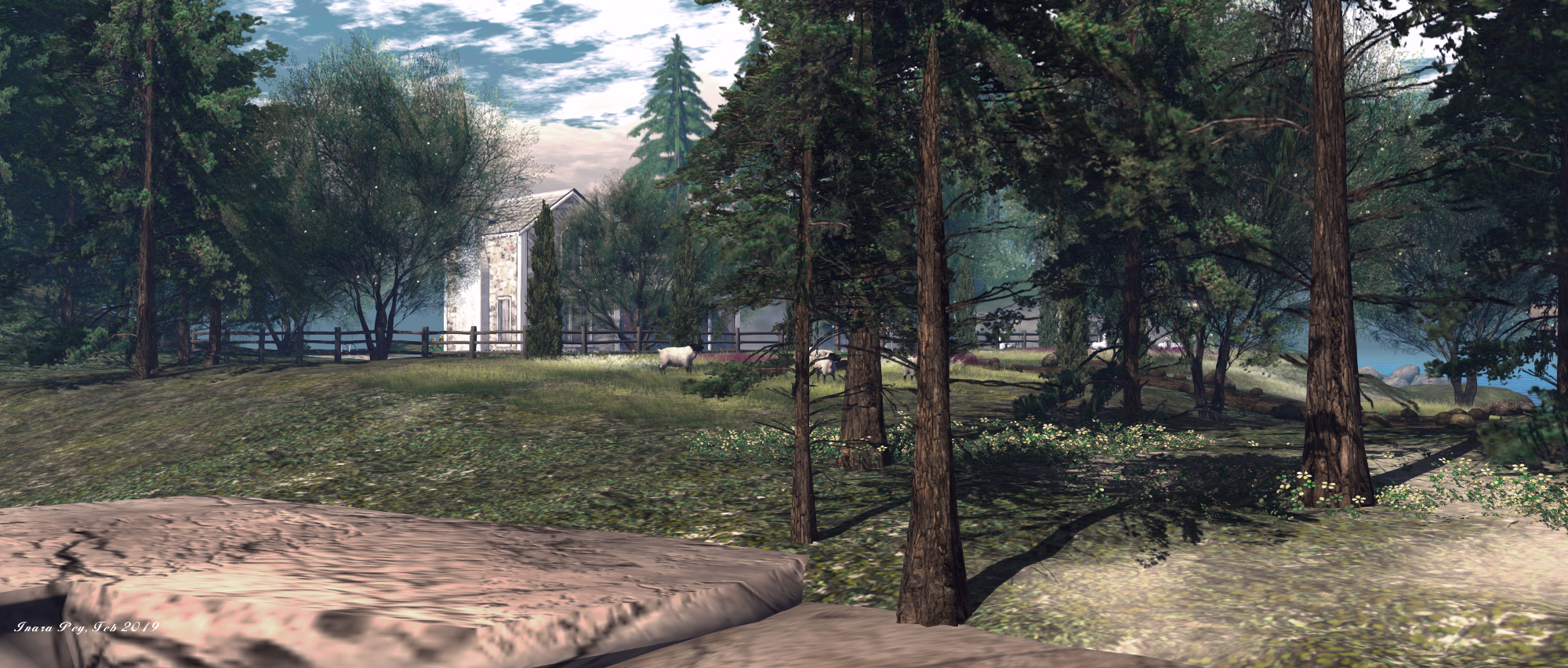
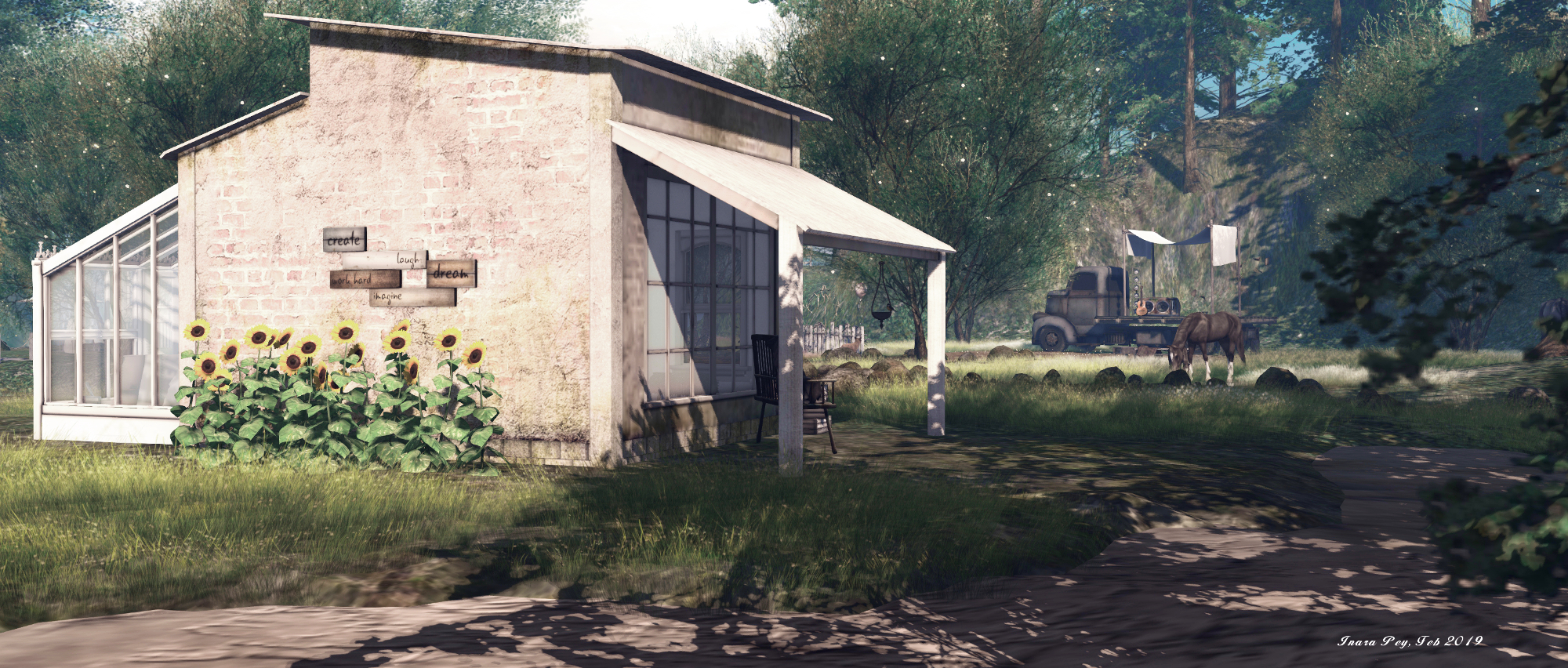
[Valium]; Inara Pey, December 2018, on Flickr
[valium]blog post

Server Deployments

  • On Tuesday, February 5th, 2019 the SLS (Main) channel was updated with server maintenance package 19#19.01.25.523656, comprising internal fixes.
  • On Wednesday, February 6th, 2019 the RCs are likely to be updated as follows:
    • BlueSteel should receive EEP update server maintenance package 19#19.02.01.523934.
    • Magnum and LeTigre should receive server maintenance package 19#19.02.01.523959, comprising further internal fixes.
  • There is currently a small Cake RC on Agni that is being used to iron out some transient network issues with the newest server operating system update, prior to it being move to a full RC for testing. Cake may grow a little larger before this happens.

SL Viewer

There have been no viewer updates at the time of writing, leaving the current pipelines as:

  • Current Release version 6.0.1.522263, dated December 5th, promoted December 13th. Formerly the Spotykach Maintenance RC viewer – No Change.
  • Release channel cohorts (please see my notes on manually installing RC viewer versions if you wish to install any release candidate(s) yourself):
    • BugSplat RC viewer, version 6.1.0.523335, January 23rd. This viewer is functionally identical to the current release viewer, but uses BugSplat for crash reporting, rather than the Lab’s own Breakpad based crash reporting tools.
    • Estate Access Management (EAM) RC viewer, version 6.1.0.523351, January 23rd.
    • Love Me Render RC viewer, version 6.0.2.523177, January 16th.
  • Project viewers:
  • Linux Spur viewer, version 5.0.9.329906, dated November 17th, 2017 and promoted to release status 29th November, 2017 – offered pending a Linux version of the Alex Ivy viewer code.
  • Obsolete platform viewer, version 3.7.28.300847, May 8th, 2015 – provided for users on Windows XP and OS X versions below 10.7.

Other Items

Name Change Issue

A creator preparing for the upcoming Last Names / name changing capability has encountered an issue that may have broader ramifications. In sort, one of their customers was forced to take a new user name (their original name was considered “objectionable” by the Lab). However, the creator found that when sending information to an external HTTP request (object UUID, object name, owner name of the object, etc.), the object (in this case a HUD) was sending the original (objectionable) user name, not the updated user name. This suggests the user name is being caches somewhere within SL, and not being correctly overwritten if replaced.

Effort are on-hand to try to trace down the issue, but the problem is also a demonstration if why agent UUIDs should be used to trace avatars now and going forward, and not user names, particularly in light of the upcoming Last Name changes.

Governance User Group

Governance User Group (GUG) meetings are generally held on alternate Tuesdays at 13:00 SLT. They are intended to provide a forum for the discussion and education of issues involving Governance.  They are chaired by the GTeam supervisor, Kristen Linden and are open to the public. Details on dates, times and location can be found on the Governance User Group wiki page.

The Governance Team is responsible for dealing with Abuse Reports, in-world abuse, forum reports, Marketplace reports, etc. It is not responsible for issues with accounts being compromised, account subscription delinquency, fraud, IP infringement, etc.

  • These matters cannot be discussed at the GUG meetings.
  • Issues relating to them should be reported through the recommended channels (e.g. Support for account-specific issues, via the DMCA process for IP infringements, content theft, etc).

Similarly, individual cases involving Governance issues (e.g. the outcomes of abuse report filings), cannot be publicly discussed.

Resources

Meeting CliffsNotesTM

  • Are weapons testing sandboxes given more lenience by Governance WRT reports of harassment? Generally, yes, simply because these are environments designed for testing objects that can affect others. However intentional attempts to harass or grief will be responded to.
  • If someone is griefing / harassing a private region and is booted by the region owner, can they still be reported? Yes, just make sure the Abuse Report has all the necessary information as is correctly filed.
  • Objectionable names / Display Names: Governance will handle reports of offensive / objectionable user names, but are slightly more relaxed on Display Names. The latter is because users can disable the displaying of Display Names in their viewers. However, reports of intentional offensive or objectionable Display Names will be investigated.
  • Date of Next meeting: Tuesday, February 19th, 2019.


Thoughts on VR and AR, part 2: AR, MR and beyond

via proximie.com

This article is designed to be the second part of a short series offering personal thoughts on the broad state of virtual reality (VR) and augmented reality (AR, together with mixed reality, or MR) as they appear to stand at the end of 2018, and where they might be going over the course of the next few years.

In doing so, I’m not attempting to set myself up as any kind of “expert” or offer predictions per se; I’ve simply been gorging myself on a wide range of articles and reports on VR and AR/MR over the last few weeks to make sure I’m caught up on things. In part one, I covered VR; This part therefore examines AR/MR, with an emphasis on headset / eye wear, as it is these tools that particularly interest me.

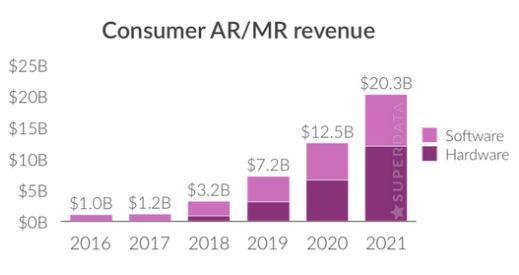
Compared to VR, AR/MR has been much more a slow burner in terms of press interest. The reason for this is simple: outside of a few headliners like the original Google Glass, Microsoft’s HoloLens and, most recently, Magic Leap One, AR/MR eye wear hasn’t really caught the media’s attention. However, in assessing the state of the VR and AR/MR markets over the next 3 years, SuperData predicts something of a rapid rise in AR/MR adoption, which could see the technology generate revenues very slightly in excess of those predicated by SuperData for VR by the start of 2022.

AR / MR revenue trends, 2018-2021. Credit; SuperData

Even allowing for these figures including smartphone AR applications, this forecast might seem optimistic, but there are reasonable grounds to suggest they are not beyond the realm of possibility – if, perhaps a slightly holistic view is taken. I say this for a number of reasons: the increasing use of AR/MR in a range of workplace  / service environments; the release of development platforms for AR on smartphones and mobile devices; and availability / development of new headsets; although there are some caveats.

I’d like to examine these ideas in turn, starting with adaptation of AR/MR in enterprise-type environments. In doing so, I’m limiting myself to briefly covering just three examples: Google’s Glass Enterprise Edition, Microsoft’s HoloLens and a company called Osterhout Design Group (ODG).

  • Using the basic Google Glass concept (2013-2015) Glass Enterprise Edition re-lunched in mid-2017 with 50 US companies using it in engineering, training and services including GE Aviation, Boeing, Volkswagen, AECO, and DHL, and with a range of healthcare uses, including Augmedix and Brain Power (see Google Glass: The Comeback?, July 2017 for more).

  • Microsoft’s HoloLens has been similar adopted by a range of companies including Volvo Cars, Japan Airlines, BlueScope Buildings and Trimble (architecture and building design), Autodesk, together with widespread adoption in healthcare from training through to major aspects of surgery in hospitals around the world. Most recently, the US Army has given Microsoft US $480 million to develop the HoloLens for troop training and combat missions, while NASA utilises it both on the International Space Station (Project Sidekick) and as a mission / prototyping visualisation tool (projects OnSight and ProtoSpace).

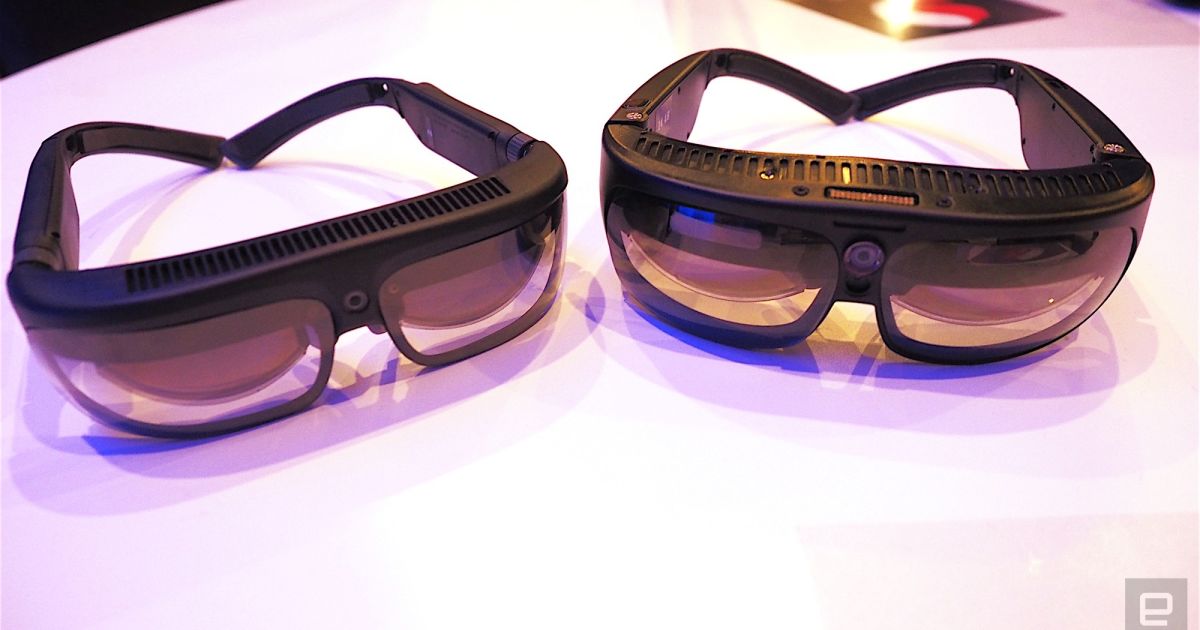
  • Osterhout Design Group (ODG) – a company that potentially help Microsoft develop the HoloLens when they sold 81 patents related to AR and head-worn computers to the software giant for US $150 million in 2014. Have released a family of AR glasses, the R-7 and R-7HL (“hazardous locations”) specifically designed for use across business and industrial applications, providing heads-up information displays and overlays. In 2017, ODG launched the R-8 and R-9 glasses, utilising Qualcomm’s more powerful Snapdragon 835, with R-8 intended to start bridging the gap between “enterprise” and consumer use.
The ODG R-8 and R-9 headsets, launched at CES 2017. Credit: Engadget

There are other examples of AR headset use in business (and entertainment) to be sure, but I hope the above are enough to make the point. Highlighting the use of AR systems in the workplace is important (as it is with VR – see part 1 of this series) because familiarity with them in the workplace could help spur people’s  willingness to bring it into the home as affordable consumer systems start to appear, because: because a) they have experienced it within their workplace and have seen it benefit them; b) the hardware involved is (more-or-less) the “same” as the hardware they are buying (familiarly encourages both trust and experimentation).

Continue reading “Thoughts on VR and AR, part 2: AR, MR and beyond”

Silence and Freedom: the art of Anke Zamani

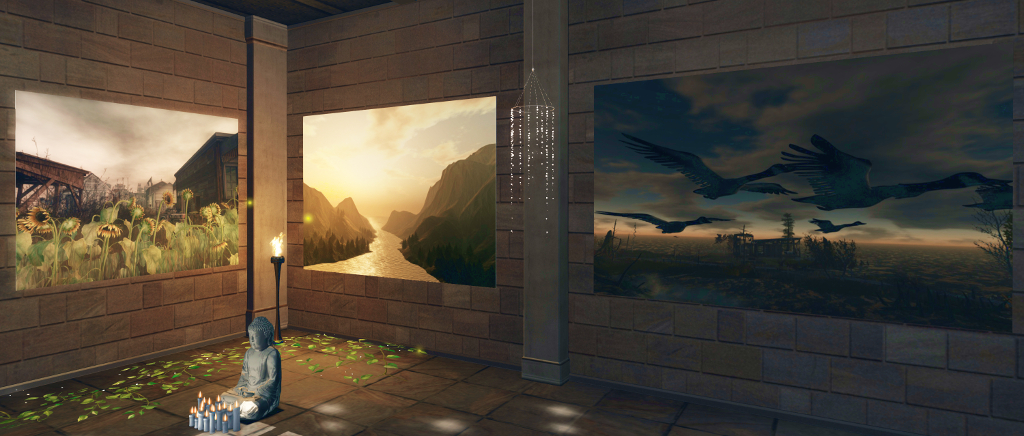
Flossify Gallery: Anke Zamani

Just off Route 9 as it passes over the Silvercreek Bridge in the north-west of Jeogeot, sits a small island shoulder between the mainland and the largest island within the continent’s great bay. Among the buildings snuggled into the island’s small space is Flossify Gallery, owned and curated by Joss Floss (Jossinta).

The gallery is devoted to promoting “the work of SL photographers working in a naturalistic or experimental style,” with exhibitions generally running through each month. On Saturday, February 2nd, the latest of these exhibitions opened, featuring the work of Anke Zamani.

Flossify Gallery: Anke Zamani

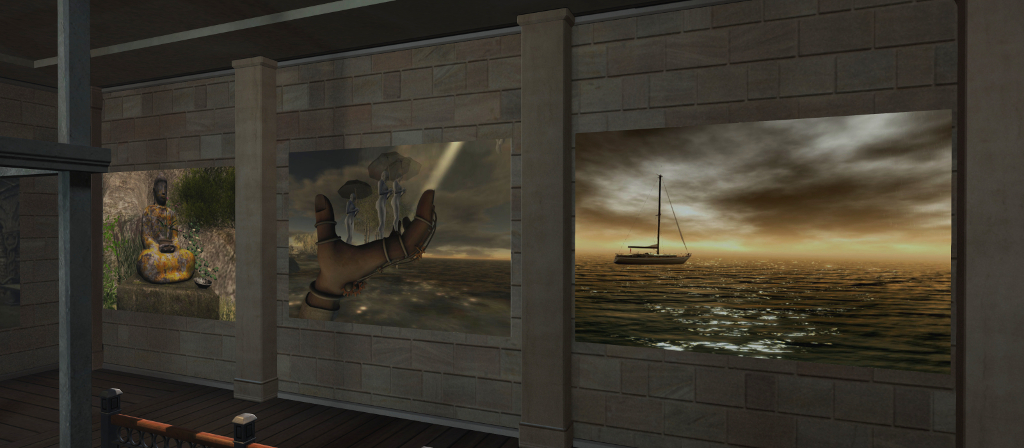
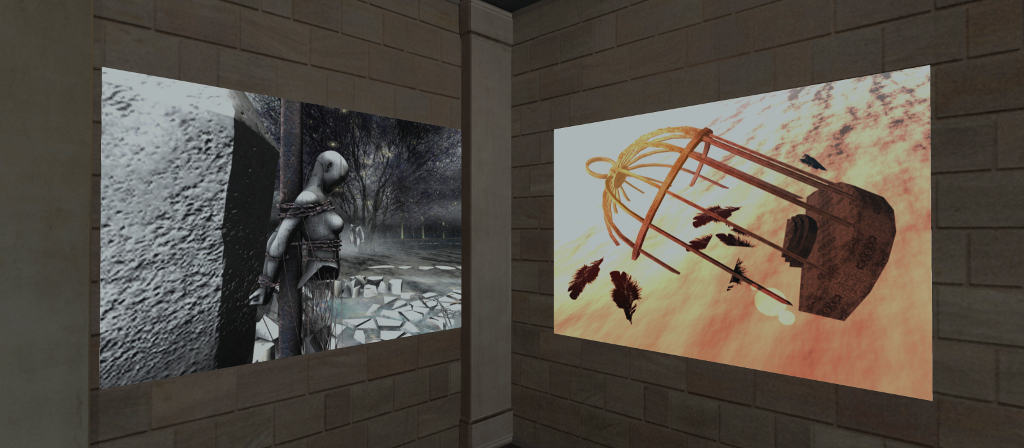
Spread across the three floors of the gallery, Anke presents a series of 27 photographs, predominantly landscapes / nature or studies of art. The majority of the pictures appear to have had little or no post-processing, which in this era of PhotoShop, GIMP et al, makes for a pleasant change, presenting as they do images witnessed as with the eye itself.

This makes for a charming, quite natural exhibition, with each of the pieces offers catching a moment in time to which we can all relate, from sunrises / sunsets through to reflections of time in solitude and / or meditation. Several of the images focus on the work of Mistero Hifeng, and I found these to be particularly captivating; no doubt in part because of my own bias towards Mistero’s work – but it is also very much also due to Anke’s skill in capturing the pieces and their surrounding emotion.

Flossify Gallery: Anke Zamani

An attractive exhibition that can be visited directly (and you can keep up with news on exhibitions at the gallery by joining the Flossify group through Joss’ profile) or as a part of a trip around the highways and byways of Jwogeot.

SLurl Details

A Provincial Life in Second Life

Provincial Life; Inara Pey, February 2019, on FlickrProvincial Life – click any image for full size

Update: Provincial Life appears to have closed and the former host region split into private rentals. SLurls have therefore been removed from this article.

Provincial Life is the name given to a homestead region held and designed by Hania Amidst (amberfff) that, while noted in the description as a private home (with at least three residences on it), is still nevertheless offered as presenting “Lots of little photo ops [and] connected to high rock for extended exploration.”

As the name suggests, it is a rural setting, mostly set to open land over which horses graze in some numbers. Across it are also scattered a number of buildings and homes, including the private residences. Two of the latter lie on a smaller island in the south-east corner of the region, the water channel separating them from the rest of the setting helping to ensure their privacy remains intact. A further residence lies on the south-western headland and is marked by a fence and archway running across the front of the property, marking the limits of public exploration.

Provincial Life; Inara Pey, February 2019, on FlickrProvincial Life

Two more houses can be found on the region. The first is located alongside the landing point and might actually be a private home itself; I’m not entirely sure – so perhaps it is best to treat it with respect. A dirt track runs from its porch to pass an outdoor music area to one side and the last house – which does appear to be open to the public – on the other.

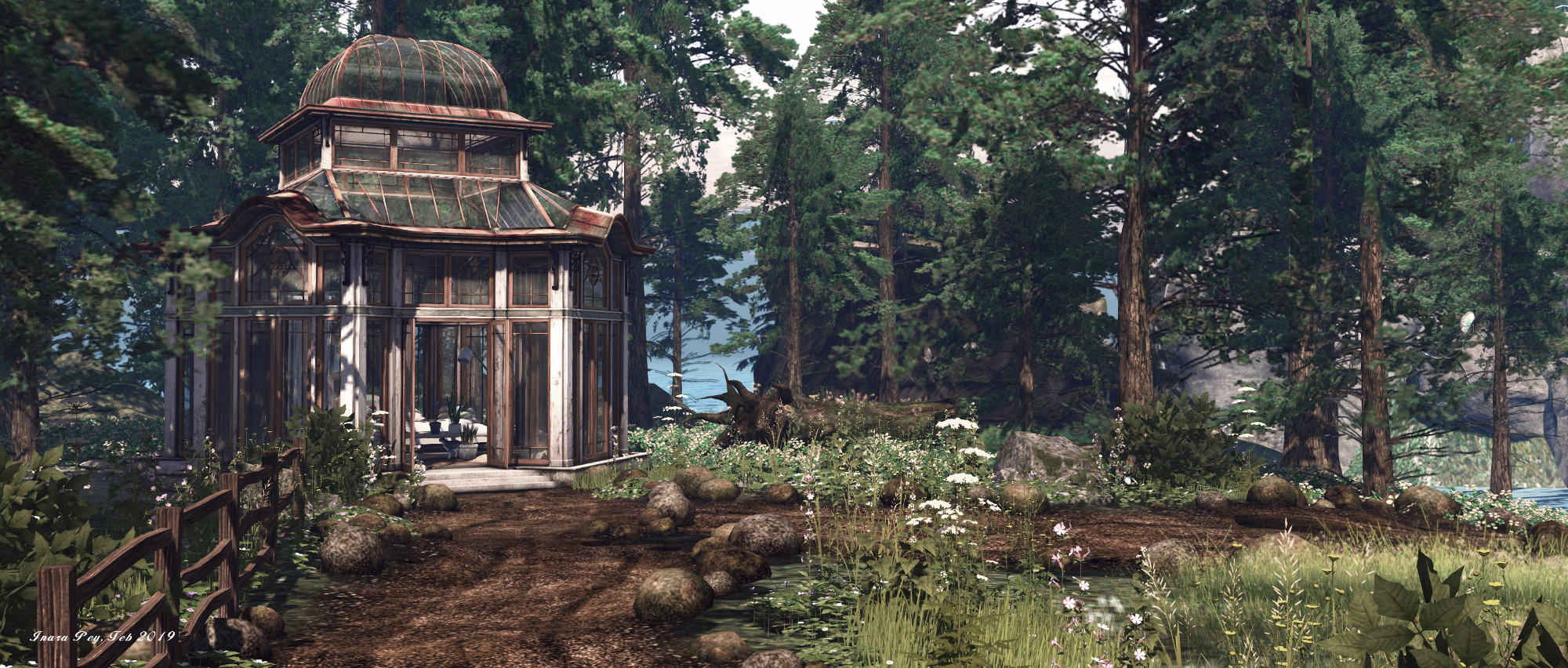
Sweeping past the latter, the track turns to run above a deep inlet that cuts its way into the land, before it divides to point one finger towards the private house on the south-western headland and offering a path to a gravelly beach along the way, while the second finger crooks west then north, pointing the way to a shaded pavilion and thence to a waterfront deck overlooking a small bay.

Provincial Life; Inara Pey, February 2019, on FlickrProvincial Life

This bay is bracketed by a small rocky island with a granite face looking inland that someone has been busily painting with graffiti. The island can be reached by means of a path and rope bridge reached by walking along the waterfront, and offers a high vantage point for looking back across the region.

Beyond the deck, a sandy path cuts across the grass to a rock arch offering access to where another small bay cuts into the land via a narrow neck of water.. aided by a small covered bridge, the path continues on the far side of the inlet, returning visitors by way of wooden steps to the house by the landing point.

Provincial Life; Inara Pey, February 2019, on FlickrProvincial Life

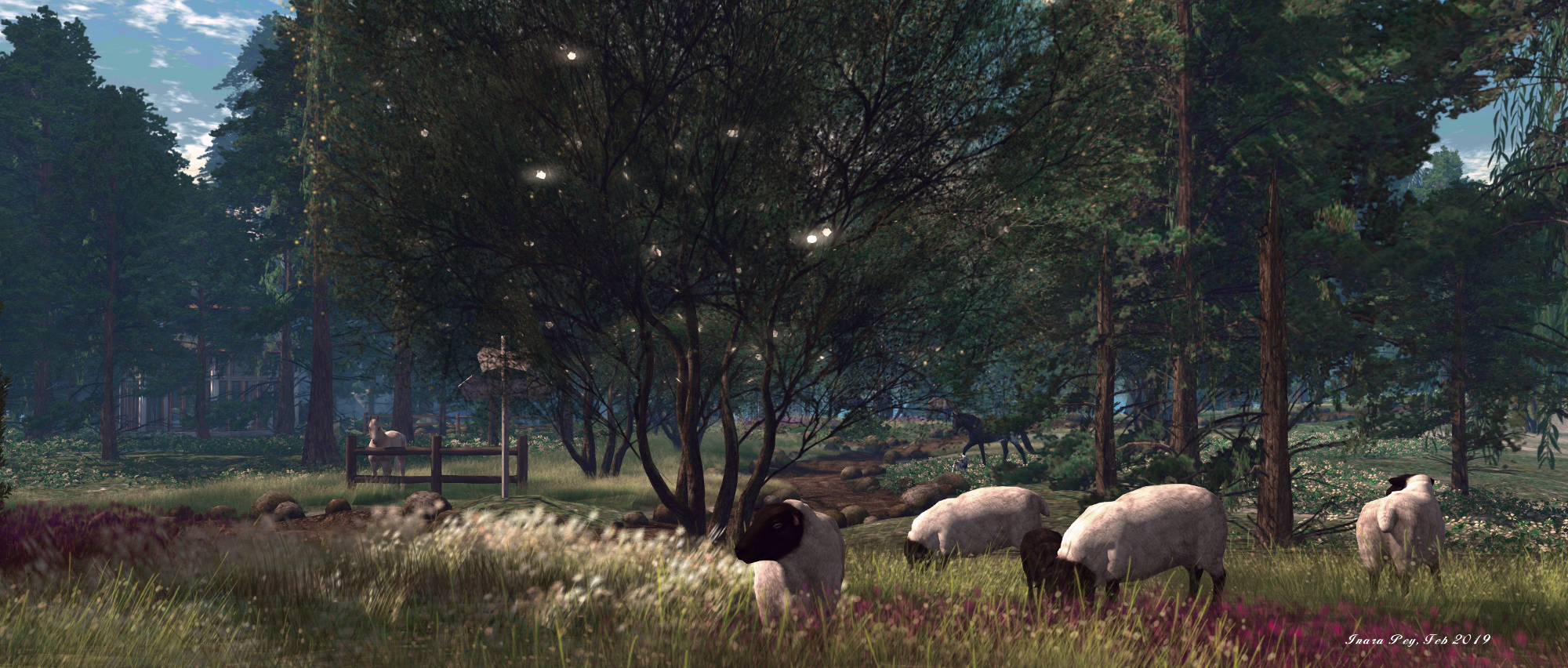
Throughout all of this, there is plenty so see and multiple places to sit for a while and enjoy the setting. Dogs play in the long grass, the aforementioned horses stands and graze in groups, sheep enjoy the heather on the south-west headland, and swings, benches and seats look out over the various points of interest – the bays, the winding tracks, the musical area, which is available for dances should visitors in in the mood; the music stream is particularly mellow and suited to a romantic dance or a little swing to the sound of a big band. Throughout all of this, birds twitter and sing under a later spring sky.

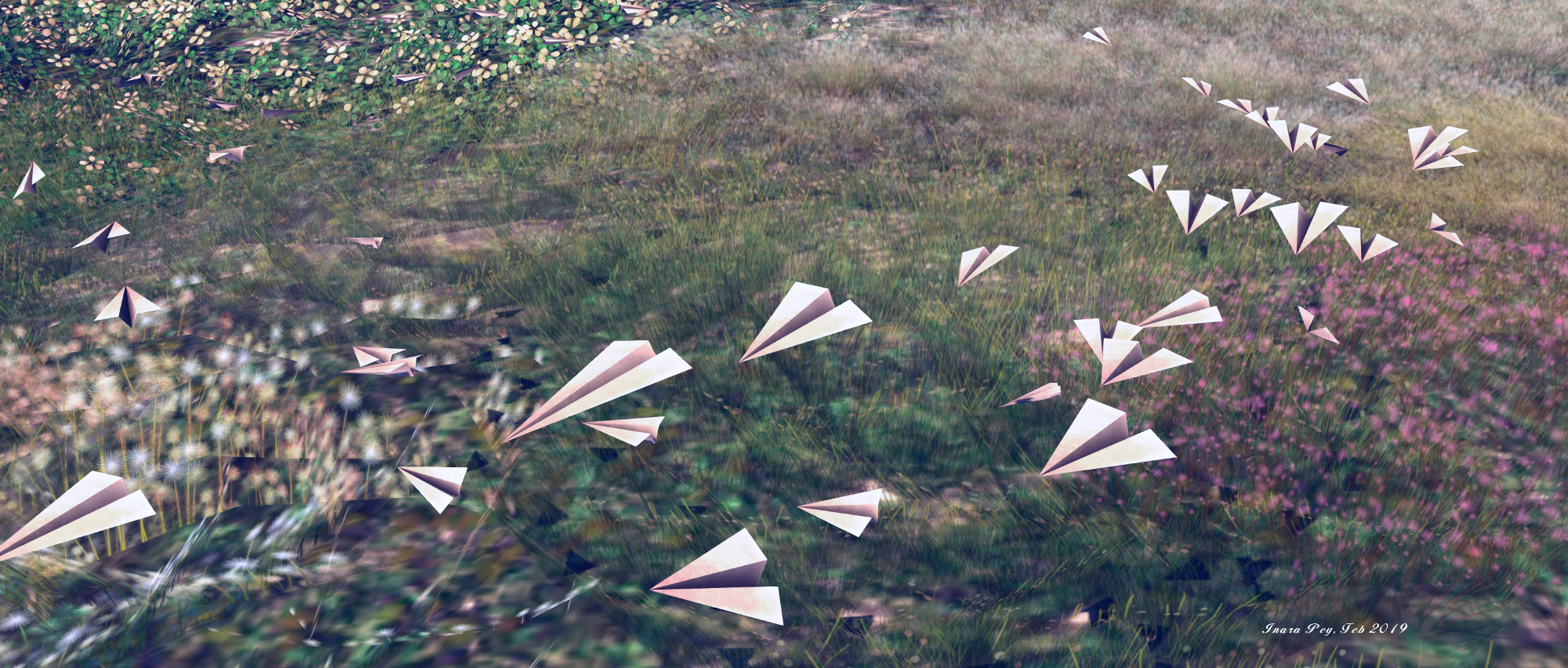
When wandering it is worth keeping an eye out for the smaller details – such as the rag doll audience awaiting a musician to appear on the truck bed stage, or the paper aeroplanes turning circles in the breeze over the meadow flowers, sharing the air above the blooms with butterflies.

Provincial Life; Inara Pey, February 2019, on FlickrProvincial Life

For those wishing to take photographs, rezzing is open – but do please remember to pick your things up behind you. If you have a wearable horse, Provincial Life is idea for taking a ride, and your horse will have plenty of neighbourly company (coughs; “sorry!”).

A charming, warm region which – as the About Land description states – is ready for photography as well as exploration. Our thanks, as always, to Shakespeare and Max for the referral!

Provincial Life; Inara Pey, February 2019, on FlickrProvincial Life

2019 viewer release summaries week #5

Logos representative only and should not be seen as an endorsement / preference / recommendation

Updates for the week ending Sunday, February 3rd

This summary is generally published every Monday, and is a list of SL viewer / client releases (official and TPV) made during the previous week. When reading it, please note:

  • It is based on my Current Viewer Releases Page, a list of all Second Life viewers and clients that are in popular use (and of which I am aware), and which are recognised as adhering to the TPV Policy. This page includes comprehensive links to download pages, blog notes, release notes, etc., as well as links to any / all reviews of specific viewers / clients made within this blog.
  • By its nature, this summary presented here will always be in arrears, please refer to the Current Viewer Release Page for more up-to-date information.
  • Note that for purposes of length, TPV test viewers, preview / beta viewers / nightly builds are generally not recorded in these summaries.

Official LL Viewers

  • Current Release version 6.0.1.522263, dated December 5th, promoted December 13th. Formerly the Spotykach Maintenance RC viewer – No change.
  • Release channel cohorts:
    • No updates.
  • Project viewers:
    • No updates.

LL Viewer Resources

Third-party Viewers

V5/V6-style

V1-style

Mobile / Other Clients

  • No updates.

Additional TPV Resources

Related Links

Space Sunday: Mars,the Moon and space hotels

It has been some time since my last Mars Science Laboratory (MSL) rover report, so it’s time to play catch up with Curiosity, and take a look at what is happening with Opportunity.

For the last 16 months, Curiosity been engaged is studying “Vera Rubin Ridge”. Originally seen as a measn for the rover to traverse from one area of interest on “Mount Sharp” to another, the ridge became a point of interest itself when the rover imaged a rock formation that could fill a gap in the science team’s knowledge about the mound’s formation.

At the time the rock formation was noticed, engineers had been in the process of trying to overcome a issue with the rover’s drill that had prevented its use for several months. A potential work-around had been tested on Earth, so investigation of the rock formation offered the opportunity to test the updated drilling approach. Curiosity was therefore ordered to reverse course in the hope the tests would be successful and a sample of the rock could be gathered.

While successful, this was actually complicated – the issue with the drill feed mechanism also meant that the usual means of sorting samples post extraction had to be abandoned in favour of a new approach. However, the initial success meant Curiosity could resume drill-based sample gathering and analysis, marking the start of period of exploration around the ridge area – albeit it one interrupted by the 2018 global dust storm. In December 2018, this work concluded with the rover collecting its 19th overall sample on Mars, at a location on the ridge called “Rock Hall”.

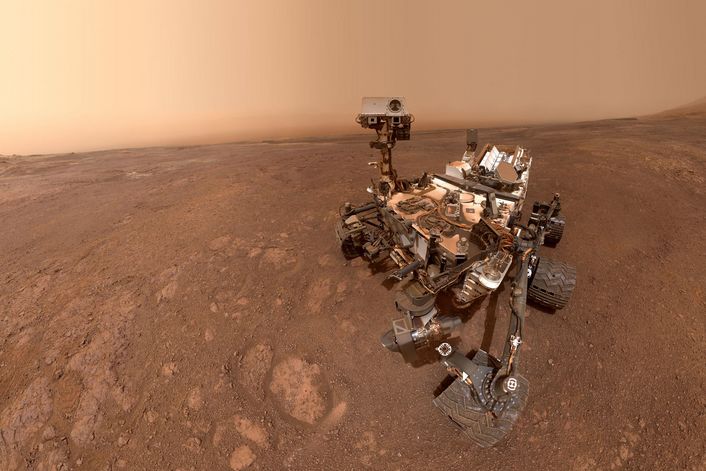
Since then, the rover has been completing its work on the ridge, which included taking a “selfie” on January 15th, comprising 57 individual images taken with the Mars Hand Lens Imager (MAHLI) camera on the end of its robotic arm. At the ed of January, Curiosity said farewell to “Vera Rubin Ridge”, resuming its traverse southward towards the “clay bearing unit” it was originally heading to when it stopped at the ridge in September 2017.

The January 2019 “selfie” taken by Curiosity Sol 2291 at the “Rock Hall” drill site, located on “Vera Rubin Ridge”. Note parts of the robot arm have been removed from the completed image due to the fact it would appear in multiple locations in the completed image. Credit: NASA/JPL / MSSS.

At the same time, the science team for the rover released a paper revealing a new mystery about “Mount Sharp” and showing how instruments aboard the rover were re-purposed to allow it to be made.

As I’ve previously reported, previous studies of “Mount Sharp”- more correctly called Aeolis Mons, the 5 km (3 mi) high mound at the centre of the crater – suggested it was formed over two billions years, the result of repeated flooding of the crater laying down bands of sedimentary deposits, some of which were blown away by wind action, others of which settled. Over the millennia, these layers were sculpted by wind action within the crater, until only the central mound was left.

However, this type of water-induced layering should have resulted in the lower slopes of Mount Sharp being heavily compressed; but measurements of the local gravity environment of the terrain Curiosity has been driving over in its ascent up “Mount Sharp”, indicate the layers of the lower slopes are less dense than thought, meaning it is relatively porous. This indicates they were not buried under successive layers as had been thought, and thus some other process must have given rise to the mound.

The measurements were obtained by re-purposing the accelerometers Curiosity uses as a part of its driving / navigation system. Normally, these are used to determine its location and the direction it is facing with enormous precision. But, through a subtle piece of reprogramming, engineers were able to turn them into a gravimeter, allowing Curiosity to measure local gravity every time it stopped driving, and with massively greater precision than can be achieved from orbit.

An image captured by NASA’s Mars Reconnaissance Orbiter (MRO) overlaid with part of Curiosity’s path, including the Bagnold dunes in Gale Crater and up the slopes of Mount Sharp via the Murray Formation. Credit: NASA/JPL

Given the results tend to dispel the idea that water action was primarily responsible for filling the crater with sediments subsequently added to and shaped by wind action, it’s been proposed that “Mount Sharp” has been formed almost entirely as a result of Aeolian (wind-driven) sedimentation. This would leave the layers forming the mound a lot less dense in comparison to layers laid down and built up as a result of water action and settling.

However, this doesn’t entirely explain why the mount was formed, and further study is required before it can be said with certainty that wind played the core part in building and sculpting “Mount Sharp”. In the meantime, the re-purposing of Curiosity’s accelerometers is another example of the flexibility found within NASA’s robot explorers, as Ashwin Vasavada, Curiosity’s project scientist, noted in response to the new information.

There are still many questions about how Mount Sharp developed, but this paper adds an important piece to the puzzle. I’m thrilled that creative scientists and engineers are still finding innovative ways to make new scientific discoveries with the rover.

– Ashwin Vasavada, Curiosity’s project scientist.

New Plan to Contact Opportunity

It is now seven months since communications with NASA’s other operational Mars rover, Opportunity, was lost as a result of the planet girdling dust storm that ran from late May until around the end of July 2018, and which forced the rover to go into a power saving safe mode as there were insufficient sunlight for its solar cells to recharge its batteries.

In late August, ith the skies over Opportunity clearing of dust, NASA initiated an attempt to nudge “Oppy” into trying to resume contact with mission control using what is called the “sweep and beep” method. This involved sending a series of wake up commands throughout the day, then listening for the “beep” signal that would indicated “Oppy” had received the signal and was once again awaiting commands, allowing attempts at recovery to commence.  Unfortunately, this has not been the case.

NASA’s MER rover Opportunity (MER-B) arrived on Mars in January 2004. Contact was lost in June 2018 as a result of a major dust storm on the planet. Since August 2018, attempts to re-establish communications with the rover have been unsuccessful. Credit: NASA/JPL

Originally, it had been intended that if no response was received in  45-day period, NASA would switch to a purely passive means of listening out for “Oppy” in the hope the rover might send a message. But on January 25th, 2019, the space agency indicated they would be taking a different tack.

The new approach means that the “sweep and beep” approach will be continued, but slightly differently. In order to account for the possibility that Opportunity has both and off-kilter clock and both of its primary X-band communications systems, the outward commands designed to nudge a simple “beep” response from the rover will be replace by a command for it to switch away from using its primary communications system(s) to it secondary, the hope being that it would allow the rover to respond, and enable a more detail assessment of Opportunity’s condition to be made.

This effort is expected to continue for “several weeks” before NASA will again reassess the likelihood of re-establishing contact with the rover. However, a new threat is in the offing for Opportunity as winter starts to settle in the hemisphere where it is operating; if its solar panels are not working efficiently, the exceptionally low winter temperatures could damage it beyond recovery.

Continue reading “Space Sunday: Mars,the Moon and space hotels”