2019 SL User Groups 38/2: Content Creation summary

Grauland, July 2019 – blog post

The following notes are taken from my audio recording of the Content Creation User Group (CCUG) meeting, held on Thursday, September 19th 2019 at 13:00 SLT. These meetings are chaired by Vir Linden, and agenda notes, meeting SLurl, etc, are usually available on the Content Creation User Group wiki page.

ARCTan

Project Summary

An attempt to re-evaluate object and avatar rendering costs to make them more reflective of the actual impact of rendering both. The overall aim is to try to correct some inherent negative incentives for creating optimised content (e.g. with regards to generating LOD models with mesh), and to update the calculations to reflect current resource constraints, rather than basing them on outdated constraints (e.g. graphics systems, network capabilities, etc).

Current Status

  • An unexpected / unintended side-effect of Bakes On Mesh is the baseline avatar rendering cost has gone up by 1,000. This is due to the additional channels being added in support of BOM (so a basic, naked system avatar will have a complexity of 2,000 instead of 1,000). Vir is going to correct this.
  • Just as a reminder: there is no certainty as to how ARCTan will work – the Lab is focused purely on data gathering at this point, not on implementation. As such it is far too early to discuss policy, rules, implementation, etc.
  • One aspect that is being considered is to provide a set of in-world tools and / or example models to allow creators better understand what ARCTan might be doing and how it could affect their work. Again, this could only be done when LL is in a position to start moving forward with ARCTan.

Should Existing In-World Content Be Excluded?

One area of discussion on ARCTan has been the matter of existing in-world content: should it be subject to the new ARCTan calculations (whatever they might be) or excluded?

  • Arguments for excluding existing in-world content include:
    • Less risk of upset if changing values sees an increase in the land impact of items, prompting confusion among users (“why is my 16 LI bed now 26 LI?”).
    • Reduction in the possible large-scale return off objects by parcels / regions where ARCTan changes take them over their limit.
    • “Easier” to implement, as new costs only apply to “new” content.
    • Less work for content creators in updating their documentation (note cards, MP listings, vendor boards, etc.) to correctly reflect the “new” LI values for their goods that are changed as a result of ARCTan.
    • Reduces the risk of “permanent” content breakage in instances where the LI for objects rises to impact user’s ability to have them in-world, and the creator is no longer active to provide better optimised updates.
  • Arguments against excluding existing in-world content include:
    • Potentially limits the purpose of ARCTan in educating users about using decently optimised content.
    • Introduces questions on how new limited should be applied. On upload? On rezzing?
    • If on rezzing, user confusion may not be negated (“when I rezzed this bed last week it was only 16 LI; now when I rez it, it is 26 LI! Why?!)
    • ARCTan will not be an overnight implementation. LL plan to try to work with creators and users to provided information on changes, and work as far as possible to minimise the risk of content return.
  • The idea of excluding existing content has not been ruled out. But again, until the Lab have baselined their data, carried out experiments and tests in order to see the likely impact of various adjustments to the calculations / costs and investigated what can be done to mitigate some of them (e.g. increase the land capacity of regions), nothing can be decided one way or the other.

Core Content Projects Summary

  • Animesh Follow-On – Project Muscadine: effectively on hold while Vir focuses on ARCTan.
  • EEP: work continuing on rendering bug fixes, with additional resources being added to the project.

General Notes

  • Avatar Impostering
    • Concern has been raised over the complexity handling on Animesh with impostering. Currently, Animesh objects are handled the same as avatars. However, as they are a lot less complex, there is an argument to say Animesh should be handled differently to avatars when impostering.
    • This is being taken into consideration, with the possible introduction of a “max Animesh” setting for the purposes of impostering Animesh.
    • Whether or not this will affect the current baseline for impostering avatars is unclear; the work is still only at the point of discussion.
  • Mesh uploader:
    • There are reports of a rise in issues when uploading mesh models – failure to complete the upload, coupled with the production of hard-to-decipher “mav” errors.
      • So far as the Lab is aware, nothing has changed within the viewer or on the simulator side that might be causing the problems. Those encountering such problems are asked to file a Jira, preferably with  viewer log files.
      • There is a viewer with improvements to the mesh uploader in development. This may not resolve the issues, but it should offer improved feedback and messaging during the upload process.
      • It’s been suggested that the problem could be due to recent updates to Blender in saving .DAE files.
    • Many 3D tools are moving to use / support the glTF file format, which is currently subject to much discussion / criticism. Linden Lab has no plans to support the format at this point in time.
    • A few months ago, it was indicated that custom origin point (pivot point) for meshes would be implemented. This work is currently awaiting some back-end changes. As such, until these changes are made, the work is on hold.

Support Making Strides Against Breast Cancer 2019

via ACS in Second Life / Making Strides

Making Strides Against Breast Cancer has, for the last several years, been a signature event for the American Cancer Society and Relay for Life of Second Life, focused on – as the name implies – the issue of breast cancer.

Around 1.6 million women and men are diagnosed with breast cancer very year, which equates to around 270,000 new cases of invasive breast cancer per year in the United States and around 55,000 in the UK alone. It’s a cause I’ve always supported throughout my time in Second Life, although I will admit it was something brought a lot closer to home for me when I was diagnosed with DCIS – ductal carcinoma in situ, a form of non-invasive breast cancer. I was fortunate enough to be diagnosed early – but many around the world are not so fortunate, and breast cancer remains the second largest (by diagnosis) form of cancer to impact people world-wide; hence to focus of Makes Strides.

In keeping with the changes made in 2018 to Making Strides fund-raising in Second Life, this year will see two major events take place to raise funds to help with the detection, treatment and, ultimately, prevention of breast cancer world-wide: the Out Shop Cancer event and the Making Strides Walk-a-Thon.

ACS has recently put out a final call for merchants to join the Out Shop Cancer event, as well a call for participants in the 2019 Walk-a-Thon, which this year forms a part of the Pink Power Fest; details of both can be found below for those interested in participating in either event.

Out Shop Cancer

  • Dates: throughout October 2019.
  • SLurl: all across the grid – HUD based.

This is a grid-wide shopping event starting on October 1st, 2019 and ending on October 31st. Merchants are being asked to support it by designating specific items that will be sold either in their in-world stores or on the Second Life Marketplace store (or both) as a fund-raiser for the American Cancer Society’s breast cancer programmes and services.

When the event opens, shoppers will be able to obtain a special HUD enabling them to teleport to participating stores in world and find items on the Marketplace and make purchases, with the funds going to RFL of SL / ACS.

In 2018, 40 merchants participated in the event, and this year ACS is hoping to see 50 or more join in.

Because breast cancer is the 2nd most diagnosed cancer, and because Second Life gives us the opportunity to explore so many different forms of expression, we are planning a shopping experience that will offer something to as many types of avatars as possible. This means that we need a cross-section of designers and creators to represent fashion, hair, accessories, skins/shapes, A/Os, recreation, art, and anything else that would interest men, women, children, and non-human avatars in Second Life.

– Sandie Slate, ACS Event Lead for Make Strides Out Shop Cancer

Merchants willing to take part should follow the links below:

The Pink Power Fest and Making Strides Walk-a-Thon

  • Dates: Saturday, October 19th through Saturday, October 26th, 2019.
  • SLurl: TBA

This year’s Make Strides Walk-a-Thon will be the kick-off event for the 2019 Pink Power Fest, it will run from 10:00 through 18:00 on Saturday, October 19th.

Walkers are invited to join in throughout the 10 hours of the event and participate for as long as they can, walking the track and raising money from their donors for each lap they complete – tool will be provided to track their progress, allowing them to collect the pledges of supporters. Laps will be accompanied by music throughout, adding to the festive air.

If you would like to participate in the walk and obtain pledges from your SL friends and family who are willing to support you, please follow the links below:

In addition, the Pink Power Fest will feature daily events including live music and entertainment from singers, tribute bands and DJs gathering for the festival from across the grid. There will also be raffles, gachas, and vendors, with all donations & proceeds going to the American Cancer Society and the work in treating and preventing breast cancer. On Saturday, October 26th, the Fest will close with the Harvest of Hope Gala, honouring all Survivors & Caregivers, and remember those we have lost. I hope to have more information on the specifics of all of these events and activities in due course.

Hosting your Own Breast Cancer Event

This year, ACS is also inviting SL residents to host their own October event to support Making Strides, with a September 18th ACS announcement noting:

If you would like to plan your own breast cancer fundraiser, you’re encouraged to work within your community or group in Second Life to organize your own Strides Campaign. Make sure to let the American Cancer Society know about it by completing the ACS Calendar Event Submission Form so we can share it with others.

All Strides Campaigns must use the official Strides fundraising tools that are provided by the American Cancer Society. Fundraising campaigns may include events, hunts, shows, sales, or simply putting out a donation kiosk at your club or store throughout the month of October.

Individuals and groups wishing to do so should read the ACS announcement, complete the form linked-to in the quote above, and then obtain their free fund-raising tools via the Second Life Marketplace or by going to the Strides office on the American Cancer Society island.

Bellisseria: of Trailers, Campers and trains in Second Life

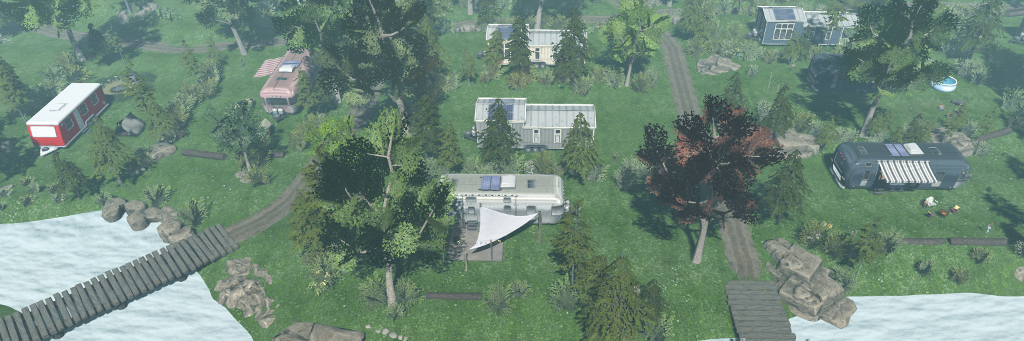
An aerial view of some of the new Trailers and Campers units, showing how residents have taken to using the outdoor spaces they provide

On Monday, September 16th, the first batch of regions containing the much anticipated Linden Homes Trailers and Campers arrived in Bellisseria. While they took a while to set up, they were made available on Tuesday, September 17th – and were all gone within 24 hours, demonstrating their popularity with Premium users.

Given I’d only taken a quick look around in my preview piece First looks: Bellisseria trailer and camper homes, I hopped back on Thursday, September 19th to take a more detailed look on horseback and, for the fun of it.

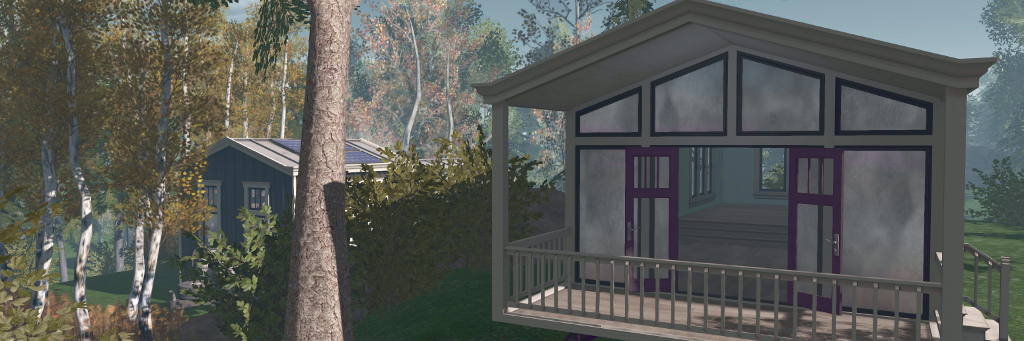
Peeking inside an unoccupied Trailer Home

Travelling the regions via the many trails – grass and track – and by following the railway lines, the first things that struck me was the care with which the regions have been laid out – particularly the blending of landscape between the Trailer and Camper regions and those for the Traditional Homes and Houseboats. There are no unnatural boundaries of “empty space” as witnessed with the “old style” Linden Homes, or abrupt switching of one style of landscape and terrain for another. Instead, and has been demonstrated throughout Bellisseria’s development, everything flows naturally from the more “suburban” areas of the Traditional Homes and coastal buffers of Houseboats into the more open countryside environment of the Trailers and Campers.

This might seem an odd thing to point out, but it’s important as it demonstrates the commitment from LL’s Land Team to make Bellisseria a genuinely contiguous, natural environment where there is a sense of place, rather than just a conglomeration of houses lumped together. This helps to make Bellisseria somewhere people can live, breathe, share and joy, and have plenty of encouragement to explore and participate.

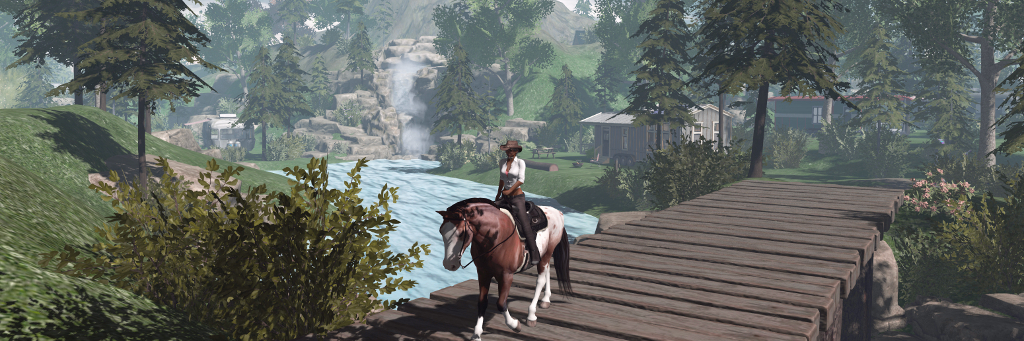
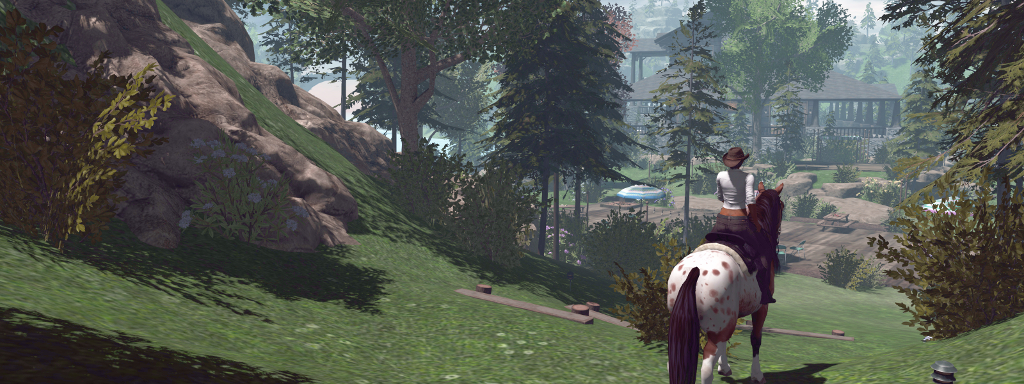
The new regions offer even more space and opportunities for horse riding

In keeping with this is the way the parcels for the camper vans and trailers have been set out; as with the homes and houseboats, these are not simply cookie-cutter arrangements stitched together into a simple patchwork; each region has been landscaped to provide a natural environment, with balance between protected land and camper / trailer parcels and finished with a sound scape that enhances the setting, while the trailers and campers have all been more-or-less individually placed so there is no sense of simple repetition across different regions.

Within the regions, there are also plenty of public spaces. The most obvious of these at the time of writing is the Campwich Lodge. But there are also assorted lakeside piers and decks, camp sites, and cabins (the Premium gift Winter Cabin re-purposed), scattered throughout the regions.

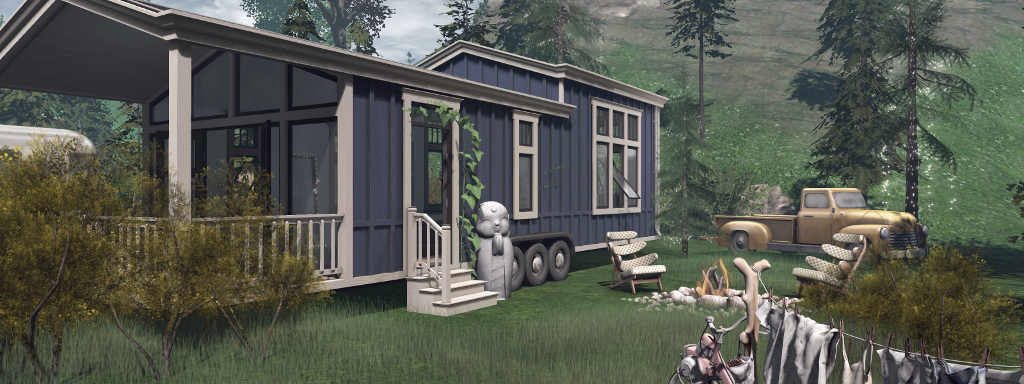
When is a trailer not a trailer? When it’s a home. The Williamsburg

Not all the units that have been claimed have been occupied – something that is true of the Traditional Homes and Houseboats – but those that have are being enthusiastically decorated in much the same way as the homes and houseboats were, with a lot of happy chatter on the various Bellisseria related in-world groups. It’ll be interesting to see when / if pictures of people labours start turning up in the forums, such as in the Linden Homes photo thread (although at 60-ish pages, perhaps a new thread is needed!).

During my ride / walk through the regions, I tried avoid nosing inside the trailers and campers (they people’s homes / alternate homes after all!), but as expected, much use is being made of the outside space with people setting down just about everything you can imagine that’s in keeping with the theme: hot tubs and home pools, decking and seating, awnings and tents, picnic spreads and barbecues and – yes – even pick-ups and 4x4s.

A Michie Marine DB101 pootles along the Bellisseria rail lines. The cabin in the right foreground is not a Linden Home style – it is the Premium Gift Winter Cabin, a number of which the moles have re-purposed as a public spaces in the regions

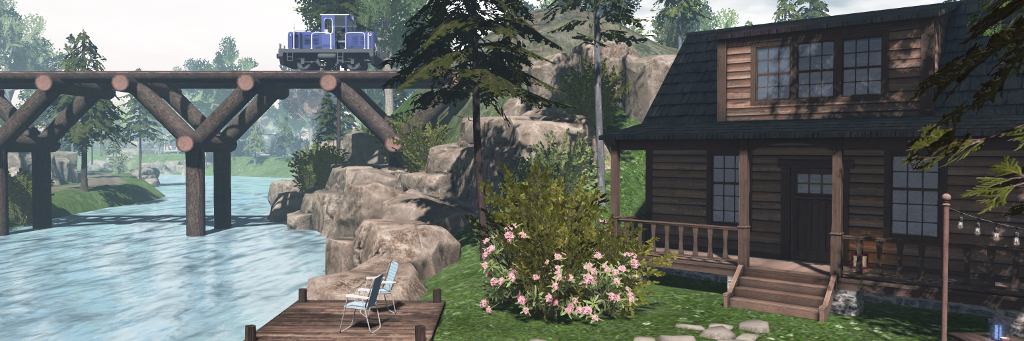
For train enthusiasts, the railway lines – although incomplete pending the arrival of further public regions (some of which are currently in development) –  offer a rez zone in the (at the time of writing) yet-to-be-named SSPE260 region. It’s seen a fair amount of use already, with a variety of trains from steam locos to electric train cars to trams appearing on the tracks. In particular, a lot of people have been picking up the Michie Marine DB101 “line security loco”, which is available for no charge on the Marketplace and using that to ride the rails.

As I’m not a major train enthusiast, I initially tried the Premium Gift rail handcar (circa 2012), but found this no longer wanted to function – so I grabbed a copy of the Michie Marine myself. A nice touch with it is that the drive is automatic; set it in motion and you’re free to appreciate the scenery; no need to keep a key pressed. I assume other rez zone will be added as the railway is extended, but given the location of the one at SSPE260, it’ll be interesting to see if a boat rezzing area will be provided on the waterway close by, as the region is built-out. Doing so would certainly make sense.

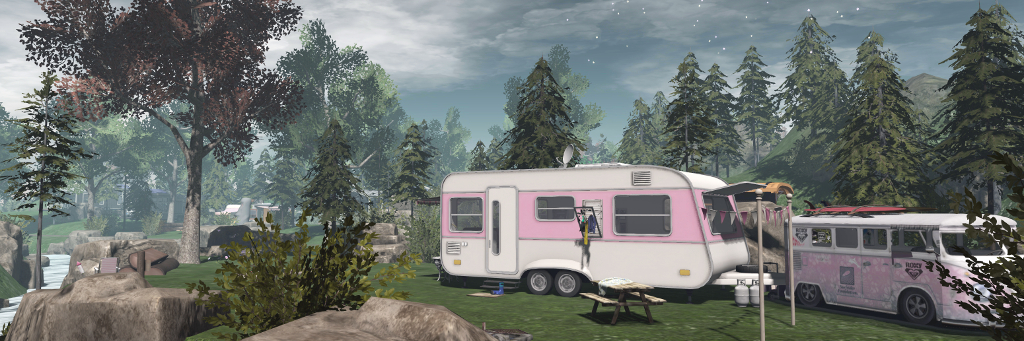
A Newport camper

And talking of waterways; one of the neat things for me personally is that given the location of my houseboat, it’s possible to cruise to Campwich Lodge by boat, making it an ideal place to visit by water whenever the mood takes. I’m far from alone in this – care has been taken to ensure that the lodge is well connected to many of Bellisseria’s bodies of water and waterways.

In terms of which design seems to be the most popular among those moving in to the new regions, I would suggest that overall, it would appear to be the Williamsburg. While by no means an accurate indicator of things, overflying the new regions did seem to reveal the distinctive split-level roof of that design appearing a lot more frequently overall than the other designs. By the same “standard”, it would appear the Newport – possibly the smallest of the designs available – is the least popular at this point in time.

Following one of the trails back down to Campwich Lodge

Eyes will doubtless continue to be on the new Bellisseria regions for a while – particularly given work has already started on extending the railway lines into some of the surrounding regions. In the meantime, kudos once again to the Moles and the Land Team for their work.

Related links

Firestorm: the future of OpenSim Support

On Wednesday, September 18th, and after some lengthy deliberation, Jessica Lyon issued a Firestorm blog post outlining the future of that viewer’s future support for OpenSim environments.

The post is going to make difficult reading for OpenSim users, but the reality is that for assorted reasons, the Firestorm team have to consider priorities and how to best support their two disparate user communities.

The most important point with the blog is that Firestorm is not about to abandon OpenSim: but there are certain hard realities that need to be faced.

The first of these is that Firestorm are struggling to meet the demands of OpenSim support. While it is easy to talk about OpenSim in the singular – as if it is a single network of grids running to the same overall framework of server code – this isn’t really the case, as Jessica notes:

So many grids and no standard specification. Grid features that vary from grid to grid. We fix an issue on one grid that breaks something on another. Compatibility with OpenSim is vastly more difficult than it is with Second Life. Add to that the fact that we have to continue to merge upstream code from LL on a regular basis. We just don’t have the human resources.

Resources in this case being a developer who not only has the time to devote to OpenSim development on behalf of the Firestorm Team, but also the depth of knowledge of the various OpenSim protocols required to implement viewer-side updates while avoiding many of the problems Jessica mentions.

To try to assist in matters going forward, Jessica outlines some of the steps that the Firestorm team will be taking:

  • Firestorm will no longer accept OpenSim viewer features without direct communication via viewer patch contributions, or better yet, some kind of reference viewer. Simply put, the team cannot expected to keep up with all developments in OpenSim, which features have been introduced in some grids and how they might impact others.
  • Firestorm can only include features compatible with the current recognised OpenSim version number – features based on in-development or upcoming server code cannot be accepted, particularly those that may work on one grid one way, but differently on another or not at all.
  • Firestorm can no longer guarantee keeping old / deprecated protocols active within the viewer indefinitely. Attempting to do so  simply increases many of the complexities involved in developing and maintaining a viewer – and Firestorm is already hard-pressed in keeping pace with updates rolling out of Linden Lab for Second Life and with the major updates and improvements being made to OpenSim.

This last point has particular relevance when it comes to upcoming major releases like Linden Lab’s Environment Enhancement Project (EEP), which will entirely replace Windlight.  This is actually what prompted Firestorm to try to split viewer development between different repositories  – one for OpenSim and one for Second Life – which in turn resulted in a lot of concerns being raised by OpenSim users that have, in part, informed the thinking leading up to this blog post.

Simply put, Firestorm cannot continue to support both Windlight and EEP, and will be focusing on EEP as that reaches release for Second Life, with the hope that OpenSim will find the means to adopt the EEP protocols in the future. Similarly, it is likely that projects such LL’s on-going Love Me Render work to improve viewer rendering, the Estate Access Management project and others may well impact Firestorm’s ability to support OpenSim.

So What Does This Mean?

Simply put, it means that if Firestorm is to continue supporting OpenSim to the fullest possible extent, it is going to need the help and support of the OpenSim community.

Part of this can be due through the likes of communication and viewer patch submissions and testing, as noted above. However, the most practical way to help Firestorm is for those within the OpenSim community who are competent viewer developers and who have – or can quickly understand – the Firestorm code, to volunteer their time and expertise.

To do so, drop the Firestorm team an e-mail providing your name, contact details and a brief outline of your experience in viewer code development, and how you believe you would be able to help.

So if you are that person – please do considered applying; or if you know someone who can help – point them towards the Firestorm blog post. In the meantime, OpenSim users who may read this blog are asked to follow the link to Jessica’s blog post to read her comments first-hand.

Visiting La Maison d’Aneli’s new home in Second Life

La Maison d’Aneli: Eylinea and Desy Magic

La Maison d’Aneli, curated by Aneli Abeyante, relocated mid-year to a new home in the skies of VeGeTal PLaNeT. In making the move, the gallery space has also been redesigned, the former two-level build giving way to a more labyrinthine space that retains the open plan nature of the former venue whilst also making one’s passage through it more interesting by splitting individual display spaces across multiple levels, both “up” and “down” relative to one another, linked by stairways and walkways, together with a number of individual display spaces – all of which work together to encourage exploration and discovery.

At the time of my visit, a new set of exhibitions was due to open on Wednesday, September 18th, featuring work by: Eylinea, Akim Alonzo, Desy Magic, Jolielle Parfort, Megan Prumier, Olympes Rhode, and Moki Yuitza, all of whom present a rich mixing of 2D and 3D art. While all are opening at the same event at 12:30 pm SLT, I have to admit that I was drawn to dropping in ahead of time after receiving personal invitations to see the exhibits by Akim and Moki.

La Maison d’Aneli: Akim Alonzo

Located in one of the individual galley halls, Akim presents The Matrix, a series of images he’s created based around his love of The Matrix movies. While some of them have previously been displayed at Akim’s own gallery (see: Water and a Matrix: reflections on life by Akim Alonzo), I was drawn back to them because of both their captivating nature and because they are so nuanced and layered. Not only do they offer an interpretation of the manifold memes on the shaping of reality as found within the films and as we can create for ourselves within SL; they also present a commentary on identification – that perennial theme common to Second Life -, as I noted back in April when writing about these images:

Within these pictures is a subtle reminder that, no matter how hard we might try to distance self from character within SL, no matter what the roles we play in-world, the backstories we build; the fact remains that facets of our own natures, our own identities, will be impinged on those characters. They are inevitably a projection of self into the virtual. What’s more, their daily encounters and experiences within the virtual realm equally reflect and inform upon our physical selves. Thus, we have a genuinely visceral intertwining between the “real” and the “virtual”.

La Maison d’Aneli: Moki Yuitza

Moki also has one of the individual gallery spaces to present a 3D installation entitled Ascension. This is a mobile piece offering an interpretation of the subject matter title – the ability for us to ascend our current state mentally, spiritually or potentially physically. Beautiful to witness, this is also an interactive piece, with poseballs available for those wishing to participate in the installation.

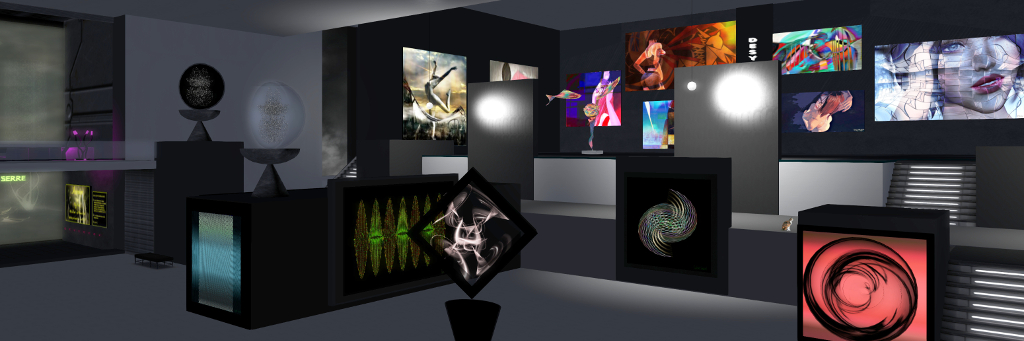
Within the more open areas of the gallery space, I found myself drawn to Eylinea’s 2D and 3D animated art; this being the first time – at least that I can remember – I’ve seen her work on public display. There are intricate and fascinating, drawing a number of approaches – geometric, fractal, and abstract to produce some fascinating pieces.

La Maison d’Aneli: Jolielle Parfort

When visiting the gallery, I do recommend following a certain order to progress through the exhibits. From the landing point provided, take the stairs (on the left as you look out over the gallery) down to the main hall space to visit the individual exhibition space housing Moki’s Ascension. After this, explore the open spaces on their various levels and the hall containing Akim’s The Matrix, before moving to the final individual hall, home to Jolielle Parfort’s always engaging art drawn from Second Life.

This route doesn’t give any deeper context for the exhibits – each stands on its own merits -, but it will offer a logical path through the gallery and the exit point tucked into the hall featuring Jolielle’s work. From there is is then possible to visit the other exhibition areas around la Maison d’Aneli, including region holder vroum Short’s visually captivating Mirror (which I’ve also previously written about). All of these spaces are equally worthy of a visit, but which will be subject for other articles in this blog.

SLurl and Links

A Spoonful of Sugar 2019 in Second Life

via Spoonful of Sugar

Currently open through until the end of September 29th, is the 2019 Spoonful of Sugar festival, bringing together fashion, home and garden, breedable designers and creators, artists, DJs and live performers to help raise money for Médecins Sans Frontières (MSF).

Also known as Doctors Without Borders, MSF was founded in Paris, France in 1971 as a non-profit, self-governed medical humanitarian organisation delivering emergency aid to people affected by armed conflict, epidemics, natural disasters and exclusion from healthcare around the globe, based on need, irrespective of race, religion, gender or political affiliation.

Since that time, MSF has grown to a movement of 24 associations, bound together as MSF International, based in Switzerland. Thousands of health professionals, logistical and administrative staff – most of whom are hired locally – work on programmes in some 70 countries worldwide. See the video at the end of this article for more on MSF.

Spoonful of Sugar is now in its fifth year, and has thus far raised US $40,000 for MSF as a part of the organisation’s Vital Pact Campaign – and hopes to take that total to at least US $50,000 in 2019.

Spoonful of Sugar 2019 – market town

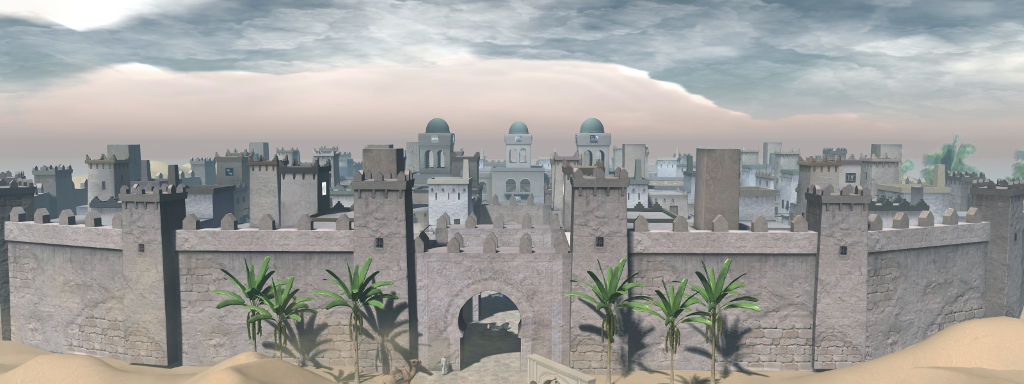
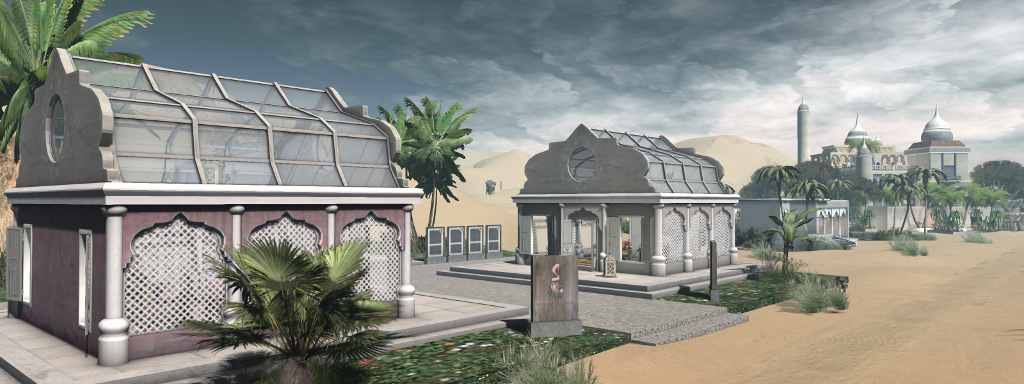
Every year, Spoonful of Sugar selects a theme for its core event. This year, the focus is very much middle-eastern: a desert environment with out of which have grown four small “towns”, each an oasis of human life in which the streets form a souq and home to many of the merchants participating in this year’s event. Large sponsors of the event are to be found gathered around the oasis a short walk from the landing point.

But the setting is not simply about the romance of the desert and camel trains of traders; it actually underscores the focus for Spoonful of Sugar this year: the plight of refugees, which over the last several years has been brought sharply into focus by the crises that continue to rock the middle-east. World-wide, there are now a recorded 70.8 “forcibly displaced” people (only 20 million of who are officially designated “refugees”) who – however unwillingly – have had to flee their homelands due to war, political or religious extremism, gang violence, terror, or other life-threatening circumstances.

Spoonful of Sugar 2019

These 70.8 million recognised refugees make up a significant portion of MSF’s work – as the Spoonful of Sugar landing point reveals. And in an age when those of a certain political stripe repeatedly opt to demonize people who are fleeing their homelands – and often leaving behind friends and families – to escape death and destruction as “the worst people” and / or “rapists and murderers”, focusing on the huge humanitarian efforts performed by organisations like MSF is fully warranted.

I’m here to tell you that nobody wants to leave home. They love their cities, their neighbourhoods. They love speaking their own language. The people fleeing their home countries are running because their home countries aren’t safe. They are fleeing for their lives.

– Dr. Ahmed Abdalzarag, MSF neurosurgeon

Spoonful of Sugar 2019: the work of MSF

Thus, the landing point offers visitors an opportunity to look inside a typical refugee camp and witness the work that MSF carries out, from triaging injuries and illnesses to working the logistics of food, drinking water and other essential supplies to providing shelter. Information boards throughout outline the work and offer insight into MSF’s multi-faceted work. Yes, the setting may desert, but it could also so easily be the grasslands of Africa, the forests of South America – or any of the multitude of places around the globe where refugees are attempting to seek help and support; as such I do recommend that rather than hopping straight on to the teleport boards and going shopping, people spend a few minutes within the camp.

As well as the shopping opportunities, there is also entertainment taking place over the weekends of the event – with a schedule available via the Spoonful of Sugar website. Also forming part of the event is the gacha area and the event raffle, while updates and information can also be found on the Spoonful of Sugar website.

SLurl and Links