From ancient times through to modern tales, by way of Poe and even the graphic novel, corvus corax, the common raven has held a special – if mixed – place in the tales and mythologies of the northern hemisphere.
For some, they are seen as the companions of deities, or even the embodiment of deities – a trait perhaps drawn from their intelligence: not only are ravens natural social in their nature, they have also been known to use other birds and animals to their advantage, such as calling wolves to strike down easy kills and then cleaning up what’s left once the wolves have had their fill.
For others, and perhaps more widely in more modern times and doubtless arising from the fact they are – like their cousins corvus corone, the carrion and hooded crows -, carrion scavengers (although they are also omnivores), they are associated closely with death, witchcraft and dark arts.
Ravenheart Museum: A Conspiracy of Ravens – CybeleMoon
In this latter regard, modern-era horror stories, poems (such as Poe’s famous The Raven) films and Halloween have also served to help make this time of year the one in which we perhaps think of ravens more than we might at other times of the year. Hence why the Ravenheart Museum, owned and curated by Talus Ravenheart, is currently hosting a mixed media exhibition A Conspiracy of Ravens.
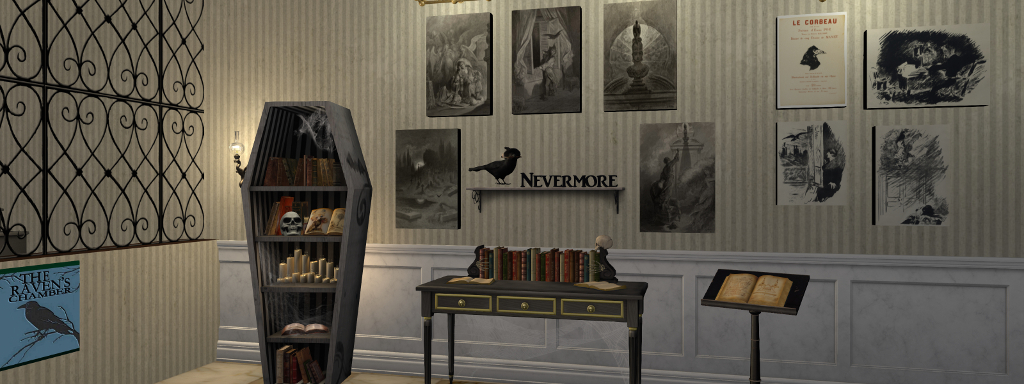
Primarily located on the ground floor of the museum, A Conspiracy of Ravens offers an engaging look at the role of the raven through human history and mythology, with seven perched ravens acting as guides. Featuring photographs, drawings, paintings, illustrations and note cards, the exhibition includes a look at the realities of the raven and a bird, its interweaving into folklore a older mythology as a harbinger, familiar, deity and reputation for intelligence, as well as their roles in lore – notably that of the British Realm – and horror (Poe once again), and even their use in stamps around the world.
Ravenheart Museum: A Conspiracy of Ravens – Edgar Allen Poe
The art – reproductions of illustrations from books through to sketches and photographs and including a trio of CybeleMoon’s beautiful multimedia pieces – is richly diverse and presented as a series of seven themes, each with one of the aforementioned raven guides (you can find the last two upstairs). Click on each raven, and you’ll receive a note card on the theme presented by the accompanying images. Further, several of the items presented to support some of the displays, and even pieces of the art, will either also offer a note card when clicked, or take you to a web page where a story might be found.
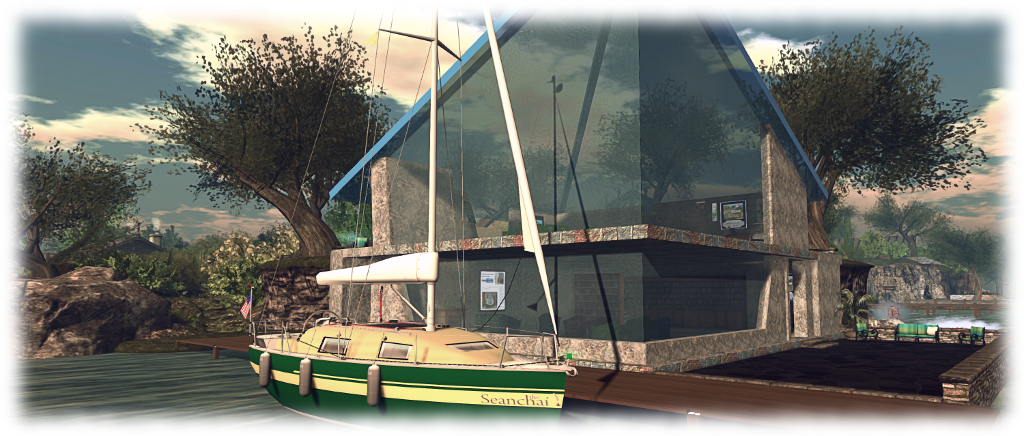
Elegant in its presentation, A Conspiracy of Ravens offers engaging insight in our relationship with the raven, and for those who enjoy haunting and spooky tales that might include a raven or two, at 19:00 SLT on Tuesday, October 15th, the exhibition will be hosting Caledonia Skytower from Seanchai Library, who will be reading a series of short stories in The Spooky Classics.
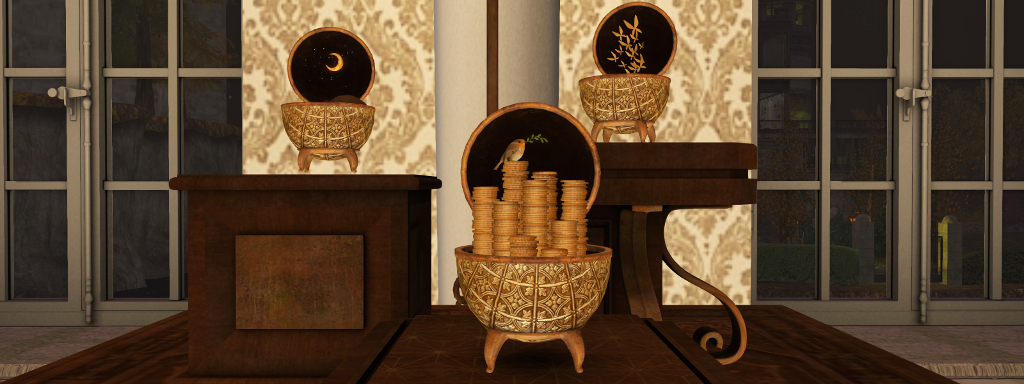
And while visiting, do be sure to take in the magnificent (and I gather permanent) display of Libertine Eggs. Featuring the entire collection of these fabulous miniatures by Ali Baroque, each smaller than an average avatar’s head, this is also an exhibition that really requires first-hand viewing to truly appreciate the intricate beauty in each of the 60+ eggs on display.
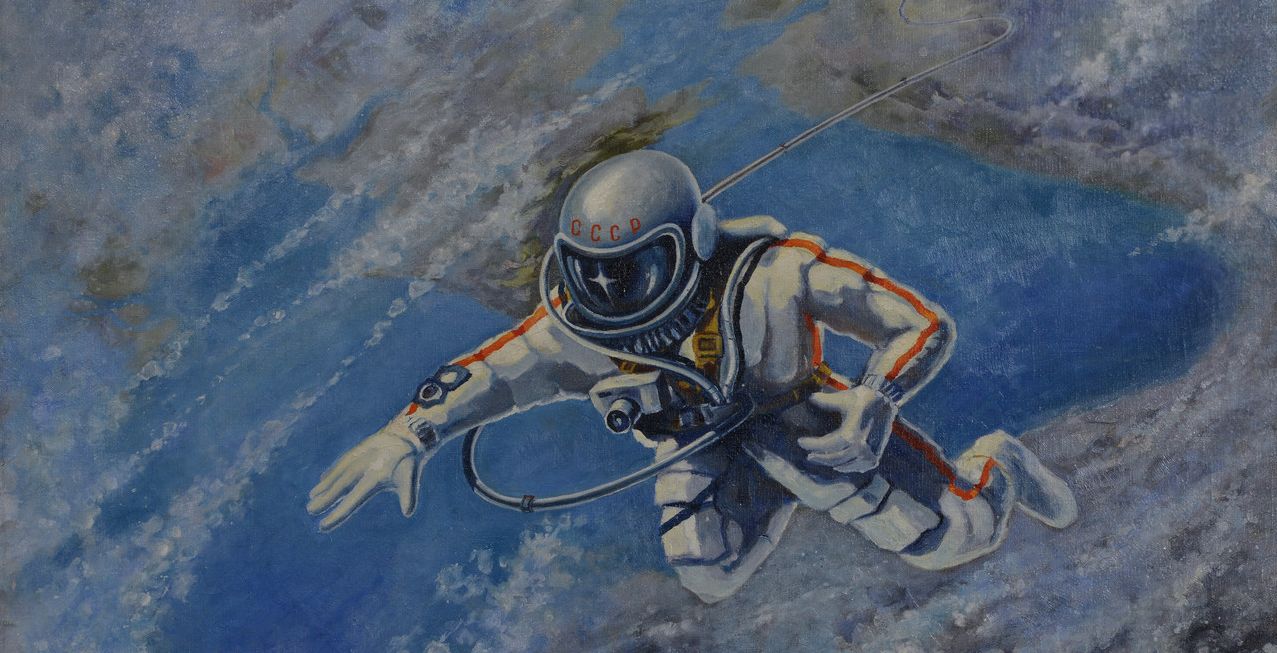
Alexei Leonov’s self portrait of his (and the world’s) first space walk, 1965.
On Friday, October 11th came the news that Alexei Arkhipovich Leonov, the first man to complete a space walk, and later the commander of the Russian side of the historic Apollo-Soyuz mission, had sadly passed away at the age of 85.
Leonov was born on May 30th, 1934, in the remote Siberian village of Listvyanka, Siberia, to which his father’s family had been exiled as a result of his grandfather’s involvement in the 1905 Russian Revolution. In 1936, his railway worker / miner father was falsely accused of “improper” political views during Stalin’s purges, and was imprisoned for several years, leaving Alexei’s mother to raise her children on her own.
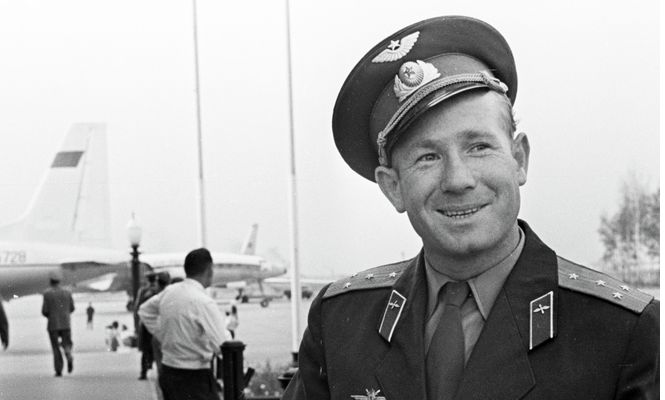
Leonov was known as a quick leaner with a keen sense of fun and light-heartedness, as this 1960s shot – taken before his first space flight – with his cap jauntily cocked to one side shows. Credit: RIA Novosti
Creative from an early age, Alexei developed a talent for painting and drawing, going so far as being able to sell some of his pieces for extra money. However, he was determined to be a military aviator, and when his reunited family relocated to Kaliningrad in 1948, he was able to pursue more technical studies that enabled him to be accepted into flight training in the 1950s. Posted to the the Chuguev military pilots’ academy, he graduated in 1957 as both a qualified fighter pilot and parachute training instructor, and served three tours of duty in both roles, gaining 278 hours flight time in front-line fighters and completing 115 parachute jumps while training others.
His skills as a parachutist saw him accepted into the new cosmonaut training programme in 1960 – it had been decided that for early flights, rather than landing in their capsule, cosmonauts would be jettisoned from their Vostok craft using an ejector seat similar to jet fighters, allowing them to complete the last part of their return to Earth via parachute.
Alexei Leonov (back row, left), with some of his cosmonaut comrades, including Yuri Gagarin (first man in space), 2nd from the left, front row; Valentina Tereshkova (first woman in space), Gherman Titov (second cosmonaut in space, next to Leonov) and Pavel Belyayev (mission commander, Voskhod 2), right side, front row. This images was taken some time between April 1965 and March 1968 Credit: RIA Novosti archive
As a part of the original intake of 20 cosmonaut recruits, Leonov trained alongside Yuri Gagarin, the first human to fly in space and orbit the Earth, and Gherman Titov, the second Cosmonaut and third human in space. Like them, he was initially selected for Vostok flights, serving as back-up pilot to the 1963 Vostok 5 mission. However, before he could be rotated to a “prime” Vostok seat, he was one of five cosmonauts selected to fly the more ambitious Voskhod missions.
Voskhod was really a Vostok system but with the ejection seat and mechanism removed to make way for up to three crew seats, and with additional retro rockets attached to the descent stage to cushion the crew on landing instead of them being ejected. It was really an “interim” designed to bridge Vostok and the much more capable Soyuz (which wouldn’t fly until 1967), allowing Russia to match the America Gemini system in launching more than one man at a time. In particular, Leonov was selected with Pavel Belyayev (as mission commander) to fly the Voskhod 2 mission in which he would undertake the world’s first space walk.
This one-day mission was launched on March 18th, 1965 with the call-sign Almaz (“Diamond”). The design of the Vostok / Voskhod vehicle meant that the cabin could not be depressurised in order for a cosmonaut to egress the vehicle. Instead, a complicated airlock had to be fitted to the vehicle’s exterior. This comprised a metal mount surrounding the crew hatch, and to which was fitted an inflatable tube with a further hatch built on to it.
Alexei Leonov and avel Belyayev (r), pictured after their historic Voskhod 2 mission. Credit: unknown
Once in orbit, Belyayev helped Leonov add a backpack to his basic spacesuit that would supply him with 45 minutes of oxygen for breathing and cooling, pumped to him through an umbilical cord / pipe, and which included a second pipe and adjustable valve designed to vent small amounts of oxygen into space to carry away heat, moisture, and exhaled carbon dioxide. The airlock mechanism was then inflated and pressurised using air from the Voskhod’s supplies, extending it some 3 metres (9 ft) outward from the vehicle. After checking the integrity of the airlock tube, Belyayev opened the inward hinged crew hatch so Leonov could pull himself into the tube and the hatch re-secured behind him. Controls both inside the tube and the Voskhod allowed the airlock to be depressurised, allowing Leonov to open the inward-hinged “top” hatch.
Before exiting the tube, Leonov attached a video camera to a boom he then connected to the airlock rim, allowing live television pictures of his egress from the Voskhod to be captured and relayed to Earth. The sight of him exiting the vehicle reportedly caused consternation among some his family who didn’t understand the purpose of his mission!
When my four-year-old daughter, Vika, saw me take my first steps in space, I later learned, she hid her face in her hands and cried. “What is he doing? What is he doing?” she wailed. “Please tell Daddy to get back inside!”
My elderly father, too, was upset. Not understanding that the purpose of my mission was to show that man could survive in open space, he expressed his distress to journalists who had gathered at my parents’ home. “Why is he acting like a juvenile delinquent?” he shouted in frustration. “Everyone else can complete their mission properly, inside the spacecraft. What is he doing clambering about outside? Somebody must tell him to get back inside immediately. He must be punished for this!”
– Alexei Leonov, Two Sides of the Moon, written with U.S. Apollo astronaut David Scott.
Once clear of the airlock, Leonov encountered some difficulties. Not actually designed for the vacuum of space, his suit inflated and became semi-rigid, limiting his range of movements. He found he couldn’t reach a stills camera mounted on the front of his suit and intended to allow him to take photographs while outside the vehicle, for example. But worst was to come.
In training, Leonov had rehearsed sliding back into the airlock feet first, enabling him to easily swing the outer hatch back up into place to be secured and allow the interior of the tube to be re-pressurised so that Belyayev could then open the Voskhod’s hatch and guide him back into the spacecraft. However, he now realised he had a real problem.
With some reluctance I acknowledged that it was time to re-enter the spacecraft. Our orbit would soon take us away from the sun and into darkness. It was then I realized how deformed my stiff spacesuit had become, owing to the lack of atmospheric pressure [outside of it]. My feet had pulled away from my boots and my fingers from the gloves attached to my sleeves, making it impossible to re-enter the airlock feet first.
– Alexei Leonov, Two Sides of the Moon, written with U.S. Apollo astronaut David Scott,
describing his spacesuit issues
His only option was to enter the tube head-first and then work out how to turn himself around to close the hatch – except his suit had inflated such that it was too big to fit through the outer hatch ring. His only option was to use the oxygen relief valve to gently release pressure from the suit and deflate it. The problem? if he let out too much oxygen, he’d risk hypoxia and suffocation and if he let it out too quickly, he risked decompression sickness (or “the bends” as sea divers call it).
The first public indication that Leonov was in trouble came when the live video feed and radio broadcast were both cut and Russian state broadcasters switched to playing Mozart’s Requiem in D Minor on repeat. Meanwhile, he cautiously went about releasing the pressure in his suit until he could wriggle his way into the airlock tube and, in a feat of contortion, turned himself around so he could secure the outer hatch. This effort proved almost too much for the suit’s primitive cooling system, and by the time Belyayev opened the Voskhod’s hatch and helped Leonov back into the capsule, he was in grave danger of passing out from heatstroke. However, their problems were far from over.
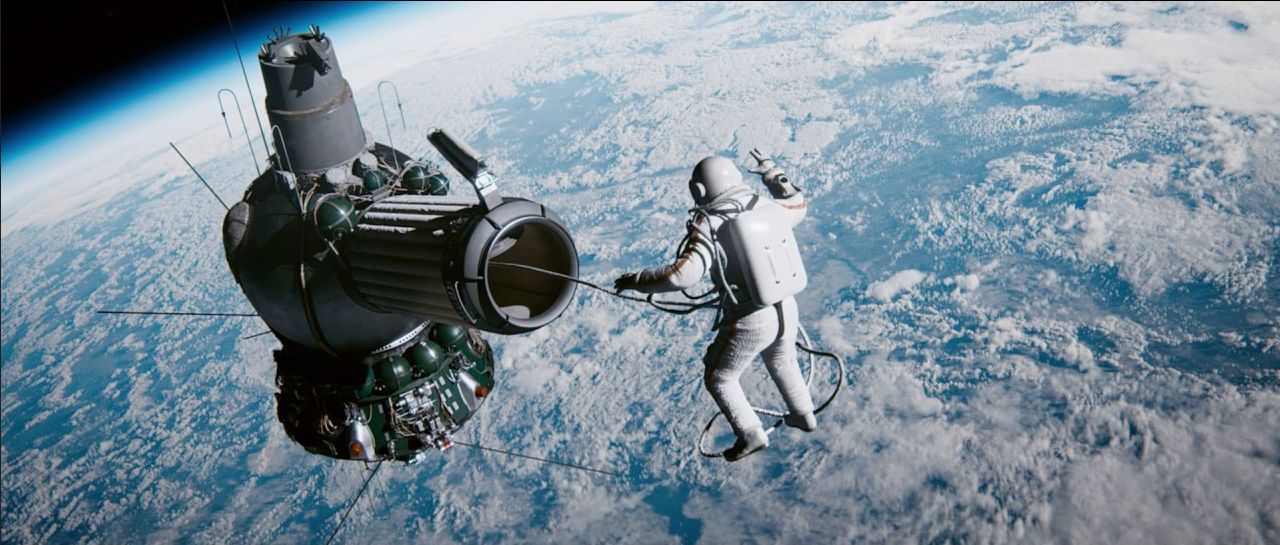
How it might have looked: a still from the 2017 Russian film Spacewalk, recreating Leonov’s historic 1965 space walk
Re-entry for the Voskhod was a three stage affair: eject the airlock, jettison the equipment module, then fire the retro-rockets on the descent module to drop the vehicle back into the denser part of Earth’s atmosphere. All of this was meant to be largely automated, but the guidance system failed due to an electrical fault taking out a number of systems, leaving Belyayev and an exhausted Leonov scrambling to handle things manually, literally clambering over one another to perform their assigned duties. As a result, the re-entry motors were fired 46 second late, enough to mean they would overshoot their planned landing site by over 380 km (241 mi).
However, this proved to be the least of their worries. No sooner had the rockets fired than the Voskhod went into a 10G spin, pinning the two men into their seats and rupturing blood vessels in their eyes. Through the observation port on his side of the vehicle, Leonov saw that the equipment module hadn’t fully separated from the descent module and lay connected to it via a communications cable. When the retro rockets fired to slow the decent capsule, the equipment module had shot past, causing the cable to snap taut and start the two modules tumbling around one another.
It’s time to highlight another week of storytelling in Voice by the staff and volunteers at the Seanchai Library. As always, all times SLT, and events are held at the Library’s home at Holly Kai Park, unless otherwise indicated.
Sunday, October 13th
13:30: Tea Time Haunts
A double serving of spookiness this week in a session that will likely run to over the hour:
Dubhna Rhiadra with a seasonally spooky story by author Mary Molesworth.
Corwyn Allen with The Japanned Box by Sir Arthur Conan Doyle.
I saw that Sir John Bollamore was sitting at his study table. His well-set head and clearly cut profile were sharply outlined against the glimmering square behind him. He bent as I watched him, and I heard the sharp turning of a key and the rasping of metal upon metal. As if in a dream I was vaguely conscious that this was the japanned box which stood in front of him, and that he had drawn something out of it, something squat and uncouth…
– The Japanned Box, Sir CA.C. Doyle
So, gather around the warmth of the hearth in the fireside room, and prepare enjoy two ghostly tales.
18:30: Tilly and the Bookwanderers
Eleven year-old Tilly has lived above her grandparent’s bookshop ever since her mother disappeared shortly after she was born. Like the rest of her family, Tilly loves nothing more than to escape into the pages of her favourite stories.
One day Tilly realises that classic children’s characters are appearing in the shop through the magic of `book wandering’ – crossing over from the page into real life.
With the help of Anne of Green Gables and Alice in Wonderland. Tilly is determined to solve the mystery of what happened to her mother all those years ago, so she bravely steps into the unknown, unsure of what adventure lies ahead and what dangers she may face.
Join Caledonia Skytower at the Golden Horseshoe as she concludes the story!
Monday, October 14th 19:00: Variable Star
Gyro Muggins reads Spider Robinson’s 2006 completion of an eight-page novel outline from 1955 by Robert Heinlein.
When aspiring composer and musician Joel Johnston first met Jinny Hamilton, it seems like a dream come true. And when she finally agrees to marry him, he feels like the luckiest man in the universe.
There’s just one small problem. He is broke. His only goal in life was to become a composer, and he knows it will take years before he’d be earning enough to support a family. But Jinny isn’t willing to wait; she wants Joel with her in marriage now.
Unsettled by her conviction that money wouldn’t be a problem for them, Joel presses Jinny for an explanation. Her response stuns him: ‘Hamilton’ is not her last name – it is ‘Conrad’, and her grandfather is the wealthiest man in the solar system: Robert Conrad; she had been using subterfuge to ensure whoever she fell in love with really loved her for who she was, not for her grandfather’s money. With that truth revealed, she also informs Joel of her family’s broader plans for her and her husband-to-be.
Perhaps most men in Joel’s shoes, faced with the facts that Jinny really did love him and was offering a life of wealth, might have forgiven her for hiding her identity and plans. But not Joel. So it was that he found himself trying to get as far from her and her family as possible: aboard a colony ship heading deep into space. And then came the cosmic cataclysm that would visit so much calamity on humanity as a whole.
Wednesday, October 16th 19:00 The Mysterious Woods of Whistle Root
11-year-old Carly Bean Bitters suffers a peculiar malady: she can only sleep by the light of day, and is awake through the night, spending her time up in the attic of her aunt’s house, awaiting the arrival of the dawn.
One night, she notes a strange squash that appears on her roof. Investigating, she comes across Lewis, a fiddle-playing rat. Lewis tells Carly the squash is a replacement for one of the rats in the group who has been abducted by owls.
He goes on to explain that until recently, the owls join with the rats dancing in the moonlight within the Whistle Root woods to the music played by Lewis and has band. But then something changed, and instead of dancing with the rats, the owls took to abducting them.
Grabbed by an owl herself, Carly find herself dropped into the woods where she meets the once happy community of rats, now gravely threatened by the hostile owls. At school, and struggling to stay awake, she also finds a strange note warning that the “Moon Child” is in danger.
Enlisting the help of another strange child, Green, who spend his time hiding under the library, Carly sets out to solve the riddle of the “Moon Child” and the reason for the owls’ change in behaviour – and along the way, discovers something unexpected about herself.
Join Faerie Maven-Pralou as she reads Christopher Pennell’s 2010 novel.
Thursday, October 17th
19:00 The Sealed Book
Shandon Loring presents stories from the 1945 radio series of the same name. Also in Kitely – teleport from the main Seanchai World grid.kitely.com:8002:SEANCHAI.
The following notes were taken from my audio recording of the October 10th (week #41) Sansar Product Meeting, which examined upcoming avatar updates and nakedness in Sansar. The official video is available on Twitch.
Recent Updates
The latest is a series of updates to Sansar following the R36 Release (Nexus, Codex and Avatar 2.0) was made on October 4th (Planar Handles) and October 10th. These are summarised below.
World load screens have been updated to include an image of the destination, as requested by users
Planar Handles
New planar handles have been added to the translate gizmo in the scene editor. The new planar handles allow for quick movement constrained to a plane as defined by the orientation of the selection, as opposed to the single-axis translation provided by the other handles.
This is the first of a series of updates coming to the gizmo (which will include things like snap to grid, snap to rotation, etc.).
New Settings Options
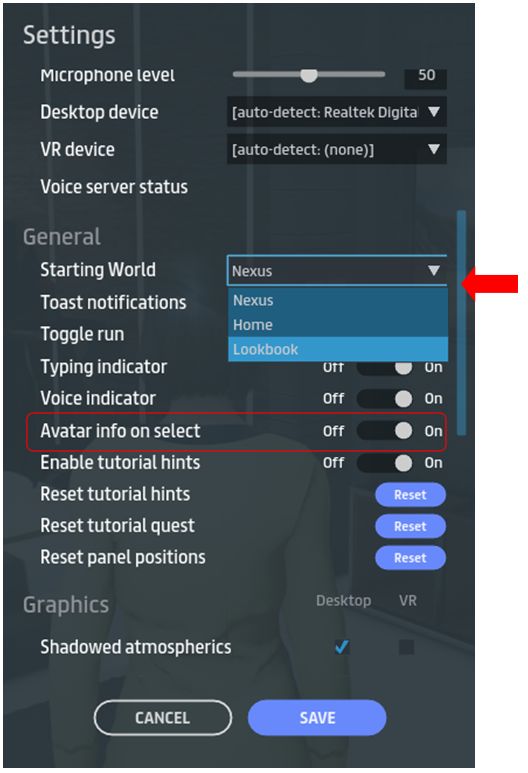
Starting World: define where you commence your time in Sansar after logging in: the Nexus, your home space or go directly to your Look Book.
Avatar info on select – choose whether or not names and action buttons appear when hovering over a user. This is useful for film-makers.
The new settings drop-down for setting your preferred start location when logging in to Sansar (The Nexus, your home space or Look Book) – arrowed; and the option for disabling / enabling avatar name + options when the pointer is hovering over an avatar (on by default) – circled.
Portal Options
Avatars can now walk to portals to bring up the world details panel, from which a destination can be selected.
If preferred, you can still click on portals to open the world details page.
User Created Quest Rewards
Creators can now opt to present users with rewards in their quests. For full details, please refer to the Rewards section of the Quest documentation, but in brief:
There are two types of reward that can be offered:
Mandatory – given to the player upon quest completion.
“Choosable” – player is presented with two rewards and they must choose which one to receive.
Up to three rewards can be offered per quest.
All rewards can be mandatory, or one can be “choosable” (so a quest can have three mandatory or 2 mandatory, 1 “choosable”, or just two rewards, either both mandatory or 1 mandatory and 1 “choosable”, etc.).
Rewards can be an accessory, custom avatar, or item of clothing added to the user’s avatar inventory upon quest completion.
Scene objects (at the time of writing) cannot be offered as rewards.
The creator offering the rewards must own the proper license to distribute them.
As a rule of thumb, if the creator originated the item and uploaded it, they own the license to it.
Rewards do not have to be listed in the Sansar Store, but must be in the creator’s avatar inventory.
Refer to the documentation linked to above for adding rewards to a quest.
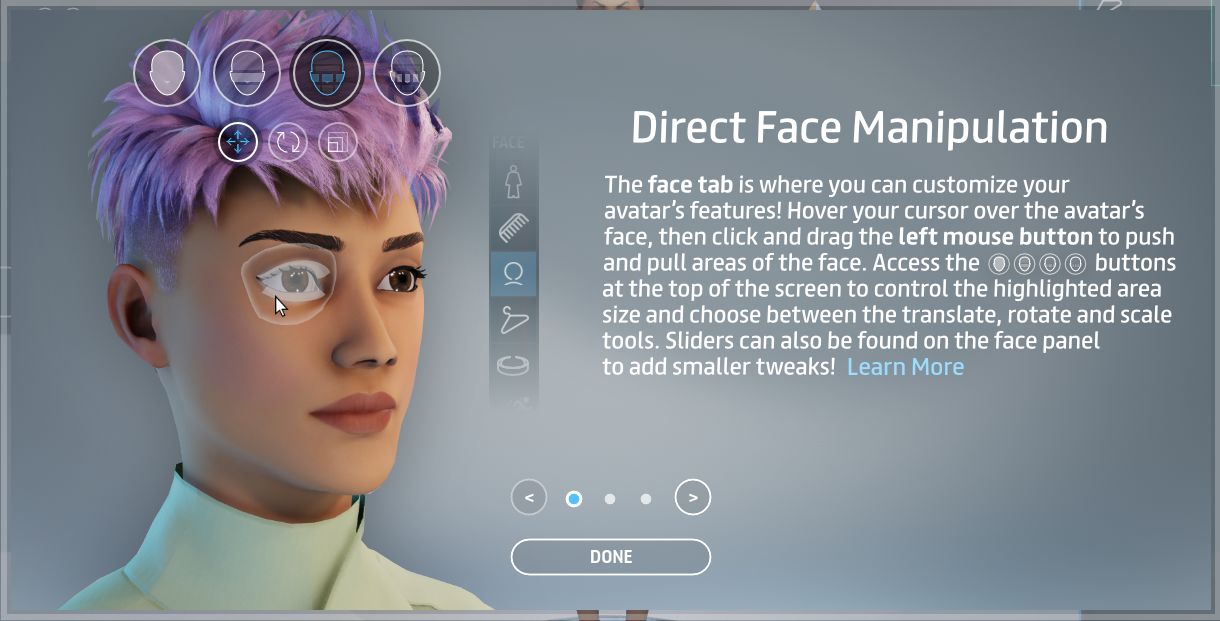
The Look Book now includes a 3-page tutorial (facial manipulation (shown), Marvelous Designer clothing manipulation and accessory adjustment), available from the “?” option, lower left of the screen
New Script APIs for Rigid Body Collisions and Avatar Speed
New rigid body collision behaviours determine how in-world objects react to avatar collisions. For example: a building might have a force field around it, denying access except for those able to input the correct code.
Behaviours will apply to anything associated with the avatar – teleporting, raycasting, camera, etc.
Operates at the per avatar level.
Speed multipliers can now be applied on a per avatar basis. For example: a power-up on a race track could provide a speed boost to an avatar passing over it.
Similar multipliers will be made available in the future for jump height / strength.
Details on how to use these are summarised in the release notes and documented in the Sansar scripting API documentation.
In-World Stores and Halloween Themes
Some creators are beginning to offer in-world stores.
The Sansar team would like to help support them where possible / appropriate.
As a part of this, and giving the month, the will be promotion of Halloween themed items through the Sansar Store.
Similarly, worlds built around Halloween themes are likely to be promoted via the Nexus, and may have some S$ incentives as well.
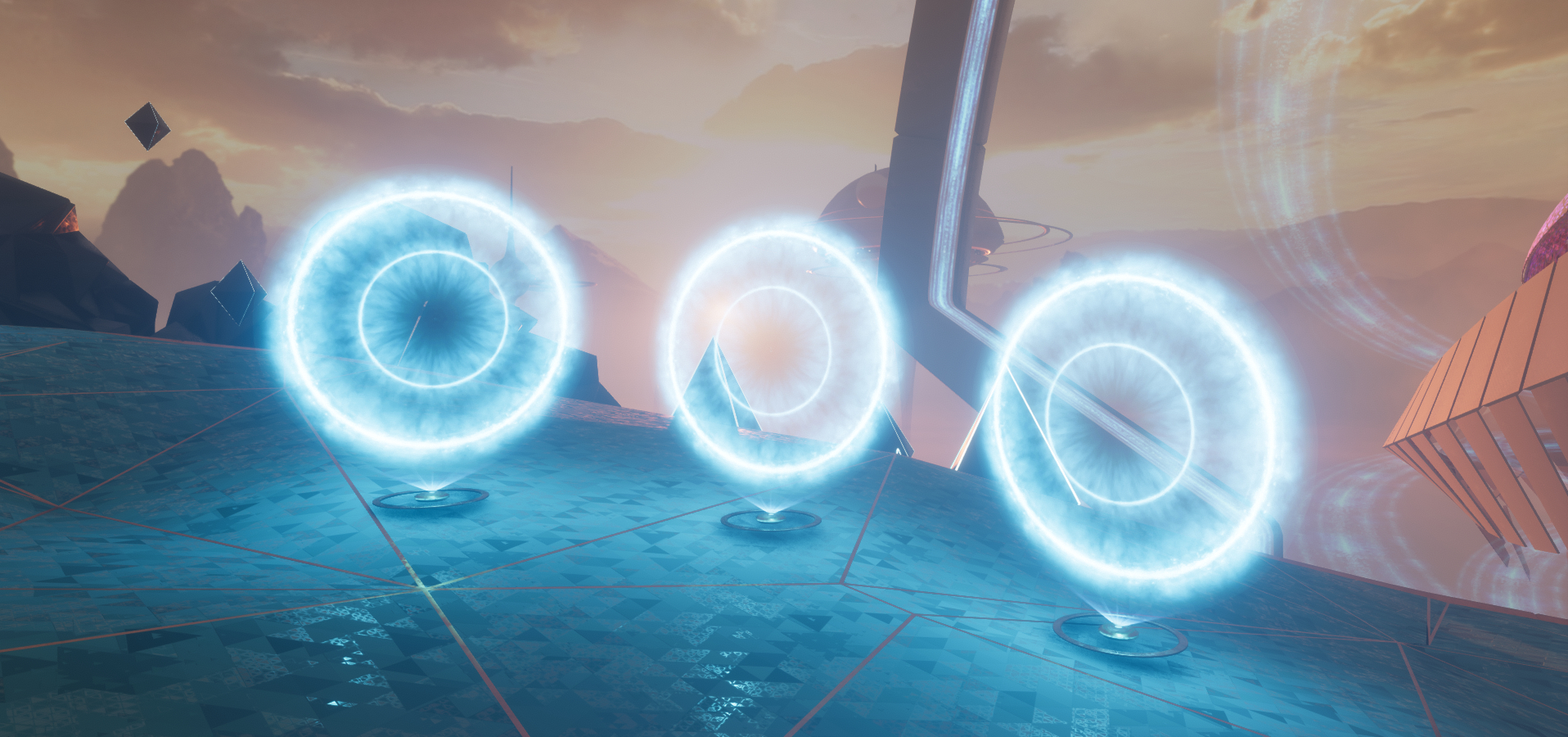
Portals to user-created locations are being made available at the Nexus, (based on theme), and these include the walk-in capability described towards the top of this summary
Q&A – In Brief
Please refer to the video for the full Q&A (some of which dealt with specific bugs individuals are experiencing, etc., or which had no clear answer at this point in time); the session begins around 16 minutes into the meet. The following is a short list of the questions that are likely of interest to a wider audience.
Custom skin textures for the system avatars:
Anticipated for delivery some time in the next month.
Access to the skeleton for testing custom skins should come sooner, possibly in the next week or two.
Skin layering for custom avatars: if the custom avatar uses the same UV mapping at the system avatar, should be possible. If the UV mapping is unique, then not supported, and unlikely to be supported near-term.
Vehicles in Sansar: vehicle have multiple layers of complexity, however, initial capabilities, such as remote control of vehicles, might start appearing around the 2nd quarter of 2020.
Vive Cosmos support and Valve Index VR support:
No official support for the Cosmos as yet, although some have managed to get these working with Sansar.
Valve Index is being working on by the Lab. Those who have it, try pressing F9 after Sansar is running & headset is on to get Sansar to appear in the headset.
Individual volume controls for avatars on voice: often requested, and the Sansar team have worked out how they’d like to implement it, but currently not prioritised in terms of when it will be addressed and implemented.
The emote system is to be updated so all emotes, including custom emotes will be available in run-time mode, allowing them to all be swapped and played, rather than having to bake custom emotes into the avatar through the character editor in order to have them available in the emote selection menu.
When available this would also means that emotes purchased from the store can be immediately available for use while still in run-time as well.
No time frame on when this will be deployed.
Scene-based animations: a capability to allow creator-defined animations to be triggered within a scene (e.g. when an avatar picks up a rifle, they hold the rife at the ready to use position, or if an avatar starts pushing a shopping cart, the hands “grip” the handle of the cart and the avatar adopts a gait as if pushing it, etc). This is being worked on, and is being aimed at a possible mid-2020 release.
Fox Road, October 2019 – click any image for full size
Writing about Fox Road has proven to be a little difficult, even after several visits to the region. Designed by Vertiline Colter, this Homestead region is both open to the public for exploration, and home to her Little Fox brand in-world store.
I say “difficult” in terms of writing about it for a couple of reasons. The first is that I’m not entirely sure it is finished: several details, large and small, have changed as I’ve hopped back and forth between the region and home; the most notable perhaps being further landscaping of the north-eastern arm of the larger of the two islands. The second is, that while Fox Road has a personality of its own, I cannot entirely escape feeling an echo of NevaCrystall’s design for Borneo, Gac Akina’s handsome region (which you can read about in A trip to Borneo in Second Life).
Fox Road, October 2019
Now, don’t get me wrong, I’m not saying the one is intentionally modelled upon the other; as those of us who travel Second Life are only too aware (and as I’ve occasionally noted in these pages), there are certain things – be they houses, bridges, landscaping elements, board walks, animals, cars, décor pieces, furnishings, etc., that tend to suddenly being en vogue for region designs to the point where it can feel you’re constantly tripping over them. Thus, visiting a region can oft put one in mind of another, quite coincidentally.
Here, the sense of familiarity is perhaps down to the way both regions are laid out: both share a very similar orientation and divide between the larger L-shaped island and the smaller; both feature cove-like beaches of grey shingle, and each has a wild, rugged feel. But Fox Road has more than enough about it to offer its own uniqueness of character.
Fox Road, October 2019
Take, for example the small cluster of buildings just to the south-west of the beach landing point. These have the suggestion that perhaps they was once the location from which fishing boats once put out to sea (something very much enhanced by the presence of two large trawlers in the bay), the old rail lines perhaps used to carry iced catches away to market. However, time areas to have moved on: the main quay where boats may have once come alongside looks to be in a state of disrepair, while the water weed blanketing the surface of the water beneath it suggest any boat attempting a mooring would end up with its propellers fouled.
Meanwhile, the bay formed by the two islands seems to have suffered from at least one land slip that has pushed gravel and shingle out into the water to the point of making it impassable to vessels and leaving the two old trawlers trapped in place – their only other route of escape being blocked by the low-hanging, if also ramshackle, bridge linking the islands. Indeed, one of the trawlers appears to have been here so long, her old hull may have been holed by the rocks of the cliff that plunges into the waters behind her, leaving her waterlogged and listing heavily to one side.
Fox Road, October 2019
The flat top of the main island is reached via a wooden steps and platforms that climb upwards from a shoreline cottage. Decking has been laid out across the scrub grass of the hilltop as if it might have been put there at some point in time to give vehicles better traction. Now ageing under the Sun and in places in need of repair, a part of it acts as a path pointing the way along the top of the island, while the rest of it almost suggests an outdoor space for music – or at least for splashing around in an old paddling pool that looks as if it might benefit for a little more air being pumped into its sides.
A greenhouse to one side of this deck area, along with one of the buildings down below, gives the impression these spaces are still being used, both having furnishings within. But who might be using them is up to visitor to decide; is it a hermit or hermits with a bohemian lean, or are the barn and greenhouse used as club meeting spaces? Whatever might be the case, it is clear their use is not sufficient to prevent nature slowly laying claim to them, just as it is with the other buildings to be found here.
Fox Road, October 2019
No sound scape was evident at the times of my visits, but those wishing to rez props for photography can do so by joining the Fox Road group – note that auto return is active, but do still please pick up your pieces after use should you opt to rez anything. Those who take photos in the region are invited to share them in the Fox Road Flickr group.
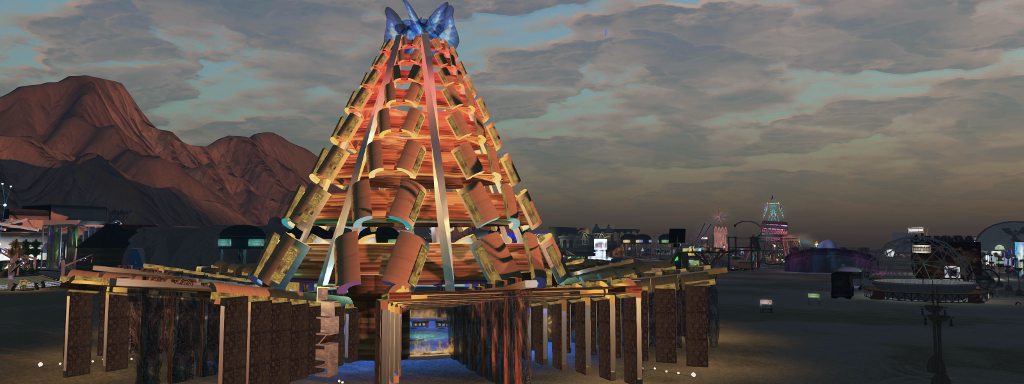
Burn2 2019 opens its gates at 17:00 SLT on Friday, October 11th, and will run through until midnight on Sunday, October 20th 2019, culminating in the burning of the Man the Temple on the closing weekend of the event.
The theme for this year is Metamorphoses, and is described thus:
Many cultures of the world have mythologies about transformations, or as the Greeks and Romans called them, metamorphoses.
In today’s world maybe humans are not turned into animals and frogs don’t become princes when kissed. But transformations can happen for a person or collectively for a group and these metamorphoses can have a powerful effect on our lives.
We invite you to immerse yourself in transformative experiences, explore the ideas and thoughts and dreams of creatives around you at Burn2.
Burn2 2019: The Temple
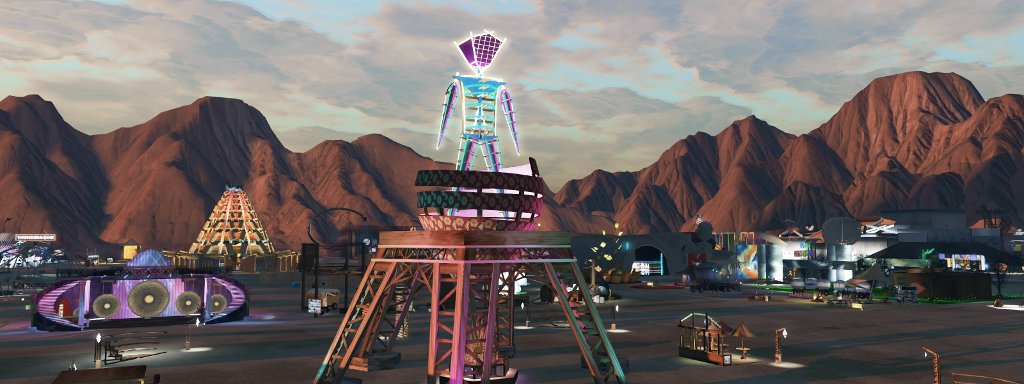
A week of activities have been planned for the event, including music, dancing, lamplighters processions and – of course – the burning of The Man (Saturday, October 19th at 12:00 noon SLT) and The Temple (Sunday, October 20th, 12:00 noon SLT). You can keep track of all BURN2 activities through the event schedule on Google Calendar.
To ease your explorations of the regions, don’t forget you can pick up a ride at the Department of Mutant Vehicles, car rezzing point close to the welcome area, and there are balloon rides to be had, while the festival volunteers can point you in the right direction and / or give you note cards listing the camps and points of interest.
As with previous years, participants have fully entered into the spirit of the BURN2 theme, and the regions offer a tremendous carnival atmosphere.
About Burn2
Burn2 is an extension of the Burning Man festival and community into the world of Second Life. It is an officially sanctioned Burning Man regional event, and the only virtual world event out of more than 100 real world Regional groups and the only regional event allowed to burn the man.
The Burn2 Team operates events year around, culminating in an annual major festival of community, art and fire in the fall – a virtual echo of Burning Man itself.









 Inara Pey: Living in a Modemworld