Far back in January 2021, I received an invitation from Ambre Singh to visit her gallery spaces located overhead at Noir’WEN City – and I offer my apologies to her for only now getting around to doing so.
A Second Life resident for getting towards 14 years, Ambre is an artist who uses photography, art, a sense of humour and generally provocative in the manner it prods the grey matter between the ears to start churning thoughts.
Thematically, much of her work might be considered Adult, with images not suitable for the work environment; it mixes direct Second Life photography – notably her avatar, the characters she creates and her friends – with mixed media pieces that combine physical world at and images with elements created within Second Life mixed with classical works both to tell her own stories and / or in celebration of their original artists.
Ambre Singh Gallery, April 2021
Her gallery space at Noir’WEN offer two wings set within a warehouse environment, one of which is devoted to a permanent exhibition entitled The Pink Dildo, and the other offers a broader mix of Ambre’s work, including the opportunity to rez past exhibitions – a novel idea I’ve admittedly never come across before.
The Pink Dildo (you can take it from the title this is an exhibit that can be labelled NSFW!) is a clever, humour-filled but ultimately thought-provoking view “of the role of women in the development of human societies”. Within it, Ambre presents a collection of images that combine original in-world art with clever re-workings of classical pieces of art to take us on a journey from pre-history through to modern times, each piece generally including a pink dildo in some fashion, together with a short descriptive text offered in English and French.
Ambre Singh: The Pink Dildo, April 2021
While it might be easy to dismiss these pieces as a means of simple titillation, to do so would be to miss the point. Whilst the entire exhibition includes adult themes wrapped in humour (just read the artist’s biography placed within the exhibit for evidence of the latter), there is a subtext within The Pink Dildo that might best be described as commentary on the (largely patriarchal) recording of history, whilst also offering personal views on modern society (notably on the upper floor of the hall), not all of which we may ascribe to or agree with, but which nevertheless give good pause for thought.
What is particularly – for me – engaging about this exhibition is the manner in which Ambre has taken classic pieces of art by Rembrandt, Poynter, da Vinci, Bouguereau, Jacques-Louis David, JW Waterhouse, Litovchenko and others and re-interpreted them as a part of her story. I also appreciate the topping and tailing of this exhibit through the use of a reference to 2001: A SpaceOdyssey at the start, and a sideways reference to Musk & SpaceX and their plans to colonise Mars.
Ambre Singh, The Pink Dildo, April 2021
The interjection of her avatar into classical works of art can also be found in the second wing of Ambre’s gallery, although with art that is more nude in tone and adult in theme, so again should be considered NSFW. Here, within the upper floor rezzer area, one can appreciate her take on pieces by JW Waterhouse, Boucher, Courbet, Draper and more, as well as collections of her avatar portraiture work, a neat little musical quiz challenging people to match the images with the song titles and more.
Engaging, rich in content, story and sub-text, Ambre Singh’s art is well worth visiting – and extended to a current exhibition in Noir’WENs ground-level gallery as well – something I’ll be returning to in the future.
Ingenuity hovers 3m above the surface of Jezero Crater, Mars, watched by the Mars 2020 rover Perseverance. Credit: NASA/JPL
April 19th saw aviation and space flight history made 288 million kilometres from Earth, when a tiny drone-like craft weighing just 1.8 kg spun-up two contra-rotating rotor blades, each 1.2 metres in diameter, to 2,500 rpm and then rose into the tenuous atmosphere of Mars to a height of 3 metres, hovered rotated about its vertical axis, then descended to land on the Martian surface once more.
Ingenuity, a proof-of-concept system to test the feasibility of controlled, powered flight on Mars, is a remarkable little vehicle that holds great promise for the future of the exploration of that world. While this initial flight was short – under a minute in total length from spinning-up its rotors to touch-down, it opens the door to more extensive flights over the coming days that will see the vehicle complete more complex manoeuvres. In doing so, it will provide vital information on the behaviour of rotary vehicles on Mars, vehicles that could in the future provide enormous additional potential and capabilities to future robotic missions on Mars and eventually support human missions.
The flight occurred at 07:31 UTC on Monday, April 19th, with telemetry being recorded by the helicopter’s own systems and relayed to the Mars 2020 Perseverance rover, which also recorded the event using its Mastcam-Z camera system and its navigation cameras. The initial data from the flight was then transmitted to Earth some three hours later, with additional images and video being transmitted throughout the day.
The first indication of the success of the flight came not through any pictures but via a simple graphic track of altimeter readings made by Ingenuity. Mostly flat to show the vehicle was sitting on the ground, the track was marked by a sudden “bump” recording the vehicle rise to just over 3 metres, its hover, and then its descent. It was enough to get the helicopter’s flight team – a handful at JPL practising social distancing in a large room, the rest working from home – rejoicing. But the chart was just the opening treat.
The altimeter data track from Ingenuity was the first solid indication that Ingenuity had successfully flown. Credit: NASA/JPL
Following the initial receipt of data, still images in low-resolution captured by Perseverance’s navigation cameras clearly showed the helicopter “jumping” between to close-together points, indicating that during the period between the images, it had flown and landed. However the biggest treat came later in the day with a stream of frames captured by the Mastcam-Z system on the rover. When strung together, these produced a video of the flight.
Ingenuity is a project more than six years in the making, and has uniquely involved not only multiple NASA space and science centres, but also their aviation research and development centres as well. It was actually a late addition to the Mars 2020 mission, requiring some extensive changes to the rover that had to be made in order to mount the helicopter beneath the rover’s belly, and include a mechanism for deploying Ingenuity onto the surface of Mars.
Ahead of the Mars 2020 launch, Ingenuity want through extensive testing to simulate flight conditions on Mars. This involved placing the vehicle a large vacuum chamber filled with carbon dioxide to a pressure to match the surface atmospheric pressure on Mars – which is the equivalent of Earth’s at an altitude of 30 km. To simulate the low Martian gravity (38% that of Earth’s), a special rig was attached to the demonstrator to counter 62% of its mass. Finally, a wall of 900 computer fans was used to simulate typical surface wind speeds on the surface of Mars, as recorded by the Mars Science Laboratory rover Curiosity.
All of this allowed engineers to define the optimal size of the helicopter’s rotors, balancing them against Ingenuity’s mass and size and to determine things like their required rate of spin to achieve flight – between 2,400 and 2,500 rpm – five times the speed of Earth-based helicopter rotors.
A low-resolution image taken by Ingenuity’s downward point camera showing the helicopter’s shadow on the surface of Mars as it hovers at a height of 3m. Credit: NASA/JPL
Even so, flying an engineering test model in a controlled environment is very different to doing the same on Mars – hence a lot was riding on this first flight.
Ahead of it, the area selected for the test flight sequence and previously dubbed “the airfield” was unofficially renamed “Wright Brothers Field”. Having safely dropped off the helicopter there in early April, Perseverance had driven some 70 metres from Ingenuity at a rise overlooking the area that NASA has dubbed “Van Zyl Overlook” in honour of key Ingenuity team member Jakob van Zyl, who passed away unexpectedly in August 2020. From this vantage point it is hoped that the rover will be able to record all of Ingenuity’s flights.
Captured by Ingenuity’s downward-pointing camera, this image shows Ingenuity’s shadow on the surface of Mars just before it lands. Two of the vehicle’s legs can be seen top left and top right, while the 2,500 rpm spin of the contra-rotating blades used to provide lift makes them appear semi-transparent. Credit: NASA/JPL
Prior to the flight, and as noted in my previous Space Sunday update, the flight team had to make some changes to the software overseeing Ingenuity’s first flight. Not only have these adjustments worked well, it is hoped that they will remove any need for running a complete software re-installation on the vehicle – a process that could take several days to complete and severely impact the ability to complete all of the remaining four planned test flights. However, the option of a full re-installation is being kept open should further issues arise with the timing and control processes.
Inn the meantime, it’s going to be a few days before all of the data from the first flight has been analysed. As such, the next flight for Ingenuity has yet to be scheduled.
When it does goes ahead, it should see the helicopter rise to an altitude of around 5 metres, then translate into horizontal flight for a distance of some 50 metres before coming to a stop, then returning once more to land.
As it is, the initial telemetry from Ingenuity shows it is a good health – better, in fact than before it lifted off. This is because the flight removed dust that had been accumulating on the solar cells located above the vehicle’s rotors, interfering with their efficiency.
In all the Mars Helicopter project has three goals:
Show via Earth-based testing that it should be possible for a heavier-than-air vehicle to take flight on Mars – achieve via the vacuum tests described above.
Achieve stable flight on Mars – now achieved through this first flight.
Obtain data that can inform engineers as to the design and capabilities required by future aerial vehicles that could be deployed to Mars – and also elsewhere in the solar system, such as Saturn’s moon Titan.
Following the flight, the ICAO has officially designated Ingenuity the first of aircraft type IGY, and gave its testing area on Mars the airport code JZRO. image credit: NASA
Logos representative only and should not be seen as an endorsement / preference / recommendation
Updates from the week ending Sunday, April 18th
This summary is generally published every Monday, and is a list of SL viewer / client releases (official and TPV) made during the previous week. When reading it, please note:
It is based on my Current Viewer Releases Page, a list of all Second Life viewers and clients that are in popular use (and of which I am aware), and which are recognised as adhering to the TPV Policy. This page includes comprehensive links to download pages, blog notes, release notes, etc., as well as links to any / all reviews of specific viewers / clients made within this blog.
By its nature, this summary presented here will always be in arrears, please refer to the Current Viewer Release Page for more up-to-date information.
Note that for purposes of length, TPV test viewers, preview / beta viewers / nightly builds are generally not recorded in these summaries.
Official LL Viewers
Release viewer: Custom Key Mappings RC viewer, version 6.4.17.557391, dated March 24th, promoted March 27th – No Change.
The Raglan Shire Artwalk is one of the staples of the SL art calendar, and for 2021 the 16th Artwalk will take place between Sunday, May 16th and Sunday, June 20th, inclusive.
A popular event among artists and residents, the Artwalk can see over 150 artists displaying their work – 2D and 3D – across the regions of Raglan Shire. All the displays are open-air, with 2D art is displayed on hedgerows in and around the regions, while sculptures and 3D art is displayed in a number of designated areas, all of which allows visitors to both appreciate the art and explore the Shire regions.
A Call For Artists for the 2021 event has been issued for those wishing to participate, and key points about the exhibition are as follows:
It is a non-juried show.
Artists can display more than one piece if they wish.
2D (“flat” art pieces will be awarded a maximum of 15 LI, and individual pictures should be 1 prim, including the frame.
3D art (sculptures, etc.), will be awarded a maximum of 500 LI for up to three pieces of work. Artists are requested to state the LI per piece in their application.
Sales of art are allowed.
Types of art supported by the show are: representations of RL photography, painting, drawing, printmaking, collage, and digital fine art that can be displayed on a prim; and SL photography, manipulated SL photography and SL sculpture.
Pictures of RL crafts, such as beadwork, leatherwork, etc., are not part of the show’s definition
All the above art forms are welcome, but should be rated PG / G – so no nudity, please!
Group membership will be required in order to display work.
Tip jars are not allowed.
Questions and enquiries should be forwarded via note card to Artwalk Director Karmagirl Avro, or Artwalk Assistants Kayak Kuu, Linn Darkwatch, or RaglanShireArtwalk Resident.
Tuesday, May 11th: Notification of exhibit space location issued to artists – note that hedgerow space for 2D artists is on a “first come, first serve” basis.
Friday, May 14th (after 09:00 SLT) and Saturday May 15th: Artist set-up days.
Sunday, May 16th: Artwalk Opens.
Sunday, June 20th: Artwalk closes.
Sunday, June 20th (after 21:00 SLT) through Tuesday, June 22nd: takedown of works.
An artist’s rendering of the SpaceX Starship HLS, now selected by NASA. Credit: SpaceX
On April 16th, in what was something of a surprising announcement, NASA confirmed that SpaceX has been granted the sole contract to develop the first Human Landing System (HLS) required for the Artemis project to return humans to the Moon.
HLS is the technical name given to the vehicle that will physically deliver crews to the surface of the Moon and return them back to lunar orbit. It is also the single element of the Artemis project that more-or-less ruled out the agency meeting the goal of returning the first crew to the Moon by the end of 2024. Developing a space vehicle is not a short-term activity, it requires years of development and testing, and a lot of money. Prior to the announcement, and with just 3.5 years to go for NASA to be able to meet the 2024 goal, it felt as if the decision on any HLS contract was being pushed down the road, NASA’s 2021 budget for any development stood at just US $850 million, around a quarter of the amount requested from Congress.
It was not until April 2020 that initial contracts were awarded to SpaceX and teams led by Blue Origin and Dynetics for initial proposal and develop of potential landing systems (see: Space Sunday: the Sun’s twin, going to the Moon & SpaceX). At the time NASA indicated they would likely proceed with two of the options; hence the reason for some of the surprise expressed after what was something of a hastily-arranged press conference the focused only on SpaceX gaining the initial contract – although the door is being kept open for the other teams to bid / compete for future Artemis missions.
During the announcement, NASA admitted that costs and a limited budget were a major factor in the decision – the SpaceX bid price for the contract was significantly lower than either Blue origin or Dynetics. A further factor in SpaceX’s favour is their long-term operational relationship with NASA.
In this 2020 rendering (sans the revised landing legs), three of the exhaust ports for the high-thrust RCS system that will be used to bring the SpaceX HLS into a landing can be see below and to the right of the crew egress door. Credit: SpaceX
The contract to develop HLS is US $2.9 billion, which covers the development of the system over the next few years, and the first two flights – an uncrewed test flight / landing and the first crewed landing. While a lot, this is actually around 13% of the cost of developing the Apollo Lunar lander when the latter is adjusted for inflation.
Nevertheless, the selection of the SpaceX vehicle is somewhat odd. The will be a significantly different vehicle from the proof-of-concept craft SpaceX is currently demonstrating, requiring as it will fully propulsive landings. It will also require substantial on-orbit refuelling just to get to the Moon.
As the vehicle is designed to land tail-first, and the Moon isn’t exactly concrete smooth, it will require substantial landing legs both to land on and keep it upright. These will mean the vehicle will likely require an additional “waist level” set of motor to mange the landing, and thus a substantially different internal layout of motors and fuel tanks.
Nor does it get any easier – for once on the Moon, the crew will be up in the nose of the vehicle, 25-30 metres above the lunar surface. So, to get down to it, they’ll need a complex airlock. elevator system that is robost enough to make repeated trips down from and back up the the crew module – something that is liable to be tiresome when it comes to off-loading equipment.
As the HLS remains in lunar orbit, crews will be delivered to it via the Gateway station using the Orion Multi-Purpose Crew Vehicle / SLS booster combination.
NASA Announcements
Alongside the SpaceX HLS announcement, NASA has also announced a new competition for the development of commercial services that can be used in support of human operations on the Moon – cargo delivery systems and similar.
It has also been confirmed that the second crewed launched to the International Space Station using a SpaceX Crew Dragon vehicle should lift-off fro Kennedy Space Centre at 10:11 UTC on Thursday, April 22nd. The crew, comprising NASA astronauts Shane Kimbrough and Megan McArthur, France’s Thomas Pesquet and Japan’s Akihiko Hoshide, arrived at Kennedy Space Centre on Friday, April 16th, and performed a final pre-launch dress-rehearsal in readiness for the flight which allowed NASA and SpaceX to confirm the launch vehicle is ready for flight.
The NASA / ESA / JAXA Crew-2 arrive at Kennedy Space Centre. (l to r): Thomas Pesquet (ESA / France), Megan McArthur (NASA), Shane Kimbrough (NASA) and Akihiko Hoshide (Japan / JAXA).Credit: NASA
Crew-2 will fly to the ISS aboard the Endeavour, the Crew Dragon used for the August 2020 Demo-2 mission that saw astronauts Douglas Hurley and Robert Behnken made the first human flight to orbit from US soil since the space shuttle was retired in 2011. Similarly, the Falcon 9 booster that will carry them to orbit was also used to fly the Crew-1 astronauts to the ISS in November 2020.
NASA has also received a potential boost from the Biden Administration, which is seeking a 6.3% increase in the agency’s budget for the next fiscal year. In all, the plan published by the administration is requesting US $24.7 billion for the space agency, with US $6.3 billion earmarked for the Artemis programme and US $3 billion for the ISS.
Some US $2.3 billion has been requested for understanding and alleviating climate change, a 10% increase over the prior year. The summary of the spend does not go into specifics on individual missions already in development or being planned, but does point to funding for the Nancy Grace Roman Space Telescope (formally WFIRST), which the Trump administration repeatedly tried to cancel, and a 16% increase for NASA’s STEM funding, which again the Trump administration tried to eviscerate through a combination of closing down related NASA departments and reducing funding.
The Biden Administration is seeking a 6.3% expansion of NASA’s budget for 2022, specifically earmarking the Nancy Grace Roman Space Telescope for funding – a move likely to find favour in congress, which refused three attempts by the Trump administration to kill the project despite its advanced state of developing and low cost. Credit: NASA
Alongside of NASA, the Biden federal budget looks to increase the National Science Foundation’s government funding by 20% (US $10.2 billion) and raise the National Oceanographic and Atmospheric Association’s budget to US $2 billion.
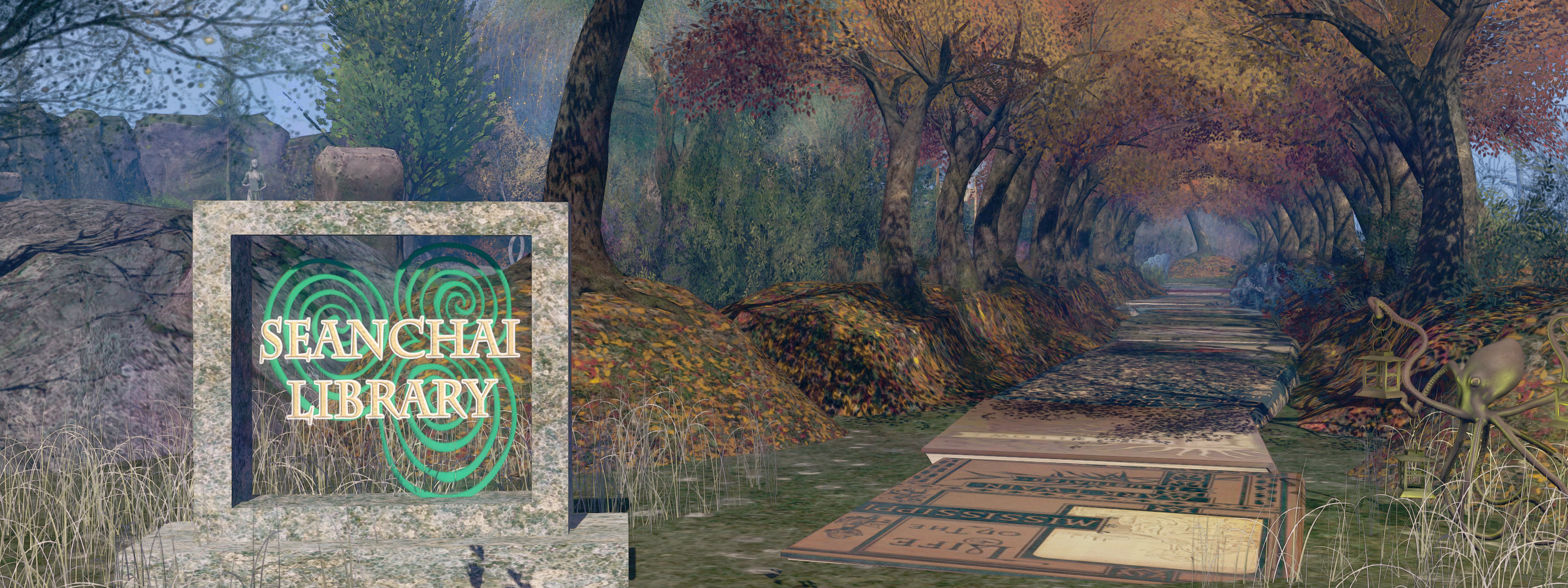
It’s time to highlight another week of storytelling in Voice by the staff and volunteers at the Seanchai Library. As always, all times SLT, and events are held at the Library’s home in Nowhereville, unless otherwise indicated. Note that the schedule below may be subject to change during the week, please refer to the Seanchai Library website for the latest information through the week.
Monday, April 19th: 19:00 The Mote in God’s Eye
In the year AD 3017, humanity is recovering from an interstellar civil war that tore apart the first Empire of Man. The Second Empire is busy establishing control over the remnants of its predecessor although some worlds don’t appreciate bring brought to heel. Following the quashing of a rebellion on New Chicago, Commander Roderick Blaine is given temporary command of the battlecruiser INSS MacArthur, and charged with transporting the suspected leader on the New Chicago uprising Empire’s centre, the planet Sparta.
The route takes the MacArthur to the New Caledonia system, where she is ordered to intercept a sub-light vessel that appears to come from a yellow star referred to as the Mote, as from New Celedonia, it sits in front of a massive red star, like a mote in an eye.
Unfortunately, the encounter with the alien vessel does not go well. But has a result, the MacArthur is dispatched to the Mote alongside of the battlecruiser Lenin, charged with trying to establish first contact with the race the built the sublight ship – whom humans have nicknamed “Moties”.
Arriving at the star, the human ships find a race far more technically developed than had been thought, and old enough to have developed into a series of highly-specialised sub-species. Thus begin an fascinating tale of first contact between races, one that encompass a range of dances – political, strategic, and more – in which motives are varied and secrets hidden.
Gyro Muggins reads the classic sci-fi novel by Larry Niven and Jerry Pournelle.
When the Jones family move into a Victorian house that has been converted into a set of flats, and her parents always busy and wrapped in their work, young Coraline sets out to discover all she can about her new home.
Along the way, she meets a pair of retired actress sisters, an old man trying to train a mouse orchestra, and a door that, unlike all the others that lead somewhere, oddly opens onto a brick wall.
Until the day it doesn’t, and instead opens onto a hallway leading to another world.
It’s a world just like her own, but also very different. The flat she enters looks just like her own, the neighbours are just like those she has met – but oddly younger – and the mother and father she finds within the “other “home dote on her: marvellous toys, magical books and wonderful food.
This other home and the parents within it are all that Coraline has ever wanted – until her other mother tells her she can stay and live forever – if she will have buttons sewn into her eyes. Scared by the request, Coraline returns to her real home, only to find her parents now gone. Realising they have been taken by her “other mother”, she realises she must return along the hallway and risk her future in order to rescue them.
With Willow Moonfire.
Wednesday, April 21st, 19:00: When You Trap a Tiger
When Lily and her family move in with her sick Halmoni (grandmother), a magical tiger straight out of her halmoni’s Korean folktales arrives, prompting Lily to unravel a secret family history.
Long, long ago, Halmoni stole something from the tigers and now the tigers want it back. So the tiger visiting has arrvied with an offer for Lily: return what Halmoni stole in exchange for the return of her health Halmoni’s health.
It is a tempting offer; but deals with magical tigers are not always what they appear to be. So Lily must, with the help of her sister and her friend Ricky, find her voice and her courage, and face whatever trickery the tiger may conjure.
Caledonia Skytower reads the 2021 2021 Newbery Medal winning story by Tae Keller.
Thursday, April 22nd
19:00: Revisiting the Poetry of the Planets
Caledonia shares Holst’s music and the poetry written and submitted as part of her 2017 LEA project, in the Glen.
21:00 Seanchai Late Night
Late night contemporary sci-fi and fantasy with Finn Zeddmore.








 Inara Pey: Living in a Modemworld