Now open at Kultivate Magazine’s The Edge Gallery is a new ensemble exhibition of art to take us through the end of May and into June 2022.
The Edge is the home of black-and-white art displays at Kultivate’s home of Water Haven, making it a particular attraction for me, as I very much appreciate monochrome and black-and-white art, and have been endeavouring to develop my own technique with it, which I may get around to showing at some point.
This exhibition at The Edge opened on May 22nd, and is without a given theme, allowing the artists free rein over the pieces they’ve selected to display. The participating artists are: Dawnbeam Dreamscape, Sophia Galewind, Lena Kiopak, Maaddi, Hannah Starlight, Tacca Exotic, Vita Theas and Myra Wildmist.
The Edge Gallery: Dawnbeam Dreamscape, Tacca Exotic and Sophia Galewind
As might be expected from such a gathering, the pieces on offer leans very much towards being avatar-focused, with three of the artists – Lena Kiopak, Hannah Starlight and Tacca Exotic opting to display a single piece each, all in a large format.
Lena is one of only two artists in the gathering to completely avoid avatars in her image(s), leaving The Passage as an powerfully eye-catching piece which calls to the observer, beckoning them to walk its length and into the waiting story. Similarly, Hannah’s His Song is highly sensual and artistically given whilst Tacca’s Emergence-1 matches the power of The Passage, but in a wholly different way.
The other artists to avoid avatar is Vita Theas, who once again present six superbly processed and presented landscape pieces rich in life, whilst Sophia and and Maadi offer a mix of avatar studies and landscapes – with Sophia’s b r e a t h e again particularly capturing my eye. Myra, meanwhile offers a set of five images that together form Myra Dances, something of a life and motion study.
The following summary notes were taken from the Tuesday, May 24th, 2022 Simulator User Group (SUG) meeting. It forms a summary of the items discussed and is not intended to be a full transcript. A video of the entire meeting is embedded at the end of the article for those wishing to review the meeting in full – my thanks to Pantera for recording it.
Server Deployments
At the time of writing, there was no server deployment thread for the week, or release notes for the RC updates.
On Tuesday, May 24th, the SLS Main and Event channel servers updated to simulator version 05-06.571613, comprising:
A fix for off-line Friend / Group request – see below for more.
The removal of server-side generation of Calling Cards when a friendship offer is accepted has been removed.
Wednesday, May 25th should see two RC channel updates:
Simulator version 2022-05-20.571998, which includes a couple of fixes, including one for the issue with objects not showing up when you first log-in.
Simulator version 2022-05-19.571962, comprising an update with fixes in support of the upcoming Premium Plus capability.
Rider Linden has agreed to take requests that future simulator deployments are posted to the forums in a timely manner once more (e.g. no later than the Monday evening before any proposed deployments).
Offline Group Offers and Friend Requests
As noted above, the fix for off-line friendship requests and group membership offers going stale between being set and the next time the recipient logs-in to SL and tries to accept them (so they are never acted upon) is now grid-wide. However, it is subject to certain limitations:
When the recipient does log in, stored offers are retrieved and remain active for up to 24 hours or until the region restarts.
Requests can only be acted upon whilst you remain in the region you logged into – so respond before TPing!
The offers are received by the recipient as Notifications, and friendship offers also appear as Direct Messages from the person / group sending the offer.
See this official blog post for more, including the note on Calling Cards given above.
Available Official Viewers
There have been no official viewer updates at the start of the week, leaving the current crop as:
Release viewer: version version 6.5.5.571282, – formerly the MFA RC viewer, dated April 26, promoted Wednesday, May 4th – NEW.
It’s time to highlight another week of storytelling in Voice by the staff and volunteers at the Seanchai Library. As always, all times SLT, and events are held at the Library’s home in Nowhereville, unless otherwise indicated. Note that the schedule below may be subject to change during the week, please refer to the Seanchai Library website for the latest information through the week.
Monday, May 23rd, 19:00
Test pilot Joe South and his experimental test spacecraft are catapulted 500 years into the future from the 25th century, arriving in the vicinity of the space station Threshold. Aboard the station, he discovers Earth is now a preserve with restricted access for the human wealthy only.
For the station’s chief, Mickey Croft, the anachronistic South is the last thing he needs to have added to his plate. The station is playing host to a conference of dignitaries discussing the rights of alien races and bioengineered species that have been created as indentured servants, and a ship load of Muslims have arrived from distant Medina, determined to reach Earth on their pilgrimage to Mecca.
However, whether he likes it or not, Croft’s lot is about to get a lot more complicated, thanks in part to a pair of – literally – star-crossed lovers and the additional arrival at Threshold of a scavenger ship that brings with it an alien artefact of unknown purpose and power.
With Gyro Muggins.
Note: this session is subject to confirmation – check directly with Library staff.
The Kingdom of Galaway has a law – The Test of Kings – that every heir to the throne must work a year and a day as a commoner in order to prove they are worthy of being ruler. Not a great law when you are as lazy and indulgent as Prince Larry.
He find that on his day, he must become servant to a former slave, Brishee, as she is conscripted to find the lost artefact, The Shield of Many Uses. However, the evil Percy has other ideas. Via murder and conspiracy, he intends to usurp the throne of King Willy.
Will Larry survive in his role as servant to Brishee? Will she succeed in her quest – and Larry, by extension, succeed in The Test of Kings, or will he be the first to fail, and Percy thus succeed?
The King, meanwhile, has problems of his own: why does Cruith the Crone keep stealing his chickens? Why is she always the first in line to bend his ear on Beggar’s Day?
Caledonia Skytower reads M.J. McGalliard’s first volume in the Beggar’s Day series.
Wednesday, May 25th: Seanchai Flicks
A special for Star Wars month as the Seanchai cinema space plays host to videos from the galaxy far, far away.
Logos representative only and should not be seen as an endorsement / preference / recommendation
Updates from the week ending Sunday, May 22nd, 2022
This summary is generally published every Monday, and is a list of SL viewer / client releases (official and TPV) made during the previous week. When reading it, please note:
It is based on my Current Viewer Releases Page, a list of all Second Life viewers and clients that are in popular use (and of which I am aware), and which are recognised as adhering to the TPV Policy. This page includes comprehensive links to download pages, blog notes, release notes, etc., as well as links to any / all reviews of specific viewers / clients made within this blog.
By its nature, this summary presented here will always be in arrears, please refer to the Current Viewer Release Page for more up-to-date information.
Note that for purposes of length, TPV test viewers, preview / beta viewers / nightly builds are generally not recorded in these summaries.
Official LL Viewers
Release viewer: version version 6.5.5.571282, – formerly the MFA RC viewer, dated April 26, promoted Wednesday, May 4th – No change.
Release channel cohorts:
Performance Improvements RC viewer updated to version 6.6.0.571939, on May 20th.
Serene Footman continues his renewed region design partnership with Jade Koltai, with the two opening their latest offering to Second Life users on May 21st, this one taking us deep into Mexico and the ghostly settlement of Ojuela.
Located within the state of Durango, Ojuela initially gained some notoriety in the 17th century as a place where gold and silver could be found, both having been discovered there by Spanish prospectors in 1598. However, it was the discovery of assorted minerals – some 177 different types in all, including adamite, calcite, legardite, rosasite and fluorite – that really spurred the mining operations in the area.
Ojuela, May 2022
By the 19th century, mining operations had given rise to a small settlement on the mountain housing the the mine, and this underwent significant expansion as miners tbrought their families to settle with them and a railhead was established for transporting mined minerals to nearby Mapimí.
It was at the end of the 19th century that the town’s most famous landmark – and focal point for Jade and Serene’s build – was constructed. This is the impressive Ojuela Bridge, designed by Wilhelm Hildenbrand. With a span of 271.5 metres, on completion in 1898 it was the world’s the third longest suspension bridge. However, by the time it was completed mining at Ojuela – now under the control of the Peñoles mining company (today the second largest mining conglomerate in Mexico) – was starting to experience increasing issues with shafts flooding and waning mineral deposits.
The Mexican Revolution of 1910-1920 did not help with production at the mine, and following the end of the fighting, Peñoles opted to withdraw, leasing the mine back to local miners. However, by the early 1930s, with the mine suffering from severe flooding and the accessible mineral veins exhausted, Ojuela was abandoned, bringing to an end around 350 years of continuous mining which had yielded 6 million tons of thoroughly oxidised ore carrying 90 million ounces of silver, 0.6 million ounces of gold and 1.8 billion pounds of lead.
With the mine abandoned the town was left to nature, and today little remains. However, the Ojuela Bridge has been luckier. A major restoration project was started in the late 1980s, culminating in it being fully restored and re-opened as a pedestrian bridge (and tourist attraction) in 1991.
Ojuela, May 2022
Given they only have a single region to work within, Serene and Jade have – as always – captured the core essence of their subject perfectly, blending the region with a surround to offer a real sense of being in a mountainous setting. From the massive bridge gantries – built be Serene – through to the surrounding peaks, they’ve taken a huge amount of care to offer an engaging mix of physical fidelity at scale with the original setting and a degree of artistic licence.
Fore example, the remnants of the Ojuela township, are perhaps more complete here than in the physical world Ojuela, where they are referred to as “ruins” and “foundations” – but this adds to the attractiveness of Jade and Serene’s Ojuela, allowing visitors to gather a sense of how it might have appears in the years following the immediate abandonment.
Ojuela, May 2022
The bridge itself cleverly uses Serene’s own work and commercially-available bridge elements and is simply a masterpiece, spanning as it does the deep gorge that comes complete with the shadowy entrance to a cave (or older mineshaft) that can also bee seen in many photographs taken around the actual bridge. The model fully captures the cabling of the original and the sensation evoked when crossing it is such that all it needs is a couple of materials surfaces to allow the natural creaking of wood in response to walking on the boards together with the susurration of a breeze through the cables, as one would definitely have the sensation of crossing the actual bridge.
As is usual for the team’s work, Ojuela includes multiples places to sit and appreciate the setting, together with local wildlife and the use of a gentle soundscape to add definition and depth to a visit.
Ojuela, May 2022
Admittedly, I’ve opted from a brighter daylight setting with the images here than has been created for Ojuela, the region’s environment being more of a twilight nature, but this shouldn’t put you off visiting: Serene’s and Jade’s work is always richly engaging and rewarding to see whilst it remains available to appreciate.
The CST-100 Starliner sits just 10 metres off the ISS, its nose open to expose its docking mechanism and forted port May 20th, 2022. Credit: NASA
Boeing’s CST-100 Starliner finally lifted-off from Space Launch Complex 41 at the Cape Canaveral Sport Force station on Thursday, May 19th, sitting atop a United Launch Alliance (ULA) Atlas 5 booster, in what is a critical test flight for the system, one that involves a rendezvous and docking with the International Space Station (ISS).
Called Orbital Flight Test 2 (OFT-2), the uncrewed mission is the second attempt to fly a Starliner vehicle to a successful docking with ISS – seen as a critical precursor to Starliner vehicles carrying crews to / from the ISS. The first attempt, carried out in December 2019 failed to rendezvous with the ISS after a software issue caused the vehicle’s orbital manoeuvring and attitude control (OMAC) thrusters to misfire repeatedly, leaving the vehicle with insufficient propellant reserve to make the rendezvous once the issue had been controlled. However, the Starliner – christened Calypso, and now earmarked for the first CST-100 crewed flight – still completed the orbital tests for the mission successfully, and made a safe return to Earth.
CST-100 OFT-2 lifts-off from SLC-41 at Cape Canaveral Space Force station, May 19th, 2021. Credit: NASA
Following lift-off at 22:54 UTC, on May 19th, the Starliner vehicle (currently unnamed) reached an initial orbit successfully. However, at 31 minutes after launch, things went slightly awry. At this point one of the vehicles 12 main OMAC thrusters was due to fire for 45 seconds to place the Starliner on the correct trajectory to commence its “chase” to the space station.
However, one second after firing, the thruster shut down. This triggered an automatic firing of a second thruster, which ran for 25 seconds before shutting down, leaving a third thruster completing the burn. Whilst of concern, the initial two thruster failures were not sufficient to prevent the mission continuing, and both NASA and Boeing are reviewing data to determine what the problem is – and whether the two faulty thrusters are still capable of firing correctly – the main OMAC thrusters being needed to de-orbit the vehicle at the end of its flight.
Sunlight flashes off of the hull of the CST-100 Starliner as it chases the ISS. Credit: NASA
Despite these teething problems, the Starliner “caught up” with the ISS on Friday, May 20th, having successful completed a series of tests whilst closing on the ISS. At 20:36 on the 20th, the crew on the ISS caught their first sight of the Starliner. The capsule steadily closed on the station before completing two “flyarounds”, allowing the ISS crew to observe the vehicle’s overall condition ahead of docking.
Utilising self guidance, the capsule then closed to within 180 metres of the space station before coming to a stop and then moving away once more in an “approach and retreat manoeuvre” intended to test the vehicle’s ability to carry out precise manoeuvres in close proximity to the station. After this, it resumed its approach towards the Harmony module and its docking port, coming to within 10 metres of the station when it was ordered to stop when mission control confirmed it was a little off-centre relative to the docking port.
Another view of the Starliner approaching the Harmony module of the ISS, May 20th, 2022. Credit: NASA
This eventually required the vehicle to back away from the station, correct its alignment and make a second approach – which was again halted at 10 metres from the station. This proved to be the start of an irritating period of minor issues with the docking mechanism at the front of the vehicle which ultimately delayed docking by 90 minutes, Starliner finally connecting with the ISS at 00:28 GMT on Saturday, May 21st.
Following docking, a further series of testes on the vehicle were conducted, and the hatches between station and capsule were finally opened at 16:04 GMT, allowing astronauts Robert Hines and Kjell Lindgren connect ventilation systems and move camera systems into the capsule. They also greeted the capsule’s main occupant: Rosie the Rocketeer, a mannequin occupying the commander’s seat in the capsule and equipped with various instruments to test how orbital ascent (and return to Earth) affect those riding in the vehicle.
The Starliner docked against the extended docking arm of the Harmony module – the latter retracts to pull the capsule against the docking port. Credit: NASAAlso on the flight is a plush toy of Jebediah Kerman, one of the four original characters from the space game Kerbal Space. The first Kerbal to officially make it to space, “Jeb” is the mission’s “zero-g indicator” for the flight. His presence was kept secret by the ground control team, so that he might be discovered by the ISS crew on entering the vehicle – Kerbal Space is apparently very popular among Boeing and NASA staff.
The Starliner is set to remain docked with ISS for 4-5 days before departing for a return to Earth. If declared a success post-analysis, OFT-2 should pave the way for the first crewed flight before the end of 2022. Called Crewed Flight Test, it will carry a crew of 3 (personnel still to be confirmed) to the ISS on a 10-day (ish) mission to the space station. That in turn should clear the way for operational flights with Starliner to start in early 2023.
Curiosity’s “Dog Door” and InSight’s Demise
Parts of the Internet have been all agog over the last few days, after NASA Tweeted images on May 18th captured by the Mars Science Laboratory rover Curiosity, labelled (perhaps a little unfortunately) as a “door shaped fracture” that offers (again, unfortunate wording) “a doorway into the ancient past” – terms that were taken just a little too literally by some.
A mosaic of 113 images captured by the MastCam system on NASA’s Curiosity rover captures the face of “East Cliff” on May 7th, 2022, (mission sol 3,466). The fissure of “Dog Door can be seen over to the upper left. This mosaic has been colour and light adjusted to give the same conditions as if the feature was being viewed on Earth. Credit: NASA/JPL
The images were part of a series captured by the rover on May 7th, during a survey of a sedimentary mound of rock layers dubbed “East Cliff”, and sitting on the flank of “Mount Sharp”, the 5-km high mound of material at the centre of Gale Crater. During the processing of 133 images taken of “East Cliff” using the rover’s MastCam, the science team noted an interesting fissure within the upper, most weathered layers of the mound.
Looking to be rectangular in shape, the fissure does appear to be door-like – although not one any human is going to be walking through, given it is just 29.1 cm tall and the maximum width of the feature in just 38.9cm (sizes which prompted NASA to call the feature a “dog door” as it is closer in dimensions to the front opening on a kennel).
A further mosaic from Curiosity taken on May 7th, 2022, showing the “Dog Door” fissure more centred (and circled) in the image. Again, the image has been colour / light adjusted for Earth lighting. Credit: NASA/JPL
However, while the fissure is real, it’s door-like appearance is the result of two key factors: the angle at which sunlight is striking the mound, which casts the back of the fissure into shadow, giving the impression it is some form of entrance; and the also pareidolia – the tendency for the human brain to try and interpret strange sights and objects by trying to perceive them as something familiar – in this case a door.
Such fissures are not actually uncommon within geological features like East Cliff, both here on Earth and on Mars. They are caused by the intersection of multiple vertical (from weathering under the influence of water / wind) with horizontal layering of rock such that the most exposed part of the result lattice break away, forming a shallow fissure with regular-looking sides.
An anaglyph close-up of the “Dog Door” with annotations indicating the approximate width, height, and depth of the open fissure. Credit: NASA/JPL
And the comment about being a “doorway into the past”? That’s simply a reference to the fact that the collapse that formed the fissure offers the opportunity to perhaps examine rocks that haven’t been so exposed to the ambient surface conditions of Mars and may have had a degree of protection from harsher solar radiation, and so might reveal further chemical / mineral clues to the ancient past of “Mount Sharp”.
It has also been announced that NASA’s InSight Lander mission, which has been operating on Mars since November 2018, but which tends to get overlooked in favour of the “sexier” rover missions, may be coming to an end as soon as mid-July 2022.
InSight, which I covered in-depth at its May 2018 launch (see: Space Sunday: insight on InSight, May 2018) has been carrying out studies into the interior of Mars, including the study of “Marquakes” that appear to take place deep within the planet. However, it has been suffering from a significant decrease in available power as a result of dust accumulation on the pair of 2.2 metre diameter solar arrays.
Comparative images showing how dust accumulated on InSight’s sollar arrays. On the left, one of the arrays 10 days after landing, looking fairly clean. On the right, the same array after just under 4 months on Mars. Credit: NASA/JPL
As I reported in 2021, such was the dust build up on the arrays, the electrical power generation on the lander has been reduced to just one-tenth of the 4.6 kilowatt-hours the arrays generated during the initial days of Mars operations, and is now insufficient to continue to meet the needs of all systems on the lander.
Because of this, the decision has been taken to start powering-down non-essential systems and instruments, the intention to leave only the seismometer positions on the surface of Mars working, together with the camera system mounted on the lander’s robot arm (which will be oriented to focus on the seismometer before the arm is shut down), and the lander’s communication system.
However, even with the reduction in power usage this will achieve, the mission team believe that power production levels will drop below the minimum required to keep the seismometer functioning by mid-to-late July; although sufficient power will still be generated to power the communications system through until possibly the end of 2022.
Despite being overlooked at times, InSight has far surpassed its planned 2-year primary mission, and has yielded a lot of information about the processes at work deep within Mars.
SpinLaunch Update
In November 2021, I wrote about Spinlaunch, a company that plans to use a 100-metre diameter vacuum accelerator to propel payloads of up to 200 kg on the first leg of their journey to orbit.
This would be achieved by placing the payloads and their rocket inside a ballistic projectile (total mass: 11.2 tonnes) which would then be spun-up to a speed of 8,000 km/h with the drum-like accelerator before releasing it along a guidance tube (think gun barrel) and out into the atmosphere to be hurtled to a altitude of 61 km, where the projectile splits open to release the rocket, which can ignite its motors and power its way to orbit.
The Spinlaunch prototype accelerator shown in scale to the statue of liberty. Credit: SpinLaunchThis may sound crazy – and there are a lot of issues / questions around the full-size implementation of the system – however, since October 2021, SpinLaunch has been carrying out increasingly ambitious sub-orbital tests using a 1/3rd scale accelerator operating at 20% of the full-scale system to launch projectiles (“simulators”) on ballistic flights to offer both a proof of concept for the idea and to gather essential data on its overall feasibility.
As a part of these tests, on April 22nd, 2022, Spinlaunch for the first time carried out a test launch of a simulator equipped with a camera system. The resultant video is impressive, showing the launch accelerator dwindling in size below the projectile as it climbs into the atmosphere at 1,600 km/h before starting its tumble back to Earth, where the video cuts out.
However, before watching the video be warned: a longitudinal spin is imparted to the simulator to help with stabilising it in flight (again akin to a bullet being stabilised by the rifling in a gun barrel), and this spinning might induce a sense of motion sickness in the sensitive.
The exact height reached by the projectile simulator has not been confirmed by SpinLaunch, but given the curve of the Earth can be seen, it would seem likely that the simulator reached several kilometres in attitude.
There is still a long way to go before SpinLaunch is close to being ready to start full-scale operations (and much to be proved before they do), but such has been their progress to date, NASA has signed-on to the project with the intent to fly at least one payload of their own on a sub-orbital launch so that they might gather data on system and payload performance.
More from China
May has been a busy month for announcements by China concerning its space ambitions. In the previous Space Sunday update, I covered the most recent news on China’s upcoming space telescope. It is just one of three initiatives to gain update / confirmation.
The first part of May saw a series of television interviews with CCTV, the state television network, Huang Zhen the chief designer at the China National Space Administration (CNSA) gave the first official confirmation of the multi-facetted work being put into developing a permanent human presence on the Moon.
In particular, the interviews gave the first official confirmation of China’s Manned Lunar Deep Space Exploration Project Office (MLDSEP), tasked with developing the technologies required to establish a permanent presence on the Moon – and to enhance those technologies, where relevant, for future crewed mission to Mars.
The interviews also touched upon – if only superficially – various aspects of the work MLDSEP is engaged upon. These include: the development of Earth-based training facilities for lunar hardware and operations; design and development on lunar hardware including: crewed lander vehicles, pressurised rover vehicles, payload landers, and what appears to be a lunar orbital space station similar in nature to NASA’s Gateway station, together with research into and research into in-situ resource utilisation capabilities to provide air, water, and building materials to support an expanding lunar presence.
A general graphic displayed by China state television during interviews with CNSA chief designer Huang Zhen, showing some of the lunar hardware CNSA are developing for human operations on the Moon. Credit: CNSA / CCTV
Then, on May 13th, another of China’s chief designers – Zhang Rongqiao, responsible for China’s highly successful Mars orbiter / lander / rover mission, Tianwen 1 – confirmed his team are deep into developing Tianwen-2, a decade-long two-phase, mission of enormous ambition.
The first phase of the mission, lasting 2 years, will see the vehicle launches and rendezvous with asteroid 469219 Kamo’oalewa, a quasi-satellite of Earth occupying a solar orbit close to our own..On arrival, Tianwen-2 will first perform a “touch and go” flyby similar to those used by Japan’s Hayabusa 2 and NASA’s OSIRIS-Rex, to gather samples from the surface of the asteroid.
Assuming a suitable location can be found; the vehicle will then attempt to anchor itself to the asteroid using a set of robot arms, and then drill into the asteroid to obtain a core sample. Tianwen-2 will then return to Earth and use the planet’s gravity to slingshot it on its way to its next target, but not before it has dropped off the samples from 469219 Kamo’oalewa for recovery and study.
The slingshot manoeuvre will set the vehicle on a 7-year journey to 311P/PanSTARRS, a so-called “active asteroid”, because it has properties seen within both asteroids and comets. Once there, it will orbit and analyse the asteroid for at least a year (possibly longer, depending on propellant reserves) using a range of cameras and spectrometers to glean insights into questions such as the mystery of the source of Earth’s water. Data gathered will be communicated back to Earth, although Tianwen-2 will not itself be returning. No images have been released as yet to show the proposed design of Tianwen-2.


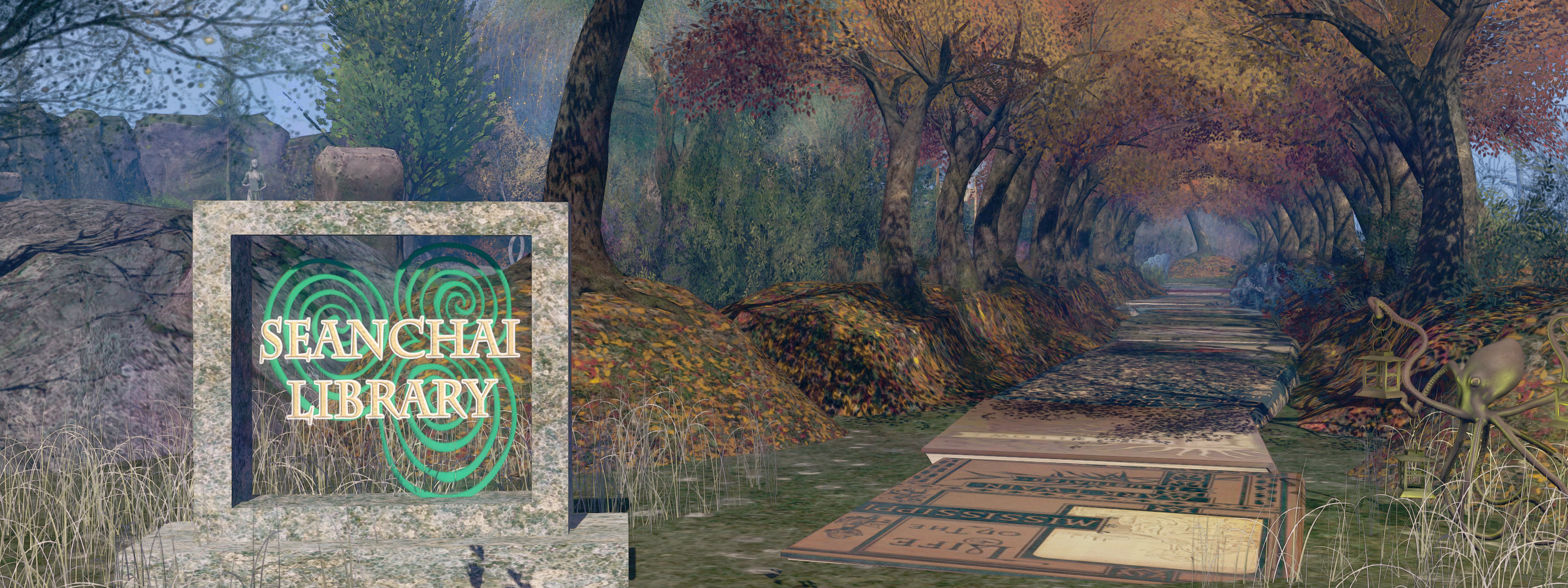
 Test pilot Joe South and his experimental test spacecraft are catapulted 500 years into the future from the 25th century, arriving in the vicinity of the space station Threshold. Aboard the station, he discovers Earth is now a preserve with restricted access for the human wealthy only.
 The Kingdom of Galaway has a law – The Test of Kings – that every heir to the throne must work a year and a day as a commoner in order to prove they are worthy of being ruler. Not a great law when you are as lazy and indulgent as Prince Larry.


 Inara Pey: Living in a Modemworld