Bright blades in a Gentle Wind

Soyokaze; Inara Pey, January 2015, on FlickrSoyokaze (Flickr) – click any image for full size

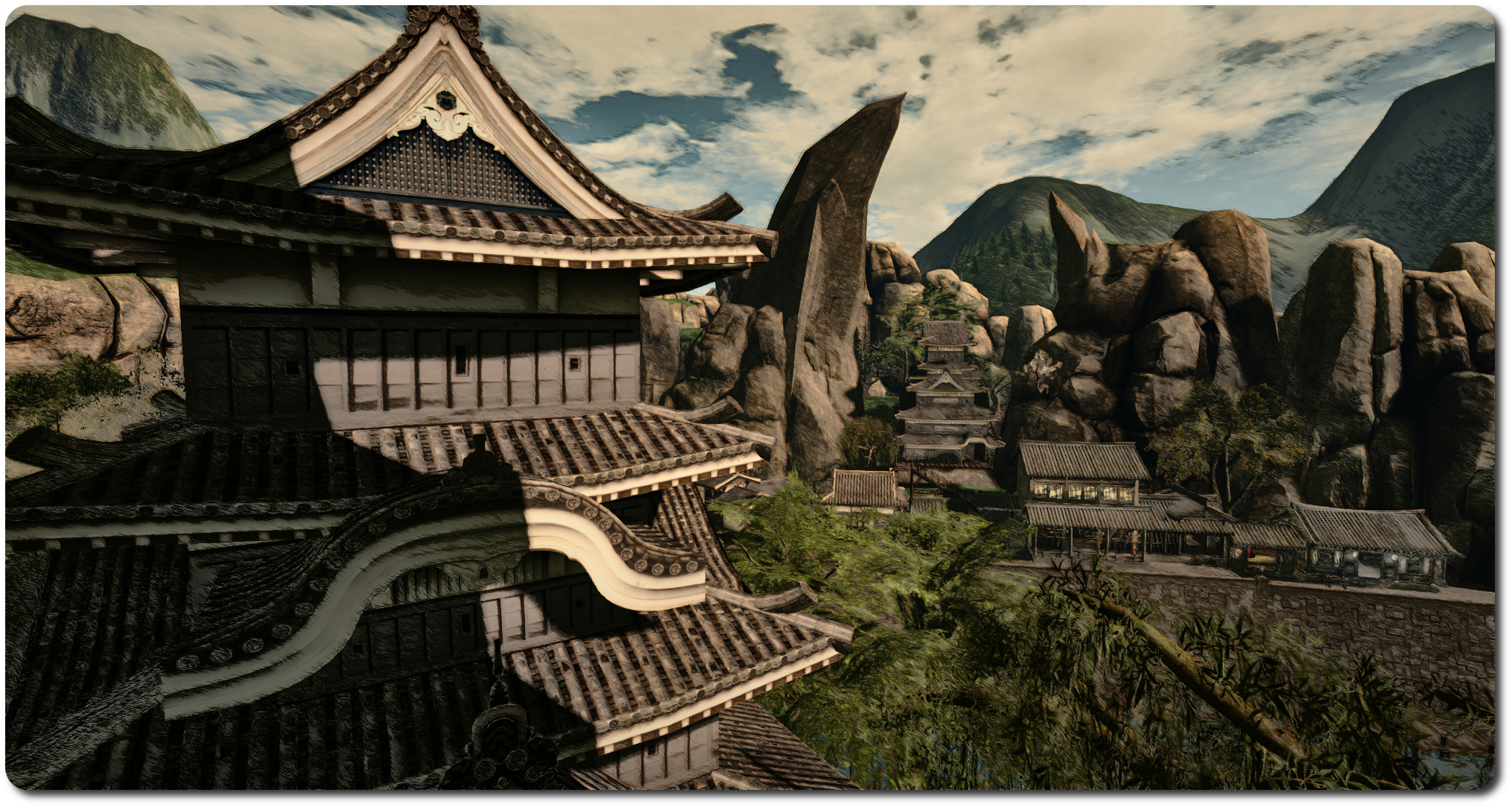
Soyokaze (“gentle wind”) is the home and dōjō for the Soyokaze clan, a school for C:SI sword combat, and a RP environment honouring the samurai and the Edo period of ancient Japan. It is also the home of the  Bushido Challenge, which is one of the most involved challenges I’ve yet tried in SL, being both immersive and engaging.

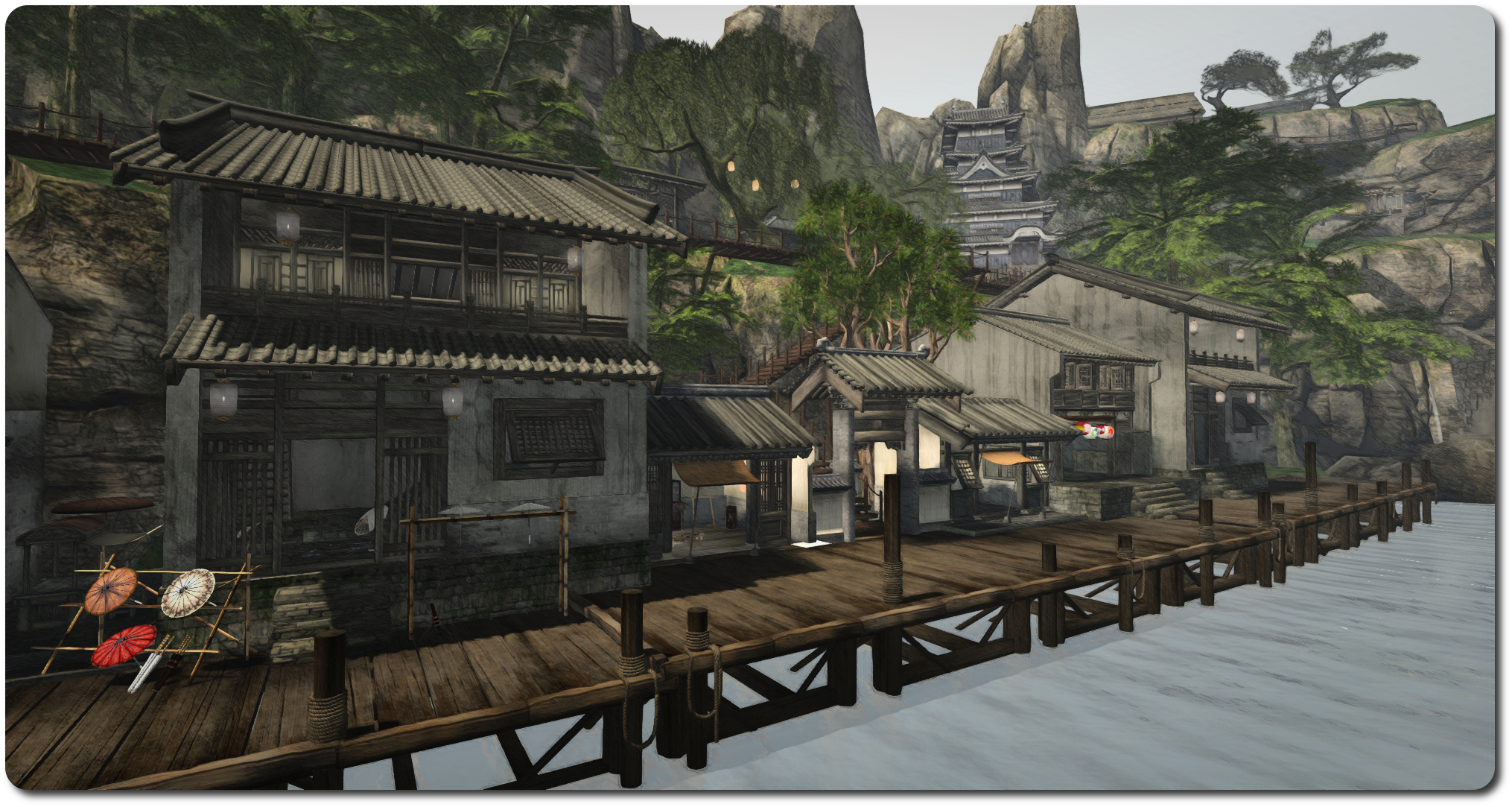
The Soyokaze-ryu can be found on the ground level of the region. Here, set deep within a river gorge, sits a small village, the wooden buildings standing on either side of the gorge, a stone bridge spanning the waters. This place is clearly of of strategic import, as it is overlooked by two stone-built castles.

Soyokaze; Inara Pey, January 2015, on FlickrSoyokaze (Flickr) – click any image for full size

There are opportunities galore for photography here, and clan members offer a warm and friendly greeting. Period costume is not required (indeed, it should be pointed out that the clan is dedicated to preserving the best and oldest of traditions of the Edo period, rather than being set in the Edo period – hence the seemingly odd appearances of things like a soda drinks dispenser, dart board and modern-era gamer’s chairs in some parts of the region). That said, some light role-play does, I’m told, take place within the region at times.

As a centre for C:SI sword combat, the school welcomes enquiries from interested parties, which should be addressed to DomoKun Giotto or Kasumi Hashi. There are a number of combat zones placed around the village, mostly notable the impressive form of the school itself, nestling in the neighbouring valley.   If you’d like to rez props for any photography, rezzing is open, and auto-return set to 21 minutes – but do please remember to pick your bits up if you finish within that time.
Soyokaze; Inara Pey, January 2015, on FlickrSoyokaze (Flickr) – click any image for full size

For those who wish to extend their visit, there is the Bushido Challenge. This involves coming to the aid of Princess Ayuki, trapped in a labyrinth of tunnels by  malevolent spirits, and is – as mentioned at the top of this article – one of the most engaging challenges I’ve attempted in Second Life, and recommend it. But be warned, it does require a fair amount of time (or at least, one or more return visits), and a couple of parts of the challenge can only be solved through the assistance of / co-operation of others.

Assisting the princess is a case of stepping through the teleport portal, found within the village, and then solving seven challenges involving the Bushido code: Gi (justice & morality); Yu (heroic courage); Jin (compassion); Rei (polite courtesy); Makoto (sincerity); Meiyo (honour) and Chu (duty & loyalty). Each challenge is reached through its own portal, starting Gi (although it is possible to take some of the challenges in any order you choose).

Soyokaze; Inara Pey, January 2015, on FlickrSoyokaze (Flickr) – the entrance to the Bushido Challenge

The challenges are all varied in nature, mixing logic, elements of a hunt, learning a skill, solving riddles, exercising good timing, and so on, offering a complex quest in which – for a part at least – you’ll need local sounds audible in addition to having a friend on-hand to assist you. As you solve each challenge, don’t forget to claim your reward from the treasure chests located within each challenge area.

Instructions in places may not be all that straightforward, so if you get stuck and any point, find your way to Princess Ayuki (who stands in one of the tunnels behind a portal), and she’ll offer you some tips / advice.
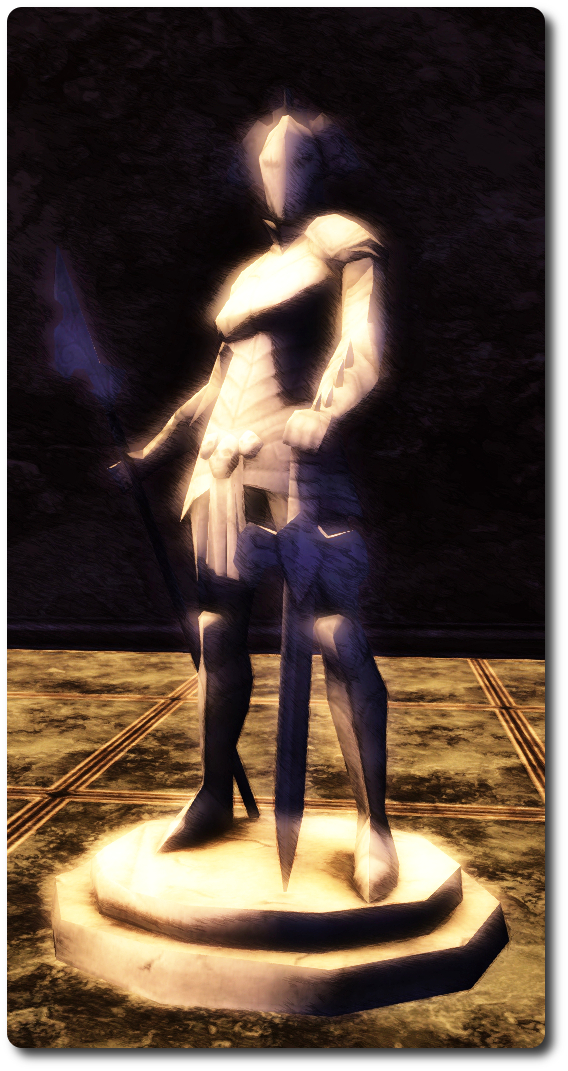
Can you succeed through the tests offered by the Bushido Challenge and demonstrate all you've learnt?
Can you succeed through the tests offered by the Bushido Challenge and demonstrate all you’ve learnt?

I confess to not yet having completed the challenge, largely down to running out of time during my initial visit, and not having anyone on-hand to assist in the challenges requiring co-operation, so I cannot say how things finish (and wouldn’t spoil it for you, even if I did!). One thing I will say is that, while I enjoyed those elements of the quest I have completed (and look forward to solving the rest), the one part I’ve had a lot of fun with is the archery challenge. Scripted by Yamil Dagger, this is quiet simply a lot of fun, whether or not you’re playing for prizes – indeed, I’ve since been back for another couple of rounds, simply because it is so much fun.

Soyokaze offers an enticing mixture of a photogenic environment,  the chance to join an established C:SI combat clan, and the opportunity to engage in a quest that has just the right mix of fun, frustration and a growing desire to overcome the mischief of the spirits and reach the conclusion.

Add to that the village tavern, which offers a cosy place to meet and talk with friends and clan members, and Soyokaze presents itself as a very engaging place to visit. Very thoroughly recommended!

My special thanks go to どうも (DomoKun Giotto, who has designed the region and is clan Sōke along with Kasumi Hashi) and to Akiko Yuki for their time in making me feel welcome and facing a barrage of questions, to ジョイ (Kimicko), for her assistance with part of the Bushido Challenge quest, and to Yamil, for his encouragement as I took the archery challenge.

Related Links

UWA Announces Transcending Borders books available

Launched on Monday July 21st, 2014, the University of Western Australia (UWA)’s Transcending Borders brought together their 7th MachinimUWA and their 5th UWA Grand Art Challenge into one event, with a combined prize pool in excess of L$ 1.03 million.

Transcending Borders challenged entrants to interpret the title of the competition in any fashion they deem applicable, and produce a 3D artwork (in no more than 150 prims) or short film based on their interpretation, be it on transcending borders of space and time, love and loss, nationally or culture or language, or the real and the virtual, and so on. The result was a glittering array of 67 artworks and 38 machinima, representing a broad diversity of interpretations of the theme, with the winners celebrated at a special awards ceremony held on Sunday, December 14th, 2014, which I was honoured to attend as a member of judging panel, and which I reported on here and here.

On Saturday, January 24th, the UWA announced that a special catalogue of the challenge has now been produced. At 212 pages in length and lavishly illustrated, the book covers both the art and machinima challenges, with individuals photographic spreads covering each of the art entries, complete with the artists’ statements on their work, and the machinima entries presented by individual stills from each of the films entered.

Art entries from Transcending Borders are present in 2 or 4 page photographic spreads, complete with notes from the artists

The book, Transcending Borders has been produced as a part of the UWA Studies in Virtual Arts e-journals (SiVA) series, and can be viewed on-line. Printed copies can also be obtained from the UWA and shipped to you. Those interested in owning a copy as a commemoration of the challenge and of both art and machinima in virtual worlds, should contact Jayjay Zifanwe in-world.

As someone fortunate to have a copy of the last title in the series, Project Freedom, I cannot stress enough how beautifully produced the books in the SiVA series are. Edited by the UWA’s curator, FreeWee Ling, books in the series are compiled and produced with a huge amount of care, and the photographs of the artwork always capture the essence and beauty of each piece.

In the meantime, and if you haven’t done so already, you can see all of the art pieces on display for the time being at the UWA Challenge Gallery, while a list of machinima entries, with links to each film is also available.

Related Links

Idobata 2: talking Second Life and Skype

Idobata 2: offering text-to-speech conversion for SL (and Skype chat) users

Update, March 3rd: Yuzuru has produced demo video for Idobata 2, and I’ve included it at the end of this article.

Update, January 28th: as noted below, Idobata 2 is now available from the Kanae Projects website.

Over the last couple of years, I’ve been asked by Yuzuru Jewell to evaluate some of his software tools – a task I’m always delighted to perform as time allows, although in truth, I’ve fallen a little behind of late. This being the case, when Yuzuru first notified me that he was working on a new version of Idobata, his a text-to-speech conversion tool, I made a point to be ready to clear time to look at it when he was ready to allow me access.

Idobata was first launched in September 2013, when I originally reviewed it. As noted above, it is a text-to-speech conversion tool which currently works with the official Second Life viewer and both the 32 and 64-bit versions of Firestorm (and as a result can be used with SL and OpenSim).

When running, the original version – Idobata Pro –  would capture text typed into chat in the viewer in real-time, or view the chat look, and convert it into the spoken word. The new version, Idobata 2, still does that, but in addition it can also monitor all IM and group chat sessions, etc., and convert them to the spoken word. Further, Yuzuru has also added a capability for it to be used with Skype chats.

Idobata 2 is due to be launched on Tuesday, January 27th, so the following is intended to preview the new version, which will be available on the Kanae Projects website from approximately 13:00 SLT onwards on the 27th.

Unlike its predecessor, Idobata 2 will be provided free-of-charge, but will include banner adverts for other products in the Kanae Project range. Those who prefer not to have ads in their software can remove the banners by obtaining a user name and password from Yuzuru for a nominal donation of L$300 towards his running costs.

In order to use Idobata 2, you will need to download the ZIP file (when available) from Kanae Porjects (the application is provided in both 32- and 64-bit options), and you’ll also need to have the Microsoft Speech Platform 11 runtime, installed on your PC as well. If required, you can also download alternative / additional language and voice options for reading back text by downloading and installing the Microsoft Speech Platform Language Options.

Once you’ve download the runtime platform and installed it, unzip Idobata to a folder of your choice and double-click on the program icon to launch it. Those who have used Idobata Pro will immediately notice the first difference between it and the new product: Idobata 2 has a much smaller, tidier UI.

Idobata's main window showing the primary buttons and the default banner adverts for Yuzuru's other products
Idobata’s main window showing the primary buttons and the default banner adverts for Yuzuru’s other products

The main options for the application are displayed across the top of the window, together with an option to enter the users name and password to block the banner ads display at the bottom of the window. Between the options and banner area is a white space which will display the text currently being read back in voice – something that helps in situation where the spoken words many not be entirely clear (such as when abbreviations are being used, or technical terms, which may cause pronunciation problems for the application, etc.).

Idobata 2 Configuration

Before using Idobata 2 with Second Life, some basic configuration is required through the Tools button. Clicking this will open the 3-tab configuration window. The Chat Text tab is used to set the application for use with Second Life.

The Idobata 2 configuration options for Second Life

To have chat text converted directly to speech, all you need to do is:

  • Select your choice of viewer (the SL viewer and both the 32-bit or 64-bit versions of Firestorm are supported)
  • Select the name of the avatar account through which Idobata 2 is to monitor / convert text
  • Check the Watch All Chats option if you want Idobata 2 to monitor all open IMs and group chat sessions involving the nominated avatar account in addition to open chat
  • Slide the Watch button towards to the top right of the window to the right (the background to the slider will turn burn, indicating Idobata 2 is ready to go

And that’s it. Idobata 2 is ready to convert chat (and IM / group chat, if set) text into the spoken word. If you prefer, rather than monitoring open chat, you can set Idobata 2 to monitor a specific chat log file (and define the encoding using by the file, if required), allowing Idobata 2 to be used with viewers other than the SL or Firestorm viewers. In addition, a set of three radio buttons allow you to:

  • Precede and converted text with a timestamp
  • Use the Second Life log Format drop-downs to define:
    • Whether Idobata 2 converts all text (None), or, if you are using a translation function
    • Whether Idobata 2 converts the original text to chat or the translated text to chat
    • Whether the other avatars with whom you are conversing are defined by Idobata 2 by their Display Name or their Avatar Name
  • Use the Custom(RegEx) option to define regular expressions which will not be read back by Idobata 2.

Once you have set your preferences, click OK to return to the main window, If you wish to reset Idobata 2 to its defaults at any time, click the Default button in the configuration window – note this will reset all options – both Skype (if set) as well as those for Second Life.

Continue reading “Idobata 2: talking Second Life and Skype” →

Savouring a magical corner of Second Life

Cantrip De Savor, Aloha Sunset Beach; Inara Pey, January 2015, on FlickrCantrip De Savor (Flickr) – click any image for full size

Occupying a quarter of a region, Dez Akemi Melomane’s Cantrip De Savor lives up to both of the elements found within its name: it is magical in looks, and a place to be savoured when visiting.

Currently caught in the depths of of winter, it offers an eye-catching retreat from the cares of the wider worlds, edged with a hint of mystery in places. There is plenty for all to enjoy, and the SL photographer is liable to find much to keep him or her occupied, be it in picturing the landscape as a whole, or focusing down on the individual little touches, of which there are plenty awaiting discovery.

Cantrip De Savor, Aloha Sunset Beach; Inara Pey, January 2015, on FlickrCantrip De Savor (Flickr)

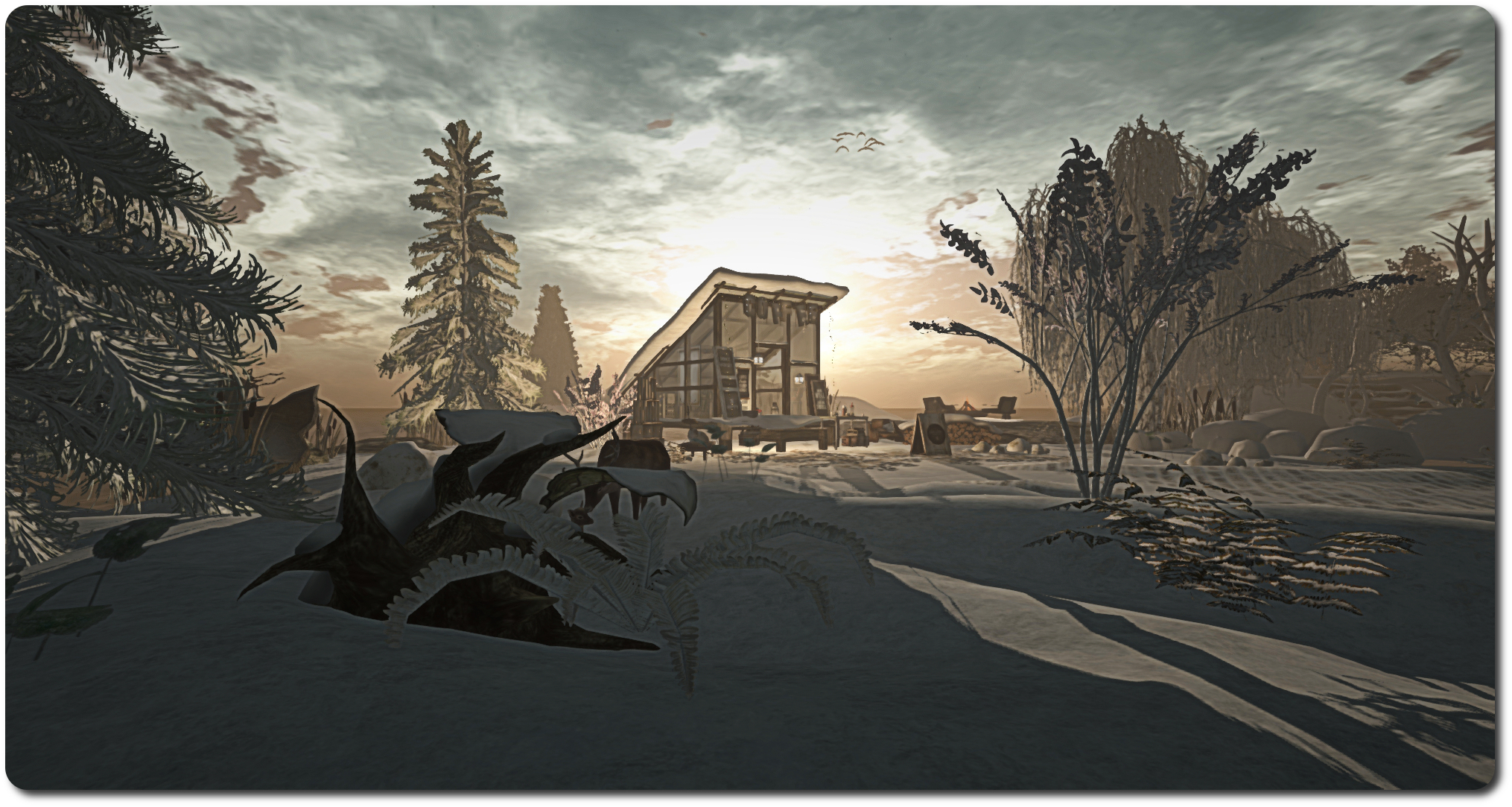
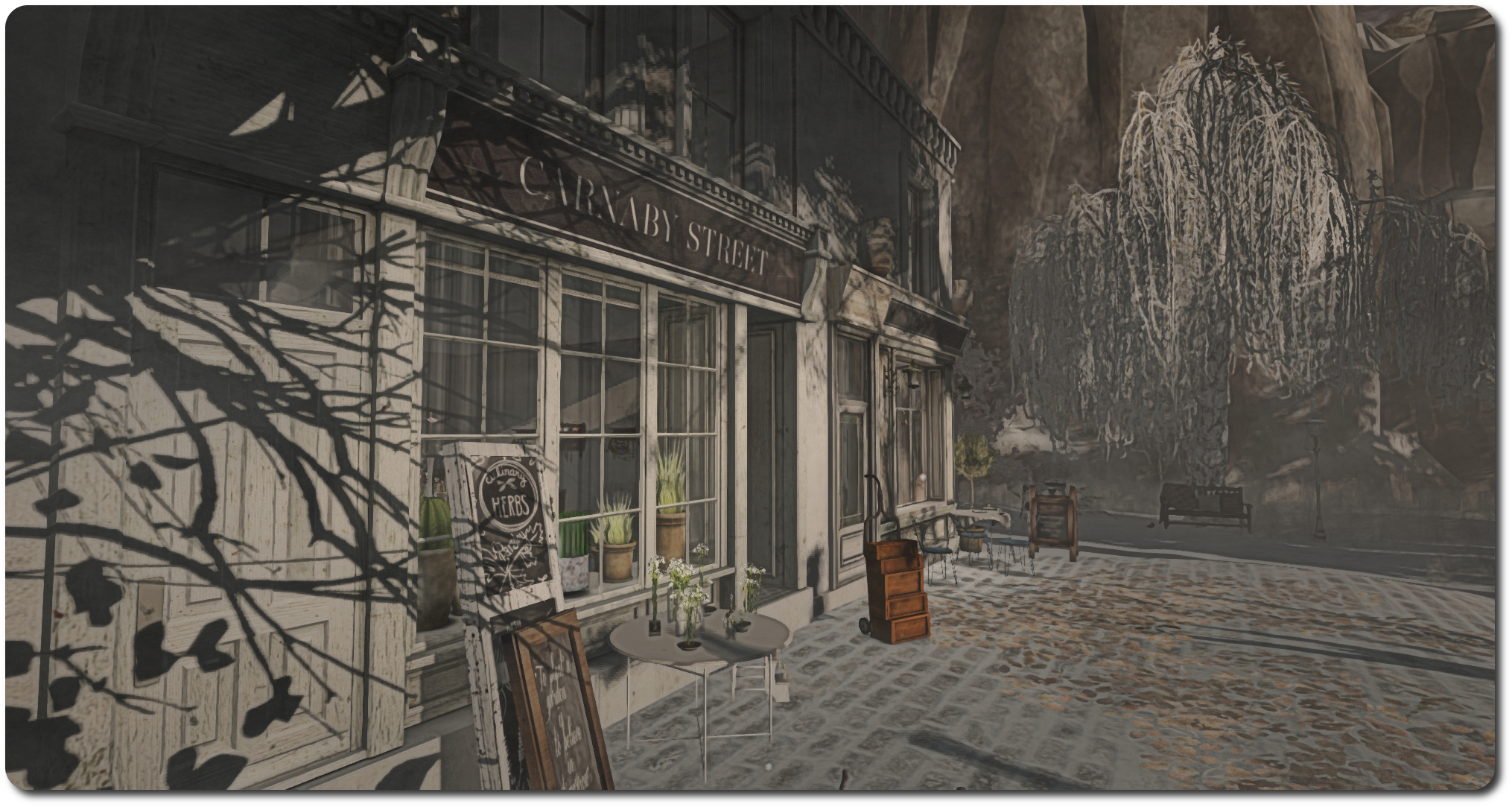
Built around a watery inlet complete with a small island, the land invites visitors to wander the paved road around the edge of the water, away from the run-down gas station and on past the cabin on the hill, the little tea house and store, and the gazebo with its snuggly sofa and cushions, until they come to a hollowed-through tree trunk bridging the water to reach the little island, overlooked by a ramshackle old skiing lodge. On the island sits a charming coffee house, warmly lit and with an outdoor brazier and chairs for the hardy, while beyond it, another bridge leads back to the mainland, where more awaits  discovery.

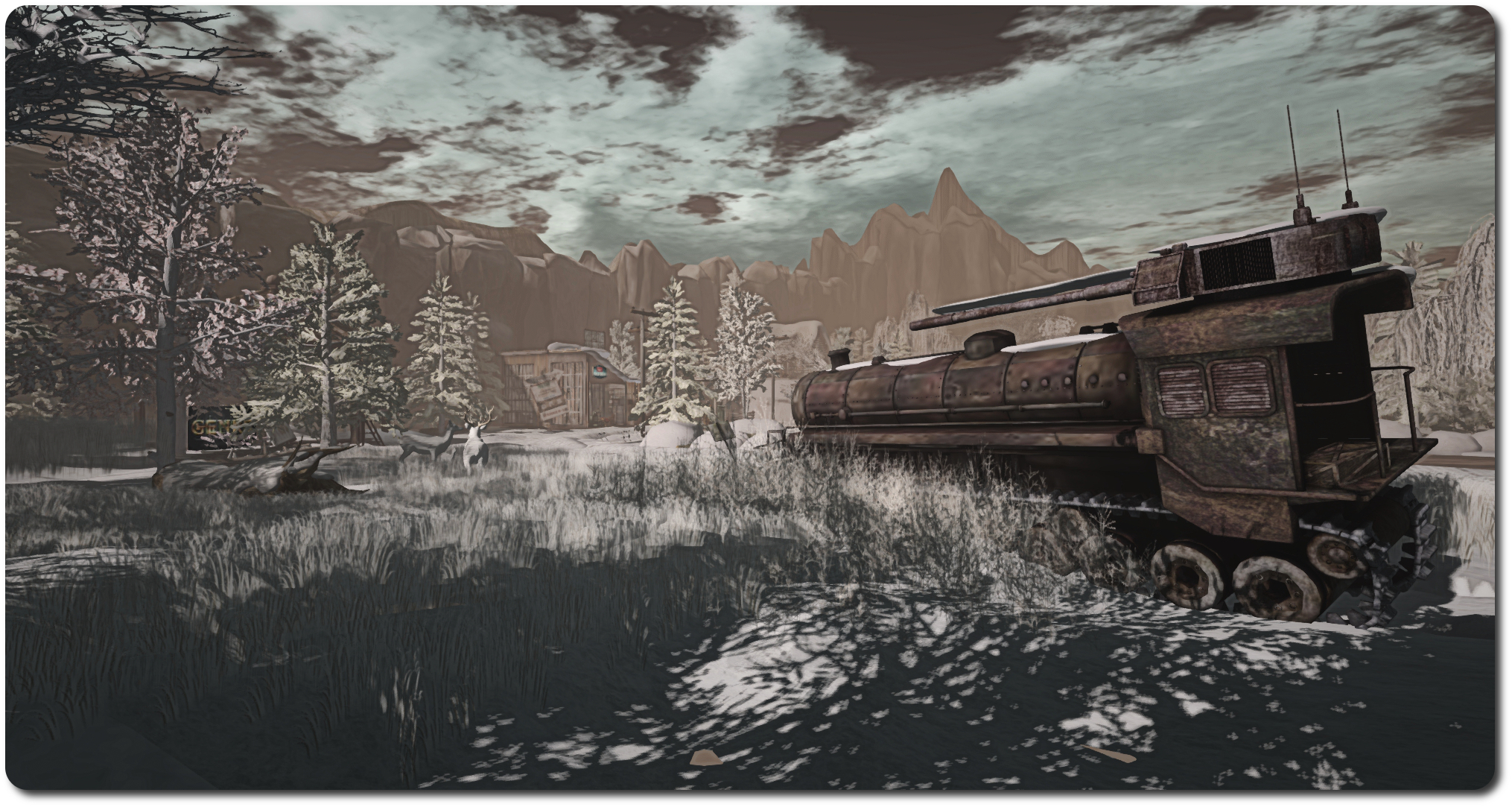
It’s on the east side of the land that the mystery of the place is perhaps most clearly seen, because it is there one will find sections of an old railway track, improperly laid out, incomplete and seemingly forgotten. Alongside them sits the hulking form of an armoured (and armed) stream train, converted to run on tracks of a different kind, a biohazard sign close by giving a stark warning to all who approach.  Quite what they mean when taken together is up to the visitor to decide, giving the land an additional narrative to be enjoyed.

Cantrip De Savor, Aloha Sunset Beach; Inara Pey, January 2015, on FlickrCantrip De Savor (Flickr) – click any image for full size

The beauty of this build is hard to resist – were one even to want to offer resistance. The rural look and feel to the landscape, shielded from the rest of the region by tall rocky cliffs and peaks, offers something of a contradiction to the run-down look and feels to many of the structures occupying it, yet both bind into a visually pleasing whole, which comfortably enfolds the more cosy stopping points, such as the little coffee house and Dez’s little Branch store, which sits tucked unobtrusively into a corner.

This is definitely one to be savoured; there’s far too much magic in the air to pass up on a visit – so why not go see for yourself?

Cantrip De Savor, Aloha Sunset Beach; Inara Pey, January 2015, on FlickrCantrip De Savor (Flickr) – click any image for full size

Related Links

The majesty of creation in Second Life

Angel Manor: the subject of a beautiful new video by its creator, Kaya Angel

Kaya Angel is one of Second Life’s most respected builders, and his Angel Manor estate is rightly admired across the grid both as a build in its own right and as a venue for art, fund raising events and a more. I

As a designer / builder, Kaya naturally turned to emerging capabilities to further enhance his commercial and commissioned work, and to enhance Angel Manor itself – so much so, that I keep reminding myself I’m overdue for a visit in order to write an update to my March 2013 piece on the manor, as so much has changed since then.

In celebration of the manor, and to demonstrate just how immersive Second Life can look and feel, Kaya has produced a new 6-minute video entitled Second Life: A different perception, which has been drawing widespread praise from all who have seen it and is without a doubt, simply superb.

Marvellously edited, matched to an excellent soundtrack, this is a film which can hardly fail to evoke a feeling of wonder, joy and pride in the heart of anyone who has invested time and energy into Second Life. If ever there was a banner by which we can proclaim to the world just what is possible within SL for the creative mind, then this film is it.

Kudos, Kaya, and thank you.

with thanks to the G+ pointer from Whirly Fizzle.

Mapping Moya’s Memory

Moya's Memory
Moya’s Memory

Now open at the art region of MetaLES, is Moya’s Memory, featuring some of the work of French artist Patrick Moya, aka Moya Janus in Second Life.

For those unfamiliar with either name, Patrick Moya is a part of the Nice contemporary art movement, centred on the École de Nice, and he has had a long association with integrating / leveraging technology with and for his art.  Within SL his is perhaps best known for Moya Land, his four-region estate dedicated to his work and to “brand Moya”.


Moya's Memories
Moya’s Memory

The installation at MetaLES is a celebration of Moya’s work, featuring several of his iconic pieces, including a plethora of his cartoon alter-ego.  Central to the piece is a large logic circuit, complete with resistors, transistors,  DIMM modules and so on, within an around which can be found elements of his art – his aforementioned cartoon alter-ego (as well as his superhero identity) and characters from a number of his pieces and drawings while bespectacled orbs carry the likeness of his face and his name can be encountered again and again.

Given its title, this is an installation that appears to work on several levels. First, and perhaps most obviously, it might be seen as something of a personal retrospective by the artist. Secondly, the use of the circuit board stands an an echo of the manner in which moya embraces the use of technology in his art. Thirdly, the circuit board is itself suggestive of memory – and by extension, the mind – further suggesting that the growth of free artistic expression can oft arise from the ordered (dare I say logical) workings of the human mind.

Moya's Memory
Moya’s Memory

There’s also, perhaps a small comment on the how the identity of the artist is invested in his or her work; the motifs seen throughout this pieces – particularly the frequent use of his name and the self images or the frequent appearance of Dolly the Sheep, be they taken from the physical world or embodied in the use of Moya’s alter-egos – are far less any form of ego-driven statement, and more a commentary on how the artist is himself perhaps defined by his work.

The motif of mind and art being bound through memory and brain is also repeated elsewhere through the installation, such as in the inclusion of a model of Moya’s physical house, or the model of his cartoon alter-ego, from the head of which bursts forth a fountain of the artist’s drawings.

Moya's Memory
Moya’s Memory

Moya is a prolific artist, whose work covers multiple mediums and formats; as such, there is perhaps another aspect to any interpretation of this installation: that it is itself a small reflection – an aide memoire, as it were – to the vast catalogue of his work, physical and virtual. The latter aspects can, following a visit to MetaLES be enjoyed through a hop over to Moya Land. In the meantime, Moya’s Memory will be open through until at least the end of February, I believe – so enjoy!

Related links