Retrospective is the title of a new exhibition curated by Owl Braveheart, one of the powerhouses behind the FIAT (FIne ArT) project in Second Life. It features the work of Giovanna Cerise, presenting – as the name suggests – a retrospective of her art from the period 2009 (shortly after her arrival in SL at the end of 2008) through until the end of 2014.
On arrival, follow the arrows into the gallery building and through a miniature excerpt from Chaos, Kosmos, her installation at the LEA which form a part of the 7th round of the Artist In Residence (AIR) series there, and which I wrote about in both November and December 2014.
Like Chaos, Kosmos, many of Giovanna’s more recent works have been on a region-wide scale, so the core of the exhibition focuses on her work from the period 2009-2011. Which is not to say elements from her larger builds cannot be found here. For example, Circe, from the magnificent Il Folle Volo (which I reviewed in August 2014), can be found here, waiting, perhaps, to trick visitors into drinking her potion as she once did with Odysseus’ crew.
Many of the pieces within this exhibition demonstrate Giovanna’s eye for fusing movement, colour, geometry and both 2D and 3D elements into quite striking pieces, so much so that still images really don’t capture the motion and interplay of colour and space found in many of them, such as with Lampo, Change Ball,Optical illusion and Optical Illusion 3, which can all be seen at the top of this piece, and which collectively date from 2010.
Also, and with respect to the degree of motion evident in many of the pieces on display, I would suggest that those on older hardware or with older GPUs and who generally have Shadows enabled might want to turn them (or ALM off) in order to fully appreciated the sheer fluidity of movement that is on display.
Offered with an environment that is itself quite striking and which is lit in a manner which ideally complements the pieces on display, Retrospective makes for a delightful and worthwhile visit, and will remain open through until the end of February.
Oh, and should you find yourself arriving at the ground level in the region, take the teleport disc at the landing point to reach the exhibition sky platform, then take the steps up to the exhibition entrance.
“You’ll know what your avatar looks like when you find your soul avatar. You’re like, ‘that’s it! That’s me. That’s who I am!’.” so opines Absinthe (aka Sinontherocks or AbsintheMontenegro) at the start of The Drax Files: World Makers episode #26.
This might sound like an obvious statement to make; but like many things that may first appear to be blindingly obvious, Absinthe’s comment contains a huge amount of depth; for many of us who come into Second Life, our avatar is such an extension of our personalities, that we can feel confined, or self-conscious or even inadequate until we find that visual look that encompasses what we feel within, but haven’t perhaps found a way to give it expression.
It is also a statement that opens a segment of the Drax Files which, in just five minutes, once again paints a broad and fascinating canvas encompassing matters of self-identity and expression, the power of Second Life as a creative medium, thoughts on the perceptions about Second Life and those who use held by people not involved in the platform, the way in which the platform can spur on into endeavours that reach back out into the real world, and more.
The matter of identity and our relationship with our avatar is encapsulated within the first 73 seconds for the show, as Absinthe talks about her relationship with her avatar – an SL fashion model – and her upbringing, and how the latter informed on aspects of the former’s looks. I actually feel a strong affinity with the remarks made in this part of the video, as Absinthe and I share something of a similar upbringing, and we’ve moved in a similar direction in terms of avatar looks which has little to do with matters of ethnicity or anything like that, but is simply an expression of various facets of our personalities and outlook; the primary difference between her and myself, is it probably took me a little longer to discover my “soul look” with Inara.
Absinthe offers insight into the relationship between person and avatar
From matters of looks, the programme transitions through a glimpse of the world of SL fashion modelling – something which some may look upon as slightly frivolous / bordering on role-play, yet the fact of the matter is that modelling is one of the central pillars of the fashion industry within SL, which is itself one of the powerful engines of the platform’s economy. Absinthe provides insight into the complexities involved in working as an SL model – including matters of anxiety and nerves which can be experienced prior to a show.
However, the power of the piece – for me at least – lies in Absinthe’s outlook on life, her work, Second Life and in how, as with others interviewed through this series, this virtual world we inhabit and which is so often sneered up by those outside, Second Life has been both a welcoming hobby and release and the focal point of growth and the catalyst for new opportunities for creative expression within the physical world. In Absinthe’s case, the creation of the Ferosh project,
Ferosh, which absinthe describes as a “visual art and fashion experience [in which] our photographers, models and designers use products from Second Life to interpret real life fashion trends”. The result is a stunning publication, primarily offered as a e-publication on-line, but which appears to also receive at least some hard copy prints as well, going by the footage in the video.
It is a project that has allowed her to bridge the virtual and the physical in a unique way, not only becoming the medium through which she can explain her involvement Second Life to her family, but one which has also attracted the attention of digital artists from outside of SL who want to be part of the project – thus opening doors to ways and means of encouraging people to look at the platform with unbiased eyes.
Ferosh has come about as the result of a number of things – not the least of which is Absinthe’s own determination and her zest for life. It has also, I’d venture to suggest, come about as a result of one other thing she has a lot to say about that should be heard – friendship. And it is in her comments on myriad ways in which people are drawn to Second Life, and the manner in which friendships are formed and – to return to the open element of the show – we can find outward expression of our inner selves, that Draxtor puts together a little magic of his own.
Our avatars are us
The images of people alongside their avatars, the clips from earlier shows in the series and clips from the brilliant Login2Life documentary that presents a very poignant and clear message to all who watch the segment.
This is another quite brilliant piece, with a richness of content from both Absinthe and Draxtor that make it a powerful slow burner; I was privileged to watch its development over several iterations, I’ve watched and re-watched the finished item several times – and yet, each and every time I’ve watched it, it has had something new to say to me.
So if you haven’t seen it already, click the Play button below.
Oberon Omura, who helps me keep abreast of things that are happening in the SL art world, sent me a little missive about Lemonodo Oh’s new installation at LEA24, which opened on Thursday, January 28th.
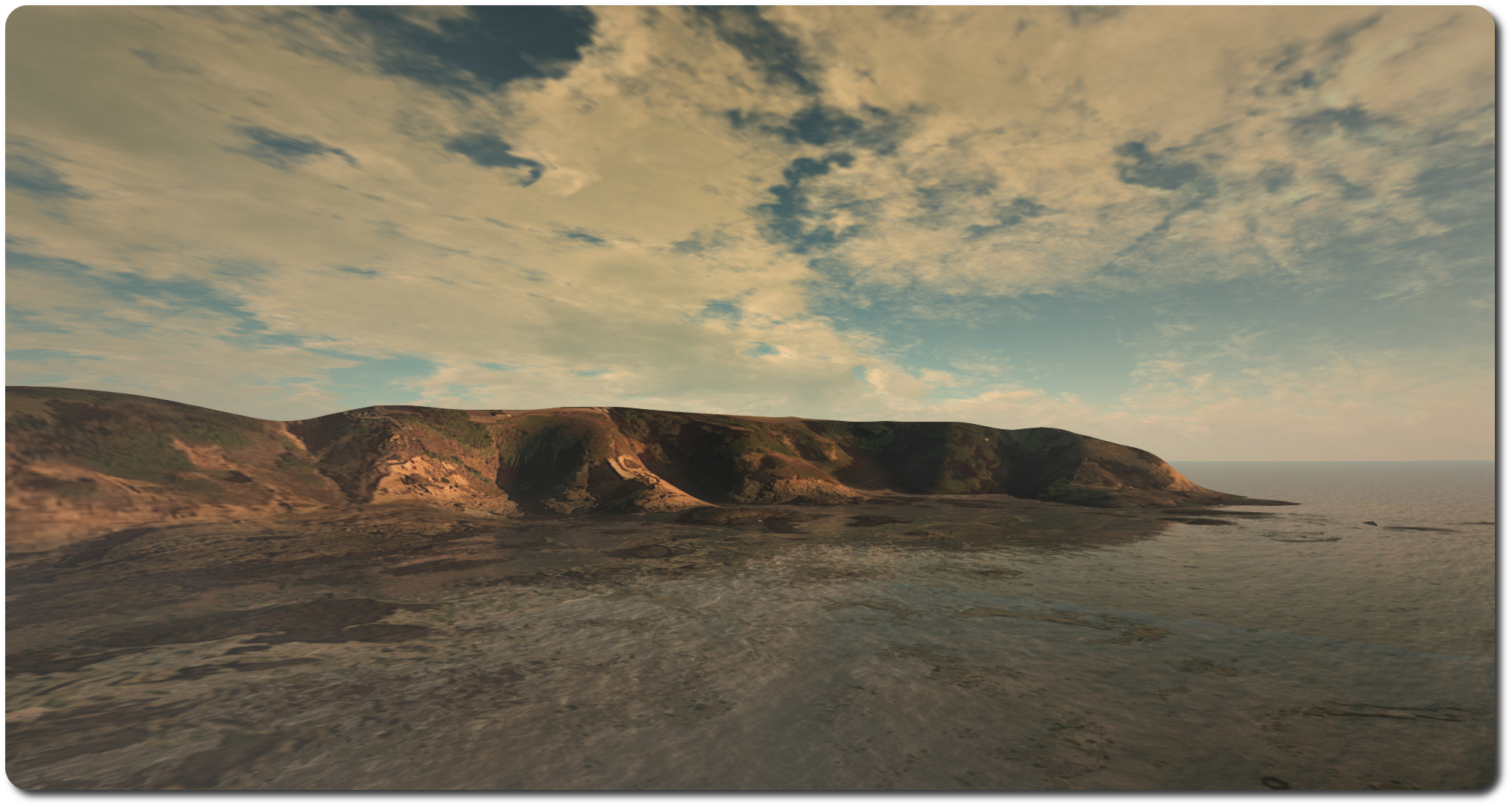
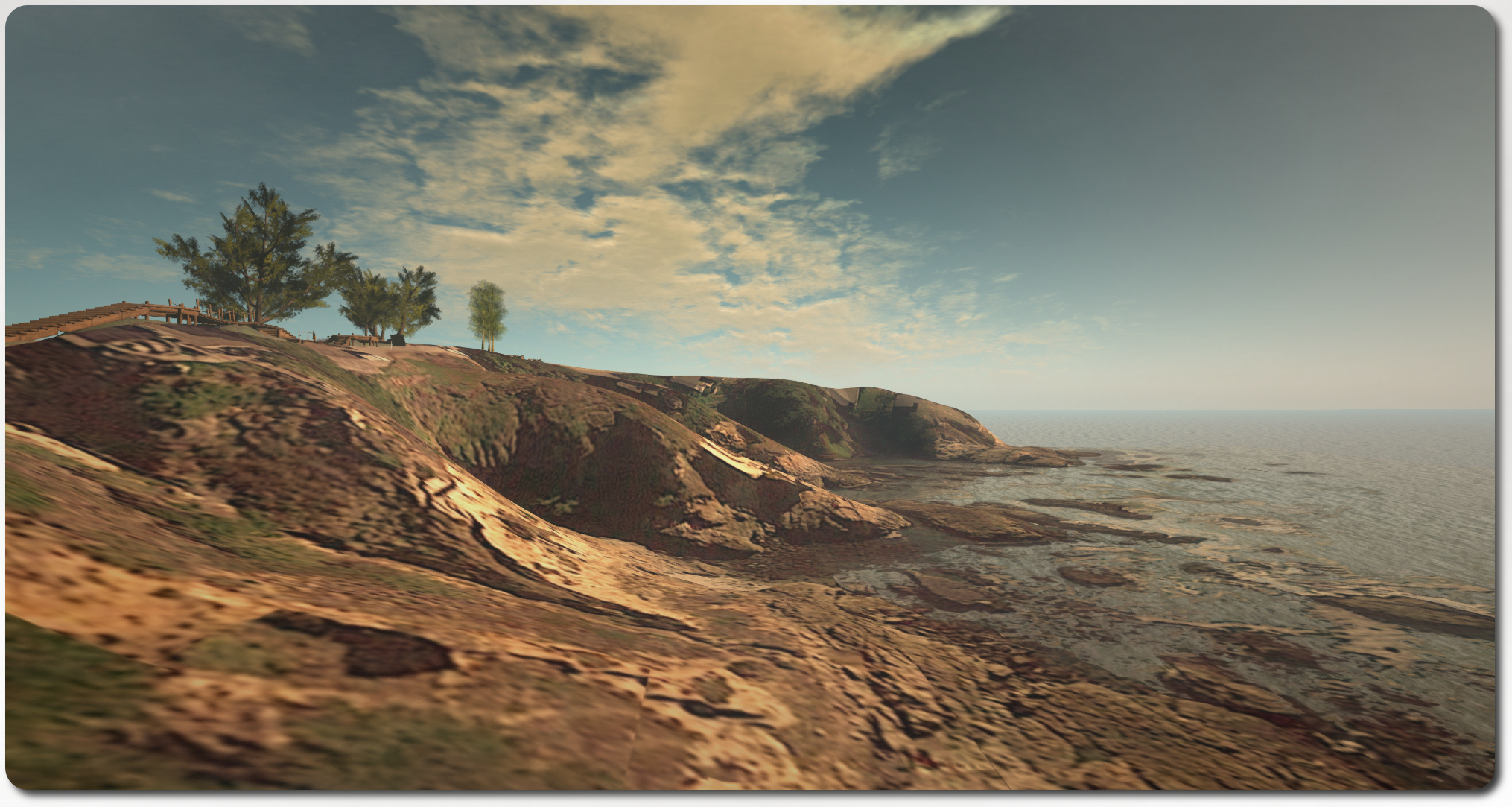
Borderlines is described by the artist as being inspired by the walks across SL organised by Vanessa Baylock, which caused him to come up with “defining a three-dimensional study area of a coastal region in maps and translating it to 64 sq m meshes and flat prims as appropriate.”
The result is what I’d define as an interpretation of a stretch of coastline, rather than a representation of that coastline. While the images used on the mesh and prim elements may well have been drawn from images available on Google Maps (and from, I believe, California), when put together as a whole and viewed panoramically under the right lighting, they could easily be part of the coastline from almost anywhere in the world; for my part, and while twiddling around with windlights, I was very much reminded of parts of both the Devonshire / Cornish coastline in the south-west of England and also of the Yorkshire coast.
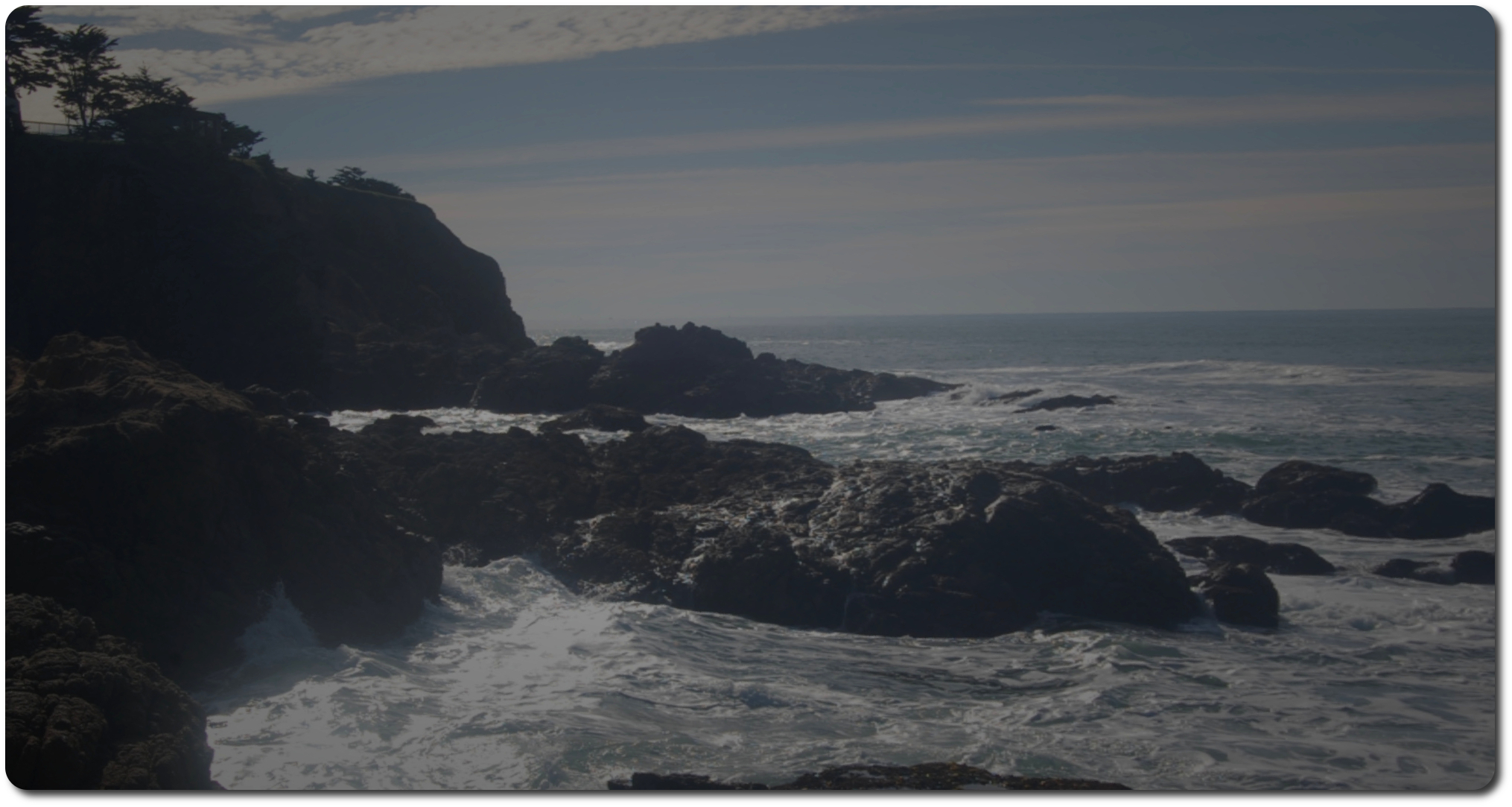
Scattered across the low-lying areas of the installation are a number of dramatic photographs which, if not of the same areas of coastline as represented in the model, bear a strong resemblance to them in places. These are cleverly hidden from view until approached, when they slow fade into view, and add a striking new depth to the piece.
Lemonodo notes that while the project hasn’t worked out entirely as conceptualised, it nevertheless involves a number of borderlines – hence the title. Some of these may be obvious, others not so, Lemonodo doesn’t enter into specifics, so it is up to observer to hypothesize. Several did suggest themselves to me, including the use of the region boundary between this installation and that of the Medici University on LEA23 (which involves Vanessa Baylock whose grid-wide walks initially inspired this piece, remember).
I confess to being more intrigued by matters of perception and contrast, particularly when looking at the coastline from various distances and camera positions, and the manner in which it presents itself to the viewer and the (perhaps untended) questions on perception and depth raised by the inclusion of Lemonodo’s quite beautiful photographs (of which I’d frankly like to see more) against the background of the somewhat “flat” appearance of the Google Maps images when see up close and as they form the backdrop to the photos.
However you look at Borderlines, be it as art or an experiment in modelling or perception, Borderlines offers an intriguing addition to the current selection of Artist In Residence builds at the LEA.
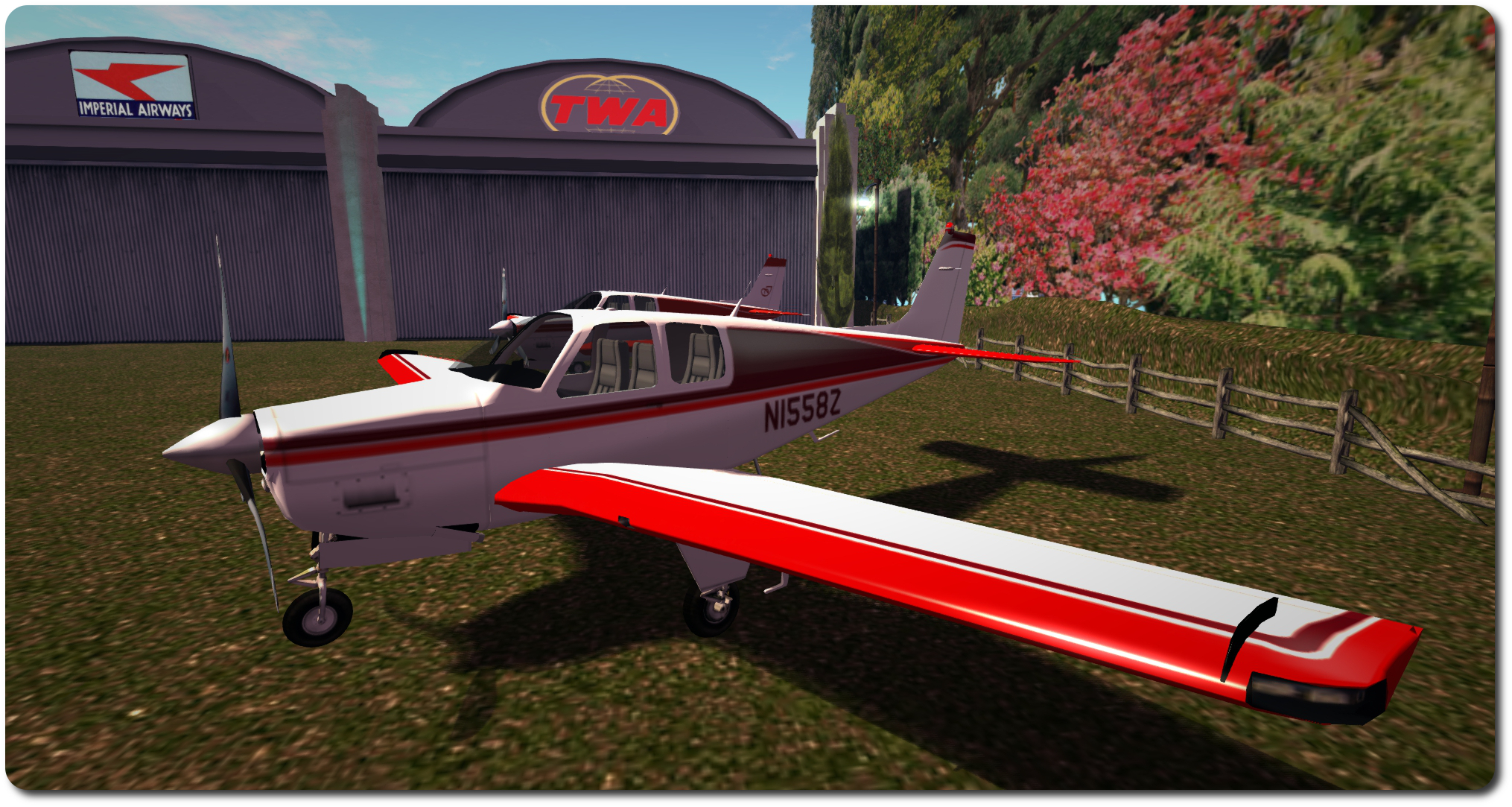
My customisation of a Vetron paint scheme for the DSA C33 Debonair, with the original Vetron colours (centre) and the original DSA paint scheme (furthest from camera)
Update, Thursday, January 29th: following the publication of this review, VetronUK started work updating the ribbing on the elevator textures in her Debonair kits. With some 74 kits to update, this might take a while, but if you do have one of them, you may well be receiving an update soon. Commenting on the update, VetronUK said, “I fly these paints myself and they are some of my favourite works, so if there is something not perfect about them I do get that nagging feeling to fix them :D.” All I can say is – kudos to her for move so swiftly on what is a pretty small thing I only noticed as I fixate on things like that!
Fellow aviator Terag Eshtan, knowing how I like to sort-of customise my boats and aircraft, pointed me towards VetronUK’s Vetron brand of painting kits, and particularly the fat pack of 60+ colour schemes / variations offered for L$1,195 for the DSA C33 Debonair which I recently acquired. As well as the fat pack, Vetron also supply individual colour schemes foe the C33 at L$195 each. The paint kits are provided full perm (subject to an EULA), with the allowance for them to be modified.
While 60+ paint options is a tad excessive for me, I was intrigued to note that Vetron paint kits can include materials options as well. Not only that, but in looking through the catalogue, I found a Red / white colour scheme that I rather liked, so I decided to give it a go. and I’m rather glad I did.
Vetron paint kits utilise materials, which add to the finish, as seen in the way sunlight is reflected in the ‘plane’s wing, above (Vetron default scheme shown)
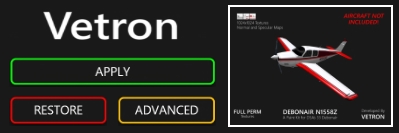
Each kit is supplied with a set of textures corresponding to the aircraft with which the kit is to be used (both with and without aircraft registrations in the case of C33 kits), a control script to be dropped into the ‘plane itself, and a HUD for applying the supplied paint kit / additional options (which may vary from aircraft to aircraft).
If you want to get an idea about how a specific colour scheme might look close-up prior to purchase, try visiting the Vetron store in-world, where you can rez demo models of DSA aircraft with the various paint schemes applied.
The HUD makes applying a Vetron paint scheme and options a joy
Using one of the kits is simplicity itself – instructions are given on the Marketplace listing for each kit, in a note card included with the kits and via a very clear PDF instruction manual. However, in summary:
Rez your ‘plane and drop the Vetron script into its contents
Wear the Vetron HUD
Click the Apply button on the HUD
Use the Advanced button to select any additional options which may be available, such as adding materials (normal and specular maps) to the ‘plane’s finish.
And that’s it; simples. The HUD even includes a Restore button, which will roll changes back to the original supplied default colour scheme for the aircraft.
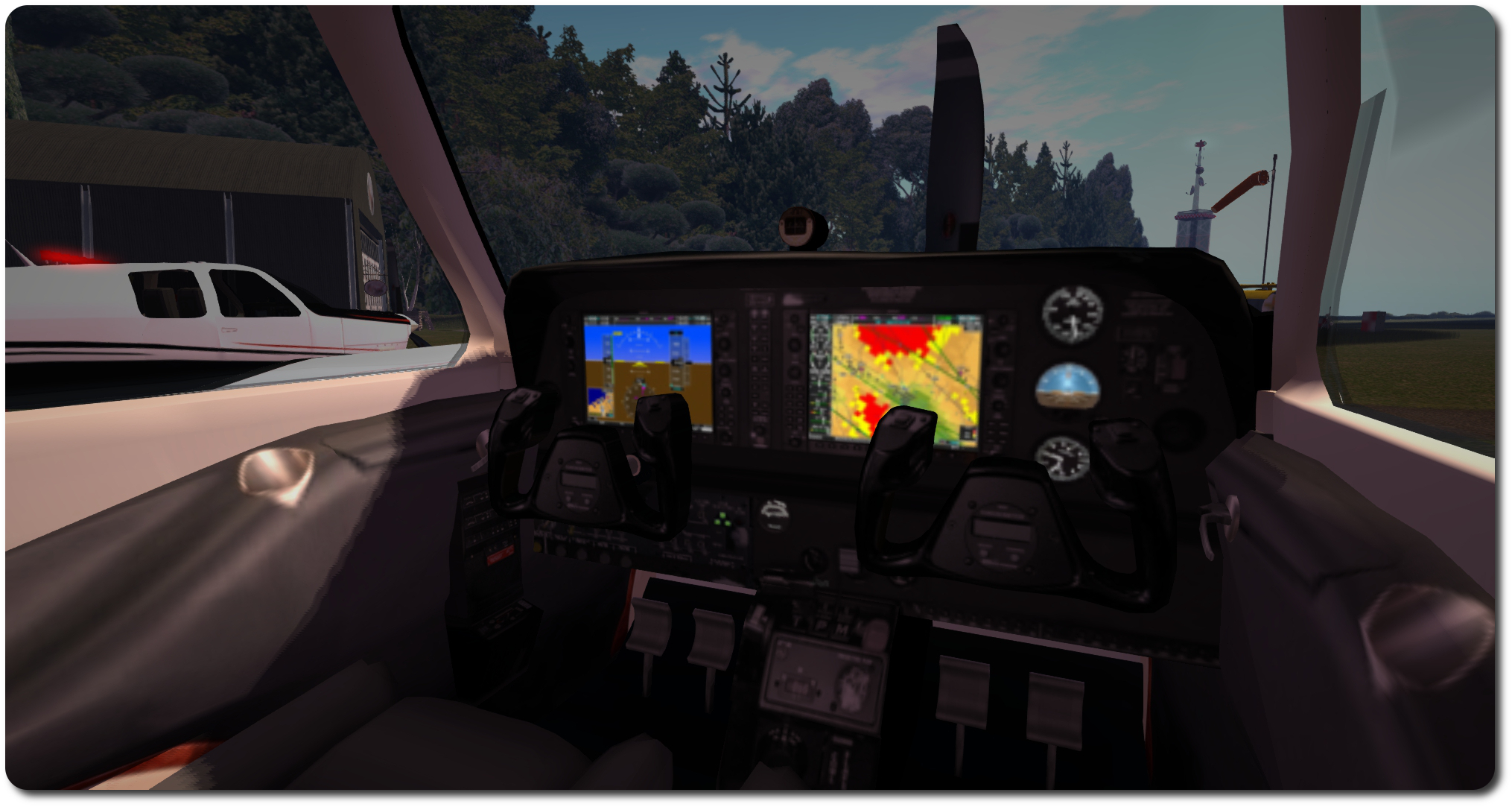
The C33 pack included new interior textures, added via the Materials option on the HUD
Customising the textures is achieve by saving the 1024×1024 files locally and then editing to them make your changes. Testing can be carried out by using the Local Textures option within the viewer, and applying your revised textures to the appropriate faces of the aircraft.
As the kit I purchased gave me a good baseline for how I wanted my C33 to appear, the work I did was pretty basic: altering the rest tints to a single colour, altering the tail and tailplane colour schemes, adding my usual registration & monogram.
The C33 kit does suffer the same issue as the original textures supplied by DSA, in that the ribbing lines on the tailplane’s elevators are significantly out-of-alignment when comparing the upper surface texture with the lower, but tbh, unless someone is looking really closely, this is unlikely to be noticed. Unfortunately for me, it’s also one of those things that, once noticed, can start nagging to be fixed. Fortunately, I wanted a two-tone tail with white elevators, so fixing this wasn’t a major problem, as I had to re-colour things anyway [Addendum: as noted at the top of this piece, VetronUK has / is correcting this.]
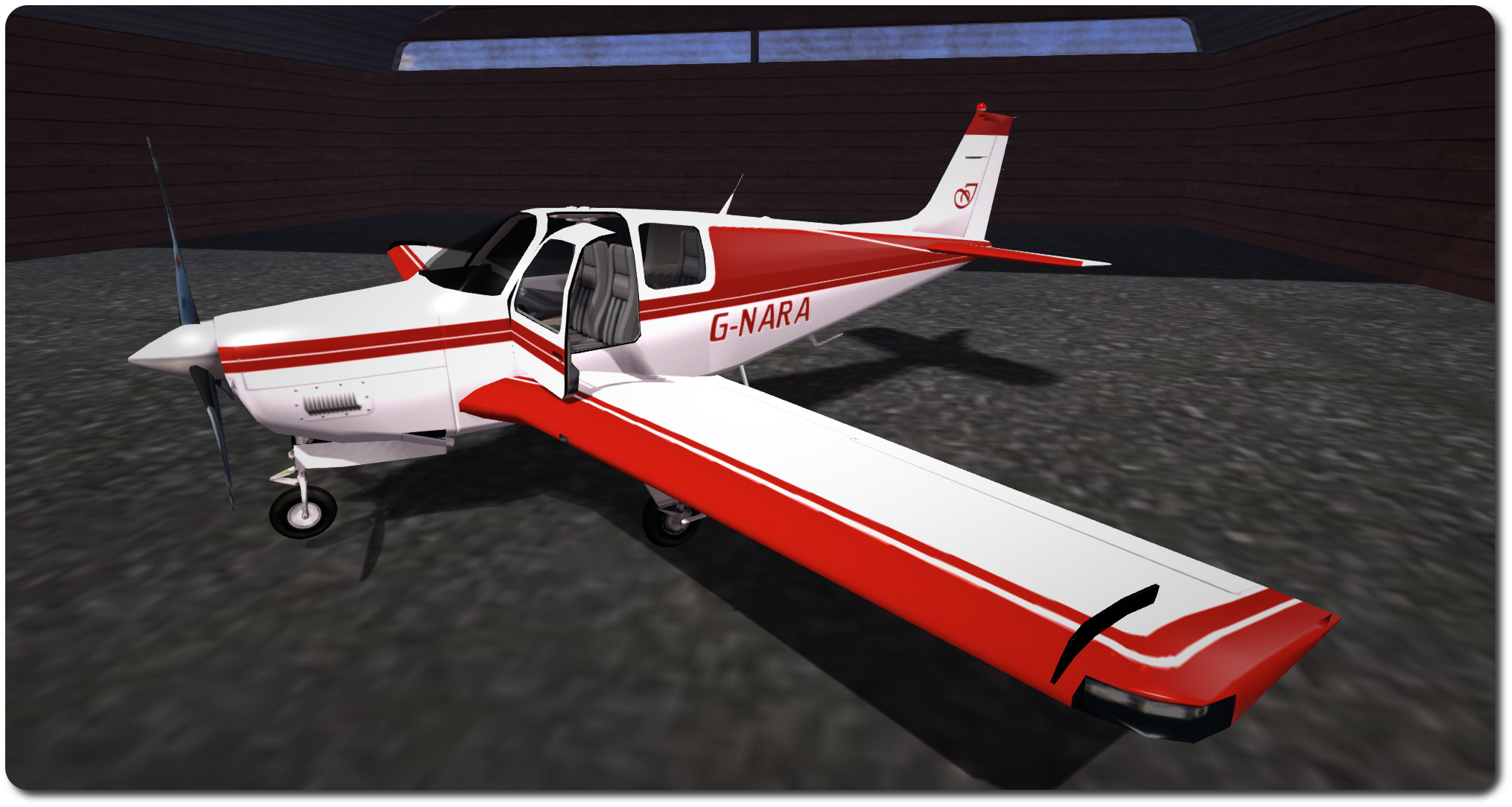
My C33 “G-NARA”, created using the Vetron paint pack for N1558Z as a baseline
Once you’re satisfied with your custom textures, upload them as per usual, and if you’re working with a MOD plane like those in the DSA range, again apply them directly from inventory to the required faces of the plane – you don’t need to use the Vetron HUD. However, you can still use the HUD to apply things like materials or glossiness to the plane if you want.
For those who would like a truly unique design, or who have a specific deign in mind that they’re not confident in producing themselves, VetronUK will consider custom work. Information and pricing guidelines are available via note card from her in-world store.
As well as the C33, Vetron produce individual packs (and fat packs) for other DSA aircraft (prices vary) and also kits for other makes of aircraft as well – making a visit to the in-world store worth the effort if you have various makes of ‘plane sitting in your inventory.
All told, the Vetron paint kits are extremely easy to use, and the use of materials really add a nice added finish to an aeroplane, the normal maps somewhat enhancing surface detailing and the specular maps giving a very natural level of light reflection on metallic / glass surfaces. Certainly, I have no hesitation in recommending the kits – in fact, I’m now eyeing-up one of red / white kits for DSA’s C90 GTX King Air! I may even let you know how I get on :).
I’m going slightly off my usual beaten track with this travelogue in order to try to cover two interlinked regions through a single post.
Marathon Caye and Whispering Winds are two regions operated by Shaylin Yordstorm / Mrs (Taylee) Aldrin and Cranston Yordstorm / Cuthbert Aldrin which, while physically separated on the grid, are unified into a singular whole by the magic of teleporting. So much so that it really doesn’t matter which one you opt to visit first in your explorations; you’ll likely end up moving back and forth between the two as you visit the various attractions and features.
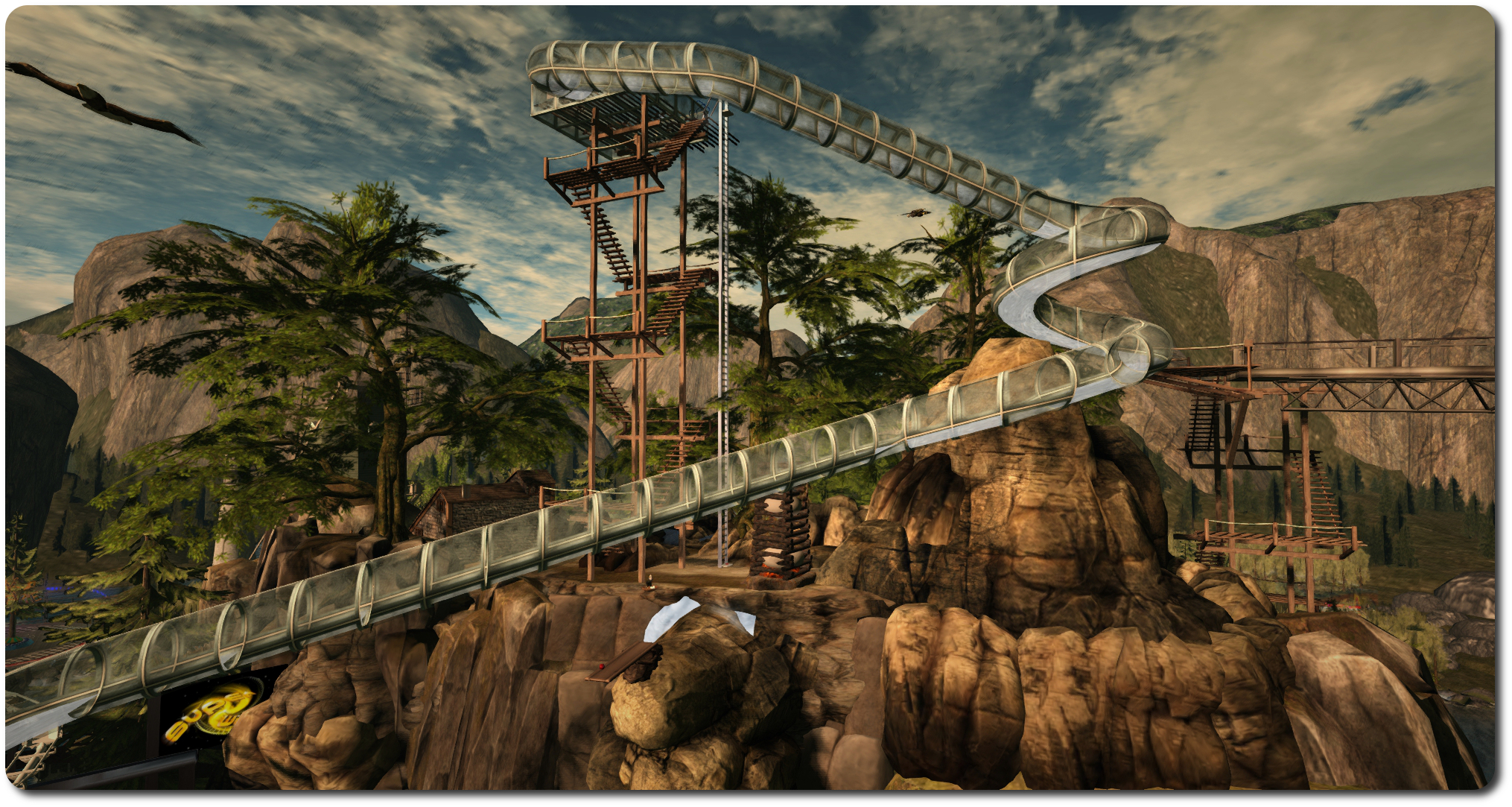
If I were to define both regions at all, it would be as a rural entertainment / amusement park venue, located in a woodland setting. Both offer a range of rides – log flumes, roller coasters, slides, bungee jumps (a first for me in SL!), – as well as opportunities for paddling around on the water and to meet Dwarfins.
With a total of six music venues across both regions (The Pavilion, The Rock House and The Ranch on whispering Winds, and Club CTO, the Amphitheatre and The Arboretum on Marathon Caye), keeping track of all that might be going on across the two regions is probably best achieved by checking the various Facebook pages Kaylin / Taylee and Cranston / Cuthbert have created, or through joining one of the relevant groups for the regions. Invites to the latter can be received on your arrival, while links to the former are available throughout both regions. In addition, there are Flickr groups for both regions for those who want to share the pictures they take (again, grab the links when visiting both regions).
For couples out for a quiet time together, there are various secluded spots to be found and various quieter rides to be enjoyed – such as the hot air balloon, a trip out on the water on a pedalo or rowing boat, floating soap bubbles, horse rides, and so on. Keep an eye out, as well for teleport links to the beach, the log cabin and so forth.
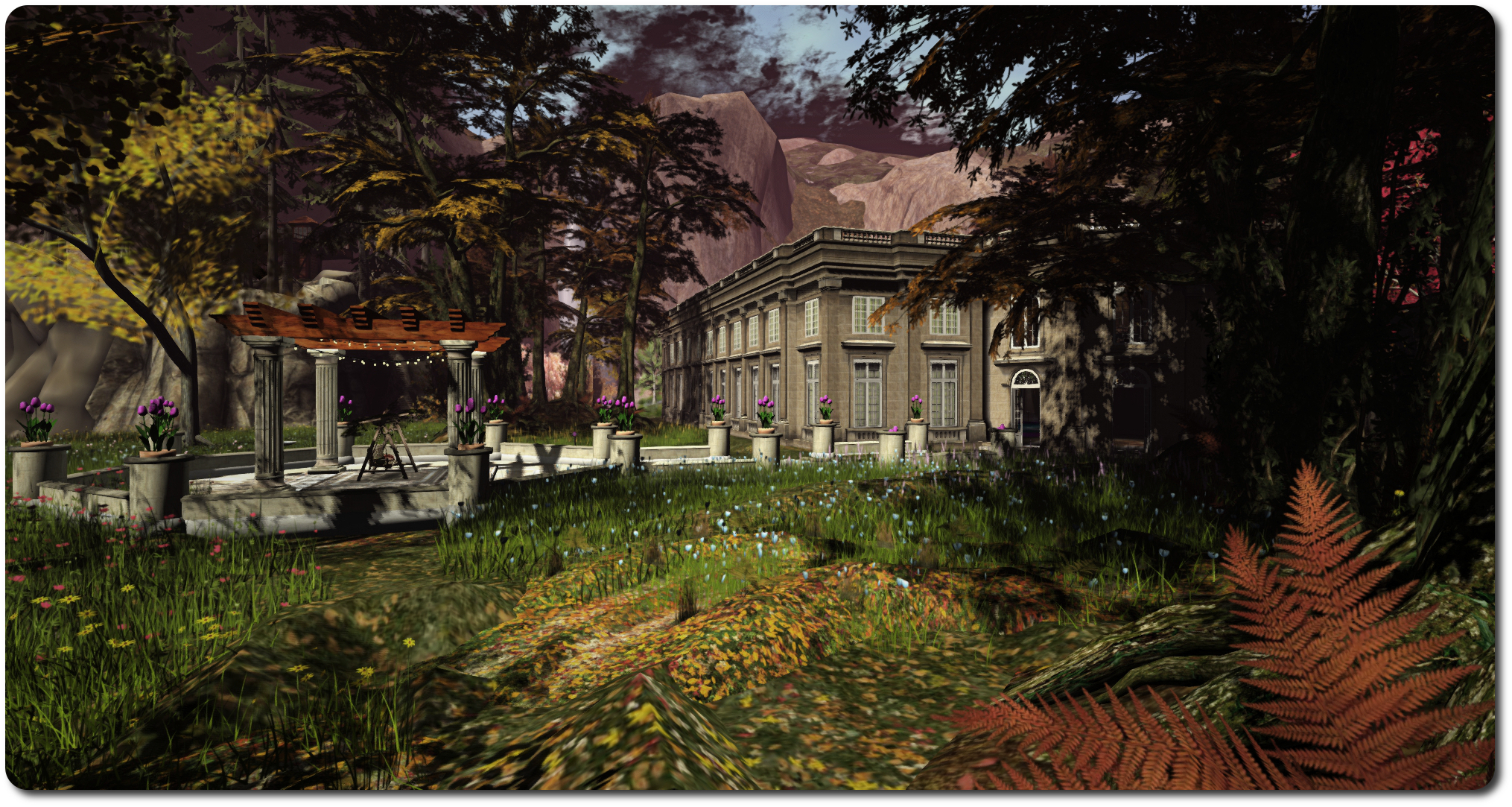
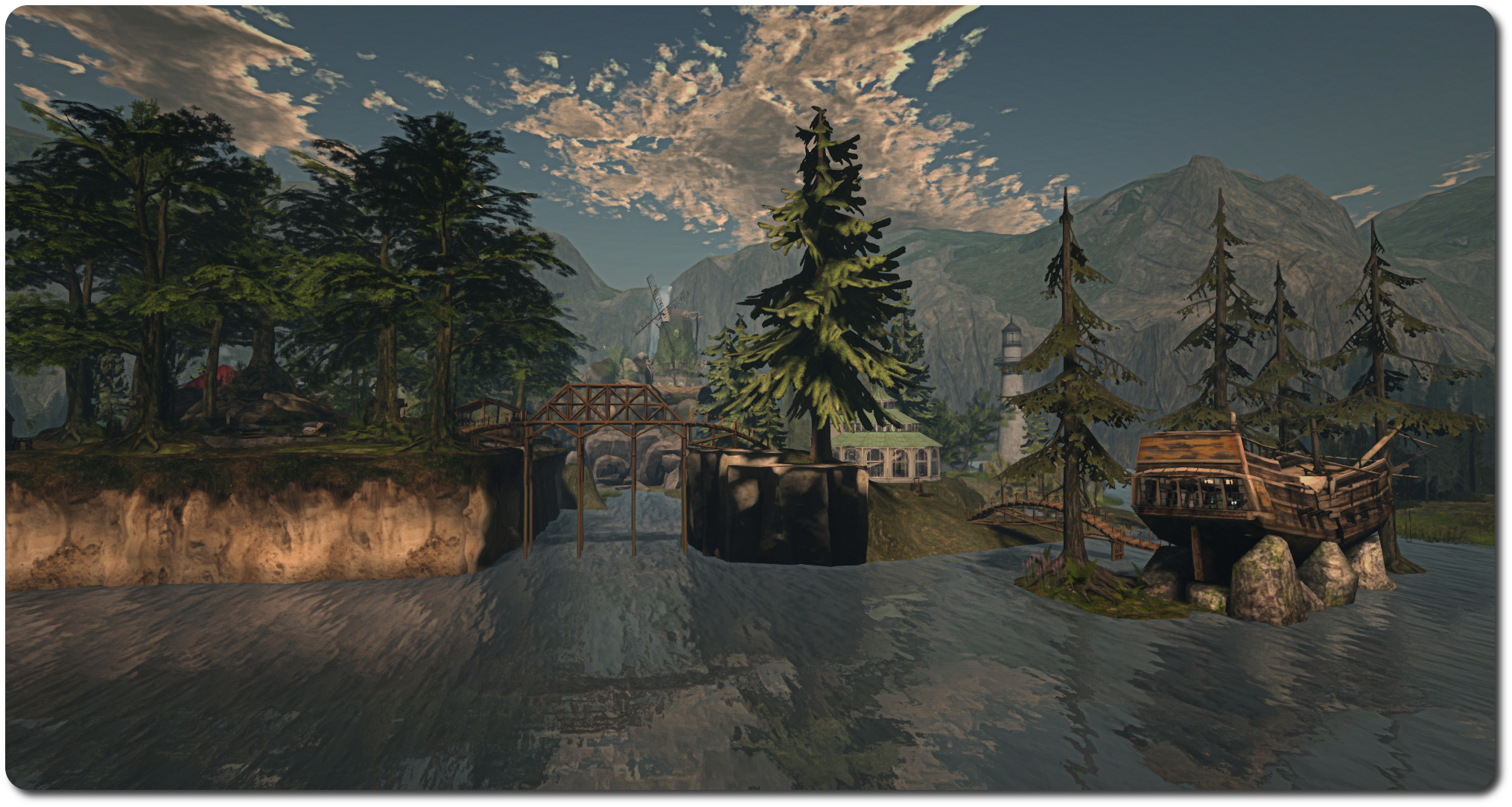
The landscape in both locations occupies a mixes of elevations, and if I’m honest, some of the building seem a little precariously perched in places. However, this is SL, a place where we can change the laws of physics if we like – or at least get them to look the other way – so who says everything must always be entirely natural-looking. Certainly the higher plateaus offer plenty of opportunities for a little exercise.
The various rides offer an additional level of fun to the regions, and having tired them all, I can say they work pretty well, and the water slide, roller coaster and log flume are quite effective in Mouselook, while the bungee jump certainly adds a new perspective on Second Life when viewed that way!
Given both regions are so full of things to do and see, keeping draw distance turned down might be in order for you, should you visit and depending on your system’s capabilities; I did note my own frame rates constantly dipping into the low teens during my explorations.
If you’re looking for a venue offering a range of live music events and activities to enjoy either on your own or in the company of friends, and which offers plenty of opportunities for retreat on the ground and in the air, a visit to Marathon Caye / Whispering Winds might well be the ticket.
Sina Souza’s newest exhibition, simply entitled Sina Souza opened at the Influence Photography Studio, on Sunday January 25th.
Occupying both floors of the brick-built studio, a part of the Influence Art Gallery Community run by MacKena Soothsayer and Yvan Slade, the exhibition features works by Sina which may well have been seen at other exhibitions of her work – but this doesn’t make them any the less powerful or reduce their emotional impact in any way.
Involved in Second Life since 2012, Sina has had her pieces exhibited widely since then, and has worked in collaboration with other artists such as Bryn Oh and Sabbian Paine. Her work is largely focused on life studies, and sometimes touches on matters of identity. All of her work is shot in Second Life, with PhotoShop used to created the finished pieces.
As noted above, there is an emotional depth to Sina’s work which can be challenging – or at least thought provoking in sentiment, something which tends to draw me all the more to it. I’ve included two particular examples of the power of her work to evoking feelings: Remember Me speaks powerfully of a lost love or kinship; the loneliness felt on the departure of one held dear, and the longing that they may still remember; and In the Crosshair of a Nation, which may not make entirely comfortable viewing, but also carries with it a powerful message of perception.
While not deliberately intended to be a retrospective, the exhibition at Influence does come somewhat close to being so, even if only very informally. Certainly, if you haven’t encountered her work before it serves and an excellent introduction, with the studio space serving as the ideal environment in which to gain an better acquaintance.