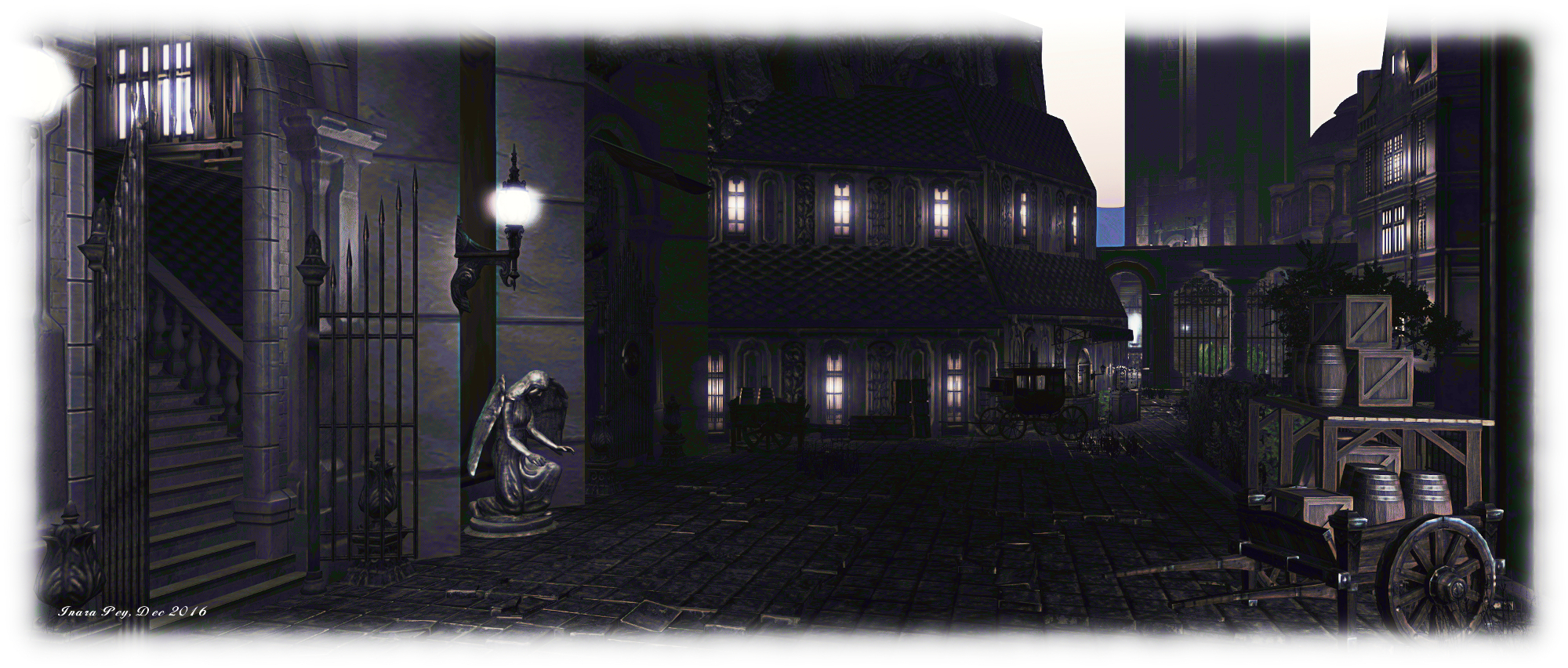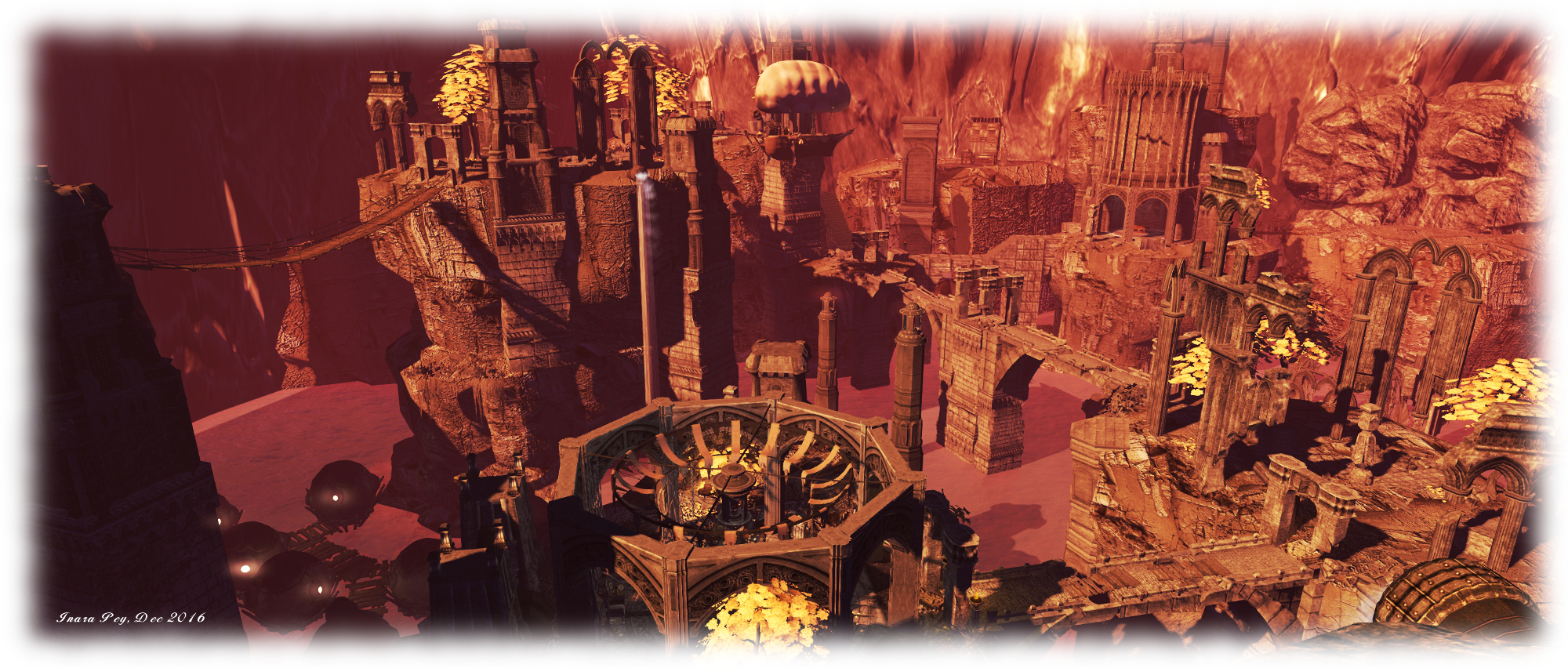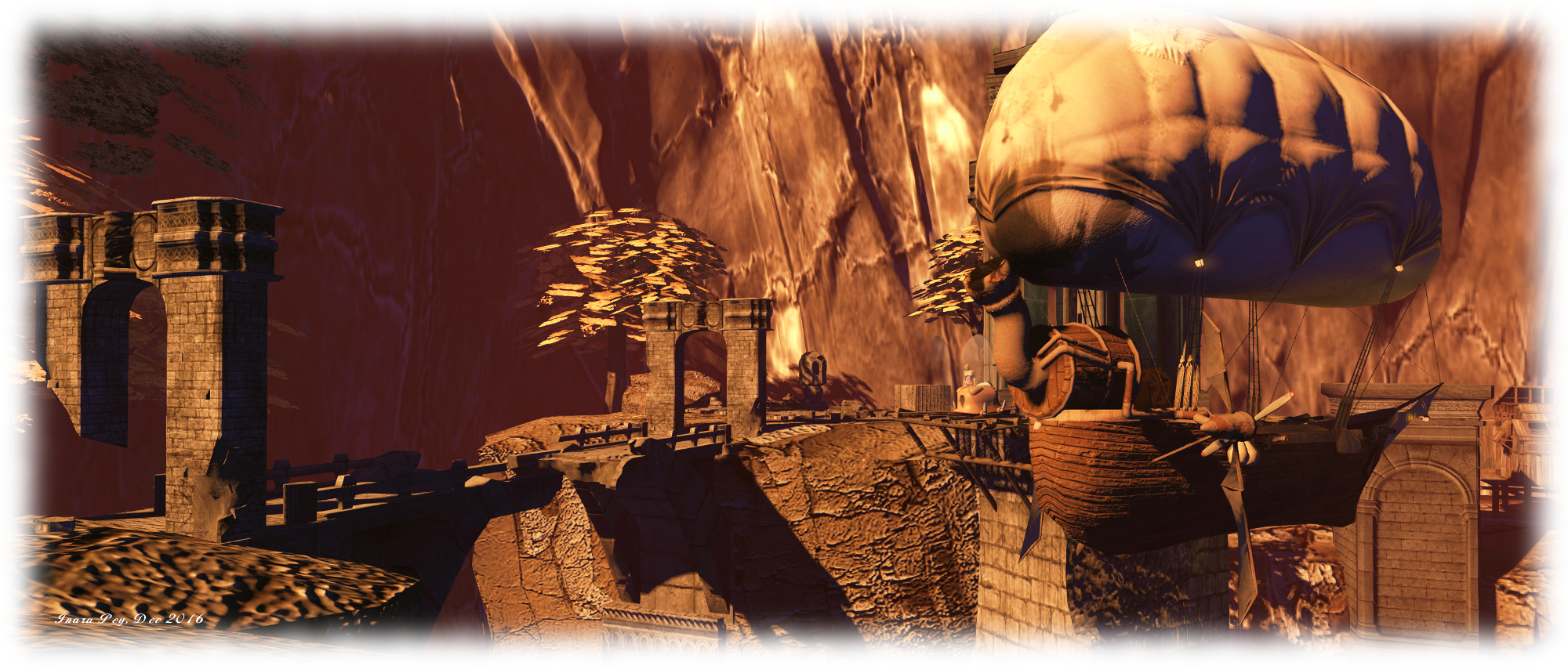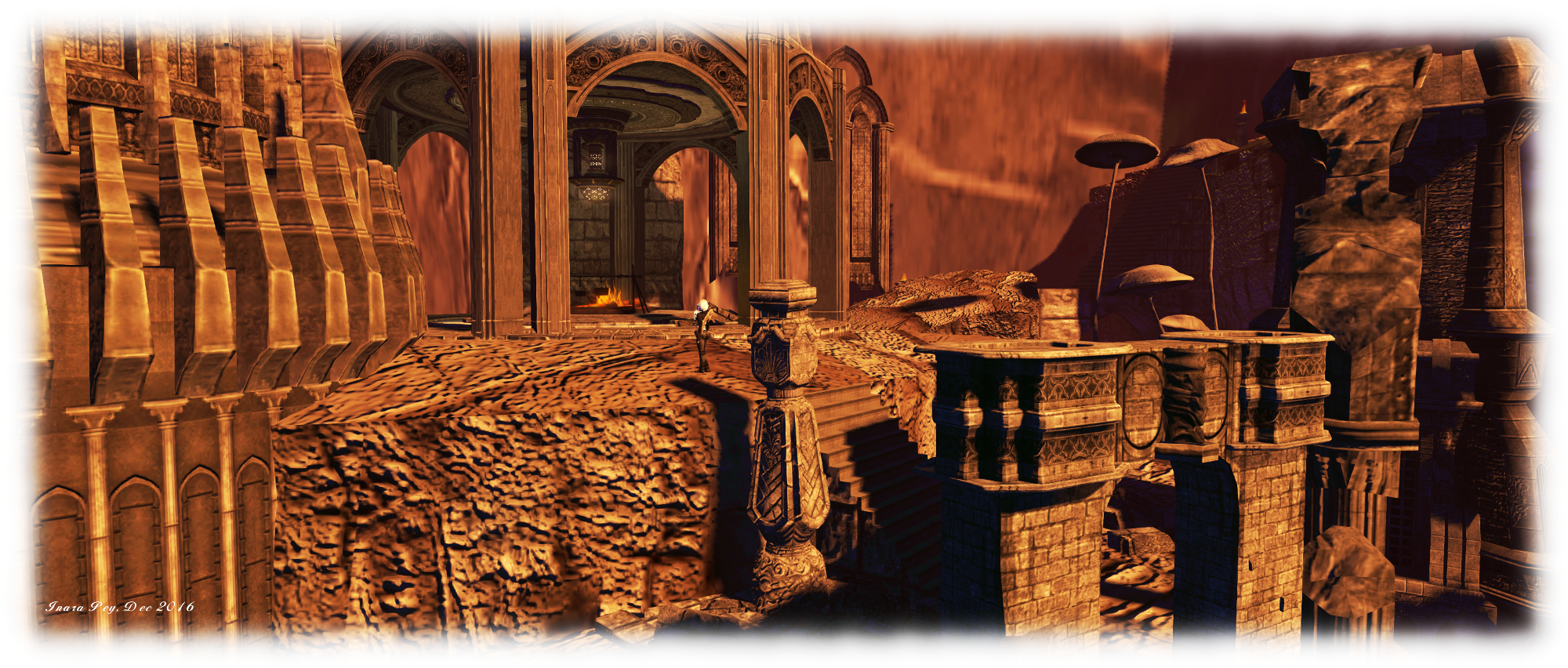
Arranmore in Second Life

Arranmore; Inara Pey, August 2016, on Flickr Arranmore – click any image for full size

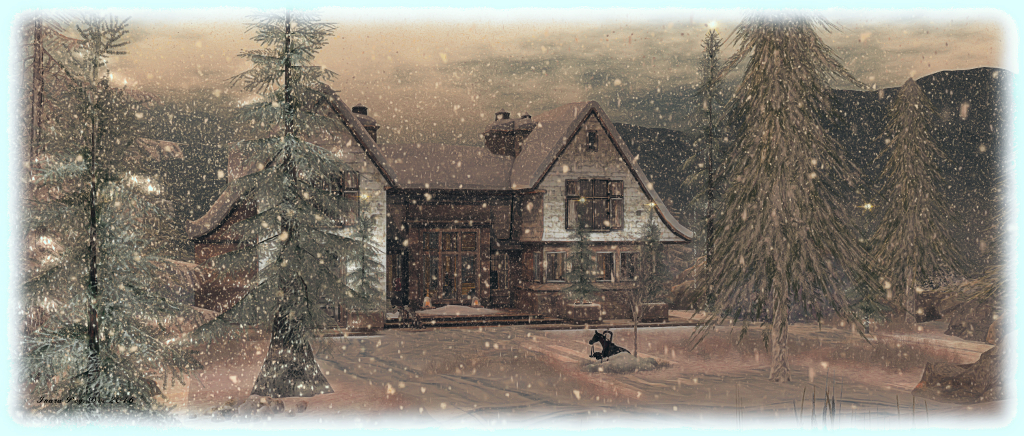
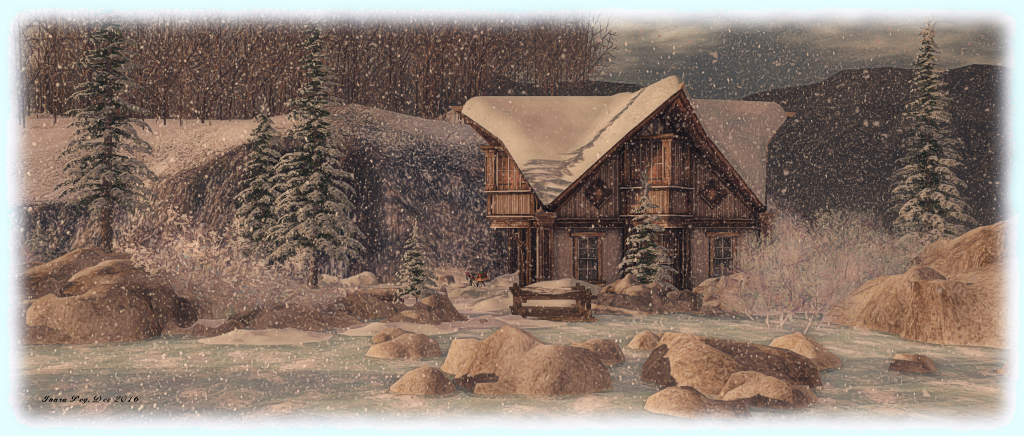
Now open in Second Life is Arranmore, the latest region designed by Lauren Bentham. Although its name from Arranmore (Árainn Mhór, essentially “large island”), the largest inhabited island off the west coast of County Donegal, Ireland, this is an entirely a fictional place of dark fantasy – and extremely atmospheric to boot.

Lauren has a long history of region design in Second Life, offering some of the most popular destinations for SL traveller on the grid. From the Baja group of region (Baja Norte, Baja Cove, Baja Bay and Baja Sands), through the likes of Storybrooke Gardens (a personal favourite – see here and here), Bentham Manor, Everwinter, to her most recent prior design, Netherwood (see my April 2016 review), Lauren’s work is deservedly known and appreciated. I’ve little doubt Arranmore will be the same.

Arranmore; Inara Pey, August 2016, on Flickr Arranmore

Visitors arrive on the west side of the region, on a small platform alongside a single railway line which curls south-to-north along the west side of the island without actually going anywhere: the two extremes of the track end in buffers. Perhaps it once went further – the fallen mass of a lighthouse suggests a calamity befell the north-west end of the island, so perhaps the tracks were washed away in whatever storm may have been responsible for bringing down that tower.

Ringed by the high peaks of surrounding islands, Arranmore broods beneath a sombre, storm-laden blanket of heavy grey cloud. Thunder rolls around the rugged peaks of the other islands, a deep booming against the plaintive cry of gull and moan of wind. Lightning flickers and forks, reflected by the mist rolling in from the sea as it drifts inland between the island’s trees like a living thing, watched over by the ever-rotating eye of a surviving lighthouse.

Arranmore; Inara Pey, August 2016, on Flickr Arranmore

On arrival, newcomers are invited to take a torch, offered alongside the region’s rules. If you’re keeping to the default windlight – which I suggest you do while initially exploring – the torch is a handy thing to have. Across the tracks from the little railway platform sit the entrance to the grounds of a once great manor house. This, we are told, was had been the home to Lord & Lady Inman and their family, all of whom mysteriously vanished whilst on holiday. Since their disappearance, the house has slowly fallen into ruin and the fortunes of the island had declined.

It is along the path leading towards the brooding form of the manor house that we come across the first signs that this is indeed a place where those still living on the island might be somewhat Lovecraftian in their ways – or perhaps it was the Inmans themselves? Just over the wall from the path sits a rotunda, its broken dome still offering some protection for a statue of an adult figure holding an tentacled infant child close to his or her chest. Even along the path to the house strangeness can be found: an empty hearse, a mildewed stuffed toy, its eyes apparently cut out, occupying the basket of a tricycle, and the gaunt figure of a local, funereal in his top hat and tails, holding aloft a lantern – whether in greeting or warning is yours to decide.

Arranmore; Inara Pey, August 2016, on Flickr Arranmore

As with all of Lauren’s region designs, there is a lot to see here, be it in the manor house as it slowly moulders away, or in the surrounding grounds and other building on the island. All of it is beautifully composed to create an environment that is a curious mix of the dark, the beautiful, the mysterious, the unsettling, and utterly captivating. One which really needs to be experienced rather than simply written about.

Lauren notes that the region is primarily for enjoyment and photography – those wishing to rez props in support of their photo work can join the local group for L$175 and do so – but role-play is welcome. There is a warning in the rules that weapons are not allowed – although seeing a member of the admin team walking around carrying an assault rifle seemed  a little at odds with the spirit of the rules :). There’s also a Flickr group for those so minded to add their pictures.

Arranmore; Inara Pey, August 2016, on Flickr Arranmore

Definitely a must for any SL traveller’s itinerary.

SLurl Details


Rain songs and cipherscapes in Second Life

Song About Rain
Song About Rain

Song about Rain is an ensemble exhibition now open at the Pretentious Art Gallery, Crestwick Island ( a location I blogged about in June 2015), featuring images by Panteleimon Aeo, Burk Bode, MaryFelicity, Cold Frog, Nur Moo, Charlie Namiboo, Laura Richards, Mr. S., Sugar Silverstar, Maloe Vansant, and  Anita Witt.

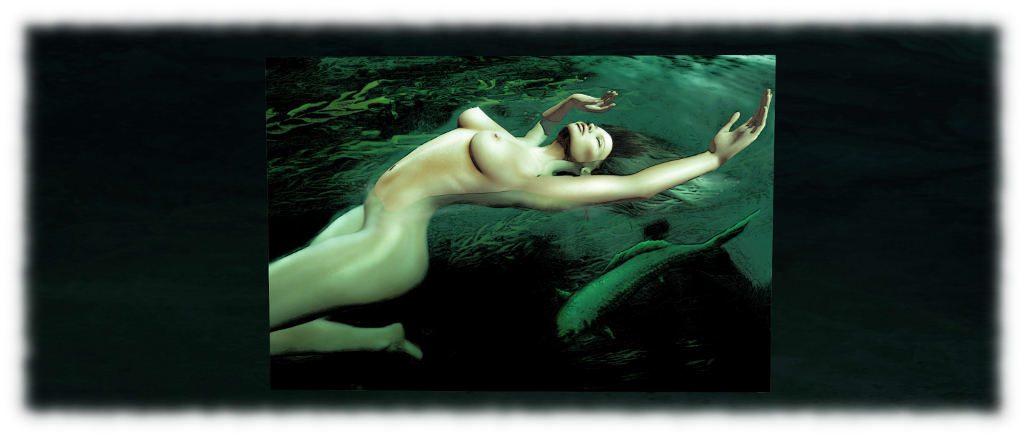
As the title suggests, the central theme of this exhibition is rain, with each artist submitting a single avatar study on the subject. Thus, it is an eye-catching exhibition of subtle contrasts in using rain  to frame a scene, focus the eye and  / or tell a story. All of the images have much to say, but I confess that where storytelling is concerned, I found myself particularly drawn to The Rain Song by Mr. S. (featured at the top of this article), which suggested an entire novella to me whilst admiring it. All of the pictures are offered for sale at the set price of L$300 each.

Song About Rain
Song About Rain

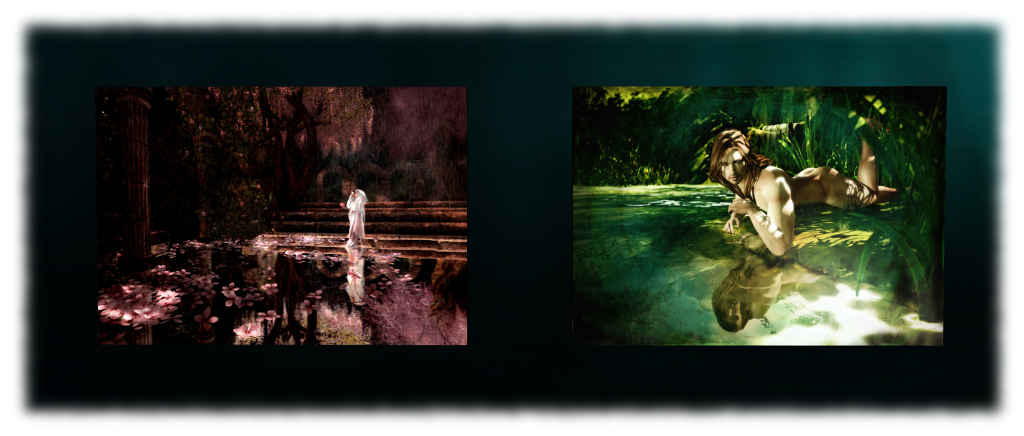
Next door, at the Broad Street Gallery, Cipher (Ciphertazi Wandin), co-holder of Crestwick Island, presents eight of his superb images which mix landscapes, avatar studies and images of personal space together in an intriguing set of pieces. All are superbly and evocative of mood and place, and can be purchased for the exceptionally modest L$100 each.

Both the Pretentious Gallery and Broad Street Gallery are modest in size, making trips to see the two exhibitions easy to combine. Doing so also offers visitors the opportunity to explore Crestwick Island which, if you haven’t done so before, is very much worth taking the time to see.

Cipherscapes
Cipherscapes

Note that due to the landing point in operation, you’ll need to walk into town to reach the galleries – but again, this gives you the chance to enjoy Crestwick Island more fully than if simply plonking down in front of the galleries 🙂 .

SLurl Details

A Chinese Garden in Second Life

A Chinese Garden
A Chinese Garden

There are many spiritual centres throughout Second Life offering a range of environments and opportunities for rest, spiritual comfort, recovery, teaching and more.

One such region is Qoheleth (Hebrew:  gatherer / assembler; an assembly). I’ve been drawn there a couple of times over the course of the last year – although admittedly not out of any spiritual want or needs – because the region is largely given over an oriental theme, something of which I’m rather fond. In particular, it includes A Chinese Garden, designed by Camryn Darkstone with the assistance of region holder Grath (Grath Helgerud), as it is this garden which has tended to attract me.

A Chinese Garden
A Chinese Garden

Surrounded by tall walls, through which circular gateways provide access to the rest of the region, A Chinese Garden offers visitors a place to wander under sky and along open-sided passages, look out over quiet waters, and generally relax and enjoy themselves away from the demands of the rest of Second Life. It is, in a word, a peaceful setting.

What makes it particularly attractive is not only that it works well under a range of windlight settings, but the outside of three notable building and things like handrails, almost all the structures within the garden have been designed and built by Camryn, thus harking back to the days when so much in SL was very much DIY, rather than prefabricated.

A Chinese Garden
A Chinese Garden

In an age where so much creative expression in Second Life has perhaps shifted towards being more about landscaping and object placement (which can be as creative and rewarding as gluing prims together, make no mistake), it is good to visit places like the Chinese Garden and be reminded of just what can be done with the humble prim and a little time.

The Sino-Japanese theme continues beyond the immediate walls of the garden, as does the broadly spiritual theme of the region, operated by the Psychoanalytic Round Table discussion group – about which I know little beyond that provided in an information note card. However, just outside of the immediate Garden grounds is a Chinese theatre, again designed by Camryn, and woodland tracks leading over bridges and under trees to other locations of interest, such as the Nanyangong Citadel, and the Stone Circle, where one can learn about Ubuunto – “what it takes to be human”.  There’s even a companion house sitting among the trees beyond the garden walls for those seeking company – although I have no idea how active it might be.

A Chinese Garden
A Chinese Garden

For those seeking spiritual rest or renewal, Qoheleth sits amidst three over regions with community / faith / spiritual leanings. These I have not explored, but leave it to those who might to do so. As someone who does enjoy oriental themed locations in SL (and I have a couple more lined-up for upcoming posts!), A Chinese Garden makes for a charming and relaxing visit.

SLurl Details

Second Life authors and writers: submissions for Quill and Pen 2 open

Click image to open Quill and Pen volume 1

In June, Kultivate Magazine published the first volume of Quill and Pen, a new twice-yearly publication focusing on the work of writers and poets from across Second Life. It features short stories (including flash stories), non-fiction and poetry, and is published each June and December.

You can obtain  / read this first volume in a number of e-formats on-line and on mobile devices:

On August 22nd, 2016 Kultivate announced submissions for the second volume of the journal are now open, with the publication date set for December 5th, 2016. Writers and poets from across Second Life are invited to submit their work for consideration / publication, with submissions are welcome in the following categories:

  • Poems: one poem per page, single spaced and left justified, maximum of six pages
  • Non-fiction: one essay up to 3,000 words, double spaced, no extra space between paragraphs, white space for section breaks only
  • Fiction:
    • Full-length stories:  one story up to 3,000 words, double spaced, no extra space between paragraphs. White space for section breaks only
    • Flash fiction: up to 700 words, double spaced, no extra space between paragraphs. White space for section breaks only.

To submit your work, please complete the Quill and Pen submission form.

Please do not copy  / paste your work into the form when applying. All work should be made available via Google Documents or a similar service, with the link to its location included in the submission form. Kultivate will then download your work from the provided link, thus preserving formatting for publication. Thank you.

Wildstar Beaumont’s Sailing in Second Life

Sailing: Wildstar Beaumont

Now open at Ce Soir Arts is Sailing, a nautical-themed exhibition of photography by friend and long-time Second Life resident, Wildstar Beaumont.

Perhaps best known for his work as the official photographer of Relay For Life, and featured artist during the intermission period on Designing Worlds, as well as being the feature photographer for both the former Primgraph magazine and for Prim Perfect, Wildstar visually documents the ever-changing face of Second Life.

Sailing: Wildstar Beaumont

As well as sharing a common interest in Second Life photography, Wildstar and I are also avid Second Life sailing enthusiasts and lovers of tall ships; little wonder, then, that I was drawn to this exhibition. Tall ships are a particular focus in the pictures, but other vessels are also offered, with many of them also offering unique views of Second Life’s most famous water-bound locations.

Fastnet Rock lighthouse (Crows Nest) can, for example, be seen in several of the images. Other images incorporate places such as the Leviathan’s Skeleton (Ahab’s Haunt), the marina at Starboard’s Yacht Club, the paddle steamer quays at Dutch Harbor (see my August 2014 article on the magnificent vessels moored there), and the Temple of Neptune looking out over Blake Sea, to name a handful.

Sailing: Wildstar Beaumont

But I confess, it is the tall ships which capture my eye and heart. There is a romance to the great sailing ships of old which belies the often harsh life aboard them, whether merchantman or warship. Who cannot be moved by the sight of such a vessel, sails unfurled, white-foamed sea curling back from curved bows as it runs before the wind, unfettered and in full career – if I might borrow from Brecht. Or, equally as moving, laying at anchor, sails furled as the sun casts its last rays of the day across masts and deck.

Wildstar captures all this and more in his images; so much so that to point a finger at any one is perhaps unfair, but I admit to being very drawn to his images of the Star of Winterfell, (shown on the right in the banner image for this article) and the trio of studies showing the Bright Star passing the Fastnet Rock Lighthouse (below right, alongside a closer viewer of the Bright Star).

Sailing: Wildstar Beaumont

All of the pictures in the exhibition are for sale at a very modest price, and are presented pre-framed and ready to hang at home. And believe me when I say, they will more than grace any home with wall space to spare. For anyone in love with sailing or who appreciates Wildstar’s work, this is a must-see exhibition.

SLurl Details

Byrd Island in Second Life

Byrd Island, Oyster Bay; Inara Pey, August 2016, on Flickr Byrd Island, Oyster Bay – click any image for full size

The homestead region of Oyster Bay is a regular stopping-off point on my rounds of Second Life. This is because Sera Bellic, the region holder, uses it to demonstrate her region design skills, changing the layout several times a year, thus periodically offering all of us something to new visit. This is currently the case with the regions latest iteration as  Byrd Island, which Caitlyn and hopped over to explore as the start of our weekend.

Visitors arrive at the island’s ferry pier, located on the island’s north-west side, where birds circle overhead, the first indications of how – spelling allowing – the island may have come by its name. Herons patrol the sandy tongue of land on which it sits, the only low-lying point of the entire island, which otherwise stands as a 30-metre high tower of rock rising from the surrounding mist-laden sea.

Byrd Island, Oyster Bay; Inara Pey, August 2016, on Flickr Byrd Island, Oyster Bay

Two routes to this high plateau are offered: a wooden elevator occupying a steel girder tower, or a rope ladder. The former gives visitors the option to stop off at a rocky observation shelf on their way to the top of the island, whilst for the adventurous, the rope ladder presents a climb directly to the platform at the top of the cliffs serving both it and the elevator.

From the platform, an arched hedge sitting between tall firs presents itself as a gateway to a gently undulating, and in place rugged, plateau with rolling grass, rocky outcrops and a mix of tress and bushes offering scattered places to sit and paths to wander. It all makes for a pleasing landscape well-suited to soft sunlight settings.

Byrd Island, Oyster Bay; Inara Pey, August 2016, on Flickr Byrd Island, Oyster Bay

The paths, cut from the trunks of fallen trees, wind across the landscape, point the way towards the three buildings occupying the island: the tall lighthouse with attached lodgings; an expansive house to the south-east and a small stone-built lodge to the east. Across the landscape birds wheel and caw, sing and sit … and watch.

“The lighthouse keeper and his family abruptly left the island never to return.” Sera states in the land description. “Could it have been the birds, or something else?” Whatever might have caused the departure, the birds weren’t telling, but had one of the raven keeping an eye on things spoken up with, “Nevermore!” as Caitlyn and I passed, I really wouldn’t have been surprised; there is a faintly Hitchcockian edge to the island under its default windlight which naturally gives rise to thoughts of certain films, or of Poe on spotting the ravens.

Byrd Island, Oyster Bay; Inara Pey, August 2016, on Flickr Byrd Island, Oyster Bay

Which is not to say that just because the island has this slightly mysterious edge to it, it is deeply sinister. Take away the misty look with an alternative windlight – I found Annan Adored’s Morning Dream worked really well (among several others!) – and Byrd Island becomes the kind of place where get-away-from-it-all weekends should be spent. A place where late breakfasts in bed are the only way to start the day, followed by leisurely strolls across the island and afternoons lazing in the shade of trees, before seeing out the evening quietly, watching the sun set over the rippling ocean.

In all my visits to Oyster Bay, I’ve rarely been disappointed in the designs Sera has offered us; each one has been special, from the Adirondacks, back through the likes of Bellack House and The McFly Project and beyond. However, I admit to finding Byrd Island perhaps her best yet. It has an elegance and openness about it which makes exploration a pleasure, and is presented in a way not often seen in island design in-world, complete with a sprinkling of atmosphere and back story to add further flavour.

Byrd Island, Oyster Bay; Inara Pey, August 2016, on Flickr Byrd Island, Oyster Bay

SLurl Details