A Spring Spirit in Second Life

Spring Spirit, Dalaran; Inara Pey, March 2017, on FlickrSpring Spirit – click any image for full size

Spring Spirit is a homestead region designed by xxStanxx (xxStanilasxx) and Soffy Ronwood. Offered to bloggers, photographers and lovers of nature as a place to visit and enjoy, it is another true delight.

Visitors arrive on a small grassy area bordered on one side by the imposing bulk of a gallery accessed via a small courtyard, and hemmed on two sides by steep-sided hills. Cats and dogs roam this  open space before the gallery’s walls, the cats in particular fascinated by two tanks of koi carp. A series of large square flagstones form a broad path leading away from the entrance to the gallery, inviting visitors to follow.
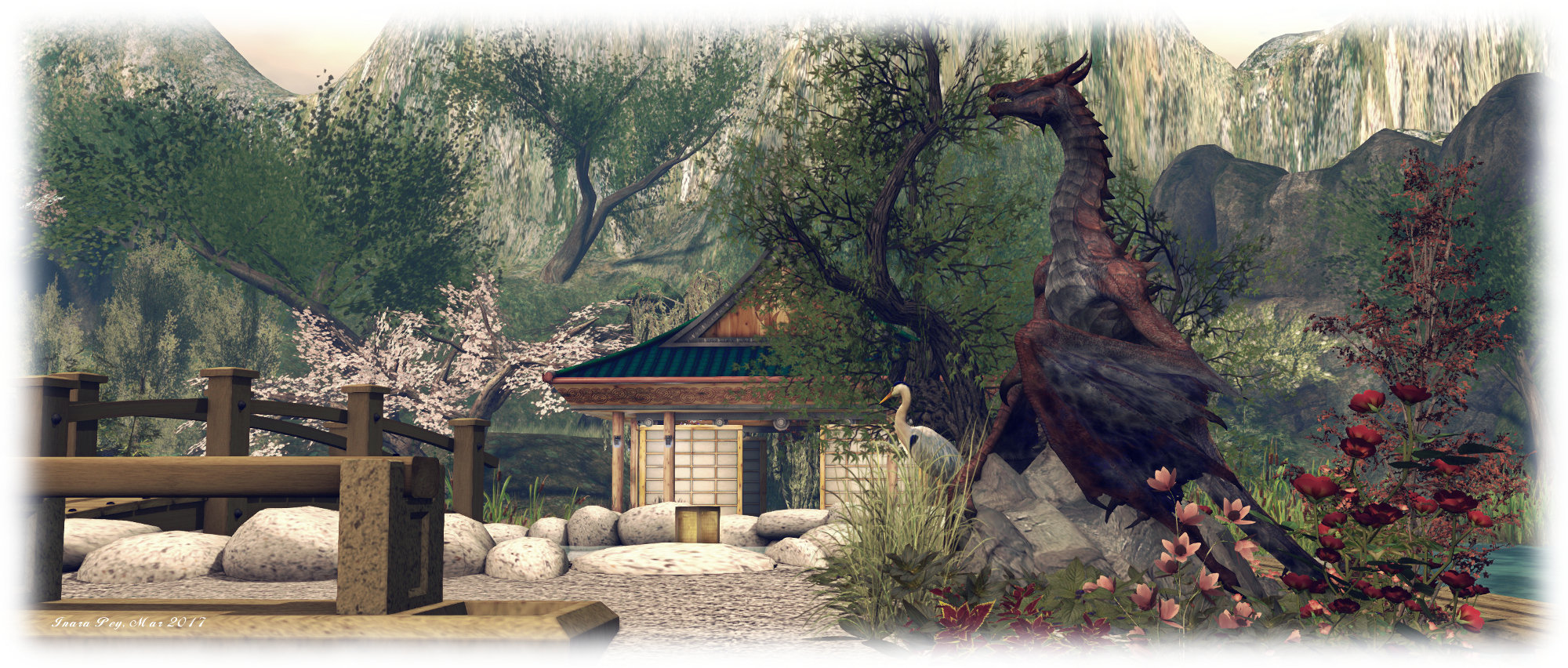
Spring Spirit, Dalaran; Inara Pey, March 2017, on FlickrSpring Spirit

Passing between an aged Japanese maple and a smaller but equally bent cheery blossom tree – both of which give the first hint of the region’s far eastern influence – the path take you down to the water’s edge and under a natural arch of rock, to reveal Spring Spirit’s secret in all it beauty, a bench seat beside the path allowing you to sit down and take it all in.

A ring of hills surrounds a flooded basin, a narrow neck on the west side providing access to the sea, guarded by the bulk of an ancient Chinese junk. Within the basin, which is fed by waterfalls tumbling down the rocky lower slopes of the surrounding hills, sit three Ikoi (“rest”) houses, each occupying a wooden pontoon. Between them, and linking them to the north and south shores of the basin is a pattern of wooden walkways. These in turn surround the square of a zen garden, complete with a pond, bridge, and a bench for contemplation, all guarded by a magnificent stone dragon.

Spring Spirit, Dalaran; Inara Pey, March 2017, on FlickrSpring Spirit

Each of the Ikoi houses offers a place of rest and refreshment – be it food, comfortable cushions or a massage. A fourth house sits at the water’s edge, the round tub of a ofuro inside, lily petals floating in its water. This little bathhouse is reached by turning off the path from the gallery at the point where it meets the wooden board walk leading out to the other three houses and slipping under the drooping arms of a weeping willow.

As well as giving access to the bathhouse, this route also offers a way up to the broad grassy ridge running around the hollow of the basin. Here a path winds its way past pond, over bridges spanning water channels fed and ending in waterfalls, and under the shade of trees. Arcing around the curve of this great bowl, the path along this ridge provides access to lookout points, places to sit or dance, and a way back down to the water’s edge on the north side of the region. Here, more steps pass under a Torri gate and point the way back up onto the surrounding hills, where there is more to be discovered, while a wooden board walk allows you to return to the Ikoi houses if you prefer.

Spring Spirit, Dalaran; Inara Pey, March 2017, on FlickrSpring Spirit

Spring Spirit is a beautiful design, perfectly drawing on Japanese and Chinese influences to create a balanced whole. It also mirrors something of an oriental aesthetic in its overall layout. From the circular form of the basin, through the to placement of the Ikoi houses and the pattern of wooden walkways connecting them, to the central positioning of the zen garden, there is an elegant harmony about the entire design.

There is a lot to see and enjoy, from time spent in the Ikoi houses, through dancing or spotting all of the wildlife scattered across both land and water – we particularly enjoyed spotting the herons scattered around strategic points like sentinels keeping a watchful eye on things – to simply sitting and relaxing. For those who enjoy photography, spring Spirit is very photogenic and has a dedicated Flickr pool, complete with the opportunity to have images posted there displayed in the region’s gallery.

Spring Spirit, Dalaran; Inara Pey, March 2017, on FlickrSpring Spirit

SLurl Details

A Wild Lost Line in Second Life

MetaLES: Wild Lost Line

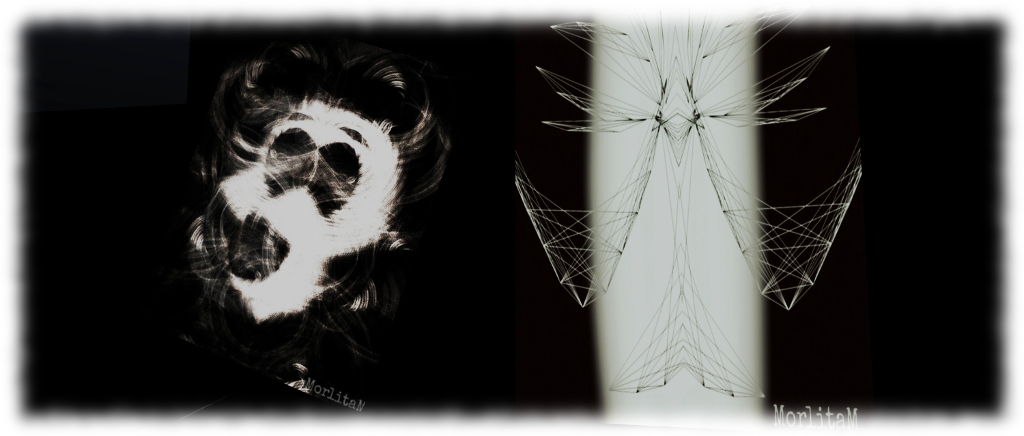
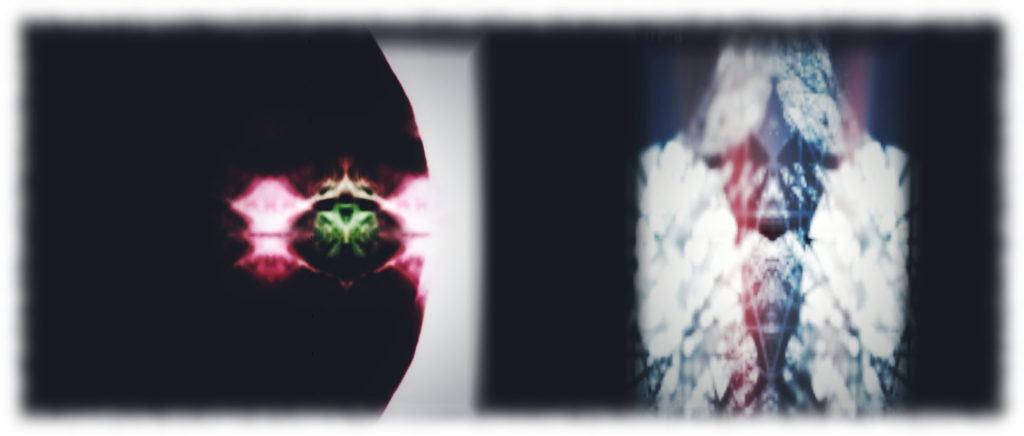
Wild Lost Line, now open at MetaLES, curated by Ux Hax and Romy Nayar, is a new art / sound installation by artist and musician Morlita Quan, a physical world artist hailing from Spain and working under the name. Her artistic expression covers 2D and 3D art and music, and all three are very much reflected in her Second Life presence.

The installation should be be viewed with the viewer’s Advanced Lighting Model enabled and local sounds turned on, with local time set to midnight. There is a recommendation to set Shadows to Sun/Moon + Projectors, but given the time-of-day setting and the fact that Shadows can result in a sizeable performance hit for some, I would suggest this isn’t so vital a requirement. I would, however, recommend using headphones to get the full stereo effect of the aural environment. Once you are set-up, touch the teleport board at the MetaLES landing point to jump to the installation.

MetaLES: Wild Lost Line

This comprises a path through a series of halls and rooms in which Mori’s art is displayed, the route through them indicated by black or white arrows on floors and walls. The art itself is offered on a huge scale, from drape-like hangings you must walk through, to pieces forming floors and ceilings, as well a those hanging on walls. They are, perhaps, a little too huge – but I’ll come back to that.

The final part of the exhibit takes you along the top of the walls separating the various rooms, allowing you another view of the art on display. at the end of this, a teleport drops you to a 3D element, a flower-like structure surrounded by floating cubes. Touch a white cube at the base of “stem” of this, and you’ll be seated within the “petals”, where touching the surrounding ring  of coloured triangles and the small spheres below them will allow you to play various notes and tones. From here, a ramp leads you back into the installation while a teleport board takes you back the MetaLES landing point.

MetaLES: Wild Lost Line

Quantifying Wild Lost Line is difficult. I find Mori’s work to be its most captivating when a piece can be seen in its entirety. This allows one to fully appreciate its complex beauty, the use of line, colour, shade and pattern to present something deeply organic yet also clearly geometrically defined. Such is the overwhelming size of the pieces present in Wild Lost Line, my deeper appreciation born of this appreciation of complexity and form was lost amidst the technicalities of camera juggling and an inability to easily encompass all of a single piece comfortably in my view. Thus, I found myself conflicted in touring the installation.

However, you may see things differently – so why not pay a visit?

SLurl Details

The Journey in Second Life

DaphneArts: The Journey

Now open as the ground level of DaphneArts is a new interactive installation by Angelika Corral and Sheldon B, The Journey, which builds on their recent work with mixed media, notably with January’s celebration of Edgar Allen Poe (see: A dream within a dream: celebrating Poe in Second Life).

“The Journey is an imaginary world, telling a fantastical story, using metaphor, analogy and fable,” Angelika and Sheldon say of the installation. “Perhaps a different story to each and everyone, according what the individual is searching to find out, about who and what they are throughout life, as they make choices based on their experiences, beliefs, and outlook. But the search for meaning in life is a Hydra; one question answered leads to many more to contemplate…”

DaphneArts: The Journey

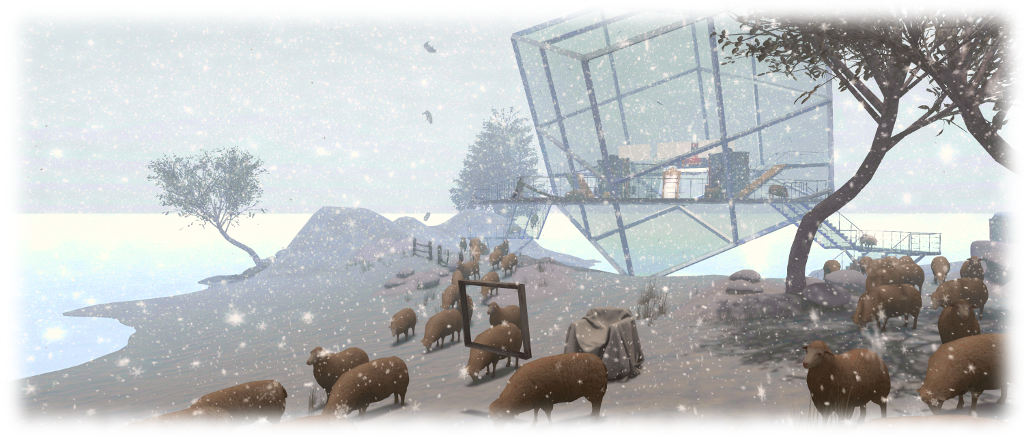
Visitors start their journey on the upper level of a large, cube-like glass and steel structure where they will be asked to allow the attachment of a HUD – which they should allow, as it provides the means to experience the interactive elements of the installation. Instructions on how best to view the installation are provided via information boards, including setting the preferred windlight (if your viewer doesn’t adopt it automatically), and a short video introducing the piece.  Below this, on the main floor, sheep appear to be emerging from two large machines, pointing the way forward, to a snowy world outside the cube.

Core to the piece are three seats: one inside the cube, one out on the snow, the third on the water. sitting on them will trigger a recital of a poem, read by Angelika. All three poems offer reflections on life’s journey. Each of them –  Fire, by Dorothea MacKellar,  A Journey by Nikki Giovanni and Paul Laurence Dunbar’s We Wear The Mask –  provoke thinking through their use of metaphor, give us pause to consider our own outlook on life and the journey we are taking through it.

DaphneArts: The Journey

Metaphor is richly presented throughout the installation, from the poems themselves, to the guiding lines of sheep and fences (a reference to sleep, the gateway to our deepest imaginings, and thus to this imaginary world), to the crows with their reference to death, the inevitable destination of life’s journey, no matter how we attempt to dress it up – such as through a glowing ascent to the heavens. Even the snow falling thick and fast might be seen as a metaphor.

A journey is a fascinating piece, one which depends entirely upon our own experiences, outlook and desires  / hopes / fears in life. It is a piece which, as Sheldon as Angelika note, for every question asked and possibly answered, a dozen more raise their heads. Thus, interpreting  the installation is genuinely a subjective matter, driven by the questions we bring to it, and those which follow them.

SLurl Details

Bleeding Books in Second Life

Split Screen: Bleeding Books

Now open at Split Screen, curated by Dividni Shostakovich, is Bleeding Books, an installation by Haveit Neox which offers a commentary on how language and information can be both abused and overwhelming.

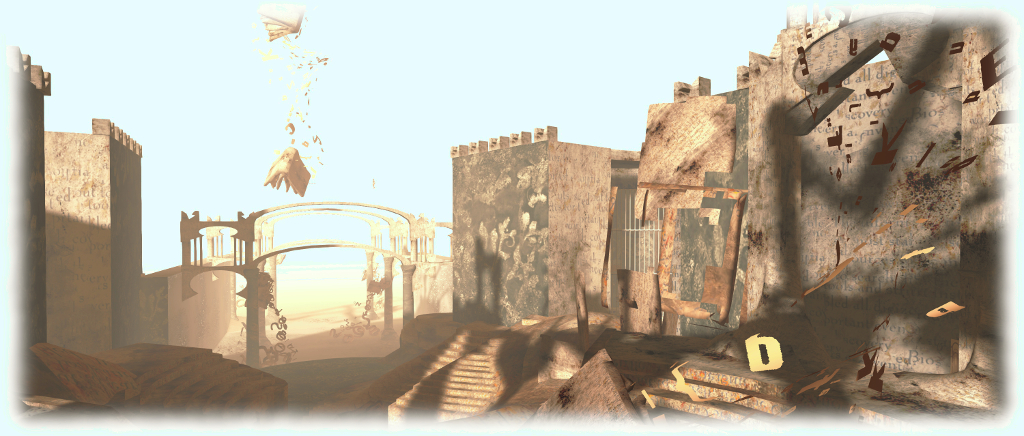
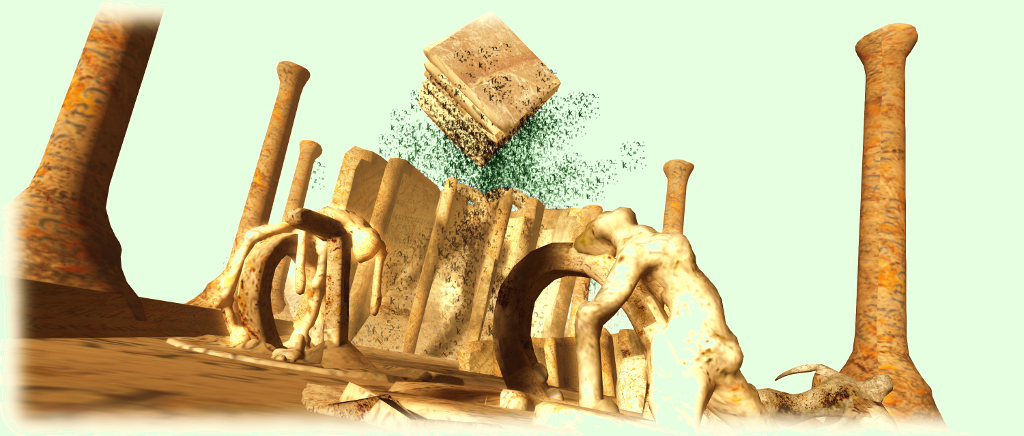
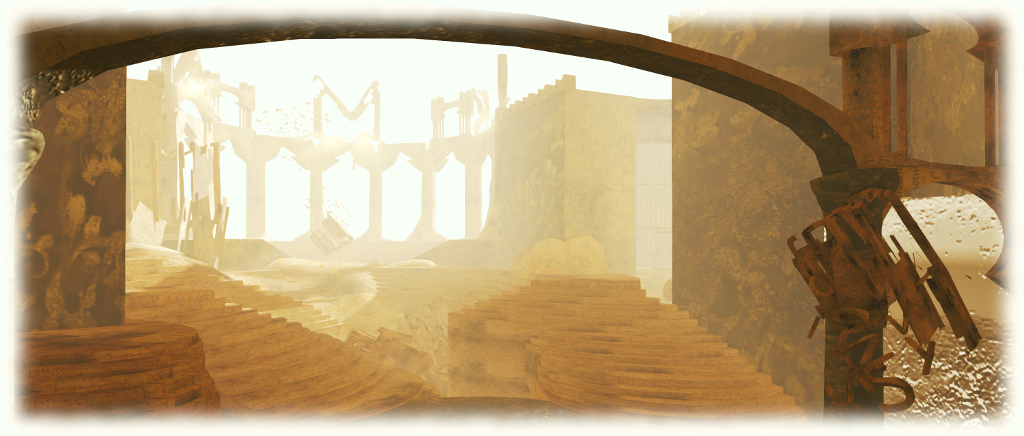
Three huge platforms float in the sky; one is the landing point where information on the installation and Split Screen can be obtained. The remaining two, one reached via a walk through a tornado of golden letter and the other by flying down to it, offer huge columned but roofless halls. The floors of each resemble printed pages from which stone letters partially rise, draped with human figures who appear to be merging with them. Over both, giant books spill a black torrent of letters.


Split Screen: Bleeding Books

Beneath all three, at ground level (fly down to reach it) is an enormous fortress, slowly decaying,  the roof gone, the floors pitted and broken, the walls collapsing. Throughout its bulk can be found the essence of words: letters can be seen parts of the walls or hang like broken chains from columns, printed pages form the lumps and undulations of the floor. More letters are locked within great cells, or have fallen into the pitted floor.

“It is a story in my ongoing series on abuse as seen through the lens of language,” Haveit says of the piece. “What happens when knowledge is so disrespected that it is freely contaminated with doses of falsehood? There are avenues to properly sort facts in this information age, yet we easily turn a blind eye to certain evidence if it goes counter to our beliefs – even when our choices may cause immeasurable harm.”

Split Screen: Bleeding Books

In truth, words and literacy have always been seen as a focus of power (such as the withholding of literacy from the masses in times long past) and as a means of conducting war (be it hot or cold, political or ideological, through the use of propaganda and misinformation). What makes Bleeding Books perhaps particularly relevant is that today, we collectively have access to so many channels of communication and alongside them, so much data and information, that the ability to freely contaminate what we read, see and hear is becoming a significant issue.

Worse still, facts and counter-facts are increasingly forced to vie with so-called “alternative facts” and outright misinformation, that it is often far easier for us to retreat into our own bias and seek only the information which fits that bias, no matter how damaging it might be politically, ideologically, ecologically or personally in our health and daily lives.

Split Screen: Bleeding Books

Thus the metaphor is clear: such is the flood of information flowing around, over and even through us, that the power of words to define truth, objectivity, reason, understanding  – their very ability to present reality to us – is being eroded and broken, both intentionally by others and through our own unwillingness to set aside our own biased outlook, no matter what the consequences.

Bleeding Books is not necessarily an easy piece to understand, nor may it sit easy on the conscience. But neither of these points mean it should be avoided. Rather, it is a piece that the longer you spend within it, the more clearly it speaks to you.

SLurl Details

Bleeding Books, Split Screen (Amra, rated: Moderate)

A Mystical Fae Forest in Second Life

Mystical Fae Forest, Elvenshire; Inara Pey, February 2017, on FlickrMystical Fae Forest – click any image for full size

Update, July 2019: Zuma has closed Elvenshire and moved Fae Forest to a new location (see A new (fae forest) in Second Life for more). Because of this, SLurls have been removed from this article.

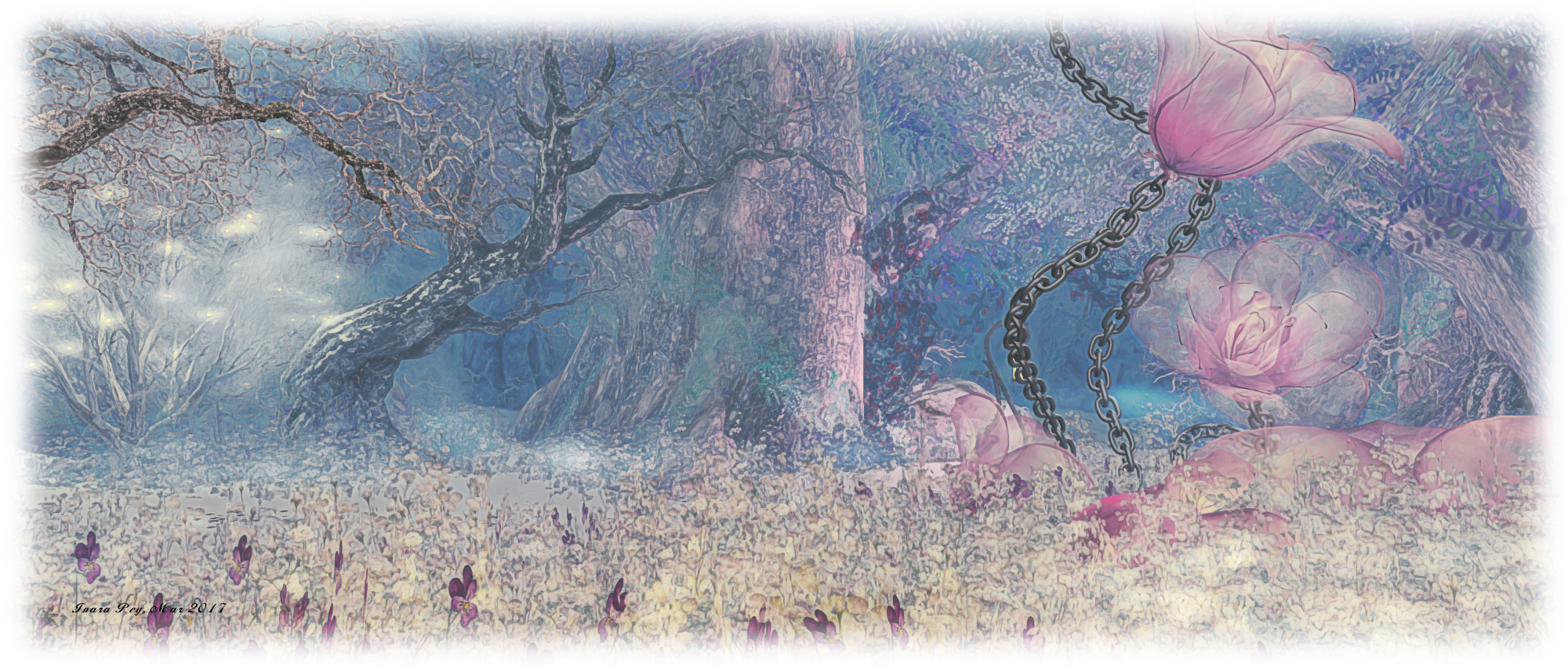
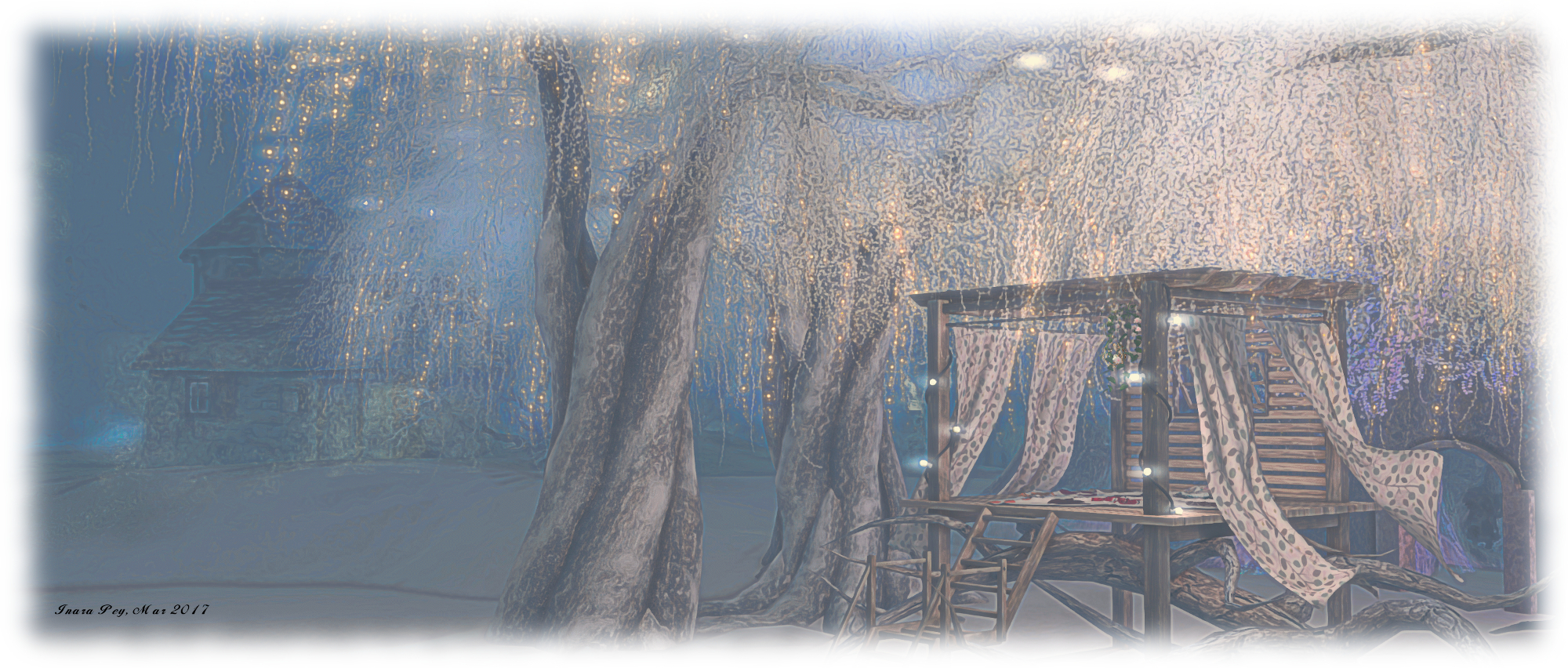
Mystical Fae Forest, occupying the Homestead region of Elvenshire, is precisely what the name implies: a mystical realm caught in time and wrapped in the soft light of a winter’s eve. It’s a place those who love things fae and whimsical should appreciate; a place where magic floats in the air and a surprise awaits at very turn.

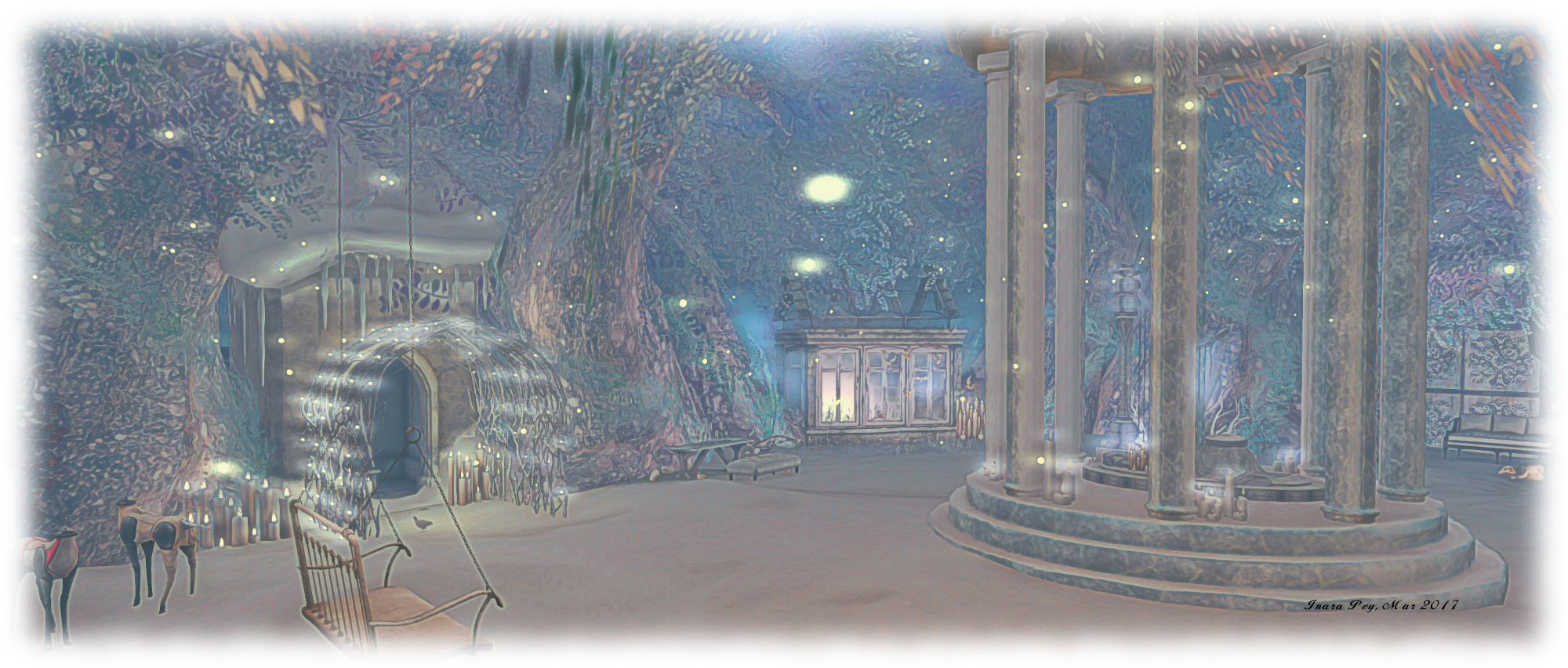
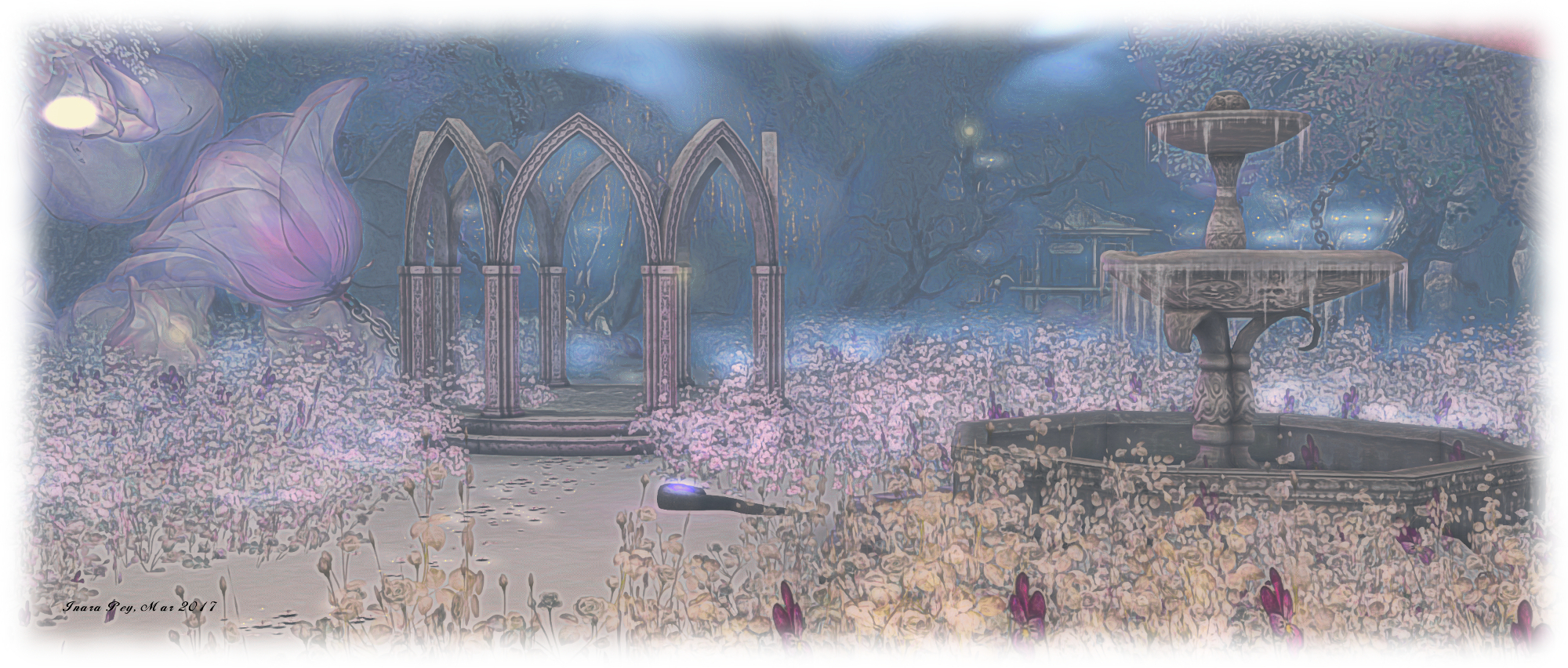
Designed by Zuma Fae Dust (Zuma Jupiter), the region’s timelessness is immediately felt on entering. The predominant shade is white, as if the trees are frosted and the ground covered in snow. But among the white flowers lay flashes, pools and sprinkles of colour, while fireflies drift on the air and tiny lights sparkle from branches. Beside the landing point, giant roses sit, their petals glowing a soft, translucent pink as if spun from glass, their stems links of silver chain.

Mystical Fae Forest, Elvenshire; Inara Pey, February 2017, on FlickrMystical Fae Forest

Paths wind through the flowers, leading away from the arched circle of the landing point. It matters not which you take and the wind between the tress and frequently fork. All of them will lead you somewhere, and often to the quite unexpected, while birds sing from branches overhead.

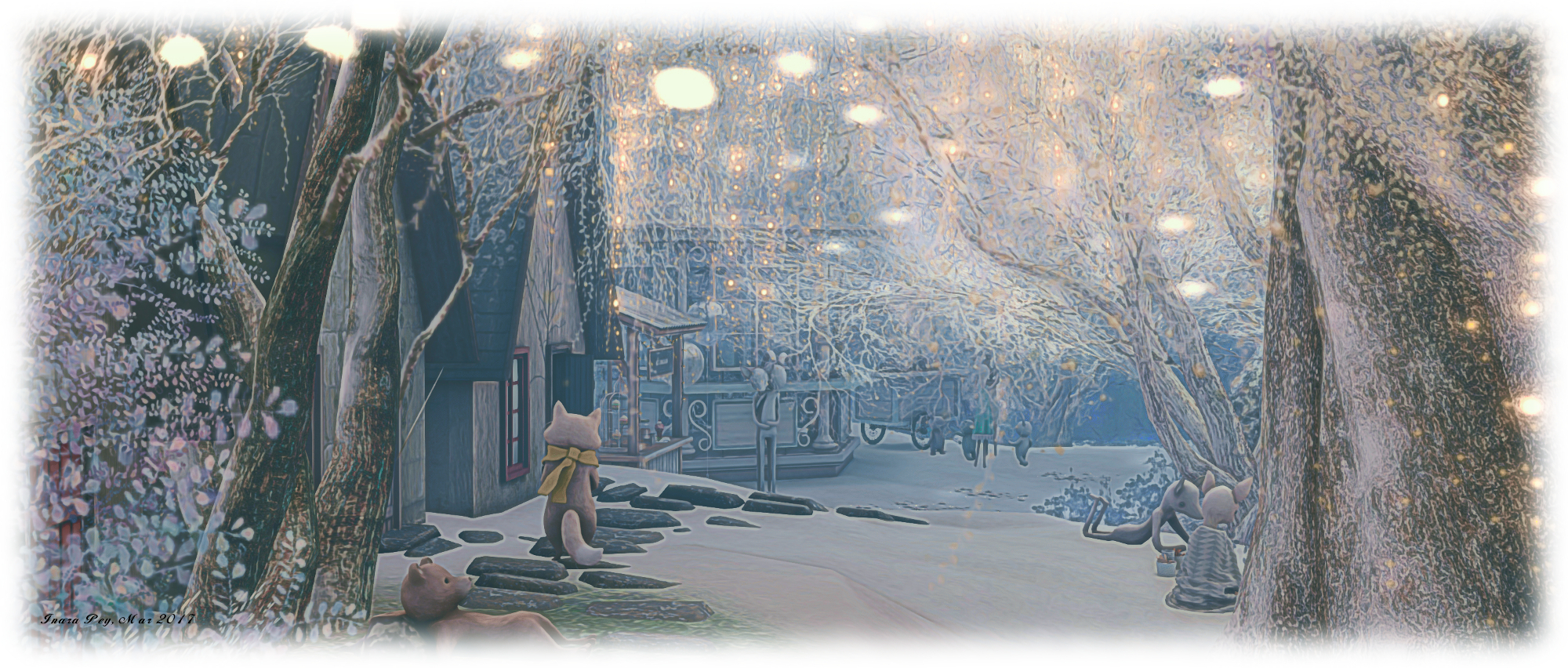
From the name of the region, you might expect the locals to be faerie folk, or perhaps have a touch of the elvish or hobbit about them. While the folk might definitely be on the small side, they are most certainly not hobbits; nor are they elves or fae folk. Rather, most are a mix of rabbits, raccoons, teddy bears and others, all going about their business or at play in the hazy light.

Mystical Fae Forest, Elvenshire; Inara Pey, February 2017, on FlickrMystical Fae Forest

Some are gathered along a little hamlet street, playing games, gathering around an ice cream stand or simply walking along the footpath. Some sit together as couples, one or two wander alone – two even hold up a banner directing people to a party. These scenes are scattered across the region, allowing visitors to come upon them by chance as they walk along the paths and under the trees.

I said “most” above, because there are others here to be found. This is a place where you can see a pink elephant if you choose the right path, or come across a delightful little scene featuring visitors from afar who have decided to drop in on the home of a flying saucer aficionado. I’m not sure they mean whoever it is any harm; going by the looks of three of them they appear to be on a sightseeing tour!

Mystical Fae Forest, Elvenshire; Inara Pey, February 2017, on FlickrMystical Fae Forest

Vignettes such as this add to the magic of the region, making a visit a genuine exploration. You’ll want to spend more time here than might otherwise be imagined, wandering the paths and making sure you’ve not missed anything. And in case you need a little rest or become enwrapped in the region’s enchantment, there are several cosy nests where you can sit or  curl up and enjoy time alone, or with a friend or share a cuddle or two – but again, I recommend taking the time to seek all of them out!

Mystical Fae Forest is a joy to wander, and I recommending seeing it under the default region windlight to truly capture the magic. Should you enjoy your visit, please consider a donation to help preserve the region for the others to enjoy: look for the magic tree roots along the footpaths as you explore (there’s one near the landing point, for example).

Mystical Fae Forest, Elvenshire; Inara Pey, February 2017, on FlickrMystical Fae Forest

With thanks, as always, to Shakespeare for the pointer 🙂 .

Whitechapel Victorian London in Second Life

Whitechapel Victorian London

Whitechapel Victorian London is the name of arts and performance environment created by the team at TerpsiCorp ARTWerks (See: TerpsiCorps ARTWerks: performance art in Second Life).

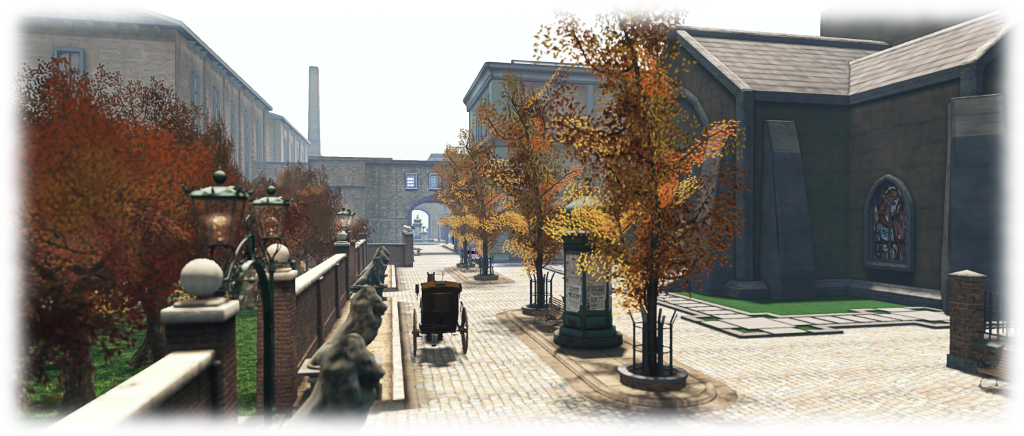
While not intended as a historical representation of London’s notorious Whitechapel district, the installation in part takes its lead from London’s East End. Three-quarters of the region is occupied by cobbled streets of close-packed houses and shops overshadowed by hulking warehouses. In contrast, the remaining quarter is given to more opens spaces, complete with a grand ballroom which has something of a faint echo of the old Royal London Hospital.

Whitechapel Victorian London

“We had our grand opening on March 4th,” TerpsiCorp’s Artistic Director, Cassie Parker (nanki Hendes) said, as Caitlyn and I explored the installation. “It’s all just beginning to evolve.” Over the coming four months that evolution will see the region used for a variety of activities and performances.

From the landing point, visitors can walk past the great ballroom along a wide, almost boulevard-like cobbled road, or wander through a park and over a bridge. Whichever route is taken will bring them to the streets of Whitechapel which – if I may make so bold – are best seen under twilight or night-time conditions, which enhances the atmosphere, bringing forth the street-hugging mist, the glow of the gas lamps and the inviting warmth of lit windows.

Whitechapel Victorian London

Behind many of these windows sit gallery spaces occupied by artists who have been extended an invitation to display at Whitechapel Victorian London. Some of the names might be known to lovers of art in SL, others perhaps not. All should be browsed for the rich variety of art they offer.

Nor are the shops the only galleries; the is an outdoor 3D art area and the brooding warehouses also provide space for artists. Simply haul back their heavy metal doors (if they are not already open), and step inside. Daylight can be the best for viewing the art, obviously, but several of the artists have made considered use of lighting effects, so experimenting with windlight in some of the gallery spaces is suggested.

Whitechapel Victorian London

Voice events are also represented through the Whitechapel Storytellers shop in the north-east corner of the region, which has an events calendar just outside. For other news on activities and events within the region, please refer to the TerpsiCorp ARTWerks LEA Facebook page.

Whitechapel Victorian London will remain open through until the end of June, 2017. Whether you are interested in art or exploring new environments in Second Life, I recommend a visit, and in keeping an eye on the Facebook page for news of events.

SLurl Details