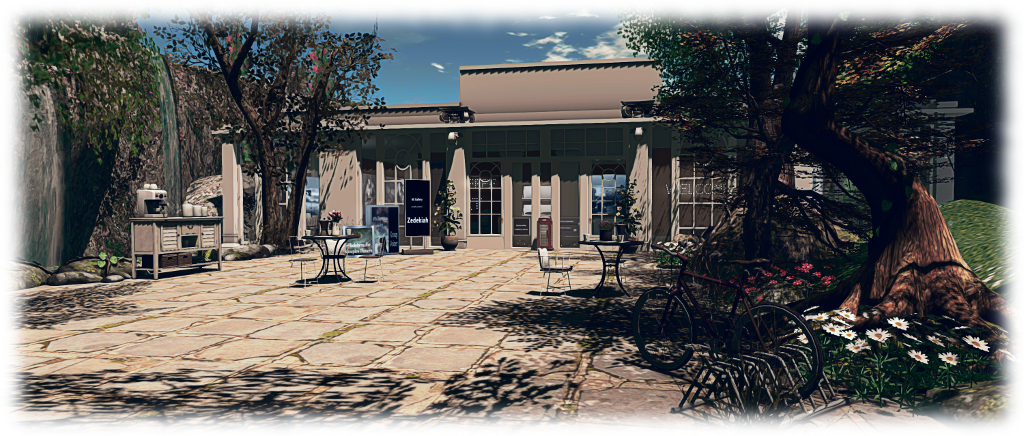
After a short hiatus from Second Life, Sorcha Tyles has re-opened her gallery Artful Expressions at a new location and with a new design – and a new exhibition.
The gallery now sits within a charming garden setting, with a beach at one end, a terrace sitting between sand and gallery, offering a cosy, open-air hang-out which encourages visitors to sit a while and enjoy the Sun … and a little coffee.
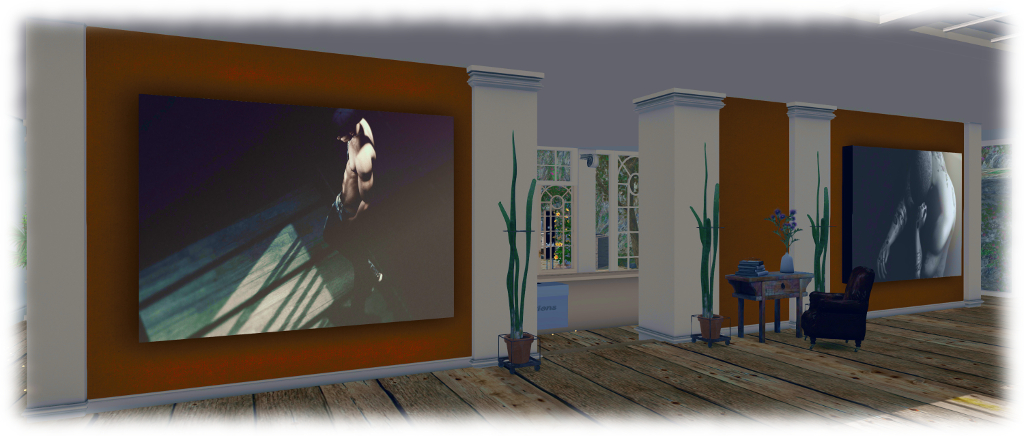
A single display hall is offered inside the gallery building, presenting space for exhibitions by individual artists. For October, Sorcha is featuring the work of Zedekiah, (ZaynIanLutz). And if there is one word which should be used to describe his work, it is perhaps “atmospheric”.
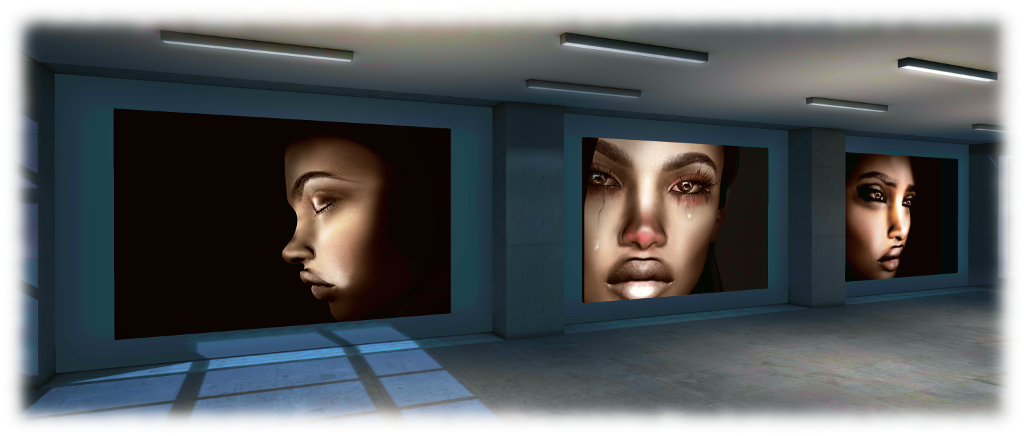
This is an artist with an eye for conveying a mood, a story, a world, within a single frame. Whether producing a landscape or an avatar study, there is a sensitivity and richness to his work that draws one in. Of the eight images presented here, four sway towards monochrome in tone and style, the remaining four offering muted tones and colours. In both cases, whether purely or predominantly monochrome, or when using a broader palette of colour, a rich sense of mood is evoked. So much so, that within the avatar studies particularly, we are – often without clearly being about the see any expression on the face – able to feel the emotion being expressed.
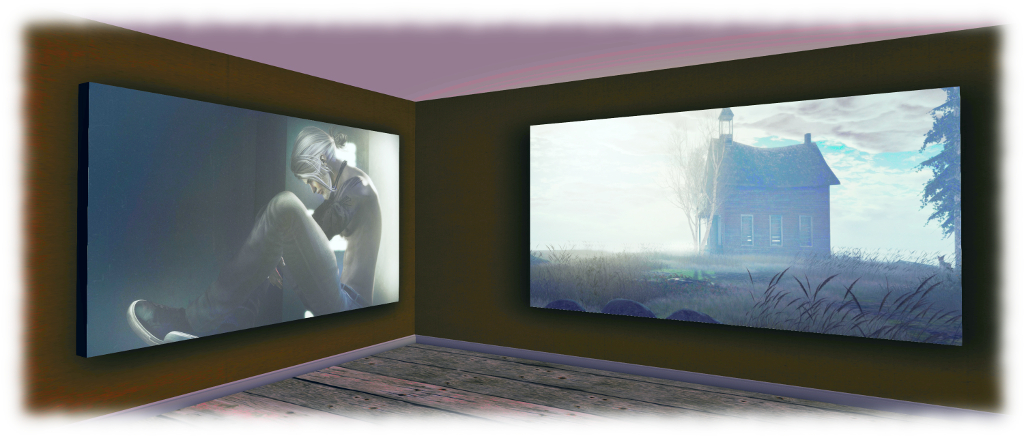
Only two of the images do not feature an avatar, either as their focus or as a part of the overall scene: Winter Trace and September. Both of these are equally as evocative, with the near-monochrome look of Winter Trace drawing one into a feeling of a cold, dark night – one perhaps with a little hint of menace in the way the shadows seem to be gathering the house into themselves, without even a hint of light from the windows to offer cheer or welcome. Thus, within it, there is perhaps the echo of a thought, we are home, but are we safe?
September, seen below right, by contrast, perfectly reflects the fading of summer and the gathering folds of winter. There is still sunlight enough in the sky to feel warmth, the trees still carry their leaves and the grass is still heavy with seed. But the soft colours, the billowing clouds and the icy edge of the blue sky warn us that winter is indeed coming.
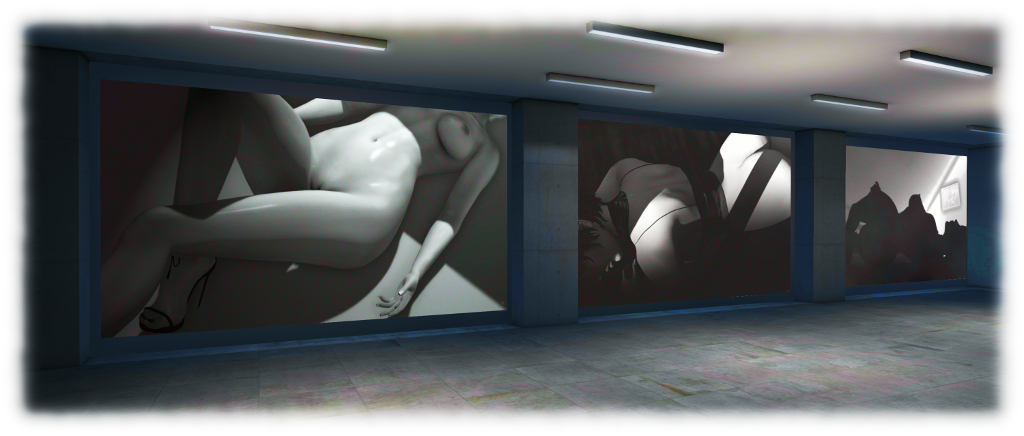
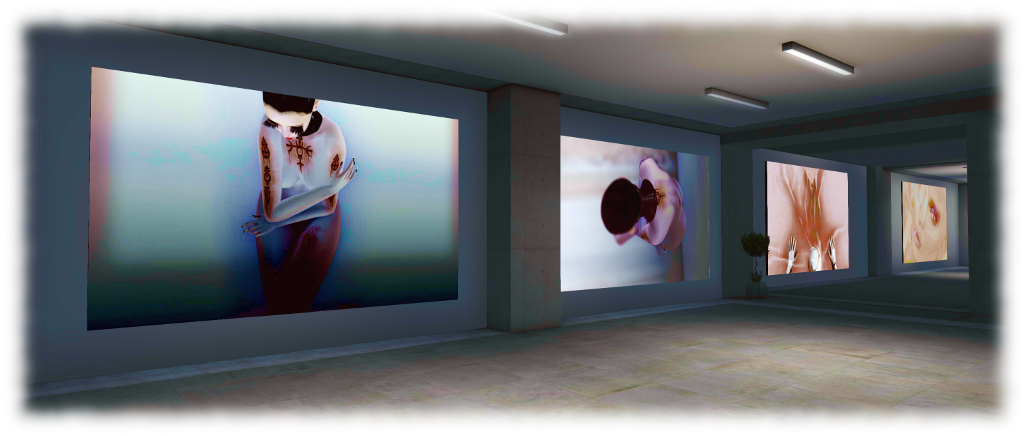
DixMix Gallery, curated by Dixmix Source, opened a new exhibition featuring the work of Elo (elorac Paule), Maloe Vansant and Uma Sabra in mid-September; and it is fair to say come of the images presented should be considered NSFW.
As well as the exhibition – appropriately entitled Elo, Maloe, Uma, the gallery has under gone some alterations, and with them comes a new SLurl / landmark. The overall design remains the same, with the exhibition space divided into three halls – the Black Grey and White galleries, with both lower floors and mezzanine levels. Also retained is The Atom club space, with the rooms behind it now given over to Dixmix’s work.
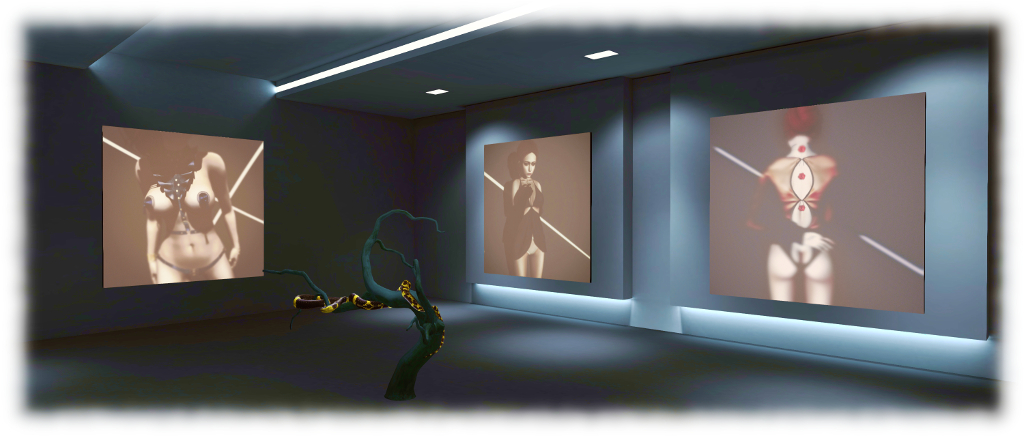
However, located within the Black Gallery space is the entrance to Womb, a new exhibition area located below the main building, and finished in a very futuristic style somewhat at odds with the main display halls, but nevertheless also complimenting them. I’m not sure if this is designed to be a further space for exhibiting different artists or whether it is intended to be dedicated to Megan’s work (which was being displayed during my visit).
Of the three artists exhibited in the main hall, two, Maloe and Elo, have been reviewed in these pages a number of times while exhibiting at various galleries in Second Life. Both offer striking avatar studies – the focus of this exhibition – but I do confess to being biased towards Elo somewhat because I do find her work powerfully expressive. This is certainly the case here, with some 12 pieces of her work presented in monochrome, in keeping with the theme of the gallery’s Grey exhibition hall.
Uma Sabra’s art occupies the White Gallery on the mezzanine level, where she presents 16 studies of herself strikingly taken against a plain black background. All be three are nude shots, the exceptions being three facial portraits which are, for me, the most striking.
Maloe’s work occupies the lower floor Black Gallery and is the richest in terms of colour and style, with several of the pieces presented as paintings more than photographs. Through all of them there is a very tactile element; it’s hard not to want to reach out and run a finger lightly over the surface of several of the pieces.
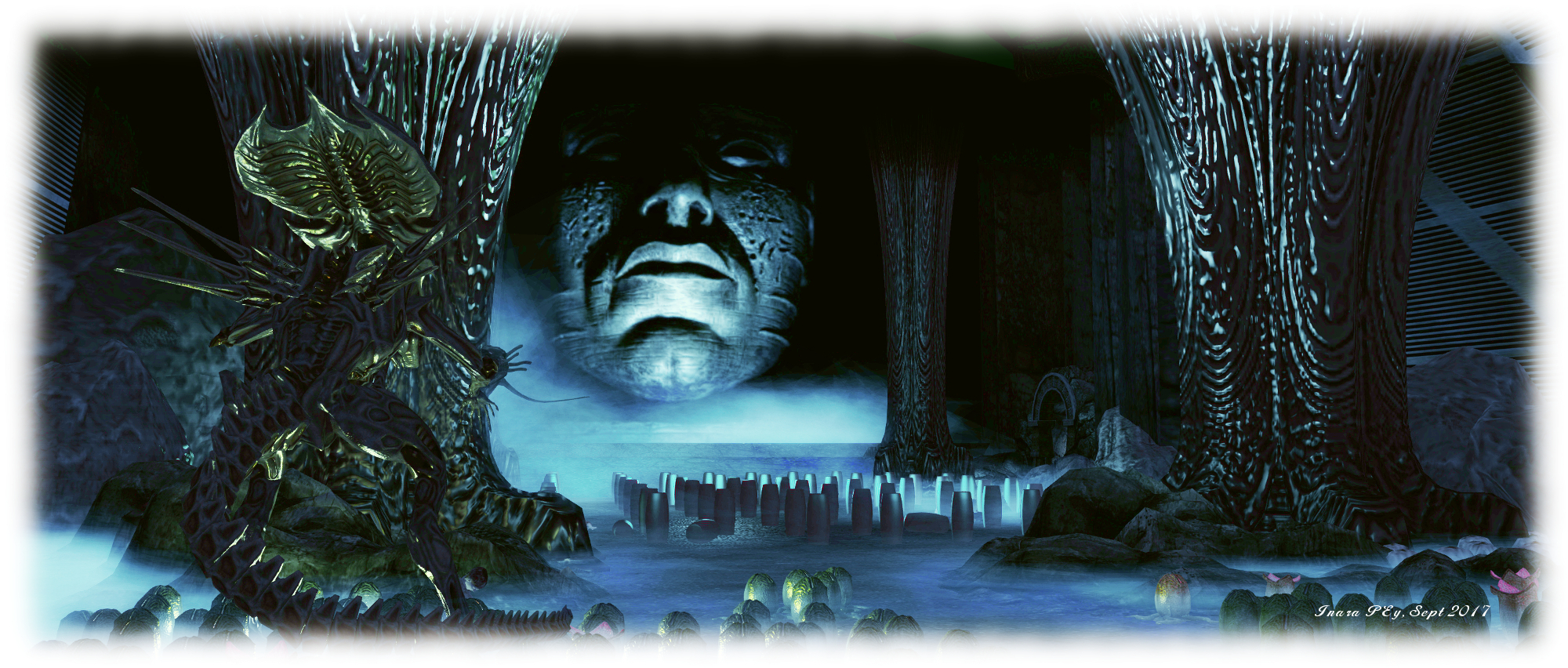
Every year, Ty Tenk and Truck Meredith produce a stunning immersive environment in Second Life to celebrate Halloween and to help support their Calas Galadhon regions. In 2017, they opted for a sci-fi design with the title Dark Moon; it carries a degree of emphasis on a certain film franchise ideal for Halloween, richly re-imagined and with little twists of humour along the way.
“It’s something that’s been fun putting together, and a little bit different for us,” Ty informed me when inviting Caitlyn and I over for a sneak peek shortly before the region opened to members of the Calas Galadhon group. To be honest, “different” is not the word I would use – not unless it is spelt “astonishing”, at least; because Dark Moon is a stunning build. It will open to the public on Sunday, October 1st, 2017 and will remain so through to the end of the month. However, until then, anyone joining the Calas Galadhon in-world group can enjoy advanced access.
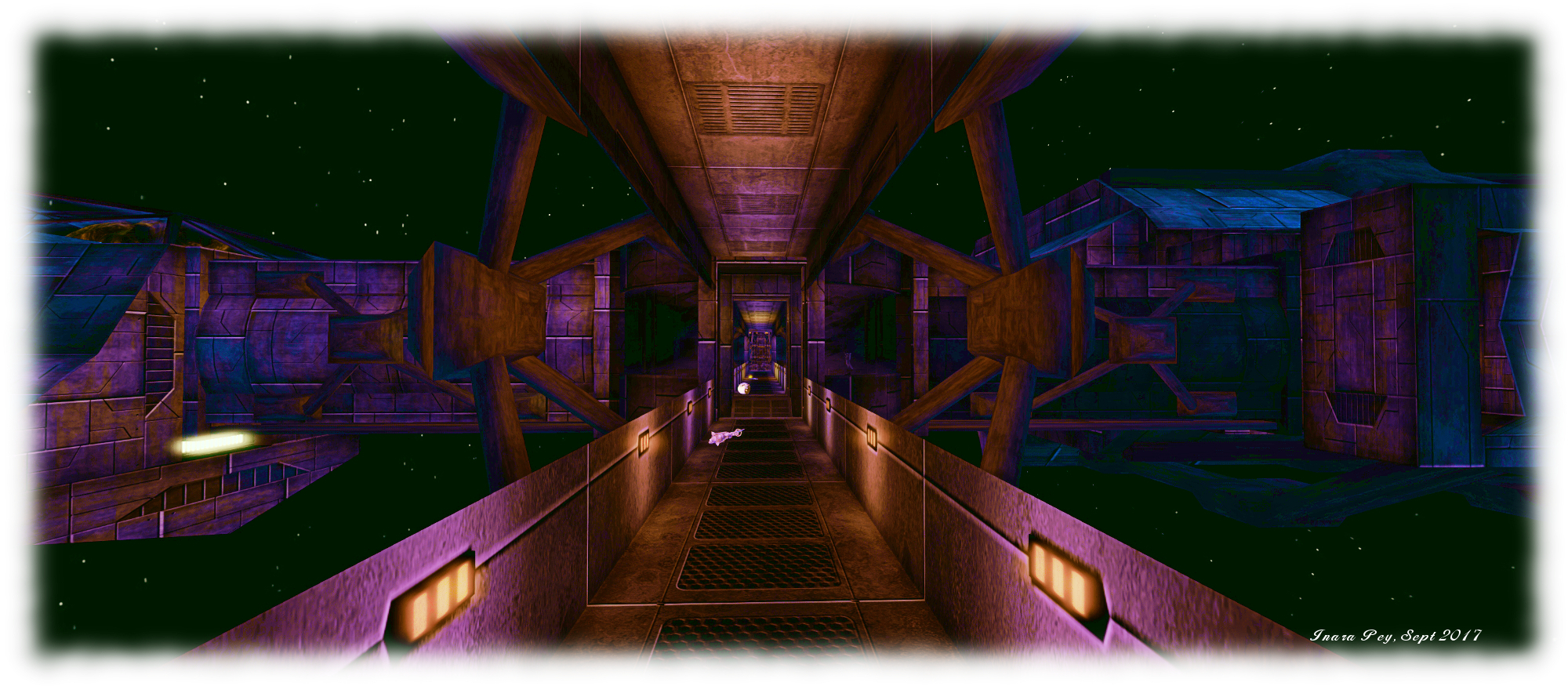
Spanning several levels, Dark Moon carries visitors on an adventure from space ship to moon’s core, with much to discover along the way. The voyage begins on the EVA / cargo handling deck of the Cargo Ship Utopia, where visitors can find instructions for best viewing the installation. In short order, make sure you have Graphics > Preferences > Advanced Lighting Model enabled (you do not need to enable shadows, so hopefully the performance hint won’t be too great), set your viewer to the region Windlight settings (Midnight) and make sure both local sounds and the audio stream are active. I’d also recommend dropping draw distance down as well; this is largely an enclosed build, and except for one or two points along the way, a draw distance of 128 metres is more than sufficient.
It’s pretty clear that the Utopia has encountered serious troubles. The cargo deck is in disarray, and many of the crew appear to have taken to space suits to escape the ship – some of them perishing in their attempts, smashed visors and broken suits testament to the violence which overcame them. Corridors are splashed with blood, and the causes of the panic await visitors within the ship’s biodomes, which might be encountered whilst seeking the teleport portal off the ship.
This will lead visitors down to the surface of a moon. Here the tour shuttle awaits visitors, waiting to whisk them through the remaining levels of the build and to the Dark Moon itself. I recommend the ride; it gives a feel for the explorations to come – although it far from reveals all. However, Caitlyn and I did at times find the default camera positioning in the shuttles a little troublesome.
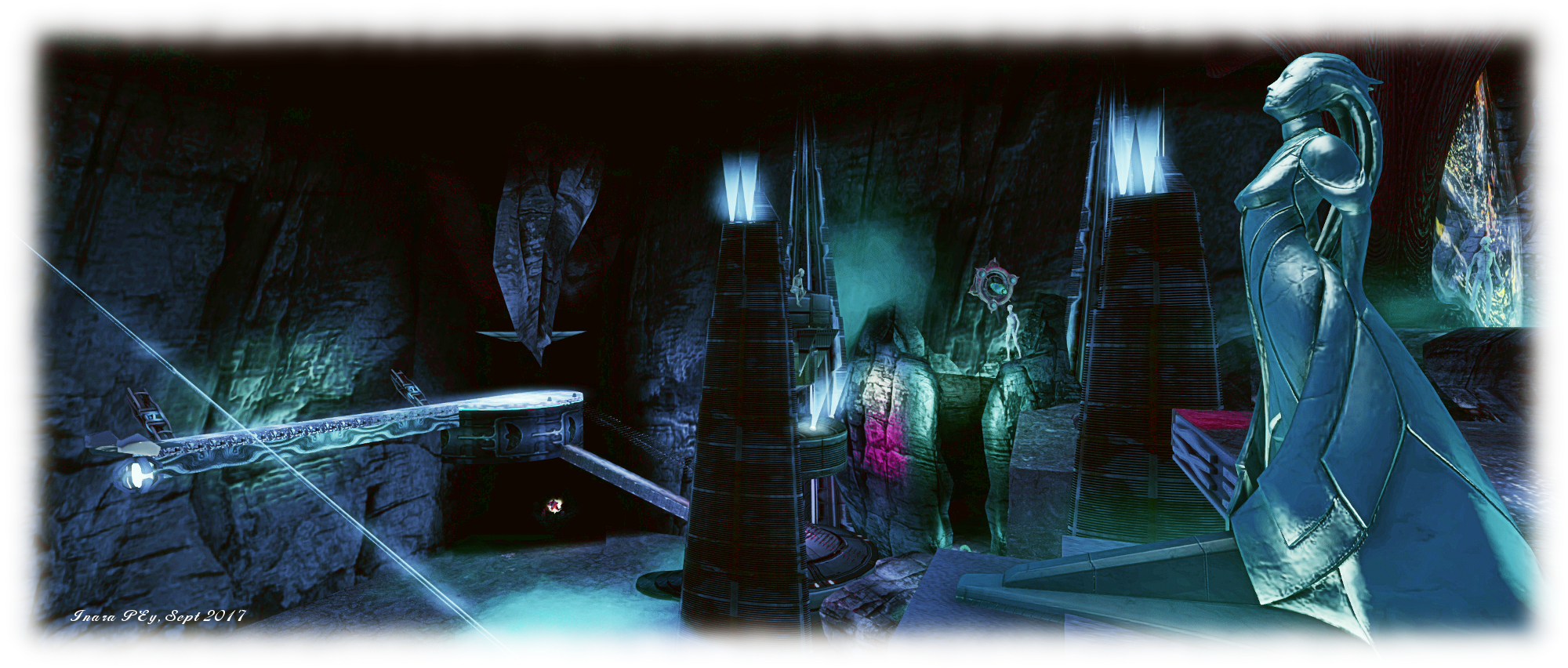
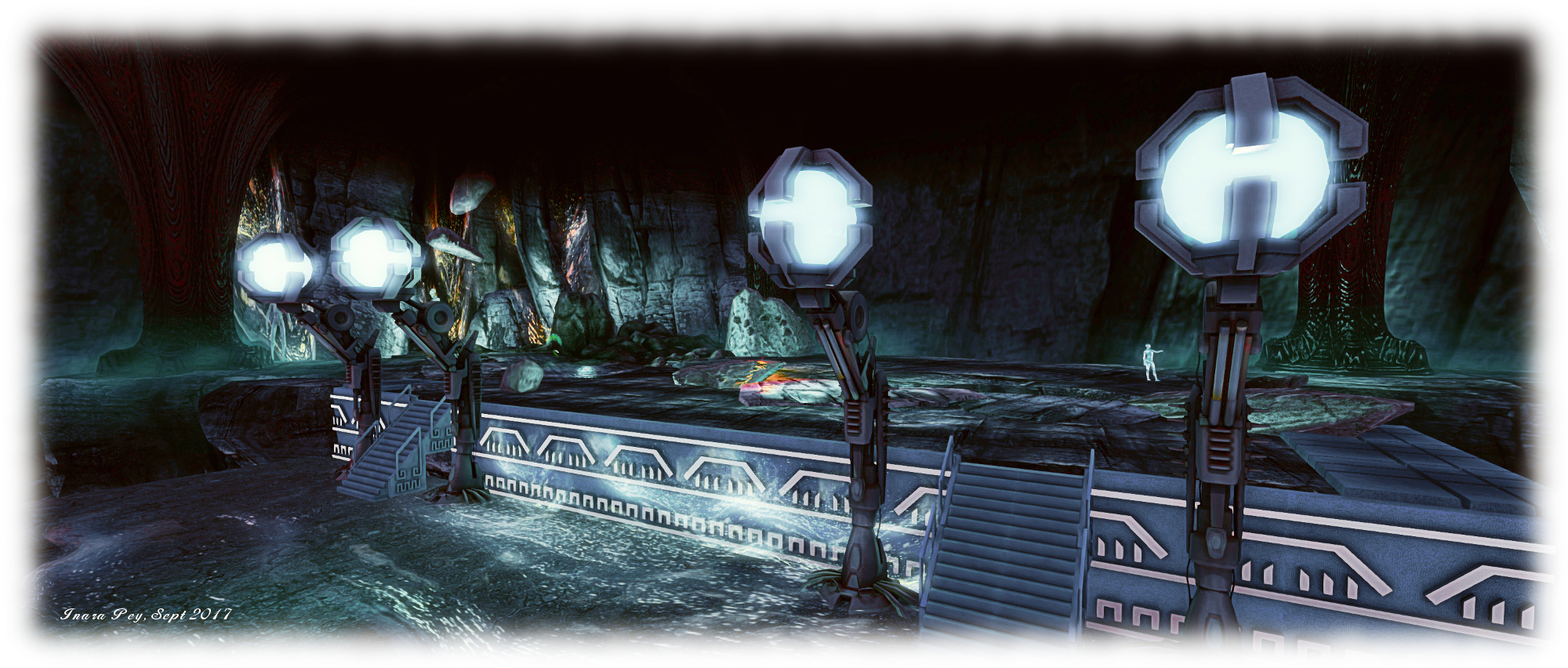
At the end of the tour is a teleport to get back to the moon’s surface – and from there a further portal, once reached, carries visitors into the bowels of the satellite, on the first step of a progressive downward journey. This take you through stunning aliens scenes from the gigantic setting of a high-tech civilisation, through a field of very familiar mist-enshrouded eggs and down into catacomb-like halls. to where a final portal awaits those who find it.
The sheer scale of these builds is such that it can be hard to find the way – so look for the silver figures as they point towards routes which can be taken. There are also secret ways, tunnels and chambers awaiting discovery, one of which holds the famous Space Jockey. These may not have obvious points of entry – or have entry points which take you by surprise; such as dropping through a coruscating pattern on the “ground”.
And there is a touch of familiar humour as well – when aboard the Utopia, for example, take a look at one or two of the spacesuited figures nearer the ship’s hull; you might note a familiar someone. There are also nods in place to other sci-fi franchises – such as the guardians of the final portal lading to the Dark Moon, where a month of entertainment is planned throughout October. Keep your eyes out, as well, for the zero gee dispenser in the catacombs and an opportunity to float around parts of the installation.
The Calas Galadhon Halloween and Christmas builds are ways a joy to visit. They are a reminder of the rich vein of creativity evident in Second Life and offer superb opportunities for exploration, photography, and fun and socialising through the events held within them. However, they also serve another purpose: to help raise the funds needed to keep the Calas Galadhon regions open for the enjoyment of everyone in Second Life. Ty and Tuck meet 40% of the cost of the eleven regions (including Erebor, the home of the Halloween / Christmas builds) out of their own pockets – so, when you come across the donation kiosks scattered throughout the Dark Moon builds, please do drop some Lindens into one of them.
To (hopefully) entice you into visiting, here’s a little video I shot ahead of the opening – and I hope 20th Century Fox don’t mind the choice of music! 🙂 .
SLurl Details
Dark Moon (Erebor, rated: Moderate) – open to the public from October 1st, 2017; restricted to the Calas Galadhon group prior to then
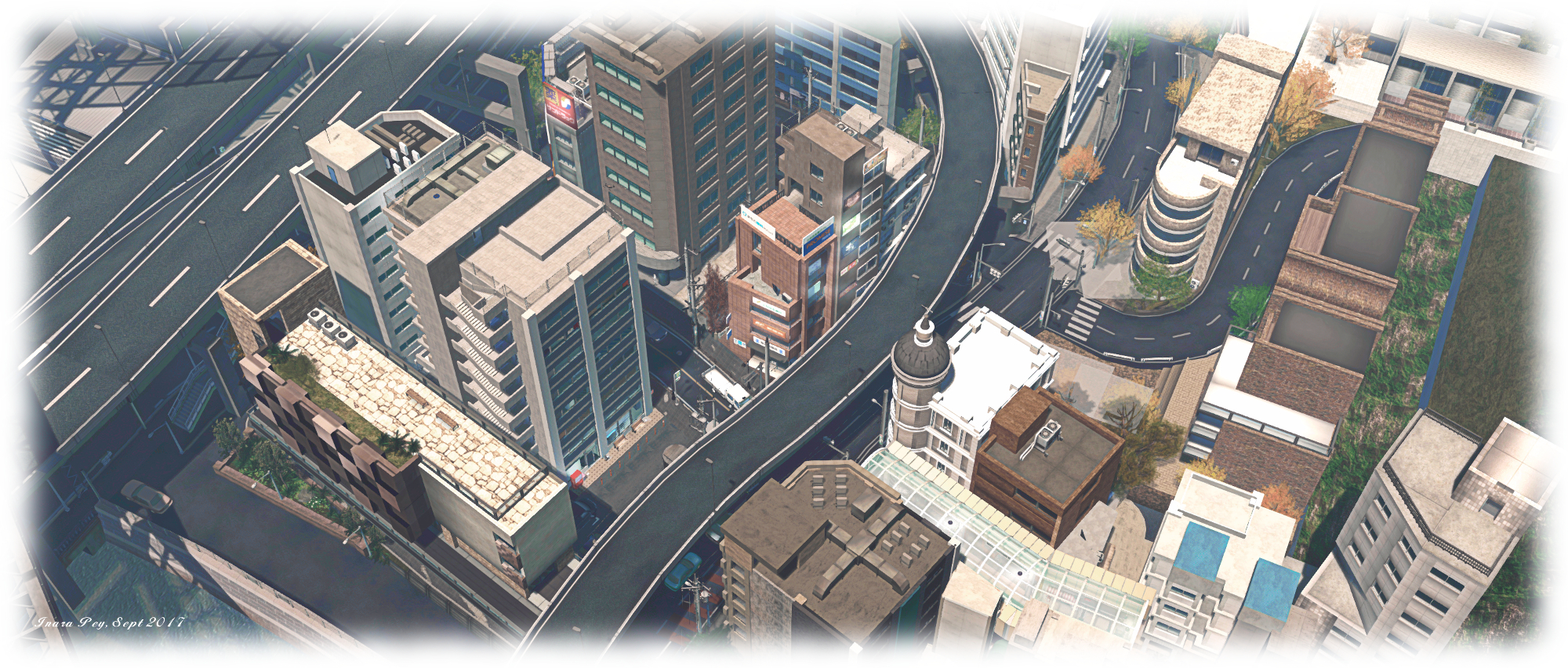
Stretching across the skies of three Full regions (each making use of the additional 10K LI allowance available to private region holders to increase their overall capacity to 30K), is Mitsumi-Town in Tokyo.
Designed by a team led by Eripom Moonwall, it’s a meticulous build, one which has taken several months to bring together, but which is stunning in its look. Blending together elements powerfully evocative of modern-day Japan and periods from the city’s earlier history, it is awash with detail, and only lacking an active population- hopefully that will change over time.
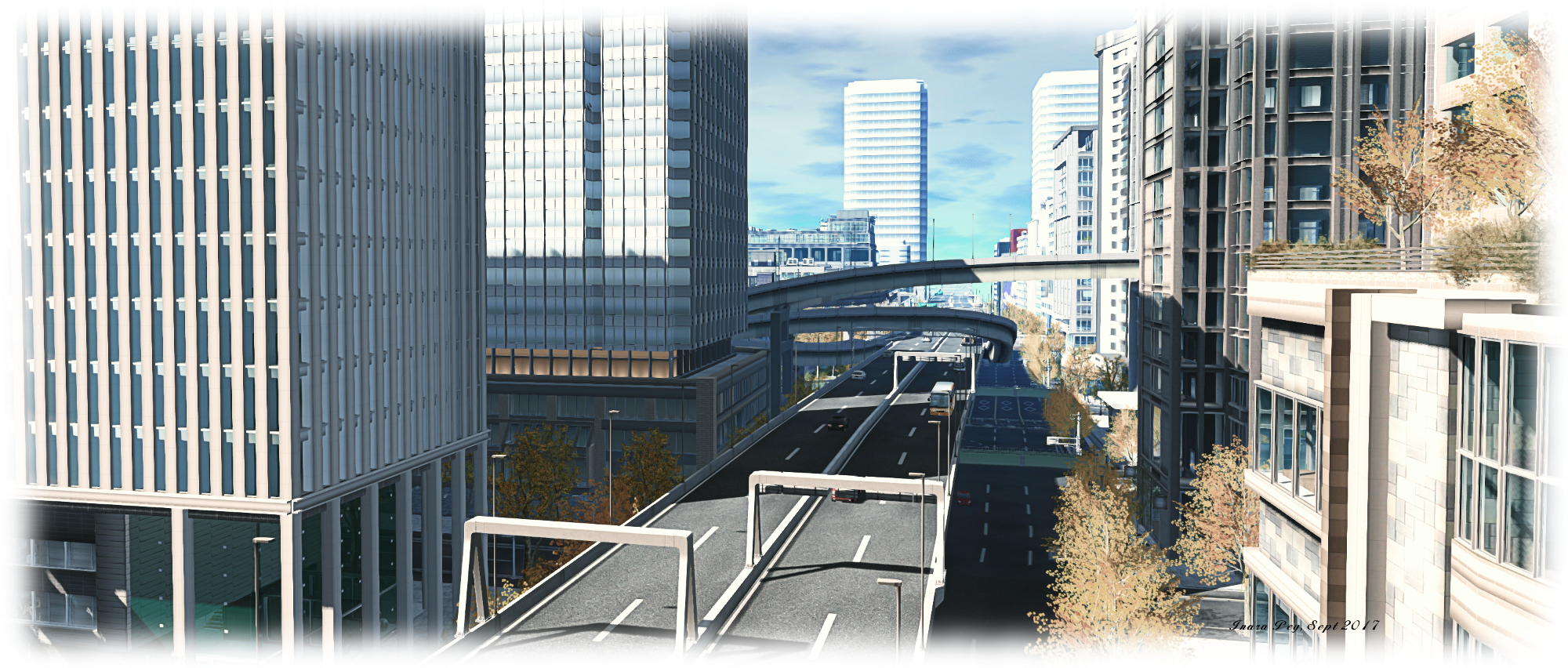
As the build is spread across three regions, it can be a little bewildering to find your way around – and there is a heck of a lot to see and discover. The middle of the three LMs for the city – which delivers visitors to the Morpire City downtown area – is a good place to start, setting visitors down in a small open air area alongside a cafeteria-style restaurant (the Mitsumi-Town LM disconcertingly drops visitors in the middle of one of the city’s expressways). The restaurant provides access to a shopping mall awaiting occupation, and is bracketed on the other side by an elevated train track paralleled by part of the city’s impressive road system, while skyscrapers push their why into the heavens beyond.
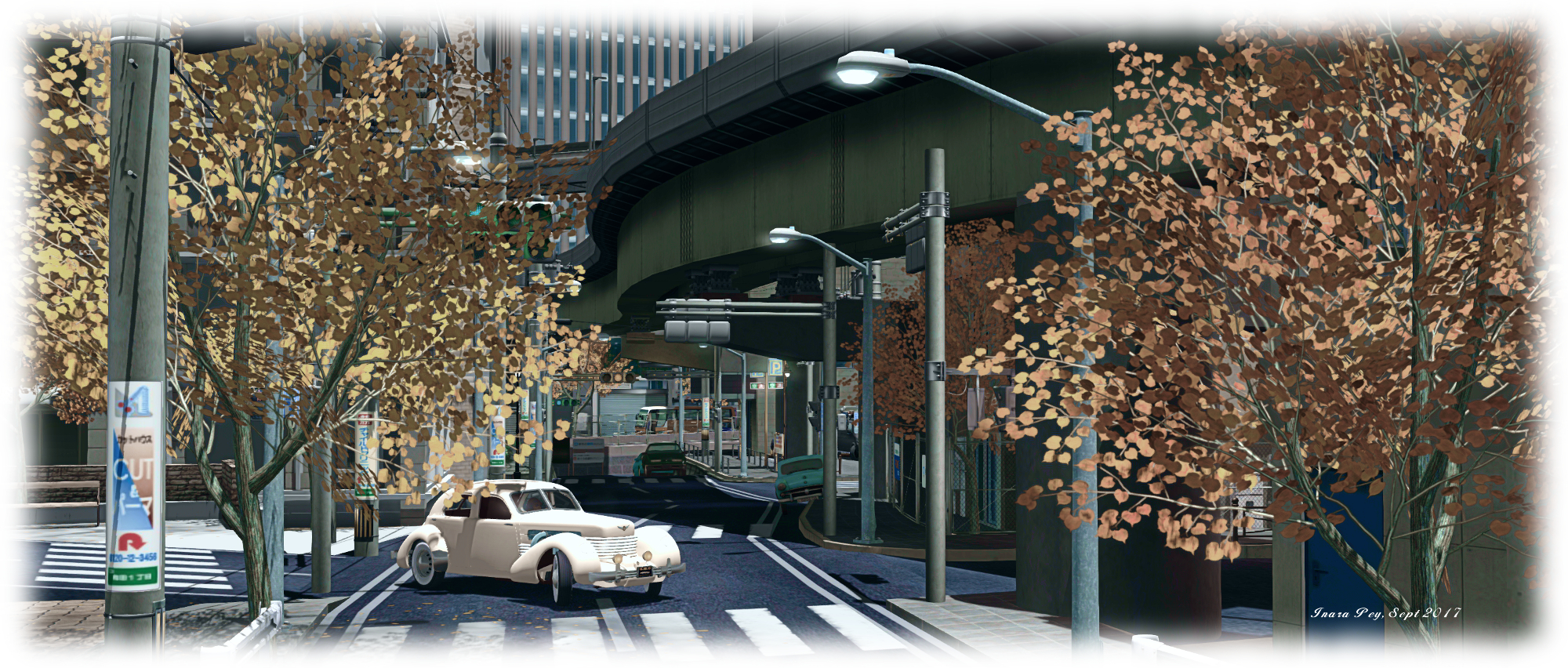
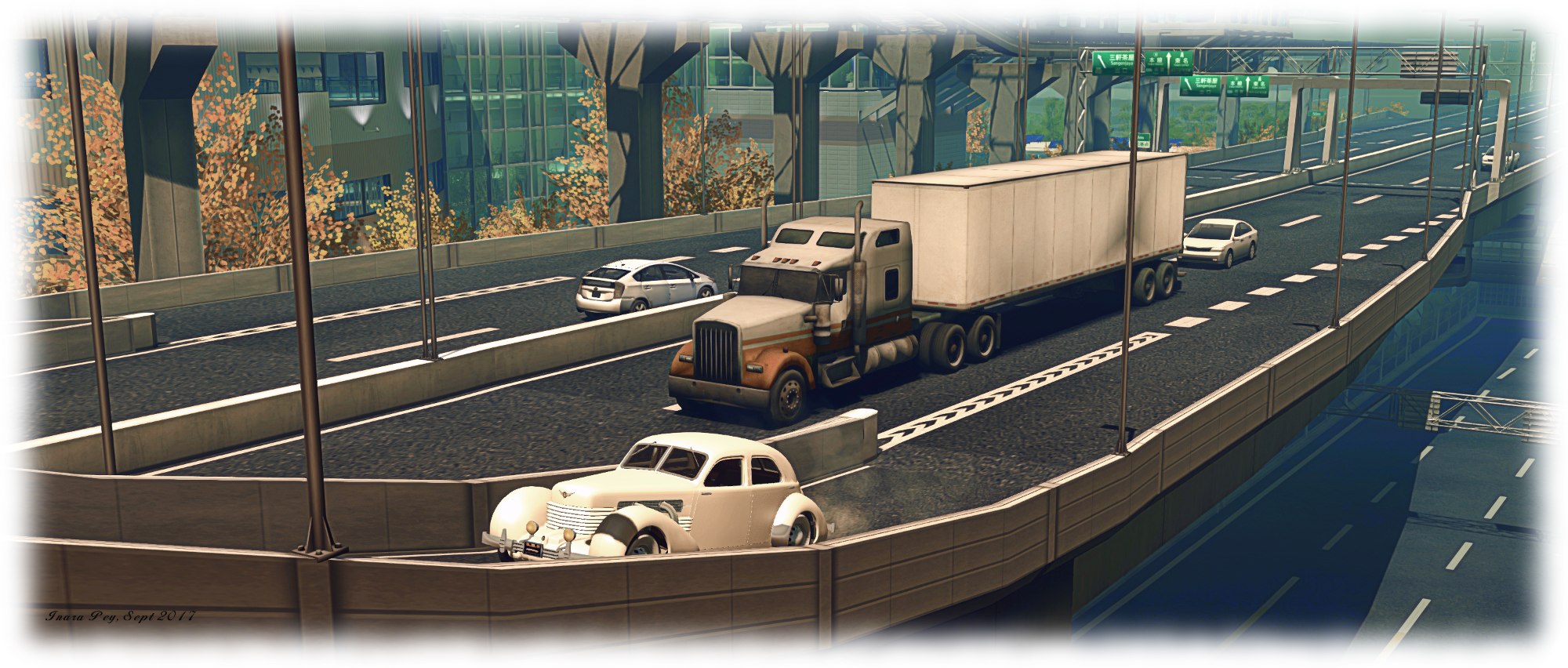
The road system winds its way around, over, through, and under the city, slicing it into blocks and districts, which can vary in look and feel – just like no two areas of a physical world city really resemble one another beyond superficial similarities in building height, possible road layout, etc. It’s a system which can also – with consideration and care – be driven along. Rezzing in the city is (at the time of writing) allowed, and auto-return is set to five minutes. This being the case, I pulled out the Beverly 812 that so far has only really seen one outing as a prop, and we took a little drive around the streets.
However, exploration on foot is perhaps the best way to fully appreciate the overall design. Head westward from the landing point, for example, and you’ll pass through canyons standing between high rises towering overhead, pass entrances to subway stations and then – suddenly – come to the “old town”, where the skyscrapers have yet to encroach.
This is an area where the buildings are clearly of an older period – the 1960s or 1970s, perhaps. Advertising boards are mounted on walls, awnings shade doorways and vending machines, street lamps fight off the long finger shadows from the neighbouring towers of steel and glass. Among these older building, the streets are narrower, often lined with ranks of power distribution poles bringing electricity to the shops and apartments. Little arcades vie with low-level plazas to tempt the wandering feet into exploring.
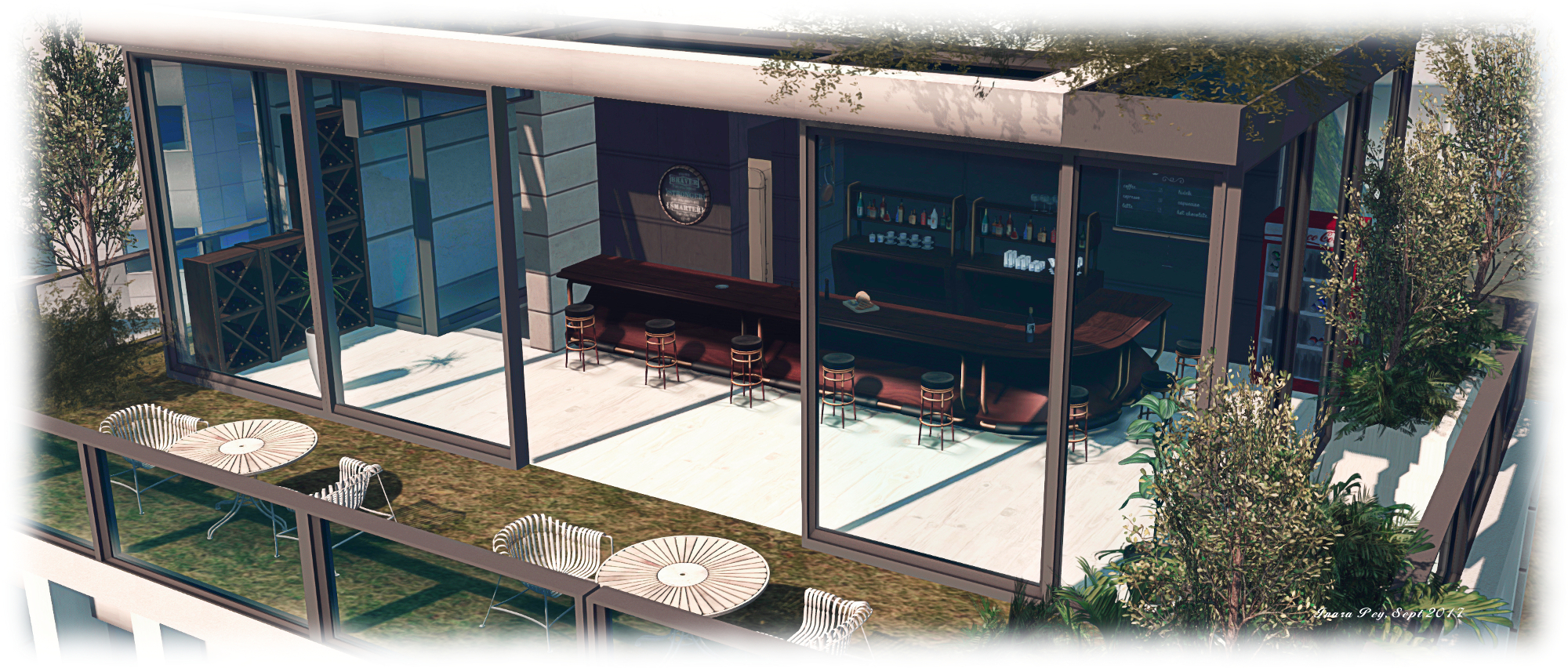
Here and elsewhere, many of the buildings are accessible. Climb the stairs in one and you might find your way to a roof garden or all the way to a rooftop coffee-house; ride the elevator in another, and you could find yourself in a dragon-decorated restaurant. Teleport disks might also be found here and there, waiting to whisk you some place, while pedestrian walkways and travelators offer competition to the roads and rail tacks in pointing ways around the city.
Some businesses are already talking up residence in Mitsumi-Town. Eripom’s own combat weapons business sits towards the east end of the city, with fashion stores close by. To the west, hanging in the sky over it is the huge glass and steel edifice of the R2 Fashion headquarters. This looks down on the hanger-like hall of where US military hardware can be found. Other building look like they are awaiting occupancy – although this is an assumption on my part.
What helps to make this build immersive is that it actually extends beyond the boundaries of the three regions on which it sits. Off-sim builds have been used to extend the look of the city to great effect (so much so that on a couple of roads, it’s easy to miss the fact you’re heading towards a region boundary until you bounce off of it!). The most impressive of these off-sim areas – which appears to be still under construction – is to the north, where two massive bulk carrier vessels lie alongside the makings of a docks area.
Presented under a bright sky in which horizon haze has been used to good effect, softening the more distant views over the city, Mitsumi-Town is a magnificent build offering plenty of scope for photography – and perhaps more over time. Certain more than worth a visit!
“You don’t make a photograph just with a camera,” American photographer and environmentalist Ansel Adams wrote in The Camera. “You bring to the act of photography all the pictures you have seen, the books you have read, the music you have heard, the people you have loved.” It’s a thought-provoking statement which encompasses the richness and depth of photography as an expression of art and artistry; suggestive that photographs can be part of a wider, deeper journey through life.
It is also a quote Akim Alonzo has chosen to encapsulate The Itakos Project, which is now open through until the end of 2017. A gallery complex of three buildings arranged around a courtyard, with the main building flanked by two pavilions and facing an events space across the courtyard. The name for the project has, like the quote from Adams, been carefully selected, echoing as it does the name Ithaca, the Greek island and legendary home of Odysseus. In doing so, it also evokes the idea of a journey – or, as Akim himself notes, a dream or the search for beauty and emotion.
The aim of the project is to present the work of SL photographers who, through their work, engage upon story-telling or presenting the ideas of stories, or who seek to present beauty and emotion through their study of the avatar and the worlds around it.
For the initial exhibition, Akim presents his own stories told through his images and work within the project’s Blue Pavilion, while in the Red Pavilion focuses on Maloe Vansant and Paola Mills under the joint title of The Itakos Collection. Within the main gallery structure can be found Subtle Scent ofSolitude, by Imani Nayar and The Dancing Serpent by Kate Bergdorf. Also to be found in the foyer area of the main building is a teleport doorway leading to a separate platform wherein can be found The Venal Muses, an exhibition by artist and videographer Tutsy Navarathna.
“Poets, painters, photographers, writers, film-makers and musicians were all inspired by the atmosphere of brothels and their venal muses,” Tutsy notes in introducing the exhibition. “Some, like Toulouse-Lautrec have even made it an essential part of their work. Painters like Degas, Manet, Derain, Munch, Ronault, Van Dongen, portray ladies of little virtue lounging on a sofa, on the rooms of their lupanar….”
Thus those taking the teleport to The Venal Muses find themselves in a softly lit setting with plush red walls, soft furnishings, all of which are redolent of the boudoir for a woman of easy virtue whilst also retaining the feel of a gallery. On the walls of the rooms and halls of this space hang striking images by Tutsy, rendered as painting and richly recalling the work of the artists he mentions. It’s an evocative space, not just because of the inherent depth within the images, but because the design of the space casts the visitor perhaps into the role of voyeur or – on a deeper level – patron, within some of the scenes presented.
All of the exhibitions on display offer much to those visiting, but with its richness of setting and uniqueness artistic expression, both of which reach directly into the subject matter, The Venal Muses is perhaps the most captivating of the current exhibitions currently on display at The Itakos Project. From the project’s notes, I understand feature artists at the gallery will change on a monthly basis while the upper floor of the main building will be devoted to displaying work by artists enrolled in the Soul Portraits – Itakos Art Gallery in Second Life Flickr group.
A new Drax Files World Makersvideo appeared on Tuesday, September 19th, taking the form of a special retrospective of a much earlier work – and series.
In 2007, he was involved in putting together a series for Berlin-based Life For You News, an in-world TV magazine in which Drax’s pieces were something of a precursor to World Makers and perhaps one of the first attempts at immersive journalism/ reporting within a 3D world. On September 19th, 2007 as a part of the series, he released a piece examining the Virtual Guantánamo project, aka Gone Gitmo, conceived by Nonny de la Peña and Peggy Weil. To mark the 10th anniversary of that story, this Drax Files World Makers special looks back on it through the eyes of de la Peña and Weil, and presents the original documentary itself.
Guantánamo Bay (aka “Gitmo”), rendition, the treatment of actual (and / or alleged) terrorists, the question of human rights, America’s response to acts of terror in the wake of 9/11, including things like the loss of civil liberties through the likes of Patriot Act are difficult if not contentious subjects to examine, simply because of the complexities of the views involved. Such was the containment of events within the barbed wire fences of the prison, what happened there was, for many of us, little more than something in the news, reduced to shots of orange jumpsuits locked together with words like “terrorism”, “threat”, “attack” and so on. Even as reports of human rights violations, the use of torture, the detainment of potentially innocent people without right to basic habeas corpus, we perhaps remained largely injured.
In 2004, concerned at what she was witnessing with regards to American values, de la Peña, an award-winning documentary film-maker Nonny released Unconstitutional: The War On Our Civil Liberties. A 66-minutes documentary, the film examined the US Patriot Act, and included material on Gitmo and the equally infamous Abu Ghraib prison.
In 2006, with funding from the Bay Area Video Coalition and the assistance of the Interactive Media Division of the USC School of Cinematic Arts, de la Peña set out with artist Peggy Weil to develop the Virtual Guantánamo project. With it, they sought to recreate Camp Delta at Guantánamo and expose visitors to the realities of life there – from rendition through incarceration – in which they had absolutely no free agency over their avatar, experiencing everything directly in first-person.
The experience – finely balanced in some areas to prevent undue attention of the use of torture – was open to the public for 6 years and became the focal point for conferences and discussions on issues of human rights hosted both in the physical world and at the Gone Gitmo installation (the latter including the likes of Seaton Hall Law School and ACLU). And thus it became the subject of a segment from Depres’ Live For You News series.
Gone Gitmo became a focal point for real world and in-world discussions on human rights issues during its six-year run in Second Life
Presented here, and bookended by commentary and reflections from de la Peña and Weil, the Gone Gitmo video – which itself was nominated for an Internews “Every Human Has Rights” Media Award and featured in Vanity Fair – makes for a fascinating retrospective on several levels. Most obviously, there is the examination of the subject matter itself, particularly in the present political climate.
However, the piece also sits as a reminder that immersive journalism is not a new thing (although at times Headset Hype would have us believe otherwise). de la Peña is (in Forbes’ words) “the Godmother of VR” through her work in this type of journalism across multiple mediums (Gone Gitmo, for example was also produced using Unity, and she has used VR a numerous other projects).
It’s also a reminder of how valuable immersive 3D spaces such as Second Life (and potentially Sansar), can be in bringing people directly in contact with issues and topics of interest / concern, not just as a medium for news or education, but as a means of challenging perspectives and awakening critical thinking. In this, de la Peña’s ideas voiced in the original Gone Gitmo video for dealing with street gangs and their internecine fights with one another, are particularly salient.
Finally there is also the visual reminder of just how much Second Life has grown as a visual medium in the last ten years.