Autumn returns to The Mill in Second Life

The Mill; Inara Pey, September 2017, on FlickrThe Mill – click any image for full size

Friends Shakespeare and (SkinnyNilla) and Max (Maxie Daviau) are not only highly adept at finding regions to photograph (and poke me about visiting!), they also maintain their own exceptionally photogenic region, The Mill. This undergoes seasonal changes which not only match the passing of the year, presenting visitors with the opportunity of re-visiting throughout the year and see something new in the region’s layout, whilst retaining some familiar elements with each new design.

With autumn now on our doorstep in the northern hemisphere, Shakespeare and Max dropped me word that the latest iteration of their region is now open and available to visit, so as soon as the opportunity arose, I had to hop over to see what new delights await. And once again, doing so is more than worth the effort.
The Mill; Inara Pey, September 2017, on FlickrThe Mill

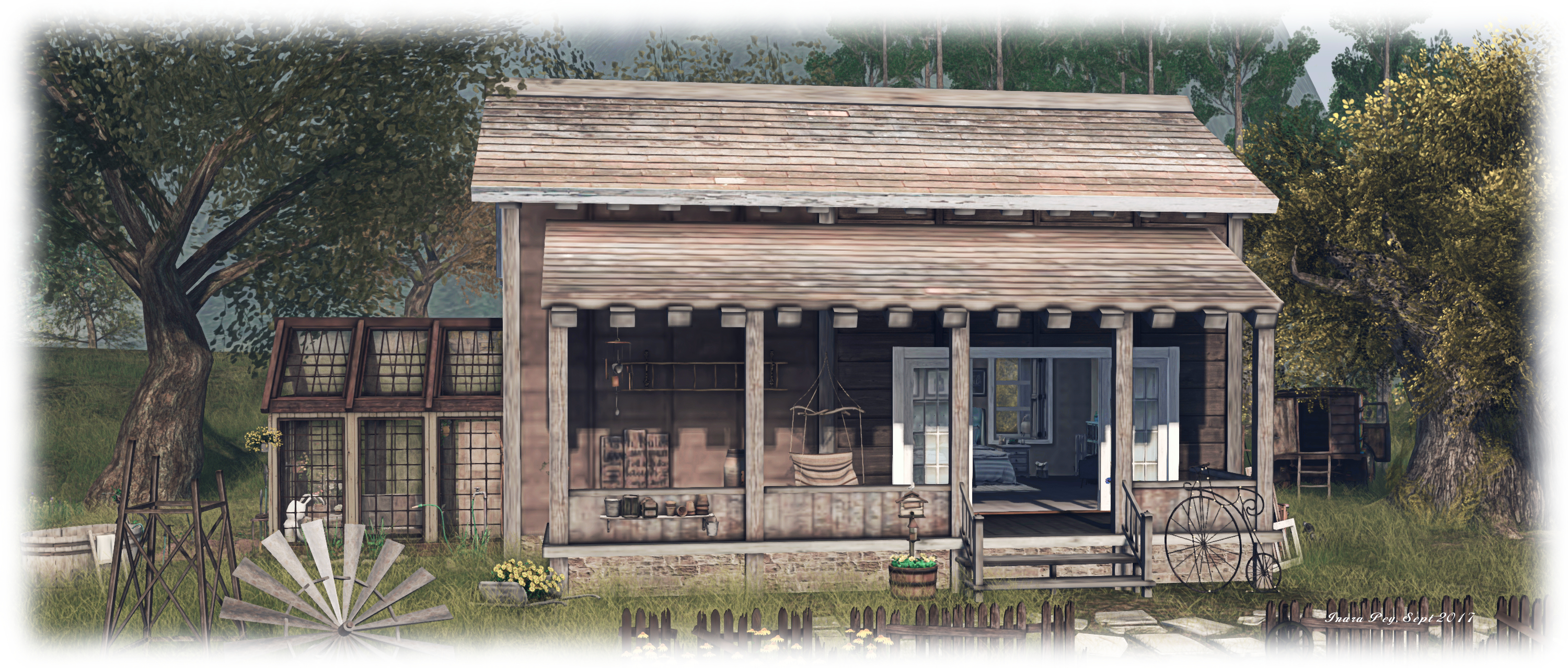
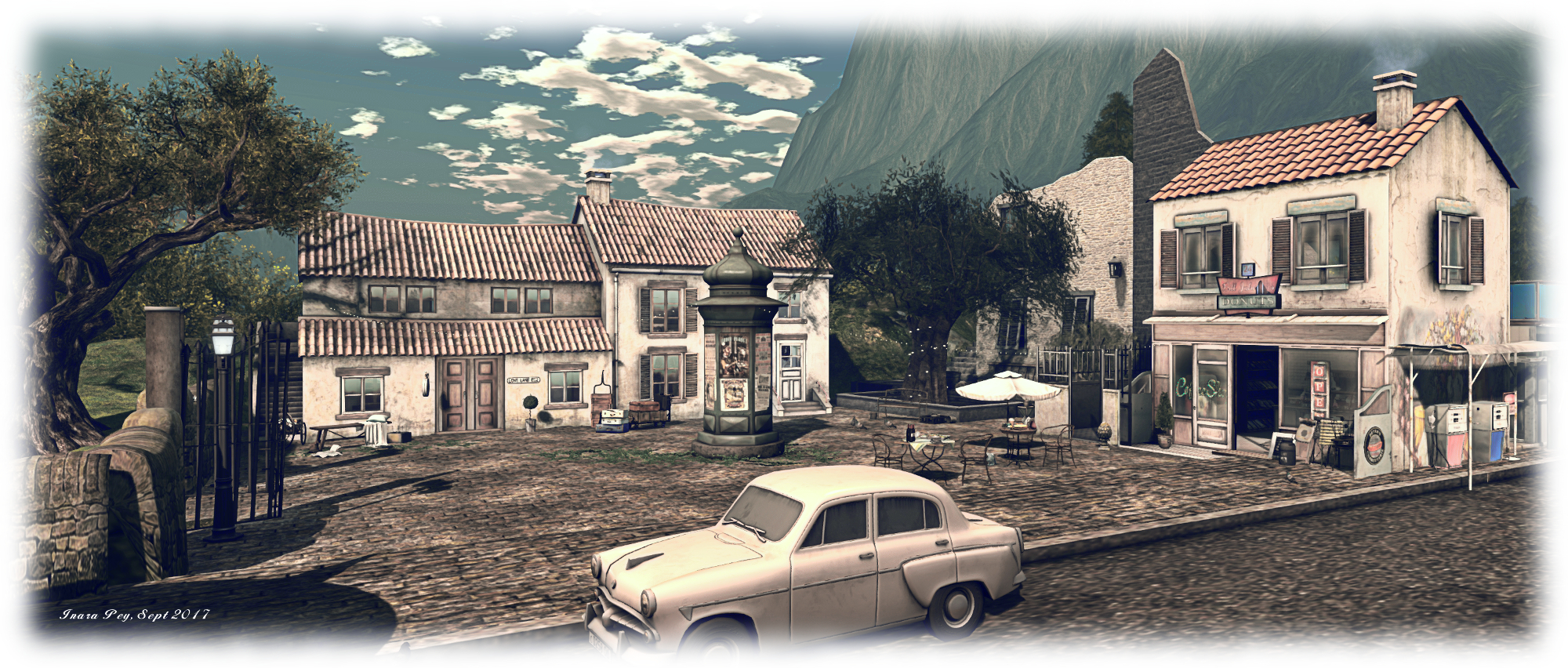
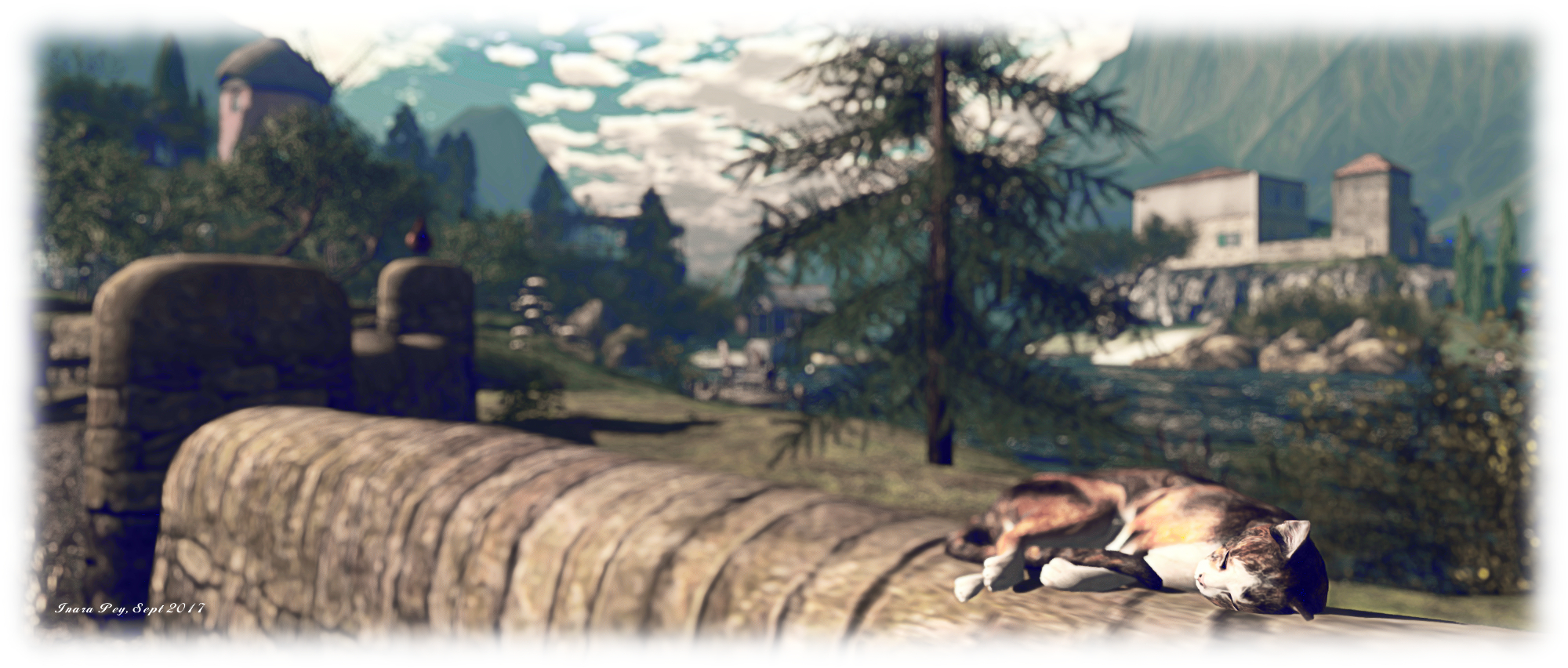
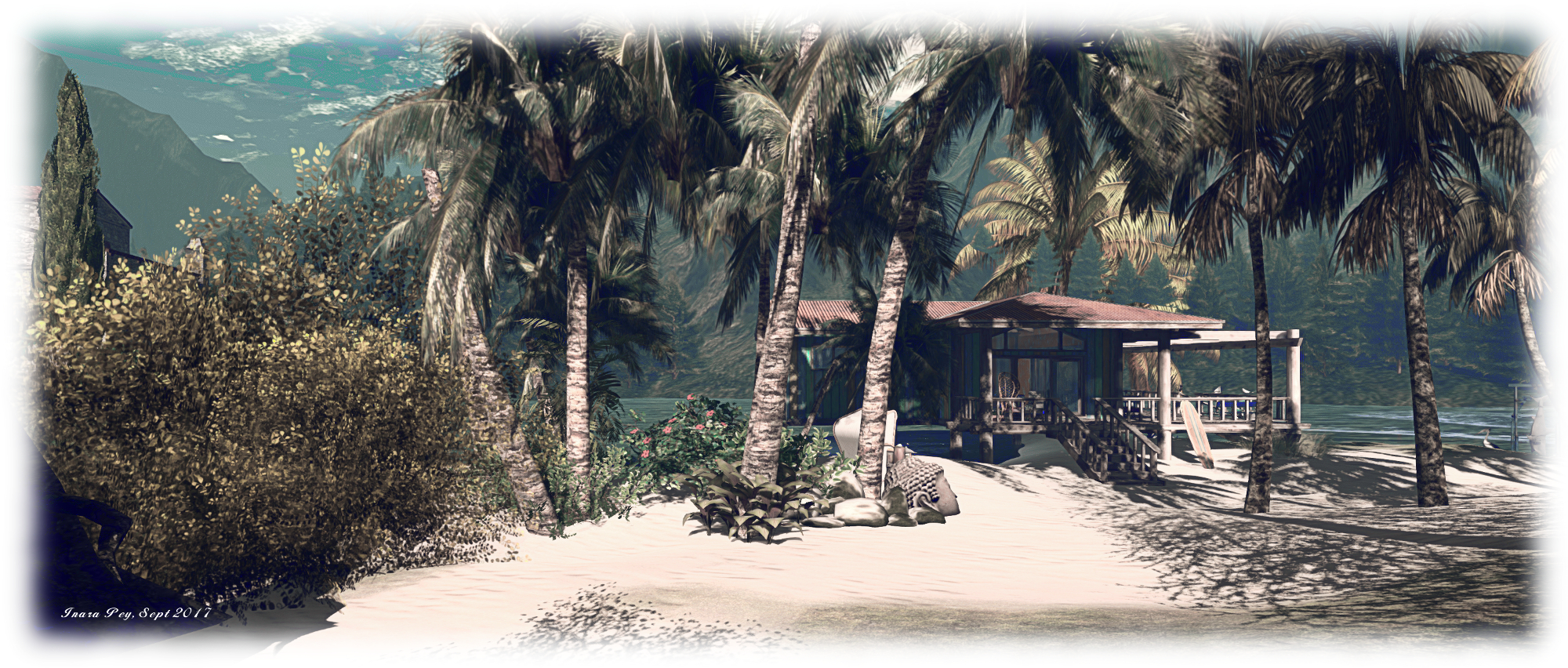
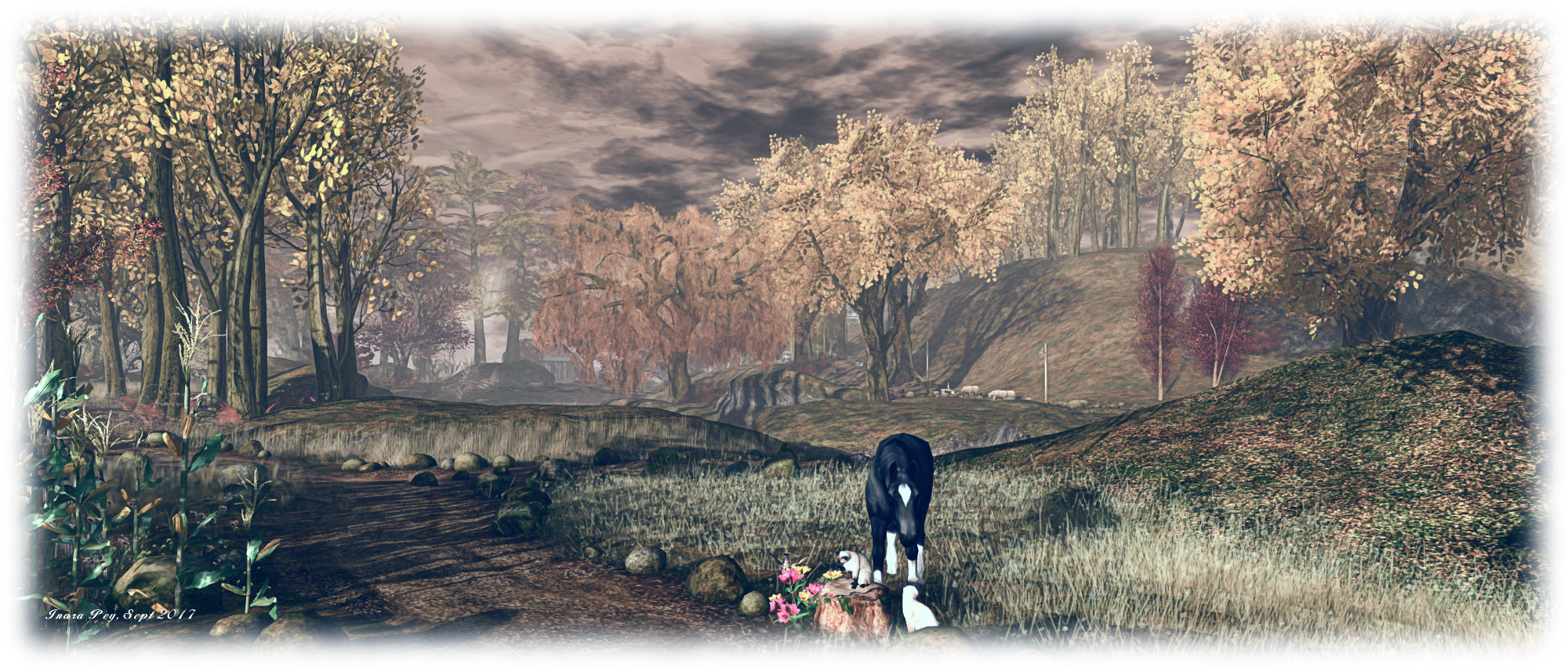
A visit begins in the south-eat of the region, beneath the slowly turning sails of the titular (and familiar to regular visitors!) mill as it sits just above the surrounding sea, quietly watching over the land under its care. A cart track winds westwards, passing under the great boughs of an ancient oak to lead visitors on to where two more windmills, tops thatched and walls whitewashed, standing like smaller siblings to the region’s primary mill. Horses graze both in the field occupied by these smaller windmills and on the far side of the track, a passing soul having left the gate open to leave them free to wander.

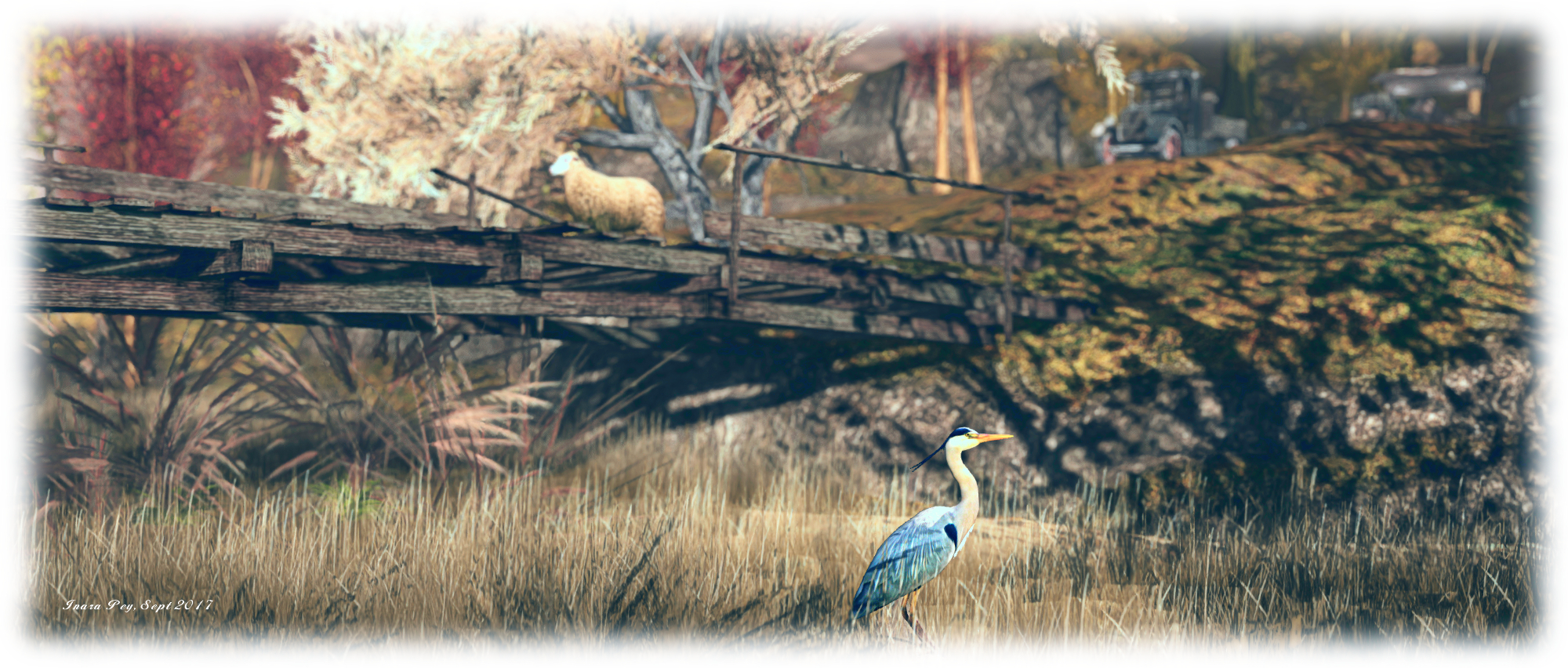
Beyond the field, the tracks meanders onward, splitting to pass either side of a copse before coming to where a greenhouse, converted into a cosy little café, sits by the western sea, close to a river which cuts its way through the landscape from west to east, slicing it neatly in two. The river, rich in grasses and reeds, is crossed in three places – one of them being an ageing wooden bridge a short distance away, although those feeling adventurous can use the logs which span the water alongside of the café.
The Mill; Inara Pey, September 2017, on FlickrThe Mill

The north side of the land rises gently to form a grassy backbone, studded with rocky outcrops. Another track winds its way around and up the hills to where and old industrial unit has been converted into a writer’s hideaway, typewriter awaiting its owner’s return. How you reach this little getaway depends on which path you take on crossing the river. Climb the slopes of the hill to the north-west, and you’ll come to an old shed which has clearly seen better days – although someone is clearly using it as a little snug -, an equally aged pick-up truck sitting close by. From here, another track winds up the hillside through trees and around shoulder to arrive at the aforementioned study.

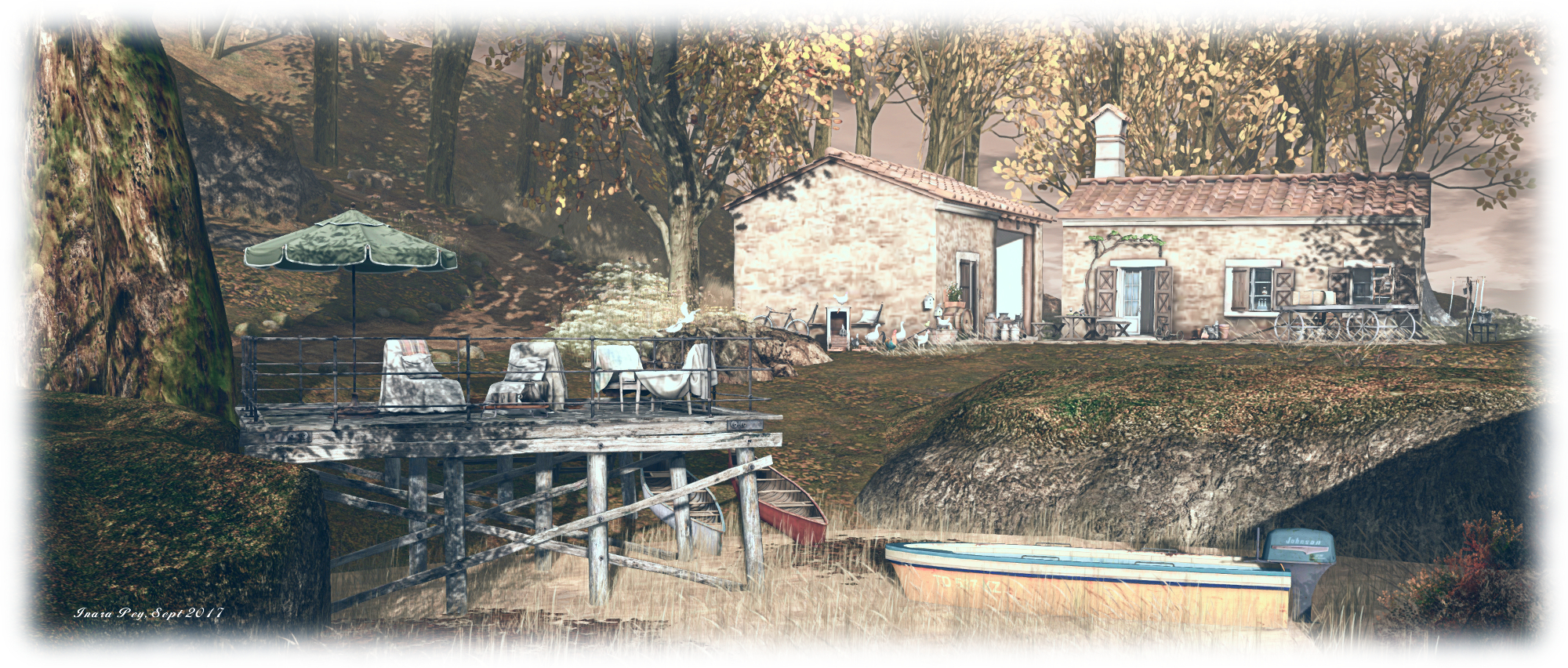
Take the track pointing eastwards from the little market overlooking the river, however, and this will take you down back eastwards, following the dip of the river to where a deck has been built out over the water, kayaks drawn up on the grass beside it. It is here that the third river crossing can be found, another rough-and ready bridge of logs nailed together, and which takes advantage of rocks in the middle of the water to hold itself in place – not that any current here is particularly swift, thanks to the reeds and grass choking the water.

The Mill; Inara Pey, September 2017, on FlickrThe Mill

Just beyond the deck and bridge, and with a view back along the path of the river as well as to where the mill sits, is a cosy little Tuscan-style farmhouse, chickens and geese outside and washing on the line. The track turns sharply left as it reaches the farm, switching back on itself to climb the hill up to where the writer’s retreat lies, offering visitors the chance to walk full circle around the northern side of the island.

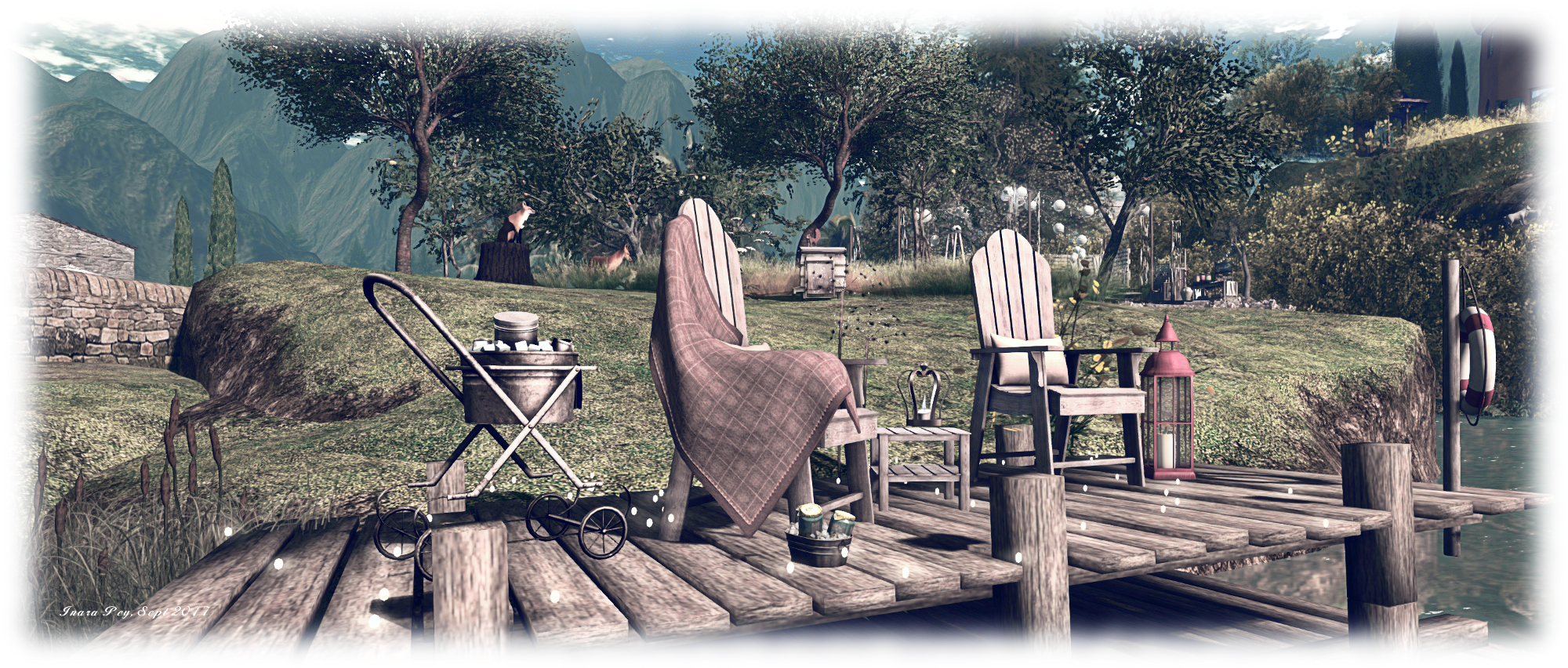
And this is a design intended for walking. The tracks offer routes through the landscape to all the major points of interest, and the trees with their reds and golds add a touch of autumnal romance to the setting. Perfectly set beneath the evening sky, The Mill offers places to tarry as you explore, not only with the riverside deck, encouraging visitors to loiter and take in the quiet beauty of the region.
The Mill; Inara Pey, September 2017, on FlickrThe Mill

The Mill is always a beautiful region to visit, and the current design is the perfect way to welcome a traditional autumn where the sun softly shines, the trees turn from green to rich hues of red, yellow, gold and brown, inviting us to amble through fallen leaves and relish that first wintery tang in the air.

SLurl Details

  • The Mill (Pale Moonlight, rated: Moderate)

Five Years of Fractals in Second Life

Five Years of Fractals – Gem Preiz

Now open at the R&D Art Gallery complex is Five Years of Fractals, celebrating five years of Gem Preiz’s remarkable fractal art in Second Life.  Split over two floors of the exhibition space, the displayed art is divided between retrospectives of Gem’s past installations at the Linden Endowment for the Arts, and his exhibitions and installations displayed elsewhere in Second Life.

Normally displayed in a very large format, Gem’s work is always a masterpiece of fractal design and storytelling on a grand scale. As such, what is seen within Five Years is but the tip of the iceberg – a soupçon if you will – that should remind those familiar with Gem’s work with the power and majesty of his art and hopefully serve to whet the appetite of those new to his work such that they will want to see more.

Five Years of Fractals – Gem Preiz

I certainly fall into the former of these two groups. I’ve long been an admirer of Gem’s art and his virtuosity in both setting a mood and telling a story for almost as long as he has been exhibiting in Second Life, and a number of my personal favourites out of his installations are presented here, both directly and indirectly. The ground level section of the exhibition space presents a retrospective of, for want of a better category name, Gem’s “non-LEA” work. Some of this is presented through individual images, other is animated frames which page through scenes from those exhibitions. On this level we can again experience Polychronies, Rhapsody in Blue Fractals, Myths,  Temples, Metropolis – complete with silhouettes of the figures which formed a part of it painted on the walls behind the images – and more.

As well as the art itself, there are books of his work visitors can peruse and also links to videos of some of this exhibitions – which I unhesitatingly recommend watching, bringing together as they do not only the art as it could be seen in situ whilst on display, but which also marry the images to the music Gem has offered with each installation, thus, through the videos as well as this exhibition, we can re-immerse ourselves in his art or gain greater familiarity with it and understand the inter-weaving of images and music.

Five Years of Fractals – Gem Preiz

Reached via teleport discs, the lower level of the exhibition space focuses on Gem’s LEA exhibitions, as noted. Among the pieces displayed, we can once again experience the visions of his Cathedral Dreamer, journey through his trilogy of stories, Vestiges and Wrecks, which formed his Heritage pairing, and No Frontiers, the unofficial sequel to Heritage, while images from the likes of The Anthropic Principle and No Frontiers cover sections of the walls behind some of the images. As with the upper level of the gallery, objects offer links to videos of some of the installations, while spaced around the gallery area are props and elements from others – such as the air car and the shuttle which Gem his used in his installations, allowing visitors to fly through them.

Fractal art is not uncommon in Second Life, but there is something very unique in Gem’s work. Perhaps it is the way in which it reflects both his interests – cosmology, nature, geology – and blends them with his background education in science and mathematics to present stunning visions of nature and future (or even ancient) scenes which are evocative, and both beautifully geometric and wonderfully fluid. Perhaps it is because, in composing his pieces, he presents not just individual pieces of art, but entire stories  we can explore and witness.

Five Years of Fractals – Gem Preiz

Whatever the reason, I very much welcome this opportunity to revisit – at least in part – many of his past extraordinary installations – and in doing so, to look forward to his next.

SLurl Details

CioTToLiNa’s Hope in Second Life

Solo Arte: Hope

Now open at Solo Arte, curated by Melania (MelaniaBis), is Hope, an exhibition of sculptures and art by CioTToLiNa Xue.

CioTToLiNa is an extraordinary artist, working primarily in 3D sculpture, although she also produces unique 2D art as well. She is entirely self-taught since joining Second Life, and I’ve long admired her work, having first encountered it at Art on Roofs in 2015, where she has a few pieces placed out as a part of the gallery’s setting, rather than directly on display. I was immediately captivated by her work, and when invited to present a full sim installation at LEA that year, I knew I wanted  CioTToLiNa – despite her own shyness – to share the opportunity with me, and worked to include a number of her pieces into that build (see: Impressions: a personal view of Second Life).

Solo Arte: Hope

Since that time, CioTToLiNa has clearly grown in confidence as an artist, producing ever more complex pieces which are not only beautiful and highly collectible (we have a number in the gardens of our island home), but also reflect her own interests / concerns for the world, and  how we relate as a species one to another and the world around us. So it is that she has produced pieces focusing on women’s rights, the environment, LGBTQ rights, racism and more, as well as pieces which reflect things like a love of music, thoughts on love and relationships, and so on.

With Hope, CioTToLiNa has selected some 24 of her pieces – three of them 2D art, the rest sculptures – which are displayed around the paths and canals of Solo Arte (itself a beautifully coordinated venue designed by Terrygold) and within one of the gallery buildings. These present many of the facets of her work and concerns, with several marvellously scaled up to fit the spaces within which they sit, offering a perfect opportunity for her work to be properly appreciated.

Solo Arte: Hope

These are evocative pieces, both in presentation and in naming. Many directly represent an emotion, reaction of desire – such as  Tenacia (Tenacity), Pace (Peace – using the CND symbol),  Il Desiderio (The Desire) and Escapology. Others are more layered in meaning, such as Babele (Babel), which carries within it assorted cultural references as well as reflections on relationships and the entire male / female dynamic.

What is particularly fascinating to me is the way other artistic influences on CioTToLiNa’s art have been incorporated with her work. For example, and as noted above, I first came across her work at Art on Roofs, which at the time was exhibiting Mistero Hifeng’s work. He also as a unique and evocative approach to sculpture in Second Life, and often moves within the same artistic circles as CioTToLiNa. Little wonder then, that one or two motfis that he perhaps pioneered in SL sculpture are reflected in some of the pieces included in Hope – such as with Donna Spremuta (Juicy Woman) and Salvezza (Salvation). However, in doing so, CioTToLiNa is by no means copying his approach: she is incorporating techniques into her work whilst producing something equally as unique and attention-holding.

Solo Arte: Hope

Hope is another superb exhibition at Solo Arte featuring a marvellous talent. It is a delight to visit and I have no hesitation in recommending you hop over and spend time wandering the canal side paths and gardens of Solo Arte to admire  CioTToLiNa’s work.

SLurl Details

Gentle Breezes in Second Life

Gentle Breezes; Inara Pey, September 2017, on FlickrGentle Breezes – click any image for full size

Having opened in August 2017, Rosy Highwater’s Gentle Breezes is the perfect antidote to inclement weather and the approach of winter – or if you’re in the southern hemisphere, the perfect promise of summer – and a chance to wander carefree, simply enjoying the freedom to be.

A Homestead region, it has been laid out with an eye for detail, and love of nature. From the sandy beaches up through the wooded hills, everything is pretty much perfect for setting the mind at ease and encouraging feet (and camera lens!) to roam. It’s a place for the photographer, the romantically inclined and those seeking escape for life’s weight.

Gentle Breezes; Inara Pey, September 2017, on FlickrGentle Breezes

Surrounded by rolling hills and peaks which rise from sandy shores, the region presents itself as a small isle sitting in a channel between two larger islands. It is close enough to one of the latter to suggest that once upon a time, they may have been joined but overtime, the sea has had its way, cutting a path between them. Taken as a whole, the isle and hills around it – as high as some are – give the impression they may have all at some point in distant pre-history been the ring wall for the caldera of an ocean volcano which once pushed its head above the surrounding seas only to fall extinct and, over the aeons, have those seas erode away the weaker point of the crater walls, flooding the space within.

Visitors arrive towards the centre of the region, on the beach forming the lower part of the island, and which faces out to the west and south. Behind this, the hills of the island form a gentle curve from the east around to the north, casting rocky shoulders down to the sands below. The beach is split into three by channels running outwards from where water tumbles from the rocks of the hills, and it is on the central tongue of sand between the two channels that visitors initial land.

Gentle Breezes; Inara Pey, September 2017, on FlickrGentle Breezes

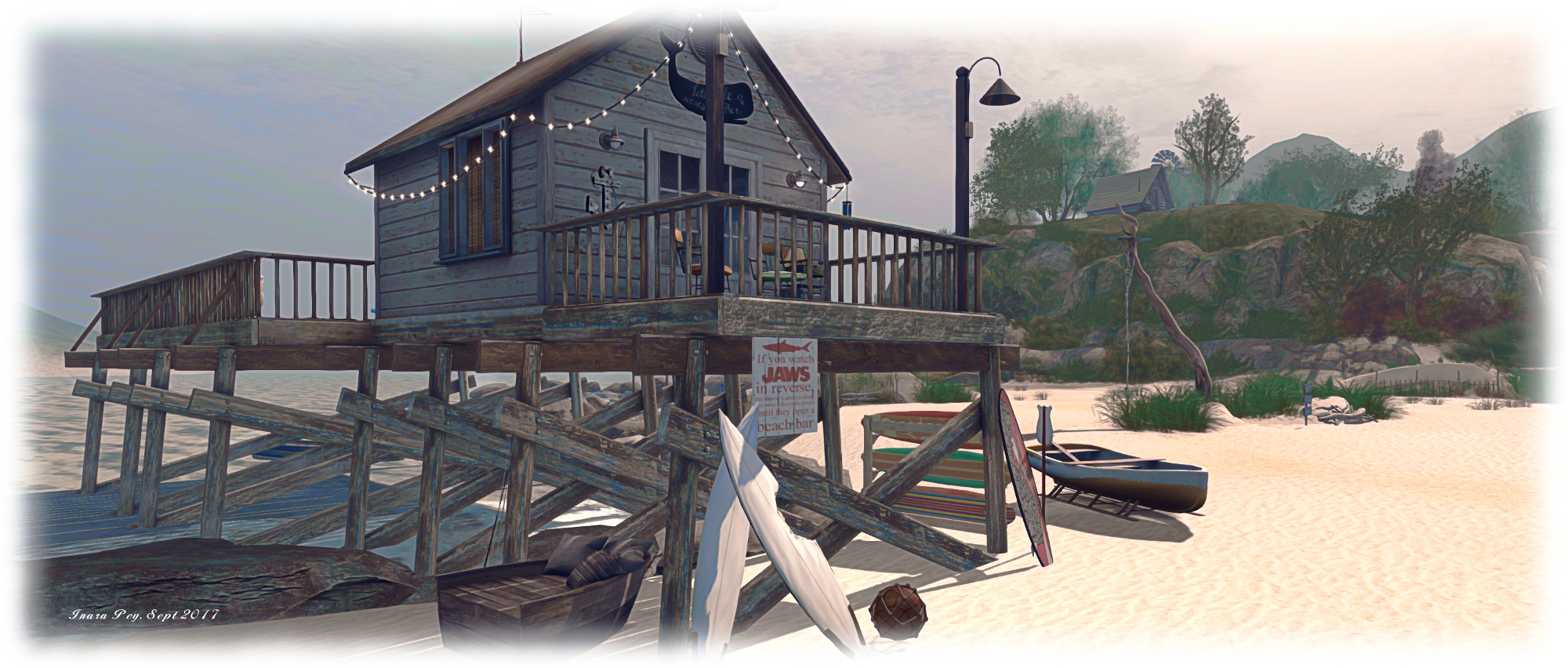
With waves lapping against it, the beach here offers an arc of places to sit and cuddle or chat looking out over the waters of the bay. Two wooden walkways reaching out over the waters separating it from the sands to the north and south. The latter is as big as the middle tongue of sand, and is home to a pier-top beach hut built over the waters, offering the active a little exercise in scrambling up to it it’s flat deck. Those preferring a more relaxed time can sit as watch from the rowing boat moored by the pier, or from the other cuddle and seating points scattered across the beach.

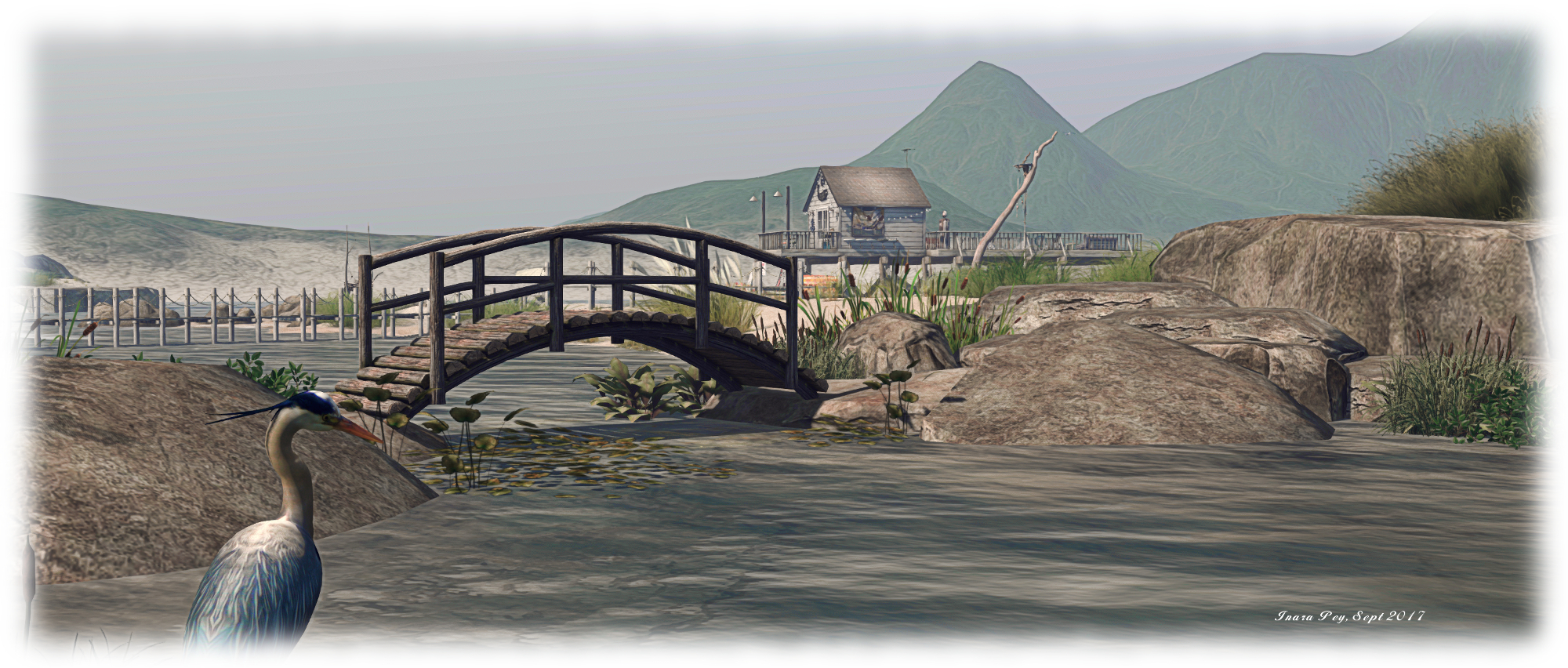
A path marked by wooden boards offers a way up the slope of the hills, leading to the first of the cottages and cabins which share the upper reaches of the island with trees and flowers. As it does so, the path passes between great slabs of rock reaching out from the hills like a protective wall, the sand within their arms gently giving way to grass, while a wind-bent tree offers a modest amount of shade to an old rowing boat converted into a lover’s lounger beneath its bent back.

Gentle Breezes; Inara Pey, September 2017, on FlickrGentle Breezes

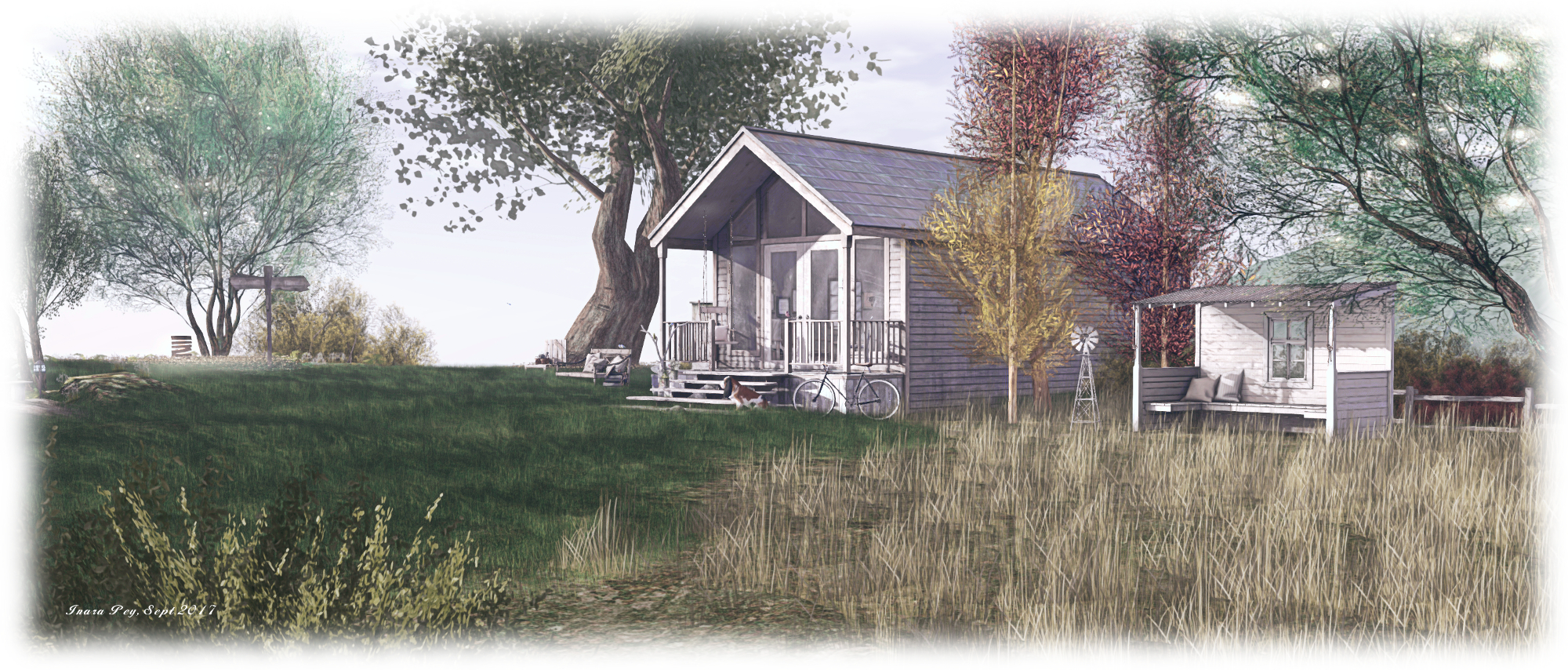
The cabin at the top of the hill is cosily furnished and offers a taste of a simple life – bees for fresh honey, and an outdoor bath. A footpath runs southwards from the cabin, under an arch and to a lookout point overlooking the larger of the island’s two waterfalls and the hidden delight of a hot tub nestled at the foot of the cliffs. On the hill beyond the falls sit two more cabins, each simply furnished. More sitting and cuddle spots can be found spread between and around them, both in the open and under the shade of trees, while a second hot tub overlooks the southern end of the island.

The easiest way to reach the northern end of the island is over the board walk from the middle tongue of beach. This gives access to a set of wooden stairs which climb the cliffs to a brightly-painted beach house offering a grand view out over the island. A pair of wind turbines stand sentinel-like behind the beach house, and further away through the long grass, stone steps offer a way down to the foot of the smaller of the two waterfalls, and a raft floating gently on the water there.

Gentle Breezes; Inara Pey, September 2017, on FlickrGentle Breezes

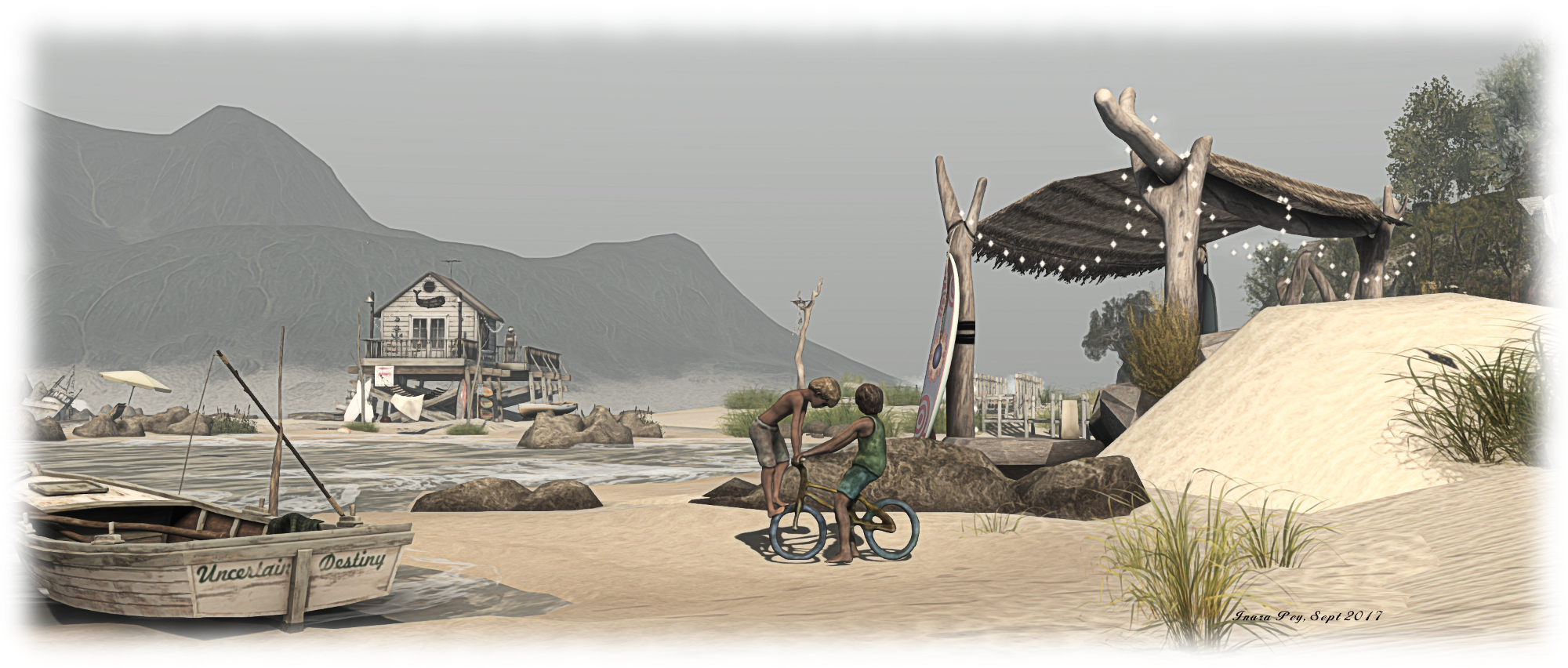
Gentle Breezes is truly a beautiful location – even now I’ve only just scratched the surface of all the details awaiting discovery – keep an eye out, for example for Rosy’s use of a sculpture by Silas Merlin to represent children playing on the beach. The setting is completely by a perfectly balanced ambient sound scape and for those so minded, a nicely considered chill-out music stream.

But there is also something more here as well. With its rugged hills, gentle beaches and offshore lighthouse, Gentle Breeze offers a remind of Rosy’s equally stunning Black Basalt Beach, which was open from 2013 through 2016, and about which I wrote in August 2013. For those of us who recall the latter, Gentle Breeze further offers a wonderful sense of memory whilst very much remaining its own landscape.

With thanks, once again, to Shakespeare and Max for the tip-off.

SLurl Details

Seven lilies, seven virtues and seven artists in Second Life

DaphneArts: Lilium

Now open at DaphneArts is Lilium, the second in a series of exhibitions focus on the mystical number seven, following on from The Endless (reviewed here).

The curators of DaphneArts, Angelika Corral and Sheldon Bergman (SheldonBR), who are also two of the seven artists participating in the exhibition, describe it in part thus:

Number seven is sacred and powerful. Pythagoras, the father of numerology, considered seven as the most spiritual of all the numbers. Seven is the number of divine perfection. Seven are the colors of the rainbow. Seven are the notes of the diatonic scale. There are seven ancient wonders of the world, seven days of the week, seven letters in the Roman numeral system, seven arts…
When Pope Gregory defined the Seven deadly sins, he also included a counter-balancing set of values, in a way to protect one against temptation from the deadly sins. The seven [heavenly] virtues … For this exhibition, seven photographers were invited to create a photo, each of them representing one of the seven virtues.
DaphneArt: Lilium – Temperance by Fenris

Lilium is itself Latin for “lily”, a symbol of virtue, as Angelika and Sheldon also note in their curator’s introduction to the exhibit, illustrating the point with the inclusion of an image The Annunciation by Paolo de Matteis.

Thus it is, with viewer correctly set, visitors to the exhibition start their journey in the chancel of a marble-like white cathedral (white obviously symbolic of virtue). A HUD is offered on arrival and should be worn, while overhead is a set of easy-to-follow steps guide people through ensuring they have their viewer correctly set-up (e.g. ensuring the required Windlight is selected and Advanced Lighting Model is enabled).

DaphneArts: Lilium – Patience by Magic Marker

From here, a walk through the nave of the cathedral to the porch brings people to the main exhibition space, progress to it marked by the lyrics – in Latin of the Elven Song, or Elfen Lied, as featured in the Japanese manga series of that name, the lyrics based on biblical passages and the hymn Ave Mundi Spes Maria. Beyond the porch is an open platform set against a uniform backdrop and on which are arranged seven gilded lilies.

Approaching any of these lilies will cause it to open, revealing the art apparently “held” inside it. At the same time, the title of the art – the virtue it represents – and the name of the artist are revealed by the HUD.

DaphneArt: Liluim

The images / virtues are, by artist: Charity – Inexorably; Chastity – Sheldon Bergman; Diligence – Harbour Galaxy; Humility – Kimeu Kamolla; Kindness – Angelika Corral; Patience – Magic Marker, and Temperance – Fenris. Each is obviously a personal representation of the virtue it depicts, however each carries a degree of symbolism which may be related to the virtue it represents, to virtue as a whole or to the mysticism of seven.

Lilium is a further nuanced ensemble exhibition built around a central theme, rich in symbolism and interpretation.

SLurl Details

Visiting ~Neive~ in Second Life

Neive; Inara Pey, September 2017, on Flickr~Neive~ – click any image for full size

Update, September 14th: Claudia has made some further changes to ~Neive~ since this article was published. The parade of shops and houses at the landing point (and seen in the image above) has been revised, and the bath house referred to in the text below has been replaced by the automotive garage which used to sit just outside of the shops and their street. To the south-west, one of the Tuscan-style farm houses has been replaced by a pavilion.

~Neive~ is a Homestead regions designed by Claudia (claudia74a Orsini) which Caitlyn and I first visited in late June 2017, when it still appeared to be under construction. We dropped back there at the start of September to see how things had developed, and found the region has grown into a quite pastoral – if slightly eclectic – setting.

A visit start towards the east side of the region, where a small parade of shops, houses and ruined buildings sit against a waterside road raised above a quay. A set of steps descend from the south side of square in front of the stores, offering the way – over a grass bank  – to a dirt track running between the waters surrounding the region and the large body of water occupying the middle of the region. A Tuscan style farmhouse sits above the track, which ends in an arch formed by two old tree trunks.

Neive; Inara Pey, September 2017, on Flickr~Neive~ – click any image for full size

Beyond this, on the south side of the region, the land changes from temperate grasses and trees to a more tropical beach, complete with palm trees and a beach club built out over the waters. Further across the sand sits a terrace bar, also built out over the water.

The beach curves around to the west side of the island, and a set of stairs leading up to where a terrace sits under the shadow of a windmill atop the highest peak on the land, and overlooking the central pool. A finger of water run by the foot of the terrace hill, connecting inland water with those surrounding the region. A log bridge offer the way to the far bank, where a rocky plateau rises, topped by an old Tuscan villa. Horses graze in the field below the villa, where a deck provides another vantage point looking out over the water towards the south side of the region.

Neive; Inara Pey, September 2017, on Flickr~Neive~ – click any image for full size

From here, the path circles back towards the landing point, passing an artist’s studio in a cabin surrounded by its own little garden. Another narrow neck on water is spanned by a wooden bridge, offering the way to where an ancient bath house sits, clearly still in use despite its age. With an old wooden garage sitting at the top of the slope from the bridge, the path leads the way back to the shops and the landing point.

With sheep, chickens and deer grazing across the land, foxes on the prowl and cats sunning themselves, together with decks and vantage points scattered throughout, Neive offers a relaxing visit. Cuddle spots can be found as well, on land and on the water, and the sound scape and surrounding hills complete the scene. There are one or two visual issues which can bump into view when exploring: walls and rocks which don’t quite meet the terrain below them, together with one or two items floating above ground or deck, but these don’t detract from the region being a pleasant visit and photogenic in nature.

Neive; Inara Pey, September 2017, on Flickr~Neive~ – click any image for full size

SLurl Details

  • Region no longer held by Claudia