From the Worlds to the World in Second Life

From Worlds to the World – Giovanna Cerise

From the Worlds to the World is a new installation by Giovanna Cerise at the R&D Gallery, Diotima, in Second Life. Occupying the entire gallery space, this is a complex installation to unravel, incorporating as it does elements of post-modernism, philosophy, logical progression, nature, geometry – whilst also, perhaps, promoting a discussion on what is the role of past and present in influencing the future.

Produced entirely in black-and-white, this is perhaps a stark piece, but there is a natural symmetry to it. Set against a black surround, the white forms within the installation are made up of geometric elements denoted by fine black lines – geometry being both a basic expression of both nature and intelligence. In all, the installation comprises three parts, perhaps analogous to the concepts of past, present and future, and which represent the evolution of intelligence.
From the Worlds to the World – Giovanna Cerise

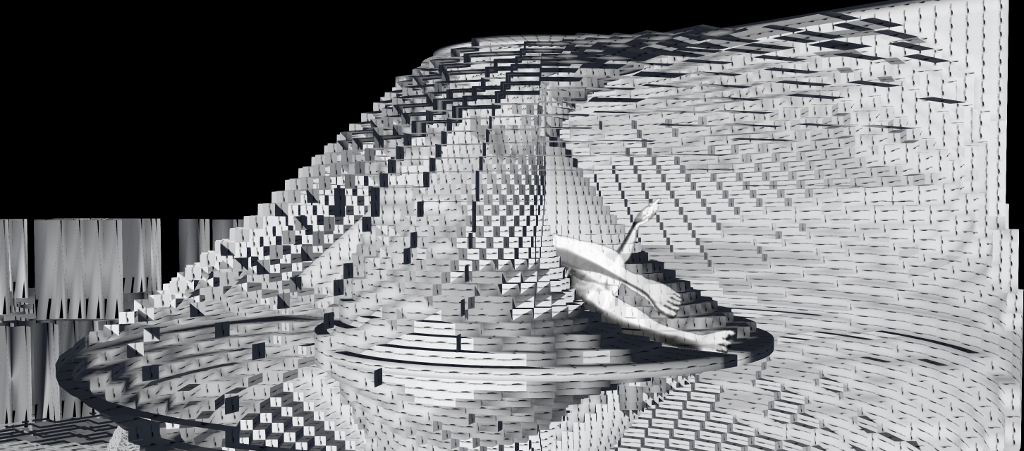
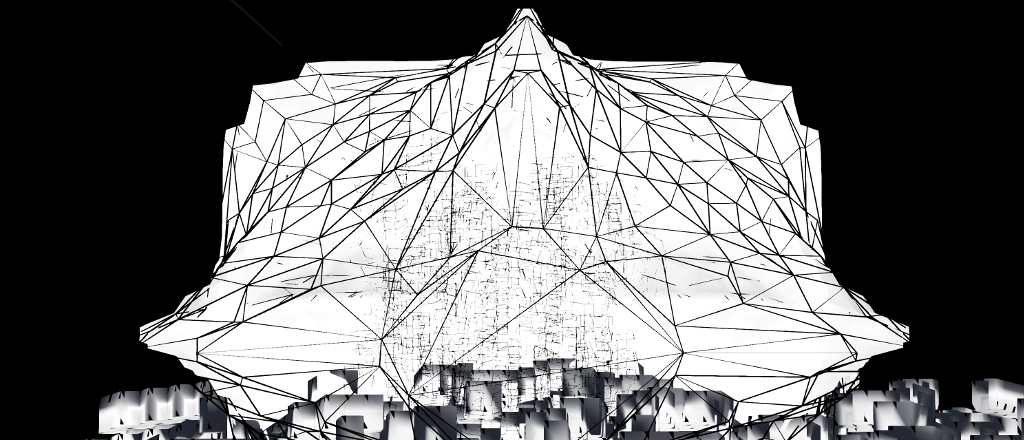
“The first part of the installation can be seen as an archetype of nature, now incorporated and reduced to its geometries,” Giovanna states in introducing the work. Given the overall framework of the installation, I’d venture the opinion that in this instance archetype is being used to reference Jungian archetypes – universal, archaic patterns and images from the collective unconscious which form inherited potentials, which are transformed once they enter consciousness and are given particular expression by individuals and their cultures – and the idea that as universal patterns within the collective unconscious, they exist as a kind of primordial suspension, without individual structure and form.

Thus, in this first second of the installation, we are confronted with a chaotic form, uneven, broken, but with its geometry holding the promise of potential, of becoming individually / culturally and collectivity more.
From the Worlds to the World – Giovanna Cerise

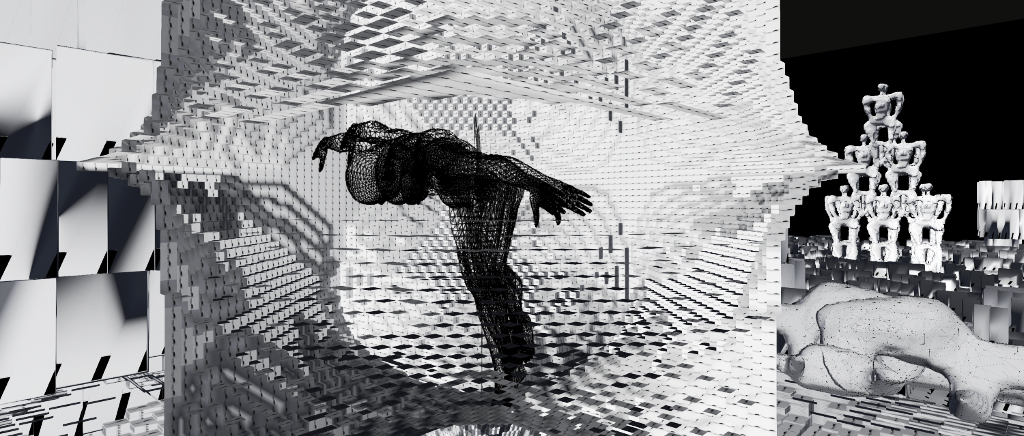
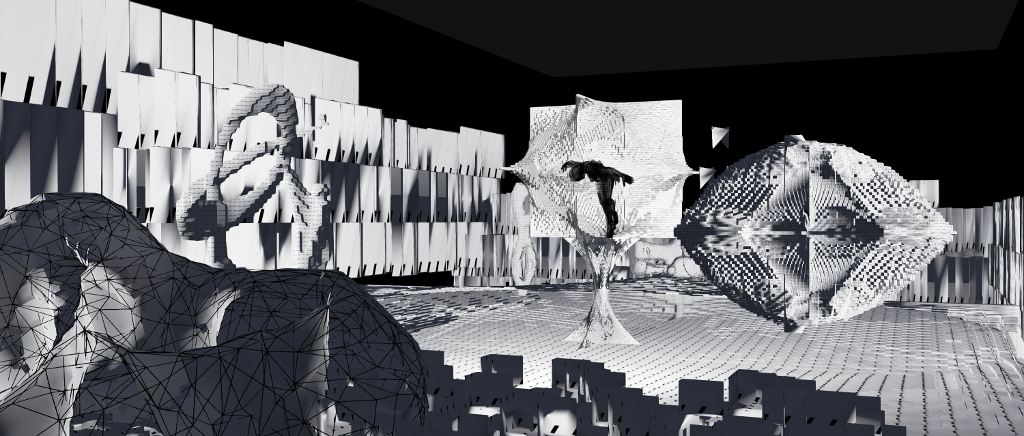
From this the installation progresses through and initial shape and patterns in which human forms can be seen – a reference, it would seem to the rise of intelligence and self. A time when we shape and drive the world around us, while being both apart from it (humanity over nature?), yet wholly constrained by it – as evidenced by the shapes rising and folding out of, so to speak, the same geometric forms as seen in the initial part of the installation.

Beyond these lies the future: a place where individually no longer exists per se, and the identical reigns. A point at which intelligence has homogenised, There is no need for bodies nor the baser needs of humanity. Life has again become unified, archetypes woven together through their universality. A time has been reached where individuality or culture are no longer required. Nor is there need for dialectical discussion or reasoning; all that is required is uniformity and experiential growth and perfection of the whole.
From the Worlds to the World – Giovanna Cerise

As a representation discussion of the evolution of intelligence, From the Worlds to the World (“worlds” and “world” perhaps again a reference from separate cultural environments and attitudes to the single, homogeneous “whole”) is – as noted – a complex piece. While it may well point to a time where dialectical discourse is no longer required, it nevertheless encourages it, just as it also promotes more philosophical consideration of our own development and growth. Are we really to rise from the “primordial” homogeneity of initial instinctual intelligence to a point where the potential of the individual (be it person or cultural) is to be only a span of time before we are once again absorbed into a single whole once again, uniform of thought and goal?

These latter elements: the opportunity for considered thought and discussion make  – for those willing to dwell on interpreting the installation – From the Worlds to the World an ideal opportunity for a shared visit.

Realm of Light in Second Life

Realm Of Light; Inara Pey, February 2018, on Flickr Realm Of Light – click any image for full size

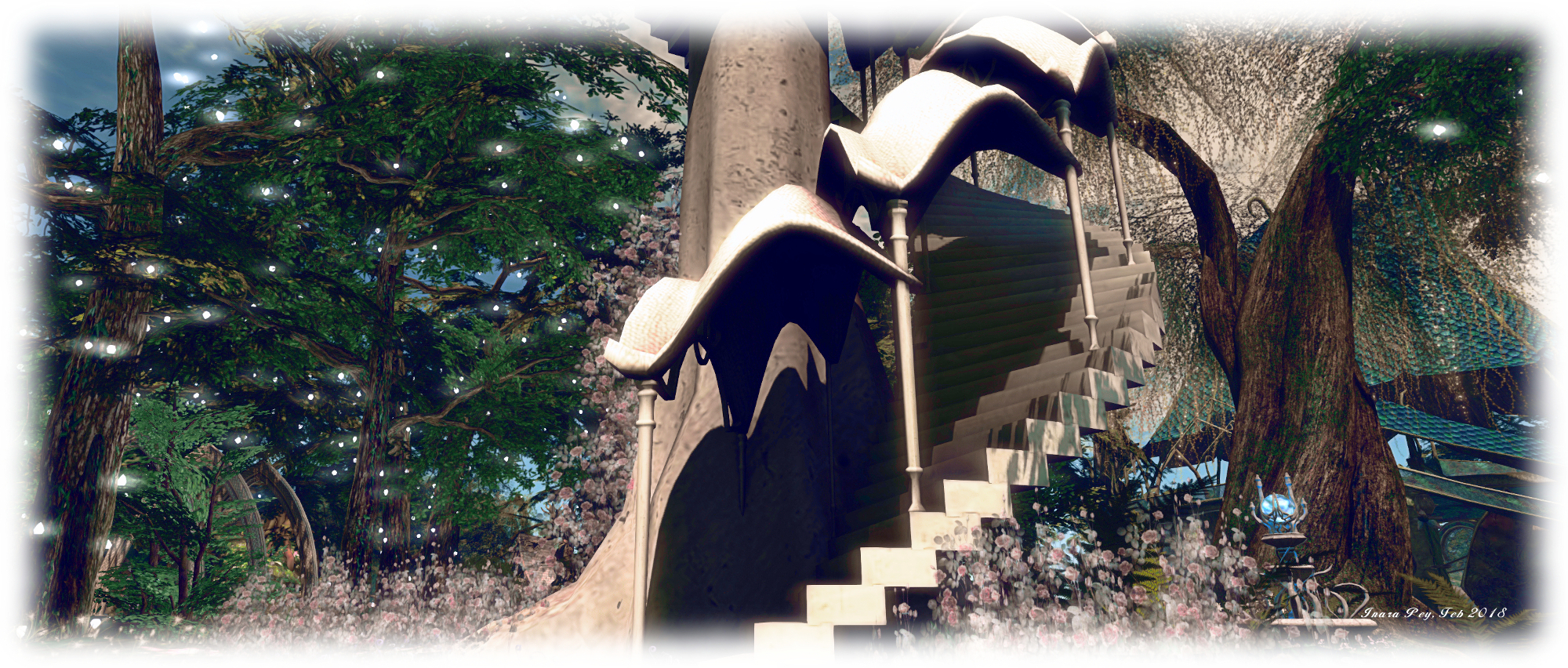
Annie Brightstar led us to take a visit to Realm Of Light, a Full region designed by Varielle and Tai (Taionia). Described as a “medieval/fantasy sim”, I’d definitely place it as the latter more than the former; it has a delightfully elven / fae feel to it with more than enough fantasy touches to mark it in that direction rather than medieval.

The landing point immediately evokes the fantasy feel, offering a faery circle, trees with windowed trunks lit from within and clearly the homes of the little folk dancing around the landing point on gossamer wings. Four paths offer routes of departure from the ring – three meandering through the tall trees, the third a bridge over one of the region’s rivers. Which you take is entirely up to you – and guaranteed, if I might paraphrase Tolkien, to bring you a place to which you may not have been going, but where your presence is welcomed.

Realm Of Light; Inara Pey, February 2018, on Flickr Realm Of Light

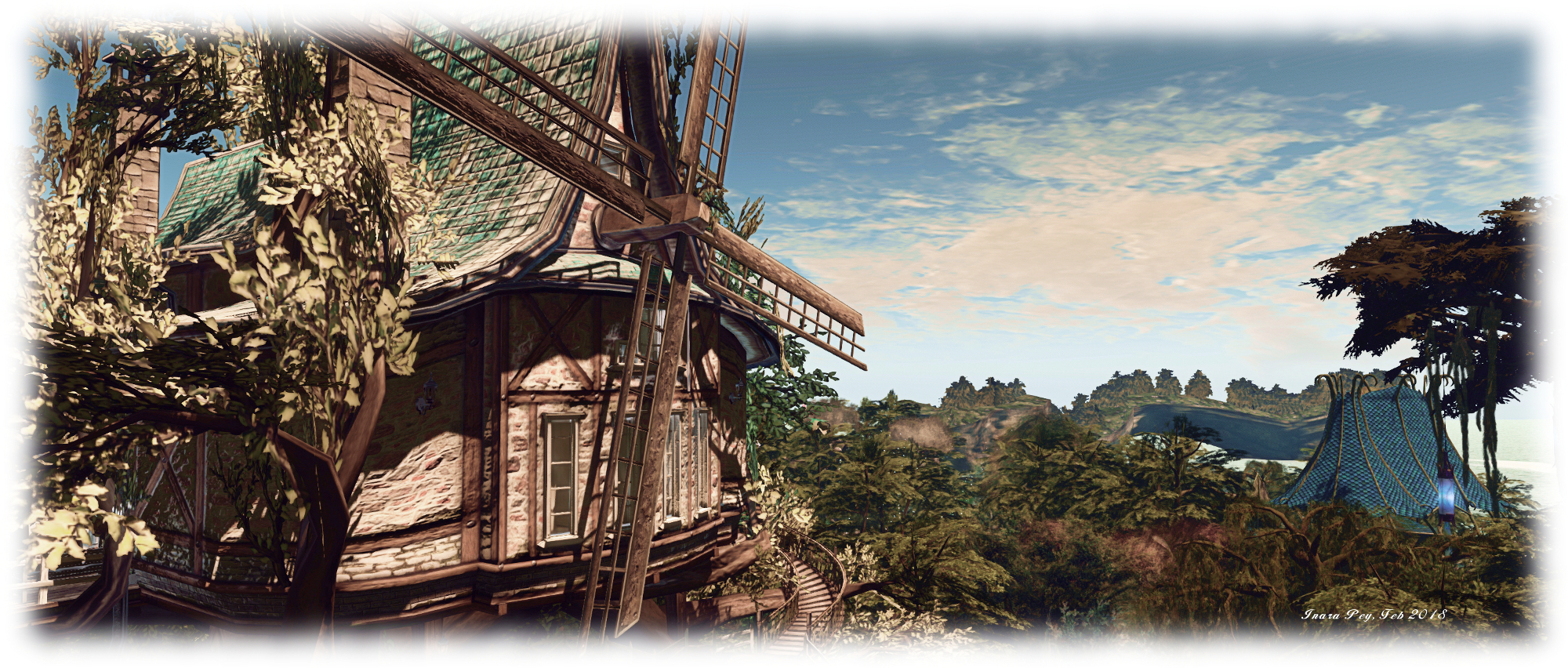
Travel east along one of the paths, and you’ll quickly come to another stream, bridged by interlocking tree trunks, the greensward beyond offering a place to sit and relax – or float- among exotic and colourful plants and fungi. South of this, and sitting on a tiny island separated from the rest of the region by narrow channels, is a great tree supporting a wooden platform on which is built the most marvellous windmill-come-house. At ground level and in the shade of the tree, is a smaller cottage – but be warned! The dragon guarding both is not there purely for show; this little island is a private residence, so please be respectful and avoid trespassing.

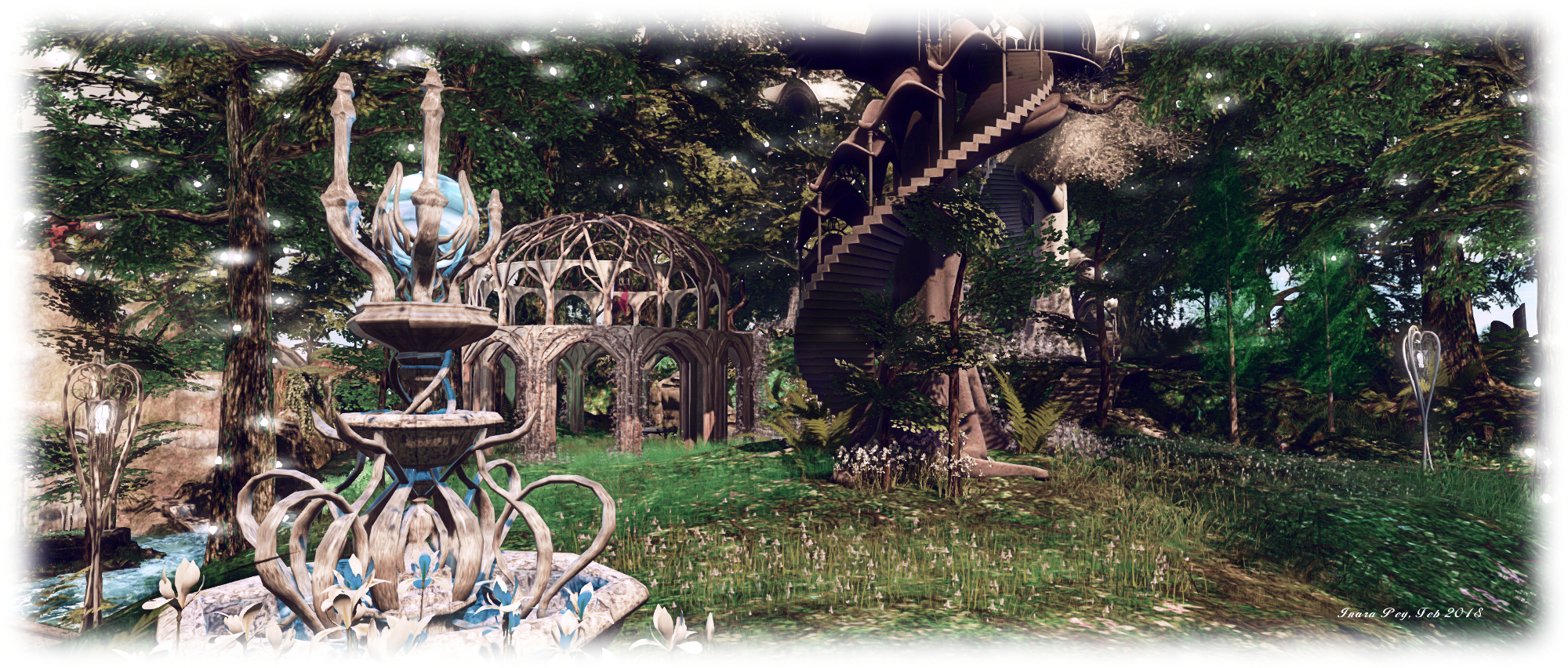
Take the path to the north, and it will take you – by way of another bridge – to a garden and elven pavilion. The garden a place of fountains, cuddle spots, a teleport to a floating meditation island. It is dominated by a great mallorn-like tree, a passage cut through its trunk, great lanterns hanging from its boughs and a platformed house held within its crown.

Realm Of Light; Inara Pey, February 2018, on Flickr Realm Of Light

Go south from the landing point, and the path will branch and fork, bringing you to a number of places – what might be an alchemist’s retreat, an ancient walled garden, a mystical tree cave and another greensward ending at a fae waystone circle.

A stone bridge near to the waystone circle offers a way across a narrow river gorge to where elven tree houses sit within the woods, stone paths and steps running between them, the grasses in their shade home to deer and rabbits. The tree houses are connected by bridges spanning the gaps between their ornate platforms, allowing easy passage from one to the next and back without the need to descend to ground level. North-west of the tree houses sits another island, reached by two bridges; again be aware that the properties here are available for rent and may be occupied – so please resist the temptation to enter them.

Realm Of Light; Inara Pey, February 2018, on Flickr Realm Of Light

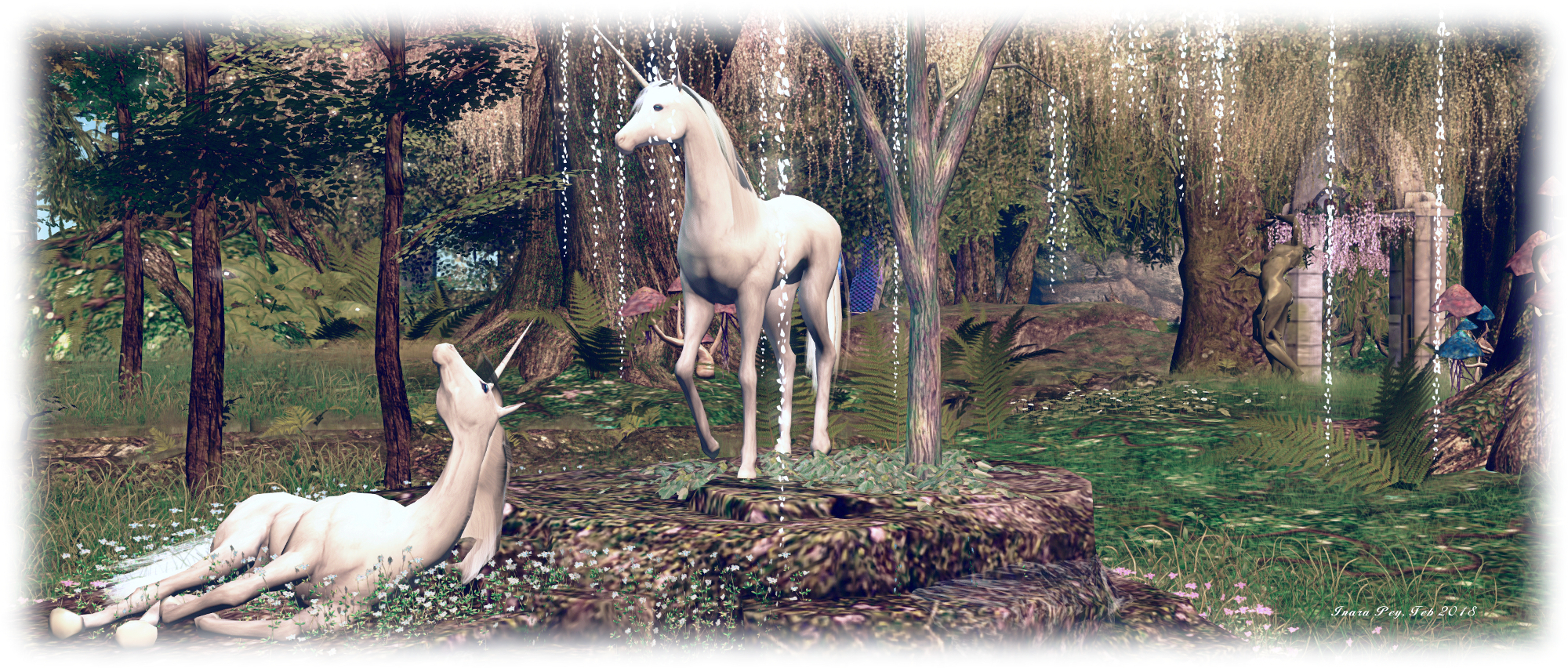
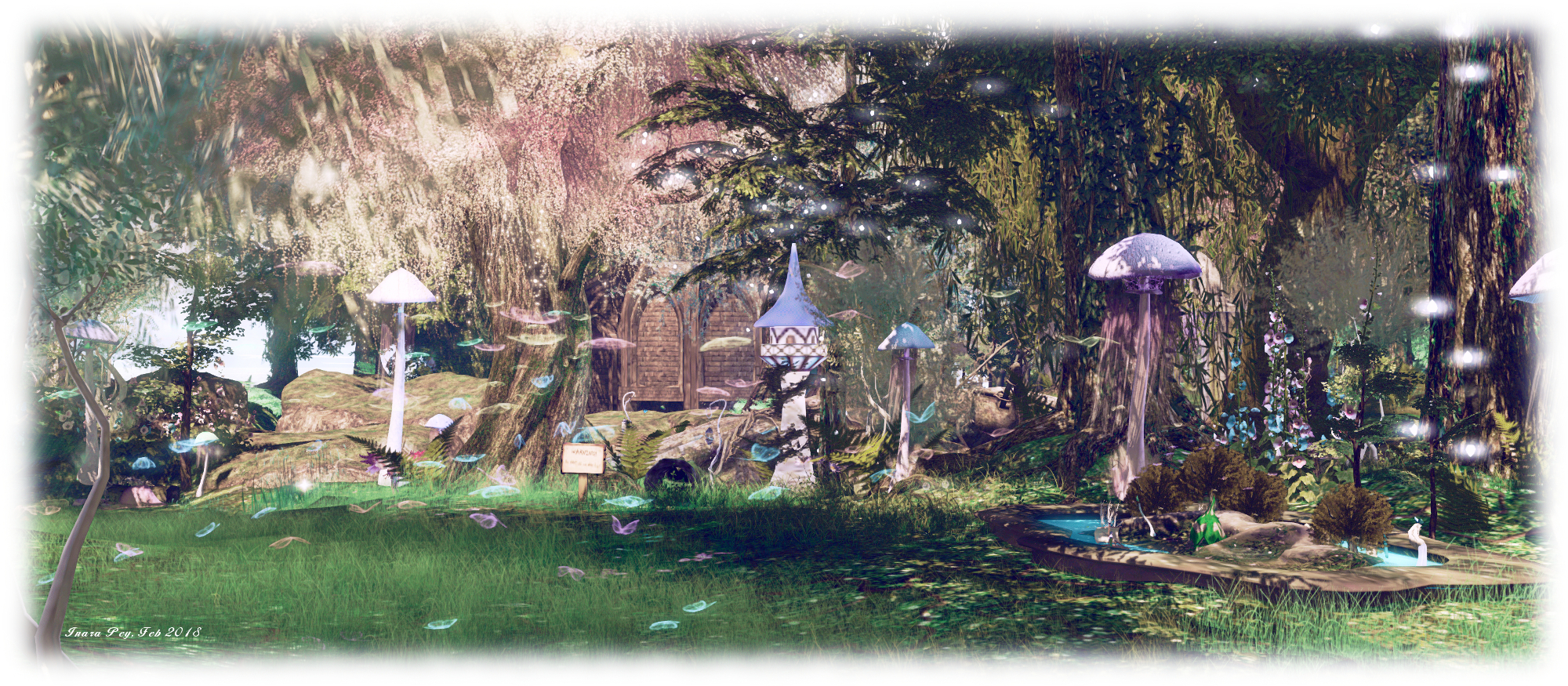
All of this is just scratching the surface of this region. Along the rivers – and overhead – one might find more dragons; to the north-east lies ship wrecks and a mermaid cove with places underwater to explore. Unicorns are to be found among the trees, while translucent butterflies flutter over plants and toadstools. Keep an eye out for the tiny houses and towers scattered around, and the fae folk who flutter about or are engaged in different activities.

Realm Of Light could perhaps benefit from a more appealing windlight, but as most photographers tend to use their own, this isn’t a drawback – but I do encourage experimenting with options when visiting; this is a place which really comes into its own under many sunlight settings. As it is, Realm Of Light makes for an engaging visit and offers plenty of opportunities for photography and exploration.

Realm Of Light; Inara Pey, February 2018, on Flickr Realm Of Light

SLurl Details

Je n’aime pas in Second Life

DaphneArt: Je n’aime pas

Je n’aime pas (“I do not like”), is the name of a collaborative art installation by Hern Worsley and Nur Moo which opened on Friday, February 9th, 2018 (with a second opening event planned for Saturday, February 10th, 2018 from 16:00 SLT) at DaphneArts, curated by Angelika Corral and Sheldon B.

Described as a conceptual piece, the installation features a build over three levels by musician, builder and artist Hern, within which a series of images by photographer Nur Moo are displayed. Mur is described as having returned to Second Life in the notes accompanying the installation, and I gather Je n’aime pas is something of a celebration of this fact.

DaphneArt: Je n’aime pas

Visits begin inside a building within the installation, on its lowest level. Before proceeding, make sure to observe the viewing instructions displayed in the dialogue box in the top right corner of your screen. In particular, make sure you have your viewer’s Advanced Lighting Model (ALM) enabled via Preferences > Graphics or you risk missing details. There is art on the walls inside the building – but frankly, I’m not sure if the photography is Nur’s or Hern’s or someone else’s.

A set of white arrows line the floor outside, encouraging people to step out into the larger structure. This exudes a modern approach to architecture: great steel beams, arms pentagonal floor sections, and great glass panels. Some are designed by Hern, some are from other creators he has used in building the installation. Central to this is a huge mesh vase, while from the walls hang panels with animated images.

DaphneArt: Je n’aime pas

At the foot of the vase sculpture sits a teleport on an easel that leads up to the middle level. this is where having ALM becomes particularly important. Without it, none of the images projected onto the flat wall panels, the greeble boards, cubes and floor will not be visible. Two more teleport boards sit on easels in the centre of this floor: one up, one down. Go up, and you become part of the installation yourself, courtesy of a trampoline.

This is a difficult installation to quantify. In some ways it likely to be reflective of its name for some; for others it may well be a curious mystery. Conceptual art  is art in which the idea(s) involved in the work take precedence over any traditional aesthetic. As such, this is an installation that needs to be considered as a whole, and not so much as a sum of its parts. given this, how we consider  Je n’aime pas is down to individual interpretation – and I’ll leave this to you to determine.

SLurl Details

Kamigami, Pandora Resort in Second Life

Kamigami, Pandora Resort Town; Inara Pey, February 2018, on Flickr Kamigami, Pandora Resort

Note: this vision of Pandora Box of Dreams closed on August 1st, 2018, so the SLurl have been removed.

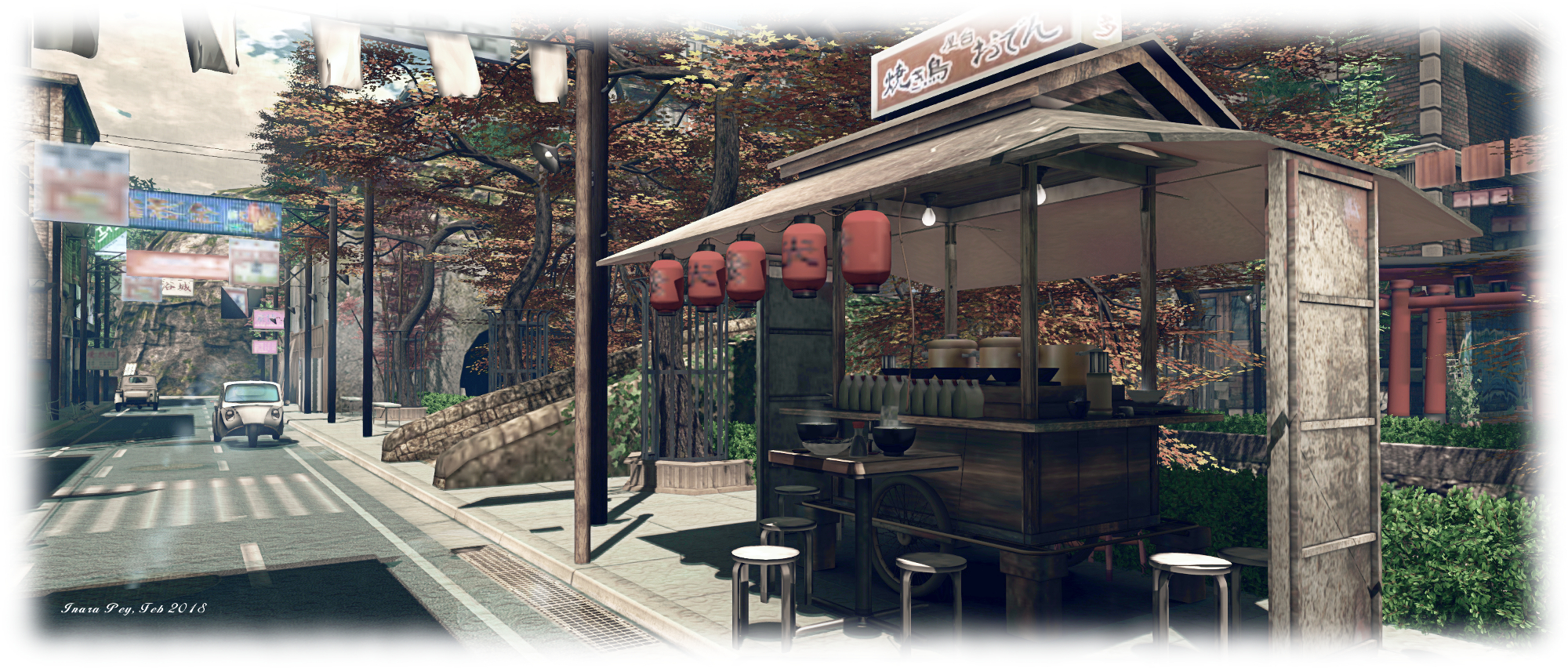
Lokhe Angel Verlack (Jackson Verlack) is a master in creating immersive environments, and I’ve covered a number of his region designs over the last few years – the most recent being Namaste, under their Pandora Resort/Pandora Box of Dreams banner (read here for more). Recently, he had his partner, Miza-Cupcake-Verlack (Mizaki) opened a new destination at Pandora Resort – Kamigami, a Japanese themed, down-town style environment with some nice little touches.

As with Namaste, a visit to Kamigami commences on the upper deck of an airliner zapping through the sky. Arrows on the floor direct passengers down to the lower deck and to teleport boards sit nestled in the cabin door lobby. One of these takes visitors to Namaste, the other to Kamigami, where they are delivered to the lower entrance to a metro station – the steps to street level offering the only way forward.

Kamigami, Pandora Resort Town; Inara Pey, February 2018, on Flickr Kamigami, Pandora Resort

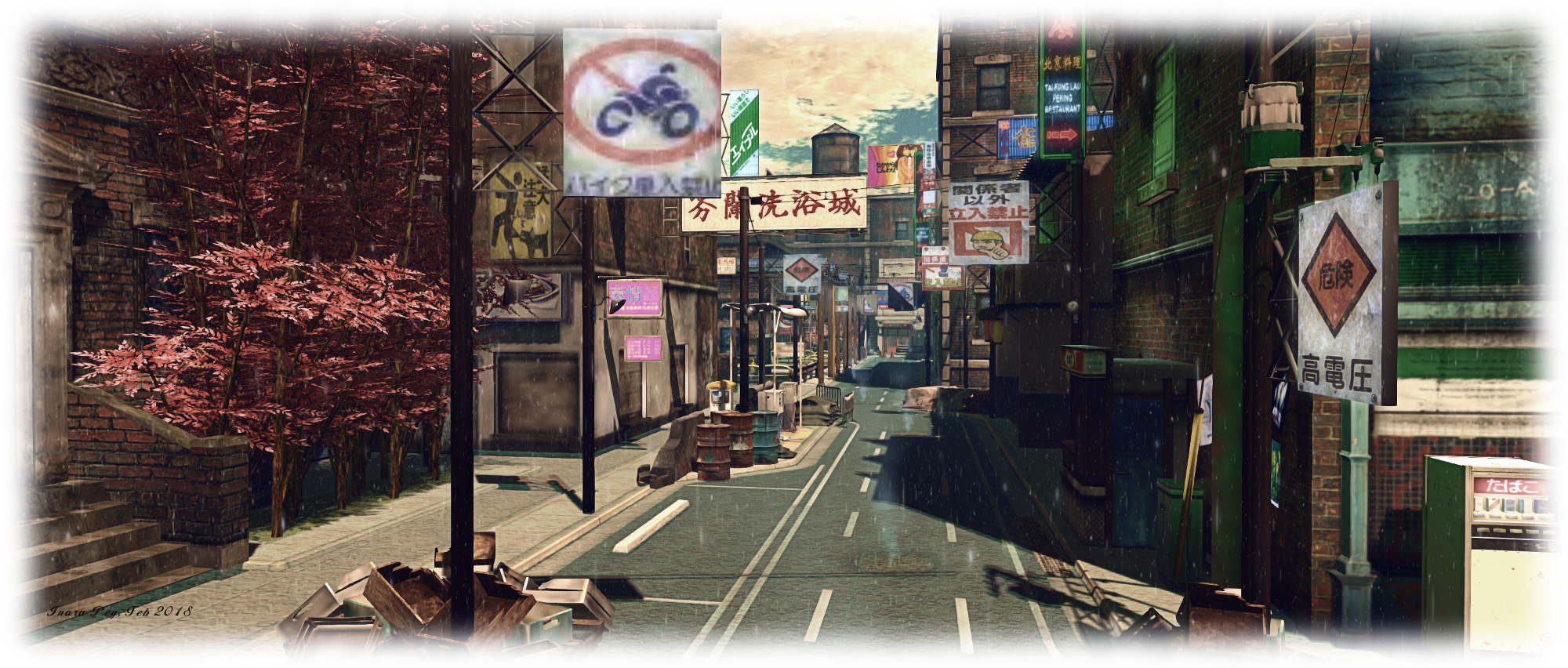
Climbing the steps reveals this is not the better part of town; the red-bricked buildings are grimy with age, the streets – although apparently pristine tarmac, possibly washed clean by the falling rain – are lined with piles of rubbish, old oil cans and signs that some attempts are being made at renovation.The metro sign on the wall of the steps suggests we’re in Kyoto, in which case, this might be an older, more outlying part of that city.

More signs, neon and painted boards, hang from walls, extend from posts carrying overhead power lines and are mounted on overhead gantries. Some of these are typically Japanese while others offer a more Chinese lean, and some have a distinctly western look and feel; all of which gives the setting an eclectic look and feel.

Kamigami, Pandora Resort Town; Inara Pey, February 2018, on Flickr Kamigami, Pandora Resort

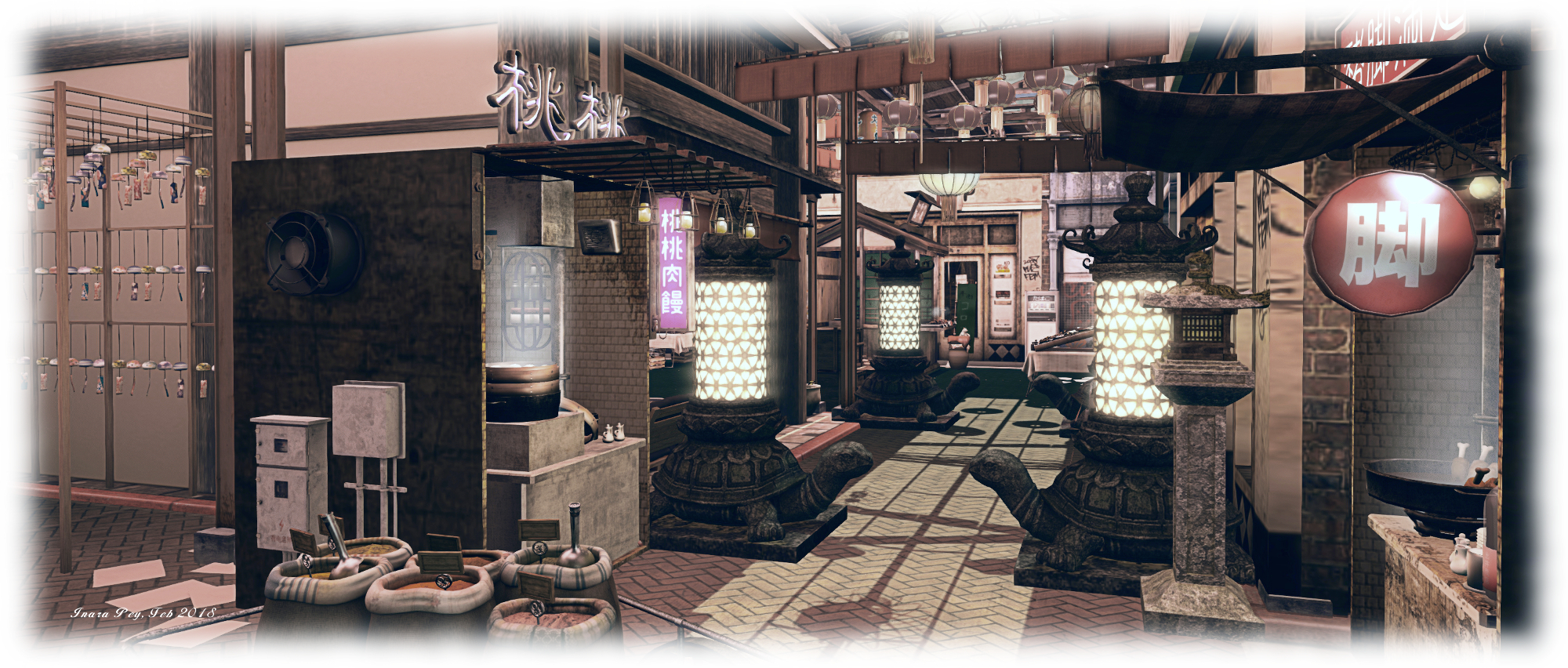
Most of the builds are admittedly shells, but part of the interest in a visit is finding your way around the streets separating them into blocks, taking in all the little details. I say “most”, because wander far enough and you will find places that are open to avatars to explore, such as the magic shop along one street and, most particularly, in the south-east of the build where a series of covered alleys offer little market stalls, eateries and curio shops.

The largest buildings in the setting are of distinctly European / western design. They sit within formal gardens positioned on the rugged table of rock that raises them above the surrounding town, an aloof position befitting their imposing looks. A narrow cutting in the rock,, marked by stone steps, presents the route up to these two manor-like buildings, both of which appear to be places of learning … or of dark acts.

Kamigami, Pandora Resort Town; Inara Pey, February 2018, on Flickr Kamigami, Pandora Resort

Keep an eye out, as well, for the town’s canal; not because of the water or for boats, but because of its unique display of fish that are literally flying along its course, rather and swimming. These can be seen from the road running alongside part of the canal, or from the old stone bridge spanning it.

As with all of  Lokhe ‘s builds – and as one might expect from my description of him at the top of this piece – Kamigami is eye-catching in its level of detail and touches.  Visually, it is as engaging as Namaste, down on the ground level below it – but in a very different way. There are opportunities for photography among the streets. As such, a visit is once again recommended.

Kamigami, Pandora Resort Town; Inara Pey, February 2018, on Flickr Kamigami, Pandora Resort

50 cats in Second Life

Cica Ghost: 50 Cats

Cica Ghost opened her new installation 50 Cats early in February 2018. Following on from Bird People, which presented something of a conundrum (see here for more), this is an altogether more light-hearted piece, offering a little tongue-in-cheek fun.

As a strap-line, the installation uses a quote by novelist and short story writer Bobbie Ann Mason, One day I was counting the cats and I absent-mindedly counted myself. It’s from her first published novel from 1982, Shiloh and Other Stories, although beyond the reference to counting cats, this doesn’t appear to have a deeper meaning for the installation – or at least, not one I could fathom.

Cica Ghost: 50 Cats

A visit begins in the south-west corner of a sandy island. Almost entirely devoid of trees, this little island has a ring of houses, tall and thin with pitched roofs, surrounding its lone hill. It is atop the hill, with its wooden fence crown, that the cats can be found. And there really are fifty of them.

They are standing, sitting, lying down, rolling on the ground, chasing butterflies, watching one another, washing – doing all the things cats do. Some look happy, many look a little nervous, some have a look of pathos in their eyes, as if asking to be taken home and shown a little love. None of them show the slightest interest ion the two trees in their garden nor the dustbins occupying a corner, despite the latter oft being associated with stray cats. For human visitors however, a click on the lid of one of the bins might generate interest and raise a chuckle.

Cica Ghost: 50 Cats

In a similar nature to the dustbins, there are a number of “bunny cars” – some of which can be touched for animations as well. These are also fun to play with, and grab the attention. Also to be found on the fence and on some of the buildings are Cica’s little cartoon stick people. And do keep an eye out for the mice; they are as captivating as the cats.

50 Cats is a wonderfully light-hearted build offers fun and smiles. For those who love cats, and wish to respond to the heartfelt looks of wanting to be taken home an loved, each one is available for sale. Just right-click to buy a copy; all can be resized to suit personal needs.


SLurl Details

  • 50 Cats (Pillow Rock, rated: Moderate)

Kisaragi Town in Second Life

Kisaragi Town; Inara Pey, February 2018, on Flickr Kisaragi Town – click on any image for full size

We were first made aware of Kisaragi Town early in January 2018, when Shakespeare (SkinnyNilla) dropped a landmark over to me. Various things prevented a visit at the time, so it wasn’t until the start of February that we finally got to go and see it – and I’m glad we did.

Covering a half region, the build has been designed by xLinzerTortex, who from his profile appears to be a relative newcomer to Second Life. While profile age is no guarantee of overall time in SL, if he has only been in-world a year and a half then additional kudos to him for presenting such a carefully designed, richly detailed location for people to enjoy.

Kisaragi Town; Inara Pey, February 2018, on Flickr Kisaragi Town

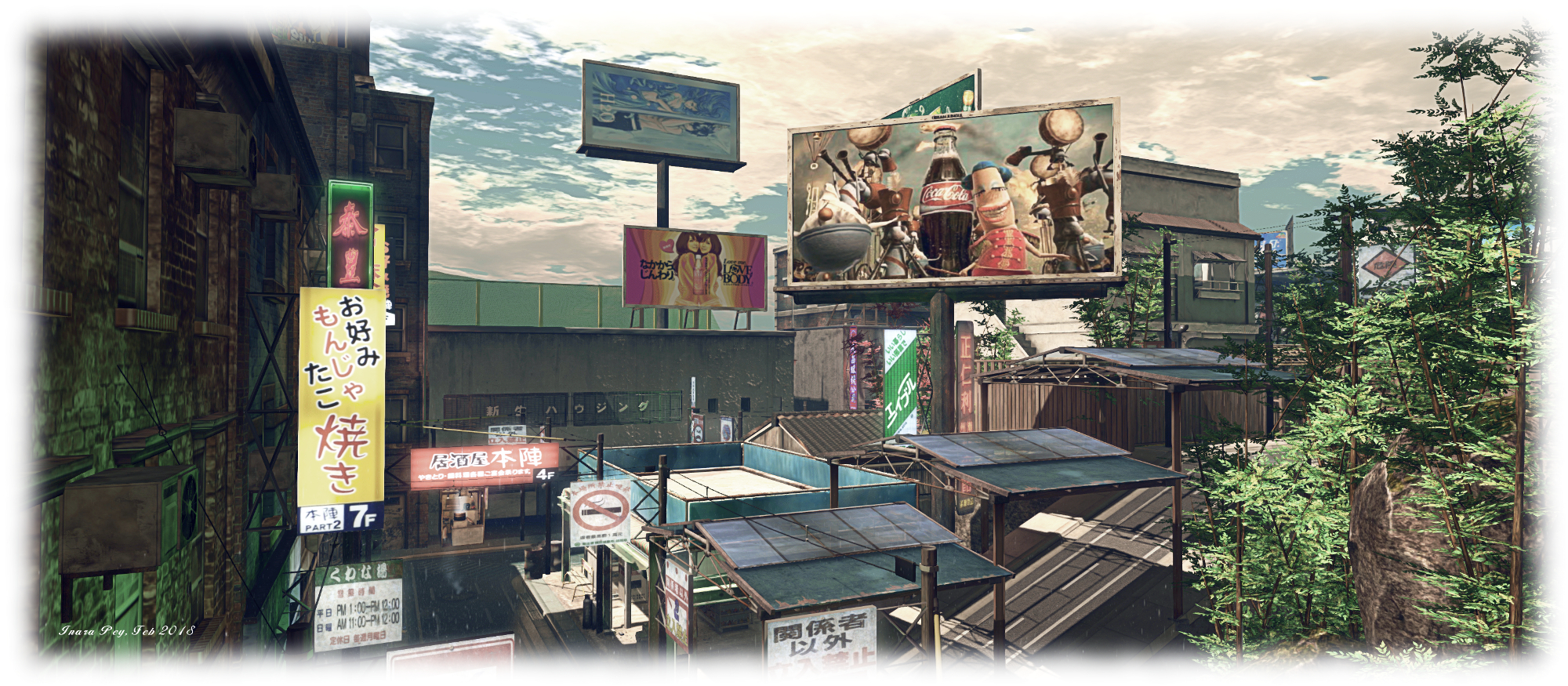
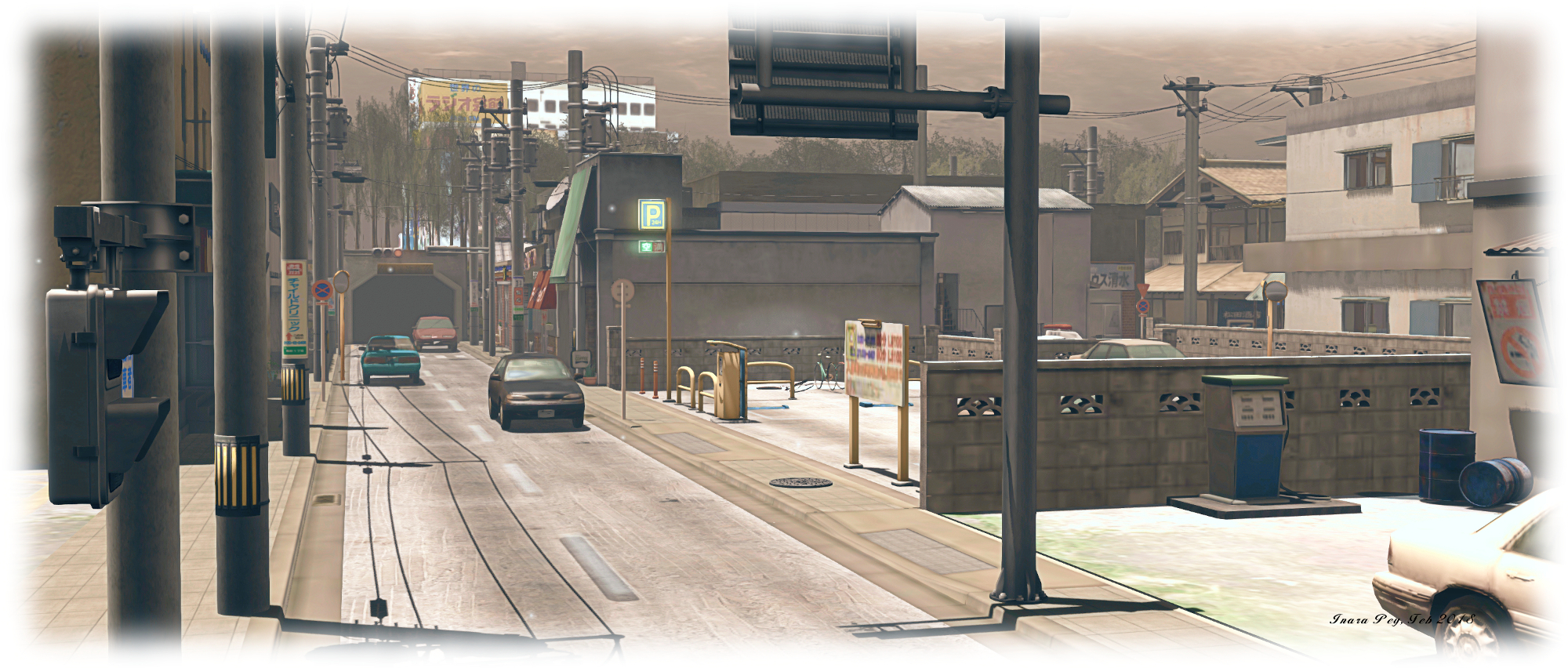
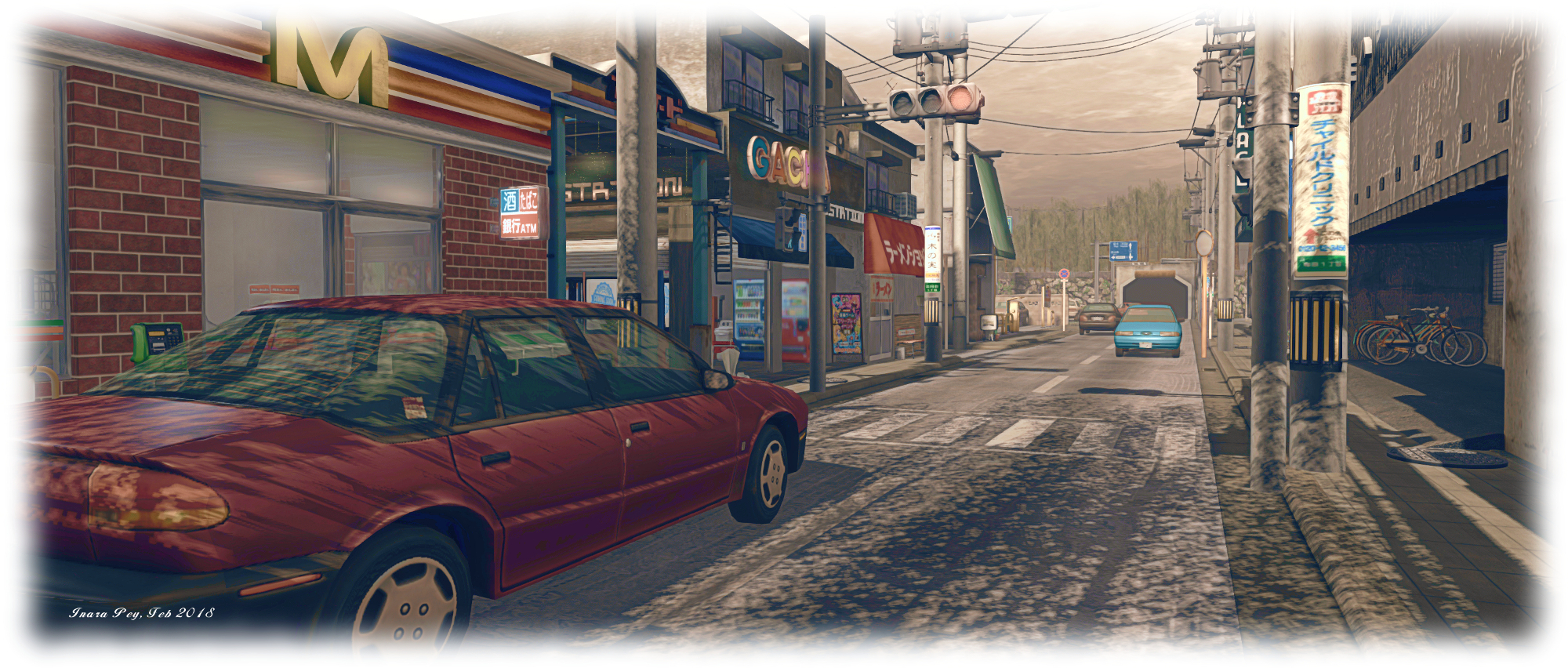
A visit begins on a main road running west-to-east through the town, with tunnels at either end linking Kisaragi Town with the two neighbouring parcels / region (the town sits within a series of Japanese themed private regions). Along this road are assorted businesses: a post office, movie theatre, garage, coffee shop, metro store, eatery and so on. Cars are scattered along the streets or sit parked in assigned bays; traffic lights blink, and advertising hoardings hang from buildings, with posters wrapped around lamp posts and sign poles.

From the style of the buildings, this would appear to be an older part of town; many of the structures are flat, cement-sided blocks, colour provided in splashes by small tiled areas of walls or by the advertising boards or the simple contrast of wood against cement. The exceptions to this are the movie theatre, located towards the eastern end of the street with its painted façade and tiling, and the metro store and gacha standing either side of a small shopping arcade – or alley, if you prefer – running southwards from the eastern end of the street.

Kisaragi Town; Inara Pey, February 2018, on Flickr Kisaragi Town

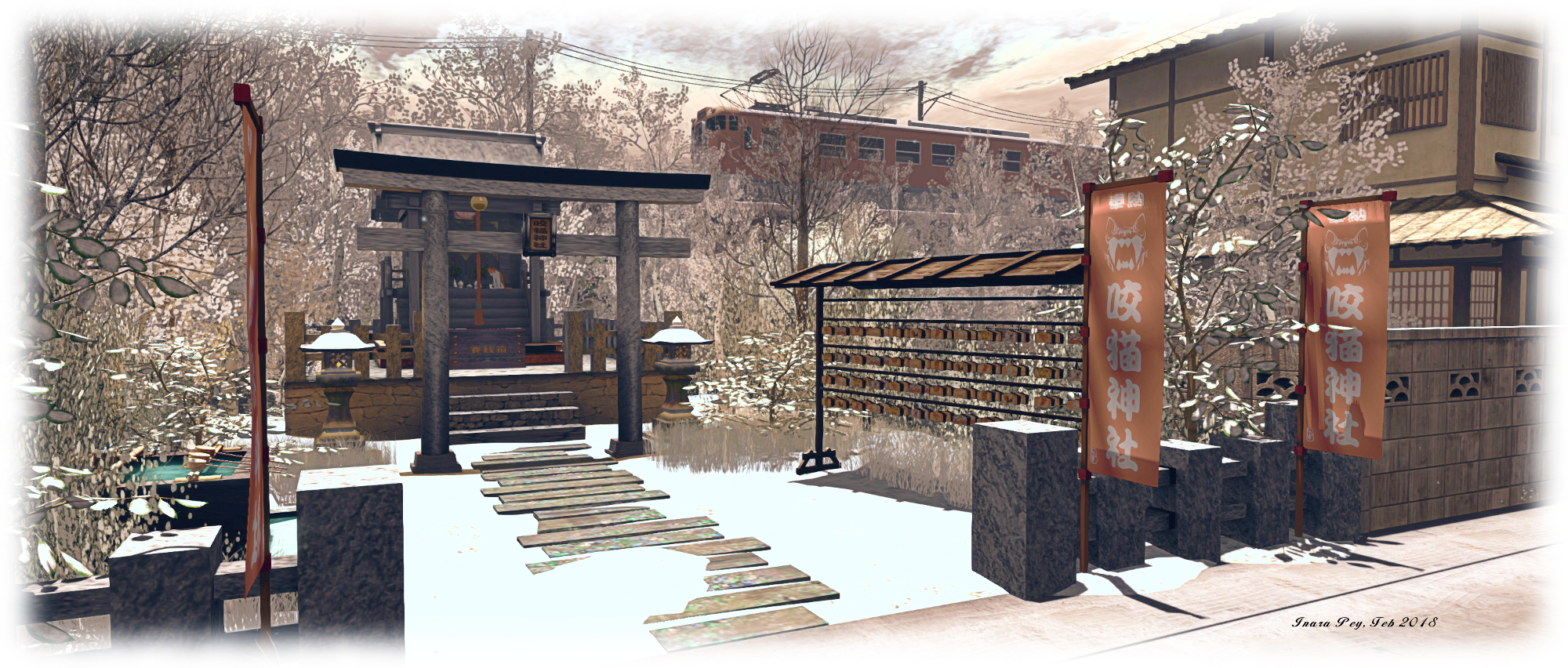
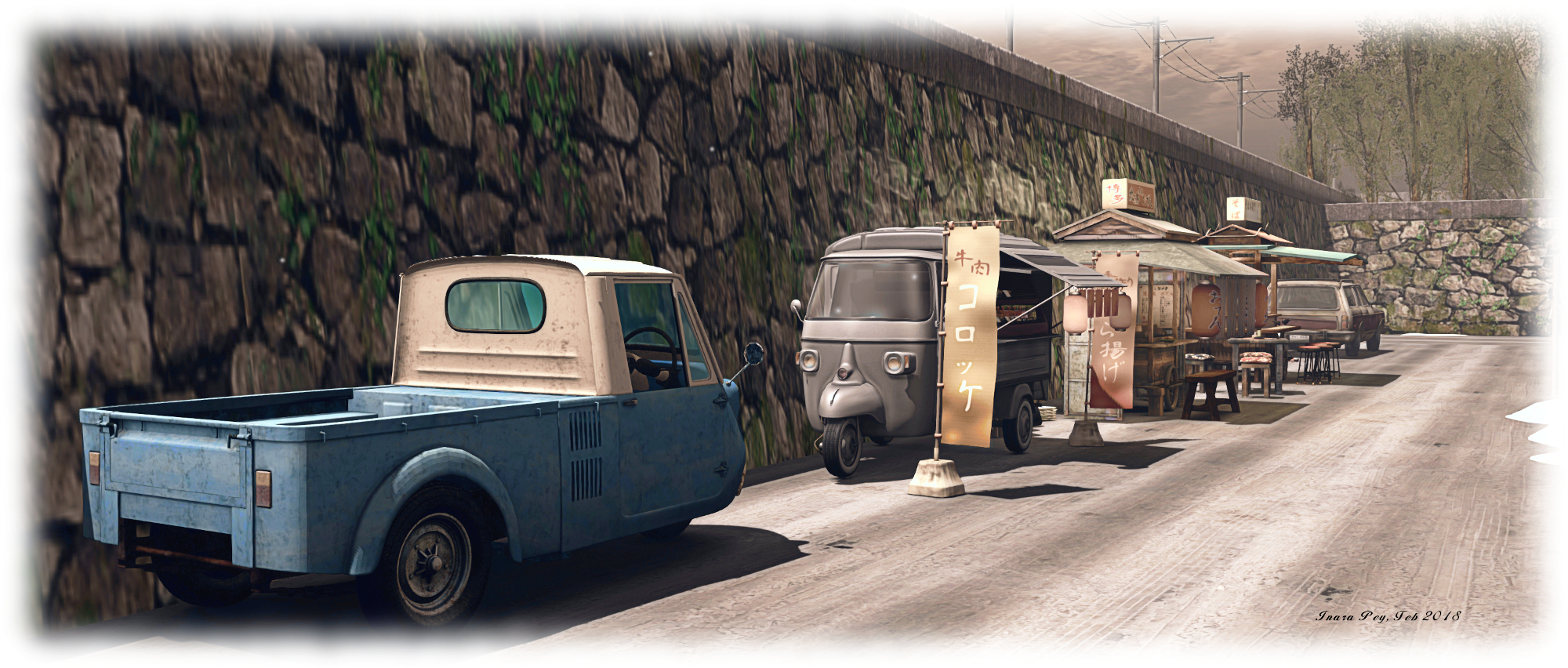
This little precinct, protected from the elements by a discoloured glass roof, again suggesting it has some age to it, has little boutique stores on either side and offers a route to a back street where the snow is falling a little harder. A small temple is huddled into a corner, banners offering greeting, the shrine subject to occasional rattling as cantilevered train cars rumble by on the elevated track behind it. A house and flat-roofed apartment buildings also occupy this southern side of the town, again subject to the passage of trains on the elevated track. A little row of market stalls sits beneath the wall supporting the rails, perhaps serving the locals living in the apartments.

Small it might be, but the design of Kisaragi Town is such that when walking the streets, it is easy to get a feel you are exploring a corner of a much larger setting. To the north, forming a natural border along one edge of the parcel, rise as series of more modern apartment blocks. These serve to both contain the town and suggest that if we were to travel beyond them, we’d find yet more of this town to explore. Similarly, to the east and west are raised lines of trees which again provide a natural border for the town and break-up the rooftops of the regions beyond, further adding to the sense that Kisaragi Town is part of something bigger, even though it is not in any way thematically connected to its surroundings.

Kisaragi Town; Inara Pey, February 2018, on Flickr Kisaragi Town

What we liked most about this build is the sheer attention to detail that bring it to life. There’s the vending machines and bicycles racked up under the lee of a building at one end of the street; the parking ticket machines and sign board outlining the use of the car park at the other; the waste bags at the side of a street awaiting collection; the just-delivered bundles of the morning’s papers outside a store; the care taken in selecting the cars on the streets; the overhead power distribution system… it all adds up.  Climb a set of steps up from one end of the main road and you’ll find a little rooftop area where people can practice their baseball batting – so typical of the use of space seen in places like Japan, where land can come at a premium price.

I also liked the way that the western end of the parcel has a small undeveloped “buffer zone” beyond the road tunnel. This not only offers a break between Kisaragi Town and its immediate neighbours (currently undeveloped at ground level), but also potentially offers room for expansion.

Kisaragi Town; Inara Pey, February 2018, on Flickr Kisaragi Town

Kisaragi Town is a treat to visit. Small, finely detailed, and offering a compact opportunity for exploring and discovering. Should you visit and enjoy the setting, please consider a donation towards its upkeep at the temple in the south-east corner.

SLurl Details