North Brother Island, “the last unknown place”, in Second Life

North Brother Island; Inara Pey, June 2019, on FlickrNorth Brother Island, June 2019 – click and image for full size

Update: in keeping with Serene and Jade’s approach to offering their region builds for approximately a month before moving to a new location and project, North Brother Island has closed, and SLurls therefore removed from this article.

For their July 2019 region design, Serene Footman and Jade Koltai bring us their vision for what photographer Christopher Payne called The Last Unknown Place in New York City – North Brother Island; and like all of their builds, it is a true wonder to behold and explore.

North Brother Island is one of two small islands located on New York’s East River, its slightly smaller companion now being known as South Brother Island. Both were claimed in 1614 by the Dutch West India Company and originally called De Gesellen (“the companions”), which eventually became transposed to “the Brothers”. Both island have a fascinating history, with that of North Brother perhaps being the more complex – and the more tragic.

North Brother Island; Inara Pey, June 2019, on FlickrNorth Brother Island, June 2019

In 1904, it was the final resting place of the General Slocum, a massive side-wheel paddle steamer built in the 1890s, she caught fire whilst carrying 1,342 passengers and through a combination of neglect by the owners, foolhardiness by the Captain (he failed to use opportunities to either make a safe landing or run the ship aground before the fire overwhelmed the vessel), 1,021 of those souls perished either aboard the ship or as a result of drowning in the East River – many of their bodies washing up on North Brother Island in addition to as the vessel running aground there.

In addition, Serene goes on to note the island was the home to:

Riverside Hospital, which moved here from Roosevelt Island in 1885 … Following World War II North Brother Island was inhabited by war veterans during the nationwide housing shortage, before being abandoned again in the early 1950s. It was then was used as the site of a treatment centre for adolescent drug addicts, but the centre closed amidst controversy – it was said that heroin addicts were held against their will and locked in rooms until ‘clean’ – in the 1960s.

– Serene Footman, writing about North Brother Island

North Brother Island; Inara Pey, June 2019, on FlickrNorth Brother Island, June 2019

Riverside Hospital, originally founded in the 1850s, was designed to isolate and treat victims of smallpox, with its mission expanding to cover other diseases requiring quarantine. In this role – as Serene also notes – it took in those stricken with typhoid, including “Typhoid Mary”, Mary Mallon. An Irish-American cook, she was the first person in the United States identified as an asymptomatic carrier of the pathogen associated with typhoid fever. It is believed she infected between 47 and 51 people during her career as a cook, and was twice forcibly isolated by public health authorities, the second time finally passing away in Riverside Hospital in 1938, after a total of nearly three decades in isolation.

In 1943, a large tuberculosis pavilion was constructed on the island but was never used for that purpose, already being obsolete by the time it opened. Instead, it was used as a dormitory by a number of New York City’s colleges, students transported to and from the island via the East 134th Street Ferry Terminal.

North Brother Island; Inara Pey, June 2019, on FlickrNorth Brother Island, June 2019

In the late 1950s  / early 1960s, the same ferries were used to transport adolescents to the island to be “treated” for drug abuse. The idea had been to provide care for up to 100 males and 50 females away from jails where drugs could still be obtained, with stays at the pavilion being for up to six months. But the hospital gained a reputation for keeping adolescent addicts against their will – it merely required their parents to place them there, with or without the agreement of the courts. Once there, the young people were frequently locked away and left to go cold turkey as a means to break their addiction.

The hospital finally closed in the 1960s, and North Brother Island abandoned, its many building and facilities – including the ferry wharves and giant gantry crane, many of the hospital buildings and facilities, left to rot. However, many of them have now been captured in this interpretation of the island by Serene and Jade.

For our reconstruction of North Brother Island, we have relied on maps which contain details of where specific buildings – the hospital itself, staff quarters, the physician’s house, the morgue, tennis courts, and so on – were located. (For reference, we have labelled and dated the island’s buildings in-world.)

– Serene Footman, writing about North Brother Island

North Brother Island; Inara Pey, June 2019, on FlickrNorth Brother Island, June 2019

In addition they have called upon the resources of Christopher Payne’s catalogue of photos of the island: North Brother Island The Last Unknown Place in New York City. The result of five years of being allowed to visit the island  – today both North and South Brother islands are designated wildlife sanctuaries, and so protected (North Island is additionally regarded as being too dangerous for the public given the state of its buildings) – Payne carefully constructed a visual history of the island. This, together with their own extensive research, have allowed Jade and Serene have produced a region that powerfully captures North Island as it stands today, its past history, and the pathos and pain of that history.

The latter is particularly well captured in the small details to be found throughout the region. Take, for example, the bed frame converted to a seat and that sits on a little dock. A suitcase  sits behind it, while a short distance away, a little motor boat sits on the water; the entire scene brings to mind the longing of the young people held on the island to return home.

North Brother Island; Inara Pey, June 2019, on FlickrNorth Brother Island, June 2019

To say North Brother Island is visually stunning is to do it a disservice. As with all of Serene and Jade’s builds, it must be seen to be appreciated and understood – and there are plenty of places within it that allow visitors to contemplate on the history of the island – or whatever else might be on their minds.

Related Link

Kultivate: The Edge Gallery – July 2019

Kultivate The Edge: John Brianna

The July exhibition at Kultivate Edge Gallery opened on June 23rd and will run through until late July 2019.

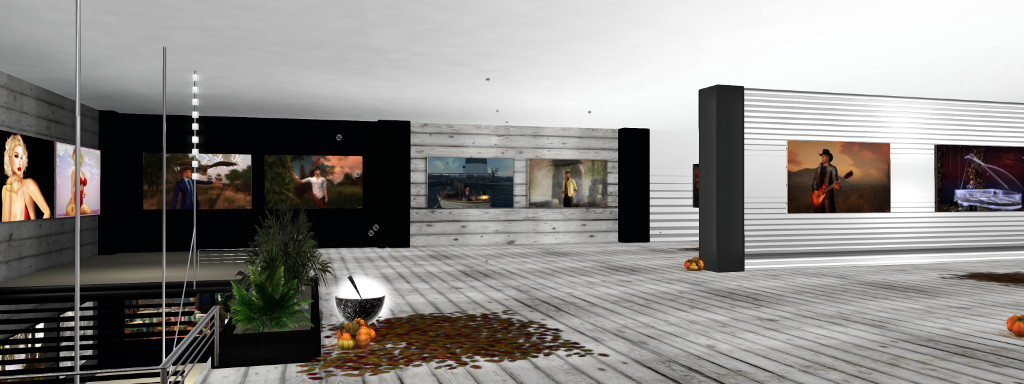
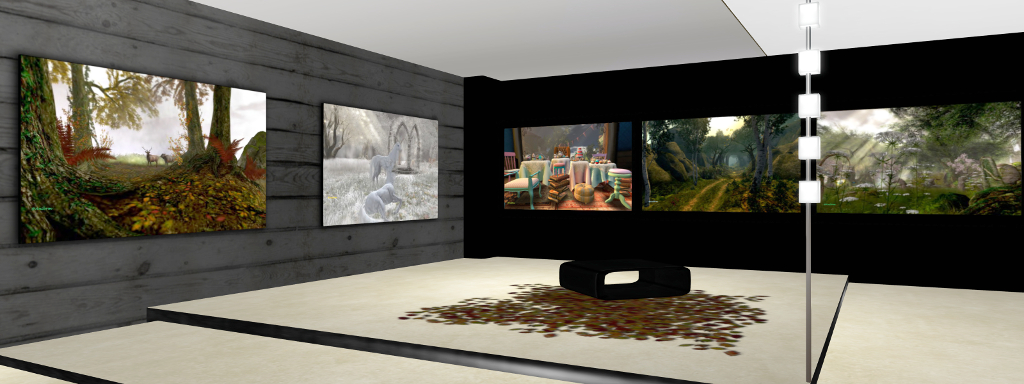
Specialising in monochrome art and photography, the gallery’s roll of artists comprises aht1981, DrusillaGwind, honeyBi,  KodyMeyers, understandingcomplexity, John Brianna, Eucalyptus Carroll, Davenwolf Dagger, Lena Kiopak, Nodome Resident, and Veruca Tammas.

Kultivate The Edge: HoneyBi

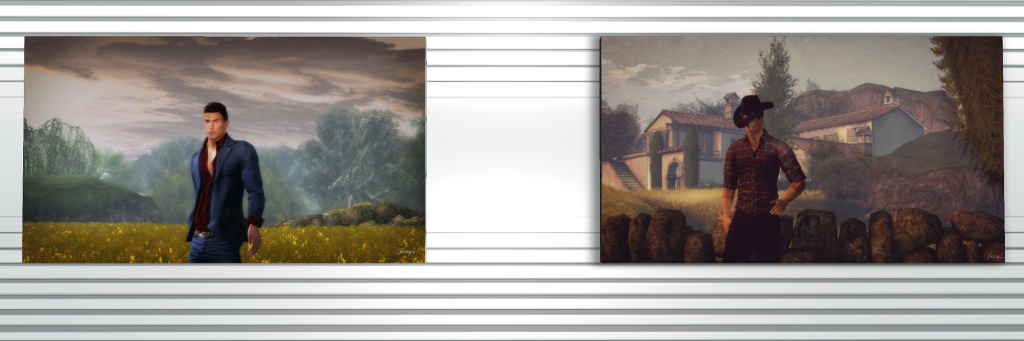
As is always the case with The Edge, there is a rich mix of art on offer with this exhibition, from physical world photographs, as presented by John Brianna with a fascinating set of locomotive images featuring five diesel engines positioned around a marvellous picture of an old-style steam locomotive, through to evocative avatar portraits, such as those presented by KodyMeyers on the lower floor of the gallery alongside John’s display.

In many ways, I’ve always found monochrome studies of avatars to be more attractive than colour studies; its not that I have anything against the latter, its just that for me, the former carries a degree of life in the use of light and shadow that draws me in. This is true of all of the avatar studies presented here.

Kultivate The Edge: Nodome Resident

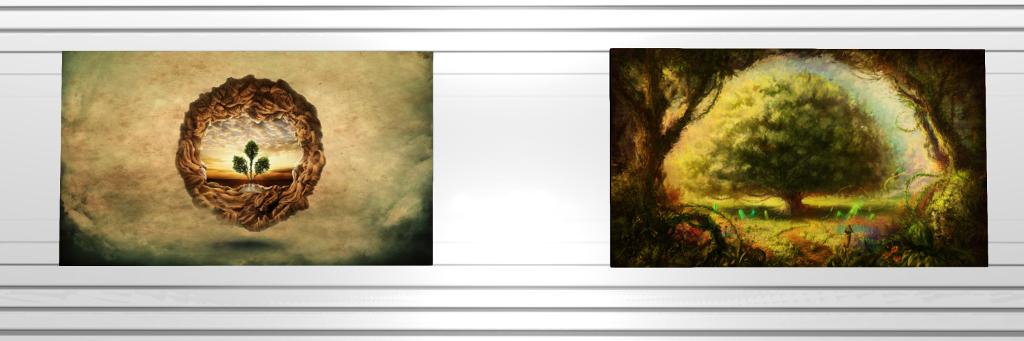
However, for this exhibition I found myself drawn to the physical work art on offer – John’s locomotives, together with an almost triptych of drawings by Nodome Resident and a set of eight images entitled The Blacksmith Series presented by Davenwolf Dagger.

Admittedly, part of my attraction to the latter is the fact they were taken in Launceston in Tasmania, a place (along with Richmond on the southern side of the island) for which I have happy memories. As such, the photos presented by Davenwolf piqued my curiosity and stirred those memories. But it’s not just that; each and every one of these photos is rich in detail and narrative. Similarly, Nodome’s drawings are wonderfully intricate and captivating.

Kultivate The Edge: Davenwolf Dagger

But whatever your preferences for art in Second Life, the mix of physical world photos, avatar studies, art and landscapes make this a must-see exhibition.

SLurl Details

The exquisite allure of Otter Lake

Otter Lake; Inara Pey, June 2019, on FlickrOtter Lake, June 2019 – click and image for full size

Otter Lake is one of the most alluring homestead regions we have recently visited. The work of Sharon Hinterland, this is a truly remarkable region in terms of the amount of space the region exudes, the beauty of the design, and the richness of detail. So much so that it is actually hard to believe it is only an Homestead region and thus capped with a land capacity of 5K.

Set out as a rural island sitting amidst a little archipelago, this is a place that is a sheer joy to explore. The landing point sits towards the west of the region, lying on a stretch of shingle coast bordered on one side by the estuary of a fast running channel that cuts the land in a broad arc, and overlooked by a wooden lighthouse sitting on a rocky promontory on the other.

Otter Lake; Inara Pey, June 2019, on FlickrOtter Lake, June 2019

The dock on which the landing point can be found is clearly a place where visiting boast might moor – a gas pump for refuelling them sits just back from the water’s edge, a little office just behind it. From here, visitors can walk up the hill and visit the lighthouse (be careful around some of the rocks, they can be a little “spongy”, shall we say), or follow a wooden path that curls around an old barn / garage to where it splits to either roll back down to the coast and a simple bridge of planks spanning the arcing channel, or to wind onward to become an asphalt path that twists over of the ridge coming off the back of the rocks supporting the lighthouse to drop back down into a small valley and across the little channel of water via a more substantial bridge.

The far side of this bridge offers further choices: do you turn left and inland, to follow the raised bank of the channel, keeping to the narrow ledge the sprouts from the side of a hill? Or do you follow the log path that climbs the hill under the shade of the trees crowning it? And if you do, should you turn off from that path and descend stone steps to where smoke rises from a small cabin? Or do you continue to follow the path onwards into the lee of tall cliffs?

Otter Lake; Inara Pey, June 2019, on FlickrOtter Lake, June 2019

It is these kind of choices – and there are many across the region – that help to make a visit to Otter Lake such a joy.  Paths meander, climb slopes, descend hills, curl around rocky heights or climb them along the curling or straight lines of stone steps, or point the way to where ribbons of sandy or shingle beach wrap their way around the coast. Within all of these paths is a further delight: just when you think you have seen it all, you round a corner or reach another ridge, you find yourself at another unexpected path or stairway, or a new vista opens before you, enticing you on, giving the region its feeling of expansive openness.

Across this landscape are multiple points of interest – places to sit, to cuddle, to appreciate the view, and relax. There are cabins and little houses waiting to be discovered – all of them open to exploration, as the About Land description notes.   Travel to the north-west of the island and you’ll find a small working farm, sitting in the loop of a shingle beach and at the end of a dirt track.

Otter Lake; Inara Pey, June 2019, on FlickrOtter Lake, June 2019

Follow this track as it winds upwards along a gentle slope and under a rich mix of trees, and it will lead to the island’s heart, literally and visually: a marvellous lake from which a single brook tumbles its way along another channel that connects the lake to the coast by way of rocky pools and little drops over their lips, the water bubbling and splashing under bridges and across what might be little fords.

The lake forms the focal point for a stone-built cottage that looks out over the waters from a shoulder of rock, revealing the quite extraordinary garden-like setting. This features places around the rim of the lake that can be enjoyed, There’s a deck, an old rowing boat tipped on its side to form a little snug, paths and little gatherings of plants, a gazebo and, for those so minded, a raft on the lake’s waters.

Otter Lake; Inara Pey, June 2019, on FlickrOtter Lake, June 2019

The entire location is fabulously natural in design. And that’s the other attraction of Otter Lake; the entire region feels like it has been formed by nature, not created by human mind and hand. This is a place where the landscape is widely varied, rich in contrasts from shingle and sandy shores through low-lying grasslands, rolling hills to up-thrusts of rock that form plateaus and tables, all of which roll together in a perfect blend, populated by trees and bushes, grass and flowers, rounded-out by an ideal sound scape.

Nor does it end there at the lake. Across the water from the cabin, water tumbles down a high cliff-face. Follow the paths running around the bowl of the lake from the cabin – one of which will lead you past another, smaller cabin – and you’ll come to more stone steps leading the way up the slopes either side of another channel of fast-flowing water that churns its way from a pool on the crown of the island down to the falls that drop into the lake. Here sits the final treat: the pond itself and the shack of a cabin overlooking it, aged but cosy inside, and with an octagonal deck extending out to the south and west, providing a magnificent view back towards the lighthouse and the landing point.

Otter Lake; Inara Pey, June 2019, on FlickrOtter Lake, June 2019

Otter Lake really is the most exquisite design for a region. Almost perfectly formed, it is a photographer’s and explorer’s delight, a tour de force of what can be achieved within a Homestead region – and without overloading people’s systems. It is certainly a destination not to be missed and appreciated. When visiting, do please consider making a donation towards, the region’s continue existence (there’s a piggy bank at the landing point!

SLurl Details

Cica’s Cubism in Second Life

Cica Ghost: Cubes

As the old, old saying goes, “I have some bad news and some good news.”

The bad news is that if you were hoping to visit Cica Ghost’s Luna Park (see Cica’s Luna Park in Second Life), that build has now gone from Second Life, the result of low visitor figures, possibly as a result of clashing with SL16B.

The good news is that Cica has replaced it with something that is quite dynamically wacky (literally, if you wander across the landscape!), a piece she calls Cubes.

Cica Ghost: Cubes

Occupying the same region as Luna Park, Cubes is a curious piece, comprising a barren landscape under a bright sky, occupied by a few bare trees, but which is periodically deluged by downpours of … huge steel reinforced concrete blocks.

These appear a handful of metres above the dry land, hover for a few seconds as if waiting for gravity to notice them and question just what the heck do they think they are playing at, before yanking them down to the ground, where they tumble and roll against one another and build random mounds and towers before silently poofing and starting over.

With the lines of steel bars embedded within them creating checkerboard patterns on their face, these great cubes look like a certain cubic puzzle game, albeit one usually made up of smaller cubes with coloured faces. Hence why, perhaps, Cica gives Cubes a quote from that game’s creator:

The Cube is an imitation of life itself – or even an improvement on life.

Ernő Rubik

Cica Ghost: Cubes

And, given these cubes are physical, they can have quite an – impact, shall we say – on life should you happen to wander out and stand when they are falling!

There is something very faintly Petrovsky Flux-ish (for those who remember that installation) about Cubes. The way the Cubes fall is mindful of the destruction of each Flux build – be here, all the pieces are regular, and the fantastical forms they create are entire as a result of their  dropping from the sky, rather than the starting point for their collapse. Watching them, like the parts Petrovsky Flux, can be oddly hypnotic.

I’m not sure how long Cubes will be open, but like Luna Park, it’s meant in fun.

SLurl Details

  • Cubes (Meropis, rated Moderate)

Passing through a Witchwood in Second Life

Witchwood; Inara Pey, June 2019, on FlickrWitchwood, June 2019

Witchwood is the name give to the Full region home of the Petite Mort and Oubliette stores, both of which are owned by Melora Frost (insilvermoonlight). It’s a location I’ve been aware of for a while, the region also being the home of the RMS Titanic dance venue (a quite separate build), which has been a semi-regular destination for us for a good while.

As well as being the home of the two stores, one to the east and the other to the west, the half of the region they occupy has been landscaped by Melora to provide a place of exploration, relaxation and photography – and it is very beautifully laid out.

Witchwood; Inara Pey, June 2019, on FlickrWitchwood, June 2019

The landing point occupies the middle ground between the two stores: a low-lying paved area crowned by a fountain that overlooks a small lake backed against high cliffs to the north. This space, with a deck built out over the water and falls dropping from on high, can be a restful place unto itself, with swans swimming on the water from which ornate lotus lilies rise, and places to sit and enjoy the sounds of the falls and the ripples of the water. However, signs close by suggest it might also be the location for occasional flash sales, so there may be times when it is a little less restful!

Three paved paths exit the landing point, those pointing east and west, marked as they are by arches, lead the way to the stores as they sit on higher ground fronted by small formal gardens. The third points south, offering access to a cosy little beach by way of a slightly more distant arch.

Witchwood; Inara Pey, June 2019, on FlickrWitchwood, June 2019

But it is the ground between the stores, sitting beneath the boughs of tress and within small glades in the mists of their green canopy, that the magic of the setting resides. Here, on one side of the path pointing to the beach, and just off the route up to Petite Mort, is a marvellous wild garden sitting among ancient ruins. Flagstones still lie in place on the ground, while ancient walls divide the space under the tall arms of trees into the suggestions of former rooms or halls.

Plants appear to grow wild here, but it is evident from the lay of the grass and the cared-for waters of the koi pond deep among the ruins, that these spaces are actually well tended, the feeling of wild growth carefully cultivated.

Witchwood; Inara Pey, June 2019, on FlickrWitchwood, June 2019

Within this garden are many points of interest, from the chaise lounge sitting atop an one stone stairway that perhaps once climbed much higher inside whatever building the ruins once were, the shaded soda close by, or the chaise and chair finished in imperial purple and standing guard either side of an old gramophone player in space clearly intended for photography.

Just off of the path leading to Oubliette is a slightly darker themed, but no less engaging, scene: that of an old graveyard. A single path spotted by flagstones runs between headstones, tombs and mausoleum, many lit by candles, to reach an old stone ring of arches that fold within their arms the statue of an angel.

Witchwood; Inara Pey, June 2019, on FlickrWitchwood, June 2019

Stone benches are placed along the path for those who wish to rest in solitude here, and I have to admit that during our visit an aged piano sitting on the path to the beach happened to be playing the adagio sostenuto from Beethoven’s evocative Moonlight Sonata, which added a certain depth to exploring here.

As well as being beautifully laid-out, there is a wonderful juxtaposition within this setting that might be easily overlooked, but which  – to me at least – adds a further poetic depth to the design. Sitting below Petite Mort (“little death” (or dead, if you prefer)), are old ruins that many or may have once been a castle or fortress – places that may well once have had an oubliette (a dungeon with an opening only at the top) deep within them. Then, just below Oubliette there sits a small graveyard, a place one might say of a “little death”. Thus, the stores are cross-linked by the themes of the settings over which they respectively stand.

Witchwood; Inara Pey, June 2019, on FlickrWitchwood, June 2019

Captivating throughout, Witchwood offers a place to visit and appreciate in its own right, even if you are not specifically shopping there. opportunities for photography lie throughout, either using the default windlight (found within the About Land description) or by setting one of your own. For those visiting purely for the opportunity to explore and who are minded to show their appreciation for such an engaging environment, tip jars are provided in a number of places.

SLurl Details

A Slavic Rebirth in Second Life

Slavic Rebirth: Art Gallery

Currently open through until July 20th is a celebration of pre-Christian Russia entitled Slavic Rebirth, the opening of which was intentional timed to coincide with the summer solstice. I  was alerted to the event by ViktorSavior, who will also be presenting his art at the event, combined with the poetry of AlenaPit.

Occupying floating islands bearing builds by Arin Bellios that float high above Isles of Devotion, the Full region held by Djembe Dragonfire and Jay Abernathy, who have donated the space to the event free of charge, Slavic Rebirth is a multi-faceted event featuring art, music, workshops, a fashion show, and a market. The organisers describe the event thus:

This is the world BEFORE the arrival of Christianity in the Russian lands. This is paganism in its best  manifestation, unity with nature and native gods. This is the strength of the spirit, purity of thoughts, the beauty of the body, the awareness of walking the right path. This is a world of fairy tales and epics. This is our ancient memory that you need to wake up and open your eyes.

There are a number of landing points associated with the event, but I’m focusing on the art gallery area here, as this is what particularly drew me to the event.

Slavic Heaven: the location alongside the gallery where music events will be held and where people can relax

Occupying a large central island that is linked to, and within eyesight of, two small event spaces, the gallery is open-air, but has a strong element of what might be regarded as classic Russian architecture which, despite the pre-Christian focus of the event, perhaps carried echoes of a church-like structure.

The art is displayed within the open arches of the tiered walls and is actually deceptive: what at first glance appears to be the works of a single artist is in fact three (or four, once Viktor’s art is added!) individual switchable displays of art: a board close to the landing point allows visitors to select which of the  artists’ work is on display. Allowing for the addition of Viktor’s art, the three artists currently on display are:

  • Roman Papsuev (aka Amok): a contemporary Russian artist who may be known to some for his work depicting scenes and individuals from George R.R. Martin’s A Song of Ice and Fire books (note not the TV series Games of Thrones, so don’t expect images of Kit Harrington or Emily Clarke, etc). The pieces presented in Slavic Rebirth are from his collection Tales of Old Rus’, featuring line drawings presented in monochrome.
Slavic Rebirth: Roman Papsuev
  • Vsevolod Borisovich Ivanov: another contemporary Russian artist inspired by the traditions and history of Russia – particularly that of medieval Russia, and pagan mythologies of old Russia. His paintings are rich in colour and content, covering a wide range of subjects: heroes, gods, creatures, architecture and the harsh beauty of old Russia.
  • Viktor Anatolyevich Korol’kov: a classically trained artist whose work has encompassed the history and myths of Europe (Germany, Scandinavia, Italy, Greece), Egypt, the books of the Bible and more. All of this led him to a fascination with Slavic history, art and mythology – which led him to the main thrust of his art, as seen in Slavic Rebirth, a celebration of that old history, presented here under the title Enchanted by Old Rus’.
Slavic Rebirth: Vsevolod Borisovich Ivanov

When switching between the artists via the control board, the art on display on the two sides of the gallery will change in unison, as will the exhibition title board on display (each of which offers a profile of each of the artists. How well this might would with multiple people viewing the art might require some coordination to prevent conflicting changes, but the approach is interesting. Note, as well, that touching individual pieces of art will deliver a note card to you, offering information on the art itself.

Throughout the month of the event there will be a number of musical performances taking place at the Slavic Heaven floating island to the south of the art gallery (use the touch-to-teleport portal at that end of the gallery to reach it). These include:  Italian SL singer Malesh, who will be appearing at 13:00 SLT on both Tuesday, June 25th and DJ Dalilu who will be appearing at 12:00 noon on Wednesday, June 26th.

Slavic Rebirth: Viktor Anatolyevich Korol’kov

Also to be found via the teleport arch at the north end of the art gallery (and closest to the landing point) is the Slavic market built around an ancient temple of Goddess Lada.

The final part of the event spaces for Slavic Rebirth is the Seasons Island. Offering ” all seasons of Russian nature”, this is the focus of a photo exhibition that forms part of the event – details from the event information boards – and for the Slavic Rebirth Fashion Show and Contest that will be taking place on Friday, June 28th at 12:00 noon. The theme for this is Slavic history and fairy-tales, and members of the public can participate; again, details are available at the event spaces, and there are two workshops / rehearsals for those interested in joining in: Sunday June 23rd at 10:00 (so very short notice here!) and Monday, June 24th, at 11:00 SLT.

Slavic Rebirth: Seasons Island

Further activities taking place at Slavic Rebirth will, I believe, be posted through the event spaces. In the meantime, here’s the full set of SLurl for this event.

SLurl Details

Isles of Devotion is rated Adult