A taste of South-east Asia in Second Life

ChatuChak, October 2019 – click any images for full size

Update, December 1st: ChatuChak has been replaced by RioSisco Studio Pictures – see for more.

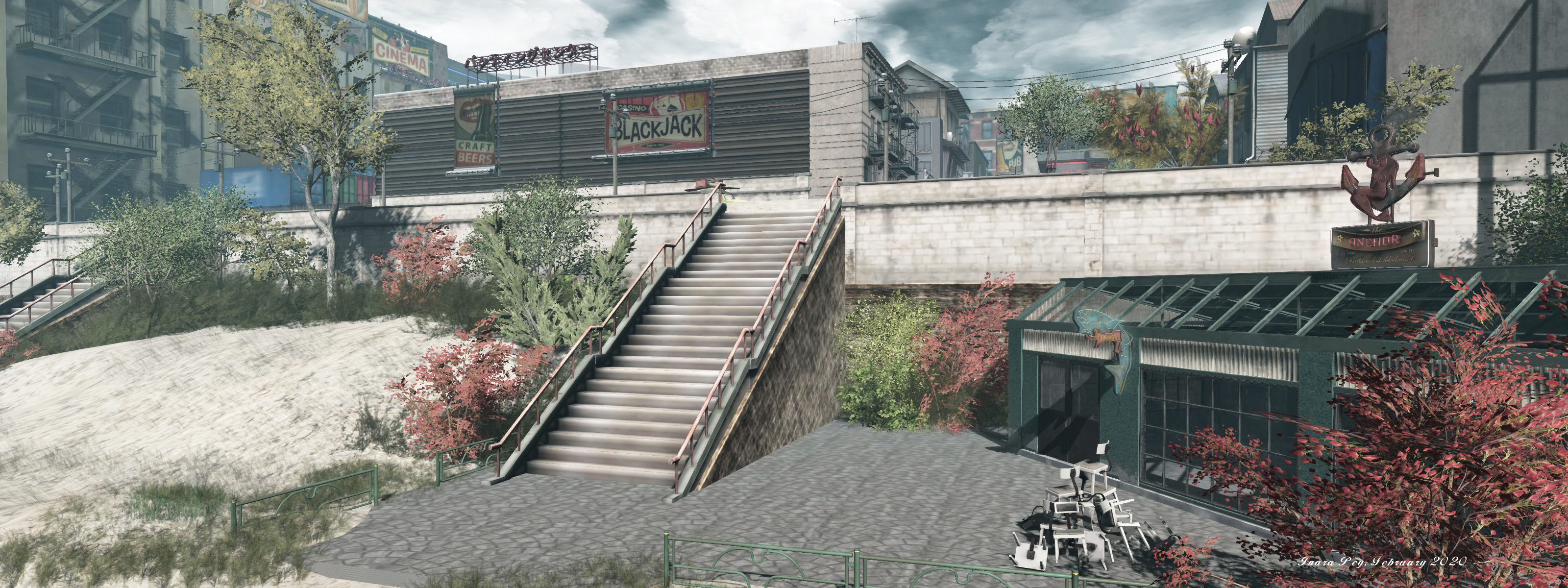
We visited ChatuChak, a relatively new region design by Lotus Mastroianni and frecoi (aka Fred Hamilton) earlier in October, but it has taken me a while to get around to writing it up. Lotus and frecoi are responsible for developing a number of regions I’ve covered in these pages, and so while it has taken a while to write about it, ChatuChak had been a place I was keen to see, a desire somewhat increased because of the region’s subject matter.

Welcome somewhere in Thailand … Turn on the sound and your graphics , let yourself be in immersion with the nature and elements….Enjoy your visit <3.

– ChatuChak About Land description

ChatuChak, October 2019

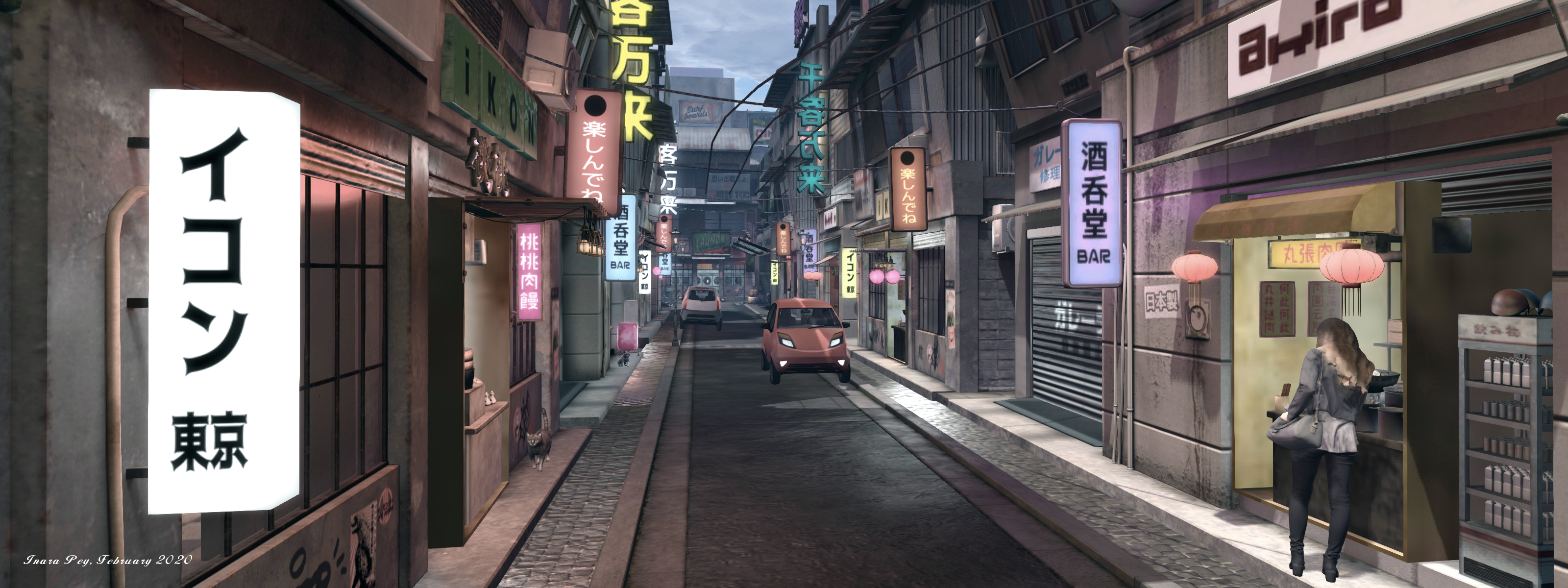
I’ve never really spent much time in Thailand, but I love the Far East (notably Hong Kong and China), and have had a fascination with Indo-China / South-east Asia, which encompasses Thailand, together with Myanmar (Burma), peninsular Malaysia, Laos, Cambodia and Vietnam, so was really keen to see what ChatuChak has to offer. And the truth is, it is a remarkably atmospheric region, well in keeping with the description, if a little reliant on some elements that perhaps lean towards a more Japanese style of environment (but which nevertheless fit well here).

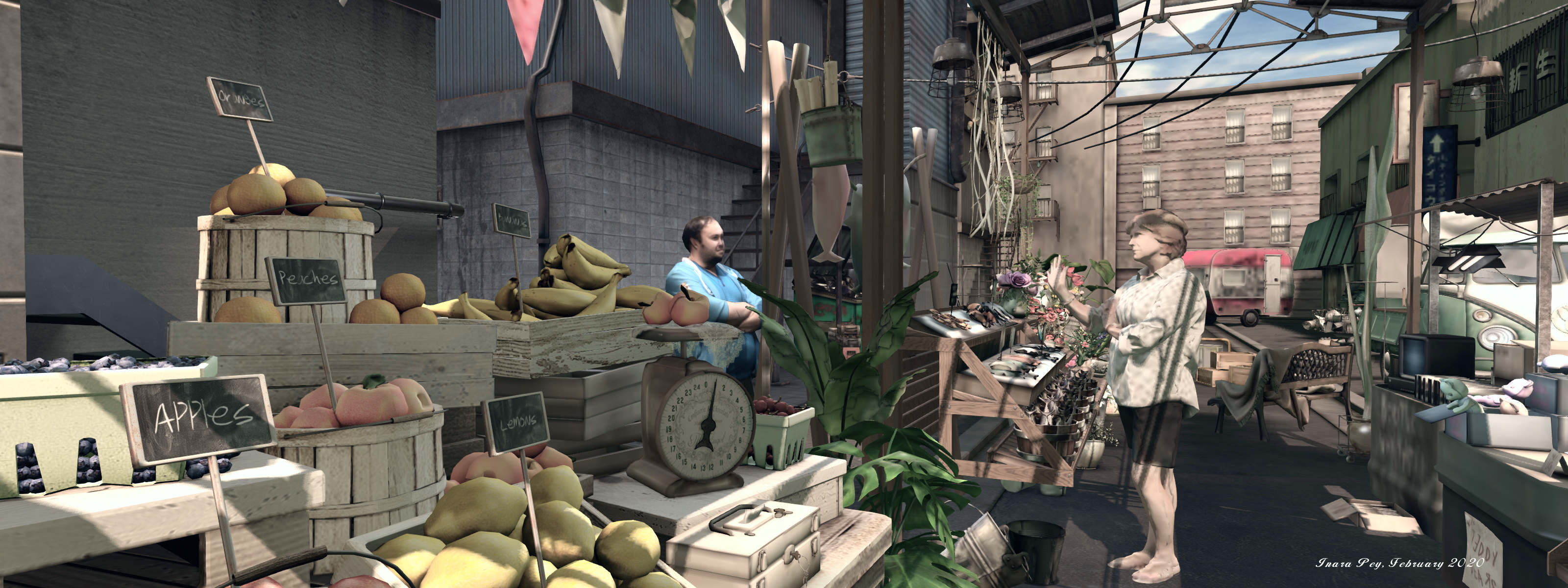
The landing point sits on the west side of the region, within a small courtyard at the back of a riverside hamlet split by rail tracks that encircle the region. As it passes through the hamlet, the railway is the focus of a small market offering fresh garden produce, flowers, fish and – at one end and rather incongruously, good that might be considered more in keeping with the tourist industry.

ChatuChat, October 2019

This incongruity adds a level of authenticity to the market – the dresses, headsets, brightly-coloured bags and sun hats are exactly the kind of odd items that one can so often unexpectedly find in little off-the-beaten track villages and towns when exploring places like this in the east.

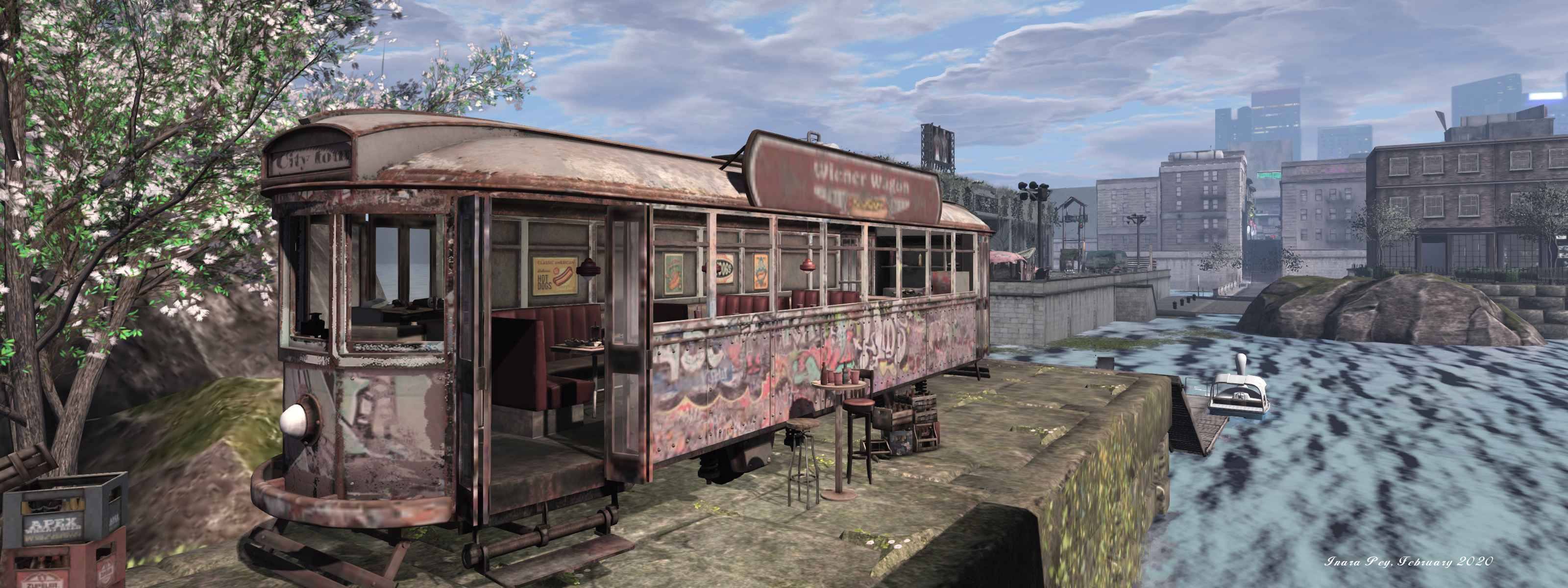
Down on the river banks below the village are all the signs that this is a place reliant on the river and the fertile soil of the area. Along the river banks are stone an wooden wharves where local fishermen bring their catches ashore for weighing, drying and filleting – and where local produce may well be packaged in preparation to be shipped out, going by the cases on one of the wharves. Behind one of the wharves, to the north, sits a rain forest through which paths wind, one of which slips through a narrow gorge to lead the way to a little beach.

ChatuChak, October 2019

On the south side of the river, the land has been cleared to form a series of terraces for growing crops and to provide space for cattle to graze. A path climbs the eastern  – and natural – steps here, allowing a little village of single-roomed houses to spring-up, a path climbing through them to the railway tracks beyond.

Rounded out by an immersive sound scape, ChatuChak offers a multitude of opportunities for photography as well as opportunities to explore. Those taking photos are welcome to submit them to the region’s Flickr group.

ChatuChak, October 2019

SLurl Details

The art of Serene Footman in Second Life

DiXmiX Gallery: Serene Footman

Now open at DiXmiX Gallery, curated by Dixmix Source, is Retrospective, a selection of images by Serene Footman – and it is one I thoroughly recommend for a number of reasons.

The first is that Serene is perhaps most famously known for his creation of Furillen, one of Second Life’s most atmospheric region designs that opened in December 2015 (see The beauty of a bleak midwinter in Second Life) and which became the first of a number of designs Serene developed, generally in partnership with Jade Koltai, and mostly inspired by physical world locations. Creating these regions demonstrated Serene’s eye for beauty, detail and presentation, as well as he creativity – and these are precisely the talents evidenced in the images presented through this exhibition.

DiXmiX Gallery: Serene Footman

The second reason is that until now, Serene has consistently refused invitations to display his in-world photography. Why he has changed his mind is explained in a blog post he published on the Furillen web site; I’m not going to cover the subject matter in that post, as it is personal to Serene, and as such deserves to be read first-hand and without the filter of any subjective interpretation on my part. Suffice it to say it is a personal, moving piece.

Given this is Serene’s first exhibition of photography, calling it a retrospective may seem to be a little strange. However, as some of the thirteen images present views of Serene’s own creations, the title is fitting.

DiXmiX Gallery: Serene Footman

Serene’s style, in keeping with his region designs, is marvellously focused and – as seen through the majority of the pieces offered in this exhibition – containing a wonderful sense of minimalism in which to frame a narrative. Also to be found in some is a quite delightful sense of humour that is evidenced without losing their ability to stir the imagination as well as raising a smile.

For me, the delight of this exhibition is that each piece has something to say on life and living, whether it is through the wonderful humour mentioned above, or in more subtle reflections offered through pieces like A Hen Is Just An Egg’s Way Of Making Another Egg and I Will Wade Out, or the marvellous and moving depth of pieces like Let’s Live Suddenly Without Thinking. All of which, coupled with Serene’s superb use of tone and texture, make this an exhibition that genuinely should not be missed.

DiXmiX Gallery: Serene Footman

And for those captivated with Serene’s work, I’ll also note that Furillen itself is once again back in Second Life for a time. This also should not be missed, whether or not it has been visited in the past, and again I recommend reading his blog post about its return.

SLurl Details

A trip to Huntington Beach in Second Life

Huntington Beach, October 2019 – click any image for full size

Note: The Huntington Beach build has closed, and the region reposed.

Huntington Beach is a seaside city in Orange County in Southern California, located 35 miles south-east of down town Los Angeles.

– From About Land, Huntington Beach

So reads the introduction to Jade Koltai’s new public homestead region of Huntington Beach that opened to the public earlier in October. Jade is, as many will be aware, Serene Footman’s long-time collaborator in s range of region designs, many of which I’ve written about in these pages down through the years. So on hearing about this build (via my ever-vigilant region spotter, Shawn Shakespeare 🙂 ), I was keen for us to go take a look – more so, perhaps, as (a good while ago now) I travelled through the real Huntington Beach while on a trip following the Pacific Coast Highway.

Huntington Beach, October 2019

Today, the town is best known for its almost 16 km (10 mi) long beach, the tides of which have led to Huntington Beach to becoming known as Surf City, and being granted trademarks as “Surf City USA” (both of which were the cause of, and factors within, a long-running dispute with Santa Cruz, California that was finally settled in 2008). However, the city has a long and colourful history, part of which is reflected in Jade’s design.

Huntington Beach perhaps came to prominence in the early part of the 20th century (although settlements in the area obviously go back much further than that). At that time, people were encouraged to settle in the area by an encyclopaedia company offering free parcels of land in the area to those purchasing the entire set of their books for US $126 (roughly US $3,200 in today’s terms). Those who did so found their parcels ballooned in value when oil reserves were found beneath them, leading to something of a oil rush. The first well to extract this oil was established in May 1920 – and within 18 months, the number of well heads had grown to 59, giving the coastline of Huntington Beach its distinctive “forest” of giant oil derricks dominating the skyline – and it is this aspect of the city that is reflected most clearly in Jade’s design.

Huntington Beach, October 2019

For her inspiration, Jade uses a series of photos of the Huntington Beach and the neighbouring coastline as it appeared during the heydays of oil production, headlined by one taken from Huntington Beach Pier (one of the city’s lasting landmarks) in the 1960s. These sit to the south east of the region, the beach running north-west, complete with a nod towards the pier (first established in 1904). The latter is understandably not as grandiose as the original, because that would take a couple of additional regions to achieve, given it is 560 metres in length, but it presents a starting point for exploration, home as it is to the region’s landing point.

The derricks are divided by a central road, reflecting a further photo in the series, albeit one of derricks divided by a road in Long Beach, a little further north around the coast. However, it is largely with the initial 1960’s image to which Jade sticks: at the northern end of the road is a smattering of buildings suggesting the edge of a town, all of which – along with the cars scattered among them  – have a ’60s vibe to them.

Huntington Beach, October 2019

The beach has a similar feel to it as well, the sand looking a tad tired and the advertising in that 50’s-60’s style, although unlike its namesake, this beach benefits from palm trees hiding the marching lines of oil towers from those deciding to partake a walk along the sand or out onto the pier.

Oil production does continue at Huntington Beach today, although the massive derricks have long since been removed to leave the city looking a lot more naturally suburban, the ocean front and beach protected from over-development. However, production is in decline; the US Geological Survey estimates no more than perhaps 866 million barrels of oil remain, although best estimates put the amount that can be reasonably extracted at some 370 million barrels. This means that the remaining oil extraction work is liable to come to an end in the near future, leaving Huntington Beach city fairly exclusively reliant on tourist and vacation trade for revenue generation – hence the city filing for, and being granted, multiple trademarks related to it being “Surf City USA”.

Huntington Beach, October 2019

While fossil fuel extraction and use are both messy and driving a fair amount of pollution, Jade’s Huntington Beach nevertheless offers a reminder of a boom-time past in America’s history, one that burst into life on the west coast in the early decades of the 20th century and echoed through to the end of the millennium. Needless to say, it offers numerous opportunities for photography, although I personally found the default Windlight perhaps a little too oppressive – not that others cannot be used if you feel the same way. Photos that are taken may be submitted to the region’s Flickr group, and tips towards the region’s upkeep are welcomed at the pier.

SLurl Details

Harbor’s Alter Ego at Ribong Gallery in Second Life

Artspace 2535, Ribong Gallery – Harbor Galaxy, October 2019

Now open within the Artspace 2535 area of Ribong Gallery, curated by Santoshima, is a collection of images by Harbor Galaxy. entitled Alter Ego, it features some of the artist’s favourite avatar characters, and it offers an intriguing walk through her imagination.

And I do mean “walk” in a literal sense: the arts is set out in s series of rooms the visitor is encouraged to walk through it turn from the landing point. Each offers at least one piece of art and these are – to borrow a phrase from the introduction to the exhibition – monumental in size. They tower over visitors, drawing us into each them, allowing, perhaps for a greater appreciation of the narrative each holds within it.

Artspace 2535, Ribong Gallery – Harbor Galaxy, October 2019

This walk through the rooms also symbolises a part of Harbor’s philosophy on art and creativity, that “the path of creation travels in one direction, then back again.”, although in this case, the walk takes us through the exhibition and then onward to an opportunity to visit the rest of the Ribong gallery spaces.

The art itself is visually striking – not just because of its physical size, but also in framing, content and presentation – so much so that individual descriptions of pieces are perhaps wasted, and viewing first-hand is required, particularly as the setting with its use of light and colour is very much a part of the overall exhibition. That said, I will admit to being particularly drawn to the two Mage images and Toxic Dreams a couple of rooms beyond them. Precisely why these images in particular caught and held my eye isn’t entirely clear to me, although I suspect with the Mage images, a degree of mythology played a part; looking at them, I found myself caught with thoughts of the shaman-like version of Herne the Hunter once popularised in a UK TV series.

Artspace 2535, Ribong Gallery – Harbor Galaxy, October 2019

With a “formal” launch at 14:00 SLT on Saturday, October 19th (having has a “soft” opening on Friday, October 18th), Alter Ego is an engaging, somewhat immersive exhibition.

SLurl Details

A Shadowlands Retreat in Second Life

Shadowlands Retreat, October 2019 – click any image for full size

DylanShadows presents his Homestead region of Shadowlands Retreat as a “relaxing sim with series of photographic areas. Enjoy a walk around, horseback ride, a dance or cuddle with someone special,” and there is little to argue with in this description. There are number points throughout the region for photography, for spending time with friends and for enjoying that romantic cuddle or dance.

Surrounded by off-region hills that match the autumnal feel of the region, Shadowlands Retreat offers a series of areas within it that are very mixed in their individual attractiveness, from a beach through rocky outcrops with winding paths, to open grasslands offering paddocks and ancient ruins, to hints of fantasy and mysticism and which include woodlands, a high plateau, and more – all of which weave themselves into a landscape rich its attraction for exploration.

Shadowlands Retreat, October 2019

The region’s landing point – which is unenforced – can be found on a large deck area built over an artificial water close to the Western side of the island’s central plateau. It sits close to a stone cottage and alongside a tall windmill that points a blunt finger to the sky. A sea of late summer blooms washes across most of the plateau, flowing under the shade of trees to one side and breaking against islands of rock and water in what can only be described as a garden of wild flowers, waterfowl and restful spots, be they on the deck, under the boughs of trees or within the cottage or the gazebo keeping it company.

Below and surrounding this central flat-topped hill are the island’s lowlands that can be reached through several means: by the simple expedient of walking down the steep grassy slopes that vie with rocky cliffs to support the hill, or by finding one of the numerous paths offering a way down. Some of the latter are obvious – such as the worn, winding trails running down either side of the waterfalls to the south side of the hills; others are still rocky, but perhaps not-so-obvious at first glance, like the fern covered path running down the east side of the hill, or the aged blocks of rock close to it that offer more of a switchback route down.

Shadowlands Retreat, October 2019

Whichever route you take, there is much to be found between the hill and the water’s edge. To the north, for example, visitors will find a barn, complete with tractor and a small mix of livestock. These add to the suggestion that cottage and windmill above were perhaps once part of a working farm. However, whatever animal husbandry is now performed is perhaps more about self-sufficiency than the setting being a working farm.

Just around to the west, and beyond a stone henge, the farm element continues with a small paddock of horses. As these are Waterhorse rideables, I wondered if they would be set to allow the horse riding described in the region’s description, but it would appear not. As we also didn’t find a horse rezzer in our wanderings (although we could have missed it!), this led me to conclude that riding required ownership of your own wearable horse.

Shadowlands Retreat, October 2019

A hint of ancient mysticism is enfolded into the setting as well. The region is bracketed to the south-west and north-east by the stern faces of Moai, for example. Looking inward, they appear to be keeping an eye on all the coming and goings by visitors. More hints of an ancient past are also awaiting discovery: old stone rings, the broken wrist and hand of what must have once been a huge statue (now converted into a cosy cuddle spot), the broken statue of what appears to be a elf maiden at rest… All of these add an air of mysticism to the region, while the numerous little seating spots and dance areas scattered between them present further reasons to tarry within Shadowlands Retreat and explore.

Nor is this all; for those who enjoy beaches and sand, these can be found to the south and east of the region, curving as they do around the island’s high point: a large table of rock rising on vertical cliff faces from the sand.  A path winds its way up this cliffs to the flat summit where can be found a gazebo kept warm by a stone built fireplace, sharing the space with more ruins of different eras, while a crooked promontory thrusts its way across the lower-lying plateau towards the cottage, a further path winding down it.

Shadowlands Retreat, October 2019

Ruggedly photogenic, finished with a rich sound scape and – as noted – plenty to see and enjoy, Shadowlands Retreat lends itself to a range of Windlight settings and to time spent in exploration and in enjoying the setting. Those taking photos are invited to share with through the region’s Flickr group.

Slurl Details

Art with zodiacal signs in Second Life

ArtCare Gallery: Signs of the Zodiac

Opening at 13:00 SLT on Thursday, October 17th, 2019 is a joint exhibition Signs of the Zodiac, featuring the photography of Mara Telling and the 3D art of Impossibleisnotfrench (aka Harry Cover), presented at ArtCare Gallery. I was kindly offered the opportunity to visit the exhibition ahead of the opening by Carelyna, the gallery’s curator, and Harry, whose work I’d only recently encountered at Ladmilla’s THE EDGE Gallery (see: Art and inspiration in Second Life) and had immediately become enamoured of it, so I was delighted to take up their offers.

As the title of the exhibition suggests, the theme is very much about the zodiacal constellations that have long been a part of human mythologies (alongside the constellations as a whole) and the subject of the pseudo-science of astrology. However, whether or not you identify with astrology or not is beside the point here; this isn’t an exhibition related to that subject per se. Rather, it is designed to offer a combination of pictorial representations of the 12 zodiacal signs and models of their twelve related constellations.

ArtCare Gallery: Signs of the Zodiac – Mara Telling

Mara Telling (Sign of Zodiac: Cancer) and Harry Cover (Sign of Zodiac: Leo) first met in June 2019 and became friends immediately. They’ve inspired each other from the very first chat and found out that they share a similar sense of humour and values. The idea for Signs of the Zodiac came up as Harry was looking for new themes for this mesh egg creations. Why not showing all signs of zodiac from the view of a mesh-creator AND a photographer?

– From the introduction to the exhibition

For her interpretations of the 12 signs of the zodiac, Mara notes that she had originally been planning on props and costumes for each sign, but in the end opt to go sans props and instead rely on just her avatar, her camera and a set of custom poses.

My own opinion is that she made the right choice; unencumbered by props and adornments, each image is a wonderful personification of the sign it represents. Some have a marvellous minimalism about them – Libra and Virgo, for example, are perfectly represented by the simple placement of arms and hands. Others offer a more evocative interpretation, as with Leo and Sagittarius, while several – Cancer, Pisces, Capricorn and, of course, Aquarius – fold into them the elemental aspect of their nature.

ArtCare Gallery: Signs of the Zodiac – Impossibleisnotfrench (Harry Cover)

Harry’s eggs offer miniature reproductions of the twelve constellations of the Zodiac, presented in two sizes per constellation. Clicking the top of an egg (if not open) will reveal the constellation rotating gently above a smaller version of Mara’s image of the zodiac sign, providing the link between the two.

He notes that this collection of eggs is something of a departure for him; until now his eggs have been informed by his own experiences with life from childhood onwards. As such, there has always been something of a personal connection to his work – one that actually enfolds anyone viewing it, both in terms of offering the observer the opportunity to share in his memories through an egg and, possibly, through recollections of their own past an egg my trigger.

ArtCare Gallery: Signs of the Zodiac – Impossibleisnotfrench (Harry Cover)

Given the much broader canvas of this exhibition, he admits to moving outside his comfort zone. Not that I think he has anything to worry about; each egg is also captivating and, for anyone familiar with astronomy, each constellation is clearly identifiable (even when rotated to fit its egg, as some have been), making these collectable pieces, perfectly finish through the inclusion of Mara’s art.

Included with each display is a vendor through which you can purchase a set of two eggs and 2 images for each star sign. In addition, Two information givers are available for each sign; when clicked one will offer to take you to further information on the constellation, the other to further information on the zodiac sign.

ArtCare Gallery: Signs of the Zodiac – Mara Telling

Presented beneath a dome of a starlit sky, the floor of which offers a familiar zodiacal ring centred on the Moon, Signs of the Zodiac is engaging to the eye whatever your level of interest in astrology or astronomy. The opening on October 17th will feature singer Lisa Brune, and DJ Jan Ross, and the exhibition will run for approximately 3 months. For those particularly taken by any one of the 12 signs, each is available for purchase in a pack comprising 2 versions of the image by Mara and the two versions of the constellation’s egg by Harry.

SLurl Details