Once again, this is an exhibition that features a broad cross-section of artists and art, featuring works created both in-world and from the physical world. Nor is the exhibition restricted to art: Keyah Kyomoon and Mountain String include pieces formed by both images and words.
With such a cross-section of art and artists, the is much to see throughout the gallery, from Nil Urqhart’s starkly beautiful photographs of the Mount Blanc massif in Chamonix region of the French Alps, through in-world photography by Fiona Saiman, Tara Aers, Josie Anderton Ilyra Chardin, Lena Kiopak and others. These run between avatar studies and landscapes, and I confess to finding Josie Anderton’s Valentine to be quite captivating.
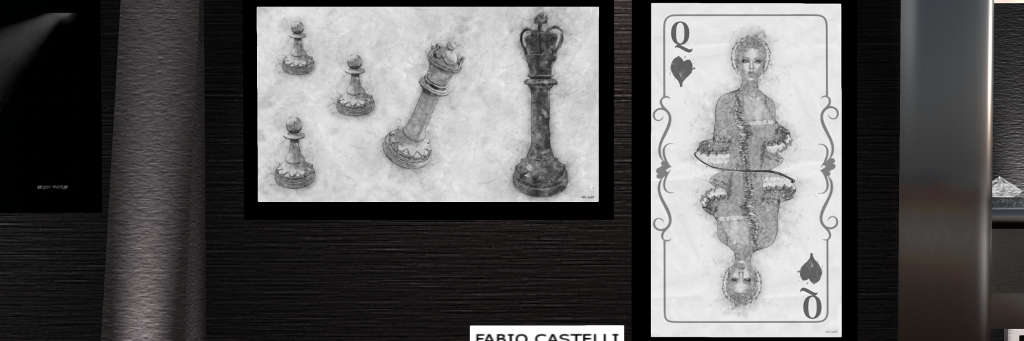
Vicktor Savior present three of his pencil drawings of celebrities – of which Keanu Reeves tended to hold my attention; but where drawings are concerned, it is the two pieces by Fabio Castelli I found most attractive. I was also pleased to see some of Paula Cloudpainter’s art on display – although I confess, I’m not sure monochrome fully captures the richness of her cloud images. Nor is all of the gallery given over to fully monochrome; there are touches of colour here and there, notably in the poems by Mountain String.
Such a large ensemble exhibition inevitably makes it hard to write about individual artists or pieces. As such, I can only give a hint of what is on display; but for a relatively young venue, I will say that Rainbow Painter’s is maturing into a very capable gallery that is rightly attracting the interest of artists new and old within SL. As such, I do recommend paying it a visit, and on keeping an eye on exhibitions there.
I first encountered the art of Lyra Romanas in 2018, and was immediately struck by the richness of story contained within her images, so I was delighted to learn a further small selection of her work is on display through until April 2019 at the Galerie Alice, curated by Alice (angedem).
Renewal and Transformation presents nine images by Lyra in respect of the theme, with a broad split between avatar and art studies. No liner notes are provided for the exhibition or its theme but frankly, the images themselves are so expressive, few additional pointers are required.
The four avatar studies in particular perfectly embody the ideas of renewal and transformation of self. Each offers us a moment in time, seemingly personal, with Mutation perhaps must clearly underlining the transformation theme. Within its monochrome lines it is clear something is happening – and that from the expression on the face of the subject, it is either not unpleasant, or she is oblivious of the change – although this seems unlikely; but what the trigger for her change, and why it is happening is the tease, the story we are invited to weave around the piece.
Equally, When It Rains, It Pours speaks of transformation – although this time it focus is on emotional transformation, rather than physical, while The Twilight Zone perhaps invites us to consider our own ability to transform ourselves both in and of the moment. It is left to the titular piece to offer an image suggestive of pure renewal, brought about through peaceful reflection whilst lying a warm waters. Yet, at the same time, the first three pieces also carry the theme of renewal as well: the birth of a new life-form, the opening of a new page of a life; the renewal of limber exercise, while the titular peace also carries with it a message of transformation, of rebirth from the water.
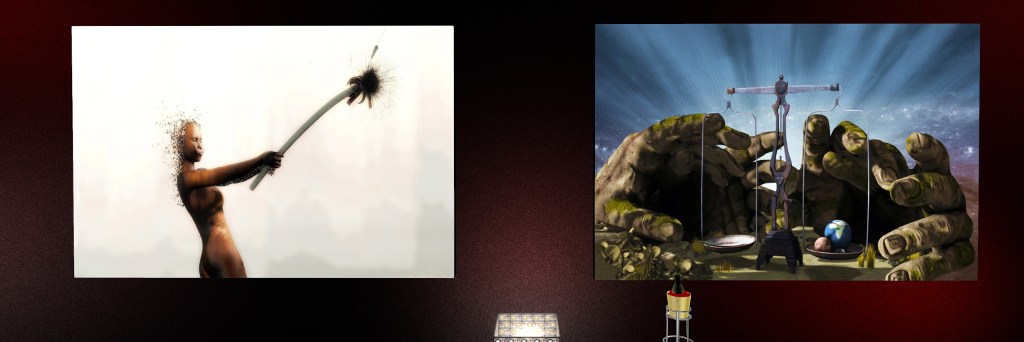
Supporting these four pieces are four focused on the 3D art of Mistero Hifeng. Again the themes of renewal and transformation are evident in all of them: the transformation of stone into caring figures, the emotions generated in their form itself renewing; the pure strength of renewal and simultaneous transformation from passive to active seen in Blown Away. Only the last piece, The Scales might at first seem at odds with the rest; until that is, one looks part the very different approach to colour and presentation and consider the balance between matters of renewal and transformation that can mark our own lives.
Currently open through until the end of March 2019 at the Raglan Tree Gallery are two exhibitions by two physical world artists who have a very different focus for their art to one another.
Mathilde Vhargon entered the world of the arts as a classical musician, but for the last 10 years she has seen digital art as her creative medium, having originally presented 3D sculptures in Second Life before moving to 2D creativity using Gimp and ArtRage.
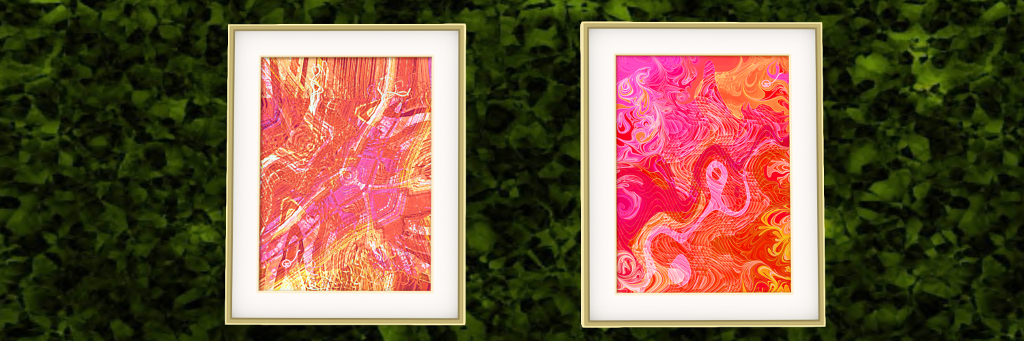
My paintings suggest themselves to me a little at a time without conscious planning. I often use small sections of them as materials to develop into new paintings. I also like to create kaleidoscope and mandala versions of some of my original paintings.
I love strong colours and flowing abstract forms. You will often find ambiguous suggestions that lead the viewer to imagine various possibilities and interpretations. I am most happy when my art creates a chain of associations and questions about life and humanity.
The richness of abstraction in Mathilde’s work is immediately evident on seeing the piece presented at Raglan Tree. These are bold pieces, rich a colour and depth, some encompassing natural shapes and elements – flower petals, leaves or the suggestion of a squirrel. Also on display are monochrome pieces, together with simple paintings that perfectly convey their sentiment, all rounded out by a collage-like piece Toward the Light and even one with a fractal-like suggestion to it, Memories of Grandma, that make this an eye-catching and rewarding selection to visit.
Sharing the gallery space with Mathilde is Kayak Kuu. Apparently taking his name from the fact he used to teach whitewater kayaking, his interests span the theatre and computers – he makes note of both his love of all things Macintosh / Apple and that a good deal of his time is spent immersed in community theatre activities. He is also an avid photographer, as his exhibition at Raglan Tree more than demonstrates.
Photography has been a hobby of his most of his life since the black and white and early Polaroid instant film days … [he] travels extensively and that is where many of his photographs displayed here come from.
– from the notes accompanying Kayak’s exhibit at Raglan Tree
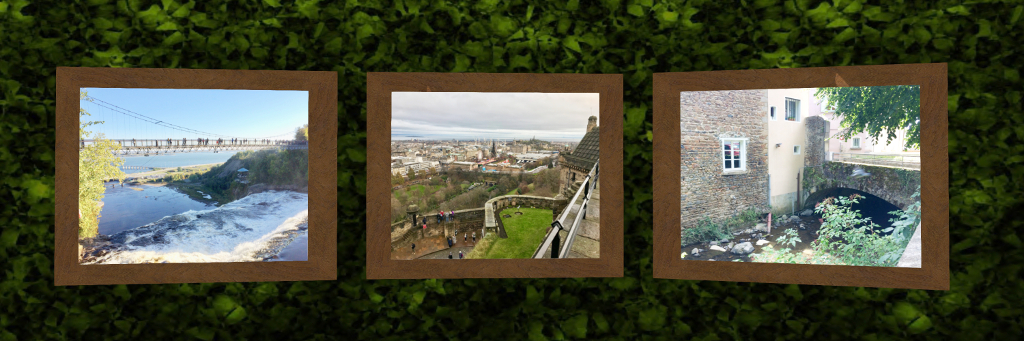
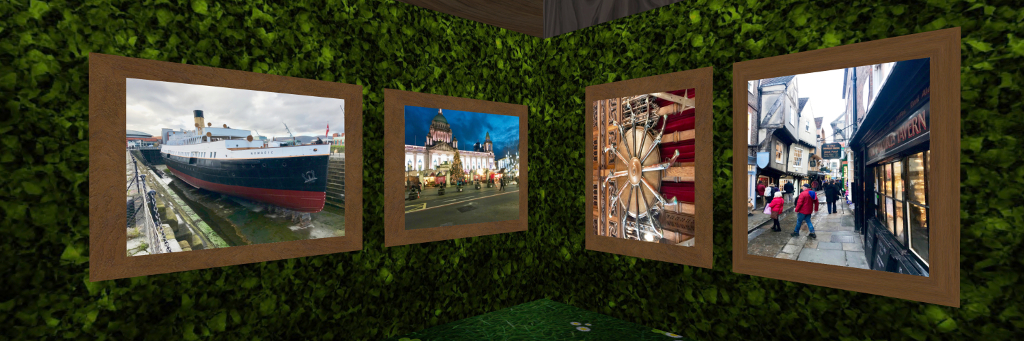
Just how extensive Kayak has been fortunate enough to travel is certainly laid witness to in this exhibition. Pictures from across the United States sit shoulder-to-shoulder with those from Canada, Europe, Ireland, the United Kingdom, Mexico, Roatan…
Such is the diversity of locations on offer, I suspect that anyone who has travelled in the United States or France or the UK in particular are liable to recognise some of the locations Kayak has uniquely captured. I admit to smiling through each of his pictures of York, Belfast and Edinburgh, all of which have particularly happy memories for me, as did his image of the Smithsonian’s Air and Space Museum in Washington D.C).
Presented in the round in on one of Raglan Shire’s great tree platforms, these are selections of art that demonstrate (again) that physical world art can have a place in our pixel lives and – with Kayak’s work – allows us to witness small scenes from places in this world we might otherwise not get to see.
No man is an island is the opening line from a poem by English poet and cleric John Donne which perhaps is more often referenced via quotations of its final lines, And therefore never send to know for whom the bell tolls; It tolls for thee.
However, this poem actually originated as a passage of greater length and written in prose as Meditation 17, from Donne’s Devotions Upon Emergent Occasions. Originally written in late 1623 (and published the following year), Devotions was written whilst Donne was recovering from a but unknown illness (possibly relapsing fever or typhus), and forms a reflection of death, rebirth and the Elizabethan concept of sickness as a visit from God, reflecting sinfulness, with each of the 23 devotions within it a meditation on a single day of Donne’s illness.
I mention this because No Man Is An Island is also the title of the latest immersive installation by Angelika Corral and Sheldon Bergman, artist curators of DaphneArts, with the installation itself marking the reopening of the gallery at a new location in Second Life.
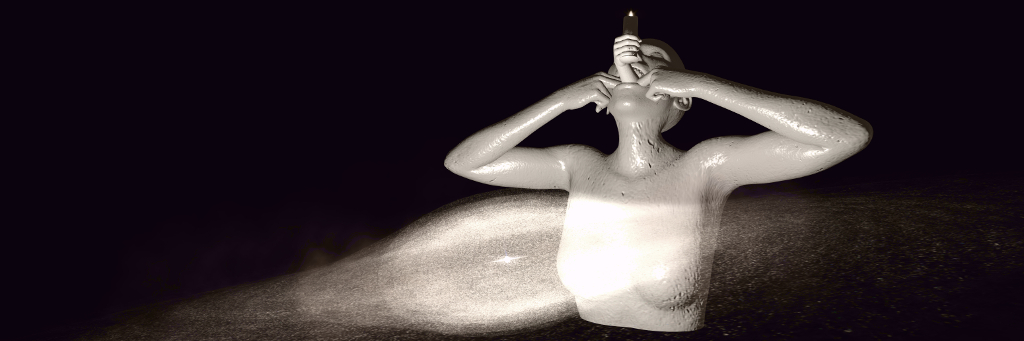
Taking its lead from Devotions, the installation offers the opportunity to reflect on Donne’s words as they came to be written in the poem, using a visual setting, music and the spoken word. Full instructions are provided at the landing point – and if you are using the Firestorm viewer, then you should automatically receive the required windlight environment setting. You should also accept the HUD that is offered on arrival. This will attach itself to your world view to present you with a “letterboxed” style view of your surrounding. If, by chance, you’re not using Firestorm and / or the HUD doesn’t attach (or you accidentally reject its request to attach), instructions and an option to obtain the HUD can be found on the wall of the arrival area.
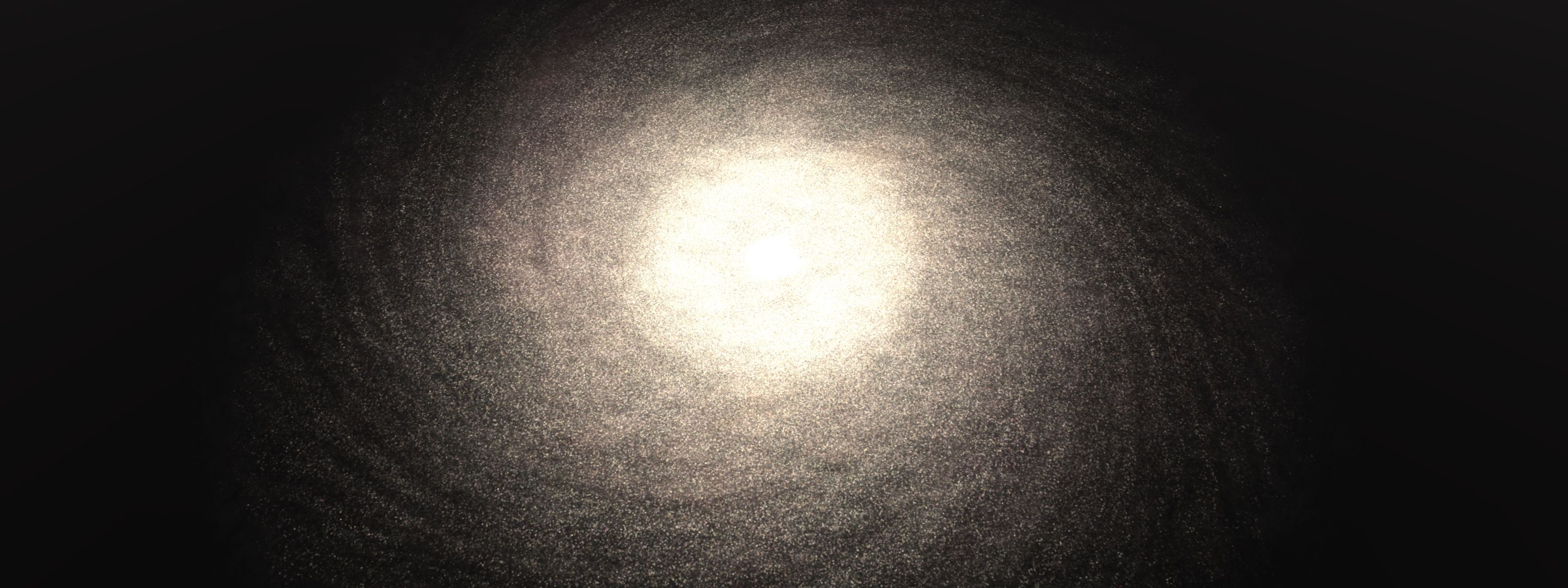
The main setting for the installation and the poem’s recital is very atmospheric – and made more so by the music (played as local sounds, not via any audio stream). Across a windswept stretch of sand stands the silhouette of a lighthouse drawn against the heavy sky, a hut below it lit from within. A candle-lit bridge, with more candles scattered over sand and rocks despite the rain, beckon you forward to hut and lighthouse.
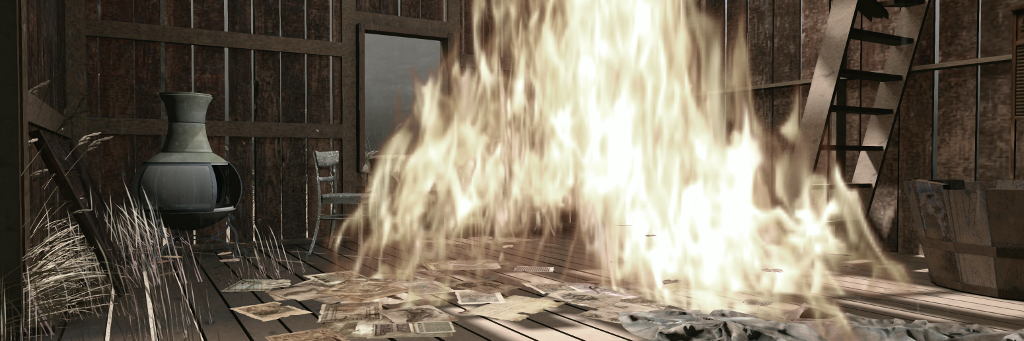
As you approach the hut, the light from within is revealed as a fire, burning brightly in the single room and consuming pages of manuscripts together with a shroud-like blanket. More candles light the way up the lighthouse and its single door. Inside lies the opportunity to listen to a recital of the poem, and contemplate the sculptures that sit within the lighthouse walls.
Perhaps disarmingly simple in appearance, No Man Is An Island is actually nuanced and layered in presentation. Within Meditation 17, Donne is considering the nature of death (his own), and its impact (on him, if it is fact claiming another and not him), noting:
No man is an Iland, intire of it selfe; every man is a peece of the Continent, a part of the maine; if a Clod bee washed away by the Sea, Europe is the lesse …. any mans death diminishes me, because I am involved in Mankinde;
Thus, within the hut with have the fire and the burning of manuscripts, many of the pages painstakingly written and illustrated by hand. They represent the idea that a loss does not just impact the one or the few, but lessens the whole; in their burning, the pages are not just lost to whomever set them ablaze, but are lost also to all who might otherwise have read them. Similarly, the blanket with its edge caught within the flames might be taken as a death shroud, symbolising, Donne’s view that any mans death diminishes me, because I am involved in Mankinde
In addition, the presence of the lighthouse offers reference to life and death, presenting a balance of views that reflects Donne’s thoughts. On the one hand, it was once perhaps the loneliest job on Earth, undertaken in isolation, would his passing of a lighthouse keeper really be missed by the world? But on the other, the role by its very nature was to protect the lives of those at sea, steering them away from the risk of death through the loss of the vessel beneath them – so yes, the loss of a lighthouse man could be sorely missed by the rest of us.
Other references are more obvious – the island-like setting, the rain (the curtained veil of death) – even our place in the cosmos (or what Donne might have regarded as God) is brought into focus, both visually and through the eternal questions repeatedly asked at the landing point.
Officially opening at 10:30 SLT on Saturday, March 2nd, 2019 at the Lyric Art Gallery is the latest edition of the Visual Feast exhibitions, featuring the work of two artists: SecondHandTutti and the gallery’s co-curator, Michiel Bechir. Between them, they offer two very different – but equally captivating – exhibits.
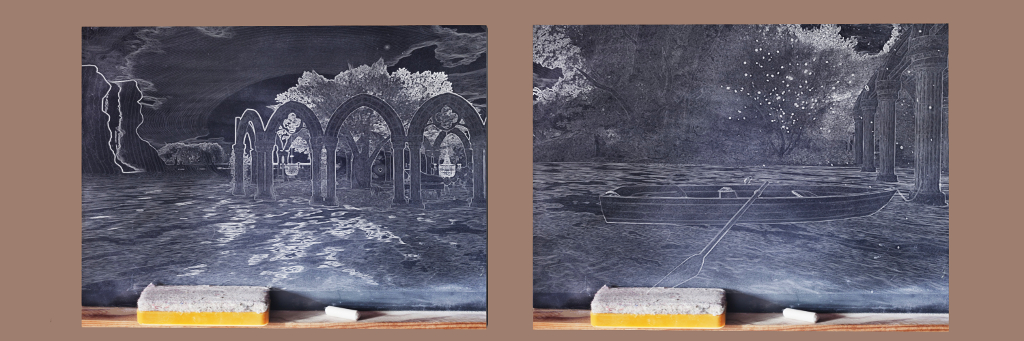
On the ground floor of the gallery is SecondHandTutti’s #26 Chalkboard Dolls, which – contrary to the title is actually 17 pieces of art comprising 14 wall mounted images and three 3D pieces. They are, however, all drawn together by the chalkboard theme.
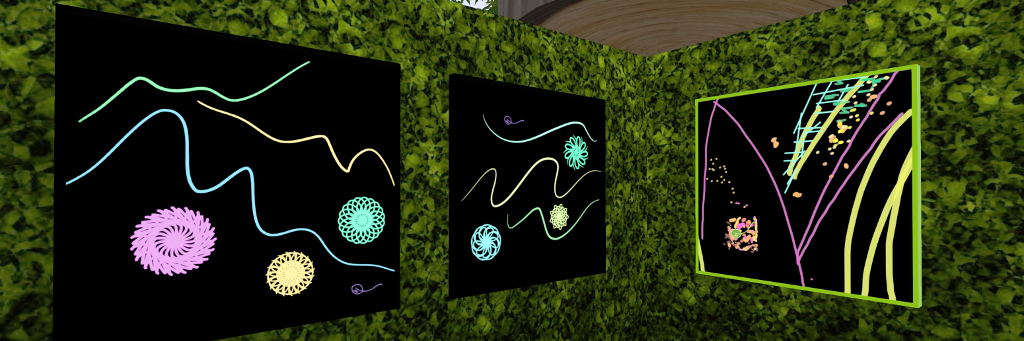
The 14 images, all clearly taken in Second Life have been beautifully rendered to present a series of chalkboard drawings. Each is offered as if freshly drawn, the chalk resting on the board’s shelf alongside an easer. It’s a fascinating way by which to capture Second Life and the degree to which each image genuinely appears to have been hand-drawn on a board is mesmerizing. Granted, on one or two you have to get the camera in close to fully appreciate the detail, but the effort is more than worthwhile.
The three 3D pieces utilise chalkboards to display their names. They are uniquely abstracted studies of figures created with prims, rather than the more common mesh. This gives them a rawness of line that is as eye-catching as the images surrounding them, and – in the case of Dancer perhaps offers an added sense of tribalism to the figure and the dance.
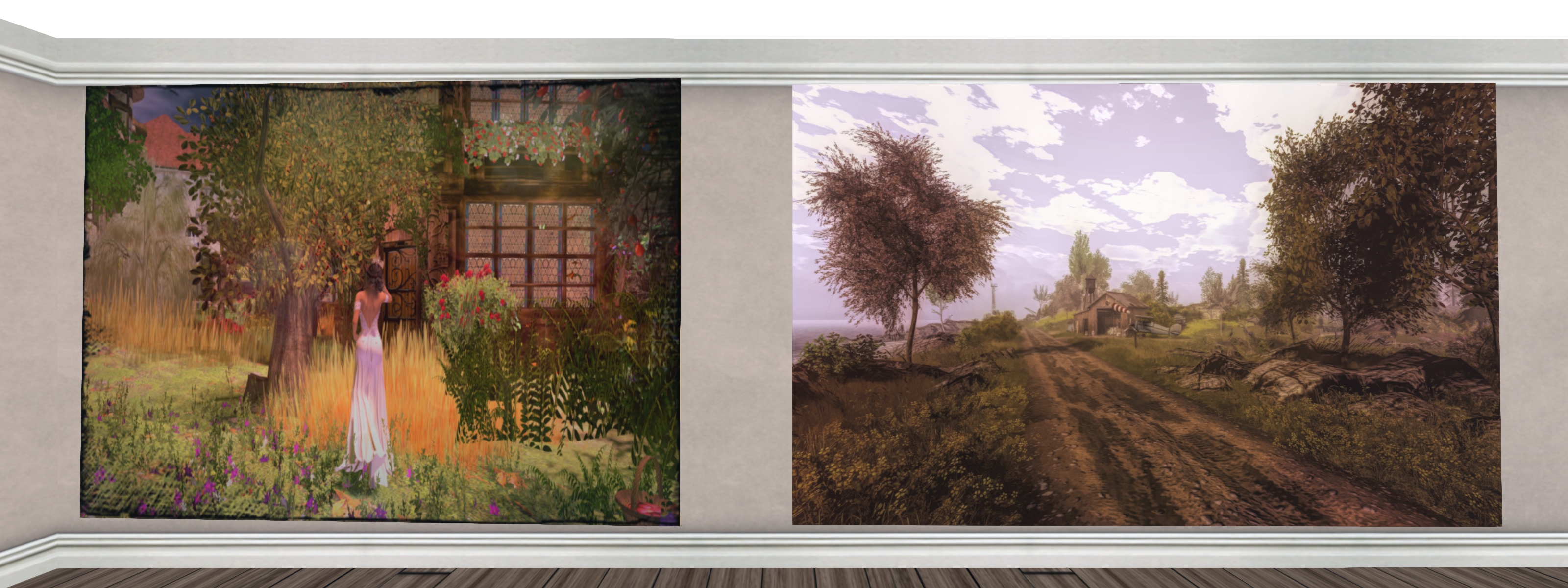
Located on the upper floor of the gallery, Michiel’s exhibit presents 17 of his photographs taken around second Life, either mounted on the walls or on easels. His work has always had a richness to it, whether presented as a gently post-processed photograph, or more broadly edited to give the feel of a painting, and the selection offered at the Lyric presents both approaches for visitor to admire.
As a seasoned SL traveller, one of the things I enjoy with landscape photography that has been captured in-world is trying to identify the locations without cheating by referencing the Edit floater or hovering the mouse over a picture in the hopes of seeing a name. Sometimes the images feature aspects of a region that are so iconic, it is relatively easy to do so: the airstrip at Wild Edge, for example, or the wind turbines at La Digue Du Braek, or the beauty of the Gulf of Lune – all of which can be found in this selection. But sometimes, the setting can be captured in a more subtle manner – and thus I was delighted to spot images taken and Scribbled Hearts and Kekeland, two destinations to which I have in the past made numerous visits.
La Maison d’Aneli, curated by Aneli Abeyante, has opened its doors on its March ensemble exhibition, and once again presents the work of six very different artists, all of whom offer unique perspectives and styles.
As I didn’t manage to make a return visit to cover three of the artists in the February exhibition (the three I did write about can be found in Art and artists at La Maison d’Aneli), I’ll attempt to give a thumbnail look at all six appearing through to late March.
La Maison d’Aneli: Serena Parisi
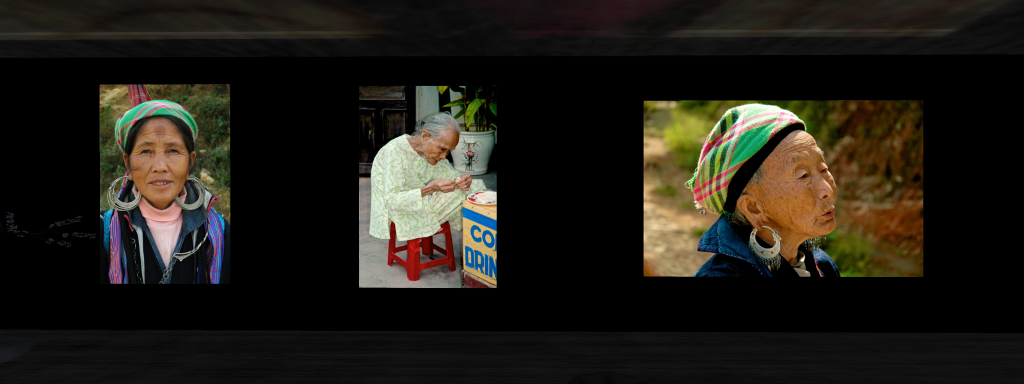
Serena Parisi is a long-time Second Life photographer and explorer, who also appears to be well-travelled in the physical world, as the selection of her photography offered here more than demonstrates, and as she explains. “This exhibition is about my trip to Vietnam.Between smiles, laughs and emotions, my encounters with the population in an explosion of colour that characterises this country.”
Thus, across the upper level of the gallery space, and on the mezzanine above it, Serena offers 17 images of the people of Vietnam, the majority in colour – although I did find the four presented in monochrome quite captivating. Focused on the women and children of the country, they offer fascinating portraits of work and play, happiness and, in some, that understandable wariness of having a camera pointed at you by a stranger. Tightly focused, they portray living individuals but, at the same time reveal a lot about the lifestyle of many Vietnamese people.
La Maison d’Aneli: jeaneos7
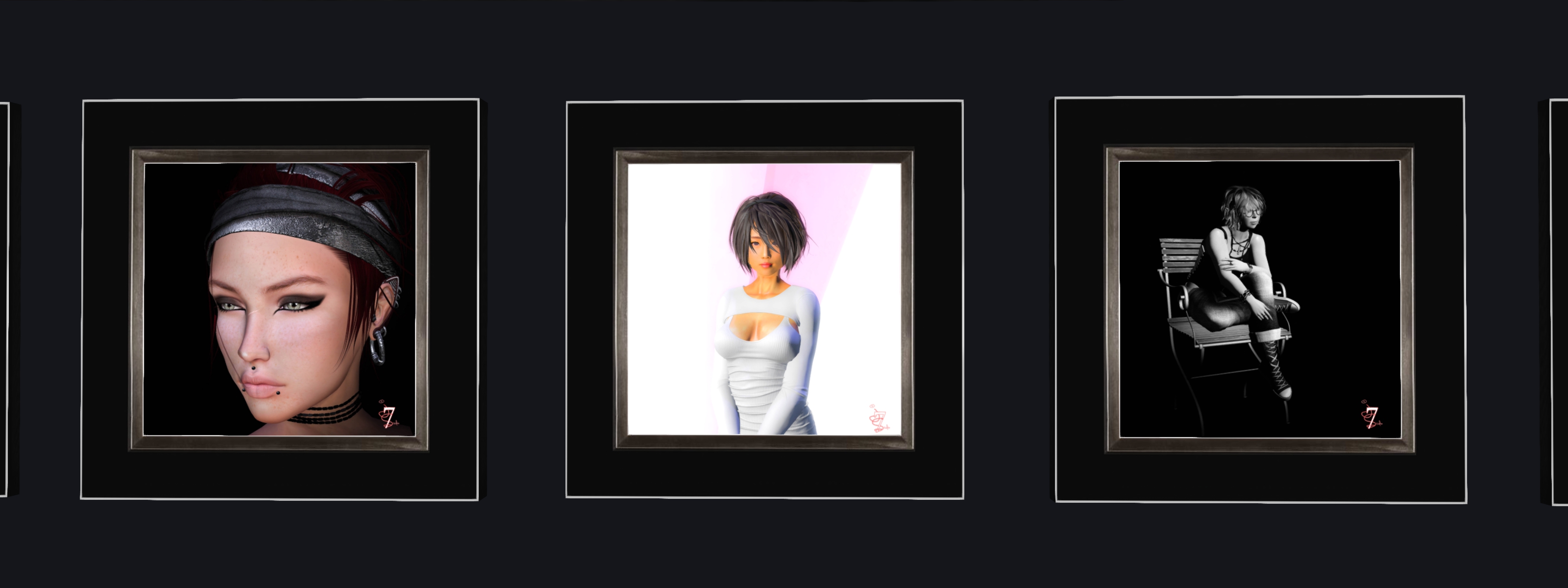
Across the lobby area on the same level, and also split between floor and mezzanine is an exhibition of avatar studies by Jean (jeaneos7), who also hails from France. The pieces here both collectively contrast and compliment Serena’s work. Contrast, simply because they are avatar studies, rather than physical world studies, and compliment in that they are also largely tightly focused on the subject such that we are drawn into the lives portrayed, even without the aid of the backdrop that some of the images additionally offer.
Avatars are also the focus of Kiana Jarman’s selection of work, located on the floor and mezzanine of the gallery’s lower level. She notes that, “Photography is like writing with light, making music with shades.” This is aptly demonstrated within many of her images; while they are focused on avatars, they provide a broader setting, offering a rich canvas on which a story or song might be written. I confess that I found some of her pieces vibrant with life and/or playfulness, and other so rich in tone and narrative, that my eye and camera were constantly drawn back to them.
La Maison d’Aneli: Kiana Jarman
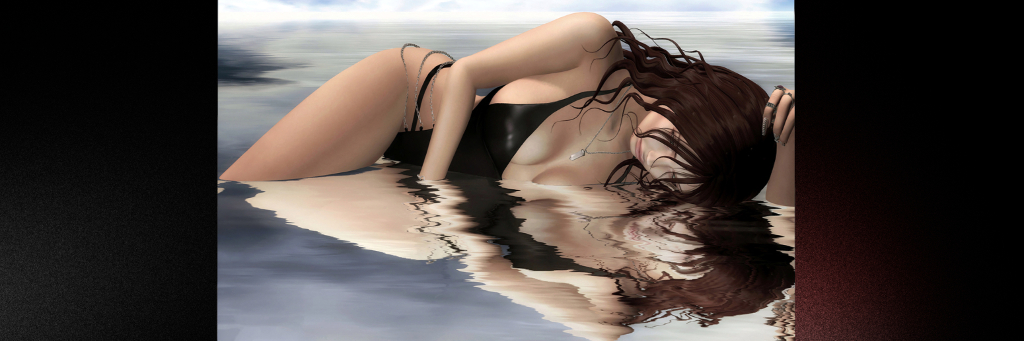
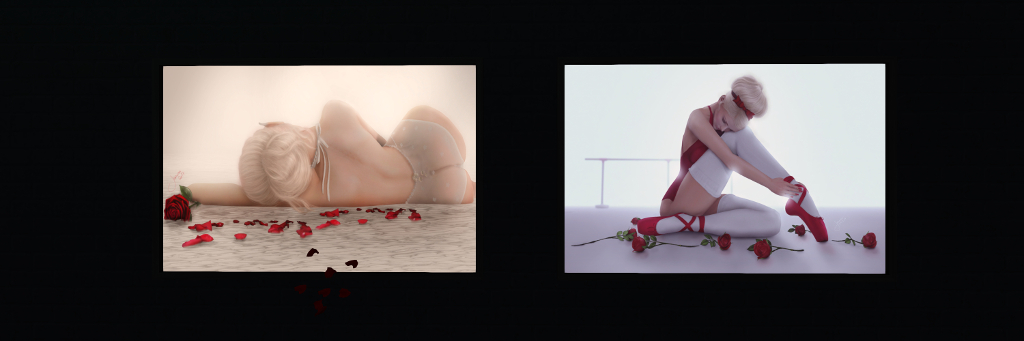
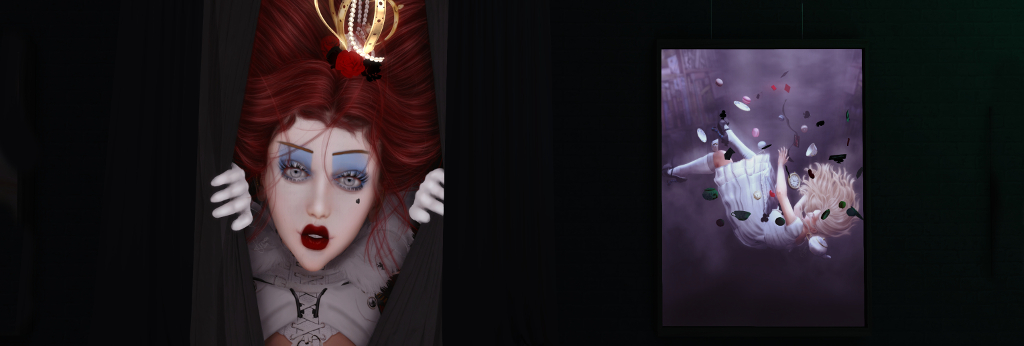
Pointing out particular images in this respect is hard, and none of the pieces are titled. However, to the right of Kiana’s biography giver are two truly marvellous pieces, one above the other, that respectively offer a wonderful depth of narrative and capture the pure vitality of adventurous living. Further around the mezzanine, the sense of fun is reflected through a Queen Of Hearts like figure peering through curtains, while the elegance and beauty of the human body as reflected in the avatar is perfectly frame in the two images I’ve chosen to use as the banner image for this article.
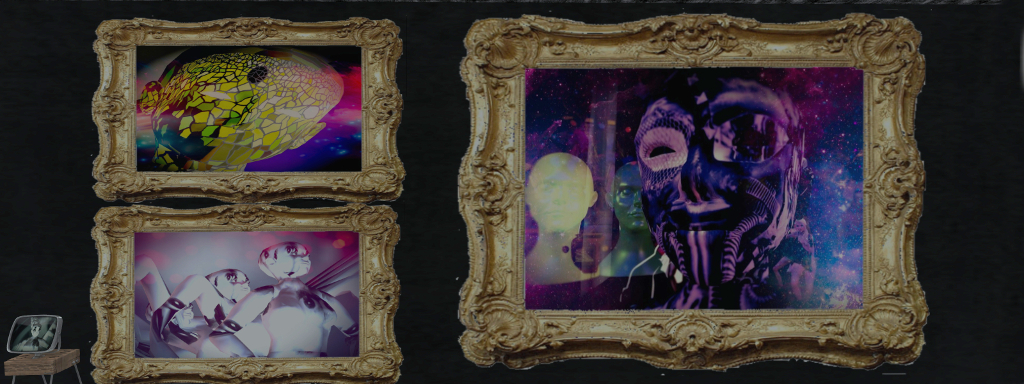
Also on the lower level of the gallery is a mixed media presentation by Rofina Bronet, that presents her work both as an artist and as a machinima maker. This is the most eclectic of the selections presented within this exhibition, with the artwork split between expressive, almost abstract pieces, and those focused on specific avatar subjects: Bryn Oh and Paris Obscur (JonathanDimitri Soderstrom). As well as the large images mounted on the gallery’s walls, Rofina has provided small view screens which, when clicked, will page through the images as well. To see the machinima offered as a part of the selection, make sure you have media streaming enabled in your viewer.
La Maison d’Aneli: Rofina Bronet
Rounding out this exhibition, and located in the end halls of both the upper and lower gallery spaces are displays be Reycharles and Oema.
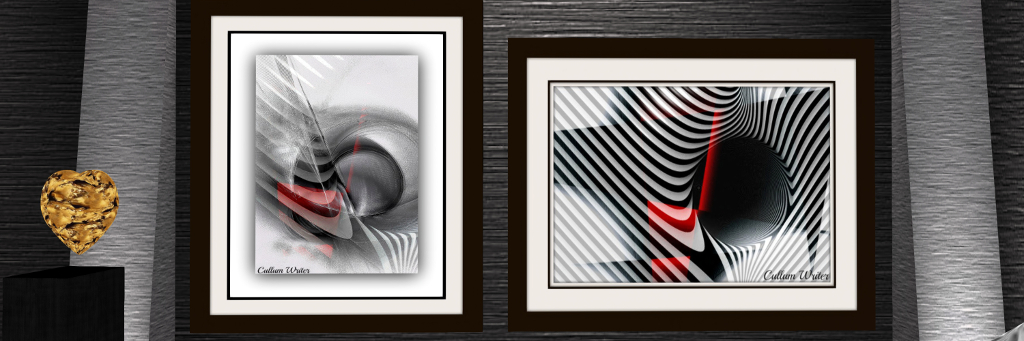
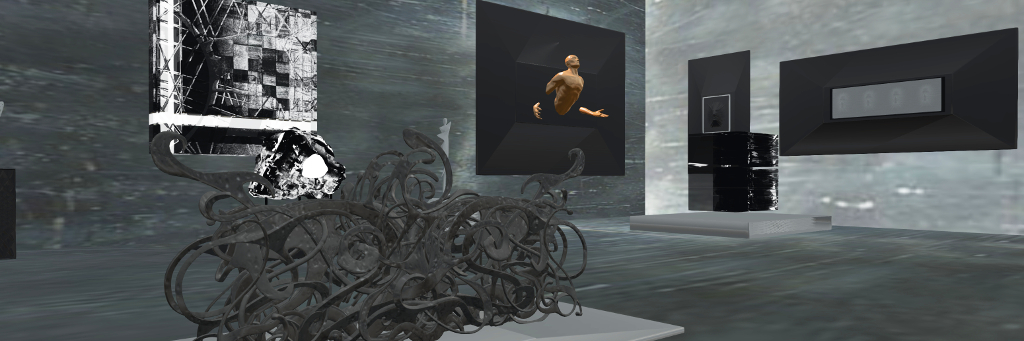
The former presents a mix of his 2D and 3D art, the majority of which is wonderfully abstracted. While he often works with colour, manipulating it experimentally and seeing where it leads, the pieces Reycharles presents here are largely monochrome in tone. There is a wonderful feeling of some of the pieces – both 3D and 2D – having been extruded rather than being intentionly drawn / painted / formed; an organic feel that is itself utterly fascinating.
La Maison d’Aneli: Reycharles
Artist and blogger Oema, located on the lower level of the gallery, presents 14 pieces running from landscapes to avatar studies to original paintings.
I’ve always admired her work for its sense of fantasy / dream, and many of the pieces within this selection demonstrate this to the full. However, it is the studies to the right of the hall as you enter it that utterly captivated me. Each of them holds a unique beauty within what are very different styles when viewed one to the next. Each also – as with all of Oema’s work, is rich in both detail and expression of story.
La Maison d’Aneli: Oema
Taken together this is a richly diverse exhibition that is nevertheless drawn together by incidental, rather than deliberate themes, and which will be available through until late March.