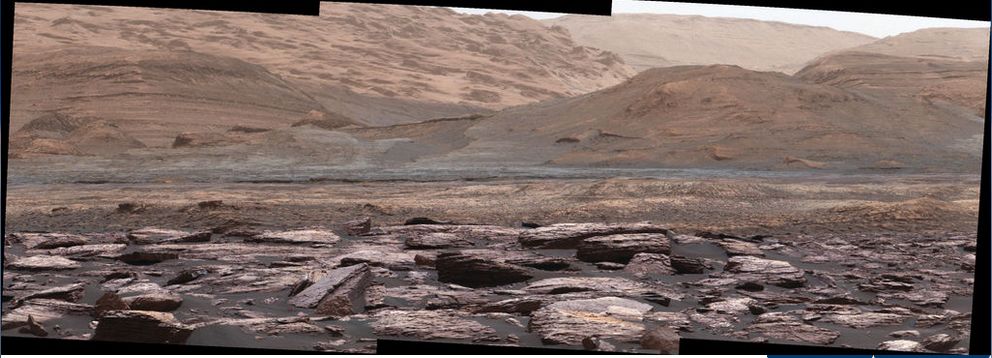
A mosaic of Mastcam images captured by NASA’s Curiosity rover on November 10th, 2016 (Sol 1,516), showing the lower slopes of “Mount Sharp”. Variations in the rocks colour hint at the diversity of their composition. The purple tone of the foreground rocks has been seen in other rocks where hematite has been detected. Winds and windblown sand help to keep rocks relatively free of dust which would otherwise obscure their colour differentiation. These images have been white balanced, so the scene appears as it would under typical Earth daylight conditions. Credit: NASA/JPL / MSSS
For more than a year now, NASA’s Mars Science Laboratory rover, Curiosity, has been slowly climbing the lower slopes of “Mount Sharp” – more formally called Aeolis Mons, the 5 kilometre (3 mi) high layered deposit extending off of the central peak of Gale Crater. Whilst still on the lower slopes of the mound, the rover has already found minerals absent from lower levels within the crater, and these, together with the ample evidence for water once having existed in the crater, further point to Mars perhaps having once been habitable.
Details of the latest findings from Curiosity were presented at a meeting of the American Geophysical Union (AGU), which commenced on Monday, December 12th, in San Francisco. Making the presentation were members of the current MSL science team and its former principal investigator, John Grotzinger, – the Fletcher Jones Professor of Geology at Caltech.
Mineral veins are an important way to study the movements of water within a location, as they are result of cracks in layered rock being filled with chemicals that are dissolved in water. This alters the chemistry and composition of rock formations, providing vital clues on the prevailing conditions around the time they were deposited.
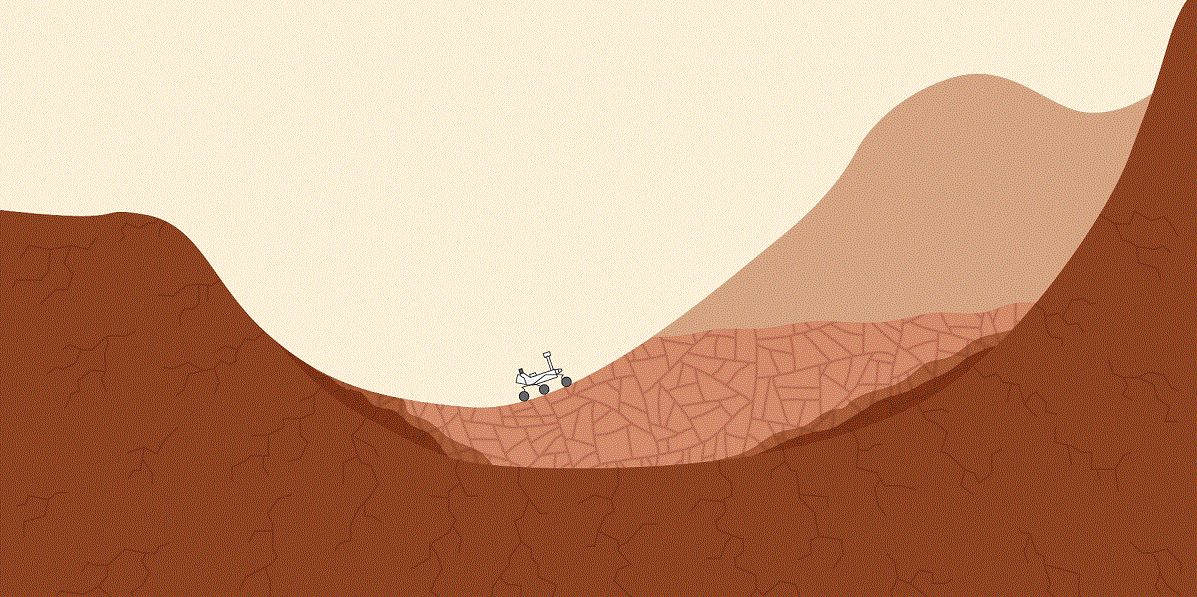
An illustration shown Gale Crater today, with the crater rim (l) and the central impact peak (r), against which “Mount Sharp” rises, which Curiosity climbing its lower slope (obviously not to scale). Credit: NASA/JPL
In the case of the slopes most recently examined by Curiosity, the science team have found that hematite, clay minerals and boron are more abundant than has been found in the lower, older layers. These point to a complex environment where groundwater interactions led to clay-bearing sediments and diverse minerals being deposited over time, effectively creating a “chemical reactor” which, although no actual evidence for Martian microbes having existed within the minerals has been found, still creates an environment which may have been beneficial life.
“There is so much variability in the composition at different elevations, we’ve hit a jackpot,” Grotzinger said during the presentation. “A sedimentary basin such as this is a chemical reactor. Elements get rearranged. New minerals form and old ones dissolve. Electrons get redistributed. On Earth, these reactions support life.”
As Gale Crater might have looked billions of years ago, showing how the circulation of groundwater led to chemical changes and mineral deposits. Credit: NASA/JPL
The increasing presence of hematite found by the rover as it continues up “Mount Sharp” suggests both warmer conditions and more interaction with the atmosphere at higher levels. In addition, the increasing concentrations of hematite, relative to magnetite at lower levels further suggests that iron oxidisation increased over time, creating the “chemical reactor” Grotzinger referenced: the loss of electrons through the oxidisation process can provide the energy necessary for life to sustain itself.
Another ingredient increasing in recent measurements by Curiosity is the element boron, which the rover’s laser-shooting Chemistry and Camera (ChemCam) instrument has been detecting within calcium sulphate mineral veins. Boron is famously associated with arid sites where much water has evaporated away. However, the amounts found so far are so minor, they make it much harder to determine the environmental implications of their presence.
Currently the team is considering at least two possibilities. In the first, the evaporation of the lake thought to have once existed within Gale Crater formed a boron-containing deposit in an overlying layer, not yet reached by Curiosity, then water later re-dissolved the boron and carried it down through a fracture network into the layers the rover is currently investigating, where it accumulated along with fracture-filling vein minerals. In the second, changes in the chemistry of clay-bearing deposits, such as evidenced by the increased hematite, affected how groundwater picked up and dropped off boron within the local sediments.
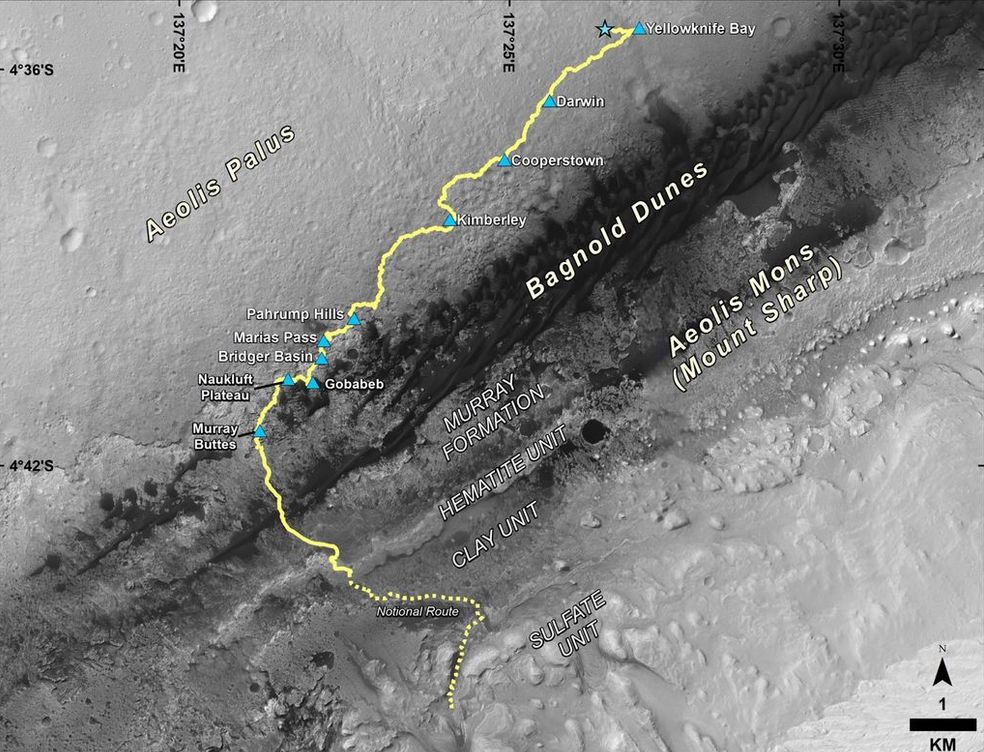
Curiosity’s 4-year, 10 kilometre (6.2 mi) Trek from its landing site (the blue star), through the Yellowknife Ridge area, key to early findings by the rover, then down along the foothills of “Mount Sharp” to the climb up the mound’s lower slopes. The blue triangles denote way-points on the route, where science work was carried out. The images of Gale Crater and “Mount Sharp” are composed of high-resolution images obtained by the HiRISE camera aboard the Mars Reconnaissance Orbiter. Credit: NASA/JPL / MSSS
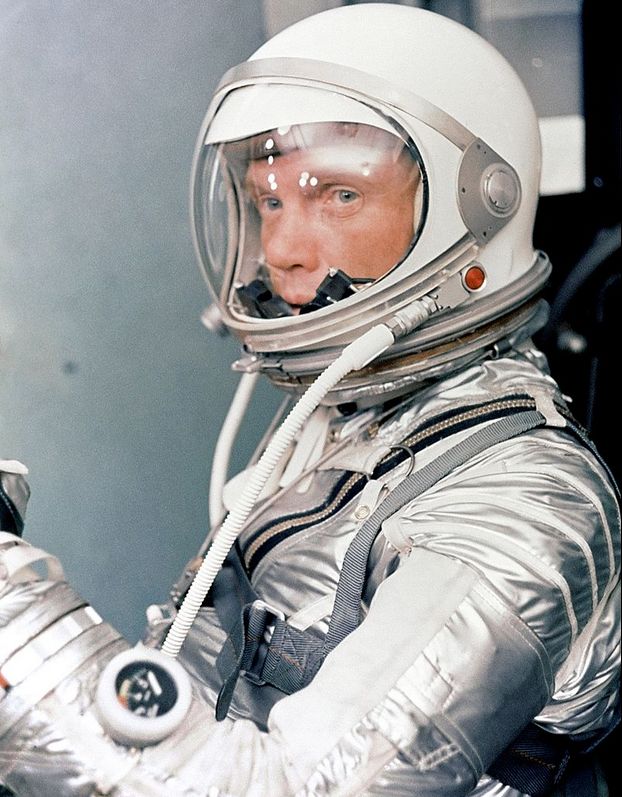
An unusual shot of John Glenn as he examines a celestial training device in preparation for his Mercury-Atlas orbital launch in February 1962. Credit: NASA
On December 8th, 2016, John Glenn, the first American astronaut to orbit the Earth, passed away at the age of 95.
A U.S. Marine Corps pilot who served in both World War II and the Korean War, Glenn was actually the third American to fly into space after Alan Shepard and Gus Grissom, who both flew in 1961. However, for his 1962 flight, Glenn completed three orbits of the Earth aboard his Friendship 7 capsule before splashing down in the Atlantic Ocean, becoming the third man to circle the Earth in space. His death means that all of the Mercury 7 – astronauts chosen to lead the fledging American space programme in 1959 – have now passed away.
Born in 1921 in Ohio, Glenn was commissioned in the US Marine Corps in 1943. After training, he served in the Pacific theatre of war, flying 59 fighter combat missions during World War II. In 1946, he returned to the far east, serving in Northern China and then Guam through until 1948, when he transferred to Texas as an instructor in advanced flight training. After further training, he served two tours of duty in the Korean War, flying a total of 149 combat missions. In 1954, he graduated from th U.S. Naval Test Pilot School, and in 1957 completed the first supersonic transcontinental flight, travelling from California to New York in 3 hours 23 minutes and 8.3 seconds.
Glenn preparing for his orbital flight, February, 1962. Credit: NASA
He became involved in the US space programme before he was selected as a part of NASA’s first astronaut intake. As a serving Marine Corps officer, he was part of NASA research on re-entry vehicle shapes and participated in the Mercury capsule design.
even so, his acceptance into the astronaut corps was not assured: he was almost turned down on the grounds of age – he was approaching 40, the upper age limit for candidates, and he lacked the required science-based degree at the time. However, he fought hard for selection, and was accepted into the Space Task Group in 1959, where, in addition to astronaut training, he was involved in helping with both the Mercury and early Apollo cockpit layout and control functions.
He quickly became the unofficial spokesperson for the Mercury 7, having an easy way with the press – but he wasn’t necessarily popular within the group, setting himself somewhat aside from the rest through study and hard work. This became apparent when the choice for the first man to fly into space came down to a vote among the Seven themselves. Glenn came in third behind Alan Shephard and Gus Grissom, both of whom did fly before him despite a lot of behind-the-scenes lobbying by Glenn himself to get assigned to the first sub-orbital flight. have himself put on the first flight.
However, all this passed into history on February 20th, 1962, when Glenn lifted off atop his Mercury-Atlas 6 rocket, flying his Friendship 7 capsule on a 5 hour, 3-orbit flight round the Earth. And I do mean “fly”: during the flight, he was supposed to briefly take control of the Mercury capsule and manually fly it for 30 minutes before handing control back to the flight systems. However a malfunction in the automatic control system during his first orbit mean he had to take over control of the vehicle for the two remaining orbits.
His problems were then further compounded by telemetry suggesting his capsule’s heat shield had come loose, forcing him to manually fly the vehicle and keep the disposal retro-rocket pack (normally jettisoned prior to re-entry into Earth’s denser atmosphere) in place in case the straps from it were the only things keeping his heat shield in position. At the time, the frictional heat caused the rocket pack to burn up, with large chunks of flaming debris from it passing his window, prompting him to think his vehicle was burning up. “Fortunately it was the rocket pack,” he later wryly told a reporter, “Or I wouldn’t be answering these questions!”
His successful splashdown in the Atlantic meant Glenn became the fifth man to fly in space, and the third to orbit the Earth, after Russians Yuri Gagarin and Gherman Titov. Any upset he may have felt at being passed over for the first Mercury flight was swept aside as Glenn found himself fêted by the press and politicians alike; he later called the flight the “greatest day of his life”.
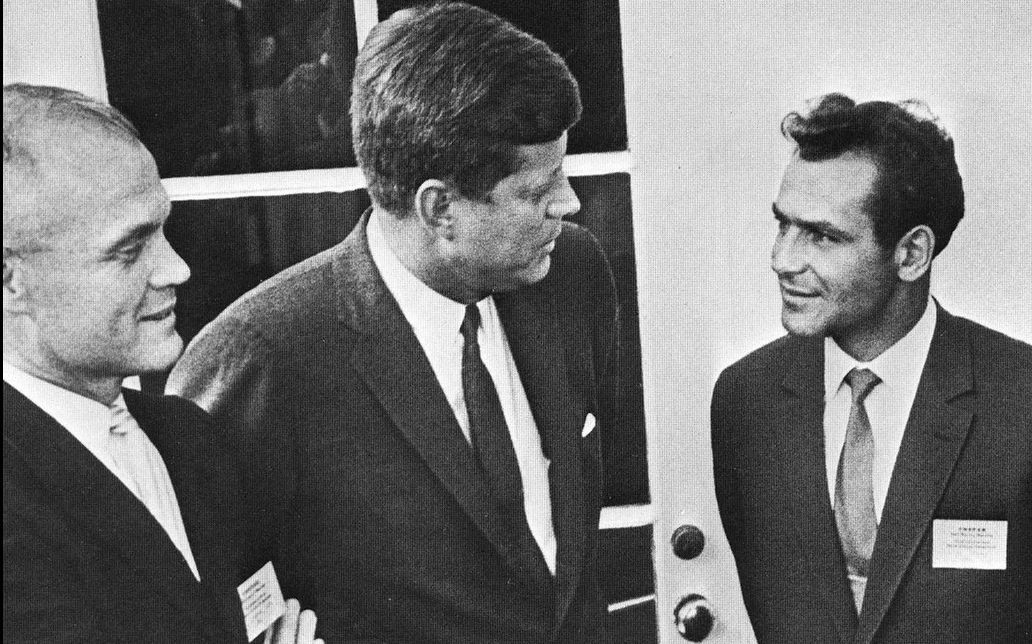
Glenn, left, became close friends with John F. Kennedy (centre) and Robert Kennedy,entering US politics in 1964 at Robert Kennedy’s prompting. In this photograph, Glenn and Kennedy are seen with the second man to orbit the Earth, Russian cosmonaut Gherman Titov, who circled the Earth 17 times in August 1961, and who to this day remains the youngest person to fly in space at the time of his flight; he was just 26 years old. Credit: NASA / Asif A. Siddiqi
In 1964, Glenn retired from NASA, still a commissioned officer in the US Marine Corps (from which he retired in 1965 with the rank of colonel). His interest turned to politics, having been solidly befriended by John and Robert the Kennedy – that latter of whom persuaded him to run for office. After two unsuccessful attempts, he was elected to the US Senate representing his home state of Ohio in 1974, and remained so through until 1999. In 1984 he sought nomination as the Democratic Party’s candidate for the US Presidential election that year, losing out to Walter Mondale – who in turn lost to Republican Ronald Reagan in the election.
In 1998, shortly before retiring from the Senate, Glenn returned to orbit aboard the space shuttle Discovery during mission STS-95. He was 77 at the time, making him the oldest person to fly in space – a record he still holds.
The Mercury 7 – NASA’s first astronauts. Standing (l-r): Alan B. Shephard Jr. (1st US astronaut to fly in space); Walter B. Schirra Jr; John Glenn (first US astronaut to orbit the Earth). Seated (l-r): Virgil I Grissom (2nd US astronaut in space); M. Scott Carpenter; Donald Slayton and L. Gordon Cooper Jr. Credit: NASA
The NASA Eagleworks EmDrive prototype. Credit: NASA Eagleworks / NASA Spaceflight Forum
The radio frequency (RF) resonant cavity thruster, or EmDrive (pronounced “M-drive”) as it is more popularly known, has been a source of much controversy since the idea first came into the public eye around 16 years ago, and the debate has been heating up again over the last few months.
First proposed by British engineer Roger Shawyer in 1999, the EmDrive is supposed to be the world’s first working reactionless drive, a means of generating thrust without the use of any propellant. Over the years, it has undergone investigation and testing by a number of organisations and agencies before being quietly pushed aside, while some critics have been publicly scathing of the whole idea, labelling it the “impossible drive” as it violates the fundamental law of conservation of momentum (summed up in Newton’s third law, “for every action, there is an equal and opposite reaction”). Even so, research and testing has continued.
The EmDrive supposedly generates thrust by reflecting microwaves between opposite walls of a cone-shaped cavity. In principle, no microwaves or anything else leaves the device, and so it is considered reactionless – although Shawyer states that it isn’t, because the propulsive force is created by a “reaction between the end plates of the waveguide and the Electromagnetic wave propagated within it.”
The attraction of the drive is that were it to work, it could provide an almost endless supply of thrust for satellites and other spacecraft, opening the door to flights to Mars in just 70 days as opposed to the 180-234 days currently required using conventional means. The problem is no-one has actually got the idea to work. Researchers at the at the Northwestern Polytechnical University (NWPU) in Xi’an, China, thought they had in 2012, but further testing in 2014 revealed the thrust apparently created by their EmDrive test rig was actually due to a faulty power connector causing false readings.
Now, however, it seems that a test rig operated by NASA’s Eagleworks Laboratory might actually have demonstrated that in principle an EmDrive could work. News on the testing has actually been leaking out of the laboratory for the past 2-3 months – and has rightfully been met with a healthy dose of scepticism. However, a paper from the team carrying out the research was submitted for peer-review through the Journal of Propulsion and Power, a publication maintained by the American Institute of Aeronautics and Astronautics (AIAA) – and is said to have passed muster.
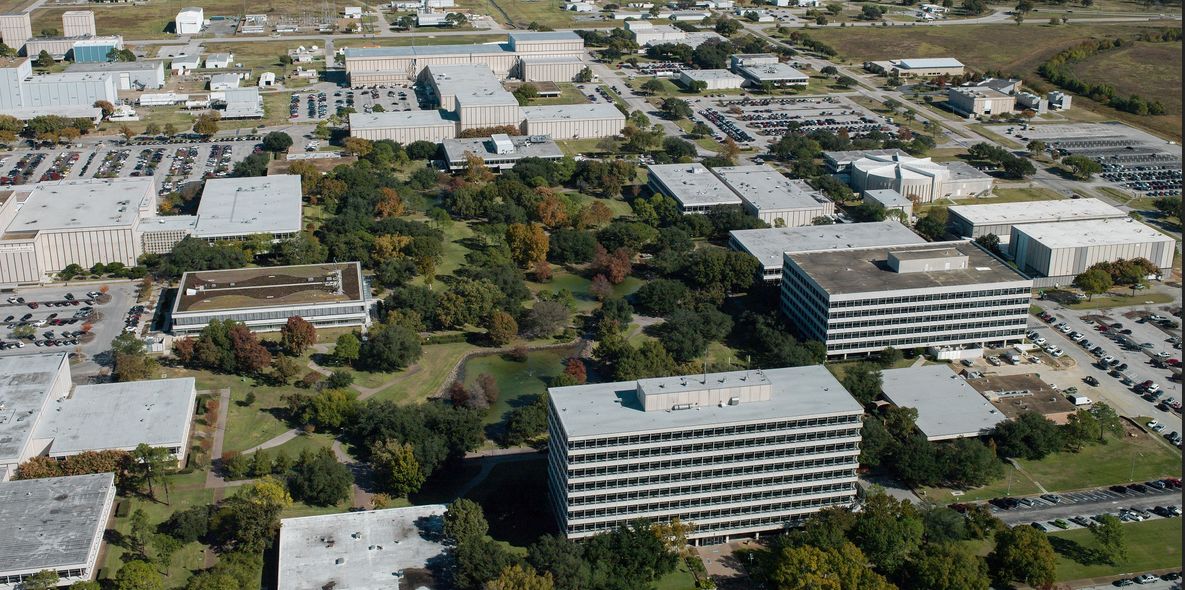
NASA’s Johnson Space Centre, Texas, the home of the Eagleworks Laboratory. Credit: NASA / James Blair
So, does this mean the EmDrive works? Well – no. The peer-review process means that no discernible flaws have been found in the methodology and testing carried out by the Eagleworks team, meriting the idea worthy of further investigation and research. It doesn’t mean fault or error may not yet be found going forward.
One major means of testing the theory of the EmDrive would be to build a working unit and place it in space and see if it works. This is precisely what US engineer Guido Fetta hopes to do. He is planning to place a small version of his Q-Drive (derived from the EmDrive) in orbit for 6 months aboard a CubeSat (between 10×20×30 cm and 12×24×36 cm in size), and then try over six months to manoeuvre the CubeSat using the drive. He’s not alone; China similarly plans an on-orbit test of an EmDrive prototype, although no dates have been specified for them mission.
Did Spirit Find Signature of Past Martian Life?
NASA’s MER rover, Spirit (MER-A) and Opportunity (MER-B) arrived on Mars in January 2004, and Opportunity continues to explore the planet today. Credit: NASA / JPL
In January 2004, NASA landed two solar-powered rovers, Spirit and Opportunity on Mars. There primary mission was scheduled to last just 90 days – but Opportunity is still operating today, almost 13 years after it arrived on Mars. Sadly, Spirit was not so lucky; in May 2009, it became stuck in a “sand trap” and unable to free itself, eventually losing power as its solar panels could not be oriented towards the winter Sun on Mars, and falling silent in May 2010.
Nevertheless, Spirit gathered a huge amount of data and images, some of which is being re-examined by scientists Steven Ruff and Jack Farmer from Arizona State University as a result of their field expeditions to Chile – and they believe the rover may have come across evidence for past Martian life.
While examining images of a plateau of layered rocks dubbed “Home Plate”, examined by Spirit in 2006, Ruff and Farmer noticed the ground was covered in multiple nodular masses of opaline silica with digitate structures strikingly similar to structures they have encountered within active hot spring/geyser discharge channels at a site in northern Chile called El Tatio.
This is a region which, due a rare combination of high elevation, low precipitation rate, coupled with a high ultraviolet irradiance, is regarded as a potential analogue for past conditions on Mars. What’s more, as a volcanic are, it shares much in common with “Home Plate”, which is believed to be an explosive volcanic deposit created when hot basalt rock came into contact with liquid water. Part of the formation may actually be an extinct Martian fumarole.
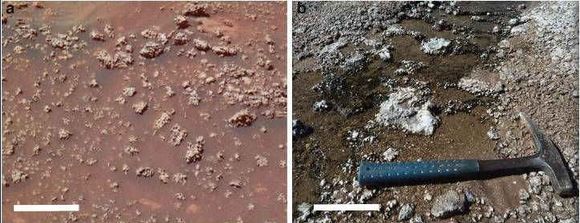
An image of “Home Plate” showing a mass of opaline silica nodules, captured by NASA’s Spirit rover in 2006, and a photograph showing similar formations at El Tatio, Chile Credit: ASU/Ruff & Farmer
The opaline silica Ruff and Farmer found at El Tatio have been shown to be largely of biotic origin; that is, created by microbes. Could this be the same for those Spirit saw at “Home Plate” in 2006? Ruff and Farmer believe it might.
“Although fully abiotic (physical rather than biological) processes are not ruled out for the Martian silica structures, they satisfy an a priori definition of potential biosignatures,” the researchers state in a paper on their work. A biosignature is defined by NASA as “an object, substance and/or pattern that might have a biological origin and thus compels investigators to gather more data before reaching a conclusion as to the presence or absence of life.”
A closer view of the structures as images by Spirit in 2006, and a an image of the opaline silica at El Tatio taken at the same distance and resolution. Credit: ASU/Ruff & Farmer
Ruff and Farmer note that while they cannot prove nor disprove a biological origin for the structures imaged by Spirit at “Home Plate”, they should be regarded as a potential biosignature by NASA’s own definition of the term. They go on to state that the only way to be sure would be for a robust examination to be made of the “Home Plate” location, perhaps by NASA’s upcoming Mars 2020, were it to be sent to that region, or through the examination of another region of Mars which is identified as being geographically and geologically similar.
Virgin SpaceShipTwo Flies
Virgin Galactic’s SpaceShipTwo vehicle, VSS Unity completed its first free flight test on Saturday, December 3rd, after a month’s delay due to a combination of high winds and an unspecified technical issue, which combined to leave the vehicle able to make just a single captive / carry flight with its carry / launch aircraft, WhiteKightTwo.
VSS Unity seen from a chase plane as it glides towards touch-down on Saturday, December 3rd, 2016. Credit: Virgin Galactic
The unpowered flight, took place over the Mojave Air and Space Port in California and was the first in a series of around 10 – the precise number will depend on how well the targets for each flight are met – such tests the vehicle will make before Virgin Galactic move to powered flight tests using their new rocket motor for the vehicle, which has so far only been tested on the ground.
“It’s a happy day to be here,” Virgin Galactic’s founder, Sir Richard Branson said just before WhiteKnightTwo lifted SpaceShipTwo aloft. “We’ve got an exciting year ahead, and this is just the start of it.”
VSS Unity comes to rest on the runway after a successful first flight test. Credit: Virgin Galactic
As TGO Flexes Its Muscles, More Ice Found on Mars
ESA’s Trace Gas Orbiter (TGO), which arrived in orbit around Mars in October, has yet to reach its primary science orbit but it is already flexing its muscles.
On November 22nd, as TGO swept over Mars on one of its current 4.2 day elliptical orbits, a test was carried out on its ability to relay data from the Martian surface to Earth, acting as a go-between for both the Curiosity and Opportunity rovers. As well as carrying a suite of science instruments and camera systems, TGO also carries a communications relay package from NASA called Electra, which allows the spacecraft to successful receive and store communications from NASA’s surface vehicles and then relay them to Earth.
Currently, TGO’s orbit carries it from just 300km (200 mi) above the surface of Mars all the way out to 98,000 km (60,000 mi), limiting its effectiveness as a communications relay. However, this will be lowered and circularised in the coming months to just 400 km (250 mi) above the planet, at which point TGO will be perfectly positioned to carry out its primary science mission and act as a relay for current and future surface missions, including Europe’s own ExoMars rover.
The relay test came at a time when ESA were working on calibrating TGO’s instruments during the close flights over Mars in each of it current orbits around the planet. These calibration tests included initial use of the orbiter’s “eyes”, the Colour and Stereo Surface Imaging System (CaSSIS), which yielded, in the mission team’s words, “spectacular” results.
CaSSIS is an impressive system, capable of capturing still images and video across a number of colour wavelengths, and in 3D if required. All of CaSSIS’s capabilities were exercised during the test as the orbiter passed over Hebes Chasma, an eight km (5 mi) deep trough just to the north of the mighty Valles Marineris. The images collected during the pass have a resolution of 2.8 metres per pixel. To put that in perspective, it’s the equivalent of flying over New York city at 15,000 km/h (9,375 mph) and simultaneously getting sharp pictures of cars in Philadelphia.
The stereo capabilities of CaSSIS will allow scientists to build topographical 3D images of the surface on Mars, such as this test model, built from images of the Noctis Labyrinthus at the north-eastern end of the Vallis Mariners. Credit: ESA / Roscosmos / CaSSIS / UniBE
Once TGO reaches its operational orbit towards the end of 2017, CaSSIS will be capable of acquiring 12-20 high-resolution stereo and colour images of selected targets per day.
Meanwhile, NASA’s Mars Reconnaissance Orbiter (TGO) has located another gigantic water ice deposit lying just under the Martian surface. The ice, lying beneath the planet’s Utopia Planitia, was located using MRO’s ground-penetrating Shallow Radar (SHARAD) instrument.
Utopia Planitia: home of a massive water ice deposit the size of New Mexico, and sitting just below the surface of Mars – click for full size. Credit: NASA
Estimated to be bigger than the US state of New Mexico and containing more water than Lake Superior, it is the second massive ice deposit SHARAD has found in just over a year. The first exists as a deposition averaging 40 metres (604 ft) think, extending almost all the way from the planet’s mid latitudes up to north polar region and covers an area the size of Texas and California combined.
The ice under Utopia Planitia – the landing site for NASA’s Viking 2 mission of the 1970s – is between 80 to 170 metres (260 feet to 560 ft) in thickness, comprises around 85% water ice (the rest being dirt and other deposits), and – most crucially – lies between 1 and 10 metres (3 and 30 ft) beneath the surface, potentially making it an accessible resource for future human missions to Mars.
NASA Considering Foreshortening Orion Crewed Flight
NASA is considering a shorter mission for the first crewed flight of its Orion Multi-Purpose Crewed Vehicle.
Originally, the flight was to have comprised a “slow cruise” out to the Moon of between 3 and 6 days, followed by three days in lunar orbit before making a similar 3-6 day “slow cruise” back to Earth. However, under the new plans being considered, Orion and its crew would be placed in a high Earth orbit (HEO) with an apogee of 35,000km (21,875 mi), where it would remain for a day, before separating from the Exploration Upper Stage (EUS) of its Space Launch System rocket and suing its Service Module motor to enter a trans-lunar injection orbit, for a single free-return flight around the Moon without ever going into orbit there.
Orion’s first mission may now only comprise a flight around the Moon, rather than orbiting it. Credit: Cosmic Pearl
“We’ve effectively designed this mission to be commensurate with the amount of risk we’re taking with crew on the vehicle for the first time,” Bill Gerstenmaier, NASA associate administrator for human exploration and operations said when announcing the new plan. “We’ve tailored the mission to be appropriate with the risk we’re willing to take.”
Two particular risks worried mission planners: a failure with the Orion’s life support system in what would be its first space-based test with a crew aboard, or a failure with the Service Module’s engine which might leave them stranded in Lunar orbit. The redesigned mission means the life support system can be tested whilst in HEO, and the service module motor only needs to be fired once, when boosting Orion towards the Moon.
The revised Exploration Mission 2 flight plan (click to enlarge). Credit: NASA
The change in approach does not affect the Exploration Mission 1 flight, scheduled for 2018. That mission is expected to last around 25 days, with an uncrewed Orion vehicle placed in lunar orbit for several days before it returns to Earth. However, it does open the door to a more gradual approach to extending Orion’s capabilities, with NASA now planning one Exploration Mission a year being flown between 2023 and 2030.
Most of these flights will be cislunar operations, with EM-6 (2026) earmarked as the asteroid rendezvous mission originally scheduled to take place in 2023 as EM-3, but which has been pushed back as a result of delays in the Asteroid Redirect Mission (ARM), its necessary precursor. EM-10 would mark the likely transition from cislunar missions to BEO (“Beyond Earth Orbit”) missions directed towards Mars, utilising Orion and expanded capabilities such as habitat modules and possible nuclear-powered propulsion units.
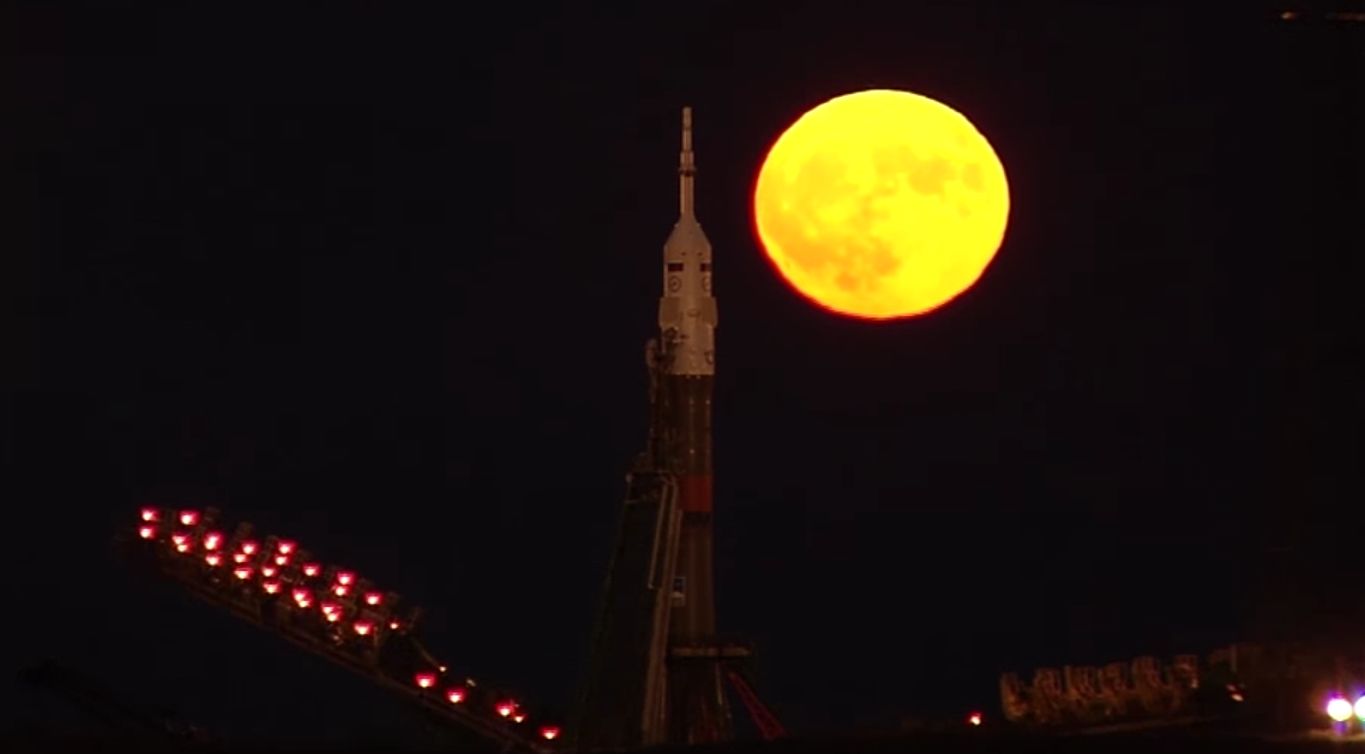
The “supermoon” of November 14th rises over the Soyuz MS-03 spacecraft the Baikonur Cosmodrome in Kazakhstan, where it was being prepared for launch to the International Space Station. Credit: NASA
The second of the three so-called “supermoons” which see out 2016 produced some dramatic photographs and video from around the world. Perhaps one of the most stunning came from cameras at the Baikonur Cosmodrome in Kazakhstan, monitoring Soyuz MS-03 as it stood on the pad at Launch Complex 1.
As I noted in my last Space Sunday Report, a “supermoon” occurs when the Moon is both full and at perigee – the point in its orbit when it is closest to the Earth as it travels around our planet in an elliptical orbit. Such events occur around every 14 months, and can see the Moon appear to be 14% bigger than its average size in our sky, particularly when seen low on the horizon.
The “supermoon” of November 14th was special because the Moon was about at its closest point to Earth in its orbit – “just” 356,509 kilometres (221,524 miles) from us and the Earth / Moon system is approaching the time of year when it is closest to the Sun (which will occur on January 4th, 2017), thus making the full Moon “extra” bright for those who were able to see it. The next time this will occur will be in 2034. However, December 14th will see another “supermoon”, albeit one at a slightly greater distance away from the Earth, so those who missed November’s – weather permitting – may still get to see one before the year is out. In the meantime, here’s NASA’s footage from Baikonaur – the film obviously speeded-up 🙂 .
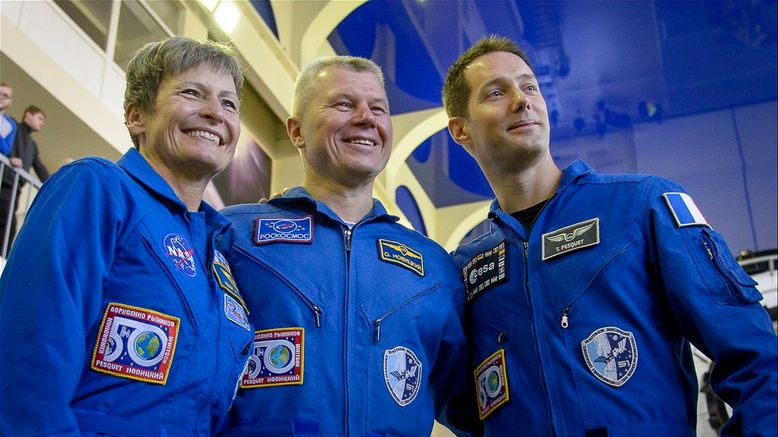
Soyuz MS-03 lifted-off from Baikonur on Friday, November 18th, carrying aloft Russian cosmonaut Oleg Novitskiy, American astronaut Peggy Whitson and rookie French astronaut Thomas Pesquet. It successfully docked with the International Space Station on Saturday, November 19th, marking the start of the Expedition 50/51 mission aboard the station, the crew sharing space with the Expedition 49/50 crew of mission commander Shane Kimbrough of NASA and Russian cosmonauts Sergey Ryzhikov and Andrei Borisenko, who have been aboard the station since October and who are due to return to Earth in February 2017.
For Whitson, this is a double first: she is the oldest woman to ever fly to the ISS – she will celebrate her 57th birthday in orbit – and, come February, she will be the first woman to command the space station for a second time in its 16-year operational history, having already become the very first woman to take command during Expedition 16 in 2007. She is also NASA’s most experienced female astronaut, with nearly 377 days logged in space, including six space walks totalling 39 hours 46 minutes. By the time she returns to Earth, she will have spent more time in space than any other US astronaut, surpassing the 534-day record set by Jeff Williams in September 2016.
Peggy Witson with Oleg Novitskiy and Thomas Pesquet posing for photographs prior to launch. Via: Peggy Whitson
During their time aboard the station, Whitson, Novitskiy and Pesquest will conduct hundreds of experiments and studies in biology, biotechnology, physical science and Earth science. A particular focus will be recording how lighting impacts the overall health and well-being of station crew members, and how the microgravity environment in orbit affects tissue regeneration in humans and the genetic properties of space-grown plants.
The crew carry with them some special meal time treats as well. Taking a leaf from British astronaut Tim Peake’s book, Pesquest requested fellow countrymen and renowned chefs Alain Ducasse and Thierry Marx develop a special menu for the crew. Highlights include beef tongue with truffled foie gras and duck breast confit.
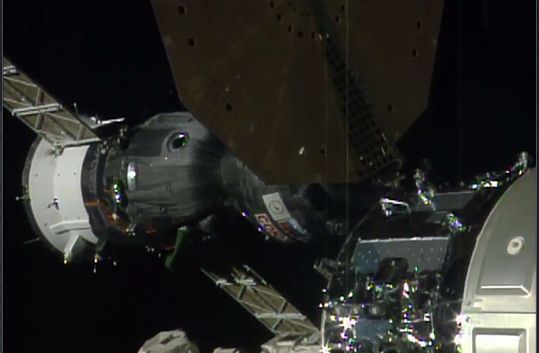
Soyuz MS-03, piloted by commander Oleg Novitskiy, closes for a docking with the Russian-built Rassvet module on Saturday, November 19th. In the foreground is the Cygnus resupply vehicle which recently arrived at the space station, one of its circular solar power arrays partially blocking the view of the incoming Soyuz. Credit: NASA
“We have food for the big feasts: for Christmas, New Year’s and birthdays. We’ll have two birthdays, mine and Peggy’s,” the Frenchman said at the astronauts’ last press conference before the launch.
Pesquest, a former commercial airline pilot with Air France, is also set to offer some entertainment for the crew: a keen musician, he’s taken his saxophone to the ISS. As part of his work on the station, he has special responsibility for the Proxima research programme of 50 experiments developed by the European Space Agency and the French national space agency, CNES. The programme’s name was suggested by 13-year old Samuel Planas from Toulouse, France, following a nationwide competition among school children. It is taken from Proxima Centauri, with the X in the name both representing the unknown, and the fact that Pesquest is the tenth French astronaut to fly in space.
Oleg Novitskiy, a 45-year-old lieutenant colonel in the Russian Air Force, is also on his second mission aboard the ISS, having previously served as the Soyuz TMA-06M commander during the flight to the ISS, and as the station’s flight engineer during Expedition 33/34. He has spent 143 days 16 hours and 15 minutes in space.
An artist’s impression of a “super Earth” type planet in orbit around a red dwarf star. Credit: NASA / Dana Berry.
In a couple of recent Space Sunday reports, I covered the discovery of an Earth-size planet orbiting our nearest stellar neighbour, the red dwarf Proxima Centuari (see here and here). Red dwarfs are a class of star which has proven rich ground for planet hunters – and this has once again proved the case.
The European Southern Observatory ESO), one of the leading hunters of exoplanets, has reported the discovery of a “super Earth”, a sold planetary body with roughly five times the mass of Earth. It is orbiting GJ 536, an M-class red dwarf star some 32.7 light years from the Sun. The planet is orbiting its parent once every 8.7 days, at a distance of 0.06661 AU.
The planet was discovered using a pair of instruments operated by ESO: the High Accuracy Radial velocity Planet Searcher (HARPS), mounted on ESO’s 3.6 metre telescope at the La Silla Observatory in Chile, and its sister instrument, HARPS-N, at the La Palma Observatory in Spain. The findings from these instruments were combined with photometric data from the All Sky Automated Survey (ASAS), which has observatories in Chile and Maui, to confirm the existence of the planet.
Red dwarf stars are entirely convective in nature, making them extremely volatile in nature, and subject to massive stellar flares. Credit: NASA/CXC/M.Weiss
However, its was no rapid-fire discovery. In all, data from over eight years of observations of the star went into confirming the presence of the planet. Such is the extended period of observations, that the science team were able to gather a huge amount of spectroscopic data on the star. This has revealed it has a rotational period of about 44 days, and magnetic cycle that lasts less than three years. By comparison, the Sun has a rotational period of 25 days and a magnetic cycle of 11 years.
This indicates that GJ536 is, in keeping with most red dwarf stars, exceptional volatile. Such stars are so small, all activity within them is entirely convective in nature, which gives rise to massive stellar flares. So while the new planet may well have “earth” in its description, it is unlikely to be “Earth like”, particularly given its relatively close proximity to its parent star.
Not much more is known about the planet at this point, but this is liable to change over time, and in the meantime, the survey team will continue to gather data on GJ 536 to see if it is home to other planets, such as gas giants further away from it.
November’s Supermoon
A dramatic supermoon is seen behind the Christ the Redeemer statue in Rio de Janeiro, in May 2012. Credit: AP Photo/Victor R. Caivano
The last three months of 2016 are marked by three so-called “supermoons”, and the biggest will be in the night skies on Monday 14th November 2016.
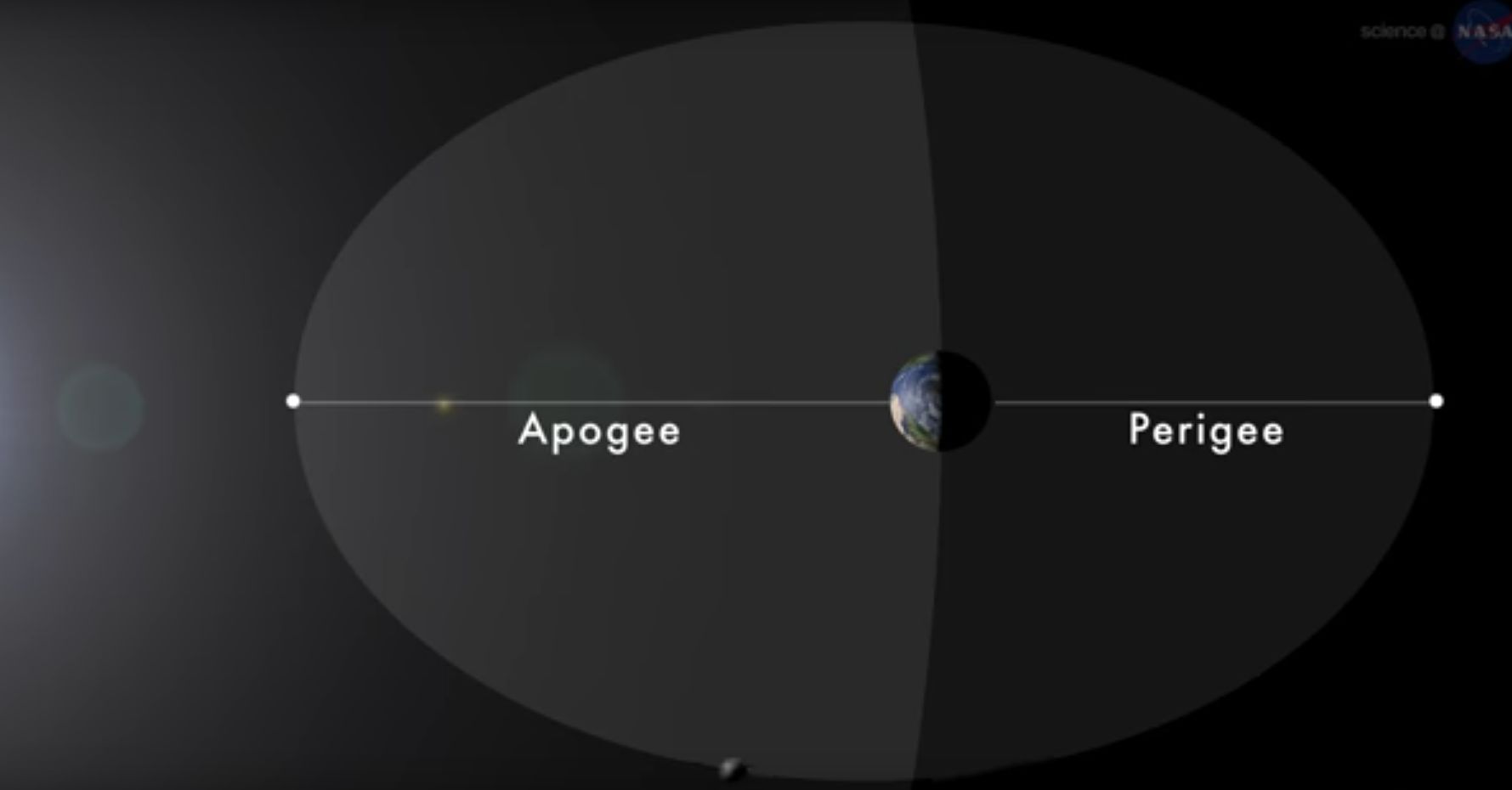
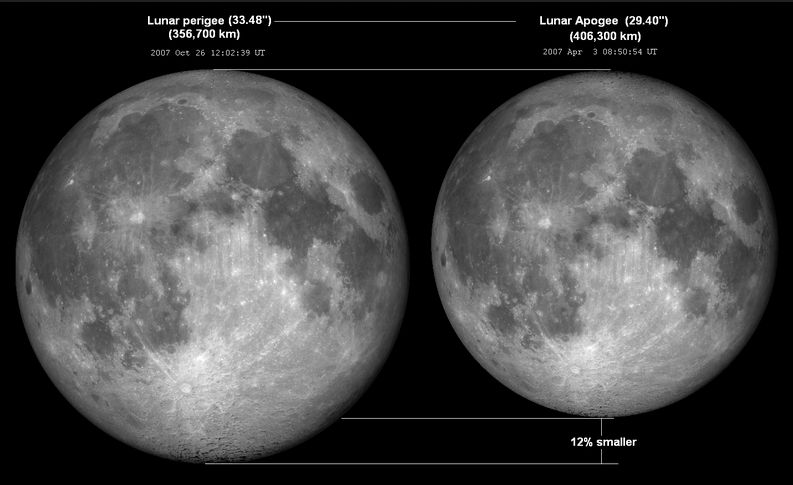
The Moon is in an elliptical orbit around the Earth, at apogee, the point furthest from the Earth, it is between 404,000–406,700 km (252,500-254,187 mi) from Earth. At perigee, the point closest to the Earth, the Moon is between 356,400–370,400 km (222,500-231,500 mi) away. A “supermoon” occurs when the Moon is both full and at perigee, when it can appear up to 14% large in diameter than “normal” full moons.
Apogee and perigee in the Moon’s orbit around Earth. Credit: NASA
“Supermoons” aren’t actually rare events; they take to occur once every 14 months on average. However, the supermoon on November 14th, scores double. Not only will be “just” 356,509 kilometres (221,524 miles) from Earth, pushing it to that 14% increase in apparent size, but also because the Earth/Moon system is approaching the time of year when it is closest to the Sun (which will occur on January 4th, 2017). Therefore, the Moon will be receiving more sunlight than average, further boosting its apparent brightness.
Together, these two events mean that the Moon will be at its “largest” and brightest in the sky since 1948. The next comparable event will not occur again until 2034 – although there will be a further “supermoon” on December 14th, when the Moon again reaches its full phase, but it will be slightly further away from the Earth in its orbit at that time, so not quite as “super”.
How the Moon can appear to differ in size at apogee (the point furthest from Earth in its orbit) and perigee (the point in its orbit closest to Earth). Credit: Catalin Paduraru
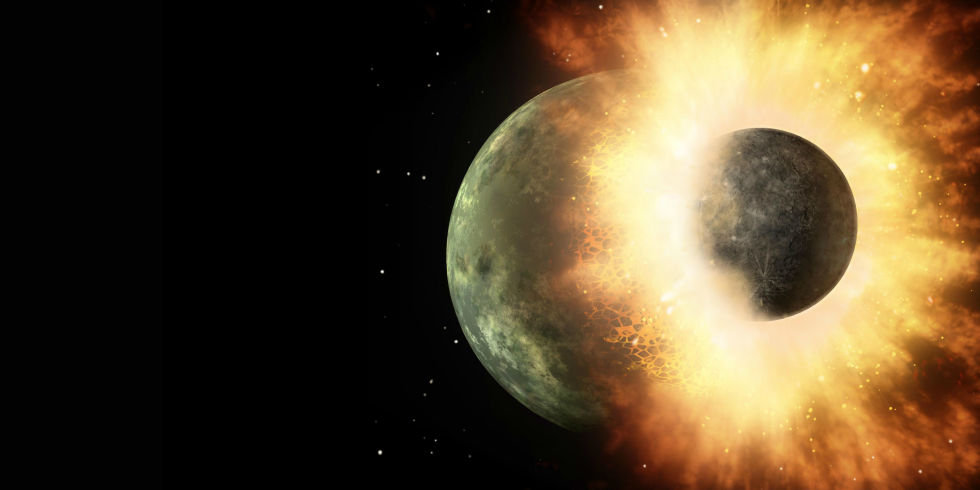
The traditional theory of the Moon’s formation is that a Mars-sized body grazed the young Earth, throwing of a cloud of material which eventually condensed into the Moon. Credit: NASA
We’re all familiar with the Moon, Earth’s cosmic companion. So familiar with it in fact, that we probably all think we know the theory behind how it got to be where it is – the result of a “giant impact” far back in Earth’s early history. However, a new study, published on October 31st in Nature, suggests what actually led to the creation of the Moon was possibly a lot more elegant than previously realised.
The Moon is actually quite unique among the solar system’s satellites. It’s relatively large when compared to its parent planet, and it is a made of pretty much the same stuff, minus some more volatile compounds that evaporated long ago. Other moons tend to be a lot more chemically diverse when compared to one another and their parent worlds.
The accepted theory of lunar formation has it that not long after primordial Earth formed, a Mars-sized object grazed it, throwing off a mass of material from which the Moon subsequently condensed. This impact set the angular momentum for the Earth-moon system, and gave the early Earth a five-hour day. Then, over the aeons, the Moon slowly receded from the Earth (as it continues to do so to this day), and Earth’s rotation has slowed to our current 24-hour day.
The Moon is in an elliptical orbit around the Earth which varies from 364,397 km at its closest, to 406,731 km at its most distant. When it’s full and at its closest point to Earth (perigee), the Moon can look over 10% bigger, and 30% brighter than when it’s at a more distant point in its orbit (apogee). However, such is the momentum of the Moon’s orbit, it is actually slowly moving further and further away from Earth, as it has been throughout its history. Credit: Wikipedia
It’s a theory all worked out be a combination on mathematics based on the moon’s current orbit, the angular momentum of the Earth-Moon system, the influence of various tidal forces, a little bit of guesswork, etc. However, it does have a couple of holes in it.
The first is that if the Moon was formed as a result of material set free during a slight collision between Earth and another body, then that material should have been a mix of debris from both Earth and the other body, giving rise to a lunar composition that should be at least somewhat different to that of Earth. The second is that if the Moon condensed from a disk of material rotating around Earth’s equator, it should be in orbit over the equator – but instead, its orbit is tilted 5 degrees off the equator.
Both of these issues have previously been explained in terms of “intervening steps” between what we see today and the original “giant impact”. However, a team of scientists led by Sarah Stewart, professor of earth and planetary sciences at the University of California, have posited an alternative explanation, which requires no “intervening steps”, but always natural mechanics to explain everything.
In their model, the “giant impact” still occurs – but it completely destroys the nascent Earth and whatever hit it, leaving a mass of vaporised and molten material orbiting the Sun, which eventually condenses to form a “new” Earth and the Moon – thus giving them similar chemical compositions. Initially, the Earth would have likely been tipped so its axis was pointing towards the Sun while spinning in a two-hour day.
Then, as angular momentum was dissipated through tidal forces, the Moon started receding from Earth, eventually reaching a point called the “LaPlace plane transition”. At this point the forces from the Earth on the Moon became less important than gravitational forces from the sun, resulting in some of the angular momentum of the Earth-Moon system transferring to the Earth-Sun system, causing the Earth to tip “upright”, while leaving the Moon in a very highly inclined orbit relative to Earth’s equator. However, as the Moon continued to slowly and naturally recede from the Earth, it eventually reached the Cassini transition, gradually reducing the Moon’s angle of inclination relative to the Earth’s equator, bringing it to the five-degree offset we see today.
Thus, with this model, no exotic intermediary steps are required to account for the Moon’s composition or why it is where it is today; everything can be explained through the application of mathematics and planetary mechanics, offering a compelling alternative to the accepted theory of lunar evolution.
China Launches the Long March 5 Heavy Lifter
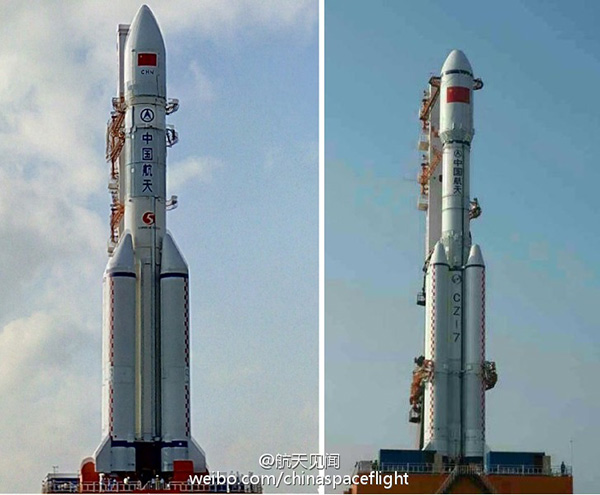
China’s Long March 5 heavy lift launch vehicle (l) is the centrepiece of China’s long-term space ambitions alongside the medium lift Long March 7 (r), which entered service earlier in 2016. Credit: CCTV
China’s newest and biggest heavy-lift rocket, the Long March 5 (Chang Zheng-5) lifted-off from the Wenchang launch centre on Hainan Island, off China’s southern coast, at 12:43:14 UT or 20:43 Beijing time on Thursday, November 3rd, carrying an experimental satellite designed to test electric-propulsion technology.
With a 25 tonne low Earth orbit payload capacity, the Long March 5 stands on a par with the current crop of heavy lift launch vehicles in operation around the world. The product of two decades of research and development, it is destined to become a centrepiece of China’s growing space ambitions.
Among its may missions, the Long March 5 will play a leading role in the construction of China’s upcoming space station, starting with the launch of the core Tianhe (“Harmony of the Heavens”) module in 2018. When completed in 2022, the 60-tonne station will comprise the core module supported by the Wentian (“Quest for the Heavens”) and Mengtian (“Dreaming of the Heavens”) pressurised experiments modules, all of which will be linked by a multi-port adaptor / EVA airlock.












 Inara Pey: Living in a Modemworld