Space Sunday: stainless steel, rovers and explorers

The Starship Hopper under construction at the SpaceX facility at Boca Chica, South Texas. Credit: Austin Barnard/Bloomberg

On Friday, January 11th, 2019, Elon Musk tweeted the first official image of the completed Starship Hopper, the new SpaceX vehicle intended to be an atmospheric test vehicle for the company’s massive Starship vehicle that forms the upper stage of what used to be called the Big Falcon Rocket, the huge lunch system SpaceX is developing.

The vehicle has been under construction at the SpaceX test facility at Boca Chica since December 2018, with the work, surprisingly, being carried out in the open, allows passers-by to photograph and film the work and post to assorted social media, causing something of a stir.

Hopper is not as large as the operational Starship vehicle will be (it is around 40 m / 130 ft tall, compared to Starship’s 52 m / 169 ft height). However, it is the same diameter (9 metres / 29 ft) and highlights the “radical” redesign of the vehicle, such as its more “retro” rocket ship look, and redesigned tail fins (which also double as its landing legs).
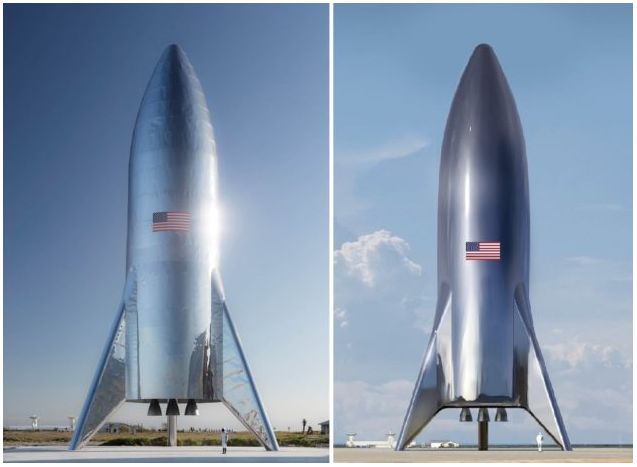
The completed Hopper (l) compared to a computer rendering of the vehicle (r), released on January 5th, 2019 by SpaceX CEO Elon Musk. Credit: SpaceX / Elon Musk

The vehicle is intended to be self-powered, using its own engines to fly to altitude, before making a controller descent and landing in the same manner as the full-sized vehicle. In this, its function mimics that of the SpaceX Grasshopper – a specially designed Falcon 9 first stage the company flew in order to learn about the handling characteristics of a Falcon 9 first stage attempting to make a controlled landing after a launch. Flights will initially be to low altitudes, then increase in height.

While Musk’s tweets indicated assembly of the vehicle was finished, further work is required to replace the temporary motors fitted to the vehicle with the flight-capable, methane-fuelled Raptor engines that will power it during ascent and descent. By the time the engines are fitted, the tail fins will have been fitted with shock absorbers to protect the vehicle against the impact of landings, and landing pads.

The “wrinkled” look to the vehicle’s hull is the result of the hull sections being made from a type of stainless-steel alloy which it is believed will be withstand atmospheric entry without the need for complex (and heavier) surface layering, such as reinforced carbon-carbon. Musk has indicated that the skin of the actual Starship will be smooth, and the vehicle will have “a smoothly curving nose section” (and windows).

In terms of the full size vehicle, the first of these is currently being fabricated, together with its booster stage – now simply called “Super Heavy”. Musk has indicated these could be ready as early as June 2019. Once operational, there will likely to be three versions of Starship:

  • The long-duration spacecraft capable of carrying passengers and /or cargo to interplanetary destinations such as the Moon and Mars or to LEO
  • A propellant tanker design to refuel other spacecraft – notably the passenger vehicle – whilst in low-Earth orbit.
  • A satellite delivery spacecraft with a large cargo bay and forward door, capable of placing both satellites and other payloads in Earth orbit, or recover items for return to Earth.

The accelerated pace of Starship / Super Heavy development is in keeping with Musk’s goal of flying Japanese billionaire Yusaku Maezawa and an entourage of artists around the moon and back in the mid-2020s. However, it comes at something of a cost. On the same day as Musk tweeted about the Hopper, SpaceX announced it would be laying-off around 10% of its current workforce, some 600 people, as it refocuses efforts on its new launch system and its broadband satellite system.

To continue delivering for our customers and to succeed in developing interplanetary spacecraft and a global space-based Internet, SpaceX must become a leaner company. “Either of these developments, even when attempted separately, have bankrupted other organisations. This means we must part ways with some talented and hard-working members of our team.

– Official SpaceX announcement

To further provide revenue, the company is also mid-way through a US $500 million funding round.

A Steampunk Explorer?

It sounds like something out of a Steampunk novel, but a collaboration between a private space company and the University of Central Florida has shown that a vehicle sent to the asteroids could explore them “indefinitely” using  steam power to propel itself from asteroid to asteroid.

Honeybee Robotics, based in California, and the University of Central Florida (UCF) have developed a vehicle they called World Is Not Enough (WINE), capable of extracting water from asteroids or other planetary bodies, which it then uses as steam to propel itself to its next mining target. This effectively means it – or a vehicle like it – could become capable of indefinite self-refuelling and explore somewhere like the asteroid belt for decades.
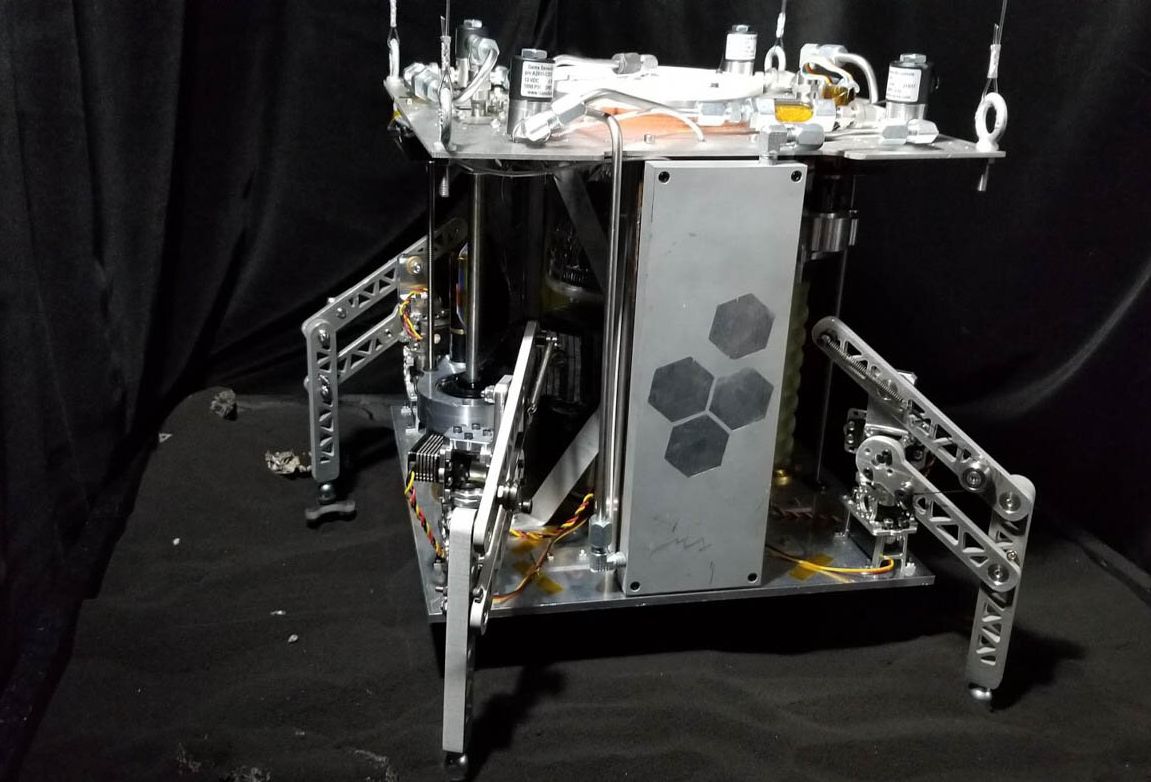
By using steam rather than fuel, the World Is Not Enough (WINE) spacecraft prototype can theoretically explore “forever,” as long as water and sufficiently low gravity is present. Credit: University of Central Florida

UCF planetary research scientist Phil Metzger performed extensive computer modelling and simulations over three years in order to show the feasibility of steam propulsion, with the university developing simulated asteroid material that could be used as a feedstock. This work allowed Honeybee Robotics to build the microwave oven sized prototype, with Florida-based Embry-Riddle Aeronautical University providing the steam-powered rocket motors. The complete system was demonstrated for the first time on December 31st, 2018.

It’s awesome. WINE successfully mined the soil, made rocket propellant, and launched itself on a jet of steam extracted from the simulant. We could potentially use this technology to hop on the Moon, Ceres, Europa, Titan, Pluto, the poles of Mercury, asteroids—anywhere there is water and sufficiently low gravity.

– Phil Metzger, UFC, on the WINE prototype demonstration

One of the biggest constraints on robotic missions is the amount of fuel they can carry for manoeuvring. Being able to generate its own rocket propellant in the form of steam frees a vehicle from this constraint. All that is required is a suitable feedstock (and there is ice aplenty to be found throughout the solar system) and electrical energy, which could be supplied via solar panels or a small nuclear RTG “battery”.

Funding for the project has thus far been supported by the NASA Small Business Technology Transfer programme, intended to foster collaboration between universities and small businesses in the development of marketable commercial products. UFC and Honeybee are now seeking partners to continue development of the system.

Continue reading “Space Sunday: stainless steel, rovers and explorers”

High Fidelity pilots HFC and Ethereum trading

via High Fidelity

On Tuesday, January 8th, 2019, High Fidelity announced the start of a pilot programme that will allow High Fidelity users to trade between High Fidelity Coin s(HFC) and Ehterium Either (ETH).

Etherium is an open-source, public, blockchain based distributed computing platform / operating system featuring smart contract (scripting) functionality. It incorporates a cryptocurrency  – the Ether.

The latter functions in a similar manner to the Bitcoin, and its use has been boosted over the last two years by the  Enterprise Ethereum Alliance (EEA), an non-profit organisation of over 150 members, including national and global banks, technology companies such as Cisco and Microsoft, investment houses and research organisations, with the aim of driving the use of Ethereum blockchain technology as an open-standard across multiple market sectors.

via High Fidelity

Initially, High Fidelity will be allowing users to purchase HFC using ETH. However, over time, all High Fidelity users will be able to buy and sell their HFC for ETH, although an ETH wallet will be required.

Trades of HFC will be handled in fixed amounts of $25 or $50 (HFC 2,500 or 5,000), and will be handled via an in-world banker, through a process similar to that currently used to convert HFCs to USD. As the programme with ETH develops, High Fidelity plan to start offering an automated means of selling HFCs for ETH, and may eventually see the ability to sell HFCs directly for USD values discontinued.

An important point to note with trades is that HFC is a stablecoin pegged to the US dollar (100 HFC = US $1.00), while Ethereum varies against the Dollar. Thus, the exchange rate between HFC and ETH will fluctuate.

This is a further interesting move by High Fidelity, which High Fidelity see as being key to the future of buying / selling HFC:

Over time, we see this being our primary method for purchasing and selling HFC. It’s convenient, global, well-governed and broadly adopted. In future, we may enable trades to other cryptocurrencies or tokens, either directly or through third-party exchanges. We also hope that HFC will be used by other VR platforms or applications, making the transfer to Ethereum even more useful.

– High Fidelity blog post on HFC and ETH trading

You can read the full announcement here.

Space Sunday: Ultima Thule and Chang’e 4

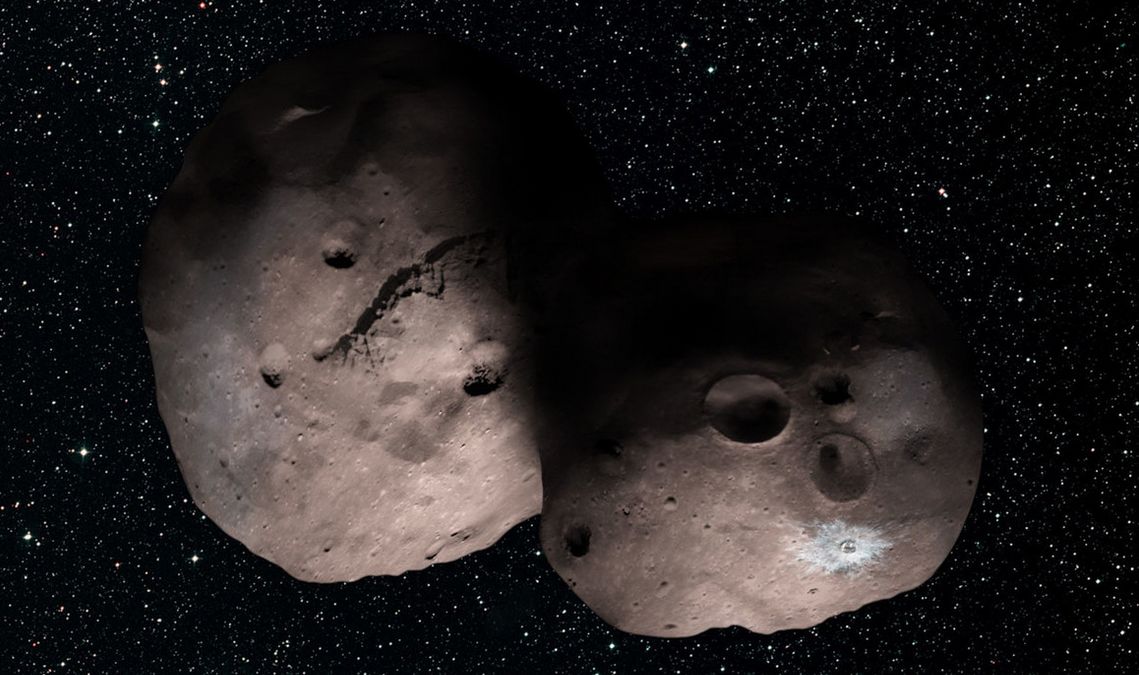
An artist’s impression of how the surface of Ultima Thule might look, based on the images and data returned by New Horizons thus far. Credit: NASA

We set a record. Never before has a spacecraft explored anything so far away. Think of it. We’re a billion miles farther than Pluto [and] Just like with Pluto, we could not be happier. What you’re seeing is the first contact binary ever explored by spacecraft: two completely separate objects that are now joined together.

– Alan Stern, New Horizons principal investigator

The astronomical year got off to a flying start on January 1st, 2019 when NASA’ New Horizons vehicle – the same craft that flew by Pluto and Charon and their attendant moons in 2015 – shot past (486958) 2014 MU69, a trans-Neptunian Object (TNO) residing in the Kuiper belt. A relatively tiny object, and dubbed Ultima Thule, it wasn’t even known about when the New Horizons mission launched in January 2006.

As I noted in my previous Space Sunday report, Kuiper Belt objects are of particular interest to planetary astronomers and scientists as they represent the oldest near-pristine material in the solar system, and so could contain many secrets, from how rocky planets formed through to the origins of life. Ultima Thule itself has been of particular interest because data gathered from the Hubble Space Telescope (HST) suggested it might be a binary object due to its apparent brightness fluctuating, suggesting two bodies orbiting one another. However, as New Horizons slipped into the final days leading up to the fly-by, it seemed to report no variance’s in the light reflected by the object.

The space craft reached its point of closest approach to Ultima Thule at 05:33 UT on the morning of January 1st, 2019. However, the nature of the approach, coupled with the huge distance between Earth and the vehicle meant that the first images and data wouldn’t be received for several hours after the probe has passed the object (it takes over 6 hours for radio signals to reach Earth from the vehicle), so at the time of closest approach, scientists and the public had to make do with the images received in the 24 hours preceding it.

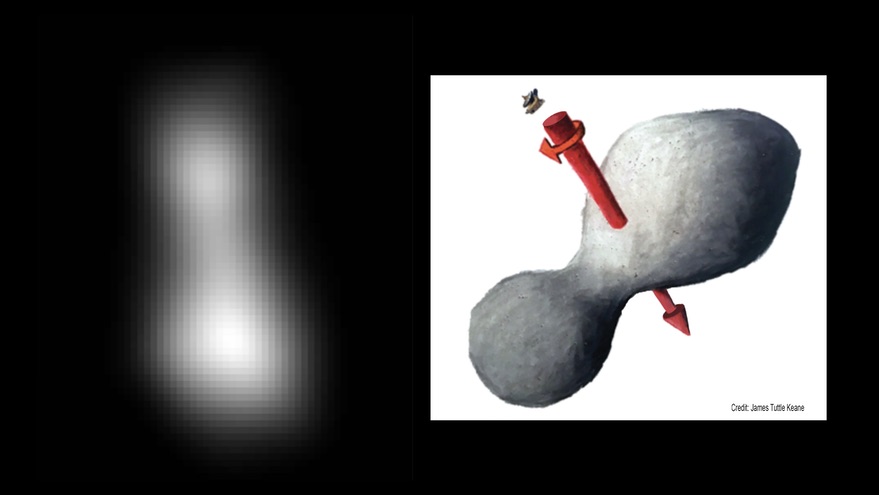
Left: a composite image of Ultima Thule taken by New Horizons on December 31st. 2018, at a distance of approx. 1.2 million km revealing the object to most likely be a “contact binary”. Right: a sketch showing the estimated rotation axis of the object relative to New Horizons, helping to explain when no variances in brightness were recorded ahead of the encounter. Credit: NASA / JHU APL / SwRI; James Tuttle Keane

These images, captured while New Horizons was still more than 1 million kilometres (635,000 mi) from Ultima Thule, were enough to confirm that, rather than being either a single elongated object (as suggested by the lack of variance in brightness the probe was recording) or two objects orbiting one another, Ultima Thule is in fact a “contact binary” – objects conjoined after gently colliding with one another, to form a shape initially referred to as a “bowling pin” (this latter changed to “dirty snowman” as clearer images were received). They also revealed why New Horizons wasn’t seeing any brightness variations: whereas Hubble was seeing Ultima Thule from more of an “end on” angle (like a bottle tumbling through the air towards you), New Horizons was approach it more-or-less along its axis of rotation (like standing in front of a slowly turning propeller), so it was always reflecting the same amount of light.

The initial images led members of the New Horizons mission team to call Ultima Thule the “first ever” contact binary object to be explored. However, this might be disputed; the nucleus of comet 67P/Churyumov–Gerasimenko, as seen by ESA’s Rosetta mission, as has two lobes connected by a narrow “neck” region which could mark it as a contact binary.

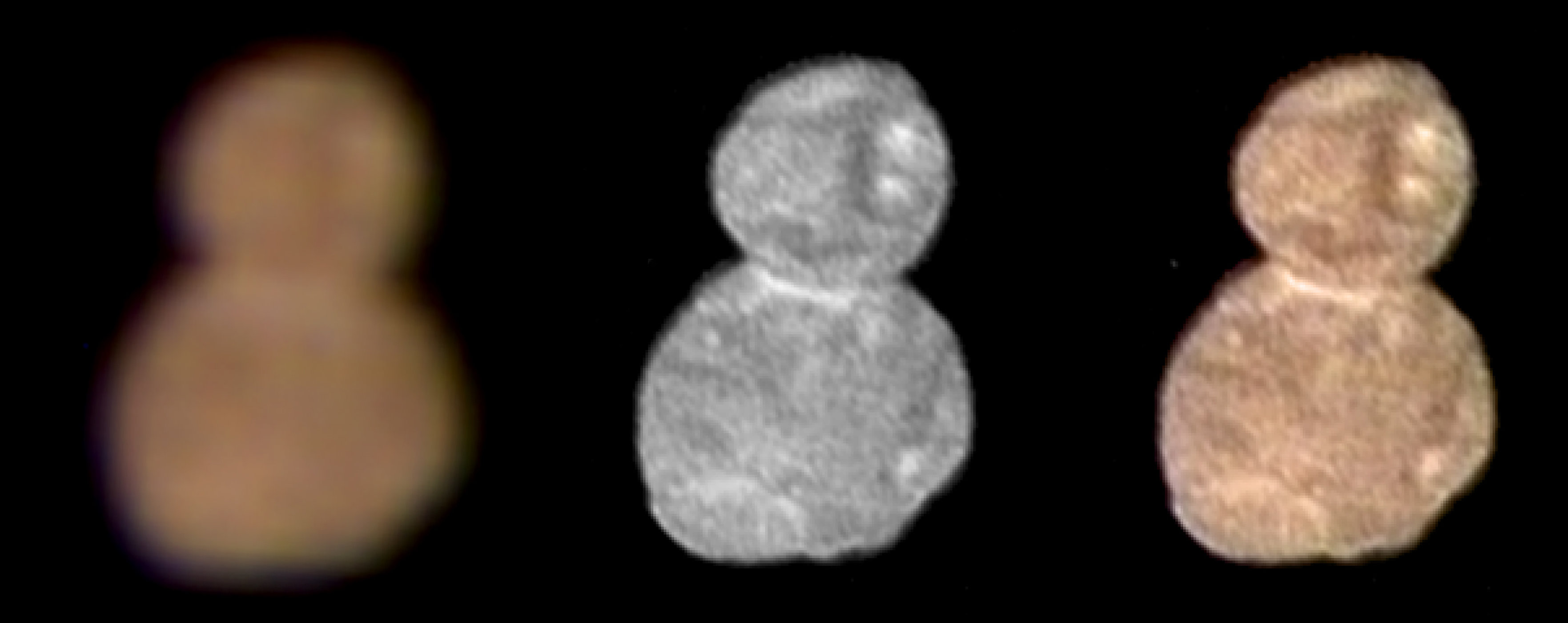
This first colour photo of Ultima Thule reveals its red colour as seen by New Horizons spacecraft from a distance of 137,000 km (85,000 mi), captured on January 1st, 2019, shortly ahead of the point of closest approach. From left to right: an enhanced colour image, a higher-resolution black and white image, and a composite combining both into a more detailed view. Credit: NASA / JHU APL / SwRI

Nevertheless, there is still something magical about the way the two lobes came together – as a member of the New Horizons team put it, the bump of them joining would have been so gentle, had it been caused by a car bumping your own, it wouldn’t result in any real damage. The lobes themselves are of unequal size; at 19 km (12 mi) across, the larger has been dubbed “Ultima”, while the smaller lobe has been dubbed “Thule”, and is 14 km (9 mi) across. Combined, these give the object an overall length of some 33 km (21 mi). That they came together so gently has already been seen as a confirmation of the pebble accretion theory of planetary formation.

The exterior of both lobes is probably a mix of water, methane and nitrogen ices, doubtless mixed with other elements  / minerals, and the reddish hue revealed in the colour images thus far returned is likely the result of the irradiation of ices on its surface – a process witnessed on Pluto. However, it will not until photographs taken much closer to the object – notably those at closest approach, a mere 3,500 km (2,200 mi) – are received in mid-February, that we’ll have a clear view of the object’s topography.

Following the fly-by, the images received by mission control were taken at distances between 137,000 km (85,000 mi) and 28,000 km (18,000 mi) from the object, and part of the initial data transfer. In all, some 7 Gb of data was gathered, but due to the complexities involved, it will take 20 months for all of it to be received on Earth. In fact, at the time this article was written, and due to the passage of the Sun between the spacecraft and Earth, data transfer has been suspended for five days (January 5th through 10th, 2019) to prevent data loss due to solar interference. Even so, the images that have been received have been enough to not only reveal some of Ultima Thule’s secrets, but to also create new mysteries about it.

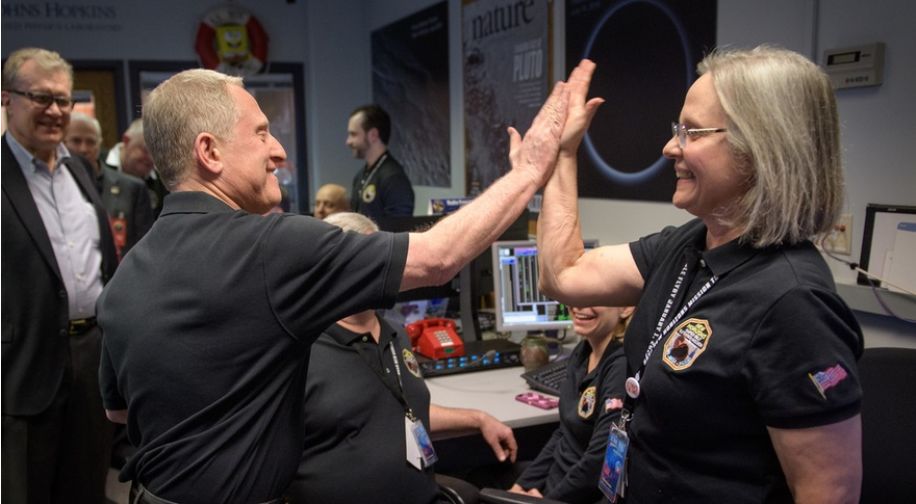
Alan Stern, the principal investigator for New Horizons, high-fives Alice Bowman, the mission operations manager at JHU APL, after controllers received a transmission from the spacecraft confirming a successful fly-by of Ultima Thule on January 1st, 2019. Credit: NASA / Bill Ingalls

One of these mysteries is that computer modelling suggests that given the way the two lobes came together, Ultima Thule should have a rate of spin to complete one revolution every 3 or 4 hours. However, data from New Horizons indicates it is spinning far slower: one revolution every 15 hours. So something must have slowed it down – the question is, what?

The most obvious explanation would be the gravitational influence of nearby objects – say two or three small moons orbiting Ultima Thule. However, due to the risk of collision, the space around Ultima Thule was surveyed well ahead of the fly-by, and astronomers are convinced there is nothing orbiting it either beyond 800 km (500 mi) or closer than 160 km (100 mi) – although that does leave a fairly large sphere of space between the two which may yet reveal one or more objects. More will be known on this in late January, when data on New Horizons’ own studies of the space around Ultima Thule should be received by mission control.

Continue reading “Space Sunday: Ultima Thule and Chang’e 4”

Space Sunday: Ultima Thule, Dream Chaser and capsule leaks

An artist’s impression of New Horizons passing Ultima Thule on January 1st, 2019. Credit: Adrian Mann/All About Space

On July 14th, 2015, NASA’s New Horizons vehicle, the front-end of the mission of the same name, made its closest flyby of Pluto and Charon (see Perfectly Pluto for more). Before, during and after the point of closest approach, the vehicle gathered huge amounts of data about Pluto, Charon and their attendant moonlets. Much of the data is still being studied, but in the years since the encounter, New Horizons has revolutionised our thinking about dwarf planets.

Since that time, the space vehicle has been travelling on out into the solar system at a speed of around 49,600 km/h (31,000 mph), and almost as soon as the Pluto flyby had been completed, with New Horizons still having plenty of power thanks to its nuclear batteries, astronomers started looking along its route for a possible follow-up target for examination.

After due consideration of options, a suitable target was selected. officially designated (486958) 2014 MU69, the object is a trans-Neptunian body located in the Kuiper belt. Of an elongated, shape, it is estimated to be around 30 km (18.75 mi), and might be a binary system of objects orbiting one another, although this is currently in doubt.

Discovered by astronomers using the Hubble Space Telescope in June 2014, just over a year before New Horizons reached Pluto, the object was unofficially dubbed “Ultima Thule” (Thule, in Greek and Roman literature, being the farthest north you could go, and “Ultima” being used to indicate “beyond”).  It was selected because of its relative proximity to the probe’s projected course out through the Kuiper belt, allowing it to be reached with minimal course corrections using the probe’s orientation thrusters.

The New Horizons journey. Credit: JHU/APL

The Kuiper belt is a massive ring of stellar objects surrounding the solar system between 30 and 55 AU distance (1 AU – astronomical unit –  being the average distance between the Sun and Earth). It is often regarded as the “outer edge” of our solar system, but the truth is, the solar system extends much, much further. Pluto and Charon are themselves Trans-Neptunian objects within the Kuiper belt.

The region – which might be described more as a doughnut than a belt – contains tens of thousands of objects (with more being discovered on almost a weekly basis). However, such is the volume of space they occupy, most are separated from one another by at least the distance separating Earth from the Sun. They are of great interest to astronomers, as they represent pristine material dating back to the very birth of the solar system, so studying them could tell us a lot more about the place in which we live.

The [Kuiper] belt is analogous to the solar system’s attic. It’s an ancient region, very far from the sun, which has been preserved in a deep freeze. It’s the equivalent of an archaeological dig into the history and formation of the planets. So, scientifically it’s a gold mine, and by going there with a spacecraft and observing KBOs up close, like we’ll be doing with Ultima, we hope to learn a lot about how the early formation stages of the planets took place.

– Alan Stern, New Horizons principal investigator

However, New Horizons won’t have long to study Ultima Thule in detail. If all goes well, the vehicle will blaze past the object on New Year’s Day 2019, at 05:33 GMT), travelling far too fast to slow down. At its closest approach, the probe will be some 3,540 km (2,200 mi) from Ultima Thule, which will appear about as large to it as the full Moon does to observers on Earth. As currently takes 6 hours and 8 minutes for a signal to reach Earth from New Horizons, it means that – as with its Pluto encounter – the probe will be working on an automated basis and pre-programmed commands throughout the encounter.

Simulation of anticipated images the LORRI camera aboard New Horizons vehicle will capture during the close approach to Ultima Thule

Even so, astronomers around the world are eagerly awaiting the encounter, as very little in known about Ultima Thule, and what New Horizions has apparently discovered as it approaches this tiny rock – it is too small to even classify as a dwarf planet – has already piqued interest.

What we know of the trans-Neptunian region is that it’s the leftover remnants of the objects that didn’t make it into being planets. These little rocky and icy worlds were formed in the initial disc of material around the sun, the ones that never grew up into being planets in their own right. Since then, they’ve been sculpted by changes in the orbital positions of the giant planets, particularly Neptune. What we see there today are materials from that initial disc. Some of them are familiar, like water ice and rock, but some of them are unfamiliar, like kitchen cleaning chemicals you have under your sink, in solid form

– Michele Bannister, Outer Solar System Origins Survey, Queen’s University, Belfast

As noted earlier, it had been believed, from data gathered by Hubble, that Ultima Thule was an elongated, possibly binary, object. However, on December 20th, 2018, the New Horizons team reported that the light measured from 2014 MU69 is constant, as would be expected from a spherical body. This disparity between Hubble’s finding and those of New Horizons have yet to be explained.

One issue with the flyby has been the partial US Government shut-down that started on December 22nd, 2018, and which has impacted some of NASA’s public outreach feeds. To compensate, the Applied Physics Laboratory, responsible for designing and building New Horizons, and part of John Hopkins University, has taken over mission briefings and will provide live updates via the JHUAPL YouTube page for flyby events on Monday, December 31st 2018, and Tuesday January 1st, 2019. You can see a full schedule here.

Continue reading “Space Sunday: Ultima Thule, Dream Chaser and capsule leaks”

Thoughts on VR and AR, part 1

via proximie.com

I haven’t written too much about “consumer” virtual reality and / or augmented reality during 2018, primarily because this past year has been rather quiescent when compared to 2017 and earlier, so outside of one or two events, there hasn’t been that much I’ve been prompted to write about. As such, and as we pass from 2018 to 2019, it seems a good time to take a broad look at both and where they might be going, at least from a purely armchair perspective.

In doing so, I’m not attempting to set myself up as any kind of “expert” or offer predictions per se; I’ve simply been gorging myself on a wide range of articles and reports on AR, VR and mixed reality over the last few weeks to catch up on everything, and with this article I’ll focus on virtual reality.

(Note that in writing this article, I’m deliberately ignoring two products that involve VR: Microsoft Mixed Reality and Apple’s rumoured AR / VR system. The former, because Microsoft appears to be playing a much longer game, and it is unclear how MMR will impact markets down the road; the latter because it’s unclear how Apple’s product will mix AR and VR, it’s overall capabilities, price point or precise nature.)

Consumer focused virtual reality has always had a hard mountain to climb. From the start, predictions of its growth verged on the ridiculous. At the end of 2015, for example, TrendForce claimed sales of VR hardware, software and services would hit US $70 billion by 2020, a figure that, at the time tended to be taken for granted despite the fact that when it was made, the consumer versions of the Oculus Rift and HTC Vive hadn’t even started shipping. Nor were TrendForce alone in the hyping.

Consumer-focused VR was drastically over-hyped before the first consumer version of the Oculus Rift had even launched  – something which had perhaps come back to haunt it. via TrendForce

Obviously, VR hasn’t achieved anything like this kind of volume, but it is growing. In 2017, for example, total VR hardware and software sales reached US $2.8 billion, three years ahead of the time frame IHS Markit (one of the more reserved analytics companies looking at VR in late 2015) predicted. In 2018, this increased to US $3.3 billion; a relatively modest growth, but not unexpected given that outside of the Oculus Go, there haven’t been any major releases of VR headsets. This modest growth in sales, coupled with the lack of exciting new hardware releases has perhaps lead to more negativity around VR being voiced than previous years. However, 2019 could be the start of a “turnaround” for VR.

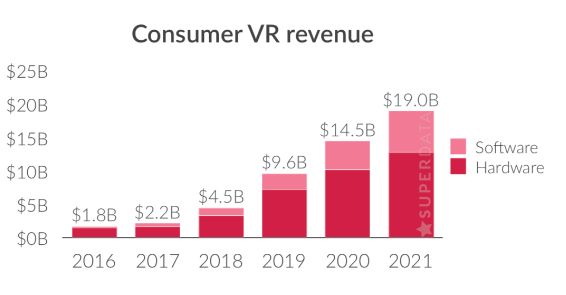
VR’s current and projected growth. Source: SuperData

As it is, SuperData, which specialises in analysing the computer and gaming sectors, predicts that the VR market will double total revenues to US $9.6  billion in 2019. They further suggest revenues could grow to US $19.0 billion by the end of 2021. These might again sound like inflated figures – particularly the idea of a five-fold revenue increase in just three years, but there are actually two or three reasons to suggest why 2019 could well see significant growth in revenue for VR, and which will see it continue to trend upwards at a rate somewhat faster than seen thus far.

Up until the arrival of the Oculus Go earlier in 2018, consumer VR hardware had been more-or-less split into three areas: high-end tethered systems requiring upmarket PCs to power them; units dependent on the use of smartphones for a more limited immersive experience, and what might be termed a purely games oriented solution in the Sony Playstation VR. As such, all have been somewhat limited in their appeal / reach.

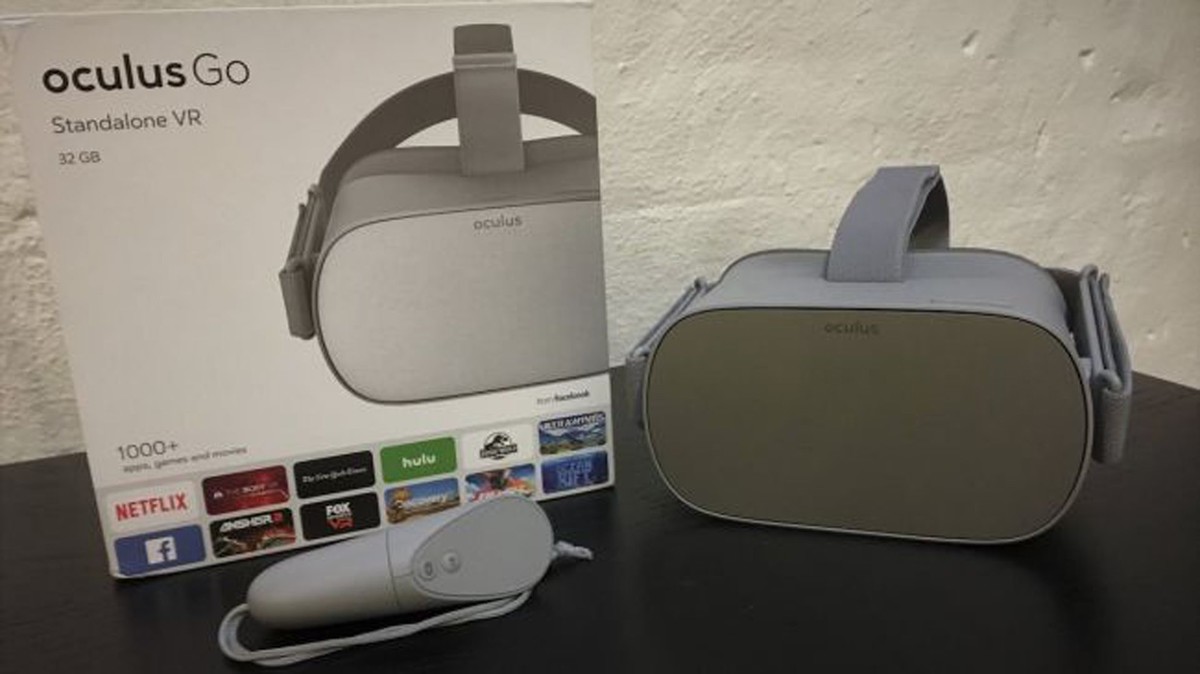
Oculus Go: 2560×1440 @ 72Hz screen; 101-degrees field-of-view; 3 DoF tracking; Snapdragon 821; price and on-board storage: US $199 / 32 GB and US $249 / 64 GB

However, in 2018 the Oculus Go arrived, and in 2019 it is set to be joined by the Oculus Quest and the Vive Focus. The significance of these three units is that they are entirely self-contained and provide an immediate VR experience right out-of-the-box. No need to hook up a heavyweight PC (possibly at added expense) for the heavy-lifting, or to have a suitable smartphone to provide the visuals.

While both the Quest (shipping in 2019) and the Focus (currently only available in China) have yet to  become globally available, their potential impact might be seen in the positive response the Go generated at launch, as noted by SuperData:

Oculus Go is part of an important movement. Facebook sold more units of the standalone headset in its launch quarter than they did the Oculus Rift in the entire first half of 2017. Its price and convenience are proving to be selling points.

– Stephanie Llamas, SuperData Head of XR data research

What is particularly interesting about the response is that it has not been limited to purely “home” use. While the Go is marketed as an “entertainment” headset, it has already been seen as a means of expanding VR’s use within enterprise markets. Take Walmart as an  example.

Continue reading “Thoughts on VR and AR, part 1”

Space Sunday: recalling Apollo 8

The first image taken by humans of the whole Earth, captured by Bill Anders. It shows the Earth at a distance of 30,000 km (18,750 mi). South is at the top, with South America visible at the covering the top half centre, with Africa entering into shadow. Credit: NASA / Bill Anders (as08-16-2593hr)

2019 marks the 50th anniversary of human beings setting foot on the surface of our Moon. The Apollo programme may have first and foremost been driven out of political need / desires, but it nevertheless stands as a remarkable achievement, given it came n the same decade when a human being first flew in space, and a little under 12 years since the very first satellite orbited the Earth.

To this day, Apollo stands as one of the most remarkable space programmes ever witnessed in terms of scale, cost, and return. It propelled a generation of American school children to pursue careers in engineering, flight, the sciences and more. In all, the Apollo lunar programme flew a total of 11 crews in space between 1967 and 1972, nine of them to the Moon, with two crewed missions to Earth orbit.

After the tragedy of the Apollo 1 fire in January 1967, which claimed the lives of Virgil “Gus” Grissom, Edward White II and Roger B. Chaffee, NASA worked hard to redesign the Apollo Command Module, providing far greater insulation against the risk of fire, as well as altering the vehicle’s atmosphere (from 100% oxygen to a 60/40 oxygen / nitrogen mix) and altering the main hatch so that the crew could escape in the event of a launch pad emergency. In October 1968, the redesigned vehicle, along with its supporting Service Module (together referred to as the Command and Service Module, or CSM) was tested in Earth orbit for the first time by the crew of Apollo 7.

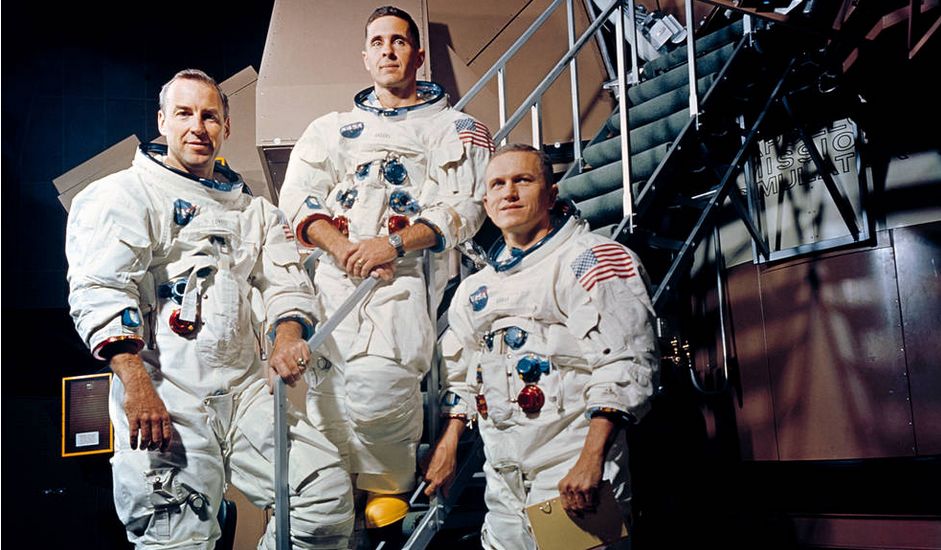
The crew of Apollo 8: (l) James A Lovell Jr, Command Module Pilot; (c) William A. Anders (Lunar Module pilot, although no actual lunar Module was flown); (r) Frank Borman, Mission Commander. This official photograph was taken on November 22nd, 1968, a month before they would orbit the Moon. Credit: NASA

Scheduled for launch towards the end of 1968, Apollo 8 had originally been planned as the first orbital flight test of the CSM and Lunar Module (LM). However, two events encouraged NASA to revisit their plans. Due to continued delays in the delivery of a flight-ready LM, the agency decided to swap the Apollo 8 and Apollo 9 missions and crews around; Apollo 9 would flight-test CSM and LM, once available. Meanwhile, Apollo 8, carrying Frank Borman, Jim Lovell and Bill Anders, and marking the first crewed flight of the mighty Saturn V rocket, would be used in an orbital flight designed to simulate the atmospheric re-entry at the speeds a Command Module would face on a return from the Moon without actually sending the crew to the Moon.

Then, in August and September 1969 photographs captured by US spy satellites suggested the Soviet Union had one of its massive N1 rocket, easily the equal of Saturn V, sitting on a launch pad. With fears that the Soviet Union was perhaps approaching the point where it could launch a crewed mission to the Moon, Apollo 8 was further revised and Borman, Lovell and Anders were informed they’d be spending Christmas 1968 where no other person had spent Christmas before: in orbit around the Moon, allowing them to fully check-out the CSM as it would be flown in an actual lunar landing mission.

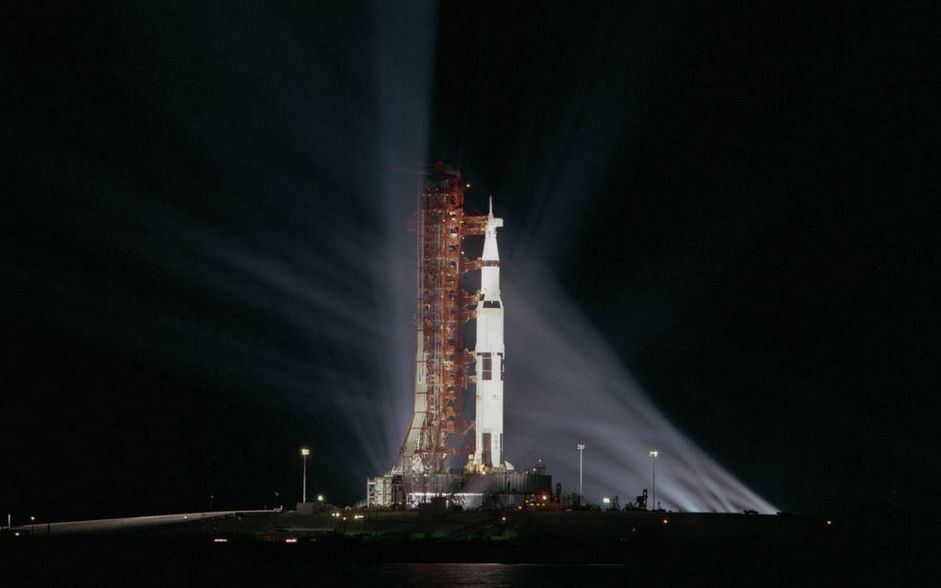
Apollo 8 on the launch pad the night before launch. Credit NASA

So it was that on Saturday, December 21st, 1968, Borman, Lovell and Anders were strapped into their seats atop the 110.6 metre (363 ft) tall Saturn V, about to undertake the longest journey ever undertaken by humans up until that point in time. At 07:51 local time (12:51 UTC) the five massive F-5 engines of the rocket’s first stage thundered into life, slowly lifting the 2,812 tonne (US 3,100 short tons) vehicle into the sky.

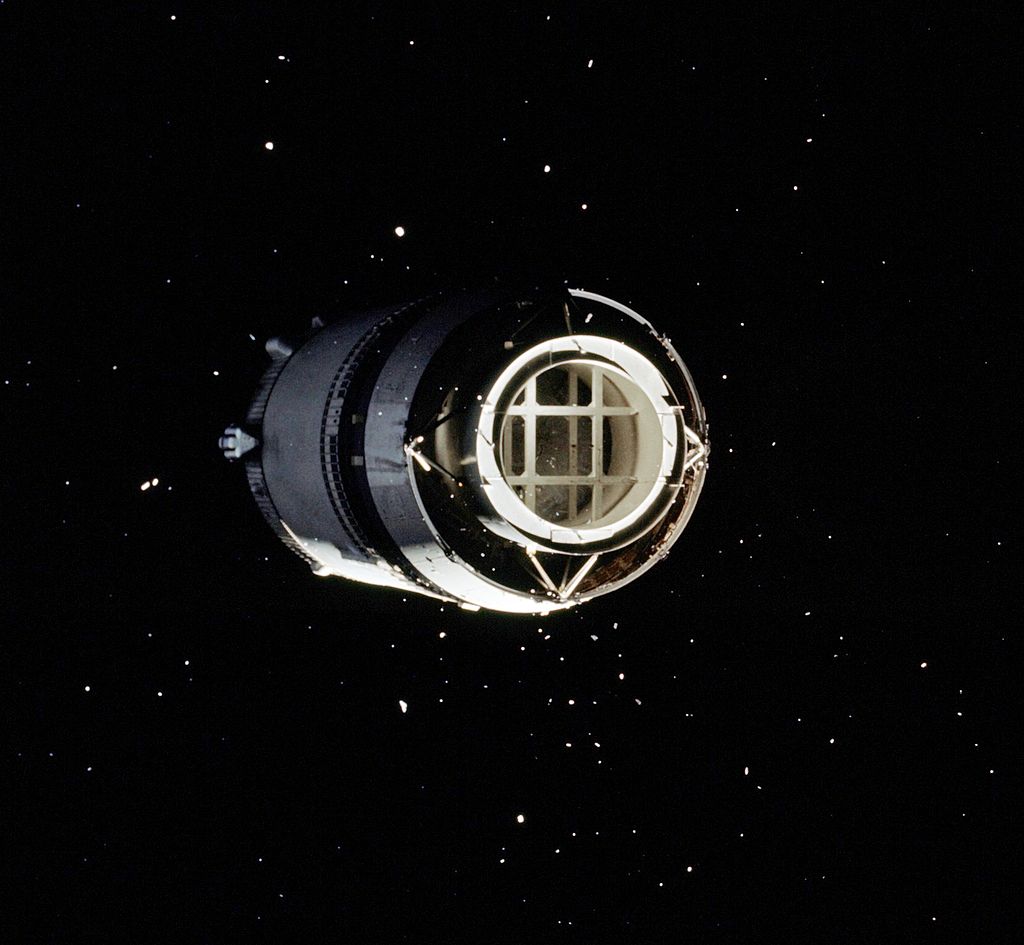
On reaching orbit, the CSM still attached to the Saturn V’s third stage, spent some 2 hours and 30 minutes in orbit while the crew performed a final check of their systems. Then the S-IVB motor was re-started, and in five minutes accelerated the vehicle from 7,600 to 10,800 metres per second (25,000 to 35,000 ft/s), pushing it away from Earth and on course for the Moon. With TLI – Trans-Lunar Injection successfully completed, the crew separated the CSM and rotated it to photograph the expended third stage, still following behind.

The Apollo 8 S-IVB third stage, imaged from the Command module, shortly after separation. The object at the forward end of the rocket stage is a Lunar Module Test Article, a dummy payload carried in place of an actual Lunar Module. Credit: NASA (from official image AS8-16-2583)

After a mid-course correction, and around 55 hours and 40 minutes after launch, the crew of Apollo 8 became the first humans to enter the gravitational sphere of influence of another celestial body as the effect of the Moon’s gravitational force on the vehicle had become stronger than that of the Earth. Nine hours later, the crew performed the second of two mid-course corrections using the CSM’s reaction control system, bringing them to within 115.4 km (71.7 m) of the lunar surface and oriented ready for a burn of the Service Module’s main motor to slow them into lunar orbit.

Continue reading “Space Sunday: recalling Apollo 8”