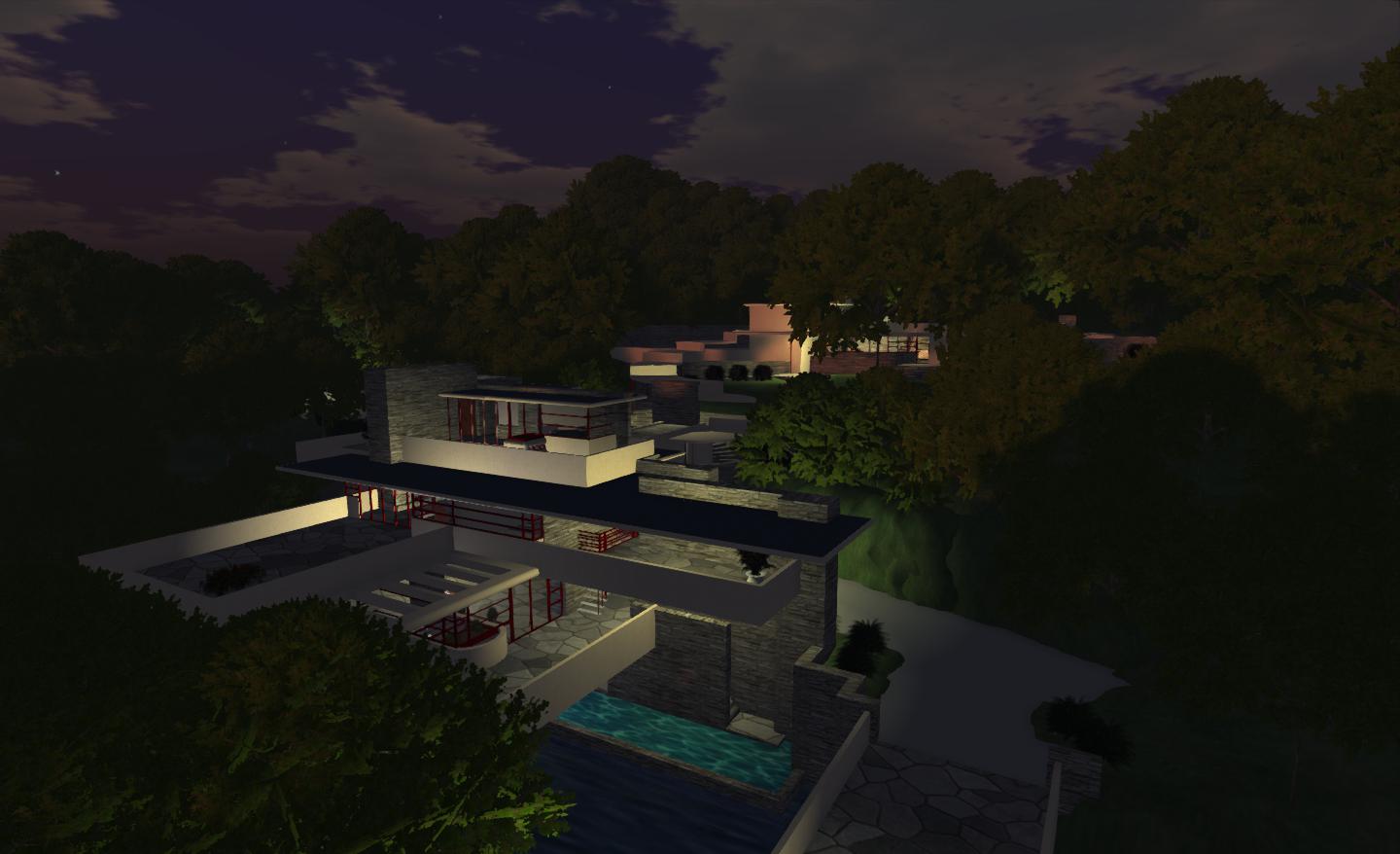
In 2012, the first part of my SL year was spent re-working my take on Frank Lloyd Wright’s famous “Fallingwater“, which eventually wound-up in a quarter-sim in-world for a few weeks.
That build is now boxed for a rainy day, but as I indicated later in the year, I’ve reproduced Fallingwater in Kitely, where it has a full region of its own, allowing me to develop a landscape more in keeping with that of the original. Since then, I’ve been tinkering around with it, adding a region windlight and generally tightening things up. There are still some parts I want to rework, once I have better source material by way of photos (most notably Bear River and the falls), but for now the house is just about done.
With the Second Life build, I produced a modest video; however the result wasn’t overly brilliant – largely because I didn’t really appreciate what I was doing in terms of the technical side of producing the video. Recently, I’ve had some good advice and help from Fuzonacid via YouTube, prompting me to have a further go, this time focusing on the Kitely build.
As it is the start of a new year, I could hardly let it pass without reference to my obsession :), so I hope you enjoy the video (and the Flickr slideshow has also been updated!).
It has continued to be a little quiet, news-wise where the Mars Science Laboratory (MSL) mission is concerned. As mentioned last time, this is hardly surprising, given the way the news cycle works.
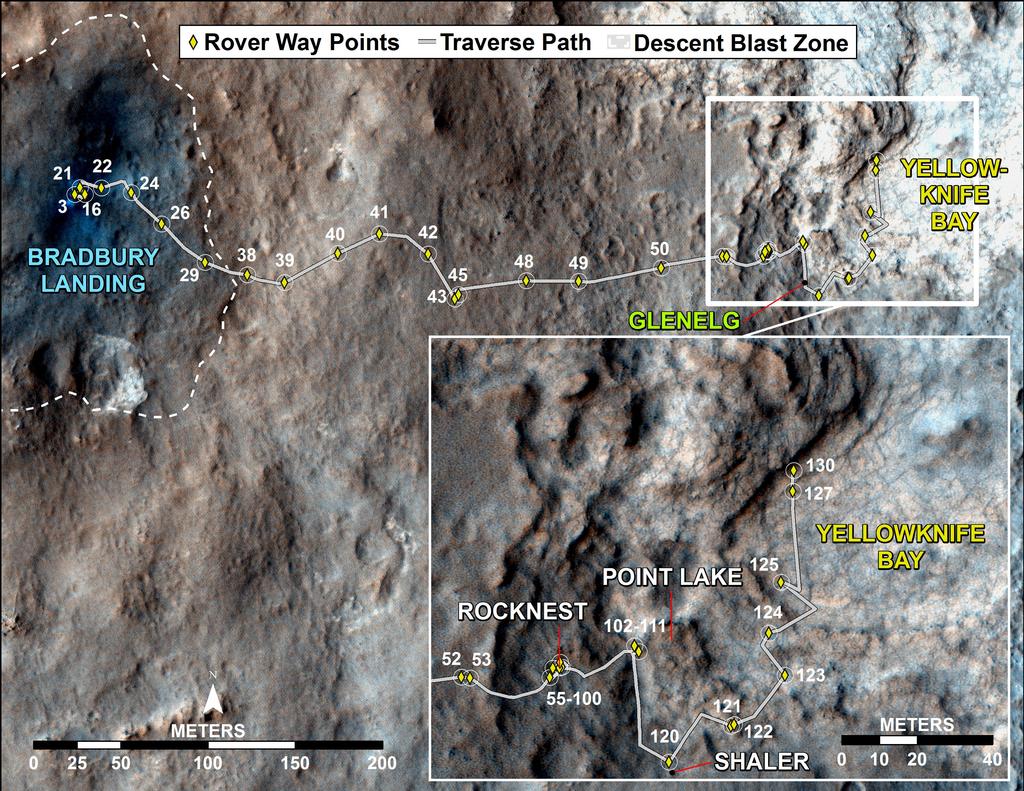
Since my last report, Curiosity has started exploring the depression slight to east of Glenelg which has been given the name “Yellowknife Bay”. This is an area of one of three terrain types which come together within Glenelg itself (one of the other two being the terrain the rover has been traversing since its arrival on Mars at the start of August). It is very different in nature to the terrain found around the landing site at Bradbury Landing, and an initial approach to the area was halted on December 10th (Sol 123) when sensors on the rover reported conflicting angles of tilt to the main computer. While Curiosity was in no danger of toppling over, an on-board safety protocol was initiated which halted the rover’s planned drive while it ‘phoned home for advice.
Curiosity’s progress (click to enlarge)
Confident the rover was in no danger, mission managers instructed Curiosity to resume its drive on Sol 124, which saw it complete the planned traverse from the 10th December and pass over a 1/2-metre lip into the depression proper. On Sol 125 (December 12th) Curiosity covered a further 26.1 metres (86 ft), moving well into the depression, surveying a number of rocks along the way with both the Mastcam system and ChemCam in a series of remote sensing exercises.
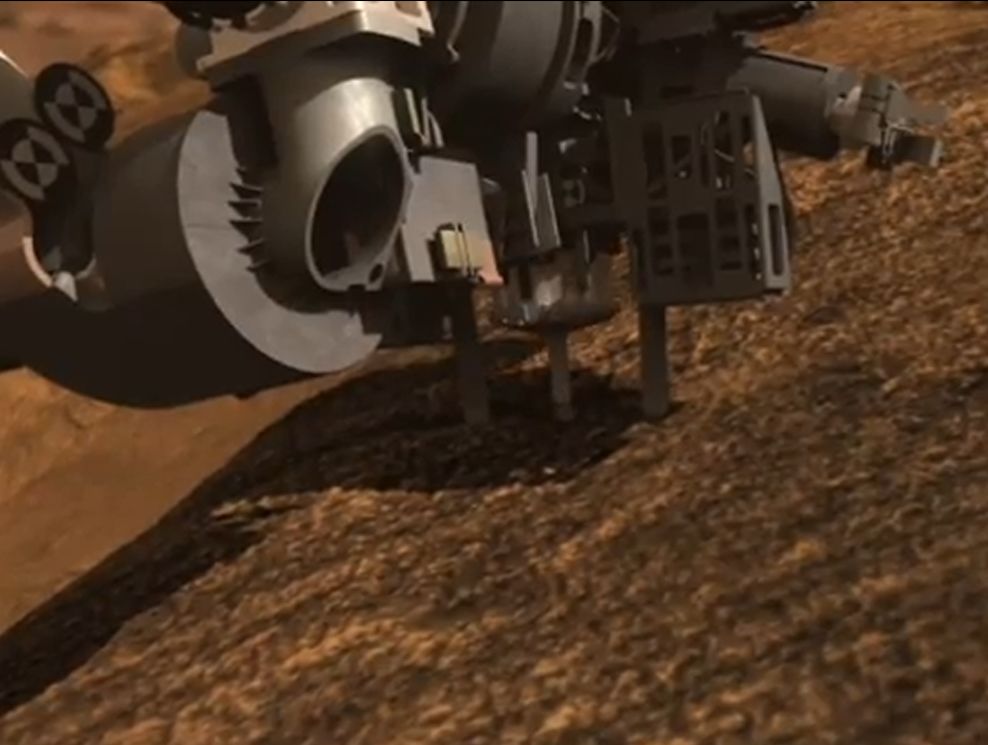
A prime mission goal for Curiosity’s explorations of Yellowknife Bay is the identification of a suitable candidate for the first use of the percussive drill – the last major item of equipment on the rover’s robot arm turret to be commissioned. As such, the rock surveys were part of this work.
Close-up of Curiosity’s drill in action (simulation) – the drill should be deployed for the first time early in the New Year, 2013
The drill will be used to collect samples from inside Martian rocks, something never before attempted on Mars. The powdered sample, once obtained, will be passed through the CHIMRA system which is also used to sieve and sort samples obtained by the soil scoop, before being passed to CheMin and SAM aboard the rover for detailed analysis.
On December 14th, Curiosity completed a drive of 32.8 metres (108 ft) to reach two “targets of interest” which mission planners dubbed “Costello” and “Flaherty”. Each of these rocks was subjected to study using the Alpha Particle X-Ray Spectrometer (APXS) and MAHLI, the Mars Hand Lens Imager, both mounted on the rover’s robot arm turret. These studies lasted a couple of days, during which Curiosity carried out various REMS monitoring activities as well; then on Sol 130 a further drive of just 5.6 metres (18 ft).
With the SL Community Convention ending in 2012, after AvaCon declined a revised contract from Linden Lab, the non-profit, volunteer-operated company has today announced the Metaverse Cultural Series 2013.
The new series will comprise, “A set of events featuring performances and lectures that highlight unique aspects of metaverse culture. The events will take place in multiple virtual world spaces and the series will showcase innovative artists, thinkers, performers, and academics whose work is on the forefront of exploring what it means to work, play, and live in the emerging metaverse.”
The focus of the series is on exploration of aspects of living, working, and playing in the metaverse which differ from other forms of online activity. As examples of this, AvaCon suggest subjects such as exploring themes such as identity play and avatars, language and customs unique to virtual worlds, or other kinds of art and expression that are only possible in the metaverse.
As well as seeking performances and presentations, AvaCon is inviting virtual world providers, grids, or venues to host a Metaverse Cultural Series event as event partner. In order to do so, venues should be able to:
Accommodate 30 – 50 in-world attendees
Permit voice and media streaming media capabilities.
Note that AvaCon will work with venues selected to participate in the series to determine technical specifications and other requirements as needed for each type of presentation or performance.
Request for Presentation / Performance Proposals
AvaCon ar currently accepting proposals for presentations / performances which fit the focus of the series as outlined above. All proposals should include an abstract describing, in no more than 500 words, the proposed performance / presentation and how it relates to the goals and themes of the Series. Reviewers will specifically be looking for proposals that explore unique aspects of metaverse culture, particularly as it differs from other kinds of online activity.
Additionally, AvaCon are accepting proposals from grids / virtual world providers / venues wishing to host an event in the Mataverse Cultural Series.
The closing date for all proposals is January 31st, 2013. AvaCon are offering a $50 stipend to all successful presentation / venue applications to cover time and expenses.
As generally happens in long-duration space missions, media attention around Curiosity is waning somewhat as the initial gee-whiz factor wears off and the reality of this potentially being a multi-year mission kicks-in and journos start seeking the next gee-whiz headline. As such, the next time Curiosity really hits the headlines, it’ll likely be for one of three reasons: Something Big has happened science-wise; someone has sensationalised upcoming news a-la Joe Palca; or something on the rover has broken. Indeed, a combination of the second two points is already occurring.
But that’s the nature of news cycles. Once the glamour and the wow has worn off, the interest fades and it is only the sensational (or titillating, in some circumstances) which does get reported. It’s why news and feature editors aren’t really interested in hearing about Second Life (“Second Life? You show me a million people a day are signing-up to it, and I’ll run it. Otherwise all you have is yesterday’s news…”).
In the meantime, Curiosity rolls onward towards “Mount Sharp” is what is still only the prelude to its mission on Mars; a prelude which has already yielded remarkable results in just four short months.
Choreographing a Self-portrait
Ever tried to take a picture of yourself? It’s not easy unless you have some frame of reference to guide you – such as an LED screen on your camera / device on which you can actually see how the shot will look prior to taking it. “Great photo, other than the fluffy bunny apparently trying to climb out of your right ear….”
Imagine how much harder it is to do the same remotely over a distance of more than 90 million kilometres (56 million miles). Yet on Sols 84 and 85 (October 31st / November 1st), that’s precisely what Curiosity did, producing a beautiful high-resolution composite image of itself quickly seen the world over.
The big picture: the full extent of Curiosity’s self-portrait captured between October 31st and November 1st. Note the absence of the robot arm in the image, a result of the picture having been put together from images captured by the Mars Hand Lens Imager (MAHLI) mounted on the arm itself, and the arm being positioned out-of-shot in the images / image portions used to create the mosaic (click to enlarge)
The portrait was put together using dozens of high-resolution images captured using the rover’s Mars Hand Lens Imager (MAHLI), located on the turret at the end of Curiosity’s robot arm in a complex series of manoeuvres. But this wasn’t just a case of point-and-click and hope for the best, then go back and try again. Everything had to be planned well in advance earth-side prior to the rover being told to “get on with it”.
But how do you choreograph something over a distance of 90 million kilometres? Phoning home in brief bursts isn’t going to cut it.
Enter Curiosity’s earth-based “twin”, another of the unsung heroes of the MSL mission. Located at the Jet Propulsion Laboratory in Pasadena, California, the VSTB – Vehicle System Test Bed – is the closest thing NASA have to a “second Curiosity“. It comprises all of Curiosity’s major elements – wheels, chassis, bodywork, drive system, electrical system, mast, camera systems, robot arm, turret systems and so on (all minus the nuclear “battery” powering the real MSL rover) – and it forms a critical element of the overall mission. Using the VSTB engineers can troubleshoot any issues which may occur with the rover’s major systems and mission planners can map complex manoeuvres using things like the robot arm, allowing them to build up a precise set of commands required to perform a given task prior to uploading them to Curiosity on Mars and allowing the rover to carry them out.
The Vehicle System Test Bed, Curiosity’s Earth-bound “stunt double”, used for a range of mission planning activities, shown here in a self-portrait put together to allow mission planners obtain the precise commands needed to allow Curiosity to do exactly the same thing over 90 million kilometres away (click to enlarge)
Please use the page numbers below to continue reading this article
Gabe Newell, co-founder and Managing Director of Steam’s parent company, Valve, is aiming high.
On December 3rd, 2012 the company launched the Steam Big Picture mode, with the slogan The revolution will be televised, which had been in beta since earlier in the year.
The services was announced thus on the Steam website:
Heading to the living room—or anywhere there’s a big screen—is Steam’s soon-to-be-released big-picture mode, offering simple, easy-to-read navigation designed specifically for TV. With full controller support, big-picture mode will let gamers kick back and enjoy their favorite games on the biggest screen in the house.
Gabe Newell, co-founder and MD at Value
Steam’s big-picture mode doesn’t require any additional development from you. Just ensure your game works well with a controller, and we’ll take care of the rest. And don’t worry, keyboard and mouse aren’t going anywhere—users will be able to switch between input devices at any time.
Nothing beyond a physical connection between a computer and TV is required for the new service to work.
The move is just the start of Valve’s living room revolution”. Speaking to Kotaku’s Jason Schreier (who also did the in-depth write-up on The Big Picture mode) at the Video Games Awards last week, Newell confirmed that in 2013, he expects companies to start selling “Valve-approved” PC-based systems designed to hook up to a TV and run Steam straight out of the box – and which will be able to go toe-to-toe with traditional console offerings.
“I think in general that most customers and most developers are gonna find that [the PC is] a better environment for them,” Newell said. “‘Cause they won’t have to split the world into thinking about ‘why are my friends in the living room, why are my video sources in the living room different from everyone else?’ So in a sense we hopefully are gonna unify those environments.”
The big picture: could it also include SL? (image courtesy of Steamworks)
There are significant hurdles to be overcome for this to work – the PC boxes won’t be as open to tinkering, for example, as Newell notes in talking to Kotaku. There’s also the case as to how well some games may translate from keyboard to controller – although the company is, interestingly, working on a “moddable controller” with elements which can be switched around to allow for customised gaming, as well as a system by which the controller can be used in place of a QWERTY keyboard for conversing in role-play based games.
Lotus: using an XBox 360-style console as a replacement keyboard (image courtesy of Kotaku)
So, with Second Life expected to arrive on Steam “pretty soon” TM if not possibly “real soon” TM, these moves could yet see Second Life itself make the move from the computer screen to the big screen – and possibly broaden its appeal in the process (although that is perhaps an awfully big “possibly”).
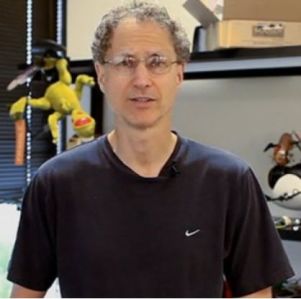
Michael Abrach (coutesy Techcrunch)
Valve are also moving ahead in other areas of hardware development which may also benefit SL. Newell’s interest in wearable computing options such as motion sensors, etc., is well-known. It is an interest shared by Michael Abrash, in a blog post on the matter also revealed he has a common source of inspiration as Philip Rosedale. Wearable / motion sensing systems have been connected with SL for some time now, particularly where Kinect is concerned. If Valve develop a system which works out-of-the-box with SL, it could well have a major impact on carious combats systems / environments in SL and potentially further leverage SL as a games enablement platform with the attraction that the environments in which the games themselves are played is totally configurable via SL’s content creation options.
Does this really mean that Second Life is coming to a living room near you? Well, maybe, maybe not. Part of this may come down to how the TV in your lounge is used (and what you get up to in SL vs. who else is around in real-time to witness it!). However, the TV was itself long ago freed from the lounge. It can be found in the bedroom, the study, the den … so one can see a certain attraction in sitting up in bed and spending time in-world (as some do) with just a hand controller and the TV rather than a laptop perched on legs…
Time will tell, as they say. In the meantime, these developments from Valve, if successful, could be of major impact to gaming as a whole, and are doubtless going to be watched with interest.
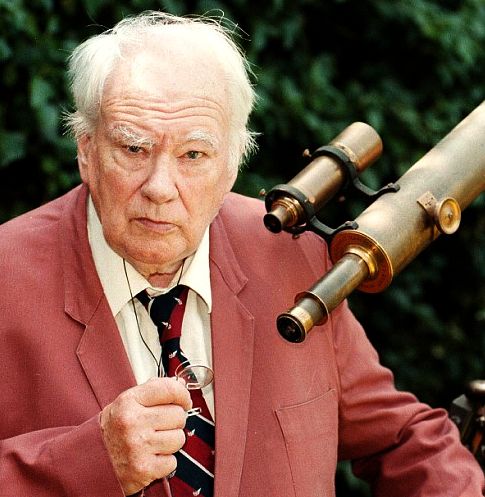
His name may not be known to many outside of either the UK or the field of astronomy, but Sir Patrick Moore was one of the all-time greats. His knowledge as an astronomer was prolific, his enthusiasm as a writer / broadcaster infectious, and his reputation as something of a monocle-toting eccentric in the great British tradition of the word, legendary.
Patrick Moore first presented The Sky at Night in April 1957
A Fellow of the Royal Society and of the Royal Astronomical Society, he was best known for his monthly BBC astronomy programme The Sky at Night, which in April 2012 celebrated 55 years of broadcasting, making it the longest-running television programme with the same broadcaster in history. Through the programme, his also responsible in spurring-on many to develop an interest in astronomy, celebrities included, as well as many to become scientists and astronomers.
His own passion for astronomy started at an early age, and by the age of 11 he was already a member of the British Astronomical Association and by fourteen he was running the local observatory. War interrupted his career – as it did so many – and saw him lie about his age to join the RAF (he was 16 at the time and already wearing his trademark monocle to counter a problem in his right eye), in which he served as a navigator in Bomber Command. After the war, he used his government demob grant to attend Cambridge University, and wrote his first book Guide to the Moon in 1952 using the 1908 typewriter one which he went on to write every one of his subsequent books.
As a BBC presenter, Sir Patrick covered the Apollo missions in the 1960 and 1970s and he was on first-name terms with many of those unique men who first walked on the surface of the Moon.
As well as astronomy – which he pursued as a writer and broadcaster and through his own observatories in the garden of his home – Sir Patrick was a keen cricketer in his younger years, and revelled in his reputation for wearing a monocle and playing the xylophone – both of which he did with great aplomb and both of which tended to turn-up on television when he was being – quite lovingly for the most part, it has to be said – impersonated.
He was truly a British institution.
I was lucky enough to meet Sir Patrick once while in my teens when Dad took Mum and I to a reception in London to mark the 21st Anniversary of Apollo 11. The special guest at the event was Edwin “Buzz” Aldrin. The event wasn’t that large, being organised by a society of which Dad is a member, but it still surprised me when Patrick Moore himself (whom I knew more by reputation and the aforementioned impersonations than actually having watched his show) came and talked to me while I was contemplating the buffet laid out.
I remember it being a little awkward, as my knowledge of astronomy and space was limited at best then, and I wasn’t really sure as to how to deal with thing Great Personality From Television (Patrick Moore was always physically imposing, even leaving aside the monocle and tufted eyebrows which always seemed to have a life of their own). I have no idea if he sensed my discomfiture – but I do remember that as we both stepped away from the buffet with loaded plates (most of the food on mine happily suggested by Patrick Moore himself), we were chatting about music and cricket (the latter being a subject of which I knew even less about than astronomy, and which he had just been forced to give up – at the age of 68!).
It is the memory of that time, which now seems to have lasted hours but in truth was perhaps only ten or so minutes in length, which sits most vividly with me now. Sir Patrick Moore, FRS, FRAS, CBE, passed away today. As a result, the sky at night will be just a little bit darker from now on.


 As generally happens in long-duration space missions, media attention around Curiosity is waning somewhat as the initial gee-whiz factor wears off and the reality of this potentially being a multi-year mission kicks-in and journos start seeking the next gee-whiz headline. As such, the next time Curiosity really hits the headlines, it’ll likely be for one of three reasons: Something Big has happened science-wise; someone has sensationalised upcoming news a-la Joe Palca; or something on the rover has broken. Indeed, a combination of the second two points is already occurring.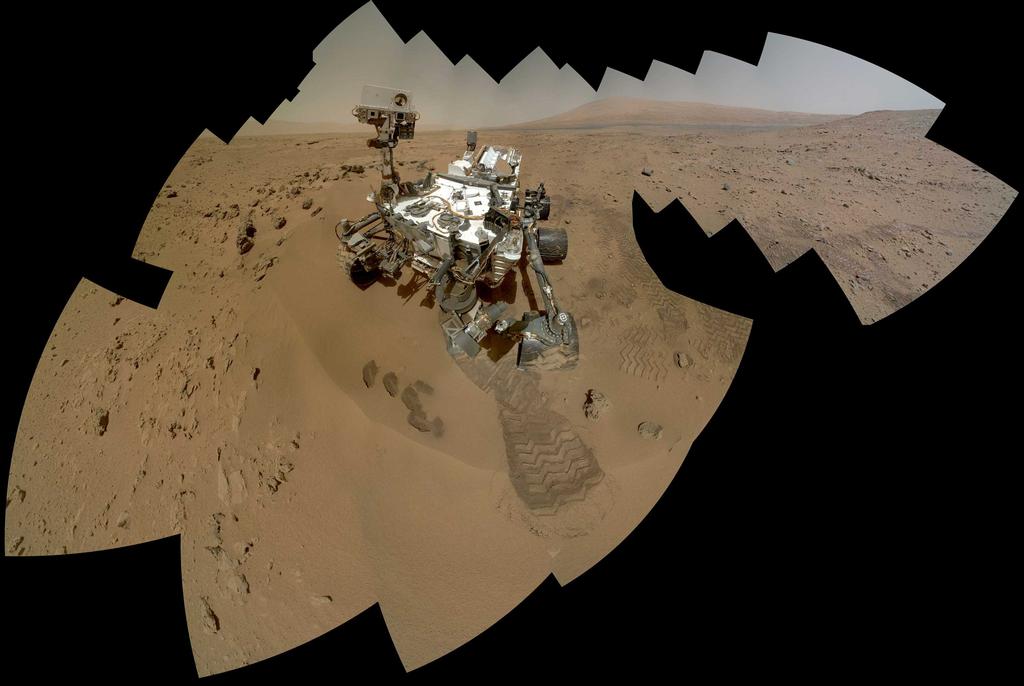

 Gabe Newell, co-founder and Managing Director of Steam’s parent company, Valve, is aiming high.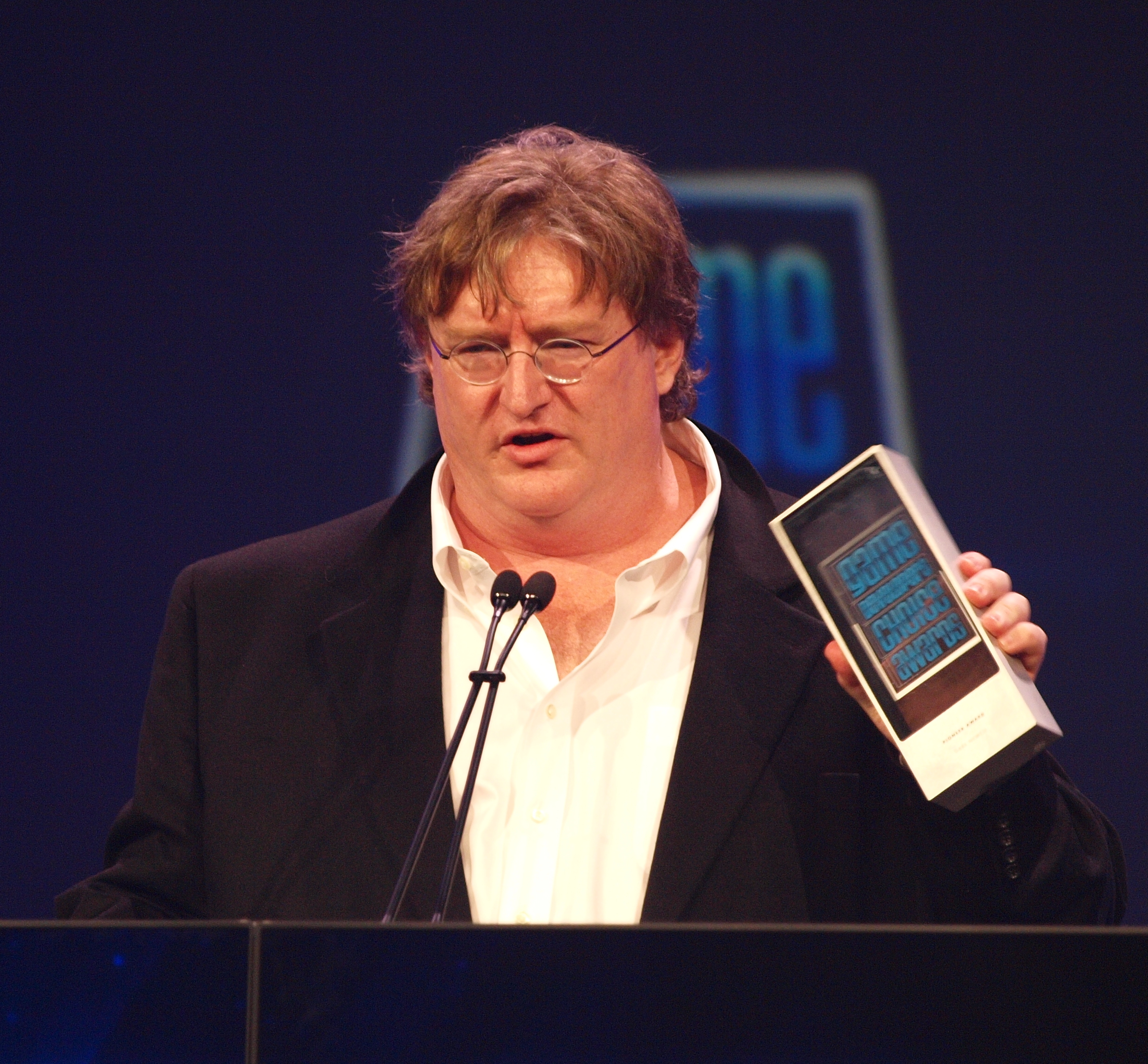



 Inara Pey: Living in a Modemworld